Author: afp

  • UK filmmaker Richard Curtis makes first foray into animation

    UK filmmaker Richard Curtis makes first foray into animation

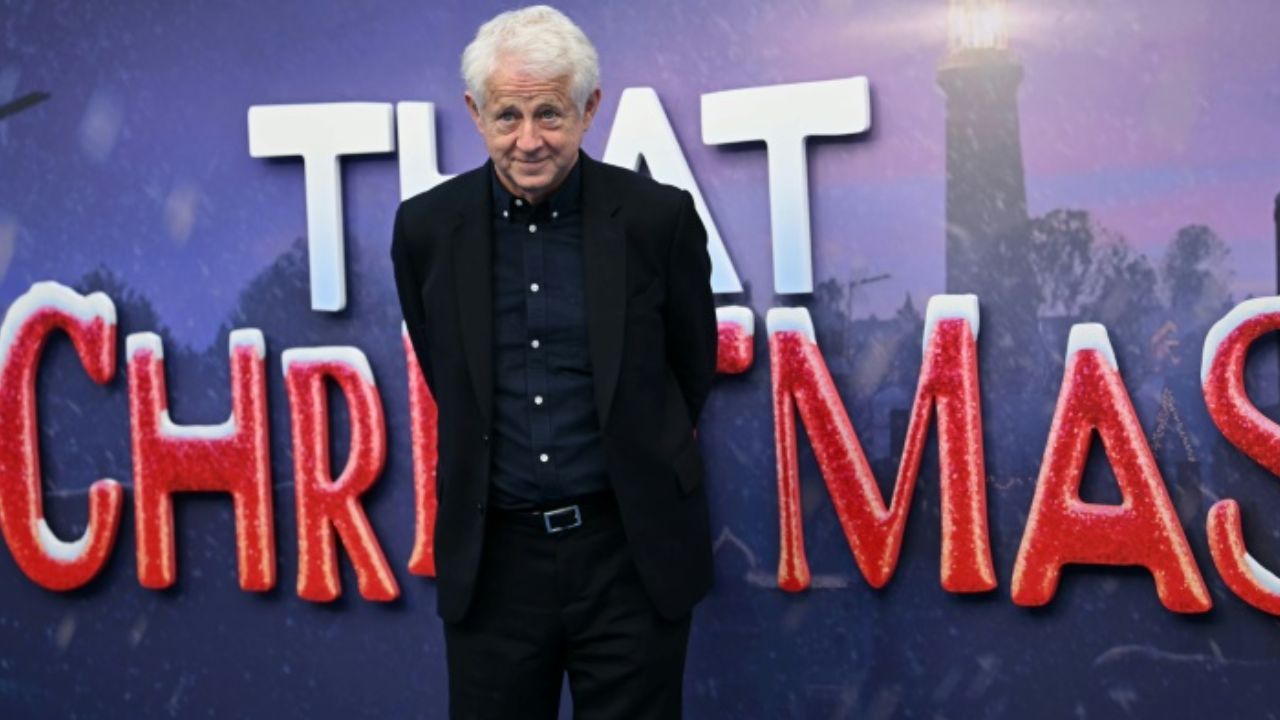
    Two decades after scoring a surprise holiday season global hit with “Love Actually”, British filmmaker Richard Curtis is bidding to repeat the trick with his first foray into animation. 

    The 68-year-old writer and director has co-adapted his own trilogy of children’s books, and commandeered longtime friend Ed Sheeran into contributing an original song, to bring “That Christmas” to the big and small screens.

    Featuring the voices of Brian Cox (“Succession”), Bill Nighy (“Love Actually”) and a host of other acting talent, it hits select UK cinemas this week before its worldwide release on Netflix from December 4.

    Curtis, behind box office successes like “Four Weddings and a Funeral” and “Notting Hill”, before 2003’s “Love Actually”, said his first venture into animated movies was full of surprises, particularly the time-consuming nature of the genre.

    “I’ve been shocked by the amount of time (it takes),” he told AFP as the film premiered at the London Film Festival last month. There were some silver linings, however.

    “My theory is that it means that people working in animation are nicer than people working in normal movies, because they know they’ve got to get on for five years. 

    “You really do get married. It’s not a one night stand — it’s not a sexy holidayy in Ibiza! It’s a long journey together. So I really enjoy it.”

    – ‘Edgy’ –

    “That Christmas” — a series of entwined tales about a town of friends and relatives during a troubled festive period — is a family-friendly offering which still has a grown-up contemporary edge to it.

    It features plenty of jokes and references to everything from Jesus being a hipster to abortion and climate change.

    “If love were easy, your father wouldn’t have run off with his 25-year-old dental nurse,” one of the main animated characters, Mrs Williams, tells her schoolboy son, Danny.

    Curtis said he and co-screenwriter Peter Souter were confident the format meant they could be “modern and sometimes edgy and satirical without crossing any big red lines”.

    “I’ve always thought that you shouldn’t, as it were, dumb down if you’re dealing with kids,” he explained.

    Veteran stage and screen actress Fiona Shaw was equally enthused about contributing to a film not just aimed at adults. 

    “I really love a young audience, because they watch with such enthusiasm and such accuracy and such memory. They remember things,” she said.

    “So I’m hoping that this audience will enjoy Ms Trapper as much as I enjoyed playing it.”

    – Suffolk story –

    Simon Otto, known for his work heading character animation for the “How to Train Your Dragon” films, makes his feature directorial debut on the project, which he said breaks new ground in the genre.

    “In animation, it’s very uncommon to tell multi-thread storylines — it’s usually about a single hero on a fantastical journey,” he explained.

    “Bringing the charm and timelessness of animation to Richard’s real-life stories that have universal appeal and wish-fulfilment felt like a really interesting match to everyone.”

    Curtis revealed that Sheeran wrote and recorded an original song for the film, “Under the Tree”, largely thanks to the story’s setting in the southeast English county Suffolk, where both of them live.

    “Ed is, as it were, the epitome of Suffolk,” the filmmaker explained, while joking the star musician’s involvement could also be down to him looking “like an animated character”.

    “I went round, showed him the film, and he said: ‘Oh, I’d love to write a song for this’. And he did it fast, and it’s a really beautiful song,” said Curtis. “We’re really lucky.”

    Otto noted that the track “really became the heart of the film” as it features at a climactic moment in the movie.

    “It’s building towards this moment,” he said. “And he could be one of our characters.”
  • COP29 President blames rich countries for ‘Imperfect’ deal

    COP29 President blames rich countries for ‘Imperfect’ deal

    The tough-fought finance deal at UN climate negotiations was “imperfect”, the Azerbaijan COP29 leadership has admitted, seeking to blame richer countries for an outcome slammed by poorer nations as insulting.

    The contentious deal agreed on Sunday saw wealthy polluters agree to a $300 billion a year pledge to help developing countries reduce emissions and prepare for the increasingly dangerous impacts of a warming world.

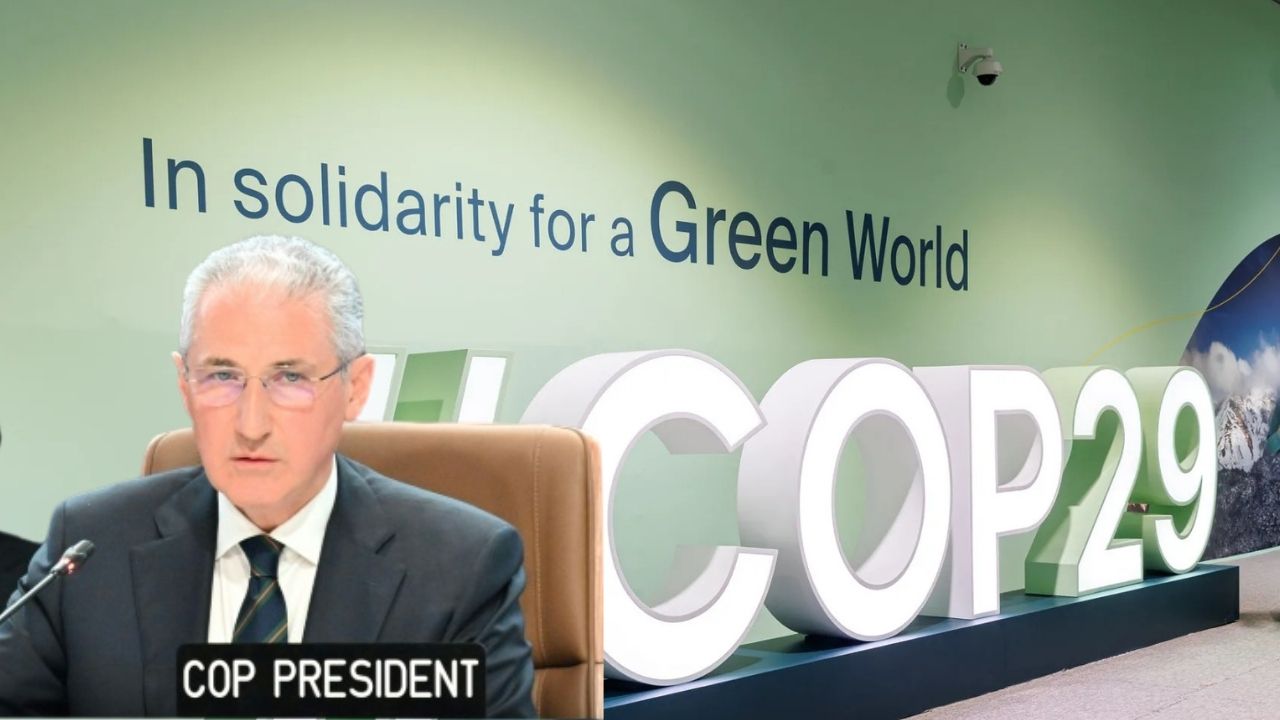
    COP29 president Mukhtar Babayev conceded that the deal was insufficient to meet escalating needs and suggested that China would have agreed to stump up more cash had others agreed to budge.

    Writing in Britain’s Guardian newspaper on Monday he said wealthy historical emitters had been “immovable” until very late in the negotiating process.

    “This deal may be imperfect. It does not keep everyone happy. But it is a major step forward from the $100 billion pledged in Paris back in 2015,” he said.

    “It is also the deal that almost didn’t happen.”

    Azerbaijan, an authoritarian oil and gas exporter, came under heavy criticism for its handling of COP29, notably France and Germany.

    Babayev banged the deal through in the early hours of Sunday after nearly two weeks of fractious negotiations that at one point appeared on the verge of collapse.

    As soon as the deal was approved, India, Bolivia, Nigeria and Malawi, speaking on behalf of the 45-strong Least Developed Countries group, took to the floor to denounce it.

    Finance was always going to be a thorny issue for the nearly 200 nations that gathered in a sports stadium in Baku to hammer out a new target by 2035.

    Wealthy countries failed to meet the previous goal on time, causing cratering trust in the UN climate process.

    COP29 did set out a wider target of $1.3 trillion per year by 2035 to help developing nations pay for the energy transition and brace themselves for worsening climate impacts.

    The deal envisages that $300 billion mobilised by wealthy nations will be combined with funds from the private sector and financial institutions like the World Bank to reach this larger sum.

    But Babayev said he agreed with developing nations that “the industrialised world’s contribution was too low and that the private sector contribution was too theoretical”.

    Contrasting China’s involvement in the negotiations with that of wealthy historical emitters like the European Union and United States, he said Beijing was “willing to offer more if others did so too (but the others didn’t)”.

    China, the world’s second-biggest economy and top emitter of greenhouse gases, is considered a developing country in the UN process and is therefore not obliged to pay up, although it does already provide climate funding on its own terms.

    The new text states that developed nations would be “taking the lead” but implies that others could join.

    Babayev said the deal was “not enough”, but would provide a foundation to build on in the lead up to next year’s climate talks in Brazil.

  • Ireland has a cultural moment, from rock and books to cinema

    Ireland has a cultural moment, from rock and books to cinema

    From Sally Rooney’s bestsellers to actor Paul Mescal, Ireland, which holds a general election this week, has been enjoying a cultural and creative renaissance in recent years.

    In the past few weeks it’s been hard to miss Rooney’s fourth novel “Intermezzo”, the Grammy nomination of rockers Fontaines DC or Mescal’s muscles on posters and trailers for “Gladiator II”.

    “We’re having a cultural moment and there’s a lot of energy around Irishness at the moment,” said Ruth Barton, professor of film studies at Trinity College Dublin.

    The phenomenal global success of the television adaptation of Rooney’s “Normal People”, which introduced Mescal to the world, has played a key role.

    “I definitely think there’s a new wave of Irish writers, novelists — particularly women — who came up with books on experiences that were not articulated before,” said Christopher Morash, the Seamus Heaney professor of Irish writing at Trinity.

    Irish writers, musicians and filmmakers have all been praised for their humour and being down-to-earth.

    “The profile, internationally in particular, of Irish artists across all arts forms has actually never been higher,” said Maureen Kennelly, director of the Arts Council of Ireland.

    That has led to cross-cultural cooperation, for example, with Oscar-winning actor Cillian Murphy starring in the adaptation of Irish author Claire Keegan’s bestseller “Small Things Like These” and Fontaines DC providing the soundtrack to Andrea Arnold’s film “Bird”.

    It also starred Dubliner and Oscar nominee Barry Keoghan (“The Banshees of Inisherin”).

    Barton said the presence of multinational tech giants such as Meta and Apple in Ireland due to low corporate taxes has helped.

    “The country has more money than it used to have… we’re fundamentally a rich country and we have spent a lot of money on culture,” she added.

    The Arts Council budget has jumped since 2019, Trinity’s drama academy, The Lir, has become a hotbed of new talent, while the country has even launched a trial minimum income for artists, which the main political parties have promised to continue.

    – Pride and plaudits –

    “I think the country has always defined itself through its culture and particularly its writers and poets,” said Barton, pointing to the likes of James Joyce and Samuel Beckett, who earned world renown.

    For Kennelly, periods of cultural booms have coincided with “seismic shifts” in society, the last being the final years of the three decades of sectarian violence over British rule in Northern Ireland.

    That brought the likes of U2 and The Cranberries to the global stage.

    More recently, the approval of same-sex marriage in 2015 then legalisation of abortion in 2018 have also transformed Ireland’s image from conservative to progressive.

    “There’s no doubt that there’s a sense of Irish society increasingly freeing itself from the affects of the (Roman Catholic) Church,” said Kennelly.

    Morash likened Ireland’s outsized cultural influence to that of South Korea, where K-Pop has become its biggest global export.

    “You had a country that was an agricultural one that turned into a pop culture hub,” he added.

    Now Ireland is “cool” overseas because of a new generation of actors: Mescal and Murphy are household names alongside the likes of Saoirse Ronan (“Blitz”, “Lady Bird”, “Brooklyn”), Andrew Scott (“Fleabag”, “Sherlock Holmes”, “Ripley”) and Nicola Coughlan (“Bridgerton”, “Derry Girls”).

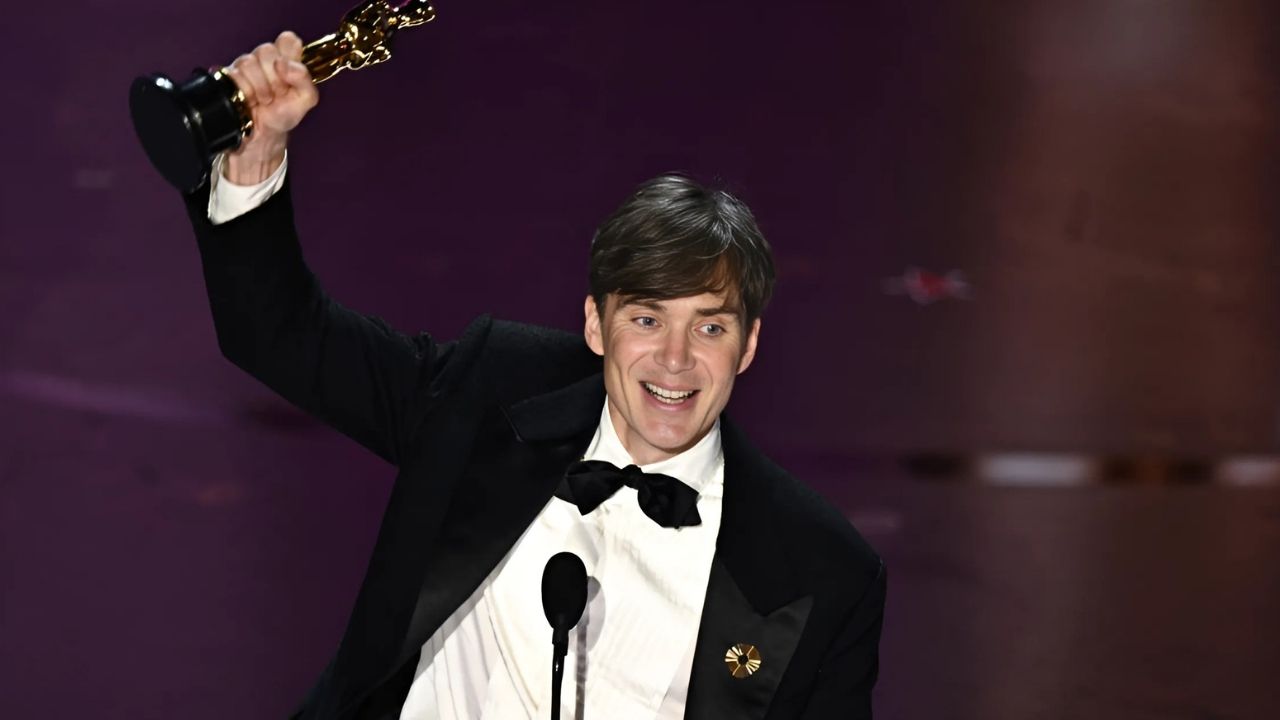
    Murphy, who hails from Cork in Ireland’s deep south, this year spoke of his pride in his country in his best actor Oscar acceptance speech for “Oppenheimer”, ending with a heartfelt thank you — in the Irish language.

    The unexpected success of “Kneecap”, a docu-fiction about three Belfast upstarts who rap in the ancient langauge, marks the beginning of a new turn towards the Irish language “as a kind of medium of cultural expression”, said Barton.

    The film has been named in 14 categories in the British Independent Film Awards in December and selected to represent Ireland in the foreign language category at next year’s Oscars.

  • Ceasefire between Israel, Hezbollah starts now

    Ceasefire between Israel, Hezbollah starts now

    The ceasefire between Israel and Hezbollah in Lebanon took effect on Wednesday after more than a year of fighting that has killed thousands of people.

    The truce, which began at 4:00 am (0200 GMT), should bring to a halt a war that has forced tens of thousands of people in Israel and hundreds of thousands more in Lebanon to flee their homes. The war has seen areas of Lebanon pounded by air strikes and Israeli troops deployed across the border to battle Hezbollah militants.

    It began with Hezbollah launching cross-border strikes in support of its Palestinian ally Hamas following its October 7, 2023 attack on Israel.

    US President Joe Biden announced the ceasefire agreement on Tuesday, as Israeli Prime Minister Benjamin Netanyahu said his ministers had agreed to a halt.

    The United States is Israel’s key ally and military backer, and Biden hailed the deal as “good news” and a “new start” for Lebanon. 

    Netanyahu thanked Biden for his involvement in brokering the deal and said it would allow Israel to focus on Hamas in Gaza and Iran.

    Under the terms of the Lebanon truce, Israel will maintain “full” freedom to act against Hezbollah if it pose any new threat, Netanyahu said.

    Lebanon says at least 3,823 people have been killed in the country since exchanges of fire began in October 2023, most of them in the past several weeks when Israel escalated its campaign against Hezbollah.

    On the Israeli side, the hostilities with Hezbollah have killed at least 82 soldiers and 47 civilians, authorities say.

    The hours before the truce took effect were some of the most violent in the war.

    Israel conducted a spate of strikes on the heart of the Lebanese capital on Tuesday, while Hezbollah claimed attacks on northern Israel after the truce was announced. 

    Hezbollah did not participate in any direct talks for the truce, with Lebanese parliamentary speaker Nabih Berri mediating on its behalf. It has yet to formally comment on the truce.

     Focus on Iran and Gaza

    The war in Lebanon has left Hezbollah massively weakened but not crushed. It lost its longtime leader, Hassan Nasrallah, in a massive air strike in September, as well as a string of top commanders in other raids.

    A truce in Lebanon, Netanyahu said, will permit Israel to redirect its focus on Gaza, “When Hezbollah is out of the picture, Hamas is left alone in the fight. Our pressure on it will intensify,” Netanyahu said.

    The agreement will also enable “focusing on the Iranian threat” and give Israel’s military time to resupply, he added. 

    Iran is the main backer of both Hezbollah and Hamas, as well as other anti-Israeli groups.

    Iran itself has fired two barrages of missiles and drones at Israel since the outbreak of Israeli aggression in Gaza, most of which were intercepted by Israel or its allies. 

    ‘Blown away’

    In Lebanon, the war has forced nearly 900,000 people to flee their homes, the UN says.

    Biden said the ceasefire deal was designed to be a “permanent cessation of hostilities” between Israel and Hezbollah.

    Under the agreement, the Lebanese army would take control of the border area on their side and “what is left of Hezbollah and other terrorist organisations will not be allowed… to threaten the security of Israel again”, he said.

    Hezbollah was the only armed group that refused to surrender its weapons after the 1975-1990 Lebanese civil war ended.

    To date, the group has maintained a strong presence in parts of Lebanon and its arsenal is believed to be more powerful than that of the national army.

    Divided Lebanon has been in crisis for years and will struggle to return to a semblance of normalcy even after a truce.

    The United States and France would ensure the deal was fully implemented, Biden said.

    The announcements followed a flurry of strikes on central Beirut as well as on Hezbollah’s bastion in the southern suburbs.

    One strike hit the normally busy Hamra district, home to residential buildings, restaurants, offices, shops, the American University of Beirut and its associated hospital.

    Earlier, Lebanon’s state-run National News Agency reported that three strikes hit the central Nweiri neighbourhood and destroyed a “four-storey building housing displaced people”.

    “We were blown away and the walls fell on top of us,” said Rola Jaafar, who lives in the building opposite.

    Iran’s response

    Iran on Wednesday welcomed the end of Israel’s “aggression” in Lebanon, after a ceasefire deal came into force between Israel and Hezbollah.

    “Welcoming the news” of the end of Israel’s “aggression against Lebanon”, foreign ministry spokesman Esmaeil Baghaei said in a statement, stressing Iran’s “firm support for the Lebanese government, nation and resistance”.

    United Nations

    A top UN official welcomed the ceasefire agreement but warned that “considerable work lies ahead” to implement the deal.

    “Nothing less than the full and unwavering commitment of both parties is required,” UN Special Coordinator for Lebanon, Jeanine Hennis-Plasschaert, said in a statement.

  • One woman killed by partner, relative every 10 minutes worldwide: UN

    One woman killed by partner, relative every 10 minutes worldwide: UN

    One woman was killed by a partner or relative every 10 minutes worldwide in 2023, the United Nations warned Monday, stressing that femicides remained at “alarmingly high levels”.

    Almost 85,000 women and girls were murdered by people last year, according to a joint report by the United Nations Office on Drugs and Crime (UNODC) and the UN Women agency published Monday.

    About 60 percent-or more than 51,000 women and girls-died at the hands of their partner or relative, the report found.

    This equates to 140 women killed per day or one every 10 minutes by those closest to them.

    “The home remains the most dangerous place for women and girls in terms of the risk of lethal victimisation,” the report said.

    While men were four times more likely than women to fall victim to homicide — forming 80 percent of all murder victims last year — they more often than not died at the hands of a stranger.

    Africa had the most severe toll with 21,700 women killed by someone close to them in 2023.

    The lowest femicide rates were in Europe (2,300 murders in absolute numbers) and Asia.

    Despite efforts in some countries to prevent femicides, they remain “at alarmingly high levels” due to deep-rooted gender inequality and damaging stereotypes.

    “We must confront and dismantle the gender biases, power imbalances, and harmful norms that perpetuate violence against women,” UNODC Executive Director Ghada Waly said in a statement accompanying the report.

    Data from countries including France indicated that femicides are often the “culmination” of repeated episodes of violence and can be prevented by measures such as restraining orders.

    UN Women Executive Director Sima Bahous said robust legislation, greater government accountability, and increased funding for women’s rights organisations and institutional bodies are needed to stem violence against women.

    Furthermore, improved data collection from different antional sources — including media reports — and a “zero-tolerance culture” are essential in tackling femicides, she said.

    The report is based on available data from 107 countries or territories, and information the UNODC has collected from responses submitted by member states.

    Its release coincides with the International Day for the Elimination of Violence Against Women.

  • Australian dictionary picks ‘Enshittification’ as word of the year

    Australian dictionary picks ‘Enshittification’ as word of the year

    Australia’s quasi-official Macquarie Dictionary has picked “enshittification” as the word of 2024, tapping into a growing sense that once-great digital services are bad and getting worse.

    “ENSHITTIFICATION-Noun. Colloquial, the gradual deterioration of a service or product brought about by a reduction in the quality of service provided, especially of an online platform, and as a consequence of profit-seeking.”

    The word, coined by writer Cory Doctorow, refers to a process in which apps or digital platforms start off as incredibly useful, but gradually worsen as they seek to make a profit.

    Social media platforms like X and ride-sharing app Uber are frequently cited examples, which started off offering information or bargains but gradually gouged customers or cut back services.

    Doctorow explains enshittification as the reason why Facebook users’ feeds fill up with junk, Google search is loaded with ads and sponsored content, and why Amazon promotes cheap, badly made products no matter what a customer searches for.

    Enshittification beat out words like “brainrot”, “overtourism” and “rawdogging”.

    It was chosen as word of the year by the dictionary’s committee of experts, but was also voted “People’s Choice Winner”.

    It is “a very basic Anglo-Saxon term wrapped in affixes which elevate it to being almost formal; almost respectable,” the committee said.

    “This word captures what many of us feel is happening to the world and to so many aspects of our lives at the moment,” the committee said.

  • Bestselling ‘Woman of Substance’ author Barbara Taylor Bradford dies aged 91

    Bestselling ‘Woman of Substance’ author Barbara Taylor Bradford dies aged 91

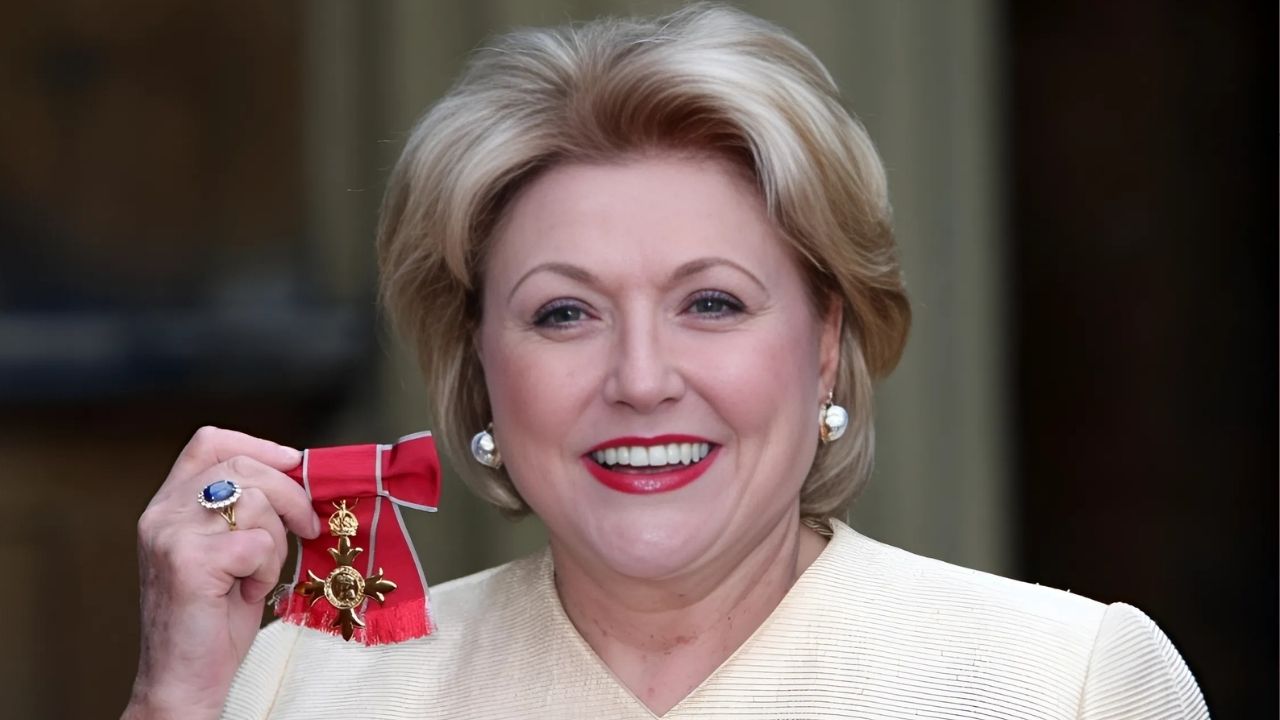
    Bestselling British-American writer Barbara Taylor Bradford, whose first novel “A Woman of Substance” turned her into an overnight success, has died aged 91, a spokeswoman said on Monday. 


    Taylor Bradford, who wrote 40 novels and notched up 91 million book sales worldwide during her career, died peacefully at her home on Sunday following a short illness. 


    She “was surrounded by loved ones to the very end”, the spokeswoman said, adding that a private funeral would be held in New York.


    “A Woman of Substance” tells the story of servant Emma Harte who overcomes a humble start in Taylor Bradford’s native Yorkshire in northern England to head of a business empire, navigating personal tragedy along the way.


    Many of her subsequent novels were also set in Yorkshire and followed a similar theme of great success against the odds, powered by grit and hard work.


    Her most recent novel “The Wonder of it All” was published last year.


    Born in Leeds in northern England in May 1933, Taylor Bradford began her working life as a typist for her local newspaper The Yorkshire Evening Post before becoming a reporter.


    She moved to London aged 20 where she continued working as a journalist while dipping her toe into the world of fiction.


    She started and abandoned several novels before striking gold with “A Woman of Substance”, which was an instant success when it was published in 1979.


    – ‘Powerhouse’ –


    The novel was turned into a double Emmy-nominated miniseries in 1985 and starred Liam Neeson with British actress Jenny Seagrove in the role of Emma Harte.


    Seagrove paid tribute to a “dear friend” and “powerhouse of glamour and warmth”.


    “Success never diluted her warmth and humour or her ability to relate to everyone she met, whether a cleaner or a princess. She never, ever forgot that she was just a girl from Yorkshire that worked hard and made good,” she said.


    Charlie Redmayne, chief executive of publisher HarperCollins, described Taylor Bradford as a “truly exceptional writer”.


    “‘A Woman Of Substance’ changed the lives of so many who read it -– and still does to this day,” he said.


    “She was a natural storyteller, deeply proud of her Yorkshire roots. For 45 years, she was a huge part of our company and a great, great friend –- we will miss her so much,” he added.


    Taylor Bradford had lived in the United States since 1964 following her marriage a the previous year to American film producer Robert Bradford.


    The couple were married for 55 years until his death in 2019.  


    Taylor Bradford’s spokeswoman said she would be buried alongside her late husband at New York’s Westchester Hills Cemetery.

  • History teacher becomes president in Uruguay

    History teacher becomes president in Uruguay

    Uruguay’s next president is a former history teacher who swapped the classroom for local government and will now lead the nation of 3.4 million following his Sunday win at the polls.

    President-elect Yamandu Orsi of the Frente Amplio (Broad Front) alliance defeated Alvaro Delgado of the centre-right National Party in the second round of voting, returning the country to left-wing rule.

    The victory marks a resurgence for the Broad Front, which previously held power for 15 years before losing in 2020. Orsi’s campaign drew strength from the endorsement of José “Pepe” Mujica, a former guerrilla and ex-president famed for his austere lifestyle. Orsi, often regarded as Mujica’s political protégé, narrowly missed a first-round win in October, securing 43.9% of votes to Delgado’s 26.7%.

    Orsi won 1,196,798 votes compared to Delgado’s 1,101,296, the country’s Electoral Court said — 49.8 percent to 45.9 percent.


    Pepe’s heir apparent

    Orsi, 57, garnered nearly 44 percent of ballots cast in the first election round on October 27 and held a small lead in opinion polls ahead of Sunday’s tight vote.

    He is seen as the understudy of highly popular ex-president Jose “Pepe” Mujica, known as “the world’s poorest president” during his 2010-2015 rule because of his modest lifestyle.

    Orsi was born in a house in the countryside with no electricity.

    He grew up in the town of Canelones, of which he later became mayor.

    As a child, he helped out in his parents’ grocery store and was a folk dancer and a Catholic altar boy.

    In 1989, he joined the Movement of Popular Participation, founded by Mujica, which later became part of the Frente Amplio coalition.


    Orsi taught history in high school until 2005, when he entered local government.

    He handily won the Frente Amplio primary in June, defeating former Montevideo mayor Carolina Cosse, whom he then chose as his running mate.

    The twice-married educator and father of twins campaigned as a moderate with a down-to-earth approach.

    But his failure to set out a clear plan for government drew criticism. He also declined to take part in debates and gave few media interviews.

    Though the election will shift the balance of power in Uruguay, analysts did not foresee a massive change in the country’s economic direction, with Orsi having previously promised “change that will not be radical.”

    Both candidates pledged to fight crime linked to drug trafficking and to boost economic growth, which is recovering from the slowdown brought by the COVID-19 pandemic and a historic drought.

    Following the October legislative elections, Orsi will govern with a majority in the Senate, though the Frente Amplio is in the minority in the Chamber of Representatives.

    President’s right-hand man


    He defeated Delgado, who was just days into his new job as secretary of the presidency under longtime friend Luis Lacalle Pou, when the Covid-19 pandemic hit Uruguay in 2020.

    Being a government spokesman during the crisis allowed him to build his public profile.

    Born in Montevideo, Delgado was educated in Catholic schools before getting a veterinary degree.

    He entered politics after having run an agricultural business and working as a veterinary advisor.

    Prior to serving in the Lacalle Pou administration, he also worked as a labor inspector, a member of parliament representing Montevideo, and a senator.

  • ‘Shrek’ director tackles taboo in Netflix fairy tale ‘Spellbound’

    ‘Shrek’ director tackles taboo in Netflix fairy tale ‘Spellbound’

    Animated films tackling parent separation and divorce are few and far between.

    While live-action kids’ classics like “The Parent Trap” and “Mrs. Doubtfire” have used the concept as a launchpad for humorous antics, animation has tended to steer entirely clear of the issue.

    “Isn’t that funny… you can kill off a parent in a movie like ‘Lion King,’ or ‘Bambi,’” said Vicky Jenson, best known for co-directing “Shrek.”

    “Disney moms are often dead — the only time anyone remarries is because the other spouse is dead. This topic of separation, of parents not being able to live together… it’s taboo.”

    But in Jenson’s new film, “Spellbound,” a princess’s parents have been transformed by a dastardly spell into literal monsters.

    It is an allegorical device that forces young Ellian to try to “fix” her mother and father, and their broken family.

    “We encountered some resistance when we were looking for someone to help bring the movie to the world, a partner to distribute the movie,” Jenson told AFP.

    “They all reacted the same way, like: ‘What a beautiful movie, what a great message.’ And then they ghosted us!”

    The movie went through a number of different studios, including Paramount and Apple TV+, before ultimately landing at Netflix, which will release the film Friday.

    “I credit Netflix for stepping up bravely and partnering with us on this,” said Jenson.

    “In this environment, it does feel like stories that push the boundaries are more accessible on streaming.

    “Theaters are kind of filled with superheroes right now… the big safe bets.”

    – ‘Monsters’ –

    As the film starts, tenacious teen princess Ellian (voiced by Rachel Zegler) is desperately seeking a cure for the mysterious spell that has transformed her parents, Queen Ellsmere (Nicole Kidman) and King Solon (Javier Bardem).

    To make matters worse, she must hide the whole mess from the oblivious citizens of Lumbria.

    When the secret gets out, and panic spreads throughout the kingdom, Ellian is forced on a dangerous quest to undo the curse.

    But even if she succeeds, she soon learns that her family may never go back to the way it once was.

    To make Ellian’s reaction to her — literally — monstrous parents believable and accurate, filmmakers employed the consulting services of a family psychologist and therapist who specialized in divorce.

    “Kids feel like it’s their responsibility to fix this. They don’t understand that something happened to their parents — they’re acting like monsters,” explained Jenson.

    The director, and cast and crew, also drew on their own experiences, “because we all know our parents are monsters at one point — and as parents, we’re all monsters at one point,” she joked.

    – An inverse ‘Shrek’? –

    The end result is a thoroughly contemporary parable, set in a magical fairytale kingdom.

    That has clear echoes of Jenson’s smash-hit directing debut “Shrek,” but with cause and effect reversed.

    “‘Shrek’ was the modern take on fairy tales. This was a fairy tale take on a modern story,” she said.

    For Jenson and the filmmakers — including legendary composer Alan Menken, of “The Little Mermaid,” “Beauty and the Beast” and countless more — it was important to bring this “truth about family life” to the screen.

    It “is there for so many of us, but hadn’t been approached as a myth or as a new fairy tale before,” said Jenson.

    “Now, a new fairy tale is out there for that experience that so many kids, so many parents, so many families need help through.”

  • Australia to impose $30m fine on social media platforms for ignoring under-16 ban

    Australia to impose $30m fine on social media platforms for ignoring under-16 ban

    Social media companies could be fined more than US$30 million if they fail to keep children off their platforms under new laws tabled before Australia’s parliament Thursday.

    The legislation would force social media firms to take steps to prevent those under 16 years of age from accessing platforms such as X, TikTok, Facebook and Instagram.

    Failing to do so would mean fines of up to Aus$50 million (US$32.5 million).


    Australia is among the vanguard of nations trying to clean up social media, and the proposed age limit would be among the world’s strictest measures aimed at children.

    Details about how social media companies are expected to enforce the ban remain unclear.

    The proposed laws would also include robust privacy provisions that require tech platforms to delete any age-verification information collected.

    Minister for Communications Michelle Rowland said Thursday that social media companies had a responsibility for the “safety and mental health” of Australians.

    “The legislation places the onus on social media platforms, not parents or children, to ensure protections are in place,” she said.

    Some companies will be granted exemptions from the ban, such as YouTube, which teenagers may need to use for school work or other reasons.

    Rowland said that messaging services — such as WhatsApp — and online gaming would also be exempt.

    Once celebrated as a means of staying connected and informed, social media platforms have been tarnished by cyberbullying, the spread of illegal content, and election-meddling claims.

    If the proposed law passes, tech platforms would be given a one-year grace period to figure out how to implement and enforce the ban.

    Social media companies have said they will adhere to new legislation but have cautioned the government against acting too quickly and without adequate consultation.

    Analysts have also expressed doubt it would be technically feasible to enforce a strict age ban.

    Katie Maskiell from UNICEF Australia said Thursday the proposed legislation would not be a “solve-all” for protecting children and much more needed to be done.

    She added the laws risked pushing young people onto “covert and unregulated online spaces”.

    Several other countries have been tightening children’s access to social media platforms.

    Spain passed a law in June banning social media access to under-16s.

    And in the US state of Florida, children under 14 will be banned from opening social media accounts under a new law due to come into force in January.

    In both cases, the age verification method has yet to be determined.