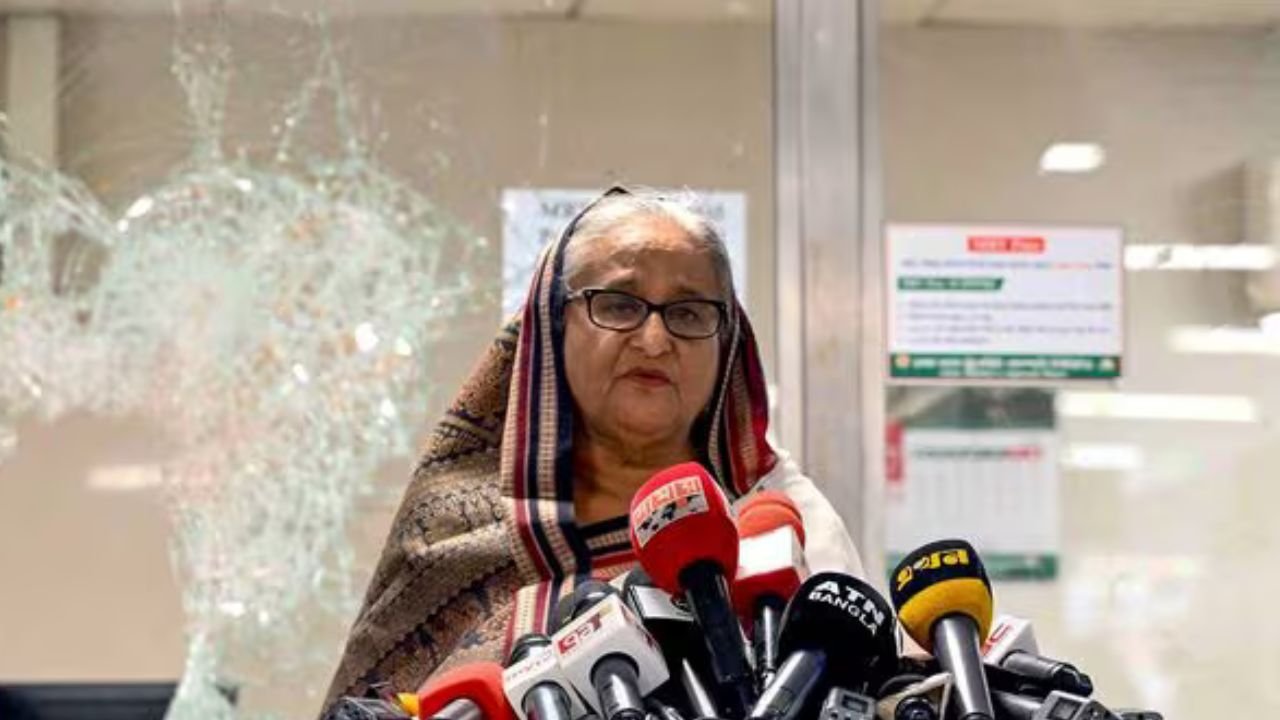
Author: afp

  • US approves aid to Israeli military unit accused of killing Palestinians

    US approves aid to Israeli military unit accused of killing Palestinians

    America defends giving aid to an army unit involved in the killing of a Palestinian-American by saying Israel had already taken remedial action.

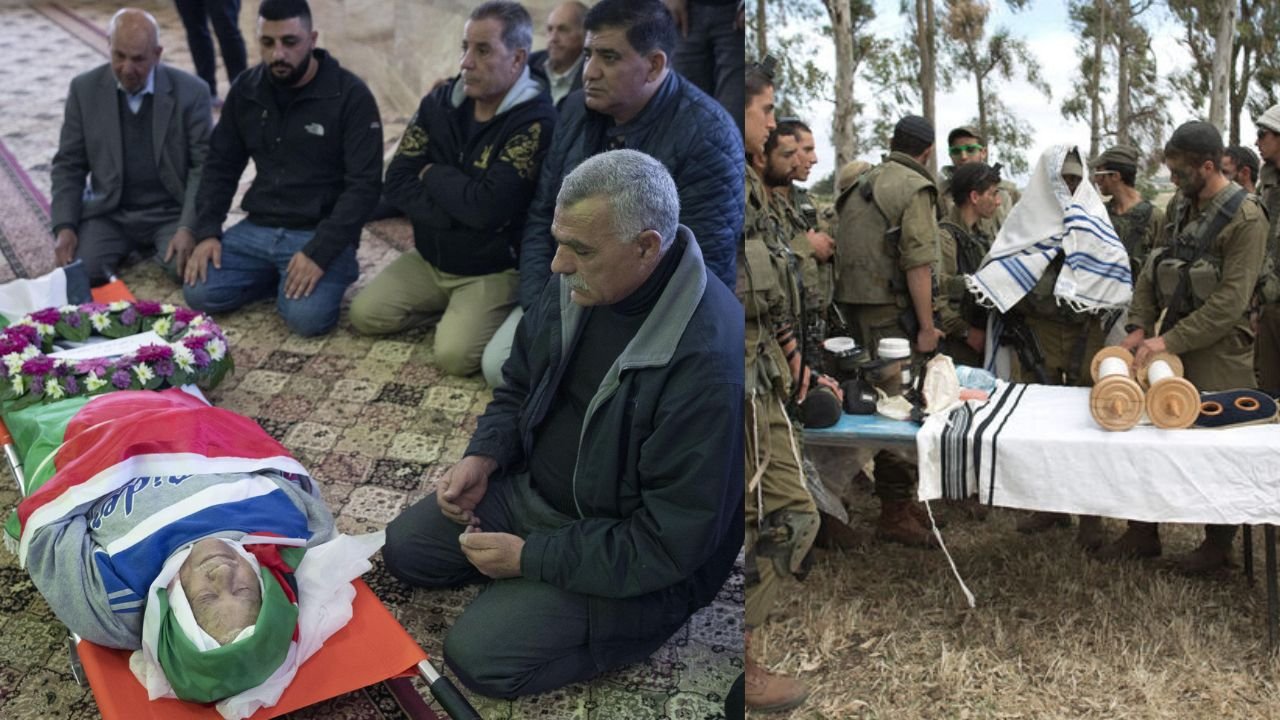
    Omar Assad, 78, a grocer who spent most of his adult life in Milwaukee, was on a return visit to the West Bank in January 2022 when he was handcuffed, gagged and blindfolded, dying after lying on the ground for more than an hour on a cold winter night.

    The incident was linked to the Israeli army’s Netzah Yehuda, a unit founded in 1999 to encourage recruits from the ultra-Orthodox community, which is largely exempt from compulsory military service.
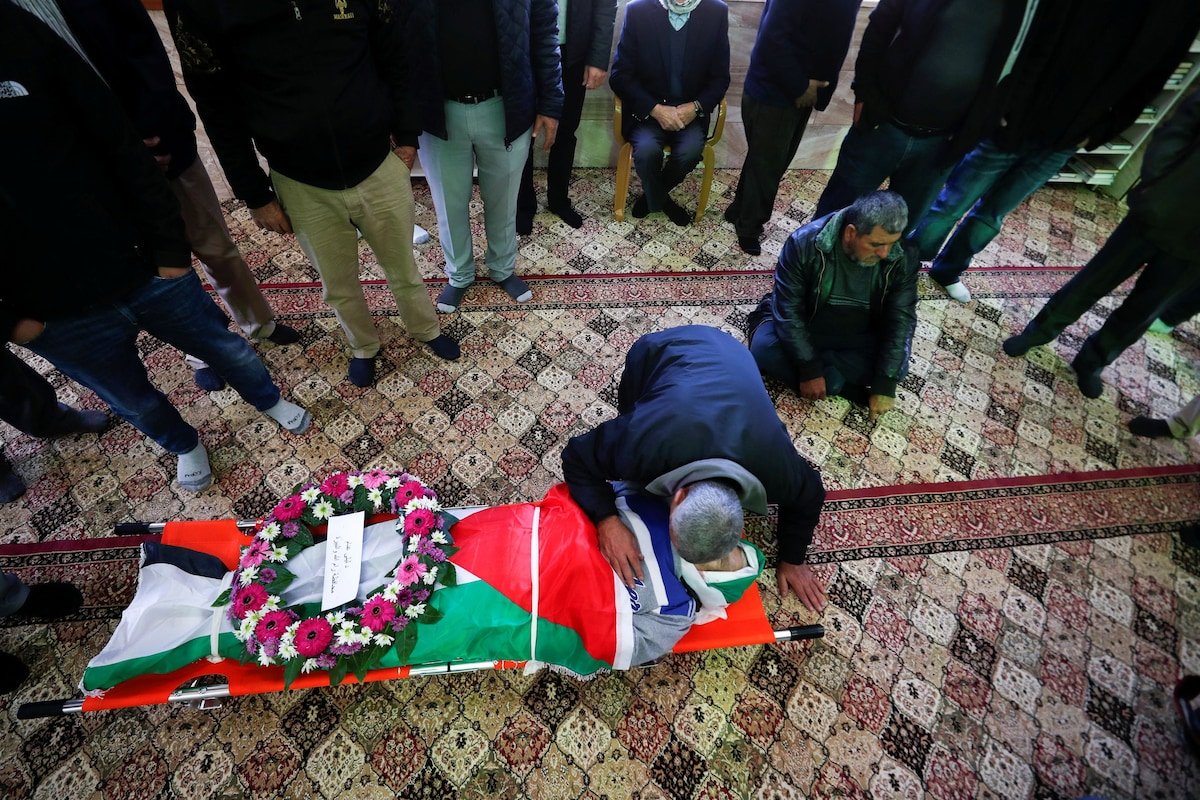
    A State Department panel decided against imposing sanctions on the unit after being presented with information by the government of Israel, which has vocally opposed action against its military amid the ongoing war with Hamas in the Gaza Strip.

    “After thoroughly reviewing that information, we have determined that violations by this unit have also been effectively remediated,” State Department spokesman Vedant Patel said.

    “This unit can continue receiving security assistance from the United States of America,” he said.

    A US official said that two soldiers involved in the incident, while not ultimately prosecuted, were removed from combat positions and have left the military.

    The military has also taken steps “to avoid a recurrence of incidents,” including enhanced screening of recruits and a two-week educational seminar specifically for the unit.

    Experts say that Netzah Yehuda has mostly drawn ultra-Orthodox youths who see the military as a way to integrate into Israeli society. Still, it has also attracted fervent nationalists from the West Bank.

    The West Bank, which Israel has occupied since 1967, is home to three million Palestinians alongside some 490,000 Israelis living in settlements considered illegal under international law.

    The army concluded that Assad’s death was the result of “a moral failure and poor decision-making on the part of the soldiers.”

    It said Assad “refused to cooperate” when stopped by soldiers in the village of Jiljilya and that soldiers tied his hands and gagged him without checking on him later.

    It was unclear why soldiers stopped Assad. The Palestinian official news agency Wafa said he died from a stress-induced heart attack.

    Additionally, US is all set to give $3.5 billion to Israel to purchase American weapons and military equipment from a $14.1bn supplemental bill approved by Congress in April.

    “On Thursday, August 8 the Department notified Congress of our intent to obligate $3.5bn in FY 2024 Foreign Military Financing using funding provided by the Israel Security Supplemental Appropriations Act,” said a State Department spokesperson as reported by CNN.

  • Opposites don’t attract in Russia as politics makes its mark on dating

    Opposites don’t attract in Russia as politics makes its mark on dating

    Sitting at a cafe in Moscow, Yulia swiped through a carousel of men on her phone’s dating app, trying to guess if the people in the pictures shared her views.

    “I started to include the artists that I listen to in the bio. It’s kind of a hint at my thinking,” the 21-year-old freelance photographer said, choosing her language carefully.

    Since Russia launched its full-scale military operation in Ukraine in February 2022, thousands of people have been denounced, fined or thrown in jail for expressing opposition to the conflict.

    According to opinion polls, only a minority of young people living in Russia disapprove of the offensive.

    A June poll by the independent Levada centre suggested 30 percent of 18-24 year-olds disapprove, compared with 59 percent who approve.

    For young, liberal Russians who want to avoid hooking up with hardline pro-army patriots, dating has become a minefield.

    “After 2022, I stopped giving links to any publications that I read,” Yulia said of her online dating profile.

    Gone were any articles expressing tolerance towards LGBTQ people or opposition to the Ukraine conflict — opinions that can land you in jail.

    Instead, she listed her favourite musicians as Zemfira and Monetochka, singers who have criticised Russia’s offensive in Ukraine and have been declared “foreign agents” by Moscow.

    ‘Very classy’

    The dating scene can also be tricky to navigate for those who back the offensive.

    Several groups on social media organise “patriotic meetings” for supporters of the Kremlin and military to search for potential matches offline.

    Arseny Blavatsky, a 24-year-old PR manager and self-confessed admirer of President Vladimir Putin, said he was looking for “an ideologically close partner”.

    “Since February 2022, nobody can be apolitical,” he told AFP at a speed-dating event held in a Moscow restaurant, his fourth so far.

    For Arseny, avoiding ideological conflict in a relationship is a must.

    He recalled his frustration after meeting one girl whom he called “very classy” but politically incompatible.

    “I was getting on very well with this one girl, everything was cool. On the same wavelength, the same language,” he said.

    But after Russian opposition leader Alexei Navalny died in prison in February, she became extremely upset — to his dismay.

    “She was in absolute hysterics. I told her that changed nothing between us. And she says, ‘Well, that’s it, we can’t go on’. I mean, that’s a bit rubbish, isn’t it?” he told AFP.

    After meeting a dozen girls at the speed-dating event, Arseny chose two to follow up with.

    Arseny said he doesn’t know if it’s going to work out this time.

    ‘Unexpected joy’

    To avoid encountering such differences, other young people have found partners within political movements.

    Katya Anikievich and Matvei Klestov, both 21, met in January while campaigning for Boris Nadezhdin, an opposition politician who wanted to challenge Putin in March’s presidential election.

    “Thousands of people, often my age, spoke freely. It was an unexpected joy,” Matvei said of the campaign.

    In the end, the authorities blocked Nadezhdin from running.

    But life changed for Katya and Matvei.

    Hand in hand, they have gone on to support jailed anti-offensive activists in court and taken part in gatherings to write letters to prisoners.

    “Katya shares my opinions, it makes me want to go on living,” Matvei said.

    ‘I’ll follow him’

    Maria Smoktiy and Mikhail Galyashkin also found love through politics.

    They met at a demonstration organised by the “Other Russia” party, an offshoot of the far-left National Bolshevik movement founded by the late activist and writer Eduard Limonov.

    The party backs Russia’s military operation in Ukraine. But its politics is generally more hardline than that of the government, which has sometimes brought it into conflict with the authorities.

    Maria, 18, said she gave up her Arabic studies to deliver aid to parts of eastern Ukraine controlled by Russia with the 24-year-old Mikhail, whom she called “an accomplished adventurer”.

    “When some turbulent historical events happen, you immediately realise who’s on your side and who’s on the other side,” she said, speaking to AFP in the kitchen of their small Moscow flat.

    The couple have travelled a lot in Russia and organised unauthorised demonstrations that have often landed Mikhail in prison for a few days.

    “Setting up barricades, having a family, I want to do everything with him,” Maria said, stroking a bust of Lenin on the table with one hand.

    “I’ll follow him all the way to Siberia,” she added.

    “Maria is a diamond like no other in the world,” Mikhail replied, unabashedly proud.

    But for some in Moscow, the adage that opposites attract still applies.

    Lev, a 28-year-old salesman at a patriotic bookshop in Moscow, and Yevgenia, а 20-year-old English teacher, say they found love even though they are ideologically opposed.

    A “stubborn conservative” by his own admission, Lev said he was about to marry a “liberal open to the West”.

    “She contradicts me and I often take her side,” he confessed, surprised.

  • Yunus says Bangladesh celebrating ‘second independence’

    Yunus says Bangladesh celebrating ‘second independence’

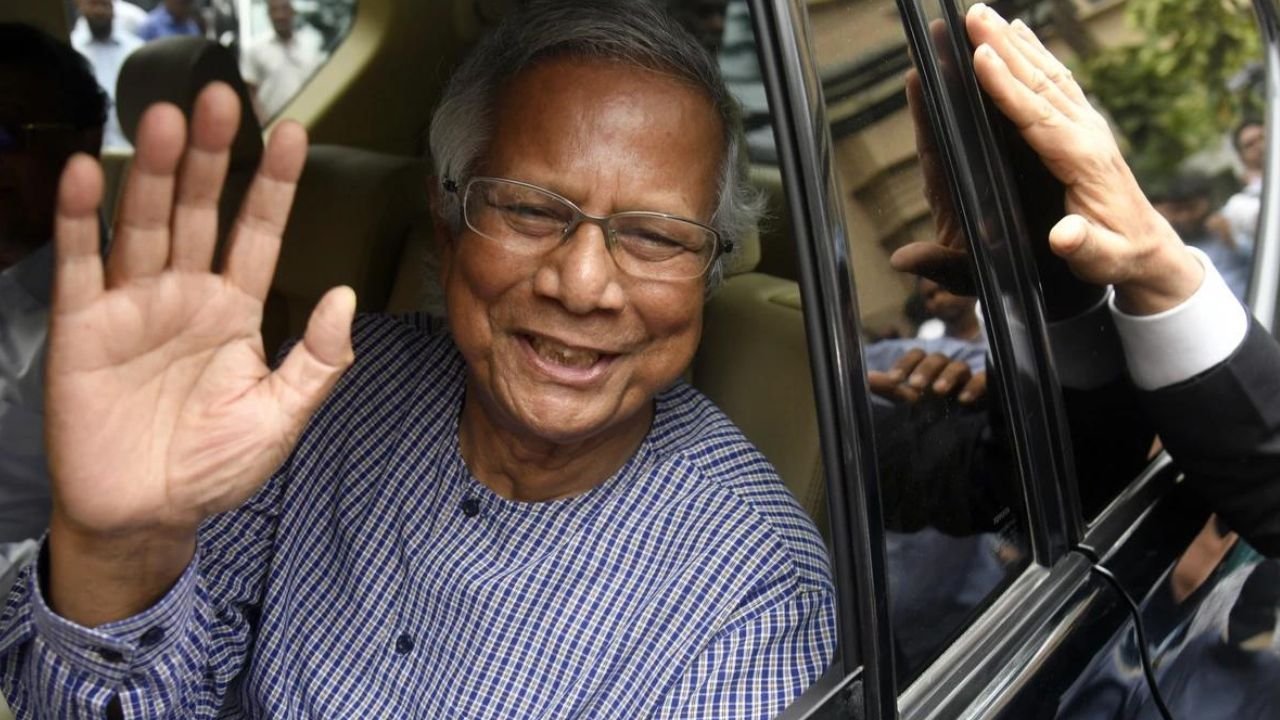
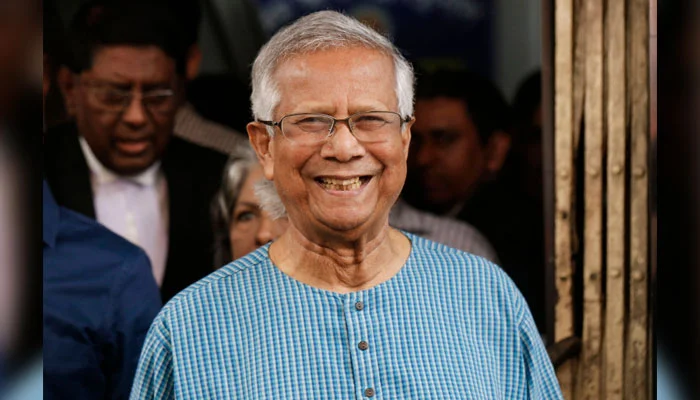
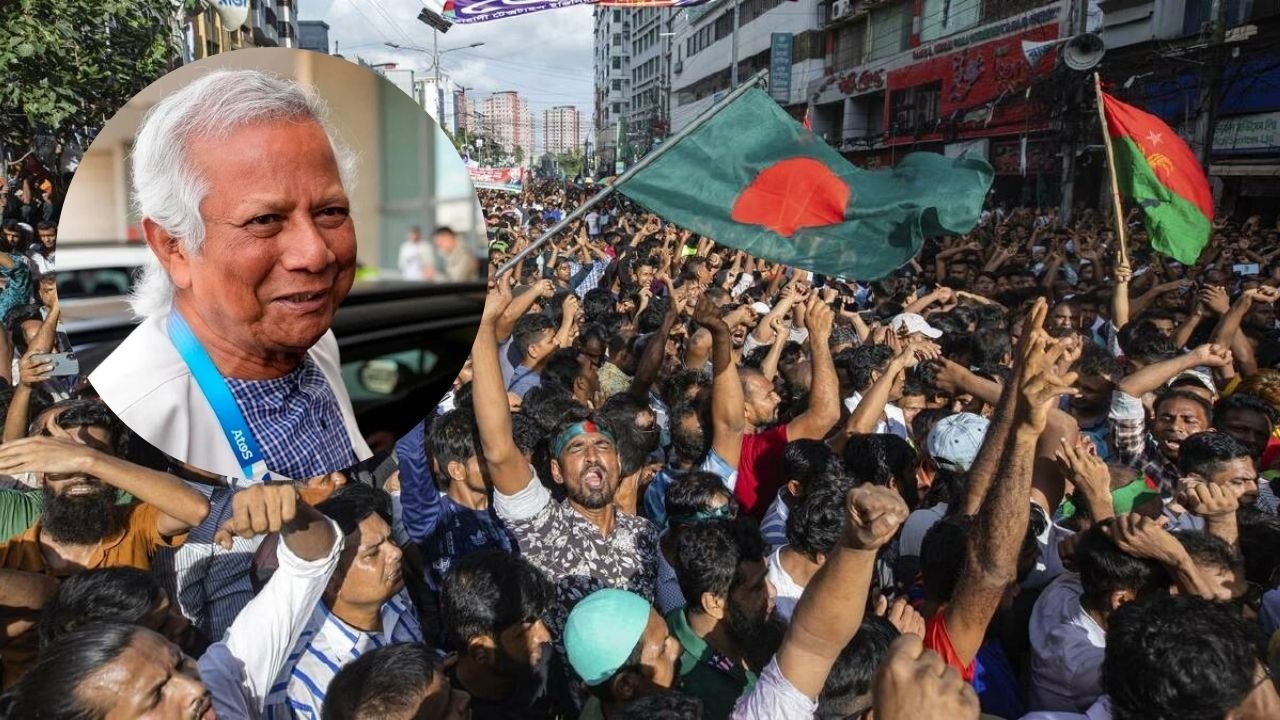
    Nobel Peace Prize winner Muhammad Yunus on Thursday paid tribute to those killed in Bangladesh’s deadly protests that toppled Sheikh Hasina’s government, saying their sacrifices had brought the nation a “second independence.”

    “Today is a glorious day for us,” he told reporters at the airport in Dhaka shortly after returning to the country to lead a caretaker government. “Bangladesh has created a new victory day. Bangladesh has got a second independence.”

    Yunus returned to Bangladesh Thursday, landing at the capital’s airport ahead of his expected swearing in to lead a caretaker government, an AFP reporter said.

  • Turkish novel written through prison bars becomes bestseller

    Turkish novel written through prison bars becomes bestseller

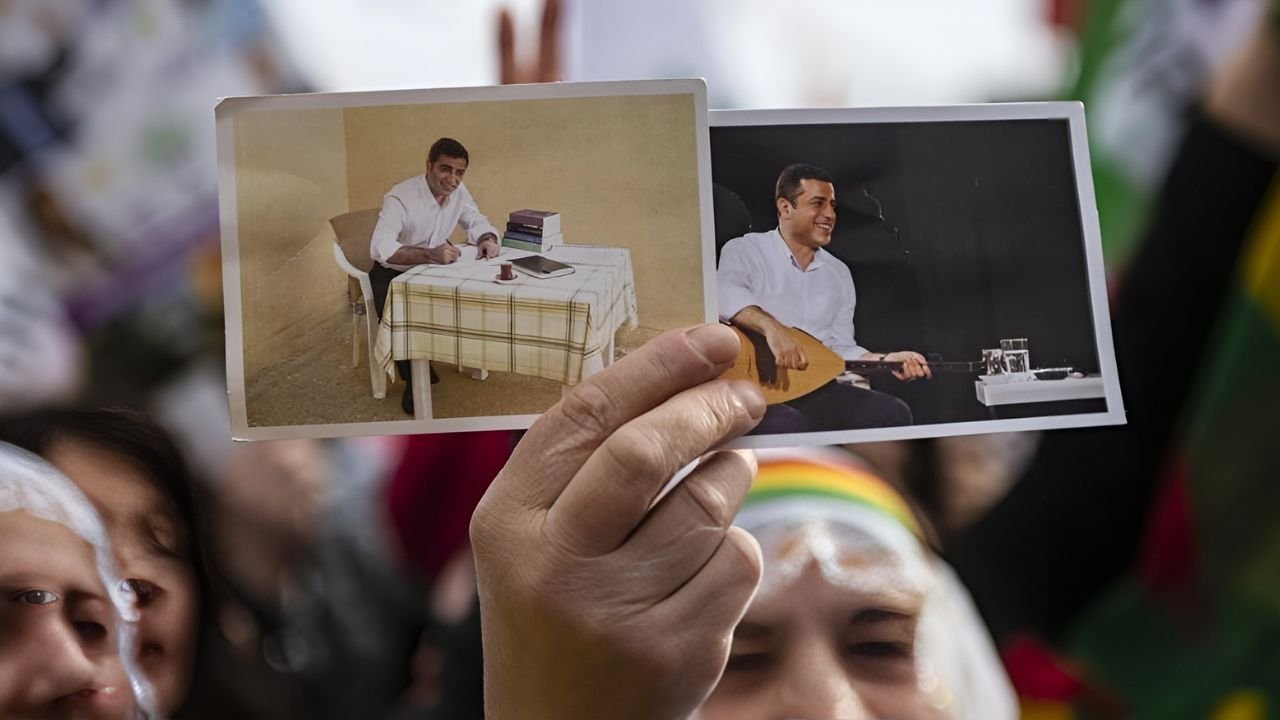
    A jailed Kurdish leader and a Turkish writer on the other side of the bars have used their pen pal exchanges to write one of Turkey’s highest-selling books. The crime novel Duet in Purgatory, which features a retired left-wing lawyer and a bitter ageing general with a tortuous past, has been a roaring success.

    The two writers developed the story, which spans the last 40 years of Turkey’s tumultuous history and the long-standing Kurdish conflict, without ever discussing the plot. “It was a risky gamble to try and write a novel like you’d play chess, move by move, without agreeing on the plot, the characters or the style – nothing,” Selahattin Demirtas told a literary critic in an interview from prison.

    The writing of the story began when author and translator Yigit Bener sent the jailed Kurdish leader Demirtas, who is serving a 42-year sentence, a copy of Louis-Ferdinand Celine’s classic novel Journey to the End of the Night. He also put a note inside – “the expression of my solidarity”.

    Demirtas, who is 51 and a former co-president of the third largest political party in Turkey’s parliament was jailed in 2016 with the European Court of Human Rights later condemning his detention as political and calling for his release.

    “I couldn’t accept that this man for whom, like six million others, I had voted for, and whose ideas I share, found himself behind bars while I am free,” said Bener.

    ‘A lot of fun’

    Bener, who lived in exile in the 1980s, had praised Demirtas’s collection of short stories Dawn, and the two began corresponding via the politician’s lawyer. The re-election of Turkey’s President Recep Tayyip Erdogan in May 2023 killed Demirtas’s hope of an early release, so Bener pitched the idea of taking their correspondence further.

    “What if we wrote a novel, both of us?” Bener suggested, although he had not thought about a plot or characters and hadn’t intended it as a serious project.

    While the idea originally sought to keep the prisoner busy, the duo soon wrapped 13 chapters. Bener refused to say who wrote first, but said that the pair took turns to write. “We had a lot of fun but we had to finish,” said Bener. “We put it aside for two months before we had a few friends read it.”

    Demirtas’s publishing house Dipnot, which has put out his previous novels and short stories, initially printed 55,000 copies last month, with more to come in September.

    “Our personal stories, mine and Yigit’s trajectories contributed to shaping the novel. He motivated me when I needed it,” said the Kurdish political leader.

    The secret behind the novel’s success is its timely relevance, said Bener.

    “The book poses the question of reconciliation through two characters from the same generation of losers who share the same feeling of defeat,” said Bener. “The idea speaks to today’s Turkey which is more polarised than ever.”

    Bener was “extremely emotional” when he finally got permission to meet Demirtas in Edirne prison in northwest Turkey on the day of the book’s release, as the opposition leader is in isolation and only allowed weekly visits from his lawyer or family.

    Exceptionally, he was let out of the small cell where he has been locked up for eight years, which he shares with a former mayor of the Kurdish city of Diyarbakir, Adnan Selcuk Mizrakli.

    Critics have praised the “funny, fast-paced and spirited narrative”, with readers rushing to see the free half of the writing duo as he tours bookshops.

  • German woman to pay 600 euros as fine for using pro-Palestinian slogan

    German woman to pay 600 euros as fine for using pro-Palestinian slogan

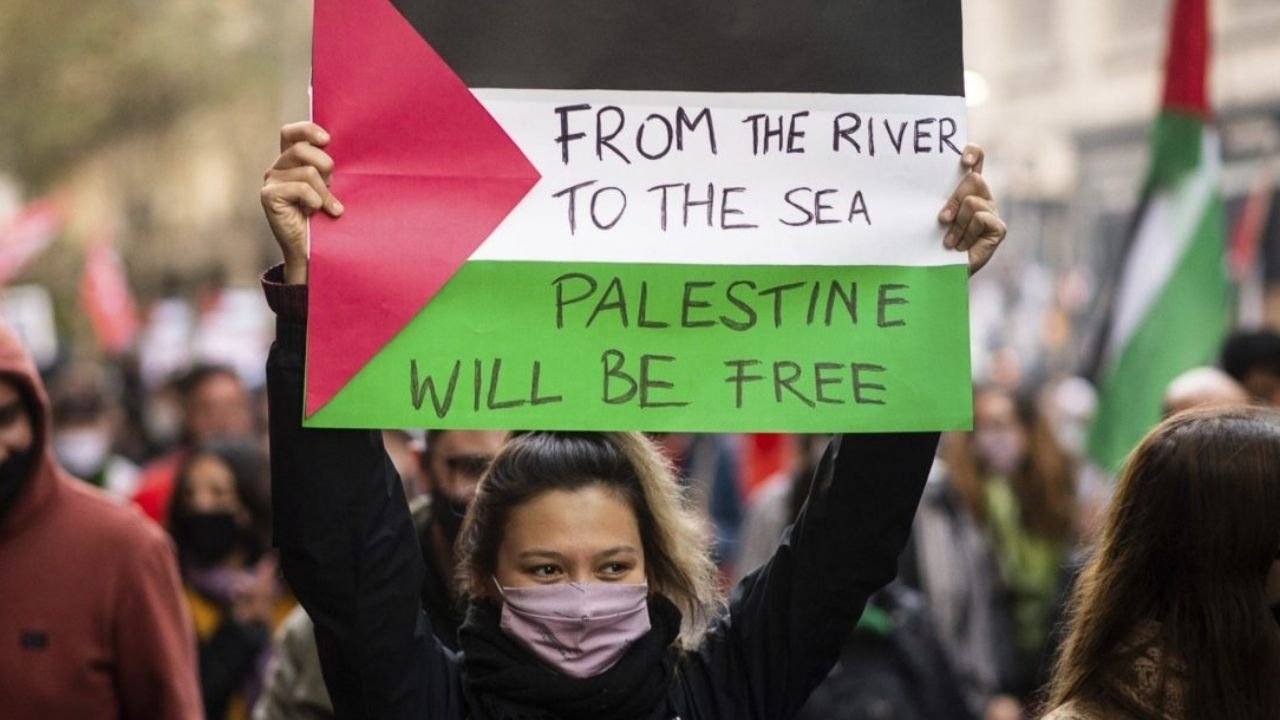
    BERLIN: A Berlin court on Tuesday fined a woman €600 euros (1, 82, 159 rupees) for using the phrase “from the river to the sea, Palestine will be free” at a protest, in a ruling slammed as a “dark day for freedom of expression” by her lawyer.

    The 22-year-old, named only as Ava M, was found guilty of using the slogan at a banned gathering in Berlin’s Neukoelln district on October 11, according to a court spokeswoman.

    The court concluded that the woman’s use of the phrase so soon after the October 7 raid in Israel meant it “could only be understood as a denial of Israel’s right to exist and an endorsement of the attack”, the spokeswoman said.

    “From the river to the sea, Palestine will be free” is seen by some as a call for the destruction of Israel, though others say it simply appeals to equality for Palestinians and Israelis.

    German Interior Minister Nancy Faeser outlawed the phrase in November as part of a ban on the activities of Hamas.

    However, the ban is legally controversial, and courts in different parts of Germany have handed down different rulings on cases involving the phrase, with many finding it to be permissible.

    Lawyer Alexander Gorski, who represented the woman in Berlin, said it was “a dark day for freedom of expression”.

    “My client only wanted to express her hope for a future of democratic coexistence for all people in the region,” he said, adding that his client would appeal the decision.

  • Western ambassadors to skip Nagasaki memorial after Japan exclude Israel

    Western ambassadors to skip Nagasaki memorial after Japan exclude Israel

    Ambassadors from Western countries including the United States will skip a ceremony marking the 79th anniversary of the bombing of Nagasaki after Israel was snubbed, officials said Wednesday.

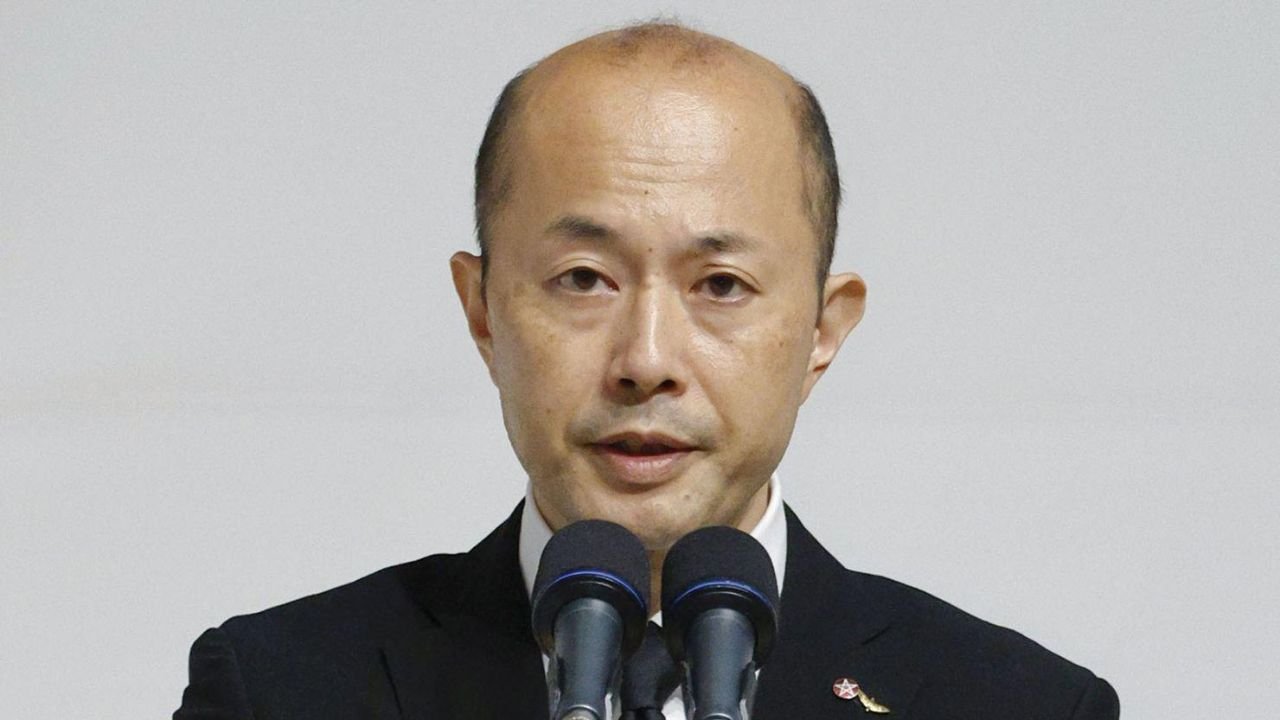
    Nagasaki’s mayor last week said that Israel’s ambassador Gilad Cohen was not invited to Friday’s event in the southern Japanese city because of the risk of possible protests over the Gaza conflict.

    The US and British embassies said on Tuesday that their ambassadors would not take part as a result, and that their countries would be represented by lower-ranking diplomats.

    Media reports said that Australia, Italy, Canada and the European Union, who together with the US, Britain and Germany signed a strongly worded joint letter to Nagasaki’s mayor last month, would follow suit.

    US ambassador Rahm Emanuel will not attend “after the mayor of Nagasaki politicised the event by not inviting the Israeli ambassador”, an embassy spokesperson told AFP.

    Instead Emanuel, 64, who was ex-president Barack Obama’s chief of staff, will go to a separate event at a temple in Tokyo, the spokesperson said.

    The British embassy said that ambassador Julia Longbottom would also not be in Nagasaki, saying that not inviting Israel “creates an unfortunate and misleading equivalency with Russia and Belarus — the only other countries not invited to this year’s ceremony.”

    A spokesperson for the French embassy said that its number two would attend, telling AFP that the “decision not to invite the representative of Israel is regrettable and questionable”.

    Nagasaki mayor Shiro Suzuki had said last week that the decision not to invite Cohen was “not politically motivated” but based on a desire to “hold the ceremony in a peaceful and sombre atmosphere”.

    In June Suzuki said Nagasaki had sent a letter to the Israeli embassy calling for an “immediate ceasefire” in Gaza.

    Cohen, who was invited to and attended a memorial ceremony on Tuesday in Hiroshima, last week had said the Nagasaki decision “sends a wrong message to the world”.

    “As a close friend and like-minded nation of Japan, Israel has attended this ceremony for many years to honor the victims and their families,” he wrote on social media platform X.

    On Monday Cohen told US broadcaster CNN that the security concerns were “invented” and that he was “really surprised by (Suzuki) hijacking this ceremony for his political motivations.”

    In their letter to Suzuki seen by AFP, the six Western envoys had warned that if Israel was excluded “it would become difficult for us to have high-level participation at this event.”

    Government spokesman Yoshimasa Hayashi on Wednesday declined to comment, saying invitations were “a decision for the organiser, Nagasaki City.”

    A Nagasaki official in charge of the ceremony said it was “obviously better to have high-level individuals, like ambassadors themselves, taking part”.

    “What is important is that representatives of the countries will attend the ceremony,” he told AFP.

    hih-mac-stu/kaf/mca

    © Agence France-Presse

  • Bangladesh Nobel winner Yunus to lead interim govt

    Bangladesh Nobel winner Yunus to lead interim govt

    The appointment came quickly after student leaders called on the 84-year-old Yunus — credited with lifting millions out of poverty in the South Asian country — to lead.

    The decision was made in a meeting with President Mohammed Shahabuddin, the heads of the army, navy and air force, and student leaders.

    “(They) decided to form an interim government with Professor Dr Muhammad Yunus as its chief,” Shahabuddin’s office said in a statement.

    “The president has asked the people to help ride out the crisis. Quick formation of an interim government is necessary to overcome the crisis.”

    Yunus will have the title of chief advisor, according to Haid Islam, one of the leaders of Students Against Discrimination who participated in the meeting.

    Shahabuddin agreed that the interim government “will be formed within the shortest time” possible, Islam told reporters.

    Islam described the meeting as “fruitful”.

    However, there were few other details about the planned government, including the role of the military.

    Yunus, who is currently in Europe, told AFP on Tuesday he was willing to lead the interim government.

    “If action is needed in Bangladesh, for my country and for the courage of my people, then I will take it,” he said in a statement, also calling for free elections.

    Muhammad Yunus: Bangladesh’s ‘banker to the poor’

    Nobel-winning microfinance pioneer Muhammad Yunus has been asked by Bangladeshi protest leaders to helm an interim government to replace ousted premier Sheikh Hasina, who had hounded him in speeches and through the courts.

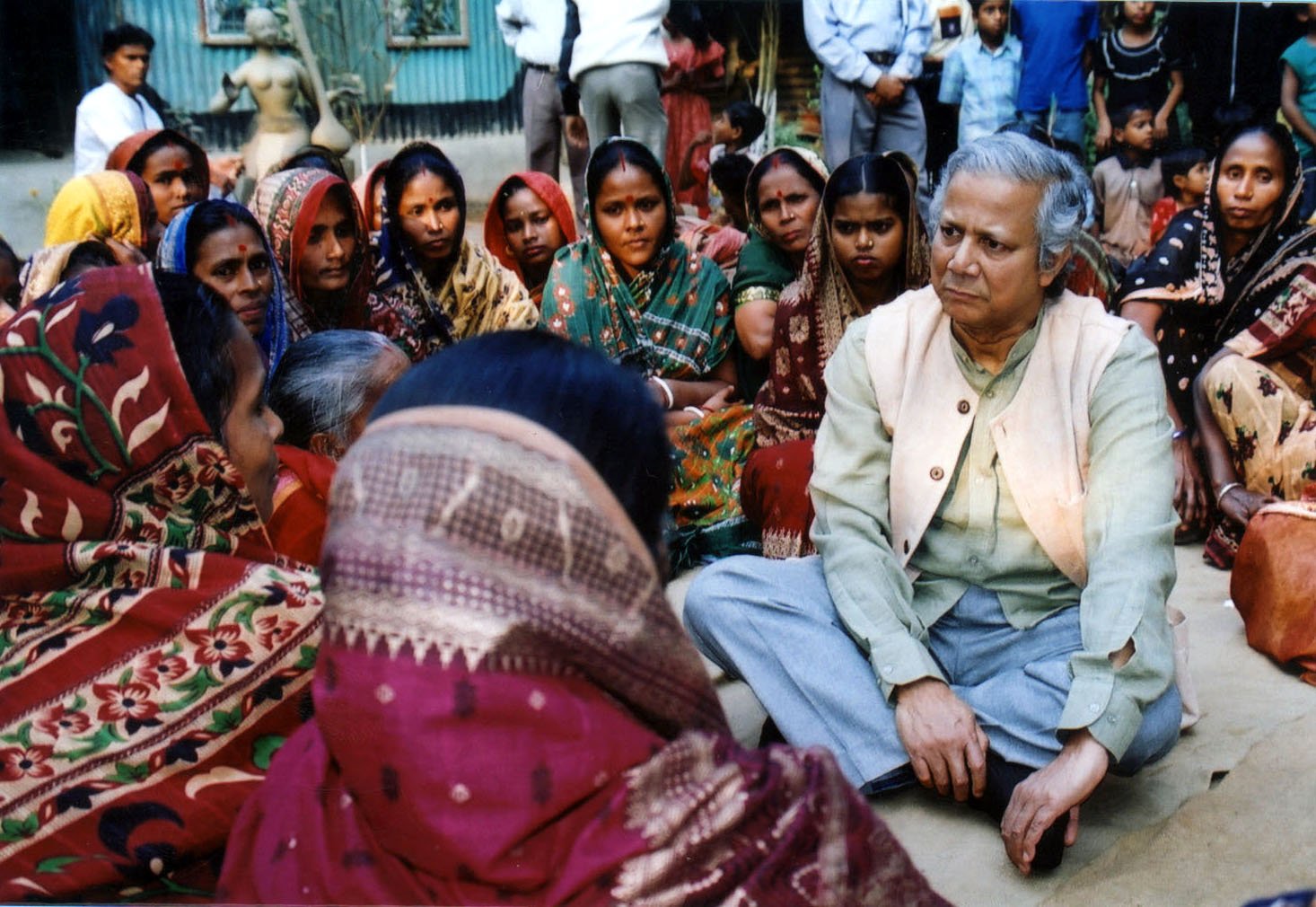
    The 84-year-old, known as the “banker to the poorest of the poor”, was awarded the Peace Prize in 2006 for his work loaning small cash sums to rural women, allowing them to invest in farm tools or business equipment and boost their earnings.

    Grameen Bank, the microfinance lender he founded, was lauded for helping unleash breakneck economic growth in Bangladesh. Since then, scores of developing countries have copied its work.

    “Human beings are not born to suffer the misery of hunger and poverty,” Yunus said during his Nobel lecture, daring his audience to imagine a world where deprivation was confined to history museums.

    But his public profile in Bangladesh earned him the hostility of Hasina, who once accused him of “sucking blood” from the poor.

    In 2007, Yunus announced plans to set up his own “Citizen Power” party to end Bangladesh´s confrontational political culture, which has been punctuated by instability and periods of military rule.

    He abandoned those ambitions within months, but the enmity aroused by his challenge to the ruling elite has persisted.

    Yunus was hit with more than 100 criminal cases and a smear campaign by a state-led Islamic agency that accused him of promoting homosexuality.

    The government unceremoniously forced him out of Grameen Bank in 2011 — a decision fought by Yunus but upheld by Bangladesh´s top court.

    In January he and three colleagues from one of the companies he founded were sentenced to jail terms of six months — but immediately bailed pending appeal — by a Dhaka labour court which found they had illegally failed to create a workers´ welfare fund.

    All four had denied the charges and, with courts accused of rubber-stamping decisions by Hasina´s government, the case was criticised as politically motivated by watchdogs including Amnesty International.

    Yunus was born into a well-to-do family — his father was a successful goldsmith — in the coastal city of Chittagong in 1940.

    He credits his mother, who offered help to anyone in need who knocked on their door, as his biggest influence.

    Yunus won a Fulbright scholarship to study in the United States and returned soon after Bangladesh won its independence from Pakistan in 1971 war. When he returned, he was chosen to head Chittagong University´s economics department, but the young country was struggling through a severe famine and he felt compelled to take practical action.

    “Poverty was all around me, and I could not turn away from it,” he said in 2006.

    “I found it difficult to teach elegant theories of economics in the university classroom… I wanted to do something immediate to help people around me.”

    After years of experimenting with ways to provide credit for people too poor to qualify for traditional bank loans, he founded Grameen Bank in 1983.

    The institution now has more than nine million clients on its books, according to its most recent annual report (2020), and more than 97 percent of its borrowers are women.

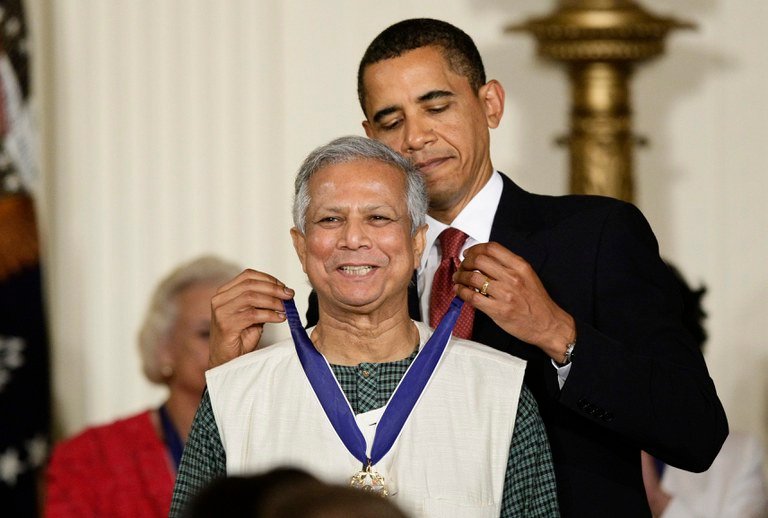
    Yunus has won numerous high honours for his life´s work, including the US Presidential Medal of Freedom, which Barack Obama awarded him.

  • Military in control of Bangladesh after Hasina flees

    Military in control of Bangladesh after Hasina flees

    Bangladesh’s military was in control of the country on Tuesday after mass protests forced longtime ruler Sheikh Hasina to resign and flee.

    Hasina, 76, had been in power since 2009 but was accused of rigging elections in January and then watched millions of people take to the streets over the past month demanding she step down.

    Hundreds of people died as security forces sought to quell the unrest, but the protests grew, and Hasina finally fled Bangladesh aboard a helicopter on Monday as the military turned against her.

    Army chief General Waker-Uz-Zaman announced Monday afternoon on state television that Hasina had resigned and the military would form a caretaker government.

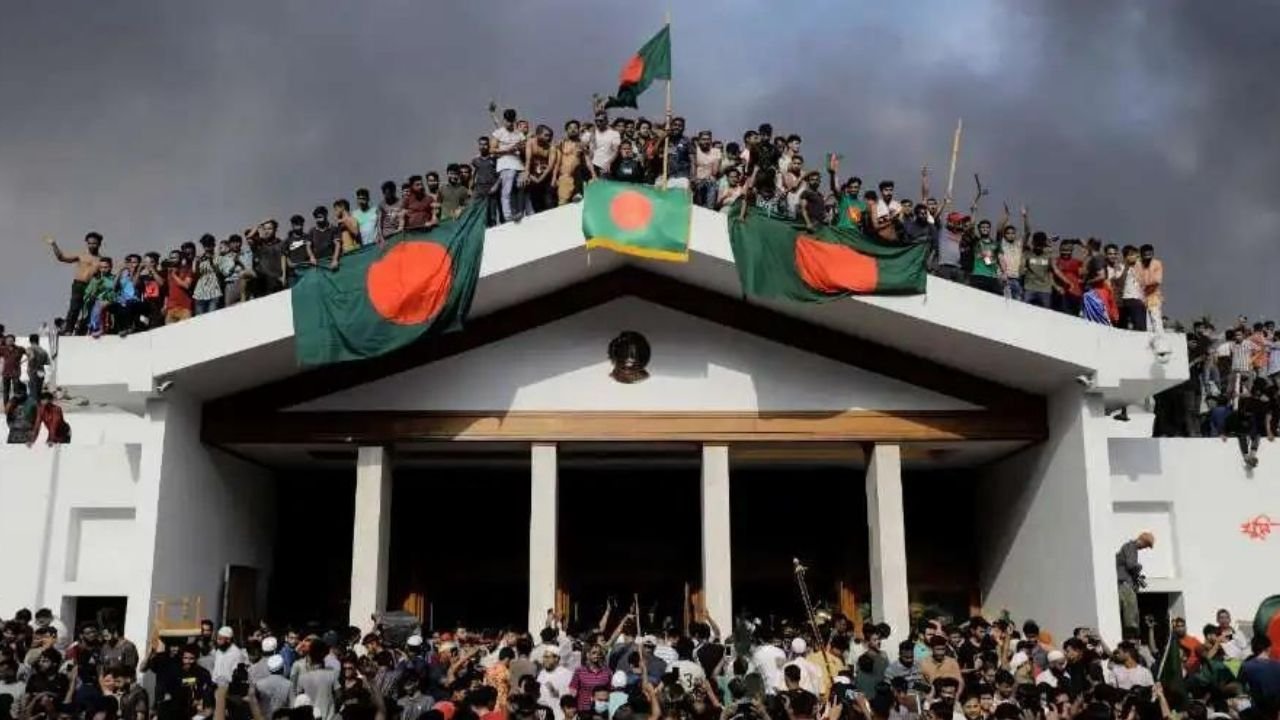
    “The country has suffered a lot, the economy has been hit, many people have been killed — it is time to stop the violence,” said Waker, shortly after jubilant crowds stormed and looted Hasina’s official residence.

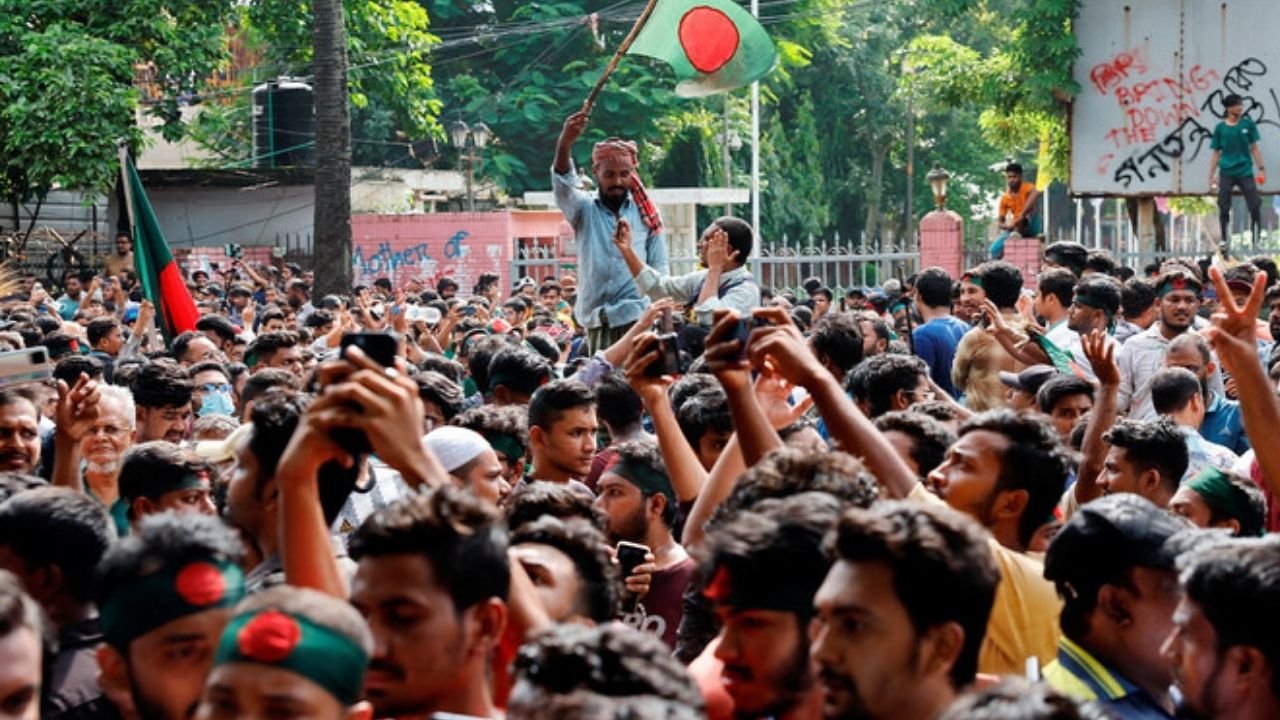
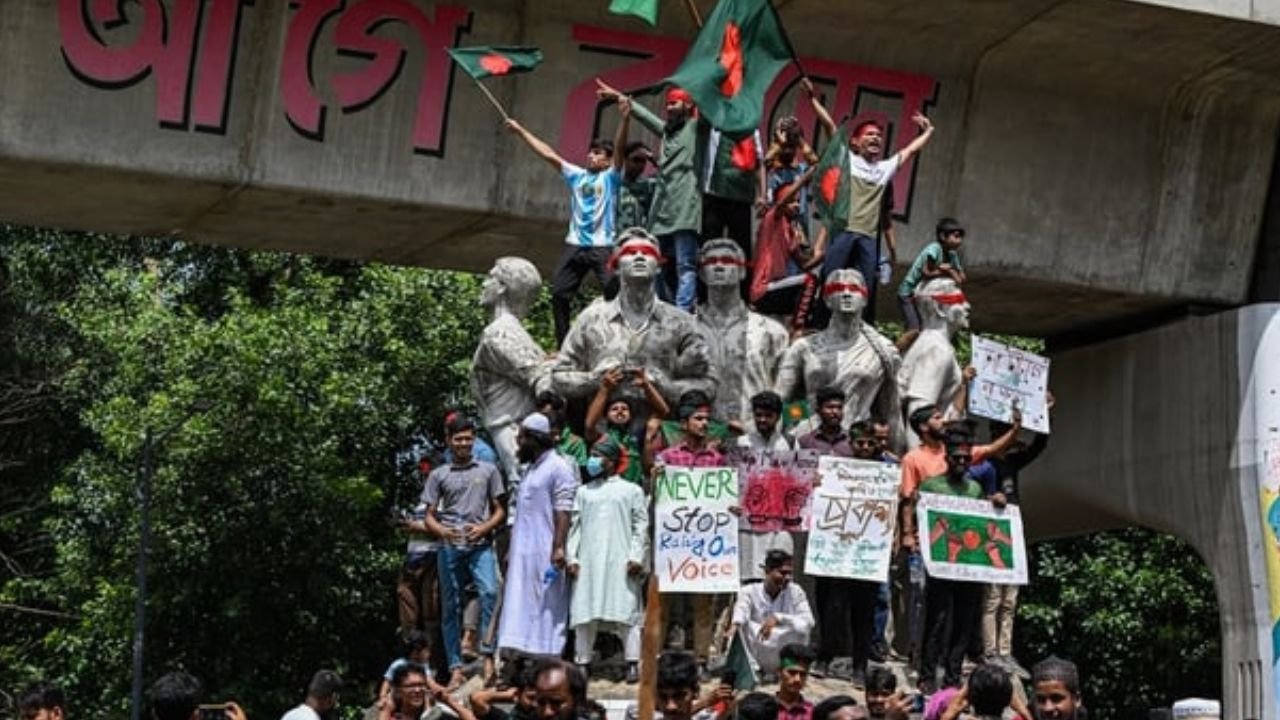
    Millions of Bangladeshis flooded the streets of Dhaka after Waker’s announcement.

    “I feel so happy that our country has been liberated,” said Sazid Ahnaf, 21, comparing the events to the independence war that split the nation from Pakistan more than five decades ago.

    “We have been freed from a dictatorship. It’s a Bengal uprising, what we saw in 1971, and now seeing in 2024.”

    But there were also scenes of chaos and anger, with police reporting at least 66 people killed on Monday as mobs launched revenge attacks on Hasina’s allies.

    Protesters stormed parliament and torched TV stations, while some smashed statues of Hasina’s father, Sheikh Mujibur Rahman, the country’s independence hero.

    Others set a museum dedicated to the former leader on fire, flames licking at portraits in destruction barely thinkable just hours before, when Hasina had the loyalty of the security forces under her autocratic grip.

    “The time has come to make them accountable for torture,” said protester Kaza Ahmed. “Sheikh Hasina is responsible for murder.”

    Offices of Hasina’s Awami League across the country were torched and looted, eyewitnesses told AFP.

    The unrest began last month in the form of protests against civil service job quotas and then escalated into wider calls for Hasina to stand down.

    Her government was accused by rights groups of misusing state institutions to entrench its hold on power and stamp out dissent, including through the extrajudicial killing of opposition activists.

    At least 366 people died in the unrest that began in early July, according to an AFP tally based on police, government officials and doctors at hospitals.

    Student protest leaders, ahead of an expected meeting with the army chief, said Tuesday that they wanted Nobel laureate and microfinance pioneer Muhammad Yunus, 84, to lead the government.

    “In Dr. Yunus, we trust,” Asif Mahmud, a key leader of the Students Against Discrimination (SAD) group, wrote on Facebook.

    Waker said a curfew would be lifted on Tuesday morning, with the military set to lead an interim government.

    Bangladeshi President Mohammed Shahabuddin late Monday ordered the release of prisoners from the protests, as well as former prime minister and key opposition leader Khaleda Zia, 78.

    Zia, who is in poor health, was jailed by her arch-rival Hasina for graft in 2018.

    The president and army chief also met late Monday, alongside key opposition leaders, with the president’s press team saying it had been “decided to form an interim government immediately.”

    It was not immediately clear if Waker would lead it.

    Hasina’s fate was also uncertain. She fled the country by helicopter, a source close to the ousted leader told AFP.

    Media in neighboring India reported Hasina had landed at a military air base near New Delhi.

    A top-level source said she wanted to “transit” on to London, but calls by the British government for a UN-led investigation into “unprecedented levels of violence” put that into doubt.

    There were widespread calls by protesters to ensure Hasina’s close allies remained in the country.

    Bangladesh’s military said they had shut Dhaka’s international airport on Monday evening, without giving a reason.

    Bangladesh has a long history of coups.

    The military declared an emergency in January 2007 after widespread political unrest and installed a military-backed caretaker government for two years.

    Michael Kugelman, director of the South Asia Institute at the Washington-based Wilson Center, warned that Hasina’s departure “would leave a major vacuum” and that the country was in “uncharted territory.”

    “The coming days are critical,” he said.

    UN Secretary-General Antonio Guterres stressed the importance of a “peaceful, orderly and democratic transition,” his spokesman said. European Union foreign policy chief Josep Borrell echoed that call.

    Former colonial ruler Britain and the United States meanwhile urged “calm.”

  • Protesters storm Bangladesh PM’s palace after she flees

    Protesters storm Bangladesh PM’s palace after she flees

    Cheering protesters stormed Bangladeshi Prime Minister Sheikh Hasina’s palace on Monday after she fled, the culmination of more than a month of deadly anti-government protests.

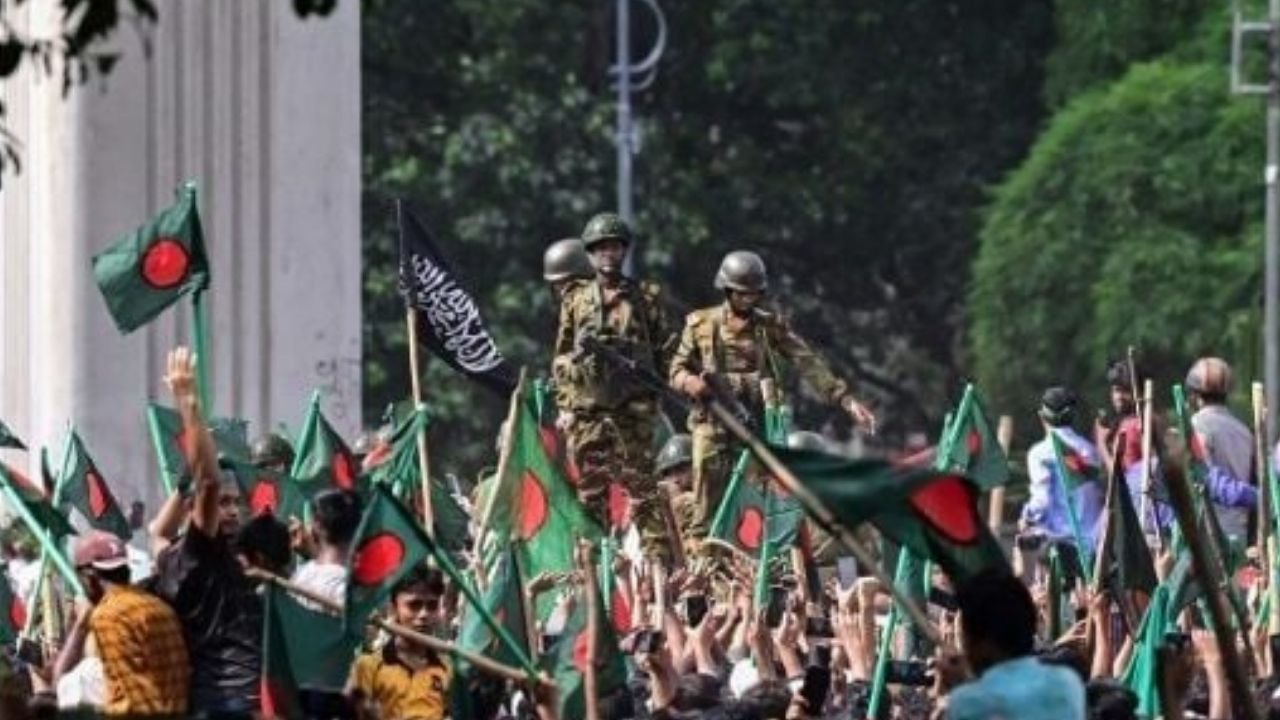
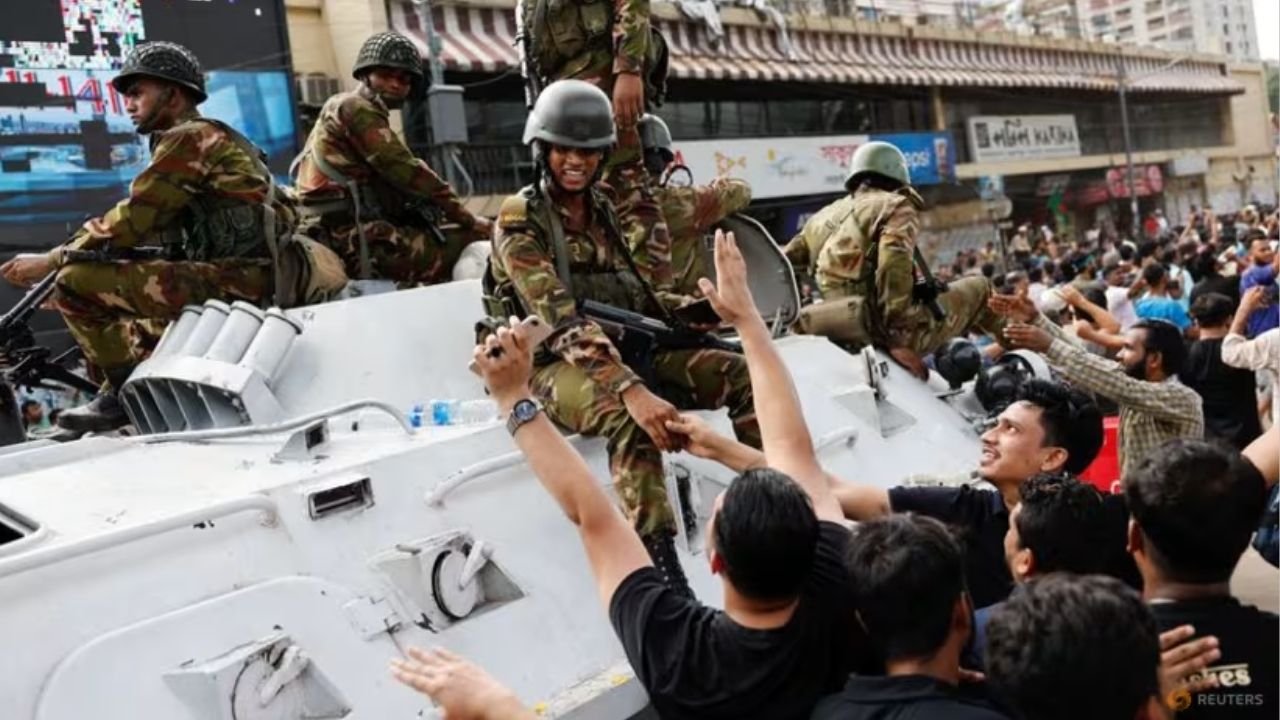
    Jubilant looking crowds waved flags, some dancing on top of a tank in the streets of Dhaka on Monday morning, before hundreds broke through the gates of Hasina’s official residence.

    Bangladesh’s Channel 24 broadcast images of crowds running into the compound, waving to the camera as they celebrated.

    A source close to Hasina, 76, had earlier told AFP she had left her palace for a “safer place”.

    Bangladesh’s army chief Waker-Uz-Zaman would address the nation on Monday afternoon, a military spokesman told AFP without giving further details.

    Before the protesters had stormed the compound, Hasina’s son urged the country’s security forces to block any takeover from her 15-year rule.

    “Your duty is to keep our people safe and our country safe and to uphold the constitution,” her son, US-based Sajeeb Wazed Joy, said in a post on Facebook.

    “It means don’t allow any unelected government to come in power for one minute, it is your duty.”

    Security forces had supported Hasina’s government throughout the unrest, which began last month against civil service job quotas and then escalated into wider calls for her to stand down.

    But the protesters defied curfews and deadly force.

    At least 94 people were killed on Sunday, including 14 police officers, in the deadliest day of the unrest.

    Protesters and government supporters countrywide battled each other with sticks and knives, and security forces opened fire.

    The day’s violence took the total number of people killed since protests began in early July to at least 300, according to an AFP tally based on police, government officials and doctors at hospitals.

    Waker told officers on Saturday that the military “always stood by the people”, according to an official statement.

    The military declared an emergency in January 2007 after widespread political unrest and installed a military-backed caretaker government for two years.

    ‘Final protest’

    Hasina has ruled Bangladesh since 2009 and won her fourth consecutive election in January after a vote without genuine opposition.

    Her government is accused by rights groups of misusing state institutions to entrench its hold on power and stamp out dissent, including through the extrajudicial killing of opposition activists.

    Demonstrations began over the reintroduction of a quota scheme that reserved more than half of all government jobs for certain groups.

    The protests escalated despite the scheme having been scaled back by Bangladesh’s top court.

    Soldiers and police with armoured vehicles in Dhaka had barricaded routes to Hasina’s office with barbed wire on Monday morning, but vast crowds flooded the streets, tearing down barriers.

    The Business Standard newspaper estimated as many as 400,000 protesters were on the streets but it was impossible to verify the figure.

    “The time has come for the final protest,” said Asif Mahmud, one of the key leaders in the nationwide civil disobedience campaign.

    In several cases, soldiers and police did not intervene to stem Sunday’s protests, unlike during the past month of rallies that repeatedly ended in deadly crackdowns.

    “Let’s be clear: The walls are closing in on Hasina: She’s rapidly losing support and legitimacy,” Michael Kugelman, director of the South Asia Institute at the Washington-based Wilson Center, told AFP.

    “The protests have taken on immense momentum, fuelled by raw anger but also by the confidence that comes with knowing that so much of the nation is behind them,” he said.

    In a hugely symbolic rebuke of Hasina, a respected former army chief demanded the government “immediately” withdraw troops and allow protests.

    “Those who are responsible for pushing people of this country to a state of such an extreme misery will have to be brought to justice,” ex-army chief General Ikbal Karim Bhuiyan told reporters Sunday.

    The anti-government movement had attracted people from across society in the South Asian nation of about 170 million people, including film stars, musicians and singers.

  • Sheikh Hasina leaves Bangladesh, martial law likely

    Sheikh Hasina leaves Bangladesh, martial law likely

    Bangladeshi Prime Minister Sheikh Hasina fled her palace on Monday, a source told AFP, as masses of protesters demanding her resignation roamed the streets of Dhaka. The army chief was set to address the nation.

    Jubilant-looking crowds waved flags, peacefully celebrating, including some dancing on top of a tank, as a source close to the embattled leader said she had left her palace in the capital for a “safer place”.

    Hasina’s son urged the country’s security forces to block any takeover from her rule, while a senior advisor told AFP that her resignation was a “possibility” after being questioned about it.

    “She wanted to record a speech, but she could not get an opportunity to do that,” the source close to Hasina told AFP.

    Bangladesh’s army chief, Waker-Uz-Zaman, will address the nation on Monday afternoon, a military spokesman told AFP without giving further details.

    Waker told officers on Saturday that the military “always stood by the people”, according to an official statement.

    The military declared an emergency in January 2007 afer widespread political unrest and installed a military-backed caretaker government for two years.

    ‘Uphold the constitution’

    Rallies that began last month against civil service job quotas have escalated into some of the worst unrest of Hasina’s 15-year rule and shifed into wider calls for the 76-year-old to leave.

    “Your duty is to keep our people safe and our country safe and to uphold the constitution,” her son, US-based Sajeeb Wazed Joy, said in a post on Facebook.

    “It means don’t allow any unelected government to come in power for one minute, it is your duty.”

    But protesters on Monday defied security forces enforcing a curfew, marching on the capital’s streets afer the deadliest day of unrest since demonstrations erupted last month.

    Internet access was tightly restricted on Monday, ofices were closed and more than 3,500 factories servicing Bangladesh’s economically vital garment industry were shut.

    Soldiers and police with armoured vehicles in Dhaka had barricaded routes to Hasina’s office with barbed wire, AFP reporters said, but vast crowds flooded the streets, tearing down barriers.

    The Business Standard newspaper estimated as many as 400,000 protesters were on the streets but it was impossible to verify the figure.
    “The time has come for the final protest,” said Asif Mahmud, one of the key leaders in the nationwide civil disobedience campaign.

    ‘Shocking violence’

    At least 94 people were killed on Sunday, including 14 police officers.

    Protesters and government supporters countrywide battled each other with sticks and knives, and security forces opened fire.

    The day’s violence took the total number of people killed since protests began in early July to at least 300, according to an AFP tally based on police, government oficials and doctors at hospitals.

    “The shocking violence in Bangladesh must stop,” United Nations rights chief Volker Turk said in a statement.

    “This is an unprecedented popular uprising by all measures,” said Ali Riaz, an Illinois State University politics professor and expert on Bangladesh.
    “Also, the ferocity of the state actors and regime loyalists is unmatched in history.”

    Protesters in Dhaka on Sunday were seen climbing a statue of Hasina’s father, Sheikh Mujibur Rahman, the country’s independence leader, and smashing it with hammers, according to videos on social media verified by AFP.

    ‘Walls are closing in’

    In several cases, soldiers and police did not intervene to stem Sunday’s protests, unlike during the past month of rallies that repeatedly ended in deadly crackdowns.

    “Let’s be clear: The walls are closing in on Hasina. She’s rapidly losing support and legitimacy,” Michael Kugelman, director of the South Asia Institute at the Washington-based Wilson Center, told AFP.

    “The protests have taken on immense momentum, fuelled by raw anger but also by the confidence that comes with knowing that so much of the nation is behind them,” he said.

    In a hugely symbolic rebuke of Hasina, a respected former army chief demanded the government “immediately” withdraw troops and allow protests.

    “Those who are responsible for pushing people of this country to a state of such extreme misery will have to be brought to justice,” ex-army chief General Ikbal Karim Bhuiyan told reporters Sunday.

    The anti-government movement has attracted people from across society in the South Asian nation of about 170 million people, including film stars, musicians and singers.

    Hasina has ruled Bangladesh since 2009 and won her fourth consecutive election in January afer a vote without genuine opposition.

    Her government is accused by rights groups of misusing state institutions to entrench its hold on power and stamp out dissent, including through the extrajudicial killing of opposition activists.

    Demonstrations began over the reintroduction of a quota scheme that reserved more than half of all government jobs for specific groups.

    The protests have escalated despite the scheme having been scaled back by Bangladesh’s top court.