Author: afp

  • Slow art: the master illuminator of Tehran

    Slow art: the master illuminator of Tehran

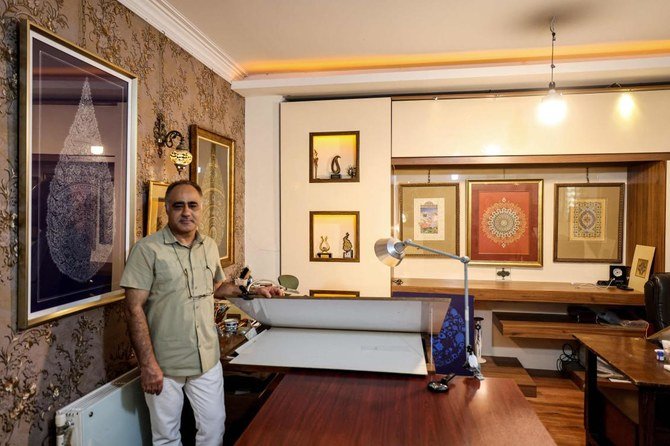
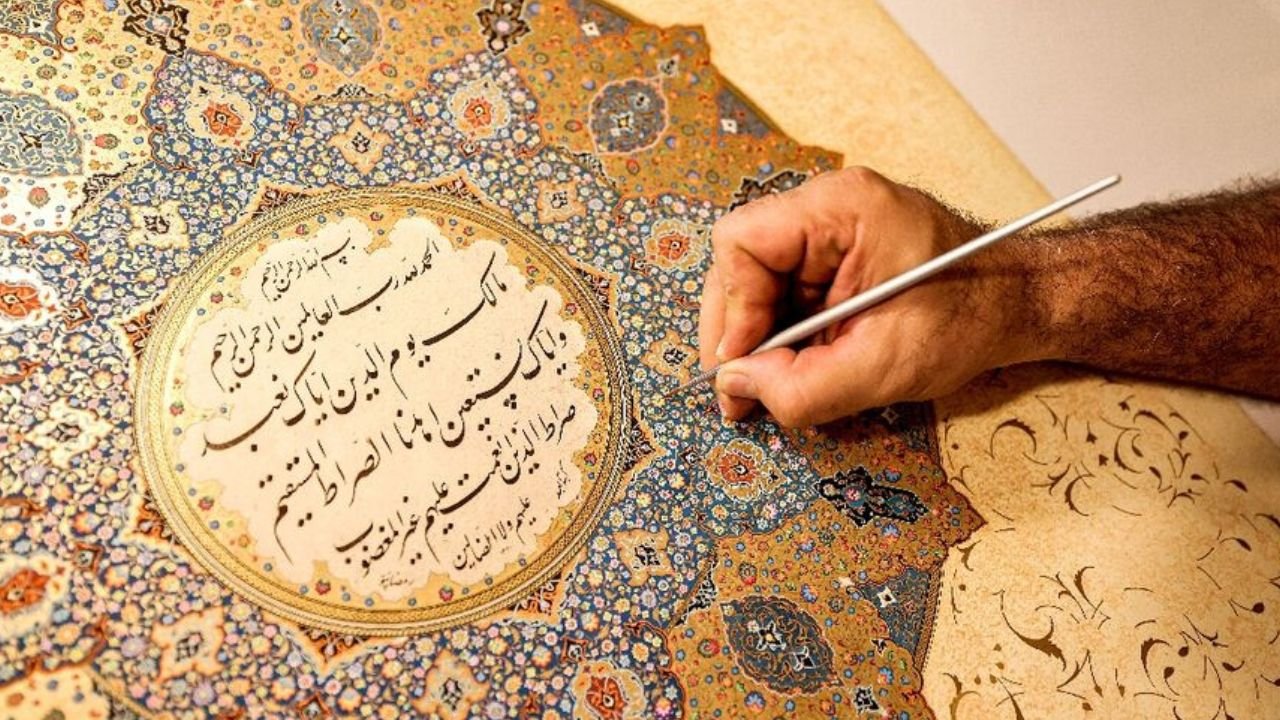
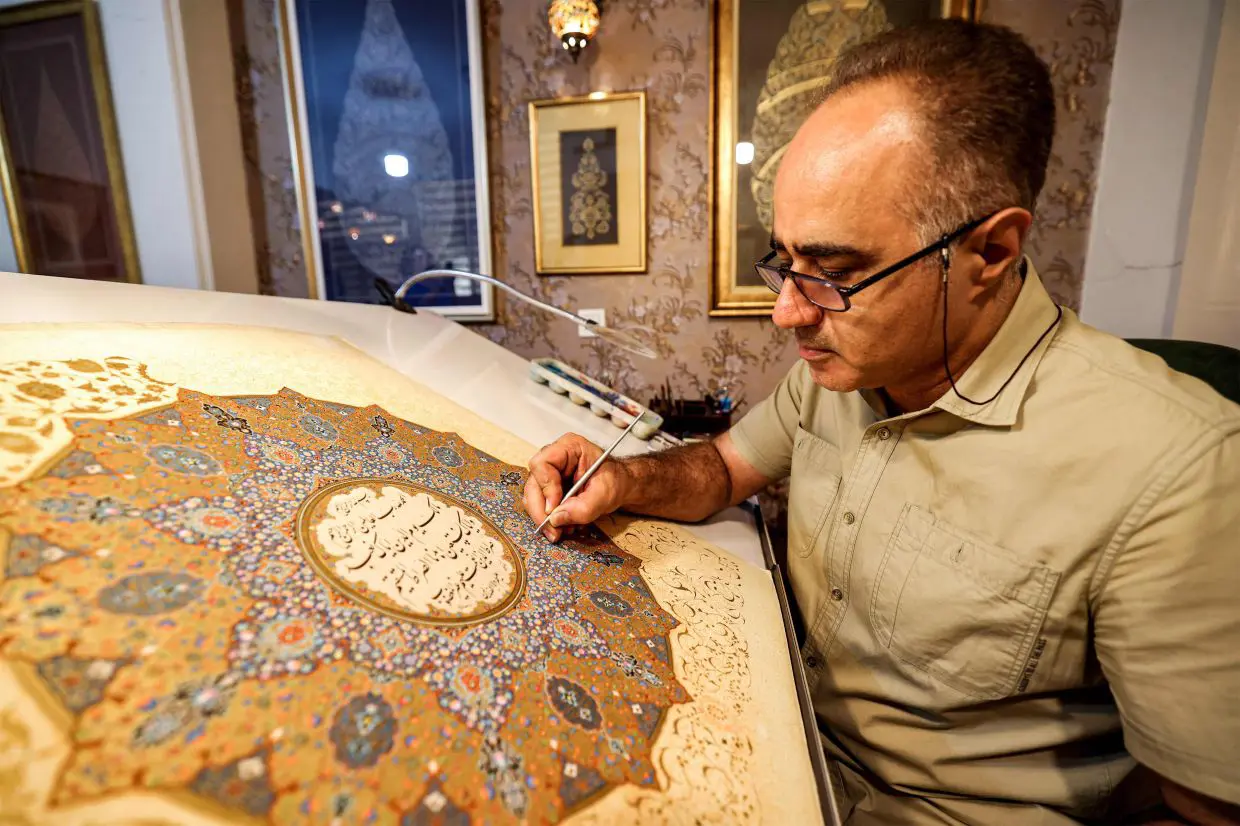
    Iranian artist Mohammad Hossein Aghamiri sometimes labours for six months on a single design, very carefully — he knows a single crooked line could ruin his entire artwork.

    In the age of AI-assisted graphic design on computer screens, the centuries-old tradition of Persian illumination offers an antidote to rushing the creative process.

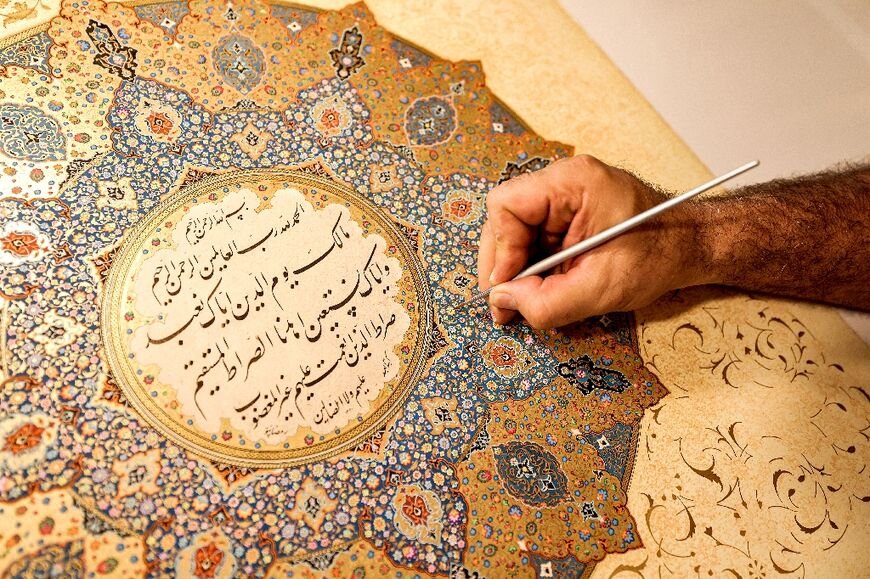
    Aghamiri’s fine brush moves natural pigments onto the paper with deliberate precision as he creates intricate floral patterns, religious motifs and elegantly flowing calligraphy.

    The exquisite artwork has for centuries embellished literary manuscripts, religious texts and royal edicts as well as many business contracts and marriage certificates.

    Aghamiri, 51, is one of Iran’s dozen or so remaining masters of the ancient illumination art of Tazhib, which was inscribed last year on UNESCO’s list of intangible heritage.

    “It is a very unique job that requires a lot of patience and precision,” Aghamiri, a veteran of the craft with over 30 years’ experience, told AFP in his downtown Tehran studio.

    “It’s not accessible to everyone.”

    Tazhib’s non-figurative and geometric flourishes have traditionally adorned the margins of holy books and epic poems.

    The artform dates back to the Sassanid era in pre-Islamic Iran but flourished after the seventh century advent of Islam, which banned human depictions.

    Aghamiri says it often takes him months to finish one design and that a single misplaced stroke that disrupts its symmetrical harmony can force him to start over.

    – Global workshops online –

    When AFP visited, he was working on a so-called shamsa design, a symbolic representation of the sun, about 50 centimetres across with intertwined abstract, geometric and floral patterns.

    He said he started the piece over four months ago and aimed to finish it within six weeks, using natural pigments such as lapis lazuli, saffron, gouache and pure gold, from China.

    “Gold has a very strong visual appeal,” said Aghamiri. “It’s expensive and it enhances the perceived value of the work.”

    Aghamiri hails from a family of artists and artisans with a rich history in Iranian craft traditions including calligraphy, miniature painting and carpet design.

    His work has been showcased in museums in Iran and in nearby Arab countries of the Gulf region where interest in Oriental and Islamic art continues to grow.

    “Eighty percent of my works are sold in the region, especially in the Emirates and Qatar” as well as in Turkey, he said.

    In recent years, Aghamiri garnered interest abroad and even began teaching the ancient art online to students from across the world, notably the United States.

    Soon, he also hopes to hold workshops in Britain for his craft, which he says is fundamentally different from European illumination art, which flourished in the Middle Ages.

    European designs, he said, are more figurative and can depict human faces, animals and landscapes, and often illustrate biblical scenes.

    UNESCO labelled the Persian art of illumination as part of the Intangible Cultural Heritage of Humanity in December 2023, at the request of Iran as well as Turkey, Azerbaijan and Uzbekistan.

    “Twenty years ago, I didn’t have much hope” for the future of Persian illumination, said Aghamiri. “But things have changed, and I see that this art is becoming more and more popular.”
  • At least 27 crushed to death in India religious gathering: govt

    At least 27 crushed to death in India religious gathering: govt

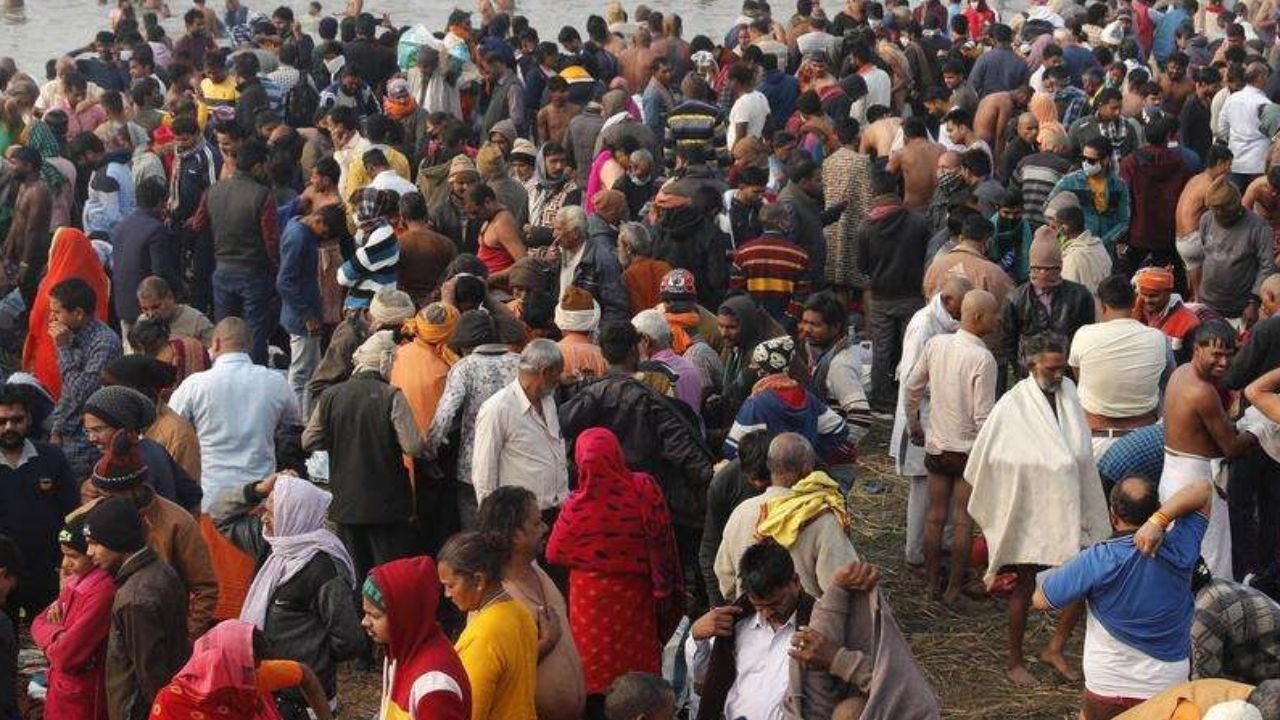
    At least 27 people were crushed to death at a Hindu religious gathering in northern India, with several more injured and fears the toll could rise, government medics said Tuesday.

    “We have received 27 bodies so far… bodies are still coming,” Uttar Pradesh state senior medical officer Ram Mohan Tiwari told AFP.

    Crowds had gathered to celebrate the Hindu deity Shiva in the city of Hathras, some 140 kilometres (87 miles) southeast of New Delhi.

    Umesh Kumar Tripathi, chief medical officer, told reporters the dead were 25 women and two men.

    “Many injured have also been admitted,” Tripathi said. “The primary reason is a stampede during a religious event.”

    Deadly accidents are common at places of worship in India during major religious festivals.

    At least 112 people were killed in 2016 after a huge explosion caused by a banned fireworks display at a temple marking the Hindu new year.

    The blast ripped through concrete buildings and ignited a fire at a temple complex in Kerala state, where thousands had gathered.

    Another 115 devotees died in 2013 after a stampede at a bridge near a temple in Madhya Pradesh.

    Up to 400,000 people were gathered in the area, and the stampede occurred after a rumour spread that the bridge was about to collapse.

    About 224 pilgrims died and more than 400 others were injured in a 2008 stampede at a hilltop temple in the northern city of Jodhpur.

  • The Indian women campaigning to criminalise marital rape

    The Indian women campaigning to criminalise marital rape

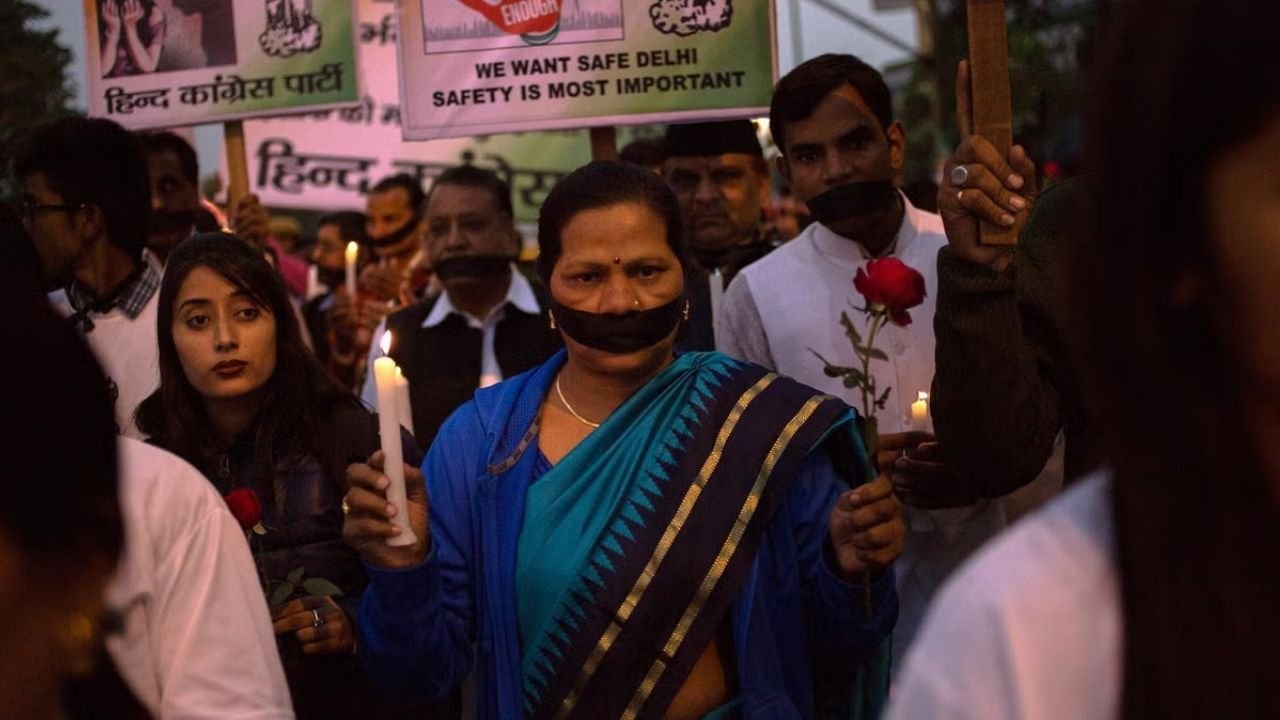
    New Delhi (AFP) – Raped by her husband on her wedding night aged 17, Divya described her repeated suffering — an all-too-common account in India, permitted by a terrifying colonial-era legal loophole.

    “I told him I have never had sex, and asked him if we can take it slowly and try to understand it,” 19-year-old Divya said.

    “He said: ‘No, the first night is very important for us men’.”

    He then slapped her hard, ripped her clothes off and forced himself on her.

    What followed her arranged wedding in 2022 was 19 months of sexual and physical abuse.

    “If I was hurt, it was invisible to him,” said Divya, whose name has been changed to protect her identity.

    “He used to have sex with me ruthlessly”.

    Six percent of married women aged 18-49 report spousal sexual violence, according to the government’s latest National Family Health Survey.

    In the world’s most populous country, that implies more than 10 million women have been sexual victims of their husbands.

    Nearly 18 percent of married women feel they cannot say no if their husbands want sex, according to the health survey.

    And 11 percent of women thought a husband was justified in beating his wife if she refused, it found.

    ‘Victorian mentality’

    Under India’s inherited British-era penal code, an exception clause stated that “sexual acts by a man with his own wife, the wife not being under fifteen years of age, is not rape”.

    India introduced a new penal code on Monday but the exception clause remains — although it does raise the minimum age that a man can rape his wife to 18.

    Lawyer Karuna Nundy is challenging that.

    Nundy, who has a case for the All India Democratic Women’s Association (AIDWA) rights group at the Supreme Court, condemned the clause as “colonialism from a Victorian mentality”.

    She holds a “fervent hope” for change, mentioning some of the more than 50 nations who have outlawed it.

    Chief Justice D. Y. Chandrachud called it an “important issue” this year.

    But the decade-long case has made painfully slow progress.

    In May 2022, a two-judge bench in the Delhi High Court issued a split verdict.

    One judge, C. Hari Shankar, said that while “one may disapprove” of a husband forcibly having sex with his wife, that “cannot be equated with the act of ravishing by a stranger”.

    The other judge, Rajiv Shakdher, disagreed.

    Shakdher said it “would be tragic if a married woman’s call for justice is not heard even after 162 years”, referring to the British-era statute.

    Monika Tiwary from Shakti Shalini, a rights group which supports sexual violence survivors, said marriage should not shield a crime.

    “How can marriage change the definition of rape?” she said.

    “Getting married does not take away the rights over your body.”

    Arranged marriages

    “Most of the survivors do not really have this understanding that it is not okay, and it is marital rape,” Tiwary added.

    “The moment we label it and attach a law to it, people start recognising it, awareness increases”, Tiway added.

    Divya’s marriage was arranged, like many in India.

    But her family did not pay the usual hefty cash dowry to the husband — something he used against her.

    “He would taunt me by saying ‘It’s not like your parents gave any dowry, I can at least do this’,” Divya said.

    “At times he would put a knife on my throat and dare me to say no. (He would say) ‘You are my wife, I have full rights on you’.”

    Swati Sharma, a 24-year-old mother of two, said she married a man for love.

    The first time her husband assaulted her was after their first daughter was born.

    “I used to think: ‘Okay, we are married, so we can do this’,” she said.

    Death threats

    When he was angry, he would take it out on her. If she refused sex, he accused her of having an affair.

    The tipping point came when he stripped her naked in front of their children, waiting until they slept.

    “Then he proceeded to have sex with me,” she said. “He didn’t leave me till he had his way.”

    She packed her bags, took her children and left.

    But despite the abuse, some women return to violent husbands fearing for their children, and under intense social pressure.

    Sharma also returned to her husband, after he went to counselling and persuaded her to come back.

    While Divya escaped, she still lives in fear.

    Her husband messaged her mother threatening that he “will not let her live”.

    But she says she is “proud” that she left.

    “There are many girls who still endure this, happening to them day and night,” she said.

    “Such men should be punished.”

  • Barbie that went to space to go on display in London

    Barbie that went to space to go on display in London

    A Barbie that spent six months orbiting the Earth on the International Space Station will go on public display for this first time this week at the Design Museum in London.

    It will be part of a new exhibition marking the 65th anniversary of the Barbie brand, set to open on Friday in partnership with the doll’s creator Mattel.

    The Barbie was made to resemble Samantha Cristoforetti, the first female commander of the ISS. On the mission in which she was accompanied by her lookalike Barbie, Cristoforetti became the first European woman to complete a spacewalk.

    There will be videos on display of Cristoforetti answering questions from space to encourage young girls to become scientists and astronauts –- all while floating in zero gravity alongside the Barbie.

    “We’re so excited that the first time anyone can see Samantha’s doll since it returned from the International Space Station is at the Design Museum this summer,” said curator Danielle Thom.

    “Its remarkable journey on Samantha’s history-making mission 400 kilometres above the Earth was one of the most dramatic moments in Barbie’s evolving story.”

    Cristoforetti said she was “thrilled” her Barbie would play a “starring role” in the exhibition.

    Highlighting other connections between Barbie and the cosmos, there will be a rare edition of the first space-themed Barbie on display.

    The silver “Miss Astronaut” was Barbie’s first depiction as an astronaut released in 1965, four years before Neil Armstrong reached the moon.

    Another Barbie in a metallic pink spacesuit on display was released in 1985 after Sally Ride became the first American woman in space.

    Other rare dolls will include a prototype of the first Talking Barbie launched in 1968 and one of the earliest first edition Barbie dolls.

    Visitors can also expect some more iconic figurines on display, including the Sunset Malibu Barbie and Day to Night Barbie.

    Charting the changing design of Barbie through time, the exhibition will also include friends of Barbie including Midge, and a while section dedicated to Ken, Barbie’s male companion.

    Ever since the “Barbie” movie starring Margot Robbie hit cinemas and broke box office records last year, the doll has become ever-more prominent in popular culture, making forays into fashion, music, and now design.

  • Turkey arrests 67 after mob attacks Syrian properties

    Turkey arrests 67 after mob attacks Syrian properties

    Turkish police were holding 67 people Monday after a mob went on the rampage in a central Anatolian city after a Syrian man was accused of harassing a child.

    A group of men targeted Syrian businesses and properties in Kayseri on Sunday evening, with videos on social media showing a grocery store being set on fire.

    President Recep Tayyip Erdogan condemned the latest bout of violence against Turkey’s large community of Syrian refugees.

    “No matter who they are, setting streets and people’s houses on fire is unacceptable,” he said, warning that hate speech should not be used for political gains.

    Interior Minister Ali Yerlikaya said the Syrian national, identified only by his initials as I.A., was caught by Turkish citizens and delivered to the police.

    Yerlikaya said on X that the Syrian man was suspected of harassing a Syrian girl, who was his relative.

    He said Turks who gathered in the area acted “illegally” and in a manner “that does not suit our human values”, damaging houses, shops and cars belonging to Syrians.

    Sixty-seven people were detained after the attacks, he said.

    “Turkey is a state of law and order. Our security forces continue their fight against all crimes and criminals today, as they did yesterday.”

    In one of the videos a Turkish man was heard shouting: “We don’t want any more Syrians! We don’t want any more foreigners.”

    Local authorities called for calm and revealed the victim was a five-year-old Syrian national.

    Turkey, which hosts some 3.2 million Syrian refugees, has been shaken several times by bouts of xenophobic violence in recent years, often triggered by rumours spreading on social media and instant messaging applications.

    In August 2021, groups of men targeted businesses and homes occupied by Syrians in the capital Ankara, after a brawl which cost the life of a 18-year-old man.

    The fate of Syrian refugees is also a burning issue in Turkish politics, with Erdogan’s opponents in last year’s election promising to send them back to Syria.

  • Turkiye airport workers refuse to refuel Israeli airplane

    Turkiye airport workers refuse to refuel Israeli airplane

    Israel’s national carrier, El Al, said Sunday that its Warsaw to Tel Aviv flight was not allowed to refuel at Antalya airport after making an emergency landing to evacuate a passenger for medical reasons.

    Turkish workers at Antalya airport refused to refuel flight LY5102 before it could take off for Israel, El Al said in a statement.

    “Local workers refused to refuel the company’s plane even though it was a medical case,” it said, adding that the passenger was evacuated.

    The plane then took off to Rhodes in Greece, where “it will refuel before taking off to Israel”, the airline said.

    Relations between Turkey and Israel have deteriorated since October 7, with all direct flights between the two countries cancelled since.

    Turkish diplomatic sources confirmed the plane was allowed to make an emergency landing to evacuate a sick passenger.

    “Fuel was to be provided to the plane due to humanitarian considerations, but as the relevant procedure was about to be completed, the captain decided to leave of his own accord,” a Turkish diplomatic source said.

    Israeli newspaper The Times of Israel said the plane was on the tarmac at Antalya for several hours before it took off for Rhodes.

    Turkish President Recep Tayyip Erdogan has been a vocal critic of Israel’s blistering military operations in Gaza and has often expressed support for Hamas as defenders of their homeland.

    Israel’s retaliatory military offensive has killed at least 37,877 people in Gaza, also mostly civilians, according to the health ministry in Gaza.

  • Iran warns Israel of ‘obliterating’ war if Lebanon attacked

    Iran warns Israel of ‘obliterating’ war if Lebanon attacked

    Iran on Saturday warned that “all Resistance Fronts”, a grouping of Iran and its regional allies, would confront Israel if it attacks Lebanon.

    The comment from Iran’s mission to New York comes with fears of a wider regional war involving Israel and Lebanon’s Hezbollah movement. The two sides have engaged in near-daily exchanges of fire since the genocide in Gaza began.

    Such exchanges have escalated this month, alongside bellicose rhetoric from both sides. Israel’s military said plans for a Lebanon offensive had been “approved and validated”, prompting Hezbollah to respond that none of Israel would be spared in a full-blown conflict.

    In a post on social media platform X, the Iranian mission said it “deems as psychological warfare the Zionist regime’s propaganda about intending to attack Lebanon”.

    But, it added, “should it embark on full-scale military aggression, an obliterating war will ensue. All options, incl. the full involvement of all Resistance Fronts, are on the table.”

    Alongside Hezbollah’s attacks on northern Israel, Houthi rebels in Yemen have repeatedly struck commercial ships in the Red Sea area in what they say are acts of solidarity with the Palestinians.

    The Islamic Republic of Iran has not recognised Israel since the 1979 revolution that toppled Iran’s United States-backed Shah.

    Fears of regional war also soared in April, after an air strike that levelled Iran’s consulate in Damascus and killed seven Revolutionary Guards, two of them generals.

    Iran hit back with an unprecedented drone and missile attack on Israel on April 13-14.

    Iran’s state media later reported explosions in the central province of Isfahan as US media quoted American officials saying Israel had carried out retaliatory strikes on its arch-rival.

    Tehran downplayed the reported Israeli raid.

  • At least 30 killed in Kenya anti-government protests: HRW

    At least 30 killed in Kenya anti-government protests: HRW

    At least 30 people died in protests in Kenya this week sparked by a government drive to substantially raise taxes in the East African country, Human Rights Watch said Saturday.

    “Kenyan security forces shot directly into crowds of protesters on (Tuesday) June 25, 2024, including protesters who were fleeing,” the NGO said in a statement.

    “Although there is no confirmation on the exact number of people killed in Nairobi and other towns, Human Rights Watch found that at least 30 people had been killed on that day based on witness accounts, publicly available information, hospital and mortuary records in Nairobi as well as witness accounts,” the statement said.

    “Shooting directly into crowds without justification, including as protesters try to flee, is completely unacceptable under Kenyan and international law,” said Otsieno Namwaya, associate Africa director at Human Rights Watch.

    “The Kenyan authorities need to make clear to their forces that they should be protecting peaceful protesters and that impunity for police violence can no longer be tolerated,” Namwaya added.

    The largely peaceful rallies turned violent on Tuesday when lawmakers passed the deeply unpopular tax increases following pressure from the International Monetary Fund (IMF).

    After the announcement of the vote, crowds stormed the parliament complex and a fire broke out in clashes unprecedented in the history of the country since its independence from Britain in 1963.

    President William Ruto’s administration ultimately withdrew the bill.

    – IMF pressure –

    The state-funded Kenya National Commission on Human Rights said it had recorded 22 deaths and 300 injured victims, adding it would open an investigation.

    “Eight military officers came out and just opened fire on people. They killed several people, including those who were not part of the protests,” HRW quoted a rights activist in Nairobi as saying.

    “Kenya’s international partners should continue to actively monitor the situation… and further urge Kenyan authorities to speedily but credibly and transparently investigate abuses by the security forces,” the rights watchdog said.

    Ruto had already rolled back some tax measures after the protests began, prompting the treasury to warn of a gaping budget shortfall of 200 billion shillings ($1.6 billion).

    The cash-strapped government had said previously that the increases were necessary to service Kenya’s massive debt of some 10 trillion shillings ($78 billion), equal to roughly 70 percent of GDP.

    The Washington-based IMF has urged the country to implement fiscal reforms in order to access crucial funding from the international lender.

    “The bill was  expected to raise an additional $2.3 billion in the next fiscal year, in part to meet IMF requirements to increase revenues,” HRW said.

    “Widespread outrage should be a wake-up call to the Kenyan government and the IMF that they cannot sacrifice rights in the name of economic recovery,” Namwaya said.

    “Economic sustainability can only be achieved by building a new social contract that raises revenues fairly, manages them responsibly, and funds services and programs that protect everyone’s rights.”

    sva/ach/smw

    © Agence France-Presse

  • World ‘failing’ to meet development goals: UN chief

    War and funding shortfalls have hampered progress toward the United Nations’ flagship development goals which include action to combat climate change, the organization’s Secretary-General Antonio Guterres warned on Friday.

    In 2015, UN member states adopted the Sustainable Development Goals, 17 targets to transform the world by 2030 including by completely ending extreme poverty and eliminating hunger.

    But Guterres said Friday that “the world is getting a failing grade.”

    “Our failure to secure peace, to confront climate change, and to boost international finance is undermining development,” he told a briefing in New York, unveiling the latest progress check on the targets.

    “We must accelerate action for the sustainable development goals, and we don’t have a moment to lose — only 17 percent of the targets (are) on track.”

    Efforts to devote money and attention to the goals have been repeatedly set back, including by the Covid-19 pandemic, the wars in Ukraine, Gaza and Sudan, worsening climate catastrophes and sharp increases in the cost of living.

    While countries were lagging on progress in many areas, there were glimmers of hope in the reduction of new HIV infections, growing internet access, and the “booming” use of renewables, Guterres said.

    But “the denial of basic needs for so many is outrageous and inexcusable,” he said.

    Guterres said action to bring peace to the major conflicts raging globally coupled with efforts towards a green transition were needed.

    “It means multiplying the lending capacity of multilateral development banks to provide more resources for climate action and sustainable development,” he added.

    gw/mlm

    © Agence France-Presse

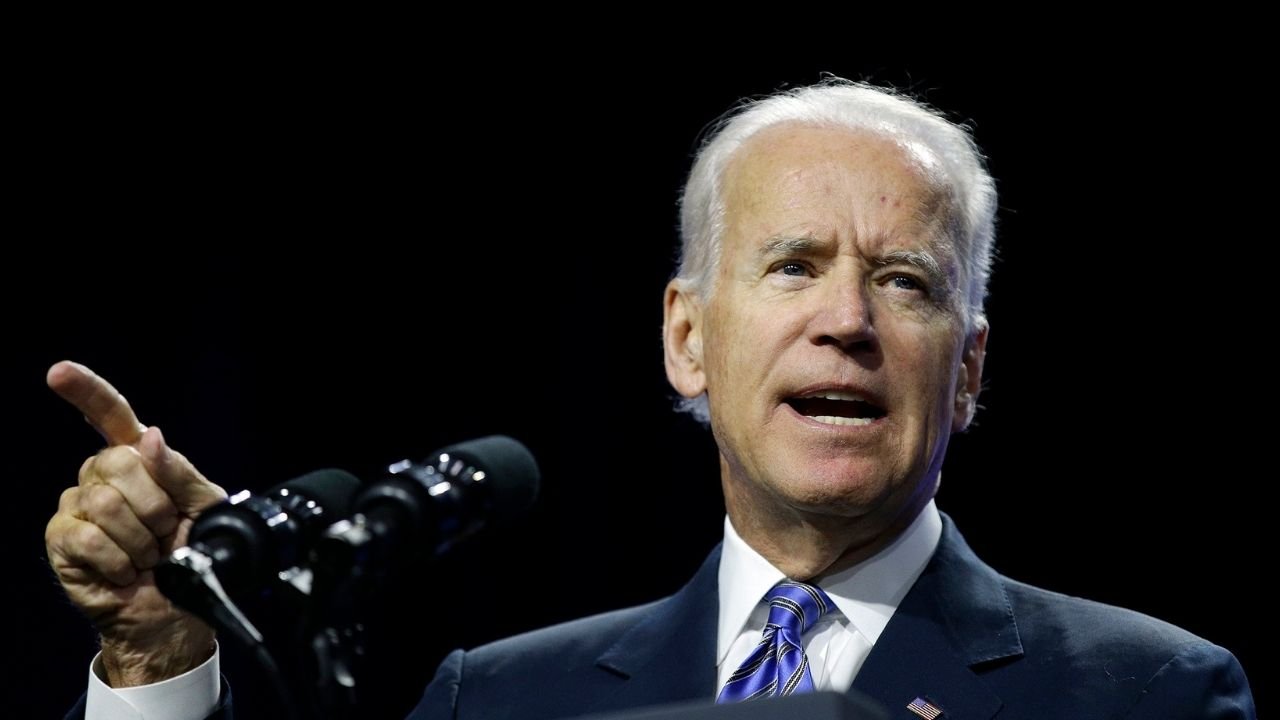
  • ‘I know how to do this job’: Biden seeks to repair debate damage with fiery speech

    ‘I know how to do this job’: Biden seeks to repair debate damage with fiery speech

    A fired-up Joe Biden came out swinging on Friday as he tried to make up for a disastrous debate performance against Donald Trump, insisting he was the right man to win November’s US presidential election.

    Biden’s appearance at a campaign rally in the battleground state of North Carolina came amid rumblings in his alarmed Democratic Party about replacing the 81-year-old as their nominee — and shortly before the nation’s most influential newspaper urged him to step aside.

    “I don’t walk as easy as I used to. I don’t speak as smoothly as I used to. I don’t debate as well as I used to,” Biden admitted to supporters in unusually confessional remarks.

    “But I know how to tell the truth. I know how to do this job,” he said to huge cheers, vowing “when you get knocked down, you get back up”.

    Biden’s team was in damage-control mode after Thursday’s debate when he often hesitated, tripped over words and lost his train of thought — exacerbating fears about his ability to serve another term.

    He had hoped to allay qualms about his advanced age, and to expose Trump as a habitual liar.

    But the president failed to counter his bombastic rival, who offered up a largely unchallenged reel of false or misleading statements about everything from the economy to immigration.

    On Friday, Biden delivered the lines Democrats wished they had heard in the televised debate.

    “Did you see Trump last night? My guess is he set — and I mean this sincerely — a new record for the most lies told in a single debate,” Biden said.

    “Donald Trump is a genuine threat to this nation. He’s a threat to our freedom. He’s a threat to our democracy. He’s literally a threat for everything America stands for.”

    Trump also returned to the campaign trail on Friday, speaking at a rally in Virginia and launching his familiar attacks on Biden in a rambling speech.

    “It’s not his age, it’s his competence,” Trump said.

    “The question every voter should be asking themselves today is not whether Joe Biden can survive a 90-minute debate performance, but whether America can survive four more years of crooked Joe Biden.”

    A new Democrat?

    Trump addressed the chances of Biden being replaced by another candidate, saying, “I don’t really believe that because he does better in polls than any of the (other) Democrats.”

    So far, no senior Democratic figure has publicly called on Biden to withdraw, with most toeing a party line about sticking with the existing ticket.

    “I will never turn my back on President Biden,” California Governor Gavin Newsom, who has figured prominently on lists of possible replacement candidates, said immediately after the debate.

    Forcing a change in the ticket would be politically fraught, and Biden would have to decide himself to withdraw to make way for another nominee before the party convention next month.

    Biden overwhelmingly won the primary votes, and the party’s 3,900 delegates heading to the convention in Chicago are beholden to him.

    If he exits, the delegates would have to find a replacement.

    “Bad debate nights happen,” Biden’s former boss, Barack Obama, wrote on X. But the election is “still a choice between someone who has fought for ordinary folks his entire life and someone who only cares about himself”.

    A logical — but not automatic — candidate to take Biden’s place would be his vice president, Kamala Harris, who also loyally defended his debate performance.

    The show of Democratic loyalty and Biden’s defiance in North Carolina were not enough for The New York Times, however.

    The daily newspaper slammed Biden’s campaign as a “reckless gamble” in the face of the threat posed by Trump, with its editorial board — which is separate from the newsroom — calling for the president to stand aside.

    The “greatest public service Mr. Biden can now perform is to announce that he will not continue to run for re-election,” it said.

    Many election bettors, too, abandoned Biden, preferring to bet on Trump or other Democratic leaders.

    Before the debate, bettors on the platform Smarkets were giving Biden a 35 per cent chance of winning in November, but on Friday that figure dropped to below 20pc.