Author: afp

  • Two missing Japanese climbers spotted in Pakistan’s north

    Two missing Japanese climbers spotted in Pakistan’s north

    Two missing Japanese climbers were spotted by helicopter on Thursday in Pakistan’s mountainous north, home to some of the world’s tallest peaks, but their condition remains unknown, a tour operator said.

    The Japanese climbers Ryuseki Hiraoka and Atsushi Taguchi were attempting to summit the 7,027-metre (23,054-foot) Spantik mountain in the Karakoram range before they went missing.

    “The rescuers saw the climbers and recognised them by their clothes, but they could not determine their condition,” Naiknam Karim, the CEO of Adventure Tours Pakistan (ATP) which organised the tour, told AFP.

    The two were spotted during a military helicopter search on Thursday that was called off due to poor weather conditions.

    “There has been no communication between the two Japanese climbers and officials at basecamp since they started their expedition,” Karim earlier said.

    “They were seen on June 10 (for the) last time at above 5,000 metres.”

    Another team of Japanese climbers raised the alarm on Tuesday after arriving at Camp 2, at around 5,650 metres, where Hiraoka and Taguchi were scheduled to be.

    The search is scheduled to resume on Friday.

    “An 8-member rescue team including five Japanese climbers will ascent on foot and search for them,” Karim Added.

    The pair had reached base camp on June 3 and were attempting the climb without the help of porters.

    Spantik, also known as the Golden Peak, is described as a “relatively accessible and straightforward peak” on the website of a separate tourist company, Adventure Tours.

    The country is home to five of the world’s 14 mountains higher than 8,000 metres — including K2, the world’s second highest.

    More than 8,900 foreigners visited the remote Gilgit-Baltistan region in 2023, according to official figures from the government, where the summer climbing season runs from early June to late August.

  • Denmark recalls South Korean noodles for being too spicy

    Denmark recalls South Korean noodles for being too spicy

    Denmark’s food agency has recalled South Korean instant ramen produced by a brand popular in the West, warning noodle lovers that they were so hot they might cause “acute poisoning”.

    Three Samyang Foods noodle products were assessed to have dangerous levels of capsaicin, the active component of chilli peppers, the Danish Veterinary and Food Administration said in a statement on Tuesday.

    The three products from Samyang instant ramen line — Buldak 3x Spicy & Hot Chicken, 2x Spicy & Hot Chicken, and Hot Chicken Stew — were being withdrawn from sale in Denmark.

    The level in a single packet of the noodles was “so high that they pose a risk of the consumer developing acute poisoning”, the Danish body said.

    “If you have the products, you should discard them or return them to the store where they were purchased,” the statement added.

    It issued a special warning against children eating the noodles, urging parents to contact the Poison Line if their little ones appeared to show “acute symptoms”.

    Samyang products are hugely popular overseas, with the company’s operating profit hitting a record high of over $110 million in 2023.

    Samyang Foods said it was the first time the company’s products had been recalled because they were deemed too hot, and added that it would work to better understand local regulations in export markets.

    “Currently, the products are being exported around the world, but this is the first time they have been recalled for this reason,” a spokesperson for the company told AFP.

    Samyang Foods saw its stock price soar 70 percent in recent months after its buldak carbonara ramen went viral on TikTok, with the product becoming so popular in the United States there have been reports of shortages.

    Celebrities such as Cardi B have posted stories online about searching for over 30 minutes to find the flavourful instant noodles.

  • UN probe accuses Israel of crimes against humanity

    UN probe accuses Israel of crimes against humanity

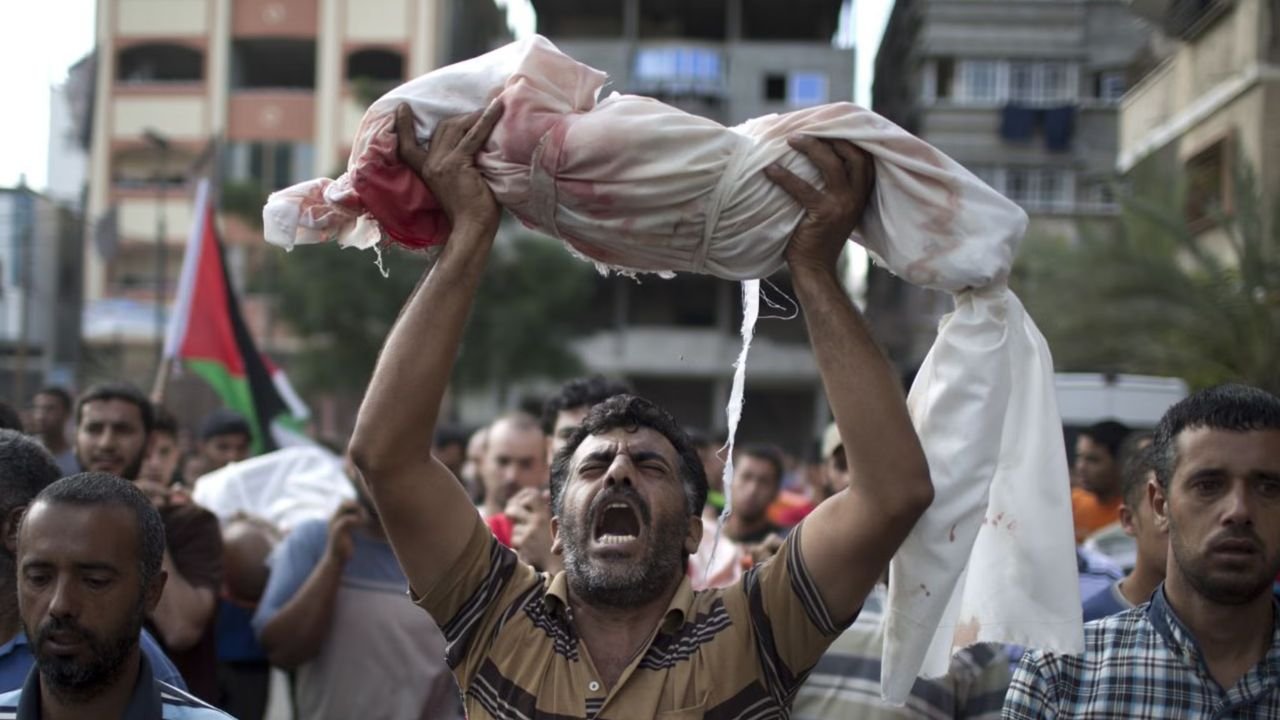
    A UN investigation concluded on Wednesday that Israel has committed crimes against humanity during the genocide in Gaza, including that of “extermination”, while saying Israeli and Palestinian armed groups have both committed war crimes.

    The independent Commission of Inquiry’s report is the United Nations’ first in-depth investigation into the events following October 7.

    It found that Israel had committed war crimes, crimes against humanity and violations of international humanitarian law (IHL) and international human rights law (IHRL).

    The report noted “a widespread or systematic attack directed against the civilian population in Gaza.”

    “The commission found that the crimes against humanity of extermination; murder; gender persecution targeting Palestinian men and boys; forcible transfer; and torture and inhuman and cruel treatment were committed,” it added.

    Israel rejected the conclusions by accusing the UN commission of “systematic anti-Israeli discrimination”.

    Israel intensified its attacks in Gaza after Hamas’s October 7 attack.

    The commission found that in that attack, members of the military wings of Hamas and other Palestinian armed groups and Palestinian civilians committed war crimes, as well as violations and abuses of IHL and IHRL.

    Militants seized 251 hostages, of which 116 remain in Gaza, though the Israeli army says 41 of them are dead.

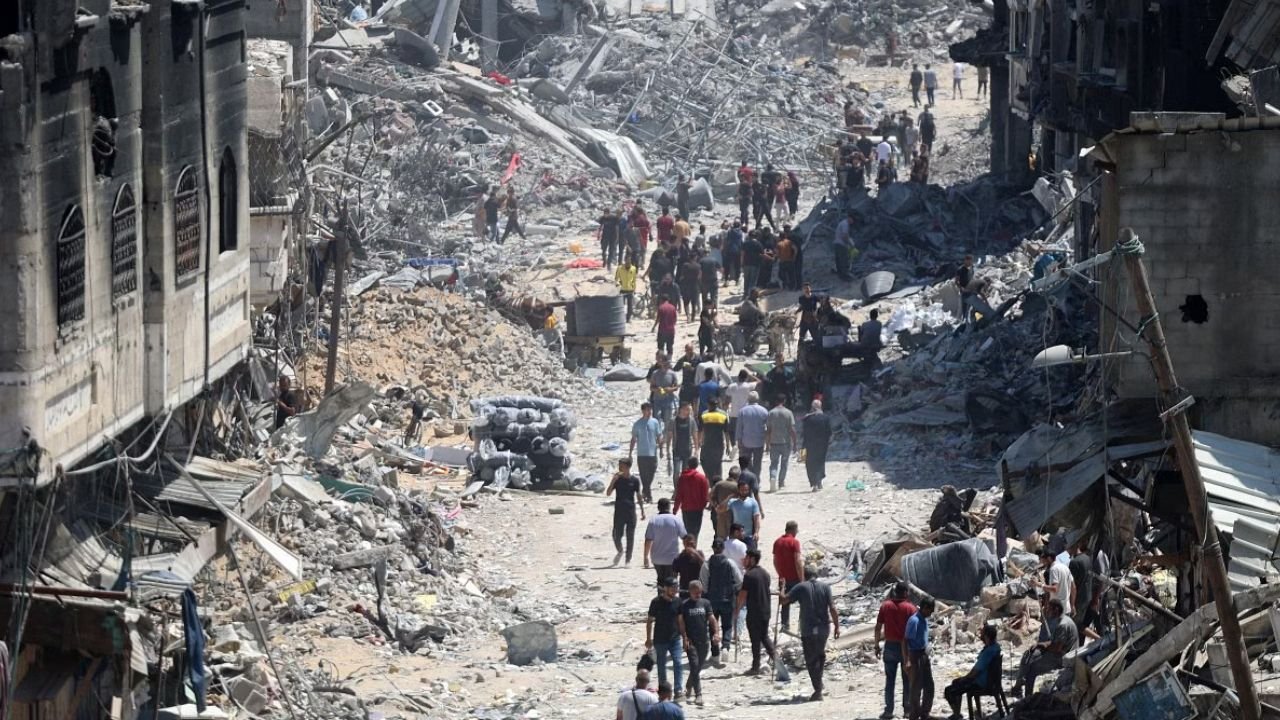
    The Israeli army launched a devastating offensive on the Gaza Strip that has left more than 37,000 people dead, the majority of them civilians, according to the territory’s health ministry.

    The unprecedented Commission of Inquiry was established by the UN Human Rights Council in May 2021 to investigate alleged violations of IHL and IHRL in Israel and the Palestinian territories.

    Since October 7, the three-member commission has focused on Israeli geocide against Palestinians in Gaza.

    “It is imperative that all those who have committed crimes be held accountable,” said the commission’s chair Navi Pillay, a former UN rights chief and an ex-International Criminal Court judge.

    “Israel must immediately stop its military operations and attacks in Gaza.

    “Hamas and Palestinian armed groups must immediately cease rocket attacks and release all hostages. The taking of hostages constitutes a war crime.”

    ‘War crimes’ in October attack

    The commission concluded that members of Hamas, other Palestinian armed groups and civilians participating in the October 7 attack “deliberately killed, injured, mistreated, took hostages and committed sexual and gender-based violence”.

    These acts were committed against civilians and members of the Israeli security forces.

    “These actions constitute war crimes and violations and abuses of IHL and IHRL,” it said.

    The commission further said it found “significant evidence on the desecration of corpses, including sexualised desecration, decapitations, lacerations, burning, severing of body parts and undressing”.

    “Women were subjected to gender-based violence during the course of their execution or abduction. Women and women’s bodies were used as victory trophies by male perpetrators.”

    Many children who witnessed their relatives being killed were “also filmed for propaganda purposes”, with the commission finding it “particularly egregious that children were targeted for abduction”.

    The report said Israeli authorities “failed to protect civilians in southern Israel on almost every front”.

    Israel’s ‘starvation’ of Gaza

    In their actions in Gaza, the commission found the Israeli authorities “responsible for the war crimes of starvation as a method of warfare, murder or wilful killing, intentionally directing attacks against civilians and civilian objects, forcible transfer, sexual violence, torture and inhuman or cruel treatment, arbitrary detention and outrages upon personal dignity”.

    Starvation will affect the Gaza population, particularly children, “for decades to come”, the report said, while “the siege it imposed… constitutes collective punishment and reprisal against the civilian population, both of which are clear violations of IHL.”

    In the West Bank, the commission found that Israeli forces committed acts of sexual violence, torture and inhuman or cruel treatment and outrages upon personal dignity, “all of which are war crimes”.

    Israel’s government and forces “permitted, fostered and instigated a campaign of settler violence against Palestinian communities” in the territory, the commission added.

    The report is based on interviews with victims and witnesses conducted remotely, and in Turkey and Egypt, and through studying thousands of verified open-source items, satellite imagery and forensic medical reports, the commission said.

    “Israel obstructed the commission’s investigations and prevented its access to Israel and the Occupied Palestinian Territory,” it added.

    The report is due to be presented to the UN Human Rights Council next week.

    rjm/rlp/lb

    © Agence France-Presse

  • BTS star Jin finishes South Korean military service

    BTS star Jin finishes South Korean military service

    K-pop megastar Jin from BTS was discharged from his South Korean military service on Wednesday, AFP reporters saw, the first member of the band to complete the mandatory duty, freeing him up to fully resume musical activities.
    The seven members of the world’s most popular boy band have been performing their service — which South Korea requires of all men under 30, due to tensions with the nuclear-armed North — with the K-pop juggernaut on a self-described “hiatus” since 2022.
    Jin emerged from the gates of his army base in South Korea’s northern Yeoncheon county where he was met by fellow bandmates J-hope, V, RM, Jungkook and Jimin.
    RM played the saxophone, belting out the hook of BTS’s mega-hit “Dynamite” while the bandmates hugged and presented Jin with a giant bouquet of flowers.

    Fans had hung colourful banners outside the base, with one reading: “Seok-jin you did so well for the last 548 days. We’ll stand by you with our unwavering love,” referring to the star by his full first name.
    A giant balloon flew in front with the message: “Worldwide handsome Seok-jin! Congratulations on your discharge.”
    Yeoncheon county put up its own banner that read: “BTS Jin, The last year and a half was a joy for us. Yeoncheon will not forget you!”

    Fans had been urged not to attend, and there were only a couple of admirers present early Wednesday outside the base.
    BTS’s agency HYBE announced Jin’s discharge on Weverse — a superfan social media platform — earlier this week.
    “We are excited to bring you the news of Jin’s upcoming military discharge,” it said.
    It also “strongly advised” fans to “refrain from the visiting site” citing safety concerts, and added that there would be no special events planned.

  • Animals killed as fire rips through Bangkok pet market

    Animals killed as fire rips through Bangkok pet market

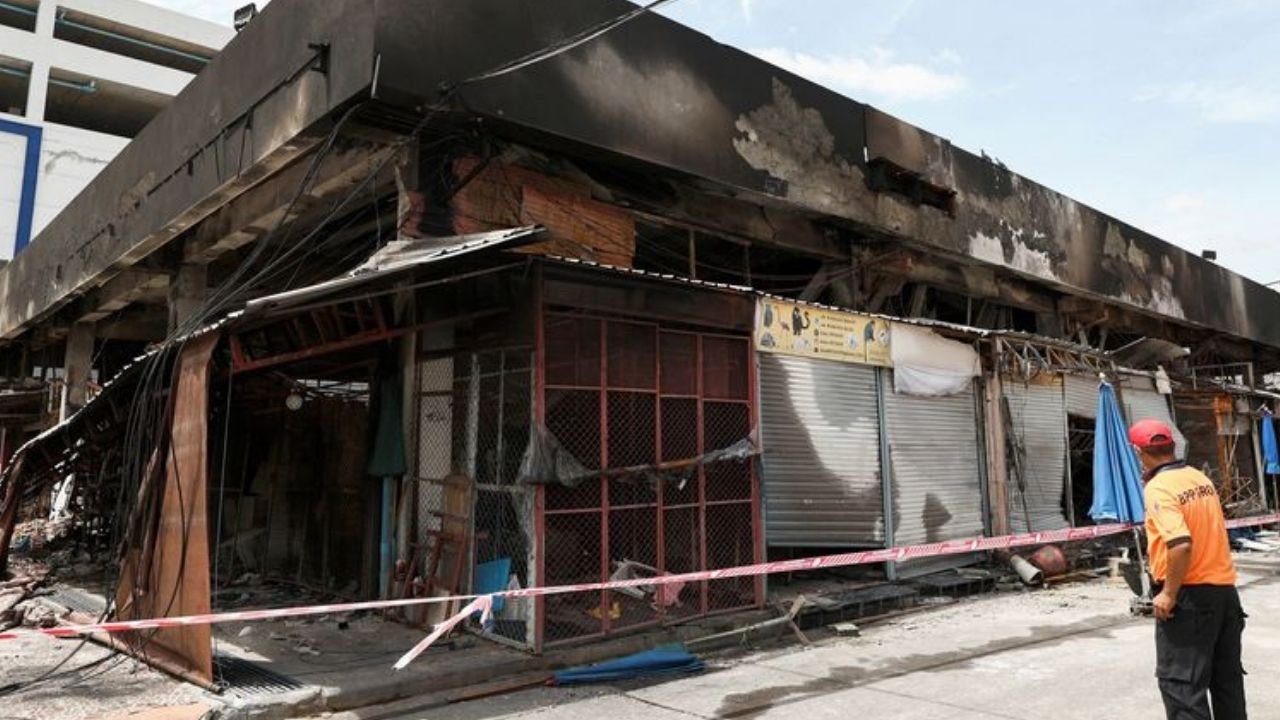
    A fire ripped through pet shops next to Bangkok’s famed Chatuchak market early Tuesday, killing caged dogs, cats, birds and snakes, and damaging more than 100 stalls, police said.

    The fire is believed to have started in the ornamental fish zone in Srisomrat Market, adjacent to the bigger Chatuchak, around 4:00 am (2100 GMT), according to Tivakorn Prongseng, a police inspector investigating the case.

    The blaze spread to more than 100 stalls across about 1,300 square metres (14,000 square feet), he told AFP.

    There were no reports of human casualties, but multiple caged animals were found dead at the market, which belongs to the State Railway of Thailand, he said.

    The fire was extinguished by 6:00 am, and the cause is being investigated, Tivakorn added.

    Local media reported that hundreds of pets had died in the fire, but Tivakorn said it was too early to say how many had perished.

    The Bangkok Metropolitan Administration has set up a presence at the scene to gather information from affected shop owners.

    Bangkok Governor Chadchart Sittipunt visited the site and said people could help affected shop owners by offering to house surviving animals.

    Fires have previously damaged sections of the neighbouring, tightly packed Chatuchak market, which sells everything from antiques and electronics to dishwares and food.

    The market is a top tourist draw, but also a popular shopping destination for locals.

    Conservation groups have previously raised concerns about the sale of live animals in the area, with periodic raids on sellers netting endangered species.

  • Ceasefire agreement in Gaza coming close at hand?

    Ceasefire agreement in Gaza coming close at hand?

    The UN Security Council gave a green signal to a US-proposed ceasefire plan on Monday aimed at ending the Israeli attacks in Gaza.

    The proposition consists of a three-stage ceasefire and captive-release proposal laid out on May 31 by President Biden, prompting the “parties to fully implement its terms without delay and without condition”.⁠

    As per the plan, Israel will withdraw its military forces from Gaza’s populated areas, Hamas will release the remaining captives and humanitarian aid would be allowed into Gaza “at scale”.⁠

    A temporary ceasefire will be in effect for six weeks at first, with the possibility of extension as negotiators work towards a permanent cessation of hostilities.

    As per the resolution, Israel has agreed to the plan and urged Hamas to also agree to it as well.

    However, Israeli officials, including Prime Minister Netanyahu, have recently vowed to continue the operations until Hamas is completely eradicated, raising doubts about their commitment to the ceasefire agreement.

    Hamas has expressed approval of the resolution and signalled readiness to engage in indirect talks regarding the implementation of the agreement’s principles.

  • Coalition government to moderate Modi’s Hindu nationalism

    Coalition government to moderate Modi’s Hindu nationalism

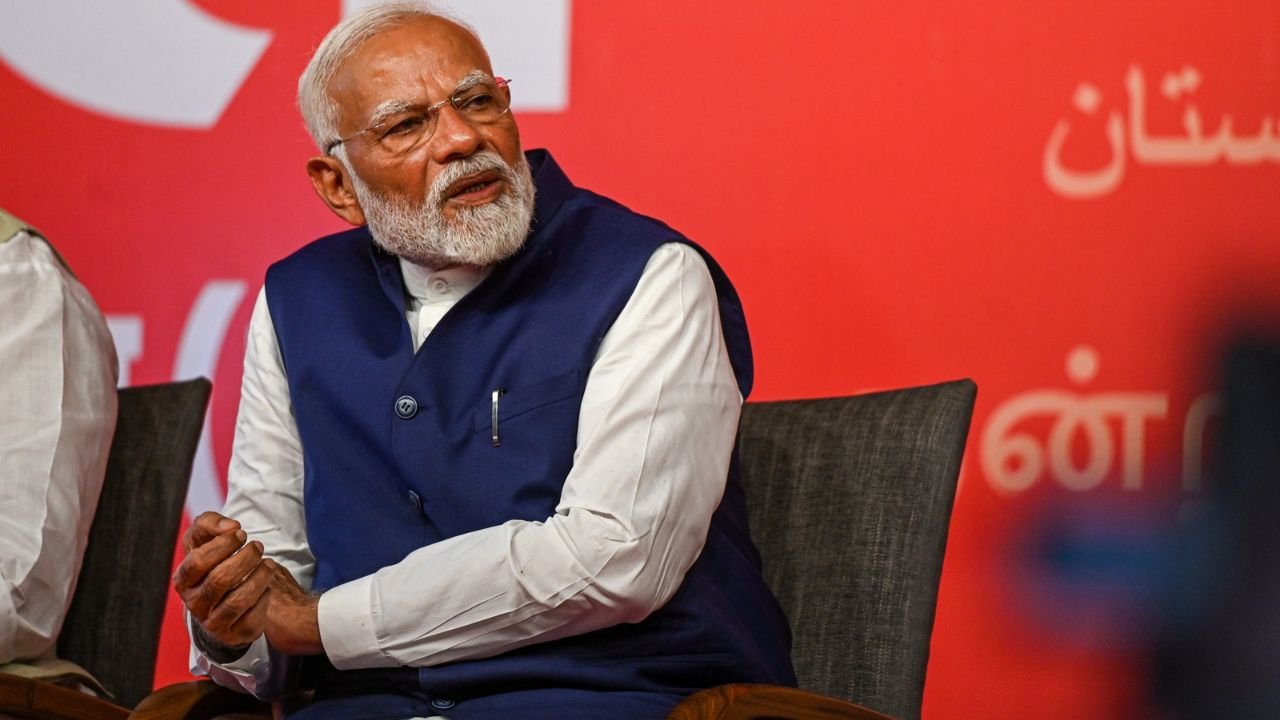
    India’s Prime Minister Narendra Modi will have to moderate his Hindu-nationalist agenda to assuage his coalition partners, but they will likely let him press on with his foreign and economic policies, analysts say.

    Modi, forced into a coalition government after a shock election setback left him without an outright majority for the first time in a decade, unveiled his third-term cabinet on Monday.

    Key posts are unchanged — including the defence, finance, foreign and interior ministers — and the cabinet remains dominated by his Bharatiya Janata Party (BJP).

    “Modi opts for continuity,” The Hindustan Times headline read Monday.

    “BJP and Modi are still solidly occupying the… driving seat,” the Times of India wrote in its editorial.

    Nevertheless, this term will require “more dexterous deal-making within the parliament for policies that require tweaking of laws,” said Ashok Malik, from The Asia Group business consultancy.

    ‘Pushed to the background’

    Before the polls, when the right-wing BJP boasted of winning a super majority, minorities including many in the 200-million-plus Muslim population were worried.

    Modi’s decade as premier has seen him cultivate an image as an aggressive champion of the country’s majority Hindu faith.

    His government revoked the constitutional autonomy of India’s Muslim-majority region Kashmir, and backed the construction of a temple on grounds where a mosque stood for centuries before it was torn down by Hindu zealots in 1992.

    Critics feared another BJP landslide would see policies steamrolled through parliament that would further blur the line between state and religion — despite India’s secular constitution.

    But analysts said a coalition forces Modi to tread more carefully.

    “In a government with allies, the BJP’s key cultural agendas will all be pushed to the background,” Nistula Hebbar, political editor of The Hindu newspaper, told AFP.

    Instead, Modi is expected to focus on infrastructure, foreign affairs and economic reforms which “won’t be much of an issue” for the alliance, she added.

    “Very broadly, the economic policy and external strategy doesn’t face any challenges in continuity, or any serious philosophical or strategic challenges with allied or opposition parties,” said Malik.

    ‘Conciliatory Modi’

    Not so for his Hindu-nationalist agenda, however.

    Modi had promised to introduce a national common civil code to standardise laws across all religious communities, opposed by Muslim activists as an attack on their faith.

    India’s 1.4 billion people are subject to a common criminal law, but rules on personal matters such as marriage, divorce and inheritance vary.

    But the common code would require parties to “forge national consensus”, Malik said, which is now more doubtful given Modi’s reliance on coalition partners.

    Modi was also accused of ramping up rhetoric targeting India’s key religious divide to rally the Hindu majority to vote.

    With elections over, “Hindu-Muslim rhetoric may also take a back seat, at least for the time being,” said Neerja Chowdhury, from The Indian Express.

    BJP leaders also campaigned on a plank to remove affirmative quotas in government jobs and educational institutions for Muslims.

    A controversial revision of electoral boundaries based on population — that would have reduced the overall parliamentary punch of opposition areas — also likely faces the backburner.

    Hebbar said she expected to see “a different Modi, a more conciliatory Modi”.

    ‘People want jobs’

    For the policies he will push through, analysts say he will seek to expand welfare support for farming and poorer communities, seeking to shore up popularity in rural constituencies after electoral losses.

    In a symbolic first move, Modi on Monday approved the latest tranche of a massive cash handout for 93 million farmers, as well as building plans for 30 million homes for poor families.

    Modi has overseen India’s ascent to become the world’s fastest-growing major economy, and its fifth largest, but the world’s most populous country has a jobs crisis to match.

    Many saw unemployment as a key factor in BJP losses.

    “People want jobs,” said Malik. “And to satisfy this very legitimate need, you need to build the economy, and reform even faster.”

    Modi’s agenda will focus on infrastructure, reforming industrial policies and domestic manufacturing incentives in a bid to create an “economic spurt in the next five years”, he added.

    But analysts also say it is still to be seen how political dynamics will play out in a parliament where Modi faces a far more powerful opposition.

    “Modi has never handled a coalition because he has never had to rely on one,” Hebbar said.

    “It’s a new situation for everyone… but he is a quintessential politician and would be ready to do whatever is required”.


  • Air pollution linked to 135 million premature deaths: study

    Air pollution linked to 135 million premature deaths: study

    Pollution from man-made emissions and other sources like wildfires have been linked to around 135 million premature deaths worldwide between 1980 and 2020, a Singapore university said Monday.

    Weather phenomena like El Nino and the Indian Ocean Dipole worsened the effects of these pollutants by intensifying their concentration in the air, Singapore’s Nanyang Technological University (NTU) said, unveiling the results of a study led by its researchers.

    The tiny particles called particulate matter 2.5, or “PM 2.5”, are harmful to human health when inhaled because they are small enough to enter the bloodstream. They come from vehicle and industrial emissions as well as natural sources like fires and dust storms.

    The fine particulate matter “was associated with approximately 135 million premature deaths globally” from 1980 to 2020, the university said in a statement on the study, published in the journal Environment International.

    It found that people were dying younger than the average life expectancy from diseases or conditions that could have been treated or prevented, including stroke, heart and lung disease, and cancer.

    Weather patterns increased the deaths by 14 percent, the study found.

    Asia had the “highest number of premature deaths attributable to PM 2.5 pollution” at more than 98 million people, mostly in China and India, the university said.

    Pakistan, Bangladesh, Indonesia and Japan also had significant numbers of premature deaths, ranging from 2 to 5 million people, it added.

    The study is one of the most expansive to date on air quality and climate, using 40 years of data to give a big-picture view of the effects of particulate matter on health.

    “Our findings show that changes in climate patterns can make air pollution worse,” said Steve Yim, an associate professor at NTU’s Asian School of the Environment, who led the study.

    “When certain climate events happen, like El Nino, pollution levels can go up, which means more people might die prematurely because of PM 2.5 pollution,” Yim added.

    “This highlights the need to understand and account for these climate patterns when tackling air pollution to protect the health of the global population.”

    The Singapore researchers studied satellite data from the US National Aeronautics and Space Administration (NASA) on the levels of particulate matter in the Earth’s atmosphere.

    They analysed statistics on deaths from diseases linked to pollution from the US-based Institute for Health Metrics and Evaluation, an independent research centre.

    Information on weather patterns during the period was taken from the National Oceanic and Atmospheric Administration in the United States.

    The study focused only on the effects of ordinary weather patterns on air pollution, Yim said, adding that the impact of climate change will be the subject of future studies.

    Researchers from universities in Hong Kong, Britain and China were also involved in the study.

    The World Health Organization has said the “combined effects of ambient air pollution and household air pollution” are associated with 6.7 million premature deaths worldwide every year.

  • Modi sworn in for third term; a dozen ministries for allies

    Modi sworn in for third term; a dozen ministries for allies

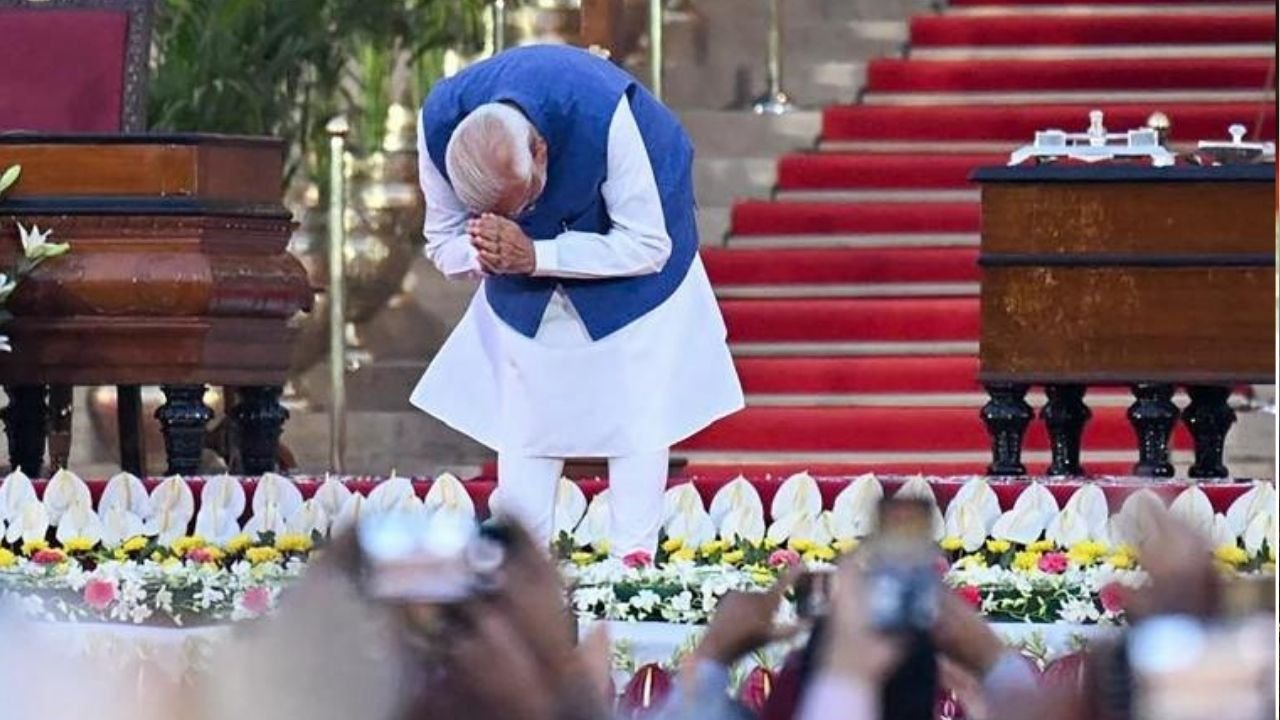
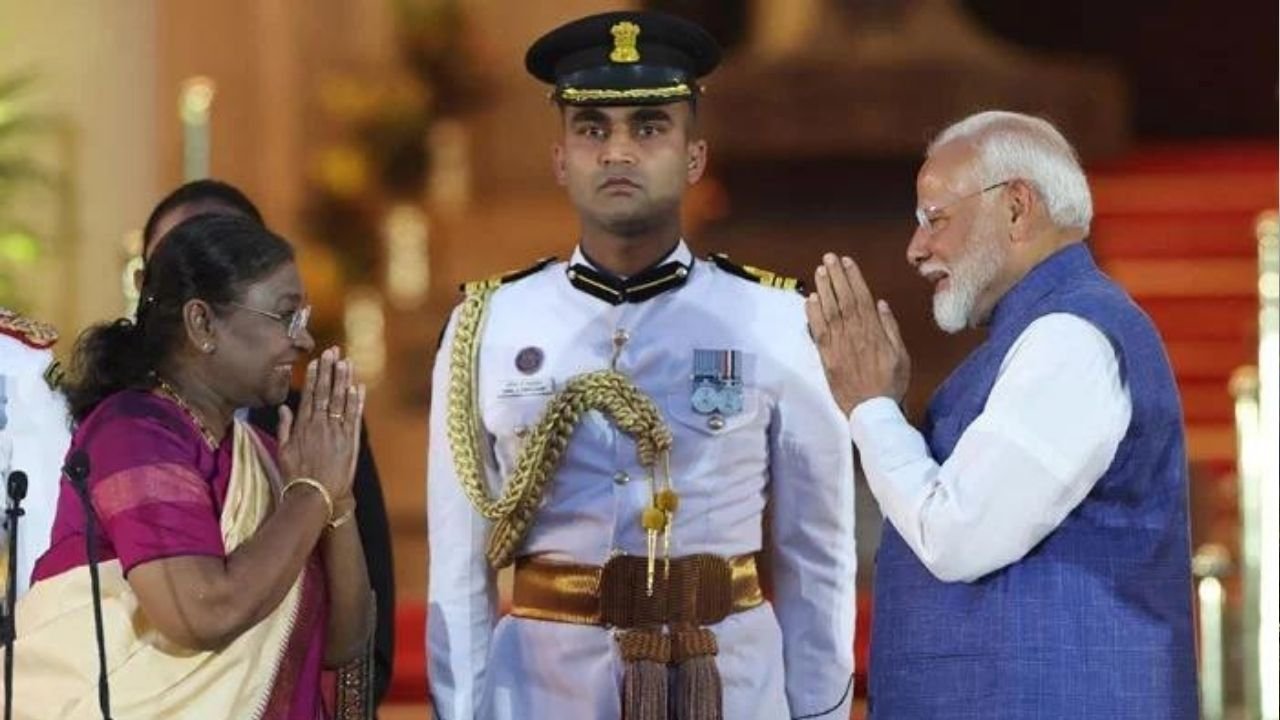
    NEW DELHI: India’s Prime Minister Narendra Modi was sworn in on Sunday for a third term after worse-than-expected election results left him reliant on coalition partners to govern.

    His office said he would appoint a 71-member cabinet, including 11 National Democratic Alliance (NDA) ally ministers.

    Modi’s Hindu-natio­nalist BJP ruled outright for the past decade but failed to repeat its previous two landslide wins this time around, defying exit polls. He was instead forced into quick-fire talks with the 15-member coalition NDA, which guaranteed him the parliamentary numbers to govern.

    Flanked by top BJP officials and party leaders of his coalition, Modi vowed in a ceremony marking his formal assumption of pow­er to “bear true allegiance to the constitution of India”.

    South Asian leaders from neighbouring Bangladesh, the Maldives and Sri Lanka attended the ceremony, but China and Pakistan did not.

    The crowd also included adoring BJP loyalists, as well as celebrities such as Bollywood legend Shah Rukh Khan and billionaire tycoons Gautam Adani and Mukesh Ambani, key Modi allies.

    But with Modi yet to announce details of his cabinet, the line of lawm­a­­kers also taking the oath of office was keenly wat­ched as an indication of who will be in government.

    Larger coalition parties have demanded hefty concessions in exchange for their support. Other coalition leaders to take the oath included Ram Mohan Naidu of the Telugu Desam Party, the largest BJP ally with 16 seats, and which media reports has extra­cted four cabinet seats.

    Rajiv Ranjan Singh also took the oath, from the BJP’s next biggest ally the Janata Dal (United) with 12 seats, which has reportedly two minister posts.

    Indian media reported widely that the top jobs including the four most powerful posts of the interior, foreign, finance and defence would remain in BJP’s control. The Hindus­tan Times described days of “hectic talks”, while the Times of India said the BJP had sought to “pare down” their partners’ demands.

    Modi’s previous cabinet had 81 ministers.

    ‘More consultation’

    But analysts said that the coalition would shift parliamentary politics and force Modi’s once domineering BJP into a somewhat more conciliatory approach.

    “In the past, the BJP has had confidence because of its sheer majority,” said Sajjan Kumar, head of the Delhi-based political research group PRACCIS. “The coalition will now force the BJP to engage in more consultation.”

    Political analyst Zoya Hasan of Jawaharlal Neh­ru University said Modi faced potential challenges ahead, warning he may be “meeting his match” in the “crafty politicians” of the TDP’s Chandrababu Naidu and JD(U)’s Nitish Kumar.

  • Wildfires in south Lebanon after Israeli bombardment: media, rescuer

    Wildfires in south Lebanon after Israeli bombardment: media, rescuer

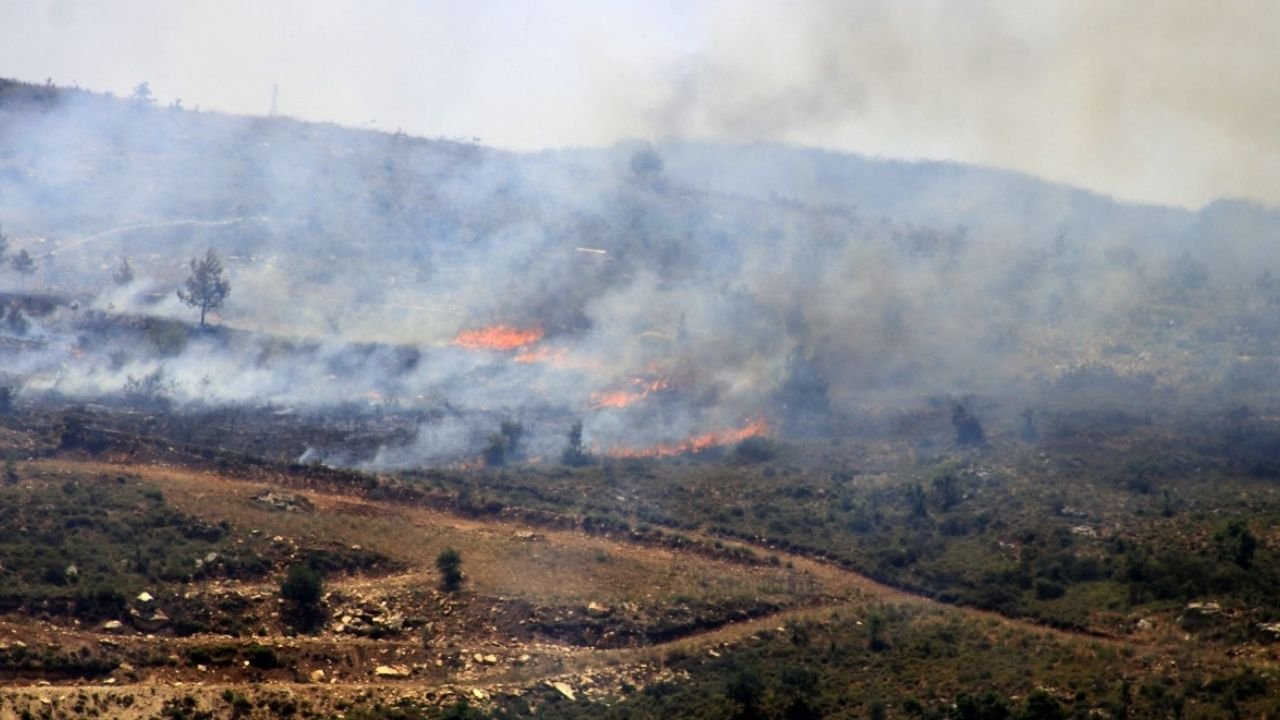
    Beirut, Lebanon: Israeli strikes Saturday on southern Lebanon sparked massive wildfires, state media and a first responder said, the latest fallout from escalating cross-border violence involving Hezbollah.

    Hezbollah has traded near-daily fire with Israeli forces in the nine months since the Gaza genocide began.

    Lebanon’s official National News Agency (NNA) said on Saturday that “Israeli artillery bombarded today the outskirts of the town of Alma al-Shaab with incendiary phosphorus shells, causing fires in the forests that spread to the vicinity of some homes”.

    Fire sweeps over fields targeted by Israeli artillery on the outskirts of the southern Lebanese village of Rmeish on June 4, 2024, amid ongoing cross-border clashes between Israeli troops and Hezbollah fighters. Photo by Kawnat HAJU / AFP.

    It added that the fire had reached “large areas of olive trees”.

    Lebanese authorities and several international rights groups have accused Israel of using white phosphorus rounds in its strikes on its northern neighbour.

    White phosphorus, a substance that ignites in contact with oxygen, can be used as an incendiary weapon.

    Its use as a chemical weapon is prohibited under international law, but it is allowed for illuminating battlefields and can be used as a smokescreen.

    Rescuer Ali Abbas of the Risala Scout association, affiliated with Hezbollah ally the Amal movement, told AFP that “Israel deliberately bombs forested areas with phosphorus with the aim of starting fires.”

    According to him, rescuers on the grounds have been struggling to extinguish the flames, while the Lebanese military avoids sending helicopters to assist for fear of more Israeli attacks.

    Further east, the NNA reported that “a large fire broke out at positions belonging to the Lebanese army and UNIFIL”, the UN peacekeeping mission, in the area of the border village of Mais al-Jabal.

    It is located near the UN-demarcated Blue Line between Lebanon and Israel.

    A security source told AFP on condition of anonymity that fires broke out near military positions but have not reached them or caused any casualties.

    The UN peacekeepers in a statement reported a “bushfire near one of their positions in Hula”, which was put out with help from Lebanese troops and civil defence forces.

    “The fire didn’t cause any damage to UNIFIL assets or personnel,” it said.

    The NNA said, “Several landmines exploded, and firefighting operations are still continuing” in the area.

    The border violence, which began on October 8, has killed 456 people in Lebanon, primarily fighters but including about 90 civilians, according to an AFP tally.

    On the Israeli side of the border, at least 15 soldiers and 11 civilians have been killed, according to the army.