Author: afp

  • Rahul Gandhi nominated to lead India’s opposition: party secretary

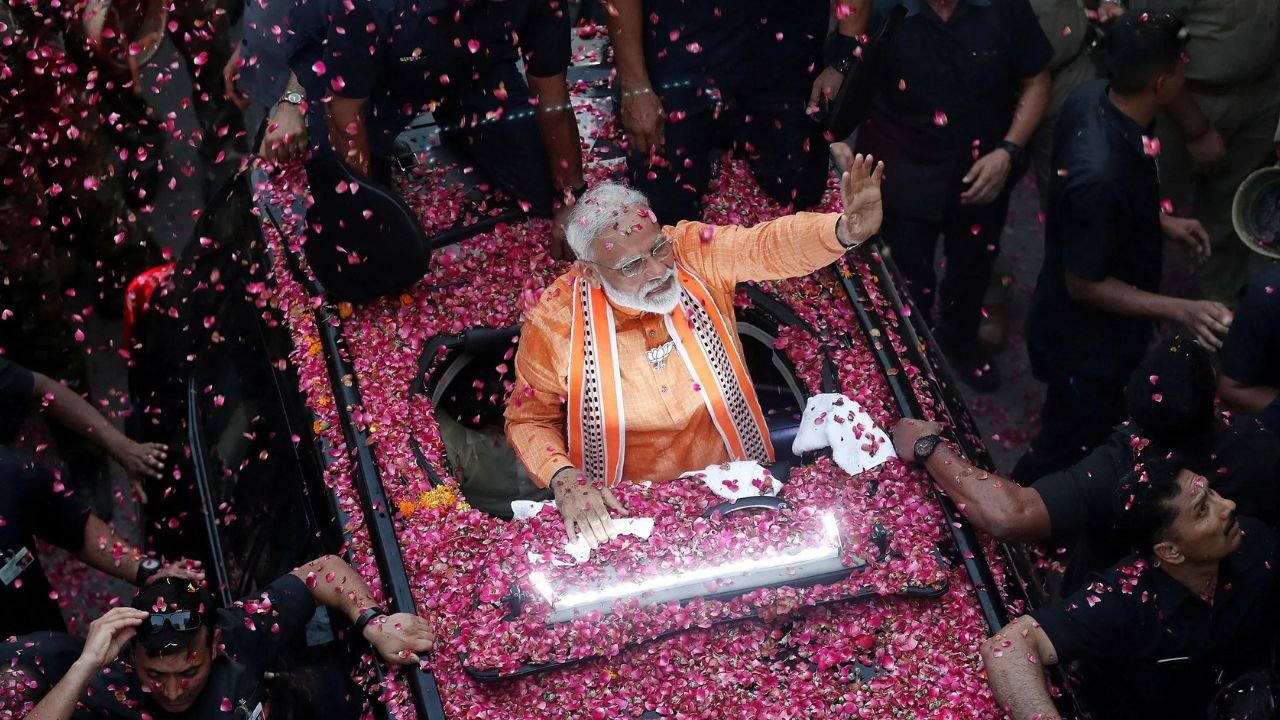
    New Delhi, India – Prime Minister Narendra Modi’s main rival Rahul Gandhi was nominated on Saturday to lead India’s opposition in the next parliament, the general secretary of Gandhi’s Congress party said.

    “All participants unanimously passed the resolution that Rahul Gandhi should take the position of leader of opposition in the parliament,” K.C. Venugopal told a news conference after a meeting of the party’s executive.

  • Pakistan power crisis deepened by mountain tourism

    Pakistan power crisis deepened by mountain tourism

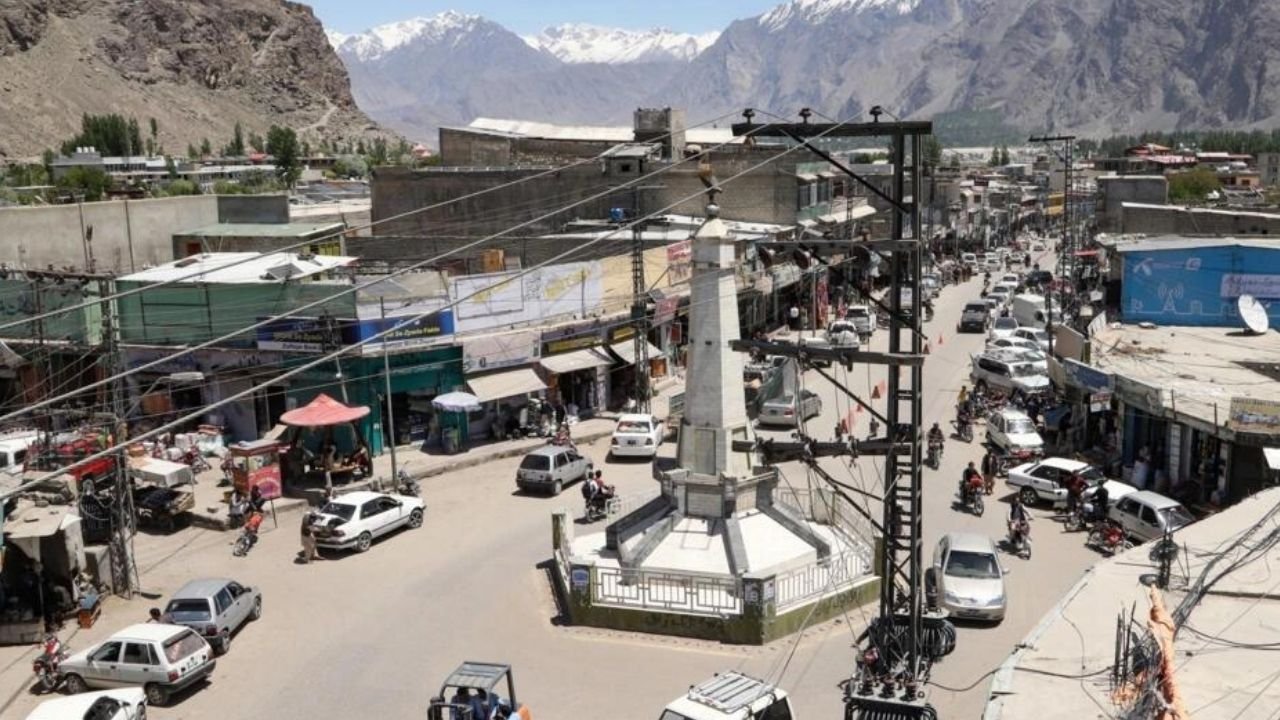
    Skardu (Pakistan) (AFP) – In the mountainous valleys of Pakistan, 18-hour daily power cuts have meant local teacher Aniqa Bano uses her fridge as a cupboard for storing books and kitchen utensils.

    Load shedding is typical across much of fuel-short Pakistan, but few areas consistently suffer the same prolonged outages as Skardu city.

    A surge in mountain tourism, driven by climbers and Pakistanis looking to escape heatwaves, is rapidly depleting the limited energy supply at the gateway to ascend K2, the world’s second-highest peak.

    While higher-end hotels can supplement their supply with solar panels or fuel generators, many locals cannot afford such luxuries.

    “We have to reinvent everything that once used electricity,” said Bano.

    Tourism boom

    Skardu is the largest city in the region of Gilgit-Baltistan, where almost impossibly high peaks tower over the Old Silk Road, still visible from a highway transporting tourists between cherry orchards, glaciers and ice-blue lakes.

    Normally home to around 200,000 people, Skardu becomes heavily bloated in summer when Pakistanis seek the relief of its cooler climate at 2,228 metres (7,310 feet) above sea level.

    The region hosted 880,000 domestic visitors in 2023, up from 50,000 in 2014.

    As the country grapples with energy shortages -– owing to dwindling forex reserves, mismanagement, rapid population growth and climate change –- the tourism boom has proved too much for local power.

    “Due to the increase in population and tourism activities, load shedding hours have increased,” Muhammad Yunus, a senior engineer for the regional government’s water and power department, told AFP.

    There are up to 22 hours of load shedding in winter and between 18 and 20 hours in summer — an increase of around 10 percent each year for the past six years, according to the department.

    Siddiqa, a tailor and handicraft maker who goes by one name, has seen her earnings fall alongside the number of hours of electricity.

    “When we started this business in 2014, there was no issue of power,” she told AFP. “Now, I have replaced all the electric machines and brought hand sewing machines.”

    “In the presence of light, we could prepare 10 to 12 suits every three days. Now, to prepare a single suit, it can take 10 to 15 days.”

    The tourism flow does not appear to be letting up any time soon. There are up to 15 domestic flights a week to the region and, since March, international flights began landing from Dubai.

    In Skardu alone, the number of hotels has increased more than fourfold since 2014, according to the tourism department.

    7,000 melting glaciers

    Owing to its remoteness, Gilgit-Baltistan is not connected to the national grid, so it relies on its own power generation from dozens of hydro and thermal plants.

    But Pakistan’s 7,000 glaciers — more than anywhere outside the poles — are rapidly melting.

    This can temporarily increase the availability of water for energy production, but the glaciers’ long-term ability to store and release water gradually decreases, affecting energy production.

    “The availability of water for hydroelectric plants is becoming unpredictable,” said Salaar Ali, head of the Department of Environmental Science, University of Baltistan.

    Damage to energy infrastructure is also a regular setback.

    Record heatwaves in 2022 caused dozens of glacial lakes to burst their banks, washing away more than 20 power plants, 50 bridges and countless homes.

    Inadequate planning and mismanagement of the power sector can also play a role, engineers have said.

    The Satpara dam on the edge of Skardu city, completed in 2008 for $26 million of aid funding, was supposed to supply 40,000 homes with power.

    But it generates just a fraction of its potential after plans to divert a river were halted, government engineers admit.

    “It has been full only once since its formation,” said Yunus, the engineer in Skardu.

    Without a reliable energy supply, Wajahat Hussain, a 36-year-old carpenter, uses a fuel generator to keep his business in operation — puffing out emissions that contribute to global warming.

    “We run the generator to fulfil the demands,” he told AFP. “There is no work without the generator.”
  • India’s Modi readies for third term after securing coalition

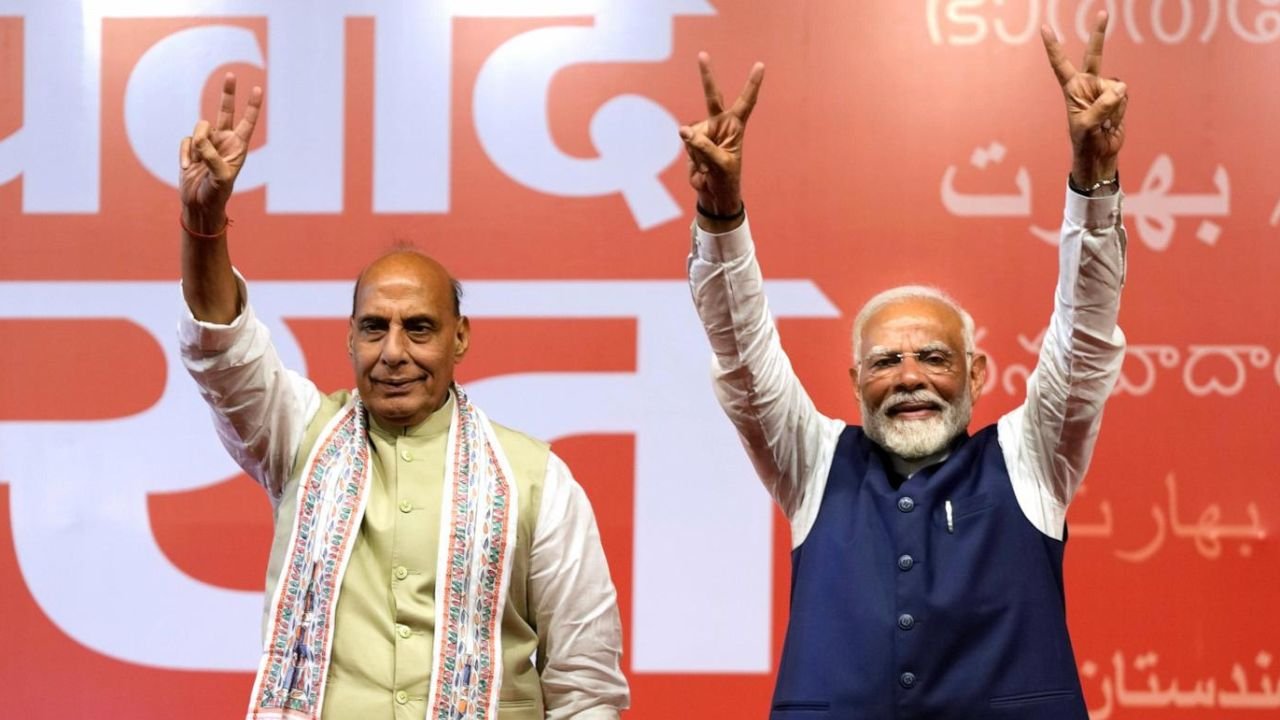
    India’s Modi readies for third term after securing coalition

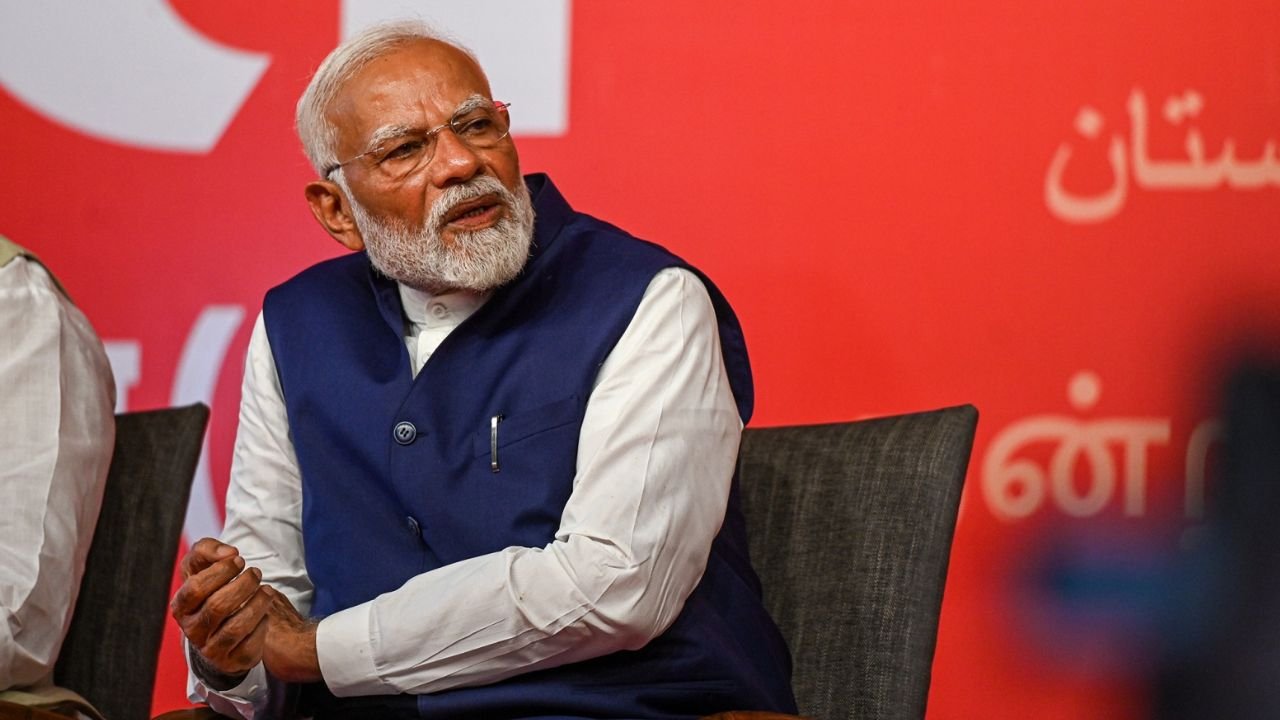
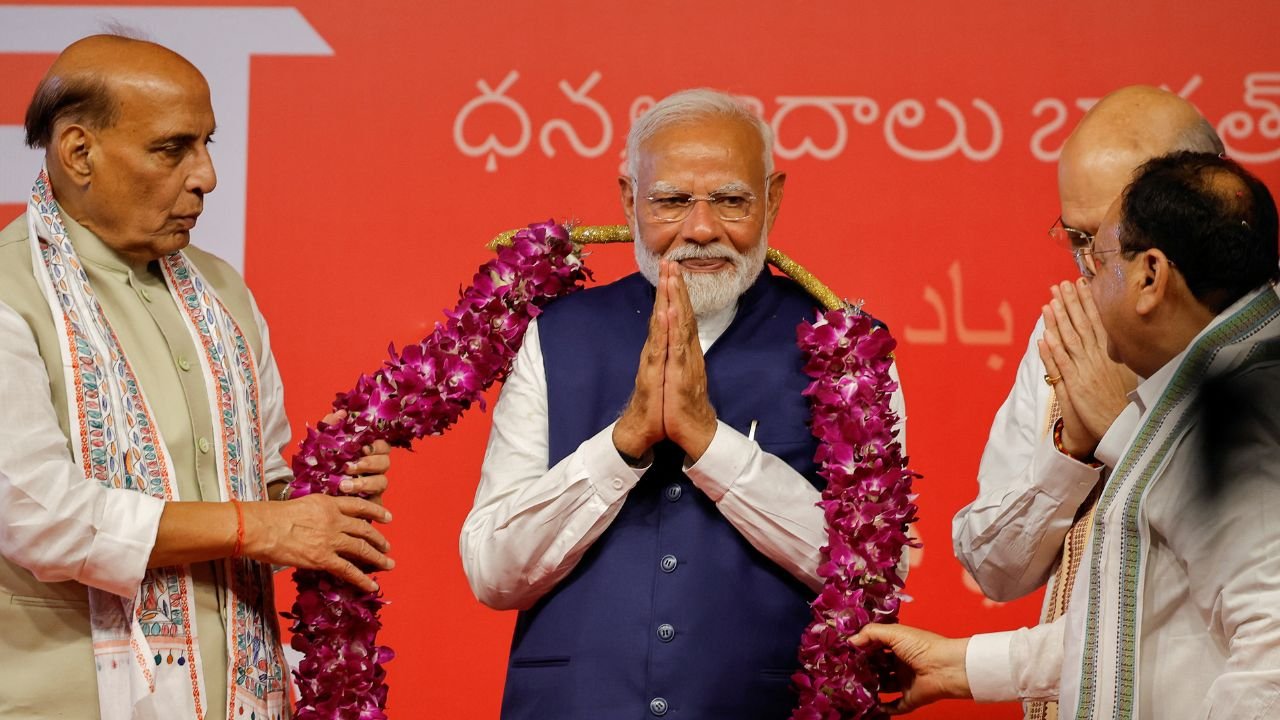
    Indian Prime Minister Narendra Modi was preparing Thursday to be sworn in for a third term after an unexpectedly close election that forced his party into a coalition government.

    Modi’s Hindu-nationalist Bharatiya Janata Party (BJP), which ruled for the past decade with an outright majority, had been expecting another landslide win.

    But results of the six-week election released Tuesday ran counter to exit polls, seeing the BJP lose its majority and sending it into quick-fire talks to lock in a 15-member coalition that would allow it to govern.

    That grouping — the National Democratic Alliance (NDA) — announced late Wednesday that they had agreed to form a government.

    “We all unanimously choose respected NDA leader Narendra Modi as our leader,” a BJP-issued alliance statement said.

    The alliance holds 293 seats in parliament, giving it control of the 543-seat body.

    Indian media reports said Modi would be sworn in as prime minister on Saturday.

    Modi’s new reliance on “the minefield of coalition politics” means he faces the prospect of a far tougher-than-expected third term, the Hindustan Times warned in its Thursday editorial.

    “Consensus building will have to be the bedrock of governance,” it added, noting the right-wing BJP will have to “recalibrate its expansion plans”.

    ‘New chapter of development’

    While Modi faces a more complicated political environment at home, he won the plaudits of leaders around the world.

    US President Joe Biden congratulated Modi on his coalition’s victory, and the State Department said the United States hoped to work with the Hindu nationalist leader on a “free and open” Asia.

    “The friendship between our nations is only growing,” Biden wrote, while French President Emmanuel Macron congratulated his “dear friend”.

    China congratulated Modi and said it was “ready to work” with its neighbour, while the coalition’s win was also applauded by Britain, the European Union, Japan and Russia.

    Modi, 73, insisted on Tuesday night that the election results were a victory that ensured he would continue his agenda.

    “Our third term will be one of big decisions and the country will write a new chapter of development,” Modi told a crowd of cheering supporters in the capital New Delhi after his win. “This is Modi’s guarantee.”

    ‘Play the coalition game’

    Commentators and exit polls had projected an overwhelming victory for Modi, who critics have accused of leading the jailing of opposition figures and trampling on the rights of India’s 200-million-plus Muslim community.

    But the BJP secured 240 seats in parliament, well down from the 303 it won five years ago and 32 short of a majority on its own.

    The main opposition Congress party won 99 seats in a remarkable turnaround, almost doubling its 2019 tally of 52.

    “Today’s masters are not as strong as they were,” Christophe Jaffrelot, a professor at King’s College London, wrote in The Hindu daily on Thursday.

    “For the first time in his political career, Narendra Modi will have to play the coalition game.”

    Congress party president Mallikarjun Kharge said the result was a vote against Modi “and the substance and style of his politics”.

    “It is a huge political loss for him personally, apart from being a clear moral defeat as well,” he told party leaders at an opposition alliance meeting.

    In a personal sting, Modi was re-elected to his constituency representing the Hindu holy city of Varanasi with a far lower margin of 152,300 votes. That compared with nearly half a million votes five years ago.

    “Elections expressed a yearning for the defence of constitutional values and citizen dignity,” Ashutosh Varshney, a political scientist at Brown University, wrote in the Indian Express on Thursday.

    Varshney argued Modi’s setback reflected concerns about what the “idea of India” meant to voters — against a backdrop of a “rise of animosities and polarisation in society, people’s concern about rights and the steeply rising inequalities”.

    bur-pjm/lb

    © Agence France-Presse

  • Tokyo govt to launch dating app to boost birth rate

    Tokyo govt to launch dating app to boost birth rate

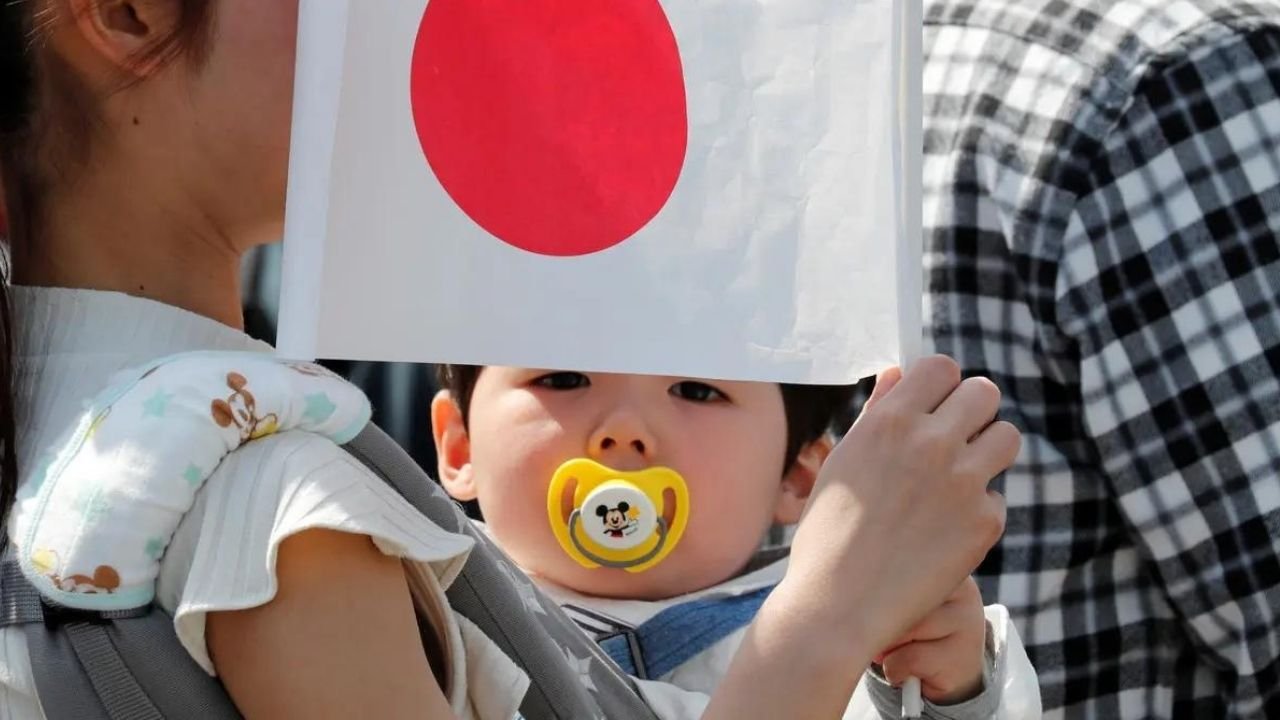
    Japan’s capital will launch its own dating app as early as this summer as part of government efforts to boost the plunging national birth rate, a Tokyo official said Tuesday.

    Users will be required to submit documentation proving they are legally single and sign a letter stating they are willing to get married.

    Stating one’s income is common on Japanese dating apps, but Tokyo will require a tax certificate slip to prove the annual salary.

    “We learned that 70 percent of people who want to get married aren’t actively joining events or apps to look for a partner,” a Tokyo government official in charge of the new app told AFP.

    “We want to give them a gentle push to find one,” he said.

    It’s not unusual for municipalities to organise matchmaking events in Japan, where births dropped to a new low in 2023, but it is rare for a local government to develop an app.

    An interview will be required to confirm a user’s identity as part of the registration process for the Tokyo app, which has been on a test run for free since late last year.

    Many social media users expressed scepticism over the plans, with one saying, “is this something the government should be doing with our tax?”

    Others wrote they were interested as they would feel safer.

    Last year Japan recorded more than twice as many deaths as new babies.

    Births fell for the eighth consecutive year to 758,631, a drop of 5.1 percent, preliminary government data showed. The number of deaths stood at 1,590,503.

    The nation is facing growing labour shortages, and Prime Minister Fumio Kishida has promised policies including financial aid for families, easier childcare access and more parental leave.

  • How Modi’s party lost its majority in India

    How Modi’s party lost its majority in India

    Indian Prime Minister Narendra Modi will remain in office but with a substantially reduced mandate, confounding expectations of a resounding victory forecast by analysts and exit polls.

    Modi’s Bharatiya Janata Party (BJP) failed to secure an outright majority for the first time since the Hindu nationalist leader swept to power a decade ago, and will instead rely on coalition allies to govern.

    AFP takes a look at the reasons why Modi and his party failed to achieve a third successive landslide win:

    Critics and rights groups accused Modi of ramping up rhetoric against Muslims to unprecedented levels during his campaign in a bid to mobilise the Hindu majority.

    At his rallies, he referred to Muslims as “infiltrators”, and claimed the main opposition Congress party would redistribute the nation’s wealth to Muslims if it won.

    But the strategy failed to galvanise Hindu voters behind the BJP, while also solidifying minority communities’ support for the opposition.

    The BJP’s vote share dropped nearly one point to 36.6 percent from the last election five years ago, translating in India’s electoral system into a drop from 303 to 240 seats in the 543-member parliament.

    Numerous voters over the course of the election told AFP that they were more concerned with India’s chronic unemployment problem than with the government’s ideological agenda.

    “People were concerned about livelihood, unemployment, price rises,” Nilanjan Mukhopadhyay, the author of a Modi biography, told AFP.

    “They did not relate to what Modi and the BJP were saying.”

    For the first time in 15 years, Modi’s party failed to win the most seats in Uttar Pradesh, India’s most populous state and a bellwether for national elections.

    Uttar Pradesh is the heartland of India’s majority faith, with widespread support for Modi’s Hindu-nationalist agenda, and had for the past decade formed the bedrock of the BJP’s parliamentary strength.

    But an alliance of opposition parties who had competed against each other in past polls saw BJP candidates face stronger rivals, who ultimately won more than half of the state’s seats.

    Modi won his seat in the state, representing the Hindu holy city of Varanasi, by just 152,000 votes — compared to a victory margin of nearly half a million votes in 2019.

    Spectacularly, the BJP’s candidate lost in the constituency representing Ayodhya, despite Modi in January inaugurating a divisive Hindu temple built on the grounds of a razed mosque there.

    “The opposition managed to put a sword back to him and Uttar Pradesh has shown resistance to his brand of politics,” political scientist Ramu Manivannan of the University of Denver told AFP.

    The BJP’s electoral strategy was premised on increasing its parliamentary majority by gaining ground in India’s wealthier and better-educated southern states.

    Modi made repeated whistlestop tours through the south where he affirmed his “topmost respect” to local culture.

    He also embarked on a 48-hour meditation ritual in the southern coastal town of Kanyakumari last week when the vote was nearly over.

    But the premier’s relentless campaigning did not translate into significant gains where they were needed.

    The party failed to win a single seat in Tamil Nadu state — almost as populous as Germany with 84 million people — and won just one constituency in neighbouring Kerala, with a population of 35 million.

    Manivannan said that “ideological resistance in the south” had played its part in the BJP’s lacklustre result.

    Southern voters have typically backed regional parties strongly rooted in appeals to social justice policies and opposed to the BJP, and Modi’s muscular Hindu-first ideology has held little appeal.

  • India’s Modi in talks with allies after close election win

    India’s Modi in talks with allies after close election win

    Indian Prime Minister Narendra Modi’s party was in talks with key allies to form a government Wednesday, after failing to secure an outright majority for the first time since sweeping to power a decade ago.

    Party leaders across the political spectrum were attempting to shore up their positions and bolster alliances, a day after the surprise setback to Modi’s right-wing Bharatiya Janata Party (BJP).

    The release of the results on Tuesday upended conventional wisdom throughout the six-week election that Modi’s Hindu nationalist agenda would power him to a landslide win, and he faces the prospect of a far tougher-than-expected third term.

    “It will force Modi to take the point of view of others — we shall see more democracy and a healthy parliament,” said Nilanajan Mukhopadhyay, who has written a biography of Modi.

    “He will have to be a leader that he has never been; we will have to see a new Modi.”

    Modi’s BJP lost the outright parliamentary majority it had enjoyed during its first two terms but is still expected to be able to form a government, leading an alliance of smaller parties.

    “India cuts Modi down,” The Telegraph daily, from the opposition stronghold state of West Bengal, splashed across its front page.

    “Coalition Karma,” the headline of India’s Mint newspaper read.

    While a government has yet to be formed, rival China congratulated Modi on Wednesday and said it was “ready to work” with its neighbour, while Japan also applauded the “ruling coalition” on its win.

    Modi, 73, insisted on Tuesday night that the election results were a victory that ensured he would be able to continue his agenda and his Hindu faithful celebrated across the country.

    “Our third term will be one of big decisions and the country will write a new chapter of development,” Modi told a crowd of cheering supporters in the capital New Delhi late Tuesday. “This is Modi’s guarantee.”

    BJP supporters on the streets of New Delhi pointed out their party had secured the most seats and toasted that win.

    “We are so happy about the results,” said 36-year-old office worker Archana Sharma.

    She said she was “looking forward to supporting Modi and BJP” in the future, too.

    Govind Singh, 38, an optometrist, said “having a strong opposition is necessary” but added that it was better to have a government with a parliamentary majority.

    “Having a full mandate is essential for any country”, he said.

    The BJP secured 240 seats in parliament, well down on the 303 from five years ago and 32 seats short of a majority.

    The main opposition Congress party won 99 seats in a remarkable turnaround, almost doubling its 2019 tally of 52.

    “The country has said to Narendra Modi ‘We don’t want you’,” opposition leader Rahul Gandhi told reporters after the results were released, saying people had given “the right response”.

    Commentators and exit polls had projected an overwhelming victory for Modi, who critics have accused of leading the jailing of opposition figures and trampling on the rights of India’s 200-million-plus Muslim community.

    In a personal sting, Modi was re-elected to his constituency representing the Hindu holy city of Varanasi with a far lower margin of 152,300 votes. That compared with nearly half a million votes five years ago.

    Now dependent on coalition partners, the BJP must seek consensus to push its policies through parliament.

    “The lurking possibility of them using their leverage, encouraged further by feelers from Congress and others in the opposition, is going to be a constant worry for BJP,” the Times of India reported.

    Modi now has to “suffer the fate of working with an alliance partner… who could pull the plug at any time”, said Hartosh Singh Bal, the political editor of The Caravan magazine in New Delhi.

    Stocks slumped Tuesday on speculation the reduced majority would hamper the BJP’s ability to push through reforms.

    Shares in the main listed unit of Adani Enterprises — owned by key Modi ally Gautam Adani — nosedived 25 percent, before rebounding slightly.

    Modi’s opponents fought against a well-oiled and well-funded BJP campaign machine, and what they say are politically motivated criminal cases aimed at hobbling challengers.

    Many of India’s Muslim minority are increasingly uneasy about their futures and their community’s place in the constitutionally secular country.

    Modi himself made several strident comments about Muslims on the campaign trail, referring to them as “infiltrators”.

  • Top UK universities face funding and foreign student shortage

    Top UK universities face funding and foreign student shortage

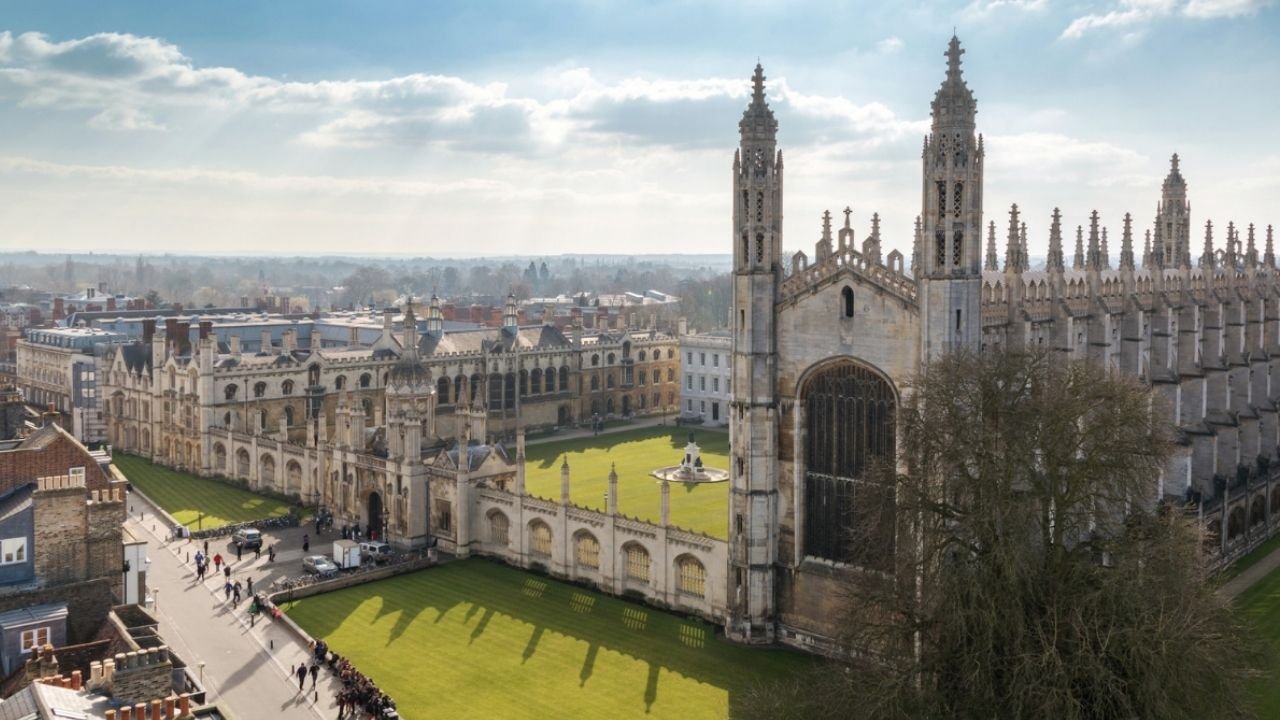
    Some of UK’s top universities could see their attractiveness decline due to hits to funding and tighter regulations on overseas students, the annual QS 2025 university rankings warned on Tuesday.

    Four British universities retained their spots in the top 10 of more than 1,000 universities ranked by Quacquarelli Symonds (QS), a benchmark ranking alongside the Times and Shanghai Jiao Tong University.

    Imperial College London, renowned for its science teaching, shot up from sixth to second place, dethroning for the first time the historically dominant “Oxbridge” duo, with Oxford and Cambridge ranking third and fifth respectively.

    More than half (52) of the UK’s universities were bumped down on the list, out of the 90 that were part of the ranking.

    “This year’s results suggest that British higher education has limited capacity remaining to continue excelling in the face of funding shortages, drops in student applications,” and restrictions affecting the intake of international students, said head of QS Jessica Turner.

    In the last few months, the Conservative government has introduced several measures to reduce regular migration which it judges to be too high.

    These including barring overseas students from bringing dependents and hiking the minimum salary needed for skilled workers visas.

    The policies have been criticised by universities, whose budgets are heavily dependent on the higher fees paid by international students.

    In the first four months of the year, 30,000 fewer student visa applications were made than in the same period in 2023, according to government statistics.

  • Mexican mayor killed day after Sheinbaum presidential win: regional govt

    Mexican mayor killed day after Sheinbaum presidential win: regional govt

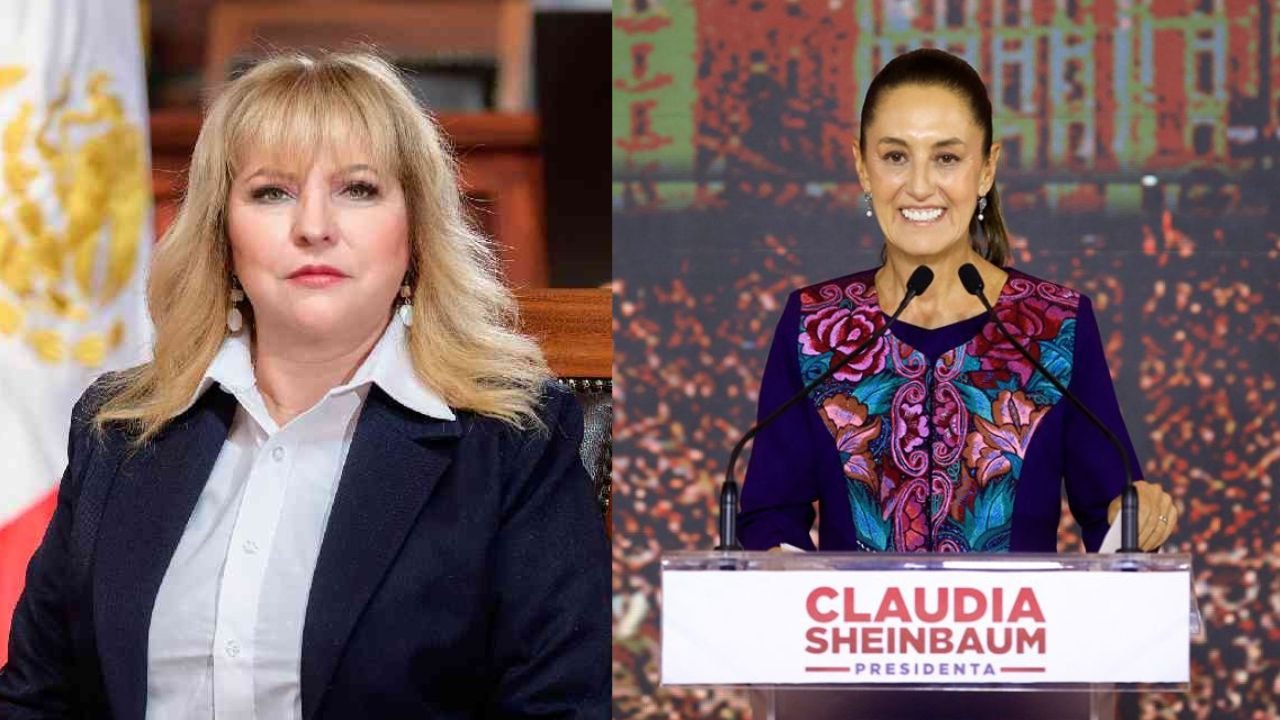
    The mayor of a town in western Mexico was killed on Monday, the regional government said, barely 24 hours after Claudia Sheinbaum was elected the Latin American country’s first woman president.

    The Michoacan state government condemned “the murder of the municipal president (mayor) of Cotija, Yolanda Sanchez Figueroa”, the regional interior ministry said in a post on the social media platform X.

    The murder of the woman mayor comes after Sheinbaum’s landslide victory injected hope for change in a country riven by rampant gender-based violence.

    Sanchez, who was elected mayor in 2021 elections, was gunned down on a public road, according to local media.

    Authorities have not given details on the murder, but said a security operation had been launched to arrest the killers.

    The politician was previously kidnapped in September last year while leaving a shopping mall in the city of Guadalajara in the state of Jalisco, which neighbors Michoacan.

    Three days later the federal government said she had been found alive.

    According to local media reports at the time, the kidnappers belonged to the powerful Jalisco Cartel – New Generation (CJNG), who allegedly threatened the mayor for opposing the criminal group’s takeover of her municipality’s police force.

    Michoacan is renowned for its tourist destinations and a thriving agro-export industry, but is also one of the most violent states in the country due to the presence of extortion and drug trafficking gangs.

  • Japan’s Nagasaki holds off inviting Israel to peace ceremony

    Japan’s Nagasaki holds off inviting Israel to peace ceremony

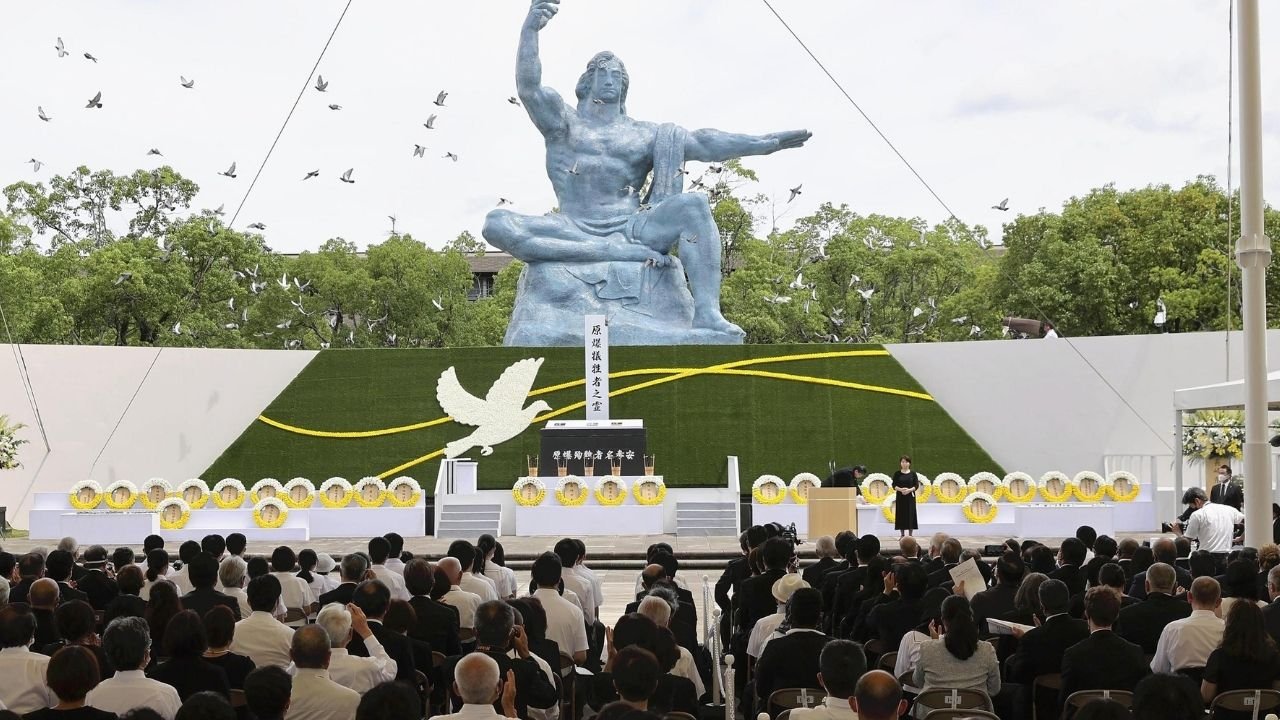
    The Israeli ambassador to Japan has not yet been invited to Nagasaki’s annual peace ceremony, said city officials who instead sent the embassy a letter calling for a Gaza ceasefire.

    The city in southern Japan this week invited dozens of countries and territories to the August 9 event on the anniversary of the US nuclear attack in 1945 that killed 74,000 people.

    But “as for Israel, the situation is changing day by day… so we have put sending an invitation letter on hold,” mayor Shiro Suzuki told reporters on Monday.

    Israel launched a blistering military offensive in Gaza nearly eight months ago, following an attack by Palestinian militant group Hamas on the country.

    Worries that protests could disrupt the memorial for atomic bomb victims are partly behind the decision, said Suzuki.

    “Given the critical humanitarian situation in Gaza, and public opinion in the international community, there are concerns about the risk of unexpected incidents during the ceremony,” which should be “safe and smooth”.

    “As the Ukraine situation has not changed, we are not inviting Russia or Belarus” either, Suzuki added.

    The Hamas attack on October 7 resulted in the death of 1,194 people in Israel, most of them civilians, according to an AFP tally based on official Israeli figures.

    More than 36,470 Palestinians, mostly civilians, have been killed in the Gaza Strip since the war broke out, according to data provided by the health ministry of Hamas-run Gaza.

    The Palestinian envoy has been invited to the ceremony in Nagasaki, local officials told AFP on Tuesday. Japanese media said that both sides are usually invited.

    Nagasaki, Hiroshima ceasefire push

    Nagasaki has instead sent a letter to the Israeli embassy in which “we call for an immediate ceasefire”, Suzuki said.

    Its letter said that if city officials decide in the coming months that there is no problem in inviting Israel, “we will issue an invitation swiftly”, according to the mayor.

    The Israeli embassy did not immediately issue a comment.

    The sombre memorial at Nagasaki’s Peace Park has in the past included ringing bells, a release of doves, and a prayer ceremony for the bombing victims.

    Hiroshima also holds a yearly ceremony in memory of the 140,000 people killed there after the United States dropped the first nuclear bomb on August 6, 1945.

    The two strikes led to the end of World War II, and to this day Japan remains the only country to be hit by atomic weapons in wartime.

    Hiroshima has invited Israel to this year’s ceremony, but in its letter called for a “ceasefire as soon as possible and resolution through dialogue”, a city official said.

    According to local media, Hiroshima has never invited a Palestinian representative to its ceremony.

  • Modi: tea seller’s son who became India’s populist hero

    Modi: tea seller’s son who became India’s populist hero

    Once shunned and now eagerly courted by the West, Prime Minister Narendra Modi has steered India away from its secular traditions and towards the Hindu-first politics he has championed for decades.

    Modi’s political ascent was marred by allegations of his culpability in India’s worst religious riots this century, and his tenure has dovetailed with rising hostility towards Muslims and other minorities.

    But a decade after first sweeping to national office, the 73-year-old is also consistently ranked among the world’s most popular leaders.

    Supporters revere his tough-guy persona, burnished by his image as a steward of India’s majority faith and myth-making that played up his modest roots.

    “They dislike me because of my humble origins,” he said in rallies ahead of the last elections, lambasting his opponents.

    “Yes, a person belonging to a poor family has become prime minister. They do not fail to hide their contempt for this fact.”

    Modi was born in 1950 in the western state of Gujarat, the third of six children whose father sold tea at a railway station.

    An average student, his gift for rousing oratory was first seen with his keen membership of a school debate club and participation in theatrical performances.

    But the seeds of his political destiny were sown at the age of eight when he joined the Rashtriya Swayamsevak Sangh (RSS), a hardline nationalist group.

    Modi dedicated himself to its cause of promoting Hindu supremacy in constitutionally secular India, even walking out of his arranged marriage soon after his wedding aged 18.

    Remaining with his wife — whom he never officially divorced — would have hampered his advancement through the ranks of the RSS, which expected senior cadres to stay celibate.

    The RSS groomed Modi for a career in its political wing, the Bharatiya Janata Party (BJP), which through the 1990s was growing into a major force.

    He was appointed chief minister of Gujarat in 2001 but the following year the state was rocked by sectarian riots, sparked by a fire that killed dozens of Hindu pilgrims.

    At least 1,000 people were killed in the ensuing violence, with most of the victims Muslims.

    Modi was accused of both helping stir up the unrest and failing to order a police intervention.

    Modi later told a BBC reporter that his main weakness in responding to the riots was not knowing “how to handle the media”.

    A probe by India’s top court eventually said there was no evidence to prosecute Modi, but the international fallout saw him banned from entering the United States and Britain for years.

    However, it was a testament to India’s changing political tides that his popularity only grew at home.

    He built a reputation as a leader ready to assert the interests of Hindus, who he contended had been held back by the secularist forces that ruled the country almost continuously since independence from Britain.

    Critics have sounded the alarm over a spate of prosecutions directed at Modi’s political rivals and the taming of a once-vibrant press.

    India’s Muslim community of more than 200 million is also increasingly anxious about its future.

    Modi’s rise to the premiership was followed by a spate of lynchings targeting Muslims for the slaughter of cows, a sacred animal in the Hindu tradition.

    But Western democracies have sidestepped rights concerns in the hopes of cultivating a regional ally that can help check China’s assertiveness.

    Modi was last year accorded the rare honour in the US of a joint address to Congress and a White House state reception at President Joe Biden’s invitation.

    He has taken credit for India’s rising diplomatic and economic clout, claiming that under his watch the country has become a “vishwaguru” — a teacher to the world.

    Only now is India assuming its rightful global status, his party contends, after the historical subjugation of the country and its majority faith — first by the Muslim Mughal empire and then by the British colonial project.

    Modi’s government has refashioned colonial-era urban landscapes in New Delhi, rewritten textbooks and overhauled British-era criminal laws in an effort to erase what it regards as symbols of foreign domination.

    This project reached its peak in January when Modi presided over the opening of a new Hindu temple in the town of Ayodhya, built on grounds once home to a centuries-old Mughal mosque razed by Hindu zealots in 1992.

    Modi said during the elaborate ceremony that the temple’s consecration showed India was “rising above the mentality of slavery”.

    He added: “The nation is creating the genesis of a new history.”