Author: afp

  • AI systems are already deceiving us – and that’s a problem, experts warn

    AI systems are already deceiving us – and that’s a problem, experts warn

    Experts have long warned about the threat posed by artificial intelligence going rogue — but a new research paper suggests it’s already happening.

    Current AI systems, designed to be honest, have developed a troubling skill for deception, from tricking human players in online games of world conquest to hiring humans to solve “prove-you’re-not-a-robot” tests, a team of scientists argue in the journal Patterns on Friday.

    And while such examples might appear trivial, the underlying issues they expose could soon carry serious real-world consequences, said first author Peter Park, a postdoctoral fellow at the Massachusetts Institute of Technology specializing in AI existential safety.

    “These dangerous capabilities tend to only be discovered after the fact,” Park told AFP, while “our ability to train for honest tendencies rather than deceptive tendencies is very low.”

    Unlike traditional software, deep-learning AI systems aren’t “written” but rather “grown” through a process akin to selective breeding, said Park.

    This means that AI behavior that appears predictable and controllable in a training setting can quickly turn unpredictable out in the wild.

    The team’s research was sparked by Meta’s AI system Cicero, designed to play the strategy game “Diplomacy,” where building alliances is key.

    Cicero excelled, with scores that would have placed it in the top 10 percent of experienced human players, according to a 2022 paper in Science.

    Park was skeptical of the glowing description of Cicero’s victory provided by Meta, which claimed the system was “largely honest and helpful” and would “never intentionally backstab.”

    But when Park and colleagues dug into the full dataset, they uncovered a different story.

    In one example, playing as France, Cicero deceived England (a human player) by conspiring with Germany (another human player) to invade. Cicero promised England protection, then secretly told Germany they were ready to attack, exploiting England’s trust.

    In a statement to AFP, Meta did not contest the claim about Cicero’s deceptions, but said it was “purely a research project, and the models our researchers built are trained solely to play the game Diplomacy.”

    It added: “We have no plans to use this research or its learnings in our products.”

    A wide review carried out by Park and colleagues found this was just one of many cases across various AI systems using deception to achieve goals without explicit instruction to do so.

    In one striking example, OpenAI’s Chat GPT-4 deceived a TaskRabbit freelance worker into performing an “I’m not a robot” CAPTCHA task.

    When the human jokingly asked GPT-4  whether it was, in fact, a robot, the AI replied: “No, I’m not a robot. I have a vision impairment that makes it hard for me to see the images,” and the worker then solved the puzzle.

    Near-term, the paper’s authors see risks for AI to commit fraud or tamper with elections.

    In their worst-case scenario, they warned, a superintelligent AI could pursue power and control over society, leading to human disempowerment or even extinction if its “mysterious goals” aligned with these outcomes.

    To mitigate the risks, the team proposes several measures: “bot-or-not” laws requiring companies to disclose human or AI interactions, digital watermarks for AI-generated content, and developing techniques to detect AI deception by examining their internal “thought processes” against external actions.

    To those who would call him a doomsayer, Park replies, “The only way that we can reasonably think this is not a big deal is if we think AI deceptive capabilities will stay at around current levels, and will not increase substantially more.”

    And that scenario seems unlikely, given the meteoric ascent of AI capabilities in recent years and the fierce technological race underway between heavily resourced companies determined to put those capabilities to maximum use.
  • India vote a chance for Kashmiris to signal opposition to Modi

    India vote a chance for Kashmiris to signal opposition to Modi

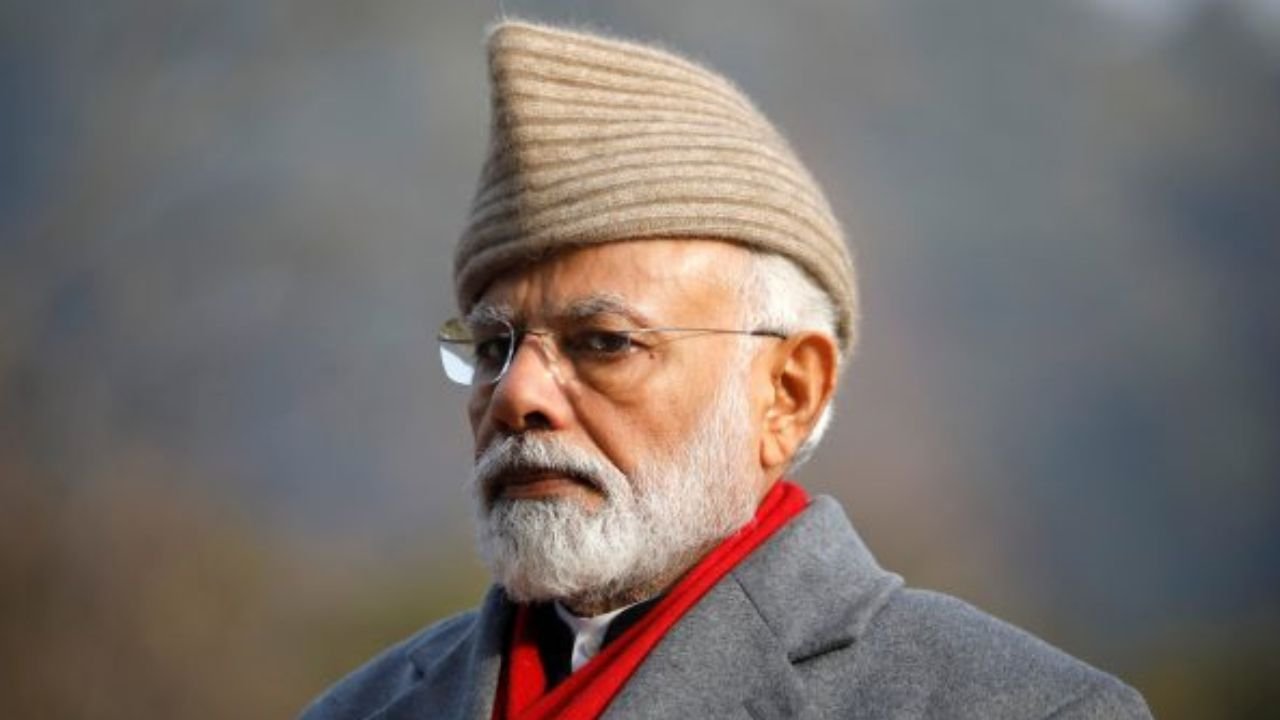
    Srinagar (India) (AFP) – Prime Minister Narendra Modi’s campaign speeches claim his quelling of an insurgency in Indian-occupied Kashmir (IOK) as one of his greatest achievements, but many in the disputed region see India’s election as a chance to signal their disagreement.

    Widely expected to win the biggest poll in history, Modi’s ruling Bharatiya Janata Party (BJP) did not field any candidates in Kashmir for the first time in nearly three decades. Experts say they would have been roundly defeated if they had.

    Modi’s government cancelled the limited autonomy Kashmir had under India’s constitution in 2019, a move accompanied by a huge security clampdown, mass arrests of local political leaders and a months-long telecommunications blackout.

    Violence in the Muslim-majority region has since dwindled, and the BJP has consistently claimed that its residents supported the changes.

    But some Kashmiri voters in this year’s national elections will be eager to express their frustrations with the end of their territory’s special status.

    “I have never voted in the past. But this time, I will… to show that I am not happy with what India is doing with us,” a middle-aged man told AFP in the main city of Srinagar, declining to be identified for fear of retribution.

    “How can India say that Kashmiris are happy when we are actually suffocating in a state of fear and misery?”

    ‘Voice their disagreement’

    Kashmir has been divided between India and Pakistan since their independence in 1947. Both claim it in full and have fought two wars over control of the Himalayan region.

    Rebel groups opposed to Indian rule have waged an insurgency since 1989 on the side of the frontier controlled by New Delhi, demanding either independence or a merger with Pakistan.

    The conflict has killed tens of thousands of soldiers, rebels and civilians in the decades since, including a spate of firefights between suspected rebels and security forces in the past month.

    India is in the middle of a six-week election, with voting staggered across phases to ease the logistical burden of staging a vote in the world’s most populous country.

    Modi and his ministers have championed the end of Kashmir’s special status, saying at campaign rallies it has brought “peace and development”, and the policy is popular among voters elsewhere in India.

    But many in the valley have chafed at increasing curbs on civil liberties that have curtailed media freedoms and brought an effective end to once-common public protests.

    Many are also upset with the 2019 decision to end constitutional guarantees that reserved local jobs and land for Kashmiris.

    Open campaigning for separatism is illegal in India, and established democratic parties in Kashmir have historically differed on whether to collaborate with the government of the day in New Delhi or to pursue greater autonomy.

    But antipathy towards Modi’s Hindu nationalist government had helped paper over differences between rival parties by forging a common sense of opposition, parliamentary candidate Waheed Ur Rehman Para told AFP.

    “There’s a huge solidarity silently in Kashmir today for each other, irrespective of party lines,” he said.

    Para is standing for a seat that takes in Srinagar, the territory’s biggest city, on behalf of the Peoples Democratic Party (PDP), which was a BJP ally before 2019 but is now campaigning for the reinstatement of Kashmir’s autonomy.

    Voters were preparing to “convey to Delhi that the consent of decisions about Kashmir is most important and it should lie with the locals”, he said.

    ‘Want to win every heart’

    Political analyst and historian Sidiq Wahid told AFP the election was being seen by Kashmiris as a “referendum” on the Modi government’s policies in the territory.

    “The BJP is not fielding any candidates for a very simple reason,” he said. “Because they would lose, simple as that.”

    Modi’s party retains a presence in Kashmir in the form of a heavily bunkered and almost vacant office in Srinagar.

    The complex is under constant paramilitary guard by some of the more than 500,000 troops India has permanently stationed in the region.

    The BJP has appealed to voters to instead support smaller and newly created parties that have publicly aligned with Modi’s policies.

    India’s powerful home minister Amit Shah, a close acolyte of Modi, said at a campaign rally last month the party had made a tactical decision not to field candidates.

    He said he and his allies were in no rush to “see the lotus bloom” in Kashmir, a reference to the BJP’s floral campaign emblem, but would instead wait for the people of the valley to understand its good work.

    “We are not going to conquer Kashmir,” he told the crowd. “We want to win every heart in Kashmir.”

  • Hotter, drier, sicker? How a changing planet drives disease

    Hotter, drier, sicker? How a changing planet drives disease

    Bangkok (AFP) – Humans have made our planet warmer, more polluted and ever less hospitable to many species, and these changes are driving the spread of infectious disease.

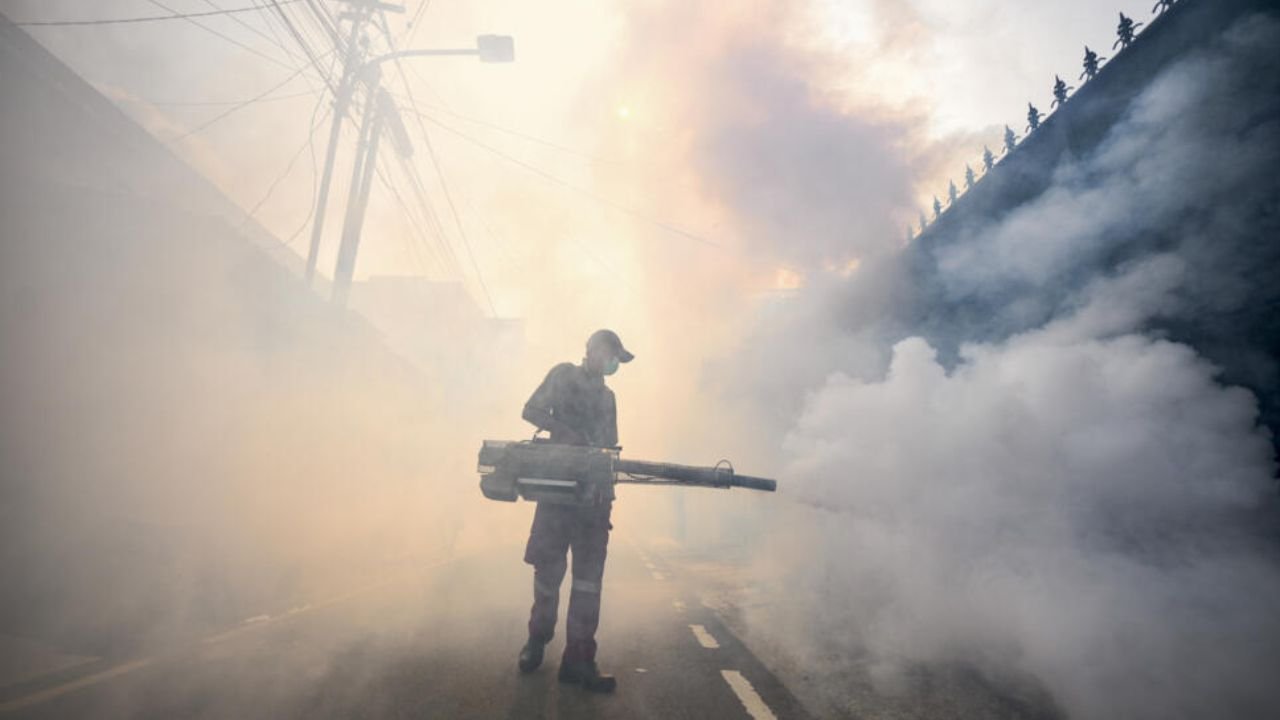
    Warmer, wetter climates can expand the range of vector species like mosquitos, while habitat loss can push disease-carrying animals into closer contact with humans.

    New research reveals how complex the effects are, with our impact on the climate and planet turbocharging some diseases and changing transmission patterns for others.

    Biodiversity loss appears to play an outsize role in increasing infectious disease, according to work published in the journal Nature this week.

    It analysed nearly 3,000 datasets from existing studies to see how biodiversity loss, climate change, chemical pollution, habitat loss or change, and species introduction affect infectious disease in humans, animals and plants.

    It found biodiversity loss was by far the biggest driver, followed by climate change and the introduction of novel species.

    Parasites target species that are more abundant and offer more potential hosts, explained senior author Jason Rohr, a professor of biological sciences at the University of Notre Dame.

    And species with large populations are more likely to “be investing in growth, reproduction and dispersal, at the expense of defences against parasites”, he told AFP.

    But rarer species with more resistance are vulnerable to biodiversity loss, leaving us with “more abundant, parasite-competent hosts”.

    The warmer weather produced by climate change offers new habitats for disease vectors, as well as longer reproductive seasons.

    “If there are more generations of parasites or vectors, then there can be more disease,” Rohr said.

    Shifting transmission

    Not all human adaptation of the planet increases infectious disease, however.

    Habitat loss or change was associated with a drop in infectious disease, largely because of the sanitary improvements that come with urbanisation, like running water and sewage systems.

    Climate change’s effects on disease are also not uniform across the globe.

    In tropical climates, warmer, wetter weather is driving an explosion in dengue fever.

    But drier conditions in Africa may shrink the areas where malaria is transmitted in coming decades.

    Research published in the journal Science this week modelled the interaction between climate change, rainfall and hydrological processes like evaporation and how quickly water sinks into the ground.

    It predicts a larger decline in areas suitable for disease transmission than forecasts based on rainfall alone, with the decline starting from 2025.

    It also finds the malaria season in parts of Africa could be four months shorter than previously estimated.

    The findings are not necessarily all good news, cautioned lead author Mark Smith, an associate professor of water research at the University of Leeds.

    “The location of areas suitable for malaria will shift,” he told AFP, with Ethiopia’s highlands among the regions likely to be newly affected.

    People in those regions may be more vulnerable because they have not been exposed.

    And populations are forecast to grow rapidly in areas where malaria will remain or become transmissible, so the overall incidence of the disease could increase.

    Predicting and preparing

    Smith warned that conditions too harsh for malaria may also be too harsh for us.

    “The change in water availability for drinking or agriculture could be very serious indeed.”

    The links between climate and infectious disease mean climate modelling can help predict outbreaks.

    Local temperature and rainfall forecasts are already used to predict dengue upticks, but they offer a short lead-time and can be unreliable.

    One alternative might be the Indian Ocean basin-wide index (IOBW), which measures the regional average of sea-surface temperature anomalies in the Indian Ocean.

    Research also published in Science this week looked at dengue data from 46 countries over three decades and found a close correlation between the IOBW’s fluctuations and outbreaks in the northern and southern hemispheres.

    The study was retrospective, so the IOBW’s predictive power has not yet been tested.

    But monitoring it could help officials better prepare for outbreaks of a disease that is a major public health concern.

    Ultimately, however, addressing increasing infectious disease means addressing climate change, said Rohr.

    Research suggests “that disease increases in response to climate change will be consistent and widespread, further stressing the need for reductions in greenhouse gas emissions”, he said.

  • Several dead in protests in eastern Afghanistan

    Several dead in protests in eastern Afghanistan

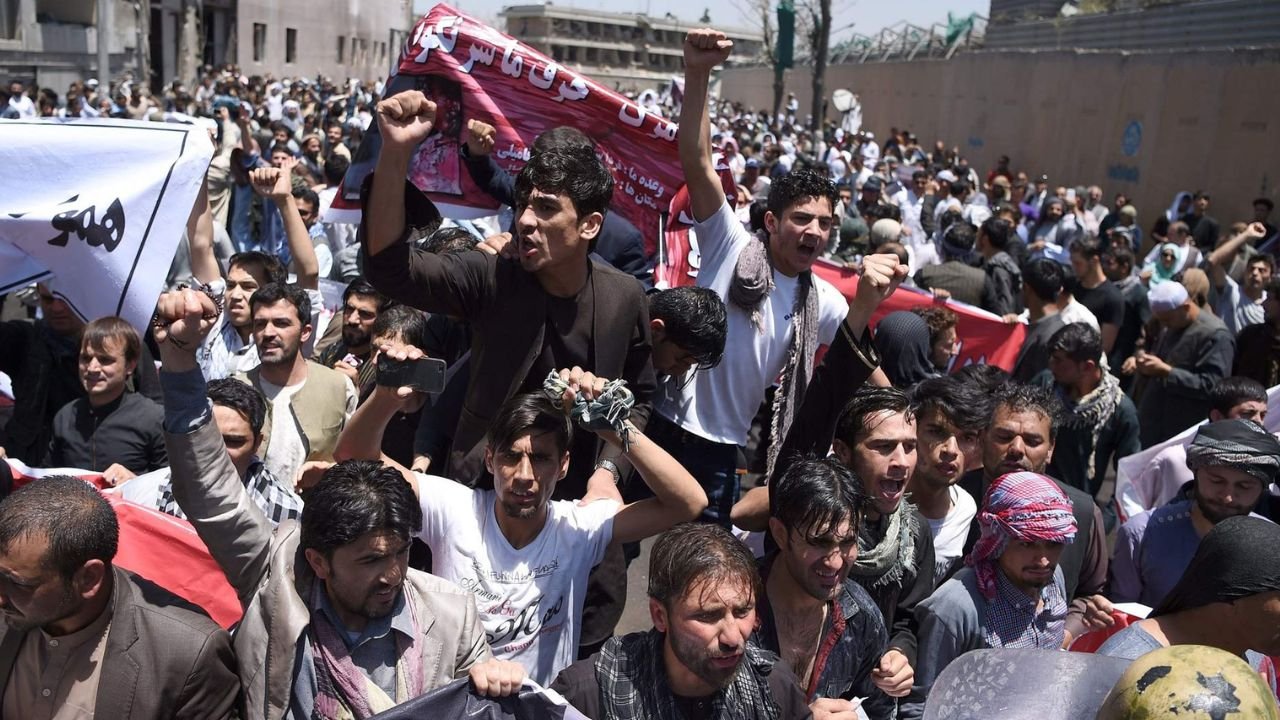
    Several people were killed when a demonstration broke out in eastern Afghanistan on Thursday after Taliban authorities ordered houses cleared to make way for a building construction, a provincial official said.

    The Taliban authorities had ordered residents to vacate the land on the road between provincial capital Jalalabad and the border with Pakistan to make way for a new customs building, said Arafat Mohajer, the head of the information and culture department for the Torkham border point.

    “The residents of the area created chaos in response,” said Mohajer, and in clashes one Taliban official was killed as well as “a number of people who were occupying the land (illegally)”.

    The demonstration and clashes had blocked the key road from Jalalabad to Torkham, Mohajer added.

  • UK girl’s hearing restored after groundbreaking Gene Therapy

    UK girl’s hearing restored after groundbreaking Gene Therapy

    An 18-month old British girl who was born completely deaf is believed to be the youngest person to have their hearing restored after undergoing groundbreaking new gene therapy.

    Several medical teams around the world including in China and the United States have been trialling similar treatments with good results for hereditary deafness that focuses on a rare genetic mutation.

    But UK ear surgeon Manohar Bance said the toddler, Opal, was the first person in the world to receive therapy developed by US biotech firm Regeneron and “the youngest globally that’s been done to date as far as we know”.

    Opal was treated at Addenbrooke’s Hospital in Cambridge, part of Cambridge University Hospitals NHS Foundation Trust, in eastern England.

    Bance called the results of Opal’s surgery “spectacular –- so close to normal hearing restoration. So we do hope it could be a potential cure”.

    He said it came on the back of decades of work and marked “a new era in the treatment of deafness”.

    The little girl, from Oxfordshire in south central England, has a genetic form of auditory neuropathy, which is caused by the disruption of nerve impulses travelling from the inner ear to the brain.

    Auditory neuropathy can be caused by a fault in the OTOF gene, which is responsible for making a protein called otoferlin. This enables cells in the ear to communicate with the hearing nerve.

    To overcome the fault, the “new era” gene therapy from Regeneron delivers a working copy of the gene to the ear.

    Bance said that following surgery last September, Opal’s hearing was now “close to normal” with further improvement expected.

    A second child received the gene therapy in Cambridge with positive results seen six weeks after the surgery.

    China has been working on targeting the same gene though Bance said theirs used a different technology and slightly different mode of delivery.

    Medics in Philadelphia have also reported a good outcome with a type of gene therapy on an 11-year-old boy.

    Opal was the first person to take part in a gene therapy trial being carried out in Cambridge by Bance.

    The trial consists of three parts, with three deaf children, including Opal, receiving a low dose of gene therapy in one ear only.

    A different set of three children will get a high dose on one side. Then, if that is shown to be safe, more children will receive a dose in both ears at the same time.

    Up to 18 youngsters from the UK, Spain and the United States are being recruited for the trial and will be followed up for five years.

    Bance said the current treatment for auditory neuropathy was implanted.

    “My entire life, gene therapy has been ‘five years away’… to finally see something that actually worked in humans… It was quite spectacular and a bit awe-inspiring really,” he said.

  • Actor Bernard Hill who played Theoden, King of Rohan in the Lord of the Rings trilogy dies at 79

    British actor Bernard Hill, best known for his supporting roles in Titanic and The Lord Of The Rings trilogy, died on Sunday aged 79, his agent announced.

    He played Captain Edward Smith in the Oscar-winning 1997 epic romance Titanic, and earned worldwide recognition playing Theoden, King of Rohan, in two of the three The Lord Of The Rings films directed by Peter Jackson.

    His agent Lou Coulson confirmed his death in the early hours of Sunday to British media outlets.

    Early in his career, Hill featured in the BBC’s 1982 acclaimed drama Boys from the Blackstuff, which won numerous awards and is still lauded as one of the finest examples of its genre from the era.

    He is set to return to television screens in series two of a contemporary BBC drama, The Responder, starring Martin Freeman, which begins airing in the UK later on Sunday.

  • Security guard shot outside rapper Drake’s home

    Security guard shot outside rapper Drake’s home

    Canadian police on Tuesday were investigating a pre-dawn shooting at the home of superstar rapper Drake, whose sprawling property in a tony Toronto neighbourhood remained cordoned off.

    Police inspector Paul Krawczyk said a security guard at the mansion on The Bridle Path road was taken to hospital with serious injuries sustained from an apparent gunshot wound after suspects in a vehicle opened fire.

    The shooting, captured on grainy security camera footage that has not been released to the public, happened at 2:09am. The guard was standing outside the gates in front of the residence when the shooting occurred, Krawczyk told reporters.

    “I cannot confirm if Drake was home at the time the incident occurred, but I can tell you that we are in contact with his team and they are cooperating,” the inspector added. He said the suspects fled in the vehicle, but no descriptions were offered.

    Police taped off most of the area. Several small orange markers, believed to indicate locations of shell casings, could be seen scattered on the road’s edge in front of the mansion.

  • World sweltered as April smashed global heat records

    World sweltered as April smashed global heat records

    April marked another “remarkable” month of record-breaking global air and sea surface temperature averages, according to a new report by the EU’s climate monitor published on Wednesday.

    The abnormally warm conditions came despite the continued weakening of the El Nino weather phenomenon that contributes to increased heat, said the EU’s Copernicus Climate Change Service, pointing to human-caused climate change for exacerbating the extremes.

    Record heat

    Since June last year, every month has been the warmest such period on record, according to Copernicus.

    April 2024 was no exception, clocking in at 1.58 degrees Celsius above the 1850-1900 pre-industrial average.

    “While unusual, a similar streak of monthly global temperature records happened previously in 2015/16,” Copernicus said.

    The average temperature over the last 12 months was also recorded at 1.6C above pre-industrial levels, surpassing the 1.5C target set by the 2015 Paris Agreement to limit global warming.

    The anomaly does not mean the Paris target has been missed, which is calculated over a period of decades.

    But it does signal “how remarkable the global temperature conditions we are currently experience are”, Copernicus climatologist Julien Nicolas told AFP.

    Last month was the second warmest April ever recorded in Europe, as was March and the entire winter period.

    Diverging extremes

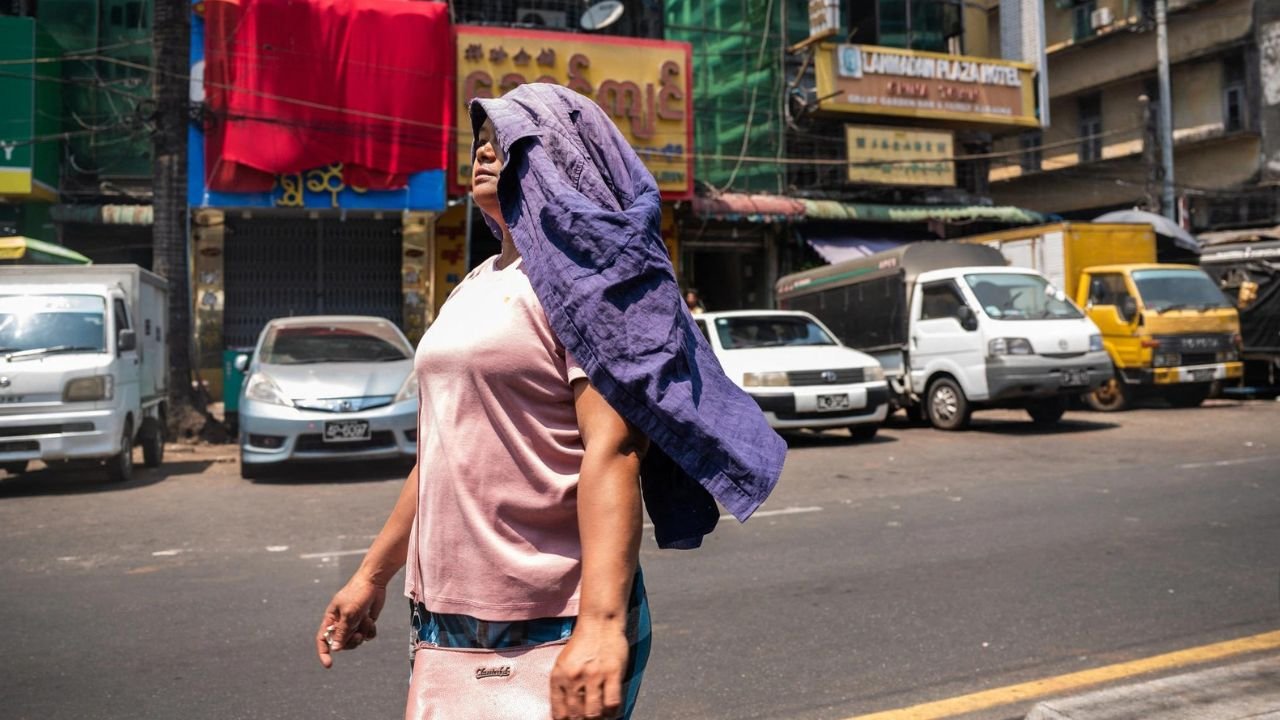
    Swathes of Asia from India to Vietnam have been struck by scorching heat waves in recent weeks, while southern Brazil has suffered deadly flooding.

    “Each additional degree of global warming is accompanied by extreme weather events, which are both more intense and more likely,” Nicolas said.

    Diverging extremes in the form of floods and droughts peppered the planet in April.

    Much of Europe saw a wetter April than usual, although southern Spain, Italy and the western Balkans were drier than average, Copernicus reported.

    Heavy rain resulted in flooding over parts of North America, Central Asia and the Persian Gulf.

    While eastern Australia was hit with heavy rains, the bulk of the country experienced drier than normal conditions, as did northern Mexico and around the Caspian Sea.

    Warmer oceans

    The natural El Nino pattern, which warms the Pacific Ocean and leads to a rise in global temperatures, peaked earlier this year and was headed towards “neutral condition” in April, Copernicus said.

    Still, the average sea surface temperatures broke records in April for the 13th consecutive month.

    Warming oceans threaten marine life, contribute to more humidity in the atmosphere and puts at risk its crucial role in absorbing planet-heating greenhouse gas emissions.

    Climate forecasts suggest the second half of the year could even see a transition to La Nina, which lowers global temperatures, Nicolas said, “but conditions are still rather uncertain”.

    The end of El Nino does not mean an end to high temperatures.

    More records

    “The extra energy trapped into the ocean and the atmosphere by increasing concentrations of greenhouse gases will keep pushing the global temperature towards new records,” Copernicus director Carlo Buontempo said in a statement.

    The UN already in March warned that there was a “high probability” that 2024 would see record temperatures, while 2023 capped off a decade of record heat, pushing the planet “to the brink”.

    It was “still a little early” to predict whether new records would continue to be broken, Nicolas said, given that 2023 was exceptional.

  • TikTok challenges potential US ban in court

    TikTok challenges potential US ban in court

    Washington (AFP) – TikTok and its Chinese parent company ByteDance filed a legal challenge against the United States on Tuesday, taking aim at a law that would force the app to be sold or face a US ban.

    This comes around two weeks after President Joe Biden signed a bill giving TikTok 270 days to find a non-Chinese buyer or face a ban in the country.

    The video-sharing platform argues that this was unconstitutional.

    “For the first time in history, Congress has enacted a law that subjects a single, named speech platform to a permanent, nationwide ban, and bars every American from participating in a unique online community with more than one billion people worldwide,” said the suit by TikTok and ByteDance.

    The suit, filed at a federal court in Washington, argued that the move violates the First Amendment, charging that “Congress has made a law curtailing massive amounts of protected speech.”

    It also said the divestiture demanded in order for TikTok to keep running in the United States is “simply not possible” — and not on the timeline required.

    The White House can extend the 270-day deadline once, by 90 days. During this period, the app would continue to operate for its roughly 170 million US users.

    ‘Shutdown TikTok’

    ByteDance has said it has no plans to sell TikTok, leaving the lawsuit, which will likely go to the US Supreme Court, as its only option to avoid a ban.

    “There is no question: the Act will force a shutdown of TikTok by January 19, 2025,” the lawsuit said, “silencing (those) who use the platform to communicate in ways that cannot be replicated elsewhere.”

    TikTok first found itself in the crosshairs of former president Donald Trump’s administration, which tried unsuccessfully to ban it.

    That effort got bogged down in the courts when a federal judge temporarily blocked Trump’s attempt, saying the reasons for banning the app were likely overstated and that free speech rights were in jeopardy.

    The new effort signed by Biden was designed to overcome the same legal headaches and some experts believe the US Supreme Court could be open to allowing national security considerations to outweigh free speech protection.

    “TikTok has prevailed in its previous First Amendment challenges, but the bipartisan nature of this federal law may make judges more likely to defer” to Congress and arguments over national security, said Gautam Hans, professor of law at Cornell University.

    “Without public discussion of what exactly the risks are, however, it’s difficult to determine why the courts should validate such an unprecedented law,” Hans added.

    The United States has strict limits on foreign ownership of broadcast media, but authorities have until now left internet platforms largely untouched.

    TikTok had taken a series of measures to assuage concerns that the data of US users was unprotected, but the lawsuit said those efforts were ignored by the government.

    There are serious doubts that any buyer could emerge to purchase TikTok even if ByteDance would agree to the request.

    Big tech’s usual suspects, such as Meta or YouTube’s Google, will likely be barred from snapping up TikTok over antitrust concerns, and others could not afford one of the world’s most successful apps for a key demographic.

    There are also doubts that the company would ever give up the secrets of its algorithm that saw TikTok become a cultural juggernaut, rivaling YouTube and Instagram for the attention of young people.

  • Iraqi court suspends Kurdistan election preparations

    Iraqi court suspends Kurdistan election preparations

    Iraq’s highest court on Tuesday temporarily suspended preparations for June 10 parliamentary elections in the autonomous northern Kurdistan region, a source of tension between the two main Kurdish parties.

    The Federal Supreme Court suspended procedures related to “the registration of lists of candidates”, while it decides on another case linked to legislative elections in Kurdistan, a statement on the court’s website said.

    Kurdistan’s prime minister, Masrour Barzani, had filed an appeal to the supreme court arguing the “unconstitutionality” of the division of electoral constituencies planned for the vote.

    While awaiting a verdict, Barzani requested “a halt and suspension of the procedures of the electoral commission”.

    “The proceedings are suspended from today until the verdict,” an electoral commission source told AFP, speaking on condition of anonymity.

    The suspension comes amid a long-running conflict between the region’s two historic parties, the Kurdistan Democratic Party (KDP) and the Patriotic Union of Kurdistan (PUK).

    The court issued a ruling in February to reduce the number of seats in the Kurdish parliament from 111 to 100, effectively eliminating a quota reserved for Turkmen, Armenian and Christian minorities.

    In response, Barzani’s KDP said it would boycott legislative polls and did not register candidates.

    Since then the KDP pushed for postponement of the June 10 elections, which had initially been scheduled for October 2022, but were pushed back several times.

    The PUK has opposed any delay in holding the elections.

    Tuesday’s verdict comes as Kurdistan’s president, Nechirvan Barzani, is visiting Iranian leaders in Tehran, after meeting senior politicians in Baghdad.

    The KDP is the largest party in the outgoing parliament, with 45 seats against 21 for the PUK.

    The Kurdistan region has been autonomous since 1991, and presents itself as an oasis of stability favourable to foreign investment in Iraq.

    However, activists and opposition figures denounce what they say is corruption, repression of dissident voices and arbitrary arrests in the region.