Author: afp

  • Istanbul police clash with May Day protesters

    Istanbul police clash with May Day protesters

    Turkish police on Wednesday fired tear gas and rubber bullets and detained dozens of protesters after authorities banned May 1 rallies at Istanbul’s historic Taksim Square.

    More than 40,000 police were deployed across Istanbul, blocking even small sidestreets with metal barriers in an attempt to prevent protesters gathering.

    Police clashed with demonstrators near city hall in the Sarachane district, firing tear gas and rubber bullets to stop protesters breaching barricades, AFP reporters said.

    According to media reports, at least 150 people had been detained by midday, but authorities did not confirm the figure. AFP reporters saw many people being arrested.

    Some were detained trying to enter Taksim Square.

    Tall metal barriers were put up around the square, where authorities have banned rallies since 2013, when it was the focus of demonstrations against President Recep Tayyip Erdogan’s government.

    Taksim was a rallying ground for May Day celebrations until 1977, when at least 34 people were killed during demonstrations. Authorities opened it up again in 2010, but it was shut again after the 2013 protests.

    In the Besiktas district, police detained at least 30 left-wing protesters who were shouting “Taksim cannot be banned”, an AFP journalist.

    One protester was dragged along the ground by police and his group detained.

    Another 30 people were detained in the Sisli district.

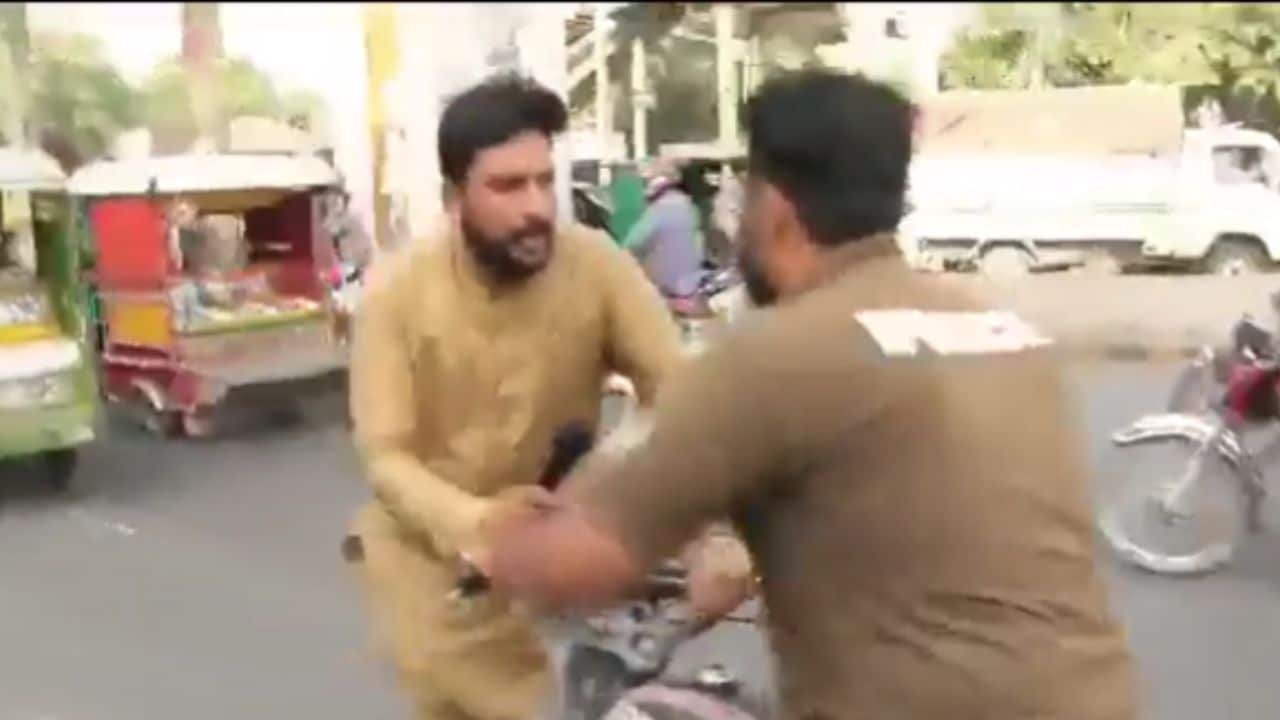
    The MLSA rights group said several journalists were pushed to the ground during the troubles.

    – ‘Taksim belongs to workers’ –

    Main roads across Istanbul were closed to traffic while public transport including ferries and subway trains were halted because of the security clampdown. Landmarks such as the Topkapi palace were cordoned off.

    Interior Minister Ali Yerlikaya said Taksim would be out of bounds for rallies to stop “terrorist organisations” using it for “propaganda”.

    Turkey’s main opposition Republican People’s Party (CHP) and unions had pressed the government to open the square for labour rallies but Erdogan warned on Tuesday against any provocation.

    CHP leader Ozgur Ozel, accompanied by Istanbul’s mayor Ekrem Imamoglu and labour unions, gathered at the Sarachane neighbourhood.

    “We will keep on fighting until Taksim is free,” Ozel said. “Taksim belongs to the workers.”

    Addressing the police, Ozel declared: “These workers are not your enemies Our only desire is for the day to be celebrated as a festival. We do not want conflict.”

    In 2023, Turkey’s top constitutional court ruled that the closure of Taksim Square for protests was a violation of rights.
  • 4 years after TikTok ban, India’s influencers still searching for solid ground

    4 years after TikTok ban, India’s influencers still searching for solid ground

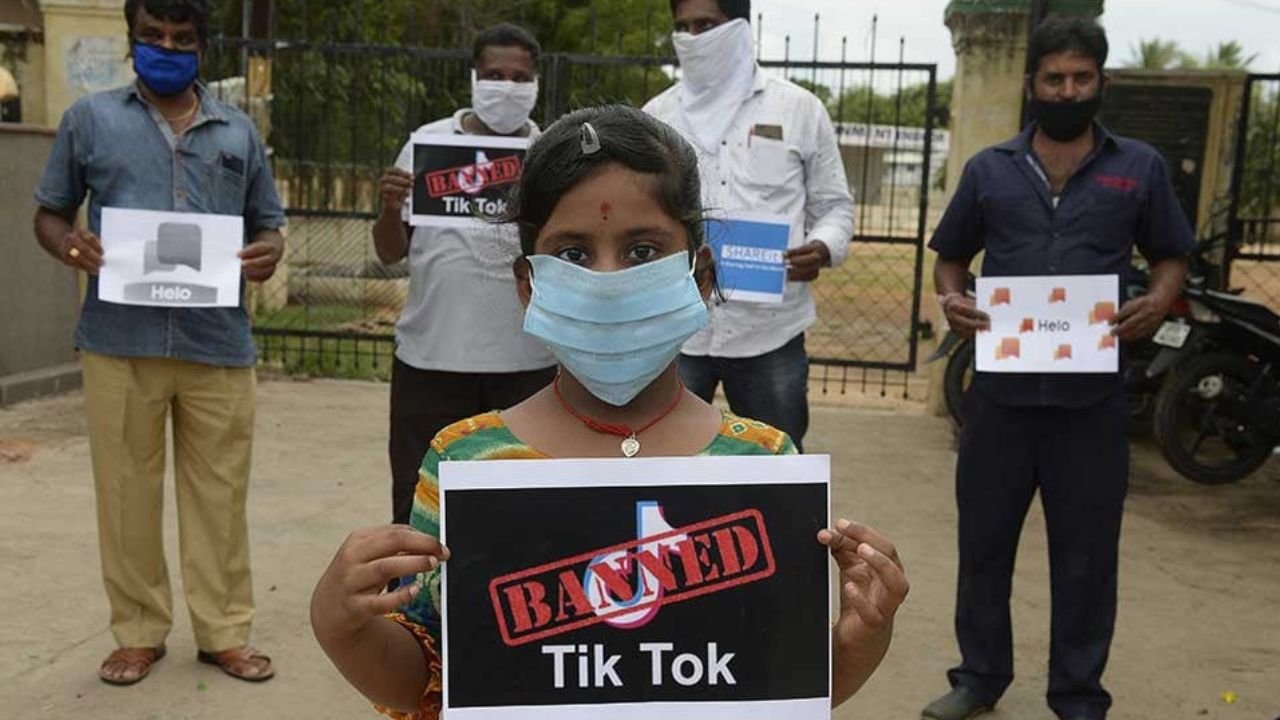
    Choreographer Sahil Kumar found fame showcasing folk dances on TikTok but his profile has been dormant since the video he posted four years ago supporting India’s decision to ban the platform. The world’s most populous country offers a glimpse of what the social media landscape could look like in the United States next year, if a move to block local access to the Chinese-owned short video app goes ahead.

    Several local copycats tried to fill the void left by TikTok’s departure – prompted by a wave of nationalist fervour that followed a border clash between Chinese and Indian troops – but the biggest beneficiaries of the decision were YouTube and Instagram.

    Kumar and many other content creators eventually flocked to those US-owned platforms, but few were able to replicate their earlier followings. “It is difficult to recreate the success elsewhere, because I haven’t got the same engagement on any other platform,” Kumar, 30, told AFP from his studio in Rohtak, a short drive south of the capital New Delhi.

    “It takes years to grow an audience on Instagram and especially on YouTube,” he added. Kumar was an engineer by training but ditched white collar work when he found an audience for his dance routines on TikTok, eventually garnering more than 1.5 million followers.

    His newfound celebrity netted him paid opportunities to choreograph dance numbers for other influencers on the platform and music videos featuring Indian celebrities. But his career was derailed in June 2020 after a deadly clash far from his home on the Himalayan frontier dividing India from China.

    ‘India comes first’ 

    Twenty Indian and four Chinese soldiers were killed in the encounter, the deadliest face-off between the two nuclear-armed neighbours in half a century, and two weeks later the app vanished from Apple and Google’s online stores.

    The official government order mandating the removal made no reference to the incident or even China, only saying that TikTok had engaged in activities that were “prejudicial to sovereignty and integrity of India”.

    Kumar said in his final video on the platform that he agreed with the ban, urging those watching to follow him over to Instagram and YouTube. “They must have thought thoroughly before making this decision,” he said in a short speech to camera. “India comes first.”

    Four years later, just under 94,000 people follow him on Instagram – a tiny fraction of his earlier audience – and he laments that his chances to make money have dried up. “For us, the work stopped,” he said.

    TikTok arrived in India years after other established social media platforms, but quickly became a national phenomenon. A year before it was kicked out of the market, the platform said it had more than 200 million users in India – one out of every seven people in the country.

    ‘Everyone was helter-skelter’ 

    “Every influencer, every personality trying to build an online following had to tap into the platform whether or not they liked it,” Viraj Sheth, co-founder of influencer marketing agency Monk Entertainment, told AFP.

    “As soon as we got the news of TikTok getting banned, everyone was helter-skelter.” Several local tech start-ups attempted to capitalise on TikTok’s disappearance by rushing their own short-form video apps to market.

    But it was established US platforms that eventually proved best primed to triumph in the new market. In the first year after the ban, Instagram saw about six million short videos from India posted each day to Reels, its own interface attempting to match TikTok’s content model.

    That compared to 2.5 million videos posted each day to Indian video sharing platform Moj, according to local media reports. Market tracker Statista estimates that more than 362 million people in India use Instagram and 462 million more use YouTube — which rolled out Shorts, its own TikTok rival, the same year as the India ban.

    That compares to a total audience of 250 million people across manifold homegrown video apps, according to estimates by Redseer Strategy Consultants published last November.

    “When TikTok was banned, we were all expecting that there will probably be some other app which will come and take over,” Amiya Swarup of professional services firm EY India told AFP. “But you know, it’s still the Instas and the YouTube Shorts which are still really ruling in terms of short-form videos.”

    While that had been beneficial for their respective parent companies Meta and Google, Sheth of Monk Entertainment said some influencers had struggled to make the transition.

    TikTok’s endless-scroll interface and algorithm are renowned for both matching audiences with the content they want to see and boosting niche content creators, but Sheth said its rivals require a different formula for success.

    “You probably didn’t need to show personality on TikTok as much,” he said. “On a platform like Instagram, that’s not something that replicated that well.”

  • April temperatures in Bangladesh hottest on record

    April temperatures in Bangladesh hottest on record

    Bangladesh last month saw the hottest average April temperatures since the country began keeping weather records in 1948, a senior forecaster told AFP on Wednesday.

    “2024 was the hottest April since 1948 in terms of hot days and area coverage in the country,” Bangladesh Meteorological Department senior forecaster Muhammad Abul Kalam Mallik said.

    Bangladesh remains in the grips of a suffocating heatwave that prompted authorities to close schools nationwide, with temperatures not expected to moderate until Thursday.

    “This year the heatwave covered around 80 percent of the country. We’ve not seen such unbroken and expansive heatwaves before,” Mallik said.

    Mallik said the 30-year average daily temperature for April between 1981 and 2010 was 33.2 degrees Celsius, but this year weather stations around the country recorded temperatures of between two and eight degrees higher.

    He added that Bangladesh had not seen the usual pre-monsoon April thunderstorms which normally cools the South Asian nation ahead of summer.

    “Bangladesh gets an average 130.2 millimetres of rain in April. But this April we got an average of one millimetre of rain,” he said.

    Mallik said the bureau was checking data to confirm whether this year marked record low rainfalls for April.

  • Brown University reaches deal with student protesters

    Brown University reaches deal with student protesters

    Brown University on Tuesday reached an agreement with students protesting the genocide in Gaza that would see them remove their encampment from school grounds in exchange for the institution considering divesting from Israel.

    The move represents a first major concession from an elite American university amid student protests that have taken over campuses across the country, divided public opinion and led to hundreds of arrests.

    In a statement, Brown President Christina Paxson said students had agreed to end their protests and clear their camp by 5:00 pm local time Tuesday and “refrain from further actions that would violate Brown’s conduct code through the end of the academic year.”

    In turn, “five students will be invited to meet with five members of the Corporation of Brown University in May to present their arguments to divest Brown’s endowment from ‘companies enabling and profiting from the genocide in Gaza’.”

    The board will vote on the proposal in October.

    Student protesters jumped for joy upon hearing the news of the deal and chanted “with love not fear, divestment is getting near” before beginning to remove their tents.

    “We are ending (the encampment) knowing that we made a huge victory for divestment at Brown, for this international movement and a victory for the people of Palestine,” said Brown student Leo Corzo-Clark.

    The university, located in Providence, Rhode Island, “has come to the table to listen to our demands and to listen to its students and to consider divesting from war, divesting from death, divesting from occupation,” said Sam Theoharis, another student protester.

    In her statement, Paxson said “the devastation and loss of life in the Middle East has prompted many to call for meaningful change, while also raising real issues about how best to accomplish this.”

    But she added: “I have been concerned about the escalation in inflammatory rhetoric that we have seen recently, and the increase in tensions at campuses across the country.”

  • Why is South Africa still waiting for a female president?

    Why is South Africa still waiting for a female president?

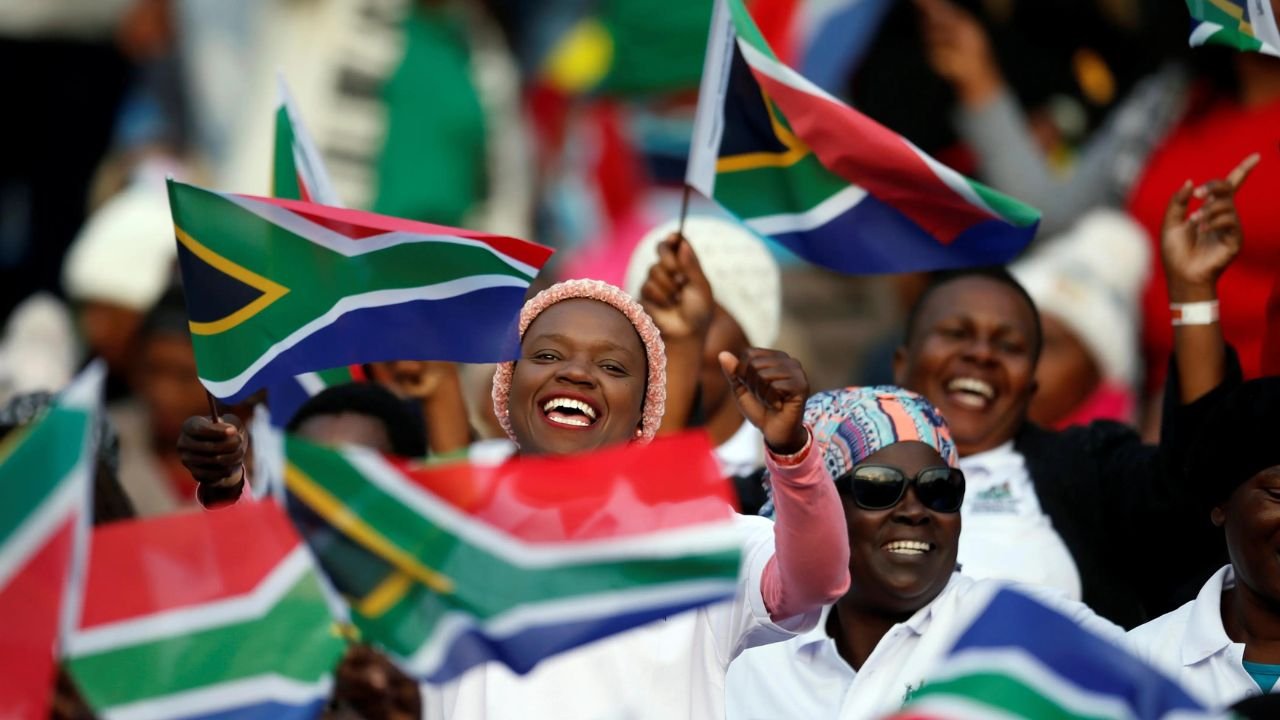
    South Africa has one of the world’s highest rates of female parliamentary representation in the world while boasting one of the most progressive constitutions.

    Yet the country is yet to produce a female president — something upcoming general elections are unlikely to change.

    Of the more than 50 parties in the running on May 29, only a handful are led by a woman. The five largest are all headed by men.

    “It is rare for a woman-owned party to stand, succeed and be sustainable,” said Colleen Makhubele, one of the few female party chiefs, who runs the small South African Rainbow Alliance (SARA).

    The dearth is despite South Africa ranking 11th globally for female representation in parliament, just below Sweden and higher than Finland.

    Women played a major role in the anti-apartheid struggle, and have held important government posts since the advent of democracy in 1994.

    About half the country’s ministries, including the key departments of foreign affairs and defence, are currently run by women.

    Women’s rights activists say the reason partially lies in the disconnect between the liberal views on which democratic South Africa was founded, and what still remains a fairly conservative society.

    The rainbow nation’s constitution lists “non-racialism and non-sexism” as the country’s second founding value after democracy itself.

    Yet many still see women as fit to lead their family — but not the nation.

    About one in five respondents to a 2017 Ipsos survey said that a woman’s place was in the home. Moreover, 22 percent thought men made better political leaders.

    This results in women often being overlooked when parties choose a leading candidate, said Bafana Khumalo, co-director of NGO Sonke Gender Justice.

    “Women are seen as important… but not to be voted into power,” he said.

    Makhubele of SARA, a former Johannesburg council speaker, said she has to work twice as hard as her male colleagues to win votes, funding and media coverage.

    Attitudes are slowly changing.

    A 2020 poll by Women Deliver, a non-profit, found 91 percent of respondents believed gender equality was important.

    Forty-three percent supported the government taking action to achieve equal representation in politics, and 69 percent backed gender quotas.

    The latter are already implemented by the ruling African National Congress (ANC) and the leftist Economic Freedom Fighters (EFF) — the country’s third largest party.

    The second largest party, the liberal Democratic Alliance (DA), had a female leader between 2007 and 2015.

    But that’s not enough, said political analyst and author Susan Booysen.

    “I’m blaming political parties for not systematically nurturing women’s ascendancy in party politics to get them to the top… women don’t see that systemic mentoring and promotion” she said.

    Parties might be missing out.

    Women make up more than 55 percent of registered voters in the upcoming elections and are seen as key drivers of support.

    “They’re the ones who actually make sure the people they live with go and vote on election day,” said Zama Khanyase of the ANC’s youth league.

    The ANC is largely expected to get less than 50 percent of the vote and for the first time lose its absolute majority in parliament when South Africans head to the polls in a month’s time.

    That could force it into a coalition to remain in power.

    After the parliamentary vote national assembly lawmakers then appoint a president.

  • Scotland’s first minister Yousaf quits after a year

    Scotland’s first minister Yousaf quits after a year

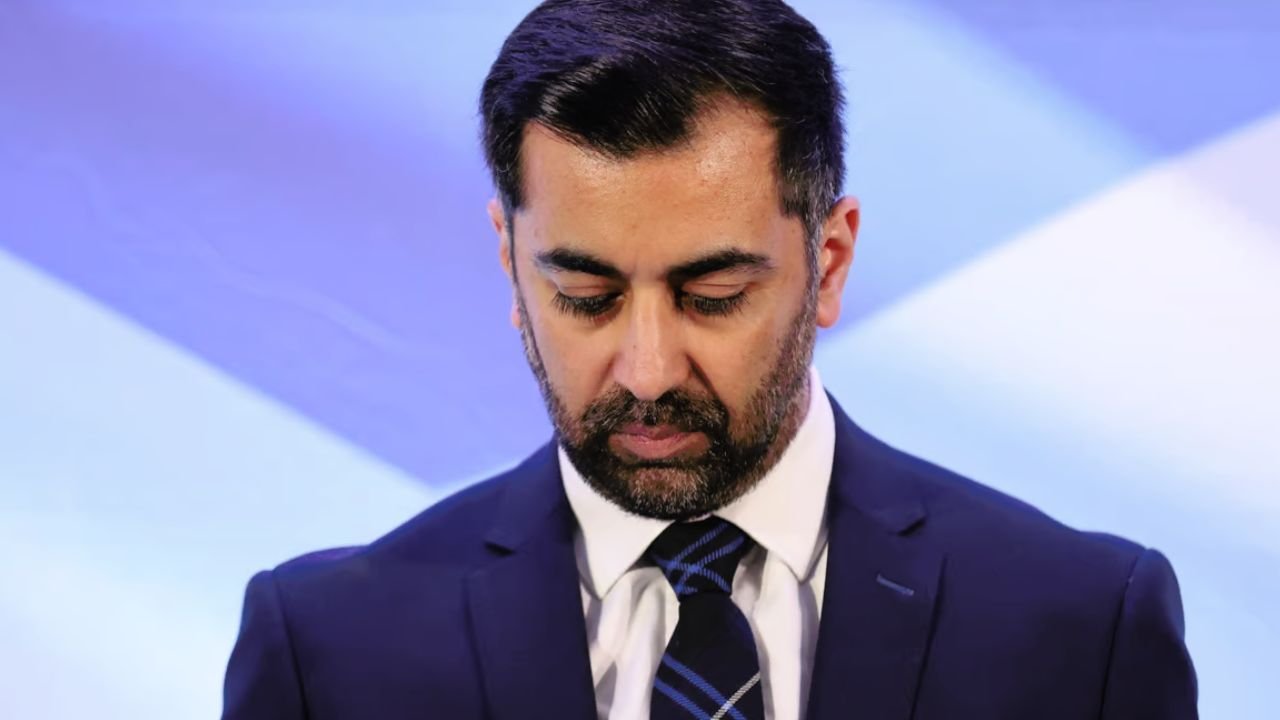
    Edinburgh, United Kingdom – Humza Yousaf announced his resignation as Scotland’s first minister on Monday, before he was due to face two confidence votes this week sparked by his ditching of junior coalition partners in a row over climate policy.

    The 39-year-old quit following a turbulent year as head of the devolved administration, during which support for his pro-independence Scottish National Party (SNP) has fallen.

    Yousaf had been facing growing calls to resign since unceremoniously ending the SNP’s power-sharing deal with the Scottish Greens in the Scottish parliament last week.

    His government had earlier abandoned ambitious targets for the transition to net-zero carbon emissions, angering the Greens.

    The opposition Scottish Conservatives then lodged a vote of no-confidence in Yousaf, which was due to be held as early as Wednesday and which the first minister was at risk of losing.

    Scottish Labour also lodged another no-confidence vote in his government.

    The Tories, Labour, Liberal Democrats and Greens had all said they would vote against him in the personal vote, forcing him to seek the backing of the sole lawmaker from the pro-independence Alba party.

    Alba’s Ash Regan is a former SNP colleague of Yousaf who ran against him in the March 2023 leadership election to succeed Nicola Sturgeon as first minister.

    Yousaf — the first Muslim leader of a major UK political party — said in a statement that he thought winning was “absolutely possible”.

    But he added that he was “not willing to trade in my values or principles or do deals with whomever simply for retaining power”.

    He added: “I have concluded that repairing our relationships across the political divide can only be done with someone else at the helm.”

    Divisions

    Yousaf’s pro-independence SNP has 63 members in the 129-seat parliament — two short of a majority. The presiding officer has a casting vote.

    Yousaf initially said he had no intention of quitting and intended to win the confidence votes.

    But following his announcement, parliament now has 28 days to choose a new first minister.

    He only became Scotland’s leader 13 months ago, after Sturgeon sensationally announced she was quitting, citing tiredness after eight years in charge.

    Yousaf defeated Kate Forbes and Regan in a bruising contest that highlighted divisions in the party between those on the left wing and others closer to the right.

    His leadership was quickly plunged into turmoil when Sturgeon was arrested with her husband, Peter Murrell, over claims of mismanagement of SNP finances.

    Murrell was charged in the case earlier this month. Sturgeon has not been charged.

    Controversies

    Sturgeon had been the figurehead of the Scottish independence movement.

    She oversaw a surge in support for the SNP, particularly after Brexit — in which Scotland opposed leaving the European Union — and during the Covid pandemic.

    But the SNP, which has run the Scottish government since 2007, has suffered a drop in popularity under Yousaf.

    He also came under pressure over controversial new laws which made it an offence to stir up hatred against a number of groups, including transgender people.

    The law has been heavily criticised, including most prominently by “Harry Potter” author J.K. Rowling, who lives in Edinburgh.

    Relations between the SNP and the Greens were also strained by the recent pause in prescribing puberty blockers in Scotland.

    Some within the SNP wanted Yousaf to end the coalition with the Greens because they felt the deal was pulling the party further leftwards.

    The SNP’s slump has also come in the context of a resurgent Labour party, which is tipped to win a UK general election due later this year.

    Scotland voted against independence in a referendum in 2014, with 55 percent of electors choosing “No”.

    The SNP has argued that the UK’s vote to leave the EU in 2016 had put separatism back on the table, because Scotland overwhelmingly voted to remain part of the bloc.

    But the party, in power in Edinburgh for 17 years, has struggled to build momentum for another vote, and the independence movement is at arguably its lowest ebb in recent memory.

    The Scottish Parliament, re-established in 1999, has limited powers to set policy in areas such as health, education, transport and the environment.

    The UK government in London retains powers for countrywide issues such as defence and foreign policy.

    pdh/phz/rlp

    © Agence France-Presse

  • Dubai begins construction of ‘world’s largest’ airport terminal

    Dubai begins construction of ‘world’s largest’ airport terminal

    Dubai announced on Sunday that work had begun on a new terminal at Al Maktoum International Airport, which the Gulf emirate’s ruler said will become “the world’s largest” at a cost of almost $35 billion.

    “We approved the designs for the new passenger terminal at Al Maktoum International Airport, and (are) commencing construction of the building at a cost of AED 128 billion ($34.85 billion),“ Sheikh Mohammed bin Rashid Al Maktoum, the ruler of Dubai and prime minister of the United Arab Emirates, said on X.

    Once fully operational, the airport will “handle a passenger capacity of 260 million annually”, the government said in a statement.

    Sheikh Mohammed said it will have “the world’s largest capacity” and be “five times the size of the current Dubai International Airport”, which is one of the world’s busiest air hubs.

    According to Sheikh Ahmed bin Saeed Al Maktoum, president of the Dubai Civil Aviation Authority and CEO of flag carrier Emirates, “the first phase of the project will be ready within a period of 10 years, with a capacity to accommodate 150 million passengers annually.”

    Built on the city’s outskirts, Al Maktoum airport has received a relatively small share of the Gulf financial hub’s air traffic since 2010.

    Authorities want it to replace Dubai International Airport, which has a capacity of up to 120 million passengers annually and whose city-centre location prevents expansion.

  • India is not an autocracy, insists PM Modi

    India is not an autocracy, insists PM Modi

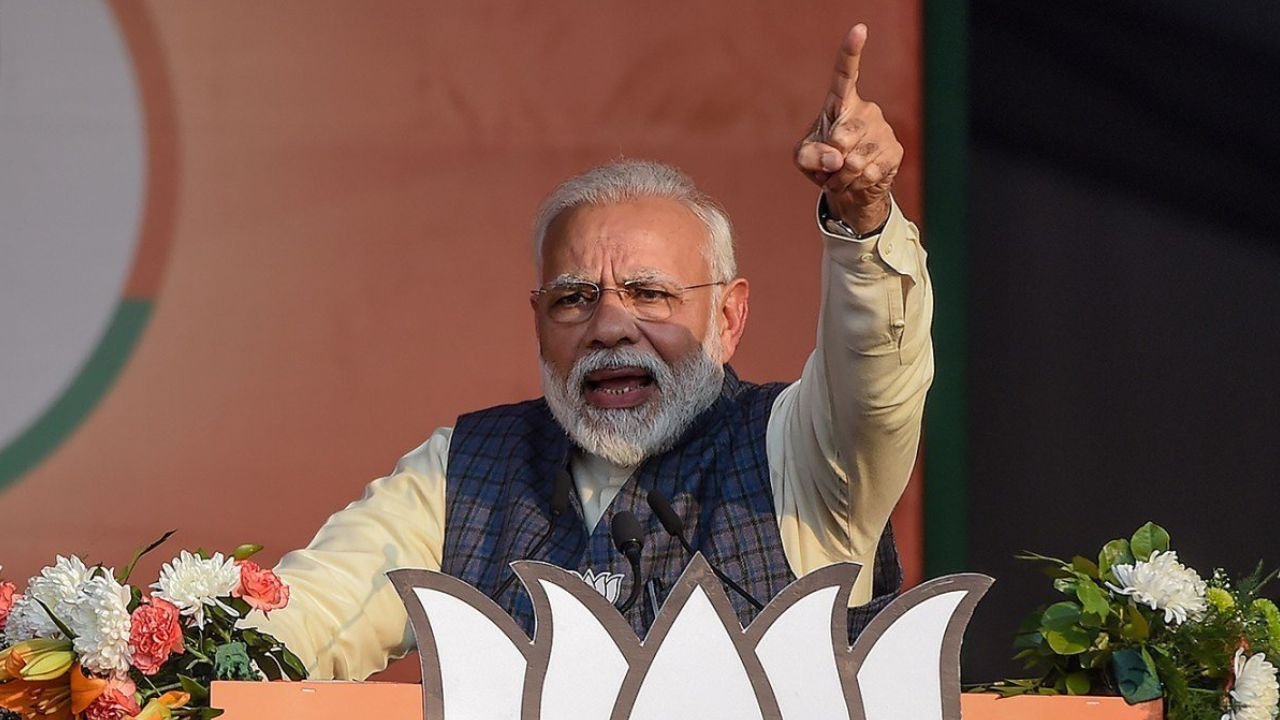
    New Delhi, India – Indian Prime Minister Narendra Modi denied Monday that his country was sliding towards autocracy, following accusations that his government orchestrated criminal probes to weaken rivals ahead of an ongoing general election.

    Modi, 73, remains resoundingly popular after a decade in office, and he is widely expected to win a third term when the six-week-long national polls conclude in June.

    His prospects have been further bolstered by several criminal investigations into opponents, including a tax probe that in February froze the bank accounts of Congress, India’s largest opposition party.

    But Modi said the suggestion India was becoming “an electoral autocracy” under his rule was a fiction spread by his disgruntled rivals.

    “Because the opposition is not able to get power, they start defaming India on the world stage,” he told the Times of India newspaper in an interview published Monday.

    “They spread canards about our people, our democracy and our institutions.”

    India’s press freedom rankings have declined markedly since Modi took office in 2014, while restrictions on civil society have seen rights groups such as Amnesty International severely curtail their local operations.

    This year Modi is being challenged by a motley alliance of more than two dozen political parties, several of whom have leaders either under investigation or in jail facing criminal charges.

    Modi’s chief opponent Rahul Gandhi, the son, grandson and great-grandson of past Indian prime ministers, was briefly disqualified from parliament last year after being convicted of criminal libel.

    The 53-year-old faces numerous other active criminal cases, several of which were brought by members of Modi’s ruling Bharatiya Janata Party (BJP).

    Gandhi and his Congress party already lost two prior landslide elections to Modi, who told the newspaper that his opponent’s unpopularity had no bearing on the robustness of India’s democratic institutions.

    “India does not become an electoral autocracy if the ‘Yuvraj’ cannot automatically get power,” Modi said, using the Hindi word for “prince” to disparage Gandhi’s upbringing as a political dynast.

    ‘Unprecedented display of love’

    Turnout in India’s election has so far been several percentage points lower than the last poll in 2019.

    Indian media outlets have speculated that higher-than-average temperatures were to blame, with parts of the country remaining subject to a heatwave alert.

    Analysts also say voter enthusiasm has been dampened because of the widespread expectations that Modi’s party will easily win the vote.

    Modi told the newspaper he remained confident that the BJP and its allies would secure more than 400 seats in India’s 543-seat parliament, its best-ever total.

    “Everywhere I have gone, I have seen an unprecedented display of love, affection and support,” he said.

    abh/gle/dhw

    © Agence France-Presse

  • Palestinian prisoner in Israel wins top fiction prize

    Palestinian prisoner in Israel wins top fiction prize

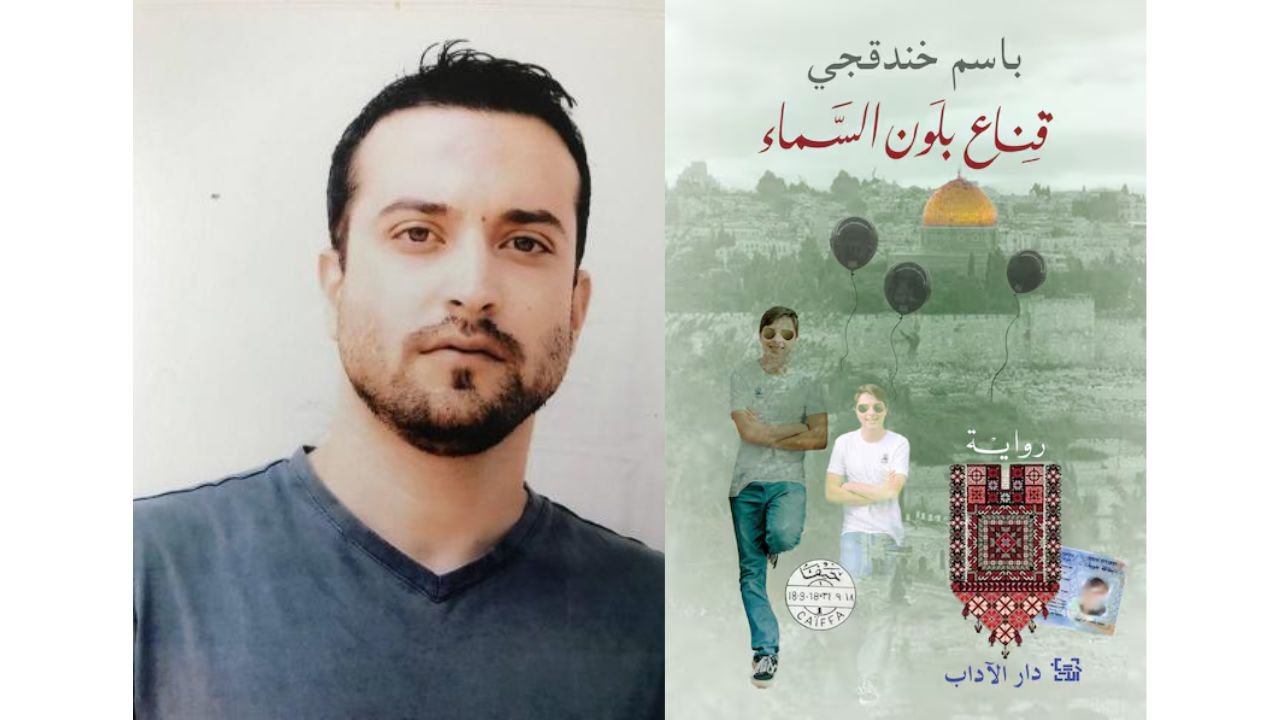
    Palestinian writer Basim Khandaqji, jailed 20 years ago in Israel, won a prestigious prize for Arabic fiction on Sunday for his novel “A Mask, the Colour of the Sky”.

    The award of the 2024 International Prize for Arabic Fiction was announced at a ceremony in Abu Dhabi.

    The prize was accepted on Khandaqji’s behalf by Rana Idriss, owner of Dar al-Adab, the book’s Lebanon-based publisher.

    Khandaqji was born in the Israeli-occupied West Bank city of Nablus in 1983, and wrote short stories until his arrest in 2004 at the age of 21.

    He was convicted and jailed on charges relating to a bombing in Tel Aviv, and completed his university education from inside jail via the internet.

    The mask in the novel’s title refers to the blue identity card that Nur, an archaeologist living in a refugee camp in Ramallah, finds in the pocket of an old coat belonging to an Israeli.

    Khandaqji’s book was chosen from 133 works submitted to the competition.

    Nabil Suleiman, who chaired the jury, said the novel “dissects a complex, bitter reality of family fragmentation, displacement, genocide, and racism”.

    Since being jailed Khandaqji has written poetry collections including “Rituals of the First Time” and “The Breath of a Nocturnal Poem”.

    He has also written three earlier novels.

    bur-srk/srm

    © Agence France-Presse

  • Spanish PM’s supporters turn out and beg him to stay

    Spanish PM’s supporters turn out and beg him to stay

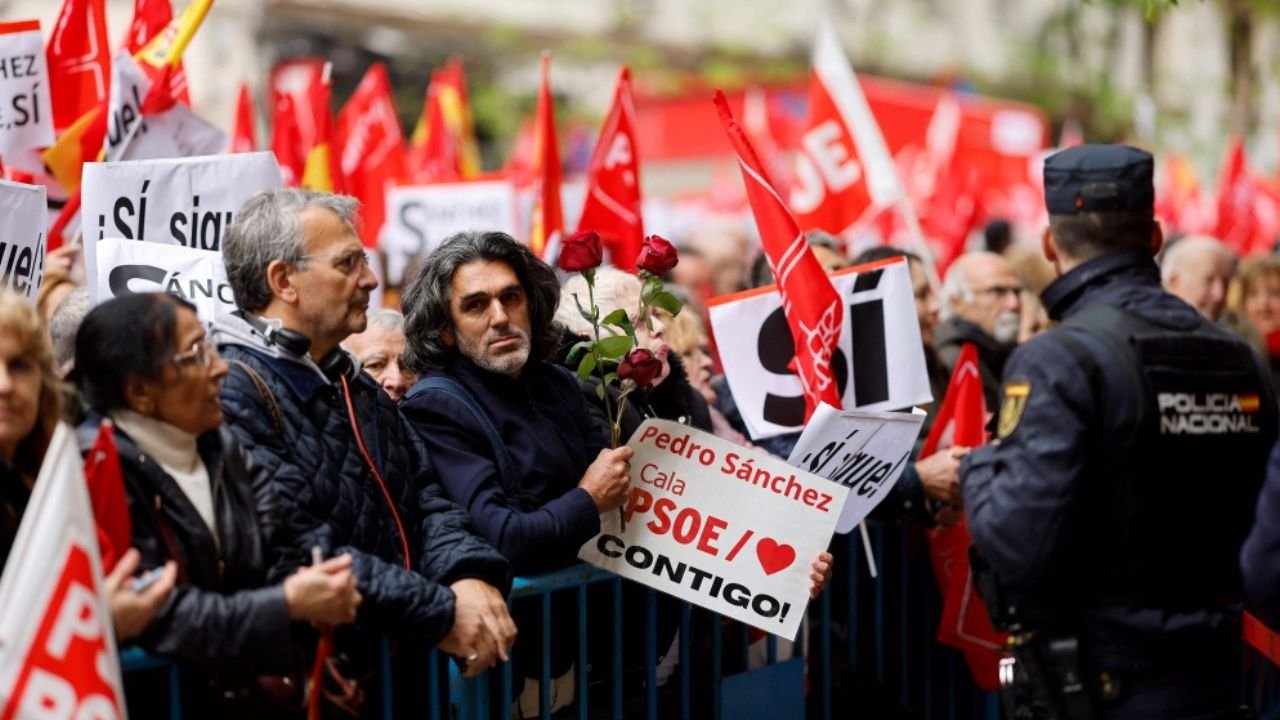
    Madrid, Spain – Thousands of supporters of Spanish Prime Minister Pedro Sanchez rallied at the headquarters of his Socialist party imploring him not to step down over a graft investigation against his wife.

    The 52-year-old, who has been in office since 2018, stunned Spain on Wednesday when he put his resignation on the line after a Madrid court opened a preliminary investigation into suspected influence peddling and corruption against his spouse Begona Gomez.

    Sanchez said he would suspend all public duties until he announces his decision on Monday. The normally hyperactive premier has since remained out of sight and silent.

    According to Madrid city authorities, the crowd rallying on Saturday to beg Sanchez to stay on numbered around 12,500.

    Supporters held up placards saying “Spain needs you”, “Pedro don’t abandon us’, and shouted slogans such as “Pedro leader”.

    “I hope that Sanchez will say on Monday that he will stay,” said Sara Dominguez, a consultant in her 30’s, adding that his government had “taken good steps for women, the LGBT community and minorities”.

    Jose María Diez, a 44-year-old government official who came from Valladolid in northern Spain to express his support, said there was a real possibility that the far-right could take power if Sanchez quit.

    “This will mean a step backwards for our rights and liberties,” he warned.

    Inside the party headquarters, there were similar passionate appeals.

    ‘Pedro stay’

    “Pedro stay. We are together and together we can … take the country forward, Spain can’t step back,” said Budget Minister Maria Jesus Montero, the government number two.

    “Today all democrats, all progressives, are summoned to Madrid against a pack whose only aim is to overthrow a democratic and legitimate government,” said Felix Bolanos, Minister of the Presidency, Justice and Parliamentary Relations.

    At one point, Socialist leaders took to the streets to thank those gathered. “They won’t succeed,” government spokeswoman Pilar Alegria told the crowd.

    The court opened the investigation into Sanchez’s wife in response to a complaint from anti-corruption pressure group Manos Limpias (Clean Hands), whose leader is linked to the far right.

    The group, which has presented a litany of unsuccessful lawsuits against politicians in the past, said on Wednesday its complaint was based on media reports and could not vouch for their veracity.

    While the court did not give details of the case, online news site El Confidencial said it focused on links Gomez had to Spanish tourism group Globalia when carrier Air Europa was in talks with the government to secure a huge bailout.

    The airline sought the bailout after it was badly hit by plunging paseenger numbers during the Covid-19 crisis.

    At the time, Gomez was running IE Africa Centre, a foundation linked to Madrid’s Instituto de Empresa (IE) business school, which had signed a sponsorship agreement with Globalia in 2020.

    Spain’s public prosecutors office on Thursday requested the dismissal of the investigation, which Sanchez said was part of a campaign of “harassment” against him and his wife waged by “media heavily influenced by the right and far right”.

    If Sanchez decides to remain in office, he could choose to file a confidence motion in parliament to show that he and his minority government are still supported by a majority of lawmakers.

    If he resigns, an early election could be called from July — a year after the last one — with or without Sanchez at the helm of the Socialist party.

    The right-wing opposition has accused the prime minister of being irresponsible for putting the country on hold while he mulls his decision.

    “It’s very clear to us that this is all a tactic… We know Pedro Sanchez and things with him always turn out like a soap opera,” Cuca Gamarra, the number two of the main opposition conservative Popular Party, said on Friday.

    “He is making us all wait and the country is at a standstill,” she added.

    du/ach/gv

    © Agence France-Presse