Author: afp

  • How humanitarian aid reaches war-torn Gaza

    How humanitarian aid reaches war-torn Gaza

    Most aid bound for war-ravaged Gaza arrives overland from neighbouring Egypt but Israel and UN agencies clash on how much actually makes it inside the Palestinian territory.

    The volume of aid entering Gaza by road each day through the Rafah crossing from Egypt is insufficient, aid workers say, blaming rigorous Israeli inspections at least in part.

    With no truce in sight to pause the Israel-Hamas war, here is a look at how aid currently reaches Gaza and what alternatives are being weighed to alleviate the crisis in the besieged Palestinian territory.

    First stop: Egypt

    Most Gaza-bound goods arrive by sea in the Egyptian ports of Port Said or El-Arish.

    El-Arish is closer to Gaza but also smaller, and was quickly overwhelmed by the volume of shipments arriving, aid groups say.

    Israeli authorities, who have blockaded Gaza since Hamas took sole control of the Palestinian territory in 2007, require that all aid entering Gaza be inspected by them.

    The main inspection area for goods is Kerem Shalom in southern Israel, not far from the Rafah crossing.

    Another inspection area exists in Nitzana, on the Israeli-Egyptian border about 40 kilometres (25 miles) to the southeast.

    Long wait for trucks

    Before reaching the inspection areas, many aid trucks wait for days at the Egyptian side of the Rafah checkpoint.

    Once inspected, goods that are cleared to enter by Israel are unloaded from the mostly Egyptian trucks in the zone between Egypt and Gaza.

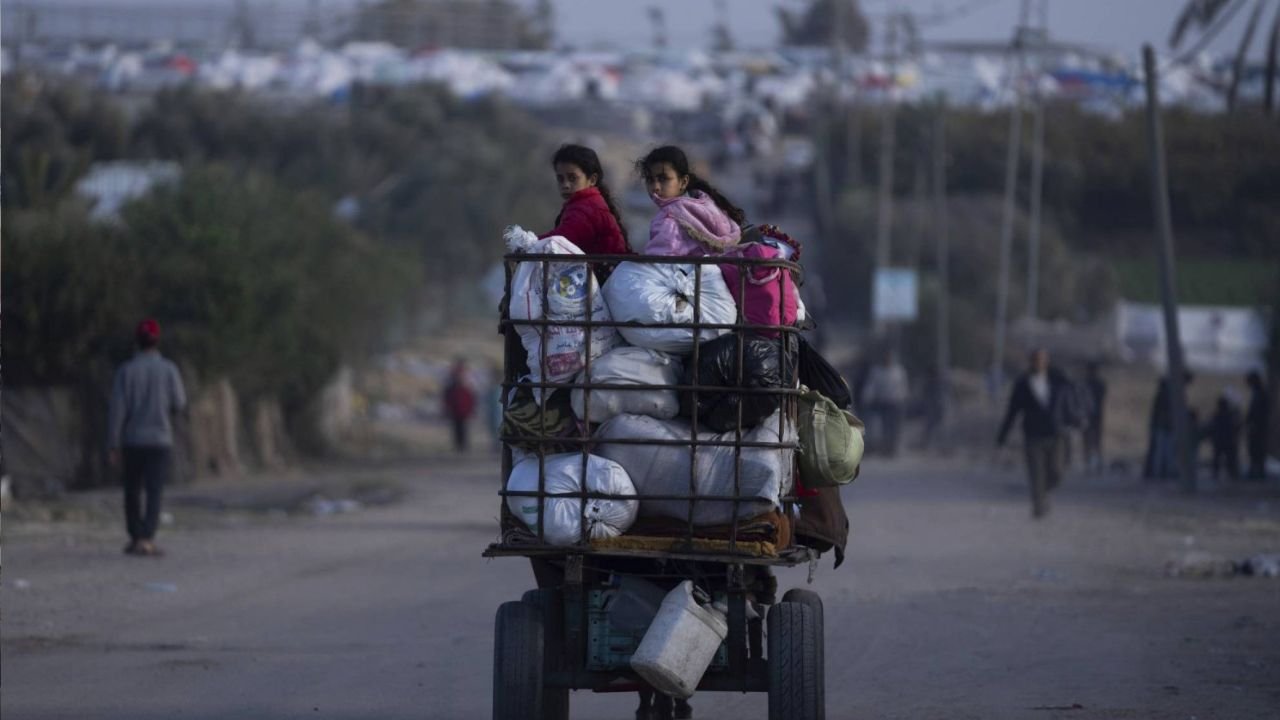
    The supplies are then loaded onto separate vehicles, driven by Gazans working for aid groups, for distribution inside the Palestinian territory.

    Cumbersome screenings are a major reason shortages are so glaring, aid workers say.

    Israel blames a lack of sufficient capacity on the Palestinian side to distribute the aid once it gets in.

    In recent days, Israel took issue with UN figures on the number of trucks entering Gaza, accusing UN Palestinian refugee agency UNRWA of counting only trucks it had processed, not those processed by Israel.

    Heading north

    For months, aid groups and foreign governments including top ally the United States have urged Israel to reopen border crossings into the north of Gaza, where the humanitarian crisis is most severe.

    Israel announced that six World Food Programme (WFP) aid trucks entered the north directly from its territory in early March, in what it described as a “pilot project”.

    The trial was not extended, however, and aid convoys bound for northern Gaza must travel the length of the territory negotiating battlegrounds, Israeli bombardments and mobs of desperate civilians.

    In March, the WFP said one of its convoys had been blocked by Israeli forces inside Gaza before it could reach the north.

    After turning back, the agency said the convoy was looted by a “crowd of desperate people”.

    According to Israeli authorities, 28 trucks reached northern Gaza on Wednesday.

    They were among 298 trucks that Israel said entered Gaza on Wednesday, still far below the number aid groups say is needed to sustain the territory’s 2.4 million people.

    Under pressure from the international community, Israel announced on April 5 that it would open a new crossing directly into northern Gaza, without specifying its exact location or when it would open.

    By air and by sea

    In a bid to get round the logjam, several Arab and European governments, later joined by Washington, began carrying out aid airdrops over Gaza, particularly the north.

    But the airdrops have proved controversial, with multiple deaths among civilians on the ground who were crushed by aid crates when parachutes failed to open, or drowned trying to reach others accidentally dropped in the sea.

    There has also been an attempt to establish a maritime aid corridor from the Mediterranean island of Cyprus but it has largely fizzled out after seven aid workers were killed by Israeli fire on April 1 as they unloaded food from the second flotilla to make the crossing.

    Even though the Cypriot government insists it has not given up on the aid corridor, no further crossings are currently planned after the US and Spanish charities behind the first two suspended their operations in the region.

    UN agencies have in any case said repeatedly that road convoys are the only practical way of meeting Gaza’s needs.
  • Chinese factory shreds wedding photos for fuel

    Chinese factory shreds wedding photos for fuel

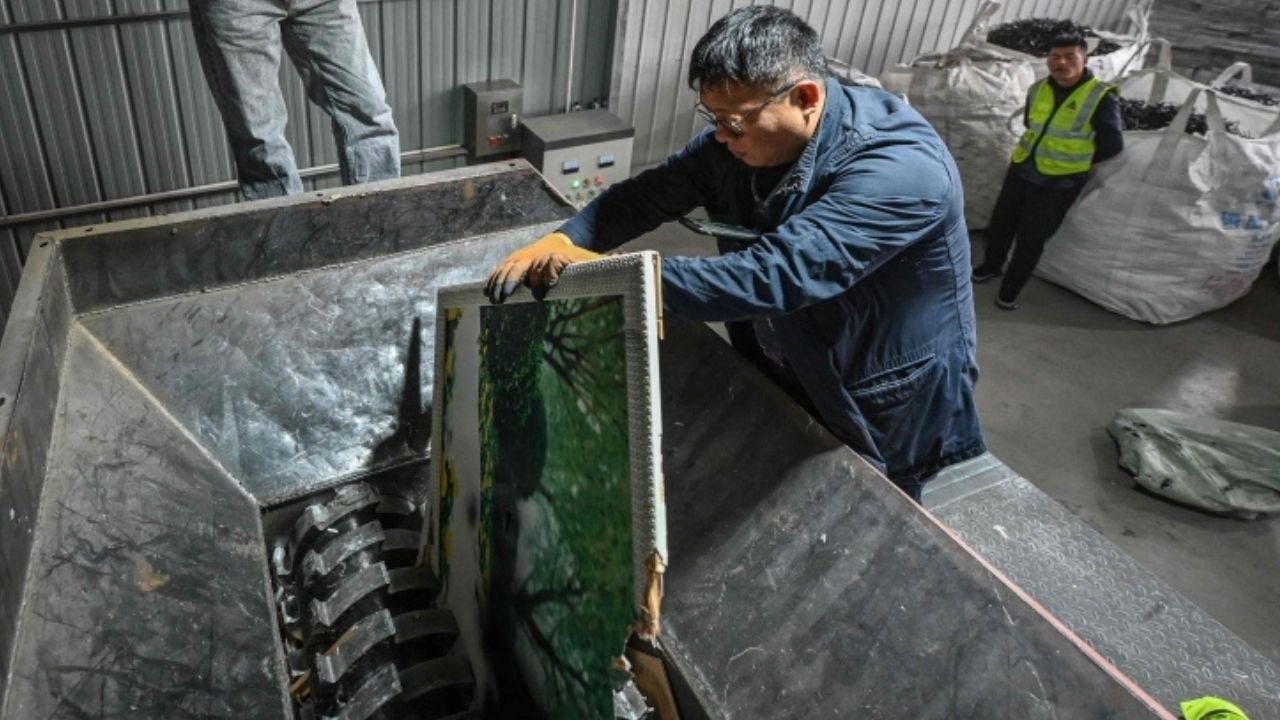
    At a dusty warehouse in northern China, Liu Wei feeds photos of beaming bridal couples into an industrial shredder — turning stories of heartbreak into a source of electricity.

    Wedding photos are big business in China, where parks, temples and historic sites often teem with newlyweds posing for elaborate shots capturing their supposedly unbreakable bond.

    But in a country where millions of divorces take place each year, many marital snaps end up shoved into the attic or tossed into the trash.

    Liu’s company offers an alternative: bereft ex-lovers can have their memories destroyed and recycled into fuel.

    “From our daily business exchanges, we found the destruction of personal belongings is a blank space nationwide,” the 42-year-old told AFP at his factory, 120 kilometres (75 miles) from Beijing.

    “People with less experience in the market probably wouldn’t have spotted this opportunity,” he added.

    Despite cultural taboos around destroying images of living people, Liu’s facility receives an average of five to 10 orders per day from across China.

    They include large wall photos and smaller decorative shots and albums, mostly cast from plastic, acrylic and glass.

    Workers heave the images onto a forklift truck and scatter them onto the warehouse floor for sorting.

    They then obscure every face with dark spray paint to protect client privacy and smash unshreddable glasswork with a sledgehammer.

    “These people are all trying to find closure,” said Liu. “They mainly want to unpick the knots in their hearts.”

    Complex motivations

    Sullied and broken, the pictures give glimpses of broken families in happier times.

    In one, a woman in a white bridal dress reclines on a bed of flowers, while another shows a lovestruck couple gazing into each other’s eyes.

    A sporty pair in matching kits pose with a football, while nearby, a smitten man presses his face tenderly to his pregnant wife’s belly.

    Brandishing his phone, Liu films the defaced photos and sends clips to customers for final confirmation.

    He estimates he has served about 1,100 clients — mostly under the age of 45, and around two-thirds women — since launching the service a year ago.

    They typically speak little about their separations, and several declined interview requests from AFP.

    Liu says the motivations for destroying wedding photos are often complex.

    “Few of them do this out of malice,” he told AFP.

    “It might be that this item brings on certain thoughts or feelings… or be a hurdle hard to overcome.”

    Some clients attend the destructions in person to give a sense of ceremony to a closing chapter in their lives, said Liu.

    Others keep their photos for years and only dispose of them when they remarry or finally come to terms with a former spouse’s death.

    Given the irreversible nature of the process, Liu says he gives clients a final chance to salvage their items in case they live to regret their decision.

    After getting the green light, he films his staff gently pushing the photos into the shredder’s gnashing teeth.

    The debris is taken to a nearby biofuel plant where it is processed with other household waste to generate electricity.

    ‘Respect others’ choices’

    Divorce rates soared in socially conservative China after marriage laws were relaxed in 2003.

    They have fallen dramatically since the government enacted a law in 2021 mandating a month-long “cooling-off” period before couples untie the knot.

    China registered 2.9 million divorces in 2022, down from over 4.3 million two years earlier.

    The number of marriages rose last year for the first time in nearly a decade, giving Beijing some relief as it seeks to reverse a steep fall in births.

    After annihilating the visual evidence of hundreds of unions, Liu says he has become numb to the emotions they stir up.

    “The deepest feeling I have in my heart towards my clients… is that you must respect others’ choices,” he said.

    “You must never persuade people one way or another,” he added. “It does no good.”

  • Report links H&M, Zara to environmental destruction in Brazil

    Report links H&M, Zara to environmental destruction in Brazil

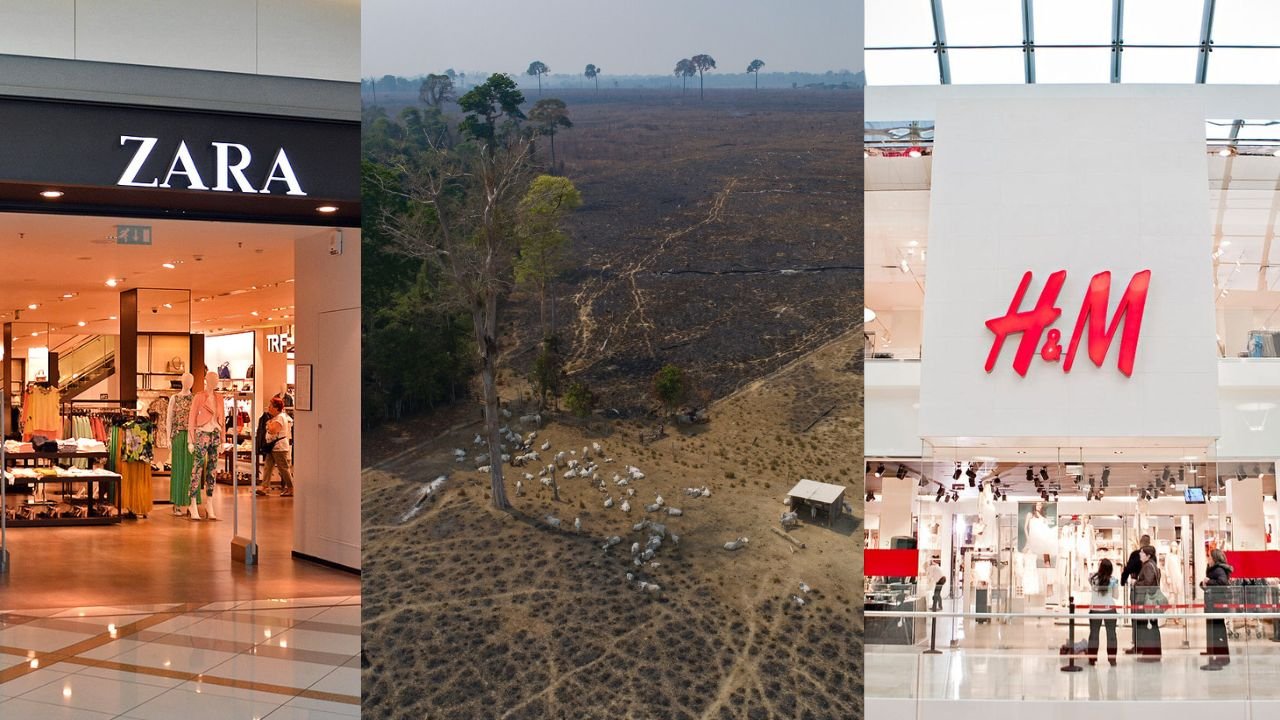
    Fast fashion giants H&M and Zara have used cotton from farms linked to massive deforestation, land-grabbing, corruption and violence in Brazil, a report by the environmental group Earthsight said Thursday.

    Based on satellite images, court rulings, shipment records and an undercover investigation, the report, titled “Fashion Crimes,” found the companies sourced “tainted cotton” farmed in the fragile Cerrado savanna by two of Brazil’s biggest agribusiness firms, SLC Agricola and the Horita Group.

    Despite abuses linked to its production, the cotton had been labeled as ethical by leading certification scheme Better Cotton, exposing “deep flaws” in the oversight program, said the British environmental group.

    The Cerrado, the most biodiverse savanna on Earth, has been disappearing at an accelerating rate as Brazil’s massive agribusiness industry has increasingly turned to the region in recent decades.

    Earthsight traced at least 816,000 tonnes of cotton exported from 2014 to 2023 to farms run by SLC and Horita, which “have a long record of court injunctions, corruption rulings and millions of dollars in fines related to clearances of around 100,000 hectares of Cerrado wilderness,” it said.

    The cotton in question was farmed in the northeastern state of Bahia and shipped to eight Asian clothing manufacturers whose clients include Sweden-based H&M and Spain-based Zara, the report said.

    Brazil, the world’s top exporter of beef and soybeans, has also emerged as a major cotton producer in recent years, now second only to the United States.

    But that has contributed to environmental destruction in the Cerrado, where “a ruinous mix of corruption, greed, violence and impunity has led to the blatant theft of public lands and dispossession of local communities,” Earthsight said.

    Better Cotton said in a statement it had conducted an independent audit of the “highly concerning issues raised” in the report, and that it would provide a summary of the findings.

    Zara parent company Inditex and H&M said they took the allegations seriously, and urged Better Cotton to release the auditors’ findings.

    The Brazilian Cotton Producers’ Association (ABRAPA) said it had worked with the growers in question to provide records and evidence countering the report’s allegations.

    “Unfortunately, these were largely disregarded,” it said in a statement.

    “ABRAPA unequivocally condemns any practices that undermine environmental conservation, violate human rights or harm local communities.”

  • Israel on alert after Iranian threat as genocide in Gaza grinds on

    Palestinian Territories – Israel was on alert Thursday after Iran threatened reprisals over a strike in Syria this month that killed two Iranian generals, and as genocide in Gaza continues.

    Days after Israel strengthened its air defences and paused leave for combat units, the United States also warned of the risk of an attack by Iran or its allied groups at a time Middle East tensions have soared.

    Iran is “threatening to launch a significant attack on Israel,” US President Joe Biden said Wednesday, pledging “ironclad” support for its top regional ally despite diplomatic tensions over Israel’s military conduct in Gaza.

    Israel was widely blamed for an April 1 attack that destroyed Iran’s consulate building in Damascus and killed seven Revolutionary Guards, including two generals.

    Iran’s supreme leader, Ayatollah Ali Khamenei, warned Wednesday that Israel “must be punished and will be punished”, days after one of his advisers said Israeli embassies are “no longer safe”.

    Israeli Foreign Minister Israel Katz swiftly replied on social media site X that “if Iran attacks from its territory, Israel will respond and attack Iran”.

    Biden said he had told Israeli Prime Minister Netanyahu that “our commitment to Israel’s security against these threats from Iran and its proxies is ironclad”.

    US Central Command chief Michael Kurilla was in Israel on Thursday to discuss the situation with Defence Minister Yoav Gallant, the Pentagon said.

    “We warned Iran,” Press Secretary Karine Jean-Pierre told a briefing without elaborating.

    During a visit to an airbase in central Israel, Netanyahu spoke of “challenging times” on multiple fronts.

    “We are in the middle of the war in Gaza which continues in full force… but we are also preparing for scenarios of challenges from other arenas,” he said in comments released by his office.

    Moscow called on both Iran and Israel to exercise restraint.

    German Foreign Minister Annalena Baerbock urged “maximum restraint”, and Lufthansa said it had extended a temporary suspension of Iran flights until Saturday.

    Iranian Foreign Minister Hossein Amir-Abdollahian said he had received phone calls Thursday from Baerbock as well as her British and Australian counterparts.

    In a post on X, he said he had told them that “when the Zionist regime breaches the immunity of diplomatic persons and places” and the UN Security Council fails to condemn it, “legitimate defence… is a necessity”.

    Israel and the United States have long faced off against Iran and its so-called “Axis of Resistance” allies based in Lebanon, Iraq, Syria and Yemen.

    ‘Panic among children’

    Regional tensions have been stoked following October 7 attack in Israel left.

    Israeli genocide in Gaza has killed at least 33,545 people, mostly women and children, according to the Hamas-run territory’s health ministry.

    Hamas said 20 people were killed in Israeli bombardments on Thursday. It said two schools and two mosques were among the buildings hit and an imam was among the dead.

    In the Nuseirat area, which took the brunt of the bombing, Imad Abu Shawish, 39, said “the situation is dire and still getting worse. Bombardment hasn’t stopped and is still happening now.”

    Much of Gaza has been reduced to a bomb-cratered wasteland, with yet more bodies feared under the rubble.

    An Israeli siege has deprived Gaza’s 2.4 million people of most food, water, fuel and medicines, the dire shortages only alleviated by sporadic aid deliveries.

    Israeli war cabinet member Benny Gantz said Wednesday “Hamas is defeated” militarily but pledged to keep fighting “what remains of it” in the years to come.

    An Israeli air strike on Wednesday killed three sons of Hamas’s Qatar-based leader Ismail Haniyeh.

    Haniyeh insisted their deaths would not influence Hamas’s position in ongoing talks in Cairo for a truce and hostage release deal.

    Those talks, which started Sunday, have brought no breakthrough on a plan presented by US, Qatari and Egyptian mediators, which Hamas said it was studying.

    The framework plan would halt fighting for six weeks and see the exchange of about 40 hostages for hundreds of Palestinian prisoners, as well as more aid deliveries.

    Biden said that “it’s now up to Hamas, they need to move on the proposal that’s been made”.

    Israel accused Hamas Thursday of “walking away” from what government spokesman David Mencer called “a very reasonable offer on the table”.

    Hamas official Bassem Naim said only a ceasefire could provide “enough time and safety” to locate Israeli hostages held across the territory and ascertain their fate because they are held by different groups.

    ‘Destabilising Middle East’

    Washington has ramped up pressure on Netanyahu to agree to a truce, increase aid flows and abandon plans to send troops into Gaza’s far-southern city of Rafah where about 1.5 million civilians are sheltering.

    Rafah is the last Gazan city yet to face a ground incursion.

    Gallant promised Israel would “flood Gaza with aid”, using an Israeli crossing point, streamlined checks and two new routes organised with Jordan.

    He said they expected to reach 500 aid trucks a day, the pre-war average.

    However, a UN Security Council statement Thursday said “more should be done to bring the required relief given the scale of needs in Gaza”.

    Israel has faced a chorus of international criticism over its handling of the war.

    Spain is among several Western nations, including Ireland and Australia, to have suggested they would recognise a Palestinian state as a starting point for wider peace talks.

    Spanish Prime Minister Pedro Sanchez warned that Israel’s “disproportionate response” in Gaza risked “destabilising the Middle East and, as a consequence, the entire world”.

    burs-jd/srm/kir

    © Agence France-Presse

  • Heatwaves put millions of children in Asia at risk: UN

    Heatwaves put millions of children in Asia at risk: UN

    Massive heatwaves across East Asia and the Pacific could place millions of children at risk, the UN warned Thursday, calling for action to protect vulnerable people from the soaring temperatures.

    Global monitors have warned that 2024 is shaping up to be the hottest year on record, marked by climate extremes and rising greenhouse gas emissions.

    The UNICEF data showed over 243 million children across the Pacific and East Asia were estimated to be affected by heatwaves, putting them at risk of heat-related illnesses and death.

    Several countries in the region are currently smouldering in the summer heat, with temperatures nearing record levels as they regularly hit over 40 degrees Celsius (104 degrees Fahrenheit).

    Local forecasters are predicting steeper rises in the coming weeks.

    Some Philippine schools suspended in-person classes in April, with the state weather forecaster saying temperatures could reach a “danger” level of 42 or 43 degrees Celsius in parts of the country.

    In Thailand, a temperature of 43.5 degrees Celsius was recorded in the northern province of Mae Hong Son earlier this week — just a few degrees shy of the record 44.6 degrees Celsius.

    Around 40 people die from heat-related illnesses annually, according to the Thai Ministry of Health.

    And in February, neighbouring Vietnam endured a monster heatwave in its southern “rice bowl” when temperatures reached up to 38 degrees Celsius — an “abnormal” high for the period.

    According to the UNICEF report, children are more at risk than adults as they are less able to regulate their body temperature.

    “Children are more vulnerable than adults to the effects of climate change, and excess heat is a potentially lethal threat to them,” said Debora Comini, Director of UNICEF Regional Office for East Asia and the Pacific.

    The report said heatwaves and high humidity levels — commonly experienced in the region — can have a deadly effect as the heat will “hinder the body’s natural cooling mechanisms.”

    “We must be on high alert this summer to protect children and vulnerable communities from worsening heatwaves and other climate shocks,” Comini said.

    The UN projected that over two billion children are expected to be exposed to heatwaves by 2050.

  • Iran’s Khamenei renews threat of counterattack against Israel

    Iran’s Khamenei renews threat of counterattack against Israel

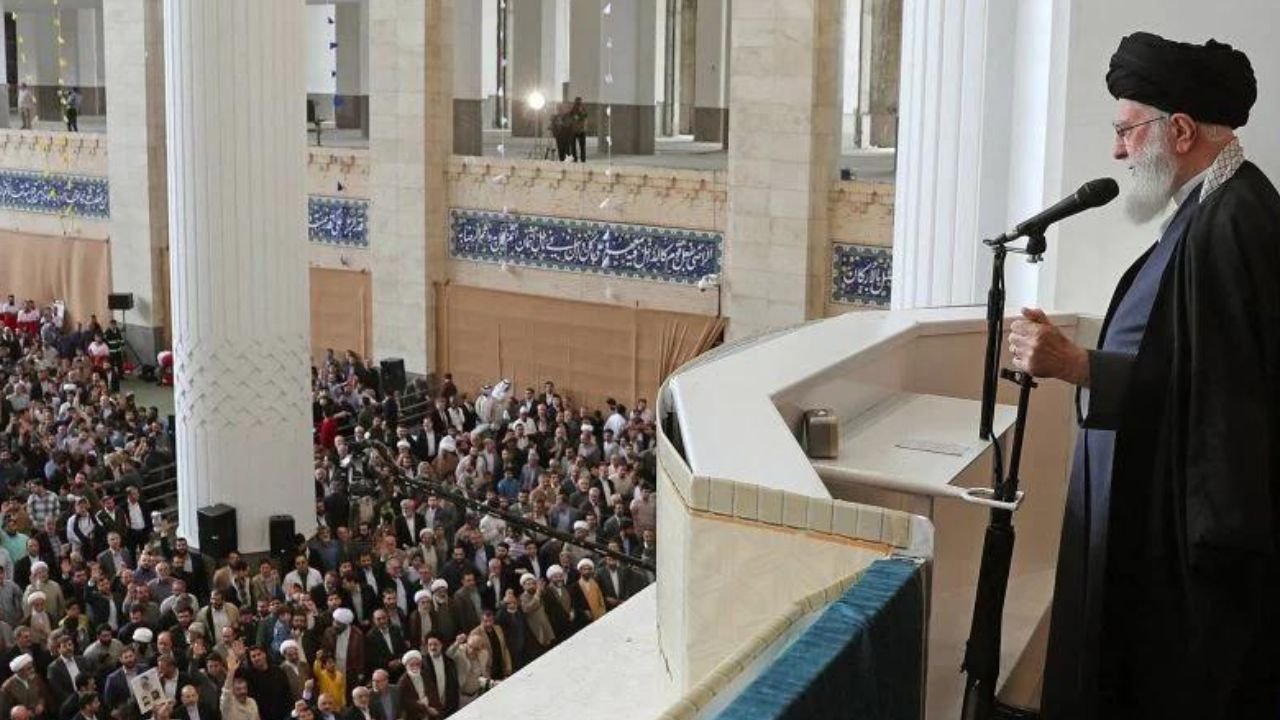
    Iran’s supreme leader Ayatollah Ali Khamenei again warned Israel Wednesday that it “will be punished” for a Damascus air strike that killed seven Revolutionary Guards, two of them generals.

    “The evil regime made a mistake in this regard. It must be punished and will be punished,” Khamenei said in a televised speech after Eid al-Adha prayers in Tehran.

    Israeli Foreign Minister Israel Katz swiftly riposted with a Persian-language statement on social media site X.

    “If Iran attacks from its territory, Israel will respond and attack Iran,” he said.

    Khamenei said the April 1 strike, which levelled the five-storey Iranian consulate building in the Syrian capital, had run roughshod over international agreements providing for the inviolability of diplomatic premises.

    “The consulate and embassy offices in any country are the territory of that country,” he said. “When they attacked our consulate, it means they attacked our territory.”

    Khamenei has led Iranian officials in a succession of promises to avenge the strike, which was widely blamed on arch foe Israel.

    One of his senior advisers, Yahya Rahim Safavi, warned on Sunday that Israeli embassies were “no longer safe”.

    Israel said last week it was strengthening its defences and pausing leave for combat units following Iran’s retaliation threats.

    Iran does not recognise Israel, and the two countries have fought a shadow war for years.

    Iran charges that Israel was behind a wave of sabotage attacks and assassinations targeting its nuclear programme.

  • Gazans mark ‘saddest’ Eid with little to celebrate or eat

    Gazans mark ‘saddest’ Eid with little to celebrate or eat

    Gazans did their best to celebrate the end of Ramadan in the driving rain on Wednesday, as the genocide ravaged on with 14 killed, including children, in a strike on their home, the health ministry said.

    The Israeli military said it struck several targets on the first day of the Eid al-Fitr holiday, with a jet hitting a rocket launch site and troops killing a “terrorist cell” in close quarters fighting.

    An AFP photographer witnessed the aftermath of the the bombing of the home in Nuseirat refugee camp in central Gaza. Family members clutched the bodies of dead children at the Al-Aqsa Martyrs Hospital in nearby Deir el-Balah.

    There was no immediate comment from the Israeli army.

    Israel said 468 aid trucks — a record since the October 7 — were allowed into Gaza on the eve of the holiday which marks the end of the Muslim fasting month and is traditionally celebrated with family gatherings.

    But with the United Nations warning the besieged territory is on the verge of famine, there was little to feast on for the 2.4 million residents of Gaza, up to 1.5 million of whom are crammed into camps around the far-southern city of Rafah.

    The faithful gathered at dawn outside the city’s flattened Al-Farooq Mosque, where worshipper Khairi Abu Singer complained that Israel’s relentless bombardment had even “deprived Palestinians from praying inside their mosques”.

    Father-of-four Ahmed Qishta, 33, told AFP there was little to celebrate at what should be a joyous time.

    “We prepared sweets and biscuits from the aid we got from the UN and now we are giving it to the children. We try to be happy but it is difficult.”

    He said they went to pray at the graves of family members killed in the war before going to the Ibn Taymiyyah mosque for Eid prayers.

    There has never been “such an Eid — all sadness, fear, destruction and a grinding war”, he said.

    Abir Sakik, 40, who fled her home in Gaza City with her family and is now living in a tent in Rafah, said she had no “ingredients for the cakes and sweets” she would usually make.

    Instead she made cakes from crushed dates. “We want to rejoice despite all the blood, death and shelling,” she told AFP.

    ‘Enough of war’

    Sakik said that despite it being a religious holiday, the Israeli military “committed a massacre and killed women and children” in the camp.

    “We are tired and weary — enough, enough of war and destruction,” she said, adding that Gazans were desperate for a truce.

    “We try to bring joy to the children. Before all this, there was a great atmosphere at Eid with the children’s toys, the Eid cakes, the food, the chocolates in every house — everything was sweet and beautiful.

    “But they destroyed all of Gaza,” she said.

    Nihaya Atallah, 49, from Jabalia camp in northern Gaza, also celebrated the festival in a tent in Rafah. “Our spirits are broken, our homes destroyed,” she told AFP.

    “There’s no Eid, no joy, only war and loss.”

    Rafah resident Moaz Abu Moussa said that “despite the pain and massacres, we will show our happiness in these difficult circumstances”.

    “We don’t care about the war, we will live Eid like other Muslims and show our happiness to the displaced people and families of martyrs and detainees.”

    Meanwhile in Jerusalem tens of thousands of worshippers poured into the Al-Aqsa mosque compound, Islam’s third holiest site, for morning prayers.

    “It’s the saddest Eid ever,” said nurse Rawan Abd, 32, from Israeli-annexed east Jerusalem. “At the mosque you could see the sadness on people’s faces.”

    In the occupied West Bank, the atmosphere was even more sombre, with many Palestinians in the flashpoint northern city of Jenin visiting its cemetery to pray for those who have been killed since the Israeli genocide in Gaza began.

    Israeli offensive has killed at least 33,482 people in Gaza, mostly women and children, according to the health ministry.

    bur-fg/hkb

    © Agence France-Presse

  • Hepatitis viruses kill 3,500 people a day: WHO

    Hepatitis viruses kill 3,500 people a day: WHO

    More than 3,500 people die from hepatitis viruses every day and the global toll is rising, the World Health Organization warned on Tuesday, calling for swift action to fight the second-largest infectious killer.

    New data from 187 countries showed that the number of deaths from viral hepatitis rose to 1.3 million in 2022 from 1.1 million in 2019, according to a WHO report released to coincide with the World Hepatitis Summit in Portugal this week.

    These are “alarming trends,” Meg Doherty, head of the WHO’s global HIV, hepatitis and sexually-transmitted infection programmes, told a press conference.

    The report said that there are 3,500 deaths per day worldwide from hepatitis infections — 83 percent from hepatitis B, 17 percent from hepatitis C.

    There are effective and cheap generic drugs which can treat these viruses.

    Yet only three percent of those with chronic hep B received antiviral treatment by the end of 2022, the report said.

    For hep C, just 20 percent-or 12.5 million people-had been treated.

    “These results fall well below the global targets to treat 80 percent of all people living with chronic hep B and C by 2030,” Doherty said.

    The overall rate of hepatitis infections did fall slightly.

    But WHO chief Tedros Adhanom Ghebreyesus emphasised that the report “paints a troubling picture”.

    “Despite progress globally in preventing hepatitis infections, deaths are rising because far too few people with hepatitis are being diagnosed and treated,” he said in a statement.

    Africa accounts for 63 percent of new hep B infections, yet less than one in five babies on the continent are vaccinated at birth, the report said.

    The UN agency also lamented that the affected countries did not have enough access to generic hepatitis drugs — and often paid more than they should.

    Two thirds of all hepatitis cases are in Bangladesh, China, Ethiopia, India, Indonesia, Nigeria, Pakistan, the Philippines, Russia, and Vietnam, according to the report.

    “Universal access to prevention, diagnosis, and treatment in these 10 countries by 2025, alongside intensified efforts in the African region, is essential to get the global response back on track,” the WHO said in a statement.

    Viral hepatitis is the second-biggest infectious killer, narrowly trailing tuberculosis.

  • Israel’s Netanyahu says ‘there is a date’ for Rafah invasion

    Israel’s Netanyahu says ‘there is a date’ for Rafah invasion

    Israeli Prime Minister Benjamin Netanyahu said Monday that a date has been set for a ground offensive in Rafah, which Israel says is one of the last Hamas strongholds in Gaza.

    Around 1.5 million Gazans are sheltering in the city, which has so far not experienced a large-scale Israeli ground assault.

    Netanyahu did not say when the invasion would occur but reiterated that victory over Hamas militants “requires entry into Rafah and the elimination of the terrorist battalions there.

    “It will happen — there is a date,” he said in a video statement.

    He was speaking as talks in Cairo over a Gaza ceasefire and hostage deal appeared to be gathering momentum.

    Netanyahu is under pressure at home from his far-right coalition partners who are angry at talk of a truce as well as Israel pulling its troops out of southern Gaza on Sunday.

    “Today I received a detailed report on the talks in Cairo,” Netanyahu said.

    “We are working all the time to achieve our goals, primarily the release of all our hostages and achieving a complete victory over Hamas.”

    The White House said on Monday that negotiators in the Egyptian capital had presented Hamas with a proposal for a ceasefire in the Gaza Strip and a hostage deal.

    “Now it’s going to be up to Hamas to come through,” it said, describing the talks as “serious”.

    Israeli genocide in Gaza has killed at least 33,207 people, mostly women and children, according to the health ministry.

  • China to criminally try three minors for child murder

    China to criminally try three minors for child murder

    China will put three minors on trial for allegedly murdering another child, a provincial prosecutor said Monday, in a case that has shocked the nation and sparked public debate over the treatment of juvenile offenders.

    The three suspects, all aged under 14 at the time of the murder, are accused of bullying a middle-school classmate surnamed Wang over a long period before killing him last month.

    The grim details of the case, in which the killers reportedly buried Wang’s body in an abandoned greenhouse, drew public attention to how the law deals with juveniles accused of serious crimes.

    In 2021, China lowered its age of criminal responsibility from 14 to 12 for “special cases” such as inflicting death by “extremely cruel means”.

    The Hebei case is thought to be one of the first to apply the lower age limit.

    The provincial prosecutor said Monday it had received a police request last month to criminally try the suspects, surnamed Zhang, Li and Ma.

    It said it had concluded that the three were between 12 and 14 when they “intentionally committed murder, causing the death of the victim Wang”.

    “The circumstances were serious and they should be held criminally responsible,” the provincial office said, adding that the country’s top public prosecutor had reviewed the decision.

    “While handling cases strictly in accordance with the law, the procuratorial organs will… further strengthen the prevention and treatment of juvenile crimes,” the provincial prosecutor continued.

    Under Chinese law, murder is punishable by imprisonment or the death penalty.