Author: afp

  • Israel pulls out of Al-Shifa hospital after killing civilians, destroying buildings

    Israel pulls out of Al-Shifa hospital after killing civilians, destroying buildings

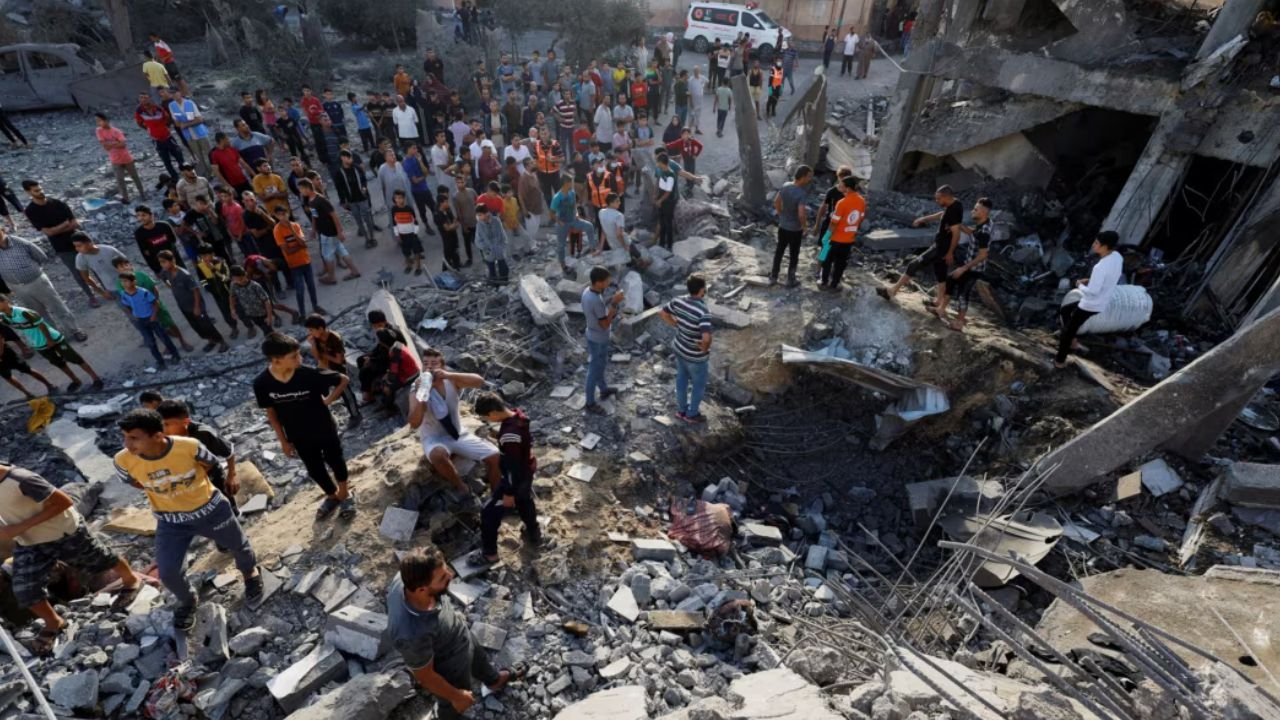
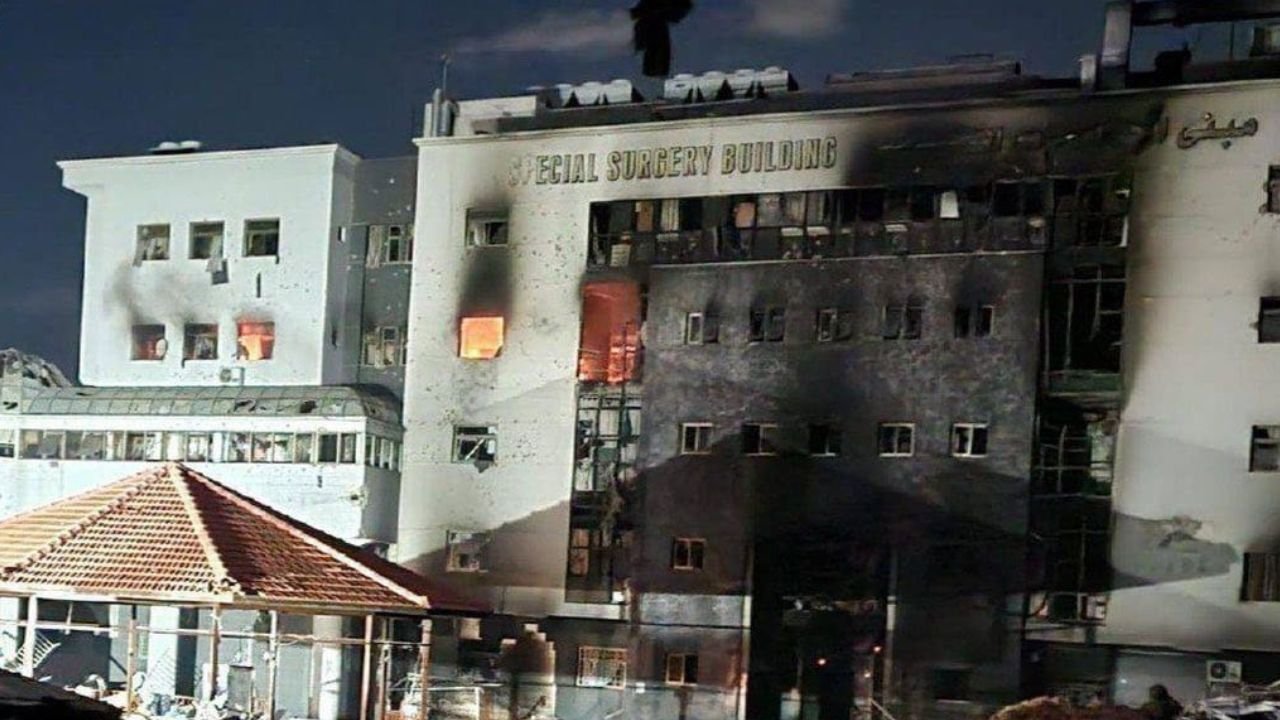
    Israeli forces on Monday pulled out of Gaza’s largest hospital complex after an intensive two-week military operation, leaving behind charred buildings and bodies strewn at the sprawling complex.

    Israel said it had battled Palestinian militants hiding inside Gaza City’s Al-Shifa Hospital, killed at least 200 fighters and recovered large stockpiles of weapons, explosives and cash.

    The health ministry in Gaza said that, after heavy Israeli air strikes and tank fire, “the scale of the destruction inside the complex and the buildings around it is very large”.

    “Dozens of bodies, some of them decomposed, have been recovered from in and around the Al-Shifa medical complex,” the ministry said, adding that the hospital was now “completely out of service”.

    A doctor told AFP more than 20 bodies had been recovered, some crushed by withdrawing vehicles.

    Israeli attacks have also flared around other Gaza hospitals almost six months since October 7 attacks which have destroyed swathes of the besieged coastal territory.

    The Hamas government press office said the army had blown up more than 20 houses within 24 hours in the main southern city of Khan Yunis, where battles have raged around the Nasser and Al-Amal hospitals.

    Israel destroys hospital

    Over the past two weeks, the Israeli army carried out what it labelled “precise operational activity” at the Al-Shifa complex, before declaring on Monday that the forces had withdrawn.

    The scene left behind was one of devastation, with windows blown out, concrete walls blackened and volunteers carrying away shrouded corpses across the sandy wasteland.

    Dozens of air strikes and shelling had hit the area around the complex in the morning, in heavy fire which the Hamas government media office said served to provide cover for the withdrawing troops and tanks.

    The army has in recent days released footage of its fighters moving through the hospital’s corridors, and pictures of large numbers of assault rifles, grenades and other weapons it said were recovered from the maternity ward.

    The military has said 200 Hamas fighters were killed in fighting in and around Al-Shifa.

    Hamas has denied operating from Al-Shifa and other health facilities.

    An Israeli strike also hit “a tent camp” inside central Gaza’s Al-Aqsa hospital compound, killing four people, said World Health Organization chief Tedros Adhanom Ghebreyesus on social media platform X.

  • New Palestinian government gets wary greeting

    New Palestinian government gets wary greeting

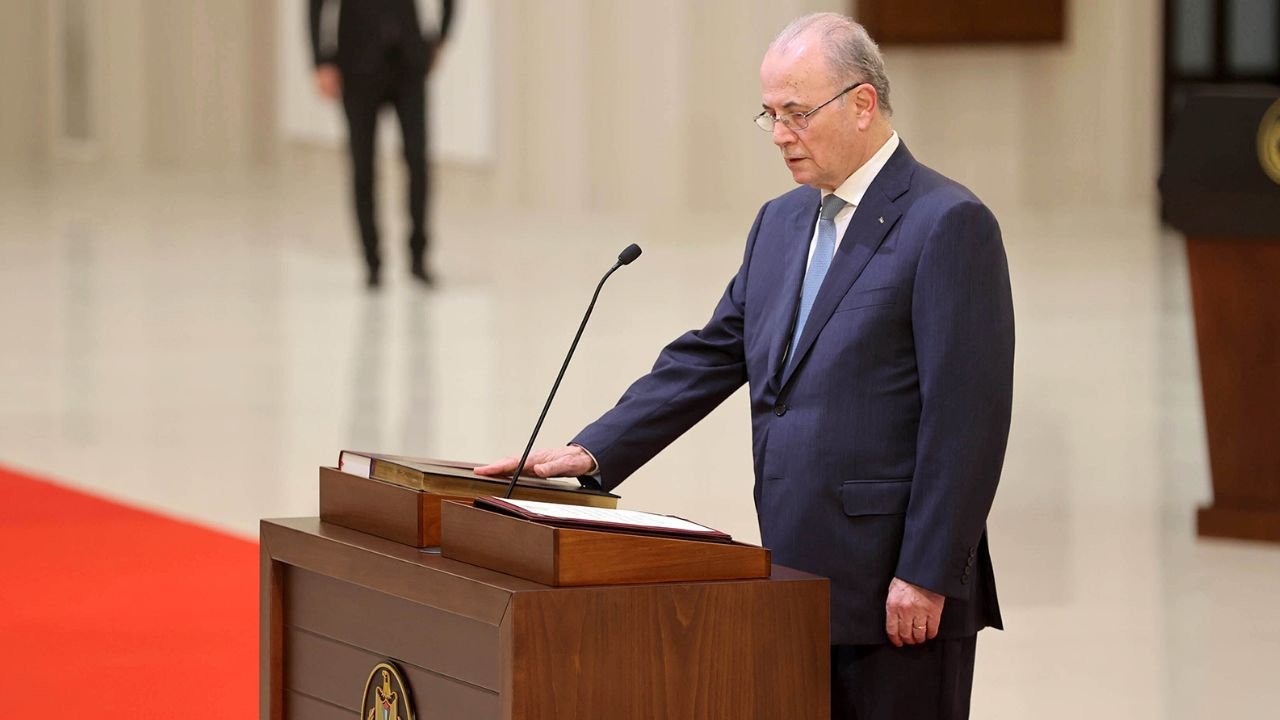
    Ramallah (Palestinian Territories) (AFP) – A new Palestinian government that contains both Gazans and four women was sworn in Sunday, but was already facing scepticism from its own people.

    The Palestinian Authority led by Mahmud Abbas is under pressure from Washington to prepare to step into the breach in the aftermath of the Gaza war and undertake reforms.

    Newly-appointed prime minister Mohammed Mustafa said his government’s “top national priority” was ending the war as he named his new team.

    He said his cabinet “will work on formulating visions to reunify the institutions, including assuming responsibility for Gaza”.

    President Abbas, 88, is being nudged by the United States to shake the creaking authority up so it can reunite the occupied West Bank and the devastated Gaza Strip under a single rule after the war.

    The Palestinian Authority has had almost no influence over the Gaza Strip since Hamas took power there in 2007 from Abbas’s Fatah party.

    Secretary of State Antony Blinken urged Abbas to make “administrative reforms” when the two men met in January.

    Abbas’s Ramallah-based administration has been hamstrung by Israel’s decades-old occupation of the West Bank and his own unpopularity.

    Mustafa, an economist and longtime Abbas advisor, said the “reconstruction” of the Palestinian territories was his main goal, with Gaza in ruins after six months of Israeli bombardment in retaliation for the October 7 attack.

    His new cabinet is made up of 23 ministers and includes four women and six ministers from Gaza, among them former Gaza City mayor Maged Abu Ramadan who has been given the health portfolio.

    Among the new female faces is Varsen Aghabekian, a Palestinian-Armenian academic who will work alongside Mustafa in the foreign ministry, which he also controls.

    ‘Deepen divisions’

    The premier, who previously worked for the World Bank, said the thorny issue of Israeli-annexed east Jerusalem was also a top priority along with the “fight against corruption”.

    But many doubt whether the Palestinian Authority — which has been dogged by divisions, corruption scandals and the authoritarian tendencies of its ageing leader — can be a credible player in any future deal.

    Ali Jarbawi, a former PA minister and political scientist, said it faces massive challenges on all fronts.

    “It is broke and it’s in debt and can’t pay its salaries, so it needs immediate financial support,” he said.

    And it needs to be accepted by both Palestinian factions — Fatah which controls the West Bank and Hamas in Gaza.

    “Thirdly it needs a political horizon, from the international community, and a commitment to the two-state solution,” Jarbawi said.

    And none of that can happen unless the “Israeli government, the army and settlers in the West Bank ease the pressure” on Palestinians, he added.

    Senior Hamas member Bassem Naim criticised Abbas’s policies.

    “His hijacking of the unified Palestinian decision-making” is dangerous for “our cause at this very critical stage in the history of our people,” he told AFP.

    He said Hamas “proposed sitting down for the sake of national dialogue and rebuilding the political system… but Abbas blocked all these attempts.”

    Hamas, Islamic Jihad and the Marxist Popular Front for the Liberation of Palestine issued a joint statement earlier this month declaring that Mustafa’s appointment would only deepen Palestinian divisions.

    People on the streets of Ramallah, where the authority is based, were equally sceptical.

    “Changing the government will not solve anything because change to us comes only from the outside,” said Suleiman Nassar, 56.

    “We know very well that any minister or any Palestinian government will not get in without an American or Israeli” approval he said.

  • Bulgaria, Romania take first steps into Europe’s visa-free zone

    Bucharest, Romania – Bulgaria and Romania joined Europe’s vast Schengen area of free movement on Sunday, opening up travel by air and sea without border checks after a 13-year wait.

    A veto by Austria however means the new status will not apply to land routes, after Vienna expressed concerns over a potential influx of asylum seekers.

    Despite the partial membership, the lifting of controls at the two countries’ air and sea borders is of significant symbolic value.

    Admission to Schengen is an “important milestone” for Bulgaria and Romania, symbolising a “question of dignity, of belonging to the European Union”, according to foreign policy analyst Stefan Popescu.

    “Any Romanian who had to walk down a lane separate from other European citizens felt being treated differently,” he told AFP.

    Ivan Petrov, a 35-year-old Bulgarian marketing executive who lives in France, said he was enthusiastic about less stressful travelling and the time he would be able to save.

    “This is a great success for both countries, and a historic moment for the Schengen area — the largest area of free movement in the world,” EU chief Ursula von der Leyen said in a statement Saturday.

    “Together, we are building a stronger, more united Europe for all our citizens.”

    And they were 29

    With Bulgaria and Romania arriving joining Sunday, the Schengen zone will comprise 29 members — 25 of the 27 European Union member states as well as Switzerland, Norway, Iceland and Liechtenstein.

    Romania’s government said Schengen rules would apply to four sea ports and 17 airports, with the country’s Otopeni airport near the capital Bucharest serving as the biggest hub for Schengen flights.

    More staff including border police and immigration officers will be deployed to airports to “support passengers and detect those who want to take advantage to leave Romania illegally”, it added.

    Random checks will also be carried out to catch people with false documents and to combat human trafficking.

    Bulgaria and Romania both hope to fully integrate into Schengen by the end of the year, but Austria has so far relented only on air and sea routes.

    Croatia, which joined the EU after Romania and Bulgaria, beat them to becoming Schengen’s 27th member in January 2023.

    Created in 1985, the Schengen area allows more than 400 million people to travel freely without internal border controls.

    ‘Irreversible process’

    While some have reason to celebrate, truck drivers, faced with endless queues at the borders with their European neighbours, feel left out.

    Earlier this month, one of Romania’s main road transport unions the UNTRR called for “urgent measures” to get full Schengen integration, deploring the huge financial losses caused by the long waits.

    “Romanian hauliers have lost billions of euros every year, just because of long waiting times at borders,” secretary general Radu Dinescu said.

    According to the union, truckers usually wait eight to 16 hours at the border with Hungary, and from 20 to 30 hours at the Bulgarian border, with peaks of three days.

    Bulgarian businesses have also voiced their anger over the slow progress.

    “Only three percent of Bulgarian goods are transported by air and sea, the remaining 97 percent by land,” said Vasil Velev, president of the Bulgarian Industrial Capital Association (BICA).

    “So we’re at three percent in Schengen and we don’t know when we’ll be there with the other 97 percent,” he told AFP.

    Bucharest and Sofia have both said that there will be no going back.

    “There is no doubt that this process is irreversible,” Romanian Interior Minister Catalin Predoiu said this month, adding it “must be completed by 2024 with the extension to land borders”.

    ani-vs-anb/jj/js

    © Agence France-Presse

  • Stop the war on Gaza; thousands in Israel call for end to war on Palestinian Land Day

    The protesters, led by Arab members of the Israeli parliament, marched through the northern town of Deir Hanna waving Palestinian flags and carrying banners reading: “Stop the war on Gaza”.

    Most of the demonstrators were Arab citizens of Israel-Palestinians who evaded displacement during the 1948 war that led to Israel’s creation and who, with their descendants, now constitute around 21 percent of its population.

    A smaller contingent of Jewish Israelis joined the rally, some carrying signs reading: “Jews and Arabs refuse to be enemies”.

    Land Day commemorates protests and a strike on March 30, 1976 against a decision by the Israeli authorities to seize large swathes of land in the northern Galilee region.

    Israeli police fired at demonstrators, killing six people, and the government plan was subsequently dropped.

    “On this day 48 years ago, our people thwarted the project to confiscate our lands with their protests… and they embodied an important and prominent milestone in history,” Deir Hanna town council chief Saeed Hussein said in a speech in its main square.

    “48 years have passed, yet the machine of death and displacement persists… the attempt to erase our national identity and seize our lands continues.”

    Israel’s Arab citizens suffer higher rates of unemployment, poverty, and crime than Jewish Israelis.

    Community leader and former lawmaker Mohammed Barakeh said Israeli Arabs were still facing “displacement and repression”.

    “This flesh that burns in Gaza is ours and the women murdered in Gaza are our sisters,” he said, denouncing what he described as a “genocide” in the Palestinian territory.

    Since the war broke out nearly six months ago, Israel’s Arab citizens say they have experienced growing hostility from the government and from other Israelis.

    The war began on October 7 resulted in 1,160 deaths in Israel, mostly civilians, according to an AFP tally of Israeli official figures.

    Israel’s retaliatory campaign has killed at least 32,705 people, mostly women and children, according to Gaza’s health ministry.

    Eyal, a 33-year-old Jewish Israeli activist, said he joined the rally in solidarity with Arabs.

    “We demand an end to the massacres by the Israeli government in Gaza and an end to the war on Gaza,” he said, asking to be identified by his first name only.

  • Israel’s Netanyahu approves new Gaza ceasefire talks

    Israel’s Netanyahu approves new Gaza ceasefire talks

    Palestinian Territories – Israeli Prime Minister Benjamin Netanyahu gave the go-ahead Friday for a new round of talks on a Gaza ceasefire, a day after the world’s top court ordered Israel to ensure aid reaches desperate civilians.

    But despite a binding UN Security Council resolution earlier this week demanding an “immediate ceasefire”, fighting raged on unabated in Gaza Friday, including around its few functioning hospitals.

    The health ministry said dozens of people were killed overnight.

    Among them were 12 people killed in their home in the southern city of Rafah, which has been bombed repeatedly ahead of a threatened Israeli ground operation.

    Men worked under the light of mobile phones to free people trapped under the debris, AFPTV images showed.

    Regional fallout from the conflict also flared, with Israel saying it killed a Hezbollah rocket commander in Lebanon and a war monitor saying that Israeli air strikes killed several Hezbollah fighters in Syria.

    Netanyahu’s office said new talks on a Gaza ceasefire and hostage release will take place in Doha and Cairo “in the coming days… with guidelines for moving forward in the negotiations”.

    Those talks had appeared deadlocked in recent days despite a major push by the United States and fellow mediators Egypt and Qatar to secure a truce in time for the Muslim fasting month of Ramadan, now more than half way through.

    – Famine ‘setting in’ –

    In its ruling, the International Court of Justice (ICJ) in The Hague said it had accepted South Africa’s argument that the further deterioration of the humanitarian situation in Gaza required Israel to do more.

    “Palestinians in Gaza are no longer facing only a risk of famine, but… famine is setting in,” it said.

    Philippe Lazzarini, head of the UN agency for Palestinian refugees, said the ruling was “a stark reminder that the catastrophic humanitarian situation in the Gaza Strip is man-made (and) worsening”.

    A UN-backed report released last week warned that half of Gazans are feeling “catastrophic” hunger and projected imminent famine in the territory’s north.

    The Israeli defence ministry body responsible for Palestinian civil affairs (COGAT) hit back on Friday, alleging the assessment contained inaccuracies and questionable sources.

    The ICJ had ruled in January that Israel must facilitate “urgently needed” humanitarian aid to Gaza.

    The latest binding ruling by the court, which has little means of enforcement, came as Israel’s military said it was continuing operations in Gaza’s largest hospital Al-Shifa for a 12th day.

    Fighting around Gaza hospitals

    The United Nations says Gaza’s health system is collapsing “due to ongoing hostilities and access constraints”.

    Israel’s military accuses Hamas of hiding inside medical facilities, using patients, staff and displaced people for cover — charges the militants have denied.

    On Friday the army said it was “continuing precise operation activities in Shifa Hospital” where it began a raid early last week.

    Troops first raided Al-Shifa in November, but the army says Palestinian militants have since returned.

    About 200 militants have been killed during the latest Al-Shifa operation, it said.

    In north Gaza’s Shati refugee camp, Amany, a 44-year-old mother of seven, described how it felt to live under relentless Israeli bombardment.

    “Explosions and air strikes go on throughout the night, it’s petrifying,” she said. “I feel like I’m living a continuous nightmare that doesn’t want to end.”

    Netanyahu said on Thursday that troops “are holding the northern Gaza Strip” and also the southern city of Khan Yunis, amid heavy fighting.

    Near Al-Amal Hospital in Khan Yunis, troops carried out “targeted raids on terrorist infrastructure”, killing dozens in combat backed by air support, the army said on Thursday.

    Israeli tanks have also surrounded another Khan Yunis health facility, the Nasser Hospital, the Gaza health ministry said.

    Syria, Lebanon strikes

    Israel’s intensified attacks in Gaza have killed at least 32,623 people since October 7, mostly women and children, according to health ministry figures.

    Palestinian militants also seized about 250 hostages. Israel believes about 130 remain in Gaza, including 33 who are presumed dead.

    Since the Gaza war began, Israel has increased its strikes in Syria, targeting army positions and forces including Lebanon’s Hezbollah movement.

    A Britain-based war monitor, the Syrian Observatory for Human Rights, said Israeli air strikes killed seven Hezbollah fighters.

    The Israeli military said it killed the deputy commander of Hezbollah’s rocket unit in south Lebanon, Ali Abdel Hassan Naim, in an air strike.

    Israeli Defence Minister Yoav Gallant toured the army’s northern command on Friday “to closely examine another successful termination like the one that was executed this morning”, he said in a post.

    Gallant said the army would keep up its operations against Hezbollah, and its leader Hassan Nasrallah was to blame for the consequences, including members killed and wounded.

    “We will make them pay a price for every attack that comes out from Lebanon,” he said.

    Recent days have seen an uptick in deadly exchanges, and the White House has called on both Israel and Lebanon to put a high priority on restoring calm.

    burs-kir/hkb

    © Agence France-Presse
  • Heatwaves to last longer amidst climate change

    Climate change is causing heat waves to slow to a crawl, exposing humans to extreme temperatures for longer than ever before, a study published in Science Advances said Friday.

    While previous research has found climate change is causing heat waves to become longer, more frequent and more intense, the new paper differed by treating heat waves as distinct weather patterns that move along air currents, just as storms do.

    For every decade between 1979 to 2020,  researchers found heat waves slowed down by an average of five miles (eight kilometers) an hour per day.

    “If a heatwave is moving slower, that means heat can stay in a region longer, so that has effects on communities,” senior author Wei Zhang of Utah State University told AFP.

    The researchers divided the world into three dimensional-grid cells and defined heat waves as a million square kilometer zones where temperatures reached at least the 95th percentile of the local historical maximum temperature. They then measured their movement over time in order to determine how fast the hot air was moving.

    They also used climate models to determine what the results would have looked like absent human-caused climate change, and found manmade factors loomed large.

    “It’s pretty clear to us that a dominant factor here to explain this trend is anthropogenic forcing, the greenhouse gas,” said Zhang.

    The changes have accelerated in particular since 1997 and in addition to human causes, weakening upper atmospheric air circulation may play a part, the paper said.

    The duration of heat waves also increased, from an average of eight days at the start, to 12 days during the last five years of the study period.

    “The results suggest that longer-traveling and slower-moving large contiguous heat waves will cause more devastating impacts on natural and societal systems in the future if GHG keep rising, and no effective mitigation measures are taken,” the authors wrote.

    Zhang said he was worried by the disproportionate impacts on less-developed regions.

    “In particular, cities that don’t have enough green infrastructure or not many cooling centers for some folks, in particular for the disadvantaged population, will be very dangerous,” he warned.

    la-ia/mdl

    © Agence France-Presse

  • Bangladesh opens mosque for transgender hijra community

    Bangladesh opens mosque for transgender hijra community

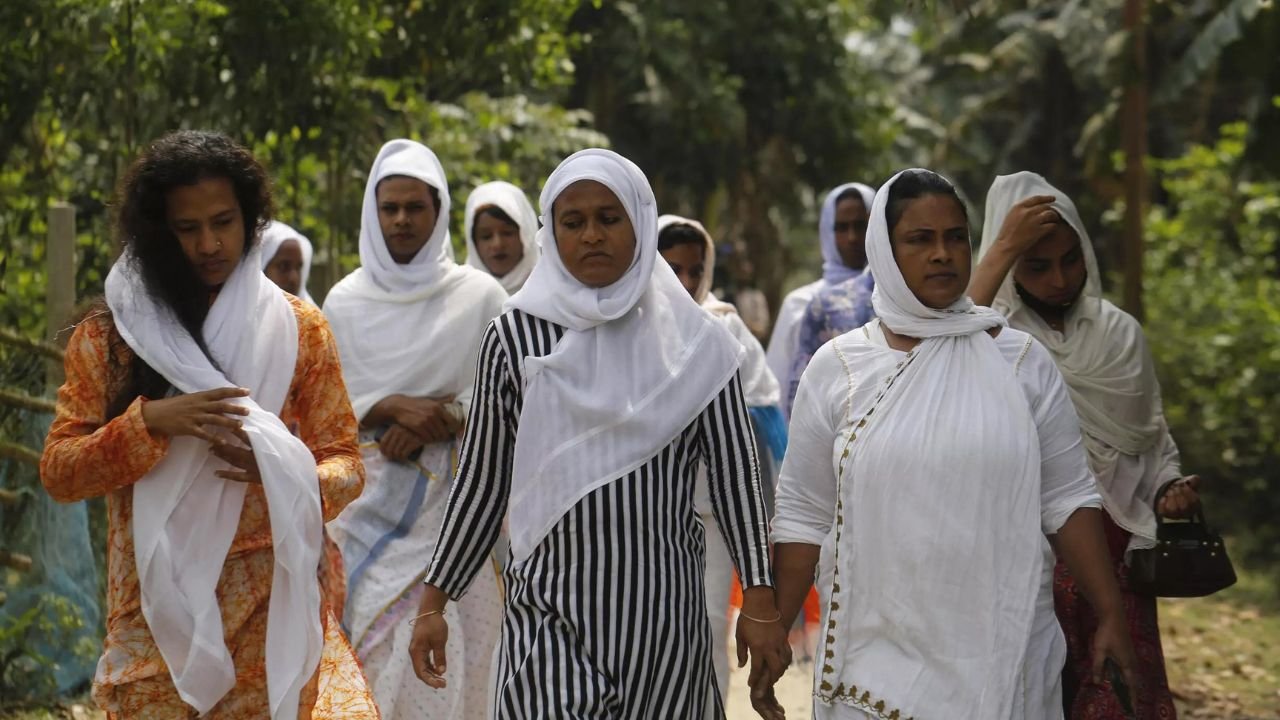
    Mymensingh (Bangladesh) (AFP) – Kicked out of other prayer services, members of Bangladesh’s transgender hijra community have been welcomed at a new mosque in the Muslim-majority nation with the promise of worship without discrimination.

    The humble structure — a single-room shed with walls and a roof clad in tin — is a new community hub for the minority, who have enjoyed greater legal and political recognition in recent years but still suffer from entrenched prejudice.

    “From now on, no one can deny a hijra from praying in our mosque,” community leader Joyita Tonu said in a speech to the packed congregation.

    “No one can mock us,” added the visibly emotional 28-year-old, a white scarf covering her hair.

    The mosque near Mymensingh, north of the capital Dhaka on the banks of the Brahmaputra river, was built on land donated by the government after the city’s hijra community were expelled from an established congregation.

    “I never dreamt I could pray at a mosque again in my lifetime,” said Sonia, 42, who as a child loved to recite the Koran and studied at an Islamic seminary.

    But when she came out as hijra, as transgender women in South Asia are commonly known, she was blocked from praying in a mosque.

    “People would tell us: ‘Why are you hijra people here at the mosques? You should pray at home. Don’t come to the mosques,’” Sonia, who uses only one name, told AFP.

    “It was shameful for us, so we didn’t go,” she added. “Now, this is our mosque. Now, no one can say no.”

    ‘Like any other people’

    Hijra have been the beneficiaries of growing legal recognition in Bangladesh, which since 2013 has officially allowed members of the community to identify as a third gender.

    Several have entered Bangladeshi politics, with one transgender woman elected mayor of a rural town in 2021.

    But hijra still struggle for basic recognition and acceptance, lacking property and marriage rights.

    They are also often discriminated against in employment and are much more likely to be victims of violent crime and poverty than the average Bangladeshi.

    Hardline Islamist groups have also lashed out at the recognition of transgender Bangladeshis in school textbooks, leading rallies to demand the government abandon its push to include them in the curriculum.

    Mufti Abdur Rahman Azad, founder of a hijra charity, told AFP that the new mosque was the first of its kind in the country.

    A similar endeavour planned in another city was stopped last month after a protest by locals, he added.

    Dozens of local hijra women donated time and money to build the Dakshin Char Kalibari Masjid for the Third Gender, which opened this month.

    It also has a graveyard, after a local Muslim cemetery last year refused to bury a young hijra woman inside its grounds.

    The mosque’s imam, Abdul Motaleb, 65, said that the persecution of the hijra community was against the teachings of his faith.

    “They are like any other people created by Allah”, the cleric told AFP.

    ‘No one can be denied’

    “We all are human beings. Maybe some are men, some are women, but all are human. Allah revealed the Holy Koran for all, so everyone has the right to pray, no one can be denied.”

    Motaleb said that other Bangladeshis could learn from the faith and strength of the hijra.

    “Since I have been here at this mosque, I have been impressed by their character and deeds,” he said.

    The new mosque is already tackling prejudice. Local resident Tofazzal Hossain, 53, has offered Friday prayers there for a second week in a row.

    He said living and praying with the hijra community has changed his “misconceptions” about them.

    “When they started to live with us, many people said many things,” he told AFP.

    “But we’ve realised what people say isn’t right. They live righteously like other Muslims”.

    Tonu hopes to expand the simple mosque to be big enough to cater for more people.

    “God willing, we will do it very soon,” she told AFP.

    “Hundreds of people can offer prayers together.”

  • No change in Gaza since UN ceasefire vote: MSF

    No change in Gaza since UN ceasefire vote: MSF

    The MSF medical charity lamented Thursday that nothing had changed on the ground in genocide ravaged Gaza since the United Nations Security Council resolution this week demanding an “immediate ceasefire”.

    After more than five months of war, the UN Security Council for the first time Monday demanded an immediate ceasefire in Gaza after Israel’s ally the United States, which vetoed previous drafts, abstained.

    That resolution demanded an “immediate ceasefire” for the ongoing Muslim holy month of Ramadan, leading to a “lasting” truce.

    But since then, “we haven’t seen any change after this resolution on the ground,” Christos Christou, MSF’s international president, told AFP in an interview.

    “We haven’t seen any impact in… people’s lives there every day; we haven’t seen an impact in our world, (and the) ways of delivering the humanitarian aid,” he said.

    “The situation remains the same.”

    And Christou stressed that MSF’s demands also remained unchanged.

    What was needed, he said, was an immediate and lasting ceasefire, a halt to all attacks on medical installations and personnel, and “unhindered humanitarian aid in Gaza”.

    For now, he acknowledged that “our efforts are just a little drop in the ocean of needs”.

    MSF still has local and international staff working in the few hospitals that are still functioning in Gaza.

    The organisation is among other things working to care for women after they undergo a caesarian section.

    He pointed out that in many cases, women who gave birth via a caesarian section were “literally kicked out of the hospital after a couple of hours because there were no beds”.

    “MSF has increased the capacity of beds in order to offer at least some quality of care to these women,” he said.

    Israel’s intensified attacks have killed at least 32,552 people, mostly women and children, according to the health ministry in Gaza.

    Christou said MSF was “extremely worried” about Israeli plans to push its ground offensive into Rafah, Gaza’s southernmost city which is packed with some 1.5 million people, many of them displaced from other parts of the territory.

    “This would be really catastrophic.”

  • ‘Just staggering’: UN says households waste one billion meals a day

    ‘Just staggering’: UN says households waste one billion meals a day

    Paris, France – Households around the world threw away one billion meals every single day in 2022 in what the United Nations on Wednesday called a “global tragedy” of food waste.

    More than $1 trillion worth of food was binned by households and businesses at a time when nearly 800 million people were going hungry, the UN’s latest Food Waste Index Report says.

    It said that more than 1 billion tonnes of food — almost one fifth of all the produce available on the market — was wasted in 2022, most of it by households.

    “Food waste is a global tragedy. Millions will go hungry today as food is wasted across the world,” Inger Andersen, executive director of the UN Environment Programme, said in a statement.

    Such wastage was not just a moral but “environmental failure”, the report said.

    Food waste produces five times the planet-heating emissions of the aviation sector, and requires huge tracts of land be converted for growing crops that are never eaten.

    The report, co-authored with non-profit organisation WRAP, is just the second on global food waste compiled by the UN and provides the most complete picture to date.

    As data collection has improved the true scale of the problem has become much clearer, said Clementine O’Connor from UNEP.

    “The more food waste you look for, the more that you find,” she told AFP.

    Billion meals binned

    The report said that the “billion meals” figure was a “very conservative estimate” and “the real amount could be much higher”.

    “For me, it’s just staggering,” Richard Swannell from WRAP told AFP.

    “You could actually feed all the people that are currently hungry in the world — about 800 million people — over a meal a day just from the food that is wasted every single year.”

    He said bringing together producers and retailers had helped reduce waste and get food to those who need it, and more such action was needed.

    Food services like restaurants, canteens and hotels were responsible for 28 percent of all wasted food in 2022, while retail like butchers and greengrocers dumped 12 percent.

    But the biggest culprits were households, which accounted for 60 percent — some 631 million tonnes.

    Swannell said much of this occurred because people were simply buying more food than they needed, but also misjudging portion sizes and not eating leftovers.

    Another issue was expiration dates, he said, with perfectly good produce being trashed because people incorrectly assumed their food had gone off.

    A lot of food, particularly in the developing world, was not so frivolously wasted, but instead lost in transportation or spoiling because of a lack of refrigeration, the report said.

    Contrary to popular belief, food waste is not just a “rich country” problem and can be observed across the world, the report said.

    Hotter countries, too, generated more waste, possibly due to higher consumption of fresh foods with substantial inedible parts.

    ‘Devastating effects’

    Businesses also underestimate the cost of wasting food to their bottom line because it was cheap to dump unused produce in landfill.

    “It’s quicker and easier to throw it away at the moment because the waste fee is either zero or very low,” O’Connor said.

    Food waste had “devastating effects” on people and the planet, the report said.

    Converting natural ecosystems for agriculture is a leading cause of habitat loss yet food waste takes up the equivalent of nearly 30 percent of the world’s farming land, the report said.

    “If we can reduce food waste across the entire of the supply chain, we can… minimise the need to have land set aside that’s growing stuff that’s never used,” Swannell said.

    It is also a key driver of climate change, generating up to 10 percent of annual greenhouse gas emissions.

    “If food waste was a country, it would be the third biggest emitter of greenhouse gas emissions on the planet behind the US and China,” Swannell said.

    But people rarely think about it, he said, despite the opportunity to “reduce our carbon footprint, reduce our greenhouse gas emissions, and save money, simply by making better use of the food that we’re already buying”.

  • Iran sentences police officer to death for killing protester

    Iran sentences police officer to death for killing protester

    An Iranian court has sentenced a police chief in northern Iran to death after he was charged with killing a man during mass protests in 2022, local media reported Wednesday.

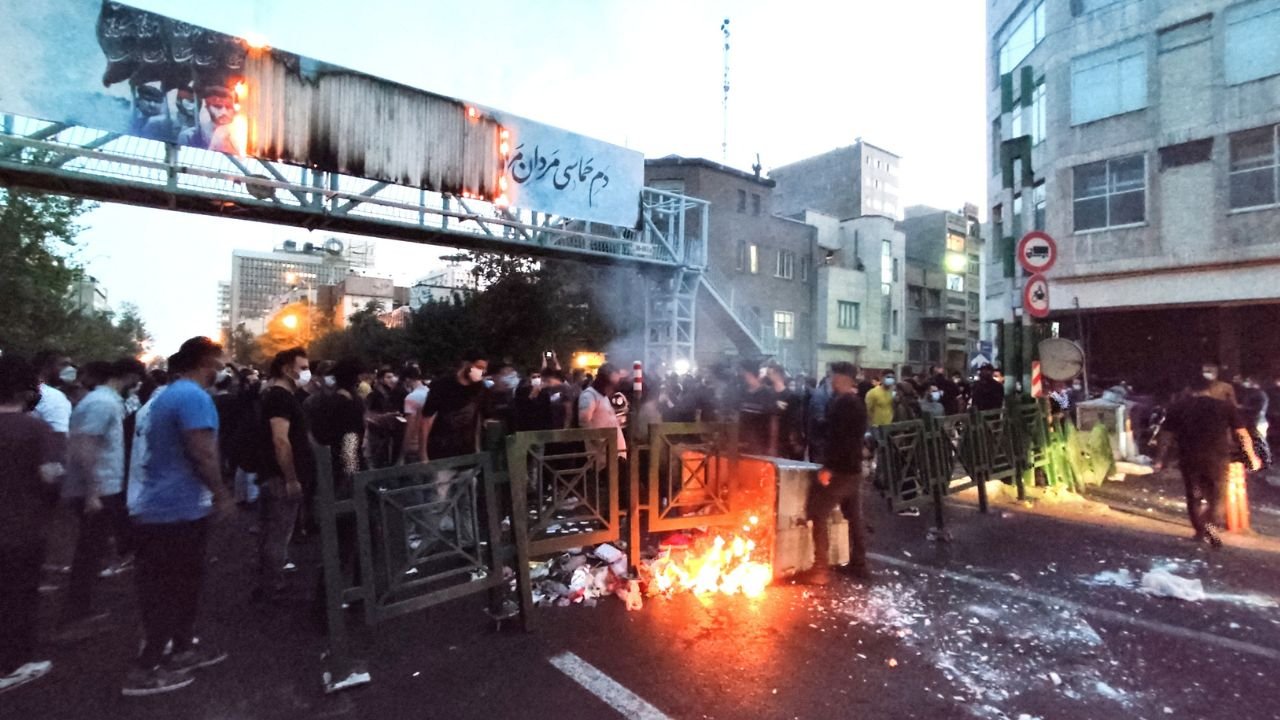
    Local police chief Jafar Javanmardi was arrested in December 2022 over the killing of a protester during the widespread demonstrations sparked by the death of Mahsa Amini in custody.

    Iranian Kurd Amini, 22, died in custody in September that year following her arrest for allegedly violating the country’s strict dress code for women.

    Javanmardi was sentenced to death “in accordance with the Islamic law of retribution, known as the ‘qisas’ law, on the charge of premeditated murder”, the lawyer for the victim’s family, Majid Ahmadi, told the reformist Shargh daily.

    The protestor, Mehran Samak, 27, succumbed to injuries he sustained after being hit by shotgun pellets during a rally in the northern city of Bandar Anzali on November 30, 2022.

    Rights groups based outside of Iran said Samak was shot dead by Iranian security forces after honking his car horn in celebration of Iran’s loss to the United States in the 2022 World Cup held in Qatar while at the Amini protest.

    The defeat eliminated Iran from the football tournament and drew a mixed response from government supporters and opponents.

    The lawyer, Ahmadi, said at the time that the police official was charged with “violating the rules for firearms usage, resulting in the death of Samak”.

    In mid-January, the judiciary’s Mizan Online website said the Supreme Court had annulled a death sentence and referred the case to another court.

    Gilan province, where Bandar Anzali is located, was a flashpoint of the nationwide protest movement that shook Iran.

    Hundreds of people were killed during the months-long protests, including dozens of security forces, while thousands were arrested and nine men were executed in cases linked to the demonstrations.