Author: afp

  • Pakistan steps up security for Chinese workers after bombing

    Pakistan steps up security for Chinese workers after bombing

    Pakistan ramped up security guarding Chinese engineers building Beijing-linked projects in the nation’s northwest, an official said Wednesday, a day after five workers were killed in a suicide bombing.

    Beijing is Islamabad’s closest regional ally and Pakistan has benefitted from billions of dollars of investment in recent years, but has struggled to guarantee the safety of Chinese migrant workers.

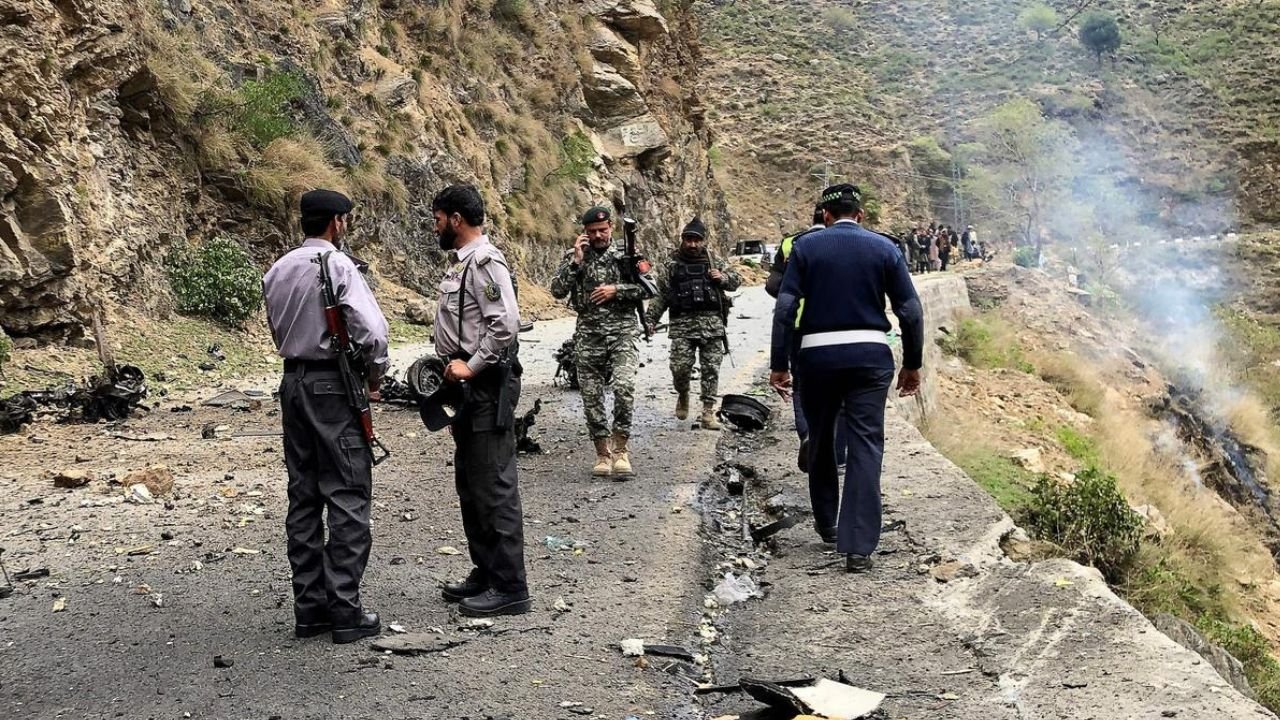
    The five Chinese engineers — plus their Pakistani driver — were killed while travelling between Islamabad and a hydroelectric dam construction site in Dasu, in northwestern Khyber Pakhtunkhwa province.

    A high-ranking official from the provincial interior ministry told AFP on Wednesday that at the more than two-dozen sites hosting Chinese engineers in Khyber Pakhtunkhwa security was stepped up.

    “Directives have been issued to all law enforcement agencies to enhance security for Chinese nationals and all other foreigners,” he said on condition of anonymity.

    “Instructions have also been given to foreign nationals to restrict their movements.”

    Information minister Attaullah Tarar told a press conference in Islamabad that security procedures would be reviewed “with a focus on identifying and addressing any gaps”.

    Meanwhile, further details emerged about the attack, which has yet to be claimed by any militant group.

    Local police officer Bakht Zahir said the five engineers killed near the city of Besham included four men and a woman, and that the bomber targeted the middle vehicle in a convoy of 12.

    “The suicide bomber rammed his vehicle into the convoy in the middle, detonating himself, causing the Chinese engineers’ vehicle to fall into a 180-foot-deep (55-metre) ravine and catch fire,” he said.

    Pakistan’s domestic chapter of the Taliban is the most active militant threat in the region, but the group’s spokesman denied involvement in a statement late Tuesday.

    China has inked more than two trillion dollars in contracts around the world under its Belt and Road investment scheme, with billions pouring into neighbouring Pakistan and aiding its crumbling economy.

    Since 2015, power plants, ports and transport projects have been under construction by joint Pakistani-Chinese teams in remote parts of the South Asian nation.

    But Chinese workers have frequently been targeted by militants hostile to outside influence, with some complaining Pakistanis are not getting a fair share of wealth from the huge projects.

    Tuesday’s attack came just days after militants attempted to storm offices of the Gwadar deepwater port in the southwest, considered a cornerstone of Chinese investment in Pakistan.

    It sparked a flurry of diplomatic activity at the Chinese embassy in Islamabad, with Prime Minister Shehbaz Sharif and the foreign and interior ministers offering condolences in quick succession.

    China’s foreign ministry declared the countries “iron-clad friends” but asked Pakistan to “take effective measures to ensure the safety and security of Chinese nationals, projects, and institutions”.
  • Jailed Indian opposition politician to run capital from cell

    Jailed Indian opposition politician to run capital from cell

    A senior Indian opposition politician will run the capital from his prison cell, a senior aide said Tuesday, facing down growing calls by rivals demanding he resign.

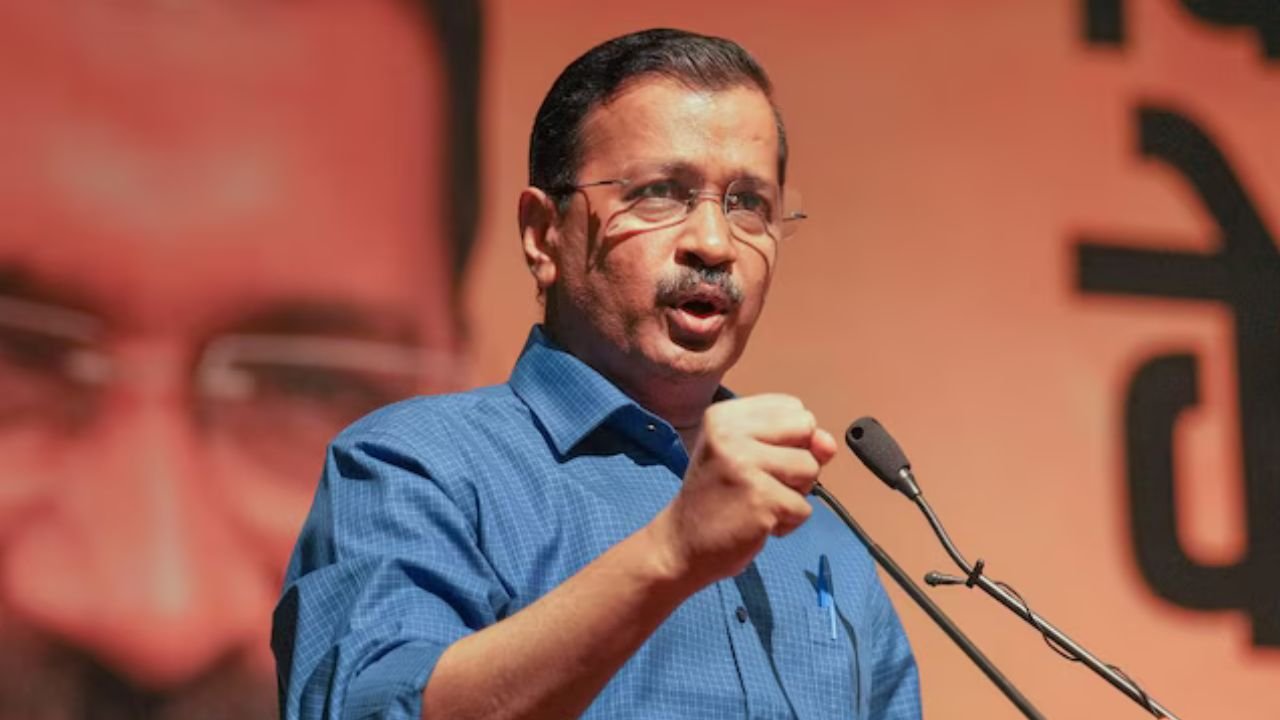
    Arvind Kejriwal, chief minister of New Delhi and a key leader in an opposition alliance formed to compete against Prime Minister Narendra Modi in upcoming elections, was arrested on Thursday in connection with a long-running corruption probe.

    Atishi Marlena Singh, New Delhi’s education minister and fellow member of Kejriwal’s Aam Aadmi Party (Common Man Party, AAP), said “statutory and constitutional provisions” allowed him to remain in his post while behind bars.

    “We are very clear that Arvind Kejriwal will remain the chief minister of Delhi,” Singh, 42, told AFP.

    “If he were to resign when there’s been no trial and no conviction, it opens up the route for other opposition chief ministers to be removed,” she added.

    India’s main financial investigation agency, the Enforcement Directorate (ED), which arrested Kejriwal, has launched probes into at least four other state chief ministers or their family members.

    All the investigations involve political opponents of Modi’s ruling Bharatiya Janata Party (BJP).

    While Modi enjoys high levels of support among his backers, critics accuse him of using law enforcement agencies to intimidate opposition leaders.

    Kejriwal, 55, denies the charges against him.

    His supporters, who held a rally in the city on Tuesday demanding his release, say charges against him are politically motivated and aimed at sidelining challengers of Modi ahead of the polls.

    Modi’s political opponents and international rights groups have long sounded the alarm on India’s shrinking democratic space.

    “All the centre has to do is file some fake cases, and then the ED goes and arrests them”, according to Singh.

    Nearly a billion Indians will vote to elect a new government in six-week-long parliamentary elections starting on April 19, the largest democratic exercise in the world.

    Many analysts see Modi’s re-election as a foregone conclusion, partly due to the resonance of his assertive Hindu-nationalist politics with members of the country’s majority faith.

    Hundreds of BJP loyalists held a rival march through New Delhi on Tuesday, chanting support for Modi and demanding Kejriwal resign.

    “You can run a gang from jail but not a government,” BJP lawmaker Manoj Tiwari told the crowd. “A government cannot be run from prison”.

    In February, Jharkhand state’s chief minister Hemant Soren was arrested and jailed on corruption charges.

    Soren, who denies all charges, resigned and handed power to a colleague.

  • Teens in Gaza hoping to be killed to end their ‘nightmare’: UN

    Teens in Gaza hoping to be killed to end their ‘nightmare’: UN

    The situation in genocide-ravaged Gaza is so desperate that teenagers are now saying they hope to be swiftly killed to escape the “nightmare”, a spokesman for the UN children’s agency said Tuesday.

    “The unspeakable is regularly said in Gaza,” said James Elder, spokesman for the United Nations children’s agency UNICEF.

    Speaking to journalists in Geneva via video message from Rafah in southern Gaza, he said the agency had on Monday held a meeting with adolescents.

    Several said they were “so desperate for this nightmare to end that they hoped to be killed”, he said.

    Israel’s intense attacks in Gaza have killed at least 32,333 people, most of them women and children, according to the health ministry.

    The UN has warned that Gaza is facing a looming famine, spurring increasingly urgent appeals for Israel to open up more border crossings and to stop hampering the movement of aid through the Palestinians territory.

    The Israelis “have a right to control. They inspect every single gram, litre, kilo of whatever goes into Gaza,” Jens Laerke, spokesman for the UN humanitarian agency, told reporters.

    “But they cannot say that once it’s inside, we leave it with you. They must create this enabling environment that allows us to move it around.”

    “We need to dispel this notion that their obligation with getting aid in somehow stops with getting a few trucks, a fraction of what is needed, across the border,” he said.

    “That is not correct.”

    Elder meanwhile pointed out that the Israelis had denied a quarter of the 40 mission requests to the north since the beginning of the month.

    “Now there is an existing old crossing point that could be used in the north 10 minutes from where those people are putting their hands to their mouth pleading for food,” he said, referring to the Erez Crossing.

    “10 minutes. Open that and we could turn this humanitarian crisis around in a matter of days. But it remains closed.”

    “Let’s be clear, life-saving aid is being obstructed, lives are being lost, dignity is being denied.”

  • Countries at UN rally behind expert who accused Israel of ‘genocide’

    Countries at UN rally behind expert who accused Israel of ‘genocide’

    GENEVA: The UN expert who concluded Israel was committing acts of genocide in the Gaza Strip received broad support at the United Nations on Tuesday, with countries speaking up to back her and her report.

    Francesca Albanese, the special rapporteur on human rights in the Palestinian territories, told the UN Human Rights Council that countries should impose an arms embargo and sanctions on Israel.

    Expanding in person on her report released on Monday, Albanese said Israel was characterising the entire Gazan population as “targetable, killable and destroyable,” and had ostentatiously laid bare its “genocidal intent” to “rid Palestine of Palestinians.”

    Dozens of diplomats, mostly representing Arab and Muslim countries but also Latin America, took the floor to defend her mandate and her work.

    Pakistan, speaking for the Organization of Islamic Cooperation, backed her call for sanctions and an arms embargo.“We commend your courage in documenting… acts amounting to genocide in Gaza,” Islamabad’s representative said.

    “The occupation force’s dangerous and ruthless push for a final solution to the Palestinian question is plain for all to see, as its forces encircle Rafah like vultures and its ravenous land grab continues unabated in the West Bank.”

    Egypt, speaking for Arab group countries, affirmed their support for Albanese’s mandate and said they were gravely concerned about Israel’s “structured and systematic attack to make the Gaza Strip uninhabitable.”

    And Qatar, on behalf of the Gulf Cooperation Council, thanked Albanese for her report and demanded the international community “put an end to genocide being perpetrated by the Israeli war machinery.”

    In her speech, Albanese told the top UN rights body that Israel had “destroyed Gaza.”

    “When genocidal intent is so conspicuous, so ostentatious, as it is in Gaza, we cannot avert our eyes: we must confront genocide, we must prevent it and we must punish it,” she said.

    “The genocide in Gaza is the most extreme stage of a long-standing settler-colonial process of erasure of the native Palestinians.”

    Special rapporteurs are independent experts appointed by the Human Rights Council, although they do not speak on behalf of the UN.

    In response, Russia said it was “horrified” by Israel’s military operation that had seen “civilian infrastructure targeted” while China said it was was ready to facilitate peace talks.

    The European Union called for “proper and independent investigations on all allegations” and while appalled by the civilian death toll it recognized Israel’s right to self-defense.

    Albanese’s speech concluded to applause in the chamber. Israel was not present, nor was its chief ally the United States.

    Israel has long been harshly critical of Albanese, and on Monday immediately rejected her report as an “obscene inversion of reality.”

    The United States called her mandate “biased against Israel.”

    In the rights council on Tuesday, the only firm support for such positions came from non-governmental organizations.

    The World Jewish Congress said Albanese’s mandate “seeks to entrench divisions and a one-sided narrative instead of pursuing a balanced and inclusive approach.”

    The European Union of Jewish Students said Albanese’s “resignation is imperative” for the council to retain any credibility on issues concerning Israel and the Palestinian territories.

    Israel’s genocide in Gaza has killed at least 32,400 people in the besieged Strip, most of them women and children, according to the health ministry in the territory.

  • Russia claims West aided Moscow attackers

    Russia claims West aided Moscow attackers

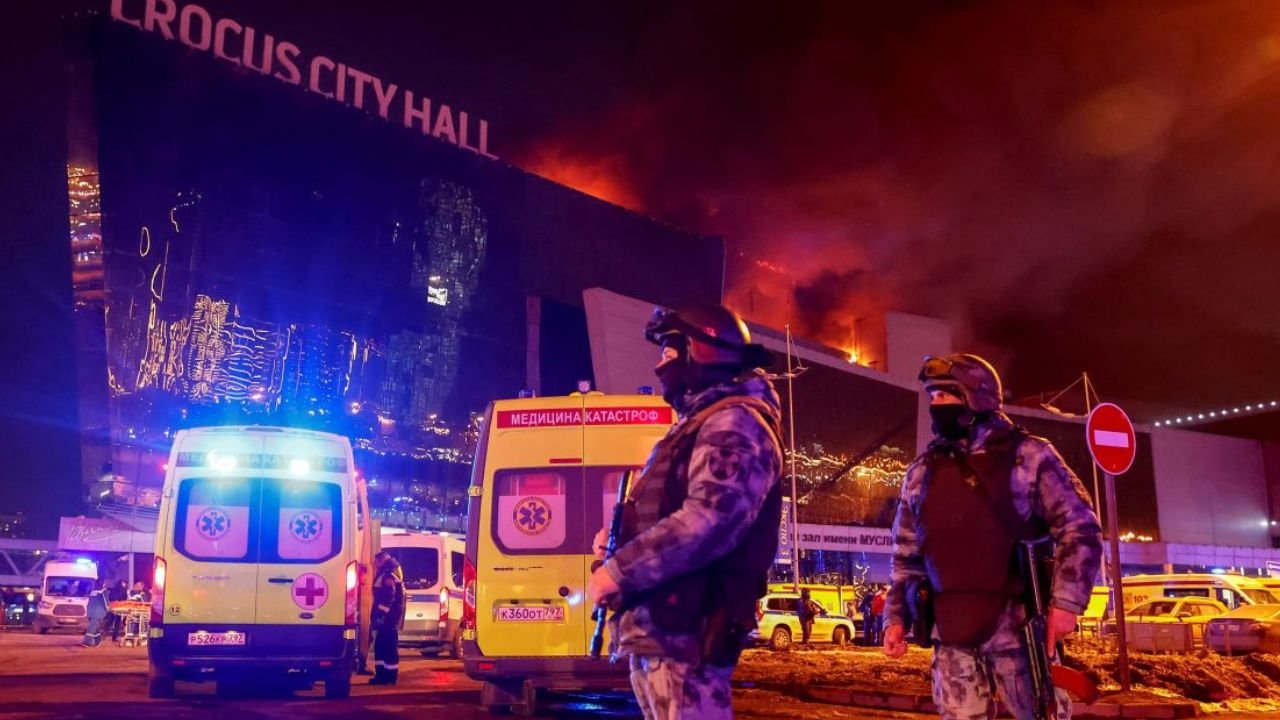
    The head of Russia’s FSB security agency claimed Tuesday that Western and Ukrainian special services had aided the attackers who stormed a Moscow concert hall last week, killing dozens.

    Russia continues to allege Ukraine was somehow involved in Friday’s massacre, even after President Vladimir Putin acknowledged “radical Islamists” had carried it out.

    “We believe the action was prepared both by the radical Islamists themselves and, of course, facilitated by Western special services, and Ukraine’s special services themselves have a direct connection to this,” FSB head Alexander Bortnikov was cited as saying by Russian news agencies.

    He also repeated the Kremlin’s claim that the attackers tried fleeing over the Ukrainian border, an assertion that Kyiv has called absurd.

    “I’ll let you in on a little secret: they were going to be greeted as heroes on the other side,” Bortnikov said.

    He added that while Russia understood who organised the attack, “the one who ordered it has not been identified yet”.

    He did not provide evidence for his assertions and Ukraine has vehemently denied any role.

    Islamic State jihadists have said several times since Friday that they were responsible, and IS-affiliated media channels have published graphic videos of the gunmen inside the venue.

  • Pakistan ‘mapping’ resident Afghans before eviction push

    Pakistan ‘mapping’ resident Afghans before eviction push

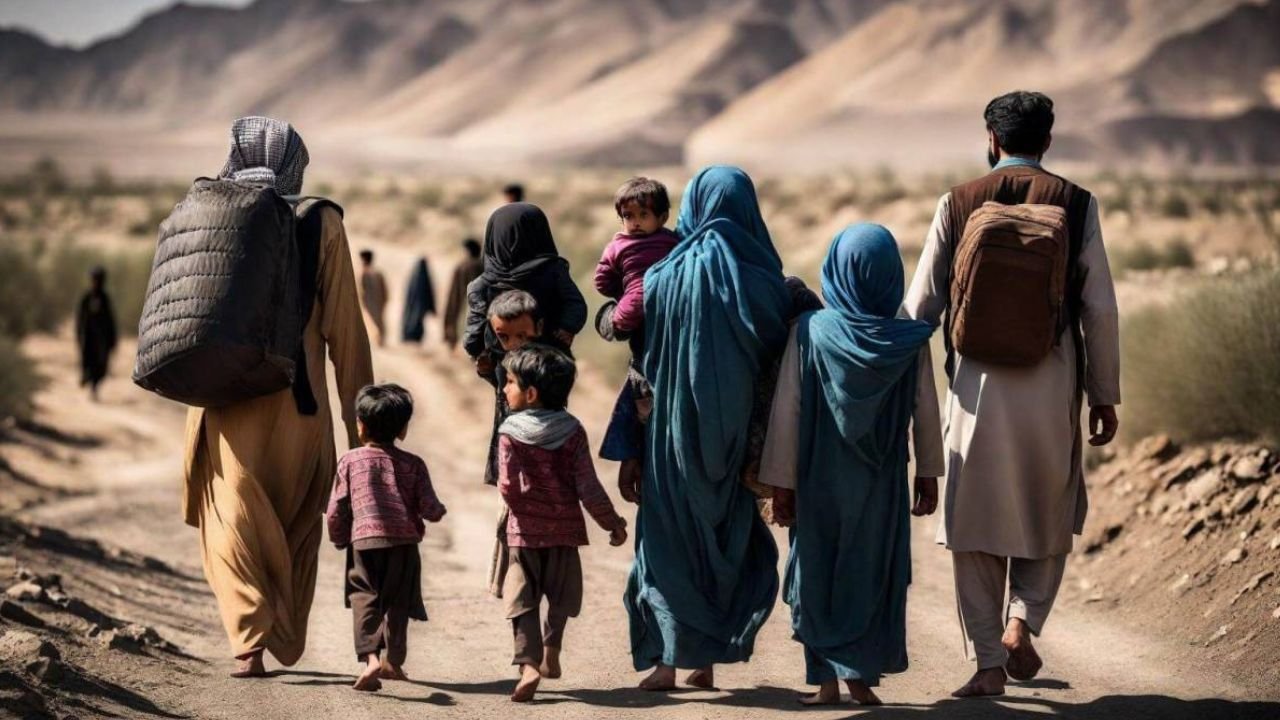
    Pakistan is gathering data on Afghan migrants – including those legally resident in the country – ahead of a renewed eviction push slated to start after Eid, official sources told AFP on Tuesday.

    More than half a million Afghans fled Pakistan last year after the former government ordered undocumented migrants to leave or face arrest, as Islamabad-Kabul relations soured over security.

    Islamabad initially set a November 2023 deadline, however two officials, who asked to remain anonymous, said evictions would resume in the coming weeks.

    “This time, instructions have been given to also collect data and conduct mapping of legally resident Afghan citizens,” said a top government official in Khyber Pakhtunkhwa province, bordering Afghanistan.

    A senior Khyber Pakhtunkhwa police official said whilst “a final decision” has not yet been taken by the government, “police have sprung into action regarding Afghan citizens”.

    “The federal government has directed to not only collect data of legal and illegal Afghan citizens but also to conduct their mapping,” he said.

    Two officials, who asked not to be named, previously told AFP the renewed push to evict migrants will begin after Eid, the holiday marking the end of the Muslim fasting month of Ramazan, set to be celebrated in April’s second week.

    Pakistan’s interior ministry did not respond to a request for comment.

    Islamabad has previously said the massive eviction scheme is justified by security concerns and its faltering economy.

    The Taliban government has consistently denied the allegations.

    Millions of Afghans have poured into Pakistan over the years, fleeing decades of cascading conflict.

    Afghans who left Pakistan last year were only allowed to cross the border with limited belongings and cash, and arrived in the midst of one of the world’s worst humanitarian crises.

    Some had never set foot in Afghanistan before, having been born in Pakistan to Afghan parents.

    An estimated 600,000 arrived since the Taliban government seized power in August 2021 and imposed its stark interpretation of Islamic law.

    Before the first wave of evictions began, Pakistan estimated there were 1.7 million Afghans living illegally in the country.

    The stand-off between Islamabad and Kabul worsened last week when eight civilians were killed in Pakistani air strikes in Afghanistan’s border regions, according to Taliban officials.

  • Struggling for a can of food: starving Gazans scramble for aid drops

    Struggling for a can of food: starving Gazans scramble for aid drops

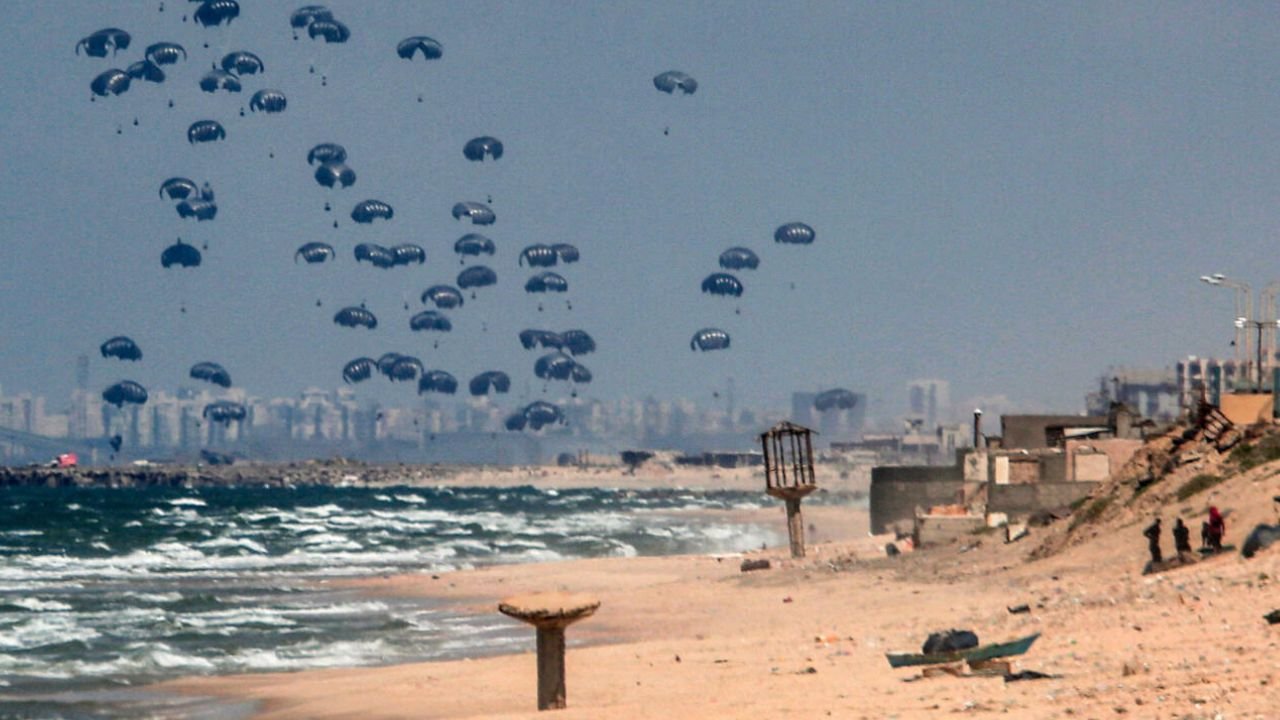
    A military plane banked over the war-ravaged ruins of Gaza City dropping dozens of black parachutes carrying food aid.

    On the ground, where almost no building within sight was still standing, hungry men and boys raced towards the beach where most of the aid seemed to have landed.

    Dozens of them jostled intensely to get to the food, with scrums forming up and down the rubble-strewn dunes.

    “People are dying just to get a can of tuna,” said Mohamad al-Sabaawi, carrying an almost empty bag on his shoulder, a young boy beside him.

    “The situation is tragic, as if we are in a famine. What can we do? They mock us by giving us a small can of tuna.”

    Aid groups say only a fraction of the supplies required to meet basic humanitarian needs have arrived in Gaza since October, while the UN has warned of famine in the north of the territory by May without urgent intervention.

    The aid entering the Gaza Strip by land is far below pre-war levels, at around 150 vehicles a day compared to at least 500 before the war, according to UNRWA, the UN agency for Palestinian refugees.

    With Gazans increasingly desperate, foreign governments have turned to airdrops, in particular in the hard-to-reach northern parts of the territory including Gaza City.

    The United States, France and Jordan are among several countries conducting airdrops to people living within the ruins of what was the besieged territory’s biggest city.

    But the aircrews themselves told AFP that the drops were insufficient.

    US Air Force Lieutenant Colonel Jeremy Anderson noted earlier this month that what they were able to deliver was only a “drop in the bucket” of what was needed.

    The air operation has also been marred by deaths. Five people on the ground were killed by one drop and 10 others injured after parachutes malfunctioned, according to a medic in Gaza.

    Calls have mounted for Israel to allow in more aid overland, while Israel has blamed the UN and UNRWA for not distributing aid in Gaza.

    “Palestinians in Gaza desperately need what has been promised — a flood of aid. Not trickles. Not drops,” UN chief Antonio Guterres said on Sunday after visiting Gaza’s southern border crossing with Egypt at Rafah.

    “Looking at Gaza, it almost appears that the four horsemen of war, famine, conquest and death are galloping across it,” he added.

    Israel has intensified its attacks in Gaza, killing at least 32,333 people, according to the health ministry in Gaza.

    Returning home in Gaza City with little to keep his family going, another Palestinian man said their situation was miserable.

    “We are the people of Gaza, waiting for aid drops, willing to die to get a can of beans — which we then share among 18 people,” he said.

  • No let-up in genocide in Gaza despite UN ceasefire resolution

    No let-up in genocide in Gaza despite UN ceasefire resolution

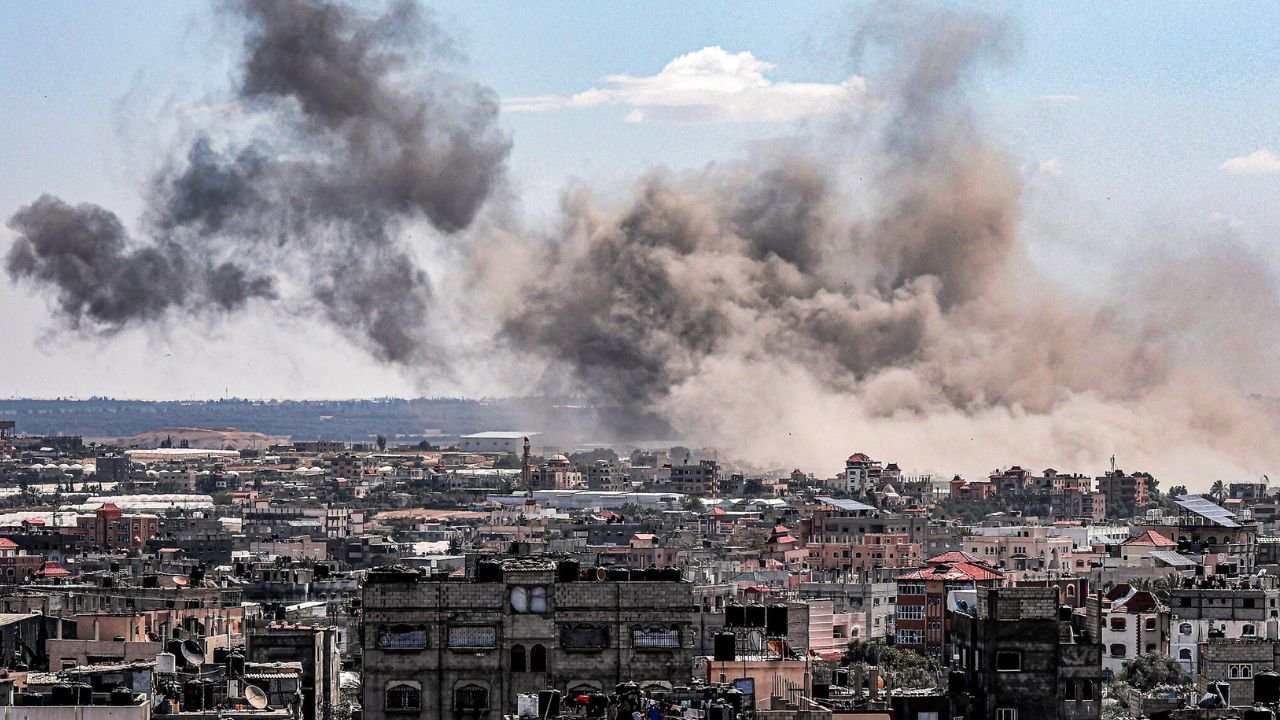
    Palestinian Territories – Israeli attacked Gaza on Tuesday, with no sign of a let-up in the war despite a UN Security Council resolution demanding an “immediate ceasefire”.

    The resolution was adopted on Monday after Israel’s closest ally the United States abstained amid growing concern for the worsening humanitarian situation after nearly six months of war.

    The text demands an “immediate ceasefire” for the ongoing Muslim holy month of Ramadan, leading to a “lasting” truce.

    It also demands that Hamas and other militants free hostages they took during the unprecedented October 7 attacks on Israel, though it does not directly link the release to a truce.

    In Gaza, there was intense fighting overnight, with Israeli operations in and around at least three major hospitals in the besieged territory.

    The Israeli military said its jets had struck more than 60 targets in Gaza in the past day, including tunnels, infrastructure and military structures “in which armed terrorists were identified”.

    The health ministry in the territory said 70 people were killed early Tuesday, 13 of them in Israeli air strikes around the southern city of Rafah.

    The Israeli military said air raid sirens sounded in areas near the Gaza border.

    The Security Council resolution was the first since the Gaza war erupted to demand an immediate halt in the fighting.

    After the vote, UN chief Antonio Guterres led calls for the resolution to be implemented. “Failure would be unforgivable,” he said on social media platform X.

    Israel reacted furiously to the US abstention, while Washington insisted that it did not mark a shift in policy, although it has taken a tougher line with Israel in recent weeks.

    The United States had previously vetoed successive draft resolutions calling for a ceasefire, but it has become increasingly concerned by the dire humanitarian situation in Gaza, where the United Nations has warned of famine in the north by May if urgent action isn’t taken.

    The Gaza health ministry said seven people had drowned in the Mediterranean trying to reach aid airdropped into the territory.

    Washington has also baulked at Israeli Prime Minister Benjamin’s determination to launch an assault on Rafah, the last major population centre still untouched by Israeli ground troops where most of Gaza’s population has sought refuge from the fighting.

    ‘Absolute interest’

    In protest at the United States’ abstention in the UN vote, which it said “hurts” both its war effort and attempts to release hostages, Israel cancelled a planned visit to Washington by a high-ranking delegation.

    Israel’s intensified attacks in Gaza killed at least 32,333 people in Gaza, most of them women and children, according to the health ministry.

    Hamas welcomed the Security Council resolution and reaffirmed its readiness to negotiate the release of hostages in exchange for Palestinian prisoners held by Israel.

    In a statement, the militant group blamed Israel for the failure to make progress in the latest round of talks hosted by mediator Qatar.

    Hamas said Netanyahu and his cabinet were “entirely responsible for the failure of negotiation efforts and for preventing an agreement from being reached up until now”.

    Netanyahu’s office hit back on X, charging that Hamas was “not interested in continuing negotiations” as it had been emboldened by the Security Council vote.

    Hamas leader Ismail Haniyeh was in Tehran on Tuesday for talks with Iranian officials, state media reported.

    It is Haniyeh’s second visit to key backer Iran since the start of the war.

    In the occupied West Bank, German Foreign Minister Annalena Baerbock met Palestinian president Mahmud Abbas.

    She welcomed the Security Council resolution and said it was “in the absolute interest of the people of Israel that we come to a ceasefire now so that the hostages can be released.”

    Hospital battles

    On the ground in Gaza, the fighting raged on unabated.

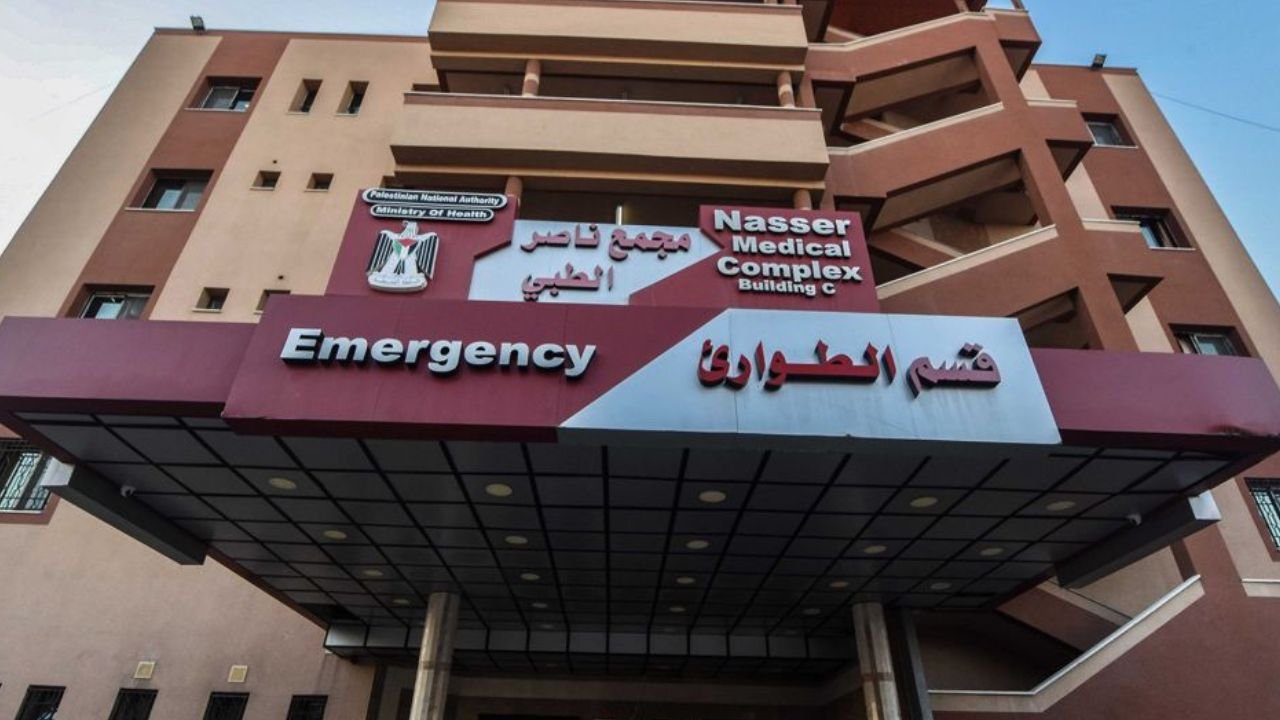
    Dozens of Israeli tanks and armoured vehicles surrounded the Nasser Hospital in the southern city of Khan Yunis, where thousands of displaced people have sought refuge, witnesses said.

    The health ministry said  shots were being fired around the sprawling complex, but no raid had yet taken place.

    At Gaza City’s Al-Shifa Hospital, the territory’s largest, Israeli troops have been involved in heavy fighting for the past nine days. Israel claims to have killed 170 Palestinian militants and arrested hundreds of others.

    And on Monday, the Israeli military reported killing about 20 fighters around Al-Amal Hospital, also in Khan Yunis, over the previous day in close-quarters combat and air strikes.

    Israel has labelled its operations “precise operational activities” and said it has taken care to avoid harm to civilians, but aid agencies have voiced concern for non-combatants caught up in the fighting.

    Palestinians living near Al-Shifa have reported corpses in the streets, constant bombardment and the rounding up of men who are stripped to their underwear and questioned.

    Palestinians in Rafah welcomed the UN vote and called on Washington to use its influence with Israel to ensure the resolution is implemented.

    Bilal Awad, 63, said Washington must “stand against an attack on Rafah, and support the return of the displaced to their cities”.

    Ihab al-Assar, 60, expressed hope that “Israel will comply” with the Security Council text.

    The fighting came as an independent UN-appointed expert, Francesca Albanese, said there were “reasonable grounds to believe” Israel’s actions in Gaza had met the threshold for “acts of genocide”.

    Israel rejected Albanese’s report, due to be presented to the UN Human Rights Council on Tuesday, as an “obscene inversion of reality”.

    bur-ser-dcp/kir

    © Agence France-Presse

  • Israel tanks surround Gaza’s Nasser Hospital: witnesses

    Israel tanks surround Gaza’s Nasser Hospital: witnesses

    Palestinian Territories – Dozens of Israeli tanks and armoured vehicles surrounded the Nasser Hospital in Gaza Tuesday, where thousands of displaced people have sought refuge from the fighting, witnesses said.

    Witnesses told AFP that shots were being fired at the sprawling complex in the southern city of Khan Yunis, but no raid was as yet taking place.

    Gaza’s health ministry said Israeli troops were shooting and firing “shells and (conducting) violent raids in its surroundings in preparation for its storming”.

    “Thousands of displaced people are still inside the hospital,” the ministry said. “They do not have sufficient quantities of drinking water, food and infant formula, and their lives are in danger.”

    The Israeli army did not immediately respond to an AFP request for comment.

    For the past nine days, Israeli troops have been involved in heavy fighting in and around Gaza City’s Al-Shifa Hospital, the territory’s biggest. They claim to have killed 170 Palestinian militants there and arrested hundreds of others.

  • Christians in India fearful as election looms

    Christians in India fearful as election looms

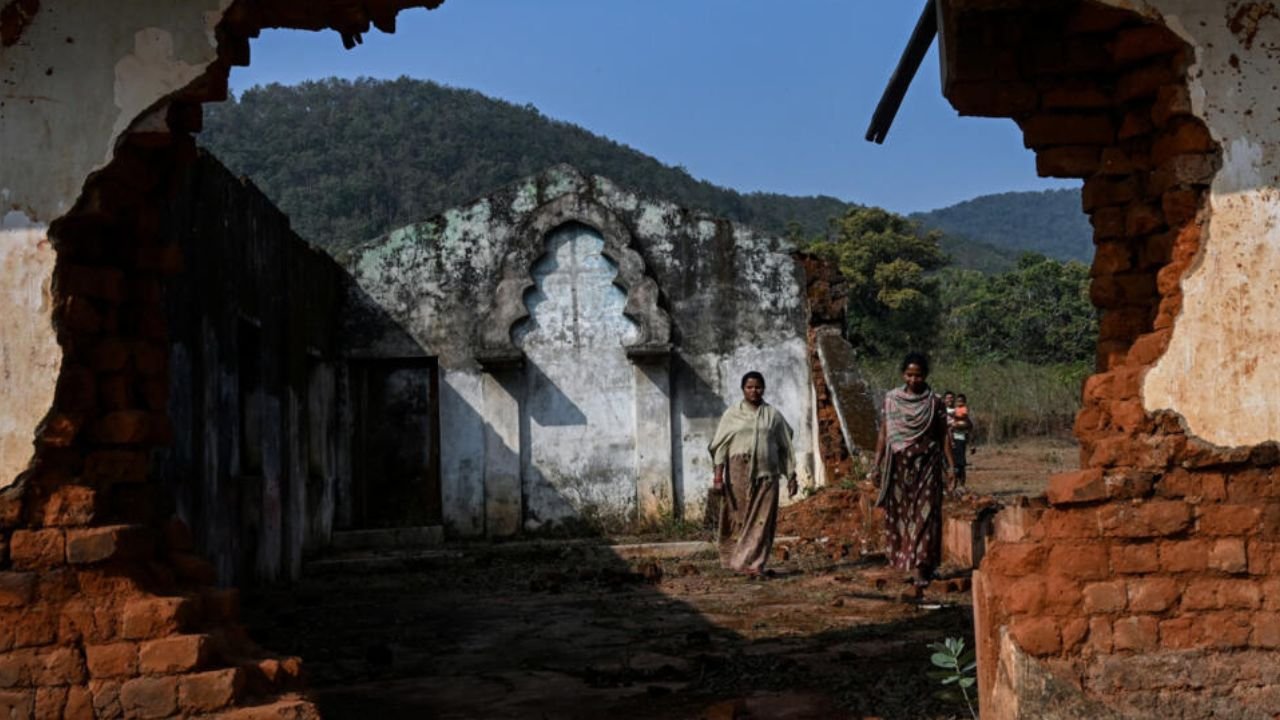
    Irpiguda (India) (AFP) – Church walls crumble in India’s Kandhamal district, where brutal attacks on Christians 16 years ago means many survivors still worry about their minority’s place in a Hindu-majority nation.

    With India’s election on the horizon and Hindu nationalist Prime Minister Narendra Modi widely expected to win, many Christians fear they may once again become targets.

    Deepti was among those attacked in 2008 when mobs rampaged through parts of India’s eastern state of Odisha after the murder of a Hindu priest and his four followers.

    The murder was widely blamed on Christians, and the ensuing revenge rampage left at least 101 people dead.

    Aged 19 at the time, she was gang raped by a mob enraged that her uncle had refused to recant his Catholicism.

    “I remember it every minute,” the 35-year-old domestic worker said in tears, using a pseudonym because she feared being identified.

    “I had been living there since childhood, I recognised them from their voice,” said Deepti, who moved to the state capital Bhubaneswar after the attack.

    “I can still remember each one of them.”

    She was one of scores of women who, according to community leaders, were sexually assaulted across the district.

    Mobs targeted dozens of churches, prayer halls and Christian homes, forcing tens of thousands to flee.

    Last year, the Vatican greenlighted the start of the beatification process towards potential sainthood for 35 of those killed in the violence, a group the church calls the “Kandhamal martyrs”.

    Local Odisha Archbishop John Barwa calls the move a “source of renewed faith and hope”.

    A simple memorial for those who were killed has been erected in the village of Tiangia.

    “Where there is hatred, let me sow love”, the memorial reads, quoting Saint Francis of Assisi.

    ‘Still scared to talk’

    Prasanna Bishnoi, head of Kandhamal’s survivors’ association, said church recognition that people had “died because of their faith” was welcomed — but that honouring the dead did nothing to address the worries of the living.

    “Otherwise, I don’t think it is going to benefit our people,” Bishnoi said.

    Six weeks of voting in marathon general elections begin on April 19, but few doubt the June 4 result — with the ruling Hindu-nationalist Bharatiya Janata Party (BJP), in power for a decade, widely tipped to win again.

    Critics accuse Modi’s BJP of wanting to turn officially secular India into a Hindu nation, something he denies.

    But many Christians worry.

    Right-wing Hindu groups have long accused Christians of forcibly converting Hindus and these allegations, which the community has vehemently denied, have resulted in attacks.

    India has 1.4 billion people and according to the last census, more than two percent are Christians.

    Believers say the religion has been present in the country for nearly two millennia, since the apostle Thomas arrived in the year AD 52.

    The New Delhi-based United Christian Forum (UCF) rights watchdog recorded 731 attacks against Christians in India last year, warning of “vigilante mobs comprising religious extremists”.

    In Kandhamal, the trauma of the 2008 attack haunts survivors, fearful they could be targeted again.

    “Even now the danger persists,” said Raheli Digal, 40, showing AFP the charred walls of what was once her house in Irpiguda village, where the church also lies in ruins.

    “When we remember those old scenes, and watch the news (about ongoing incidents of violence against Christians), we feel scared,” she added.

    “They have been saying for a long time that they won’t let Christians live here.”

    The housewife said she has lived since the 2008 violence in a resettlement camp nearby, and rarely returns to her village.

    “We do not come here… we are still scared to talk to them (Hindus),” she said.

    She sobbed as she described how she hid in the surrounding forested hills, watching as a mob chanting anti-Christian slogans came with blazing torches.

    “They destroyed our home, set it on fire,” she said.

    “We had nothing, not even a piece of cloth, not even water or food,” she added. “We had small children with us — we grabbed them, and ran into the forest.”

    ‘This country is for everyone’

    When Modi in January inaugurated a grand temple to the deity Ram in the northern city of Ayodhya, sparking Hindu celebrations nationwide, Digal and her neighbours stayed home.

    The temple was built on the site of a centuries-old mosque whose destruction by Hindu zealots in 1992 sparked sectarian riots that killed 2,000 people nationwide, most of them Muslims.

    The BJP admits there is a “level of threat perception”, but says it is trying to change that.

    “It is important that we dispel that,” said BJP national spokesman Mmhonlumo Kikon.

    Modi has been “engaging with the Christian community and the leaders to reassure them this country is for everyone — it is not just for the majority community”, Kikon said.

    Bishnoi, from the survivors’ association, said seeing Modi meeting Christians helped him feel “safe”.

    But he also said that reports of violence worried him and cast doubt in his mind.

    “If this government comes to power, then I think minorities will be under pressure,” he said.