Author: afp

  • Israel furious at US abstention on Security Council ceasefire vote

    Israel furious at US abstention on Security Council ceasefire vote

    Israel reacted angrily on Monday to the first UN Security Council vote to demand an “immediate ceasefire” in the Gaza war, after its closest ally the United States abstained, while fighting raged in the Palestinian territory.

    Immediately after the resolution passed, Israel cancelled the visit of a delegation to Washington, which the United States had requested to discuss concerns over a mooted Israeli invasion of Rafah, in crowded southern Gaza.

    Israel said the US abstention “hurts” both its war effort and efforts to release hostages.

    It was “a clear retreat from the consistent position of the US,” Prime Minister Benjamin Netanyahu’s office said.

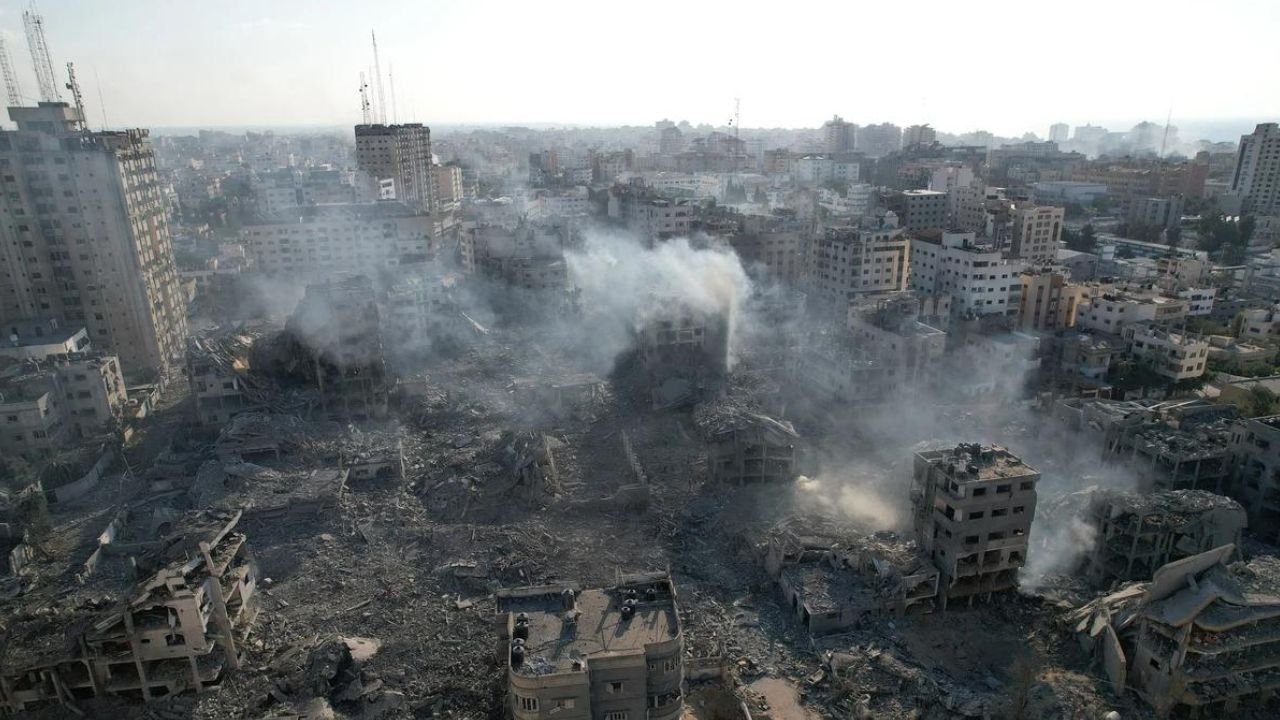
    While diplomatic attention turned to New York, fighting continued across the Gaza Strip, with Israeli forces battling Hamas militants around at least two major hospitals.

    Washington insisted that its Security Council abstention did not mark a shift in policy, although it has taken an increasingly tougher line with Israel in recent weeks.

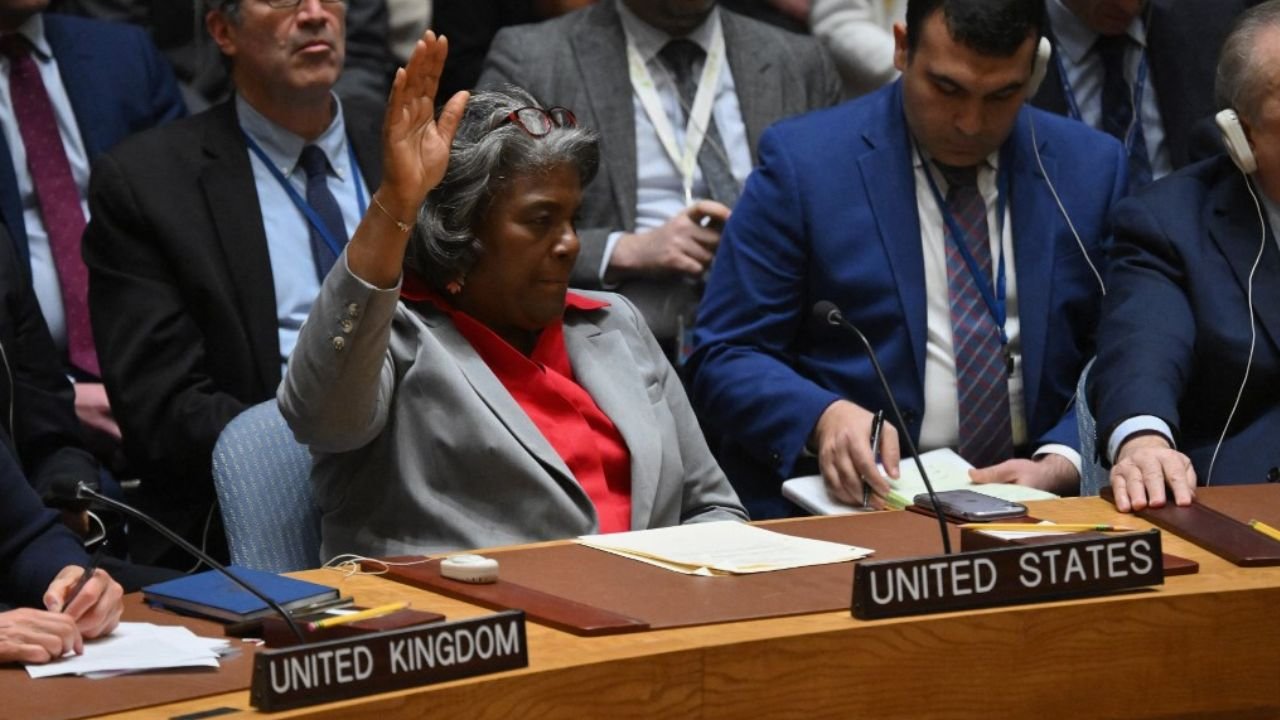
    The United States had repeatedly vetoed Security Council resolutions calling for an immediate ceasefire, but on Friday it put forward its own unsuccessful text mentioning one, before abstaining on Monday’s resolution drafted by non-permanent Council members.

    Applause

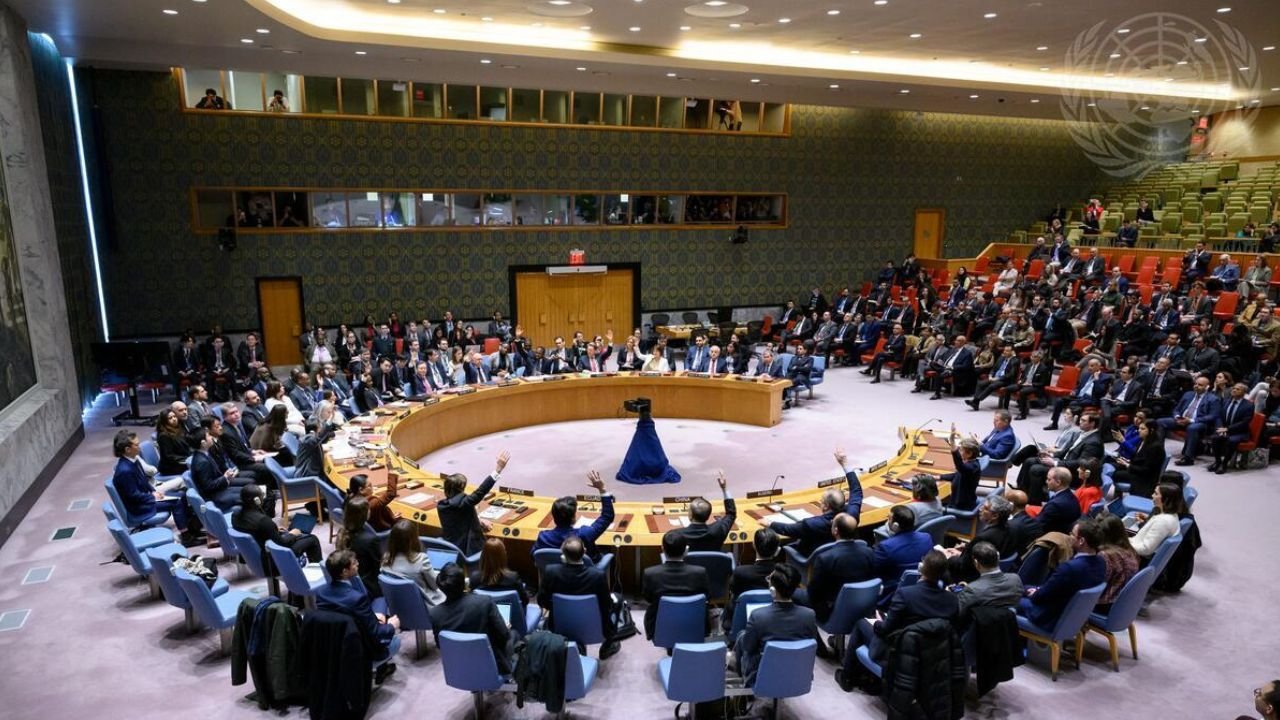
    It meant that the resolution, which demands an “immediate ceasefire” for the ongoing Muslim holy month of Ramadan that leads to a “lasting” truce, went through with all other 14 Security Council members voting yes.

    The resolution drew applause in the usually staid council and also demands that Hamas and other militants free hostages they seized, though it does not directly link a release to the ceasefire.

    The Gaza war broke out with Hamas’s unprecedented attack of October 7 which resulted in about 1,160 deaths in Israel, mostly civilians, according to an AFP tally based on official Israeli figures.

    Militants also seized about 250 hostages, of whom Israel believes around 130 remain in Gaza, including 33 presumed dead.

    Netanyahu’s failure to bring home the hostages has led to regular protests in Israel.

    Vowing to destroy Hamas and free the captives, Israel has carried out a relentless bombardment of the coastal territory and a ground invasion that began in Gaza’s north before moving southward.

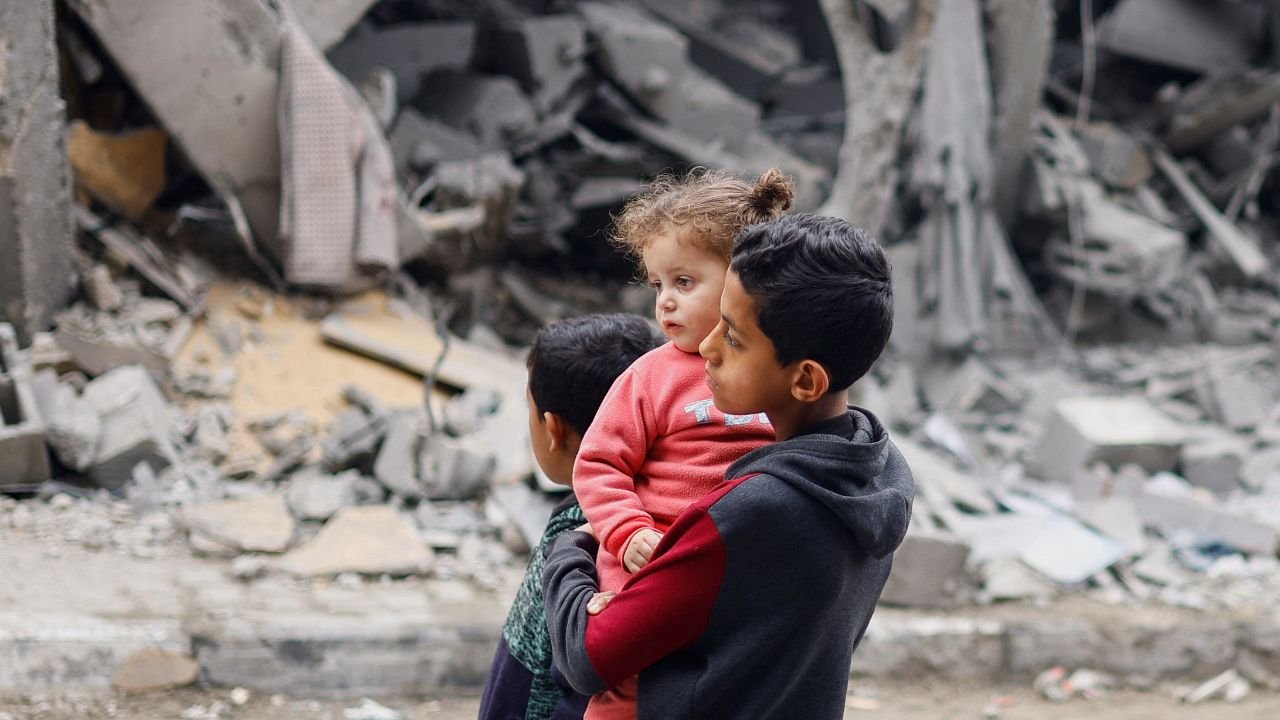
    The health ministry in the Hamas-run Gaza Strip on Monday put the total Palestinian death toll at 32,333, most of them women and children.

    Hamas welcomed the Security Council resolution and said it was reaffirming its readiness to negotiate the release of hostages in exchange for Palestinian prisoners held by Israel.

    Member states are obliged to comply with resolutions passed by the Security Council, whose vote came while Israeli Defence Minister Yoav Gallant visited Washington.

    After the UN decision, Gallant said the war will go on.

    “We have no moral right to stop the war while there are still hostages held in Gaza,” he said.

    Tensions between the two allies have grown alongside US concerns about the humanitarian crisis in Gaza, where the UN says famine is imminent.

    Netanyahu’s determination to launch a ground operation in Rafah, the city on Gaza’s southern border where most of the territory’s population is sheltering, has become a key point of contention.

    Prior to the UN vote, US Vice President Kamala Harris told ABC TV that a Rafah invasion would be “a huge mistake”. Asked hether she would rule out “consequences” for Israel, Harris said: “I am ruling out nothing”.

    Before heading to Washington, Gallant said his focus would include “our ability to obtain platforms and munitions”.

    Hospital battles

    Troops and tanks have encircled Gaza City’s Al-Shifa Hospital, the territory’s biggest, for a week and more recently moved on Al-Amal Hospital in the main southern city of Khan Yunis.

    Israel has labelled its operations “precise operational activities” and said it has taken care to avoid harm to civilians, but aid agencies have voiced alarm about civilians caught up in the fighting.

    The Israeli military said it was battling militants around the two hospitals and reported around 20 militants killed around Al-Amal over the past day in close-quarters combat and air strikes.

    Palestinians living near Al-Shifa have reported hellish conditions, including corpses in the streets, constant bombardment and the rounding up of men who are stripped to their underwear and questioned.

    The Al-Shifa raid was in its eighth day and the military reported having detained a total of about 500 militants “affiliated with” Hamas and Islamic Jihad, another militant group.

    ‘We are suffering’

    Israel has signalled an extended presence at Al-Shifa which troops also raided in November, to an international outcry.

    At Al-Amal Hospital, the Palestinian Red Crescent said Israeli troops ordered staff and patients to evacuate, but the departing convoy got stuck due to debris on the road.

    The charity reported that Israeli troops opened fire on staffers who tried to clear the debris, wounding two — one of whom made it back to the convoy.

    Israel’s military did not immediately respond to a request for comment.

    The military said its Al-Amal operation included “raids on several terrorist infrastructure sites”, where they found explosive devices, rocket-propelled grenades and other military equipment.

    UN chief Antonio Guterres, on a visit to the Middle East, has pleaded for an end to the “non-stop nightmare” for the 2.4 million people trapped in Gaza’s worst-ever war and stalked by starvation.

    According to Gaza’s health ministry, at least 107 people were killed in a 24-hour period into Monday, and the Hamas government press office said more than 50 airstrikes rained down on the Gaza Strip.

    Israel’s armed forces gave a similar number and said its fighter jets and helicopters had struck about 50 targets.

    Food and water shortages have deepened the suffering, especially in northern Gaza where residents, mostly women and children, waited in line to fill up jerrycans and buckets in Jabalia.

    “We don’t even have food to give us the energy to go to collect the water — let alone the innocent children, women and the elderly,” said one man, Bassam Mohammed al-Haou.
  • Countries call for swift implementation of UN ceasefire vote

    Countries call for swift implementation of UN ceasefire vote

    The UN Security Council on Monday called for an immediate ceasefire in Gaza five months into the grinding war, despite Israel’s ally the United States abstaining.

    Here are some reactions to the resolution to halt fighting over the Muslim holy month of Ramadan with an aim for a “lasting” truce, which drew rare applause at the Security Council:

    UN Secretary-General Antonio Guterres called for swift implementation of a ceasefire after Israel voiced anger over the resolution.

    “Failure would be unforgivable,” Guterres wrote on X, formerly known as Twitter.

    Hamas welcomed the resolution to halt fighting in Gaza while saying it was ready to negotiate the release of hostages in exchange for Palestinian prisoners.

    “We also affirm our readiness to engage in an immediate prisoner exchange process that leads to the release of prisoners on both sides,” the militant group said.

    Israeli Prime Minister Benjamin Netanyahu’s office said the UN vote “hurts both the war effort and the effort to release the abductees”.

    “It gives Hamas hope that international pressure will allow them to accept a ceasefire without the release of our abductees,” the statement said. It also took aim at the US abstention, calling it a “clear retreat” from its earlier position.

    Hussein al-Sheikh, minister for civilian affairs of the Palestinian Authority which has partial administrative control in the Israeli-occupied West Bank, hailed the resolution in a post on X.

    “We call for a permanent cessation to this criminal war and Israel’s immediate withdrawal from the Gaza Strip,” he wrote.

    Following the vote, the United States said a ceasefire can “only” be implemented once Hamas begins releasing hostages it still holds.

    “A ceasefire can begin immediately with the release of the first hostage,” US ambassador to the UN Linda Thomas-Greenfield said.

    After the United States vetoed previous drafts, National Security Council spokesman John Kirby told journalists that the US decision to abstain from Monday’s vote does not represent a “shift in our policy”.

    The Arab League’s Secretary-General Ahmed Aboul Gheit said the decision “comes late”.

    “The lesson now is to implement the decision on the ground, stop military operations and Israeli aggression immediately and completely,” he added.

    Top European Union officials welcomed the resolution, calling for a ceasefire and the unconditional release of all hostages.

    “Implementation of this resolution is vital for the protection of all civilians,” European Commission President Ursula von der Leyen wrote on X.

    The resolution “represents the first important and necessary step to stop the bloodshed,” the Egyptian ministry of foreign affairs said in a statement to the UN.

    The Brazilian government said it “hopes that the ceasefire will be implemented immediately, as stipulated by the resolution, and reiterated “the urgency of ensuring the effective entry of an expanded and regular flow of humanitarian aid into Gaza, as well as the release of all hostages”.

    France’s UN representative called for a sustained truce between Israel and Hamas beyond the ongoing month of Ramadan.

    “This crisis is not over,” said Nicolas de Riviere. “After Ramadan, which ends in two weeks, it will have to establish a permanent ceasefire.”

    German Foreign Minister Annalena Baerbock said she was “relieved by the adoption of the resolution”. “Every day counts,” she added.

    Baghdad’s foreign minister applauded the resolution in a statement and stressed “the importance for the parties to respect their obligations under international law”.

    Jordan’s foreign ministry expressed hope that the UN and international community would “take action to safeguard the two-state solution and ensure the establishment of an autonomous and sovereign Palestinian state”.

    Lebanese Prime Minister Najib Mikati hailed the “first stage in the process of ending Israeli aggression against the Gaza Strip.”

    He also called for a political solution “to end the conflict and give the Palestinians their rights”.

    Qatar said it hopes the resolution “represents a step towards a permanent cessation of fighting in the Strip”.

    The gas-rich emirate has been engaged in weeks of mediation between Israel and Hamas to secure a truce in Gaza and an exchange of hostages and prisoners.

    Foreign minister Naledi Pandor welcomed the resolution on public radio but stressed that “the ball is in the court of the Security Council”.

    Spanish Prime Minister Pedro Sanchez on X applauded the resolution, and said that “the realisation of two states, Israel and Palestine, living side-by-side in peace and security is the only realistic and viable solution for the region”.

    Outgoing Dutch Prime Minister Mark Rutte said the next step was “to stop the violence, free the hostages, immediately send in vastly more humanitarian aid to Gaza and find a lasting solution”.

    The country’s far-right leader, Geert Wilders, who swept to victory in recent polls, on X voiced support for Israel “against the dark forces of hate and destruction called Hamas”.

    Turkey called the resolution and prospective return of humanitarian access to Gaza “a positive step”.

    “We hope that Israel will comply with the requirements of this resolution without delay,” Turkish foreign affairs spokesman Oncu Keceli wrote on X.

    Chile’s foreign office said it was “necessary to progress the two state solution, in which Palestine and Israel can live in peace inside internationally recognised borders.”

    “I invite the world’s nations if Israel breaks this ceasefire to break diplomatic relations with this country,” said Colombian President Gustavo Petro on X.

    Amnesty International’s Secretary General Agnes Callamard said the resolution is “long overdue” and called for “an immediate and comprehensive arms embargo”.

    Human Rights Watch’s UN lead Louis Charbonneau called for Israel to halt “unlawful attacks”, for Palestinian armed groups to “immediately release all civilians held hostage”, and for the US and others to suspend “arms transfers to Israel”.

    Oxfam’s UN representative Brenda Mofya said the resolution should provide “much-needed respite from the relentless and devastating Israeli violence”.

  • UN expert accuses Israel of several acts of genocide in Gaza

    UN expert accuses Israel of several acts of genocide in Gaza

    A UN rights expert on Monday said there were “reasonable grounds” to determine that Israel has committed several acts of “genocide” in its war in Gaza, also warning of “ethnic cleansing”.

    Francesca Albanese, the UN special rapporteur on the rights situation in the Palestinian territories, said there were clear indications that Israel had violated three of the five acts listed under the UN Genocide Convention.

    “The overwhelming nature and scale of Israel’s assault on Gaza and the destructive conditions of life it has inflicted reveal an intent to physically destroy Palestinians as a group,” she said in a report, which was immediately rejected by Israel as an “obscene inversion of reality”.

    Albanese, an independent expert appointed by the UN Human Rights Council but who does not speak on behalf of the United Nations, said she had found “reasonable grounds to believe that the threshold indicating the commission of… acts of genocide against Palestinians in Gaza has been met”.

    The report, entitled “Anatomy of a Genocide”, listed those acts as: “killing members of the group; causing serious bodily or mental harm to the group’s members; and deliberately inflicting on the group conditions of life calculated to bring about its physical destruction in whole or in part”.

    Israel’s diplomatic mission in Geneva said the country “utterly rejects the report”, describing it as “simply an extension of a campaign seeking to undermine the very establishment of the Jewish State”.

    “Israel’s war is against Hamas, not against Palestinian civilians,” it said in a statement, slamming Albanese’s “outrageous accusations”.

    Israel has long been harshly critical of Albanese and her mandate, which the United States on Monday called “biased against Israel.”

    Washington is “aware” of Albanese’s report but has “no reason to believe Israel has committed acts of genocide in Gaza,” a US official told AFP.

    Last month Israel slapped a visa ban on her after she made comments denying that Hamas’s October 7 attack, which sparked the war in Gaza, was anti-Semitic.

    Israel’s relentless bombardment and ground offensive in Gaza has since killed more than 32,300 people, mainly women and children, according to the health ministry in Gaza.

    South Africa has already filed a complaint against Israel before the International Court of Justice, alleging its assault on Gaza amounts to a violation of the genocide convention.

    The court has yet to rule on the underlying issue, but earlier this year ordered Israel to do everything it could to prevent genocidal acts during its campaign and also to allow in humanitarian aid.

    In Albanese’s report, which she is due to present to the Human Rights Council on Tuesday, she maintained that Israel’s “genocidal acts” followed “statements of genocidal intent”.

    Statements by some senior Israeli officials spelling out an intent to forcibly displace Palestinians and replace them with Israeli settlers, she said, indicated that “evacuation orders and safe zones have been used as genocidal tools to achieve ethnic cleansing”.

    The report also found that Israel was treating all Palestinians and their infrastructure “as ‘terrorist’ or ‘terrorist-supporting’, thus transforming everything and everyone into either a target or collateral damage”.

    “In this way, no Palestinian in Gaza is safe by definition,” it said.

    “This has had devastating, intentional effects, costing the lives of tens of thousands of Palestinians.”

    The report also stressed that Israel’s mistreatment of the Palestinians had not begun on October 7.

    “Israel’s genocide on the Palestinians in Gaza is an escalatory stage of a longstanding settler colonial process of erasure,” it said.

  • Two out of five Yemeni children out of school: aid group

    Two out of five Yemeni children out of school: aid group

    Dubai: Nearly a decade into Yemen’s brutal war, some 4.5 million of its children are not attending school, the charity Save the Children said Monday.

    The figure underlines how precarious daily life remains in the Arabian Peninsula’s poorest country, despite relative calm since an April 2022 ceasefire.

    “Two in five children, or 4.5 million, are out of school, with displaced children twice as likely to drop out than their peers,” the group said in a report.

    “One third of families surveyed in Yemen have at least one child who has dropped out of school in the past two years despite the UN-brokered truce,” it added.

    The conflict in Yemen began when Iran-backed Houthi rebels seized the capital Sanaa in September 2014, prompting Saudi Arabia to lead a coalition to prop up the internationally recognized government months later.

    Economic insecurity amid the war has plunged two thirds of Yemen’s 33 million inhabitants below the poverty line, the charity said, while also displacing about 4.5 million people.

    “Displaced children are twice as vulnerable to school dropouts,” Save the Children said.

    “Nine years into this forgotten conflict, we are confronting an education emergency like never before,” said Mohammed Manna, Save the Children’s interim country director in Yemen.

    “Our latest findings must be a wake-up call and we must act now to protect these children and their future.”

    The report said 14 percent of families interviewed by the aid group pointed to insecurity as the reason behind their children dropping out.

    But a larger majority — some 44 percent — pointed to economic reasons, in particular the need to support family incomes. Some 20 percent said they were unable to afford regular school costs.

    “The impact of the education crisis on Yemen’s children and their future is profound,” the charity said.

    “Without immediate intervention, an entire generation risks being left behind.”

  • Singapore makes Israeli embassy delete ‘insensitive’ Palestinian post

    Singapore makes Israeli embassy delete ‘insensitive’ Palestinian post

    Singapore made the Israeli embassy in the city-state take down an “insensitive” social media post about the Palestinians over the weekend after warning it could inflame tensions, the interior minister said Monday.

    The Israeli genocide in Gaza and deepening humanitarian crisis in the besieged strip since October 7 have divided opinion across the world.

    The post reportedly said Israel was mentioned 43 times in the Koran but Palestine — the name Palestinians give to what they hope will become their independent, sovereign state — was not, according to local media.

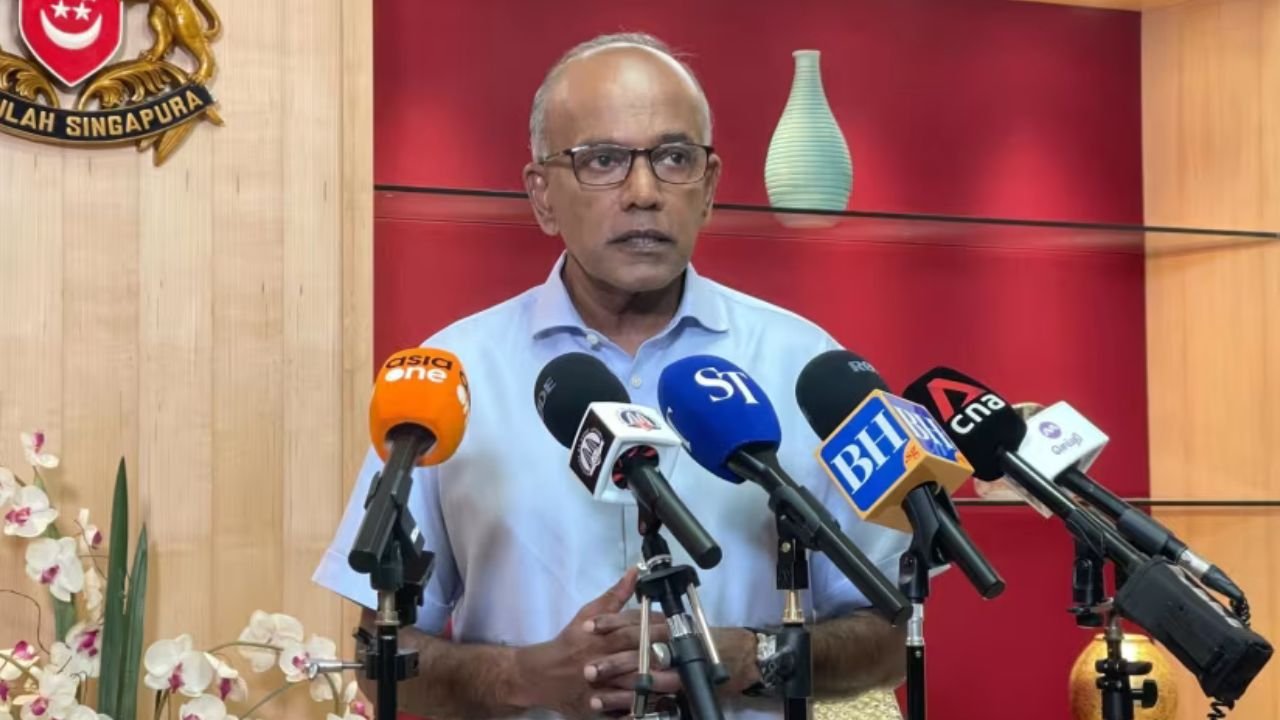
    Minister for Home Affairs K. Shanmugam said he asked Singapore’s foreign ministry to tell the Israeli embassy to remove the post made on Sunday after learning about it, which the mission immediately did.

    “That post on the Israeli embassy social media page is completely unacceptable. I was very upset when I was told about it,” Shanmugam told reporters, according to a transcript.

    “It is insensitive and inappropriate. It carries the risk of undermining our safety, security and harmony in Singapore.”

    Shanmugam said the post had been taken down.

    “Posts like these can… inflame tensions, and can put the Jewish community here at risk. The anger from the post can potentially spill over into the physical realm,” he added.

    The Israeli embassy was not immediately available for comment.

    Singapore has condemned the Hamas attacks on Israel but has also said that Israel’s military response “has now gone too far”.

    The health ministry in the Gaza Strip on Sunday put the total death toll in the territory at 32,226, most of them women and children.

  • McDonald’s stores shut in Sri Lanka over poor hygiene case

    McDonald’s stores shut in Sri Lanka over poor hygiene case

    McDonald’s stores across Sri Lanka shut Sunday after the US fast-food giant launched a legal battle with its local franchise holder over allegations of poor hygiene, court officials said.

    The Commercial High Court of Colombo ordered the closures until April 4, after the parent company accused the local franchise holder of failing to meet international hygiene standards.

    “The closure was ordered pending an investigation,” a court official said.

    He said lawyers for McDonald’s told the court that they had terminated a franchise agreement with local company Abans last week. The hearing is to resume in early April.

    There was no immediate comment either from McDonald’s or Abans, who has held the franchise with 12 outlets since the US firm’s entry into Sri Lanka in 1998.

    Notices were seen outside McDonald’s outlets on Sunday saying they were “closed” and there was no indication if or when they may reopen.

    When a technology hitch disrupted ordering at stores across much of east Asia last week, Sri Lanka’s McDonald’s stores were unaffected.

  • Four Pashto films to dazzle cinemas on Eid-ul-Fitr, revive regional film industry

    Four Pashto films to dazzle cinemas on Eid-ul-Fitr, revive regional film industry

    The screening of four Pashto films on the occasion of Eid-ul-Fitr is all set to dazzle the cinemas with hopes to revive the ailing regional film industry through providing a spice of entertainment and a blend of emotions to the cinegoers.

    “The much anticipated movies with quality production, dialogues, casts, locations and soulful music will mesmerise the audience, multiplying their joy of the festive occasion”, renowned film director and film star Arbaaz Khan said. The film directors and producers have pinned hopes on the production quality, dialogues delivery, casts, locations and strength of music of the films.

    The movies to be screened included Yaar Dushman, which is directed by Arbaaz while the film cast comprises of the actor himself, Ajab Gull, Jahangir Jaani, Asif Khan and Jameel Babar. Talking to APP, Arbaaz said that Pashto films had high-profit potential. He hoped that the release of new movies will help revive the film industry on this Eid-ul-Fitr.

    He further said that Pashto film producers and artists remained resilient and kept cinema houses functional even in the most difficult times to provide entertainment to people.

    Another movie which was ready for release on Eid-ul-Fitr was Bandiwan, directed by Shahid Usman, for which the cast includes Arbaaz, Shahid Khan and Jahangir Jani. Pekhawar Zama De is another Pashto offering whose release coincides with Eid-ul-Fitr, directed by Shanzeb Khan and starring Arbaaz, Asghar Cheema and Mehek Noor. Charta Khaney Charta Faqeeray, helmed by Arshad Khan, is the fourth Pashto film that is slated for an Eid release, sporting Shahid Khan and Jahangir Jaani among its cast.

  • Kate Middleton conspiracies linger after cancer revelation

    Kate Middleton conspiracies linger after cancer revelation

    Washington (AFP) – The revelation that Britain’s Catherine, Princess of Wales, has cancer prompted a swift backlash over a torrent of lurid social media speculation around her health, including by those positing she was secretly dead. But the somber news has not stopped the seemingly endless churn of conspiracy theories.

    Kate Middleton, 42, received an outpouring of global sympathy after her video message on Friday revealed she was undergoing preventative chemotherapy, seeking to put an end to a maelstrom of unfounded claims circulated amid her monthslong absence from public life.

    The manipulation of a royal photograph the palace released to the media, as well as the British monarchy’s culture of secrecy, had fueled much of the online speculation.

    But the proliferation of evidence-free theories on social media –- including posts peppered with skull emojis claiming the princess was dead or in an induced coma — illustrates the new normal of information chaos in an age of artificial intelligence and misinformation that has warped public understanding of reality.

    The speculation took a serious turn last week when the British police were asked to probe a reported attempt to access her confidential medical records.

    “Kate has effectively been bullied into this statement,” writer Helen Lewis wrote in US magazine the Atlantic.

    “The alternative — a wildfire of gossip and conspiracy theories — was worse.”

    Britain’s Daily Mail tabloid also lashed out, asking: “How do all those vile online trolls feel now?”

    If social media posts are to be believed, they are not too sorry.

    ‘Cruel grifters’

    Many on X, formerly Twitter, and TikTok claimed Kate’s video message was an AI-enabled deepfake.

    Some users posted slowed down versions of the video to support the baseless claim that it was digitally manipulated, asking why nothing in the background — a leaf or blade of grass — moved.

    Others scrutinized her facial movements and speculated why a dimple, as seen in previous images, wasn’t visible.

    “Sorry House of Windsor, Kate Middleton (and) legacy media — I’m still not buying what you’re selling,” said one post on X.

    “Actually not sorry – you’ve all read ‘The Little Boy That Cried Wolf’ right?”

    And then there was misinformation about cancer itself, with posts falsely claiming that the disease was not fatal while comparing chemotherapy with “poison.”

    And how could anti-vaccine campaigners be left behind?

    Many of them jumped on the conspiracy bandwagon, baselessly linking Kate’s diagnosis to “turbo cancer,” a myth linked to Covid-19 vaccines that has been repeatedly debunked.

    “There is no evidence to support the ‘turbo cancer’ lie,” said Timothy Caulfield, a misinformation expert from the University of Alberta in Canada.

    Conspiracy theorists “are cruel grifters marketing fear (and) misinformation,” he added.

    ‘Seed of doubt’

    The proliferation of wild theories highlights how facts are increasingly under scrutiny on a misinformation-filled internet landscape, an issue exacerbated by public distrust of institutions and traditional media.

    The same distrust, researchers say, has tainted online conversations about serious issues, including elections, climate and health care.

    “People don’t trust what they are seeing and reading,” Karen Douglas, a professor of social psychology at the University of Kent, told AFP.

    “Once a seed of doubt has been sown, and people lose trust, conspiracy theories are able to gain traction.”

    The rumor mill surrounding Kate spiraled since she retreated from public life after attending a Christmas Day church service and undergoing abdominal surgery in January.

    Conspiracy theories exploded after the princess admitted to editing a Mother’s Day family portrait, a move that prompted news agencies including AFP to withdraw it.

    Conspiracy theorists went down a new rabbit hole when a subsequent video emerged showing Kate strolling in a market with her husband, baselessly asserting that she had been replaced by a body double.

    “When it comes to an institution as old and opaque as the royal family, public distrust creates an appetite for a lot of sleuthing,” Dannagal Young, from the University of Delaware, told AFP.

    Social media hashtags about the princess gained such virality that many users began using them to promote unrelated posts about topics that receive far less traction, including human rights abuses in India and the Middle East.

    What made the frenzy worse, researchers say, was a culture of royal secrecy and the seemingly botched PR strategy of the palace.

    “To be honest, the palace could have nipped the situation in the bud much earlier,” Douglas said.

  • 1,000 homes destroyed after earthquake in Papua New Guinea: Governor

    1,000 homes destroyed after earthquake in Papua New Guinea: Governor

    At least five people were killed and an estimated 1,000 homes destroyed when a magnitude 6.9 earthquake rocked flood-stricken northern Papua New Guinea, officials said Monday as disaster crews poured into the region.

    “So far, around 1,000 homes have been lost,” said East Sepik Governor Allan Bird, adding that emergency crews were “still assessing the impact” from a tremor that “damaged most parts of the province”.

    Dozens of villages nestled on the banks of the country’s Sepik River were already dealing with major flooding when the quake struck early Sunday morning.

    Provincial police commander Christopher Tamari told AFP that authorities had recorded five deaths but the number of fatalities “could be more”.

    Photos taken in the aftermath of the quake showed damaged wooden houses collapsing into the surrounding knee-high floodwaters.

    Earthquakes are common in Papua New Guinea, which sits on top of the seismic “Ring of Fire” — an arc of intense tectonic activity that stretches through Southeast Asia and across the Pacific basin.

    Although they seldom cause widespread damage in the sparsely populated jungle highlands, they can trigger destructive landslides.

    Many of the island nation’s nine million citizens live outside major towns and cities, where the difficult terrain and lack of sealed roads can seriously hamstring search-and-rescue efforts.

  • Magnitude 6.9 quake hits Papua New Guinea: USGS

    Magnitude 6.9 quake hits Papua New Guinea: USGS

    A magnitude 6.9 earthquake hit northern Papua New Guinea on Sunday morning, the United States Geological Survey said.

    The Pacific Tsunami Warning Centre said there was “no tsunami threat” from the inland quake, which struck at 6:22 am local time (2022 GMT Saturday) at a depth of approximately 35 kilometres (21 miles).

    The “notable quake” hit some 88 kilometres (54 miles) southwest of Wewak, the USGS said, a town of 25,000 people that serves as the capital of Papua New Guinea’s East Sepik province.

    There were no immediate reports of damage or injuries. The tremor was downgraded from an preliminary magnitude of 7.0.

    Earthquakes are common in Papua New Guinea, which sits on top of the seismic “Ring of Fire” — an arc of intense tectonic activity that stretches through Southeast Asia and across the Pacific basin.

    Although they seldom cause widespread damage in the sparsely populated jungle highlands, they can trigger destructive landslides.

    At least seven people were killed in April last year when a 7.0-magnitude quake hit a jungle-clad area in the country’s interior.

    Many of the island nation’s nine million citizens live outside major towns and cities, where the difficult terrain and lack of sealed roads can seriously hamstring search-and-rescue efforts.