Author: afp

  • Finland is world’s happiest country for seventh year: study

    Finland is world’s happiest country for seventh year: study

    Helsinki (AFP) – Finland remained the world’s happiest country for a seventh straight year in an annual UN sponsored World Happiness Report published on Wednesday.

    And Nordic countries kept their places among the 10 most cheerful, with Denmark, Iceland and Sweden trailing Finland.

    Afghanistan, plagued by a humanitarian catastrophe since the Taliban regained control in 2020, stayed at the bottom of the 143 countries surveyed.

    For the first time since the report was published more than a decade ago, the United States and Germany were not among the 20 happiest nations, coming in 23rd and 24th respectively.

    In turn, Costa Rica and Kuwait entered the top 20 at 12 and 13.

    The report noted the happiest countries no longer included any of the world’s largest countries.

    “In the top 10 countries only the Netherlands and Australia have populations over 15 million. In the whole of the top 20, only Canada and the UK have populations over 30 million.”

    The sharpest decline in happiness since 2006-10 was noted in Afghanistan, Lebanon and Jordan, while the Eastern European countries Serbia, Bulgaria and Latvia reported the biggest increases.

    The happiness ranking is based on individuals’ self-assessed evaluations of life satisfaction, as well as GDP per capita, social support, healthy life expectancy, freedom, generosity and corruption.

    Growing inequality

    Jennifer De Paola, a happiness researcher at the University of Helsinki in Finland, told AFP that Finns’ close connection to nature and healthy work-life balance were key contributors to their life satisfaction.

    In addition, Finns may have a “more attainable understanding of what a successful life is”, compared to for example the United States where success is often equated with financial gain, she said.

    Finns’ strong welfare society, trust in state authorities, low levels of corruption and free healthcare and education were also key.

    “Finnish society is permeated by a sense of trust, freedom, and high level of autonomy,” De Paola said.

    This year’s report also found that younger generations were happier than their older peers in most of the world’s regions — but not all.

    In North America, Australia and New Zealand, happiness among groups under 30 has dropped dramatically since 2006-10, with older generations now happier than the young.

    By contrast, in Central and Eastern Europe, happiness increased substantially at all ages during the same period, while in Western Europe people of all ages reported similar levels of happiness.

    Happiness inequality increased in every region except Europe, which authors described as a “worrying trend”.

    The rise was especially distinct among the old and in Sub-Saharan Africa, reflecting inequalities in “income, education, health care, social acceptance, trust, and the presence of supportive social environments at the family, community and national levels,” the authors said.


  • 12 killed in Pakistan mine collapse: Officials

    12 killed in Pakistan mine collapse: Officials

    The bodies of ten more miners were pulled from a collapsed coal pit in southern Pakistan on Wednesday, officials said, bringing the death toll to 12 after the rescue bid ended.

    A gas explosion rocked the private coal pit in the mining region of Khost, about 80 kilometres (50 miles) east of Quetta, on Tuesday evening, trapping the miners hundreds of feet below ground.

    “The rescue effort has concluded with the recovery of all 12 dead bodies,” Abdul Ghani Baloch, chief inspector of mines for Balochistan province, told AFP.

    “Two bodies were recovered during the night, with the remaining 10 retrieved early in the morning.”

    Abdullah Shahwani, Balochistan’s director general of mining, also confirmed the death toll, while Prime Minister Shehbaz Sharif issued a statement expressing “profound sorrow and grief over the loss of precious lives”.

  • English court jails first offender for ‘cyber-flashing’

    English court jails first offender for ‘cyber-flashing’

    London, United Kingdom – A court in eastern England on Tuesday became the first in the country to jail someone for a new cyber-flashing offence, sentencing a convicted sex offender to 66 weeks in prison.

    A judge at Southend Crown Court handed Nicholas Hawkes, 39, the jail term after he previously admitted to the newly designated offence at an earlier appearance.

    Cyber-flashing, which can involve offenders sending people an unsolicited sexual image on social media, dating apps or by other electronic communication, became a crime in England and Wales on January 31.

    It was part of the government’s Online Safety Act.

    Hawkes, from Basildon, east of London, pleaded guilty to two counts of sending a photograph or film of genitals to cause alarm, distress or humiliation.

    He had admitted the latest offences of sending unsolicited images to a 15-year-old girl and a woman on February 9.

    The woman took screenshots of the photograph on WhatsApp and reported him to police the same day.

    Hawkes was already on the sex offenders register after a conviction last year of sexual activity with a child under 16 years old and exposure, for which he also received a community order.

    On Tuesday he also pleaded guilty to breaching that order and breaching a suspended sentence for another sexual offence.

    Victims of the new cyber-flashing offence and other image-based abuses have lifelong anonymity from the moment they report it under the Sexual Offences Act.

    jj/phz/

    © Agence France-Presse

  • Planet ‘on the brink’ with new heat records likely in 2024: UN

    Planet ‘on the brink’ with new heat records likely in 2024: UN

    Global temperatures “smashed” heat records last year, as heatwaves stalked oceans and glaciers suffered record ice loss, the United Nations said Tuesday — warning 2024 was likely to be even hotter.

    The annual State of the Climate report by the UN weather and climate agency confirmed preliminary data showing 2023 was by far the hottest year ever recorded.

    And last year capped off “the warmest 10-year period on record”, the World Meteorological Organization said, with even hotter temperatures expected.

    “There is a high probability that 2024 will again break the record of 2023”, WMO climate monitoring chief Omar Baddour told reporters.

    Reacting to the report, UN chief Antonio Guterres said it showed “a planet on the brink”.

    “Earth’s issuing a distress call,” he said in a video message, pointing out that “fossil fuel pollution is sending climate chaos off the charts”, and warning that “changes are speeding up”.

    The WMO said that last year the average near-surface temperature was 1.45 degrees Celsius above pre-industrial levels — dangerously close to the critical 1.5-degree threshold that countries agreed to avoid passing in the 2015 Paris climate accords.

    “I am now sounding the red alert about the state of the climate,” Saulo told reporters, lamenting that “2023 set new records for every single climate indicator”.

    The organisation said many of the records were “smashed” and that the numbers “gave ominous new significance to the phrase ‘off the charts’.”

    “What we witnessed in 2023, especially with the unprecedented ocean warmth, glacier retreat and Antarctic sea ice loss, is cause for particular concern,” Saulo said.

    One especially worrying finding was that marine heatwaves gripped nearly a third of the global ocean on an average day last year.

    And by the end of 2023, more than 90 percent of the ocean had experienced heatwave conditions at some point during the year, the WMO said.

  • Entire Gaza population at ‘severe levels of acute food insecurity’: Blinken

    Entire Gaza population at ‘severe levels of acute food insecurity’: Blinken

    The entire population of Gaza is experiencing “severe levels of acute food insecurity”, US Secretary of State Antony Blinken said Tuesday, underscoring the urgency for increasing the delivery of humanitarian aid into the Palestinian territory.

    “According to the most respected measure of these things, 100 percent of the population in Gaza is at severe levels of acute food insecurity. That’s the first time an entire population has been so classified,” Blinken told a press conference in the Philippines where he is on an official visit.

    Blinken’s remarks came on the eve of his return to the Middle East, this time to Saudi Arabia and Egypt, to discuss efforts to secure a ceasefire in Gaza and ramp up aid deliveries.

    A United Nations-backed food security assessment warned Monday that half of Gazans are experiencing “catastrophic” hunger, with famine projected to hit the north of the territory by May unless there is urgent intervention.

    Martin Griffiths, the UN’s humanitarian chief, has called for Israel to allow unfettered aid into the besieged Palestinian territory, saying there was “no time to lose”.

    With aid agencies reporting huge difficulties gaining access to Gaza, particularly the north, the UN has warned for weeks that a famine is looming.

    Donors have turned to deliveries by air or sea, but these are not viable alternatives to land deliveries, UN agencies say.

    The Integrated Food Security Phase Classification partnership said Monday that while the technical criteria for a famine had not yet been met, “all evidence points towards a major acceleration of deaths and malnutrition”.

    Citing UN data, Blinken said 100 percent of the population in Gaza needed humanitarian assistance, compared with 80 percent in Sudan and 70 percent in Afghanistan.

    “This only underscores both the urgency, the imperative, of making this the priority,” Blinken said of aid deliveries.

    “We need more, we need it to be sustained, and we need it to be a priority if we’re going to effectively address the needs of people.”

    Blinken is in Manila as part of a brief Asia tour aimed at reinforcing US support for regional allies against China.

    During a joint press conference with his Philippine counterpart, Blinken was asked about steps he was taking to address the lack of access to Gaza for foreign journalists.

    “There are obviously profound security considerations in an active war zone and those have to be taken into account,” Blinken said.

    “But the basic principle of access for journalists is something we stand strongly behind.”

  • China says US has ‘no right’ to interfere in South China Sea

    China says US has ‘no right’ to interfere in South China Sea

    China said Tuesday the United States had “no right” to interfere in the South China Sea, after Secretary of State Antony Blinken said Washington stood by its commitments to defend the Philippines against armed attack in the disputed waterway.

    “The United States is not a party to the South China Sea issue and has no right to interfere in maritime issues that are between China and the Philippines,” foreign ministry spokesman Lin Jian told a regular press conference in Beijing.

    Blinken is in the Philippine capital Manila — his second visit since President Ferdinand Marcos took office in 2022 — as part of a brief Asia tour to reinforce US support for regional allies against China.

    “Military cooperation between the US and the Philippines must not harm China’s sovereignty and maritime rights and interests in the South China Sea, and still less be used to provide a platform for the Philippines’ illegal claims,” Lin said in a response to a question on Blinken’s earlier comments.

    “China will continue to take necessary measures to resolutely defend its territorial sovereignty and maritime rights and interests, and uphold peace and stability in the South China Sea,” he added.

    Beijing claims almost the entire South China Sea — a crucial route for global trade — brushing aside competing claims from several Southeast Asian nations, including the Philippines, and an international ruling that has declared its stance baseless.

  • Gaza world’s biggest ‘open-air graveyard’: EU’s Borrell

    Gaza world’s biggest ‘open-air graveyard’: EU’s Borrell

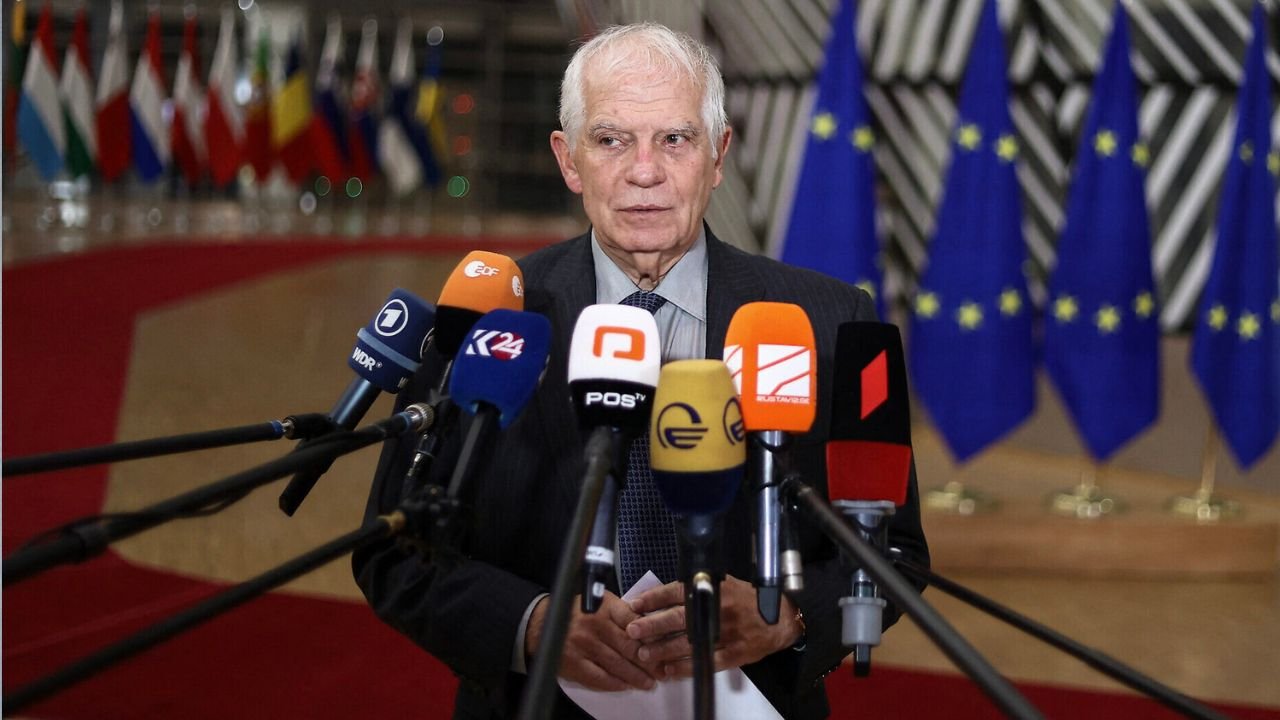
    EU foreign policy chief Josep Borrell said Monday that Israel’s military campaign in Gaza had turned the territory into the world’s biggest “open-air graveyard”.

    “Gaza was before the war the greatest open-air prison. Today it’s the greatest open-air graveyard,” Borrell said at a meeting of EU ministers in Brussels.

    “It’s a graveyard for tens of thousands of people and also a graveyard for many of the most important principles of humanitarian law.”

    Borrell on Monday also reiterated his accusation that Israel was using famine as a “weapon of war” by not allowing aid trucks into Gaza.

    “Israel is provoking famine,” he told a humanitarian conference.

    The Islamist militants also seized about 250 hostages, of whom Israel believes 130 remain in Gaza, including 33 who are presumed dead.

    Israel has carried out a relentless bombing campaign and ground offensive that Gaza’s health ministry says has killed at least 31,726 people, most of them women and children.

    The 27-nation EU has struggled to come up with a united response to the war in Gaza as some members firmly back Israel and others are more pro-Palestinian.

    EU ministers were set to discuss a proposal by Ireland and Spain to suspend a cooperation agreement with Israel, but that move was unlikely to get the support of all 27 countries.

    The bloc was however expected to agree on sanctions both against Hamas for sexual violence on October 7 and against violent Israeli settlers in the West Bank for attacking Palestinians.

    Britain and the United States have already imposed sanctions targeting a small number of “extremist” settlers.

  • TikTok and its ‘secret sauce’ caught in US-China tussle

    TikTok and its ‘secret sauce’ caught in US-China tussle

    Seoul (AFP) – As a US campaign to sever TikTok from its Chinese parent heads to the Senate, analysts say Beijing’s response to a forced sale of the app – and its ‘secret sauce’ algorithm – will be clear: Hands off.

    Under new legislation that passed the House of Representatives last week, TikTok could be banned in the United States if it does not cut all ties with Chinese tech giant ByteDance.

    But in the battle over TikTok’s future in the United States, what strikes many as a contradiction has emerged: while the company tries to convince Congress of its independence from Beijing, China has come out swinging in its defence.

    Beijing does not want a precedent to be set where a Chinese company is strong-armed into selling one of its most valuable assets, including an algorithm that is the envy of competitors, analysts say.

    “This kind of threat is like daylight robbery,” Mei Xinyu, a Beijing-based economist, told AFP. “All things considered, the Chinese government’s actions so far have been very mild.”

    “What the US government is proposing is way over the line.”

    US lawmakers and security agencies say TikTok presents a threat because China can access and use the vast troves of data the app collects for influence and espionage.

    TikTok has denied the allegations, saying it has spent around $1.5 billion on “Project Texas”, under which US user data would be stored in the United States.

    However, many lawmakers and bodies including the FBI remain unconvinced.

    Some critics have said the data itself is only part of the issue, and that the algorithm that produces personalised recommendations for TikTok users must also be disconnected from ByteDance.

    ‘The secret sauce’

    That ByteDance algorithm has helped drive TikTok’s stratospheric success since the app was launched for the international market in 2017.

    It crunches huge amounts of user data, such as their interactions on the app and their location, to provide more content tailored for them.

    Its precise details are a closely guarded secret, but it helped propel TikTok to one billion users in just four years. Facebook, by comparison, took more than eight years to reach that milestone.

    Other social media platforms also deploy tailored recommendations based on algorithms that analyse user data, but analysts say TikTok’s has been so successful that it is considered by some to be the company’s most precious asset.

    The algorithm is “valuable because TikTok is sticky. People spend more time on TikTok than they do on other social media”, James Andrew Lewis, a technology expert at the Center for Strategic and International Studies (CSIS), told AFP.

    “This is the secret sauce that makes TikTok a success.”

    The algorithm has been at the centre of discussions about any potential sale of TikTok since the administration of then US president Donald Trump sought to ban TikTok in 2020.

    That year, the Chinese government designated algorithms that provide recommendations based on user data analysis as a protected technology, meaning their export would require Beijing’s approval.

    While no specific app or firm was cited, the economist Mei said the move was “to a very large extent” because of US pressure against TikTok.

    TikTok has said that under Project Texas, its recommendation algorithm for US users is stored along with their data on Oracle servers in the United States.

    However, The Wall Street Journal reported in January that ByteDance employees in China updated the TikTok algorithm so frequently that Project Texas workers could not track all changes.

    TikTok did not respond to AFP’s questions about the Wall Street Journal report or about where its algorithm is updated.

    CEO Shou Zi Chew has said previously that TikTok will not be “manipulated by any government” and that it has never been asked by the Chinese government for US user data.

    ‘Commercial plunder’

    In Beijing, however, officials have not minced words in their opposition to the TikTok bill, saying China will take all necessary measures to protect its interests.

    “You’ve got the desire to protect the option for a relationship with the intelligence services, and you’ve got a little bit of nationalist pride because it’s so successful,” said Lewis at CSIS.

    “Some of it is just (being) annoyed with the Americans for trying to force them to sell. All of that puts Beijing right behind ByteDance.”

    Beijing wants to avoid a forced sale to protect Chinese firms, Zhang Yi, founder of the Guangzhou-based tech research firm iiMedia, told AFP.

    “Once the precedent is set, there may be countless other Chinese companies that will face a similar fate in the future.”

    Hu Xijin, a former editor of the nationalist Chinese newspaper Global Times, urged ByteDance not to give in to US pressure.

    “The essence of this matter is commercial plunder,” he wrote this month.

    “As long as ByteDance remains firm, willing to shut down TikTok rather than give up ownership, it will create reverse pressure on the passage of the bill.”

  • Israeli military tells Gazans to evacuate Al-Shifa hospital

    Israeli military tells Gazans to evacuate Al-Shifa hospital

    Palestinian Territories

    Israel’s military on Monday called on Gazans to evacuate the area in and around the territory’s largest hospital as battles raged at the complex crowded with patients and displaced people.

    “In order to maintain your security, you must immediately evacuate the area,” army spokesman Avichay Adraee said on social media platform X, instructing “all those present” to head west and then south to a “humanitarian area”.

    ha-rcb/jm/fz

    © Agence France-Presse

  • Kabul Says Eight Killed In Pakistani Air Strikes On Eastern Afghanistan

    Kabul Says Eight Killed In Pakistani Air Strikes On Eastern Afghanistan

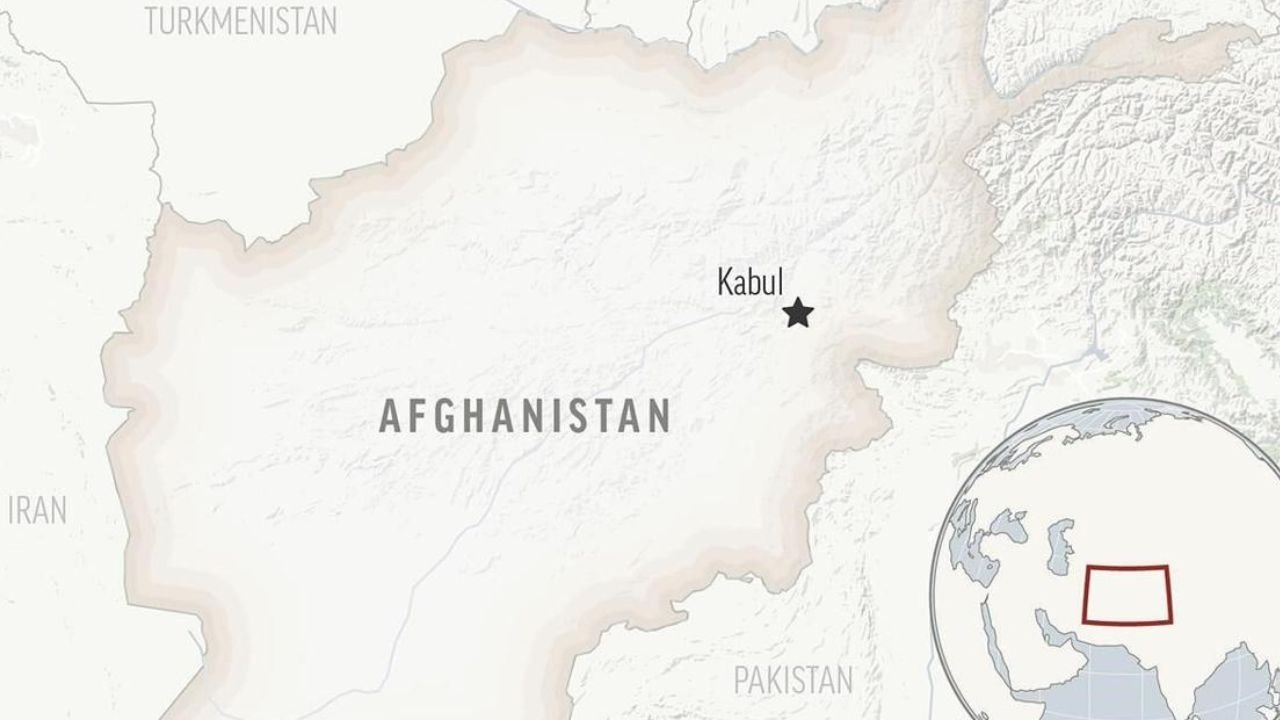
    Eight people, all women and children, were killed on Monday in “reckless” air strikes by the Pakistani military in the border regions of Afghanistan, the Taliban government’s spokesman said.

    Border tensions between Pakistan and Afghanistan have risen since the Taliban government seized power in 2021, with Islamabad claiming militant groups are carrying out regular attacks from the neighbouring country.

    At “around 3:00 am (2230 GMT Sunday), Pakistani aircraft bombarded civilian homes” in Khost and Paktika provinces near the border with Pakistan, spokesman Zabihullah Mujahid said in a statement.

    The Taliban government “strongly condemns these attacks and calls this reckless action a violation of and an attack on Afghanistan’s sovereignty”, he added.

    The strikes come after seven Pakistani troops were killed in an attack inside Pakistan territory on Saturday, for which the country’s President Asif Ali Zardari vowed retaliation.

    “Pakistan has decided that whoever will enter our borders, homes or country and commit terror, we will respond to them strongly, regardless of who it is or from which country,” he said while attending the funeral prayers of the soldiers, which included a lieutenant colonel.

    Areas along the border have long been a stronghold for militant groups such as Pakistan’s home-grown Taliban group Tehreek-e-Taliban Pakistan (TTP), which operates across the porous frontier with Afghanistan.

    Analysts say militants in the former tribal areas have become emboldened since the Taliban’s return to power, with TTP waging a growing campaign against security officials.

    The Taliban deny harbouring Pakistani militants.

    In 2022, Taliban authorities said Pakistani military helicopters carried out strikes along the Afghan side of the border killing at least 47 people.

    The TTP issued an official statement denying that Monday’s strikes targeted the group, saying their members operate from within Pakistan.

    However, a TTP source who spoke to AFP on condition of anonymity because he was not authorised to speak to media said the strikes in Paktika and Khost left at least nine people dead.

    “A house has been attacked where two women and seven children have been killed and a child has been wounded” in the Barmal district in Paktika.

    “A bombardment in the Pasa Mela area of Khost also has casualties.”