Author: afp

  • ‘Better than a real man’: Young women turn to AI boyfriends

    ‘Better than a real man’: Young women turn to AI boyfriends

    BEIJING: Twenty-five-year-old Chinese office worker Tufei says her boyfriend has everything she could ask for in a romantic partner: he’s kind, and empathetic, and sometimes they talk for hours.

    Except he isn’t real.

    Her “boyfriend” is a chatbot on an app called “Glow”, an artificial intelligence platform created by Shanghai start-up MiniMax that is part of a blossoming industry in China offering friendly – even romantic – human-robot relations.

    “He knows how to talk to women better than a real man,” said Tufei, from Xi’an in northern China, who declined to give her full name. “He comforts me when I have period pain. I confide in him about my problems at work,” she told AFP. “I feel like I’m in a romantic relationship.”

    The app is free – the company has other paid content – and Chinese trade publications have reported daily downloads of Glow’s app in the thousands in recent weeks.

    Some Chinese tech companies have run into trouble in the past for the illegal use of users’ data but, despite the risks, users say they are driven by a desire for companionship because China’s fast pace of life and urban isolation make loneliness an issue for many.

    “It’s difficult to meet the ideal boyfriend in real life,” Wang Xiuting, a 22-year-old student in Beijing, told the publication. “People have different personalities, which often generates friction,” she said. While humans may be set in their ways, artificial intelligence gradually adapts to the user’s personality — remembering what they say and adjusting its speech accordingly.

    ‘Emotional support’ 

    Wang said she has several “lovers” inspired by ancient China: long-haired immortals, princes and even wandering knights. “I ask them questions,” she said when she is faced with stress from her classes or daily life, and “they will suggest ways to solve this problem”. “It’s a lot of emotional support.”

    Her boyfriends all appear on Wantalk, another app made by Chinese internet giant Baidu. There are hundreds of characters available — from pop stars to CEOs and knights – but users can also customise their perfect lover according to age, values, identity, and hobbies.

    “Everyone experiences complicated moments, loneliness, and is not necessarily lucky enough to have a friend or family nearby who can listen to them 24 hours a day,” Lu Yu, Wantalk’s head of product management and operations, told the outlet. “Artificial intelligence can meet this need.”

    ‘You’re cute’ 

    At a cafe in the eastern city of Nantong, a girl chats with her virtual lover. “We can go on a picnic on the campus lawn,” she suggests to Xiaojiang, her AI companion on another app by Tencent called Weiban. “I’d like to meet your best friend and her boyfriend,” he replies. “You are very cute.”

    Long work hours can make it hard to see friends regularly and there is a lot of uncertainty: high youth unemployment and a struggling economy mean that many young Chinese worry about the future. That potentially makes an AI partner the perfect virtual shoulder to cry on. “If I can create a virtual character that… meets my needs exactly, I’m not going to choose a real person,” Wang said.

    Some apps allow users to have live conversations with their virtual companions — reminiscent of the Oscar-winning 2013 US film “Her”, starring Joaquin Phoenix and Scarlett Johansson, about a heartbroken man who falls in love with an AI voice. The technology still has some way to go. A two- to three-second gap between questions and answers makes you “clearly realise that it’s just a robot”, user Zeng Zhenzhen, a 22-year-old student, told AFP.

    However, the answers are “very realistic”, she said. AI might be booming but it is so far a lightly regulated industry, particularly when it comes to user privacy. Beijing has said it is working on a law to strengthen consumer protections around the new technology.

    Baidu did not respond to AFP’s questions about how it ensures personal data is not used illegally or by third parties. Still, Glow user Tufei has big dreams. “I want a robot boyfriend, who operates through artificial intelligence,” she said. “I would be able to feel his body heat, with which he would warm me.”
  • Decades-old Mass Grave Unearthed In Afghanistan

    Decades-old Mass Grave Unearthed In Afghanistan

    A mass grave containing around 100 bodies believed to date from Afghanistan’s Soviet-backed government era has been discovered in the country’s eastern Khost province, local officials said on Monday.

    The grave was found Saturday during construction of a small dam in the Sarbani area of central Khost, mayor Bismillah Bilal said.

    “According to the initial information, these people were buried here after being killed in 1358” in the Afghan calendar, corresponding to April 1979 to March 1980, he told AFP.

    “At least 100 bodies were discovered” in the grave, Bilal added, noting that some remains bore women’s clothing and that all appeared to be civilians.

    Local residents said the remains belonged to victims of the violence that followed the 1978 Soviet-backed communist coup in Afghanistan.

    “In 1358, these people were brought here in a merciless, barbaric way by the cruel communist authorities without trial,” said Salam Sharifi, whose father disappeared under the communist government, his remains never found.

    “They were martyred and we are their descendants. This is a cruelty that history will never forget,” Sharifi told AFP.

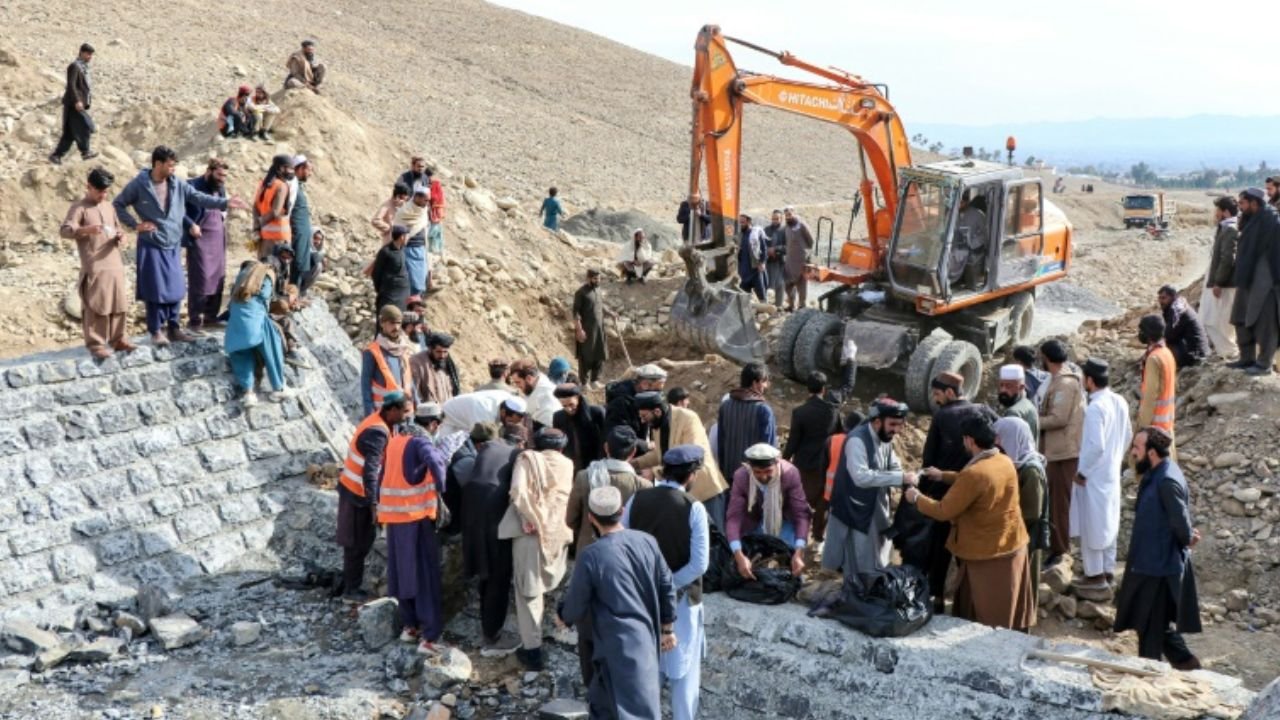
    A committee has been appointed to relocate the remains, with residents helping municipality workers to remove the bodies from the site, piling the dry bones into bags that lined the excavated grave on Monday.

    “No one knows who these martyrs are,” said resident Mandair Mangal. “They were all buried in the earth and we are taking out the bones and sorting them.”

    After decades of conflict — including the Soviet invasion from 1979, the following civil war and the US-led occupation — many mass graves have been found across Afghanistan.

    In 2009, another mass grave of victims of the Soviet-backed government era was discovered, containing at least 20 bodies.

    More recently, in September 2022, a mass grave containing the remains of 12 people was found in Spin Boldak, a site of fierce fighting between former Afghan government forces and Taliban fighters during their two-decade insurgency before they seized power in 2021.

  • Uncertainty ahead for Pakistan after indecisive election

    Uncertainty ahead for Pakistan after indecisive election

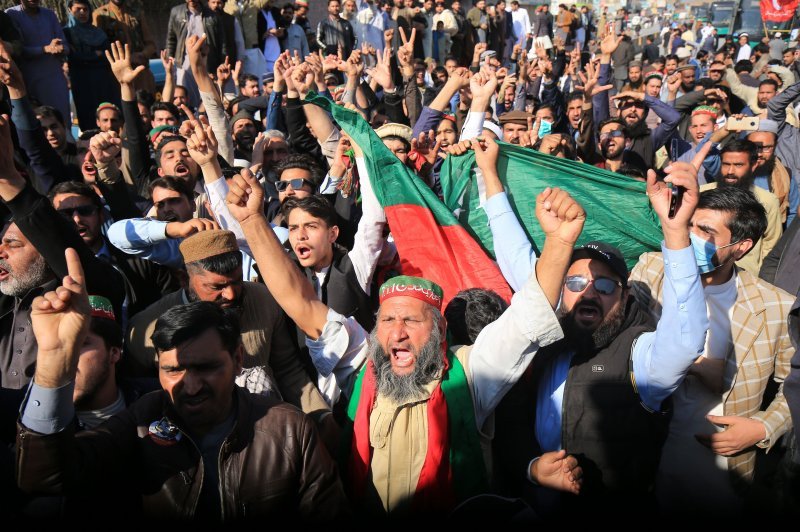
    Pakistan has weeks of political uncertainty ahead following its indecisive election, analysts said Monday, with dozens of constituency results facing challenges in court and rival parties negotiating possible coalitions.

    Independent candidates loyal to jailed former prime minister Imran Khan took most of the seats in Thursday’s polls, scuppering the chances of the army-backed Pakistan Muslim League-Nawaz (PML-N) from securing a ruling majority.

    Khan’s Pakistan Tehreek-e-Insaf (PTI) defied a months-long crackdown that crippled campaigning and forced candidates to run as independents to emerge as the winners of the vote.

    There were widespread allegations of vote-rigging and result manipulation after authorities switched off the nation’s mobile phone network on election day, ostensibly on security grounds, and the count dragged on for more than 24 hours.

    “Three potential challenges are linked to the legitimacy of the elections through prolonged legal proceedings, protests and potential for violence,” said Pakistan-based political analyst Amber Rahim Shamsi.

    Despite independents winning 101 seats in the national assembly, a government can only be formed by a recognised party, or coalition of parties, so they would have to join another group to become an effective bloc.

    Desperately needed reforms

    A coalition between the PML-N and the Pakistan People’s Party — who formed the last government after ousting Khan with a vote of no confidence in April 2022 — still seems a most likely outcome.

    “In the short-term, any coalition birthed through a highly controversial election in a highly charged political environment will find it challenging to enact unpopular reforms that Pakistan desperately needs,” Shamsi told AFP.

    At least half a dozen minor parties won just one or two seats in the election, and would welcome the addition of the independents to their ranks.

    That would give them access to an additional 70 seats reserved for women and religious minorities and allocated according to election results — although it has never been done on this scale before and faces legal challenges.

    “The courts have a very delicate role at this moment,” said legal expert Osama Malik.

    “They will (also) need to decide whether to order recounts in various constituencies. However, recounts in multiple constituencies could also delay the calling of parliament so the courts have to be wary of that as well.”

    PTI leaders insist they have been given a “people’s mandate” to form the next government.

    “The people have decided in favour of Imran Khan,” party chairman Gohar Ali Khan said at the weekend, before urging party supporters to picket election offices where he said rigging had taken place.

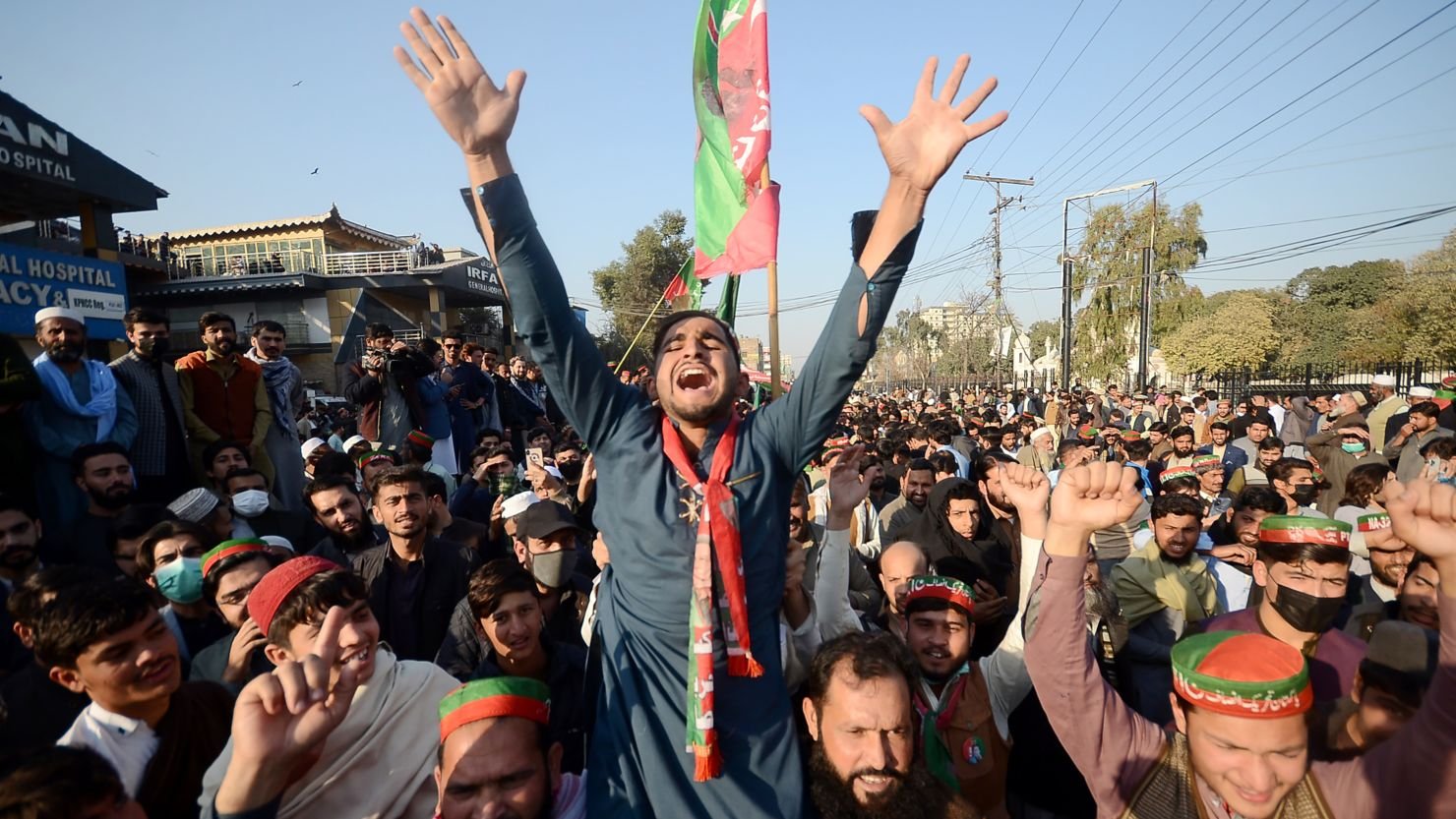
    The potential for violent protest is ever present in Pakistan and police fired tear gas to disperse PTI supporters on Sunday after vowing to crack down hard on illegal gatherings.

    Hundreds of party leaders and supporters were picked up last year when Khan was hit with more than 150 criminal cases he says were trumped up by the military-led establishment to stop him from contesting the election.

    Earlier this month he was sentenced to lengthy jail terms after being found guilty of treason, graft and having an un-Islamic marriage.

    Defections common

    But disgrace rarely lasts long in Pakistan politics — the PML-N’s three-time premier Nawaz Sharif was himself sentenced to lengthy jail terms and exile abroad, only to have the convictions quashed when his party’s fortunes improved.

    Dozens of constituencies will have to have by-elections even without the results being challenged.

    Several candidates won in multiple constituencies — a quirk allowed under Pakistan law — so they will have to choose one and have fresh elections in the others.

    And party defections are also common, with at least two winning independents who pledged loyalty to Khan before the election already announcing they were joining the PML-N.

    More are expected to follow.

    Whatever the outcome, the next government faces myriad challenges.

    Deeply in debt, the economy has for decades been propped up by successive bailouts from the International Monetary Fund and loans from wealthy gulf Arab nations that use Pakistanis as cheap labour.

    Inflation is galloping at nearly 30 percent, the rupee has been in freefall for three years — losing nearly 50 percent of its value since 2021 — and a balance of payments deficit has frozen imports, severely hampering industrial growth.

    “No government will have the luxury of time and political security after these elections,” said Shamsi.

    “There are also fears that this political insecurity will continue until the next elections, which could be earlier than five years.”

  • US President Joe Biden makes TikTok debut ahead of elections 2024

    US President Joe Biden makes TikTok debut ahead of elections 2024

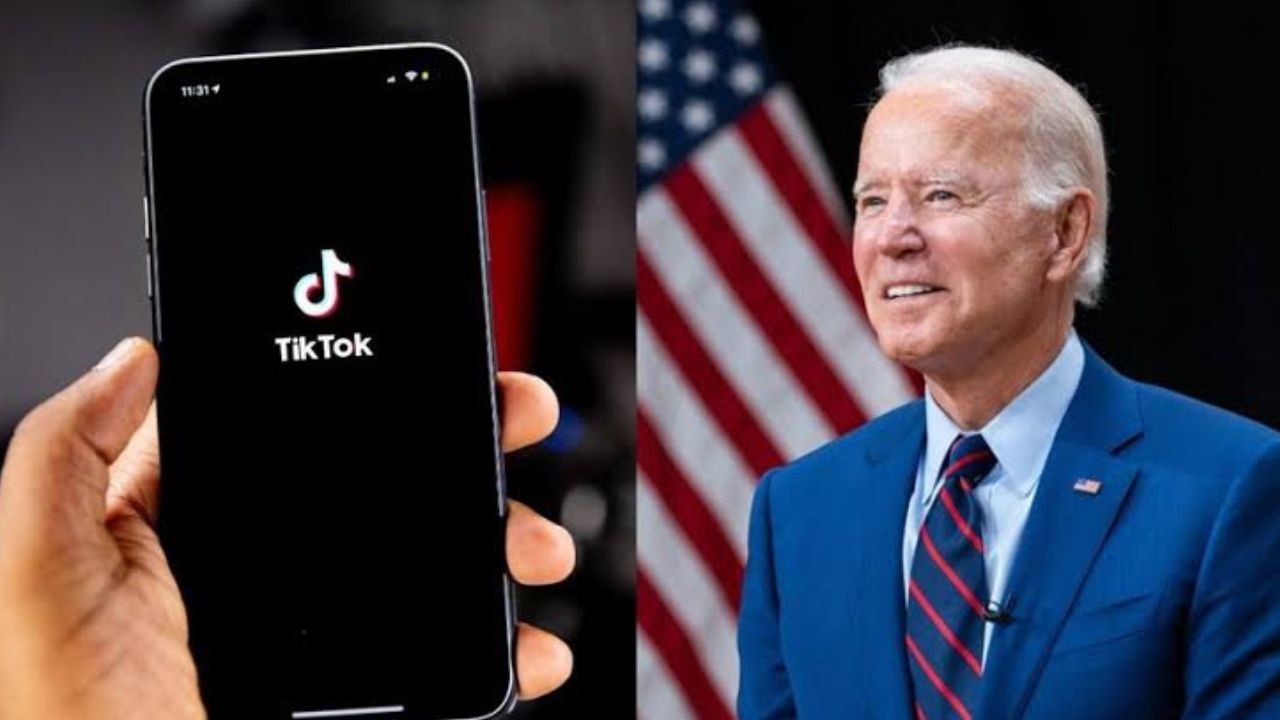
    US President Joe Biden belatedly joined TikTok on Sunday, marking his debut on the social media platform with a 26-second video.

    The move comes after fierce US government criticism of the video-sharing platform in recent years, most notably from Republicans but also from the Biden administration.

    TikTok is owned by Chinese firm ByteDance and has been accused by a wide swath of US politicians of being a propaganda tool used by Beijing, something the company furiously denies.

    In Sunday’s video posted on the @bidenhq campaign account, the 81-year-old Democratic president touches light-heartedly on topics ranging from politics to the National Football League championship game. He was also asked about his preference between the Super Bowl or its famed half-time show, this year headlined by singer Usher, he picks watching the actual game itself.

    Queried if there’s a secret plot to rig the game so that pop star Taylor Swift — who is dating Kansas City Chiefs star Travis Kelce — could use her fame to endorse Biden, the president jokingly leans into the unfounded right-wing conspiracy theory.

    “I’d get in trouble if I told you,” he says.

    Citing security concerns, a slew of individual states and the federal government have banned the app on official government devices.

    In Montana, a state government move to completely ban the app was recently blocked by a judge.

    While the platform remains scrutinized by Washington, further federal action to ban or curtail the use of the app appears to no longer be in motion.

    “It seems now like the idea of a ban was being pushed more so to make political points and less as a serious effort to legislate,” David Greene, a civil liberties attorney, recently told British newspaper The Guardian. 

    As the election approaches, the platform provides a great medium to young voters.

    Sunday’s video ends with the president being asked who he prefers: himself or Republican frontrunner Donald Trump.

    “Are you kidding?” he laughs. “Biden.”

  • Six-year-old Gaza girl found dead, family says, blaming Israel

    Six-year-old Gaza girl found dead, family says, blaming Israel

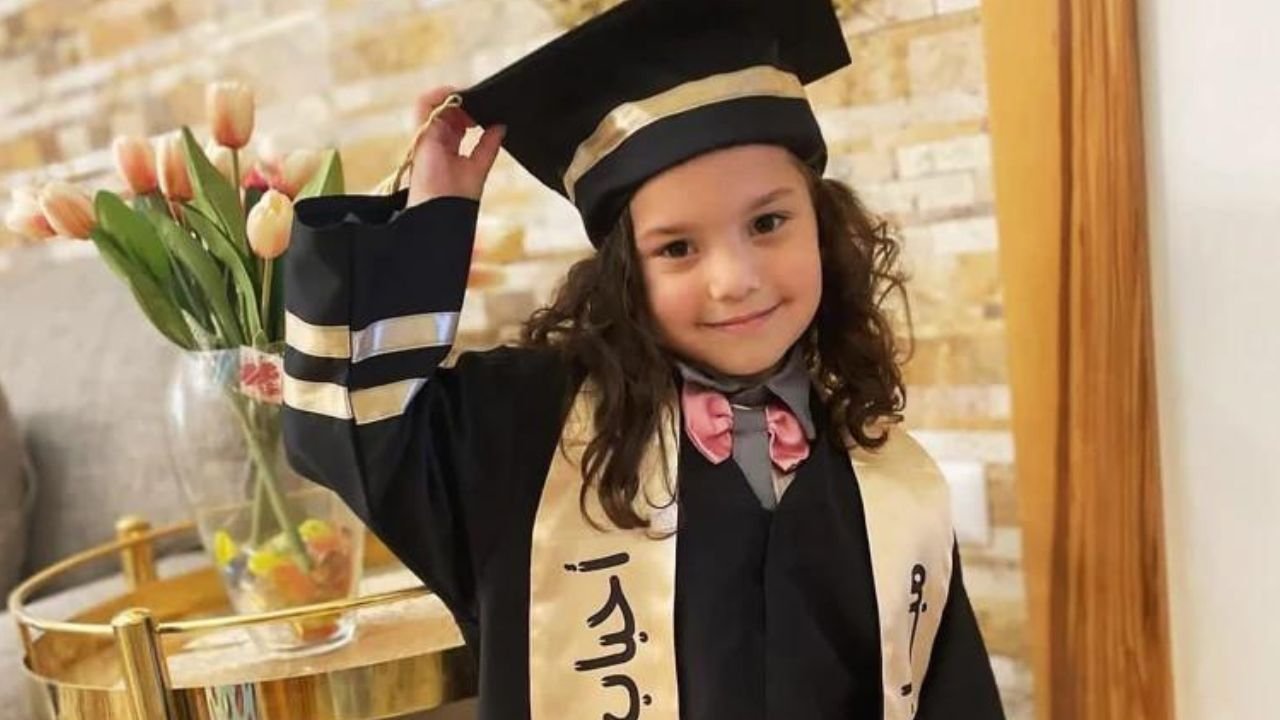
    Gaza Strip (Palestinian Territories) (AFP) – A six-year-old Palestinian girl who went missing after the family’s car came under fire in war-ravaged Gaza was found dead Saturday, the health ministry and her relatives said, accusing Israel of killing her.

    The last time Hind Rajab had been seen was about two weeks ago when she was surrounded by dead relatives after becoming trapped in the vehicle as they tried to flee Gaza City as Israeli forces advanced.

    “Hind and everyone else in the car is martyred,” the girl’s grandfather, Baha Hamada told AFP.

    A number of family members made the grim discovery when they went to Gaza City’s Tel al-Hawa area looking for the car near a petrol station where it had last been spotted, he said.

    “They were able to reach the area because Israeli forces withdrew early at dawn today,” Hamada added.

    The health ministry in the Gaza Strip confirmed Hind’s death.

    “She was killed by (Israeli) occupation forces with all those who were with her in the car outside the petrol station in Tel al-Hawa,” the ministry said in a statement.

    Earlier this week, family members had said the group found their way in the path of Israeli tanks and were fired on as they tried to flee.

    Contacted by AFP, the Israeli military did not comment on the incident.

  • Pakistanis say vote matters despite alleged election rigging

    Pakistanis say vote matters despite alleged election rigging

    Islamabad, Pakistan

    Pakistanis turning out early for Thursday’s election said they believe their votes count, despite allegations of rigging in the nation’s most fractious poll in recent history.

    “I believe in democracy and I think my vote matters,” said 22-year-old psychology student Haleema Shafiq, among the first to vote in the capital Islamabad.

    “I cast my vote as it’s my duty,” she told AFP inside a polling station. “I wish for a deserving party to come to power.”

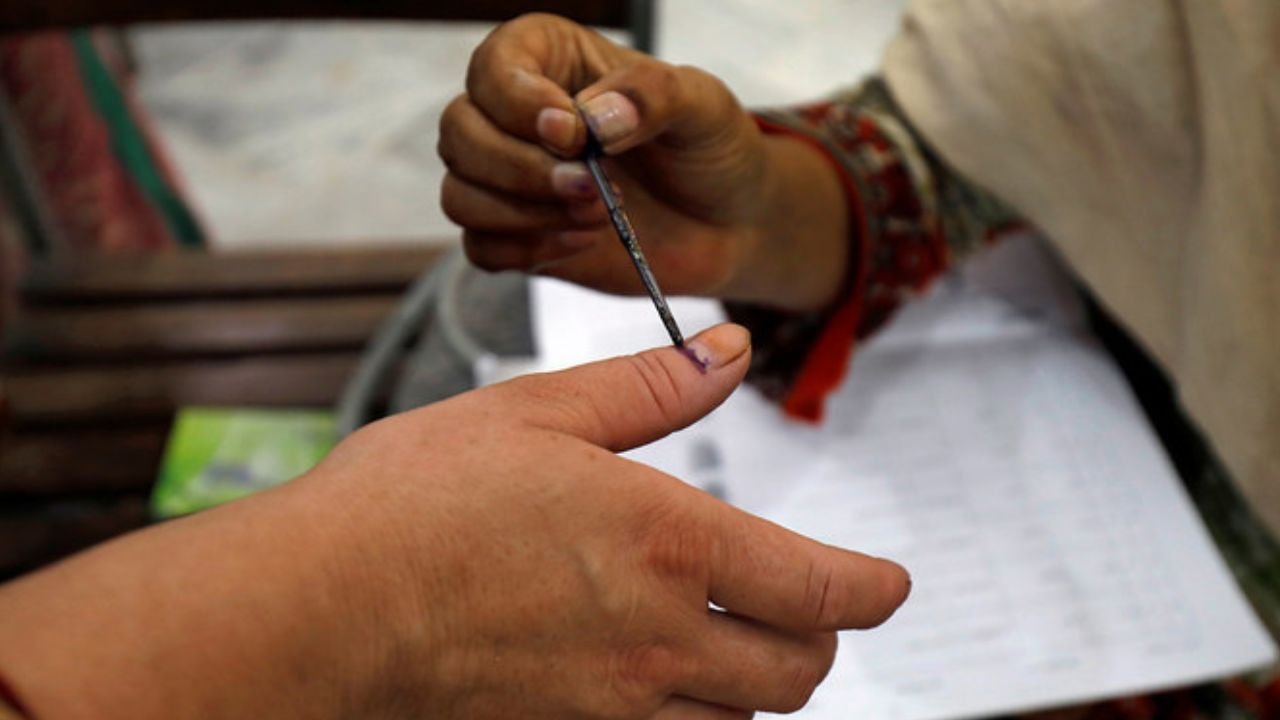
    Polls opened at 8:00 am (0300 GMT) for 128 million eligible voters, with the first participants trickling into the Noorpur Shahan girl’s school and inking their fingers to stamp papers in gender-segregated booths.

    Early voters were outnumbered by around a dozen armed security personnel staffing the station, a day after twin blasts claimed by the Islamic State killed 28 outside candidate offices in the nation’s southwest.

    “I want a government that can make Pakistan safe for girls,” said Shafiq.

    Analysts predict a low turnout after a muted campaign overshadowed by the jailing of ex-prime minister Imran Khan and the hobbling of his Pakistan Tehreek-e-Insaf (PTI) party by the military establishment.

    “Is this the way an election should be conducted?” asked 40-year-old Imran Khan, a driver who shares his name with the jailed opposition leader.

    “Everyone has the right to vote according to their own will,” he said. “Today is not the day to stay at home. Those who choose to sit at home today will do injustice to themselves.”

    Monitors say the treatment of PTI amounts to “pre-poll rigging”, and the party has voiced fears that voters would face interference at polling stations.

    Ballots were posted into white and green ballot boxes, Pakistan’s national colours, and crowds steadily grew in the first hour after polls opened.

    “I arrived 20 minutes early to cast my vote because I believe my vote matters,” said 39-year-old Syed Tassawar. “My only fear is whether my vote will be counted for the same party I cast it for.”

    “At the same time, for the poor it does not matter who is ruling — we need a government that can control inflation, that’s the only thing that matters to people like us,” added the construction worker.

    Whoever wins Thursday’s election will inherit a divided country with an economy in tatters — with galloping inflation, a rupee in freefall and a balance of payments crisis.

    “We have pretty high expectations from the new government to improve our conditions, said 21-year-old first-time voter Zainab Asghar.

    “Every single vote matters,” she said.

    zz-jts/ecl/tym

    © Agence France-Presse

  • ‘Star Wars’ actor sues Disney with funding from Elon Musk’s X

    ‘Star Wars’ actor sues Disney with funding from Elon Musk’s X

     A “Star Wars” actor backed by Elon Musk’s X is suing Disney for firing her over inflammatory social media posts about the Holocaust, the pandemic and trans rights.

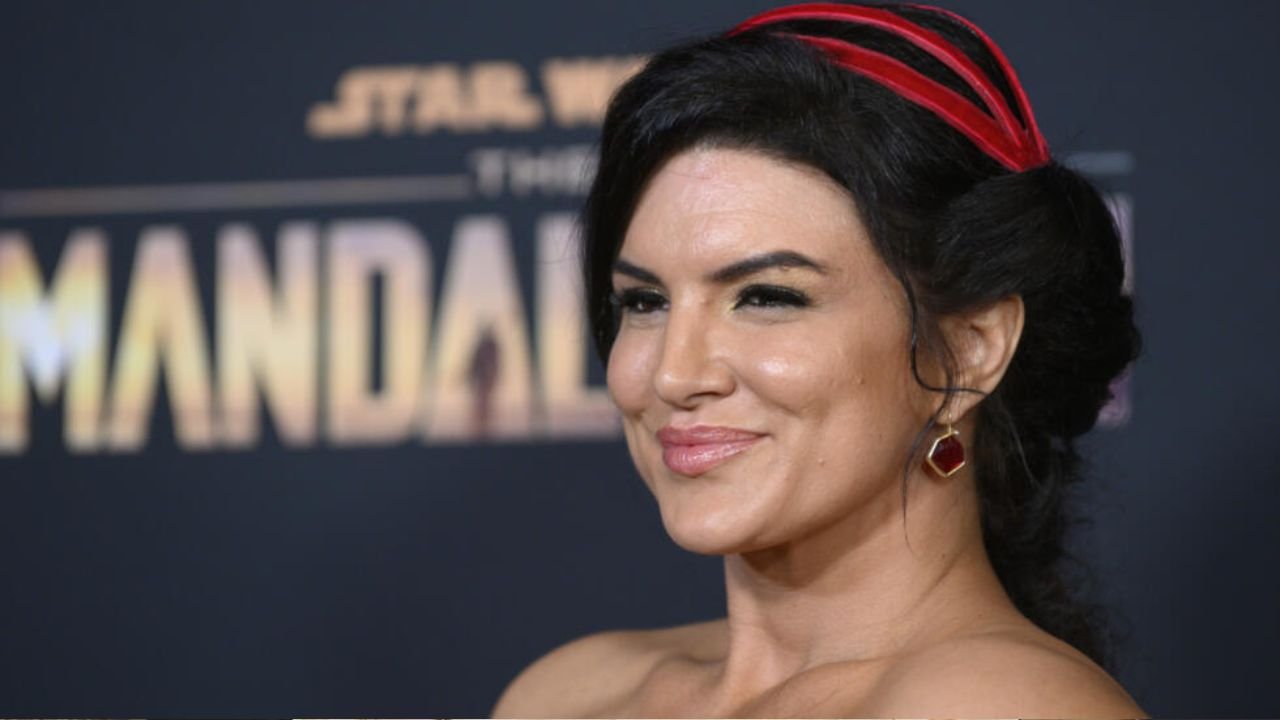
    Gina Carano, who had a major role in the wildly popular Disney+ series “The Mandalorian” until 2021, filed a lawsuit in California on Tuesday claiming wrongful termination.

    The suit says Carano was expressing personal political views but was hounded by an “extreme progressive” online mob, and alleges that Disney’s actions and comments had damaged her reputation and ability to find work in the future. 

    The lawsuit is being funded by X, a spokesman for the company confirmed to AFP.

    Carano, an outspoken former martial arts fighter-turned-actor, was fired by Disney for what the company at the time dubbed “abhorrent and unacceptable” social media posts “denigrating people based on their cultural and religious identities.”

    One particularly controversial post shared by Carano appeared to liken being a conservative in the United States to being Jewish in Nazi Germany.

    Another post appeared to mock a person for wearing multiple masks during the Covid-19 pandemic in California.

    And Carano had earlier drawn the wrath of members of the trans community for adding “boop/bop/beep” as preferred pronouns on her Twitter profile.

    In a statement, Carano said she had “never even used aggressive language” but had shared “thought provoking” posts with “respect & the occasional comedy.”

    Both her statement and the lawsuit allege that Carano was afforded less right to exercise her freedom of speech than some of her male colleagues.

    Carano said she had been contacted by an X lawyer offering to take on her case after she publicly replied to an open offer from Musk to help anyone fired after using X to exercise free speech.

    “As a sign of X Corp’s commitment to free speech, we’re proud to provide financial support for Gina Carano’s lawsuit,” said an official post by X on Tuesday.

    The lawsuit does not specify the amount of damages Carano is seeking, but claims she lost a role on planned “Mandalorian” spin-off “Rangers of the New Republic” that would have been worth “$150,000 to $250,000 per episode.”

  • Azerbaijan’s president contesting for fifth term in re-election

    Azerbaijan’s president contesting for fifth term in re-election

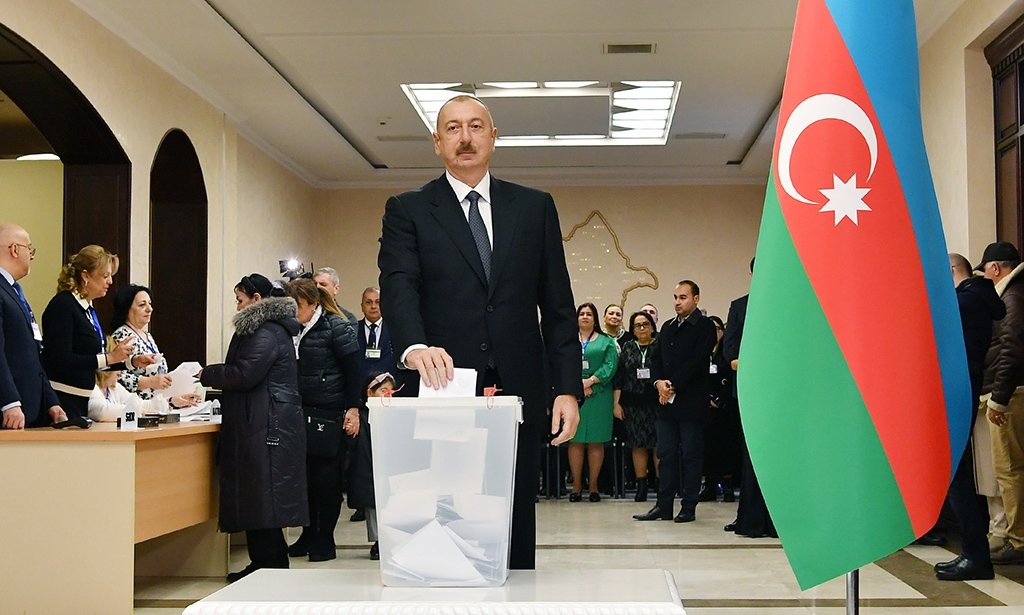
    Azerbaijanis were voting in snap presidential elections on Wednesday, with a fifth term for Ilham Aliyev seen as a foregone conclusion after Baku’s historic victory over Armenian separatists.

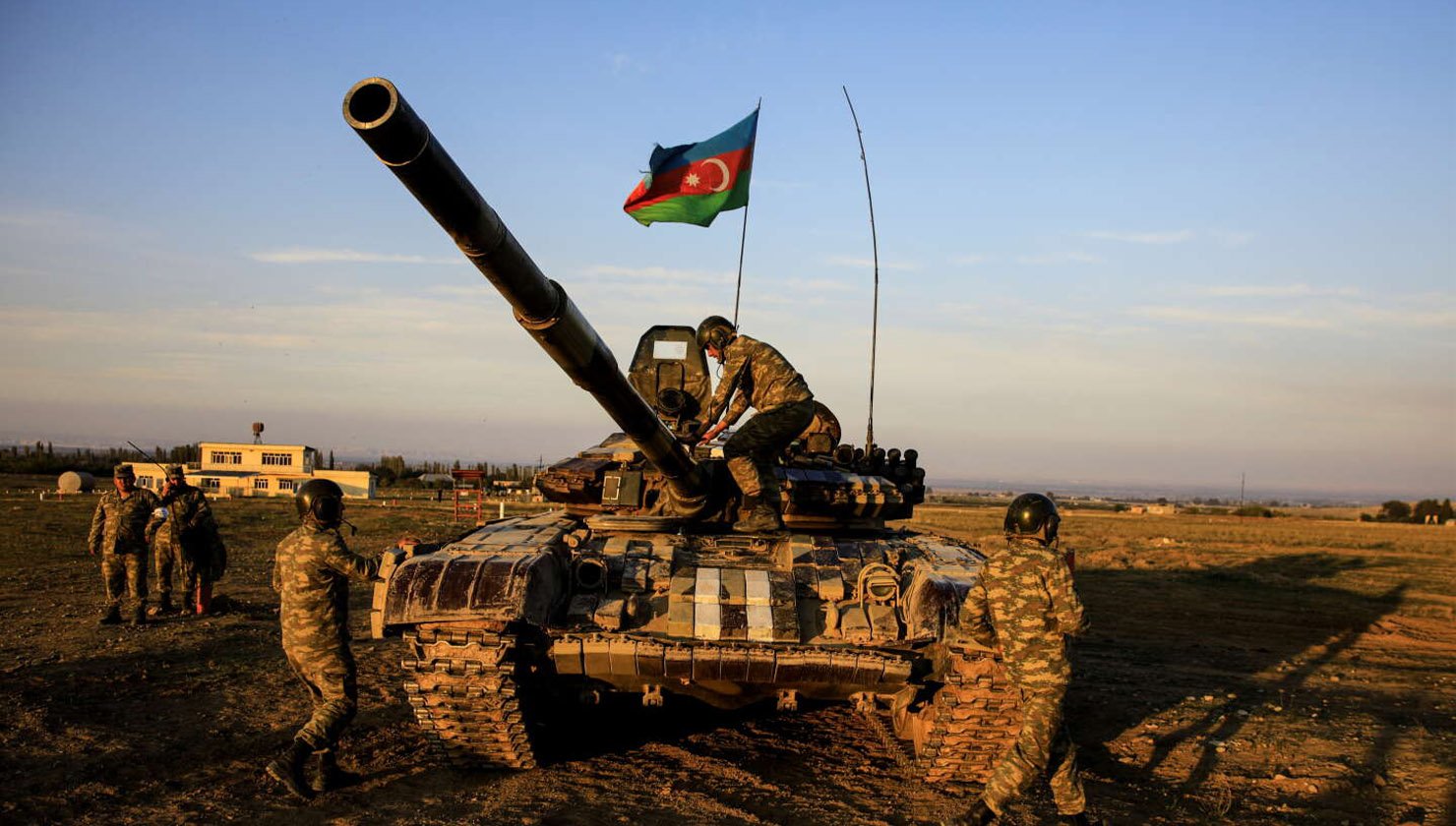
    A crackdown on independent media and the absence of any real opposition have boosted the certainty of an easy win for Aliyev, whose troops recaptured the Nagorno-Karabakh enclave in September.

    The oil-rich nation’s main opposition parties are boycotting the vote, which one opposition leader, Ali Kerimli of the National Front party, called an “imitation of democracy.”

    “There are no conditions in the country for the conduct of free and fair elections,” he said.

    The six other candidates who are running are little-known and have been busy praising Aliyev as a great statesman and a victorious commander-in-chief since he announced the elections in December, a year ahead of schedule.

    The country’s Central Election Commission said turnout stood at 38.6 percent by noon, four hours after polls opened.

    In a symbolic gesture, the president and first lady Mehriban Aliyeva went to Karabakh to cast their ballots in the region’s main city of Khankendi.

    For the first time in Azerbaijan’s post-Soviet history, 26 polling stations opened in Karabakh, which has been largely deserted after its entire ethnic-Armenian population — more than 100,000 people — fled to Armenia after Baku’s takeover.

    At a polling station in central Baku, pensioner Shalalya Abbasova, 68, said she cast her ballot for Aliyev because he “did what seemed impossible — accomplished our dream, liberated the occupied territories.”

    ‘Escalating crackdown’

    But another Baku resident, 32-year-old IT specialist Ismet Bagirov, said he decided not to vote as “there is nobody to vote for, there are no alternative candidates”.

    “I know many will vote for Aliyev today because he liberated Karabakh. I thank him for this, but there are fundamental issues in the country that remain unresolved.”

    Last month, Aliyev called the Karabakh victory “an epochal event unparallelled in Azerbaijan’s history”.

    “The elections will mark the beginning of a new era” for the country, he said, adding that the country would hold presidential elections on all its territory for the first time.

    “The outcome of Wednesday’s elections in Azerbaijan is known beforehand, Aliyev is set to win,” said independent analyst Ghia Nodia of the Caucasus Center for Strategic and International Studies.

    “There is no suspense whatsoever in these elections without a slightest sign of competitiveness.”

    Supporters have praised Aliyev for turning a country once thought of as a Soviet backwater into a flourishing energy supplier to Europe.

    But critics say he has crushed opposition groups and suffocated independent media.

    “All fundamental rights are being violated in the country, opposition parties can’t function normally, freedom of assembly is restricted, media are under government pressure, and political dissent is being suppressed,” said Kerimli of the National Front.

    In recent months, Azerbaijani authorities have intensified pressure on independent media outlets, arresting several critical journalists who have exposed graft at high levels.

    “The escalating crackdown by Azerbaijani authorities ahead of the elections is not just an attack on individual rights, it’s a widespread, coordinated assault on civil society and the rule of law,” Amnesty International said on Tuesday.

    Dynastic rule

    Aliyev, 62, was first elected president in 2003 after the death of his father Heydar Aliyev, a former KGB officer who had ruled Azerbaijan since 1993.

    He was re-elected in 2008, 2013 and in 2018, with 86 percent of the votes.

    All the elections were denounced by opposition parties as rigged.

    In 2009, Aliyev amended the country’s constitution so he could run for an unlimited number of presidential terms, a move criticised by rights advocates who say he could become president for life.

    In 2016, Azerbaijan adopted controversial constitutional amendments that extended the president’s term in office to seven years from five.

    Cementing the decades-long dynastic grip on power, the president has appointed his wife Mehriban Aliyeva as first vice president.

    Around six million voters are registered for the election monitored by observers from the Organisation for Security and Cooperation in Europe (OSCE).

  • Educated Pakistani women barred from voting by their husbands

    Educated Pakistani women barred from voting by their husbands

    Perched on her traditional charpai bed, Naeem Kausir says she would like to vote in Pakistan’s upcoming election — if only the men in her family would let her.

    Like all the women in her town, the 60-year-old former headmistress and her seven daughters — six already university-educated — are forbidden from voting by their male elders.

    “Whether by her husband, father, son or brother, a woman is forced. She lacks the autonomy to make decisions independently,” said Kausir, covered in a veil in the courtyard of her home.

    “These men lack the courage to grant women their rights,” the widow told AFP.

    Although voting is a constitutional right for all adults in Pakistan, some rural areas in the socially conservative country are still ruled by a patriarchal system of male village elders who wield significant influence in their communities.

    In the village of Dhurnal in Punjab, spread across crop fields and home to several thousand people, men profess myriad reasons for the ban of more than 50 years.

    “Several years ago, during a period of low literacy rates, a council chairman decreed that if men went out to vote, and women followed suit, who would manage the household and childcare responsibilities?” said Malik Muhammad, a member of the village council.

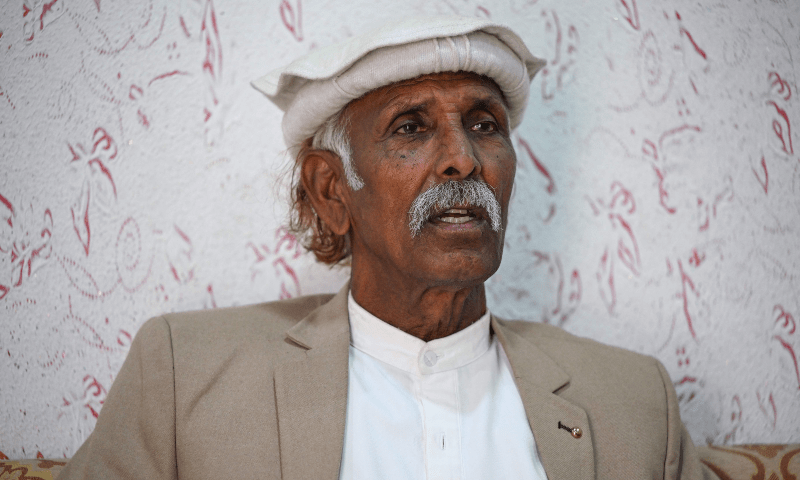
    In this photograph taken on January 29, 2024, Malik Muhammad, a member of the village council, speaks during an interview with AFP in Dhurnal of Punjab. — AFP

    In this photograph taken on January 29, 2024, Malik Muhammad, a member of the village council, speaks during an interview with AFP in Dhurnal of Punjab. — AFP

    “This disruption, just for one vote, was deemed unnecessary,” he concluded.

    Muhammad Aslam, a shopkeeper, claims it is to protect women from “local hostilities” about politics, including a distant occasion that few seem to remember in the village when an argument broke out at a polling station.

    Others told AFP it was simply down to “tradition”.

    The Election Commission of Pakistan (ECP) has stressed that it has the authority to declare the process null and void in any constituency where women are barred from participating.

    In reality, progress has been slow outside of cities and in areas that operate under tribal norms, with millions of women still missing from the electoral rolls.

    The elders in Dhurnal rely on neighbouring villages to fill a government-imposed quota which maintains that 10 percent of votes cast in every constituency must be by women.

    Those who are allowed to vote are often pressured to pick a candidate of a male relative’s choice.

    In the mountainous region of Kohistan in Khyber Pakhtunkhwa province home to almost 800,000 people, religious clerics last month decreed it un-Islamic for women to take part in electoral campaigns.

    Fatima Butt, a legal expert and a women’s rights activist, said women are allowed to vote in Islam, but that religion is often exploited or misunderstood in Pakistan.

    “Regardless of their level of education or financial stability, women in Pakistan can only make decisions with the ‘support’ of the men around them,” she said.

    Pakistan famously elected the world’s first Muslim woman leader in 1988 — Benazir Bhutto, who introduced policies that boosted education and access to money for women, and fought against religious extremism after military dictator Zia ul-Haq had introduced a new era of Islamisation that rolled back women’s rights.

    However, more than 30 years later, only 355 women are competing for national assembly seats in Thursday’s election, compared to 6,094 men, the election commission has said.

    Pakistan reserves 60 of the 342 National Assembly seats for women and 10 for religious minorities in the Muslim-majority country, but political parties rarely allow women to contest outside of this quota.

    Those who do stand often do so only with the backing of male relatives who are already established in local politics.

    “I have never seen any independent candidates contesting elections on their own,” Zara Butt added.

    Forty-year-old Robina Kausir, a healthcare worker, said a growing number of women in Dhurnal want to exercise their right to vote but they fear backlash from the community if they do — particularly the looming threat of divorce, a matter of great shame in Pakistani culture.

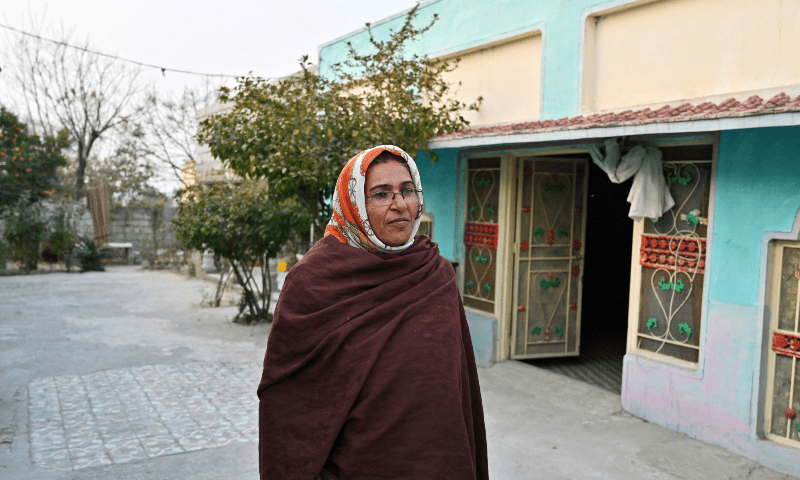
    In this photograph taken on Jan 29, 2024, Robina Kausir, a healthcare worker, looks on during an interview with AFP in Dhurnal of Punjab. — AFP
    In this photograph taken on Jan 29, 2024, Robina Kausir, a healthcare worker, looks on during an interview with AFP in Dhurnal of Punjab. — AFP

    She credits part of the shift to access to information as a result of the rising use of smartphones and social media.

    “These men instil fear in their women — many threaten their wives,” she told AFP.

    Robina, backed by her husband, is one of the few prepared to take the risk.

    When cricketing legend Imran Khan swept to power in the 2018 election, Robina arranged for a minibus to take women to the local polling station.

    Only a handful joined her, but she still marked it as a success and will do the same on Thursday’s election.

    “I was abused but I do not care, I will keep fighting for everyone’s right to vote,” Robina said.

  • Swifties swoon as Taylor Swift wins record fourth best album Grammy, beating Frank Sinatra

    Swifties swoon as Taylor Swift wins record fourth best album Grammy, beating Frank Sinatra

    Taylor Swift made Grammys history Sunday by winning her fourth Album of the Year prize, the most of any artist – the crowning moment of a night of electric performances and breakthrough wins.

    In taking home the honor at the 66th annual Grammys in Los Angeles, Swift surpassed the likes of Frank Sinatra, Paul Simon and Stevie Wonder, industry greats she previously had been tied with.

    It’s a cherry on top for the 34-year-old, who is already one of music’s blockbuster stars.

    “For me, the award is the work,” Swift said, who earlier in the night announced she would drop a new album on April 19. “I love it so much.”

    “It makes me unbelievably blown away that it makes some people happy who voted for this award too.”

    Swift however lost two other top prizes she was up for.