Author: afp

  • Fake news, online hate swell anti-Rohingya sentiment in Indonesia

    Fake news, online hate swell anti-Rohingya sentiment in Indonesia

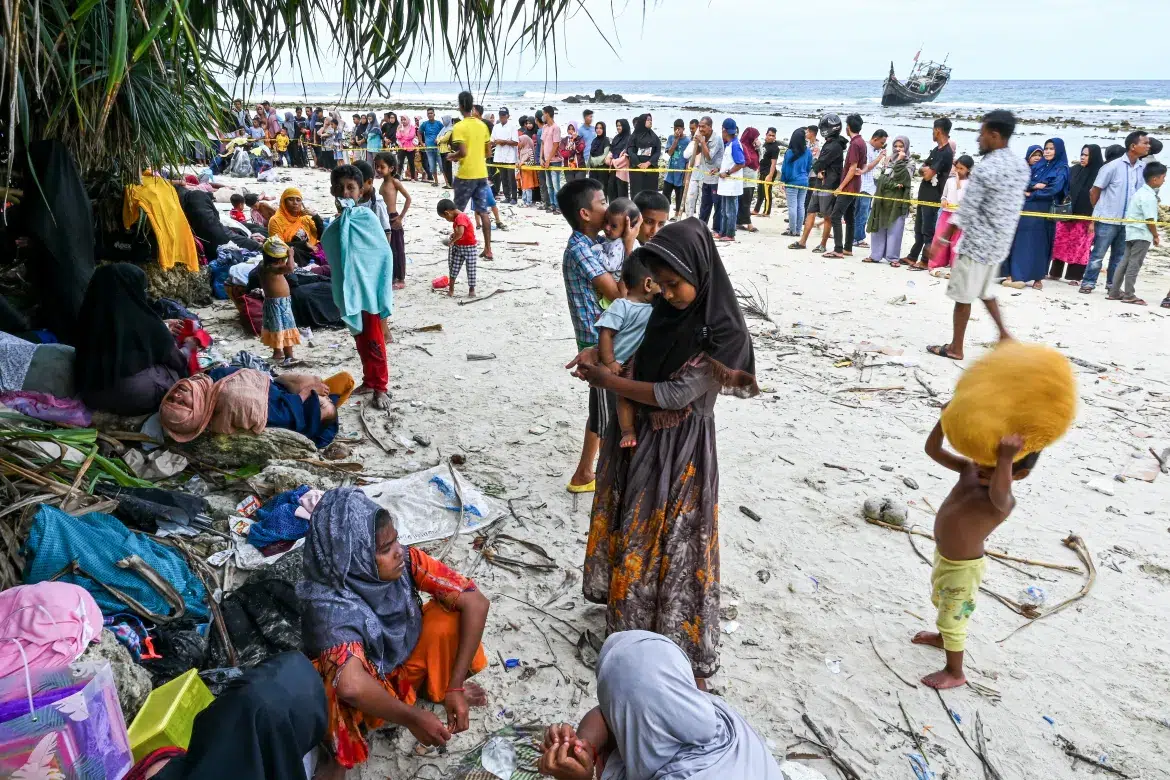
    Arriving on a rickety boat in western Indonesia from squalid Bangladesh camps after weeks at sea late last year, hundreds of Rohingya refugees came to shore only to be turned around and pushed back.

    The persecuted Myanmar minority were previously welcomed in the ultra-conservative Aceh province, with many locals sympathetic because of their own long history of war. But a wave of more than 1,500 refugees in recent months has been treated differently.

    A spate of online misinformation in the world’s most populous Muslim-majority nation has stoked what experts say is rising anti-Rohingya sentiment culminating in pushback, hate speech and attacks.

    In December, hundreds of university students entered a government function hall in Banda Aceh city hosting 137 Rohingya, chanting, kicking refugees’ belongings and demanding they be deported. The refugees were relocated.
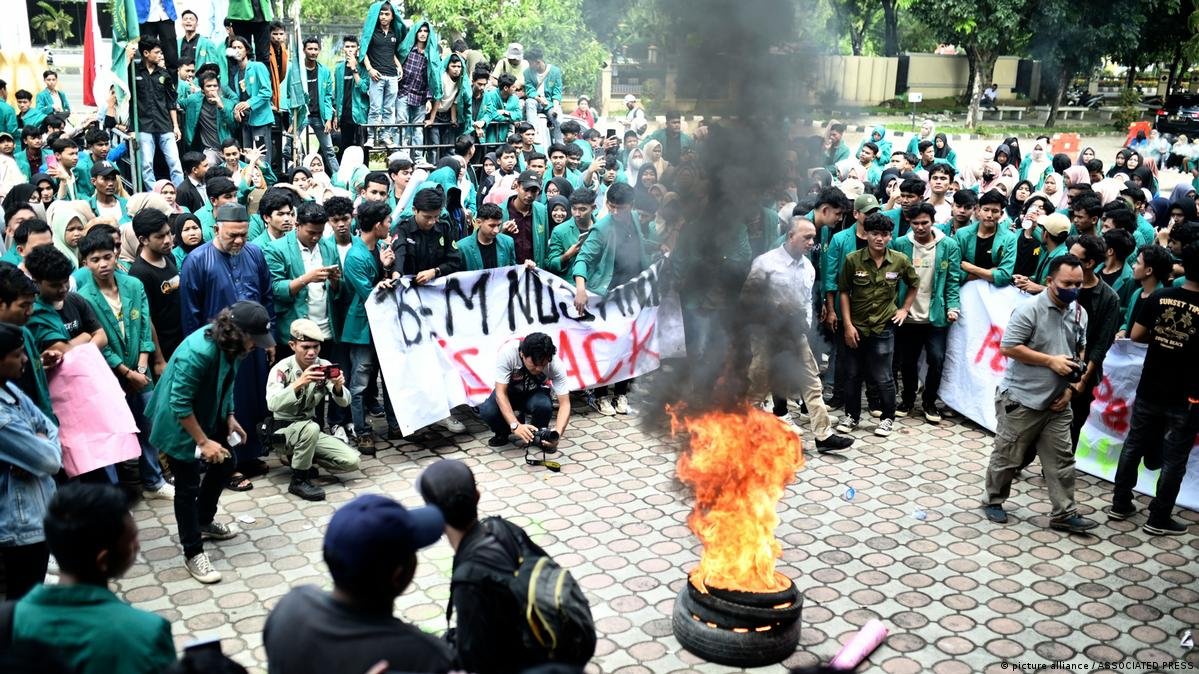
    “The attack is not an isolated act but the result of a coordinated online campaign of misinformation, disinformation and hate speech,” the United Nations Refugee Agency (UNHCR) said.

    On social media, anti-Rohingya videos have been spreading since late last year, racking up more than 90 million views on TikTok alone in November, according to Hokky Situngkir, TikTok analyst at Bandung Fe Institute.

    It began after some local media outlets reported the Rohingya’s arrival with sensational headlines, said Situngkir.

    The reports have framed the mostly Muslim Rohingya as criminals with bad attitudes and Indonesian community leaders have reinforced this narrative.

    Some TikTok users have reshared the sensational articles and videos, which would help generate more views and money.

    “Sometimes when the sensation is too big, it turns out to be misinformation,” Situngkir told AFP.

    Victims of human traffickers

    President Joko Widodo has called for action against human traffickers responsible for smuggling Rohingya and said “temporary humanitarian assistance will be provided” to refugees while prioritizing local communities.

    But a few days after the attack on a refugee shelter, the Indonesian navy pushed away a Rohingya boat approaching the Aceh coast.

    Jakarta — not a signatory of the UN refugee convention — has appealed to neighboring countries to do more to take in the Rohingya.

    On TikTok, dozens of fake UNHCR accounts have flooded Rohingya videos with comments.

    “If you don’t want to help, just give them one empty island so they can live there,” one read, presented as if it was written by a real UNHCR account.

    A post sharing a report that Indonesia’s Vice President Ma’ruf Amin was considering moving the refugees to an island was viewed three million times.

    A verified account wrote underneath: “Big no! It is better to expel them, no use in sheltering them.”

    Ismail Fahmi, analyst for social media monitor Drone Emprit, told AFP the narrative “seems coordinated” but presented as if “it was organic.”

    The campaign started with posts from anonymous confession accounts, and then several users with large followings replied with anti-Rohingya messages, making the narrative appear to be trending, he said.

    Locals say social media is making such anti-Rohingya sentiment appear widespread, but that was not reflected across Aceh day-to-day.

    “It seems massive when we observe it on social media,” said Aceh fishermen community secretary-general Azwir Nazar, acknowledging that Rohingya defenders online were treated as a “common enemy.”

    But, he said, “In reality, in our daily lives, things seem normal.”

    Stoking anti-Rohingya feelings
    Some of the most viewed videos peddling misinformation showed overcrowded vessels claiming to be ships carrying Rohingya to Indonesia.

    The footage, viewed millions of times on TikTok, actually showed ferry passengers on domestic Bangladesh routes, according to an AFP Fact Check investigation.

    Another video claimed Rohingya damaged an East Java refugee center — more than 2,300 kilometers (1,429 miles) from Aceh.
    Rohingya in Aceh

    An AFP Fact Check investigation debunked the claim through interviews with authorities who said the perpetrators were not Rohingya.

    The videos were uploaded on TikTok and video platform Snack, then reposted on other social media sites like Facebook and by local media outlets with millions of followers, boosting the misinformation’s reach, AFP’s Fact Check team found.

    AFP, along with more than 100 fact-checking organizations, is paid by TikTok and Facebook parent Meta to verify videos that potentially contain false information.

    Both organizations declined AFP requests for comment.

    Some videos and comments were also related to this month’s presidential election.

    Some mocked candidate Anies Baswedan, saying he supports the Rohingya because he recommended they be housed “in a separate place” to avoid conflict.
    Others praised front-runner and Defense Minister Prabowo Subianto who has said Indonesia should “prioritize our people.”

    But in several presidential debates so far, the candidates have not mentioned Rohingya migration.

    For some in Aceh, anti-Rohingya feelings have stemmed from frustration at a lack of a government solution.

    But the inflated anti-refugee posts have left them wondering if that feeling is genuine.

    “Only Allah knows whether (the posts are) all humans,” said Nazar.

    “Or perhaps, with the technology now, there might be AI or robots involved.”

  • Suspected Chinese spy pigeon released by India after 8 months of investigation

    A pigeon that spent eight months in Indian police custody has been released after it was finally cleared of being a suspected Chinese spy.

    The bird was caught at a port in the financial capital Mumbai with “messages written in a Chinese-like script” on its wings, the Times of India newspaper reported.

    “Initially, the police had registered a case of spying against the bird, but after completing their inquiry, they dropped the charge,” the report added.

    The unnamed bird was held under lock and key at a city hospital while police carried out an investigation.

    That probe took an “astonishing eight months”, the India office of the People for the Ethical Treatment of Animals (PETA) said in a Thursday statement.

    PETA India said police had granted “formal permission for the hospital to release the pigeon” on Wednesday.

    Local media reports said the bird fluttered away in good health.

    The pigeon is the latest of several detained by Indian authorities on suspicion of espionage.

    Border security officers took a pigeon into custody in 2016 after it was found carrying a threatening message to Prime Minister Narendra Modi close to India’s border with arch-rival Pakistan.

    In 2020, police in Indian-controlled Kashmir released a pigeon belonging to a Pakistani fisherman after a probe found that the bird, which had flown across the heavily militarized border between the nuclear-armed nations, was not a spy.

  • Woman arrested for smuggling 130 poisonous frogs

    Woman arrested for smuggling 130 poisonous frogs

    BOGOTA: Authorities in Colombia seized 130 poisonous frogs being trafficked through the Bogota airport on Monday and arrested the Brazilian woman carrying them.

    The woman was transporting the colorful harlequin poison frogs (oophaga histrionica) inside film containers while travelling to Sao Paulo with a stopover in Panama.

    She “claimed that a local community had given them as a gift,” Bogota Environment Secretary Adriana Soto said in a video shared with media.

    Harlequin frogs are venomous, measure less than five centimetres (two inches) and live in damp forests along the Pacific coast between Ecuador and Colombia, as well as in other countries in Central and South America.

    “This endangered species is sought after in international markets,” said Bogota Police Commander Juan Carlos Arevalo, adding that private collectors might pay up to $1,000 for each.

    The police reported that the woman carrying the frogs was arrested “for the crime of wildlife tracking” before being handed over to the prosecutor’s office.

    Animal trafficking is common in Colombia — one of the most biodiverse countries in the world — especially of amphibians, small mammals and marine animal parts, such as those of sharks.

  • Indian court allows Hindus to pray inside disputed mosque

    Indian court allows Hindus to pray inside disputed mosque

    An Indian court weighed in on one of the country’s most sensitive religious disputes Wednesday by permitting Hindu worshippers to pray inside a mosque in the city of Varanasi.

    The Gyanvapi mosque is one of several Islamic houses of worship that Hindu activists, backed by Prime Minister Narendra Modi’s party, have sought for decades to reclaim for their religion.

    It was built in the 17th century by the Mughal empire in a city where Hindu faithful from across the country cremate their loved ones by the Ganges river.

    The court in Varanasi ruled that Hindu worshippers — who believe the mosque replaced a destroyed temple to the deity Shiva — could pray in the building’s basement.

    Its verdict ordered district authorities to “make proper arrangements within the next seven days” to facilitate worshippers.

    The decision is the latest in a long-running legal saga over Gyanvapi’s future.

    This month, India’s official archaeological agency said a survey of the site appeared to corroborate the belief that it was originally home to a temple, according to local news reports.

    Emboldened right-wing Hindu groups have laid claim to several Muslim sites of worship they say were built atop ancient temples during Mughal rule.

    Last week, Modi presided over a grand inauguration ceremony in the nearby city of Ayodhya for a Hindu temple built on grounds once home to the centuries-old Babri mosque.

    Hindu zealots had torn down that mosque in 1992 in a campaign spearheaded by members of Modi’s party, sparking sectarian riots that killed 2,000 people nationwide, most of them Muslims.

    The decades-long court battle that ensued over the future of the Babri site ended in 2019 when India’s top court permitted the construction of a temple to the deity Ram, who according to Hindu scripture was born in the city.

    Members of Modi’s party routinely refer to India’s history of Muslim rule under the Mughal emperors as a time of “slavery”.

    The prime minister described last week’s opening of the temple as “the advent of a new era”.

    Calls for India to enshrine Hindu supremacy have rapidly grown louder since Modi took office in 2014, making its roughly 210-million-strong Muslim minority increasingly anxious about their future.

  • Netherlands fines Uber over data protection

    Netherlands fines Uber over data protection

    Dutch regulators said Wednesday they are imposing a 10 million euro ($10.8 million) fine on ride-hailing app Uber for lack of transparency in how it treats the personal data of its drivers.

    The Dutch Data Protection Authority said it imposed the fine after a group of 170 French drivers complained to a French human rights organisation.

    The complaint was handled in the Netherlands because it is where Uber has it European headquarters.

    “The DPA found that Uber had made it unnecessarily complicated for drivers to submit requests to view or receive copies of their personal data,” the authority said in a statement.

    DPA said the process for drivers to request access to their data “was located deep within the app and spread across various menus.”

    “In addition, they did not specify in their privacy terms and conditions how long Uber retains its drivers’ personal data or which specific security measures it takes when sending this information to entities in countries outside the European Economic Area,” it said.

    Uber has taken steps to improve the situation and has appealed the decision, the statement said.

  • Man burnt ex-girlfriend alive in town square

    Man burnt ex-girlfriend alive in town square

    A Venezuelan man accused of burning his ex-girlfriend alive in a town square in Peru last year has been extradited to Lima, authorities said Tuesday.

    Sergio Tarache Parra stands accused of dousing 18-year-old Katherine Gomez with gasoline and setting her alight on a central square in the Peruvian capital in March 2023.

    She had broken up with him days earlier.

    Tarache was tracked down and arrested in Colombia the following month.

    Security cameras captured Gomez’s attacker fleeing the scene of the crime, and Peruvian police offered a reward equivalent to $12,500 for information leading to his capture.

    Gomez was admitted to hospital with burns to 60 percent of her body and died after six days of agony in a case that shocked Peruvians.

    Prosecutors are requesting life in prison for Tarache.

    The country has one of the region’s highest femicide tallies in absolute numbers, according to the UN’s Economic Commission for Latin America and the Caribbean, though not one of the highest rates per 100,000 people.

    In a crime similar to the one that claimed Gomez, a man boarded a bus in Lima in 2018, poured gasoline on his ex-girlfriend Eva Agreda, and set her alight. She died days later.

  • Notorious Japanese fugitive dies after 50 years on the run: media

    Notorious Japanese fugitive dies after 50 years on the run: media

    Tokyo, Japan – Long hair, youthful smile, thick glasses slightly askew: for decades, the black-and-white photo of one of Japan’s most wanted fugitives has been a ubiquitous sight at police stations nationwide.

    But after nearly 50 years Satoshi Kirishima — wanted over deadly bombings by leftist extremists in the 1970s — reportedly died Monday, days after local media said he had finally been caught.

    Last week, the 70-year-old revealed his identity after he admitted himself to hospital under a false name for cancer treatment, according to Japanese media.

    The reports were a sensation in Japan, where his young face is so widely recognised that it has inspired viral Halloween costumes.

    But police were still scrambling to conduct DNA tests when the man believed to be Kirishima passed away on Monday morning.

    “Investigators looked into and eliminated past tips, but there is a very high possibility that this individual is actually Kirishima,” a police source told the Asahi newspaper.

    Plain sight

    Details are emerging of how Kirishima may have been hiding in plain sight for decades.

    Born in Hiroshima in January 1954, Kirishima attended university in Tokyo, where he was attracted by radical far-left politics.

    He joined the East Asia Anti-Japan Armed Front, one of several militant groups active in the era along with the once-feared Japanese Red Army or the Baader–Meinhof Group in West Germany.

    The revolutionary Armed Front carried out bombings at Japanese companies, including one at Mitsubishi Heavy Industries that killed eight people.

    It operated in three cells, with fanciful names: “Wolf”, “Fangs of the Earth” and “Scorpion” — Kirishima’s outfit.

    Under the radar

    Alongside physical descriptors on Kirishima’s wanted posters — 160 cm tall (5 ft 3), full lips, very short-sighted — is a summary of his crime.

    In April 1975, the young radical allegedly helped set up a bomb that blasted away parts of a building in Tokyo’s upscale Ginza district. No one was killed.

    He has been on the run ever since.

    TV Asahi and other outlets said he had lived a double life for years, working at a building contractor in the city of Fujisawa in Kanagawa region, under the alias Hiroshi Uchida.

    He was paid in cash and went under the radar with no health insurance or driving licence, the reports said.

    At the nondescript office where the man reportedly worked, someone who knew him told TV Asahi that the suspect had “lost a lot of weight” compared to the wanted photo.

    The man believed to be Kirishima began to receive treatment for stomach cancer under his own expense, the reports said.

    It was at a hospital in the city of Kamakura that he finally confessed that he was 70-year-old Kirishima, they added.

    Walking free

    Nine other members of the East Asia Anti-Japan Armed Front were arrested, the Asahi newspaper said.

    But two 75-year-olds are still on the run after being released in 1977 as part of a deal by the Japanese Red Army, which had hijacked a Japan Airlines plane in Bangladesh.

    Fusako Shigenobu, the female founder of the Japanese Red Army, walked free from prison in 2022 after completing a 20-year sentence for a 1974 embassy siege.

    Shigenobu’s group carried out armed attacks in support of the Palestinian cause during the 1970s and 80s, including a mass shooting at Tel Aviv airport in 1972 that killed 24 people.

    Kirishima though escaped justice, or so it seems.

    “I want to meet my death with my real name,” he told staff at the hospital, according to NHK.

    bur-kaf/stu/ser

    © Agence France-Presse

  • Iran executes four men convicted of spying for Israel

    Iran executes four men convicted of spying for Israel

    Iran executed four men at dawn on Monday after they were convicted of collaborating with the country’s arch-foe Israel on a plan to sabotage an Iranian defense site, according to the judiciary.

    The four defendants, identified as Mohammad Faramarzi, Mohsen Mazloum, Wafa Azarbar, Pejman Fatehi, were arrested in July 2022 and accused of plotting to carry out out an operation against a Ministry of Defense centre in the central province of Isfahan, according to the judiciary’s Mizan Online website.

    “The death sentence of four members of a group affiliated with the Zionist spy organisation, who were arrested… for plotting a bombing operation in Isfahan, was carried out this morning,” Mizan Online reported.

    According to Iran, the men had been recruited by Mossad, Israel’s intelligence service, “about a year and a half before the operation”.

    They were sent to African countries for “training courses in the military centres” where Mossad officers were present, the judiciary added.

    The men were sentenced to death in September 2023.

    In August 2023, Iran claimed to have foiled a “very complex” Mossad-initiated project to “sabotage” its ballistic missile industry. A few months earlier, in February, Teheran accused Israel of being responsible for a drone attack on a military site in Isfahan.

    The two countries have been engaged in a shadow war for decades, with Iran regularly accusing Israel and its ally the United States of inciting unrest.

  • Iran launches three satellites into orbit

    Tehran, Iran: Iran on Sunday said it simultaneously launched three satellites into orbit, nearly a week after the launch of a research satellite by the Revolutionary Guards drew Western criticism.

    “Three Iranian satellites have been successfully launched into orbit for the first time,” state TV reported.

    The satellites were carried by the two-stage Simorgh (Phoenix) satellite carrier and were launched into a minimum orbit of 450 kilometres (280 miles), it added.

    The Mahda satellite, which weighs around 32 kilogrammes and was developed by Iran’s Space Agency, is designed to test advanced satellite subsystems, the official IRNA news agency said.

    The other two, Kayhan 2 and Hatef, weigh under 10 kilogrammes each and are aimed to test space-based positioning technology and narrowband communication, IRNA added.

    Last week, Iran’s Islamic Revolutionary Guard Corps sent the research satellite Soraya into space.

    Britain, France, and Germany condemned that launch in a statement rejected by Iran as “interventionist”.

    Western governments including the United States have repeatedly warned Iran against such launches, saying the same technology can be used for ballistic missiles, including ones designed to deliver a nuclear warhead.

    Iran has countered that it is not seeking nuclear weapons and that its satellite and rocket launches are for civil or defence purposes only.

    The Islamic republic has struggled with several satellite launch failures in the past.

    The successful launch of its first military satellite into orbit, Nour-1, in April 2020 drew a sharp rebuke from the United States.

    Tehran has been under crippling US sanctions since Washington’s 2018 withdrawal from a landmark nuclear deal which granted Iran sanctions relief in return for curbs on its nuclear activities designed to prevent it from developing an atomic warhead.

    Iran has always denied any ambition to develop nuclear weapons capability, insisting that its activities are entirely peaceful.

  • Saudi Says Israel Must Be Held ‘Accountable’, After UN Court Rules

    Saudi Says Israel Must Be Held ‘Accountable’, After UN Court Rules

    Saudi Arabia on Friday welcomed the UN top court’s decision on Israel’s genocide against Palestinians in Gaza, and called for the international community to “hold Israel accountable” for “violations” of international law.

    In a statement, the kingdom’s Foreign Ministry also called for “more measures” to reach a ceasefire in Gaza and provide protection for the Palestinian people.