Author: afp

  • The war will last for ‘months’, says the Israeli Defence Minister to US envoy

    The war will last for ‘months’, says the Israeli Defence Minister to US envoy

    Israel pressed its offensive in the Gaza Strip on Friday after telling a key supporter, the United States of America that the war to crush Hamas will last “more than several months”.

    On Thursday, US National Security Advisor Jake Sullivan met in Tel Aviv with Israeli Prime Minister Benjamin Netanyahu and Defence Minister Yoav Gallant.

    During their meeting, Mr. Gallant warned that Israel’s fight with Hamas “will require a period of time — it will last more than several months, but we will win and we will destroy them”.

    Speaking in Washington, U.S. President Joe Biden urged Israel to take more care to protect civilians in Gaza.

    “I want them to be focused on how to save civilian lives — not stop going after Hamas, but be more careful,” said Mr. Biden, whose government has provided Israel with billions of dollars in military aid.

    White House spokesman John Kirby, meanwhile, said Washington was “not dictating terms” to Israel and that the timeline given by Gallant was “consistent” with what Israeli officials had previously said.

    Mr Netanyahu on Thursday vowed to carry on “until victory”, and Foreign Minister Eli Cohen said the war would continue “with or without international support”.

    Mr Sullivan on Friday will head to the Israeli-occupied West Bank city of Ramallah for talks with Palestinian Authority leaders, a US official said on condition of anonymity.

    The West Bank, which is ruled by the Palestinian Authority (PA), has seen a surge in violence since October 7.

    There, the Palestinian health ministry said 11 people had been killed since the Israeli military launched a raid in the city of Jenin and its refugee camp earlier this week.

    The war in Gaza has led to increased popular support for Hamas in the West Bank, further weakening the internationally recognized PA.

  • Family Members Deny Murder Of British-Pakistani Girl In England: Court

    Family Members Deny Murder Of British-Pakistani Girl In England: Court

    The father of a British-Pakistani 10-year-old girl whose death sparked an international manhunt pleaded not guilty to her murder in a UK court on Thursday, together with two other family members.

    Sara Sharif’s body was discovered at her home in Woking, southern England, on August 10.

    A post-mortem examination found she had sustained “multiple and extensive injuries” over a long period.

    Her father 41-year-old Urfan Sharif, her step-mother Beinash Batool, 29, and his brother Faisal Malik, 28, deny killing the girl.

    They entered their pleas via video link to London’s Old Bailey court.

    Sara’s body was found after an emergency call alerting officers was made from Pakistan by a man identifying himself as the father, according to detectives.

    The house was otherwise empty, and the manhunt continued with Interpol and Britain’s foreign ministry coordinating with authorities in Pakistan.

    The day before Sara’s body was found the three defendants had left the UK for Pakistan with Sharif’s five other children.

    They were arrested in September after disembarking from a flight from Dubai.

    The trial is expected to start in September 2024, and to last six weeks.

  • Zahara: South African Music Star Passes Away at 36

    Zahara: South African Music Star Passes Away at 36

    South African singer Zahara, who rose from an impoverished rural background to find rapid fame with multi-platinum selling albums and delivered her unique version of wistful Afro-soul in her country’s isiXhosa language and in English, has died, her family said Tuesday. She was 36.

    Zahara, whose real name was Bulelwa Mkutukana, died Monday, her family said in a statement posted on her official page on X, formerly Twitter. It gave no cause of death. The family said last month that Zahara had been admitted to a hospital with an undisclosed issue and had asked for privacy.

    “She was a pure light, and an even purer heart, in this world,” her family said in Tuesday’s statement.

    Zahara’s debut 2011 album “Loliwe” — meaning “The Train” — was certified double platinum and became South Africa’s second-fastest selling album after the 1997 record “Memeza” by Brenda Fassie, an icon of South African music.

    Just 23 when “Loliwe” was released, Zahara was a sensation and immediately compared with Fassie, who also died young at 39.

    Zahara won 17 South African music awards, was also recognized in Nigeria and was included on a list of the 100 most influential women in the world in 2020 by the BBC. She released four more albums — one of them triple platinum and one platinum.

    Zahara’s death prompted reaction from across South Africa, including all major political parties and South Africa’s Parliament, which said in a statement “it was difficult to accept the news of Zahara’s passing” at such a young age.

    Zahara became known as South Africa’s “Country Girl,” a testament to her upbringing in the rural Eastern Cape province, but also how her award-winning music came with a highly-effective simplicity; through her voice and an acoustic guitar. Her songs were marked with references to her Christian religion but also to South Africa’s painful history of apartheid, even if she was only a young child when it ended.

    In the single “Loliwe” — from the same album — “Loliwe” was the train that carried fathers, brothers and sons to the big city of Johannesburg to find work during the time of racial segregation. Many didn’t return and their families were left to wonder what had happened to them. The song was about “lingering hope,” Zahara said in 2012. But the lyrics also included the phrase “wipe your tears,” which she said urged those left behind to “pick yourself up and look forward.”

    It resonated with a new generation of post-apartheid South Africans.

    “She inspired us with Loliwe,” South African Music Awards spokesperson and former music journalist Lesley Mofokeng told TV channel Newzroom Afrika. “You could not ignore Loliwe. Her voice could reach the heavens.”

    In an interview published by her record label after Loliwe’s release, Zahara said she began playing guitar on her own and wrote the songs for her first album without knowing what the chords were called.

    “All along I was just using my ears,” she said.

  • Iran executes murderer of Ayatollah Abbas Ali Soleimani

    Iran executes murderer of Ayatollah Abbas Ali Soleimani

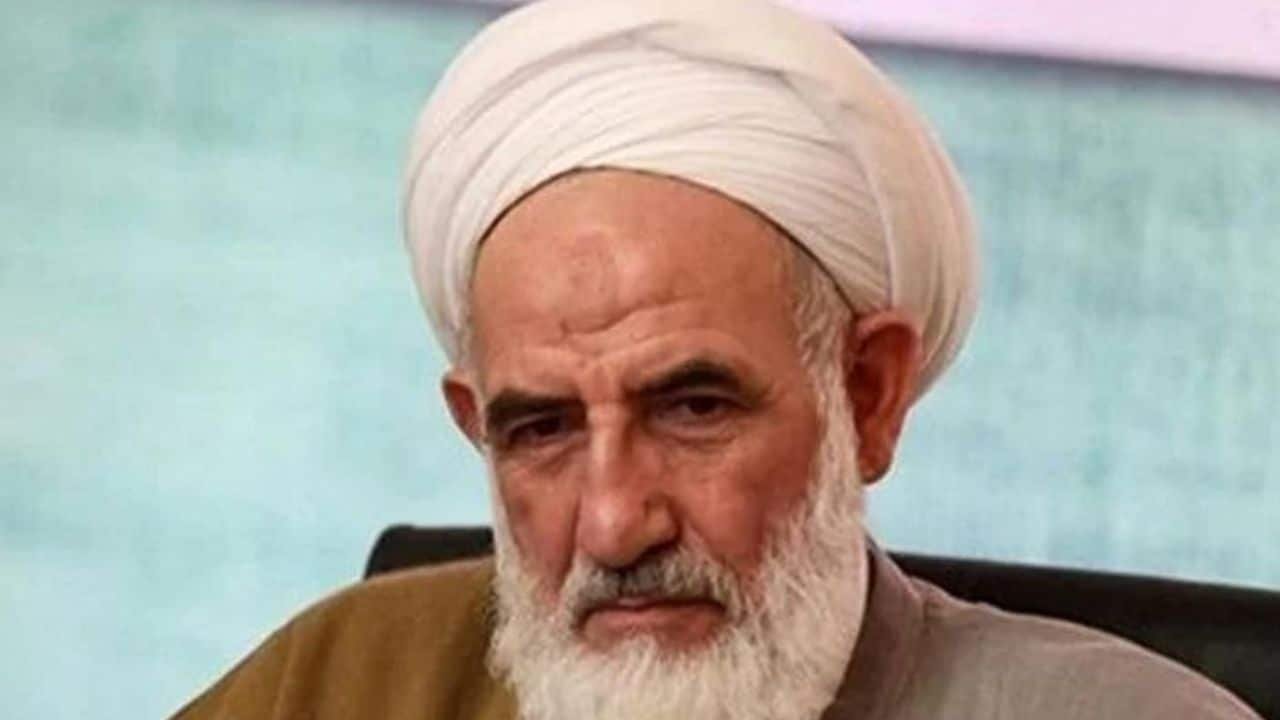
    Iranian authorities executed a man convicted of killing a powerful cleric in April, the judiciary said Wednesday.

    Ayatollah Abbas Ali Soleimani, a member of the Assembly of Experts that selects the country’s supreme leader, was killed on April 26 in a bank in Babolsar city in the northern province of Mazandaran.

    The murderer, who has not been named, was a security guard at the bank. CCTV footage published by local media showed him shooting the cleric from behind as he was sitting in a chair.

    “The sentence of qesas (Islamic law of retribution) for the murderer of Martyr Ayatollah Abbas Ali Soleimani was carried out today after being approved by the country’s Supreme Court,” a local official said, according to the judiciary’s Mizan Online website.

    Under Islamic law, the sentence of qesas can be dropped if the victim’s family agrees to spare the convict.

    Soleimani, 75, was previously a representative of Supreme Leader Ayatollah Ali Khamenei and led Friday prayers in the cities of Kashan and Zahedan.

    The 88-strong Assembly of Experts is tasked with supervising, dismissing, and electing the supreme leader. It is headed by ultra-conservative 96-year-old cleric Ahmad Jannati.

    Its members are elected for eight-year terms, but candidates are closely vetted.

    In April 2022, two clerics died in a knife attack in Iran’s second city of Mashhad. A 21-year-old suspected jihadist, Abdolatif Moradi, was hanged two months later for the crime.

    Rights group Amnesty International says Iran executes more people than any country except China.

    It has executed more than 600 people so far this year, already the highest figure in eight years, according to a report last month by the Norway-based Iran Human Rights group.

  • Nepali TikTok Influencers Upset After Unexpected Ban

    Nepali TikTok Influencers Upset After Unexpected Ban

    Nepali influencer Anjana Aryal went from homemaker to entrepreneur by sharing recipes on TikTok, but her lucrative business collapsed last month when the Himalayan republic banned the Chinese-owned short video app.

    Filming with her mobile phone in one hand and cooking with the other, Aryal rapidly became a social media star in Nepal last year, garnering millions of views from a following of nearly 600,000 people.

    That all came to a sudden halt when Nepal banned TikTok to protect “social harmony”, following similar restrictions imposed in other countries on concerns over data security, obscene content and its owner’s alleged ties to the Chinese government.

    “My life changed a lot because of TikTok, a lot,” Aryal, 39, told AFP from her home in Kathmandu. “So many recognise me because of TikTok wherever I go.”
    She earned nearly $3,000 from endorsement deals just in October, more than double Nepal’s average yearly income.

    Encouraged by her audience, Aryal also started a business selling her own brand of pickles, which saw her inbox flooded with orders.

    But since the ban, Aryal and other prominent Nepali content creators have seen their revenue streams dry up, jeopardising their livelihoods.
    “People were earning, running businesses or just being entertained on TikTok. Everyone has been affected now and they don’t know what to do,” she said.
    Owned by Beijing-based ByteDance, TikTok is one of the most popular social media platforms on the planet with more than one billion users.
    Its explosive growth has given its content creators and influencers an immense audience, and its editing features and AI-powered algorithm have proved particularly attractive.

    But the algorithm is opaque and often accused of putting users into content silos, and the platform has also been blamed for spreading disinformation.
    It has faced intense scrutiny in the United States and other nations over user data security and the company’s alleged ties to Beijing.
    TikTok announces $1.5bn deal to restart Indonesia online shopping business

    Multiple countries have sought to tighten controls on TikTok, and the platform has been banned in neighbouring India.
    ‘Start from zero’
    Growing criticism of the app has worried influencers around the world.
    Others in the United States have voiced fears to local media about losing thousands of dollars in income if bans are enforced.
    Nepal’s government justified its ban on the platform by accusing it of damaging the Himalayan republic’s social fabric.
    It came days before a huge rally called by a prominent businessman who was using TikTok to organise a campaign demanding the reinstatement of Nepal’s monarchy.

    Dozens of content creators staged a rally in Kathmandu demanding the ban be lifted last month.
    Advocate Dinesh Tripathi, who is challenging the decision in court, said the ban was an attack on people’s freedom of speech because the government was fearful of “dissenting voices”.

    Manish Adhikari, who uses TikTok to discuss cars and Nepali start-ups, said he had several endorsement deals scuttled by the ban.
    “Brands started to call me… and I wondered if I was getting out of business, is my work going to stop?” Adhikari said.
    Adhikari has shifted to Instagram but the views and followings are a fraction of his earlier audience.

    “I lost all my audience because I was not as active on any other platform,” he said. “Now I have to start from zero.”
    There are around 2.2 million TikTok users among Nepal’s 30 million people, according to the Internet Service Providers Association.
    But Monayac Karki, founder of Nepali influencer marketing agency Uptrendly, said TikTok’s popularity had been rising exponentially.

    He added that the ban had torpedoed a market with an estimated worth in excess of $5 million each year for advertisers and content creators, and which was set to grow rapidly.
    “I really hope this ban is a temporary one and it will be lifted soon,” he said.

  • Israel strikes Gaza after failed UN ceasefire bid

    Israel strikes Gaza after failed UN ceasefire bid

    Israel pressed its offensive against Hamas in Gaza on Saturday after the United States blocked an extraordinary UN bid to call for a ceasefire in the two-month war.

    Hamas and the Palestinian Authority swiftly condemned the US veto as the Hamas-run health ministry put the latest death toll in Gaza at 17,487 people, mostly women and children.

    An Israeli strike on the southern city of Khan Yunis killed six people, while five others died in a separate attack in Rafah, the ministry said Saturday.

    Israel has vowed to eradicate Hamas over its unprecedented attack on October 7 when militants broke through Gaza’s militarised border to kill around 1,200 people and seize hostages, 138 of whom remain captive, according to Israeli figures.

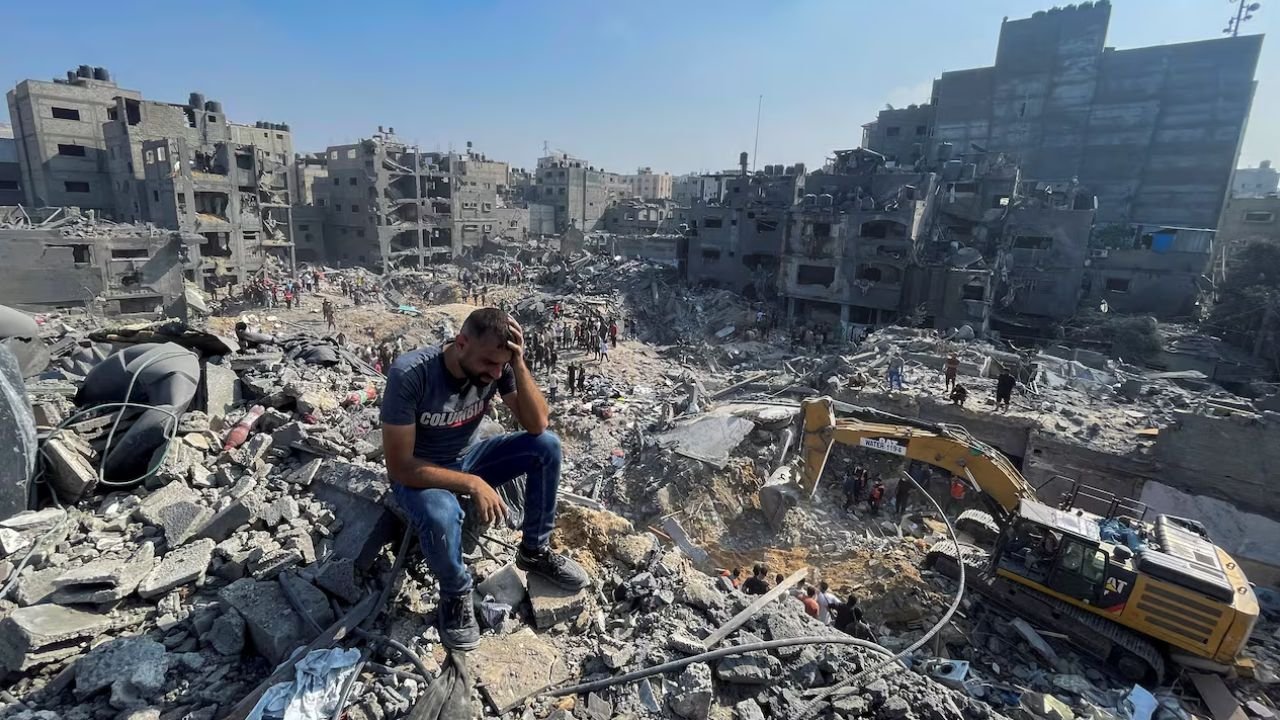
    Vast areas of Gaza have been reduced to rubble and the UN says about 80 percent of the population has been displaced, with dire shortages of food, fuel, water and medicine reported.

    “It’s so cold, and the tent is so small. All I have are the clothes I wear, I still don’t know what the next step will be,” said Mahmud Abu Rayan, displaced from Beit Lahia in the north.

    A UN Security Council resolution that would have called for an immediate cease-fire was vetoed by the United States on Friday.

    US envoy Robert Wood said the resolution was “divorced from reality” and “would have not moved the needle forward on the ground.”

    Israeli Foreign Minister Eli Cohen said the cease-fire “would prevent the collapse of the Hamas terrorist organization, which is committing war crimes and crimes against humanity, and would enable it to continue ruling the Gaza Strip.”

    Hamas slammed on Saturday the US rejection of the cease-fire bid as “a direct participation of the occupation in killing our people and committing more massacres and ethnic cleansing.”

    Palestinian Prime Minister Mohammed Shtayyeh said it was “a disgrace and another blank cheque given to the occupying state to massacre, destroy and displace.”

    The veto was swiftly condemned by humanitarian groups, with Doctors Without Borders (MSF) saying the Security Council was “complicit in the ongoing slaughter.”

    Israel’s military said Friday it had struck 450 targets in Gaza over 24 hours, showing footage of strikes from naval vessels in the Mediterranean.

    The health ministry reported 40 dead near Gaza City in the north, and dozens more in Jabalia and the main southern city of Khan Yunis.

    Humanitarian Catastrophe

    Following two months of conflict and bombardment, UN chief Antonio Guterres said Friday “the people of Gaza are looking into the abyss.”

    “People are desperate, fearful and angry,” he said.

    “All this takes place amid a spiralling humanitarian nightmare.”

    Many of the 1.9 million Gazans who have been displaced by the war have headed south, turning Rafah near the Egyptian border into a vast camp.

    With the death toll of medical workers in the conflict mounting, more than a dozen World Health Organization member states submitted a draft resolution on Friday that urged Israel to respect its obligations under international law to protect humanitarians in Gaza.

    They called for Israel to “respect and protect” medical and humanitarian workers exclusively involved in carrying out medical duties, as well as hospitals and other medical facilities.

    Only 14 of the 36 hospitals in the Gaza Strip were functioning in any capacity, according to United Nations’ humanitarian agency OCHA.

    With the civilian toll mounting, US National Security Council spokesman John Kirby told reporters Friday that Washington believes Israel needs to do more to protect civilians in the conflict.

    “We certainly all recognize more can be done to… reduce civilian casualties. And we’re going to keep working with our Israeli counterparts to that end,” he said.

    The death toll also rose in the Israeli-occupied West Bank, where Israeli forces shot dead six Palestinians on Friday, the territory’s health ministry said.

    Israel said Friday it has lost 91 soldiers in Gaza.

    It said two others were wounded in a failed bid to rescue hostages overnight, and that “numerous terrorists” were killed in the operation.
    Hamas claimed a hostage was killed in the operation, and released a video purporting to show the body, which could not be independently verified.

    Hamas rocket parts, launchers and other weapons as well as a one-kilometer tunnel were found at Al-Azhar University in Gaza City, the army said, as it warned residents to move west.

  • ‘Deliberate’ Israeli strike on journalists in Lebanon warrants ‘war crime’ investigation: watchdogs

    ‘Deliberate’ Israeli strike on journalists in Lebanon warrants ‘war crime’ investigation: watchdogs

    The Israeli strike that killed one journalist and wounded six others in Lebanon merits a “war crime” investigation, rights groups Amnesty International and Human Rights Watch (HRW) told AFP on Thursday.

    Reuters journalist Issam Abdallah, 37, was killed instantly in the strike on October 13 in the south of the country near the Israeli border.

    The others present — two more Reuters journalists, two from Al Jazeera, and two from AFP — were all injured.

    AFP photographer Christina Assi, 28, was seriously wounded, later had a leg amputated and is still in hospital.

    Independent investigations by both rights groups concluded, like an AFP investigation published earlier on Thursday, that the first strike that killed Abdallah and severely wounded Assi was most likely a tank round fired from Israel.

    Amnesty said the strikes “were likely a direct attack on civilians that must be investigated as a war crime”.

    “Those responsible for Issam Abdallah’s unlawful killing and the injuring of six other journalists must be held accountable,” said Aya Majzoub, Amnesty’s deputy regional director for the Middle East and North Africa.

    “No journalist should ever be targeted or killed simply for carrying out their work. Israel must not be allowed to kill and attack journalists with impunity.”

    HRW said the two Israeli strikes “were apparently deliberate attacks on civilians, which is a war crime”.

    Under international humanitarian law, “it is forbidden in any circumstances to carry out direct attacks against civilians”, it said.

    The group’s investigation indicated that the journalists were “well removed from ongoing hostilities, clearly identifiable as members of the media, and had been stationary for at least 75 minutes before they were hit”.

    Amnesty said images it verified showed “the seven journalists were wearing body armour labelled ‘press’, and that the blue Reuters crew car was marked ‘TV’ with yellow tape on its hood”.

    “The evidence strongly suggests that Israeli forces knew or should have known that the group that they were attacking were journalists,” HRW’s Lebanon researcher Ramzi Kaiss said.

    “This is an unlawful and apparently deliberate attack on a very visible group of journalists,” he said.

    ‘Justice and accountability’

    Speaking at a press conference in Beirut, Dylan Collins, the other AFP journalist wounded in the attack, said: “I know they (the investigations) won’t bring Issam back to life. I know they won’t help Christina walk again.

    “But what I do hope is that they at least will mark the start of some sort of process of justice and accountability,” he said.

    He shared a message from Assi that said: “We chose journalism with a mission to deliver the truth, and despite the inevitable costs, our commitment remains unwavering. Nothing can silence us.”

    Lebanese Prime Minister Najib Mikati said in a statement his government would “take all measures to include” the conclusions of the investigation “in the complaint filed before the UN Security Council”.

    Since Israel’s bombardment of Gaza started after Palestinian fighter group Hamas struck Israel in a surprise attack on October 7, 63 journalists and media workers have been killed — 56 Palestinians, four Israelis and three Lebanese, the Committee to Protect Journalists says.

    The New York-based rights group on Thursday called for “an immediate, independent, and transparent investigation that holds the perpetrators to account” for the strike on journalists in Lebanon.

  • Pakistan zoo shut down after mystery tiger attack

    Pakistan zoo shut down after mystery tiger attack

    AFP – Lahore: A zoo in Pakistan has been shut down after a man was mauled to death by tigers in an attack discovered during routine cleaning, officials said Thursday.

    The body was found on Wednesday morning in Bahawalpur’s Sherbagh Zoo in the eastern province of Punjab after staff spotted one of the three tigers with a shoe in its mouth.

    “The zoo is closed right now as we determine how the man got in,” Ali Usman Bukhari, a senior officer of the province’s wildlife department, which operates the zoo, told AFP.

    The condition of the body suggests the attack happened late Tuesday night.

    “The autopsy report has not been released, however evidence gathered from the enclosure points towards him being alive when he was attacked by the tigers,” Bukhari said.

    “The tigers did not go out of the den to attack the man, he jumped into their enclosure,” he said.

    “If we find a security lapse, we will address it. If need be, we will hire private security guards.”

    The victim has not been identified and no family member has come forward to claim the body.

    Speaking to media outside the zoo after the body was discovered on Wednesday, senior local government official Zaheer Anwar said all staff had been accounted for.

    “Our assessment so far is that this appears to be a lunatic, because a sensible person would not jump into the den,” he said.

    “You can see the den is secured. There are stairs behind the den, maybe he jumped from there.”

    The three tigers present in the den when the body was discovered have been restricted to a smaller space while evidence is collected.

    The zoo was built in 1942 by the ruling royal family of the former princely state of Bahawalpur and costs adults 50 rupees (18 cents) to enter.

    Pakistan’s zoos are generally in a poor condition and frequently accused of disregarding animal welfare.

  • Green turtles fight to survive against Pakistan’s urban sprawl

    Green turtles fight to survive against Pakistan’s urban sprawl

    Against the backdrop of the mega port city of Karachi, choked with traffic and construction, four green turtles emerge from the frothy Arabian Sea seeking a spot to lay their eggs.

    Three immediately retreat to the water, put off by the glittering lights and heavy beat of a nearby beach party.

    But one trundles towards the end of the beach bank, its flippers whipping sand into the air before settling on a dry spot of sand in which to deposit 88 golf ball-sized eggs.

    Newly-hatched green turtles crawl towards the Arabian Sea, after being released by marine conservationists on Sandspit beach in Karachi. PHOTO: AFP

    Six conservationists tasked with protecting the last surviving turtle species to nest in Pakistan stand guard nearby.

    “Being human doesn’t only call for loving another human being. These animals also require the same attention and love,” said Ashfaq Ali Memon, the head of marine wildlife at Sindh province’s Wildlife Department.

    Sandspit Beach is a beloved recreation spot for the city’s 22 million residents, as well as a critical habitat for Pakistan’s endangered green turtles.

    Until the early 2000s, the beaches of Pakistan’s Arabian coast were the nesting habitat for five endangered turtle species, now only the green turtles come to shore to lay their eggs. PHOTO: AFP

    The eight-kilometre (five-mile) stretch of beach is being relentlessly encroached upon by the construction of concrete beach houses that have, metre-by-metre, eaten into the strip of sand where turtles nest.

    “Once I saw someone disturbing a turtle while she was laying eggs. She ran off for safety, leaving a trail of eggs behind her. That was a very painful scene,” said Haseen Bano, Memon’s wife who supports the work of the volunteers.

    Marine turtles have covered vast distances across the world’s oceans for more than 100 million years but human activity has tipped the scales against the survival of these ancient creatures, the World Wildlife Fund says.

    Until the early 2000s, the beaches of Pakistan’s Arabian coast were the nesting habitat for five endangered turtle species.

    Marine turtles have covered vast distances across the world’s oceans for more than 100 million years but human activity has tipped the scales against the survival of these ancient creatures, the World Wildlife Fund says. PHOTO: AFP

    Now only the green turtles come to shore to lay their eggs on just two beaches in Karachi and on uninhabited islands in Balochistan, further down the coast towards Iran.

    Alongside construction, noise and garbage pollution, WWF-Pakistan has also reported that diesel and petrol fumes have caused deformities in hatchlings.

    As well as major disruption to their nesting habitats, thousands of turtles are also injured or killed in fishing nets every year.

    Named for the greenish colour of their cartilage and fat, they are classified as endangered across the world.

    Sindh Wildlife Department has a dedicated team of six volunteers, paid according to fluctuating donations, who patrol the beaches after dark during nesting season between August and January.

    “When the turtles arrive to use the pits, our volunteers are present to take care of them and to ensure no one can disturb them,” Amir Khan told AFP.

    Data on the number of green turtles is not available in Pakistan but, for the past few years, the number of hatchlings has increased. PHOTO: AFP

    The 88 — a decent batch for a young female — were delicately collected the same night and taken to a protected coastal conservation centre and reburied in the sand for the 45-60 day hatching cycle, away from the danger of stray dogs, mongoose and snakes.

    Baby turtles just a few hours old and only about two inches long are meanwhile brought to the water’s edge in buckets by volunteers and released one-by-one, swimming off into the night.

    Data on the number of green turtles is not available in Pakistan but, for the past few years, the number of hatchlings has increased.

    In 2022, volunteers successfully hatched 30,000 eggs and the current year’s count has already passed 25,000 just over halfway through the season.

    Baby turtles just a few hours old and only about two inches long are brought to the water’s edge in buckets by volunteers and released one-by-one, swimming off into the night. PHOTO: AFP

    Khan said these “living dinosaurs” will continue to struggle against the accelerating urban sprawl of the city and the dangers posed by fishermen.

    “It feels good to take care of these turtles, they boost the beauty of our beach,” said Mohammad Javed, a 29-year-old volunteer who inherited the caretaker legacy from his father.

  • In rare Israel rebuke, US restricts visas on extremist settlers

    In rare Israel rebuke, US restricts visas on extremist settlers

    Washington (AFP) – The United States said Tuesday it would refuse visas for extremist Israeli settlers behind a wave of violence against Palestinians in the West Bank, as it also asked Israel to do more to spare civilians in Gaza.

    The visa measures amount to a rare concrete repercussion by the United States against Israelis in the nearly two-month-old war, in which President Joe Biden has nudged the US ally privately but also promised strong support.

    “We have underscored to the Israeli government the need to do more to hold accountable extremist settlers who have committed violent attacks against Palestinians in the West Bank,” Secretary of State Antony Blinken said in a statement.

    “As President Biden has repeatedly said, those attacks are unacceptable,” he said.

    Blinken said the United States would refuse entry to anyone involved in “undermining peace, security or stability in the West Bank” or who takes actions that “unduly restrict civilians’ access to essential services and basic necessities.”

    “Instability in the West Bank both harms the Israeli and Palestinian people and threatens Israel’s national security interests. Those responsible for it must be held accountable,” Blinken said.

    State Department spokesman Matthew Miller said that dozens of settlers, who were not publicly named, would be affected. The visa ban also applies to their immediate family members.

    Restrictions on entering the United States will not apply to extremist settlers who are US citizens.

    Wave of violence

    Hamas militants stormed out of Gaza into Israel on October 7, killing around 1,200 people, mostly civilians, and taking around 240 hostages, according to Israeli officials.

    In response, Israel vowed to destroy Hamas and has carried out air strikes and a ground offensive that have killed around 15,900 people, mostly women and children, according to the Hamas-run health ministry.

    Even though Hamas does not control the West Bank, some 250 Palestinians have been killed there by Israeli soldiers and settlers since October 7, according to a Palestinian government tally.

    The Palestinian Authority holds limited autonomy in the West Bank where Palestinians have complained of impunity over attacks and harassment carried out by settlers, some of whom have been serving in the Israeli military as forces are shifted to Gaza.

    Prime Minister Benjamin Netanyahu is in a coalition with far-right parties that strongly support Jewish settlement of lands seized in 1967, construction that is considered illegal under international law.

    Blinken visited both Israel and the West Bank last week just as a pause ended between Hamas and Israel.

    The State Department said that Israel has shown “improvement” in targeting its strikes in Gaza as it voiced concern about a repeat of the widespread bombing at the start of the war.

    “We will continue to monitor what’s happening and will continue to press them to do everything they can to minimize civilian harm,” said Miller, the State Department spokesman.

    The United States has also promised more than $100 million in humanitarian aid to the Palestinians but has faced strong criticism in much of the Arab world for its diplomatic and military support of Israel.

    J Street, the left-leaning pro-Israel US group that is frequently critical of Netanyahu, praised the visa restrictions as an “important first step.”

    It said that the Biden administration should specifically restrict two far-right ministers in Netanyahu’s cabinet, Minister for National Security Itamar Ben-Gvir and Finance Minister Bezalel Smotrich.

    Before entering politics, Ben-Gvir hung a portrait in his living room of Baruch Goldstein, the US-born settler who killed 29 Palestinian worshippers at a mosque in the West Bank city of Hebron.

    The Biden administration has returned to the traditional US and international position of opposing settlements, although until now its stance has largely been rhetorical.

    Previous president Donald Trump switched course, with Blinken’s predecessor Mike Pompeo dropping objections to settlements and visiting one late in his term.