Author: afp

  • Detained Iran protesters raped, sexually assaulted: Amnesty

    Detained Iran protesters raped, sexually assaulted: Amnesty

    Members of the Iranian security forces raped and used other forms of sexual violence against women and men detained in the crackdown on nationwide protests that erupted from September 2022, Amnesty International said Wednesday.

    Amnesty said in a report it had documented 45 such cases of rape, gang rape or sexual violence against protesters. With cases in more than half of Iran’s provinces, it expressed fear these documented violations appeared part of a “wider pattern.”

    “Our research exposes how intelligence and security agents in Iran used rape and other sexual violence to torture, punish and inflict lasting physical and psychological damage on protesters, including children as young as 12,” Amnesty’s secretary general Agnes Callamard said.

    The London-based organization said it had shared its findings with the Iranian authorities on November 24 “but has thus far received no response.”
    The protests began in Iran in September 2022 after the death in police custody of Mahsa Amini, 22. Her family says she was killed by a blow to the head but this has always been disputed by the Iranian authorities.

    After rattling Iran’s clerical leadership, the movement lost momentum by the end of that year in the face of a fierce crackdown that left hundreds dead, according to rights activists, and thousands arrested, according to the United Nations.

    Amnesty said 16 of the 45 cases documented in the report were of rape, including six women, seven men, a 14-year-old girl, and two boys aged 16 and 17.

    Six of them — four women and two men — were gang raped by up to 10 male agents, it said.

    It said the sexual assaults were carried out by members of the Revolutionary Guards, the paramilitary Basij force, agents of the intelligence ministry, as well as police officers.

    The rapes on women and men were carried out with “wooden and metal batons, glass bottles, hosepipes, and/or agents’ sexual organs and fingers,” it said.

    As well as the 16 rape victims, Amnesty said it documented the cases of 29 victims of other forms of sexual violence such as the beating of breasts and genitals, enforced nudity, and inserting needles or applying ice to men’s testicles.

    It said it collected the testimony through interviews with the victims and other witnesses, conducted remotely via secure communications platforms.

    “The harrowing testimonies we collected point to a wider pattern in the use of sexual violence as a key weapon in the Iranian authorities’ armory of repression of the protests and suppression of dissent to cling to power at all costs,” said Callamard.

    One woman, named only as Maryam, who was arrested and held for two months after removing her headscarf in a protest, told Amnesty she was raped by two agents during an interrogation.

    “He (the interrogator) called two others to come in and told them ‘It’s time’. They started ripping my clothes. I was screaming and begging them to stop.

    “They violently raped me in my vagina with their sexual organs and raped me anally with a drink bottle. Even animals don’t do these things,” she was quoted by the group as saying.

    A man named as Farzad told Amnesty that plain clothes agents gang raped him and another male protester, Shahed, while they were inside a vehicle.

    “They pulled down my trousers and raped me. I couldn’t scream out. I was really being ripped apart… I was throwing up a lot, and was bleeding from my rectum when I went to the toilet,” said Farzad who was released without charge a few days later.

    Amnesty said most victims did not file complaints against the assault for fear of further consequences, and those who did tell prosecutors were ignored.

    “With no prospects for justice domestically, the international community has a duty to stand with the survivors and pursue justice,” said Callamard.

  • Saudi Arabia says ‘absolutely not’ to oil phaseout at COP28

    Saudi Arabia says ‘absolutely not’ to oil phaseout at COP28

    AFP – DUBAI: Saudi Arabia’s energy minister has slammed the door shut on agreeing to phase out fossil fuels at the UN’s COP28 climate talks, setting the stage for difficult negotiations in Dubai.

    A tentative “phasedown/out” was included in a first draft of an agreement on climate action that delegates are haggling over during talks that are scheduled to finish on Dec 12.

    But Energy Minister Prince Abdulaziz bin Salman, a half-brother of de facto ruler Crown Prince Mohammed bin Salman, told Bloomberg that Saudi Arabia, the world’s biggest oil exporter, would not agree.

    “Absolutely not,” he said in an interview in Riyadh.

    “And I assure you not a single person – I’m talking about governments – believes in that.”

    About 200 countries must come to a consensus decision at the meeting in Dubai, held at the end of the hottest year on record.

    In an interview with AFP last week, United Nations Secretary-General Antonio Guterres called for a total phaseout of fossil fuels, warning “complete disaster” awaits mankind on its current trajectory.

    But Prince Abdulaziz said: “I would like to put that challenge for all of those who… comes out publicly saying we have to (phase out), I’ll give you their name and number, call them and ask them how they are gonna do that.

    “If they believe that this is the highest moral ground issue, fantastic. Let them do that themselves. And we will see how much they can deliver.”

    ‘Small change’

    Separately, the Saudi royal also derided Western donations to a new climate loss and damage fund as “small change” and trumpeted Riyadh’s pledges to developing countries.

    The fund for vulnerable nations – a major win at the start of COP28 – has attracted about US$655 million (S$876.22 million) so far from donors including the European Union and the United States, a sum criticised as insufficient by campaigners.

    “Unlike the small change offered for loss and damage from our partners in developed countries, the Kingdom through its South-South cooperation announced in the Saudi Africa Summit in Riyadh last month the allocation of up to US$50 billion,” he said in a video message to Monday’s Saudi Green Initiative forum, held on the sidelines of COP28.

    “This will help build resilient infrastructure and strengthen climate resilience and adaptation in the African continent directly through Saudi stakeholders,” added the prince, without giving further details.

    Such private funds have been criticised by campaigners for lacking transparency and because the pledges are non-binding and include loans and investments.

    Saudi Arabia has revamped its energy sources, invested in renewables and improved energy-efficiency as it tries to decarbonise its economy by 2030, Prince Abdulaziz added.

    But that target does not include emissions from the 8.9 million barrels of oil a day exported by Saudi Arabia.

    Africa and its energy mix is an area of focus for both Saudi and the UAE, which in September pledged US$4.5 billion for clean-energy investments in the continent.

    “You cannot go to undeveloped countries or developing countries and ask them to do the same measures of the transition,” Yasir Al-Rumayyan, chairman of Saudi state oil giant Aramco, told the forum.

    “Especially people who don’t have access to the energy.”

    He said he heard an African minister say “in order for us to have growth, we have to carbonise first then to decarbonise.”

  • Heavy rains in Chennai flooded airport, leaving 8 dead, thousands affected

    Heavy rains in Chennai flooded airport, leaving 8 dead, thousands affected

    Cyclone Michaung was expected to make landfall on the coast of the southern Indian state of Andhra Pradesh around noon on Tue­sday, the country’s weather office said, with sustained winds of 90-100kph (56-62mph), gusting to 110kph.

    The cyclone was forecast to hit the coast of Andhra Pradesh state later Tuesday as a “severe cyclonic storm”, packing winds up to 100 kilometres, the Indian Meteorological Department (IMD) said.

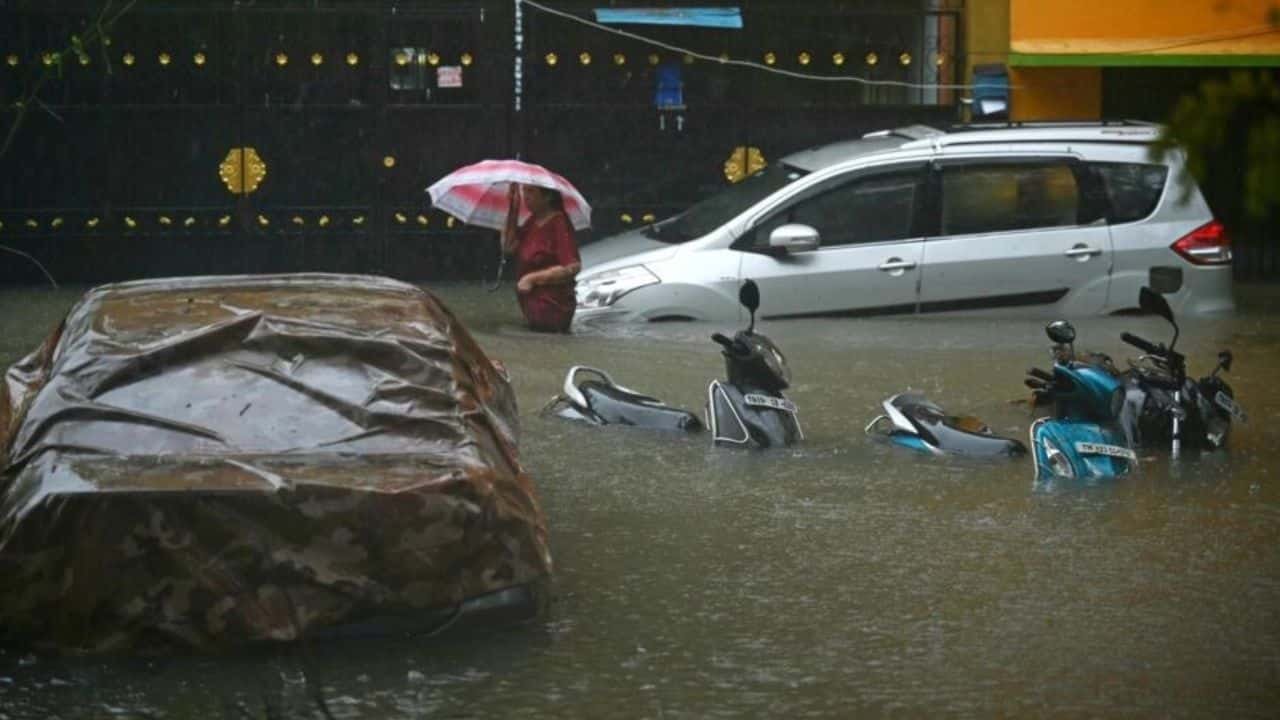
    In Chennai, cars were seen floating on raging torrents, homes were flooded, and a crocodile was spotted swimming the streets in the city.

    In some parts of the flooded city, people used boats to get out of their flooded neighbourhoods to the safety of government relief shelters.

    The IMD warned of “exceptionally heavy rainfall” in some areas.

    “We are facing the worst storm in recent memory,” Tamil Nadu state chief minister M.K. Stalin said, in a statement late Monday.

    Police said on Tuesday that eight people had been killed in the state capital of Chennai.

    They included some who drowned, as well as one person hit by a falling tree, another electrocuted by live wires in the water, and one crushed by a falling wall.

    Trees were uprooted and vehicles swept away due to the heavy rains, according to images posted on social media.

    Apple iPhone manufacturers Foxconn and Pegatron and automaker Hyundai suspended their operations in Tamil Nadu due to the storm, local media reported.

    The cyclone is expected to hit India’s southeast coast near the town of Bapatla, on the 300-kilometre (185-mile) stretch between Nellore and Machilipatnam.

    Hundreds of people from coastal villages in the neighbouring state of Andhra Pradesh have moved inland, with emergency rescue teams deployed to deal with the aftermath of the cyclone’s landfall, according to local media.

    Sea surges of waves up to 1.5 metres (nearly five feet) above normal tide levels are expected when the cyclone makes landfall, the IMD said.

    Home Minister Amit Shah said the government was “braced to provide all the necessary assistance to Andhra Pradesh”, with rescue teams deployed and more “on standby to mobilise as needed”.

    The cyclone is expected to weaken late Tuesday.

    Scientists have warned that storms are becoming more powerful as the world gets warmer with climate change.

    Cyclones — the equivalent of hurricanes in the North Atlantic or typhoons in the Northwest Pacific — are a regular and deadly menace on coasts in the northern Indian Ocean, where tens of millions of people live.

    Schools, colleges, offices and banks were closed on Monday and Tuesday in at least four districts of Tamil Nadu, including Chennai, because of weather conditions, a government notice said.

  • Driver arrested for running over pigeon

    Driver arrested for running over pigeon

    A Tokyo taxi driver was arrested for deliberately driving into a flock of pigeons and killing one, police said Tuesday, reportedly because he was angry that the birds were on the road.

    Atsushi Ozawa, 50, “used his car to kill a common pigeon, which is not a game animal”, in the Japanese capital last month, and was arrested on Sunday for violating wildlife protection laws, a Tokyo police spokesman told AFP.

    Ozawa sped off from a traffic light when it turned green, ploughing his taxi into the bevy of birds at a speed of 60 kilometres (37 miles) per hour, local media said.

    The sound of the engine reportedly prompted a surprised passer-by to report the incident.

    Tokyo police had a veterinarian perform a post-mortem on the hapless pigeon and determined its cause of death as traumatic shock, according to local media.

    “Roads belong to humans, so pigeons should have dodged out of the way,” Ozawa was quoted by local media as telling investigators.

    Police called his behaviour “highly malicious” for a professional driver, before deciding to go ahead with the arrest, broadcaster Fuji TV said.

    “Wow, can you get arrested for running over a pigeon?”, one user wrote on X, formerly known as Twitter.

    “He could’ve just honked his car horn or something. But intentionally killing it? That’s crossing the line,” another posted.

  • ‘Rizz’ charms Oxford wordsmiths to win word of 2023

    “Rizz” — a colloquial term defined as “style, charm, or attractiveness” — has been crowned word of the year for 2023, Oxford University Press (OUP) announced on Monday.

    Its lexicographers chose “rizz”, which also conveys “the ability to attract a romantic or sexual partner”, from a shortlist of four words and phrases, after help from the public.

    An online vote had whittled down the list from eight finalists, all selected “to reflect the mood, ethos, or preoccupations” of the year.

    “Rizz was chosen by the language experts at OUP as an interesting example of how language can be formed, shaped, and shared within communities, before being picked up more widely,” OUP said.

    “Etymologically, the term is believed to be a shortened form of the word ‘charisma’, taken from the middle part of the word, which is an unusual word formation pattern,” it noted.

    The publisher added that the word shows the growing society-wide impact of Gen Z and how “younger generations create spaces — online or in person — where they own and define the language they use”.

    The term earned mainstream recognition in June after an interviewer asked “Spider-Man” actor Tom Holland about his “rizz”.

    The 27-year-old replied he had “no rizz whatsoever”.

    It is the second consecutive year that the public have played a part in picking Oxford’s word of the year, after an inaugural public vote last year saw “goblin mode” prevail.

    In that instance, the public were given the chance to choose the overall winner.

    An overwhelming 93 percent opted for the slang term describing “unapologetically self-indulgent, lazy, slovenly or greedy” behaviour.

    Previous words of the year — chosen by Oxford lexicographers — include “vax” (2021), “climate emergency” (2019) and “selfie” (2013).

    In the 2023 selection process, more than 30,000 word lovers helped decide head-to-head competitions between four different pairs of words or phrases.

    They selected “rizz” over “beige flag” — a character trait indicating that a partner or potential partner is boring.

    The other finalists were “Swiftie” (an enthusiastic Taylor Swift fan), “prompt” (an AI programme or algorithm instruction) and “situationship” (a romantic or sexual relationship not considered formal or established).

    OUP said “rizz” has “boomed on social media” and shows how the internet can propel initially fringe language “into the mainstream”.

    “This is a story as old as language itself, but stories of linguistic evolution and expansion that used to take years can now take weeks or months.”

  • Iranian delegates walked out of UN climate

    Iranian delegates walked out of UN climate

    AFP – Tehran, Iran: Iranian delegates walked out of UN climate talks in the United Arab Emirates on Friday in protest over the presence of Israeli representatives, state media reported.

    The Iranian side considered Israel’s presence at COP28 “as contrary to the goals and guidelines of the conference and, in protest, it left the
    conference venue”, said Energy Minister Ali Akbar Mehrabian, who headed the Iranian delegation, quoted by the official news agency IRNA.

    The move came only hours after a seven-day truce between Israel and Hamas expired and hostilities between the two resumed in Gaza.

    IRNA had said late Thursday that Iranian President Ebrahim Raisi would not take part in the talks and Mehrabian would instead attend the summit.

    Delegates from nearly 200 countries are under pressure to step up efforts to limit global warming at COP28, but the Israel-Hamas conflict now in its
    eighth week is casting a shadow over the summit.

    UAE Foreign Minister Abdullah bin Zayed Al Nahyan had invited Raisi to attend COP28 during talks with his Iranian counterpart Hossein Amir-Abdollahian in June, IRNA said.

    But the Iranian president had decided not to attend “due to the invitation of the Zionist regime (Israel) officials”, the news agency said.

    In a phone call with his UAE counterpart, Amir-Abdollahian said “the presence… of Israel in this meeting deserves serious consideration” in
    light of its alleged “war crimes and genocide”.

  • 2023 set to be hottest year on record: UN

    2023 set to be hottest year on record: UN

    Geneva (AFP) – This year is set to be the hottest ever recorded, the UN said Thursday, demanding urgent action to rein in global warming and stem the havoc following in its wake.

    The UN’s World Meteorological Organization warned that 2023 had shattered a whole host of climate records, with extreme weather leaving “a trail of devastation and despair”.

    “It’s a deafening cacophony of broken records,” said WMO chief Petteri Taalas.

    “Greenhouse gas levels are record high. Global temperatures are record high. Sea level rise is record high. Antarctic sea ice is record low.”

    The WMO published its provisional 2023 State of the Global Climate report as world leaders gathered in Dubai for the UN COP28 climate conference, amid mounting pressure to curb planet-heating greenhouse gas pollution.

    United Nations chief Antonio Guterres said the record heat findings “should send shivers down the spines of world leaders”.

    The stakes have never been higher, with scientists warning that the ability to limit warming to a manageable level is slipping through humanity’s fingers.

    The 2015 Paris climate accords aimed to limit global warming to well below two degrees Celsius above pre-industrial levels — and 1.5C if possible.

    But in its report, the WMO said 2023 data to the end of October showed that this year was already around 1.4C above the pre-industrial baseline.

    ‘Not just statistics’

    The agency is due to publish its final State of the Global Climate 2023 report in the first half of 2024.

    But it said the difference between the first 10 months of this year and 2016 and 2020 — which previously topped the charts as the warmest years on record — “is such that the final two months are very unlikely to affect the ranking”.

    The report also showed that the past nine years were the hottest years since modern records began.

    “These are more than just statistics,” Taalas said, warning that “we risk losing the race to save our glaciers and to rein in sea level rise”.

    “We cannot return to the climate of the 20th century, but we must act now to limit the risks of an increasingly inhospitable climate in this and the coming centuries.”

    The WMO warned that the warming El Nino weather phenomenon, which emerged mid-year, was “likely to further fuel the heat in 2024”.

    That is because the naturally-occurring climate pattern, typically associated with increased heat worldwide, usually increases global temperatures in the year after it develops.

    The preliminary report also found that concentrations of the three main heat-trapping greenhouse gases — carbon dioxide, methane and nitrous oxide — reached record high levels in 2022, with preliminary data indicating that the levels continued to grow this year.

    Carbon dioxide levels were 50 percent higher than the pre-industrial era, the agency said, meaning that “temperatures will continue to rise for many years to come”, even if emissions are drastically cut.

    ‘Climate chaos’

    The rate of sea level rise over the past decade was more than twice the rate of the first decade of satellite records (1993-2002), it said.

    And the maximum level of Antarctic sea ice this year was the lowest on record.

    In fact, it was a million square kilometres less than the previous record low at the end of the southern hemisphere winter, the WMO said — an area larger than France and Germany combined.

    Meanwhile, glaciers in North America and Europe again suffered an extreme melt season, with Swiss glaciers losing 10 percent of their ice volume in the past two years alone, the report showed.

    Dramatic socio-economic impacts accompany such climate records, experts say, including dwindling food security and mass displacement.

    “This year we have seen communities around the world pounded by fires, floods and searing temperatures,” UN chief Guterres said in a video message.

    He called on the leaders gathered in Dubai to commit to dramatic measures to rein in climate change, including phasing out fossil fuels and tripling renewable energy capacity.

    “We have the roadmap to limit the rise in global temperature to 1.5C and avoid the worst of climate chaos,” he said.

    “But we need leaders to fire the starting gun at COP28 on a race to keep the 1.5 degree limit alive.”

  • Indian man charged in plot to kill Sikh separatist on US soil

    Indian man charged in plot to kill Sikh separatist on US soil

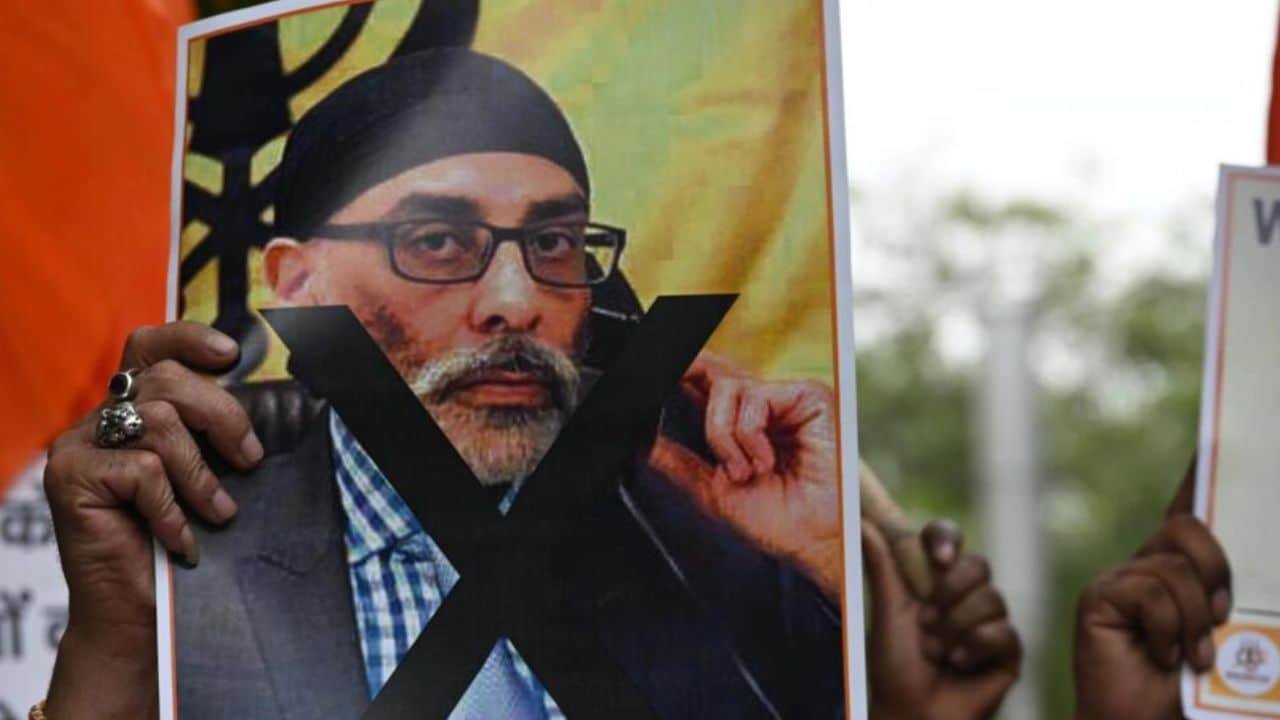
    Washington (AFP) – An Indian national has been charged with plotting to assassinate a Sikh separatist leader on US soil, the Justice Department said on Wednesday, alleging an Indian government official was also involved in the planning.

    The Justice Department unsealed murder-for-hire charges against Nikhil Gupta, 52, “in connection with his participation in a foiled plot to assassinate a US citizen” of Indian origin in New York City, it said in a statement.

    The man allegedly targeted in the killing “is a vocal critic of the Indian government and leads a US-based organization that advocates for the secession of Punjab,” a northern Indian state with a large population of Sikhs.

    An Indian government official, directing the plan from India, worked with Gupta and others based around the world, the US government said.

    Gupta, who lives in India, was arrested by authorities in the Czech Republic under US extradition orders.

    The news comes after the White House said last week it was treating an alleged plot to assassinate a Sikh separatist on American soil with “utmost seriousness,” and had raised the issue with the Indian government.

    The Financial Times reported that same day that US authorities had thwarted a conspiracy to kill Gurpatwant Singh Pannun, a US and Canadian citizen.

    After Wednesday’s news broke, Pannun said in a statement that “the attempt on my life on American soil is the blatant case of India’s transnational terrorism which has become a challenge to America’s sovereignty and threat to freedom of speech and democracy.”

    The Justice Department, which did not identify the target of the alleged assassination attempt on Wednesday, said that Gupta was recruited into the effort in May 2023.

    Canada and India had a major diplomatic row after Canadian Prime Minister Justin Trudeau in September linked New Delhi to the killing of Canadian citizen Hardeep Singh Nijjar, also a Sikh separatist, in June.

    New Delhi called the Canadian allegations “absurd.”

    But Trudeau said Wednesday that “the news coming out of the United States further underscores what we’ve been talking about from the very beginning, which is that India needs to take this seriously.”

    “The Indian government needs to work with us to ensure that we’re getting to the bottom of this,” he said.

    Pannun said that “first by assassinating Nijjar in Canada and then attempting to assassinate me on US soil, India under [Prime Minister Narendra] Modi has extended to the foreign soils its policy of violently crushing the Sikhs movement for right to self-determination.”

    The US Justice Department said that after Nijjar’s killing, Gupta told undercover US officials that there was “now no need to wait” on killing the New York City target.

    An Indian government spokesman on Wednesday said that the United States has “shared some inputs pertaining to nexus between organized criminals, gun runners, terrorists and others.”

    “We had also indicated that India takes such inputs seriously since they impinge on our national security interests,” the statement said, adding that a “high-level Enquiry Committee” was established on November 18 “to look into all the relevant aspects of the matter.”

  • After 17 Days Trapped In Tunnel, India Workers Say Hope Kept Them Alive

    After 17 Days Trapped In Tunnel, India Workers Say Hope Kept Them Alive

    After 17 days trapped inside a collapsed Himalayan road tunnel they were building, Indian workers described the horror of their ordeal, and the hopes and prayers that kept them strong.

    “We were really scared, every moment felt that death was standing nearby,” rescued worker Deepak Kumar told AFP on Wednesday. “We were not sure whether our lives would be saved or not.”

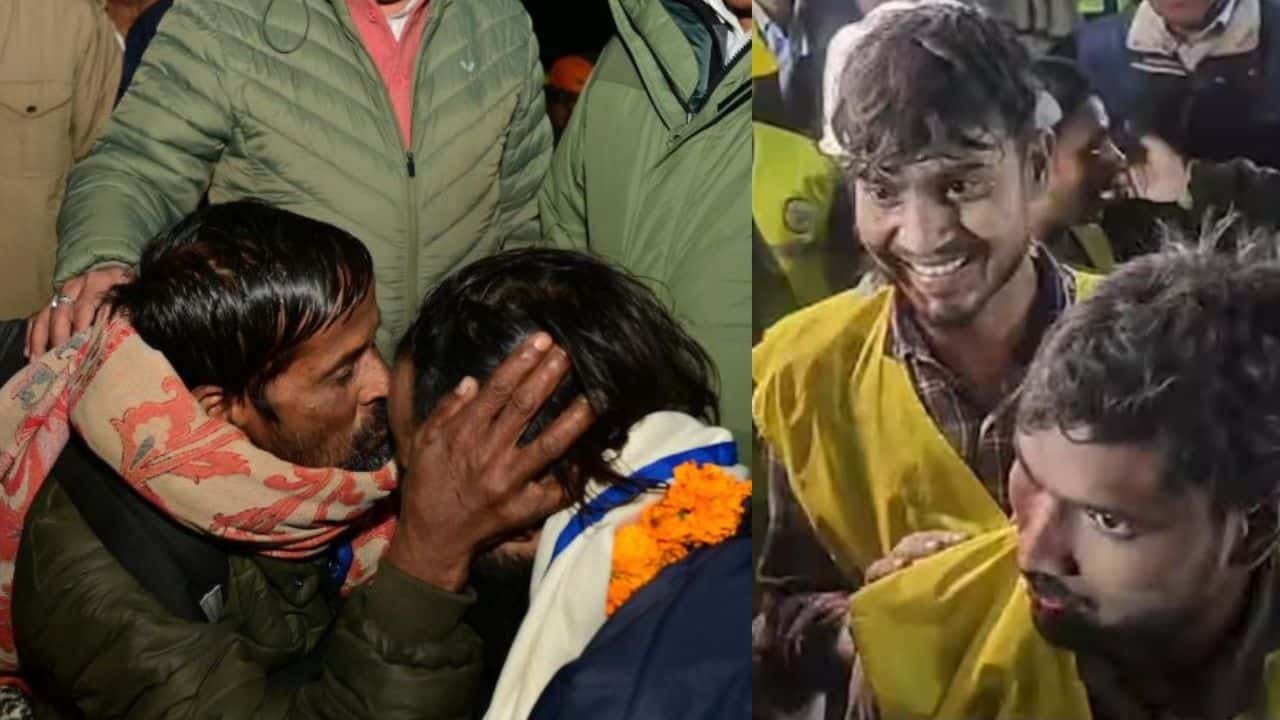
    The men were welcomed as heroes after being hauled through 57 metres (187 feet) of steel pipe on stretchers specially fitted with wheels late Tuesday, the culmination of a marathon engineering operation.

    Draped in garlands of orange marigolds, they were greeted with wild cheers.

    “The world is again beautiful for us,” rescued worker Sabah Ahmad told AFP, describing the heartache of hearing his wife’s “worried and hopeless” voice while he was trapped.

    “I know it was a difficult moment for those inside and more difficult for families outside,” said Ahmad, who comes from Bihar, one of India’s poorest states.

    “But at last we have come out, and it is the only thing that matters.”

    His wife Musarrat Jahan, speaking to AFP by phone from Bihar, said that “no words” could explain how happy she felt.

    “Not only my husband got a new life, we also got a new life,” she said. “We will never forget it”.

    Previous hopes of reaching the men were repeatedly dashed by falling debris and the breakdown of multiple drilling machines, and the men spoke of how hard it had been to keep their spirits up.

    “It was not easy,” Kumar said. “After three or four days inside the collapsed tunnel, and the rescue team had failed to reach us, the reality is that our confidence and faith were at a low level.”

    Most of the trapped men are migrant workers who left home to find employment, working on the Silkyara tunnel in northern Uttarakhand state, hundreds of kilometres (miles) from home high up in the bitterly cold Himalayan foothills.

    Rescue teams later set up a telephone exchange to allow families far from the site to call in.

    “I told my family, ‘I am fine and healthy, do not worry, everything will be all right, we will come out soon’”, Kumar said.

    “But while I was saying these words to them, sometimes I felt strongly that I will never be able to see my parents.”

    Guriya Devi, wife of rescued worker Sushil Kumar, told AFP that the family had “passed through horrible times, and sometimes we lost hope”.

    Chamra Oraon, 32, from Jharkhand state, described the horror he felt when he heard a thud and debris began to fall deep inside the mountain road tunnel on November 12 — and the terror as the rock fall blocked the only route out with tonnes of rubble.

    “I ran for my life but got stuck on the wrong side,” he told the Indian Express newspaper. “As it became clear we would be there for a long time, we grew restless, hungry. But we prayed silently for help.”

    Subodh Kumar Verma told AFP how the first 24 hours in the tunnel were the worst, when they feared they could starve to death — if their air did not run out first.

    “We faced problems related to food and air for 24 hours there,” Verma said.

  • Climate crises drove 27 million children into hunger in 2022

    Climate crises drove 27 million children into hunger in 2022

    Extreme weather events in countries vulnerable to climate change drove more than 27 million children into hunger last year, Save the Children said on Tuesday.

    The figure represented a sharp 135 percent increase over 2021, the UK-based charity said in an analysis ahead of the COP28 climate summit opening in Dubai on Thursday.

    It said children made up nearly half the 57 million people pushed into crisis levels of acute food insecurity or worse across 12 countries because of extreme weather in 2022, according to data from the IPC hunger monitoring system.

    Out of the 12, countries in the Horn of Africa were most affected, with Ethiopia and Somalia accounting for about half of the 27 million children facing hunger, Save said.

    “As climate-related weather events become more frequent and severe, we will see more drastic consequences on children’s lives,” Save’s CEO Inger Ashing said in a statement.

    The charity called on leaders meeting at COP28 in Dubai to take action on the climate crisis by recognising children as “key agents of change” but more broadly to address other causes of food insecurity such as conflict and weak health systems.

    Save highlighted the situation in Somalia, which is considered one of the most vulnerable countries to climate change, locked in a vicious cycle of drought and floods.

    It said the recent torrential rains and flooding that have engulfed many parts of the country had displaced about 650,000 people, about half of them children.

    Elsewhere, Save noted that two million children in Pakistan remained acutely malnourished after floods that swamped a third of the country last year.

    Across the planet, Save estimated that 774 million children -– or one third of the global child population — are living with the dual impacts of poverty and high climate risk.

    In a report issued last week, Save said that more than 17.6 million children will be born into hunger this year, one-fifth more than a decade ago.