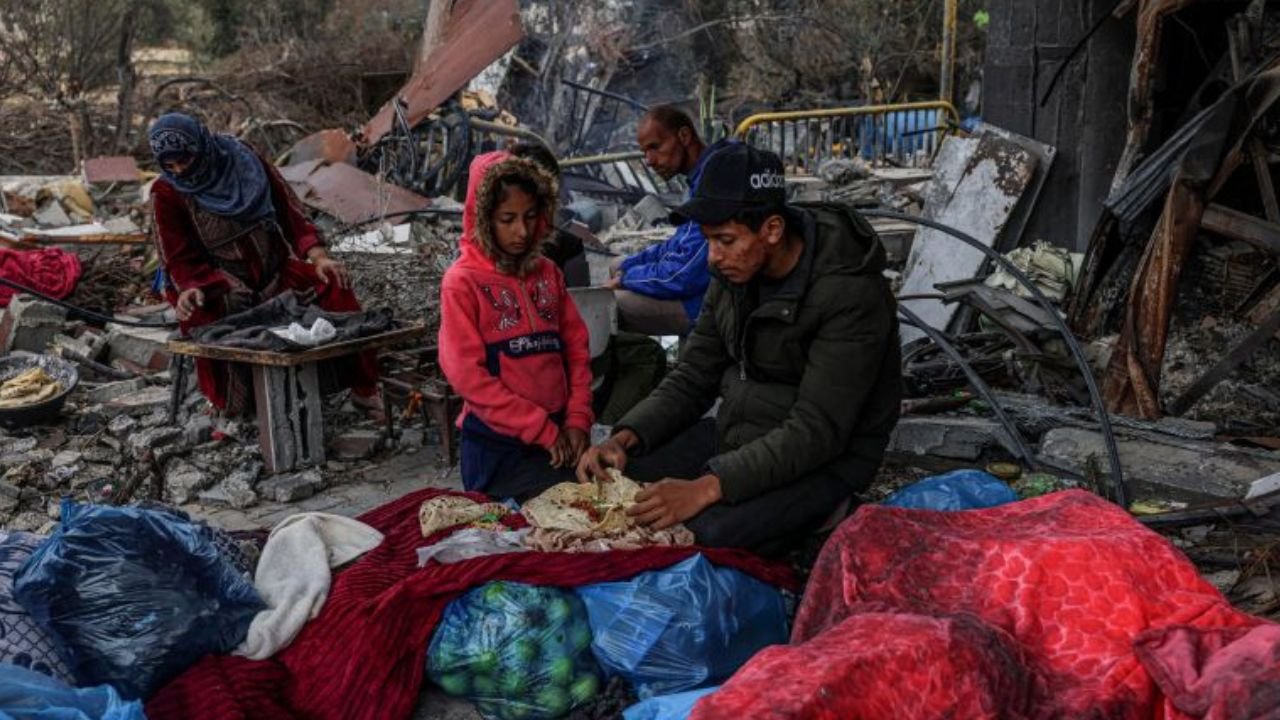
Gaza Strip (Palestinian Territories) (AFP) – A truce between Israel and Hamas will be extended by two days, mediator Qatar said hours before the pause was due to end Tuesday, as more hostages were freed from Gaza in exchange for the release of dozens of Palestinian prisoners.
“The Palestinian and Israeli sides have reached an agreement to extend the humanitarian pause in Gaza for two additional days under the same conditions,” Qatar’s foreign ministry said in a statement on X, formerly Twitter.
Militant group Hamas also confirmed the extension and Israeli media reported the government had received a new list of 10 more hostages who would be freed. However there was no official word from Israel.
The news of the extension came as 11 more hostages were freed from Gaza overnight, along with the release of another 33 Palestinian prisoners — the last exchange under the existing deal.
The extension of the truce, which had been scheduled to end at 7:00am (0500 GMT), was welcomed internationally.
UN Secretary General Antonio Guterres called it “a glimpse of hope and humanity in the middle of the darkness of war”.
The truce paused fighting that began when Hamas militants poured over the border into Israel, killing 1,200 people, mostly civilians, and kidnapping dozens, according to Israeli officials.
Israel’s retaliatory ground and air operation in Gaza has killed almost 15,000 people, mostly civilians, according to the territory’s Hamas government.
Late Monday, 11 hostages arrived in Israel, the country’s military said.
“Our forces will accompany them until they are reunited with their families,” it said in a statement, adding that the military “salutes and embraces the released hostages upon their return home”.
Most of the group are dual nationals, with Argentinians, Germans and French among those released, and all 11 were from the Nir Oz kibbutz, the community said.
The releases brought “a sigh of relief to our community, however we remain deeply concerned about our loved ones that are still held hostage,” kibbutz official Osnat Peri said.
State-of-the-art climate models drastically underestimate how much extreme rainfall increases under global warming, according to a study published Monday that signals a future of more frequent catastrophic floods unless humanity curbs greenhouse emissions.
It comes as countries prepare to meet at the COP28 summit in Dubai beginning later this week, amid fears it could soon be impossible to limit long-term warming to the 1.5 degrees Celsius scientists say is necessary to curb the worst effects of human-caused climate change.
Researchers from the Potsdam Institute of Climate Impact Research (PIK) looked at the intensity and frequency of daily precipitation extremes over land in 21 “next generation” climate models used by a UN body in its global assessments.
They then compared the changes projected by the models with those observed historically, finding that nearly all climate models significantly underestimated the rates at which increases in precipitation extremes scaled with global temperature rise.
“Our study confirms that the intensity and frequency of heavy rainfall extremes are increasing exponentially with every increment of global warming,” said Max Kotz, lead author of the paper published in the Journal of Climate.
The changes track with the Clausius-Clapeyron relation in physics, which established that warmer air holds more water vapor. This finding underpinned the fact that temperature and not wind dominate the global change in extreme rainfall events, according to the authors.
Stronger increases in rainfall intensity and frequency were found across the tropics and high-latitudes, like in Southeast Asia or Northern Canada, according to the study.
Eying each other across a stream of traffic, rival biryani joints vie for customers, serving a fiery medley of meat, rice and spice that unites and divides South Asian appetites.
Both sell a niche version of the dish, steeped in the same vats, with matching prices and trophies commending their quality.
But in Karachi, where a biryani craze boomed after the creation of Pakistan, it is the subtle differences that inspire devotion.
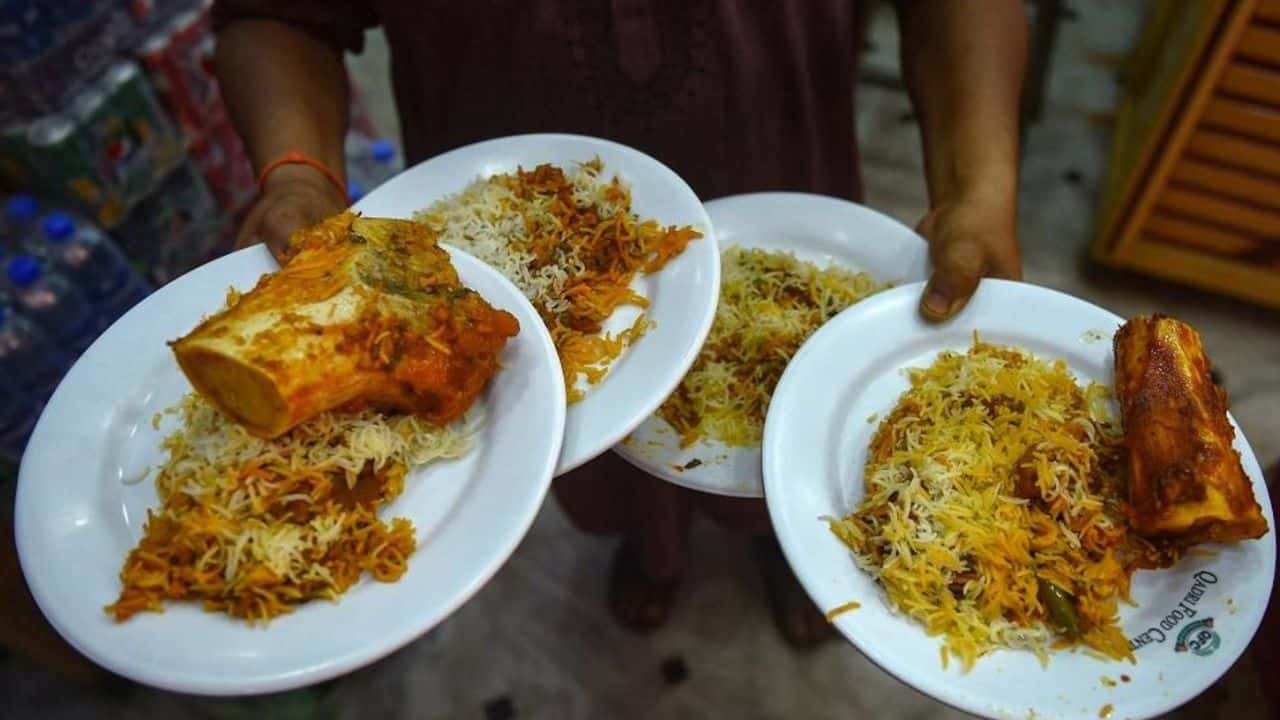
“Our biryani is not only different from theirs but unique in the world,” says restaurateur Muhammad Saqib, who layers his “bone marrow biryani” with herbs.
“When a person bites into it he drowns in a world of flavours,” the 36-year-old says.
Across the road, Muhammad Zain sees it differently.
“We were the ones who started the biryani business here first,” the 27-year-old claims, as staff scoop out sharing platters with a gut-punch of masala.
“It’s our own personal and secret recipe.”
Cooked in bulk, biryani is also a staple of charity donations. PHOTO: AFP
Both agree on one thing.
“You can’t find biryani like Pakistan’s anywhere in the world,” says Saqib.
“Whether it’s a celebration or any other occasion, biryani always comes first,” according to Zain.
British colonial rule in South Asia ended in 1947 with a violent rupture of the region along religious lines.
Hindus and Sikhs in newly created Pakistan fled to India while Muslim “Muhajirs” — refugees — went the other way.
Pakistan and India have been arch-rivals since, fighting wars and locked in endless diplomatic strife. Trade and travel have been largely choked off.
Many Muhajirs settled in Karachi, home to just 400,000 people in 1947 but one of the world’s largest cities today with a population of 20 million.
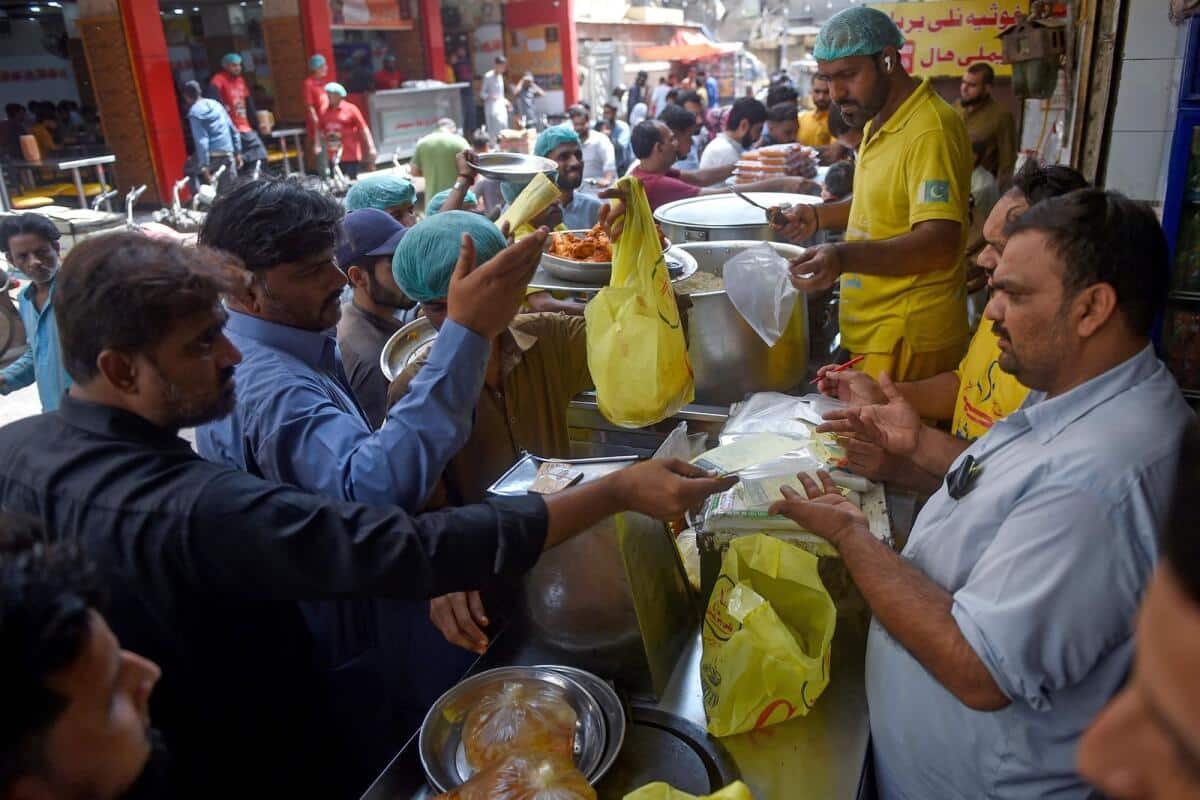
Every Karachi neighbourhood has its own canteens fronted by vendors clanking a spatula against the inside of biryani pots. PHOTO: AFP
For Indian food historian Pushpesh Pant, biryani served in South Asia’s melting-pot cities such as Karachi is a reminder of shared heritage.
“Hindus ate differently, Nanakpanthis (Sikhs) ate differently, and Muslims ate differently, but it was not as if their food did not influence each other,” he told AFP from the city of Gurugram outside Delhi.
“In certain parts of Pakistan and certain parts of India, the differences in flavours and foods are not as great as man-made borders would make us think.”
Every Karachi neighbourhood has its own canteens fronted by vendors clanking a spatula against the inside of biryani pots.
The recipe has endless variations.
The one with beef is a favourite in majority Muslim Pakistan, while vegetarian variants are more popular in largely Hindu India.
Chicken is universal. Along coastlines, seafood is in the mix.
And purists debate if adding potatoes is heresy.
“Other than that, there is Pulao Biryani which is purely from Delhi,” says 27-year-old pharmacist Muhammad Al Aaqib, describing a broth-stewed variation.
“My roots lead back to Delhi too so it’s like the mother of biryanis for us.”
“Perhaps every person has a different way of cooking it, and their way is better,” says 36-year-old landlord Mehran Khoso.
The origins of biryani are hotly contested.
However, it is generally accepted the word has Persian roots and it is argued the dish was popularised in the elite kitchens of the Mughal Empire, which spanned South Asia between the 16th and 19th centuries.
In spite of that pedigree, its defining quality is permutation.
Quratulain Asad, 40, spends Sunday morning cooking for her husband and son, Muhajir descendants of a family that arrived in Karachi from the Indian town of Tonk in 1948.
The origins of biryani are hotly contested. PHOTO: AFP
But at the dinner table, they feast not on an heirloom recipe but a TV chef’s version with a cooling yoghurt sauce and a simple shredded salad.
Asad insists on Karachi’s biryani supremacy.
“You will not like biryani from anywhere else once you’ve tasted Karachi’s biryani,” she says.
“There is no secret ingredient. I just cook with a lot of passion and joy,” she adds. “Perhaps that’s why the taste comes out good.”
Cooked in bulk, biryani is also a staple of charity donations.
At Ghazi Foods, 28-year-old Ali Nawaz paddles out dozens of portions of biryani into plastic pouches, which are delivered to poor neighbourhoods on motorbikes.
A minute after one of those bikes stops, the biryani is gone, seized by kids and young adults.
“People pray for us when they eat it,” says Nawaz. “It feels good that our biryani reaches the people.”
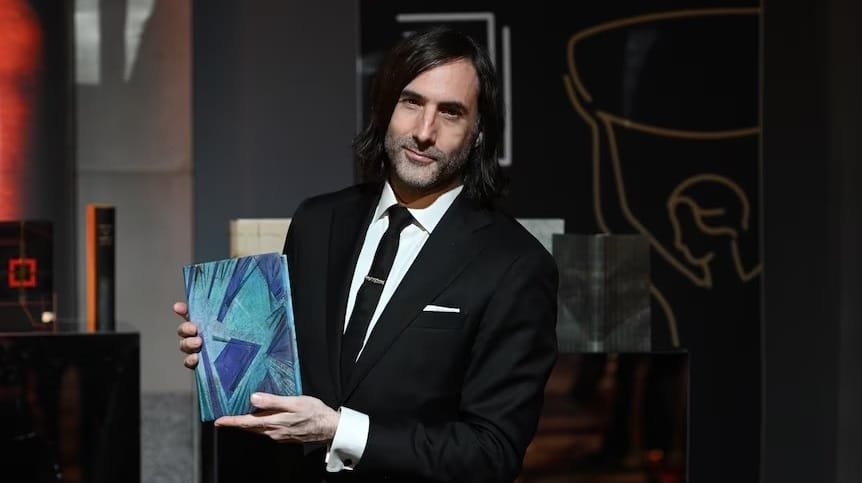
Irish author Paul Lynch won the 2023 Booker Prize for fiction on Sunday for his novel Prophet Song, a dystopian work about an Ireland that descends into tyranny.
The 46-year-old pipped five other shortlisted novelists to the prestigious award at a ceremony in London.
He becomes the fifth Irish writer to win the high-profile literary prize, which has propelled to fame countless household names, including past winners Salman Rushdie, Margaret Atwood and Hilary Mantel.
“This was not an easy book to write,” Lynch said after collecting his award, which comes with £50,000 (around US$63,000) and a huge boost to his profile.
“The rational part of me believed I was dooming my career by writing this novel. Though I had to write the book anyway. We do not have a choice in such matters,” he added.
Lynch’s book is set in Dublin in a near future version of Ireland. It follows the struggles of a mother of four as she tries to save her family from totalitarianism.
There are no paragraph breaks in the novel, which is Lynch’s fifth.
Canadian novelist Esi Edugyan, who chaired the five-person judging panel, called the story “a triumph of emotional storytelling, bracing and brave”.
“With great vividness, Prophet Song captures the social and political anxieties of our current moment,” she said.
“Readers will find it soul-shattering and true, and will not soon forget its warnings.”
The Booker is open to works of fiction by writers of any nationality, written in English and published in the UK or Ireland between October 1, 2022, and September 30, 2023.
None of this year’s six finalists – which included two Americans, a Canadian, a Kenyan and another Irish author – had been shortlisted before and only one had previously been longlisted.
The shortlisted novels, announced in September, were chosen from a 13-strong longlist that had been whittled down from an initial 158 works.
Among them was Irish author Paul Murray’s The Bee Sting, a tragicomic saga which looks at the role of fate in the travails of one family.
Murray was previously longlisted in 2010.
Kenyan writer Chetna Maroo’s moving debut novel Western Lane about grief and sisterhood follows the story of a teenage girl for whom squash is life.
The judges also selected If I Survive You by US writer Jonathan Escoffery, which follows a Jamaican family and their chaotic new life in Miami.
He was joined by fellow American author, Paul Harding, whose This Other Eden – inspired by historical events – tells the story of Apple Island, an enclave off the US coast where society’s misfits flock and build a new home.
Canada was represented on the shortlist in the shape of Study for Obedience by Sarah Bernstein. The unsettling novel explores the themes of prejudice and guilt through a suspicious narrator.
The Booker was first awarded in 1969. Last year’s winner was Sri Lankan writer Shehan Karunatilaka for The Seven Moons of Maali Almeida.
The previous Irish winners are Iris Murdoch, John Banville, Roddy Doyle and Anne Enright.
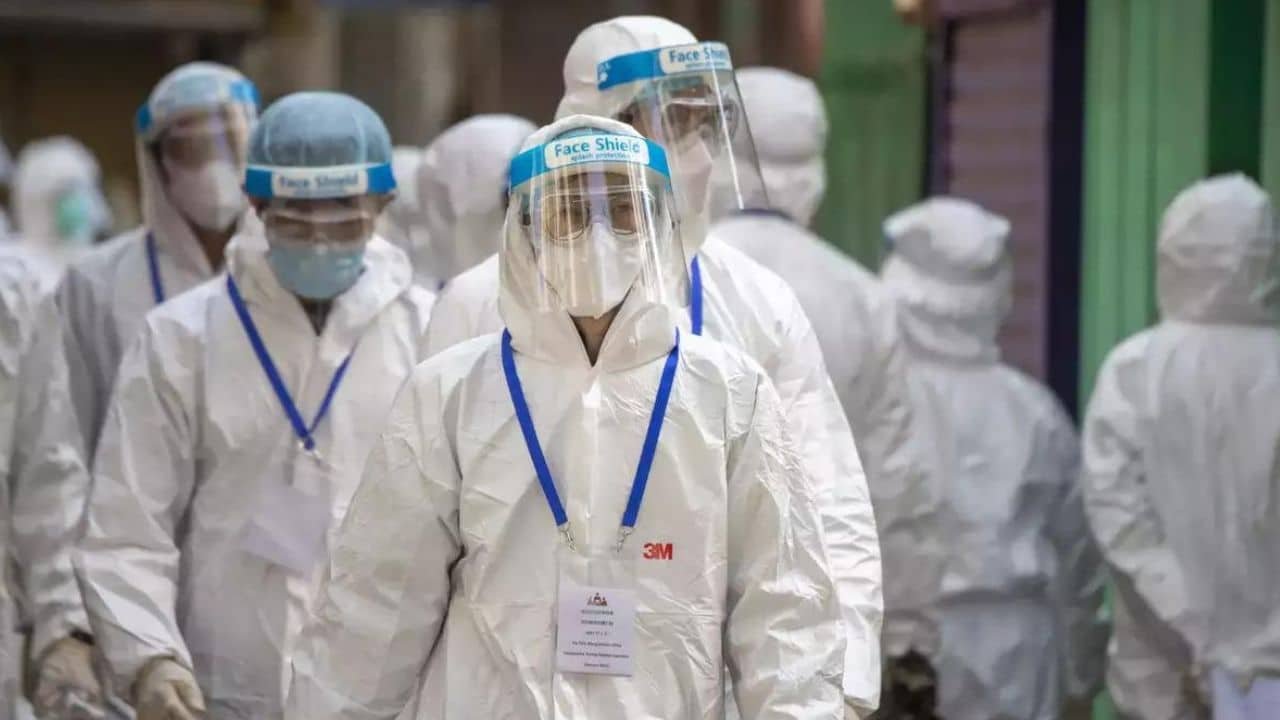
Beijing (AFP) – The World Health Organization has asked China for more data on a respiratory illness spreading in the north of the country, urging people to take steps to reduce the risk of infection.
Northern China has reported an increase in “influenza-like illness” since mid-October when compared to the same period in the previous three years, the WHO said.
“WHO has made an official request to China for detailed information on an increase in respiratory illnesses and reported clusters of pneumonia in children,” the UN health body said in a statement on Wednesday.
China’s National Health Commission told reporters last week that the respiratory illness spike was due to the lifting of Covid-19 restrictions and the circulation of known pathogens, namely influenza and common bacterial infections that affect children, including mycoplasma pneumonia.
The Chinese capital of Beijing, located in the north of the country, is currently experiencing a cold snap, with temperatures expected to plummet to well below zero by Friday, state media said.
Temperatures plummeted as the city “entered a high incidence season of respiratory infectious diseases”, Wang Quanyi, deputy director and chief epidemiological expert at the Beijing Center for Disease Control and Prevention, told state media on Wednesday.
Beijing “is currently showing a trend of multiple pathogens coexisting”, he added.
Calls for transparency
Over the course of the Covid-19 pandemic, the WHO repeatedly criticised Chinese authorities for their lack of transparency and cooperation.
More than three years after cases were first detected in Wuhan, heated debate still rages around the origins of Covid-19.
Scientists are divided between two main theories of the cause: an escape from a laboratory in the city where such viruses were being studied and an intermediate animal that infected people at a local market.
Earlier this year, WHO experts said they were sure that Beijing had far more data that could shed light on the origins of Covid, and called it a moral imperative for the information to be shared.
A team of specialists led by the WHO and accompanied by Chinese colleagues investigated China in early 2021, but there has not been a team able to return since and WHO officials have repeatedly asked for additional data.
WHO chief Tedros Adhanom Ghebreyesus has stressed that getting to the bottom of the mystery could help avert future pandemics.
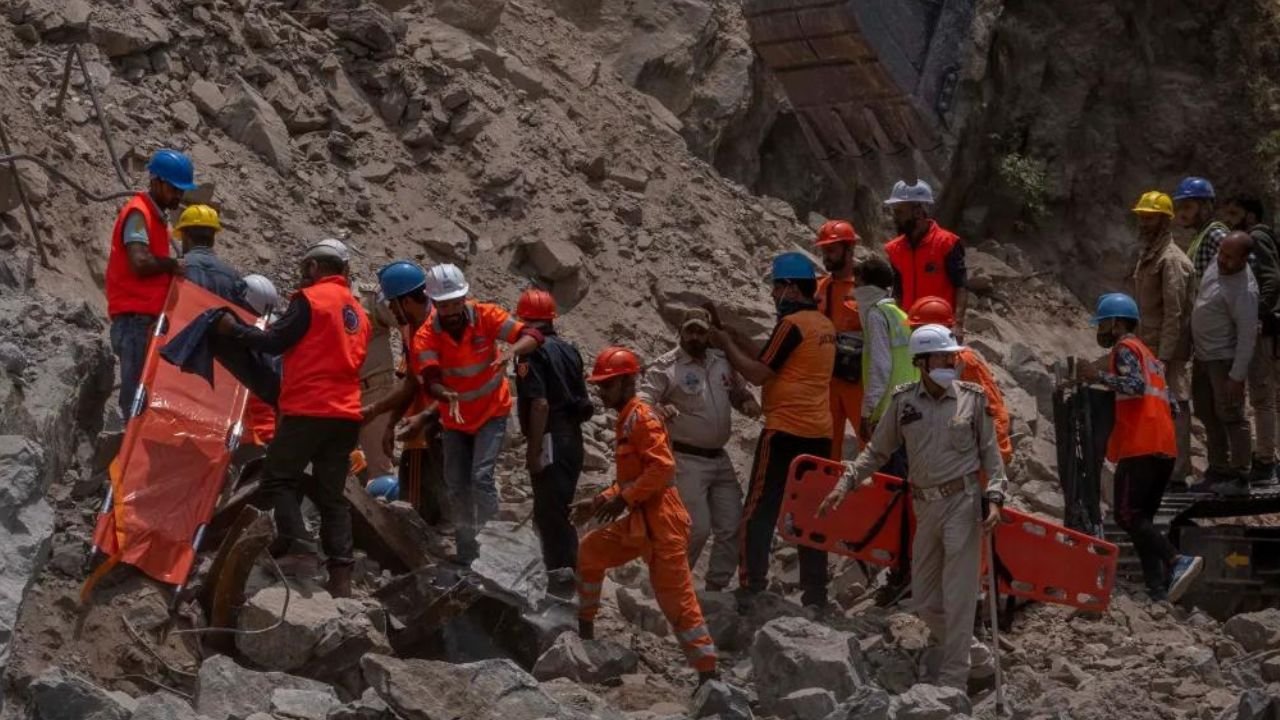
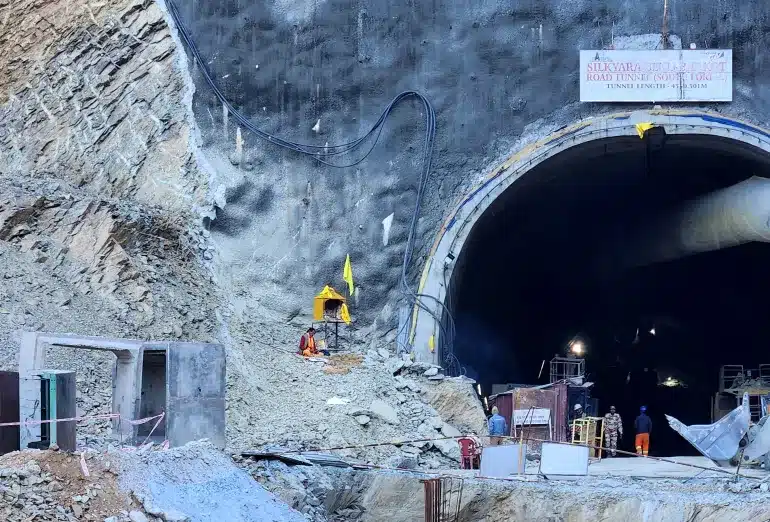
The men became trapped after a portion of the 4.5-kilometer (2.8-mile) tunnel, which was under construction in the mountainous vicinity of the Himalayas, caved in on itself after a landslide. The tunnel collapsed around 200 meters (656 ft.) from its entrance.
Construction of the tunnel is part of the Chardham all-weather road, a flagship project of the government of Prime Minister Narendra Modi that aims to connect Hindu pilgrimage sites, so that the state can better accommodate the growing influx of pilgrims and tourists to the region.
The workers trapped in a collapsed tunnel in northern India for over a week are getting their first hot meals on Tuesday through a new six-inch wide steel pipe as rescuers pursue an alternative plan to free them. “We will bring you out safely, do not worry,” rescuers told the men, according to translations by Al Jazeera.
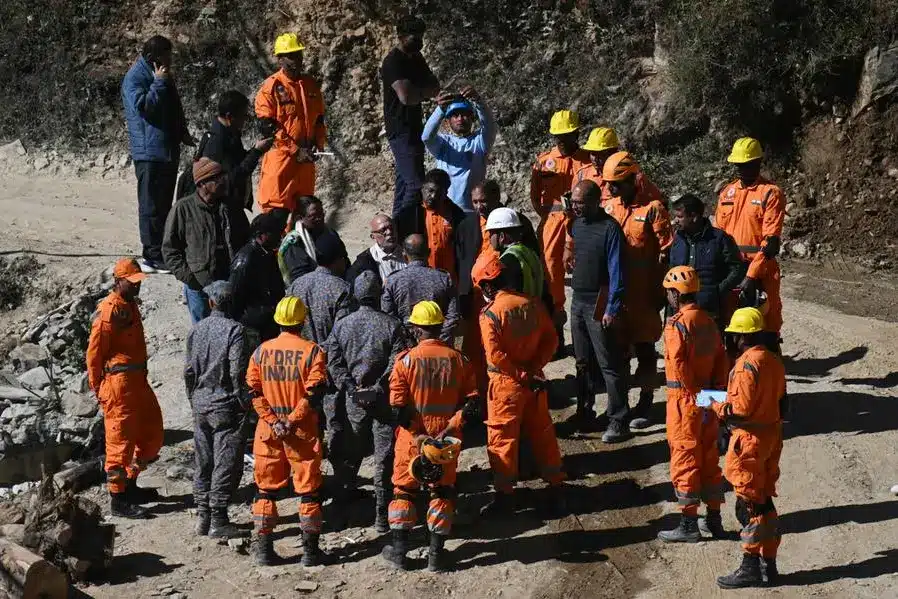
Indian rescuers have drilled two-thirds of the way through debris toward 41 workers trapped in a collapsed road tunnel, officials said Wednesday, warning that the next 24 hours could be critical.
Engineers are working to drive a steel pipe through at least 57 metres (187 feet) of the tonnes of earth, concrete, and rubble that has divided the trapped men from freedom since a portion of the under-construction tunnel in the northern Himalayan state of Uttarakhand collapsed 11 days ago.
Looking into the Silkyara tunnel entrance on Wednesday, an AFP journalist could see sparks flying as workers welded metal tube sections together, with the site busy as excavators and heavy trucks brought in equipment.
“I am very happy to share… that 39 metres of drilling have been completed,” said Mahmood Ahmad, a road and highways ministry official involved in the operations.
“If there is no blockage, we hope there could be happy news late tonight or tomorrow,” Ahmad told reporters at the site.
Binance boss Changpeng Zhao has become the most powerful cryptocurrency figure to fall in a two-year period chaotic even by the standards of the notoriously volatile industry.
Zhao stepped down as CEO of Binance — the largest crypto exchange in the world — after he and the company pleaded guilty on Tuesday to sweeping US money laundering violations and agreed to fines of more than $4 billion.
Here are three of the highest-profile crypto executives who have fallen foul of the law since last year:
Changpeng ‘CZ’ Zhao
Born in China in 1977, Zhao moved with his family to Canada in the 1980s and later got a degree in computer science from McGill University, according to his profile in the Bloomberg Billionaires Index.
Zhao Changpeng, chief executive officer of Binance, speaks during a Bloomberg Television interview in Tokyo, Japan, on Thursday, Jan. 11, 2018. The world’s biggest cryptocurrency exchange keeps getting bigger. Binance.com is adding “a couple of million” registered users every week, with 240,000 people signing up in just an hour on Wednesday, said Zhao. Photographer: Akio Kon/Bloomberg
He founded Binance in 2017 in Shanghai, and led the company’s explosive growth into the world’s biggest cryptocurrency exchange.
An outspoken celebrity in the crypto world with 8.7 million followers on X, Zhao became the richest known figure in the nascent industry. His net worth peaked at around $65 billion in 2022, according to a Forbes index.
With the prestige and wealth came increased scrutiny of Binance’s operations, as prominent crypto firms around the world began to buckle under a wave of criminal investigations.
The United States accused Zhao and Binance of multiple violations, including knowingly allowing transactions to militant groups such as the Islamic State and in barred jurisdictions such as North Korea and Iran.
On Tuesday, they pleaded guilty. The firm has agreed to total penalties of nearly $4.4 billion, while he will pay $50 million, according to court documents.
Zhao resigned as CEO of Binance and while he will reportedly retain his shares in the company, he has been banned from any involvement in its business. He is expected to face sentencing later.
Forbes listed his net worth as $10.2 billion as of Wednesday.
Sam Bankman-Fried
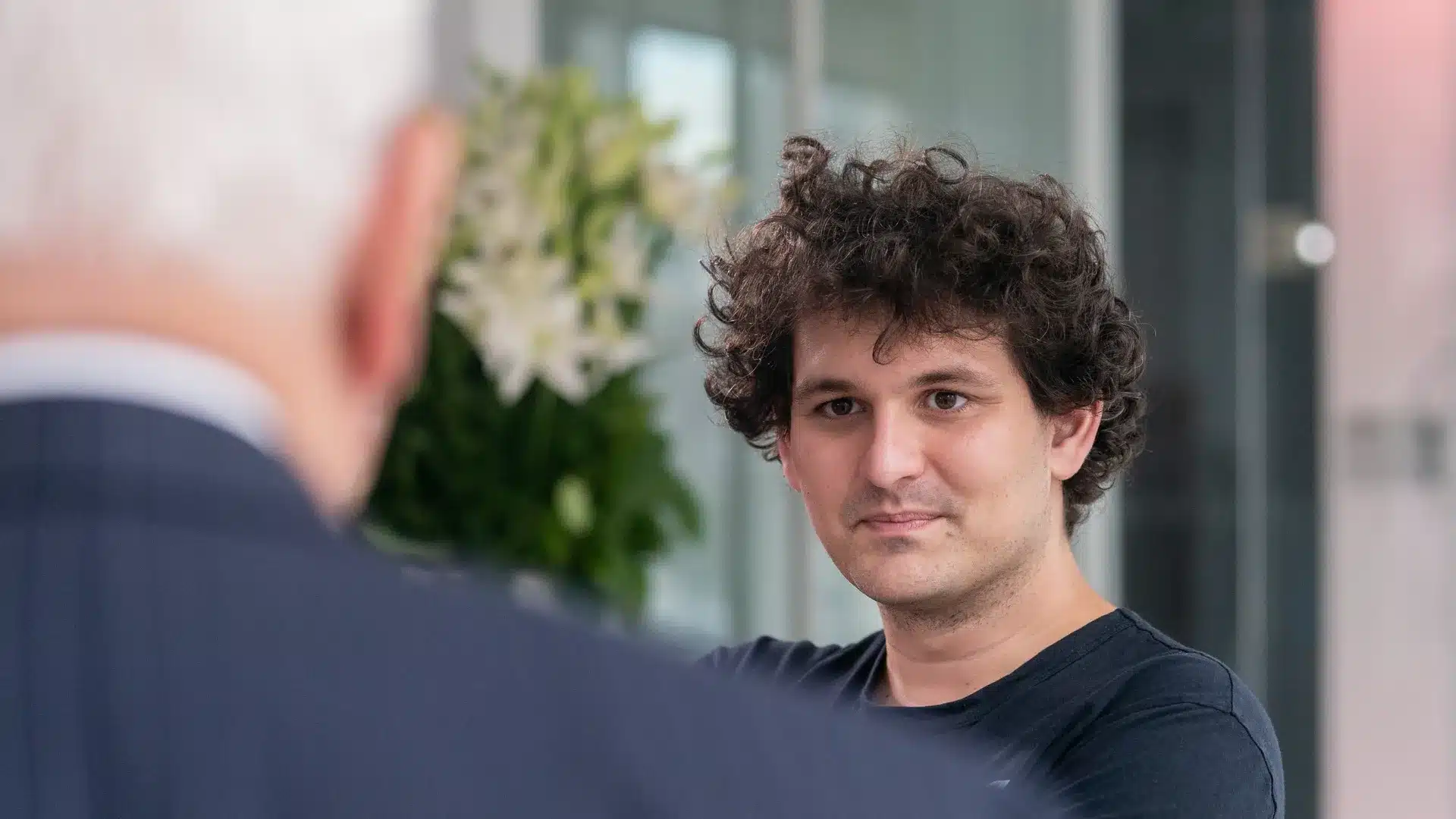
If Zhao was the richest and most powerful person in crypto, Sam Bankman-Fried was easily the most famous.
Born to Stanford University professors, Bankman-Fried graduated from MIT with a degree in physics.
In 2019, he founded FTX, which skyrocketed to become the world’s second-largest crypto exchange.
Along the way, Bankman-Fried built up his image as the unofficial ambassador for the cryptocurrency industry, with high-profile appearances in the media and even the US Congress.
At one point in 2022, he had a net worth of $24 billion, according to Forbes.
But he had been walking a dangerous path — his team used customers’ money for everything from buying posh real estate to covering risky moves by affiliate Alameda Research.
It all came crashing down when these moves were revealed in the media in November 2022. Within hours, rival CZ Zhao said Binance would sell all the FTX tokens it held.
It sparked a stunning collapse of FTX and Bankman-Fried’s empire, his fame turning to notoriety.
Arrested in the Bahamas in January, he was found guilty this month of what US prosecutors described as “one of the biggest financial frauds in American history”. He faces up to 110 years in prison.
During his trial, the 31-year-old admitted to making “mistakes” but denied trying to defraud anyone.
Do Kwon
South Korean entrepreneur Do Kwon co-founded Terraform Labs in 2018, developing the cryptocurrencies TerraUSD and Luna.
Do Kwon, co-founder and chief executive officer of Terraform Labs, poses in the company’s office in Seoul, South Korea, on Thursday, April 14, 2022. Kwon is counting on the oldest cryptocurrency as a backstop for his stablecoin, which some critics liken to a ginormous Ponzi scheme. Photographer: Woohae Cho/Bloomberg via Getty Images
The Stanford grad successfully marketed them as the next big thing in crypto, attracting billions in investments and global hype.
Media reports in South Korea described him as a “genius”.
But in May last year, the value of these currencies — marketed as “stablecoins” — plummeted, wiping out around $40 billion in investments and sending a shock wave through the rest of the industry.
It led to more than $500 billion in further losses on global crypto markets, industry data suggested.
Experts said Do Kwon — whose full name is Kwon Do-kyung — had marketed a glorified Ponzi scheme.
Brash and outspoken on social media, Do Kwon left South Korea before the collapse and spent months on the run.
He was arrested in Montenegro this year after being caught trying to catch a flight using fake Costa Rican travel documents.
He faces multiple criminal charges in the United States and South Korea.
AFP – Doha, Qatar: Qatar confirmed on Wednesday that Israel and Hamas had reached an agreement on a four-day humanitarian pause, to begin in the next 24 hours, in exchange for the release of 50 hostages in Gaza.
“The starting time of the pause will be announced within the next 24 hours and last for four days, subject to extension,” Qatar’s Ministry of Foreign Affairs said in a statement.
“The agreement includes the release of 50 civilian women and children hostages currently held in the Gaza Strip in exchange for the release of a number of Palestinian women and children detained in Israeli prisons, the number of those released will be increased in later stages of implementing the agreement,” it added.
The State of Qatar announces that a humanitarian pause has been agreed in Gaza
Doha – 22 November 2023
The State of Qatar announces the success of its joint mediation efforts undertaken with the Arab Republic of Egypt and the United States of America between Israel and the…
— Ministry of Foreign Affairs – Qatar (@MofaQatar_EN) November 22, 2023
Qatar has been engaged in weeks of intense, behind-the-scenes negotiations aimed at freeing some of the 240 hostages held in Gaza in return for temporary ceasefire and access for humanitarian aid.
The number agreed for release by the militants is by far the largest since Hamas gunmen stormed over Gaza’s militarised border on October 7, seizing the hostages and killing 1,200 people, according to Israeli authorities.
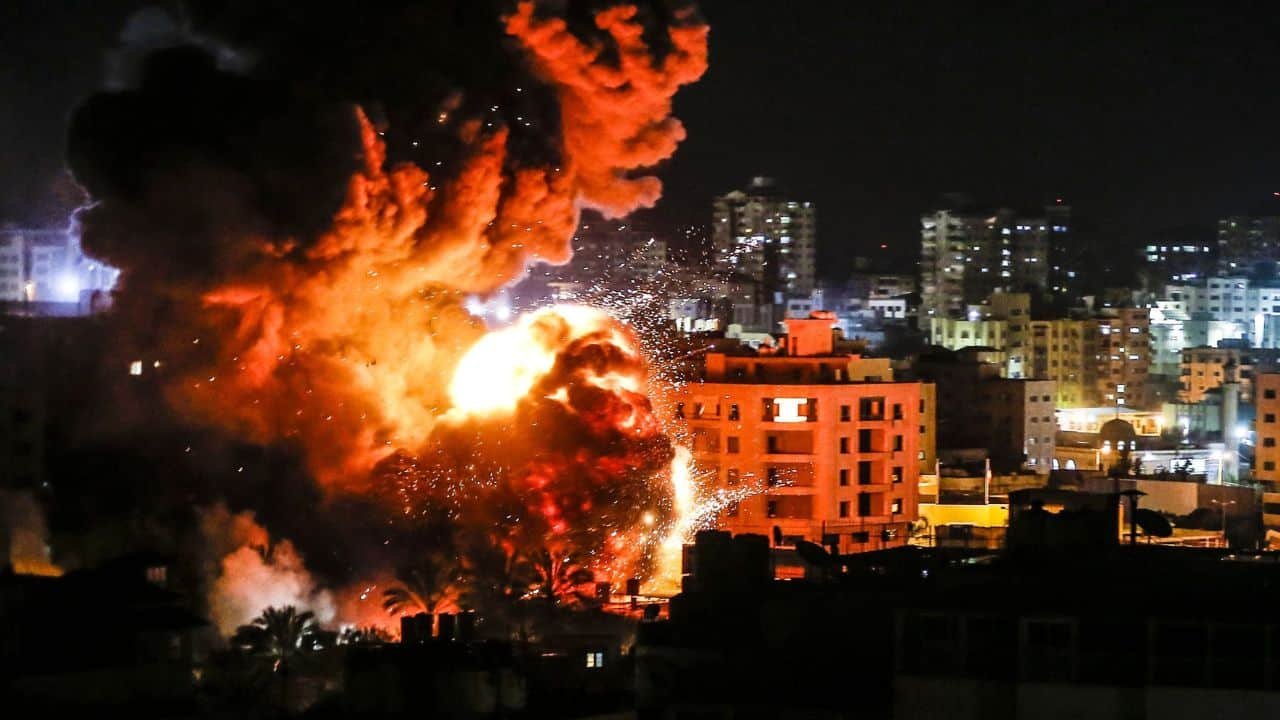
In response, Israel has launched a relentless bombing campaign and subsequent ground invasion in Hamas-ruled Gaza, killing more than 14,100 people — two thirds of them women or children — according to the territory’s health ministry.
Qatar said the deal had been undertaken with Egypt and the United States as well as Hamas and Israel and would include “the entry of a larger number of humanitarian convoys and relief aid, including fuel designated for humanitarian needs”.
Oxfam has released a new report, “Climate Equality: A Planet for the 99%”, revealing that “The richest one per cent of the world’s population produced as much carbon pollution in 2019 as the five billion people who made up the poorest two-thirds of humanity.”
While fighting the climate crisis is a shared challenge, not everyone is equally responsible and government policies must be tailored accordingly, Max Lawson, who co-authored the report, told AFP.
“The richer you are, the easier it is to cut both your personal and your investment emissions,” he said. “You don’t need that third car, or that fourth holiday, or you don’t need to be invested in the cement industry.”
Among the key findings of this study are that the richest one percent globally—77 million people—were responsible for 16 percent of global emissions related to their consumption.
That is the same share as the bottom 66 percent of the global population by income, or 5.11 billion people.
Pakistan
The difference in recent floodings in Germany and Pakistan unveils how a country’s wealth can “enable or hinder its ability to respond to a climate emergency”.
German floods affected a population of 40,000 people, resulting in damage and economic costs of 40 billion dollars. They were able to mobilise funding through federal and state government flood relief funds for reconstruction of 35 billion dollars within weeks.
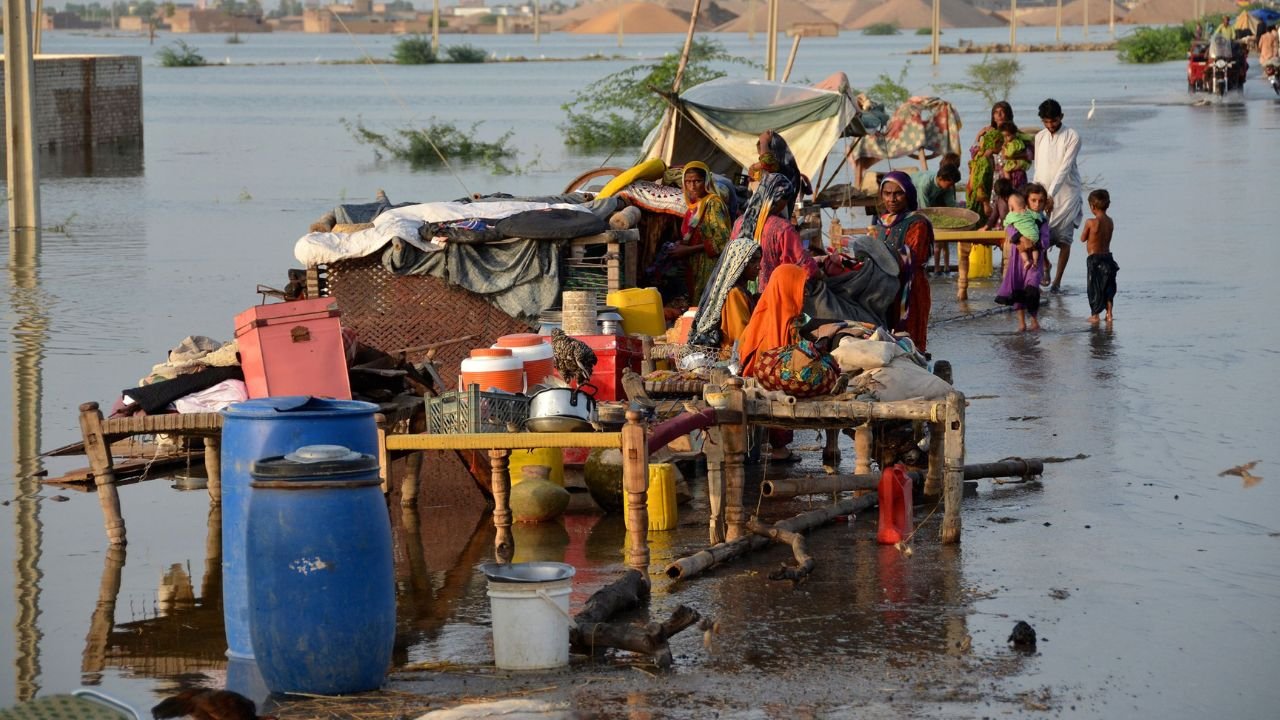
On the contrary, Pakistan floods affected a population of 33 million people, leading to damage and economic costs of 30 billion dollars. International donors pledged a funding of 8.57 billion dollars as of January 2023 for the next three years.
While Germany could easily manage the financial and technical resources required, debt-troddened Pakistan was unable to allocate the necessary resources resulting in suffering from “the lasting impacts of the floods”.
The report explains that this comparison between the two countries shows “a common double standard practised by many Global North countries: they rapidly find the funds needed when disasters hit within their borders, but fail to do so when they occur in the Global South”.
AFP – Cairo, Egypt: Twenty-nine premature babies arrived in Egypt on Monday, Egyptian media said, after they were evacuated from Gaza’s largest hospital which has become a focal point of Israel’s war with Hamas.
The infants were evacuated Sunday from the Al-Shifa hospital, which the World Health Organization has described as a “death zone” as Israel seeks to uncover what it says are Hamas bases in tunnels underneath the facility.
An initial 31 babies were reported evacuated from Al-Shifa to another Gaza clinic and it was not immediately clear why only 29 arrived in Egypt.