Author: afp

  • Cummins urges Australia to ’embrace’ India crowd challenge in World Cup final

    Cummins urges Australia to ’embrace’ India crowd challenge in World Cup final

     Australia captain Pat Cummins has urged his side to “embrace” the challenge of facing a hostile crowd when they play in-form hosts India in Sunday’s World Cup final in Ahmedabad.

    A capacity crowd of 130,000 — which would be a record for any cricket match — is expected to roar on India, who have won all 10 of their matches en route to the showpiece game.

    The hosts are bidding for a third men’s one-day international World Cup title and second on home soil after their 2011 triumph.

    But five-time champions Australia are a team full of big-match performers who also know what it’s like to play in cricket-crazy India from their time in the Indian Premier League.

    “I think you’ve got to embrace it, the crowd’s obviously going to be very one-sided,” Cummins told a pre-match news conference at the Narendra Modi Stadium, named after the Indian prime minister, on Saturday.

    “But also in sport, there’s nothing more satisfying (as an opposition player) than hearing a big crowd go silent and that’s the aim for us tomorrow.”

    The 30-year-old fast bowler added: “You’ve just got to embrace every part of it, every part of a final — you know in the lead-up there’s going to be noise and more people and interest and you just can’t get overwhelmed.

    ‘No Regrets’

    “You got to be up for it, you got to love it and just know whatever happens it’s fine but you just want to finish the day with no regrets,” Cummins said.

    And while he accepted the dimensions of Sunday’s match would be different to any his side had experienced before, Cummins said: “We play over here in India a lot so the noise is not something new. 

    “I think on this scale it’s probably bigger than we would have experienced before but it’s not something totally foreign to what we’ve had before.

    “Everyone deals with it slightly differently — you see Davey (Warner) probably dancing and winning the crowd over, other guys just staying in their own bubble –- it should be good.”

    Victory on Sunday would cap a remarkable 2023 for Australia that saw them narrowly lose a Test series in India before defeating India in a World Test Championship final in England, where they also went on to retain the Ashes after a drawn series.

    “It’s been a huge year,” said Cummins. “These are four marquee events. If you have one of those in an off-season, it’s a big off-season.

    “Some of the guys probably spent less than a couple of weeks in their own bed since the end of the Aussie summer,” added Cummins, also the skipper of Australia’s Test team.

    “The guys have been awesome. They’re so up for every game they play. 

    “To put ourselves in this position, it (winning the World Cup) would just top off an incredible year and probably a career-defining year that a lot of us will look back on in years to come and be pretty proud of.”

  • McDonald’s UK faces weekly sex abuse claims

    London (AFP) – McDonald’s boss in Britain said Tuesday the US fast-food giant faces “one to two” sexual harassment allegations from workers every week, as he vowed to tackle the issue recently exposed by the BBC.

    Alistair Macrow, chief executive of McDonald’s UK and Ireland, told a watchdog parliamentary committee that the chain’s management also receives around five reports a week of bullying.

    He said that his employees’ accounts of alleged harassment and racism were “truly horrific and hard to listen to”.

    It follows the BBC reporting in July numerous allegations of sexual misconduct, racism and bullying by staff at McDonald’s outlets in Britain.

    The company says it has dismissed 18 employees and taken 75 disciplinary measures, after examining 157 reported cases, since the scandal emerged.

    Some 249 cases remain to be investigated, it has said.

    Law firm Leigh Day recently launched group legal action against McDonald’s after the BBC aired the accusations, which included employees’ claims they were “groped and harassed almost routinely”.

    McDonald’s UK opened a specialist unit to investigate the allegations, which stemmed from the accounts of around 100 staff, according to the British broadcaster.

    Appearing before lawmakers in parliament, Macrow reiterated that he was “absolutely determined to root out any of these behaviours”.

    He pledged to identify individuals who are responsible for them and “make sure they are eradicated from our business”.

    But earlier in the hearing, union leaders claimed that, contrary to those assertions, the situation had not improved within McDonald’s since it launched its internal probes.

    The unions also claim that the firm has a history of using out-of-court settlements in response to such allegations, including non-disclosure agreements (NDAs).

    The Bakers, Food and Allied Workers Union alleged four years ago that more than 1,000 female employees of the fast-food giant were victims of sexual harassment and abuse.

    This year’s BBC investigation revealed that many female employees under the age of 18 reported being sexually or emotionally harassed.

    One ex-employee, Shelby, who was only 16 when she started working at McDonald’s, told the broadcaster that she was constantly touched in an inappropriate and unwanted ways by older male employees in the kitchen.

    The fast-food chain has 177,000 employees in the UK, many of whom are young workers, including teenagers.

  • Gaza’s embattled main hospital buries patients in ‘mass grave’

    Gaza’s main hospital has been forced to bury dozens of dead patients in a mass grave, its director said Tuesday, while thousands of Palestinians were trapped inside by fierce combat.

    Israeli forces were at the gates of the sprawling Al-Shifa hospital they say sits atop an underground Hamas command base, but the militants deny the charge while doctors say patients and people seeking shelter were stranded in horrific conditions.

    “There are bodies littered in the hospital complex and there is no longer electricity at the morgues,” said Al-Shifa hospital director Mohammad Abu Salmiya, adding that 179 bodies had been interred so far.

    “We were forced to bury them in a mass grave,” he said, adding that seven babies and 29 intensive care patients were among those who had died after fuel for the hospital’s generator ran out.

    A witness said the stench of decomposing bodies was everywhere in the Gaza City facility as bombardment and gunfire echoed constantly in the area.

    The United Nations estimates that at least 2,300 people — patients, staff and displaced civilians — are inside and may be unable to escape because of fierce fighting from the facility where supplies are nearly exhausted.

    Israel says it is not targeting the hospital, but has vowed to destroy Hamas in response to the attacks of October 7, which killed an estimated 1,200 people, mostly civilians, and saw 240 hostages being taken to Gaza.

    The health ministry in Hamas-run Gaza says Israel’s relentless assault has killed 11,320 people, also mostly civilians, including thousands of children.

    Israel’s military says 47 of its troops have been killed in Gaza.

    Al-Shifa’s fate has become a major focus of the more than five week war that has stirred international criticism of the suffering and death inflicted on civilians in the besieged territory.

    Israel’s Foreign Minister Eli Cohen acknowledged in a statement shared by his spokesman Monday that his nation has “two or three weeks until international pressure really steps up”. 

    ‘Completely soaked’

    The situation in Gaza’s other hospitals is also dire, with the UN saying 22 of 36 are not functional due to lack of generator fuel, damage and combat.

    “The 14 hospitals remaining open have barely enough supplies to sustain critical and life-saving surgeries and provide inpatient care, including intensive care,” said the World Health Organization in the Palestinian Territories.

    But the humanitarian crisis in the territory also includes the hundreds of thousands of people who have fled south at Israel’s urging to get away from the most intense fighting.

    On Tuesday displaced Palestinians in the south woke up to yet another scourge: rain, soaking their meagre belongings and threatening to bring waterborne diseases to their places of shelter.

    “We are completely soaked, all of our clothes are soaked, our mattresses, our blankets too, even a dog could not live like this,” said Ayman al-Jueidi, who has set himself up in the courtyard of a UN school in Rafah at the southern extremity of the Gaza Strip.

    Even escaping the fighting is dangerous and wounded Palestinians told AFP how they were hit by a strike on their way south.

    “I walked around three to four kilometres (around two miles) while I was bleeding,” said Hasan Baker, whose head and left hand were bandaged. “There was no possibility for any ambulance to enter the area.”

    Hostage talks

    Israeli leaders have so far insisted there will be no ceasefire until hostages are released, but Qatar is mediating talks on a possible deal to free captives.

    Abu Obeida, a spokesman for Hamas’s military wing, said Monday that Israel asked for the release of 100 hostages while the militants want 200 Palestinian children and 75 women freed from Israeli prisons.

    “We informed the mediators we could release the hostages if we obtained five days of truce… and passage of aid to all of our people throughout the Gaza Strip, but the enemy is procrastinating,” Abu Obeida said in an audio statement.

    Qatari foreign ministry spokesman Majed bin Mohammed Al-Ansari told a news conference in Doha that the “deteriorating” situation in Gaza was hampering mediation efforts.  

    “We believe that there is no other chance for both sides other than for this mediation to take place,” he said. 

    Relatives of hostages set out Tuesday on a five-day protest march to Prime Minister Benjamin Netanyahu’s office to demand “the immediate release of all the hostages”, the Hostages and Missing Families Forum said.

    Netanyahu responded in a statement that the government was “working relentlessly for the release of the hostages, including using increased pressure since the start of the ground incursion”.  

    As security officials and diplomats continued negotiations, Hamas’s military wing issued a video of captive Israeli soldier Noa Marciano.

    The Israeli army on Tuesday confirmed she was dead.

    Abu Obeida claimed Marciano was killed in an Israeli strike. The Israeli army did not say how she died.

    West Bank violence

    The Israeli army said it had captured Gaza’s parliament, the government building, the police headquarters and other government institutions run by Hamas in Gaza City, as its forces deepened their offensive in the Palestinian territory.

    The army also showed images of a discarded baby bottle, makeshift toilet and bullet-scarred motorbike as evidence Hamas held hostages in the basement of Al-Rantisi children’s hospital in Gaza City.

    AFP was not able to independently confirm the allegation.

    The video narrated by army spokesman Daniel Hagari also shows neatly arranged assault rifles, grenades and what he said were “vests with explosives”.

    The Hamas health ministry described the Israeli video as “poor staging” with “not a single piece of evidence” backing the Israeli army claims.

    The war in Gaza has also spurred violence on other fronts.

    In the occupied West Bank, eight Palestinians were killed in clashes with Israeli troops, seven during an army raid on the northern city of Tulkarem and one near the southern city of Hebron, the Palestinian health ministry said on Tuesday.

    At least 180 Palestinians and three Israelis have been killed across the West Bank since October 7, according to officials on both sides.

    The Israeli police said they were investigating “several cases” of alleged sexual violence against women by Hamas militants in the attack that triggered the conflict.

    Since the attacks, police have been gathering evidence about allegations of sexual violence from witnesses, surveillance footage and the interrogations of Palestinian militants arrested in the aftermath. 

    Police had “multiple witnesses” but no “living victims”, investigator David Katz said without giving the precise number of cases.

  • South Asia worst in world for water scarcity: UN

    New Delhi (AFP) – More children in South Asia are struggling due to severe water scarcity made worse by the impacts of climate change than anywhere else worldwide, the United Nations said Monday.

    “A staggering 347 million children under 18 are exposed to high or extremely high water scarcity in South Asia, the highest number among all regions in the world,” the UN children’s agency said in a report.

    The eight-nation region, comprising Afghanistan, Bangladesh, Bhutan, India, Nepal, Maldives, Pakistan and Sri Lanka, is home to more than one-quarter of the world’s children.

    “Climate change is disrupting weather patterns and rainfall, leading to unpredictable water availability,” the UN said in its report.

    The report cites poor water quality, lack of water and mismanagement such as over-pumping of aquifers, while climate change decreases the amount of water replenishing them.

    “When village wells go dry, homes, health centres and schools are all affected,” UNICEF added.

    “With an increasingly unpredictable climate, water scarcity is expected to become worse for children in South Asia.”

    At the UN COP28 climate conference in December in Dubai, UNICEF said it will call for leaders “to secure a livable planet”.

    “Safe water is a basic human right,” said Sanjay Wijesekera, UNICEF chief for South Asia.

    “Yet millions of children in South Asia don’t have enough to drink in a region plagued by floods, droughts and other extreme weather events, triggered increasingly by climate change”.

    Last year, 45 million children lacked access to basic drinking water services in South Asia, more than any other region, but UNICEF said services were expanding rapidly, with that number slated to be halved by 2030.

    Behind South Asia was Eastern and Southern Africa, where 130 million children are at risk from severe water scarcity, the report added.

  • Australian Club Cricketer Takes Six Wickets In Six Balls To Win Match

    Australian Club Cricketer Takes Six Wickets In Six Balls To Win Match

    An Australian club cricketer took six wickets in an incredible final over to clinch victory in a one-day game over the weekend, describing the rare feat as “surreal”.

    Facing almost certain defeat in the Gold Coast’s Premier League Division 3, Mudgeeraba captain Gareth Morgan opted to bowl the last six balls himself with Surfers Paradise needing five runs to win with six wickets in hand.

    They dramatically collapsed with Morgan removing opener Jake Garland for 65 then dismissing the next five batters for golden ducks.

    “It is funny, the umpire said to me at the start of the over that I needed to take a hat-trick or something to win the game,” Morgan told the Gold Coast Bulletin after his exploits attracted national attention.

    “When it happened he just sort of looked at me.”

    He added to national broadcaster ABC that it was “very surreal”.

    “I remember thinking after I got the hat-trick — I don’t want to lose this game now,” he said.

    “Then it just went crazy. When I saw the stumps go back on the last ball I couldn’t believe it, I’ve never seen anything like it.”

    The first four dismissals were all caught, while the final two were bowled.

    The most wickets in an over in professional cricket is five, achieved by New Zealand’s Neil Wagner (2011), Bangladesh’s Al-Amin Hossain (2013) and India’s Abhimanyu Mithun (2019), according to ABC.

  • ‘Not crime to make mistakes’: Babar Azam under pressure after Pakistan crashes out of  World Cup

    ‘Not crime to make mistakes’: Babar Azam under pressure after Pakistan crashes out of World Cup

    Captain Babar Azam was described as “depressed” and under pressure to save his job on Sunday after Pakistan crashed out of the Cricket World Cup, failing to make the semi-finals for a second successive tournament.

    A 93-run loss to England sealed Pakistan’s fate, ending the 1992 champions’ already slim hopes of squeezing into the last four.

    Former captain and ex-chairman of the cricket board Ramiz Raja said that 29-year-old Azam was “depressed” over the reaction at home.

    Fans’ anger would have been made more acute by seeing arch-rivals India sweeping to eight wins out of eight, becoming the first team to reach the semi-finals.

    Pakistan lost five of their nine games including a seven-wicket mauling by India in front of more than 100,000 fans in Ahmedabad.

    That was India’s eighth victory in eight World Cup games against their neighbours.

    Pakistan also lost to Afghanistan for the first time.

    Azam made 320 runs at the World Cup with four fifties at an average of 40 and remains the world’s second-highest-ranked batsman. He has almost 13,000 runs in all international cricket.

    However, it was his captaincy in India which was questioned when he faced accusations of lacking aggression in field settings.

    “I get behind Babar. Babar is very, very close to me. He’s a young guy that needs to be taken on the journey, he needs to be shown the ropes,” said team director Mickey Arthur.

    ‘Time to grow’

    Azam has been captain of the Test and ODI teams since 2020.

    “He’s still learning all the time. We know he’s a very, very fine batsman. He learns every day with his captaincy,” added Arthur.

    “We have to allow him the time to grow. And in order to do that, you make mistakes. It’s not a crime to make mistakes as long as you learn from those mistakes,” he said.

    Despite the despondency of fans at home, Azam and his team found sympathy in India.

    Only a smattering of fans — mostly expatriates — were at the venues as visa complications effectively meant a ban on those wishing to cross the border.

    As a Pakistan squad playing in India for the first time in seven years, they were virtually confined to hotel rooms once playing and training commitments were completed.

    Security details would accompany players and squad members if they wanted to venture outside their hotel.

    Arthur compared the situation to touring “in Covid times”.

    Raja believes that Azam may become the first victim of bloodletting in a cricketing environment often plagued by infighting.

    “There’s so much pressure on him that he may leave the job,” Raja told the BBC’s Test Match Special.

    “Back home there has obviously been a massive backlash, as expected. The Pakistan media have targeted certain players, especially Babar Azam.

    “It’s just a World Cup so you have to take the heat somehow. The problem with this team is it has the potential to play modern-day cricket but they have been a bit shy and timid with their approach,’ Raja added.

  • Bangladesh coach calls for timed-out rule change as Shakib row rumbles on

    Bangladesh coach calls for timed-out rule change as Shakib row rumbles on

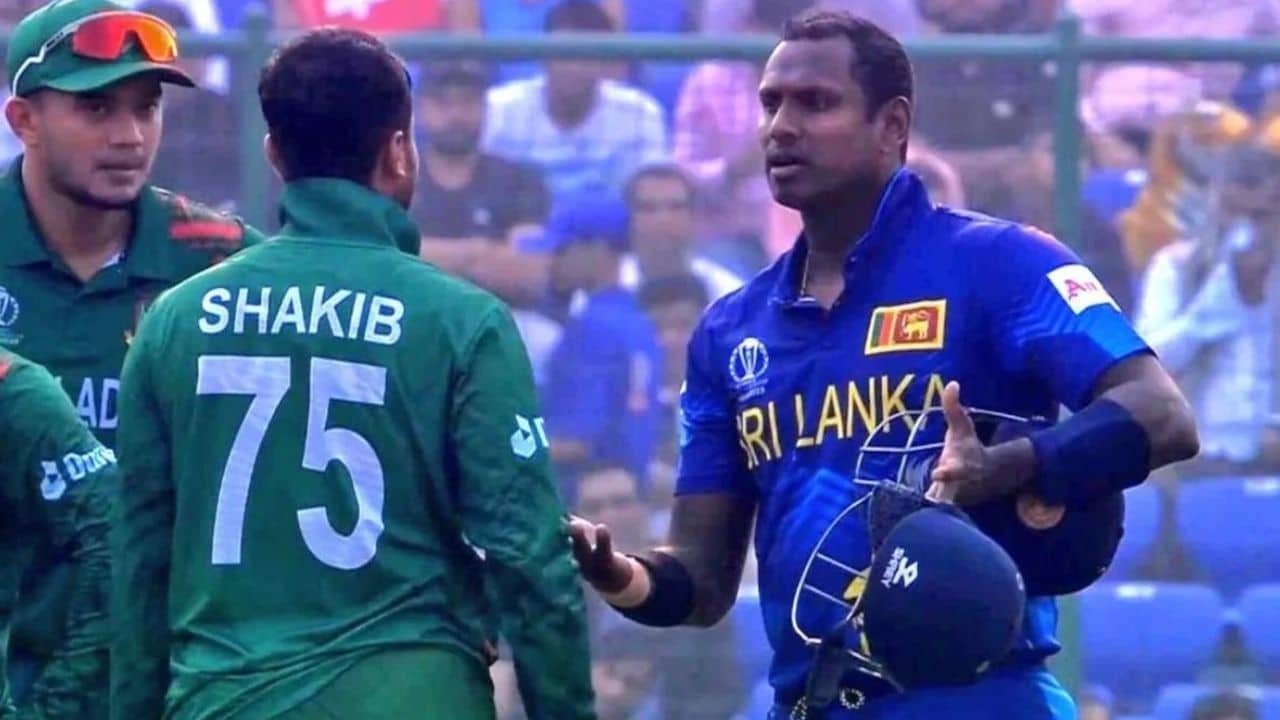
    Bangladesh coach Chandika Hathurusingha called for a change to cricket’s timed-out law, saying it should be a matter for the umpires only, as debate rumbled on about Shakib Al Hasan’s role in a controversial dismissal of Sri Lanka’s Angelo Mathews.

    Bangladesh defeated Sri Lanka by three wickets in a World Cup group-stage game in Delhi on Monday.

    However, the result was overshadowed by Mathews becoming the first player in the 146-year history of major international cricket to be timed out following an appeal by Shakib, which the Tigers captain refused to withdraw.

    Mathews was given out after he exceeded the two minutes allowed for an incoming batsman to take strike as he attempted to secure a broken strap on his helmet.

    Bangladesh bowling coach Allan Donald, who is to quit his post when his contract expires after the World Cup, was unhappy with the dismissal, telling the CricBlog website: “I think it really overshadowed a clinical performance by Bangladesh. I’m sort of a bit still shocked about it to be honest. 

    “It’s just my values that I have as a person and as a cricketer,” the 57-year-old former South Africa fast bowler added.

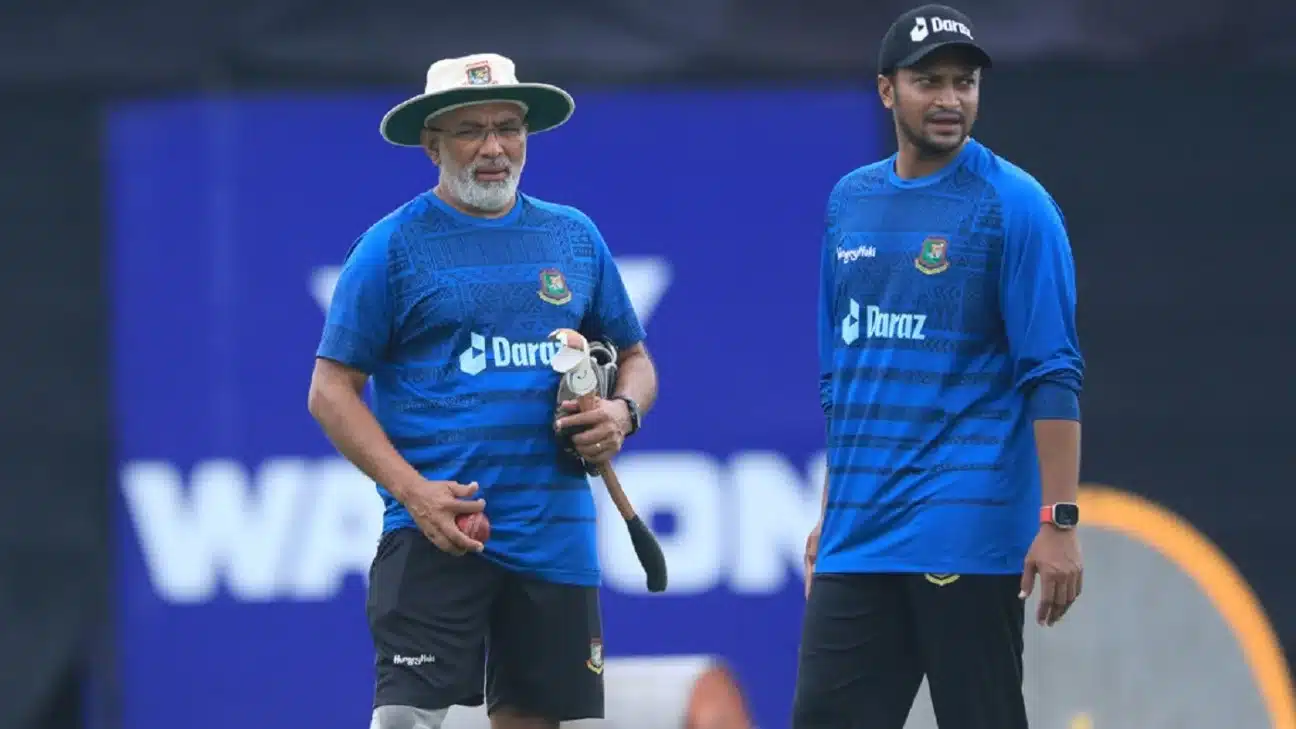
    But Hathurusingha said Friday: “I don’t think it (the row) is going to stop here, whatever I say. The only thing I can say is that it’s one of the modes of dismissal.

    “My suggestion is to leave it to the umpires to decide, I don’t think you should leave it to the players to appeal and all that.”

    Victory over Sri Lanka came too late to salvage Bangladesh’s hopes of a semi-final place, with the team having lost six of their eight group games ahead of Saturday’s clash in Pune against Australia, already into the last four.

    ‘Spoilt

    And they will have to face the five-time champions without Shakib, appearing in his fifth World Cup, after he broke his finger batting against Sri Lanka.

    The spin-bowling all-rounder may now have played the last World Cup match of his career given he will be 40 by the time of the 2027 edition in southern Africa.

    “We have been spoilt,” Hathurusungha said. “We have had him for a long time, when you have someone of Shakib’s calibre as your number one all-rounder, it’s two players in one…It’s hard (to replace him in the side).”

    Saturday’s match could also mark a World Cup exit for fellow veterans Mushfiqur Rahim and Mahmudullah, with Hathurusingha saying of the trio: “They have been the best of Bangladesh cricket in the short journey of Bangladesh cricket. 

    “If they decided to quit, it’s a change (passing) of the baton kind of thing.”

    Bangladesh are currently eighth in the table, the last qualifying place for the 2025 Champions Trophy in Pakistan.

    But Hathurusingha said his sole focus was on trying to beat Australia.

    The former champions won their sixth game in a row at the tournament in Mumbai on Tuesday after Glenn Maxwell’s spectacular unbeaten double century saw them to a dramatic three-wicket win over Afghanistan after they had collapsed to 91-7.

    “They’re the most successful team in World Cup history,” said Hathurusingha. 

    “They started slowly but they have already qualified. Playing against them is a big challenge.”

  • Bangladesh police clash with 25,000 protesting garment workers

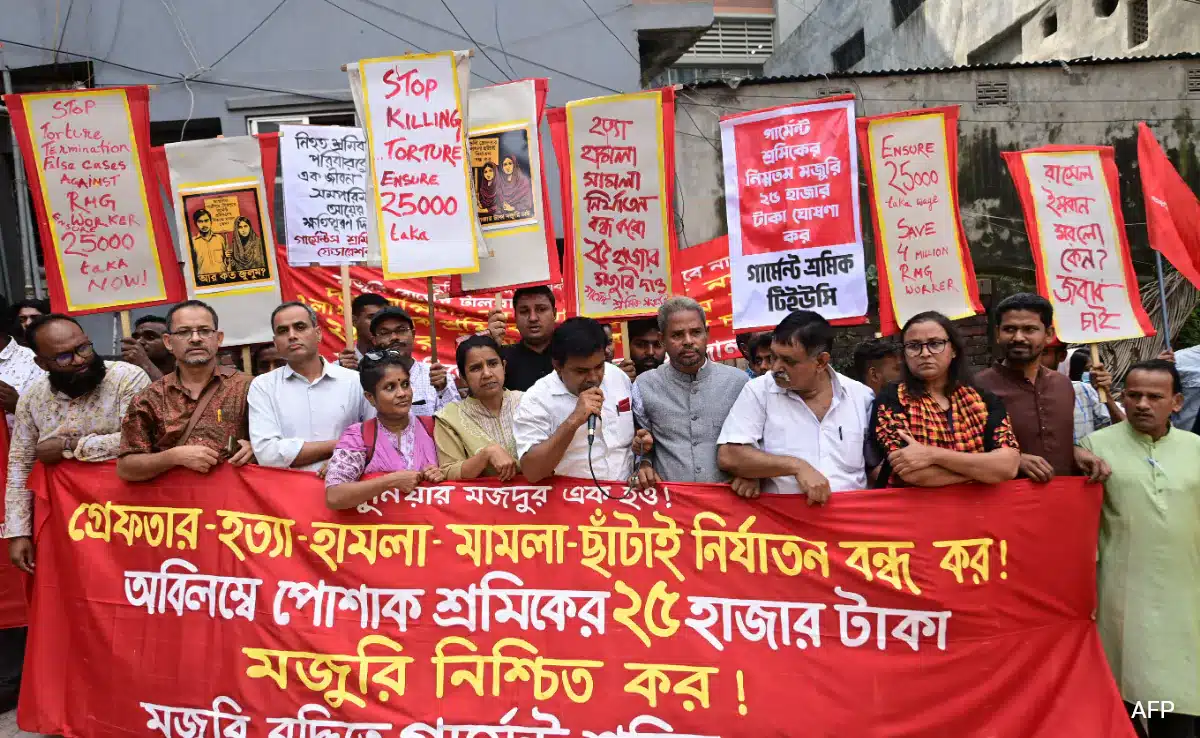
    Up to 25,000 garment workers clashed with police in Bangladesh on Thursday, officials said, as protests rejecting a government-offered pay rise forced the closure of at least 100 factories outside Dhaka.

    A government-appointed panel raised wages on Tuesday by 56.25 percent for the South Asian nation’s four million garment factory workers, who are seeking a near-tripling of their monthly wage.

    Bangladesh’s 3,500 garment factories account for around 85 percent of its $55 billion in annual exports, supplying many of the world’s top brands including Levi’s, Zara and H&M.

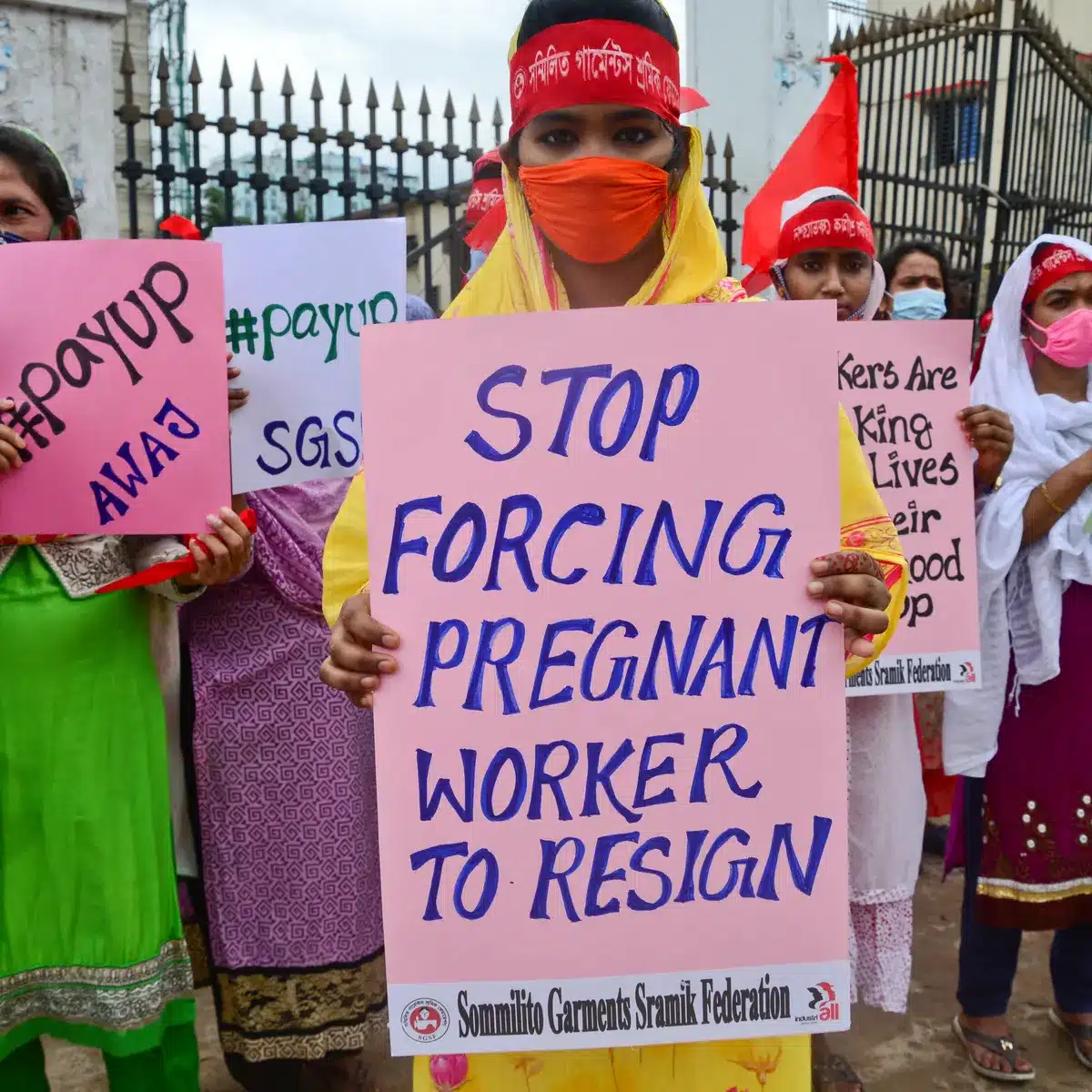
    But conditions are dire for many of the sector’s four million workers, the vast majority of whom are women whose monthly pay starts at 8,300 taka ($75).

    Police said violence broke out in the industrial towns of Gazipur and Ashulia outside the capital after more than 10,000 workers staged protests in factories and along highways to reject the panel’s offer.

    “There were 10,000 (protesting) workers at several spots. They threw bricks and stones at our officers and factories, which were open,” Mahmud Naser, Ashulia’s deputy industrial police chief, told AFP.

    “One of our officers was injured. We fired rubber bullets and tear gas to disperse the workers,” Naser said.

    He said more than 100 factories were shut down in Ashulia and surrounding areas.

    Thousands of workers also clashed with the elite Rapid Action Battalion (RAB) and police at Konabari and Naujore in Gazipur, with police using batons and tear gas to drive them into alleys, AFP correspondents at the scene said.

    “Some 15,000 workers blocked the road at Konabari, and vandalised vehicles and other properties. We had to disperse them to maintain law and order,” Gazipur municipality administrator Sayed Murad Ali told AFP.

    At least two injured workers were taken to hospital, police said.

    Intimidation

    The workers are seeking a wage rise to 23,000 taka and unions representing them have rejected the panel’s increase as “farcical”.

    Police say at least three workers have been killed since the wage protests broke out in key industrial towns last week, including a 23-year-old woman shot dead on Wednesday.

    At least six police officers have also been injured in the protests.

    Unions say the panel’s wage increase fails to match soaring prices of food, house rents and schooling and healthcare costs.

    They have also accused the government and police of arresting and intimidating organisers.

    “Police arrested Mohammad Jewel Miya, one of the organisers of our unions. A grass-roots leader… was also arrested,” Rashedul Alam Raju, the general secretary of the Bangladesh Independent Garment Workers Federation (BIGWUF), told AFP.

    Another union leader, speaking on condition of anonymity, said at least six union leaders had been arrested and unions were being threatened by police to call off the protests and accept the wage offer.

    There was no immediate comment from police about the arrests.

    The United States has condemned violence against protesting Bangladeshi garment workers and “the criminalisation of legitimate worker and trade union activities”.

    In a statement, State Department spokesman Matthew Miller urged the panel “to revisit the minimum wage decision to ensure that it addresses the growing economic pressures faced by workers and their families”.

    Thea Lee, the US Department of Labor’s deputy undersecretary for international affairs, called for the release of BIGWUF organiser Miya.

    The Netherlands-based Clean Clothes Campaign, a textile workers’ rights group, has also dismissed the new pay level as a “poverty wage”.

    The minimum wage is fixed by a state-appointed board that includes representatives from the manufacturers, unions and wage experts.

  • G7 backs ‘humanitarian pauses’ in Gaza, reaffirms Ukraine support

    G7 foreign ministers said Wednesday that they supported “humanitarian pauses and corridors” in the Hamas-Israel war but refrained from calling for a ceasefire.

    The group also said after talks in Japan that their support for Ukraine in its war with Russia “will never waver” while calling on China not to support Moscow in the conflict.

    “We stress the need for urgent action to address the deteriorating humanitarian crisis in Gaza… We support humanitarian pauses and corridors to facilitate urgently needed assistance, civilian movement, and the release of hostages,” a joint statement said.

    The ministers also “emphasize Israel’s right to defend itself and its people in accordance with international law as it seeks to prevent a recurrence” of the Hamas attacks on Israel on October 7.

    It added: “We call on Iran to refrain from providing support for Hamas and taking further actions that destabilize the Middle East, including support for Lebanese Hezbollah and other non-state actors, and to use its influence with those groups to de-escalate regional tensions.”

    ‘Overall security’

    The Israeli military has relentlessly bombarded Gaza since October 7, when Hamas militants launched an attack that left 1,400 dead in Israel, most of them civilians, according to Israeli authorities.

    The Hamas-run health ministry says the death toll in Gaza has surpassed 10,300 people.

    Israeli Prime Minister Benjamin Netanyahu said Monday there would be no fuel delivered to Gaza and no ceasefire unless more than 240 hostages seized by Hamas were freed.

    He also said Israel would assume “overall security” in Gaza after the war ended, while allowing for possible “tactical pauses” before then to free captives and deliver aid to the besieged territory.

    However, Washington said Tuesday it opposed a new long-term occupation of Gaza by Israel.

  • Bangladesh Garment Workers Reject 56% Pay Rise

    Bangladesh Garment Workers Reject 56% Pay Rise

    Bangladesh raised the minimum monthly pay for the country’s four million garment workers by 56.25 percent on Tuesday, a decision immediately rejected by unions seeking a near-tripling of the figure.

    The South Asian country’s 3,500 garment factories account for around 85 percent of its $55 billion in annual exports, supplying many of the world’s top fashion names including Levi’s, Zara and H&M.

    But conditions are dire for many of the sector’s four million workers, the vast majority of whom are women whose monthly pay starts at 8,300 taka ($75).

    Workers have gone on strike to demand a near-tripling of their wages, with violent scenes in recent days, while employers offered 25 percent.

    The minimum wage is fixed by a state-appointed board that includes representatives from the manufacturers, unions and wage experts.

    “The new minimum monthly wage for garment factory workers has been fixed at 12,500 taka ($113),” Raisha Afroz, the board secretary, told AFP.

    The figure was immediately rejected by unions, which have been demanding a 23,000 taka minimum.

    Unions say their members have been hard hit by persistent inflation, which in October reached nearly 10 percent, and a cost of living crisis partly triggered by the taka depreciating about 30 percent against the US dollar since early last year.

    “This is unacceptable. This is below our expectations,” said Kalpona Akter, head of the Bangladesh Garment and Industrial Workers Federation.

    Hundreds of workers staged an angry protest just yards from the labour ministry after the announcement.

    “I reject this new monthly minimum wage,” said garment worker Sajal Mia, 21.

    “It is an injustice to us. The authorities didn’t take the situation of the market into the account. They’re only concerned about their own interests,” he added.

    The panel normally sits every five years and in 2018 raised the basic minimum from 5,000 taka to 8,000. Garment workers also get at least 300 taka per month as an attendance fee.

    Earlier Tuesday, police fired tear gas at thousands of workers who set a bus on fire outside Dhaka, as tensions rose ahead of the announcement.

    Police said violence broke out in the industrial city of Gazipur as about 6,000 workers walked out of their plants and staged protests.

    “They torched a bus. We fired tear gas to disperse them,” Gazipur industrial police unit chief Sarwar Alam told AFP.

    Police said around 600 factories that make clothing for many major Western brands were shuttered last week and scores were ransacked as the worst wage protest in a decade hit major industrial areas and a suburb of the capital.

    Four factories were torched and at least two workers were killed in the violence, with tens of thousands of workers blocking highways and attacking factories.

    There was no comment from top brands who source tens of billions of dollars of clothing from Bangladesh and for whom South Asian factories are a vital part of their supply chains.

    But last month brands including Gap, Levi Strauss, Lululemon, and Patagonia wrote to Prime Minister Sheikh Hasina calling for a “successful conclusion” to wage negotiations.

    “The consultations should seek to raise the minimum wage to a level that corresponds with a wage level and benefits that are sufficient to cover workers’ basic needs and some discretionary income,” they said.

    The protests have coincided with separate violent demonstrations by opposition parties demanding the resignation of Hasina ahead of elections due in January.