Author: afp

  • Disney to shut Lucasfilm studio in Singapore

    Lucasfilm’s visual effects and animation studio in Singapore will close down in the coming months due to economic reasons, parent firm Disney said on Tuesday.

    The Singapore studio was set up in the 2000s by Industrial Light & Magic (ILM), which was founded by Star Wars creator George Lucas and is a division of Lucasfilm.

    For years, its home in Singapore was the striking Sandcrawler building, named after the Star Wars transport that inspired its design. Lucasfilm sold the building in 2021.

    “Over the next several months, ILM will be consolidating its global footprint and winding down its Singapore studio due to economic factors affecting the industry,” Disney said in a statement.
    It did not say how many employees will be affected in Singapore.

    Disney said in February it was cutting 7,000 jobs worldwide — part of a reorganisation as its traditional television business erodes and in the face of stiff competition and eroding subscriber numbers for its streaming service, Disney+.

    “Lucasfilm’s decision to wind down its Singapore operations is in response to changes in the industry and business conditions,” Singapore’s Infocomm Media Development Authority (IMDA) and the Economic Development Board (EDB) said in a joint statement.

    “The global media industry is facing disruption from rapid technological advancements, while studios are coping with challenges relating to talent and profitability.”

    The Singapore studio was involved in high-profile Hollywood productions including “Iron Man”, “The Avengers” and Star Wars films, according to the EDB’s website.

  • Life in Afghanistan: Two years since the Taliban takeover

    Two years since the Taliban stormed back to power on 15 August 2021 after two decades of war against the US and its allies, life has changed dramatically for many Afghans. A businesswoman, a former Taliban fighter and a farmer tell AFP how the changes have impacted them.

  • England to host Zimbabwe for Test in 2025

    England to host Zimbabwe for Test in 2025

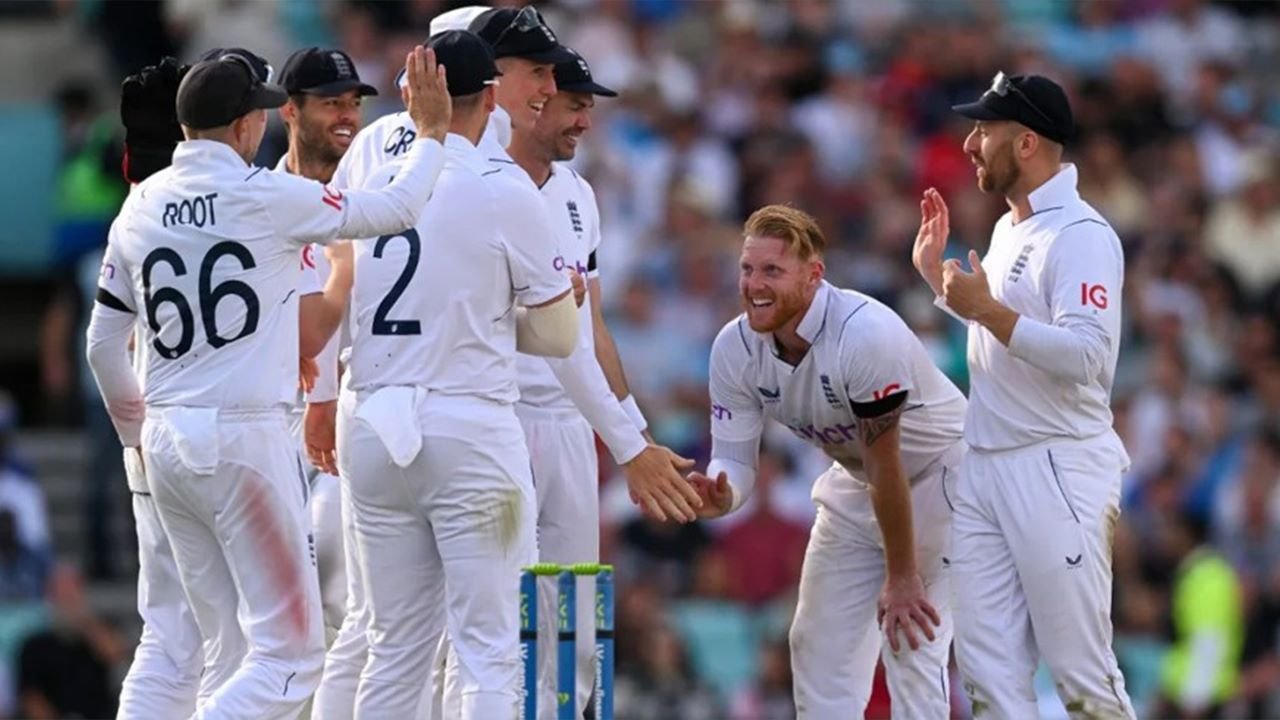
    England will host Zimbabwe in a men’s Test match for the first time in 22 years in May 2025.
    The four-day Test will take place from May 28-31, with the venue for the one-off match to be confirmed at a later date.
    Jimmy Anderson, England’s leading Test wicket-taker, made his debut the last time his country faced Zimbabwe in 2003.
    “We are delighted to be able to host Zimbabwe for a men’s Test match for the first time in two decades,” ECB chief executive Richard Gould said on Tuesday.
    “Zimbabwe has a proud cricket history and have produced world-class players and coaches who have enriched the game across the world.
    “We are committed to developing a closer relationship with Zimbabwe Cricket and the announcement of this Test against our England men’s team is a step in that ambition.”
    England have played three two-Test series against Zimbabwe, drawing in 1996 and winning in 2000 and 2003.
    “The significance and magnitude of this tour cannot be over-emphasised,” Zimbabwe Cricket managing director Givemore Makoni said.
    “The experience of playing a Test match against a top team like England is massive for the current generation of our players, coming at a time when our game as a whole is on an upward trajectory.”
    Revitalised by captain Ben Stokes and head coach Brendan McCullum, England have breathed new life into Test cricket over the last two years with their aggressive ‘Bazball’ game-plan.
    England fought back from 2-0 down to draw the Ashes series with World Test champions Australia earlier this year.
    “This summer’s Ashes series showcased all that is great about Test cricket and, while we must be mindful of the demands of world cricket’s schedule, we also want to help grow Test cricket and find opportunities to play more nations where we can,” Gould said.

  • Trump indicted for racketeering over 2020 election interference

    Trump indicted for racketeering over 2020 election interference

    By Christian Monterrosa with Frankie Taggart in Washington

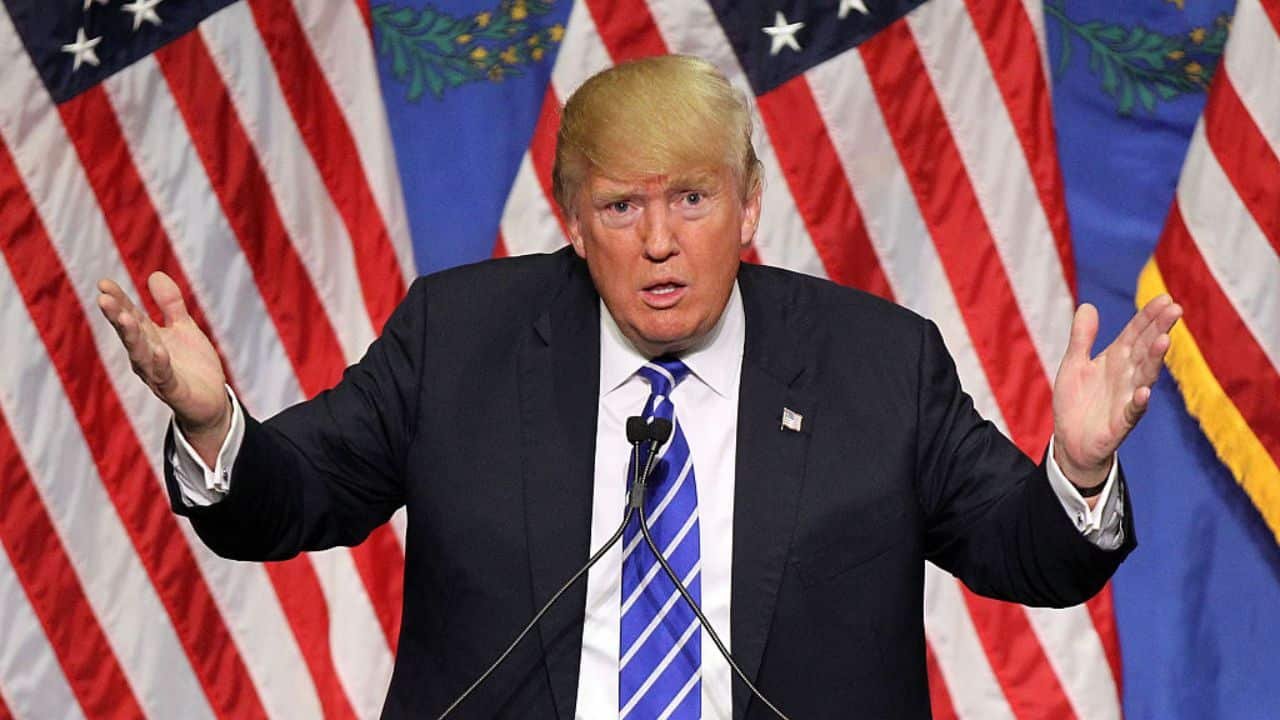
    Donald Trump was indicted Monday on charges of racketeering and a string of election crimes afer a sprawling, two-year probe into his eforts to overturn his 2020 defeat to Joe Biden in the US state of Georgia.

    The case — relying on laws typically used to bring down mobsters — is the fourth targeting the 77-year-old Republican this year and could lead to a watershed moment, the first televised trial of a former president in US history.

    Prosecutors in Atlanta charged Trump with 13 felony counts — compounding the legal threats he is facing in multiple jurisdictions as a firestorm of investigations imperils his bid for a second White House term.

    Eighteen co-defendants were indicted in the probe, including Trump’s former personal lawyer Rudy Giuliani, who pressured local legislators over the result afer the election, and Trump’s White House chief of staf, Mark Meadows.

    With Trump already due to go on trial in New York, south Florida and Washington, the latest charges herald the unprecedented scenario of the 2024 presidential election being litigated as much from the courtroom as the ballot box.

    “Rather than abide by Georgia’s legal process for election challenges, the defendants engaged in a criminal racketeering enterprise to overturn Georgia’s presidential election result,” Fulton County prosecutor Fani Willis told reporters.

    Willis said Trump and his co-defendants had until noon on August 25 to “voluntarily surrender” to authorities, adding that she would like to go to trial within six months.

    “So, the Witch Hunt continues!” Trump posted on his Truth Social platform.

    “Sounds Rigged to me! Why didn’t they Indict 2.5 years ago? Because they wanted to do itright in the middle of my political campaign. Witch Hunt!”

    His lawyers’ statement took issue with the “leak of a presumed and premature indictment before the witnesses had testified or the grand jurors had deliberated”, in what they say has been a “flawed and unconstitutional” process.

    In response to similar allegations by the Trump campaign, Willis said: “I make decisions in this ofice based on the facts and the law. The law is completely nonpartisan.” The twice-impeached Trump was charged with violating Georgia’s Racketeer Influenced and Corrupt Organizations (RICO) Act, as well as six conspiracy counts over alleged eforts to commit forgery, impersonate a public oficial and submit false statements and documents.
    He is also accused of lying in statements and filing fake documents, as well as soliciting public oficials to break their oaths.

    -Most serious threat –

    Georgia, which Biden won by fewer than 12,000 votes, presents perhaps the most serious threat to Trump’s liberty as he leads the field comfortably for his party’s nomination to bid for reelection.

    Even if he is returned to the Oval Ofice, he would have none of the powers that presidents arguably enjoy in the federal system to pardon themselves or have prosecutors drop cases. The harsh penalties associated with RICO cases can be an incentive for co-defendants to seek cooperation deals, and the statutes are usually used to target organized crime. Thirty unindicted co-conspirators were mentioned in the indictment.

    Under federal law, anyone who can be connected to a criminal “enterprise” through which offenses were committed can be convicted under RICO. The broader Georgia law doesn’t even require the existence of the enterprise.

    Atlanta-area authorities launched the probe afer Trump called Georgia officials weeks before he was due to leave the White House, pressuring them to “find” the 11,780 votes that would reverse Biden’s victory in the Peach State.

    Meadows, who is accused of trying to get a public oficial to violate his oath, was on the call.

    Secret report –

    Willis empaneled a special grand jury that heard from around 75 witnesses before recommending a raf of felony counts in a secret report in February.

    She alleges that Trump’s team worked with local Republicans on a scheme to replace legitimate slates of “electors” — the oficials who certify a state’s results and send them to the US Congress — with fake pro-Trump stand-ins.

    The indictment lists a litany of telephone calls made by Trump, Giuliani and others to various state oficials for the purpose of unlawfully appointing fake electors to swing the Electoral College in Trump’s favor.

    Giuliani faces 13 felony counts, including over accusations of harassment of two Fulton County poll workers.

    Other Trump allies were charged over the accessing of sensitive data from an election office in a rural county south of Atlanta one day afer the 2021 Capitol riot.

    Trump is already facing dozens of felony charges afer being federally indicted over the alleged plot to subvert the election, and further prosecutions over his alleged mishandling of classified documents and keeping allegedly fraudulent business records.

    Authorities in Atlanta installed security barricades outside the downtown courthouse in anticipation of a potential influx of Trump supporters and counter-protesters in the latest case.

    Lawmakers investigating Trump’s eforts to cling to power heard evidence in a series of congressional hearings last summer that would challenge his potential defense that he genuinely believed he had been cheated of the election.

  • Rise of the machines: AI spells danger for Hollywood stunt workers

    Rise of the machines: AI spells danger for Hollywood stunt workers

    By Andrew MARSZAL

    Hollywood’s striking actors fear that artificial intelligence is coming for their jobs — but for many stunt performers, that dystopian danger is already a reality.

    From “Game of Thrones” to the latest Marvel superhero movies, cost-slashing studios have long used computer-generated background figures to reduce the number of actors needed for battle scenes.

    Now, the rise of AI means cheaper and more powerful techniques are being explored to create highly elaborate action sequences such as car chases and shootouts — without those pesky (and expensive) humans.

    Stunt work, a time-honored Hollywood tradition that has spanned from silent epics through to Tom Cruise’s latest “Mission Impossible,” is at risk of rapidly shrinking.

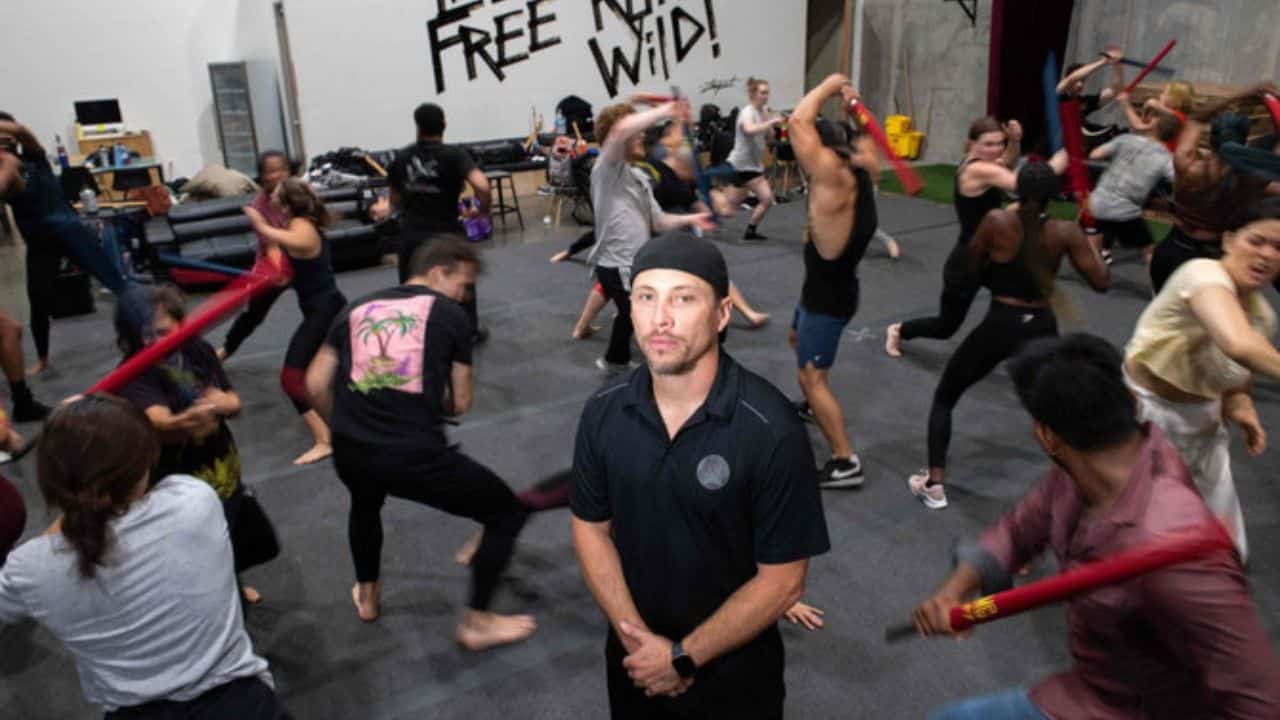
    “The technology is exponentially getting faster and better,” said Freddy Bouciegues, stunt coordinator for movies like “Free Guy” and “Terminator: Dark Fate.”

    “It’s really a scary time right now.”

    Studios are already requiring stunt and background performers to take part in high-tech 3D “body scans” on set, often without explaining how or when the images will be used.

    Advancements in AI mean these likenesses could be used to create detailed, eerily realistic “digital replicas,” which can perform any action or speak any dialogue its creators wish.

    Bouciegues fears producers could use these virtual avatars to replace “nondescript” stunt performers — such as those playing pedestrians leaping out of the way of a car chase.

    “There could be a world where they said, ‘No, we don’t want to bring these 10 guys in… we’ll just add them in later via effects and AI. Now those guys are out of the job.”

    But according to director Neill Blomkamp, whose new film “Gran Turismo” hits theaters August 25, even that scenario only scratches the surface.

    The role AI will soon play in generating images from scratch is “hard to compute,” he told AFP.

    “Gran Turismo” primarily uses stunt performers driving real cars on actual racetracks, with some computer-generated effects added on top for one particularly complex and dangerous scene.

    But Blomkamp predicts that, in as soon as six or 12 months, AI will reach a point where it can generate photo-realistic footage like high-speed crashes based on a director’s instructions alone.

    At that point, “you take all of your CG (computer graphics) and VFX (visual effects) computers and throw them out the window, and you get rid of stunts, and you get rid of cameras, and you don’t go to the racetrack,” he told AFP.

    “It’s that different.”

    – The human element –

    The lack of guarantees over the future use of AI is one of the major factors at stake in the ongoing strike by the Screen Actors Guild (SAG-AFTRA) and Hollywood’s writers, who have been on the picket lines 100 days.

    SAG-AFTRA last month warned that studios intend to create realistic digital replicas of performers, to use “for the rest of eternity, in any project they want” — all for the payment of one day’s work.

    The studios dispute this, and say they have offered rules including informed consent and compensation.

    But as well as the potential implications for thousands of lost jobs, Bouciegues warns that no matter how good the technology has become, “the audience can still tell” when the wool is being pulled over their eyes by computer-generated VFX.

    Even if AI can perfectly replicate a battle, explosion or crash, it cannot supplant the human element that is vital to any successful action film, he said, pointing to Cruise’s recent “Top Gun” and “Mission Impossible” sequels.

    “He uses real stunt people, and he does real stunts, and you can see it on the screen. For me, I feel like it subconsciously affects the viewer,” said Bouciegues.

    Current AI technology still gives “slightly unpredictable results,” agreed Blomkamp, who began his career in VFX, and directed Oscar-nominated “District 9.”

    “But it’s coming… It’s going to fundamentally change society, let alone Hollywood. The world is going to be different.”

    For stunt workers like Bouciegues, the best outcome now is to blend the use of human performers with VFX and AI to pull off sequences that would be too dangerous with old-fashioned techniques alone.

    “I don’t think this job will ever just cease to be,” said Bouciegues, of stunt work. “It just definitely is going to get smaller and more precise.”

    But even that is a sobering reality for stunt performers who are currently standing on picket lines outside Hollywood studios.

    “Every stunt guy is the alpha male type, and everybody wants to say, ‘Oh, we’re good,’” said Bouciegues.

    “But I personally have spoken to a lot of people that are freaked out and nervous.”