Author: badar.khalid

  • Justice Mansoor Ali Shah unlikely to be next CJP: Report

    Justice Mansoor Ali Shah unlikely to be next CJP: Report

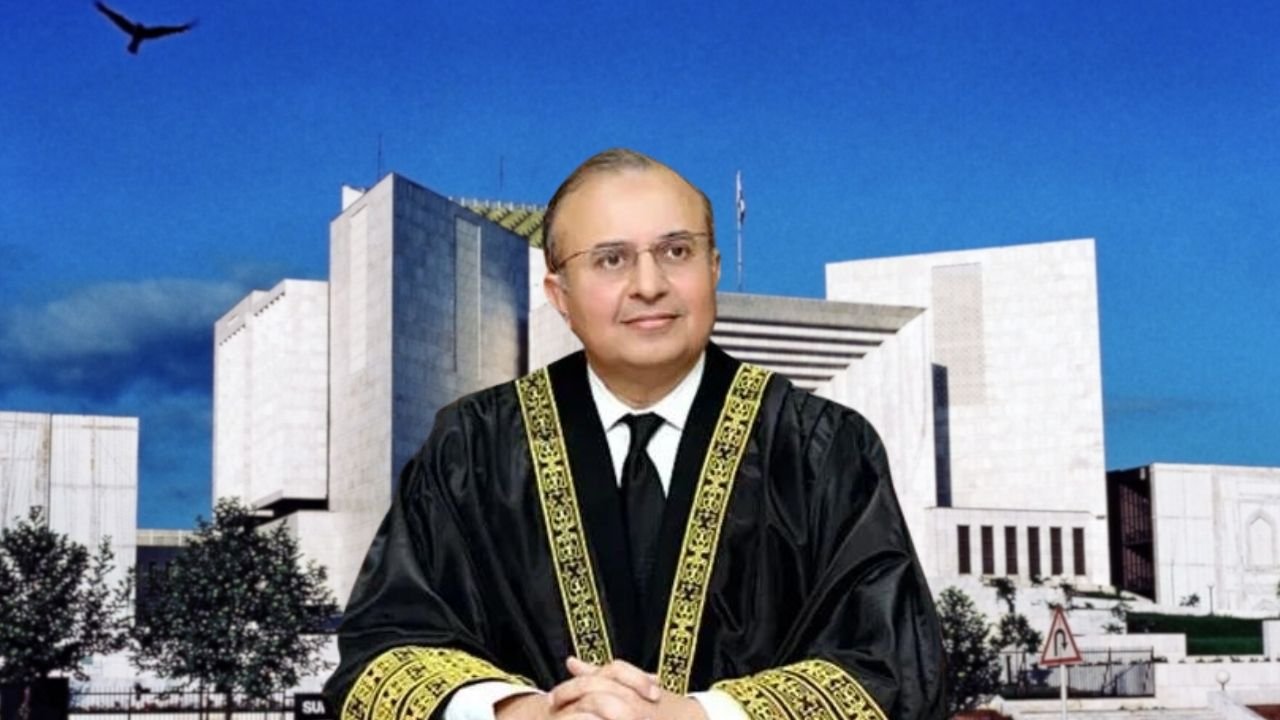
    Justice Mansoor Ali Shah is unlikely to become the next Chief Justice of Pakistan after Justice Qazi Faez Isa if the coalition government manages to pass the 26th constitutional amendment, The News has reported.

    The News report stated that according to government sources, the ruling coalition and its allies will choose Justice Yahya Afridi as the Chief Justice of Pakistan (CJP) after Justice Qazi Faez Isa retires on October 25.

    The three most senior judges after Isa who are next in line for the slot of CJP will be Justice Mansoor Ali Shah, Justice Munib Akhtar and Justice Yahya Afridi.

    In recent months, Supreme Court judges have been involved in controversy upon contriversy, and there has been a clear lack of consensus amongst the higher judiciary on many things.

    Justice Afridi, however, has remained neutral, The News reported.

    How will the proposed constitutional amendment affect the next CJP?

    The constitutional draft the government is trying to pass suggests: “The Chief Justice of Pakistan shall be appointed on the recommendation of the Special Parliamentary Committee from amongst three most senior Judges of the Supreme Court. The Committee, constituted for the aforesaid purpose, shall send the name of the nominee to the Prime Minister, who shall forward the nominee to the President for appointment. Provided that where the nominee under this clause declines, the next most senior judge shall be considered by the Committee and so on till the appointment of the chief justice of Pakistan.”

    Suppose the government succeeds in passing the amendments with a full majority in Parliament. In that case, the ‘special parliamentary committee’ will decide the next Chief Justice of Pakistan, making it significantly different from the past procedures.

    “The Special Parliamentary Committee, in this article referred to as the Committee, shall consist of the following twelve members, namely:- (i) eight members from the National Assembly; and (ii) four members from the Senate. Provided that when the National Assembly stands dissolved, the total membership of the Committee shall consist of the members from the Senate only…” proposed the 26th constitutional amendment draft.

    Representation of each political party would be according to the strength it holds in the Parliament. According to this draft, the parliamentary committee would send the nomination to the Prime Minister fourteen days before the retirement of the Chief Justice of Pakistan.

    In September, the coalition government remained unsuccessful in passing the Constitutional Amendment Bill amidst protests by the opposition party and senior lawyers. The Government failed to get the magic number to pass the bill, with JUI-F President Fazal ur Rehman holding the key. Fazl took centre stage as the opposition and coalition government raced to meet with him to get his support.
  • What are the pros and cons of the newly proposed constitutional court?

    What are the pros and cons of the newly proposed constitutional court?

    After the coalition government failed to pass the much-discussed secret constitutional amendments last month, lawyers, journalists, and social media have been busy debating what the proposed amendments mean.

    Pakistan Peoples Party (PPP) Chairman Bilawal Bhutto has aggressively campaigned for judicial reforms and the establishment of a new constitutional court.

    On the other hand, many lawyers have called the proposed judicial reforms a travesty of justice, terming them draconian. Pakistan Tehreek-e-Insaf (PTI) has strongly condemned the amendments, alleging that the government wants to extend the tenure of CJP Qazi Faez Isa, who is set to retire on October 25 this year.

    In order to better understand the two sides, we’ve listed pros and cons of the proposed new constitutional court based on the analysis of legal experts: Advocate Hafiz Ahsaan Ahmad Khokhar, Advocate Salahuddin Ahmad, Barrister Asad Rahim Khan.

    Pros of FCC

    The proposed Federal Constitutional Court could ease up the burden on the Supreme Court. The apex court is swamped with pending cases, which means justice is delayed for the common citizens.

    Pakistan’s Supreme Court and high courts have become overburdened with increasing ‘constitutional cases’, according to the coalition government.

    There is a lower chance of a constitutional crisis as FCC rulings would be the final authority according to the leaked amendments bill.

    The proposed constitutional court could help ease political tensions as it would be the impartial arbiter in any federal-provincial disputes.

    In August 2023, the Civil Society of Pakistan published a report in which it expressed the need to establish a federal constitutional court in Pakistan.

    Cons

    Salahuddin argues that most backlogs in pending cases exist in lower courts, i.e. 58,000 pending cases in the Supreme Court, 400,000 cases in the High Courts and around 1.8 million pending cases in the lower courts

    The litigation time in the Supreme Court is the shortest as compared to lower courts because it has final authority.

    Reforms then, theoretically, should begin in lower courts, but politicians are concerned with reforming the Supreme Court.

    Advocate Salahuddin Ahmad argues that under the proposed amendments, the burden of constitutional cases would shift from one court (Supreme Court) to another court (Federal Constitutional Court), which would be meaningless.

    If politicisation of the Supreme Court is the issue, then under the proposed amendments, politicians having a greater role in the appointments of judges would only increase this problem.

    Transfers of High Court judges, proposed under the constitutional amendments, from province to province would cast serious doubts on impartiality and dispensation of justice.

    The First Chief Justice of the proposed FCC would be handpicked by the Prime Minister.

    Lawyer and activist Jibran Nasir has claimed that the government is trying to set up its own executive-judicial branch.

  • Social media angry at The Economist magazine for alleged removal of Palestine flag

    Social media angry at The Economist magazine for alleged removal of Palestine flag

    The Economist, a British weekly news magazine, published this week’s issue with a picture of the Bangladesh students’ protest on the front page of its magazine, alongside the headline, “Bangladesh Begins Again.”

    However, social media users pointed out a significant difference between the pictures used by the magazine and the same pictures available on the internet. The picture that wasn’t used by The Economist had protestors raising a Palestine flag along with the Bangladesh flag.

    Earlier this week, the Prime Minister of Bangladesh, Sheikh Hasina, resigned and fled the country as massive protests gripped the nation. The protests, which initially started as student protests against civil service job quotas, spiralled into demands for Hasina to quit after more than 200 people were killed in the violence.

    Social media was abuzz with footage of Bangladeshi youth tearing down the statues of their country’s founding father, Sheikh Mujeeb ur Rehman, marking the end of Hasina’s almost 15 years of rule.

  • TTP launches Azm-e-Shariat as retaliation to Pakistan’s Azm-e-Istehkam

    TTP launches Azm-e-Shariat as retaliation to Pakistan’s Azm-e-Istehkam

    Following the government’s announcement of launching the new security operation Azm-e-Istehkam, a counter-terrorism campaign against the Tehreek-e-Taliban (TTP), the terrorist organisation has also announced its own retaliatory operation Azm-e-Shariat, the Khorasan Diary reported.

    Earlier this week, journalist Iftikhar Firdous raised alarms over the “clarity of policy” that the TTP holds against a confused and ambiguous state policy while appearing in Geo News programme Jirga with Saleem Safi.

    “The war against the Taliban has transformed; it has become ideological. TTP has started talking to political parties as they are expanding their political legitimacy by making a political office in Pakistan. Sarbakaf Mohmand, an affiliate of Jamaat-ul-Ahrar (JuA), was appointed as the political commission head,” cautioned the journalist.

    The Current contacted Iftikhar, the founding editor of the digital news organisation Khorasan Diary, to ask about the consequences of TTP having a clear ideology and garnering legitimacy.

    “Legitimising them even as a stakeholder has ramifications for the state. What happened during the peace talks gave them a voice, and since then, they have expanded that voice to overlap with the political narratives of the country,” said Firdous.

    He pointed out that since their narrative post-2021 is primarily anti-military and blames political governments of corruption and elitism,
    “any voice that chimes the same cord is used by them to promote their narrative. Their propaganda has been directly relevant to the political situation of current Pakistan.”

    About Azm-e-Istehkam, he said, “It has been clarified now that Azm e Istihkam is not the name of kinetics but rather the real-time implementation of the 14 points of the revised national action plan.”

  • Khan was wrong, should’ve kept in touch with the military: Fawad Chaudhry

    Khan was wrong, should’ve kept in touch with the military: Fawad Chaudhry

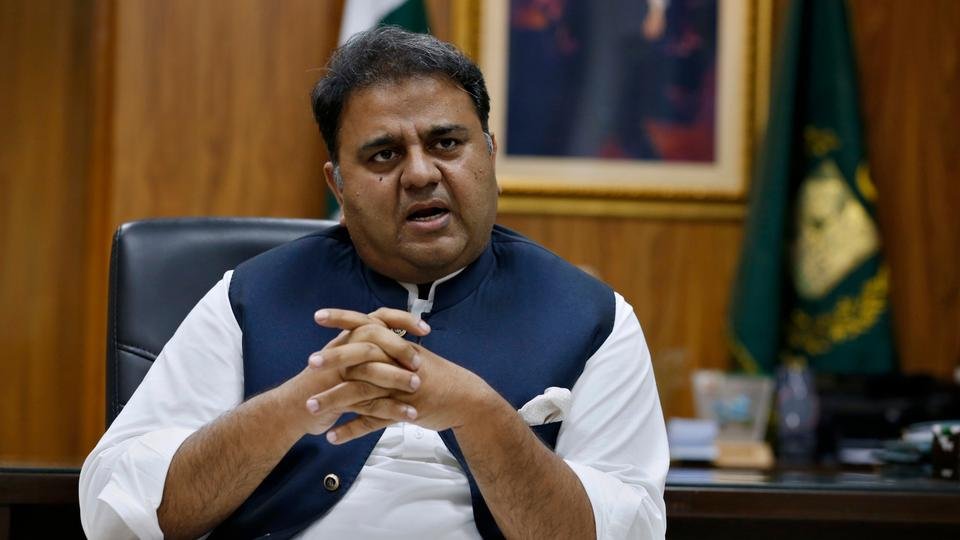
    In an interview with VOA Urdu on Wednesday, Former Federal Minister for Information and Broadcasting Fawad Chaudhry stated that he made the “mistake of cutting ties with the establishment on Imran Khan’s advice.”

    When asked whether he was still in contact with the army, he replied laughing, “They beat us senselessly, what contacts are going to exist now?”

    The former federal minister further stated, “We made a big mistake acting on Khan’s advice to cut all contacts with them [establishment]; if we had continued our correspondence, then there would have been no miscommunications.”

    Chaudhry then elaborated, “There was someone who was telling Imran Khan that they [establishment] are going to kill him. Likewise, there was someone telling them [establishment] they Imran Khan is going to end you.”

    Fawad Chaudhry stated that, “When people like us stopped the contact with establishment; our misunderstandings increased.”

  • Censorship, Surveillance; mysterious firewall being installed to block content

    Censorship, Surveillance; mysterious firewall being installed to block content

    Umar Cheema, a senior investigative reporter at The News, has revealed that a national firewall is being installed on different internet service providers (ISPs) to rein in social media. The filters will block unwanted content from reaching a wider audience online.

    The Current also spoke with Shahbaz Rana, a senior journalist at The Tribune, to inquire about the details of the mysterious firewall. He stated, “This is a Chinese technology that the government is importing. It’s a $135 million project out of which some amount has been delivered and the remainder amount will be paid by next year.”

    “It is already bought. Now it is being installed and commissioned,” said sources of The News.

    “The national firewall will serve two purposes: identify the locations from where the propaganda material is being originated and the subsequent blockade or diminished coverage of those accounts”. He added: “But, I think the main focus will remain on locating the source of such propaganda to nip the evil in the bud”.

    According to Cheema, there will be a keyword filtering system to detect content that is undesirable to the state of Pakistan. That type of content will likely be hidden and made invisible to outside users. In other words, dissenting voices will likely be passed through this inspection before they’re visible.

    Preparation is also in progress to prevent the ‘misuse’ of Virtual Private Networks (VPNs) as the government can declare it mandatory for citizens to inform the PTA about the VPNs they are using. Anyone failing to do that could land in trouble.

    Previously, the government’s action against VPNs triggered a backlash from the corporate community as VPNs are primarily used by big businesses worldwide to protect their business secrets as their internal communication travels within a private network. It was due to this that action against VPNs was stopped for some time.

    Blocking social media website X (formerly Twitter) has cut the users from 4.5 million to 2.4 million, a government official told The News. It has affected Twitter’s business in Pakistan and unlike in the past, the management of the social media company has also started paying heed to government demands.

    For instance, blockade of an account of the Pakistan Ex-Servicemen Society (PESS). Maj (r) Adil Raja was using this account even after he was no longer an office-bearer of the PESS — and refused to return control of the account.
    X (formerly Twitter) wouldn’t respond to requests generated through the PTA for a block on the account. However, it is now blocked on X.

  • Russian Embassy sets the record straight after claims of Ambassador congratulating Khan

    Russian Embassy sets the record straight after claims of Ambassador congratulating Khan

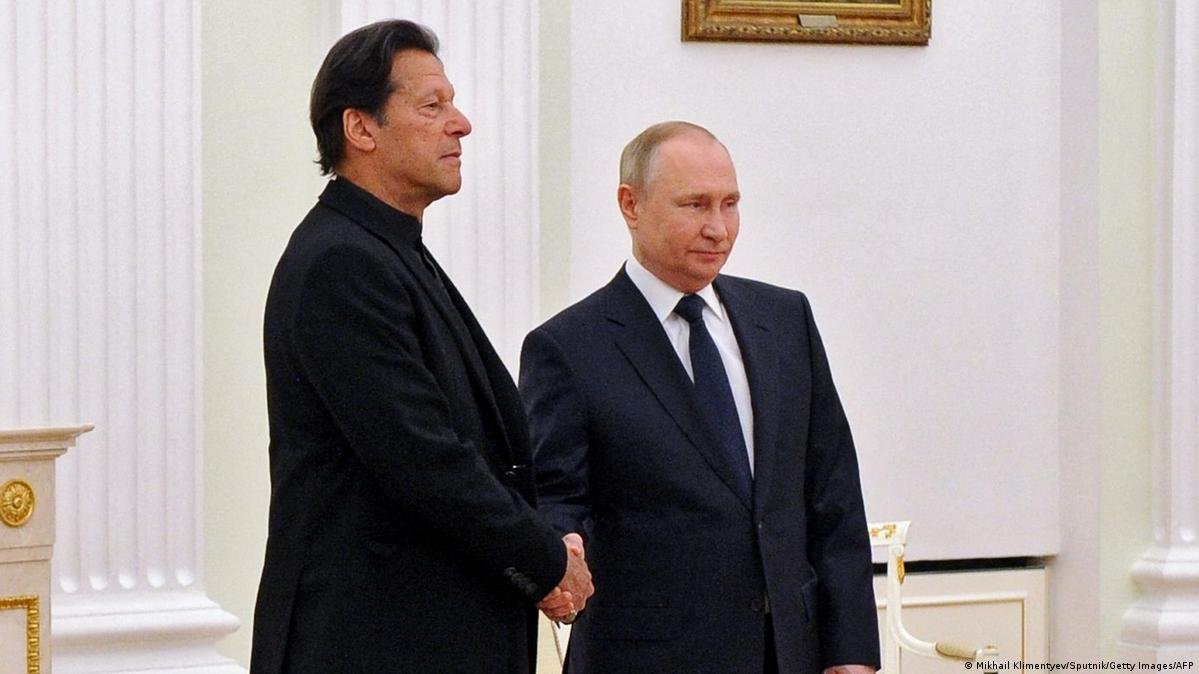
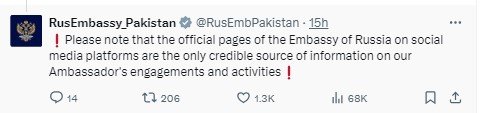
    The Russian Embassy in Pakistan on June 4 posted a clarification on the social media website X, formerly Twitter, stating that, “The official pages of the Embassy of Russia on social media platforms are the only credible source of information on our Ambassador’s engagements and activities.”

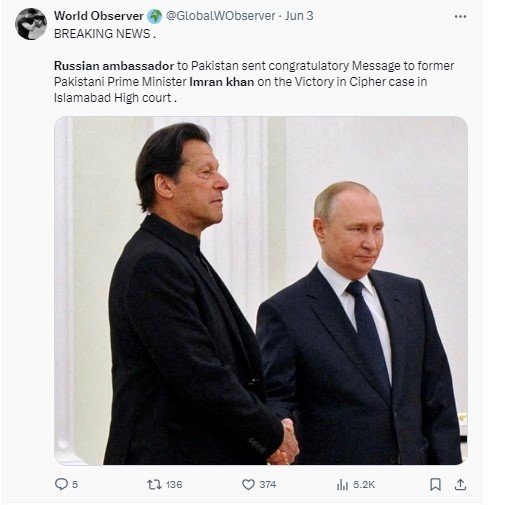
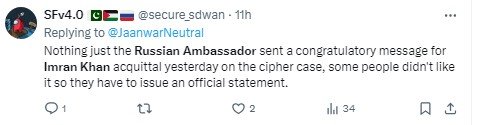
    Interestingly, accounts affiliated with the political party Pakistan Tehreek-e-Insaf (PTI) on June 3 claimed that the Russian ambassador to Pakistan sent a “congratulatory message” to Chairman PTI Imran Khan for getting relief in the Cypher case.

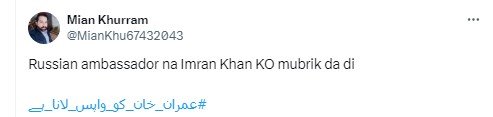
    Multiple accounts affiliated with PTI started re-tweeting the claim on X.

    The Russian embassy in Pakistan also stated, “The Embassy of Russia in Islamabad is closely following the developments in Pakistan, including the political situation and court decisions. However, we believe that it is up to the Pakistani people to react to and comment on these developments.”

  • Major cases against Imran Khan and how they turned out

    What are the major cases against Imran Khan and how did they turn out?

    Khan was collectively given sentences of 30 years in the Cypher Case, Toshakhana reference case and the Iddat case.

    CYPHER CASE

    In January 2024, Imran Khan was sentenced to ten years by a special court, established under the Official Secrets Act, in the cypher case. On June 3, the Islamabad High Court (IHC) reversed the decision and found PTI founder Imran Khan not guilty in the cypher case.

    The allegation against Khan in the case was that he had not returned the cypher to the relevant ministry.

    TOSHAKHANA REFERENCE

    On 31 January 2024, the court convicted and sentenced Khan and his wife Bushra Bibi to 14 years in prison in the Toshakhana case and ordered them to pay a fine of about 1.5 billion rupees. In April 2024, IHC suspended this sentence however they were not released as they were convicted in other cases as well.

    The Toshakhaana case was about selling gifts he was given in his capacity as prime minister without declaring proceeds for tax purposes.

    IDDAT CASE

    On 3 February 2024, a trial court sentenced Imran Khan and Bushra Bibi to seven years in prison for marrying during Bushra Bibi’s Iddat period. The court also imposed a fine of Rs0.5 million on each of them. However, an appeal was filed and is ongoing.

    AL-QADIR TRUST CASE

    Khan was also implicated in the Al-Qadir Trust case when he was arrested on May 9, 2023. An Islamabad accountability court on May 29 granted PTI Chairman Imran Khan bail in the Al-Qadir Trust case till June 19 against surety bonds worth Rs500,000.

    The Al-Qadir Trust case alleges that the PTI chief and his wife, Bushra Bibi, obtained billions of rupees and land worth hundreds of kanals from real estate tycoon Malik Riaz. This was given in return for Khan legalising Rs50 billion that was returned to the country by the UK during the previous PTI government.

  • Marwat says won’t compromise on self-respect, can’t work in PTI

    Pakistan Tehreek-e-Insaf’s (PTI) maverick Sher Afzal Marwat posted on X (formerly Twitter) to complain about the treatment handed out to him by his party and said, “No one should expect me to beg for duties because my self-esteem has been hurt.”

    A social media user commented under Marwat’s post asking what the PTI leadership is doing in getting Khan out of jail to which Marwat replied, “The party has relieved me of all my responsibilities. Clearly, this has been done under Khan Sahib’s instructions. Now, I have no responsibilities and have decided to spend my time as I please.”

    Marwat seemed to get some closure with an almost emotional response after saying that his self-esteem had been hurt due to the treatment meted out to him by the party leaders.

    He even admitted, “I can be a little unusual and psychotic in certain situations but of all things, self-respect is at the top of my list of priorities. I was once publicly ignored, humiliated, disgraced and disrespected by the very people I fought for.”

    Sher Afzal Marwat concluded by saying that he wouldn’t participate in any party activities until Imran Khan himself asked him to do so.

  • Talks sirf unke sath hongi’ says former president Arif Alvi

    Talks sirf unke sath hongi’ says former president Arif Alvi

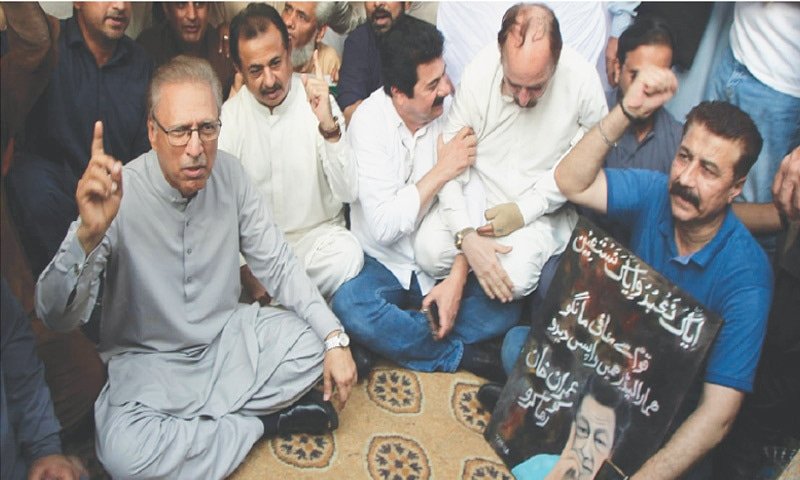
    Former President and senior Pakistan Tehreek-e-Insaf’s (PTI) leader Dr Arif Alvi reiterated that Imran Khan is ready to hold a dialogue but only with those “who could offer something”, Dawn reported.

    Alvi said that holding talks with those who had come into power through ‘Form 47s’ would be futile.

    Interestingly, during the interaction with reporters outside the Karachi Press Club, Alvi tried to downplay a social media post from Imran Khan’s account on social media which made a comparison with Pakistan’s current political turmoil with events during the fall of Dhaka, saying “It’s never about the whole institution but a few individuals”.

    However, the former president warned that the prevailing situation in the country was “pushing everyone towards a dead-end”.

    “We never invited the military to intervene in politics, but Imran Khan wants to talk to those who have the power to decide,” he said in response to a question.

    “If these talks aren’t held, it would further push everyone to a dead end,” warned the senior PTI leader.