Author: ibraheem123

  • PIA’s comeback: Ban reversal opens European skies, new opportunities

    PIA’s comeback: Ban reversal opens European skies, new opportunities

    The board of directors for airline companies set their eyes on Europe as it opened its metaphorical doors to them. This good news comes as Pakistan International Airlines (PIA) was finally able to comply with the safety standards of the European Union Aviation Safety Standards (EUASA) after four grueling years.


    The ban was initially imposed due to the results of a post-crash investigation, that claimed the lives of approximately 100 people, revealing that around 40 per cent of PIA pilots were flying with forged licenses.


    The truth is, when PIA flight 8303 crashed in Karachi, it took the whole company down with it. PIA lost the rights to fly to various high traffic destinations such as the United States, Canada and the European Union (EU), to name a few. While most bans didn’t stick, the EU remained adamant to keep PIA on its ‘blacklist’.


    However, with the ban being reversed, PIA stands to benefit immensely from the new revenue stream. After PIA had been blacklisted, the company suffered a loss of 40 billion rupees as per Reuters. However, it will be an easy task for PIA to capture their customers back.


    According to Geo News, ticket fares from United Kingdom to Pakistan skyrocketed by a staggering 300 per cent after PIA was banned from operating flights to the country. Airlines that could still run flights to Pakistan were able to raise prices of tickets as PIA was not around to put up any competition.


    However, with PIA resuming flights, airfares from the EU to Pakistan are expected to drop to more reasonable levels. There is another reason behind experts predicting airfares to drop though: EUASA has allowed Air Blue to operate flights to Europe too. According to the principles of basic economics, it is evident that the increased supply of commercial flights will drive prices down.


    Aside from the executives of airline companies, lawmakers in Islamabad are also pleased about PIA’s resumption of services. Investors were not particularly interested in purchasing a company that was crippled due to not being able to operate flights to numerous countries.


    Financial experts certainly believe that international investors will now be more inclined to purchase PIA off of Islamabad’s hands. However, many are now wondering if it would even be worth considering PIA if the profitable routes open up again.


    Local businesses, especially those located at popular tourist destinations, are also pleased with the reversal of the ban, expecting to see a greater number of European tourists flooding into the hotspots.


    It is certain that the ban reversal is good for Pakistani businesses. One thing is not certain: If privatizing PIA is still the best course of action.

  • Baku’s sweet deal might drive Pakistan’s sugar industry to new heights

    Baku’s sweet deal might drive Pakistan’s sugar industry to new heights

    Businesses look towards Baku, as Azerbaijan remains poised to invest in Pakistani motorways, despite the Eurasian country’s economy being 130 per cent smaller than Pakistan’s economy in terms of GDP in a move to strengthen bilateral relations via investments.


    As it stands, Baku is planning to invest in motorways M6 (Sukkur-Hyderabad) and M9 (Hyderabad-Karachi). It is interesting to note, though, that two years ago, Deputy Commissioner Tashfeen Alam of Naushahro Froze fled Pakistan to Azerbaijan after potentially embezzling two billion rupees from the budget that was allocated to the Sukkur-Hyderabad motorway: The same one Baku wants to invest in.


    Regardless of the embezzlement scandal and the officer’s subsequent escape to Azerbaijan, Baku’s plan to invest in Pakistan’s motorway construction will spell great news for businesses. This is due to the fact that the construction of motorways will significantly improve connectivity, helping obscure markets emerge and get connected to the wider Pakistani market.


    The beneficiaries will be those enterprising locals who will start up businesses once they obtain road access. This is possible as obtaining road access will enable them to capture the increase in traffic that will start to flow through their area. Rest stops and fuel stations are expected to be set up along the length of the motorway.


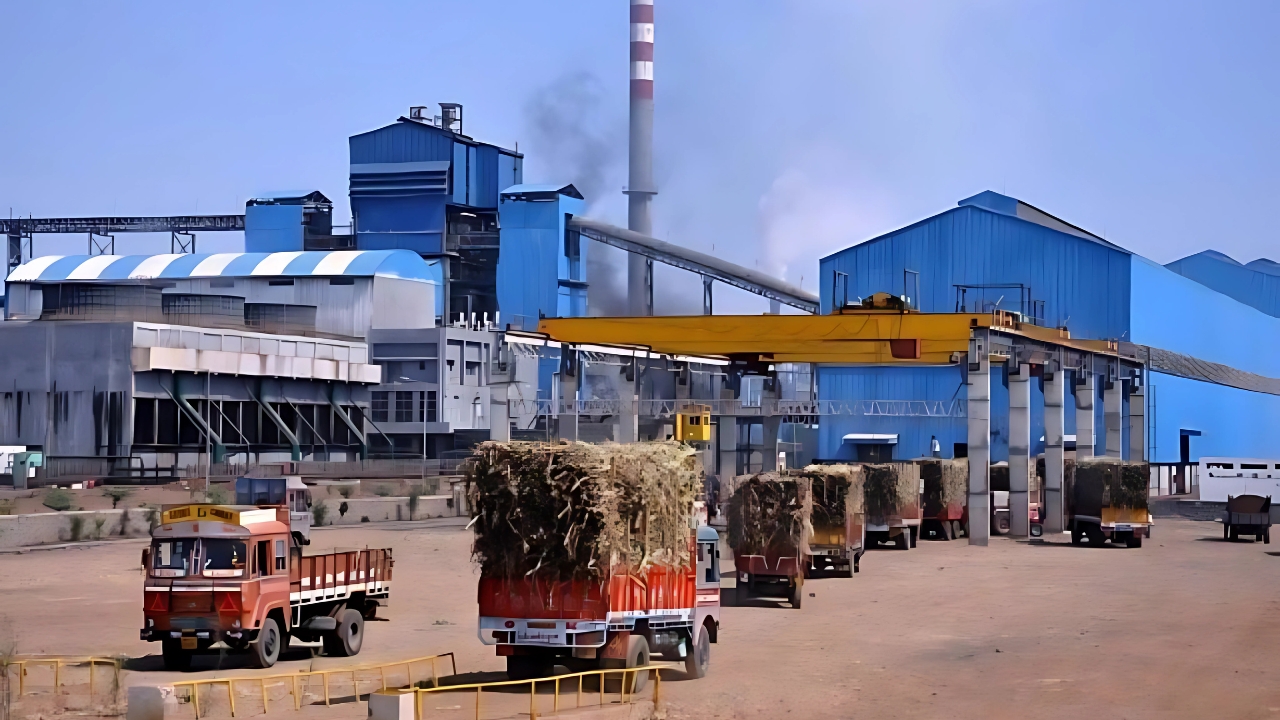
    The construction of the motorway will also cut travel times down and allow for a greater volume of goods to pass from Sukkur to Karachi. This is expected to facilitate the growth of sugar production and exports greatly.


    As per the Sugarcane Policy Analysis for 2023-24 by the Agricultural Policy Institute, Sukkur produces 406.11 thousand tons of Sugar annually, while Hyderabad has an abundance of sugar mills. Connecting these two cities via M6 will allow for a greater volume of sugar to be processed.


    It is possible that sugarcane farmers in Sukkur decide to make an attempt to improve their yields as they know they can access Hyderabad’s mills with ease. As for millers in Hyderabad, they will secure a fresh supply of unprocessed sugar to work on.


    The second leg of the journey will be the transport of processed sugar, via M9, to the port city of Karachi, where this sugar could get packaged and exported. If exports are boosted, Pakistan could see the export figure for sugar value to sit around half a billion dollars.


    Aside from the sugar industry, Baku’s willingness to invest in the motorways is a win for Islamabad. This is because the increase in Foreign Direct Investment (FDI) levels will positively signal to other countries that Pakistan is an optimal destination for foreign investments.


    If the meeting between the Pakistani delegation and Azerbaijan goes through, those involved in the sugar industry will respond positively to this sweet deal.

  • Government repays 1.9 trillion rupees in debt, unlocking credit for businesses

    Government repays 1.9 trillion rupees in debt, unlocking credit for businesses

    Lawmakers in Islamabad celebrated as the government managed to repay a total of 1.9 trillion rupees in debt. This is just one of the significant fiscal achievements that the government has managed to obtain, as all economic indicators seem to be moving in the right direction.


    The repayment will likely spell good news for businesses as excessive government borrowing from commercial banks can create a crowding-out effect. Essentially, when the government starts to borrow large sums of money, it limits the private sector from being able to access credit. This is usually also true because an increase in the government’s demand to borrow money is likely to apply upward pressure on loans.


    Businesses in Pakistan, however, will be able to access funds more freely from banks, with the government paying back its outstanding loans. This is likely to increase debt-fueled growth within business circles as banks will likely direct new loans to businesses. This could be especially beneficial for those industries that have struggled to obtain loans.


    The KSE-100, which is the benchmark index of the Pakistan Stock Exchange (PSX), crossed a historical 100,000 points. And experts are predicting that the stock exchange numbers might improve as the increase in the extension of credit to businesses will help businesses expand the scope of their operations and, ultimately, increase dividend payments.


    Historically, banks in Pakistan have preferred investing in risk-free government securities as opposed to lending to businesses due to the low levels of risk that are associated with holding government debt. Moreover, the Advance-to-Deposit Ratio (ADR) is expected to drop once new private loans are issued.


    It is to be noted that the repayment of debt was made possible due to an increase in revenue due to the 70 rupee per litre petroleum levies. While this levy has bolstered government finances, it also indirectly contributes to rising fuel costs for businesses.


    Businesses already struggling due to the high petroleum levy will not be pleased to hear that Islamabad is considering an increase in fuel prices. A rise in fuel costs will undoubtedly increase transportation expenses, leading to reduced profit margins for businesses that rely on transporting goods from warehouses to stores.


    To the manufacturing sector, the high fuel costs will mean a rise in operating costs and a cut into their meagre profits if they pass the fuel costs without a corresponding rise in prices. The companies, however, may experience reduced demand for their products if they are forced to increase their prices due to the high cost of fuel.


    Although the repayment of public debt offers businesses improved credit access and possible growth, the increase in petrol prices is a more immediate and serious concern.

  • Sunblock for solar: Winter package might dim solar market spark

    Sunblock for solar: Winter package might dim solar market spark

    Business owners celebrated as Islamabad announced the Winter Electricity Package for the next three months.


    As per the Power Division, commercial electricity is priced in a band between Rs39.5 to Rs52. However, they would only be charged Rs26.07 per unit for incremental usage.


    This spells great news for businesses as the lower costs of electricity will directly translate into an increase in their profit margins. The money that these reduced costs free up can then be reinvested back into the business. This could allow business owners to expand the scope of their business activities without having to take on any debt or give up equity to new stakeholders for investments.


    The dip in commercial electricity prices for incremental units below the base rate will be especially beneficial for industries that use up lots of electricity. For instance, the textile sector is a major consumer of electricity standing at 28 per cent of overall electricity consumption.

    The reduced prices will allow for textile exports to benefit from more competitive prices in international markets. This is simply because a fall in their production costs will result in international customers finding it cheaper to import Pakistani textiles.


    The textile sector is responsible for bringing in 60 per cent of export earnings, and this number could see an upward revision soon. This is undoubtedly great news for Islamabad, too, as the increased export earnings will improve Pakistan’s balance of trade, which has historically remained poor.


    However, a policy that creates winners implies that there will be losers too. The ones who will lose out as a result of the reduced incremental electricity charges will be businesses that sell solar panels and inverters.


    As it stands, Profit.pk has reported that Pakistan currently ranks as the sixth-largest solar market globally. This is largely due to the fact that tariffs on electricity purchased from the national grid surged by a whopping 155 per cent in just a little over three years.


    As a result of these staggeringly high tariffs, residential, commercial and even industrial consumers began to transition away from the national grid in favour of powering up their spaces using solar energy. Reports have confirmed that the demand for electricity dropped by over 10 per cent in the previous fiscal year due to sky-high prices and solar adoption.


    However, with the introduction of the winter package, experts are predicting a fall in demand for solar panels. This does not bode well for those involved in trading or installing solar panels. It will be interesting to note what the new prices will be once the winter package ends.

  • Protests, profits and losses: PTI’s march and its business impact

    Protests, profits and losses: PTI’s march and its business impact

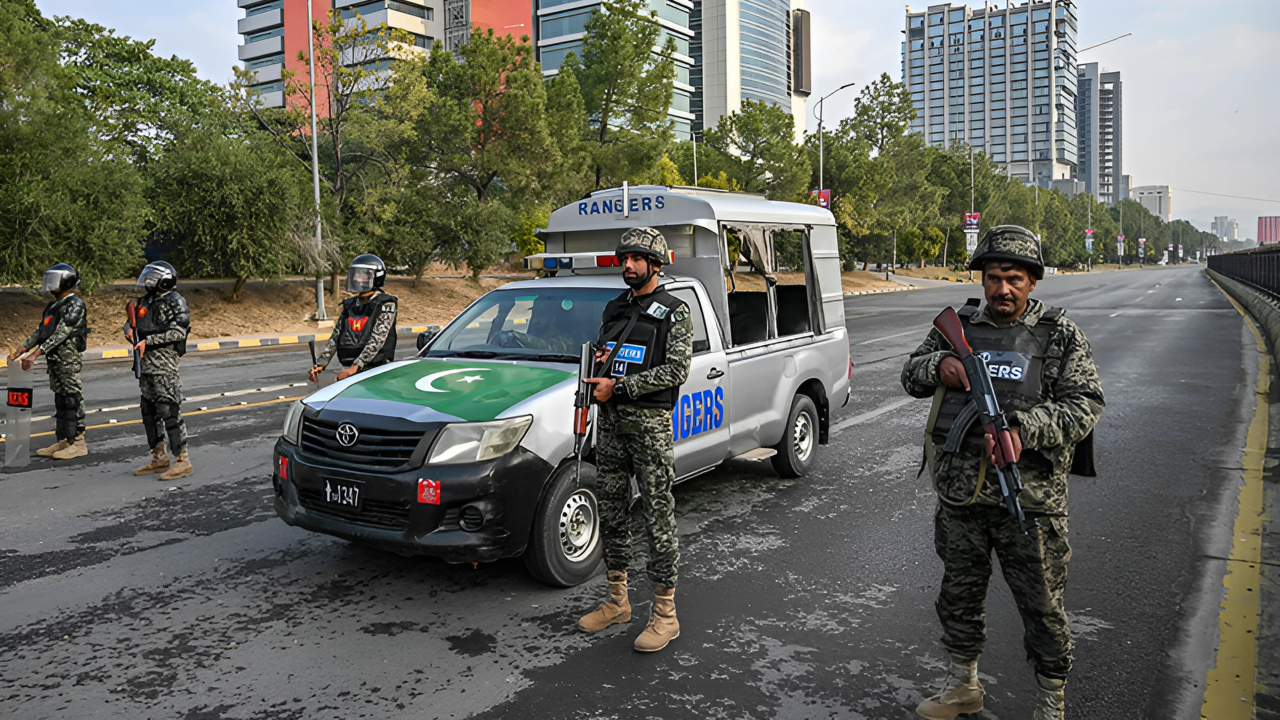
    Businesses are struggling as Pakistan Tehreek-e-Insaf’s (PTI) protests continue in full swing amid the government’s effort to contain them.


    With the option of negotiations seemingly off the table, the threat of a deadlock between Islamabad and the PTI is imminent.


    To combat violent protests and riots, Islamabad has taken measures to prevent such activities. The most significant of these has been the suspension of internet services.


    While the suspension of internet might seem like a minor inconvenience to individuals, the fact of the matter is that it is extremely disruptive for business activities.


    Businesses who operate online stores witnessed a decline in the flow of traffic to their websites and consequently a drop in sales. However, businesses who get the shortest end of the stick are those that cater to international customers.


    This is because any delay in the delivery of services to customers abroad can result in an immediate termination of the contract, which Pakistani businesses currently hold. One such sector that has been suffering is the IT industry that is responsible for bringing in over $3 billion annually. Prime Minister Shehbaz Sharif recently set his sights to boost Pakistan’s IT exports to $25 billion – a goal he can bid farewell to if internet service remains compromised.


    Aside from internet issues, transportation companies have been especially hard-hit due to the closure of major highways such as M-1 – M-4, M-11 and M-14. In Punjab and Islamabad, aside from the restrictions on intercity travel, even intra-city movement has been hindered due to the closure of major roads.


    This is likely to spell bad news for other businesses as well, especially those that require the delivery of goods from warehouses to stores. This is because closed roads will increase delivery times, which might result in businesses failing to meet supply commitments to other vendors.


    Another major concern plaguing economists and lawmakers in Islamabad alike is that of the protests affecting the inflow of Foreign Direct Investment (FDI). In the first quarter of FY 2024-25, Pakistan managed to increase its FDI by 48 per cent. However, when international investors witness political instability, they are likely to hold back further investments while even pulling investments out.


    The protests come at a time when Pakistan’s economy and businesses are starting to recover, and this might just derail the strides that Islamabad has made in the positive direction – economically speaking. As the proverbial saying goes, when two elephants fight, it is only the grass that gets hurt. That is, unless you happen to be manufacturing anti-riot gear and non-lethal weaponry in Pakistan.


    As per reports, Islamabad’s police requested extensive anti-riot gear such as 40,000 teargas canisters, 50,000 rubber bullets and 5,000 anti-riot kits. If protests last longer, it is entirely possible that more purchase orders will be issued. The protests could boost sales of businesses such as ATS Pakistan and Garmocorp that manufacture anti-riot gear, thus supporting this niche sector of the Pakistani economy.

  • Illegal housing societies struggle as Punjab cracks down on them

    Illegal housing societies struggle as Punjab cracks down on them

    Housing scheme developers and the owners of residential construction companies are currently witnessing their efforts going down the drain as Punjab cracks down on illegal housing societies (IHS). While Punjab’s crusade against the 600 illegal societies serves to displeasure them, it comes as great news for those that have been operating legally.


    This development comes as in the coming months, the real estate market could see large transfers of investments from IHS to genuine ones. This investment transfer to competitors could cause a spike in the land prices of legal societies.


    Experts believe there will be a twofold effect on land prices, which will effectively drive up the value of land in approved societies. Initially, the fall in the supply of legal land that can be purchased will cause land prices to rise. Furthermore, speculators who will identify the fall in supply will purchase land to reap the rewards of the rising values – thus driving up land prices again.


    Legal societies and investors with available capital who are forward-looking will be able to benefit immensely from the woes of those involved in unapproved and illegal societies.


    On the other hand, any party associated with the IHS will now have to pay a hefty price. This metaphor is quite literal for some as they will have to pay fines, financial penalties, and fees to get societies approved.


    Dawn News has reported that LDA teams have been able to retrieve 600 kanals from illegal occupants in various well-known schemes, such as Johar town and Sabzazar colony in Lahore.


    The stakeholders that are expected to be hit the hardest are owners of residential construction businesses. This is because the crackdown on unapproved societies will halt many construction projects.


    These project delays are expected to cause significant issues for builders as they have to pay their workers on a daily basis. When projects halt, many builders may find it difficult to afford the wages of their employees as their business will not have a healthy cash flow.


    The plight of the losers of this crackdown does not end there, however. The fact of the matter is that this crackdown will cause major issues for the 42 ancillary industries that provide raw materials to construction businesses.


    For example, as per Profit by Pakistan, the cement sector is projected to see a growth rate of 2.4 per cent in FY 2025. However, this figure may witness some downward revisions after construction projects get delayed or even halted in unapproved societies.


    In the coming months, the real estate sector could see some movement again in terms of prices. One thing is certain, though: Speculators will keep their eyes peeled for any such movements.

  • Banks play cat-and-mouse with Islamabad, cutting deposits over boosting loans

    Banks play cat-and-mouse with Islamabad, cutting deposits over boosting loans

    Bank owners breathed a sigh of relief as they found a way to potentially overcome the additional taxes that Islamabad was keen to extract from them. These additional taxes were levied as the Advance-to-Deposit ratio (ADR) was too low.


    In simple terms, a low ADR demonstrates that banks have shown reluctance while extending credit to non-government organisations. While banks have made a herculean effort to boost lending levels by increasing loans by 1.1 trillion dollars in just the last 25 days, they now have stumbled upon an easier way to increase their ADR.


    Since a low ADR is a consequence of lending too little money from the deposits that a bank holds, banks have realised that they can just shrink their deposits instead to improve the ratio. It seems as if this strategy will prove to be successful for banks, too, as they are sitting shy of the legal ratio of just six per cent.


    Commercial banks are aiming to reduce deposits by imposing fees as high as six per cent on large deposits. This may deter many depositors from parking their funds in banks to avoid the exorbitant fees on deposits.


    Moreover, as per Dawn News, banks are also imposing credit limits so that their deposits do not rise significantly. This includes large commercial banks such as Meezan, which have notified their customers regarding these changes.


    If banks are able to achieve this, their profit margins are expected to grow as they will avoid 197 billion rupees in taxes. But what does this mean for businesses exactly?


    For businesses, this spells great news, as when bank deposits shrink, that money is likely to get injected back into the economy – most probably in the form of investments. As such, businesses can expect to find more interest from individual investors who might be eager to use their money to buy up business equity instead of keeping it in banks.


    This will allow businesses to expand the scope of their operations without having to worry about the interest payments that come with debt-fueled business growth. Additionally, the excess funds in the economy, due to banks making a conscious effort to reduce deposit levels, may find their way into the Pakistan Stock Exchange (PSX).


    For businesses registered on the PSX, this likely means another wave of investments flowing in to continue the strong growth the exchange has witnessed. Currently, the benchmark of the PSX, the KSE-100, sits at just under 98000.


    If banks continue to shrink deposits, the potential increase in investment levels may help the KSE-100 index cross the 98000-point level and, perhaps, help propel the PSX even further.


    This is a huge possibility as banks such as Allied, Al-Falah, Al-Habib and Faysal Bank, among many others, are listed on the PSX. If their profit margins rise, they are expected to attract more investments, causing their stock value to grow, which will ultimately drive the PSX to do well, too.


    It will be interesting to see if banks can cross the legal ADR threshold level of 50 per cent. It will also be interesting to note how Islamabad’s policy will serve business interests. These pertinent questions will be answered in due time, but for now, the economy must watch and wait.

  • Banks rush to lend ahead of private loan deadline

    Banks rush to lend ahead of private loan deadline

    The government has decided to finally increase lending levels amid the threat of an additional tax of 15 per cent looming over banks due to low private lending. Banks were able to sidestep these additional taxes last year by negotiating with the government; however, Islamabad refused to budge this year.


    This led to banks taking the matter up with Islamabad High Court (IHC), which granted them a temporary moratorium on the additional tax payments. The reason why banks are facing an ‘additional’ tax being levied on their earnings is due to their low Advance-to-Deposit Ratio (ADR) figures.


    For reference, ADR refers to the percentage of a bank’s deposits that are being lent out to satisfy non-government sector needs – such as those of businesses, individuals, and other private entities.


    Since the ruling of the IHC in their favour, banks have increased their ADR to avoid any further run-ins with the law. However, they have still not surpassed the legal threshold level of 50 per cent, shying away from the legal ratio by six per cent. The economy is likely to see increased lending to non-government sectors now, as banks will have to face the additional tax if the ADR requirement is not met by the end of 2024.


    At first glance, this spells great news for businesses as they will now be able to expand the scope of their operations using loans from banks. However, this might not end up being the case as Pakistani banks have traditionally favoured risk-free investments in government securities.


    If banks continue to exhibit this behaviour of lending to businesses that are considered safer investments, credit might get extended to companies that work with the government. As such, the aforementioned benefits to businesses could be reaped by those linked to the government via contracts.


    Since working with the government might signal to banks that businesses possess a safe stream of income, banks may feel more comfortable lending to them. As such, these businesses will be able to grow operations and secure more government contracts.


    The companies most frequently contracted by the government are primarily construction companies. As such, banks could see a disproportionate flow of credit towards construction companies. However, even though loans might be preferential, it does not mean that growth may not be seen.


    This is because if the construction sector witnesses growth, it will also propel more than 42 other ancillary sectors, such as steel, cables and cement, to name a few.


    It will be interesting to note how the lending patterns of banks have changed with the legal system breathing down their necks. Will satisfying ADR requirements boost business growth? Only time will tell.

  • Prime minister Shehbaz Sharif’s crackdown on sugar hoarders might not be sweet for culprits

    Prime minister Shehbaz Sharif’s crackdown on sugar hoarders might not be sweet for culprits

    Owners of sugar mills grow worried as Prime Minister Shehbaz Sharif ramps up efforts against their activities. As per a PM office press release, Mr Sharif relayed information regarding a plan to reduce the hoarding of sugar and tax evasion by mill owners.


    This move by the Prime Minister comes as per his broader fight against tax evasion to boost revenues. The motivation behind this scheme is to meet the objectives set out by the IMF for the government. IMF objectives had tasked Islamabad with a target of 2.652 trillion rupees for the last quarter, which it was not able to achieve.


    Mr. Sharif, however, aims to cover the revenue shortfall and meet the remaining revenue targets for upcoming quarters, too. The sugar industry is a prime source to finance the growth of tax revenues as they have a track record of evading taxes and hoarding sugar. Taking action against producers who hoard sugar will be beneficial.


    This is because hoarding sugar has negative effects on both consumers and businesses who use sugar to produce their own goods. This is because hoarding artificially inflates prices due to an illusion of there being a low level of sugar supply.


    So, if hoarding is halted, sugar prices will likely drop, causing great relief to the general public who buys it. While this might decrease the per kilo profit margins for sugar millers, it is imperative to note that official reported profit margins will likely rise.


    The logic behind this seemingly contradictory result is hidden in the fact that sugar millers sell their hoarded sugar off the books via unofficial channels. This allows them to sell their produce at an artificially higher rate. Moreover, unofficial sales are not logged by any regulatory authority, allowing for sugar millers and traders to skip out on filing taxes for these unofficial sales.


    The higher prices are a nightmare of those industries that use a vast quantity of the commodity. These include industries such as food processing, pharmaceuticals, and beverages. The magnitude of savings from a drop food in sugar prices can be seen once it is noted that in 2022/23, the food processing industry alone consumed a staggering 6.1 million metric tons of sugar.


    With Mr. Sharif’s campaign against the “sugar mafia” industries that have a large input of sugar will see significant savings, causing a rise in their profit margins. Another industry that will see a significant rise in income is the CCTV camera manufacturing industry. This is because Mr. Sharif has advised that these cameras are to be placed at mills to monitor the sugar stocks and to ensure that they are not being hoarded.


    With the Prime Minister’s instructions in place, both the economy and businesses are expected to see a notable positive shift. Only time will tell how well the implementation of these directives is carried out as the benefits hinge on successful implementation.

  • Prime Minister Shehbaz Sharif targets tax evasion amid rising public criticism

    Prime Minister Shehbaz Sharif targets tax evasion amid rising public criticism

    Prime Minister Shehbaz Sharif has instructed relevant authorities to take action against tax defaulters, evaders, and any party that is facilitating them, according to a report by Dawn News. 


    The prime minister was briefed by the finance ministry regarding the country’s economy and a recent high-profile meeting with the International Monetary Fund (IMF). Shehbaz Sharif’s meeting with the finance ministry was reportedly attended by several important ministers, including Muhammad Aurangzeb, Ahad Cheema, Attaullah Tarar, Dr. Mussadik Malik, and PM’s coordinator Rana Ahsan Afzal, among many others.


    In his meeting with the finance ministry, Sharif emphasised the importance of holding tax evaders accountable – as compliance with tax laws will “play a role in the national progress”. He stressed the link between economic growth and tax compliance: An issue Pakistan has always struggled with.


    The severity of non-compliance can be noted by the FBR’s goal to collect at least 10 billion rupees from traders. However, the government failed to meet this target by almost one million per cent – which is an alarmingly large gap between the objective and collection. This is because the FBR was only able to collect a measly one million rupees from traders due to compliance issues.


    Despite these setbacks, Mr Sharif noted that the economy was showing signs of stability, which was highlighted by the booming stock market. He attributed this revival of the economy to government measures, which he claimed have also increased levels of foreign investment.


    Aside from matters of taxation, the finance ministry also outlined the steps that are already being taken to curb tax evasion and punish those involved in facilitating such practices. Moreover, the meeting also included a briefing on economic indicators and inflation, to which Mr Sharif expressed great satisfaction.


    This is because, in just the past year, the inflation rate has plummeted from an uneasy 38 per cent to a more acceptable seven per cent. Moreover, the interest rate has also fallen from 22% to 15%, which spells great news for businesses and unemployed individuals as the expansion of businesses will create job opportunities.


    In the meeting, Mr Sharif stressed how providing relief to the public remains a top priority, stating that all available measures are being employed to honour public commitments. Despite these efforts, PM Shehbaz’s popularity has been challenged by public criticism over high taxes on energy, which have significantly raised energy costs.


    While many Pakistanis simply view the existing tax levels as burdensome, it is important to note that Sharif’s focus on enforcement regarding tax inequalities is impartial, as tax evaders of any kind are not to be shown any leniency regardless of their background.