Author: ibraheem123

  • Prime Minister Shehbaz Sharif secures $3 billion investment package in Qatar visit

    Prime Minister Shehbaz Sharif secures $3 billion investment package in Qatar visit

    Prime Minister Shehbaz Sharif returned to Islamabad but was not empty-handed. In addition to a $600 million investment package from Saudi Arabia, Mr Sharif also managed to get Qatar to pledge three billion dollars across various sectors in Pakistan.

    This investment from Qatar is vastly different from the ones received by Saudi Arabia. This is largely due to the fact that the Saudi investment plans were focused primarily on the upgrade and construction of refineries in Pakistan. However, Doha’s vision is to hold a more diverse set of investments.

    This is likely to spell great news for Pakistani businesses, especially those involved in the provision of airport services, renewable energy and hospitality. The inflow of Qatari Riyals will benefit businesses as these foreign funds will allow for the expansion of the scope of current projects.

    Lawmakers in Islamabad have been especially successful in attracting foreign direct investments (FDI) in the past few months. In the first quarter of FY 24-25 alone, FDI had jumped up by 48 per cent. With the Qatari deal secured, experts predict the FDI levels will continue to stay at a respectable level in the second quarter.

    Qatar’s investment in Pakistan’s economy and, ultimately, businesses shows the great level of faith they have in the economy. The government has been making great efforts to made great strides to revive the economy, as all economic indicators seem to be moving in a positive direction.

    As per the IMF’s (International Monetary Fund) forecasts, the annual inflation rate is expected to sit at around 9.5 per cent – a stark improvement from the 30.77 per cent rate recorded in 2023. Moreover, the government has gained significant credibility with international investors and lenders, having a fiscal surplus for the first time in 24 years. These statistics have undoubtedly made Pakistan a better destination for investments than last year and investors have taken note of this too.

    As such, Qatari investors might consider Mr Sharif’s request in the meetings where he urged them to invest in businesses in Pakistan. The resulting collaboration will likely continue Riyal bankrolling business projects in Pakistan. Moreover, Qatar’s confidence in Pakistan is likely to be shared by other international investors.

    Qatar’s latest investment pledge adds to the long line of investments that Islamabad has managed to garner. Can Pakistan, backed by foreign investments, finally claw out and recover from the economic quagmire that it found itself in last year? Time shall tell.

  • Dollar falls to 152 against rupee on Google

    Dollar falls to 152 against rupee on Google

    The United States (US) Dollar on Friday evening took a dive against the Pakistani rupee on the Google currency converter, leaving traders perplexed.

    As per the details, the USD crashed to Rs152.62 from Rs277.50 earlier in the evening. While no statements were issued by Google or Morningstar Inc that provides the search giant with data for its currency converter, it was probably an erroneous entry that was fixed moments after the glitch was first noticed.

    It is pertinent to note that the glitch wasn’t the first of its kind as on June 7, 2023, a similar case was observed when the value of the rupee dropped sharply only for it to turn out as a simple data entry error.

    Such errors have also occurred back in 2022 and 2018, leaving many confused. Had this been true, there would be great economic and business implications.

    However, there has been no change in the economy to suggest a rise in value of the rupee of this magnitude.

    One of the few entities that could have been responsible behind such a large rise in the value of the rupee is the State Bank of Pakistan (SBP). While it does hold the power to artificially increase the value of the rupee by buying it up using foreign reserves, there is no evidence to support such a large activity.

    Instead, the SBP actually reported its foreign exchange reserves to have grown by $116 million to $11.15 billion on October 25.

    While such a rise is a dream for many businesses and citizens alike in Pakistan, the lack of evidence that suggests such a change in the value of the rupee makes it exactly that: a dream.

  • PIA auction fails: Sole bid rejected by government for being too low

    PIA auction fails: Sole bid rejected by government for being too low

    Spectators watched as the televised auction of the flag carrier, Pakistan International Airlines (PIA), failed horribly. The government seemed interested in selling PIA for the right price but did not approve the sale when the sole bid was off by 88.2 per cent of the original value.

    The reason for only one bid is the government’s condition for the purchasing entity to inject over half a billion dollars into PIA to modernise the fleet. Five business owners out of the six companies selected for the auction process decided to opt out due to this additional investment that they would have to finance after the purchase of PIA itself.

    The government was expecting to receive a total of $305 million but managed to get only a reality check. In hindsight, the goal of privatising the national carrier to companies via auction was a bad idea.

    If lawmakers in Islamabad aim to make the sale, it will have to explore other avenues.

    The auction process could be expanded to include more local businesses and international players, too. As it stands, this seems viable as Saudi Arabia, UAE, and Qatar have all expressed great interest in purchasing PIA in the recent past.

    Additionally, these investors in the Gulf also have the financial capability to undertake the massive $700 million fleet modernisation plan once they acquire PIA. This would be a good way for Pakistan to secure FDI (Foreign direct investment) inflows of over one billion dollars.

    Alternatively, the government could opt for a simple solution. This could be issuing more shares to be traded on the PSX (Pakistan Stock Exchange). However, this will spell bad news for investors who already have their money parked in the publicly traded PIA holding company. This is because the value of their shares will be reduced due to the dilution of ownership that will occur post-share issuance.

    In simple words, the creation of new shares will cause investors to lose out due to more overall shares being traded on the PSX. This is especially true if we consider the fact that Islamabad is currently interested in selling around 60 per cent of PIA.

    In this approach, shareholders, in collaboration with the government, could use the funds raised by the sale of shares to modernise the fleet without extensive international investments.

    However, as it stands, PIA is a loss-making institution.

    With last year’s loss of 75 billion rupees, PIA’s liabilities grew to a staggering 825 billion rupees. If the government retains a majority of the share while raising capital by issuing shares, investors could actually lose out instead. This is because civil servants can simply not run a company with the same efficiency businessmen can.

    If investors believe that the government will not commit to running PIA as a profit-maximising business rather than the national carrier, they may not put their money into it to begin with.

    The question remains: Which entity will purchase PIA from the government? The answer, while currently uncertain, will be sought by suits in Islamabad’s boardrooms.

  • Can African imports of Pakistani tractors save the ‘sinking industry’?

    Can African imports of Pakistani tractors save the ‘sinking industry’?

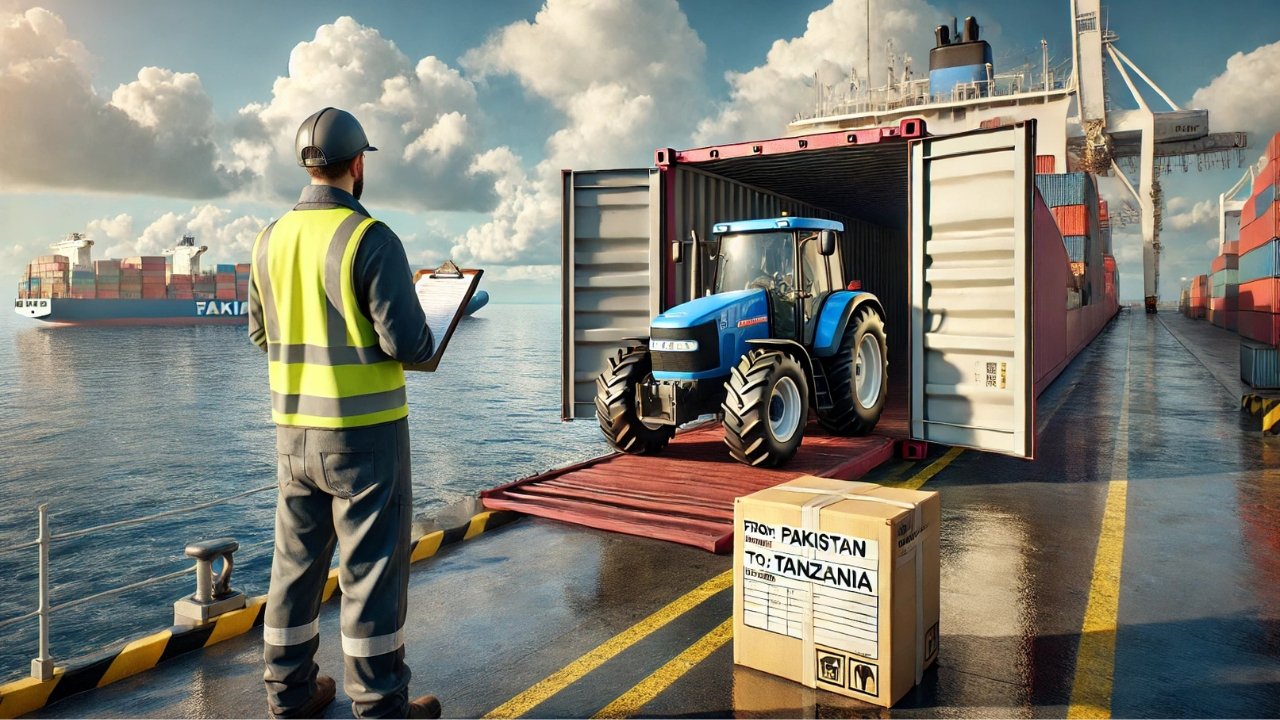
    Farmers and tractor producers watched on as officials in Pakistan’s high commission in Kenya facilitated the export of Pakistani tractors. These tractors are headed to their new home in Tanzania: Masai Trekta Company Ltd’s tractor depot.

    The export deal marks a significant moment for ATS (ATS tractors), which does not operate on the same scale as other tractor giants in the industry, such as Millat and Ghazi tractors, which have a 70 per cent and 29 per cent market share, respectively. Aside from ATS, other tractor manufacturers are likely to benefit too.

    This is because the tractor manufacturing industry has seen a great decline in the recent past, with some plants even shutting down across the country. The situation was so serious that even the Minister for Industry and Production, Rana Tanveer, referred to it as “the sinking tractor manufacturing industry”.

    However, experts predict the demand for tractors will increase, not just from Tanzania but also from other neighbouring African countries. This spells great news for tractor manufacturers as they will be able to increase their profit levels due to the increased sales volumes.

    Additionally, the sale of tractors will also open up further export avenues for Pakistani businesses. This could include – but is not limited to – the export of tractor spare parts by the 400 companies that produce them. Currently, 90 per cent of all parts used in local tractors are sourced internally, which means that Pakistan is capable of providing international customers with service parts for their tractors.

    If these tractors experience problems abroad, Pakistani tractor technicians and mechanics will be paid to fix them. This is bound to create additional skilled labour jobs in Pakistan.

    Moreover, tractor manufacturing plants that were previously shut down are expected to reopen and operate closer to full capacity. The result will be an increase in the hiring of unskilled employees at these plants. This is expected to ease the current unemployment rate, which stands at 5.5 per cent.

    While tractor manufacturers are expected to benefit, the same can’t be said for business owners in the agricultural sector. The fact of the matter is that a rise in international demand for Pakistani tractors will hurt agricultural landowners and farmers in Pakistan. This is because the price of tractors will rise alongside the demand. As a consequence, Pakistani farmers are expected to suffer as the higher price tags will make it tougher to purchase them.

    Lawmakers in Islamabad are undoubtedly elated, though, as tractor exports will help bring in valuable foreign reserves for the cash-strapped country. The export deal is likely to be a cause of relief as just last month alone, the trade deficit rose by 20.4 per cent to an alarming deficit of $1.78 billion.

    While further exports are not guaranteed, experts speculate that new export deals are on the horizon. Only time will tell if tractor exports can save the “sinking industry”.

  • Vegetable shortage crisis: Export surge could spell trouble for farmers

    Vegetable shortage crisis: Export surge could spell trouble for farmers

    Businessmen involved in the agricultural sector managed to boost vegetable exports by 11.5 per cent in the first quarter of the fiscal year.

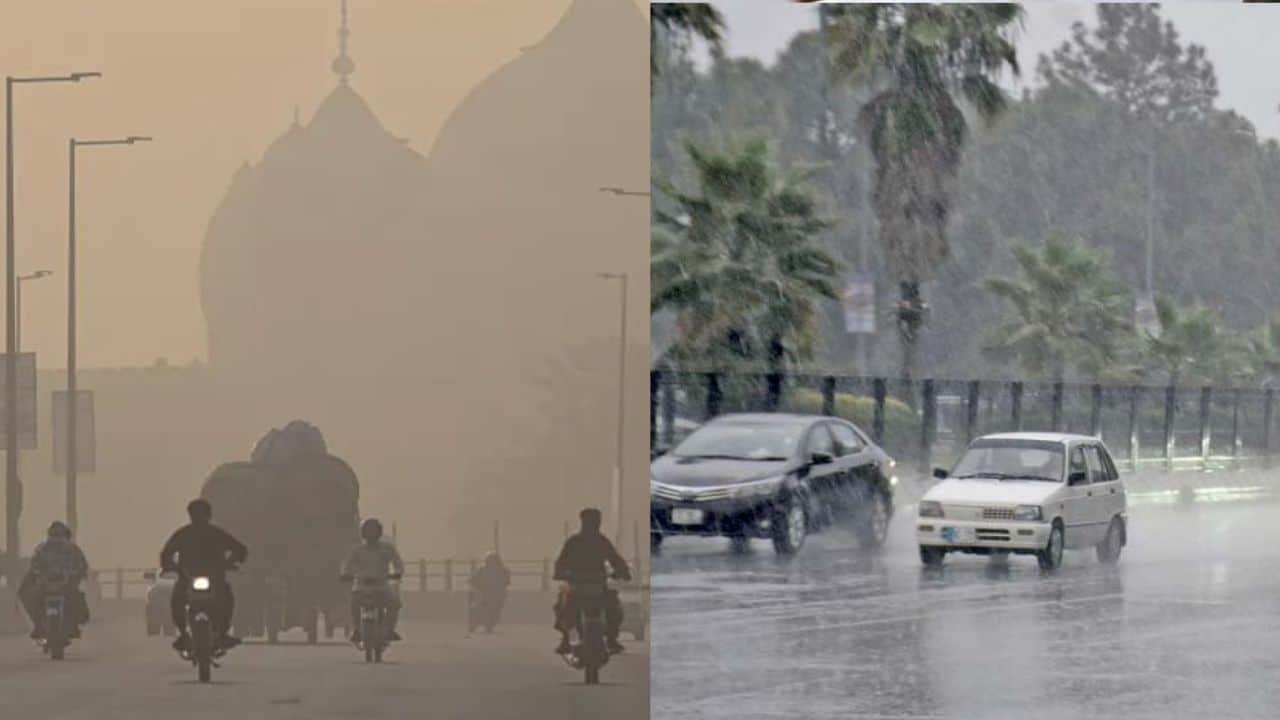
    This comes at a time when seasonal rains have left vegetable fields devastated nationwide – especially in Sindh.

    The consequence of mass exports and heavy rainfalls has caused major shortages in the local economy. As a result, retail stores and street vendors have resorted to relying on Iranian and Afghani vegetables to keep customers from returning empty-handed.

    With the decrease in vegetable supply, the prices have risen, which is not just true for the local economy but also for international markets where a 26 per cent rise in price has been recorded. The result of this inflation, while beneficial to farmers, is likely to negatively impact retailers.

    The increase in prices will put retailers in a dilemma regarding their profit margins. They must either absorb these higher prices while decreasing their profit margins or protect them by increasing prices.

    Either way, retailers are expected to suffer.

    However, farmers will probably not be celebrating the extra exports worth $71 million for long. This is because Pakistani exporters have been exporting produce imported from across the border. The result could be loss in sales as international buyers purchase vegetables from Pakistan for their incredible taste.

    The same taste can’t be found in imported vegetables. Which might leave international buyers disappointed with the drop in quality. Moreover, it does not make sense for international buyers to purchase the same goods for a marked up price when they can get the same product directly from the source.

    Farmers are also growing worried over a potential loss in sales of their products in local markets. This is largely true because if prices of local produce continue to skyrocket, consumers may incline towards purchasing Iranian onions that come with attractive price tags. And with agricultural yields expected to take months to recover, farmers are losing our valuable market share to imported products.

    What’s most concerning for farmers is the influx of Afghani produce. This is largely because Afghanistan is facing numerous sanctions, and farmers there are willing to sell their produce at figuratively “dirt cheap” prices. If local markets get flooded by these products, Pakistani farmers may lose out.

    Farmers, especially those growing onions and tomatoes, will hope for an improvement in their yield levels. This will allow them to capitalize on the higher international and domestic prices.

    Will Pakistan farmers be able to achieve this feat? Only time can tell.

  • Pakistan eyes over $12 billion in Riyadh investments

    Pakistan eyes over $12 billion in Riyadh investments

    Business owners in Pakistan have their eyes set on the Riyadh meetings as developments in the Future Investment Initiative (FII) are underway.

    Prime Minister Shahbaz Sharif and the delegation from Islamabad is expected to bring back upwards of $12 billion in investments.

    Premier will be meeting the Crown Prince Muhammad bin Salman along with other high-ranking officials in an attempt to secure Saudi investments.

    Earlier this month, prior to the Shanghai Cooperation Organization (SCO) summit, a major Saudi delegation invested nearly $2 billion dollars into the country. With the Saudis expected to continue bankrolling investments in Pakistan, business owners are preparing to celebrate.

    This is due to the fact that Saudi investments will allow Pakistani businesses to expand their operations significantly. Businesses are already doing well, as can be seen with the Pakistan stock exchange (PSX) closing over 91000 points today.

    With international investments pouring in from Riyadh, investor confidence is projected to increase and further contribute to the growth of businesses in the economy.

    Riyal-fueled growth is likely to scale up the scope for projects of businesses, which will result in new employment posts. Once the hiring process by businesses ends, the situation of unemployment is likely to improve in the economy.

    Currently, the unemployment rate sits at an uneasy 5.5%, which translates into around 4.5 million people who are out of work. With more people working and with an increase of money flowing in the economy, businesses are likely to see an increase in the demand for their goods.

    The bulk of the Saudi investment will be made towards the petroleum refinery sector.

    If Pakistan is to develop a more extensive network of refineries, it could be able to greatly benefit from future oil discoveries.

    This is because Pakistan would have the necessary infrastructure to purify its own crude oil and not have to rely on foreign powers for petroleum imports. If oil is to be discovered and the refineries manage to reach the necessary capacity with Saudi investments, an annual saving of around $16.91 billion could be seen – as that is the current annual value of petroleum imports.

    The result of this could be appreciation of the PKR with fewer imports as the Pakistani rupee will be buying up fewer commodities in international markets, resulting in a reduction in its supply.

    This will spell great news as businesses that rely on processing imported goods to produce final goods will be able to import goods cheaply with strengthened rupee.

    Currently, the textile sector is involved in the importation of dyes and pigments to produce final products. However, these imports could be made cheaper if Saudi investments fund the construction of refineries.

    Economic collaboration between Saudi Arabia and Pakistan will be extremely beneficial to the latter.

    Will Islamabad’s delegation manage to snag billions in investments? Or will they return home empty-handed? Time shall tell.

  • Can trade with India guide Pakistan out of the darkness?

    Can trade with India guide Pakistan out of the darkness?

    Independent power producers and business owners in the pharmaceutical industry worriedly watched the developments of the World Bank meetings on Sunday. This is because, during the IMF and World Bank meetings, Finance Minister Muhammad Aurangzeb stressed the importance of trade links with India.

    Pakistan is a net importer of power and pharmaceutical products, which ensures that businesses operating in these fields face little local competition. But if Islamabad lifts the red tape on trade with New Delhi, the Wagha-Attari border is bound to see major truck movement. This is because India is a net exporter of power and pharmaceuticals – which Pakistan could buy.

    If trade is to open up, importers in Pakistan might become inclined to purchase medicines from India as opposed to the United States – which is extremely far away compared to India. This is likely to reduce shipping times from 44 days down to under a day in optimal conditions. Due to reduced travel times and costs, there might be an increase in the import value of pharmaceutical products – a figure that stood at $1.38 billion in 2022.

    The Pakistani pharmaceutical industry saw a 15.3 per cent growth in 2023, with more growth projected for the near future. However, if trade restrictions are reduced, the current growth levels of the pharmaceutical sector could take a serious hit. This will be due to the world-class quality of the medicines of the well-established Indian pharmaceutical industry.

    Fewer restrictions on trade with India are likely to spell bad news for local pharmaceutical companies as the introduction of extra competition flooding the market with low-price medicine will reduce both growth rates and profit margins.

    Additionally, with Pakistan importing over $13 million in electricity in 2023, the possibility of importing Indian electricity is an attractive one. This is because India could offer more competitive rates on their electricity than our current trading partner, Iran.

    Moreover, if India is to sign power deals with Pakistan at beneficial rates, independent power producers might sense danger, too. This is due to the fact that earlier this month, five of them were let go as Islamabad terminated their contracts.

    However, if trade is to open up, it will significantly contribute towards a welfare increase for citizens. This is because consumers will have a wider variety of goods to choose from in addition to lower prices.

    Local businesses, however, will also have to reduce their prices accordingly if they want to ensure that a steady stream of customers purchase their products.

    A few local industries might be able to capitalize on normalizing trade relations with India. These could be the sports and cement industries. With Indian cement exports falling over 65 per cent from 2015-2022 to meet domestic demand, Pakistan’s cement industry could step in and capitalize on Indian demand.

    Most importantly, on a macro level, the normalization of trade and restoration of Pak-India relations will likely result in a great deal of prosperity for Pakistan. This is because the economic binding and strengthening of trade links between the two nations will reduce the political tensions – and the resources that are expended on said tensions.

    With Aurangzeb’s mindset on achieving economic prosperity, the main question on everyone’s minds is whether this plan will ever come to fruition. The answer can only be found with time.

  • Textile manufacturers unhappy as government policy threatens 18 billion dollar export sector

    Textile manufacturers unhappy as government policy threatens 18 billion dollar export sector

    Textile exporters expressed great displeasure over the government’s decision to stop the supply of natural gas to their power plants. Islamabad’s decision puts the USD 18 billion textile export industry at risk by leaving it to function on the national power grid.

    While the motivations are not entirely clear, experts believe that by cutting the gas supply to these independent power plants, the government is trying to increase its power supply revenues. This is because these power producers operate outside of the national grid, which makes it a tough activity to tax and regulate.

    For business owners in the textile sector, reverting to the national grid is a huge setback. This is due to the unreliability of the distribution companies that are infamous for power outages and fluctuations. While fluctuations might not be an alarming issue in residential areas, for the textile industry, they can render expensive machinery useless.

    This is primarily the reason why many textile manufacturers banded together to set up these independent power plants, as they were a stable source of power. However, with the government’s metaphorical axe coming down on these power plants, textile business owners will have no choice but to comply.

    Moreover, as per the Pakistan Textile Exporters Association (PTEA), the national grid will result in higher production costs due to transmission and distribution losses – inefficiencies the grid is known for.

    For exporters, this spells bad news as a rise in production costs will result in a loss in the competitive edge that Pakistan’s textiles have in international markets. This is because Pakistani textiles will not be as attractive to competitors due to the higher price tag when compared to other countries offering the same product for less.

    With Pakistani textile company Keywin Trading Ltd and other local players signing USD 40 million worth of agreements with Chinese firms at TEXPO 2024 (Textile Expo), the decision to cut gas supply to independent power plants comes at a bad time.

    This is primarily because, aside from switching to the costlier national grid, textile manufacturers have no real alternative to turn to anymore. Exporters who lose out on international contracts due to higher prices might have to shut their factories down and lay off thousands of workers.

    Is the crusade against these power plants even worth it if it means that the textile sector gets caught in the crossfire? Before anyone jumps to answer this question, perhaps it is best to note that the textile sector is singlehandedly responsible for 60% of the country’s exports.

  • Bullish trend persists: PSX closes just under 90,000 points amid strong investor confidence

    Bullish trend persists: PSX closes just under 90,000 points amid strong investor confidence

    Traders on the floor of the Pakistan Stock Exchange (PSX) rode on a wave of joy today as they witnessed the market break yet another record.

    During day trading, the KSE-100 index crossed the 90,000 mark for the first time ever, and it stayed that way until the trading day was about to close.

    At the end of the trading day, however, KSE-100, the benchmark of the PSX that includes the top 100 companies, settled at a respectable 89,993.96 points. This is a huge leap of 1,047.98 points, which translates into a 1.16 per cent increase from when the market opened.

    The ALLSHR (All Share) Index, which tracks the performance of all companies listed on the PSX, did really well, too. ALLSHR gained 495.83 points throughout the day, which is 0.86 per cent from the time it opened, to close at an impressive 57,461.53 points.

    While all indexes were in the green, the KSE-30 index, which focuses on the top 30 companies listed on the exchange, performed the best by closing at a remarkable 28,395.15 points. KSE-30 had gone up by 352.45 points at closing time, which is a massive 1.24 per cent increase in the index value.

    The driving factor behind this bullish trend is a rise in investor confidence. Investors in the market are making large gains due to the hot streak PSX has been for a while now.

    This enthusiasm has attracted foreign investors, as the percentage of all shares held by foreign investors jumped from 14.49 per cent at the start of the month to 15.22 per cent currently.

    It’s a great time for the market and a great opportunity for those looking to invest in Pakistan’s financial future. Can the bullish trend continue? It certainly is possible, but only time will tell.

  • What Punjab’s 182 billion rupee missed IMF target means for local businesses

    What Punjab’s 182 billion rupee missed IMF target means for local businesses

    Business owners in Punjab are preparing for tough times ahead as the provincial government of Punjab missed the budget surplus goal set by the International Monetary Fund (IMF) for this quarter by a staggering 182 billion rupees. Not meeting the IMF stipulated objectives might foster bad will as international lenders will be weary of extending loans to Pakistan in the future.

    Suppose lawmakers in Islamabad direct Punjab’s provincial government to meet the budget surplus goal at any cost. In that case, it will likely spell bad news for the businesses and people that call it home. This is because a budget surplus can be increased via either reducing government expenditure or levying higher taxes: Neither of which are optimal.

    While customs duties and corporate taxes remain under Islamabad’s control, the provincial government in Punjab has the authority to raise service and property taxes. This is likely to happen as the surplus goal for this quarter was missed by a margin of an uneasy 53%.

    According to Punjab’s Housing, Urban Development, and Public Health Engineering Department (HUDPHED), there were 1,680 approved construction companies in 2022, with many more operating unofficially without approval. If property taxes rise, the construction companies are expected to suffer as their clients will be stuck paying the higher taxes leaving less money for the owners of the companies.

    Moreover, an increase in services tax will cause businesses to lose out on either profits or customers. This is because businesses will have to make the tough decision of either absorbing the higher sales tax while holding prices constant or passing on the tax to their customers in the form of higher prices – which might turn customers away.

    If the government of Punjab decides to raise the surplus by decreasing its expenditures on projects, this will be bad news, too.

    This is because businesses that rely on public contracts will suddenly not be able to secure new contracts. And with the provincial government tightening its metaphorical belt, the employees of these businesses will be pushed to do the same too.

    This is because the loss of contracts might cause businesses to lay their employees off. The result of this decision can only be negative as laid-off workers will think twice before spending money, which will translate into a loss of sales for local businesses.

    While experts believe that following the conditions of the IMF is necessary, this discipline might stir up some issues for businesses. For now, all eyes are on the government of Punjab, and only time will tell what is to happen next.