Author: mehreen.burney

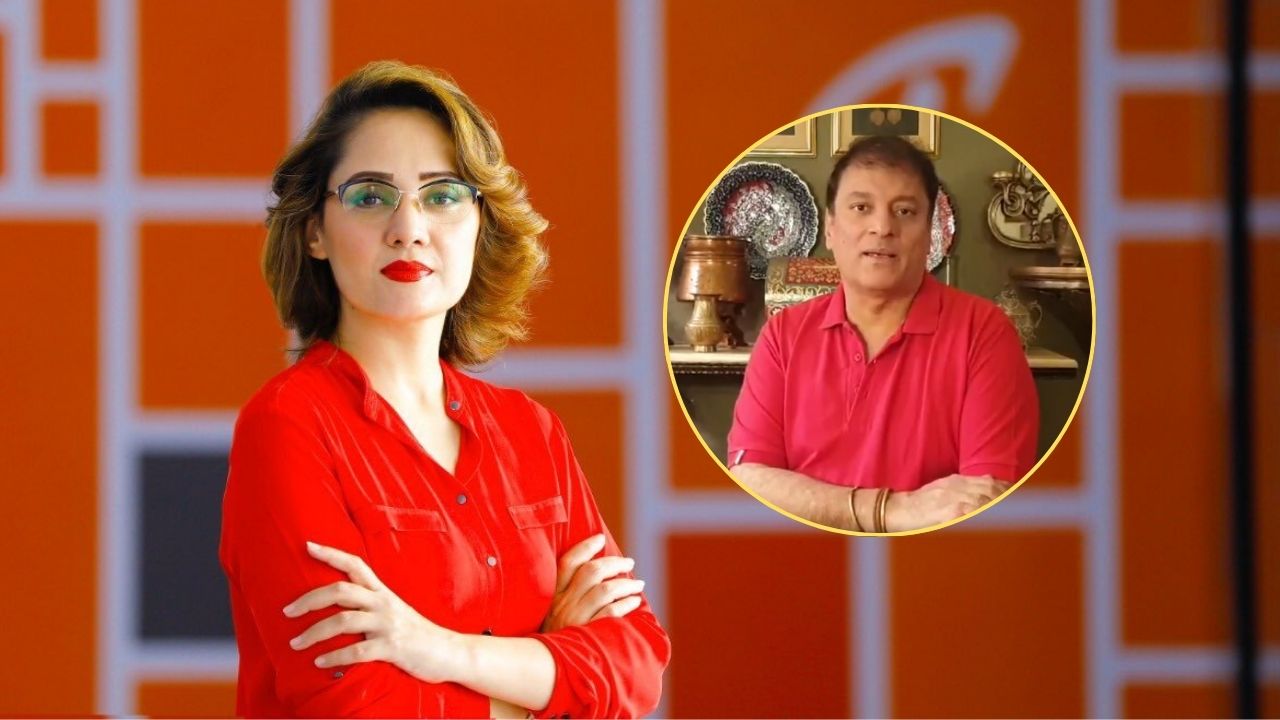
  • Exclusive: ‘Not the first time he’s apologised,’ Gharidah Farooqi reveals interaction with Dr Omer Adil

    Exclusive: ‘Not the first time he’s apologised,’ Gharidah Farooqi reveals interaction with Dr Omer Adil

    One month after passing misogynistic remarks against renowned television anchor Gharidah Farooqi, Dr Omer Adil has publicly apologised.

    On a podcast hosted by Zohaib Butt, Dil Ki Baat, in July, film critic and orthopaedic surgeon Adil claimed that female anchors in Pakistan’s media industry are “handpicked by a seth or somebody else to go and host a stupid program”, adding that they are treated extraordinarily in comparison to their male counterparts.

    He made these comments during a segment of the podcast that primarily targeted Gharidah Farooqi and used derogatory language, including vulgar abuse. He further claimed that the producers had ‘no guts’ to criticise women anchors for their mistakes.

    This was followed by a massive backlash from the journalist community across Pakistan, particularly women who are, time and again, subjected to harassment and sexist commentary. 

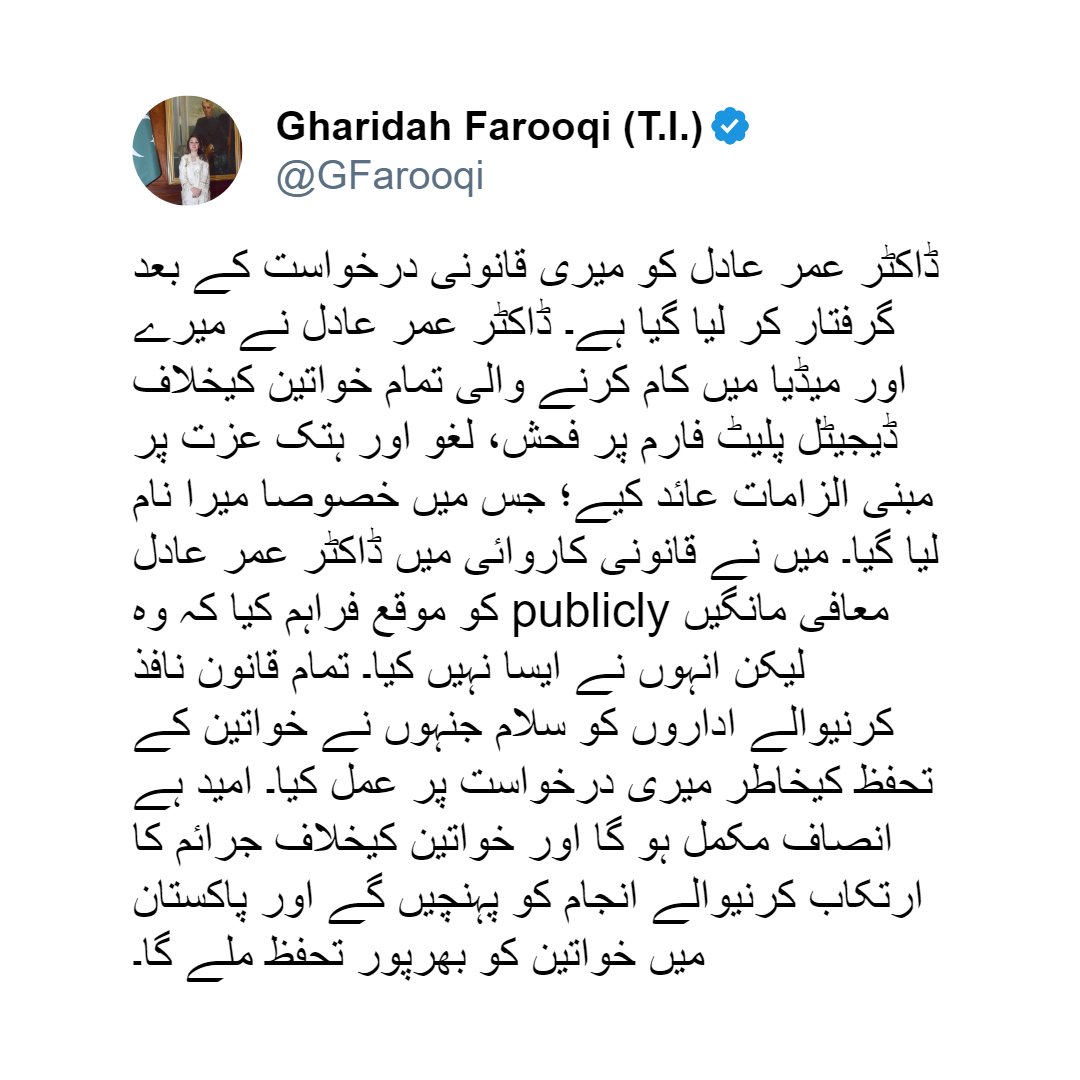
    On August 6, Gharidah Farooqi updated on X (formerly Twitter) that Dr. Adil had been arrested by the Federal Investigation Agency (FIA). 

    On August 24, Dr Omer Adil posted an “unconditional, wholehearted and sincere apology” to Gharidah Farooqi.

    But speaking with The Current, Gharida Farooqi revealed that it is not the first time that Omer Adil apologised to her.

    “Dr. Umar Adil contacted me many weeks ago, shortly after he was granted bail following his arrest by the FIA after I filed a complaint. He called and apologised for about 20 to 30 minutes, insisting that he had been trapped and ended up saying things in the podcast that he did not intend.

    He seemed to be playing the victim,” she recalls.

    Gharidah then demanded that he issue an apology on his official YouTube channel for a duration equal to the time he spent making those offensive remarks on the podcast, to which he agreed.

    The apology, however, was delayed due to alleged technical issues. During this time, he posted a brief video but then vanished again.

    Although the case was receiving widespread attention, the FIA only detained Adil after Farooqi filed a complaint, which ultimately led to his public apology.

    Fight against digital violence

    Ghareeda Farooqi has long been subjected to online violence. From rape threats to even death threats, she has been targeted by “malicious campaigns”.

    “I have been fighting against not just cyberbullying but cyberviolence against myself since 2014. I was the first female journalist who was made the victim of digital violence against women, as well as planned campaigns organised by political parties”, she says.

    Women Press Freedom has documented at least a dozen organised troll campaigns against Gharida, reportedly the “highest number of organised digital violence we have ever documented against a journalist in the region” after Indian journalist Rana Ayyub.

    “People have forged videos and pictures using my face, including pornographic content,” she recalls.

    “So far, I have filed almost ten complaints with the FIA; not even one has been addressed, and no culprit has been arrested.”

  • ‘Please do something,’ students push Hamid Mir to file petition against internet disruption

    ‘Please do something,’ students push Hamid Mir to file petition against internet disruption

    The month of August has been the worst for the digital space in Pakistan since February 2024.

    The tech industry has expressed serious concerns about the internet slowdown, warning that it could cost the debt-ridden nation up to $300 million.

    Amid the ongoing issues, senior journalist Hamid Mir took the matter to the Islamabad High Court (IHC), filing a petition through Advocate Imaan Mazari against the internet slowdown.

    Mir argued on behalf of the journalist community, which is struggling to perform its duties due to reliance on connectivity and communication. He further noted that the issue impacts those in e-commerce, students, freelancers, and others.

    The petition also highlights that no prior consultation or deliberation took place between the government and relevant stakeholders before the installation of the firewall, which has contributed to the ongoing struggles of the business and tech community.

    This lack of transparency has fueled doubts and rumours about the nature of the firewall.

    But did Hamid Mir file the petition solely because of the struggles faced by journalists?

    “Frankly speaking, I filed the petition after receiving messages from many students who said they could not leave Pakistan but were finding it difficult to study here,” Mir told The Current, revealing that internet disruptions have also impacted students pursuing online studies, prompting them to seek intervention from the authorities — which Mir decided to do on their behalf.

    “I also face pressure from my own family, who cannot stay in this country anymore. They have asked me to do something to restore internet and social media if we are to remain here,” he explained, reflecting on the growing discontent among the youth.

    Given the current circumstances, the petition argues that installation cannot proceed without consulting relevant stakeholders and that only “reasonable restrictions” may be imposed by law, based on the “principles of necessity and proportionality.”

    The respondents are also asked to provide reports on the firewall’s objectives, status, and impact on citizens’ rights, including details on internet surveillance. Meanwhile, the petition calls for halting the firewall installation and ensuring uninterrupted internet access for citizens until the issue is resolved.

  • ‘It’s not possible’; Reporting in internet-challenged Pakistan

    ‘It’s not possible’; Reporting in internet-challenged Pakistan

    With the primary shift from newspapers to television channels and now to digital media applications, the dissemination of information has become increasingly competitive for newsrooms, with the latest updates just a click away.

    “Delays can be managed with newspapers, but today everything is in your hands—specifically, mobile phones,” says Raees Ansari, Bureau Chief of Geo News in Lahore.

    “Every single second is crucial in reporting now; some footage needs to be sent and put on air instantly. But due to poor network conditions and slow WhatsApp, content is not being sent on time, which is affecting our professional activities,” he reveals.

    Over the past week, internet users across Pakistan have reported network disruptions, with WhatsApp, Facebook, and Instagram experiencing slowdowns, hindering online activities. The Pakistan Telecommunication Authority (PTA) has denied any connection between these issues and the alleged firewall installation.

    Since the ban on X (formerly Twitter) on February 17, 2024, many have turned to Virtual Private Networks (VPNs). The ongoing disturbances, however, have complicated internet usage, which is crucial for a number of professions.

    Sumaira Raja, an investigative reporter, who is mostly found out on the field, complains of encountering issues with not only the internet but also phone signals which often prevents her from conveying news on time.

    “I also experience delays with receiving beepers, as head office frequently reports that the number is not available due to poor signals. This situation makes it very difficult to do my job. I’ve tried using a VPN, but it hasn’t worked,” Raja says.

    Sports journalist Faizan Lakhani recalls when javelin champion Arshad Nadeem returned to Pakistan on August 17 after winning the gold medal at the Paris Olympics, all the visuals sent through WhatsApp by reporters were delayed, and they struggled to download them unless they used a VPN.

    “This situation is very challenging and affects our workflow. When reporters are working on a story or covering an event, they need to stay connected with the desk. We usually rely on voice notes to pass instructions, but since we started encountering this issue, we are struggling with that method too,” he says.

    “We have been told that the network disruption is because of the firewall installation. While things are becoming easier around the world, it has been getting harder for us. Everything is happening with the help of technology and the current situation is a major challenge.” says Ansari.

    What’s happening?

    A highly placed source in the IT industry identifies that filtering of content delivery networks (CDNs) through Firewall is causing content to be routed via internet backbone rather than CDNs.

    “This means that around 4 TBs of internet traffic previously served through CDNs, hosted in Pakistan, is becoming ineffective. When all traffic goes on backbone bypassing CDNs, it’s causing massive slowdown at many western destinations that’s happening now,” he explains.

    Recently, Fiverr, an online marketplace for freelance services, warned clients that Pakistani freelancers may experience delays due to internet issues and the use of VPNs to change their locations.

    “Brace for impact. God save the internet in Pakistan”, says the IT expert.

    Background

    It all started on February 17, 2024, about a week into the new government, when X (formerly Twitter) was banned.

    Initially, amid the uproar, the government remained silent on the matter while the Pakistan Telecommunication Authority (PTA) seemed aloof until the High Courts of Sindh and Islamabad intervened. The PTA eventually admitted that the ban on X was imposed on the orders of the Ministry of Interior based on reports from intelligence agencies.

    The government eventually justified the ban by attributing it to national security concerns, citing ‘digital terrorism‘ and online propaganda as among the threats.

    Earlier in August, Provincial Information Minister Azma Bokhari stated that the government is not against social media but wants to focus on rules and regulations, which, if enforced, could lead to the removal of the ban on X.

    The disruption has now extended beyond X, affecting other widely used apps along with the internet.

    Ironically, since the February 2024 election, the new government has emphasised the need to grow the tech industry in Pakistan.

    In March, Lahore Knowledge Park (a science park) was handed over to the Punjab Central Business District Development Authority with the approval of Chief Minister Punjab Maryam Nawaz, with the goal of establishing Pakistan’s largest IT city.

    In June, Prime Minister Shehbaz Sharif visited Shenzhen— the tech hub in China— in hopes of future collaboration. Ironically, he posted on X (Twitter), expressing how “impressed” he was by the “city’s skyline and development that symbolizes modern-day China.”

    Given the lack of proper infrastructure in the country amid burgeoning surveillance, how will Pakistan evolve in the rapidly transforming digital world? It remains to be seen – but likely we won’t be able to download it.

  • Exclusive: Pakistani scientist on the verge of curing baldness

    Exclusive: Pakistani scientist on the verge of curing baldness

    Unexpected discoveries have long been a catalyst for scientific research, leading to major breakthroughs in fields ranging from medicine to technology.

    Now, in an unexpected development, scientists have discovered a crucial piece of the puzzle: hereditary baldness, also known as androgenic alopecia.

    Dr. Muhammad Yar, a tenured associate professor at COMSATS University Islamabad and a biomaterial researcher, and Sheila MacNeil, an Emeritus Professor of Tissue Engineering at the University of Sheffield in the UK, are the two minds behind this latest development.

    Years ago, Dr. Muhammad Yar was working on the development of biomaterials for advanced wound care i.e. dressings (medical gels) which can help faster healing of chronic wounds, and agents which can support new blood vessels formation known as angiogenesis.

    So, in 2014, during a visit to the University of Sheffield, Dr. Muhammad Yar discussed the angiogenic potential of 2-deoxy-D-ribose with Professor Sheila MacNeil.

    Following their discussion, they decided to test the compound together.

    From chickens to rats

    Initially, when the dressing gel, containing 2-deoxyribose, was tested on chicken fertilised eggs, a lot of new increased blood vessels were seen growing towards tested material.

    “We were really happy and then we went towards patent filing. A company was interested in its commercialization as wound care drafting for diabetic and burn patients,” he recalls.

    The deoxyribose gel was then tested on full-thickness wounds, where it successfully promoted healing. It was, however, also observed that longer and thicker hair grew along the edges of the wounds.

    “We thought that 2-deoxy-D-ribose is doing something else as well. Apart from helping in faster regeneration, it’s helping in faster growth of hair as well,” he says.

    And that is how, after working on the development of wound healing, they dived into the possible baldness treatment.

    They tested the deoxyribose gel on mice with testosterone-driven hair loss and applied a small amount of the gel to their bare areas.

    In weeks time, the fur grew back thicker and longer, showing results comparable to minoxidil, the well-known hair loss treatment sold as Rogaine, which doesn’t actually prevent hair loss and often results in minimal regrowth in some cases.

    “This is working really nicely,” Dr. Muhammad Yar updates on the latest developments.

    Happy news for bald people?

    With ‘impressive results’ in mice, the scientists believe there’s a good chance that 2-deoxyribose will be tested on humans next.

    Dr. Muhammad Yar confirms that while testing on humans is the goal, it will first require further lab work to understand the mechanism of action of 2-deoxyribose and to obtain approvals from regulatory bodies.

    “We are expecting around a year and a half to two years’ time before we test this on humans.”

    If deoxyribose gel proves effective on humans, it could treat alopecia and support hair regrowth after chemotherapy.

    Why does Pakistan lag behind?

    When asked why it’s rare to hear about Pakistani scientists working on groundbreaking research, Dr. Muhammad Yar believes that the key is in translational research.

    “We have to develop something in the lab and put this in the market. This is very, very important for economic uplift in Pakistan as well as for the universities.”

    He also asserts the need for business training programs for faculty and students at Universities.

    “The research which academics are doing at the universities is really important. There is a space in the market evaluation and business knowledge among faculty and students that could help translate these technologies from the lab to the clinic,” he points out.

  • ‘Inspiring Pakistan’s youth’; The Current featured on the Google News Initiative

    ‘Inspiring Pakistan’s youth’; The Current featured on the Google News Initiative

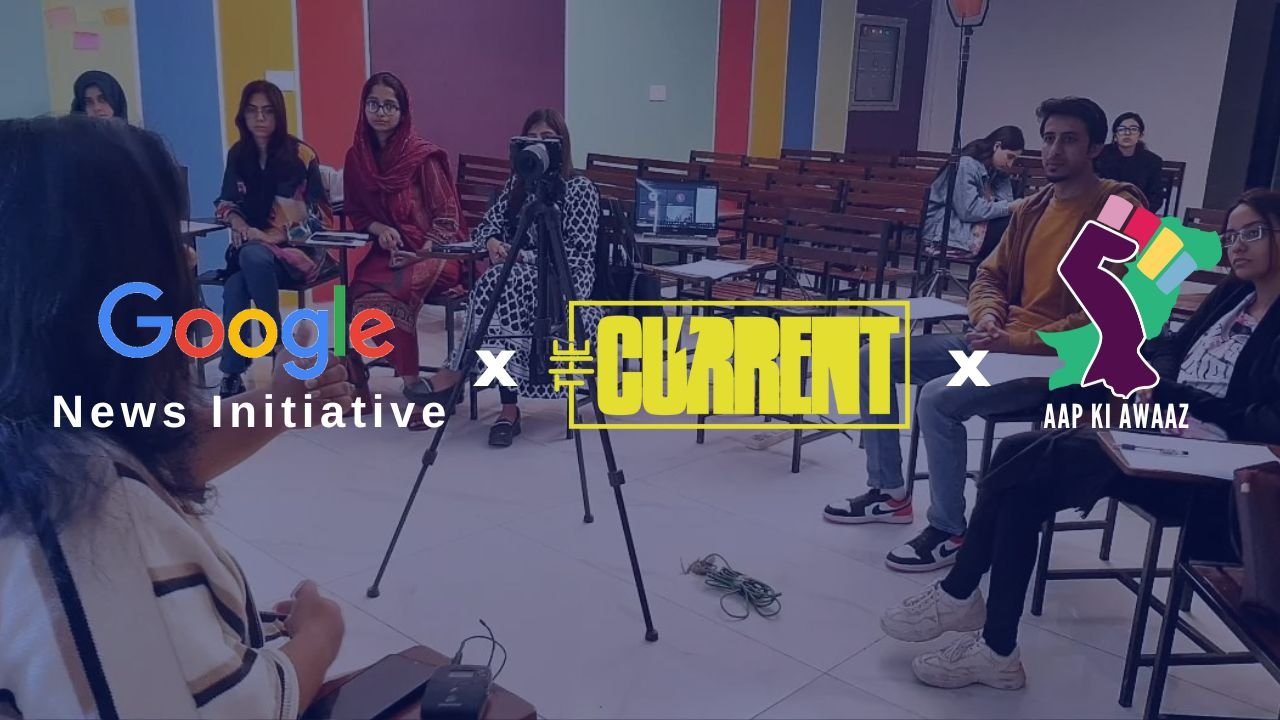
    In 2020, The Current won the Google News Initiative (GNI) Innovation Challenge, becoming the only media organization in Pakistan to achieve this highly regarded position within just a year of its launch.

    Four years down the road, we continue to grow alongside the ever-evolving news consumption habits of youth in the digital age.

    But that’s not all.

    In 2021, The Current opened the doors of its digital newsroom to the youth of Pakistan by starting a membership program called ‘Aap Ki Awaaz,’ which provides aspiring journalists with a platform to gain practical experience in digital media and prepare them for responsible information communication for tomorrow.

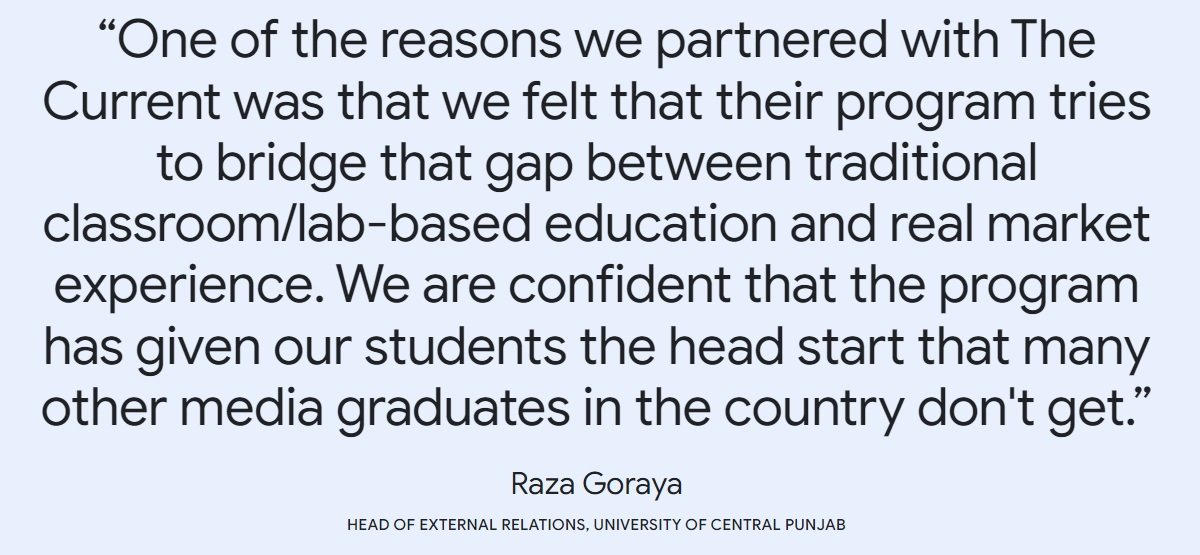
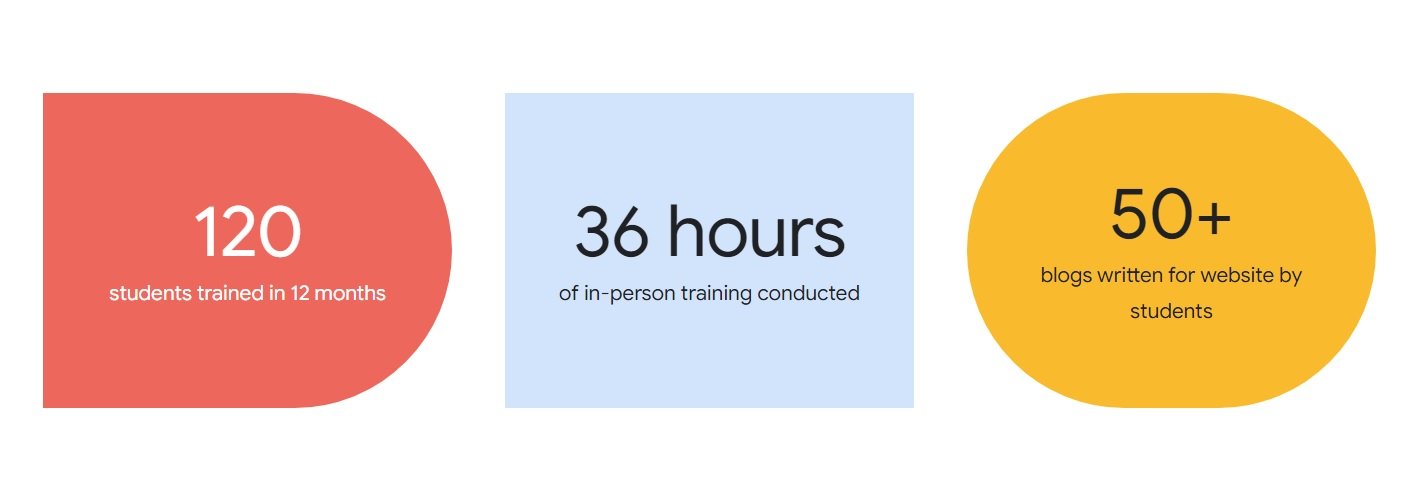
    Having collaborated with the University of Central Punjab and Punjab University, The Current has worked with 120 students, conducting workshops featuring Pakistan’s renowned journalists and digital personalities. Above all, we have provided them with a space to unleash their creativity.

    So far, Aap Ki Awaaz has published more than 50 blogs written by these students.

    In 2024, 12 of our young members joined The Current’s coverage of Pakistan’s general election, tagging along with our reporters, monitoring election results, writing real-time stories, participating in live podcasts, and gaining firsthand experience of this major political event.

    And oh! About a year ago, we launched our newsletter, which now has more than 1,500 subscribers and an open rate of 28 percent (which is growing!).

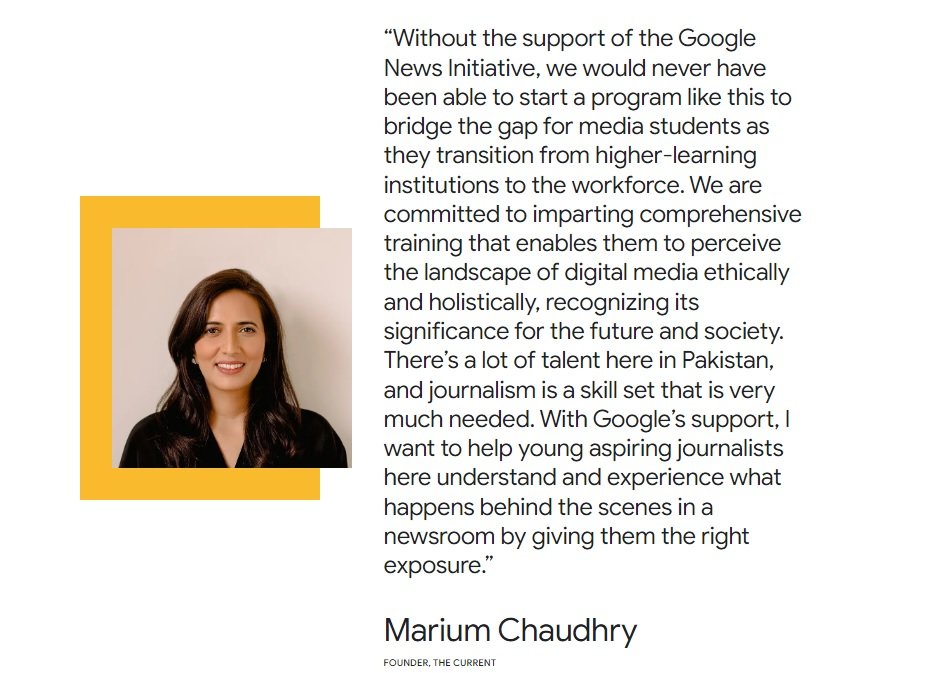
    The Google News Initiative covered our work and the work we plan to do. Join us, support us by becoming a member or subscribing to our free newsletter so we continue to help our community and our country.

  • No relief for babies: Heavy tax on formula milk

    No relief for babies: Heavy tax on formula milk

    The budget for 2024-25 was unveiled this Wednesday, on June 12, by Finance Minister Muhammad Aurangzeb.

    As the government depends on the International Monetary Fund’s (IMF) bailout package, citizens were further burdened with heavy taxes as per the administration’s commitments to the lender. Milk products for infants, a necessary item for many families, will now carry an 18 per cent tax.

    But why is this issue noteworthy?

    On January 21, 2022, the Finance (Supplementary) Bill—a ‘mini budget’—was passed by the National Assembly following extensive debate over the proposed taxes by the Pakistan Tehreek Pakistan (PTI) government. Among the contentious proposals was a 17 per cent sales tax on locally produced infant formula milk, classified as a “luxury product.”

    This classification sparked heavy criticism from both the public and the opposition, who argued that labelling a basic necessity for children as a luxury was unjust. In response, the-then Finance Minister Shaukat Tarin promised to push for the exclusion of children’s milk products from the Bill.

    However, two years later, heavy taxes are being imposed on infant milk products once again.

    According to Statista, a German data-centric platform, the Baby Milk & Infant Formula Market in Pakistan is projected to grow by 0.76 per cent from 2024 to 2029. This trend indicates increasing reliance on infant milk products due to various reasons.

    Traditionally, in South Asian countries like Pakistan, reliance on infant milk products is frowned upon, with a cultural preference for breastfeeding. However, several factors can make breastfeeding unfeasible.

    Certain health conditions, such as infections or breast surgeries, can prevent mothers from breastfeeding. Additionally, some mothers can not produce enough milk due to lactation insufficiency. In other cases, babies are born with conditions like galactosemia, which prevents them from digesting breast milk. Furthermore, specific nutritional deficiencies can not be addressed by breast milk alone and require formula milk supplementation.

    Moreover, not every mother is comfortable with breastfeeding, and many prefer to use formula milk to feed their children. Working mothers, in particular, may not have the flexibility to breastfeed and thus rely on formula milk.

  • Dear male colleagues, Sherry Rehman has a message for you

    Dear male colleagues, Sherry Rehman has a message for you

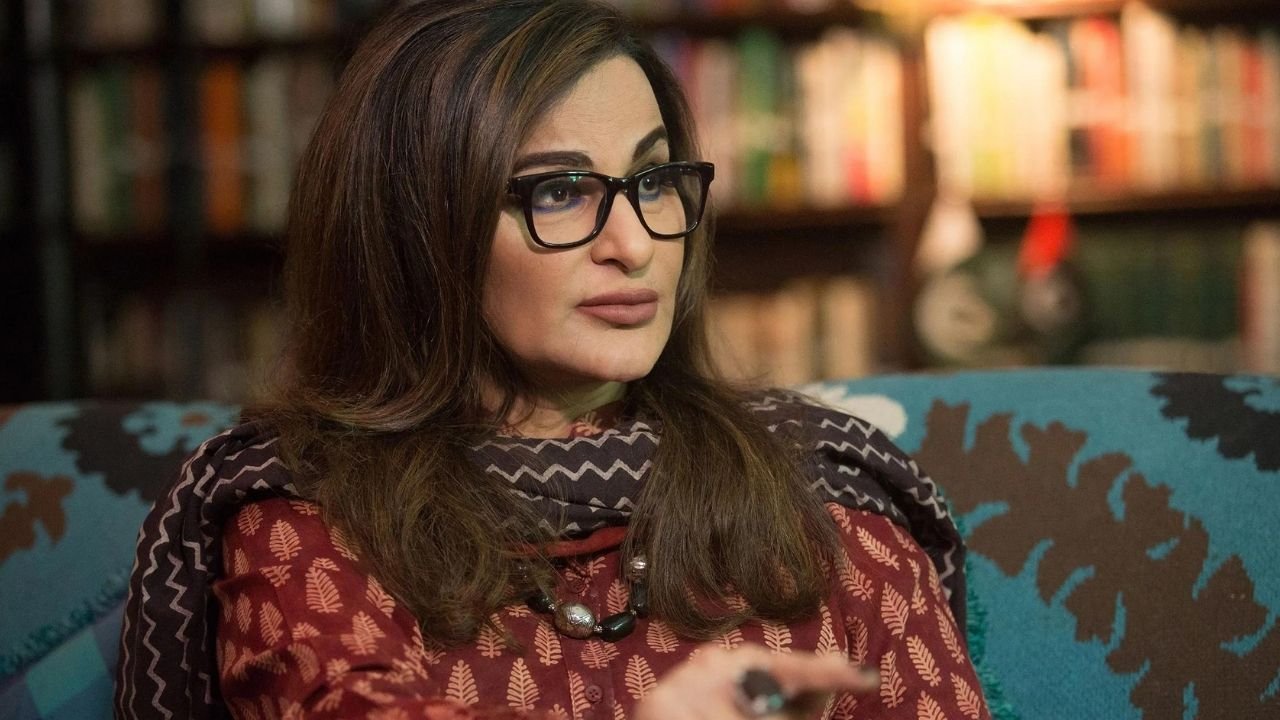
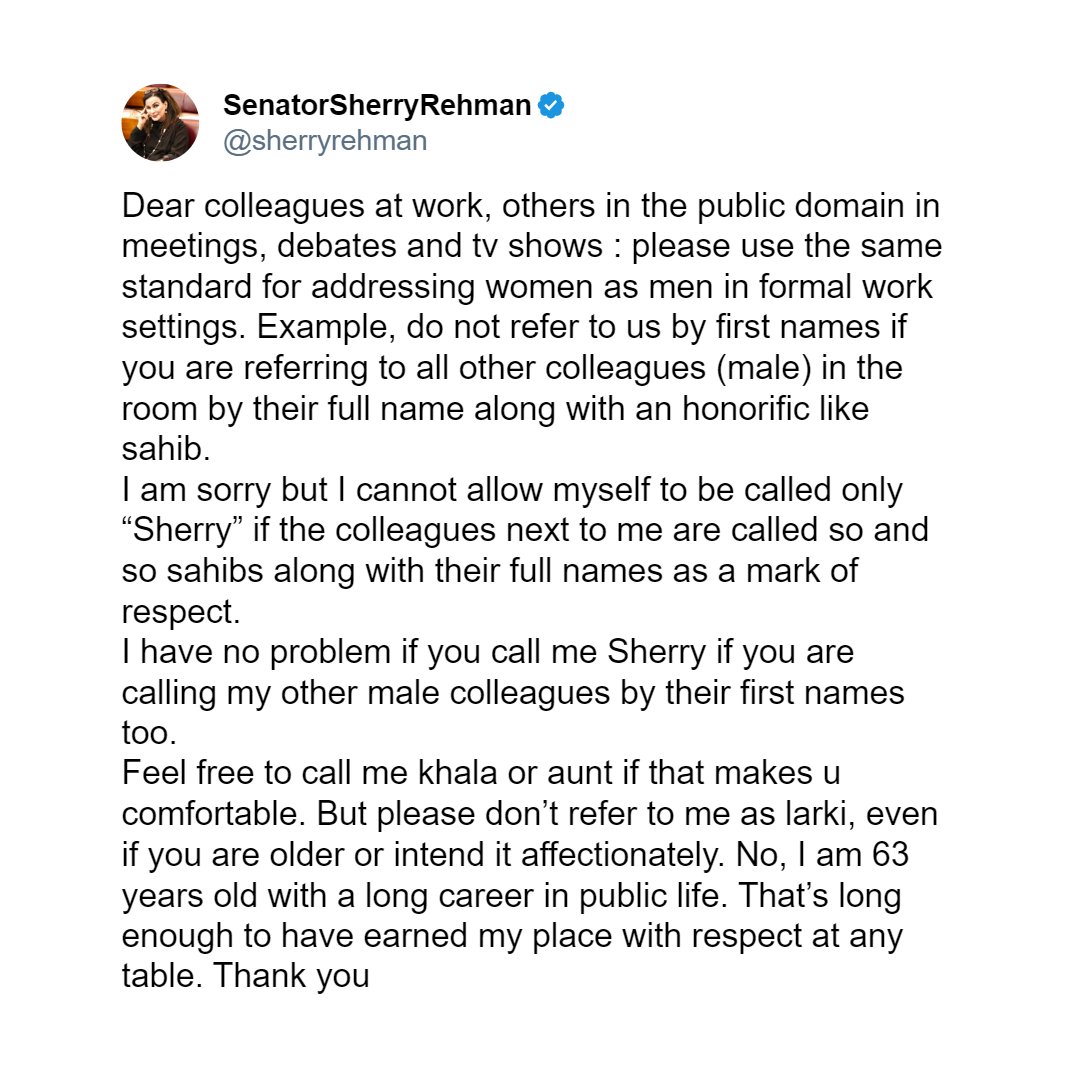
    Pakistan People’s Party (PPP) Vice President and Parliamentary leader Sherry Rehman has highlighted a very common and a misogynistic issue women face in the workplace.

    In her latest post on X (formerly Twitter), Rehman alluded to male professionals in Pakistan who discriminate in their manner of addressing female colleagues.

    “I am sorry but I cannot allow myself to be called only “Sherry” if the colleagues next to me are called so and so sahibs along with their full names as a mark of respect.

    I have no problem if you call me Sherry if you are calling my other male colleagues by their first names too”, she pointed out.

    While men in workplaces are commonly referred to as ‘Sir,’ ‘Sahab,’ or by their full name out of respect for their professional status or simply their gender, women, on the other hand, are mostly called by their first name or derogatorily as ‘larki’ or ‘bibi,’ etc.

    While professionally, calling someone by their first name is not inherently wrong, using more socially respectful language for men compared to women makes the practice sexist.

    This lack of courtesy traditionally stems from the patriarchal idea of deeming women as intellectually and professionally inferior.

  • What do YouTubers do it for?

    What do YouTubers do it for?

    Picture this: You’re eagerly anticipating a visit to a pristine beach, breathlessly savouring the joy it will bring you. But upon arrival, you find yourself in a forest of unsightly weeds, your view destroyed, your expectations shattered. This analogy encapsulates the experience of attending Aurat March since a couple of years.

    What promised to be a show of solidarity is marred by the presence of disruptive YouTubers.

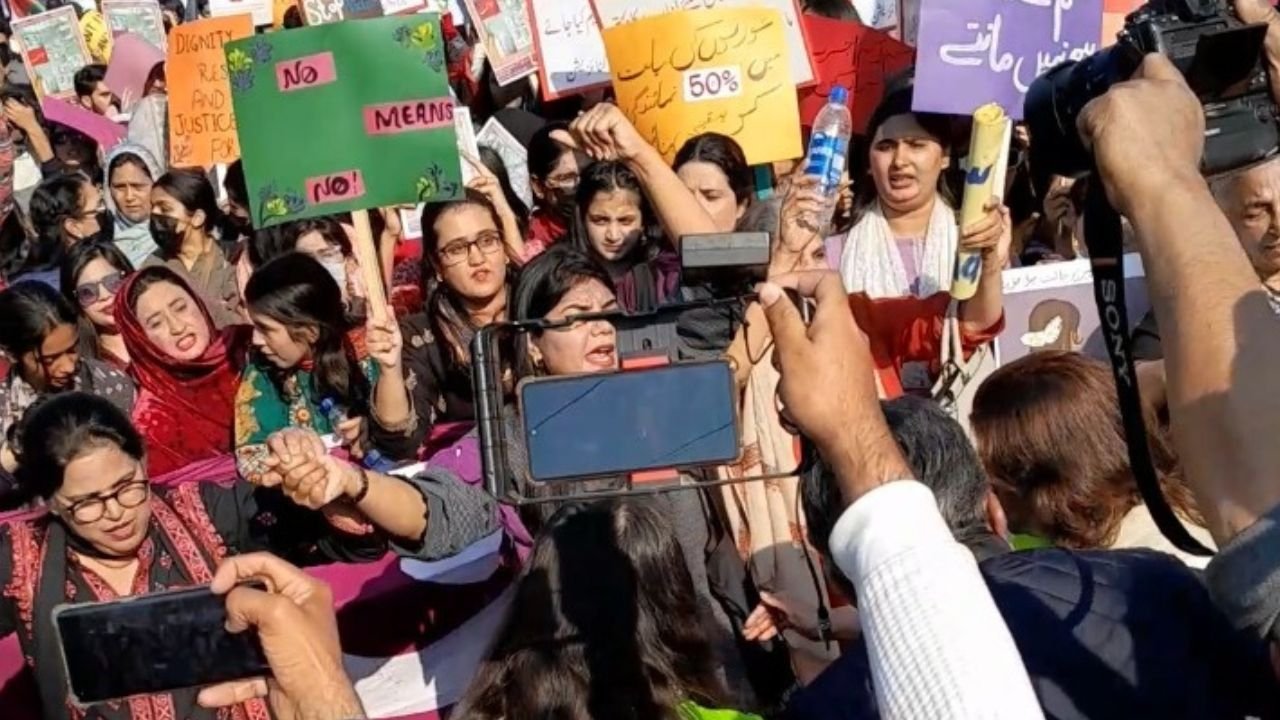
    Aurat March is an annual gathering for women and gender minorities where they lay down their demands before the state as well as celebrate sisterhood. It is an extension of the long-fought struggle of Pakistani women, extending from the country’s birth to this day.

    But standing against the march is an extremist segment of society — a mindset further fueled by Youturbers and reporters from small news channels. With the monetization of YouTube, video creation has developed an appeal for many around the world. A number of vloggers have achieved financial success solely through their YouTube endeavours.

    You must have noticed that content creators often promise rewards or incentives for their viewers if they help them reach 1000 views. This metric, known as Clicks Per Mile (CPM), determines the earnings generated from these views, with one crucial factor being the geographic location of the audience.

    In Pakistan, YouTube offers lower payouts compared to other regions, ranging from 0.5 USD to 1 USD per 1000 views, particularly if the viewership is primarily Pakistani.

    While this may appear modest, the potential for increased earnings exists through attracting international viewership and maintaining a consistent upload schedule. With dedication and growing subscriber counts, Pakistani content creators on YouTube can unlock substantial earning opportunities over time.

    This is why, to get more views, Youtubers now resort to clickbait i.e. misleading headlines and captions while the content too, is deliberately sensational and controversial. For this, truth is compromised as reality is misquoted and misconstrued.

    And so, Aurat March has become a coffer of abundance for content creators.

    The March’s organisers have, time and again, received complaints from the attendees who are pestered by YouTubers who deliberately try to provoke the women with problematic questions. In a staunchly misogynistic society, even a slightly irritated woman is worth a few thousand views.

    This year, at Aurat March Lahore, a YouTuber made his way to the congregation for the first time. When asked why he came to cover the March, he counter-questioned, asking why women felt the need to come out on the streets since “women already have rights”.

    Not only was this YouTuber unwilling to listen to the people willing to list down the reasons why women march, it also showed that he had not read the charter of demands nor the manifesto — another common bad habit of Youtubers.

    “What problems do women have? Hasn’t your dad kept your mother happy? What about those men who aren’t happy because of the women in their lives?” another asked as he allied himself with his counterpart.

    “It seems like you come with preconceived notions about the March and the attendees, and an ill will to malign the voices altogether”, I asserted as the YouTuber then resorted to misinterpreting ‘Mera Jism, Meri Marzi’.

    In reply, their questions and comments only got more personal and extreme.  “Are you a Muslim,” he asked.

    “You should have your head covered because it is a compulsion in our religion,” he claimed, adding that women’s immodesty was the reason for increase in rape as he conveniently absolved men of all actions.

    With a limited understanding of the slogan, and basing it on attire and perceived vulgarity, YouTubers like these appear worryingly ignorant of everyday struggles women have to encounter from domestic spaces to state institutions like the court.

    Worse still, they hope to get clicks from the thousands of patriarchal followers they have amassed by bashing women. Only last month, former Prime Minister Imran Khan’s wife became a target in a courtroom where weightage was given to her opponent i.e. her ex-husband’s claims about her menstrual cycle rather than the woman herself. The court then annulled her marriage deeming her claims as lies. This sparked outrage across the country from civil society as it took away a woman’s agency from her own body while a man’s claim was taken into consideration for the judgement.

    This also made people reconsider their understanding of the slogan ‘Mera Jism, Meri Marzi’ — a phrase that merely demands the patriarchy to keep its hands off women’s bodily integrity.But the naysayers choose to keep their eyes and ears muffled.

    “We are disappointed that like every year, this year also YouTubers chose to come to the March as bad faith actors who resorted to harassing the marchers and disrupting our art installations for content when they couldn’t find any other fodder for their click-bait coverage”, said an Aurat March representative from Lahore.

    On the other hand, Yusra Khan from Multan narrates that while it was welcoming to see YouTubers and journalists covering the March this year and broadcast it for women who could not make it, it was concerning to see how their behaviour was troublesome for the attendees as well as the image of the March.

    “They tried asking some controversial questions but the women countered them very well, but their body-language was aggressive and they topped that with personal comments on the female interviewees which clearly showed that they wanted to create a controversy and add it to their YouTube thumbnail to increase the rating for their content”, she said.

    While women, as well as some men, countered the clickbait machine, many avoided them altogether. Khan recalls that their focused revolved around questions like: “You do not know anything regarding the March, then why are you here?What freedom do you need?”

    Adding that they seemingly came with the goal to spread negative propaganda on social media and like the previous years, make Aurat March a controversy.

    “But our spirits are undeterred. Marchers still had fun!”, reminds a representative of Aurat March Lahore amidst all the attacks.

    It is time that the journalist community unite against disinformation and malinformation. Above all, there is a need to draw a line between content creation and journalism.

    Till then, come what may, March tou har saal hoga!

  • Why did Aurat March hold a Feminist Press Conference?

    Why did Aurat March hold a Feminist Press Conference?

    This Friday, on March 8, as the world will celebrate Women’s Day, Aurat March will take to the streets in Lahore, Karachi, Islamabad and Multan.

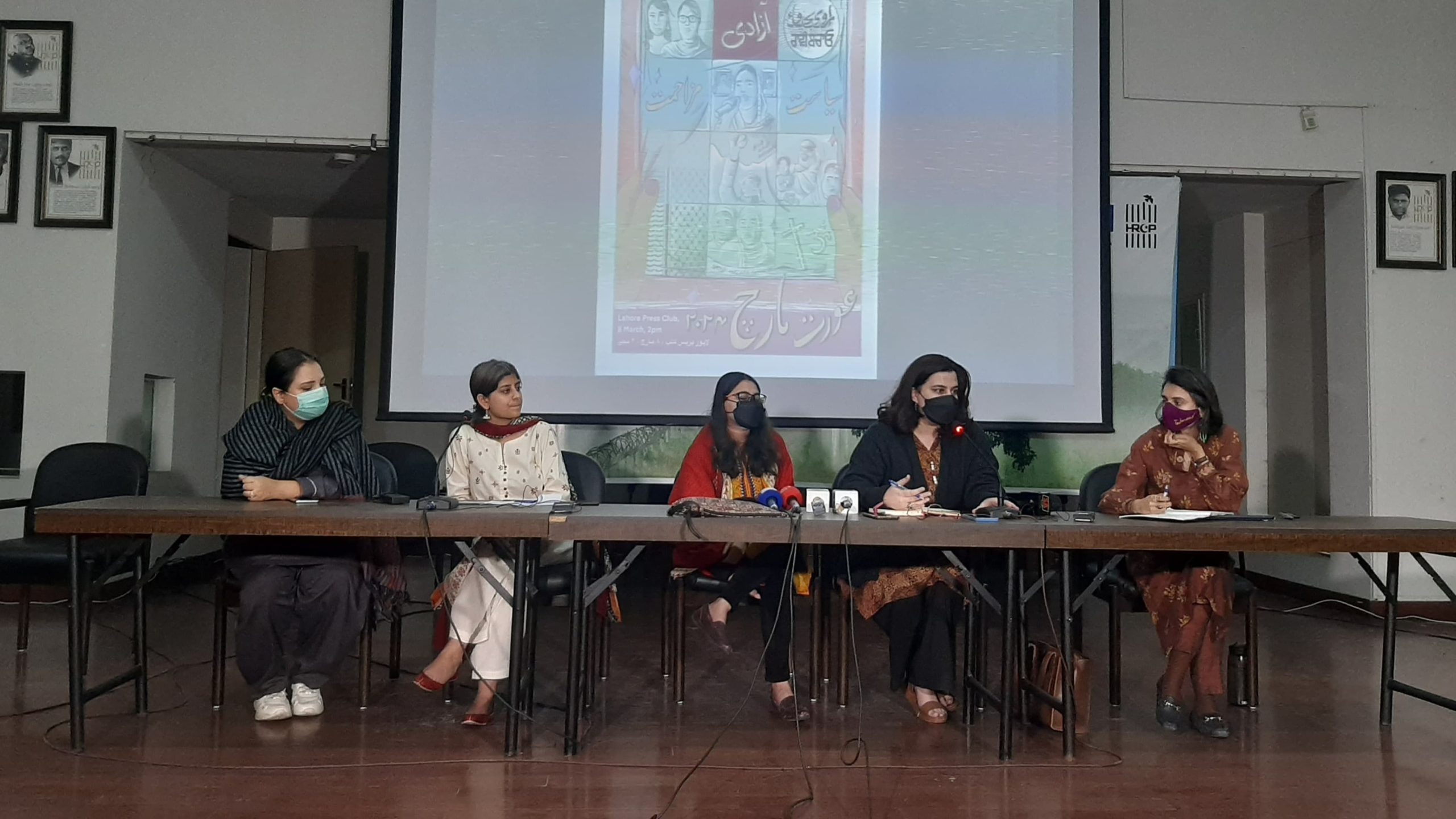
    The Current attended this year’s Aurat March press conference and got details about how this year is different from the ones before.

    Every year, the press conference is dominated by men from media platforms, leaving little or no room for women and transgender journalists to interact with Aurat March members.

    Moreover, coming with preconceived notions and biases, male journalists reportedly have been condescending and aggressive towards Aurat March members who conduct the conference with the aim to explain their manifesto and charter of demands prior to the big day.

    To counter this issue, this year Aurat March decided to hold a Feminist Press Conference.

    The purpose of a Feminist Press Conference was to provide a space to women, transgender, and minorities where they can get a fair chance to not just raise questions in respect to the March, but meaningfully engage with members.

    “This year’s press conference, in comparison to previous ones, was definitely much better,” said one of the representatives (who requested to remain anonymous).

    “Today, we were able to talk about our manifesto, we took questions from the reporters, and the interaction was respectful.”

    The member further denoted that this has never happened before. She explained that in the past, no reporter would come having read Aurat March’s charter of demands and the manifesto and instead, would resort to stereotypical questions.

    “When we would try to counter their queries, they wouldn’t listen to us because they wanted to hear the preconceptions they came with.

    “In fact, we are happy that this year, because the conference was conducted peacefully, we even got suggestions from journalists – which will, of course, help us as well”, she added.

    On Youtubers

    Last year, Youtubers disrupted the press conference, and media journalists stated that they do not consider YouTubers as journalists. “I am glad this year, we talked about [YouTuber disruption] as well”, the members highlighted.

    “The journalist community should think through ways to distance themselves from or critique YouTubers who are badmouthing their profession.”

    Some YouTubers, who attend the March as independent journalists, are known for their alleged misconduct at Aurat March. They have also been called out for spreading disinformation about performances and placards at the marches, and also harassing marchers with irrelevant and demeaning questions.

    This poses a threat to Aurat March members as well as attendees, and above all, the propaganda hinders socio-political awareness that the March intends to raise.

    The irony of today’s feminist press conference was when a YouTuber reached out to Aurat March members, upset for not getting a chance to ask his questions during the session. Well, I hope he realized how women feel when men take up their rightful space.

  • What a month!

    What a month!

    While February flew by quite quickly in comparison to January (which felt like it lasted a century), looking back at the month, it feels like the general elections that took place on February 8 happened ages ago… Time can really mind-boggling like that.

    But, hold up! It has been one hell of a month in Pakistan’s politics for sure! Despite the polls, our federal government is yet to be formed; tensions between political parties aren’t cooling down; and as for our country’s future, it remains as unpredictable and worrisome as always.

    Let’s see how long this drama lasts until we are introduced to a new ‘twist’!

    POLITICS

    The results of February 8 polls were surprising for many after PTI-affiliated candidates won the most number of National Assembly seats compared to other political parties. The PML-N as a party had the highest number of seats but not enough to form the government. In fact, no party had enough numbers to form a government at the Centre.

    The PPP for its part tried to engage the PTI leadership for the formation of a coalition government but as expected, PTI founder Imran Khan declined their offer. After a lot of back and forth, the PML-N and the PPP finally decided to form a coalition government but the PPP has decided not to be part of the cabinet. As per this formula, Shehbaz Sharif will be their joint candidate for the Prime Minister while Asif Zardari will be the president.

    The PML-N formed the government in Punjab; the country’s largest province has its first female Chief Minister, Maryam Nawaz. The PPP has formed a government in Sindh and Murad Ali Shah is the CM, again. Yesterday, the newly elected members of the Balochistan Assembly and Khyber Pakhtunkhwa Assembly were also sworn in. KP will have a PTI government with Ali Amin Gandapur as its CM candidate while Balochistan will have a coalition government between the PPP and PML-N. 

    Today, the National Assembly’s maiden session of the legislative will begin at 10am and the newly-elected MNAs will be sworn in. After the PTI-affiliated independent candidates joined the Sunni Ittehad Council (SIC), there has been a lot of debate whether they will get reserved seats or not.

    Yesterday, the Election Commission of Pakistan (ECP) reserved its verdict on the petitions filed by the SIC seeking the allocation of women and minority seats. Some have predicted that the SIC with PTI-affiliated independents may not get these seats while others are hopeful of a positive outcome. 

    Unfortunately, allegations of rigging in the elections have been made by several political parties and candidates, which has certainly raised doubts about the legitimacy of the 2024 elections results. These allegations must be addressed by the ECP at the earliest. Political uncertainty will not end anytime soon due to these allegations. Let’s hope we see an end to this uncertainty in the coming months. 

    BUSINESS

    by Sadaan Khan

    In the tumultuous start of February 2024, Pakistan grappled with economic challenges that profoundly impacted its citizens. 

    The month commenced with a considerable blow to the already burdened masses as the government increased petrol prices by Rs13.55 per litre, reaching Rs272.89 per litre. Simultaneously, diesel prices rose by Rs2.75, escalating to Rs278.96 per litre.

    The following day added to the predicament with an increase in Liquefied Petroleum Gas (LPG) prices. The Oil and Gas Regulatory Authority (OGRA) raised the price by Rs1.17 per kg, setting the consumer price for February at Rs257.59 per kg.

    The common populace bore the brunt of inflation, particularly in Rawalpindi and Islamabad, where fruit and vegetable prices surged by 28 per cent in the initial two weeks of February 2024.

    Amidst these economic struggles, the State Bank of Pakistan (SBP) reported a decrease of $172.5 million (2.1 per cent WoW) in foreign exchange reserves during the week ending February 02, 2024. This decline was attributed to debt repayments, as indicated by the central bank.

    Unfortunately, Pakistan witnessed an increase in external debt and liabilities, reaching $131.159 billion at the end of 1HFY24, marking a 1.09 per cent QoQ rise. On a yearly basis, this amounted to a 1.99 per cent YoY increase.

    As the government aimed to raise Rs2.845 trillion in the next three months through auctions, it faced challenges as OGRA approved gas price hikes for Sui Southern Gas Company Limited (SSGC) and Sui Northern Gas Pipelines Limited (SNGPL) by 5 per cent and 36 per cent, respectively, for FY24.

    The Economic Coordination Committee (ECC) approved Rs10 billion for the Digital Information Infrastructure Initiative, focusing on enhancing cyber threat identification capabilities. 

    To provide relief during Ramzan, the ECC approved the Ramzan Relief Package-2024, allocating Rs7.49 billion for targeted beneficiaries of BISP.

    On February 15, in response to global oil price trends, the government raised petrol and high-speed diesel (HSD) prices by Rs2.73 and Rs8.37 per litre, respectively, for the remaining days of the month.

    Despite the government accumulating additional debt, there was a glimmer of positivity with a 4.29 per cent MoM increase in total textile exports to $1.37 billion in January 2024.
    On the fiscal front, the Federal Board of Revenue (FBR) reported substantial growth of almost 30 per cent in tax revenue, collecting Rs5.15 trillion from July 2023 to mid-February 2024, compared to Rs3.97 trillion in the corresponding period last fiscal year.

    Furthermore, the US dollar remained relatively stable against the Pakistani rupee, with no major changes reported in the interbank rates. The Pakistani rupee exhibited minor fluctuations, being reported a few paisas up and some down.

    As February concludes, Pakistan faces a delicate economic landscape with challenges and glimpses of hope, underscoring the need for strategic measures to navigate through these complexities.

    LIFESTYLE

    by Urwa Khurshid

    February was quite a month. There were moments of bewilderment and complete shock along with the ones that were oddly satisfying. It started off with the election hustle that seemed to last a fortnight until we acclimatised to live in that dust because we learned that it would not settle. 

    The election campaigns over social media were a delight and the results of the elections were a surprise. It was predicted before the elections that people have lost interest in the process and the turnout would be low but the enthusiasm we got to witness on February 8 was a satisfying surprise indeed. However, internet blockade continues to spoil the fun and leaves a question mark over the condition of democracy in the country.

    That being said, nationally this month brought to light many instances of crime, illiteracy and intolerance. The wife of a famous anchor of a leading news channel Ashfaque Ishaq Satti came forward about the violence she had to endure at the hands of her husband. It was appalling to see how a public personality could be the proponent of a heinous crime. Yet there was a section of society criticising the woman for speaking out.

    Just like that when The Current published a feature about the legal and religious interpretation of the conviction on Marital Rape, so many flooded the comment section to school that this does not exist. 

    Another case of intolerance has been the Ichhra mob case where seemingly religious men decided to halt and heckle a woman for wearing a dress that had Arabic written on it without verifying that it was not a Qur’anic script. The incident made waves both nationally and internationally but the way a woman ASP rescued her from that charged crowd showed us how a woman in power can handle things rather bravely and responsibly. 

    It can be agreed that all of this stems from the kind of upbringing one has had. In this regard, the most shocking incident has been from Karachi where a boy living with his uncle’s family and divorced mother killed his seven-year-old cousin by slitting his throat only because he used to complain to his father about this elder cousin. An American parenting vlogger was sentenced for abusing her children. The bottom line in all of this is a simple fact that surely humans are complex but as a society we have to ensure that we are raising them right.

    SPORTS

    By Waseem Sarwar

    In the mid of February, the Pakistan Super League (PSL) started, which is the most enjoyable event for Pakistani fans. Six different teams from the country participate in this event but this month was not good for Lahore fans as Lahore Qalandars are almost out of this tournament due to bad performance in the event.

    Babar Azam became the fastest batter to complete 10,000 runs in T20 in just 271 innings. Pakistan’s star batsman Babar Azam scored a century after a long time in a match against Islamabad United on February 26.

    The Pakistan Cricket Board (PCB) terminated the central contract of fast bowler Haris Rauf due to his refusal to be included in Pakistan’s Test squad for the 2023-24 tour of Australia. Australia won the Under-19 world cup this month. A tragic news this month: Marathon’s world record holder athlete Kelvin Kaptam died in a car accident.

    Pakistan’s Hamza Saeed won the gold medal in the 33rd Fajr Open Taekwondo Championship in Tehran. 

    India’s star cricketer Virat Kohli and wife Anushka Sharma announced that they welcomed their second child, a baby boy, on February 15. Pakistan’s right-arm fast bowler Hassan Ali — who is married to an Indian girl — also became a father for the second time.

    ENTERTAINMENT

    By Kainat Alvi

    The entertainment world has been full of interesting events taking place this month. First off, the wedding of Jannat Mirza’s sister, Sehar Mirza, made headlines as the rukhsati was held without the groom.

    And guess who was spotted together? None other than famous actor Ahsan Khan and Indian actress Sonam Bajwa! They teamed up for a clothing brand’s photoshoot.

    Yumna Zaidi delighted her fans once again by performing at a wedding, dancing to the viral song ‘Teri Baaton Main Aisa Uljha Jiya’. She always knows how to steal the show!

    There’s also been a lot of buzz surrounding the film ‘Taxali Gate’.  Fans are raving about it on social media, with many saying it’s Abu Aleeha’s best work yet. Definitely one to watch!

    Looking for something heartwarming? ‘Ishq Murshid’ is the perfect show for you. Follow Shahmeer as he embarks on a scheme to capture Shibra’s heart, which involves disguising himself as a poor man and starting anew. And let’s not forget the beautiful dance performance at actress Arisha Razi Khan’s wedding with her husband. It was a sight to behold!

    Wrapping up the month on a high note, the Pakistani short movie ‘Jamun ka Darakht’ won the award for Best Social Justice Short Film at the Cannes World Film Festival.

    And also get ready to amp up your Ramzan with a lineup of exciting and comedic dramas that promise to keep you entertained throughout the holy month! From heartfelt stories to hilarious antics, here’s what to watch: Dil Pe Dastak, Tere Mere Sapne,Chand Nagar Drama, Babu Ki Dulahni,Goll Chakar.

    With these exciting dramas on your watchlist, Ramzan is set to be filled with laughter, joy, and memorable moments for the whole family!

    FOREIGN NEWS

    Starting with the Israeli genocide in Gaza, the death toll has hit 30,000 while more than 70,000 people have been injured by the end of February as the Israeli attacks throughout the strip remained relentless as ever, but the international community is still mum about it.Palestine also reached out to the UN’s top court — International Court of Justice (ICJ) — where Palestinian foreign minister Riyad Al-Maliki asserted that his people were enduring “colonialism and apartheid” under the Israelis, and called for an immediate and unconditional ceasing of the occupation.

    But pro-ceasefire voices always fall on deaf ears and the authority to stop the Israeli barbarity remains with the powerful who have failed to make it possible to-date. For the fourth time since October 7, the US vetoed a draft UN Security Council resolution calling for an immediate ceasefire.

    On the other hand, US President Joe Biden, while he enjoyed an ice-cream, casually stated that he hoped a ceasefire in Gaza could start by the beginning of March, adding that Israel was ready to halt operations during the Muslim month of Ramzan as part of any deal.

    As for the tensions in the Middle East, Yemen’s Houthis reported the first civilian death in US and British air strikes in one of the rounds of joint raids which have been at odds with the West with their support of Palestine.

    February also marked the second anniversary of the Ukraine-Russia war but this month, all eyes were on Russian President Vladimir Putin after his incarcerated political opponent, Alexei Navalny, died in prison — and his wife accused Putin for his demise. 

    Additionally, there have been protests by farmers worldwide, from India to Europe, separately, for their rights and to register their rebellion with the sitting governments against soaring fuel, and fertiliser costs, lower prices of their produce, and restrictive regulations. The protests shed light on the very pertinent issues faced by the primary food-producing sector of countries owning big agricultural markets.