2024 is surely the most significant global election year in history so far as about 60 countries around the world will hold elections.
Eyes are on major economies like Russia, India, USA, United Kingdom, and European Union that will also determine the alteration of the geopolitics of the next decade.
But looming over the polls like a dark cloud is one danger that democracies are, or should be, wary of.
The World Economic Forum (WEF) recently warned that misinformation and disinformation is a grave threat to the democratic process. This challenge cannot only mislead and influence the opinions of potential voters in already polarised societies, but also “disrupt” economies and even “trigger civil unrest and confrontation”.
Additionally, with access to Artificial Intelligence (AI), deep fake videos, photoshopped images, voice cloning and illegitimate internet websites are a major hindrance in ensuring free elections and security.
While AI is meant to serve in public’s advantage, it has been exploited in the worst possible ways.
To give the most recent example, the Financial Times revealed in a report that a number of AI-generated videos were used during the days leading to the election day in Bangladesh to spread disinformation against the opposition Bangladesh Nationalist Party (BNP) and the U.S. This put in question the integrity of the Bangladeshi government in ensuring free and fair elections.
Disinformation and Pakistan
Since the ouster of former prime minister Imran Khan in April 2022 through a vote of no confidence, he has been in and out of court due to cases related to the diplomatic cipher, toshakhana gifts, his marriage to Bushra Bibi and more. Now jailed for 14 years, Khan and his party Pakistan Tehreek-e-Insaf are out of the election however, his party members are independently bearing the flag and have been campaigning for votes.
Always being ahead of the campaigning game, PTI has conducted virtual jalsas after getting banned from holding in-person assemblies. The party went a step further by putting up an AI generated speech in the voice of Imran Khan.
So while PTI has been “innovative” in their use of social media since the party has not been allowed to fully carry out their political activities, editor at Geo Fact Check, Benazir Shah, believes that with the lack of regulation in the use of AI, it poses a serious threat in a weak democracy like Pakistan.
According to DataReportal, with a population of 238.1 million (as of January 2023), and 87.35 million internet users at the start of 2023, Pakistan has been home to 71.70 million social media users i.e. 30.1 percent of the total population.
Considering the large number of users residing in the country, Hyra Basit, Cyber Harassment Lead at Digital Rights Foundation, asserts that widespread disinformation is primarily linked with lack of digital literacy among the general public. She explains that while media usage is seeped into people’s daily lives, there is no concept of double checking.
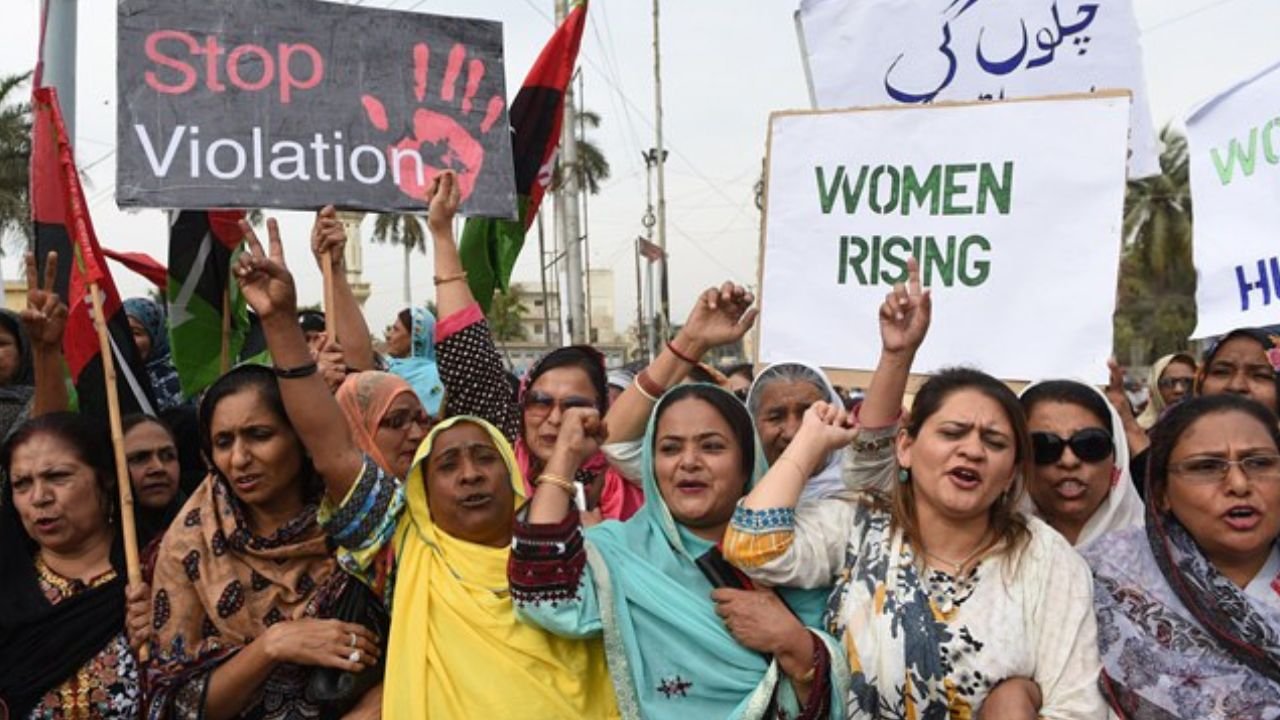
In the recent past, posts on social media circulated with videos from Aurat March 2021 falsely transcripted to blasphemous slogans, deeming the movement as sacrilegious. FIRs were filed against the officials while some women went into hiding due to threats.
By the time the misleading videos were countered and fact-checked, disinformation had already spread to a wide audience since disinformation tends to spread more quickly than facts.
Responsibility and Solution
Journalist Umar Cheema believes that when it comes to countering disinformation, the responsibility largely falls on media as fact-checking is considered one of its domains. Over and above, whenever the state has brought about laws in countering disinformation, it has directly affected journalists in the shape of censorship.
“We need a paradigm shift in thinking”, he states. “[As journalists] We have learned to question and speak, but we do not know how to find a solution — because it is not considered a part of our duty. However, we must also learn to bring about solutions since disinformation as well as censorship affects us directly.”
He also points at media platforms and independent journalists who report information without verifying and counter questioning interviewees, and how the use of click-baits also fall in the ambit of disinformation.
“Our journalism should move beyond this [cursory journalism] or else there is no difference between a layperson and a journalist”, he says.
However, along with media platforms and fact-checkers, Benzair Shah considers the civil society responsible for ensuring truth in information sharing.
“When I say “collective effort”, it doesn’t only include journalists, state, and the civil society but especially young people who actively use social media and need to use it more responsibly.
“The question arises with fact-checking is that how do we pre-bunk disinformation — to ensure [it beforehand] that there is authentic information out there,” she points out.
She highlights easily available and accessible tools like Google reverse image search that can be used to verify videos and images circulating social media apps.
Similarly, Hyra Basit asserts that if disinformation in Pakistan is to be countered, “you have to educate and equip people receiving information so they can accept to reject mis/disinformation, question and verify the information they receive.
Over and above, users need to understand what disinformation is and how they can protect themselves from it.”
Executive director for Media Matters for Democracy, Asad Baig, underlines that while there are organisations actively countering disinformation in Pakistan, they are not enough and will take a while to establish their footprint on the internet.
“We need to take a holistic approach towards solving problems around disinformation. Initiatives taken for, for example, elections are temporary and act like a bandaid for a short while.
“It is important to realise that the challenges for the media in countering disinformation will remain the same before and after the elections as they are right now”.
100 days back, on October 7, 2023, Hamas took Israel by surprise in a move that came as a consequence of more than seventy years of occupation, killings, destruction, and displacement of the Palestinians.
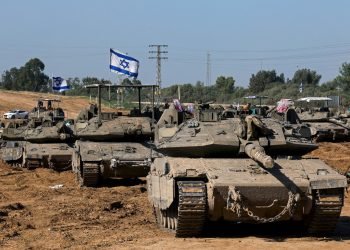
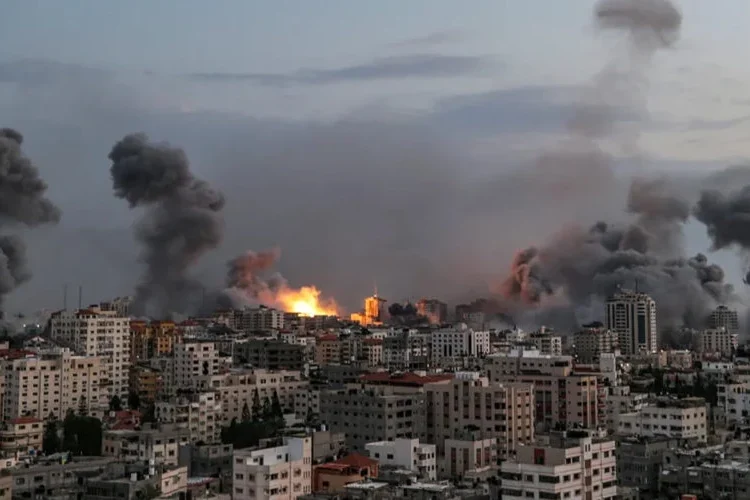
Israel took this instance of response as an excuse to go all out in attempts to exterminate Gazans from their land: On October 8, Israeli prime minister Benjamin Netanyahu declared war against Hamas and butchered, internally displaced, detained, and tortured thousands of Palestinians in Gaza as well as the Occupied West Bank.
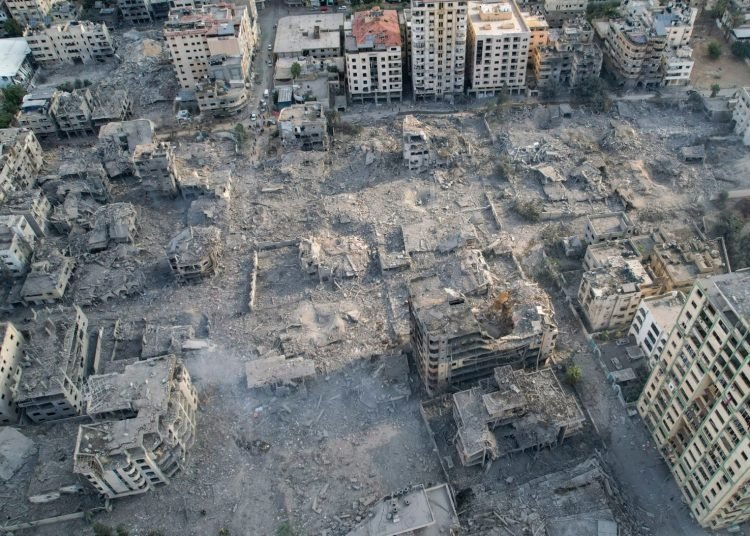
Since October 7 alone, more than 23,600 people have been killed and more than 58,000 wounded in Israeli attacks on Gaza.
Widespread use of and access to social media across the world has exposed Israeli atrocities against the Palestinians more than ever. A number of Palestinians have been reporting from the targeted strip, giving the world insights to the heights of atrocities touched by the Israeli military.
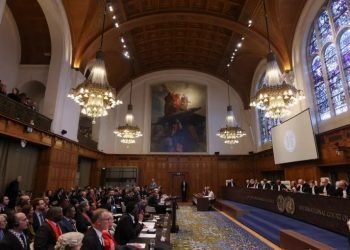
As the Irish lawyer Blinne Ní Ghrálaigh, representing South Africa in the International Court of Justice (ICJ) in The Hague on January 11 deemed it as “The first genocide in history where its victims are broadcasting their own destruction in real time in the desperate, so far vain hope that the world might do something.”
Nonetheless, the international community has collectively failed to ensure a ceasefire amidst all the loss and blatant violation of human rights..
While the breaches and enormities by Israel are innumerable and immeasurable to say the least, here are some of the most important moments and developments to have taken place the past 100 days.
Israel had declared a “complete siege” on Gaza on October 9 2023, hindering the supply of electricity, food, water and fuel into the strip. While a few aid trucks were permitted on 21 October 2023, the aid has been inadequate, and starkly lower than the quantity sent before October 2023.
Additionally, fuel imports are “well below the minimum requirements for essential humanitarian operations”.
The UN Secretary-General has asserted that the level of destruction in Gaza is now so catastrophic that “[t]he conditions for the effective delivery of humanitarian aid no longer exist . . . But even if sufficient supplies were permitted into Gaza, intense bombardment and hostilities, Israeli restrictions on movement, fuel shortages, and interrupted communications, make it impossible for UN agencies and their partners to reach most of the people in need.”
No Facilities
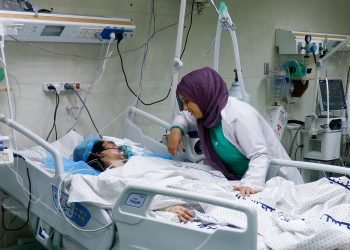
The majority of Gazan hospitals are out of order due to the Israeli air raids and the blockade. According to WHO, 15 out of Gaza’s 36 hospitals are partially functional; nine in the south and six in the north.
Additionally, there is lack of electricity, desalination facilities, and bakeries to shut down and contributed to telecommunications blackouts.
Looming Fears of Famine and Diseases
Credit: Reuters
Due to lack of health facilities and access to water and sanitation, WHO has warned that Gaza is now heading towards proliferation of disease. As of January 1, nearly 200,000 respiratory infections and tens of thousands of cases of scabies, lice, skin rashes, and jaundice were reported whereas the number of diarrhoea cases among children under five has increased 20-fold since October 7.
Additionally, the World Health Organization has warned that “[a]n unprecedented 93% of the population in Gaza is facing crisis levels of hunger, with insufficient food and high levels of malnutrition” and that “[a]t least 1 in 4 households are facing ‘catastrophic conditions’:
“Israeli forces are deliberately blocking the delivery of water, food and fuel, while wilfully impeding humanitarian assistance, apparently razing agricultural areas, and depriving the civilian population of objects indispensable to their survival,” Human Rights Watch has stated.
Internally Displaced
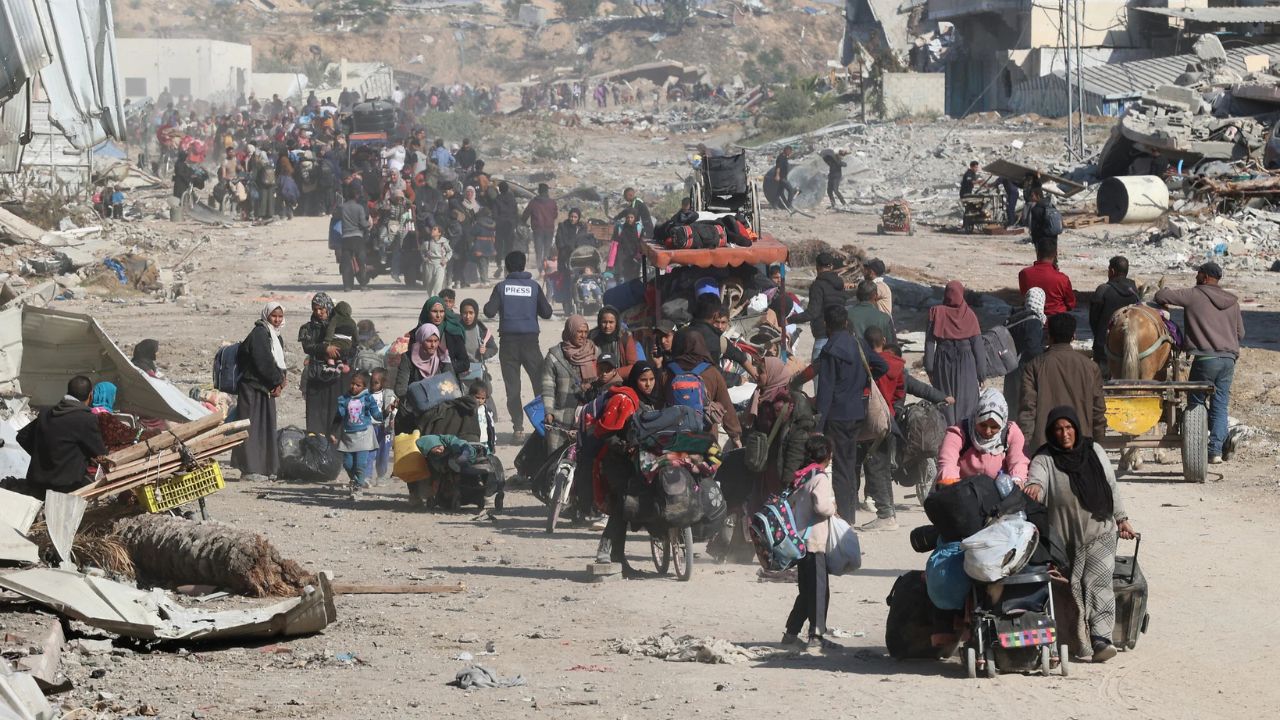
Among the total population of 2.3 million, 1.9 million Palestinians — approximately 85 per cent of the total population — have been internally displaced. People living in Northern Gaza were initially forced to flee their homes on short notice for “safety” to the south, but they were bombed again in the so-called safe south, and were once again forced to flee to
further south or the south west, and have been to live in makeshift tents with no water, sanitation or other facilities.
This situation has thus been declared as the Second Nakba as it resembles the ethnic cleansing of Palestinians by the Israelis in 1948.
Women of Gaza
Credit: Al Jazeera
The United Nations has estimated 50,000 pregnant women presently living in Gaza, with more than 180 births taking place every day despite the lack of health facilities.
Similarly, women have also resorted to norethisterone tablets (that are usually prescribed in times of severe menstrual bleeding, endometriosis, and painful periods) as they are internally displaced, living in poor conditions among a large number of people with no privacy, and having no access to water or menstrual hygiene products like sanitary napkins and/or tampons.
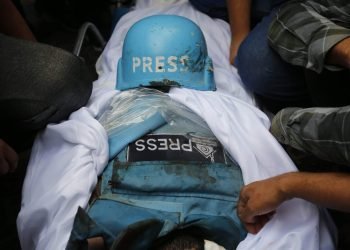
November was deemed as the deadliest month for journalists when at least 50 were killed. According to the Committee to Protect Journalists (CJP), as of January 11, 79 journalists and media workers have been killed among whom are 72 Palestinian, 4 Israeli, and 3 Lebanese whereas three journalists are reported missing and 21 arrested.
Additionally, multiple assaults, threats, cyberattacks, censorship, and killings of family members have also been recorded.
Moreover, literary figures like Heba Abu Nada and Dr Refaat Alareer, who were vocal against Israel, have also been killed in targeted attacks.
Hostages
Hamas took Israeli hostages on October 7 in order to prompt Israel to return Palestinian hostages who have been in Israeli captivity since years.
While Israel has portrayed Hamas as barbaric, Israeli hostages released have had different stories to tell. Danielle Aloni and her daughter Emilia were held hostage by Hamas for 49 days and on their release on November 24, Aloni wrote a “thank you” letter to Hamas saying, “I thank you from the bottom of my heart for your extraordinary humanity shown towards my daughter, Emilia.”
Similarly, in an interview, Hin and Ajam, another mother-daughter duo, told that they were kept together and that the militants were respectful to them, taking every precaution to make them comfortable.
On the contrary, Palestinians have returned from Israeli captivity physically and mentally tortured while some have reportedly died in detention.
Back in December, Israeli troops even “mistakenly” killed three Israeli hostages in the course of combat with Hamas in the Gaza Strip on Friday.
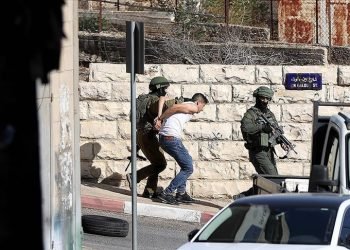
As of January 11, the arrests of Palestinians in the Occupied West Bank reached up to 5,810 since October 7.
According to figures released in December, at least 8,800 Palestinians, including 80 women, were held at Israeli prisons.
These arrests are reportedly “marked by abuse, severe beatings, and threats against detainees and their families, in addition to widespread acts of sabotage and destruction of citizens’ homes”. Many are even targeted and shot by the Israeli soldiers.
Additionally, in November 2023, it was reported that around 390,000 Palesinians jobs were lost — 182,000 in Gaza and 208,000 in the occupied West Bank.
In December, the US State Department approved the emergency sale to Israel of nearly 14,000 rounds of tank ammunition — a sale of 13,981 high-explosive 120mm tank cartridges and related equipment worth $106.5 million.
The State Department said the secretary of state had determined that “an emergency exists that requires the immediate sale to the Government of Israel” of the weaponry, thereby waiving the normal requirement of Congressional review.
Israel vs Middle East
Since the war began, Hezbollah, a close ally of the Palestinian group Hamas, and Israel have been engaged in intense fighting.
In December, The United States announced a 10-nation coalition to end Houthi attacks on ships transiting the Red Sea, with Britain, France, Bahrain and Italy among countries joining the “multinational security initiative.”
The U.S. and British Air Force, in fact, have launched airstrikes against Yemen in retaliation which the American president Joe Biden called it a success, adding that he will “not hesitate to direct further measures to protect our people and the free flow of international commerce as necessary.”
On the other hand, Israel and Hezbollah have been exchanging fires across the Lebanese border, the West Bank since 7 October.
On Day 60 since October 7, United Nations Secretary-General António Guterres, in a rare move, invoked Article 99 of the UN Charter “to bring to the attention of the Security Council a matter, which in my opinion, may aggravate existing threats to the maintenance of international peace and security.” He also reiterated his call in the letter he sent to the rotating president of the Council for a “humanitarian ceasefire” and urged the Council to “avert a humanitarian catastrophe.”
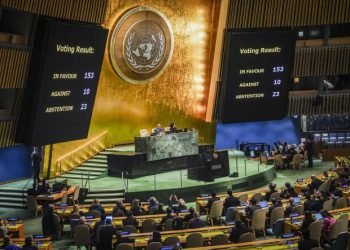
Nonetheless, like any other UN action, it was merely a political move with no legal implications — same as the UN Resolutions calling for a ceasefire in Gaza the past few months since October 7. With more than 100 countries voting in support of the ceasefire, the resolution ended in vain since the US and a couple of its allies chose to vote against it.
On the other hand, while powerful Muslim countries have sided with Palestine, their support has, however, been shallow. For instance, in November, the Saudi Minister of Investment, Khalid bin Abdulaziz al-Falih, remarked that the Kingdom was still willing to consider normalising relations with Israel, depending on a peaceful solution to the Palestinian issue. And when asked if Saudi Arabia would use economic devices like oil to push for a ceasefire in the Gaza Strip, he reportedly laughed and replied: “This is not on the table today. Saudi Arabia is trying to achieve peace through talks that seek peace.”
South Africa vs Israel
Credit: Al Jazeera
South Africa filed a case in the International Court of Justice (ICJ) in The Hague, Netherlands, asking the court to look into the genocide being committed by Israel against Palestinians.
The imposition of charges did not only pertain to the crimes perpetrated during the last few months since October 7 that have killed more than 23,000 people till now, but also the 75-year long apartheid, 56-year hostile occupation, and 16-year blockade on Gaza.
Israel was accused of committing genocidal acts during their military operations which included mass killings of Palestinians, bodily and mental harm, forced displacement and food blockade, destruction of the healthcare system, and preventing Palestinian births.
It is, however, pertinent to note, that while this case can take years, an “interim measure” intended to halt Israel’s attack in Gaza can be taken “within weeks”. If the interim measure is implemented, Israel will be legally obligated to put an end to its offences. And while the “court’s rulings are final”, it has no authority to impose them, nonetheless.
On the other hand, if the court does not implement an interim measure, “it could still decide it has jurisdiction and proceed with the case”.
Post-war Gaza Plans
Israel’s defence minister publicly presented proposals for the post-war administration of Gaza i.e. after it has dismantled Hamas’s “military and governing capabilities” and secured the return of hostages.
According to the minister, after the objectives are achieved — for which the proposal sets no timeline — Palestinian “civil committees” will begin assuming control of the territory’s governance.
“Hamas will not govern Gaza, (and) Israel will not govern Gaza’s civilians,” the plan said, while offering little concrete detail.
“Palestinian bodies will be in charge, with the condition that there will be no hostile actions or threats against the State of Israel.”
2023 was another difficult year for the women of Pakistan who routinely have to battle against violence and discrimination.
In November, UN Women’s Gender Snapshot 2023 report revealed that 245 million women and girls are subjected to physical and/or sexual violence from their intimate partners each year, adding that a “staggering 86pc of women and girls live in countries without robust legal protections against violence, or in countries where data are not available”.
This violence is not limited to women and girls but extends to boys as well. Back in August, Sahil, an NGO, reported that an average of 12 children per day (or one every two hours) faced sexual abuse in Pakistan in 2023 whereas 2,227 cases of child sexual abuse were traced between January and June this year.
Here are some of the pertinent cases from the year 2023 that took over the headlines:
1. Fatima Case
A domestic maid, 10-year-old Fatima Phuriro, was found dead under suspicious circumstances in Ranipur.
The child had been working as a domestic worker at a haveli owned by an influential local, Pir Asad Shah Jilani.
It was not until videos of the child were leaked by an unknown source and circulated in social media that the case caught the media’s eye. By then, the family had buried Fatima on August 15.
The body was later exhumed and sent for an autopsy which revealed that the girl had been raped both vaginally and anally.
The suspects are in custody.
2. Rizwana
Rizwana, 14, had been allegedly assaulted and abused while working at a civil judge’s home in Islamabad, after she was accused of stealing jewellery. Rizwana’s family revealed that the girl was not paid a single penny by the family for the extensive workload she was doing and was instead subjected to violence.
Islamabad Police recorded Rizwana’s statement at the Child Protection Bureau in Lahore where she alleged that the judge himself beat her up, hitting her head against the wall, while his wife and children would also assault her.
3. F9 park incident
In February, a girl went to Islamabad’s F-9 park along with her male colleague when two men stopped them at gunpoint and took them to a heavily wooded area where they beat her, raped her and told her to “not come to the park at this time”.
In her FIR, the girl said that the men told her to “not come to the park at this time”.
The incident sparked anger and protests as women questioned the security in the capital of the country.
4. Sara Malik
The year started with the news that a body was found near Farhan Shaheed Park at Seaview, Karachi, in January. Identified as Sara Malik, the 23-year-old employee worked at a veterinary hospital in DHA 8. Registration of a murder case was recorded under Section 302 (premeditated murder) of the Pakistan Penal Code after further investigations.
Malik initially went missing from Karachi’s Seaview beach and the police reportedly claimed that she might have committed suicide by jumping into the sea but according to police officials, Dr Shan Saleem, who was nominated in the case, confessed to killing her after sexually assaulting her.
5. Principal raping women
The principal of a private school in Gulshan-i-Hadeed, Karachi, was taken into custody in September after allegations of raping and blackmailing women.
Steel Town police Station House Officer (SHO) Nand Lal told media that the school principal was detained as videos of the alleged rape incidents made rounds on social media.
The principal has admitted to the allegations that he raped women after promising them job opportunities, then recording their videos to blackmail them.
It was also revealed that more than 45 women were identified in connection with the case as Irfan allegedly blackmailed the women in order to commit these crimes.
The public prosecutor contended that the case is indicative of a planned scheme.
6. Andaleeb Fatima
Andaleeb Fatima, 13, was named as the victim in an FIR filed by her mother, Khalida Bibi, a resident of Chiniot in Punjab. Andaleeb had been working for the female suspect since July of this year and according to her mother, she was unable to talk to her daughter since was not allowed to do so by her employer.
It was only when Khalida Bibi visited Fatima after several unanswered calls that she found out about the torture inflicted upon her daughter. She found bruises on different parts of her daughter’s body. Fatima told her mother that her employer routinely beat her and tormented her with a hot spoon. She also locked her up and did not feed her food.
7. Special needs children
A nine-year old child with special needs was raped and murdered in Korangi, Karachi.
According to Zaman Town police, the body was found in the “rear seat of a parked Suzuki Cultus car. The body was bluish and foaming from the mouth”.
Police surgeon Dr Summaiya Syed reported that the child was differently abled with a right hand deformity. “There were multiple injuries all over the body and findings are suggestive of anal sexual abuse,” she revealed.
Similarly, a 12-year-old student with special needs was sexually assaulted in a school for special children in Rawalpindi.
8. Raped during job application
In January, a woman in Lahore was gang-raped after being lured for a job. The culprits recorded videos of the immoral act to blackmail the victim.
The defendant, Khalil, had invited the woman to travel to Kot Khawaja Saeed Hospital for a meeting and had given her a job. As soon as she arrived, the suspect led her to a house where he and two other accomplices forced her into a room and raped her on gun point.
According to the FIR, the woman alleged that the suspect had also videotaped the immoral behaviour and had told her not to call the police.
9. Burnt alive
Shumaila, the woman who was burnt alive by her husband Naseer and his first wife Robina died in a hospital in Lahore. She was admitted to a hospital but could not survive the severity of her burns. The incident happened in a village near Gujranwala, Chak Behlol.
Further investigation revealed that she got divorced from her first husband to marry Naseer who was already married. The constant tussle between the two wives led to this tragic situation where she was burnt alive by Naseer and his first wife in the presence of a crowd of villagers who kept making videos.
Naseer was taken into custody by the police.
10. Boys
In June, a cleric in Lahore’s Raiwind area tried strangling an eight-year-old to death after after he had repeatedly raped him in his madrassah.
The FIR, revealed that the accused Qari Muhammad Rizwan fractured the child’s arm while he was torturing him and had then pushed the boy down stairs from the first floor to the ground floor, which led to severe head injuries that made the boy unconscious.
11. Honour Killing
In September, a married woman from the Alkani tribe was allegedly killed by her husband and his allies over ‘honour’. The stoning took place in the limits of Chucha Border Military Police (BMP) station in the tribal area of Rajanpur district after the woman was accused of adultery with a man, leading to her husband killing her, along with her brother-in-law and their accomplice. They reportedly smashed her head with stones and clubs.
In October, a newlywed couple was shot dead inside a mosque in Jhelum.
Rehman Rasool and Safia recently eloped to get married of their own free will. They were then called in by the girl’s family for reconciliation. Sensing the possible threat, the two of them took refuge in a mosque’s courtyard but got gunned down by the family, nevertheless.
Khartoum, the capital of Sudan, has been home to 6,000,000 people. This year, on April 15, a confrontation ensued between the Sudanese Armed Forces (SAF) and the Rapid Support Forces (RSF) paramilitary group.
The rise in hostilities in April 2023 stemmed from weeks of strain between the RSF and the SAF over “security force reform during negotiations for a new transitional government”. The RSF and SAF had jointly upended Sudan’s transitional government in October 2021.
In the course of a few short days that very month, more than 4,000 people were wounded and 500 people were killed.
In addition to the casualties, 40 out of 59 hospitals have been bombed and are now out of service.
Resultantly, there is an extreme dearth of water, food, and fuel since the fighting has continued to escalate as powerful weapons, airstrikes and artillery have been used. The civilians, on the other hand, are ensnared in the crossfire.
Since April, Action on Armed Violence has noted 102 incidents of explosive violence in Sudan and 1,830 civilian casualties, making 2023 Sudan’s deadliest year since 2010.
However, the United Nations humanitarian chief revealed in October that since April, the paramilitary group has killed up to 9,000 people and created “one of the worst humanitarian nightmares in recent history”. Similarly, in November, Armed Conflict Location & Event Data Project recorded over 2,800 political violence incidents and more than 10,400 fatalities.
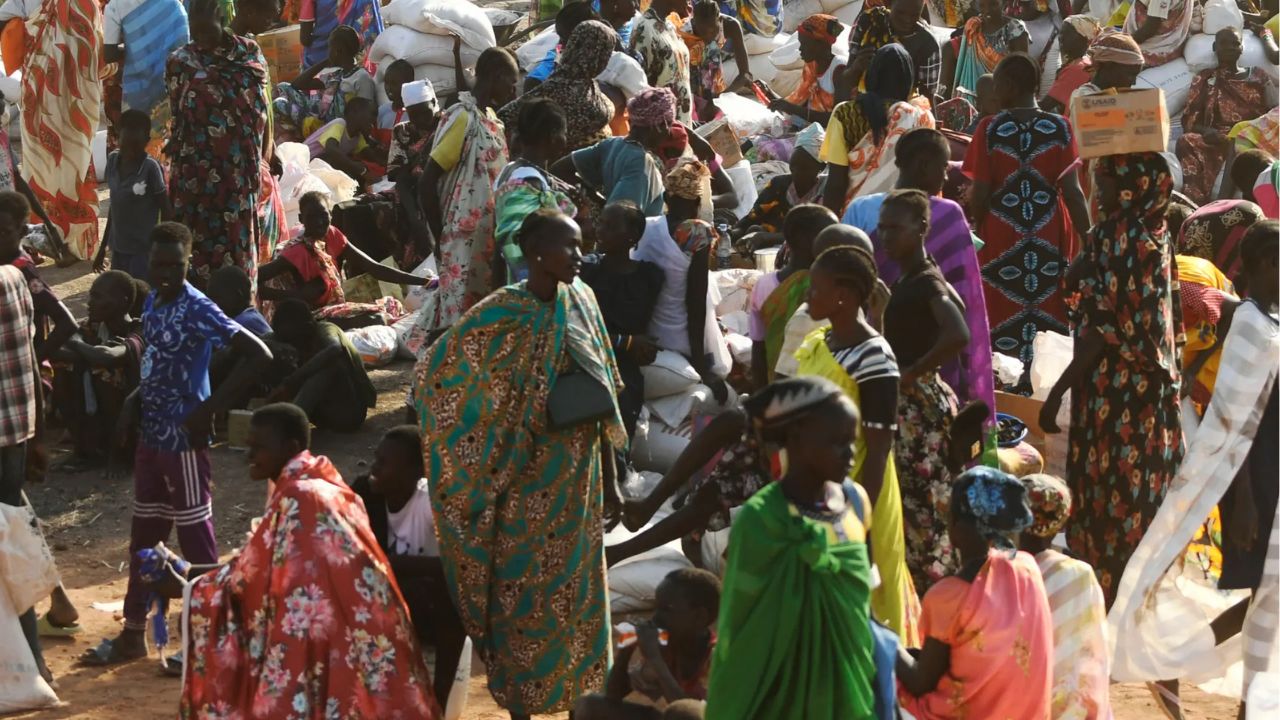
Additionally, over 300,000 refugees have reportedly fled Sudan’s war seeking safety and refuge in Chad where already 580,000 displaced people reside.
The situation in Sudan is now exacerbating with serious concerns for women and children being abducted, chained, and held in “inhuman, degrading slave-like conditions” in areas controlled by the Rapid Support Forces (RSF) in Darfur.
Brief background
The Darfur war goes back to its origins of alienation of non-Arab tribes by Khartoum’s policies, paving a path for grievances. The trouble spiralled on February 26, 2003, when a newly-founded group known as the Darfur Liberation Front (DLF) — later called the Sudan Liberation Movement/Army (SLM/A) — claimed an attack on Golo, the headquarters of Jebel Marra District.
Along with the Justice and Equality Movement (JEM), the group then instigated a revolt to protest the Sudanese government’s discrimination against its non-Arab population, and sought bipartisanship within the Arab-ruled Sudanese state.
The-then President, Omar al-Bashir, countered the situation by backing and arming Arab militias known as Janjaweed to fight the insurgency in Darfur.
Named the Popular Defence Forces, they operated in alliance with Sudanese government forces to exterminate the African Fur, Masalit, and Zaghawa ethnic groups which produced the rebels.
And even though a ceasefire was called in 2004 and African Union (AU) troops deployed, the UN revealed that the conflict and the leading humanitarian crisis (callous attacks, disease, and hunger) had killed 300,000 people by 2007 and displaced 2.5 million.
Mediation attempts in Abuja (2006), Tripoli (2007) and Doha (2009) were unsuccessful in resolving the friction between Khartoum and the rebel forces in Darfur.
The United Nations Security Council had permitted a joint UN-AU peacekeeping mission in July 2007 but after its exit in 2019, the local armed groups took up from where they left.
Children of Sudan
Currently, 19,000,000 (19 million) children are out of school in Sudan while 10,400 schools have been shut down.
They are vulnerable to the present and long term perils such as displacement, sexual violence, war recruitment, and death.
Moreover, without resources, illnesses such as cholera are also at an all time high.
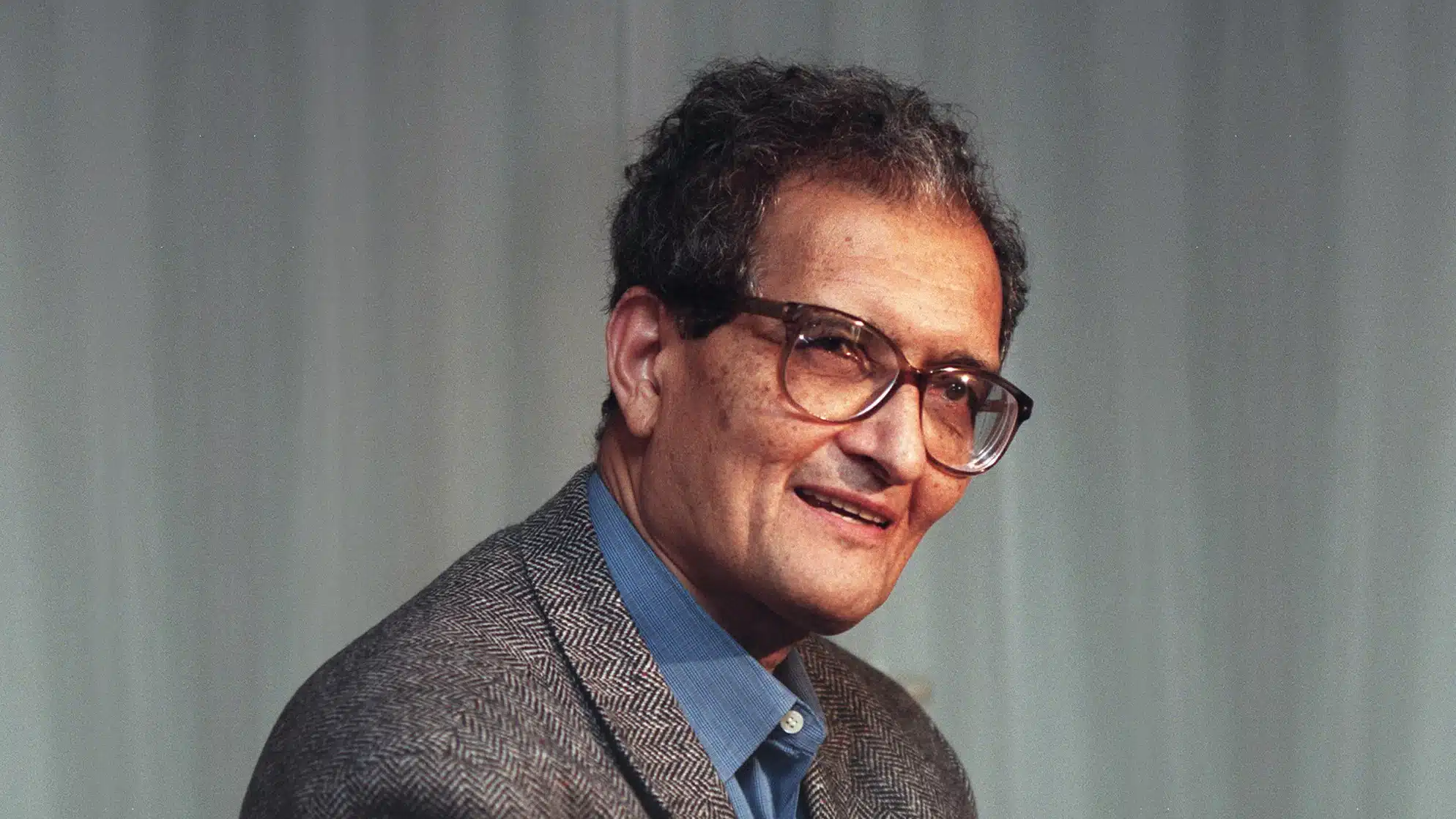
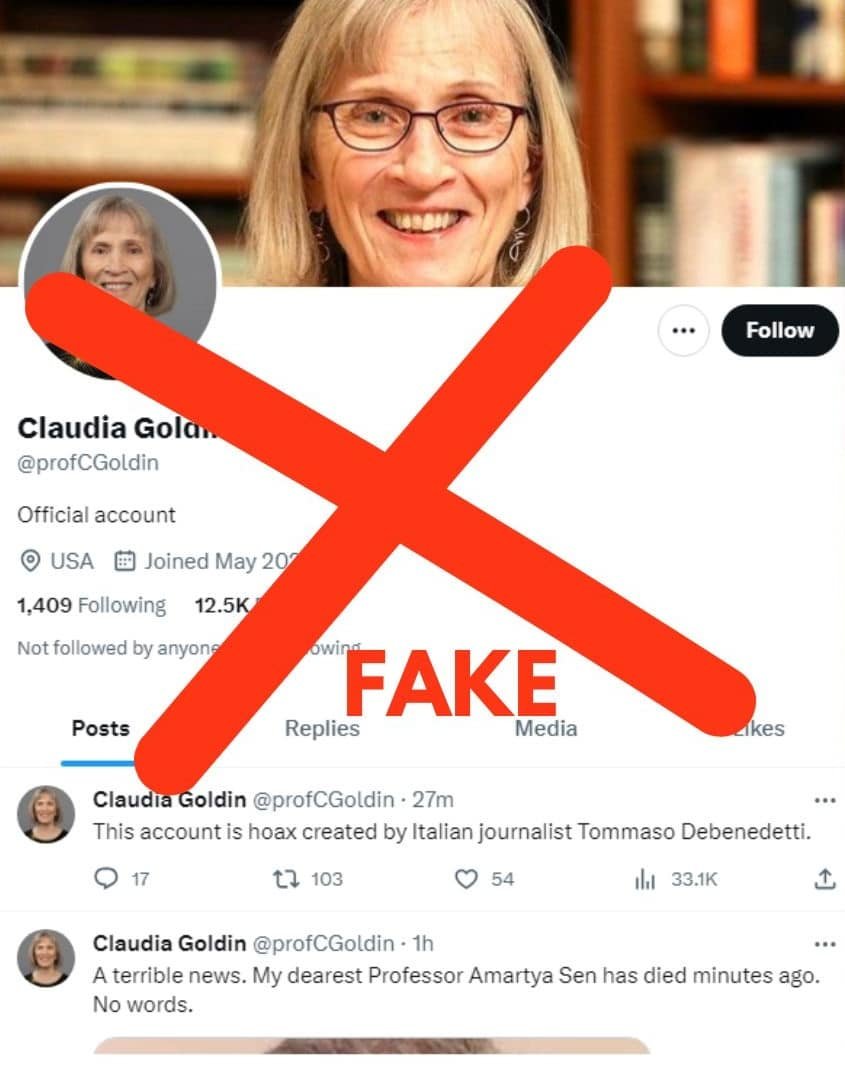
News about veteran Indian economist and Nobel Laureate Amartya Sen’s death started circulating on social media today.
A social media post about Sen’s death that the Indian media was quoting was from Claudia Goldin’s X (formerly Twitter) account, which turned out to be a fake account.
Claudia Goldin is an American economic historian and has been announced as the winner of the Nobel Prize Economics for this year.
Sen’s daughter took to X and tweeted:
“Friends, thanks for your concern but it’s fake news: Baba is totally fine. We just spent a wonderful week together w/ family in Cambridge—his hug as strong as always last night when we said bye! He is teaching 2 courses a week at Harvard, working on his gender book—busy as ever!”
Friends, thanks for your concern but it’s fake news: Baba is totally fine. We just spent a wonderful week together w/ family in Cambridge—his hug as strong as always last night when we said bye! He is teaching 2 courses a week at Harvard, working on his gender book—busy as ever! pic.twitter.com/Fd84KVj1AT
Other accounts also corrected the misinformation being spread about Sen’s death.
As Seema says, Prof Sen is fine. Just confirmed. Appalling how misinformation spreads so quickly and even seasoned media establishments fall for it. https://t.co/wi7oyyj1YW
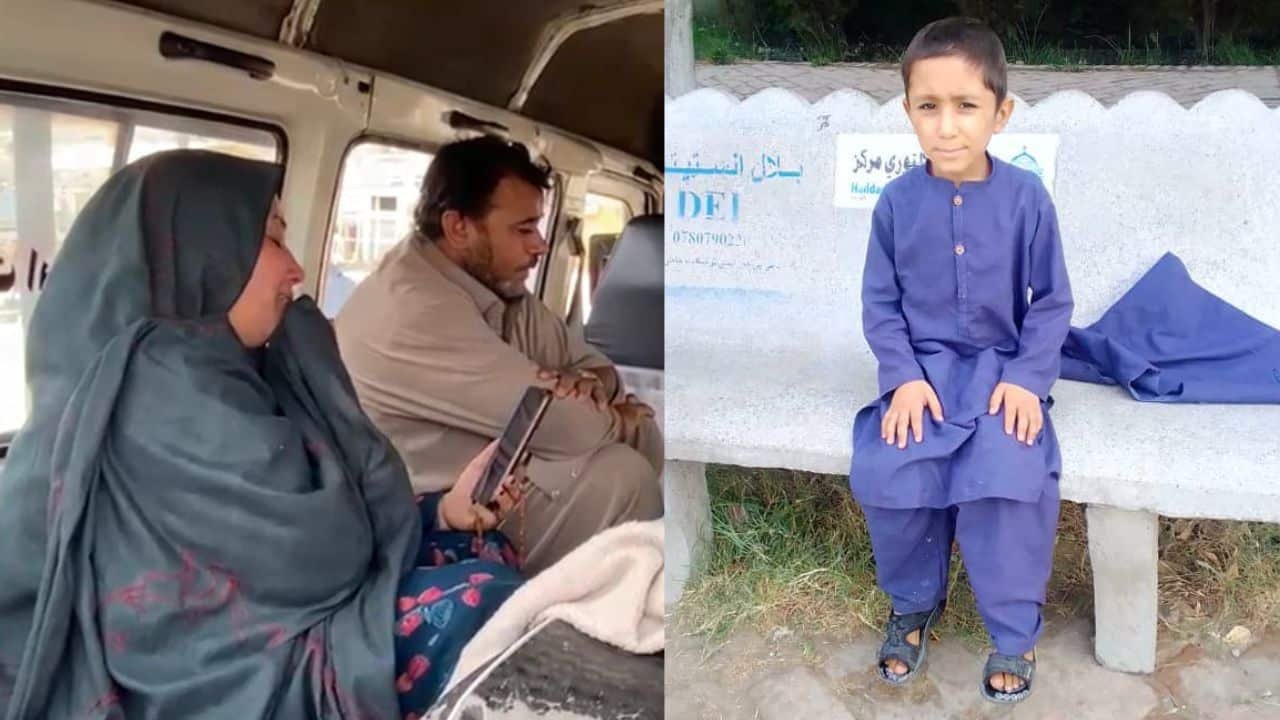
A recent post on X (formerly Twitter) about Afghan parents unable to take their son’s body back to their country for burial has gone viral. In a photo, the parents can be seen crying beside their deceased son’s body in an ambulance in Peshawar.
تقریباً 8 سال کا #افغان بچہ محمد یاسین جمعرات کو پشاور کے ایک ہسپتال میں کینسر کی وجہ سے فوت ہوئے تھے لیکن #طورخم گیٹ بند ہونے کے وجہ سے اس کی میت ابھی تک #افغانستان منتقل نہیں کی جاسکی۔ انسانی ہمدردی کی بنیاد پر بچے کی میت کو طورخم گزرنے کی اجازت دی جائے۔بچے کے والدین ایک رشتہ pic.twitter.com/gibiwmY8Lw
The family had come from Afghanistan to Peshawar for their son’s cancer treatment after he was diagnosed with a brain tumor. However, eight-year-old Muhammad Yasin passed away of the disease. The parents then wanted to return to their hometown in Afghanistan for the burial, but their route via the Torkham border had been closed due to Pak-Afghan security conflict.
The Current reached out to Tahir Khan, the journalist who posted the picture, for an update on the case.
Yaseen was the only brother to eight sisters, Tahir Khan said, adding that the child’s father, Gul Muhammad, drives a rickshaw in Jalalabad, Nangarhar province, Afghanistan.
Around a year ago, Yaseen was diagnosed with brain cancer in Jalalabad. The doctors there recommended to the parents that they take him to Peshawar for his treatment.
Despite his low income and hardships, Gul Muhammad did everything in his capacity to get his son treated.
The family frequently travelled to Peshawar and back. The son and father received a pass which made it convenient for them to cross borders.
In Peshawar they were always hosted by their hometown fellow who had been working as a farmer.
Yaseen had undergone treatment at the IRNUM cancer hospital as well as Peshawar Hayatabad Complex.
The tumor in his brain was successfully removed, with the child almost recovering. But all of a sudden, on September 4, Yaseen started feeling unwell while in Jalalabad. The parents brought him to Peshawar Hayatabad Complex where on September 7, Yaseen passed away.
Now, the parents wanted to take their son’s body back to their hometown for burial but on September 6, Pakistan closed its Torkham border with Afghanistan after two people, including a Frontier Corps (FC) official, were injured in an encounter between Pakistan and Afghan border forces.
According to the officials, Afghanistan has also started the construction of a checkpoint on their side of the border in a prohibited area “without discussing it with the Pakistani side”, despite an already existing checkpoint, the Larram Post.
The conflict between the two countries complicated the situation for the grieving family whose route back home was via the Torkham border. They went up to the border twice since the passing of their son, but were sent back.
Tahir Khan shared their concern on X (formerly Twitter) in hopes that higher authorities would take notice and help the family cross the border.
They were contacted by an unknown man a couple of days back, who called the family around 2:30 am, promising to help them cross the border, but after that one call, Gul Muhammad was never able to contact the unknown caller and potential helper again since he never picked up his call.
And so, with no help received from the officials, and with their deceased son’s body lying in the hospital since five days, the family decided to take the longer way back home.
They are currently on their way to Jalalabad via Kurram border. While Peshawar to Jalalabad takes only three hours via Torkham border, it can take the family approximately half a day or more to travel via the Kurram border.
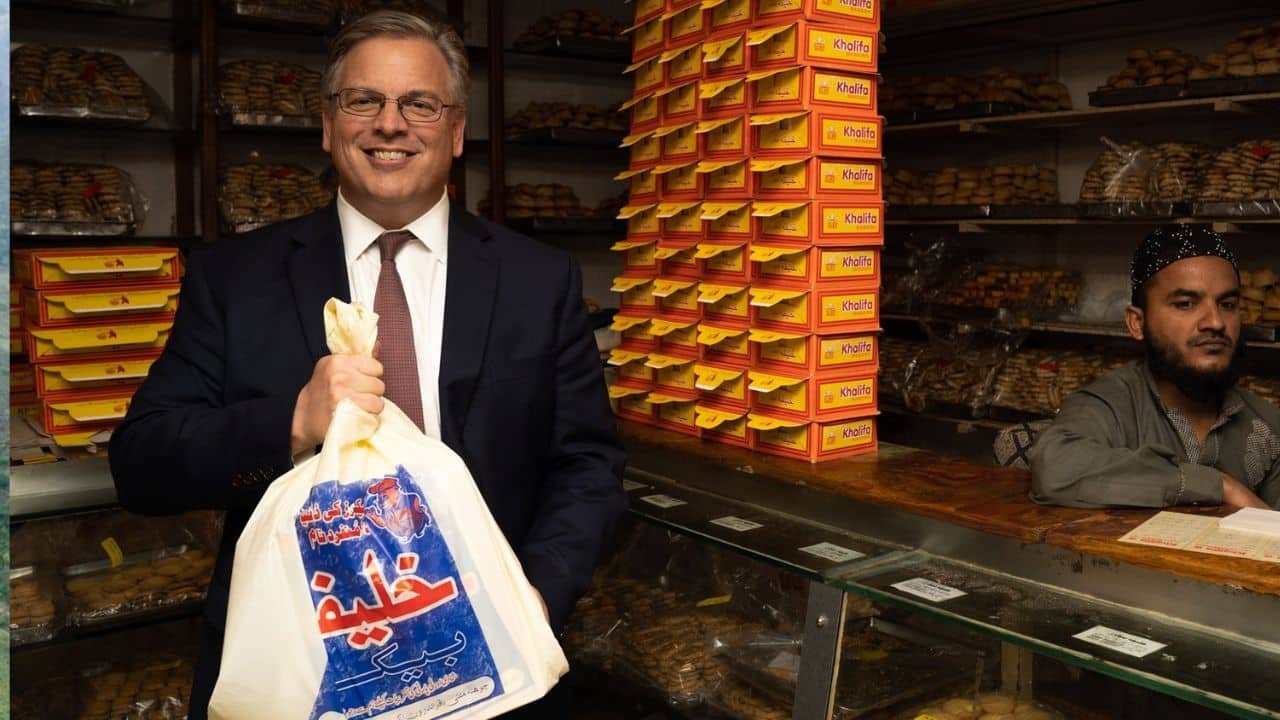
US Ambassador to Pakistan, Donald Blome, visited Lahore from September 4-6 and The Current got the opportunity to sit down with him and have a little chat.
And yes, you read it correctly. The ambassador is a lover of Khalifa nan-khatai. He told us that he discovered the biscuits last year when he came to Lahore. Later, during his February trip, he even stopped by Khalifa Bakers in the Walled City.
Visit to Lahore Over the course of his latest tour, Ambassador Blome visited PepsiCo’s FritoLay Snack plant and NetSol Technologies Ltd. While the focus of the ambassador’s trip was to foster the economic ties between the United States (US) and Pakistan, special emphasis was placed upon the importance of human rights and inclusive workspaces — particularly in regards to women.
“It is not just a matter of simply hiring — there are things you have to change, and ensure a welcoming environment for women with different needs and different requirements to excel in the workforce,” he pointed out.
Playing a leading role in corporate social responsibility, American-based companies have not only created employability in Pakistan, but they endeavour to cater to the local communities through initiatives that actively work towards women’s empowerment as well as education, health, disaster relief, and skills development.
Ambassador Blome cited a USAID programme in partnership with PepsiCo that aims its attention on women farmers of Pakistan who are working in one of the more difficult areas, toiling under a strenuous work environment.
Cultural Barriers Taking into consideration the socio-domestic constraints that often restrict women from growing in their careers, Ambassador Blome believes that practical initiatives can make workplaces more inviting for women in Pakistan.
“It is the simple things; like having child care facilities, providing safe transportation — beyond that is developing a culture that ensures that equal chance is given to women to advance within their jobs and careers, and that they are valued in the same way every other employee is valued.”
He further stated that he hopes American firms like PepsiCo, which has advanced gender parity in managerial roles globally, are exemplary models providing a leadership structure for the local businesses.
“A lot of things work through to get there. But many Pakistani companies are also trying to head in that direction,” Ambassador Blome acknowledged.
Success stories While a number of US businesses have actively countered gender inequality, Ambassador Blome particularly highlighted the digital sector as a success. He mentioned that not only more women are being employed by IT firms but certain institutes have been accommodating by providing opportunities for flexible work like allowing to work partly at home, partly in office.
NetSol Technologies, an American software company, is known for being an “equal opportunity employer with the largest concentration of female employees in Lahore”.
This year, they took an initiative to encourage women back into workspaces — women who are married or left the job after having a baby. This was carried out by creating women-exclusive jobs which catered them through on-office facilities.
Ambassador Blome, however, also hailed a number of “impressive” Pakistani women-led organisations that are in the lead when it comes to facilitating women.
“It is a whole constellation of different issues that come together,” he underlined.
“If companies are able to make that work [i.e. create inclusive workspaces], it would be incredibly effective because it brings unique talents and energy, and it is something badly needed for Pakistan. The participation of women in force is too low here and it hurts the country in many ways — to forgo this incredible resource the country has.”
In August 2012, Rimsha Masih was arrested on blasphemy charges. At the time, Masih was only 14 years old. She had allegedly desecrated the pages of Holy Quran by burning them.
But what really went down?
A local Muslim boy, Hammad, had asked Rimsha Masih to hand over the trash bag she was carrying. He inspected it and took the bag to the cleric of the local mosque named Hafiz Mohammed Khalid Chishti. As evidence against the girl, Chishti showed a few burned pages of the Holy Scripture to the police. As this incident came to light, there was a collective outrage from the local Muslims. And as narrated by Mohammad Hanif in an article for The Guardian, 300 local Christian families were forced to escape their residence and seek refuge in a forest in Islamabad.
Chishti told AFP News that he thought Rimsha had ‘“deliberately” burnt the pages as part of a Christian “conspiracy” to insult Muslims and that action against such activities should have been taken “sooner”.
Resultantly, minor Rimshah Masih was arrested. She spent more than three weeks on remand in an adult jail. During her trial, her age was evaluated through medical reports that concluded it to be 14 but with a “mental age younger than that”. This supported the claims of Masih being a child with Down’s Syndrome that the accuser’s lawyer rejected stating that the doctors are “favouring the victim and the state is also supporting her”.
Rimsha was released on bail the following month of September after the police clarified in court that she was not guilty of the accusations made against her and that it was, in fact, the cleric himself who allegedly conspired against the young girl.
But did Rimsha Masih get justice in the face of a false blasphemy case?
Following Rimsha Masih’s acquittal, Hafiz Mohammed Khalid Chishti was arrested. Several witnesses against him were taken into record. It was claimed that Chishti had included the Holy Scriptures in the trash bag himself in order to portray Rimsha as the desecrator. The witnesses also claimed that Chishti believed that this was the only way to drive out Christians from their community.
This meant that Chishti himself was now guilty of desecrating the Holy Scripture. The-then Investigation Officer (IO) Munir Jafferi, while talking to The Express Tribune, said that Chishti could be sentenced to life imprisonment if convicted of desecrating the Holy Book.
He was sent on 14-day judicial remand under Section 295-B of the Pakistan Penal Code.
By 2013, Rimsha Masih and her family escaped to Canada because even in her innocence, she was not safe in Pakistan. They were given permanent Canadian residency on “humanitarian and compassionate grounds”.
All the while, that same year, all witnesses against Chishti withdrew their claims, and thus, the court dismissed all charges against him.
History of Blasphemy Laws in Pakistan
In 1860, the British colonisers introduced the Indian Penal Code. It consisted of a chapter that criminalised offences relating to religion in order to counter Muslim-Hindu-Sikh conflict in the Indian Subcontinent: Section 295, Injuring or defiling place of worship, with intent to insult the religion of any class Section 296, Disturbing religious assembly Section 297, Trespassing on burial places, etc.–Whoever, with the intention of wounding the feelings of any person (Section 297) Section 298, Uttering words, etc., with deliberate intent to wound religious feelings
But in 1927, the laws buoyed out as vague clauses were added in the Penal Code, further deregulating the conflicts. As per 295 A, “Deliberate and malicious acts intended to outrage religious feelings of any class by insulting its religion or religious beliefs” was also a punishable offence.
It is to note that the maximum punishment under these laws was from one year to a maximum of 10 years in jail, with or without a fine.
In some instances, people took the law into their own hands. A case often recounted from the pre-partitioned India is of an objectionable book on Islam. It was written by a man named Pandat Chamupatt but anonymously published. The publisher was a journalist, Mahashe Rajpal, who owned a publishing house called ‘Rajpal & Sons’.
The book was deemed as blasphemous by Muslims. Lawsuit against the publisher was filed under section 153 A: “Promoting enmity between different groups on ground of religion, race, place of birth, residence, language, etc.” Punjab High Court in Lahore, however, acquitted the publisher of the charges on “technical grounds” since the law did not highlight ‘adverse discussions of the life and character of a deceased religious leader’.
The British Raj then made amendments to the law and included section 295-A to punish “deliberate acts intended to outrage religious feelings of any community… by words, either spoken or written”.
The acquittal, nonetheless, led to protests, criticism, and threats; and after several failed attempts, the editor of the publishing house was assassinated in 1929.
The next reported case was in Karachi in 1934. Nathu Ram, an active member of Arya Samaj, too, had allegedly written an objectionable book on the history of Islam.
This, once again, prompted an angry reaction by the Muslims. After a trial, he was imprisoned for a year and fined for his offence. Ram had filed an appeal in the court but during one of his hearings in March 1936, he was attacked and killed.
His killer was a man named Abdul Qayum from Hazara from the North West Frontier Province (now Khyber Pakhtunkhwa). Muslims back then gave him the status of Ghazi and a shrine was built after his death.
Even then, however, killings over blasphemy were comparatively a rarity.
Post-1947, with Muslims and Hindus officially divided, the anti-blasphemy laws remained intact in Pakistan.
These laws were cemented under the dictatorship of General Zia-ul-Haq.
General Zia made changes to the Penal Code and added five new clauses between 1980 to 1986, including: 295 B, which criminalises the desecration of the Quran. 295 C, which criminalises with life imprisonment or the death penalty any direct or indirect desecration of Prophet Muhammad (PBUH). 298 A, which criminalises direct or indirect desecration of wives and relatives of Prophet Muhammad (PBUH).
At first, section 295-C only contained life imprisonment as the punishment for blasphemy but it was replaced with death penalty as the parliamentarians pushed it on the basis of ijma (consensus of Islamic scholars). The Federal Shariat Court (FSC), too, defended the death penalty for blasphemy even though four out of seven ulemas that were consulted by the FSC opposed the ruling. The opponents of the death penalty included Jamaat-e-Islami’s founder, Maulana Maududi; head of the Barelvi sect, Ahmad Raza Khan; and the head of the Deobandi sect, Mahmood Deobandi.
They all agreed that blasphemy was a pardonable offence and that “death penalty cannot be given for single offences”.
In 2010, Dawn published an article tracing the qualitative results of the anti-blasphemy laws. While less than 10 cases of blasphemy were reported between 1927 and 1986; post-1986, as many as 4,000 cases were recorded. Then, between 1988 and 2005, 647 people were charged out of which 50 percent were non-Muslim. More than 20 people have been murdered for alleged blasphemy.
49 per cent of 361 cases of blasphemy offences registered between 1986 and 2007 were against non-Muslims even though non-Muslims make less than four per cent of the total population.
The situation began to worsen in 2011 with the murder of former governor of Punjab, Salmaan Taseer, who was vocal against the anti-blasphemy laws and supported Asia Bibi who was then given death penalty for committing blasphemy (but acquitted in 2019). Taseer’s killer, Mumtaz Qadri, was arrested and was later hanged but he became a hero to many who hailed him for his deed. More than 100,000 people attended his funeral and his shrine is still visited by hundreds.
Lawyer Asad Jamal recalls the day after Salmaan Taseer’s death. He was on Mall Road, Lahore, where he spoke with sepoys regarding Taseer’s murder. “No one wanted to condemn the act”, he still remembers. “It was very telling of the direction the country was heading towards.”
Since 2011, the number in cases, accusations, and killings have increased. In a report by Centre for Research and Security Studies (CRSS), as of 2021, 43 people have been extrajudicially killed since 2011 and 1,185 accused.
When it comes to the role of lawyers and judges in blasphemy cases, Jamal believes that it is simply reflective of the socio-political situation of Pakistan. The state of affairs have worsened over the past 20 years. Apart from frail economy and political rifts, there is a major element of fundamentalism that comes in the shape of parties like TLP and their massive support.
“Such an environment doesn’t encourage a lot of lawyers to take up blasphemy cases.”
He also adds that very few lawyers have “worthwhile legal skills” to take up blasphemy cases. Many simply do not want to deal with these issues. People like Asma Jahangir and Abid Hasan Minto were not mainstream but exceptions. Apart from being courageous, they were competent. “But now, the times have changed,” he adds.
Peter Jacob, a human rights activist and the director of Centre for Social Justice (CSJ), says that while some politicians condemn violence against the minorities like the recent Jaranwala case, it, nonetheless, always has a cost one has to bear due to the sensitivity of the matter.
While talking about the youth belonging to religious minorities, Jacob has noticed a segment within Christians and Hindus who are actively participating in political discussions on- and offline. The examples are the recent protests held in various cities across Pakistan, including Karachi, Lahore, Swat, Kurram district, and Rawalpindi against the Jaranwala incident.
“I am quite impressed by their sense of belonging and their affiliation with the case of a better Pakistan, their respect for human rights and democracy. Civil liberty will play a role of a natural healer — healing of the society and articulation of the way forward out of these troubled times,” he added.
Jacob, however, believes that there has to be resolve at the national level by powerful quarters to understand the height of radicalisation that has taken place in order to control the lethality of the problem. “While there is political fragmentation, a free and fair atmosphere must be created where political forces can play their role and come up with people-centric solutions that will entail the process of self-healing and accountability.”