Author: newsdesk

  • Supreme Court disposes of Justice Faiz Isa’s order to stop all suo moto proceedings

    Supreme Court disposes of Justice Faiz Isa’s order to stop all suo moto proceedings

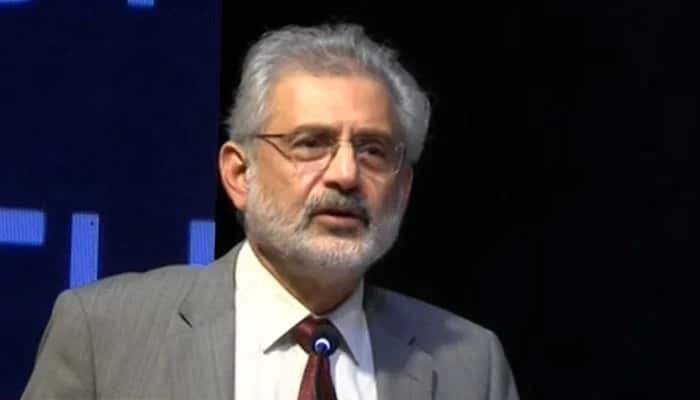
    A six-member bench of the Supreme Court formed to deliberate on Justice Faez Isa’s order freezing all the suo moto notices, closed the case after a 5-minute hearing.

    The larger bench includes Justice Ijaz ul Ahsan, Justice Munib Akhtar, Justice Sayyed Mazahar Ali Akbar Naqvi, Justice Muhammad Ali Mazhar, Justice Ayesha A Malik, Justice Syed Hasan Azhar Rizvi.

    Earlier, Justice Isa, while hearing a case pertaining to the grant of additional 20 marks to Hafiz-e-Quran pre-medical candidates for admission into MBBS/BDS degrees, had issued an order to halt all suo moto hearings.

    Later, a circular was issued by the SC Registrar Ishrat Ali ‘disregarding’ the order, triggering controversy about whether a judicial order can be overruled by an administrative order.

    Regarding the matter, Justice Faez Isa asked the registrar to resign, followed by the federal government removing him from his post.

    The decision was taken during a special meeting of the federal cabinet — held under the chairmanship of Prime Minister Shehbaz Sharif — at the PM House in the federal capital.

    The cabinet examined the issue of issuance of a circular by the registrar against the order of the Supreme Court, a statement read, following which he was asked to report to the Establishment Division.

    On Monday, the brewing crisis in the SC dialed up a notch when Justice Qazi Faez Isa wrote a letter to the Registrar and asked him to immediately withdraw the circular that disregarded the judge’s judicial order about the postponement of suo moto proceedings.

    In his order dated March 29, Justice Isa had written that the Chief Justice of Pakistan does not arbitrary powers to form benches and list cases for hearings. “With respect, the Chief Justice cannot substitute his personal wisdom with that of the constitution,” the stern-worded document said.

    In the letter addressed to Ishrat Ali, the top judge said that he was astonished to receive a ‘Circular’ bearing No. Registrar/2023/SCJ dated 31 March 2023.

    He reminded the officer that “a registrar does not have the power or authority to undo a judicial order, and the Chief Justice cannot issue administrative directions with regard thereto.”

    He wrote that the registrar should be aware of his constitutional responsibility as a senior officer, advising him to leave the charge of the post. 

    Justice Isa is set to become the next chief justice later this year.

  • Cotton production in Pakistan drops to 40-year low due to flood damage

    Cotton production in Pakistan drops to 40-year low due to flood damage

    According to data released by the Pakistan Cotton Ginners Association (PCGA), cotton production in the country has decreased by 34 per cent this year compared to the previous season. The final figures for the crop year 2022-23 show that Pakistan produced 4,912,069 bales, which is the lowest in around four decades, as opposed to 7,441,833 bales produced in the 2021-22 season, resulting in a year-on-year decline of 2,528,764 bales or a 34 per cent loss.

    This drop in production means that the textile industry will have to import around 10 million bales to meet its annual demand of 15 million bales. However, mill consumption in the year 2022-23 has also been reported at 8.8 million bales, the lowest in over 20 years, primarily due to severe import financing issues.

    Market sources state that textile mills have so far signed import agreements for 5.5 million bales, while they have purchased 4,605,449 bales from the local market. Last year, the mills had bought 7,332,000 bales from the domestic market. Ginners report that they are still holding 301,720 bales in their stocks, compared to last year’s inventory of 93,833 bales.

    The massive drop in cotton arrival is blamed on flash floods and heavy rains during last year’s monsoon that devastated large swathes of agricultural land in the country, particularly in Sindh and Balochistan provinces.

    Interestingly, despite strong demand in international markets, only 4,900 bales of white lint were exported this year, compared to the previous year’s figure of 11,000 bales, a fall of over 69 per cent. The main destinations for Pakistan’s raw cotton are the Philippines, Italy, Bangladesh, Greece, and France.

    Province-wise, Punjab registered over a 32 per cent year-on-year decline in output, producing 3,033,050 bales this season against 3,928,690 bales last season. Sindh reported over a 46 per cent year-on-year loss in yield, with the lint production in the province this year standing at 1,879,019 bales against 3,513,143 bales last year.

    Pakistan’s cotton output reached a high of 14.1 million bales in the year 2004-05. But it dropped to 7 million bales in 2020-21 and about 9.45 million bales in 2021-22, as the country’s per acre yield contracted to half of the crop productivity in other countries of the region.

    A recent meeting of the Economic Coordination Committee (ECC) expressed concern over the continuous decline in cotton production and acreage over the years. As a result, the ECC approved Rs8,500 per 40kg as the intervention price on a summary submitted by the Ministry of National Food Security and Research to attract growers towards the crop.

    The ministry informed the ECC that in order to draw up a cotton intervention price proposal, consultations were held with all stakeholders, including the provincial governments, growers, and cotton associations in January and February. Stakeholders, including the All Pakistan Textile Mills Association, called for pegging the cotton intervention price with the import parity price in line with the policy adopted over the past two years.

    To review market prices and propose intervention on a fortnightly basis, the ECC constituted a cotton price review committee with the mandate to review market prices and propose intervention on a fortnightly basis.

  • Amir Khan banned from all sport after failing dope test

    Amir Khan banned from all sport after failing dope test

    Amir Khan banned from all sport after failing dope test

    British boxing star Amir Khan has been banned for two years after an anti-doping test revealed the presence of a prohibited substance.

    The former light-weight world champion tested positive for ostarine, a drug mainly used to boost testosterone (male hormones). The UK Anti-Doping (UKAD) website states that

    Amir Khan retired from boxing in May but he accepted that he was using the prohibited substance, however, it was not intentional.
    An independent tribunal accepted that argument, ruling out “deliberate or reckless conduct” by the 36-year-old.

    In October, British sprinter CJ Ujah was banned for 22 months after he tested positive for two banned substances, including ostarine, at the Tokyo Olympics.

    “This case serves as a reminder that UKAD will diligently pursue anti-doping rule violations in order to protect clean sport,” chief executive Jane Rumble said.

    “Strict liability means athletes are ultimately responsible for what they ingest and for the presence of any prohibited substances in a sample.”

    The ban from all sports is deemed to have begun on 6 April 2022 and expires on 5 April 2024.

    Khan, who won a silver medal at the 2004 Athens Olympics as a 17-year-old, was beaten by Brook via sixth-round knockout in what proved to be his final professional bout.

    He retired from the sport three months later, finishing his career with 34 professional wins and six losses, having turned professional in 2005.

  • Historical thrillers, action-packed comedies: here is the list of films releasing on Eid

    Historical thrillers, action-packed comedies: here is the list of films releasing on Eid

    This Eid is the best time to head back to the cinemas as a flux of A-list celebrities are set to star in unique films.

    If you’re someone who isn’t a fan of cringey rom-coms, you’ll want to check out this list because aside from comedies, the list includes thrillers with powerful leading ladies, historical action films and much more!

    Let’s look in to the upcoming films set to release on Eid.

    Money Back Guarantee

    Written and directed by comedy king Faisal Qureshi himself, the film is set to star Fawad Khan, who is making his silver screen comeback after a long hiatus, and will also mark the debut of Wasim Akram and his wife Shaneira. The film is an action-packed comedy that is definitely the right flavour for Eid.

    2. Huey Tum Ajnabi

    Directed by film star Kamran Shahid, the film is based around the events of the 1971 war that led to the creation of Bangladesh. It stars Mikaal Zulfiqar and Sadia Khan in leading roles, as well as Ayesha Omar, Samina Peerzada and Adnan Jillani.

    3. Daadal

    If you were disappointed by not being able to watch ‘Javed Iqbal’, then this next action film with a fiercely powerful female lead by Abu Aleeha will definitely make you want to book tickets today! This film stars a boxer from Lyari played by Sonya Hussayn who kills a gang of rich evil men to avenge the honor of her sister. Soon she teams up with a police officer to go after the criminals.

    4 Lahore Qalandar

    Looks like we’re also getting a Punjabi-style story with a lot of action and conflicts. Directed by Shahid Rana, this film stars Saima Noor, Bando Butt and Shafqat Cheema.

    5 Dorr

    A man tries to save the woman he loves from a violent gang, who have kidnapped her in exchange for a bribe. Directed by Nadeem Cheema, it stars Asad Mahmood, Shafqat Cheema and Saleem Meraj.

  • Mai un sab se bohot behtar hoon aur zindagi mein unse aagay hoon: Azam Khan hits back at critics

    Mai un sab se bohot behtar hoon aur zindagi mein unse aagay hoon: Azam Khan hits back at critics

    Azam Khan, Pakistan’s most powerful full hard and key middle-order batsman, has hit back at critics with a heated remark in a recent interview.

    “I believe that I am better than those who criticize me and spread negativity against me. I know I am way ahead in life as compared to them,” the crowd favourite said, lashing out at the critics who compare his fitness with his form.

    The 24-year-old’s comments showcase his confidence and determination to focus on his own growth as a player, rather than getting bogged down by negative criticism.

    “Those who label me as a Pindi-pitched-based batsman should also observe my recent performances. While I respect their opinion, I do not play cricket to prove them wrong. Rather, I play cricket for my own satisfaction, and as long as that satisfaction remains within me, I will continue to play,” said Azam.

    Previously, former Pakistan pacer Aaqib Javed had expressed concerns over the fitness levels of players representing Pakistan in international cricket.

    “I am not sure what sort of experiment this was. It’s clear to me that no consideration was taken when selecting the squad for this series about what standard of skills and fitness levels are needed to represent Pakistan,” said Javed.

    “If I was a player in that squad, I would have refused to play with this team. First, at least attain some levels of fitness before playing. Hopefully, they will have learned from this,” he concluded.

    Many former cricketers criticize Azam Khan’s fitness. Former Chairman of Pakistan Cricket Board (PCB) Ramiz Raja once said in a press conference about Sharjeel Khan and Azam Khan that “if they want to play cricket first they should be fit and be like proper athletes.”

  • Khan talks about his plan to return to power to TIME magazine

    Khan talks about his plan to return to power to TIME magazine

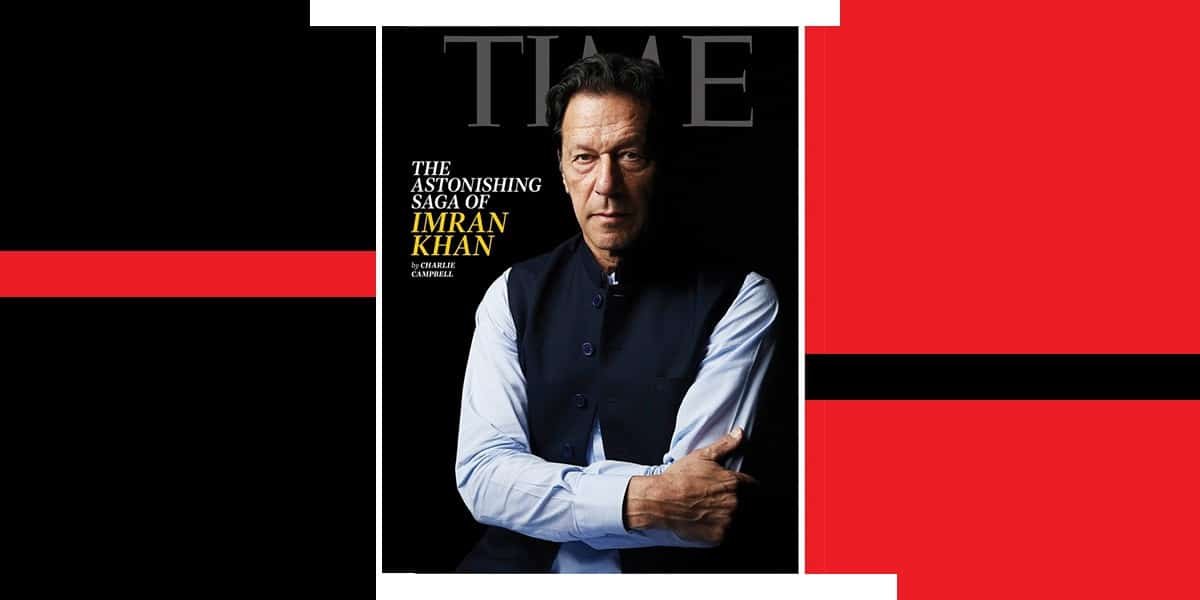
    Pakistan Tehreek-e-Insaf (PTI) Chairman Imran Khan has made it to the cover page of the American magazine TIME.

    The former prime minister in an exclusive interview with Charlie Campbell spoke extensively about his plan to return to power.

    Writing about the crackdown of the government against his party, the police raids and the assassination attempt of November 2022, the magazine wrote: “The state appears to flirt with the idea. Police raids on Khan’s home in the Punjab province capital of Lahore in early March left him choking on tear gas, he says, as supporters brandishing sticks battled police in riot gear before makeshift barricades of sandbags and iron rods. This sort of crackdown has never taken place in Pakistan, says Khan.”

    Imran Khan tells Campbell that political stability in Pakistan comes through elections. But, the magazine adds, from the U.S. perspective, he may be far from the ideal choice to helm an “impoverished, insurgency-racked Islamic state”. But is he the only person that can hold the country together, the magazine asks.

    “Never has one man scared the establishment … as much as right now. They worry about how to keep me out; the people how to get me back in,” Khan tells Campbell.

    Talking about Khan’s relentless taunting of the United States, Campbell wrote, “To journalists and supporters, he[Khan] has accused the U.S. of imposing a ‘master-slave’ relationship on Pakistan and of using it like ’tissue paper.’ To TIME, he insists that ‘criticizing U.S. foreign policy does not make you anti-American.’ Still, by 2022, the generals no longer had his back. The common perception among Pakistan watchers is that Khan’s fleeting political success was owed to a Faustian pact with the nation’s military and extremist groups that shepherded his election victory and he is now reaping the whirlwind.”

    Khan presented a step-by-step plan to get Pakistan back on track, which Campbell pointed out was thin on details. After the elections, Khan says that a “completely new social contract” is required to enshrine power in political institutions rather than the military. If the army chief “didn’t think corruption was that big a deal, then nothing happened,” Khan complained while talking with TIME. “I was helpless.”

    However, the path to this utopia remains murky, the news outlet pointed out. Asked how he plans to turn his much trumpeted Islamic Welfare State ideal into a reality, Khan talks about Medina under the Prophet and the social conscience of Northern Europeans. “Scandinavia is probably far closer to the Islamic ideal than any of the Muslim countries.”

    Campbell further wrote that Khan still claims that the crisis in Pakistan can be solved by elections, despite his broken relationship with the military. “The same people who tried to kill me are still sitting in power,” Khan says. “And they are petrified that if I got back [in] they would be held accountable. So they’re more dangerous.”

  • Elections to be held in Punjab on May 14: Supreme Court

    The Supreme Court (SC) on Tuesday declared Election Commission of Pakistan’s (ECP) decision on delay in Punjab and Khyber Pakhtunkhwa (KP) election null and void. 

    The Supreme Court, in its verdict, declared the electoral body’s decision to hold polls on October 8 as “unconstitutional”.

    A three-member bench headed by Chief Justice of Pakistan Umar Ata Bandial, comprising Justice Ijaz Ul Ahsan and Justice Munib Akhtar, announced that Punjab polls should be conducted on May 14.

    Regarding the elections in Khyber Pakhtunkhwa, the three-member bench said during the course of the hearing nobody represented the provincial governor therefore the issue, only till this extent, will remain under debate.

    The court maintained that 13 days were wasted because of the ECP’s unlawful decision, directing the caretaker government in Punjab to assist the commission and instructed the ECP to inform the court if the government refused to do so.

    The last date for submitting appeals against the decision of the Returning Officers will be April 10. The Election Tribunal will decide on the appeals on April 17.

    It added that the federal government should provide Rs21 billion in funds by April 10 to the ECP and directed the body to present a report on the issue by April 11.

    The verdict also said that the Supreme Court will issue instructions to the authorities concerned in case the funds are not provided.

    “Punjab government should give a security plan to the Election Commission,” said the top court’s verdict. It added that Punjab’s interim cabinet and chief secretary should report to the ECP regarding the electoral staff by April 10.

    The ECP had earlier set the date for elections in Punjab on April 30, but later it was postponed to October 8 — in Punjab and KP as well — prompting the opposition party, Pakistan Tehreek-e-Insaf (PTI), to file a plea in the top court.

    The apex court — which initiated proceedings on PTI’s petition on March 27 — reserved the verdict a day earlier, saying it would announce it the next day, April 4.

    It is pertinent to mention here that the coalition government had raised reservations on the three member supreme court bench and demanded a full to hear the case.  In a National Assembly meeting yesterday, Prime Minister (PM) Shehbaz Sharif categorically said the ruling coalition had no-confidence in the three-member SC bench.

  • State Bank of Pakistan expected to raise key policy rate to record-high

    State Bank of Pakistan expected to raise key policy rate to record-high

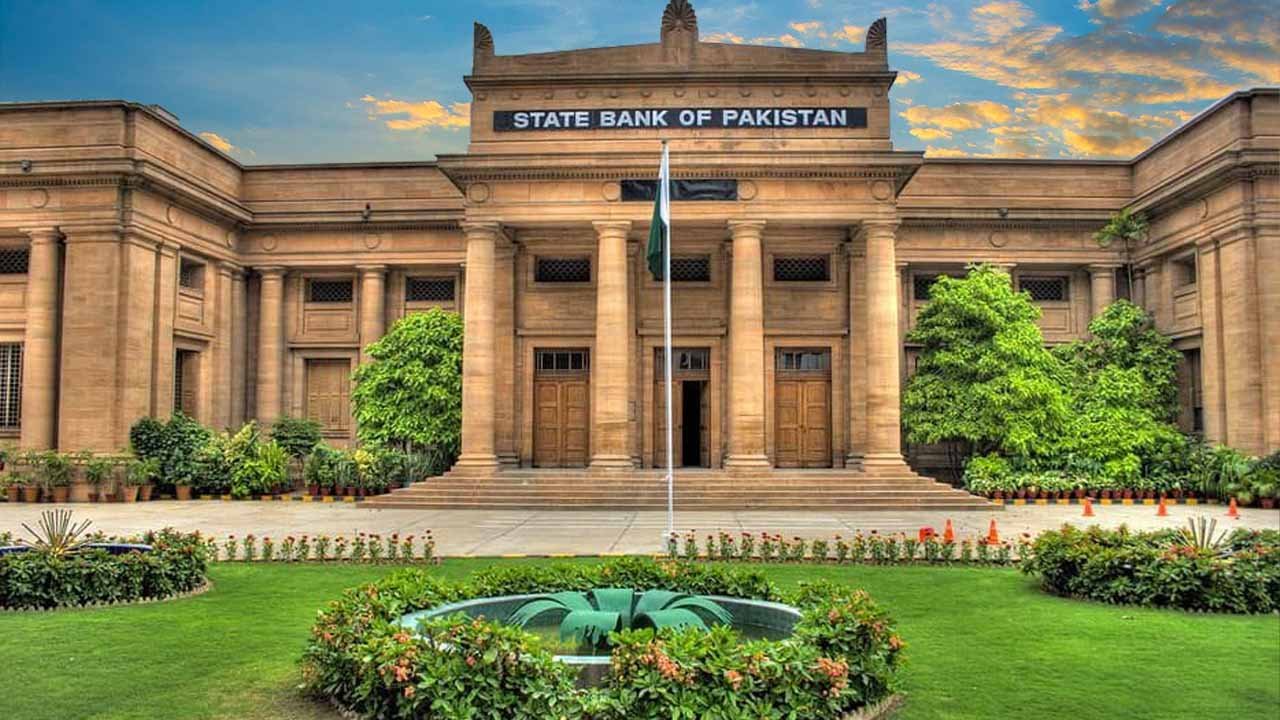
    The State Bank of Pakistan (SBP) is expected to raise its policy rate by a significant 100-200 basis points in light of the country’s economic situation and historically high inflation reading. Financial analysts anticipate the Monetary Policy Committee to increase its key policy rate to 21-22 per cent at the review today (April 4) to curb inflation. This decision is expected to discourage private-sector borrowing since an increase in currency in circulation can drive inflation up.

    In March, the central bank raised its key rate by a massive 300 basis points to a record-high level of 20 per cent, surpassing market expectations to meet the International Monetary Fund’s requirements for the release of its pending bailout funds. The country recorded historic high inflation at 35.4 per cent in March on an annualized basis, with core inflation, excluding energy and food prices, increasing to 18.6 per cent in urban areas and 23.1 per cent in rural areas.

    The market’s reaction to surging inflation is evident from the recent rise in bond market rates driven by investors’ bullish outlook. According to a survey conducted by Arif Habib Limited, 57.7 per cent of respondents expect the policy rate to increase. Of these respondents, 30.8 per cent are predicting a rate hike of 100bps and 26.9 per cent foreseeing a rate hike of 200 bps. Meanwhile, 42.3 per cent of respondents believe that the policy rate will remain unchanged at 20 per cent.

    The expected increase in the policy rate will make bank financing even more expensive, reduce demand for foreign financing for imports, and help address the fast decline in foreign exchange reserves, which have dropped to critically low levels at $4.2 billion. The cash-strapped country is undertaking key measures to secure IMF funding, including raising taxes, removing blanket subsidies, and artificial curbs on the exchange rate. While the government expects a deal with the IMF soon, media reports suggest that the agency expects the policy rate to be increased.

    Initially, the MPC meeting was scheduled for April 27, according to the six-month advance calendar issued by the central bank in December 2022. However, the SBP called an off-cycle review last month and brought forward the April meeting. The revival of the IMF loan program will help attract $3-4 billion from multilateral and bilateral creditors, including the IMF, and stabilize foreign exchange reserves over the short term.

  • Taliban shut down women-run radio station for ‘playing music’ during Ramzan

    Taliban shut down women-run radio station for ‘playing music’ during Ramzan

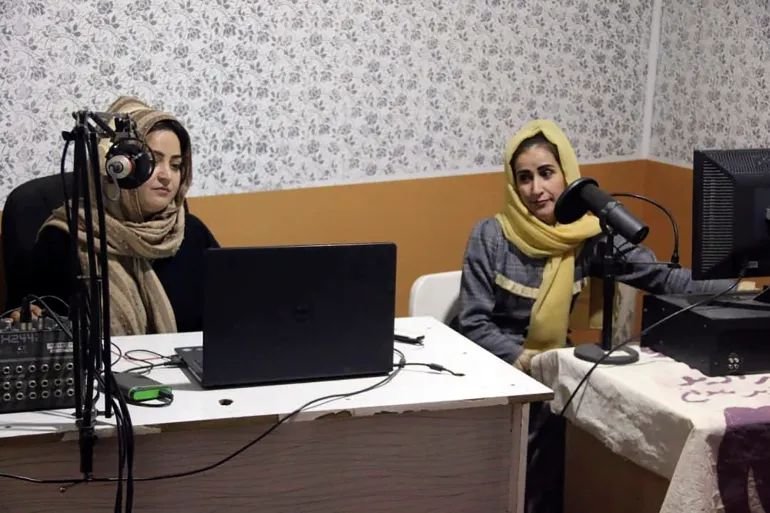
    Taliban have shut down a women-run radio station in Afghanistan for playing music in the month of Ramzan.

    The radio station named ‘Sadai Banowan’ employed eight staff members, six of them female.

    The women-run radio station was started 10 years ago.

    According to Moezuddin Ahmadi, the director for Information and Culture in Badakhshan province, the station was shut down for repeatedly violating “laws and regulations of the Islamic Emirate”.

    “If this radio station accepts the policy of the Islamic Emirate of Afghanistan and gives a guarantee that it will not repeat such a thing again, we will allow it to operate again,” he added.

    However, station head Najia Sorosh has denied any violation, calling it a ‘conspiracy’.
    The Taliban “told us that you have broadcast music. We have not broadcast any kind of music,” she said.

  • #DestroyNajamSethi trends on social media amid rumors of Shadab Khan removal

    #DestroyNajamSethi trends on social media amid rumors of Shadab Khan removal

    Since the last couple of weeks there is speculation in media reports that the Vice- Captain of Pakistan Cricket Team, Shadab Khan, is going to be removed as the Pakistan Cricket Board (PCB) searches for a competent player to replace him.

    Imad Wasim’s and Shan Masood’s names are under consideration, reportedly.

    While there has been no official confirmation, cricketing fans were quick to respond, slamming team management on social media, demanding that PCB support cricketers after defeat instead of pressurising them

    After the Afghanistan series loss in United Arab Emirates, some fans defended Shadab and criticizing management in the context of why they have rested all key senior players and some reactions were opposing Khan’s poor approach and irresponsible decisions on field.

    After the series failure, in the post-match press conference, Shadab Khan said that now management will realise the importance of master batsmen Babar Azam and Muhammad Rizwan.

    “We have achieved our motive,” the stand-in captain said, further murking up the waters.

    Media reports have stated that after the series failure, the Board is thinking closely about appointing a new vice-captain for the shorter format series against New Zealand in April.

    Usama Mir is likely to replace Shadab in the upcoming home series against the Kiwis.

    Former wicket-keeper batter Rashid Latif added fuel to fire by commenting on his Youtube Channel that PCB may be trying to punish Shadab for speaking truth.

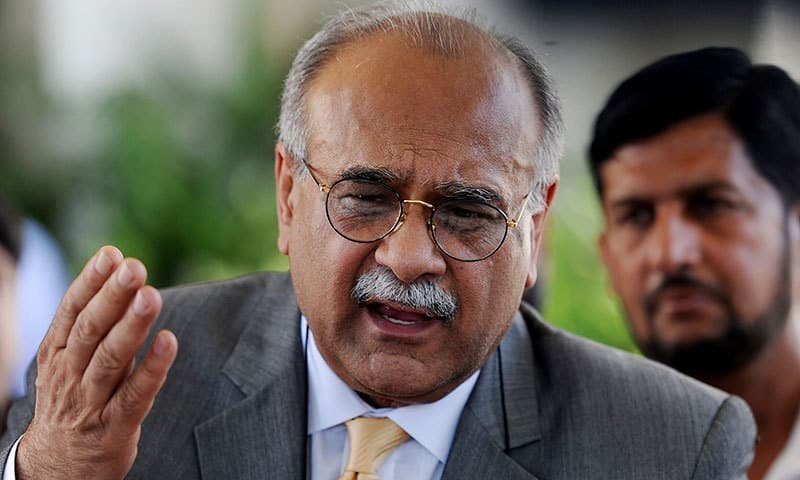
    The analysis by the former cricketer put PCB management and Najam Sethi into hot waters. As soon as Latif comments on the debate showed up on social media, #DestroyNajamSethi started trending.

    Clearly, fans are not happy with speculations that Shadab Khan will be replaced. There seems to be general consensus that Shadab is a crucial player in the team and is an essential part of the team’s leadership.

    The hashtag #DestroyerNajamSethi is a straight-up depiction of the fact that Pakistan cricket fans are frustrated, exasperated and angry with the chairman and management of the cricket board.

    A large pool of fans firmly believes that such decisions are an attempt to break the national team’s bench and won’t be advantageous for the team as well as the fans.