Author: newsdesk

  • Microsoft reduces profit estimation due to market volatility

    Microsoft reduces profit estimation due to market volatility

    Microsoft slashed its fourth-quarter profitability and earnings projections on June 2, becoming the latest U.S. corporation to notify of the impact of a stronger dollar.

    An aggressive Federal Reserve and increased geopolitical tensions have driven the dollar up 14 per cent against a basket of currencies in the last year, forcing companies like Coca-Cola Co and Procter & Gamble to lower their expectations for the rest of the year.

    A stronger dollar generally consumes the earnings of multinational corporations that have extensive global operations and convert foreign currencies into dollars. Microsoft has lowered its sales forecast for all three segments, which include Windows products, cloud services, and personal computing.

    Corporate hedging activity has increased as more businesses seek to protect their revenues from the impact of market volatility in the face of rising inflation. It’s indeed common for businesses to preserve themself from unusual currency transitions, however, the intensity comes after years of low forex fluctuation when market volatility had little impact on income.

    Revenue for the quarter is expected to be between $51.94 billion and $52.74 billion, down from a previous range of $52.40 billion to $53.20 billion. Microsoft reduced its profit forecast from $2.28 to $2.35 per share to between $2.24 and $2.32 per share.

    Considering Refinitiv data, analysts expect earnings per share of $2.33 on revenue of $52.87 billion. In April, the company forecasted double-digit revenue growth for the next fiscal year, owing to increased demand for its office software and cloud services as economies reopen and businesses shift to a hybrid model that allows employees to work from both the office and from home.

  • ’Threat to national security’, PEMRA bans Bol show after Khan’s interview

    The Pakistan Electronic Media Regulatory Authority (PEMRA) has just banned Bol News’ programme “Tajzia” hosted by Anchor Sami Ibrahim after Pakistan Tehreek-e-Insaf (PTI) Chairman Imran Khan’s appearance on the show.

    The notice reads that “the statements that Khan gave at the show gravely threatened the national security, independence, sovereignty, integrity and ideology of the country and it is a clear violation of Article 19 of the constitution, PEMRA Ordinance, Electronic Media Code of Conduct (2015).

    Article 19 mainly states that “every citizen shall have the right to freedom of speech and expression, and there shall be freedom of the press, subject to any reasonable restrictions imposed by law in the interest of the glory of Islam or the integrity, security or defence of Pakistan or any part, therefore, friendly relations with foreign States, public order, decency or morality, or in relation to contempt of court, or incitement to an offence.’

    Imran Khan, in an interview aired on Wednesday, said that the establishment needs to make the right decisions and if they don’t, “the army will be destroyed”.

    He further said, “If the establishment doesn’t make the right decisions then I can assure you in writing that the army and they will be destroyed. Pakistan is going towards default. If right decisions aren’t made, then the country will be on a suicidal path.”

  • Oxford announces scholarships for Pakistani students

    The prestigious University of Oxford has launched the Oxford Pakistan Programme (OPP) to address the underrepresentation of Pakistani and British-Pakistani students at Oxford and to promote an academic exchange between Pakistani students and Oxford.

    The OPP launched the programme at Lady Margaret Hall (LMH), which is in Oxford, where both former Prime Minister (PM) Benazir Bhutto and Nobel laureate Malala Yousafzai studied.

    Dr Talha J Pirzada, a co-founder of the OPP, announced that the programme would be offering up to three scholarships in its initial round, allowing Pakistani students to take advantage of Oxford’s world-class facilities and teaching programme of Oxford.

    He also announced the launch of the OPP’s Visiting Fellow Programmes, including a programme developed in partnership with the Malala Fund, the Government of Sindh and non-profit Durbeen, to provide opportunities for Pakistani academics to take advantage of Oxford’s research facilities.

  • ‘Hindutva pop’: the anti Muslim saffron groove for violent mobs

    ‘Hindutva pop’: the anti Muslim saffron groove for violent mobs

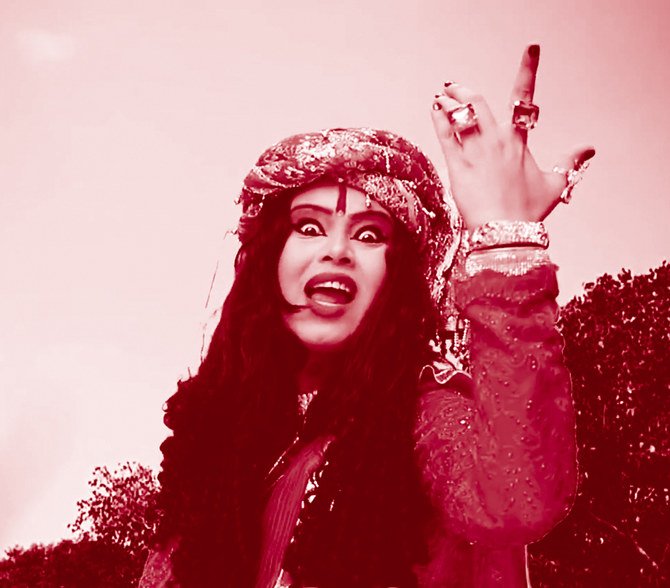
    Orange garments, violent hate speech against Muslims, multiple instruments and consistent chanting constitute the anatomy of a basic Hindutva pop song. Swaddled in gold and saffron, Laxmi Dubey, one of the most popular Hindutva pop artists has uploaded several music videos on YouTube with millions of views, where she engages in anti-Muslim sloganeering, direct attacks on Islamic injunctions, the state of Pakistan, hateful statements regarding the issue of Kashmir and Modi and BJP’s political aggrandization.

    What’s concerning is not just that people like Laxmi Dubey are some of the most popular national icons in India at the moment, but also the fact that through her green screen music videos, YouTube monetization and public shows, she is estimated to be earning 68 Lacs per year. Dubey’s most-listened to song has more than 50 million views. But there is an ensemble of popstars just like her.

    Laxmu Dubey, 30, Hindutva popstar living in Bhopal, Madhya Pradesh, India.

    Following the 2014 election victory for Bharatiya Janata Party, the country has embarked on a journey of extreme polarization and radical hate against Muslims, Islam and Pakistan. Dubey’s words “Hindustan mein rehna hai tou vande matram kehna seekho” [Translation: If you want to live in India, learn how to say Vande Matram] epitomize perfectly the jingoistic philosophy of nationwide hatred for the Muslim community. In this political atmosphere, films, music, poetry and other forms of art all turned in service of the most influential political campaign of the time.

    Krishnavanshi is another such musician whose songs often embody the strongly felt sentiment of expelling all Muslims from the India and sending them “back” to Pakistan, which is neither their home country nor where they want to live. These songs are akin to a full-fleged battle cry, announcement of an all out war against Muslims and Islamic identity formations, attacking historical symbols of the Mughal-era and contemporary national symbols of Pakistan, rallying violent support against the Muslims of India.

    The famous juvenile Jamia shooter from India rose to prominence when he was apprehended on January 30, 2020 for opening fire at a crowd of unarmed protestors from Jamia. He is also an associated to the famous Hindutva militant leader Deepak Tyagi, who alleged that a 10 year-old Muslim boy, who had accidentally wandered into a temple, was a trained killer. This Jamia shooter and his friends have recorded videos of abduction and assault against Muslims in India which are played against the backdrop of the Hindutva ‘pop’ music. These videos are viral on Indian social media and are standing in to exemplify the far-reaching impact of music on politics and vice versa.

  • Moody’s lowers Pakistan’s rating to Negative after IMF delay

    Moody’s lowers Pakistan’s rating to Negative after IMF delay

    On Thursday, Moody’s Investors Service (Moody’s) lowered Pakistan’s rating from stable to negative. It confirmed the Government of Pakistan’s B3 issuer and senior unsecured debt ratings in local and international currencies.

    “The decision to change the outlook to negative is driven by Pakistan’s heightened external vulnerability risk and uncertainty around the sovereign’s ability to secure additional external financing to meet its needs,” read the statement.

    This grade indicates that the entity is suffering financial instability or has insufficient cash reserves compared to its business needs, debt, or other financial obligations.

    Rising inflation, which puts downward pressure on the current account, currency, and depleting foreign exchange reserves, has exacerbated Pakistan’s external vulnerability risk, according to the ratings agency, especially in the context of heightened political and social risk.

    “Pakistan’s weak institutions and governance strength adds uncertainty around the future direction of macroeconomic policy, including whether the country will complete the current IMF Extended Fund Facility (EFF) programme and maintain a credible policy path that supports further financing,” it stated.

    In a recent report, Brecorder reported, that despite the above-mentioned risks, Moody’s maintained a B3 rating, indicating that Pakistan will complete the seventh review under the IMF Extended Fund Facility (EFF) programme by the second part of this calendar year. “Additional financing from other bilateral and multilateral partners” will result as a result of this.

    “In this case, Moody’s assesses that Pakistan will be able to close its financing gap for the next couple of years,” it said. On the back of rising global commodity prices, Moody’s forecasts Pakistan’s current account to continue under substantial strain through 2022 and 2023.

    For fiscal 2022 (ending June 2022), Moody’s forecasts a current account deficit of 4.5-5 percent of GDP, somewhat higher than the government’s forecast. It anticipates the current account deficit to reduce to 3.5-4 percent of GDP in 2023 as global commodity prices steadily decrease and local demand moderates. Its expectations for fiscal 2022 and 2023 are higher than previous (early February 2022) projections of 4% and 3%, respectively.

    Given Pakistan’s limited foreign exchange reserves, the country’s growing current account deficits highlight the need for further external finance.

    Pakistan is now negotiating the sixth review of the EFF programme with the IMF.

    “Conclusion of the seventh review, and further engagement with the IMF, will also help Pakistan secure financing from other bilateral and multilateral partners. In this scenario, Moody’s expects Pakistan to be able to fully meet its external obligations for the next couple of years.

    “However, Moody’s assesses that the balance of risks is on the downside. An agreement with IMF could take longer than expected, as the government may find it difficult to reduce fuel and power subsidies given rising inflation.”

    According to Moody’s, if Pakistan is unable to get additional funding before the end of the year, its foreign exchange reserves will continue to be depleted, raising the likelihood of a balance of payments crisis.

    Pakistan’s foreign exchange reserves are currently less than $10.1 billion, posing a threat to the country’s balance of payments as rising oil costs and a ballooning import bill put pressure on the currency.

    At the same time, increased political upheaval, including calls by Pakistan Tehreek-e-Insaf Chairman Imran Khan for early elections, and a delay in the IMF program’s reactivation have all contributed to the country’s economic troubles.

    Moody’s Investors Service and B3 rating

    Ratings are the indicators of the creditworthiness of the ratee. For “obligations considered speculative and exposed to significant credit risk,” Moody’s assigns a B3 grade. This grade indicates that the entity is suffering financial instability or has insufficient cash reserves compared to its business needs, debt, or other financial obligations.

    The bond credit rating division of Moody’s Corporation is known as Moody’s Investors Service, or just Moody’s. It is the company’s traditional line of business and historical moniker. Moody’s Investors Service conducts global financial research on corporate and government bonds. The Big Three credit rating agencies are Moody’s, Standard & Poor’s, and Fitch Group. It’s also on the list of Fortune 500 companies to watch in 2021.

    How Entities are Rated?

    The organisation uses a standardised ratings scale to rate borrowers’ creditworthiness, which gauges potential investment loss in the case of default. Moody’s Investors Service assigns ratings to debt securities in a variety of bond markets. Government, municipal, and corporate bonds; managed investments such as money market funds and fixed-income funds; financial entities such as banks and non-bank finance firms; and structured finance asset classes are all examples. Securities are rated from Aaa to C in Moody’s Investors Service’s ratings system, with Aaa being the highest quality and C being the lowest.
  • ‘We have criticised army as well not for our political gains like Khan’: Maryam Nawaz

    ‘We have criticised army as well not for our political gains like Khan’: Maryam Nawaz

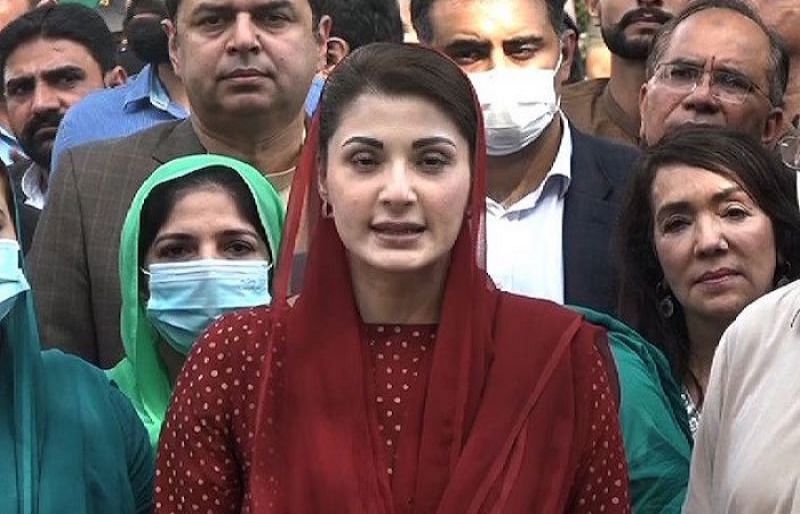
    Pakistan Muslim League-Nawaz (PML-N) Vice President Maryam Nawaz on Thursday has said that they too have criticised the establishment in the past but that was never for any political gains. Her comments are relevant to the Pakistan Tehreek-e-Insaf (PTI) Chairman Imran Khan’s recent remarks on the establishment and the division of Pakistan into three parts.

    “We have criticised the army as well but not for our political gains like Imran Khan but our remarks were to direct the establishment towards the right direction,” said Maryam.

    ‘Who introduced the ‘three-piece’ ideology?’

    “Sometimes you say Kashmir should be divided into three parts and now you are saying Pakistan will be divided into three parts,” said Maryam Nawaz.

    Maryam asked Khan who introduced him to the ideology of the country’s division into “three pieces”.

    “Whose ideology is it? Did Zac Goldsmith give you this ideology or Israel? There will be 300 pieces of the one who said such a thing and his party,” she said.

    Does he have any role in making Pakistan an atomic power?

    Maryam went on to say that the PTI chairman failed within 30 days of assuming the office of prime minister and was exposed within 30 days after being ousted.

    She asked under which right did Imran Khan talk about Pakistan’s atomic programme. “Does he have any role in making Pakistan an atomic power?”

    “[Politicians] have borne exiles and life sentences for Pakistan. [Zulfiqar Ali] Bhutto and Benazir Bhutto were martyred but the voice of Pakistan Khappay [we want Pakistan] was heard,” she said.

    Khan says Pakistan ke teen hissay hongay, Shehbaz warns him not to cross limits

    Prime Minister (PM) Shehbaz Sharif warned Imran Khan on Thursday, saying that his recent remarks on Pakistan make him “unfit for public office”.

    Khan in an interview with Sami Ibrahim for Bol News programme ‘Tajzia’ said that if Pakistan goes bankrupt, then the country will have to face denuclearisation, predicting that the country would then be divided into three parts.

  • ‘Beloved brother’ Shehbaz in Turkey, trade to be expanded from $1bn to $5bn

    ‘Beloved brother’ Shehbaz in Turkey, trade to be expanded from $1bn to $5bn

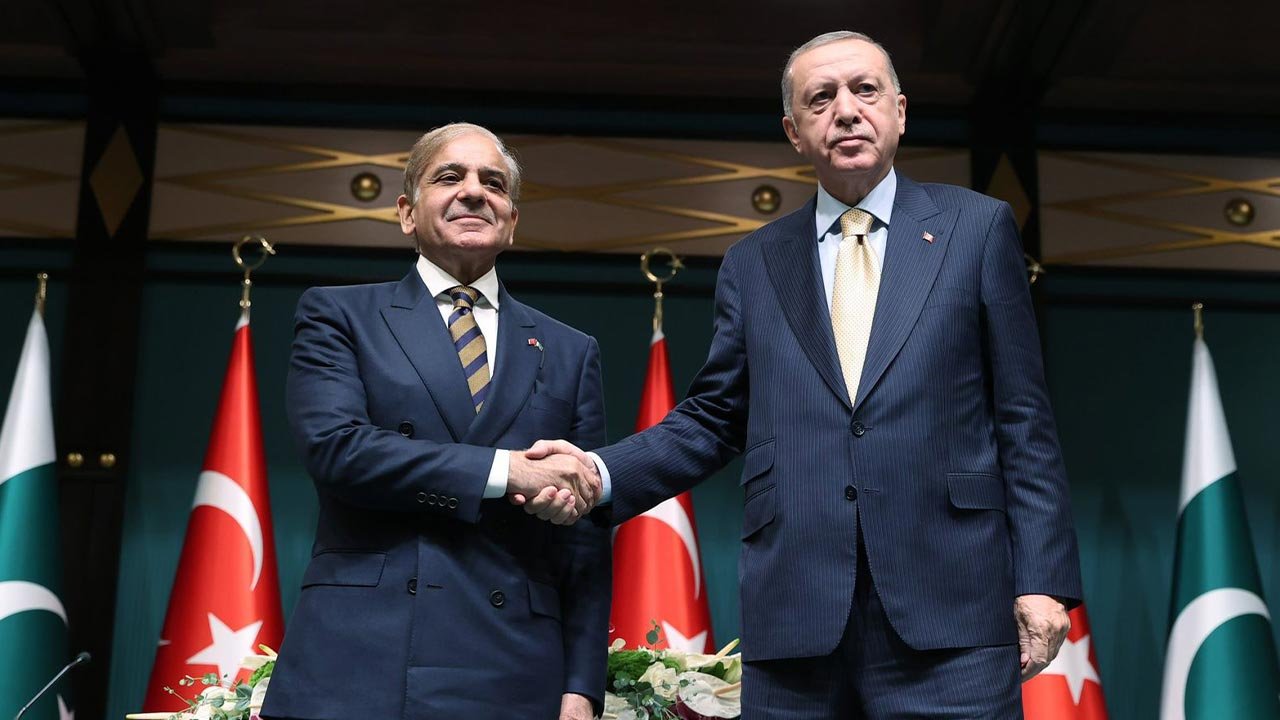
    Prime Minister (PM) Shehbaz Sharif’s formal visit to Turkey, according to Turkish Foreign Minister Mevlut Cavusoglu, will bring bilateral ties a “new dimension”.

    After a meeting in Ankara, he made the remarks, “On the 75th anniversary of our diplomatic ties, we hosted my beloved brother Shehbaz Sharif, Prime Minister of the Islamic Republic of Pakistan. We are prepared to further develop Türkiye-Pakistan relations in light of the two nations’ shared history, friendship, and potential,” Cavusoglu stated on Twitter.

    PM Shehbaz arrived in Istanbul on Tuesday for a three-day official visit, his first since becoming the PM of Pakistan in April.

    According to a Foreign Ministry statement, the premier stressed the significance of growing bilateral trade volume to $5 billion over the next three years.

    “The Prime Minister noted that the bilateral relations were exceptionally warm as the people of the two countries shared special bonds that dated back centuries,” the ministry said in a statement.

    He also emphasised the two countries’ shared interests on a number of regional and international issues, according to the report.

    He said Islamabad aimed to strengthen bilateral trade and cultural ties with Ankara in his address to the Turkey-Pakistan Business Council on Tuesday evening.

  • Lady Railway Police Force to be deployed in trains after woman was gang raped

    Lady Railway Police Force to be deployed in trains after woman was gang raped

    On Wednesday, the Prime Minister’s Strategic Reforms Implementation Unit (SRIU) directed Pakistan Railways to tighten security protocols for the safety of ladies travelling by train, after a woman was gang raped by train staff while travelling from Multan to Karachi.

    The following measures are being taken:
    Safar Saheeli App

    For the guidance of female passengers, a ‘Safar Saheli’ mobile app will be launched. It will have emergency phone numbers for women to call if they are in trouble.

    Lady Railway Police Force (LRPF) 

    SRIU has also directed Pakistan railways to deploy a Lady Railway Police Force (LRPF) in trains to ensure the safety of female passengers. A lady sub-inspector and two lady constables will be deployed at the railway stations for long journeys. 

    Emergency ‘SOS’ buttons to be installed in all trains

    On addition, SOS buttons will be installed in all trains to allow women to request assistance in the event of sexual harassment or a rape attempt.

    Read more- Woman travelling from Multan to Karachi raped by train staff

    Video Surveillance System (VSS) to be installed at vulnerable locations:

    Video Surveillance System (VSS) will be installed at ‘vulnerable railway stations’. In addition, two CCTV cameras, one in each bogie and corridor will be installed.

    Face Recognition Camera (FRS) App

    A Face Recognition Camera (FRS) App would also be created to track down criminals and check their criminal history.

    On May 27, a woman was gang-raped by train workers while travelling from Multan to Karachi on the Bahauddin Zakariya Express. According to details, the victim was raped by three men.

  • Self-love: woman to marry herself, plans to go on a two week honeymoon

    Self-love: woman to marry herself, plans to go on a two week honeymoon

    A woman in India is all set to marry herself on June 11. Kshama Bindua a 24-year-old woman will take the ‘saat phere’ with herself on June 11.

    “I never wanted to get married. But I did want to become a bride. So I decided to marry myself”, said the girl while talking to Indian media. “Maybe I am the first to set an example of self-love in our country,” she added.

    “Self-marriage is a commitment to be there for yourself and unconditional love for oneself. It’s also an act of self-acceptance. People marry someone they love. I love myself and hence, this wedding,” she said, while explaining the reason behind the decision of marrying herself.

    She’s even planning a two-week vacation for herself, complete with wedding customs.

  • Honda 125S will now be sold for nearly Rs200,000

    Honda 125S will now be sold for nearly Rs200,000

    Several factors, including burgeoning raw material costs, continuous depreciation of the local currency, and greater freight rates, have forced the Pakistani two-wheeler industry to announce regular price hikes in 2022, putting motorcycles in a price range that is difficult to afford for a remarkable portion of the populace.

    Atlas Honda recently announced a price increase for their motorcycles in the range of Rs3,600-9,000, with the new rates taking effect from June 1, 2022.

    United, Metro, and Road Prince, among other Chinese motorbike manufacturers, have also hiked their two-wheeler prices.

    New prices

    The price of the Honda CD 70 has increased by Rs3,600, to Rs106,500. Similarly, following a Rs4,000 increase, the CD70 Dream model is now available for Rs113,500.

    Following a Rs5,000 price hike, the Pridor variant will now be available for Rs144,900.

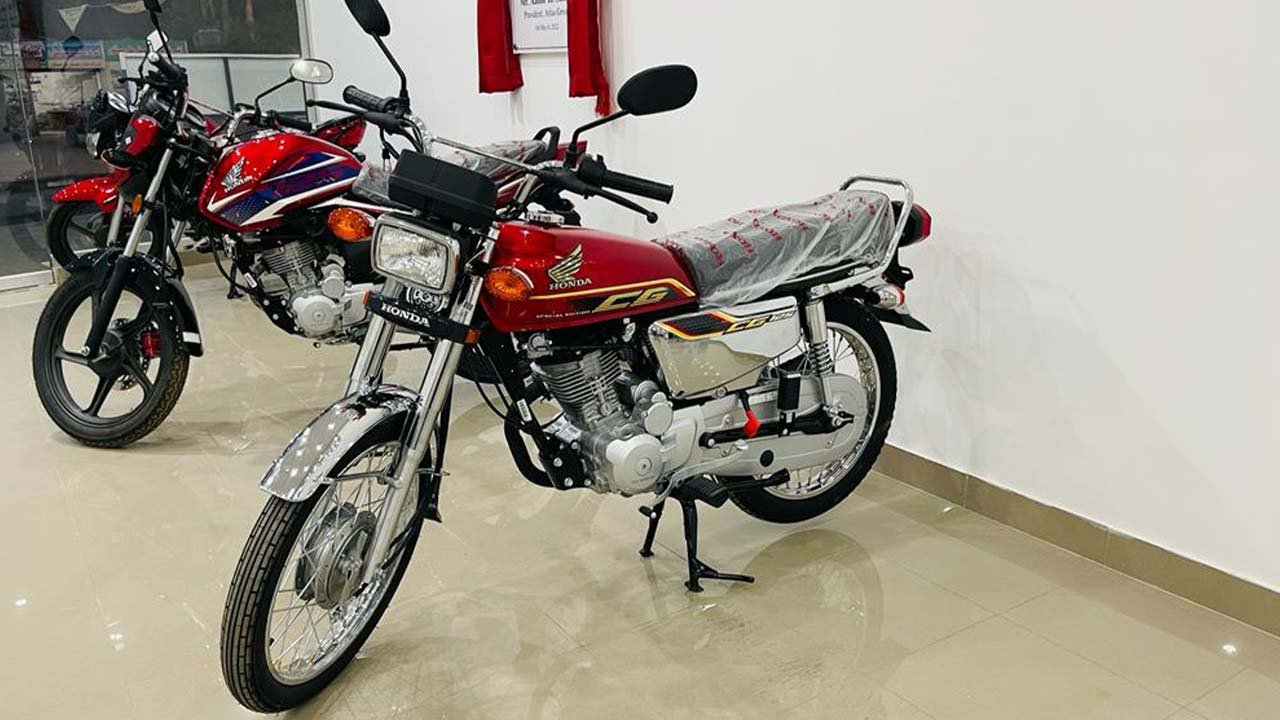
    The CG125 and CG125S have had their prices increased by Rs5,000 to Rs168,500 and Rs198,500, respectively.

    The price of the Honda CB125F has been hiked by Rs9,000 from Rs244,900 to Rs253,900.

    The price of the CB150F has been increased to Rs308,900, while the CB150F (red, black) will be available at Rs312,900 starting June 1.

    Since March 2022, Atlas Honda has increased the price of its motorcycles every month.

    The two-wheel market isn’t the only one seeing price increases; car costs have grown by up to 55 percent in the current fiscal year.

    As per industry experts, the increase in motorbike and automobile prices is primarily due to an increase in foreign raw material prices and an increase in freight costs following Covid-19.

    The automobile industry, particularly due to auto-grade steel and plastic resins, is significantly reliant on imports.

    Furthermore, the sector has a low level of localisation, with the majority of parts being imported. As a result, the rupee’s depreciation has an impact on automobile and motorcycle prices.