Author: newsdesk

  • Pakistani scientist is working on the world’s first eco-friendly aircraft engine

    Pakistani scientist is working on the world’s first eco-friendly aircraft engine

    A female aerospace engineer from Pakistan is developing a pollution-free engine for airplanes that will reduce global warming and induce artificial rain during flight. It is expected to be ready between mid-to-late 2020.

    The technological marvel’s inventor Dr. Sarah Qureshi has been working on the task since 2018 to eradicate the negative impact of commercial air carriers on the stratosphere (second major layer of Earth’s atmosphere) that adds to global warming.

    In an interview with an international news outlet, the Pakistani scientist explained the contrail phenomenon.

    “You see,” she said, “When an airplane flies; cloud-like contrails are formed. These clouds are water vapors frozen around small particles (aerosols) that exist in aircraft exhaust. These clouds blanket the atmosphere with emissions from planes, contributing to global warming.”

    The engine will have a unique pressure-based condensation system, which will cool the water vapors in the aircraft exhaust. This water will remain on the airplane and can be released as rain as required.

    An environmentalist at heart, Qureshi turned her academic research at Cranfield University, UK, into a save-the-planet attempt and boarded on a mission to build the world’s first pollution-free jet engine.

  • Dating in Saudi Arabia

    Dating in Saudi Arabia

    In Saudi Arabia’s rigid past, religious police once swooped down on rose sellers and anyone peddling red paraphernalia around Valentine’s Day, but now a more open – albeit risky – dating culture is taking root.

    Pursuing relationships outside of marriage in the conservative Islamic kingdom once amounted to a death wish, and would-be Romeos resorted to pressing phone numbers up against their car window in hope of making contact with women.

    Now a sweeping liberalisation drive – which has rendered the religious police toothless and allowed gender mixing like never before – has made it easier for young couples to meet in cafes and restaurants. Well-heeled millennials also hunt for romantic liaisons via Twitter and Snapchat, and apps such as Swarm – designed to log places the user visits but often repurposed to look for dates.

    “Selling red roses was like selling drugs,” one young Saudi filmmaker told AFP, sitting in a music-filled Riyadh cafe with his girlfriend while a courting couple gazed into each other’s eyes on the next table.

    “Even this was once unthinkable – a woman sitting next to an unrelated man,” said the girlfriend, a media professional. “Now women are asking men out.”

    Pre-marital relationships remain a cultural minefield though in a country steeped in Islamic tradition and where matchmaking is typically overseen by family elders, forcing couples to keep unsanctioned romance under wraps.

    Secrets and lies

    Samirah, a 27-year-old finance executive in the Saudi capital, felt a flutter of nerves when her boyfriend’s mother stumbled upon a handwritten birthday card and gift she gave him – and that risked her own family finding out.

    In a society where family honour is often tied to female chastity, the revelation would have provoked fury from her family and jeopardised their months-long courtship that began through common friends.

    Her boyfriend managed to deflect his mother, but the scare prompted the young couple yearning for more freedom to plan a forbidden rendezvous – a long weekend in Dubai disguised as a business trip.

    “Saudi society is more open, but everyone lies about relationships because people are judgemental,” said Samirah, who like other interviewees requested that her real name be withheld.

    Crown Prince Mohammed bin Salman, the millennial heir to the Saudi throne, has loosened social norms in a seismic cultural shift away from hardline Islam, allowing cinemas and parties while reining in clerics opposed to events like Valentine’s Day.

    In scenes unimaginable until just two years ago, women have been seen swaying on the shoulders of men at music concerts as the kingdom tears down the walls of sex segregation.

    But while the religious police have stepped back, the internal policing within Saudi families and society at large has not stopped, highlighting the limits of a Western-style liberalisation drive in a deeply conservative country.

    Saudi women also bridle at pervasive sexism in a society that — despite undergoing change particularly in urban areas — some say reduces them to their future role as wives and mothers.

    Sex outside of marriage remains a criminal offence in most of the Arab world, and the restrictions also fuel the risk of blackmail.

    “It is a big concern if you break up on bad terms,” said Samirah. “Women live in terror: What if he recorded photos and videos of me? What if he tells my father? What if he lands up at home?”

    Modern romance is also perilous for men — getting a hotel room can cause huge anxiety as couples are often expected to prove they are married at check-in.

    Nasser, a 25-year-old advertising professional, said last year one of his friends was caught kissing his girlfriend inside a private booth in a Riyadh restaurant.

    The restaurant manager threw open the screens and started filming them while shouting: “This is haram!” or un-Islamic.

    “Sometimes the only safe place to date is in your car,” Nasser lamented. “Dating is full of risks.”


  • Sajid Javid resigns ‘on principle’ after tensions with British PM

    Sajid Javid resigns ‘on principle’ after tensions with British PM

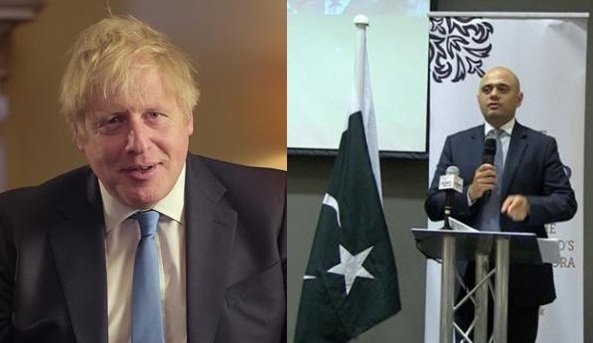
    British Conservative Party leader of Pakistani origin, Sajid Javid, has resigned as chancellor of the exchequer as Prime Minister (PM) Boris Johnson carries out a post-Brexit cabinet reshuffle.

    According to BBC, Javid rejected an order to fire his team of aides, saying “no self-respecting minister” could accept such a condition.

    He had been due to deliver his first budget in four weeks’ time.

    The former home secretary was appointed chancellor by Johnson when he became PM in July.

    His resignation follows rumours of tensions between Javid and the British premier’s senior adviser Dominic Cummings. “He has turned down the job of chancellor of the Exchequer,” the report quoted a source close to Javid as saying.

    “The PM said he had to fire all his special advisers and replace them with Number 10 [10 Downing Street, the headquarters of the UK government] special advisers to make it one team. The chancellor said no self-respecting minister would accept those terms.”

    Javid has been replaced by Rishi Sunak.

    Sunka may enact a looser monetary policy, in line with Johnson’s promises to spend on infrastructure. That would allow the Bank of England to step back with monetary easing, thus supporting the pound.

  • ‘.com’ domain prices to hike after 8 years

    ‘.com’ domain prices to hike after 8 years

    Domain prices for ‘.com’ are expected to rise by seven percent this year. The price has been static for the last eight years at $7.82 (Rs 1,212).

    According to reports, the proposal for an increase in domain prices was submitted in 2018. However, the matter only came to light now because the Internet Corporation for Assigned Names and Numbers (ICANN), a non-profit organisation responsible for coordinating the maintenance and procedures of several databases, is close to granting the final approval for the price hikes.

    As per the proposal, the prices will increase to $13.50 (Rs 2,092).

    Why is The Price Increasing?

    Verisign, an American company that operates a diverse array of network infrastructure, recently signed a deal with the US government, which will allow the company to gradually increase domain prices.

    It is important to understand that price hikes do not come from ICANN. They are actually a result of Verisign reaching an agreement with the Commerce Department, which supervises the ‘.com’ domains.

    In a recent blogpost, ICANN’s CEO Goran Marby said that “the organisation is not a price regulator and defers to the US Department of Commerce and the US Department of Justice for the regulation of pricing for ‘.com’ registry services.”

  • Major win for Shehzad Roy as court bans corporal punishment for kids

    Major win for Shehzad Roy as court bans corporal punishment for kids

    The Islamabad High Court (IHC) on Thursday suspended Section 89 of the Pakistan Penal Code (PPC) and banned the practice of corporal (physical) punishment by parents, guardians and teachers on children.

    The decision was announced after singer-activist Shehzad Roy filed a petition in court to ban the use of violence to discipline children. A division bench of the IHC presided by Chief Justice Athar Minallah, suspended the PPC section until further notice.

    Section 89 of the Pakistan Penal Code 1860 (No XLV) allows parents, teachers and other guardians to use moderate and reasonable corporal punishment as a means to correct the behaviour of children below 12 years of age.

    In his petition, Roy claimed that Section 89 is contradictory to the Constitution as it violates basic human rights and the United Nations Convention on the Rights of the Child.

    “Punishing children is being considered as essential for improving learning. News of torture and punishment of children have been reported every day in the media” read the petition.

    Justice Minallah, during the hearing, remarked that the country’s parliament had adopted a bill barring corporal punishment for children in 2013. The bill was not passed into law due to a technicality.

    Roy’s lawyer maintained that his client wanted the High Court to prevent violence against children until relevant legislation is passed.

    “Corporal punishment affects a child’s mental and physical health,” he asserted.

    After hearing the arguments, Justice Minallah directed the interior ministry to take immediate steps to protect the rights of children and asked for a reply from the federal government on the matter by March 5.

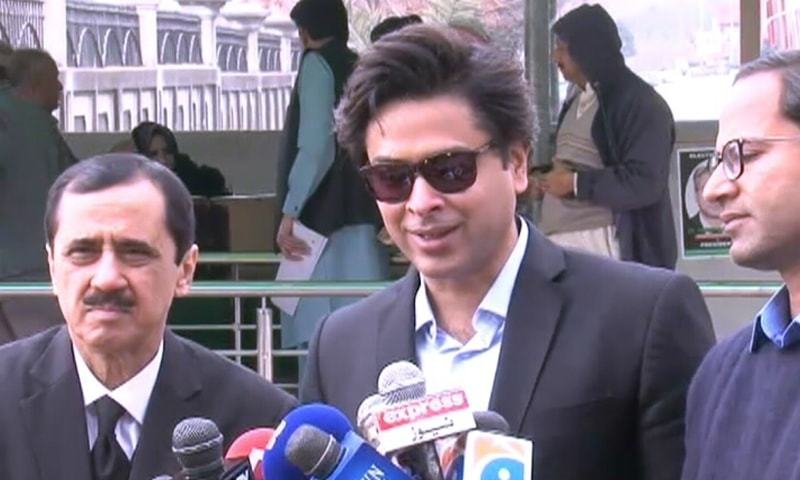
    Roy took to Twitter to express his gratitude over the IHC decision.

    Earlier, while speaking to the media outside the Islamabad High Court, Roy had said, “When a child is born, parents hit him, when he goes to school, teachers hit him, when he grows older and goes out in the society, police hits him to make him a better person. Research shows that the use of violence only increases violence.”

    Journalists, actors and members of the civil society lauded Roy for his initiative and hailed the court’s decision.

  • PTI’s new social media laws: Are you in some sort of danger?

    PTI’s new social media laws: Are you in some sort of danger?

    The Pakistan Tehreek-e-Insaf (PTI) government in centre has approved a new set of rules to regulate social media, requiring companies such as Facebook, Twitter, YouTube and even TikTok, to register themselves and open offices in Pakistan to provide the government data of accounts found guilty of targeting state institutions, spreading fake news and hate speech, engaging in harassment, issuing statements that harm national security or uploading blasphemous content, Geo reported.

    But similar to claims of proponents of internet freedom, who fear that the legal document would be used to keep social media companies in check and curb dissent over the internet, is your freedom over the web really at risk?

    According to reports, the rules and regulations have been included in the Prevention of Electronic Crimes Act, 2016, and senior officials in the Ministry of Information Technology have confirmed that the cabinet has already given green light to the legal document.

    Further, IT & Telecommunication Federal Secretary Shoaib Siddiqui confirmed that after the cabinet’s approval, the rules and regulations need not be presented in the parliament for approval.

    According to the law, all global social media platforms and companies would have to register in Pakistan within three months and open offices in Islamabad within the same time period. The law requires digital media companies to appoint a representative in Pakistan to deal with a national coordination authority, which would be responsible to regulate content on social media platforms.

    It further requires the companies to set up data servers in Pakistan within a year and makes it compulsory for them to provide data of accounts found guilty of various crimes — including targeting state institutions, spreading fake news and hate speech, engaging in harassment, issuing statements that harm national security or uploading blasphemous content — to intelligence and law enforcement agencies (LEAs).

    It, however, is safe to say that only time would tell if the government can actually convince any digital media outlets to actually operate under these new regulations.

    Follow this link to give the new set of rules a read.

  • Shaniera Akram’s shoot for ‘Money Back Guarantee’ was full of drama

    Shaniera Akram’s shoot for ‘Money Back Guarantee’ was full of drama

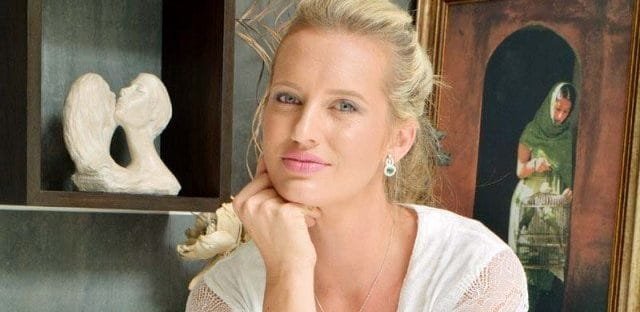
    Shaniera Akram is making her movie debut and that too in Faisal Qureshi’s star-studded venture Money Back Guarantee. The star lineup also includes her husband Wasim Akram, Fawad Khan, Mikaal Zulfiqar, Gohar Rasheed and Kiran Malik.

    In an Instagram post, Shaniera talked about working on Money Back Guarantee and how her 12 days on set included a “sprained ankle, a bathroom lock-in, a painful tetanus shot, sleepless nights, loads of Lays Masala chips, language barriers to the next level, a romantic moment and an unforgettable chandelier stunt” that gave her “an out of body experience.”

    https://www.instagram.com/p/B8fsczRA2OC/

    The shoot for Money Back Guarantee has wrapped up and the film is eyeing an Eid ul Fitr release. The film, reported to be a satirical comedy, was shot in Karachi, Lahore and Houston.

    https://www.instagram.com/p/B7u4TK_jgDr/
  • Bilawal names sister Aseefa to lead party if arrested by NAB

    Bilawal names sister Aseefa to lead party if arrested by NAB

    Pakistan People’s Party (PPP) chief Bilawal Bhutto-Zardari has named his sister and daughter of the late former prime minister (PM) Benazir Bhutto, Assefa Bhutto-Zardari, to lead the party in case he is arrested by the National Accountability Bureau (NAB) in the days to come.

    As the PPP chairman spoke to journalists after appearing before the anti-graft watchdog in the case related pertaining to JV Opel-255 — a joint venture between Zardari Group Pvt Ltd, of which Bilawal is a director, and a large real-estate business –, he was asked about his party’s plans regarding the execution of its forthcoming protest movement against the “anti-people” government’s economic policies in case he was arrested by NAB.

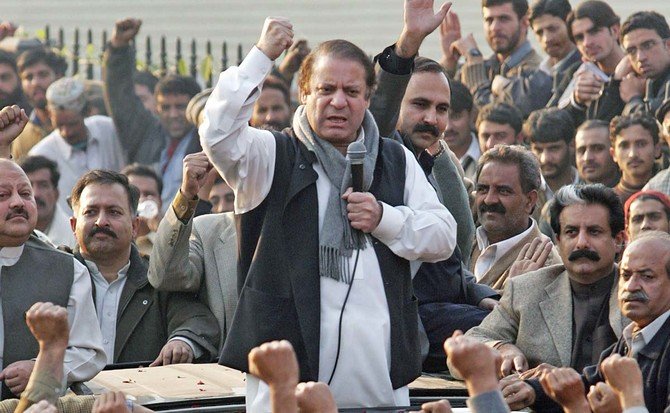
    “The [protest] march would go on come what may. Both the leaders and workers of the PPP know what struggle is and have never shied away from it,” Bilawal said, adding that his sister Assefa would, however, be there to lead PPP workers. “She’ll be my voice if I am arrested.”

    NAB HEARING:

    Earlier, Bilawal appeared before NAB for hearing of the case regarding JV Opel-255

    PPP Senator Mustafa Nawaz Khokar had confirmed Bilawal’s appearance before the accountability bureau.

    “PPP Chairman Bilawal Bhutto-Zardari will appear before the NAB despite the fact that the NAB notice to him is just political victimisation. The PPP chairman believes in the supremacy of the law of the land,” Khokar had said.

    Khokar had noted that NAB sent Bilawal a notice within the week after he protested against the PTI’s “anti-poor” economic policies. 

    “NAB sends a notice to Bilawal whenever he criticises the government,” he had alleged, adding that the Supreme Court (SC) has already declared Bilawal innocent. “This is nothing but political victimisation by NAB.”

    The PPP chairman on Thursday reportedly recorded his statement with regard to the alleged transfer of over Rs1 billion from the accounts of JV Opel-225.

    JV Opel-255:

    JV Opel was set up in 2011 and had its office on a property in Karachi owned by the Zardari Group. From 2011 to 2013, the company did not generate any revenue, yet it purchased major assets, agriculture lands, commercial and residential properties in Islamabad and Karachi, according to a joint investigation team (JIT) report.

    The only amount it received, during this period, was Rs1.2 billion from its business partner, the real-estate firm, which, according to the JIT report, was not due to the Zardari Group.

    The investigators suspect that this payment was made by the real-estate company as a bribe or kickback for getting favours from the Sindh government in the form of illegal allotment of state land.

    While the JIT has not been able to make a direct link between the Bhutto scion and the fake accounts, it states that money stashed in these fictitious bank accounts was used to pay the water and sewerage bill of the Bilawal House; an amount to a restaurant that catered an event; to purchase air tickets for Bilawal and his younger sister; and to renovate his bomb-proof container and bullet-proof vehicles.

  • WhatsApp reaches 2 billion users

    WhatsApp reaches 2 billion users

    Facebook-owned instant messenger — WhatsApp — has crossed 2 billion users around the world, and on this success, has reaffirmed its commitment to strong encryption to protect the privacy of users’ data.

    WhatsApp, which was acquired by Facebook in 2014, turned into the most widely-used free messaging app that provides free text, voice and video communication services; enabling more than 2 billion people to have conversations from anywhere in the world.

    “Strong encryption is a necessity in modern life. We will not compromise on security because that would make people less safe,” WhatsApp said in an official statement. “For even more protection, we work with top security experts and employ industry-leading technology to stop misuse as well as provide controls and ways to report issues without sacrificing privacy.”

    The social network is working to extend end-to-end encryption across its messaging applications, including Facebook Messenger and Instagram.

    In a recent statement, Facebook had said some 2.89 billion people globally were daily users of at least one of its services. The growth has attracted more attention of regulators and activists concerned over the dominance of major tech platforms.

  • ‘Neutral’ Switzerland helped CIA spy on Pakistan, others?

    ‘Neutral’ Switzerland helped CIA spy on Pakistan, others?

    Outraged commentators warned on Wednesday that the CIA and Germany’s intelligence service had for decades used a Swiss encryption company for spying, seriously damaging Switzerland’s cherished reputation for neutrality, AFP reported.

    Critics voiced particular concern that Bern may have been at least tacitly complicit in the secret operation. Switzerland, which takes pride in its neutral and non-aligned status, “was hosting a quasi ally intelligence agency,” the Tribune de Geneve daily said in an editorial.

    Swiss officials “very likely” knew what was going on but “closed their eyes” in the name of neutrality, it added. Home to the United Nations European headquarters and the International Committee of the Red Cross, Switzerland is recognised worldwide for its standing as an honest broker.

    But media revelations on Tuesday told how for decades the US and West German intelligence services raked in the top-secret communications of governments around the world. The Trojan horse they used was their hidden control of Swiss encryption company Crypto AG.

    The company supplied devices for encoded communications to some 120 countries from after World War II to the beginning of this century, including Iran, South American governments, and India and Pakistan.

    Unknown to those governments, Crypto was secretly acquired in 1970 by the US Central Intelligence Agency together with the then West Germany’s BND Federal Intelligence Service.

    Together they rigged Crypto’s equipment to be able to easily break the codes and read the government’s messages, according to reports by the Washington Post, German television ZTE and Swiss state media SRF.

    Citing a classified internal CIA history of what was originally called operation “Thesaurus” and later “Rubicon,” the reports said that in the 1980s the harvest from the Crypto machines supplied roughly 40 percent of all the foreign communications US code-breakers processed for intelligence.

    The spy agencies were thus able to gather precious information during major crises such as the hostage crisis at the US embassy in Tehran in 1979 the 1982 Falklands War between Argentina and Britain. They also got information on several political assassinations in Latin America.

    The Swiss government said on Tuesday it had named a retired federal judge to look into the matter, with his findings due out in June. But Carolina Bohren, a Swiss defence ministry spokeswoman, stressed the difficulties ahead. “The events in question began in 1945 and are difficult to reconstruct and interpret today,” she said.

    Bern also announced it had suspended export licenses for Crypto’s successor companies, until the situation has been “clarified”. But a number of political parties, insisting that far more needed to be done, on Wednesday called for a full-blown investigation.

    The Swiss Socialist Party wondered in a tweet whether the country’s own intelligence service was a “victim or an accomplice”, demanding “clarifications and a full investigation”. The Greens and Christian Democrats also suggested a parliamentary commission might be called for.

    Amnesty International’s Swiss chapter meanwhile raised questions about the Swiss authorities’ responsibility both for the espionage and for how the information gathered had been used.

    “Were our intelligence services and the government aware of the torture and the murders committed by military dictatorships in Chile and Argentina?” it asked in a tweet. “Did they take any measures? A full investigation must be carried out.”

    Switzerland has a centuries-old tradition of neutrality. It avoided being drawn into either of the World Wars and has stayed outside political and military alliances such as NATO.

    Several media reports noted on Wednesday that this reputation ended up providing excellent cover for the United States and Germany when they set up their spying operation there.

    Whether this was done “out of incompetence, because of a desire to cover for foreign secret service agents, or to profit from the information they uncovered, must now be clarified,” the Tages-Anzeiger daily insisted. “That is the only way to get out of this mess.”