Author: newsdesk

  • Pakistan unveils schedule for sending first-ever astronaut to space

    Pakistan unveils schedule for sending first-ever astronaut to space

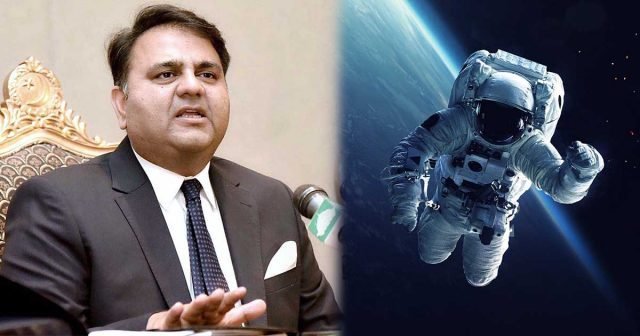
    Federal Minister for Science and Technology Chaudhry Fawad Hussain has said that Pakistan is committed to sending its first astronaut to space by 2022, ARY News reported.

    According to the details, the minister said that China would collaborate with Pakistan in its space mission and the selection process for the astronaut would start in 2020.

    He added that 50 people will be selected in the initial selection process and then the list would come down to 25 in 2022, out of them only one would be sent to space.

    The minister also said that the debris of India’s first space mission namely ‘Shakti’, which had failed, was even posing dangers to the space missions of other countries.

    Furthermore, Fawad said that the Pakistan Air Force (PAF) will play an important role in the astronaut’s selection.

    Earlier, on July 25, the minister had announced that Pakistan would send its first citizen to space by 2022 following a selection process.

  • Man accuses police of ‘stealing his 23 premium liquor bottles’

    Man accuses police of ‘stealing his 23 premium liquor bottles’

    A man has appealed to the Capital City Police Officer (CCPO), complaining that he was arrested on trumped-up charges of possessing 60 litres of local liquor, Pakistan Today reported.

    According to reports, Muhammad Javed, a resident of Okara district, stated that Lahore’s Defence-A police confiscated from him alcohol worth Rs455,000, including five bottles of Grand Fish, five bottles of Royal Flavored and 13 bottles of Gold Label.

    “Defence-A police snatched away 23 branded bottles from my car when I was driving to DD Block of Defence Phase IV,” said the appellant.

    “I was taken into custody and a false case of 60-litre local liquor was lodged against me,” he said. In addition, he said that he also had to pay Rs32,500.

    Javed inquired as to what became of the alcohol which was recovered from his possession since it would not show up in police records.

    On Sept 1, 2019,  Defence-A Police Station lodged an FIR against Muhammad Javed and charged him under The Prohibition (Enforcement of Hadd) Order, 1979-3 and The Prohibition (Enforcement of Hadd) Order 1979-4 for possession of “local liquor” on Sept 1, 2019.

    According to the FIR, an informant had told the police that Javed was carrying two barrels of local liquor and waiting for customers near Al-Fatah store in DD block, phase 4, DHA. As per the FIR, the police arrested Javed, recovered 60 litres of liquor and also impounded his vehicle.

    Defence-A Police SHO Rana Akhtar Ali denied allegations made against his department, saying that Javed is, in fact, a bootlegger and the FIR was registered on the basis of what was found from the spot.

    “60-litre liquor was recovered from the accused, who is apparently operating on someone else’s directions. We are investigating the matter and soon the real culprit(s) will also be arrested,” the SHO said.

    He further added, “He may go to anyone he wants but we stand with our stance and have solid proof.”

  • Tips on how to save money

    Tips on how to save money

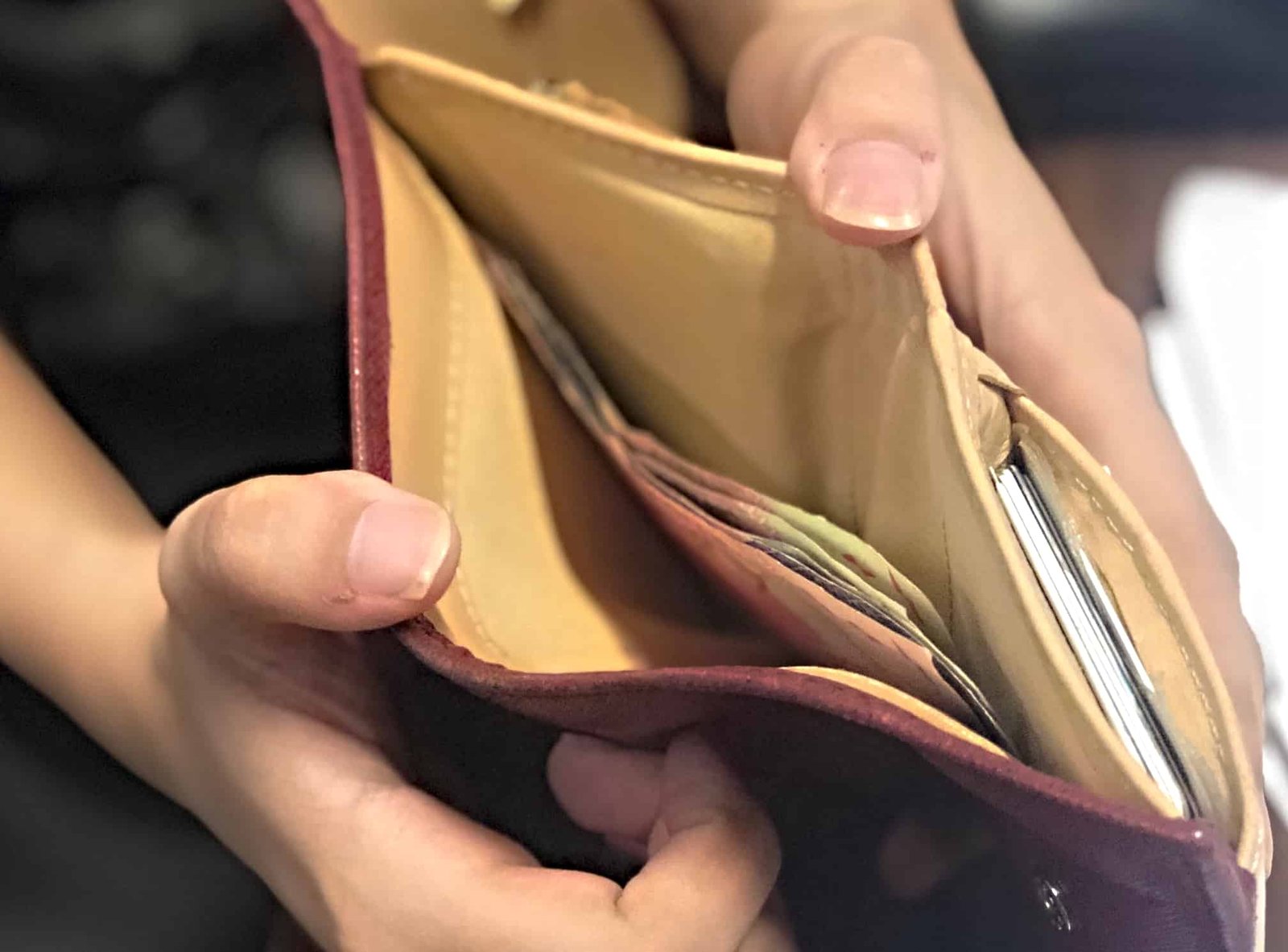
    We all struggle with saving money. And considering Pakistan’s volatile economic situation, it is imperative for us to save money for a more secure and stable future.

    Compiled from CNBC, here are seven tips you can apply in your everyday life to save money.

    Keep your expenses very, very low

    Keep your expenses low by avoiding spending on things you don’t need. Think twice before you buy anything – from food to clothes – and ask yourself if you really need it. Frugal living is the way to go.

    Pack lunch for work

    We often end up spending a lot of money by eating out or ordering food for lunch every day during the workweek. This puts a big dent on your pocket. Plan your meals ahead and take lunch from home. You’ll be surprised to see the money you’ve saved at the end of the month and how much healthier it is.

    Don’t go out every night

    Going out has become an important part of our days, and weekends and it tends to be very heavy on the pocket. Instead of going out, plan one-dish get-togethers at homes. The point is to spend time with each other.

    Cut down on groceries

    Before you head to the grocery store, make sure you have a full stomach and a prepared list of items you want to buy. That way, you won’t get sidetracked by things you don’t need or food cravings that pop up while you’re there. Also, buy things in bulk – you’ll save a few rupees.

    Save 40% to 50% of your earnings

    Growing your money isn’t just about keeping expenses low, it’s also about making a plan to save what you have leftover. Put your savings in a savings account or invest them somewhere so you are not tempted to use them.

    Start a side job

    Opportunities are endless and if you have a skill or some extra time on your hands, utilise it to start a small side business which can contribute to your income.

    Don’t get caught up in comparison

    This is probably the most important tip of them all. A lot of the time, people end up spending money they don’t have on something they don’t need — usually because someone else has it or expects them to have it.

    Everyone wants to flaunt around their wealth but you should never feel the need to spend money to impress anyone. If you do, you may find yourself competing way past what your budget allows.

  • PM Imran, Maulana Tariq Jamil among top 50 most influential Muslims

    PM Imran, Maulana Tariq Jamil among top 50 most influential Muslims

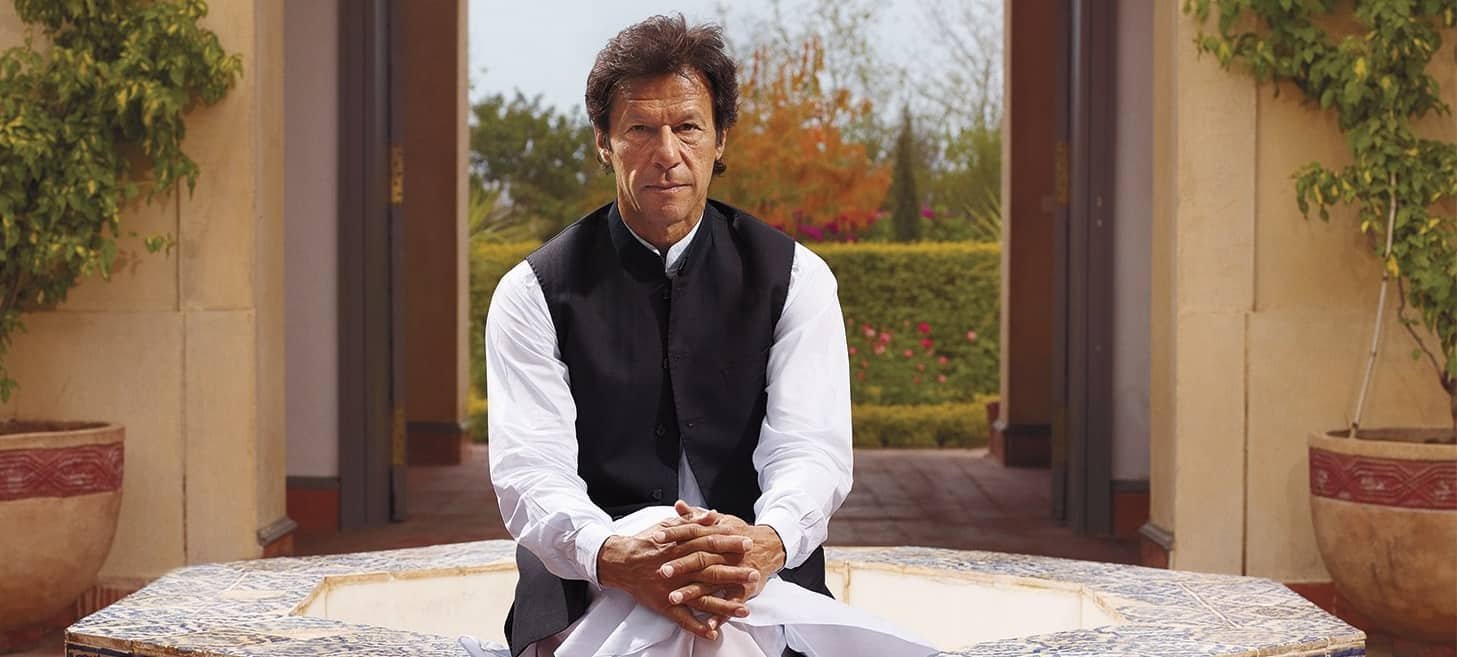
    Prime Minister Imran Khan and affluent religious scholar Maulana Tariq Jamil have been ranked among the top 50 most influential Muslims in the world.

    The Royal Islamic Strategic Studies Centre in Jordan, in its annual publication of the World’s 500 Most Influential Muslims in 2019, ranked PM Khan at number 29 and Maulana sahab at number 40.

    Other Pakistanis which feature on the list include Nobel Laureate Malala Yousafzai, CEO Ary Network Salman Iqbal, Muniba Mazari, Abida Parveen, Dr Abdul Qadeer Khan and Dr Umar Saif. Former PM Nawaz Sharif and Maulana Fazal ur Rahman have also made it to the list of top 500 influential Muslims.

    Writing about PM Khan’s challenges, the publication said his “crackdown on corruption and bringing accountability to the forefront has fast made him a global name. He has already implemented cutbacks in extravagant government expenditure and is using his personal credibility to fundraise for a dam.”

    The publication also gave a brief overview of his political journey, his cricketing days and about his philanthropic ventures including Shaukat Khanum Memorial Cancer Hospital and Research Centre and NUML University.

    “A Sporting Legend: Imran Khan played professional cricket for 22 years and is recognised as one of the game’s finest all-rounders. His ability to lead and unite an often disparate team, culminated in Pakistan winning the 1992 World Cup. It is this ability and success that many hope can be replicated in the political field,” read the publication.

    About Maulana Tariq Jamil, the publication said, “Maulana Tariq has delivered thousands of lectures around the world. He has been very effective in influencing all types of the community ranging from businessmen and landlords to ministers, actors and sports celebrities.”

    Meanwhile, Turkish President Recep Tayyip Erdogan topped the list followed by Saudi King Salman bin Abdul-Aziz Al-Saud (2), King of Jordan Abdullah II ibn Al-Hussein (3), Supreme Leader of Iran Ali Khamenei (4) and King of Morocco His Majesty Amir al-Mu’minin (5).

    Others on the list include Saudi Crown Prince Mohammad bin Salman, Malaysian Prime Minister Mahathir bin Mohamad, MP Sajid Javed and London Mayor Sadiq Khan, Egyptian footballer Mohammed Salah and Islamic scholar, Dr Zakir Naik.

  • A must read for all: How Democracies Die

    A must read for all: How Democracies Die

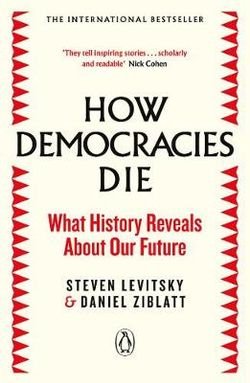
    On World Democracy day, (and even if it wasn’t) the one book that every Pakistani should read is How Democracies Die by two Harvard professors, Steven Levitsky and Daniel Ziblatt.

    Even though the book refers primarily to the Trump administration and how the United States is starting to kill its own democracy, it has got pages and chapters which are so starkly similar to our past and present, that it will shock you.

    Donald Trump going to the White House after being elected President

    The book, written in 2018, talks about how countries that are democratic have systems in place to do ‘democracy checks’. These systems, some unofficial, make sure that countries do not elect individuals, or parties that go against the core belief of their country’s value system. And if there are times when people with power arise to challenge this system, ruling parties and oppositions, stick together for the greater good to keep them out.

    They discuss the rise of authoritarian regimes and how they played the game to get into power, the rise and selection of Hitler and then focus on how America, a country that has historically managed to keep true to its system, is now deteriorating.

    Adolf Hitler of Germany

    The book is simply written and easy to understand. It explains, very simply, how democracies start to rot and then slowly die, as elected officials and people in power ask citizens to stand up against democratically-elected governments, the media is censored and also indulges in self-censorship and then rules are changed to suit the will of a few than the hope of many.

    The book is a must read for everyone who wants to understand how countries evolve and devolve. The book says that, ” History doesn’t repeat itself. But it rhymes.,” and the reason why we need to read it is to know that when that is happening. “The promise of history is that we can find the rhymes before it is too late”.

  • Army Chief inaugurates new NUST campus in Quetta

    Army Chief inaugurates new NUST campus in Quetta

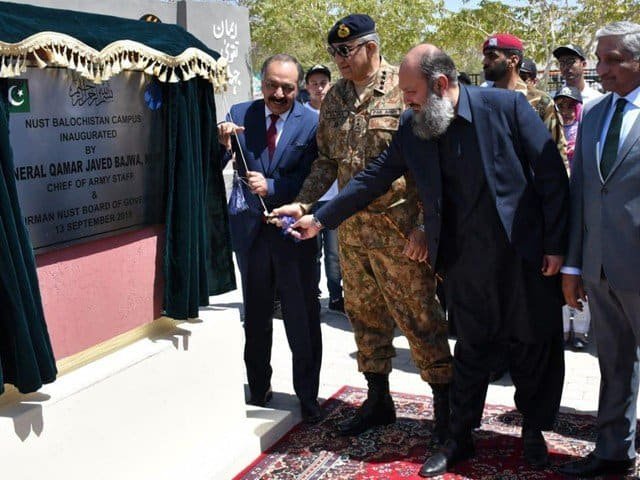
    Chief of Army Staff (COAS) General Qamar Javed Bajwa inaugurated the newly-established NUST Campus in Quetta along with Chief Minister Balochistan Jam Kamal Kha. The project had been announced in 2017 and completed over a period of two years.

    In the first batch, 550 students will study BE (Bachelor of Engineering) in Civil Engineering and Computer Sciences and MS disciplines including Water Resource Engineering Management, Tunneling/Mining Engineering and Computer and Allied Sciences programs.

    The new campus has been built as part of Khushal Balochistan Program. The COAS appreciated the efforts of the armed forces and other law enforcement agencies (LEAs) for maintaining law and order situation in the province and facilitating the completion of development projects.

    Addressing students of various educational institutions of Balochistan, the army chief appreciated and encouraged the youth and urged students to equip themselves for upcoming opportunities in different fields.

  • Malala is ‘deeply concerned’ about the situation in Kashmir

    Malala is ‘deeply concerned’ about the situation in Kashmir

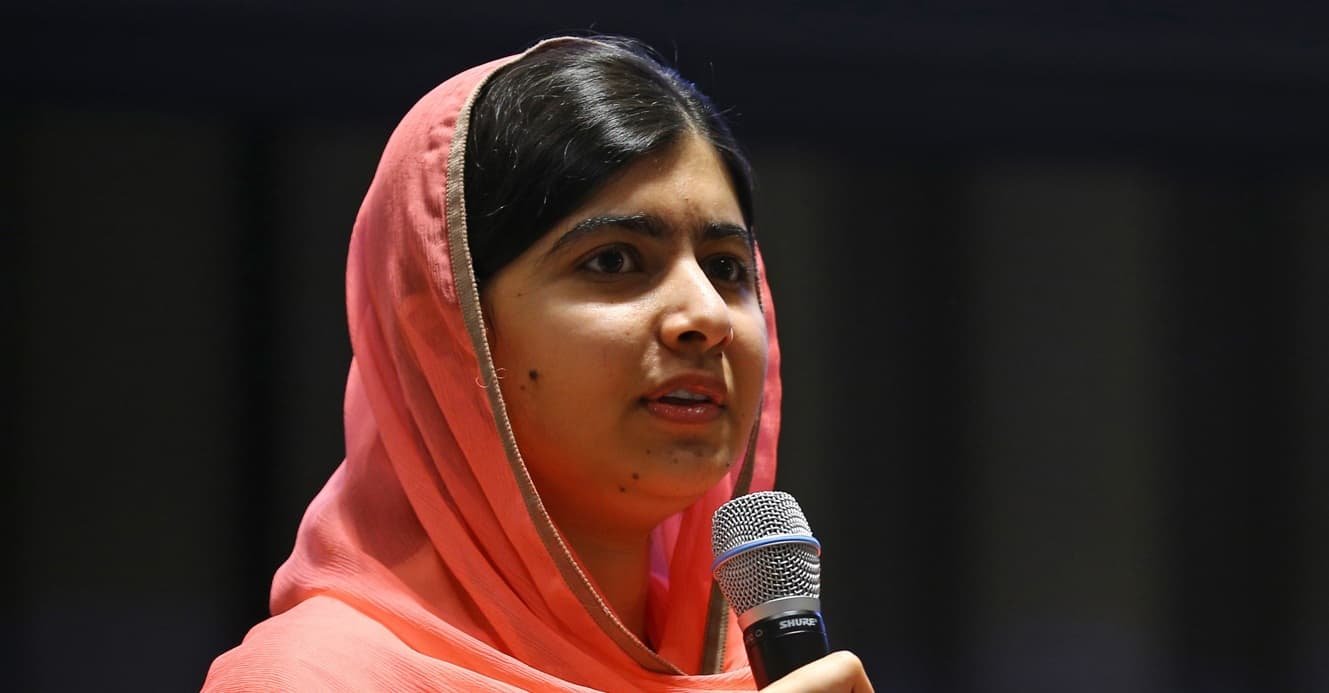
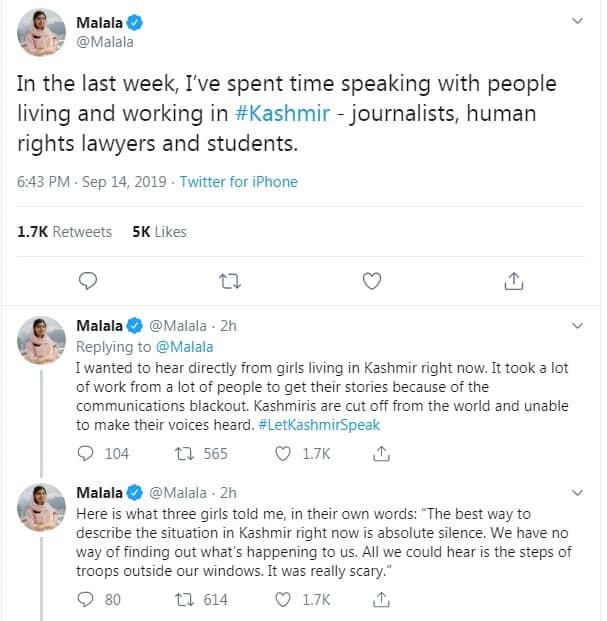
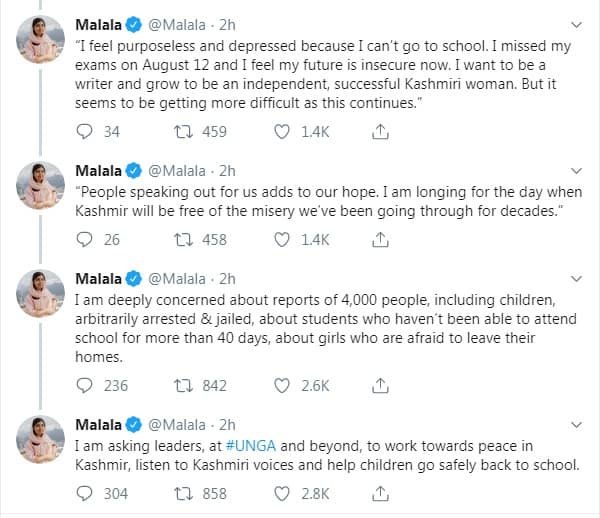
    Nobel laureate Malala Yousafzai, who had been receiving a lot of flak over not speaking up about Indian atrocities in Indian occupied Kashmir, in a series of tweets expressed her concern on the ongoing lockdown in the valley, shared accounts of Kashmiri girls in the area and appealed to world leaders to work towards instilling peace in the valley.

  • Punjab govt misses tax collection target by over Rs20 billion

    Punjab govt misses tax collection target by over Rs20 billion

    The Punjab government has missed its tax collection target in July, costing the provincial exchequer an amount of Rs20.45billion, The Express Tribune reported.

    According to reports, the provincial government collected Rs11.91billion, down by 63 per cent from its target of Rs32.33billion, and economic experts associate the reduction in tax collections with the fiscal crisis that currently grips the country.

    “If the economy remains in this condition, revenue will continue to fall,” the report quoted an expert as saying.

    Several factors, including lower than usual property tax, irrigation tax, income tax, and land revue, contributed to the overall shortfall. During July, the Federal Board of Revenue (FBR) collection under stamp duty, property tax, irrigation tax, income tax, and land revenue fell by 20.41 per cent, due to which the tax authority was only able to bag Rs5.38billion instead of Rs6.76billion.

    Similarly, a reduction of 22.16 per cent in property transfer, professional tax, professional excise, and other indirect taxes resulted in a shortfall of Rs0.73 billion.

    The provincial exchequer received another blow in lower than expected collection of sales tax and other indirect taxes. Out of the Rs13.87billion, only Rs318.6million ended up in the provincial coffers.

    Experts believe slowing economic growth will result in lower revenues for the government. And if current trends continue, the government revenue receipts will fail to match the budgeted targets.

    Official sources, on the other hand, confirmed the English daily that the targets were not being met due to the current economic crisis. However, they were hopeful that the coming year would yield better results and bring in greater revenue through taxation.

  • New policy of Bahira University prohibits male, female students from sitting together

    New policy of Bahira University prohibits male, female students from sitting together

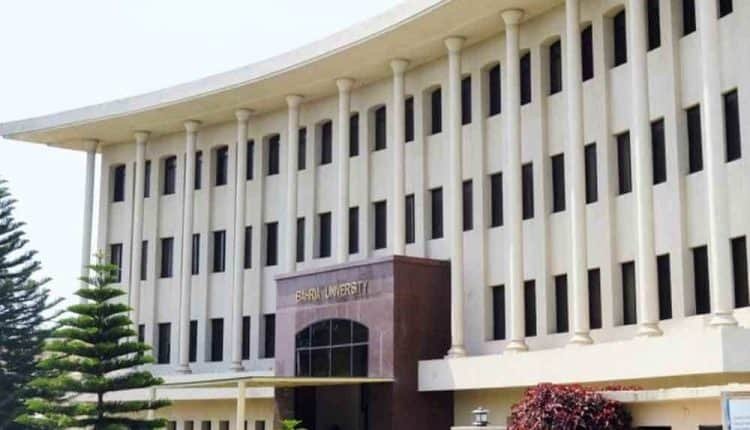
    Bahria University has introduced a new policy according to
    which, male and female students have been banned from sitting together or
    forming groups.

    Seating of male and female students be separated in classes. Apart from that station visits and grouping in projects is also to be done separately.

    The notice received flak on social media, as people thought the measures were unnecessary.

    https://twitter.com/ChAmirZkhan/status/1172781713451356160

    The university has not elaborated on the notice.

    Earlier this week, the University of Engineering and Technology had passed a similar notice but it was retracted a few hours later due to the backlash received on social media.