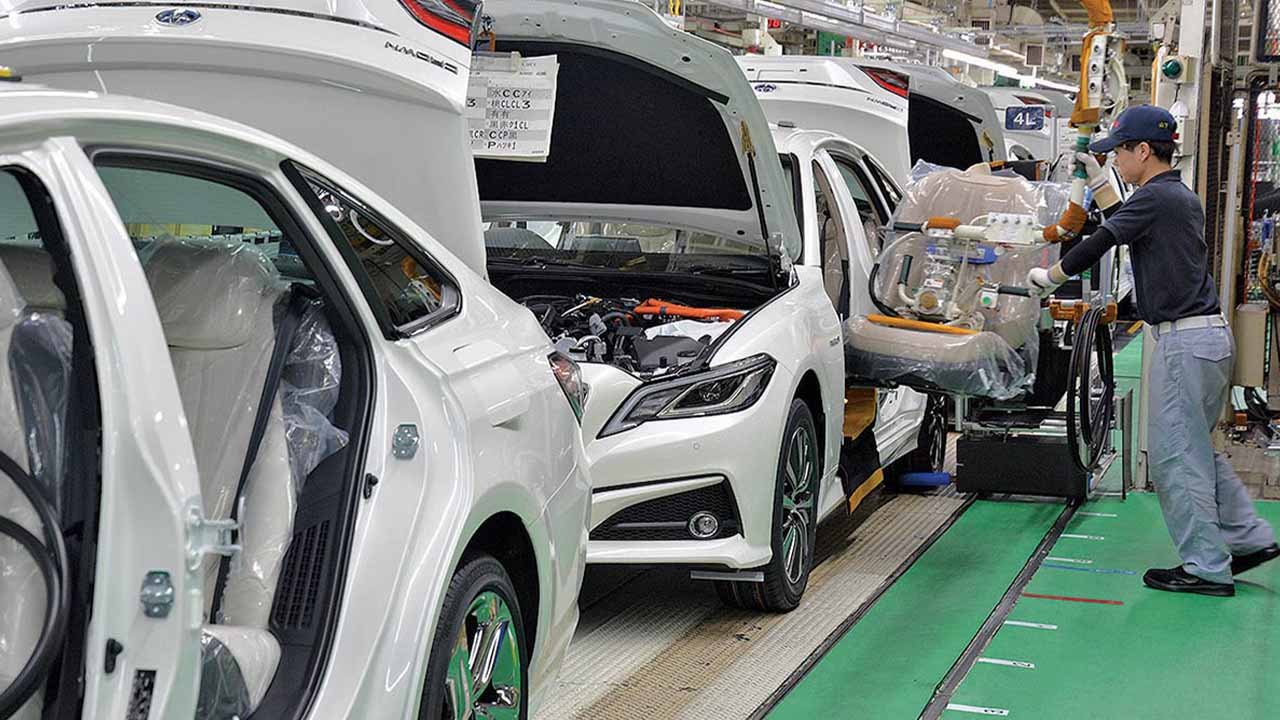
In response to the discovery of irregularities in certification tests for diesel engines developed by affiliate Toyota Industries, Toyota Motors has announced the extension of the shutdown of two prominent production lines at manufacturing plants operated by Toyota group companies in Japan.
The production lines, which were initially suspended on January 29, will now remain halted until March 1. Toyota Motors is set to make a crucial decision on March 1 regarding whether to reopen the production lines from Monday, March 4.
The affected lines include one at Toyota Auto Body’s Inabe plant in Mie prefecture, known for producing the Alphard and Vellfire minivans.
Additionally, one line at Gifu Auto Body’s main plant in Gifu prefecture, responsible for manufacturing the HiAce van, will also continue to be suspended.
The decision to extend the shutdown comes as Toyota Motors is addressing the irregularities in certification tests, underlining its commitment to maintaining the highest standards of quality and compliance.
The company aims to thoroughly investigate and rectify the issues before considering the resumption of production.
This development has significant implications for the automotive industry, as Toyota Motors is a major player in the global market.
Stakeholders and industry observers await the decision on March 1, as it will shed light on the company’s strategy to address the challenges posed by the certification test irregularities.
Russian President Vladimir Putin has given a meaningful response to US President Joe Biden’s rude remark calling him a son of a b***h.
While addressing an event in California, Biden lashed out at Putin, calling him a “crazy SOB” in a sentence about threats to the world – including “that guy Putin and others”, the risk of nuclear conflict, and the existential threat to humanity from climate change.
When a journalist asked Russian President Putin about the slur, he calmly replied that based on what Biden spoke, it can be said that his opinion about the American president was correct because Biden cannot say that Vladimir, you have done a great job, you have helped us.
Putin added that he can understand the internal politics in America at the moment, and that’s why he wants Biden to become the president again.
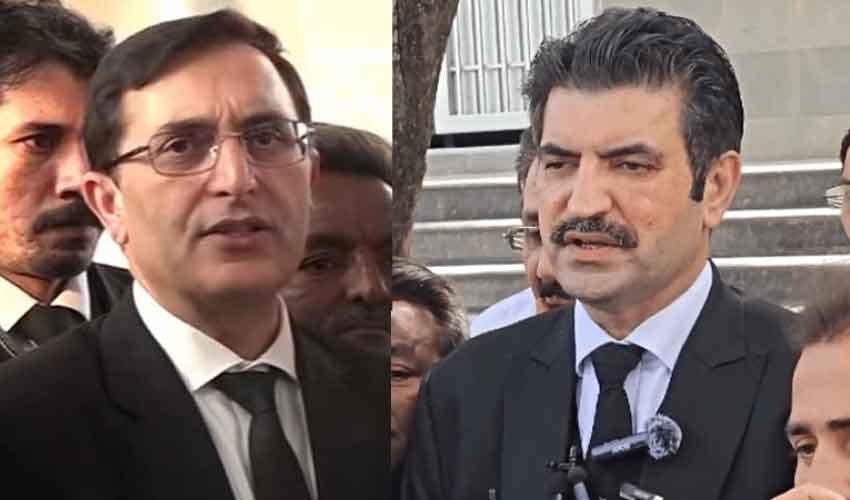
Pakistan Tehreek-e-Insaf (PTI) leader Sher Afzal Marwat said on Friday that Barrister Gohar is not the chairman of PTI anymore as his performance was not satisfactory.
Marwat announced the party’s decision a day after Barrister Gohar announced that the next party chairman will be Barrister Ali Zafar. However, PTI’s intraparty elections are scheduled to take place on March 3.
The former ruling party’s top post had been lying vacant for more than a month after not only the Election Commission of Pakistan (ECP), but the Supreme Court also declared its intra-party elections unlawful and stripped the party of its iconic bat symbol.
Talking to Geo News, Marwat said: “Incompetence and poor performance are the reasons behind Gohar’s removal as chairman. Barrister Gohar is a gentleman, but his performance was not satisfactory.”
The PTI leader also said that Barrister Gohar failed to meet the expectations of party workers.
In ninth match of Pakistan Super League Season 9, Peshawar Zalmi defeats Multan Sultans by 5 runs in a close encounter.
Peshawar Zalmi captain Babar Azam won the toss and decided to bat first.
Peshawar Zalmi’s inning
Peshawar Zalmi scored 179 runs for the loss of 8 players in the given 20 overs, Haseebullah scored 37 runs and Babar Azam played an innings of 31 runs. Apart from this, Powell 23, Mohammad Haris 19, Powell Walter 1, Asif Ali scored 13 runs while Luke Wood remained unbeaten with 17 runs.
On behalf of Multan Sultans, David willy, Muhammad Ali and Osama Mir dismissed 2 players each while Shah Nawaz Durmani and Abbas Afridi took one wicket each.
Multan Sultan’s inning
Chasing Peshawar Zalmi’s target of 180 runs, Multan Sultan’s team was bowled out for 174 runs in the allotted 20 overs. David Mallan was top scored with 52 runs on 25 balls. After 19 overs, Multan Sultan needed 22 runs in the last over. Iftikhar made the match interesting by hitting two fours and a six, but he was caught behind the stumps by wicketkeeper Muhammad Haris. On the last ball, Shahnawaz Dahani was also bowled out, and Zalmi won the match by 5 runs.
From Zalmi’s side, Arif Yaqoob took three wickets, while Luke Wood, Salman Irshad, and Naveen ul Haq dismissed two players each.
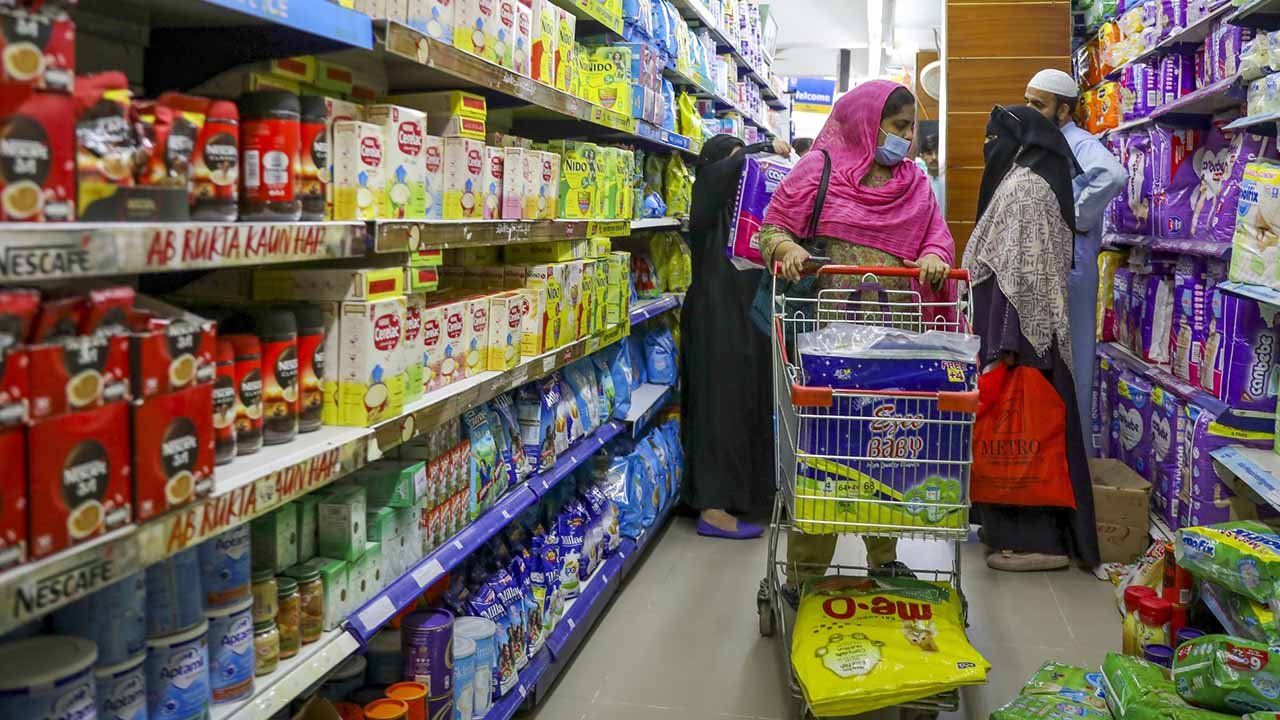
According to the Weekly Sensitive Price Indicator (SPI) released by the Pakistan Bureau of Statistics (PBS), the Combined Group’s SPI increased by 0.04 per cent during the week ending February 22, 2024.
Additionally, the SPI surged by 30.68 per cent YoY compared to the same period last year.
As of February 22, 2024, the Combined Index stood at 315.31, a slight uptick from 315.18 on February 15, 2024. A year ago, on February 23, 2023, the index was significantly lower at 241.29.
Analysing the data for 51 items, it was found that the average prices of 23 items increased, 8 items decreased, and 20 items remained stable.
Notable increases during the week were observed in the prices of tomatoes (22.71 per cent), bananas (7.40 per cent), diesel (3.02 per cent), chicken (1.22 per cent), and petrol (1.00 per cent).
Conversely, onions (14.42 per cent), eggs (11.19 per cent), LPG (1.82 per cent), cooking oil (5 litres) (0.75 per cent), and wheat flour (0.36 per cent) experienced significant decreases.
Breaking down the SPI percentage change by income groups, it was noted that SPI decreased across all 3 quantiles while increasing across 2 quantiles. The lowest-income group saw a weekly decline of -0.08 per cent, while the highest-income group recorded a rise of 0.09 per cent.
On a yearly basis, the SPI change across different income segments revealed an increase ranging between 25.53 per cent and 35.39 per cent. The lowest-income group witnessed a 25.53 per cent increase, while the highest-income group recorded a 28.22 per cent rise.
Specifically, the average price of Sona urea reached Rs4,928 per 50 kg bag, reflecting a 9.19 per cent increase from the previous week and a substantial 69.14 per cent surge compared to the same period last year.
The surge in prices, especially for essential items, poses a challenge for the general populace, particularly those in lower-income groups.
Authorities and policymakers are likely to face increasing pressure to address and mitigate the impact of inflation on the economy and the daily lives of people.
In pursuit of economic stability and fiscal responsibility, Pakistan is targeting a tax-to-GDP ratio of 15 per cent in its forthcoming International Monetary Fund (IMF) deal.
Sources within the Finance Ministry revealed that measures are being taken to maintain state bank reserves equivalent to three months of import bills.
The ministry has outlined a comprehensive strategy, including the reduction of the current account deficit and the preservation of a surplus in the primary balance.
It is anticipated that a new agreement with the IMF will be signed upon the expiration of the current deal, with a commitment to fulfilling specified conditions before finalising the agreement.
Today, the International Monetary Fund expressed its willingness to collaborate with the new Pakistani government, overlooking the demand from Pakistan Tehreek-e-Insaf (PTI) founders for an audit of election results prior to approving any new loan for Islamabad.
Bloomberg News reported yesterday that Pakistan is planning to seek a new loan, estimated at a minimum of $6 billion, from the IMF to address imminent debt repayment obligations.
The negotiations for an Extended Fund Facility with the IMF are expected to commence in March or April.
Having successfully avoided default last summer through a short-term IMF bailout, Pakistan now faces the task of negotiating a long-term arrangement as the existing programme expires next month. The country’s $350 billion economy hinges on the stability provided by such arrangements.
Prior to the bailout, Pakistan implemented a series of measures mandated by the IMF, including budget revisions, an increase in the benchmark interest rate, and adjustments to electricity and natural gas prices.
The IMF continues to engage in dialogue with Pakistani authorities regarding essential longer-term reform efforts.
A spokesperson for the fund affirmed its readiness to support the post-election government through a new arrangement, addressing the ongoing challenges faced by Pakistan.
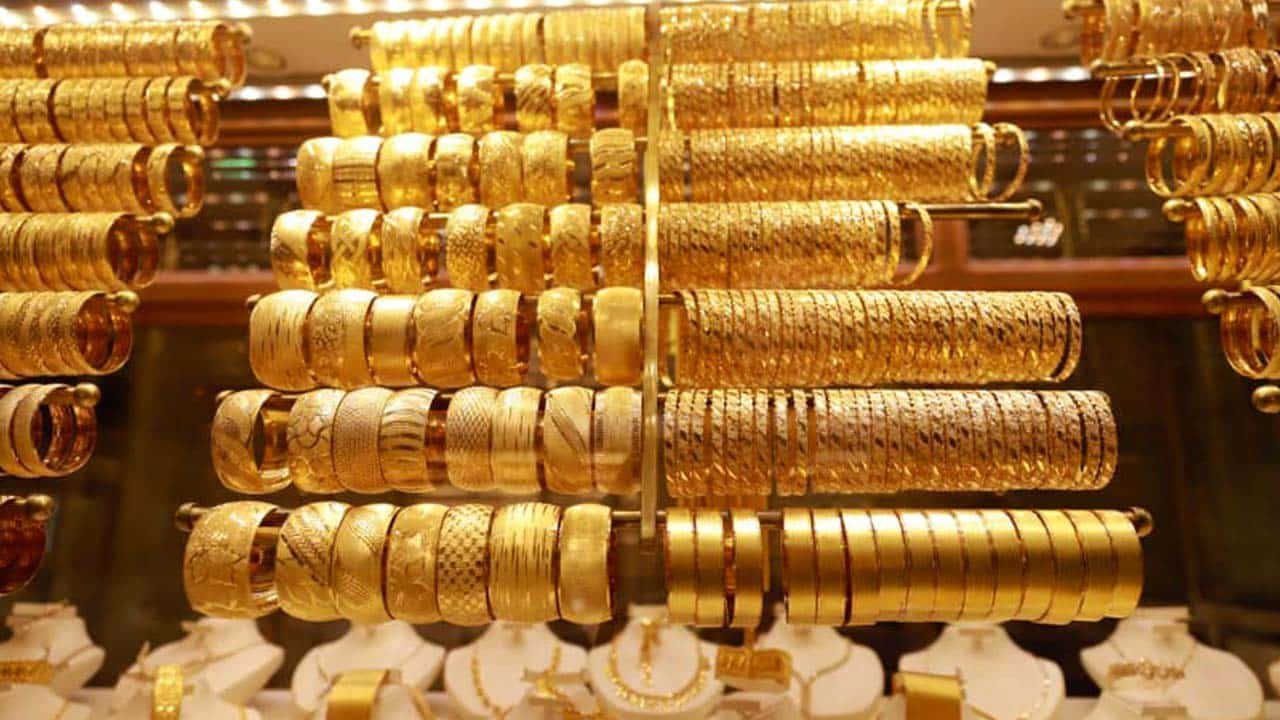
Gold rates in Pakistan experienced a significant decrease on Friday, mirroring the decline observed in the international market.
According to the All Pakistan Gems and Jewellers Sarafa Association (APGJSA), the yellow metal was priced at Rs214,100 per tola after shedding Rs1,200 during the day.
The 10-gram gold rate also witnessed a decrease, with prices dropping to Rs183,556 after a decline of Rs1,029, as reported by the APGJSA.
This reversal follows a slight increase in gold prices on Thursday, where rates had gone up by Rs100 per tola in Pakistan.
However, the international market experienced a decline of $11, resulting in a $20 premium on the international gold rate, which was set at $2,040 per ounce on Friday.
The APGJSA further reported that the silver rate remained stable at Rs2,570 per tola in Pakistan.
The fluctuation in gold prices is attributed to the dynamic nature of the global market, where various economic factors and geopolitical events can influence the demand and supply dynamics of precious metals. Investors and consumers are advised to stay updated on market trends and consult with financial experts for informed decisions.
It is essential to note that gold and silver rates can be subject to change rapidly, and individuals are encouraged to monitor the market closely for real-time updates.
Farmers are protesting from India to Europe, separately, for their rights and to register their rebellion with sitting governments against soaring fuel, and fertilizer costs, lower prices of their produce, and restrictive regulations. The protests are shedding light on the very pertinent issues faced by the primary food-producing sector of countries owning big agricultural markets.
Demands of Greek farmers
Farmers in Greece are protesting across the country against rising costs. They are conducting a tractor rally all across the country. Manolis Liakis, a farmer from the southern island of Crete, talked to __ and singled out fuel costs as his biggest problem. He said farmers pay more than three times as much for petrol as shipping companies due to tax disparities. Farmers can’t sell their products “for ridiculously low prices while the consumer buys them at extremely high prices”, he said.
Demands of Polish farmers
In Poland, farmers are blocking roads to stop cheap grain imports crossing the border from Ukraine. They are demanding a “complete embargo” on Ukranian produce. During the protests on Tuesday against competition from imports of cheaper Ukrainian products, farmers in Gorzyczki, southern Poland, unfurled a banner saying “Putin, get Ukraine, Brussels, and our government in order”. Consequently, the farmers were warned by the government against raising the slogans.
Demands of Spanish farmers
Spanish farmers are gathering with hundreds of tractors in tow to protest against the unfair competition from outside the European Union. They want to include production costs in the end product so they don’t end up selling their goods at a loss. Additionally, they want imported products to be subjected to the same conditions that they have to face.
Demands of French farmers
French farmers blocked a milk transport in protest against wholesale prices they say are too low. The farmers’ unions have made it clear they want ironclad assurances that their grievances over produce prices and red tape have been addressed. French Prime Minister Gabriel Attal is trying to negotiate and pacify the raging farmers with the negotiations.
Demands of Czech farmers
In Prague, farmers are on the roads because they feel neglected in the policy-making process. After all, they are not given due attention by the government. “Around 3,000 tractors took to the streets,” The Czech Chamber of Agriculture said in a statement on the nationwide protests. Their demands included an end to restrictions on agricultural production, cutting red tape for farming, and introducing changes to the EU-Ukraine arrangements on farming imports.
Demands of Italian farmers
In Rome, cowbells are clanking with the message that Farmers feed the world, but can’t afford to farm.
Demands of Indian farmers
In India, massive protests have broken out over minimum crop price guarantees which were promised nearly a year ago but not implemented by the government. Thousands of Indian farmers riding tractors attempted to resume their push towards New Delhi. They were attacked by the police claiming the life of young farmer Shubhkaran Singh and injuring 25 others. Farm unions are demanding a law to set a minimum price on all crops, expanding a government scheme that already exists for staples, including rice and wheat. They have also demanded other concessions, including the waiving of loans and universal pensions for farmers aged 60 and above.
Concerns of Canadian Farmers
In Canada, there are fewer environmental regulations but farmers feel a disconnect with the central government whose main mandate is based on the environment. They have been pushing forward all kinds of policies about fertilizer reduction and disallowing certain pesticides. The green policies and higher costs have instead of favouring them making farmers feel ignored. Experts say the consumers feel that lower output prices and higher input prices are just a way for the government to tell them that do whatever they want but in a cleaner and environmentally friendly way.
Conclusion
Protesting farmers are trying to divert attention to the most neglected yet important sector of a country which is the food-producing sector which is the backbone of both the society and the economy of the country yet remains ignored by the political class for their vested interests.
Asim Azhar is about to release a new song. The ditty is about love and heartbreak, and Sajal Aly stars in the video. This is the second time they’ve appeared together after working on ‘Sinf e Aahan.’
Here’s the new song ‘Saiyyan’ that just came out. This is what people are saying about it:
Here’s the new song ‘Saiyyan’ that just came out. This is what people are saying about it:
Liaqat Ali Chatha, the ex-Rawalpindi commissioner, who made explosive allegations about the alleged manipulation of the February 8 polls in favour of Pakistan Muslim League-Nawaz (PML-N) candidates but later withdrew them, has now claimed that PTI’s top leadership planned the entire rigging propaganda.
He said in his official statement on Thursday that “After the incident of May 9, 2023, as with other leadership of Pakistan Tehreek Insaaf (PTI), the said prominent leader of Pakistan Tehreek Insaaf (PTI) also absconded from courts, was declared as a Proclaim Offender (PO) and has been hiding. Throughout this time, I had direct contact with him, and I kept on discreetly helping him on various issues. Consequently, my relationship with the prominent Pakistan Tehreek Insaaf (PTI) leader evolved into a very close friendship based on a high level of trust.”
Further adding that he also stated, “After the General Elections (“GEs”) of 2024, on 11February 2024 I secretly and discreetly travelled to Lahore and held a meeting with him. It was in this meeting, that he made an offer to me that if I played a role in supporting the Pakistan Tehreek Insaaf’s (PTI) ongoing narrative of rigging in general elections (“GEs”) and maligning state institutions, he would ensure a lucrative position for me in future. He informed me that this entire plan had been formulated after consultation and approval of the senior leadership of Pakistan Tehreek Insaaf (PTI).”
He goes on to elaborate that the two had a detailed discussion on the proposed press conference. “He conveyed to me the general direction which was needed to be adopted. Initially it was proposed by me that I would write the entire narrative and submit the same as part of my resignation. However, this proposal was dropped by the said prominent Pakistan Tehreek Insaaf (PTI) leader as such written resignation would not create any sensations for their narrative building. After detailed discussions, it was agreed that a press conference would be conducted by me at a time and date to be conveyed after consultation and approval of the senior leadership of Pakistan Tehreek Insaaf (PTI).
He further mentioned that “The primary aim of this proposed press conference was to create sensations and drama augmenting false narratives being built by the Pakistan Tehreek Insaaf (PTI).”
“The name of the Chief Justice of Pakistan was taken with the aim of creating mistrust in general public against him. The Chief Justice of Pakistan did not have any role in the entire election process. However, I was specifically asked by said prominent leader of Pakistan Tehreek Insaaf (PTI) to name the Chief Justice of Pakistan (CJP). He told me that he had been specifically asked by his top leadership to do so. The aims behind naming the Chief Justice of Pakistan (CJP) were manifold. I was told that it would help in creating the momentum of this entire narrative as Pakistan Tehreek Insaaf (PTI) had already been sowing seeds of doubts and distrust in the public minds against the Chief Justice of Pakistan (CJP),” the ex-Rawalpindi commissioner added.