Author: newsdesk

  • WhatsApp rolls out live screen sharing feature

    WhatsApp rolls out live screen sharing feature

    Mark Zuckerberg, the CEO of Meta, recently unveiled a new enhancement for WhatsApp, introducing screen-sharing functionality within video calls. This innovative feature boasts cross-platform compatibility, enabling seamless sharing of a real-time screen view with one or multiple participants engaged in the call.

    WhatsApp’s official press release articulates, “Whether sharing documents for work, browsing photos with family, planning a vacation or shopping online with friends, or just helping grandparents with tech support – screen sharing lets you share a live view of your screen during the call.”

    To access this feature, users are required to have the latest version of WhatsApp installed. While engaged in a video call, a novel ‘Share’ icon will be conspicuously positioned at the base of the screen. Upon activation, users will be prompted to authorise screen-sharing access. Subsequently, the content of their screen will be relayed to the other participant(s).

    It’s important to acknowledge that the deployment of this feature is being carried out in a phased manner. While a subset of users may already have encountered the feature within their WhatsApp interface, others may encounter a slight delay in its availability.

    Moreover, this advancement accommodates landscape mode for video calls, ensuring an expansive and immersive viewing experience. This capability proves particularly advantageous when sharing content from desktop platforms, providing a broader perspective.

    WhatsApp’s screen-sharing functionality extends its utility to group video calls as well, amplifying its relevance in professional scenarios. Users who previously relied on alternative platforms such as Google Meet and Zoom for screen-sharing purposes can now seamlessly integrate this function within the WhatsApp ecosystem.

  • Govt aims to collect extra Rs721 billion from electricity consumers in current fiscal year

    Govt aims to collect extra Rs721 billion from electricity consumers in current fiscal year

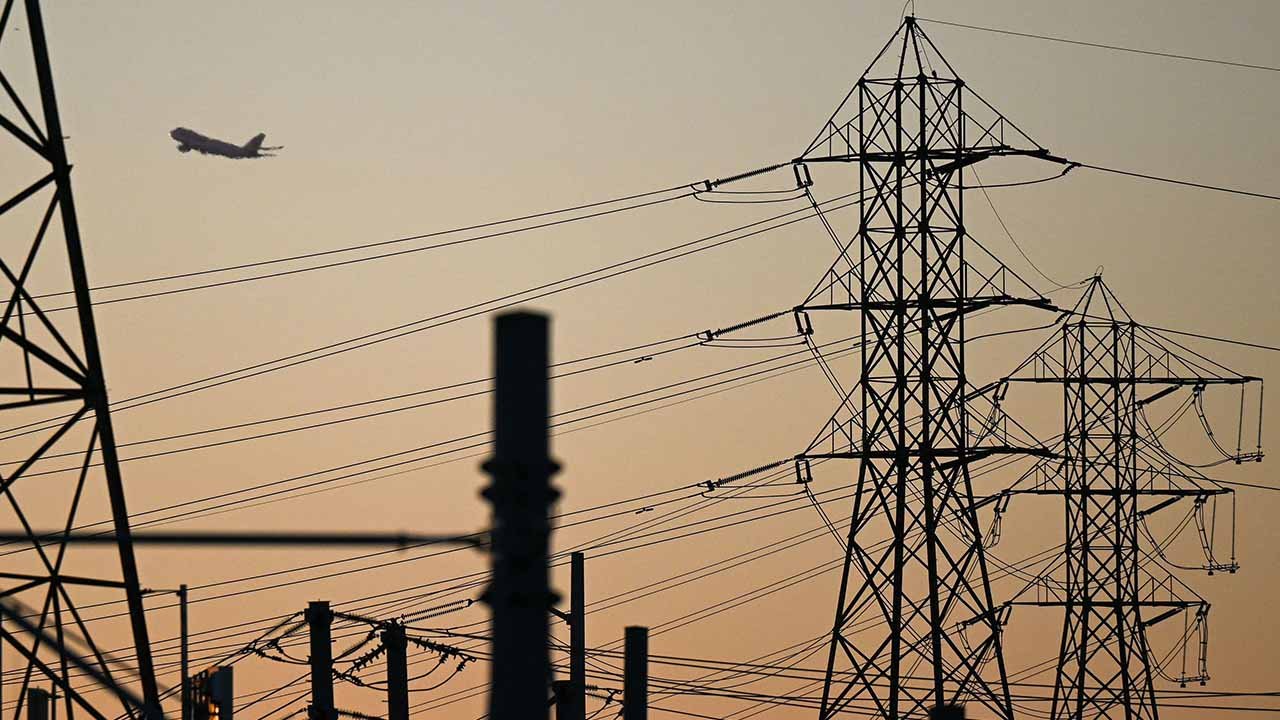
    In a significant move to address the mounting circular debt crisis in the energy sector, the government has unveiled a plan to collect an additional Rs721 billion from electricity consumers during the current financial year. The decision comes as a response to the pressing need to reduce the burgeoning circular debt and stabilise the energy sector’s financial health.

    Sources within the Finance Ministry have revealed that the government has informed the International Monetary Fund (IMF) of its comprehensive strategy, which entails a multi-pronged approach to boost revenue and mitigate circular debt. The plan involves a series of phased electricity tariff hikes and adjustments over the coming months.

    According to the proposed timeline, the electricity price will initially be raised by Rs1.25 per unit until September. This adjustment is projected to generate approximately Rs39 billion in additional revenue through quarterly adjustments. This initial step aims to provide a quick injection of funds into the energy sector.

    Following this, from September to December, electricity tariffs are set to witness a further increase of Rs4.37 per unit under the banner of fuel adjustment charges. This particular measure is anticipated to contribute Rs122 billion to the overall revenue pool, providing a substantial boost to the government’s efforts to reduce circular debt.

    Moreover, an ambitious plan to raise the power tariff by Rs5.75 under annual rebasing is on the horizon, with projections suggesting that this move could generate an impressive Rs560 billion in revenue. The cumulative effect of these tariff hikes is expected to bring about a significant reduction in the circular debt that has plagued the energy sector for years.

    The government’s overarching objective is to curtail the circular debt of the power sector, which had skyrocketed to an alarming Rs2,700 billion by June 2023. With the implementation of the proposed tariff adjustments and revenue generation measures, officials are optimistic that the circular debt will be reined in substantially.

    By the end of the current financial year, the government aims to limit the circular debt to Rs2,130 billion, marking a significant milestone in the long-standing battle to stabilise the energy sector’s finances. These measures, though they might impose a temporary burden on electricity consumers, are viewed as critical steps towards achieving a more sustainable and reliable energy infrastructure for the country.

  • Zulfikar Ali Bhutto Junior speaks out against killing of endangered Indus River Dolphin

    Zulfikar Ali Bhutto Junior speaks out against killing of endangered Indus River Dolphin

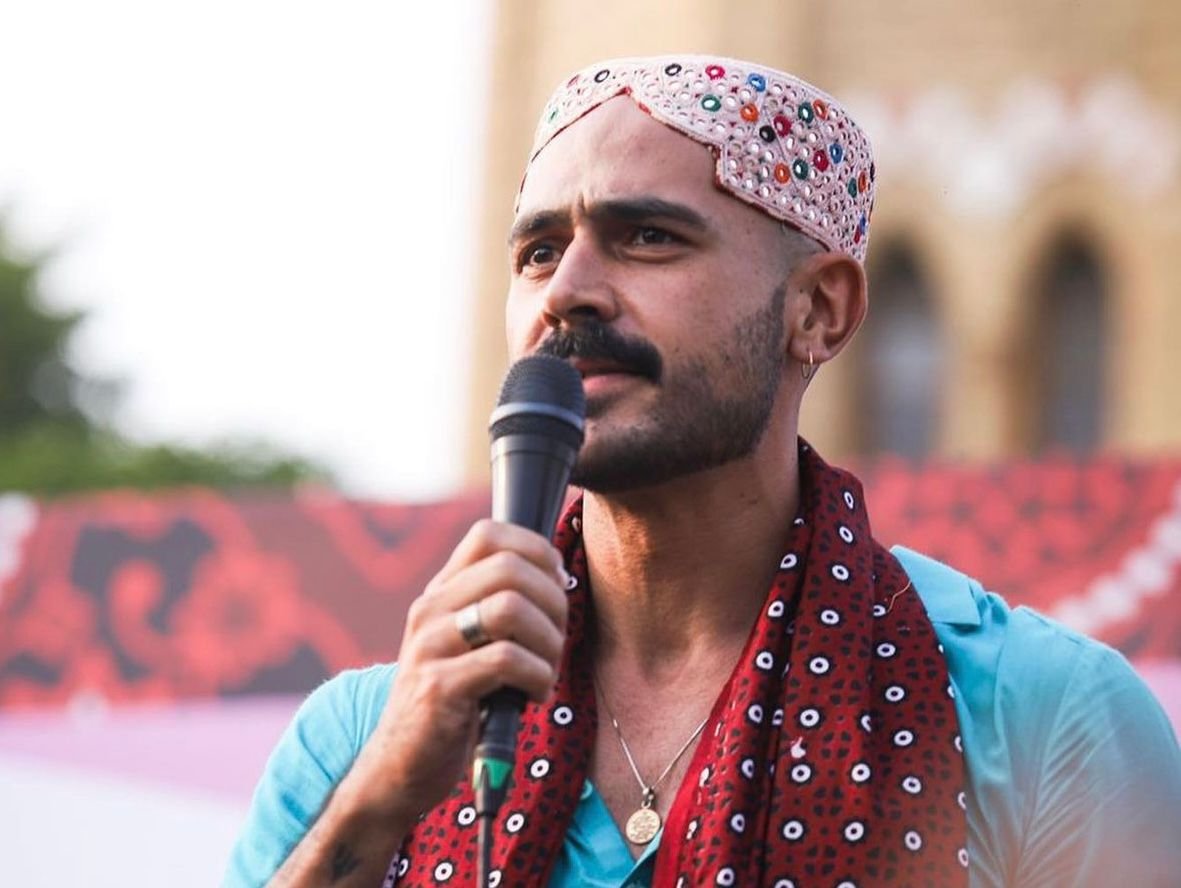
    Zulfikar Ali Bhutto Junior, the grandson of former Pakistani President and Prime Minister Zulfiqar Ali Bhutto, has voiced distress over the killing of the endangered Indus River Dolphin. Bhutto Junior, a visual and performance artist and curator known for his advocacy for wildlife and climate justice, highlighted the incident in an emotional video statement on Instagram.

    Recalling a letter written by his aunt, the late former Prime Minister Benazir Bhutto following the death of Zulfiqar Ali Bhutto, Bhutto Junior drew attention to his grandfather’s deep bond with the region of Sindh and its environment. The letter described Zulfiqar Ali Bhutto as being akin to the River Indus – “strong and kind”. Bhutto Junior underscored his late grandfather’s efforts to protect the Indus River Dolphin, known locally as ‘Bhulan’, including imposing a hunting ban on the species.

    Expressing deep sorrow, Bhutto Junior relayed the tragic news of a recent incident where an Indus River Dolphin was killed by hunters. He passionately asserted, “If you have killed one dolphin, it’s like you have killed a part of Sindh.” He pleaded with the culprits to refrain from such actions in the future, emphasizing the significance of the creatures and the importance of their preservation.

    The Indus River Dolphin, or ‘Bhulan’, is a unique species of toothed whale endemic to the Indus River Basin in Pakistan and northwestern India. It is the first discovered side-swimming cetacean and is known for navigating and hunting through echolocation. Despite being the national mammal of Pakistan and the state aquatic animal of Punjab, India, its population has significantly declined due to human activities, including entanglement in fishing nets, water poisoning from industrial and agricultural chemicals, irrigation, and dam construction.

    Protecting the remaining sub-populations is critical for the species’ long-term survival.

  • No role in the selection of Judges: University of Hull

    No role in the selection of Judges: University of Hull

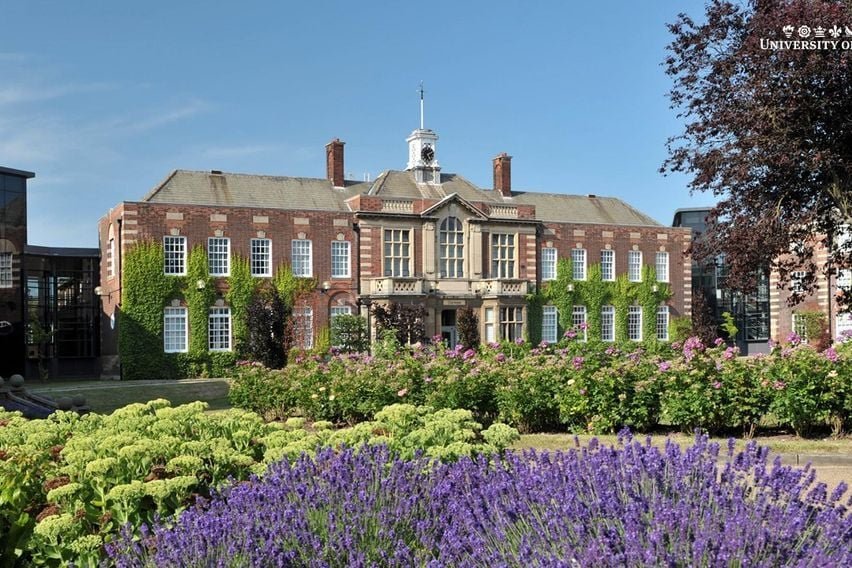
    The University of Hull in Manchester has offered a clarification on the participation of Judge Humayun Dilawar in a training programme at their campus, after supporters of Pakistan Tehreek-e-Insaf (PTI) protested against the university.

    PTI activists have been tagging university to record their objection against the inclusion of Judge Dilawar, who convicted Imran Khan in the Tosha Khana case on August 5, sentencing him to three years imprisonment and disqualification.

    PTI supporters demanded that the judge be expelled from the training session.

    However, Judge Dilawar did not, in fact, fly to the UK out of the blue, as revealed by a statement issued by the university in response to the controversy. The statement says that his participation was a result of being chosen by the Islamabad High Court (IHC) for the training.

    Stressing that the university has been organising training sessions on human rights and the rule of law for Pakistani Judges Since 2014, the university said that it has no role in selecting judges for the training.

    “The current cohort has been selected by the Islamabad High Court, the Peshawar High Court, and the Supreme Court of Pakistan. The University has no role in the selection of judges”.

  • Pakistani media, stop obsessing over Sunita Marshall’s religion

    Pakistani media, stop obsessing over Sunita Marshall’s religion

    The country’s media has decided that the average citizen is not raging inflation but whether a fully grown woman has decided to convert from Christianity to Islam or not.

    In an interview with Youtuber and journalist Maliha Rehman, actor Hassan Ahmed, Sunita Marshall’s husband, was asked about how he deals with the negative comments, especially regarding his marriage to the ‘Sar-e-rah’ actress. The actor responded that it is his deepest desire that his wife converts to Islam, but understands that these things do take time. He further went on to say that Sunita will only come towards Islam when she notices the positive inside him.

    But newsflash for the two of you, Sunita isn’t special just because she ‘could’ convert to Islam. She’s a fully grown human being who can dress how she wants and follow what religion she chooses. It is shameful how this is a topic that needs a 10 minute long discussion.

    The discussion arose just a few weeks after Sunita was questioned by controversial Youtuber Nadir Ali about her religious beliefs. She calmly handled the situation saying that it was her choice whether she chooses to remain a Christian or convert to Islam. But the fact remains, Sunita’s religion is not something to debate, and it’s shameful that her husband is commenting on personal matters in the public sphere.

    We were incredibly happy to witness how a flood of celebrities and social media users applauded the ‘Khuda Aur Mohabbat’ actress for bravely handling Ali’s misogynist remarks, but it doesn’t mean she needs to be subjected to this kind of questioning time and time again. This is the Islamic Republic Of Pakistan, where under the law, people from all kinds of faiths are allowed to practice their religion without any fear.

    It’s the year 2023, you have people leaving the country because they’re unable to make a decent living, so obsessing over whether Sunita Marshall will become a Muslim or not is irrelevant. Celebrity tabloids, please do better and let her live without feeling like her religion is in the spotlight all the time.

  • Heatwave woes: Rising temperatures pose new threats to air travel

    Heatwave woes: Rising temperatures pose new threats to air travel

    In a twist of fate, climate change is exacerbating the challenges of air travel, creating a new layer of misery for passengers and airlines alike. As temperatures soar due to global warming, the very air that planes need to lift off becomes less cooperative.

    When the mercury climbs, hot air’s reduced density causes planes to struggle for lift, complicating takeoffs and in-flight stability. Airlines often resort to delaying flights or unloading cargo and passengers to mitigate the issue, leading to a cascade of disruptions across the aviation system. Stranded on runways, passengers endure stifling conditions within grounded aircraft.

    Experts warn that this problem is set to intensify as the planet heats up further and the frequent occurrence of extreme heat becomes the norm. A Columbia University study projected that by mid-century, up to 30 per cent of all US flights could be subject to weight restrictions during periods of high heat.

    Regrettably, there’s no silver bullet to overcome this challenge. Ethan Coffel, an assistant professor at Syracuse University, explains that it’s a physical limitation tied to air density, leaving limited room for technological solutions.

    Heat-related delays are emerging as a more substantial issue than snow or ice. Last summer, Chicago’s O’Hare International Airport faced twice the number of weather-related delays compared to the previous winter. The impact is especially pronounced at airports with shorter runways, like New York’s LaGuardia Airport, which struggles to handle the volume of traffic it receives.

    Airports in high-altitude regions and warm climates are hit particularly hard by this heat-induced predicament. Denver and the Sun Belt cities face additional hurdles, with workers on scorching runways at risk due to the “heat island” effect. Despite efforts to make aircraft lighter and more efficient, progress is incremental, leaving airports to rely on conventional solutions like rescheduling flights and strengthening runways.

    The compounding effects of climate change on air travel are undeniable. Turbulence grows riskier, flights lengthen due to shifting wind patterns, and extreme weather spawns more delays. To truly address this issue, a holistic approach is required, including a concerted effort to reduce fossil fuel emissions, a primary driver of climate change. Amidst these challenges, the future of air travel remains uncertain, prompting travellers to brace for increasingly tumultuous skies.

  • Pakistan beat China to register first win in Asian Hockey Champion trophy

    Pakistan beat China to register first win in Asian Hockey Champion trophy

    Pakistan Hockey team have won their first match 2-1 against China in Asian Hockey Championship taking place in India.
    In the first half, the Pakistani team played aggressively, with Shayan Ali scoring the first goal in the 19th minute, setting a match-winning lead for Pakistan. However, in the in the 33rd minute of the second half, China scored to make the lead equal on both sides. Pakistan’s Afraz then scored another goal in the 39th minute which was the match-winning goal for Pakistan.
    Earlier, the Pakistani team had drawn their match with Japan by 3-3 and with Korea by 1-1. Pakistani team lost to Malaysia by 1-3.
    Pakistan will play the highly anticipated match with India on 9 August. If the Pakistani team wins, they will have a solid chance to enter the semi-finals. Pakistan and India both won the Asian Champion trophy thrice.
    All the teams will play five matches to try and make a place in the top 4 to reach the semi-finals. Final will be played on August 12.

  • ‘Rosy glow, hazel eyes, no curly hair’: Rishta demand has internet in stitches

    ‘Rosy glow, hazel eyes, no curly hair’: Rishta demand has internet in stitches

    Are rishta aunties looking for a suitable woman for men or do they want Miss Universe to become their bahu?

    Rishta proposals that come to light are getting increasingly absurd. A tweet is going viral on the internet in which a woman shared a list of demands by an aunty. Included among the ludicrous list are demands that the girl must not have curly or short hair, must have completed her bachelors at the age of 22, as well as have no scars on her face or hands.

    She should also have a “rosy glow” and light coloured eyes, with a concession made for hazel eyes.

    Are you looking for a wife or for a robot, maam? And the sheer audacity of demanding unachievable perfectionism in a woman, while this man couldn’t even find a woman on his own? Twitter was in fits on how unabashed and demanding the rishta circus was for women.

    https://twitter.com/strawb1erry/status/1688609914330230784?s=20
  • Bilawal expresses dissatisfaction with Nawaz and Zardari’s political stance

    Bilawal expresses dissatisfaction with Nawaz and Zardari’s political stance

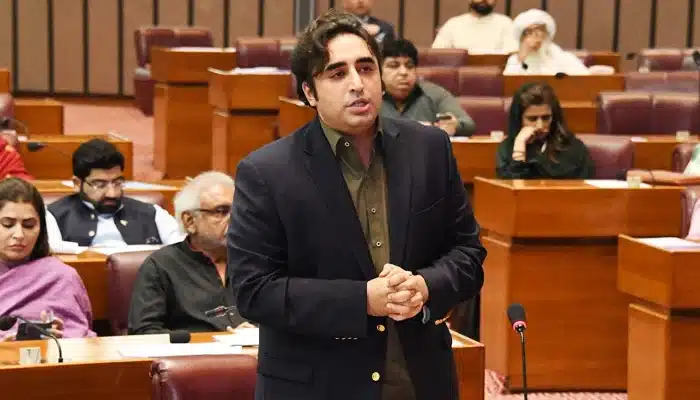
    In a rare public display of divergence within the ruling coalition, Foreign Minister Bilawal Bhutto Zardari expressed his unhappiness with the political stance of Pakistan Muslim League-Nawaz head Nawaz Sharif and his father, Pakistan Peoples’ Party (PPP) Co-chairman Asif Ali Zardari.

    While addressing the National Assembly (NA) on Monday, Bilawal Bhutto categorically stated that, “Nawaz Sharif and Asif Ali Zardari should make decisions that make it easier for me [Bilawal] and Maryam Nawaz to pursue politics in the future”.

    In an important statement, Bilawal Bhutto said that his government had failed to keep institutions within their constitutional limits.

    He regretted that, despite his previous assertions that institutions should operate within their legal restrictions, the objective had not been met.
    He urged all political parties to think about how they can tackle the issue as elections approach.

    Referring to Pakistan Tehreek-e-Insaf (PTI) Chairman Imran Khan, the Foreign Minister said that it is a success of the Pakistan Democratic Movement (PDM) to remove the ‘Selected Prime Minister’ through a no confidence motion.

    However, Bilawal Bhutto also mentioned that it’s the responsibility of the opposition to criticise the wrong policies of the government. He pointed out that PDM has an opposition party that has no concern for democracy and doesn’t even believe in parliament.

    This opposition party crossed the “red line,” and it happened for the first time in history, he added.

    Regarding the arrest of PTI Chairman Imran Khan, the foreign minister said, “I have seen politicians either in jail or in politics in Pakistan.”