Author: newsdesk

  • Shahnawaz Dahani ne African language kyun seekhi, player reveals details

    Shahnawaz Dahani ne African language kyun seekhi, player reveals details

    Shahnawaz Dahani, Pakistan’s ace fast-medium pacer, has opened up about a viral video featuring the cricketer on the streets of Zimbabwe, singing a famous African traditional song with local children.

    Recently, the Pakistan Shaheens toured Zimbabwe for two Test matches and six One Day Internationals (ODIs), winning both test matches while Zimbabwe emerged victorious in four out of six ODI matches. These were unofficial matches held in Harare.

    The most interesting part of the series was Shahnawaz Dahani’s lively moments on the streets of Zimbabwe with African kids singing their traditional songs in the African Shona language.

    While speaking exclusively to “The Current Life”, Shahnawaz Dahani was asked if he loves spending time with children and the story behind the viral video, as well as how he learned the language.

    “I love spending time with children as they are the future of Pakistan. They watch us and learn from us, and they have dreams just like we did in our childhood. The same goes for the Zimbabwean kids. They enjoy watching us, and we also enjoy their company,” the bowler said.

    “I learned the language in just 30 days. I observed and watched them closely to understand what they were saying, and I quickly picked up the language.

    My teammates were amazed at how I learned the language, and although they tried, they failed. The credit goes to me for learning the African Shona language in just 30 days,” Dhani stated.

    Zimbabwean kids really like cricket and follow Pakistan, the pacer explained, adding that it motivated him to learn their language. “If you have passion, you can easily accomplish difficult and seemingly impossible things,” he remarked.

    When asked how many languages Shahnawaz Dahani can speak, he replied, “I try to learn as many as I can. I love learning languages and new things. I can speak five to six languages.”
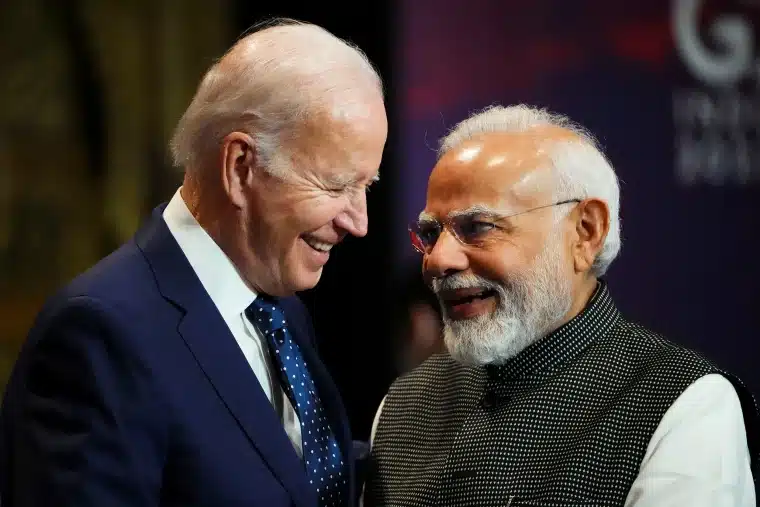

  • Modi, Biden demand Pakistan should take the initiative to end ‘cross-border terrorism’

    Modi, Biden demand Pakistan should take the initiative to end ‘cross-border terrorism’

    United States (US) President Joe Biden and Indian Prime Minister (PM) Narendra Modi have demanded that Pakistan should ensure that Pakistani land will not be used by terrorists.

    Indian premier is currently visiting the United States.

    The statement has been issued after a meeting between Biden and Modi.

    Both leaders have demanded action against terrorist groups allegedly based in Pakistan, including Lashkar-e-Taiba and Jaish-e-Mohammad.

    “They strongly condemned cross-border terrorism, the use of terrorist proxies and called on Pakistan to take immediate action to ensure that no territory under its control is used for launching terrorist attacks,” the 58-point statement issued by the White House read.

    Both the leaders demanded action against perpetrators of attacks, including the Mumbai and Pathankot incidents.

    The leaders have also demanded that the Afghan Taliban should respect human rights, and the rights of women and girls in Afghanistan.

  • Suleman Dawood was ‘terrified’ before Titan trip, his aunt says

    Suleman Dawood was ‘terrified’ before Titan trip, his aunt says

    The late 19 year old Suleman Dawood, son of the late Shahzada Dawood, Vice-Chairman of Engro Corporation, was reportedly ‘terrified’ before his trip aboard the OceanGate submersible, according to his aunt Azmeh Dawood.

    In an interview with NBC news, Azmeh – Shahzada’s older sister – shared that the young Suleman had informed a relative prior to his voyage to see the Titanic wreckage that he “wasn’t very up for it” and “felt terrified”. 

    However, the trip tragically fell over Father’s Day weekend and young Suleman, eager to please Shahzada, ended up accompanying him. According to Azmeh, Shahzada was very passionate about the lore of the Titanic.

    She recalls her younger brother was “absolutely obsessed” with the Titanic from a young age, recounting the time when Shahzada met her husband and asked if they could sit down and watch a four-hour documentary about the Titanic. 

    Thus, she was hardly surprised when she learned that her brother had purchased tickets for the OceanGate mission.  

    The Dawood family released a statement on Twitter, announcing the death of their loved ones and extending their condolences to the families of the other departed passengers.

    A catastrophic implosion

    On the fourth day of the frantic search to find the OceanGate submersible before its oxygen supply ran, search parties discovered debris 1600 feet from the bow of the Titanic that were said to be part of the OceanGate craft. 

    The U.S. Coast Guard said the debris found on the seafloor was “consistent with a catastrophic implosion of the vessel.” All aboard have been presumed dead.

    A summary of events 

    The OceanGate submersible disappeared Sunday during a mission to survey the wreckage of the Titanic. 

    The Coast Guard said on Thursday that a “debris field” had been found in the search area. Today, it was confirmed that the debris found was “consistent with a catastrophic implosion of the vessel.”

    A sound consistent with an implosion was heard Sunday, shortly after the submersible lost communications, according to a senior U.S. Navy official, reported by NBC. The sound was not definitive, the official said.

    James Cameron, director of the blockbuster film ‘Titanic’ and a prolific deep sea explorer, in an interview with CNN shared that he knew the vessel had likely imploded by Monday. He learned through his sources of a sound detected in the vicinity of the Titanic on Sunday. 

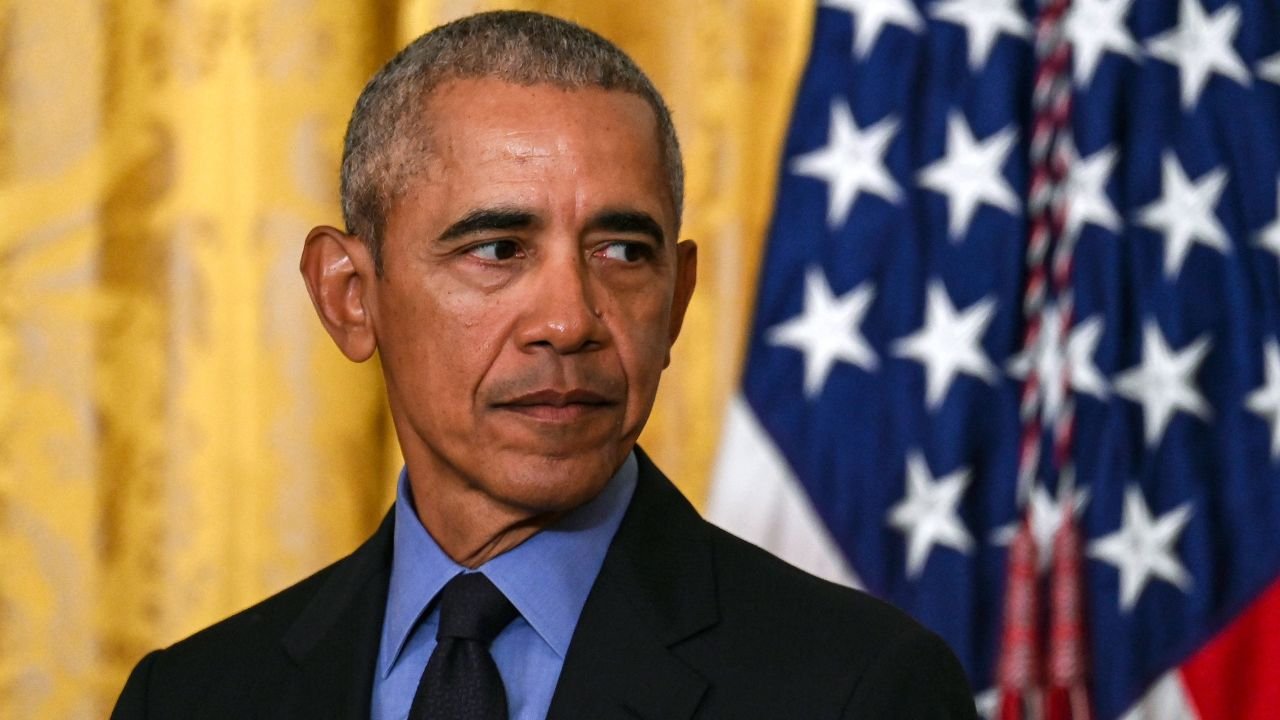
  • ‘Protection of Muslim minority in Hindu majority India is worth mentioning’: Obama on Modi’s visit to US

    ‘Protection of Muslim minority in Hindu majority India is worth mentioning’: Obama on Modi’s visit to US

    In an interview with CNN’s Christiane Amanpour on Thursday, Former United States (US) president Barack Obama, spoke about the protection of the rights of ethnic minorities in India.

    “If the President meets with PM Modi, then the protection of Muslim minority in a Hindu majority India is something worth mentioning. By the way, if I were to have a conversation with Prime Minister Modi, who I know well, part of my argument would be that if you do not protect the rights of ethnic minorities in India, then there is a strong possibility that India, at some point, starts pulling apart. And we have seen what happens when you start getting into large internal conflicts… I think it is important to be able to talk about these things honestly.”

    While talking about the president of the United States meeting with leaders such as Chinese President Xi Jinping and Indian Prime minister Narendra Modi, Obama said, “It’s complicated. The POTUS has a lot of equities and when I was POTUS I would deal with figures, in some cases who were allies, who, if you would press me in private, run their governments and their political parties in ways that I would say aren’t ideally democratic.”

    “But you would have to do business with them because they are important for national security reasons, because they are a range of economic interests. I dealt with China and Modi to get the Paris Accords done because climate change transcends any momentary issues…it is a problem humanity has to deal with in the next several decades,” he added.

    “I do think it is necessary for the POTUS, where he or she can, to uphold those principles and to challenge, whether behind closed doors or in public, trends that are troubling. I am less concerned about labels than I’m concerned about specific practices,” said Obama.

    Modi is currently on a four day visit to the US.

  • The US population is older than it’s ever been before

    The US population is older than it’s ever been before

    According to data released by the Census Bureau, the United State’s population is older than it’s ever been before, with a median age of 38, New York Times reports.

    This is a steep rise considering the median age of 35 back in 2000 and 30 in 1980. Analysts are concerned that the U.=S ‘greying’, a term used to describe ageing populations, would pose challenges to the workforce, the economy and social programs.

    An earlier study conducted in 2020 revealed that 1 in 6 Americans (so 17% of the entire country) were 65 or older. Much of the greying of the US stems from the post-World War II baby boom – which was the period of 1946 – 1964. 

    Experts point to low birthrates as the main driver of the nation’s rising median age. “It’s simple arithmetic,” said president of demographic data firm Social Explorer, Andrew A. Beveridge, in conversation with the New York Times. “Fewer kids are being born.” 

    Since the beginning of the Great Recession (2007-09), birthrates had never been quite the same as previous generations. Birthrates also saw a steep decline in the first year of the COVID-19 pandemic. 

    This trend of ageing populations due to declining birthrates is one observed on an international scale. Countries such as Japan and Germany have been attempting to tackle this issue for years, by introducing policies allowing skilled youth to naturalise more easily. In Japan, nearly 30% of its population is over 65 years old.

    Experts believe that millennial women have been more likely to prioritise education and work in their 20s, leading them to marry far later and have fewer children. That would explain why newer generations in industrialised countries have been witnessing lower birthrates and ageing populations.

  • Pemra to take action against Netflix and other streaming platforms after Eid holidays

    Pemra to take action against Netflix and other streaming platforms after Eid holidays

    Pakistan Electronic Media Regulatory Authority (Pemra) is reportedly preparing to take action against over-the-top (OTT) platforms such as Netflix after the conclusion of Eid-ul-Azha, according to Khalid Arain, Chairman of the Cable Operators Association of Pakistan.

    Khalid disclosed that a productive dialogue had taken place between cable operators and senior officials from Pemra, during which the concerns of the cable operators were effectively communicated. He expressed the cable operators’ predicament, stating that they operate under broadcasting restrictions and are limited in the number of channels they can offer. In contrast, OTT platforms enjoy the freedom to stream popular channels.

    Khalid’s reference to OTT platforms pertains to online streaming services that deliver content via the internet. He further stressed the cable operators’ request for regulatory measures concerning operators that offer both internet and cable services.

    He said that the regulatory body has responded positively to the demands of cable operators. Pemra will establish a committee to address the issuance of licenses to cable operators and undertake a crackdown on OTT platforms following the conclusion of Eidul Azha.

    According to ProPakistani, the chairman also advocated for tax exemptions in the cable sector, drawing a parallel to the solar power industry and suggesting that taxes on cable operators should be alleviated. However, he did not provide a specific explanation or justification for this request.

    Additionally, he highlighted an inequity where the Pakistan Telecommunication Authority (PTA) collects Local Loop license fees from cable operators in US dollars, while subscribers make payments to cable operators in the local currency. Arain deemed this situation unfair, citing the existing rupee-dollar exchange rate as a contributing factor.

  • Pakistani rupee maintains winning streak against dollar for third day to close at Rs286.73

    Pakistani rupee maintains winning streak against dollar for third day to close at Rs286.73

    The Pakistani rupee continued its upward trend against the US dollar for the third consecutive session in the inter-bank market on Thursday, appreciating by 0.09 per cent. According to the State Bank of Pakistan (SBP), the currency settled at Rs286.73 at the close, showing an improvement of Rs0.25 compared to the previous day’s rate of Rs286.98.

    In a significant development, Finance and Revenue Minister Ishaq Dar met with US Ambassador to Pakistan Donald Blome on Wednesday to discuss the economic ties between Pakistan and the United States, as well as the International Monetary Fund (IMF) loan program.

    This meeting took place following the IMF’s criticism of Islamabad’s budget proposals for the fiscal year 2023-24. Esther Perez Ruiz, the IMF’s Resident Representative for Pakistan, expressed dissatisfaction with the budget proposals, describing them as a missed opportunity to broaden the tax base. She also criticised the new amnesty scheme, stating that it sets a damaging precedent.

    Separately, Prime Minister Shehbaz Sharif stated on Wednesday that the immediate goal, with the assistance of the Special Investment Facilitation Council (SIFC), is to increase Foreign Direct Investment (FDI) in the country to $5 billion.

    On the international front, the US dollar remained close to a one-month low against a basket of currencies on Thursday. This followed Federal Reserve Chair Jerome Powell’s testimony, where he maintained his usual stance and offered little room for surprise.

    Powell’s comments to lawmakers on Capitol Hill aligned with the central bank’s previous policy meeting, indicating that further rate increases are likely if the economy continues its current trajectory. As a result, the greenback depreciated by nearly 0.5 per cent against six major peers in the previous session.

    Meanwhile, oil prices slightly declined on Thursday. Market expectations of further interest rate hikes were balanced by potentially bullish US oil inventory data, which indicated a decrease in stocks.

  • Sharmila Tagore thinks today’s television content is regressive: ‘Women are portrayed as each other’s worst enemies’

    Sharmila Tagore thinks today’s television content is regressive: ‘Women are portrayed as each other’s worst enemies’

    Bollywood veteran actress Sharmila Tagore made her comeback to the big screen recently with the film ‘Gulmohar’, and in an interview with Times of India, she believed that television today has gotten more regressive in how women are portrayed:

    “The content TV is offering today is quite regressive. Most TV serials portray women as women’s worst enemies, and that is so unfortunate. The government does keep a tab on this, and then it finally comes to us.”

    The actress, who is also a member of the Broadcasting Content Complaints Council (BCCI) had revealed she had often called producers to request them to remove objectionable material, but they refuse to, citing commericial reasons:

    “Sometimes, we call the show makers, asking them to tweak or remove certain objectionable portions. But, producers mostly refuse to budge as commerce often overrides logic.”

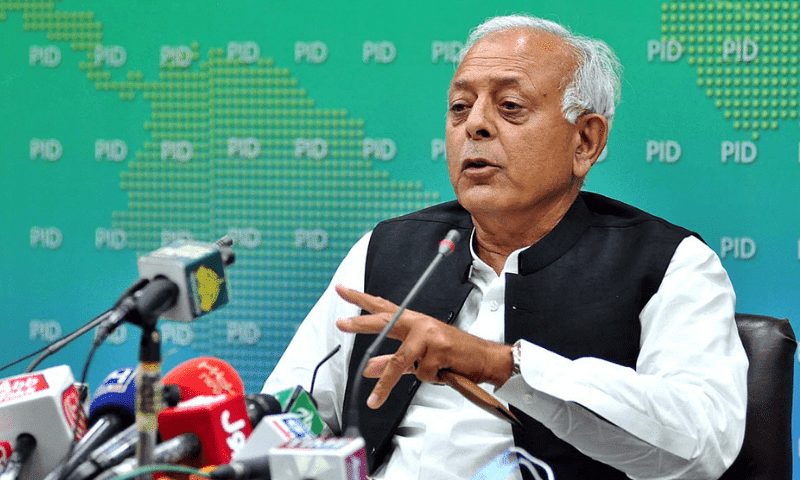
  • Ghulam Sarwar quits PTI after arrest

    Ghulam Sarwar quits PTI after arrest

    Former Federal Minister for Aviation, Ghulam Sarwar, has announced on Thrusday that he is not a part of Pakistan Tehreek-e-Insaf (PTI) anymore. The former minister made the announcement in a video released to the media after he was arrested by Islamabad police.
    In the video, the veteran politician said that his family is in politics since the last 50 years, adding that he has much respect for the armed forces.

    He has also stated that any attack on military installations and martyrs’ monuments is an attack on the country.
    He then added, as a ‘patriotic Pakistani’ he demands that the culprits of May 9 riots should be punished according to the law.
    Sarwar also said that he would part ways with PTI.

  • ‘World’s hardest dish’; Chinese street food vendors selling stir-fried stones

    ‘World’s hardest dish’; Chinese street food vendors selling stir-fried stones

    Videos of customers sampling suodiu have appeared all over Chinese social media. Suodiu is a dish originating from the province Hubei, and it is made up of chilli oil, garlic, diced peppers, and – the main ingredient – river rocks. 

    Vendors pour chilli oil onto pebbles being grilled teppanyaki-style, sprinkle garlic sauce all over them, then stir-fry everything with a mix of garlic cloves and diced peppers. The way you’re meant to eat it is by sucking on the small rocks to relish the rich and spicy flavour before spitting out the rock.

    Hence the name suodiu, which means “suck and dispose”. The dish is believed to date back hundreds of years. It was passed down for generations by boatmen through their oral history.

    In a report by the Guardian when boatmen in the landlocked province of Hubei would run out of animals and vegetables while travelling along the Yangtze River, and would then turn to – you guessed it – the rocks beneath the river.

    Unsurprisingly, suodiu faded in popularity after Hubei developed economically, and motorised vessels appeared in the Yangtze, as it reduced the chances of boatmen being left stranded in the river. 

    The dish is also linked to the Tujia people, an ethnic minority who originate from the Wuling mountain range that straddles the borders of Hubei, Hunan and Guizhou.

    But what does it taste like?!

    According to one food blogger, these rocks acquire the taste of marine life over time and start tasting like fish. So when they’re cooked, they have a flavour similar to that of fish, oysters or clams. 

    Are you going to be trying suodiu on your next trip to China?