Author: newsdesk

  • Pakistan’s foreign exchange reserves get a boost as China rolls over $1 billion loan

    Pakistan’s foreign exchange reserves get a boost as China rolls over $1 billion loan

    In a significant development, China has rolled over a $1 billion loan to Pakistan, bolstering the country’s foreign exchange reserves held by the State Bank of Pakistan (SBP). This move comes as a much-needed relief for cash-strapped Pakistan, which has been grappling with a severe liquidity crunch and the looming expiration of its International Monetary Fund (IMF) programme.

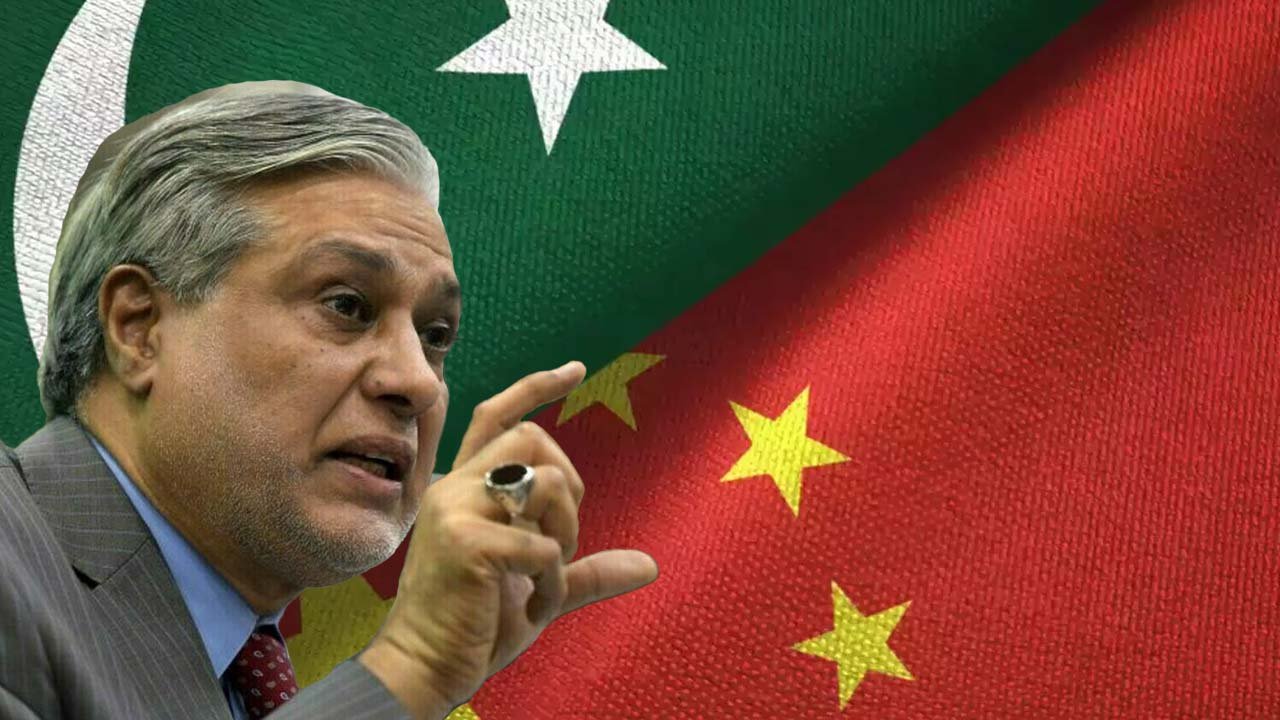
    Pakistan’s Finance Minister Ishaq Dar said that the $1 billion loan from China would be received on Monday. Additionally, negotiations are underway with the Bank of China for a loan amounting to $300 million. Pakistan is also set to benefit from the dollars obtained through its swap agreement with China.

    Prior to this infusion of funds, the SBP and commercial banks jointly held foreign exchange reserves amounting to $9.4 billion as of June 9. With the $1 billion loan, the reserves will rise to $10.4 billion, providing some stability to Pakistan’s economic situation.

    The IMF has made external financing a prerequisite for Pakistan, emphasising the importance of securing additional funds. In an effort to address its financial challenges, Pakistan had approached China to refinance commercial loans worth $1.3 billion. However, without the revival of the IMF programme, the SBP’s foreign exchange reserves were at risk of plummeting to less than $3 billion.

    Despite these positive developments with China, Pakistan is still struggling to secure external financing in a timely manner, primarily due to ongoing political instability. The country’s fragile economy, valued at $350 billion, continues to be in turmoil, with financial woes exacerbating the situation. The delayed agreement with the IMF has further compounded the need for crucial funding to avoid the risk of default.

    Negotiations between the Pakistani government and the IMF have been ongoing since the end of January to resume the $1.1 billion loan tranche that has been on hold since November. This loan is part of a larger $6.5 billion Extended Fund Facility agreed upon in 2019. The impending challenge lies in repaying $900 million to multilateral creditors, which includes both principal and mark-up repayments, by the end of June 2023.

    Pakistan remains hopeful that these recent developments with China will provide some respite in the face of its economic challenges. However, the government must continue its efforts to secure external financing and navigate through the political instability to ensure long-term stability and growth for the country’s economy.

  • Not involved in leg pulling business, says Miftah Ismail

    Not involved in leg pulling business, says Miftah Ismail

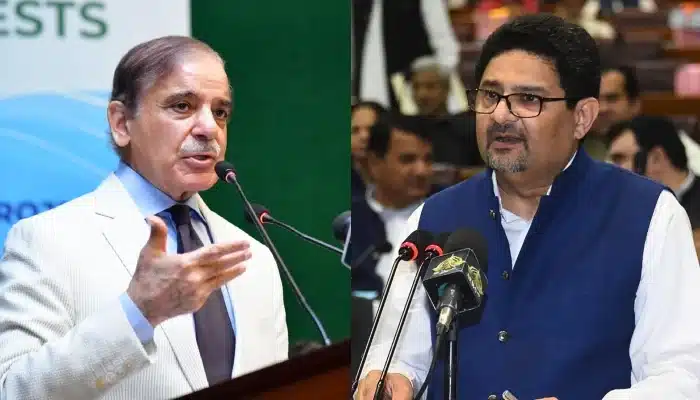
    Former Finance Minister, Miftah Ismail has said that he is not involved in the business of leg pulling but asserted that he speaks the truth. He made the comments while speaking to The News.

    The former minister was referring to Prime Minister Shehbaz Sharif’s statement in which the Premier said without naming anyone that the people criticising current Finance Minister Ishaq Dar have no place in his party, Pakistan Muslim League-Nawaz (PML-N).

    Miftah Ismail said he is in Islamabad to meet friends and is also trying to contact former Prime Minister Shahid Khaqan Abbasi.

    He further added he has no clue about the PM’s statement about Dar’s leg pulling, and he does not know why the PM gave the statement. According to sources of The News, Miftah Ismail and Shahid Khaqan Abbasi have no intentions of parting ways with PML-N.

    However, Miftah Ismail served PML-N as Finance Minister in 2017 while Shahid Khaqan Abbasi was Prime Minister at that time.

  • Indian mother names child ‘Biparjoy’ after cyclone

    Indian mother names child ‘Biparjoy’ after cyclone

    A woman in Gujarat India has named her one-month-old daughter ‘Biparjoy’.

    The family of the baby girl was in a shelter house in Jakhau in Kutch district, when she named the child after the cyclone. They are among thousands of Indians evacuated to safer locations due to the storm.

    The name ‘Biparjoy’ was coined by Bangladesh. It means disaster or calamity in Bengali.

    The reasoning behind naming cyclones is pretty simple. The storm is either given a code or a name, and it’s simpler to remember a name than a string of letters, numbers, or technical terminology.

  • Daska motorway rape case: Woman takes back statement, says she was not raped

    A case was registered against a National Highways and Motorway Police (NH&MP) police inspector at the Daska Saddar police station for allegedly raping a woman. However, the woman has now taken back her complaint saying that she was not raped.

    The First Information rape (FIR) stated that the woman who belonged to Lahore, went to Daska for personal work.

    The woman had earlier said in the FIR that she was waiting for a rickshaw when a motorway vehicle came to her and offered to drop her to her destination.

    The woman claimed that the inspector, who is named in the FIR, sent other police officers away and then raped her.
    The woman in a statement before the magistrate has now withdrawn her accusation of rape.

  • Finance Ministry responds to IMF’s concerns on budget, pledges commitment to programme

    Finance Ministry responds to IMF’s concerns on budget, pledges commitment to programme

    The International Monetary Fund (IMF) has publicly raised reservations regarding Pakistan’s budget, prompting a response from the Finance Ministry. The ministry clarified that the budget is not part of the pending ninth review, which has been delayed since November of last year. However, it emphasised its commitment to finding an amicable solution through ongoing engagement with the IMF.

    In a statement addressing the IMF’s concerns, the ministry highlighted the completion of the ninth review in early February 2023, with all technical issues promptly addressed. The only outstanding matter was external financing, which was resolved after discussions between Prime Minister Shehbaz Sharif and the IMF managing director.

    The ministry clarified that although the FY24 budget was not part of the ninth review, it shared the budget numbers with the IMF mission in line with the prime minister’s commitment. Continuous engagement with the IMF, including discussions on the budget, is ongoing.

    Addressing the IMF’s concerns about broadening the tax base, the ministry noted the addition of 1,161,000 new taxpayers by the Federal Board of Revenue (FBR) over the past 11 months. It emphasised that efforts to expand the tax base will continue, highlighting the introduction of a 0.6 per cent advance adjustable withholding tax on cash withdrawals over Rs50,000 as a significant step.

    The ministry defended the tax exemptions announced in the budget, describing them as catalysts for growth in the real sectors of the economy. It assured that the budget provides targeted subsidies for families with a PMT scorecard of up to 40, not limited to the Benazir Income Support Programme (BISP) beneficiaries.

    Regarding the amnesty measures, the ministry explained that the only change made was to “dollarize” the value of an existing provision in the IT Ordinance. It clarified that this facility has always been available and that the cap of Rs10 million ($100,000 approximately) introduced in FY2016 is being resolved based on the rupee equivalent of $100,000.

    The ministry reiterated its full commitment to the IMF programme and eagerness to at least complete the ninth review. It emphasised the government’s willingness to make difficult decisions and engage with the IMF to find an amicable solution.

  • iPhone manufacturer Foxconn shifts focus to electric cars amidst US-China strained relations

    iPhone manufacturer Foxconn shifts focus to electric cars amidst US-China strained relations

    Taiwanese manufacturer Foxconn, renowned for its production of iPhones, has announced a strategic shift towards electric vehicles (EVs) amidst the strained relations between the United States and China.

    In an interview with the BBC, Chairman Young Liu conveyed the company’s intent to make substantial investments in the EV sector while concurrently diversifying its supply chains away from China.

    Liu acknowledged the importance of peace and stability between the two nations but emphasised the necessity, from a business standpoint, to consider contingency plans for adverse scenarios.

    In response to the prevailing geopolitical tensions, Foxconn has already commenced the relocation of certain production lines from China to alternative locations in Mexico and Vietnam.

    This decision comes as Foxconn finds itself embroiled in a contentious dispute, with Beijing claiming Taiwan as part of China and President Xi Jingping reiterating commitments to “reunification.” Meanwhile, the United States has expressed unequivocal support for Taiwan’s independence, with the looming specter of invasion having cast a shadow over the island nation for years.

    Having originated in 1974 as a manufacturer of television dials, Foxconn has emerged as a global technology powerhouse, amassing revenues of $200 billion. Responsible for over half of Apple’s product output, including iPhones and iMacs, the company also serves an array of esteemed clients such as Microsoft, Dell, and Amazon.

    Foxconn’s unique position as a company that designs products in the United States while predominantly manufacturing them in China has left it navigating a delicate equilibrium between the two global superpowers.

    Chairman Liu articulated his vision of capturing approximately 5 per cent of the global electric vehicle market within the coming years. He outlined plans for establishing Foxconn EV manufacturing facilities in Ohio, United States, as well as in Thailand, Indonesia, and potentially India.

    By pivoting toward electric cars, Foxconn seeks to leverage its technological prowess and industry influence to secure a significant stake in the evolving EV landscape.

  • Imran Khan’s former principal secretary goes missing

    Imran Khan’s former principal secretary goes missing

    Pakistan Tehreek-e-Insaf (PTI) chairman Imran Khan has said in a tweet that his former principal secretary Azam Khan has gone missing.
    “Azam Khan, who was my Principal Secretary, has gone missing since last evening. Anyone who was perceived to be close to me is targeted,” he wrote.

    In his tweet, Khan also condemned the attack on the residence of the former Governor of Punjab, Latif Khosa.

    “Also I strongly condemn the attack on ex governor Latif Khosa’s house last night just because he has been critical of the fascism unleashed on our nation,” he added.

    On Thursday night, unidentified persons attacked the residence of Latif Khosa, in the Defense area of Lahore.
    Latif’ Khosa’s driver got injured while he remained safe.
    The attacker managed to run away from the spot after firing.

  • Events of May 9 led to political death of PTI: Firdous Ashiq Awan

    Events of May 9 led to political death of PTI: Firdous Ashiq Awan

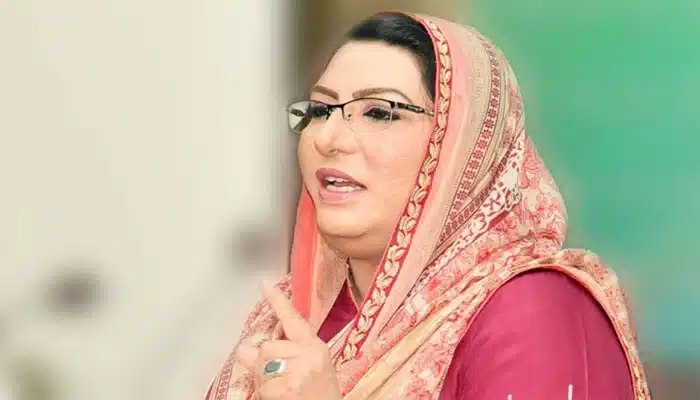
    The Central Secretary Information of Istehkam-e-Pakistan, Firdous Ashiq Awan, has said that the events of May 9 are the reason for the political death of Pakistan Tehreek-e-Insaf (PTI).

    In her statement, she said that she was away from politics for almost two years, stressing that it was difficult for her to stand with the PTI chairman Imran Khan and the party’s narrative.The former minister, once one of the most prominent faces of the then-ruling PTI said that when Imran was targeting his political rivals, she was standing by him but when he turned the direction of his cannons towards the armed forces of Pakistan, she became silent.

    She further added that there is economic and political instability as well as hatred for each other in the country.
    She added that doors are always open for PTI victims and Istehkam-e-Pakistan party is working for the stability of Pakistan.

  • Finance Minister Dar assures no global sanctions for Russian oil purchase

    Finance Minister Dar assures no global sanctions for Russian oil purchase

    Pakistan’s Finance Minister, Senator Ishaq Dar, has provided reassurances that Pakistan will not be subjected to global sanctions for its purchase of Russian oil. Dar made these remarks during a briefing to the Senate’s Standing Committee on Finance, highlighting that both India and China continue to purchase crude oil from Russia despite existing global sanctions.

    Dar emphasised that significant progress had been made in November of the previous year regarding the procurement of Russian oil, and the government had diligently completed all necessary preparations before proceeding with the purchase. He further explained that Pakistan adhered to an approved procedure established by a committee comprising G7 countries for oil production from Russia.

    Dar acknowledged the instrumental role played by Foreign Minister Bilawal Bhutto Zardari in consulting and obtaining approval from the G7 countries prior to the procurement of Russian oil.

    In terms of payment, the finance minister disclosed that the Chinese currency Yuan would be used for settling the payment for the Russian crude oil. He expressed Russia’s satisfaction with this arrangement, noting that it would not only reduce shipping costs but also lead to a decline in crude oil prices.

    When questioned about border trade with Iran, Dar confirmed that the government intended to enhance such trade but clarified that petroleum products were not included in these border trade activities.

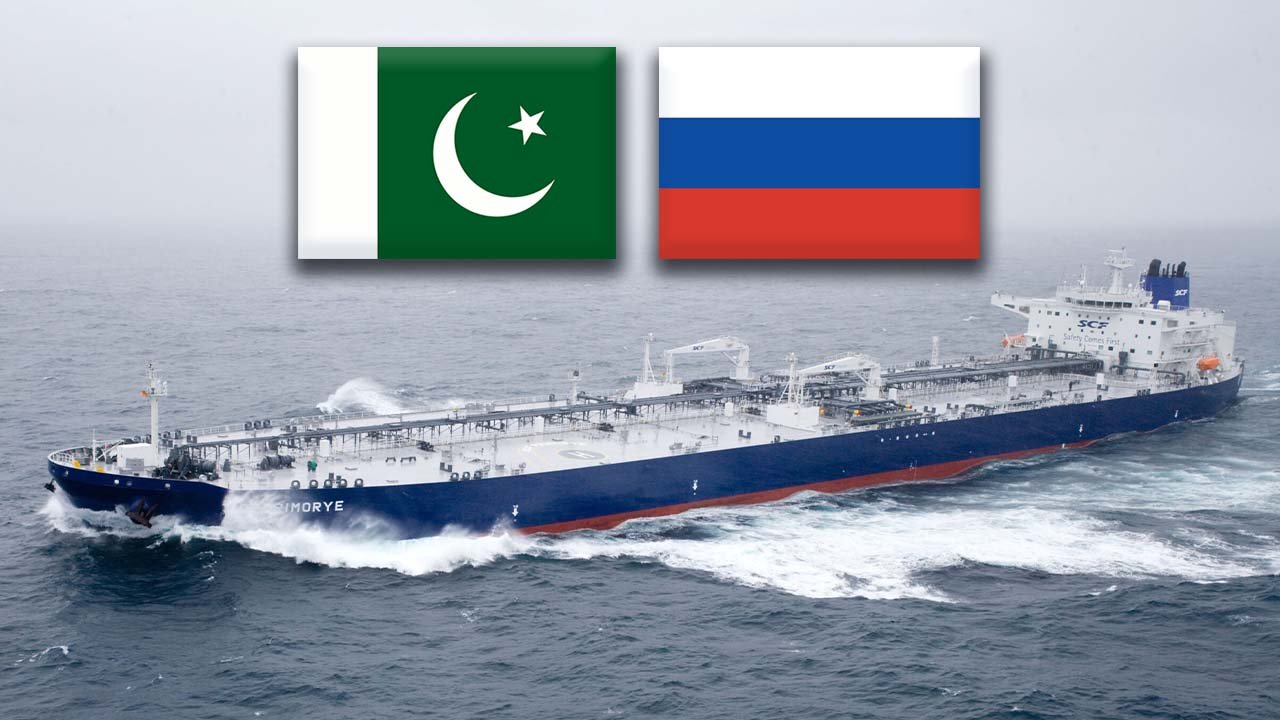
    On Sunday, Pakistan successfully unloaded over 45,000 metric tons of oil from a Russian vessel that arrived at the Karachi port. Another Russian oil carrier is expected to reach the port of Karachi in the coming week.

    It is worth mentioning that earlier this week, the first ship carrying Russian oil had already docked at the Karachi port.

    During a press briefing on June 15, US State Department spokesperson Matthew Miller highlighted that every country has the right to make decisions based on its energy requirements. He further acknowledged that Russian oil was being sold at significantly lower prices compared to global market rates.

    Miller attributed this decrease in price to the limitations imposed by the US and its allies, resulting in Russia losing an estimated $100 billion in revenue that could have been used in the Ukraine conflict. Miller clarified that the US had not imposed any restrictions on Russian oil exports.

  • Pakistani film ‘Hum-Saya’ receives Best Short Documentary award at Venice Film Festival

    Pakistani film ‘Hum-Saya’ receives Best Short Documentary award at Venice Film Festival

    Director Dawood Murad’s venture ‘Hum-Saya’, produced by the Centre For Social Justice, has received the prestigious award for ‘Best Short Documentary on Human Rights’ at the Venice Intercultural Festival 2023. The film focuses on the story of two girls who are abducted, forcibly converted and then married off, while also exploring the turmoil their families undergo.

    In an Instagram post, the director revealed that the film will also be screened in Venice, Italy, on June 23 and later at Kellogg College, Oxford, on June 16.

    A recent report compiled by the Human Rights Commission of Pakistan found that in the year 2021, at least 60 cases of forced conversions were reported in the media, out of which 70% of the girls were under the age of 18 and were from Sindh.

    The data also revealed that blasphemy cases were on the rise in the country. In 2021 there were 585 blasphemy cases registered in Punjab, out of which 16 were filed against the Ahmadi community.