Author: newsdesk

  • Budget 2023-24: Finance Minister announces tax relief measures for IT sector and freelancers

    Budget 2023-24: Finance Minister announces tax relief measures for IT sector and freelancers

    In a recent announcement, the federal government has unveiled a series of measures aimed at fostering growth and investment in the freelancing and information technology (IT) sectors. The government has decided to implement a reduction in tax rates for investments in the IT sector, provide tax breaks to freelancers, and establish a favorable environment for investment by normalizing duty-free equipment provisions.

    During the budget presentation for the fiscal year 2023-24, Finance Minister Ishaq Dar highlighted the importance of the IT sector and its immense talent pool within the country. To support the growth of IT exports, the government plans to extend the current 0.25 per cent discounted income tax rate for the next three years.

    Recognizing the significance of banks in facilitating investment in the IT sector, the finance minister proposed a reduced tax rate of 20 per cent for banks involved in lending to this sector. This reduction aims to alleviate the burden on banks, as the existing tax rate for investments stands at 39 per cent.

    Additionally, the government has recommended providing Duty-Free Equipment privileges to incentivize investment in the IT sector. Moreover, the minister has suggested granting the industry the status of Small and Medium Enterprises (SMEs), enabling individuals to avail themselves of special and exclusive discounted income tax rates applicable to this sector.

    In a move to streamline processes for IT and IT-related services exporters, Minister Dar proposed the issuance of Automated Exemption Certificates to non-residents within 30 days. Furthermore, the government plans to reduce the Goods and Services Tax (GST) from 15 per cent to 5 per cent specifically for IT and ITeS services in the Islamabad Capital Territory (ICT).

    To support the freelancing community, Minister Dar recommended exempting individuals from the obligation of filing a sales tax return in order to benefit from the concessional rate of 0.25 per cent. Emphasizing the vital contribution of freelancers to the country’s foreign exchange earnings, the minister suggested that those whose IT and IT-enabled services exports were less than $24,000 in the previous fiscal year should be exempted from sales tax registration and allowed to file a simplified single-page income tax return.

    These measures underscore the government’s commitment to fostering a conducive business environment and encouraging investment in the freelancing and IT sectors, thereby facilitating economic growth and job creation.


  • ‘The audacity’: Never Have I Ever’s finale divides audience

    ‘The audacity’: Never Have I Ever’s finale divides audience

    Warning: spoilers

    The series finale for ‘Never Have I Ever’ aired yesterday, bringing fans to a conclusion that divided opinions. Devi finally graduated high school, resolving the mystery about who is the man she will end up with.

    The series revolved around a messy kid Devi, who navigates love, peer pressure from belonging to an Indian family, and deals with the death of her father.

    From Season 1, there were two men in Devi’s life, Paxton Hall-Yoshida and Ben Gross. We were led through a four season long will-they-won’t-they as Devi made her way through misunderstandings, hurried confessions and miscommunication to now finally watching a grown and less-chaotic Devi who finally chooses…

    Ben!

    How did we get to this conclusion? Devi and Ben got intimate in the last season after which, the two remain awkward, drifting off, but eventually ending back together as friends. Devi ends up getting in to the college of her dreams: Princeton, with Ben’s help.

    While packing for college, Devi misses Ben, who is in New York for a law internship. However, during her friend Nirmala’s wedding, Ben shows up at the last minute, with both deciding to give their relationship a shot.

    Needless to say, this outcome did not sit well with a lot of fans, who criticised creator Mindy Kailing for hyping mediocre looking white men, and routinely depicting brown women who indulge in self-critical commentary and consistently put down their own culture and heritage in the shows.

    Many pointed out that Devi’s conclusion with Ben was another domino in the long line of Kailing’s female leads hyping bare-minimum men, and putting down south asian men for the sake of appealing to a white audience.

    https://twitter.com/xoxo58585858/status/1666967691553382406?s=20

    https://twitter.com/literatiez/status/1666867525731360768?s=20

    But other users felt that the conclusion was satisfying and were happy that Ben and Devi went from being enemies to close friends and finally falling in love with each other.

    https://twitter.com/bvbhive/status/1666811983524663296?s=20

    What did you think of the finale? Let us know in the comments!

  • Asia Cup: Other boards may reject PCB’s hybrid model

    Asia Cup: Other boards may reject PCB’s hybrid model

    Pakistan Cricket Board’s (PCB) proposed hybrid model for Asia Cup 2023 could be rejected by Sri Lanka, Bangladesh and Afghanistan, as per reports. PCB is mulling boycotting the continental tournament slated for later this month. Pakistan is aware that Sri Lanka, Bangladesh and Afghanistan are not backing their hybrid model proposal for Asia Cup and the only option left for the board is to play the tournament at a neutral venue or withdraw.

    As Asia Cup 2023 deadlock continues, PCB chairman Najam Sethi has sent an SOS to the International Cricket Council (ICC). PCB wants ICC to force India to accept the hybrid model. While PCB had threatened to boycott the tournament if the hybrid model is not accepted, Board of Control for Cricket in India (BCCI) believes Pakistan will play the tournament.

    Najam Sethi initially threatened to boycott Asia Cup but there are reports in the media that Mr. Sethi has a plan B for Asia Cup. The Prime Minister of Pakistan fully supports Najam Sethi, asking him to not back off from the hybrid model.

    The model suggests that India can play their matches at neutral venue and the rest of the teams can play in Pakistan. Sethi proposed the model in initial meetings but braodcasters showed concerns over logistics. A Star Sports official asked Najam Sethi how it would be possible for the crew to travel between two countries with equipment.

    Now Najam Sethi has proposed a revised version of hybrid model in which first four group stage matches will be played in Lahore except the matches of India, and the rest of tournament will be shifted to a neutral venue.

    A BCCI official told Inside Sports yesterday at the World Test Championship,

    “Those are just immediate reactions. PCB very well knows what position they are in and any money that comes through is important for them. I don’t think Pakistan can boycott. They will play in Asia Cup and World Cup. For the moment, they are trying whatever they can to keep it but it’s not going to happen.”

  • Is there hope for ‘Tere Bin’? Fans laud Murtasim’s powerful stand against Ma Begum, Haya

    Is there hope for ‘Tere Bin’? Fans laud Murtasim’s powerful stand against Ma Begum, Haya

    Warning: spoilers

    The latest episode of the GEO’s drama serial ‘Tere Bin’ is getting praise from fans on social media because finally, Murtasim managed to do something we’ve been aching to watch: take a stand for his wife.

    The previous episodes showcased Meerab’s dismay over being treated with cruelty by Haya and Ma Begum, who regularly taunted her for her outspoken attitude, her refusal to be a submissive wife, and Haya’s attempts to drive a wedge between the couple by spying on Meerab, driving her to leave the house.

    But in this episode, Murtasim is seen grieving over Meerab’s loss as he can’t find her, and Ma Begum taunts her for dishonoring the family by running away. When she suggests to Murtasim that he divorce Meerab and cut of all connection with her, he refuses to follow her commands, and declares in a powerful stand that he would keep searching for his wife, regardless of what it takes.

    The episode comes right after ‘Tere Bin’ was panned for using marital rape as bait to keep viewers engaged. The serial has gone through highs and lows, becoming a fan favourite as soon as it launched, then repulsing fans, and now sucking them right back in for all the right reasons.

    Let’s hope the serial stays true to its original storyline and doesn’t jump the shark again.

    https://twitter.com/WahajAlixlover/status/1666850523721478149?s=20

    ‘My heart is beating so fast’ one user wrote.

    https://twitter.com/tmn_nia/status/1666844581521158146?s=20

    Many praised the fact that finally, we got the old Murtasim back who was a certified wife guy.

    Other Twitter users also praised this episode for providing flashbacks to some of the best moments between Meerab and Murtasim, which helped a lot because of the angsty turn the drama had taken.

  • May 9 riots: Pakistan to ask relevant foreign governments to hand over culprits

    Foreign nationals involved in “instigation, glorification and support (physical, moral and financial)” of the incidents of May 9 will be investigated, the government has decided on Thursday, Geo news has reported.

    As per Geo’s sources, the government has collected relevant data of more than 500 Pakistanis. “Their call records, social media activity, travel history, financial transactions, immigration status and other relevant data has been analysed.”

    Reportedly, the expats are mostly from the UK, Europe and the US.

    The people involved will be investigated upon arriving in Pakistan. “Moreover, the government shall initiate criminal proceedings against all those involved, and the relevant foreign governments will be contacted for handing over the culprits.”

    Their legal status in host countries, mode of entry and pending dual nationality applications shall also be made part of the proceedings.

  • Ishaq Dar to present Rs14.7 trillion budget for FY2023-24 today

    Ishaq Dar to present Rs14.7 trillion budget for FY2023-24 today

    Finance Minister Ishaq Dar is set to reveal the federal budget for the fiscal year 2023-24 today, with a proposed outlay of Rs14.7 trillion. The budget carries a higher consolidated budget deficit, exceeding 6 per cent of the GDP, and includes allocations for various targeted schemes aimed at attracting voters in the upcoming general elections.

    The government has established targets for tax collection by the Federal Board of Revenue (FBR) at Rs9.2 trillion, along with a non-tax revenue target of Rs2.7 trillion. To achieve the non-tax revenue target, the government plans to amend the finance bill, raising the petroleum development levy (PDL) from Rs50 per litre to Rs55-60 per litre. This adjustment aims to collect Rs870 billion in the next budget, as opposed to the revised estimate of Rs550 billion for the outgoing fiscal year.

    The credibility of the budgetary figures remains a concern as they are subject to change throughout the financial year. If a new government assumes power after the general elections, it will likely need to introduce a mini-budget to align economic realities with the International Monetary Fund (IMF) and secure a fresh bailout package.

    The government’s ability to satisfy the IMF on the revival of the stalled programme is yet to be seen. The continuing stalemate may endanger the diminishing foreign exchange reserves, with the State Bank of Pakistan’s reserves falling below $3.9 billion.

    Without establishing a comprehensive budgetary framework with the IMF, signing the staff-level agreement will be impossible. Fulfilling three conditions becomes crucial: securing external financing of $6 billion, presenting the next budget in accordance with IMF guidelines, and ensuring a market-based exchange rate.

    The IMF programme is scheduled to conclude on June 30, making any further extension unlikely, as stated by the finance minister during the launch of the Economic Survey for 2022-23. The need for a realistic budget for the next financial year is evident due to the lack of credibility surrounding the budgetary figures, which frequently undergo changes.

    The tenure of the Pakistan Democratic Movement (PDM)-led government is set to expire on August 12. However, the government has approved an allocation of Rs90 billion for the implementation of the SDGs Achievement Programme (SAP) in the next budget, compared to the revised allocation of Rs116 billion for the current financial year.

    Ensuring external debt servicing, which requires $25 billion, is the primary priority of the government in the next budget. How the government plans to generate such a substantial amount, considering it obtained just under $8.1 billion in the first ten months of the current fiscal year out of the total budgeted figure of $22.8 billion for external loans and grants, remains to be seen.

    The fiscal constraints present significant challenges, as the total net revenue receipts of the federal government are insufficient to meet debt servicing requirements. After transferring resources to provinces and accounting for non-tax revenue, the total net receipts of the federal government are expected to amount to Rs6.5 trillion.

    Meanwhile, total debt servicing will consume Rs7.5 trillion, resulting in a deficit of Rs1,000 billion for the federal government. Therefore, other expenditure categories, such as defense, salaries, pensions, civil government operations, subsidies, and grants to public sector enterprises, will have to be funded through borrowing.

    During the survey launch, the finance minister pledged the government’s commitment to increase salaries, pensions, and minimum wages for workers in the FY24 budget. To finance the substantial budget deficit in the next financial year, Pakistan will need to acquire domestic and foreign loans amounting to Rs7,000 to Rs7,500 billion.

    The challenges ahead do not have easy solutions, and addressing them will require profound structural reforms to navigate the economy out of its crisis mode.

  • How can cases of civilians be tried under the Official Secrets Act: Peshawar High Court raises questions

    How can cases of civilians be tried under the Official Secrets Act: Peshawar High Court raises questions

    A division bench of Peshawar High Court (PHC) on Thursday heard petitions filed against trials in military courts of those accused of attacking military installations.

    The bench consisted of Justice Ishtiaq Ibrahim and Justice Sahibzada Asadullah.

    “How can cases of civilians be tried under the Official Secrets Act,” Justice Ibrahim questioned during the hearing, adsing that the cases require interpretation of the constitution.

    The hearing has been adjourned till June 13.

    On Wednesday, Chief of Army Staff (COAS) General Asim Munir presided over the 81st Formation Commanders Conference at GHQ, which was attended by Corps Commanders, Principal Staff Officers and all Formation Commanders of Pakistan Army.

    The forum condemned the events of May 9, saying that “attackers of military installations would certainly be brought to justice speedily under the Pakistan Army Act and Official Secret Act which are the derivatives of the Constitution of Pakistan.”

  • Finance Minister rejects idea of coalition govt entering fresh IMF programme

    Finance Minister rejects idea of coalition govt entering fresh IMF programme

    Pakistan’s Finance Minister, Ishaq Dar, has voiced his opposition to the idea of entering into a new International Monetary Fund (IMF) bailout programme without the consent of the incoming government.

    Speaking at a press conference, Dar emphasised the need for democratic fairness and stated that any future IMF agreement should be the prerogative of the government elected after the ongoing programme concludes on June 30.

    The minister also highlighted Pakistan’s efforts in meeting IMF requirements and expressed hope for the successful completion of the ninth review before the programme’s conclusion.

    Government’s efforts and budget transparency

    During the press conference, Minister Dar reassured journalists that the coalition government had provided the IMF with budgetary information and expressed confidence that the budget numbers shared were without objection.

    He revealed that Prime Minister Shehbaz Sharif had agreed to share the numbers, and there were no issues concerning the figures presented. This transparency is a crucial step in unlocking the ninth review and securing the remaining funds from the IMF’s Extended Fund Facility.

    IMF’s conditions and economic challenges

    Under the current IMF programme, Pakistan has been required to implement several challenging measures, including the removal of energy subsidies, allowing the rupee to float against the US dollar, raising taxes and duties, and restricting imports.

    These measures aim to address Pakistan’s balance-of-payments crisis and reduce its external debt burden. However, the country’s economic challenges, combined with political uncertainty and a decline in foreign investment, have made the task more difficult.

    Esther Perez Ruiz, the IMF’s resident representative for Pakistan, stated that there is only enough time for one final board review before the scheduled end of the $6.5 billion Extended Fund Facility.

    Ruiz emphasised the need for Pakistan to restore the proper functioning of the foreign exchange market, present a budget for FY24 aligned with programme objectives, and secure credible financing commitments to close the $6 billion funding gap. These actions will pave the way for the final review and release of remaining funds.

    The call for ‘democratic’ decision-making

    Finance Minister Ishaq Dar emphasised the importance of democratic principles in determining Pakistan’s involvement in any future IMF programmes. He stressed that the decision to enter into a new programme should rest with the government elected after the ongoing programme concludes, rather than being imposed on a new administration.

    Dar’s stance reflects the need to ensure that any commitments made align with the vision and policies of the elected government, fostering a fair and democratic approach.

    Pakistan’s Finance Minister Ishaq Dar has voiced his opposition to the undemocratic imposition of a new IMF bailout programme. He said that any future agreement should be the prerogative of the incoming government, allowing them to shape policies and commitments in alignment with their mandate.

    As Pakistan works towards meeting the IMF’s requirements and unlocking the remaining funds, it is crucial to balance economic stability with democratic decision-making to ensure sustainable growth and development.

  • Pakistan’s foreign exchange reserves dip to $3.91 billion amid IMF agreement delay

    Pakistan’s foreign exchange reserves dip to $3.91 billion amid IMF agreement delay

    In a challenging turn of events for Pakistan’s economy, the foreign exchange reserves held by the State Bank of Pakistan (SBP) have plummeted to $3.91 billion.

    The decline in reserves is primarily attributed to external debt payments, coinciding with the expiration of the country’s International Monetary Fund (IMF) program, which has been stalled for several months.

    The SBP announced on Thursday that the reserves decreased by $179 million during the week ending on June 2, leaving the country with barely enough coverage for controlled imports for just one month.

    Commercial banks, on the other hand, are holding net foreign reserves worth $5.42 billion, $1.51 billion more than the central bank. Consequently, Pakistan’s total foreign reserves stand at $9.3 billion as of June 2.

    This marks the sixth consecutive weekly drop in foreign exchange reserves for Pakistan, signaling a lack of progress in securing external financing. Political instability has played a significant role in the deteriorating economy, and the country has yet to secure much-needed funding to avert the risk of default.

    Pakistan’s $350 billion economy is currently in turmoil due to financial woes and the delay in reaching an agreement with the IMF. The pending agreement would release crucial funds that are essential for stabilizing the economy.

    The government has been engaged in discussions with the IMF since the end of January to resume a $1.1 billion loan tranche, which has been on hold since November 2022. This loan is part of a larger $6.5 billion Extended Fund Facility (EFF) agreed upon in 2019.

    Earlier today, Finance Minister Ishaq Dar revealed that the coalition government has shared its budget numbers with the IMF, aiming to unlock the ninth review.

    He expressed confidence that there are “no issues in the numbers.” Pakistan’s government faces significant pressure from the IMF to implement stringent fiscal measures and unlock the final tranche of a vital bailout package.

    To meet the IMF’s requirements, Pakistan must eliminate subsidies in sectors such as energy, allow the rupee to float against the US dollar, increase taxes and duties, and impose import restrictions. These measures are seen as crucial steps toward stabilising the economy and securing external funding.

    The future of Pakistan’s economy hinges on successful negotiations with the IMF and the implementation of effective economic reforms.

    The government must address political instability and work towards regaining the confidence of international lenders to alleviate the financial strains on the country.

  • Istehkam-i-Pakistan Party: Jahangir Khan Tareen launches new party with former PTI leaders

    Istehkam-i-Pakistan Party: Jahangir Khan Tareen launches new party with former PTI leaders

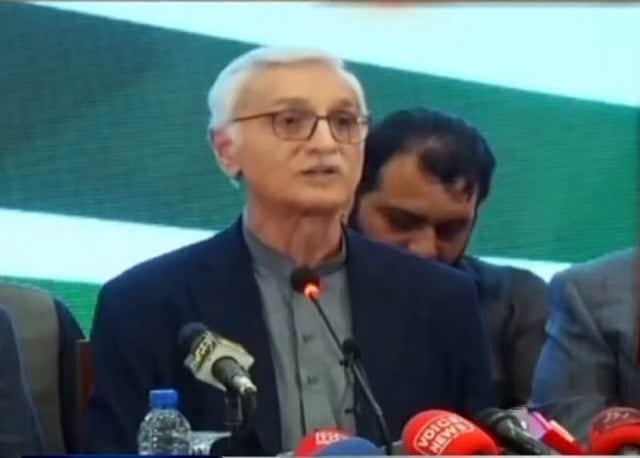
    Jahangir Khan Tareen, the disgruntled former leader of the Pakistan Tehreek-e-Insaf (PTI) and former confidante of PTI Chairman Imran Khan, credited with helping form the 2018 government, has formally established the “Istehkam-e-Pakistan” political party on Thursday in Lahore.

    Former PTI leaders Imran Ismail, Aleem Khan and Ali Zaidi were also present at the press conference to announce the launch.
    The party comprises of more than 100 former National Assembly members and leaders of PTI.

    “During my long journey in politics, I got the opportunity to meet and work with several people. I learned a lot from this experience,” said Tareen while addressing a press conference.

    He said he joined the PTI because he was confident the party would “implement all the reforms that Pakistan needed and still needs”.

    Tareen further said that the events of May 9 have changed the politics of Pakistan.