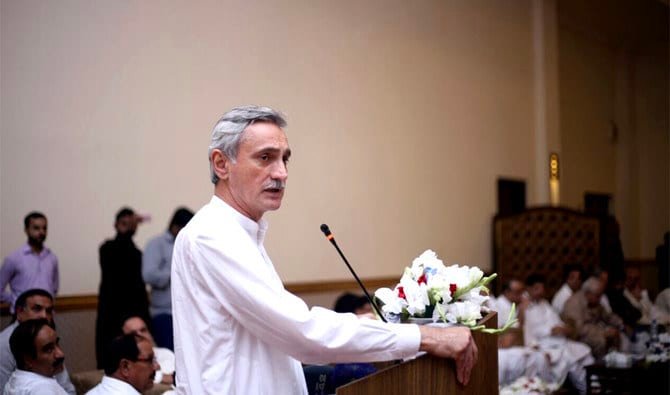
According to media reports, disgruntled Pakistan Tehreek-e-Insaf (PTI) leader Jahangir Tareen is likely to announce the formation of a new political party in 72 hours.
On Monday, Tareen visited Abdul Aleem Khan at his residence, where prominent politicians, including Ishaq Khakwani, former SAPM Aun Chaudhry, Shoaib Siddiqui and Saeed Akbar Nawan were also present.
As per details, Tareen is expected to do a news conference in 72 hours with former PTI leaders. In addition, Tareen is expected to submit an application for the registration of the new party to the Election Commission of Pakistan (ECP). PTI members who have left the party are now joining new alliances while some are joining other parties.
Democrats Group: This group is formed by Hashim Dogar and Murad Raas There are reports that this group has 35 former MPAs and MNAs
Pakistan Tehreek-e-Insaf (PTI) Haqiqi: PTI haqiqi has been formed by Rao Yasir, who previously served as PTI Multan district Youth Wing president. What parties and already established groups are these members joining?
Jahangir Khan Tareen group:
There are reports of dissident PTI members joining Jahangir Khan Tareen group. Tareen used to be a close aide of PTI chief Imran Khan.
PML-Q Group Many including Ayesha Gulalai have decided to join the Pakistan Muslim League-Q (PML-Q).
Pakistan and the International Monetary Fund (IMF) are on the verge of finalising a long-awaited loan deal, according to Prime Minister Shehbaz Sharif. In an interview with Turkish news agency, the premier expressed hope that the ninth review by the IMF would align with all the terms and conditions, leading to positive news this month.
Prime Minister Shehbaz Sharif said that Pakistan has diligently fulfilled each and every requirement set by the IMF as prior actions. The country’s commitment to meeting these obligations demonstrates its determination to address economic challenges head-on.
However, in the event of the IMF talks falling through, the prime minister assured the nation that Pakistan possesses the resilience and fortitude to overcome any obstacles. He drew attention to the fact that the people of Pakistan have faced and triumphed over numerous challenges in the past. If necessary, they are prepared to tighten their belts and rise once again. Shehbaz Sharif credited the government’s ability to navigate these difficulties to the unwavering support of the Pakistani people and the assistance of brotherly and friendly nations.
Highlighting the close bilateral relations between Pakistan and Turkiye, the prime minister described them as “one soul, two hearts that beat together.” He took the opportunity to congratulate the people of Turkiye on President Erdogan’s re-election, considering it a “wonderful development.” The deep bond between the two nations sets the stage for enhanced cooperation in the near future.
PM Shehbaz Sharif outlined plans for Pakistan and Turkiye to strengthen their collaboration, particularly in the areas of biogas, solar energy, and hydropower. By focusing on these sectors, both countries aim to bolster trade and achieve mutual growth. The emphasis on renewable energy sources aligns with the global trend towards sustainable development and underscores the commitment of Pakistan and Turkiye to fostering a greener future.
As Pakistan and the IMF move closer to finalising the loan deal, there is renewed hope for the country’s economic stability and growth. The government’s determination to meet the IMF’s requirements and the unwavering support of the Pakistani people serve as strong foundations for overcoming challenges and securing a brighter future. Furthermore, the prospects for increased cooperation with Turkiye in key sectors pave the way for mutually beneficial partnerships and contribute to regional progress.
With anticipation building, all eyes are now on the impending announcement that will mark a significant milestone in Pakistan’s economic journey. The successful conclusion of the loan deal will not only provide much-needed financial assistance but also serve as a testament to Pakistan’s commitment to reform and progress.
As a university student on summer break, there are various ways to spend your time efficiently. Firstly, it is recommended to set a few achievable goals that align with your personal and career objectives. For instance, you could decide to enroll in a short-term course or internship that aligns with your career aspirations.
Moreover, summer break is an excellent time to gain valuable work experience. You could consider applying for a part-time job or volunteering opportunity in a field related to your desired career path. This would enable you to acquire invaluable skills, boost your resume, and broaden your professional network.
In addition, summer break presents an excellent opportunity to travel and explore new cultures. You could plan a trip with friends, participate in a study abroad program, or volunteer for an international organization. Such experiences can provide a broader perspective on life and enrich your personal growth.
Furthermore, summer break also allows for self-care and personal development. Take time to engage in activities that promote your wellness, such as exercising, reading, or learning a new hobby. Also, it is essential to stay connected with family and friends and invest in meaningful relationships.
In summary, spending your summer break efficiently requires adequate planning and intentional living. Engage in activities that align with your goals and take time to invest in various areas of your life, such as work, travel, personal growth, and self-care.
On Monday, Spotify Technology announced its intention to implement a second wave of redundancies, resulting in the reduction of 200 positions within its podcast unit. This strategic restructuring follows a prolonged period of substantial investment, as the company seeks to adapt its business model accordingly.
This decision affects approximately 2 per cent of the music-streaming giant’s workforce, bringing Spotify in line with other prominent industry players such as Meta Platforms and Roku. These companies, facing an uncertain economic landscape, have also resorted to similar measures by implementing a second round of job cuts.
During early trading, the shares of this Sweden-based organisation exhibited a modest increase of approximately 0.5 per cent, outperforming the relatively subdued performance of the broader market.
In recent years, Spotify has actively pursued the expansion of its podcast business, anticipating that the format’s heightened engagement levels would attract a larger number of advertisers. However, this ambitious endeavour resulted in a surge of the company’s operating expenditure, growing at twice the rate of its revenue last year. Furthermore, rising interest rates and persistent inflation have prompted businesses to curtail their advertising expenditures.
Consequently, earlier in 2023, Spotify took the decision to reduce its workforce by 6 per cent, while also announcing the departure of Dawn Ostroff, a pivotal figure in shaping the podcast business. Ostroff adeptly navigated the company through contentious episodes, including the controversies surrounding Joe Rogan’s show and its alleged dissemination of misinformation concerning COVID-19.
In light of these circumstances, Sahar Elhabashi, the head of Spotify’s podcast business, conveyed on Monday that the company has reluctantly but necessarily opted for a strategic realignment. This course of action aims to address the prevailing challenges and align the organisation with its evolving objectives.
Additionally, Spotify unveiled its plan to consolidate the Parcast and Gimlet studios into a unified entity known as Spotify Studios. This amalgamation will oversee the production of Spotify originals. Elhabashi emphasised that the company intends to adopt a bespoke approach tailored to each individual show and creator, departing from the previously uniform approach.
By undertaking these measures, Spotify aims to optimise its operations, remain agile in a dynamic market, and position itself for sustained success in the podcast industry.
Former Indian batsman Virender Sehwag praised the hospitality of the people of Pakistan in a recent video.
The ace Indian batter, known for criticising Pakistan cricket, very rarely has something positive to say about the arch-rival country.
However, in a recent interview on an Indian channel, Sehwag recalled the Indian cricket team tour of Pakistan in 2004.
Sehwag disclosed that he bought 30 to 35 Pakistani suits for his family. w When he tried to pay, the shopkeeper refused to accept any charges.
Sehwag said, “I was wondering why he was not taking any charges, so I asked him what happened. The shopkeeper replied with a sweet and gentle tone, ‘You are our guest, how can I take money from you? Take it as a gift.’
“Aap toh mehmaan ho, aapse paise kaise le sakte hain hum?” Sehwag said.
Wherever the Indian team traveled in Pakistan, this was the constant behavior of the community, their hospitality is amazing, Sehwag said.
“We ate a lot of street food, did a lot of shopping, and no one charged us. The love we received in Pakistan is unforgettable,” he commented, adding that the Indian team felt emotional when they saw the love Pakistani people have for them. “And then we thought we are just two brothers who are separated from each other.”
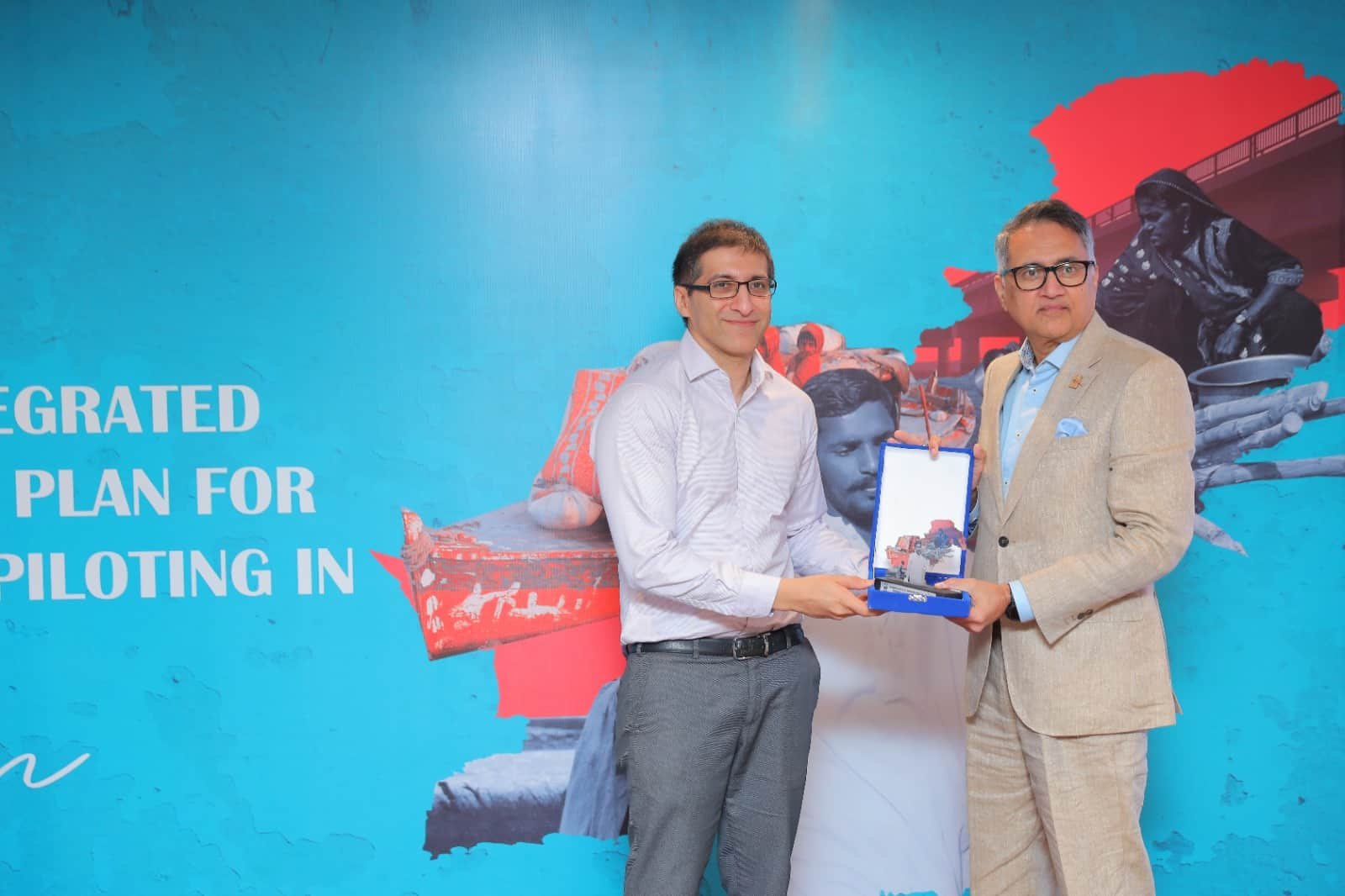
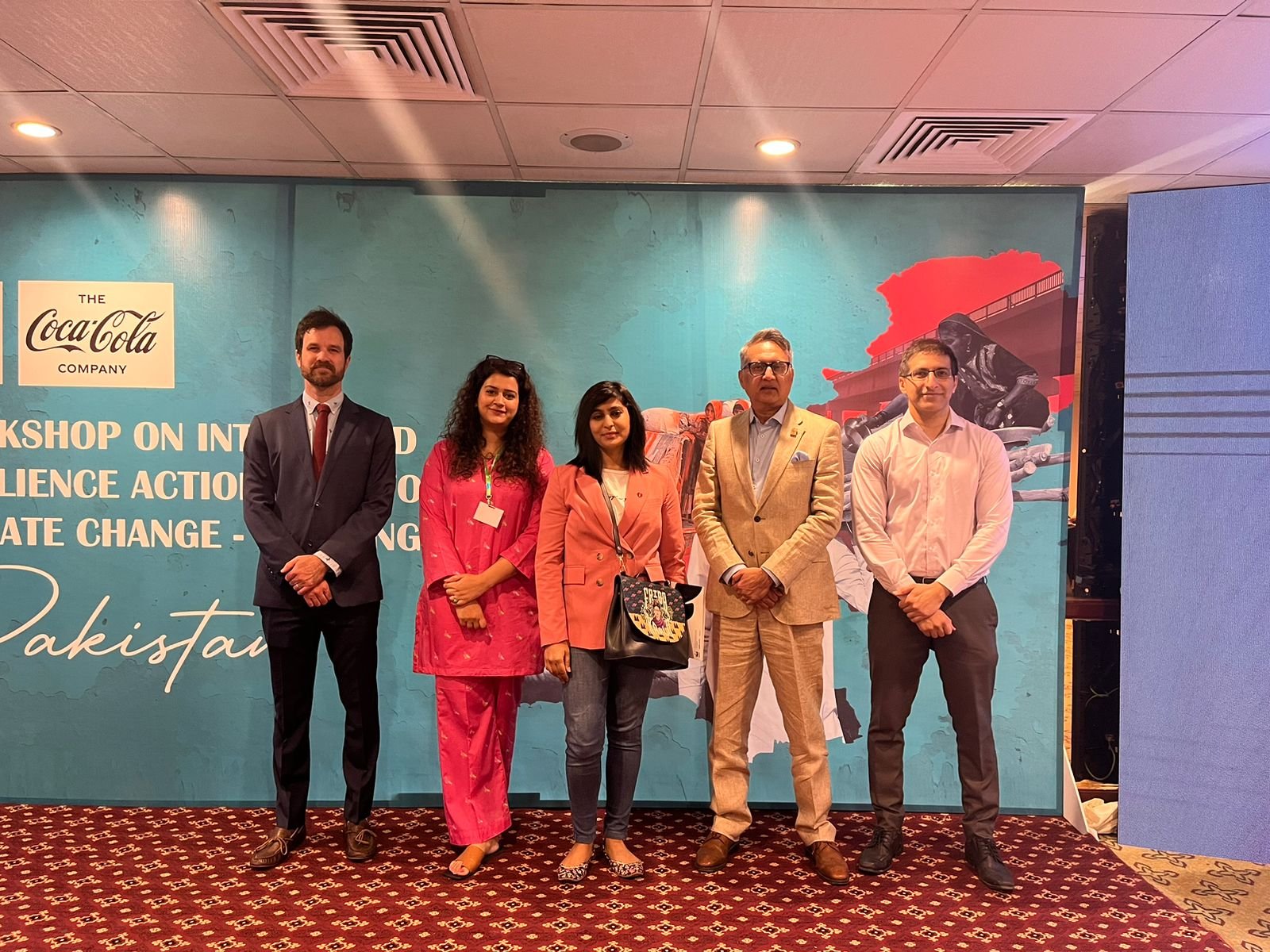
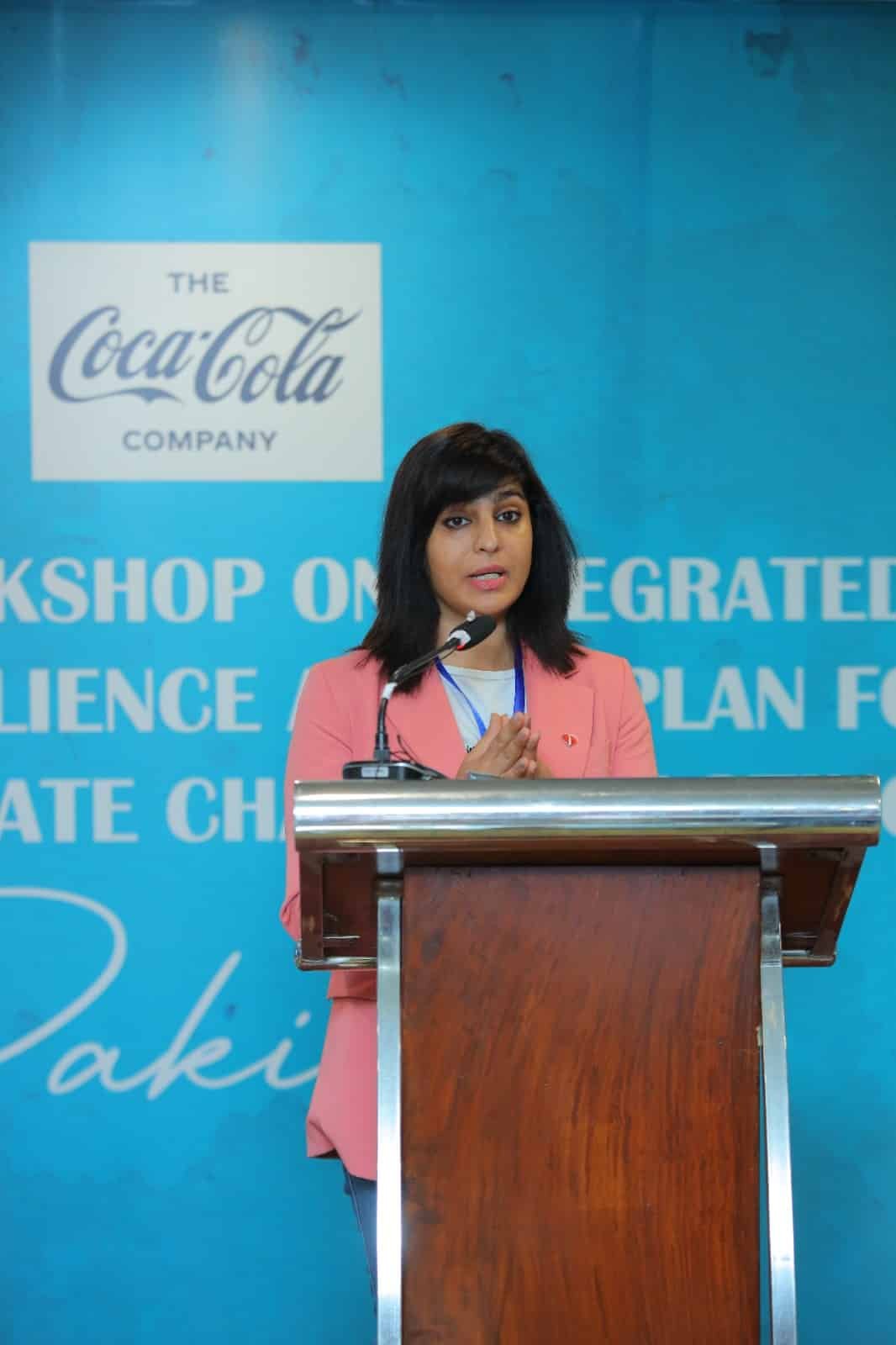
The Coca-Cola Company, in global partnership with World Wide Fund for Nature (WWF) inaugurated the Climate Resilience Program that aims to proactively identify risks and build resilience to climate change to enhance the resilience of water stewardship and sustainable agriculture in Punjab region.
As a first step, WWF organizeda two-day workshop titled “Integrated Resilience Action Planning for Climate Change”on World Environment Day,bringing together the collective wisdom of key stakeholders from government entities, non-governmental organizations (NGOs), and the private sector.
“Coca-Cola brings a vast distribution network and a strong sustainable agenda to our decade-long partnership with WWF. We believe we can strengthen our mutual commitments to climate resilience to create an integrated framework and solve for complex climate change disasters,” said Aisha Sarwari, Director Public Affairs, Communications & Sustainability, Coca-Cola Pakistan & Afghanistan Region.
Hammad Naqi Khan, Director General of WWF-Pakistan, highlighted the severe impact of climate change on water resources in Pakistan. He stated, “The devastating floods of 2022 resulted in significant production losses for key crops. These extreme events are clear indications of climate change. Pakistan’s irrigation system, one of the largest globally, suffers from inefficiencies, leading to substantial water loss. In this context, it’s vital to recognize the potential role of the corporate sector in providing leadership and implementing water stewardship strategies for better water resource management. WWF-Pakistan is committed to building resilience through initiatives like these. To address water and food security challenges, it is crucial to improve water governance, transform the agri-food system, and enhance institutional capacity building.”
Coca-Cola’s global water strategy focuses on sustainable water security through local water replenishment, advocacy for smart water policies, and responsible water use throughout operations and communities.Under Paani Project, Coca-Cola Icecek has replenished 15 ML of water annually since 2013 and supported 1 million people to access clean drinking water. 35 water filtering units were installed across Pakistan which have an individual capacity of producing over 2,000 liters of clean drinkable water per hour, each serving a community of over 20,000 people per day.ThroughTheCoca-Cola Foundation’s funding, Indus Earth Trustlaunched ‘Water For Women’ Project that has replenished 150 ML of water annually since 2017 and supported 2200 households in 40 villages in the Kohistan area, Thatta district. Furthermore, in collaboration with Mountain and Glacier Protection Organization (MGPO), 140,000 people were provided with over 5 million liters of clean water in Gilgit-Baltistan.
Recently, WWF-Pakistan also conducted a watershed health assessment study in the Ravi Basin supported by the grant funding provided by The Coca-Cola Company, which identified key water-related issues in the area. Informed by this local assessment, the next phase of the project will develop interventions that will help develop a Watershed Management Plan. These will cater to the river’s improved water quality and quantity, better ecosystem, and infrastructure improvement and development.
For more information about the workshop and the integrated resilience pilot program, please visit coca-cola.com/pk
About the Coca-Cola Company:
The Coca-Cola Company (NYSE: KO) is the world’s largest total beverage company, offering over 500 brands to people in more than 200 countries. At Coca-Cola, we’re serious about making positive contributions to our world. That starts with reducing sugar in our drinks and bringing new and different drinks to people everywhere. It also means continuously working to reduce our environmental impact, creating rewarding careers for our associates, and bringing economic opportunity wherever we operate. For more information, visit our digital magazine Coca-Cola Journey at:www.coca-colacompany.com.
The National Database and Registration Authority (NADRA) has recently implemented a state-of-the-art iris recognition or eye recognition biometric identification system.
According to a NADRA spokesperson, this innovative system will work in conjunction with existing fingerprint and facial identification methods. The spokesperson emphasized that the iris identification method has proven to be highly reliable, with an error margin that is practically non-existent.
Furthermore, the spokesperson highlighted that the eye scanning of an individual at a young age can serve as a permanent means of identification. This advancement showcases the long-term effectiveness of the iris recognition technology, offering enhanced security and accuracy.
Iris recognition, also known as eye recognition, is an automated biometric identification technique that employs advanced mathematical pattern-recognition algorithms on video images of an individual’s irises. These irises possess intricate and unique random patterns, discernible even from a considerable distance.
Prior to this development, NADRA had already introduced its cutting-edge Automated Finger Identification System (AFIS) for various civil purposes.
Following Pakistan Tehreek-e-Insaf (PTI) chief Imran Khan’s arrest on May 9 in connection with a corruption case, the country saw violent protests as his supporters clashed with law-enforcement agencies. The protests also targeted state and military installations, which resulted in a severe crackdown on the party.
Many prominent PTI leaders were arrested including Shireen Mazari, Fawad Chahudry, Asad Umar and Shah Mahmood Qureshi. The arrests and the criticism of the party led many PTI members to quit. Most of them left the party after holding press conferences or releasing video messages condemning the events of May 9. At least 100 Members of PTI have left the party.
The member who have left the party are now joining new alliances and some are joining other parties.
Democrats Group: This group is formed by Hashim Dogar and Murad Raas There are reports that this group has 35 former MPAs and MNAs
Pakistan Tehreek-e-Insaf (PTI) Haqiqi: PTI haqiqi has been formed by Rao Yasir, who previously served as PTI Multan district Youth Wing president.
What parties and already established groups are these members joining?
Jahangir Khan Tareen group: There are reports of dissident PTI members joining Jahangir Khan Tareen group. Tareen used to be a close aide of PTI chief Imran Khan.
PML-Q Group Many including Ayesha Gulalai have decided to join the Pakistan Muslim League-Q (PML-Q).
Claim: A travelling advisory issued by the United States State Department for its citizens who are travelling to Pakistan, has been circulating on social media.
“If you are traveling to Pakistan from the USA, Canada you should not use NICOP. Instead get a Pakistani visa on USA / Canadian passport.
Anyone entering Pakistan with a USA / Canadian passport will legally be considered a USA / Canadian citizen and will be entered into Pakistani Immigration Official Records as a USA / Canadian Citizen. He or she will be entitled to all the benefits and facilities available for USA / Canadian citizens”
The advisory further read: Here are some additional tips for staying safe while traveling to Pakistan: Be aware of your surroundings: Pay attention to your surroundings and be aware of potential threats. Avoid travel to areas that are known to be dangerous: The State Department has a website that lists dangerous areas. You can check this website before you travel to Pakistan.
Be careful about what you say and do: Be careful about what you say and do in public. Avoid discussing sensitive topics, such as politics or religion. Be aware of the local customs: Be respectful of the local customs and traditions.
Carry a copy of your passport and visa: Carry a copy of your passport and visa with you at all times.
Stay in touch with your family and friends: Let your family and friends know where you are going and when you expect to return. By following these tips, you can help to ensure that you have a safe and enjoyable trip to Pakistan.
Fact: The US State Department’s Bureau of South and Central Asian Affairs (SCA) in Pakistan has clarified that the advisory is fake. https://twitter.com/State_SCA/status/1665127708957761538?ref_src=twsrc%5Etfw%7Ctwcamp%5Etweetembed%7Ctwterm%5E1665127708957761538%7Ctwgr%5E8dc4e19d6d19e00887a321029e53f7ad8ae48414%7Ctwcon%5Es1_&ref_url=https%3A%2F%2Fthecurrent.pk%2F%3Fp%3D225138
A new Canadian airline has introduced direct flight to three major cities in Pakistan from Toronto. The flights to Islamabad, Karachi and Lahore will begin in August.
The new airline, Zara Airways, has appointed Ejaz Haroon, former managing director of Pakistan International Airlines (PIA), as an adviser.
The airline will operate three weekly flights from Toronto to Karachi, Islamabad, and Lahore.
It plans to initiate operations in August, utilising two Boeing 777 aircraft initially, with the potential to expand the fleet based on demand. The partnership with Shaheen Airport for ground services, cabin crew, and other operational support will further strengthen Zara Airways’ capabilities.
To ensure smooth commencement of operations, Zara Airways is currently in the process of securing a No Objection Certificate (NOC) from the Canadian government.
The establishment of Zara Airways is poised to invigorate Pakistan’s aviation industry, which has recently witnessed positive developments.
The approval of Wizz Air Abu Dhabi and SunExpress by the Civil Aviation Authority (CAA) will introduce increased competition, ultimately leading to lower fares and improved services for passengers.
Additionally, Ethiopian Airlines has announced the resumption of direct flights between Karachi and Addis Ababa, a route that had been suspended since 2004.