Author: newsdesk

  • Apple may cut off iPhone X and older iPad models from iOS 17 compatibility list

    Apple may cut off iPhone X and older iPad models from iOS 17 compatibility list

    According to French tech website iPhoneSoft, Apple’s upcoming operating system iPadOS 17 will no longer support the first-generation 9.7-inch and 12.9-inch iPad Pro models, as well as the fifth-generation iPad. This news corroborates earlier reports from a source with a reliable track record for predicting upcoming software updates. If the information is accurate, only the following devices will be compatible with iPadOS 17 when it is released in the fall: iPad Pro (2017 and later), iPad Air (third generation and later), iPad (sixth generation and later), and iPad mini (fifth generation and later).

    It’s important to note, however, that being on Apple’s compatibility list doesn’t guarantee that the device will fully support all features of the software. For instance, iOS 15 is compatible with all devices that can run iOS 14, but not all features will be available on older iPhones.

    In terms of iPhone compatibility, there are conflicting reports. The same source that leaked information about the iPad models that will be dropped from iPadOS 17 claimed that iOS 17 will also drop support for the iPhone 8, iPhone 8 Plus, and iPhone X. However, another anonymous leaker, who has shared accurate information in the past, disputed this claim. According to this second source, all iPhones that support iOS 16 will also support iOS 17, including devices powered by A11 chipsets like the iPhone X and iPhone 8/8 Plus.

    Last year, iOS 16 and iPadOS 16 discontinued support for several devices, including the iPhone 6s, iPhone 6s Plus, iPhone 7, iPhone 7 Plus, original iPhone SE, final iPod touch, second-generation iPad Air, and fourth-generation iPad mini. Apple is expected to announce iOS 17 during its WWDC keynote on June 5th.

  • Supply of free flour for underprivileged cannot be questioned, says Lahore High Court

    Supply of free flour for underprivileged cannot be questioned, says Lahore High Court

    Lahore High Court has ruled that the government is responsible for providing free flour to those living below the poverty line and unable to purchase it themselves, and therefore the supply of free flour cannot be challenged in court. The court also stated that the supply of free flour under the government’s “Ramzan package” is a policy decision that cannot be interfered with by the court. This ruling came in response to a petition filed by a bar member challenging the government’s fixation of the wheat price at Rs3,900 per 40 kg.

    LHC dismissed the petition, stating that the government has the authority to fix prices and take necessary measures to cater to the needs of the people. The court also observed that the fixation of prices of commodities such as wheat by the government falls within the policy-making domain of the government and that this function must be performed keeping in mind various factors such as the availability of stocks and demand and supply.

    The court further noted that the government’s power to fix prices cannot be ordinarily interfered with by the court in its constitutional jurisdiction and that in the absence of any law or policy, the court cannot issue directions to respondents to provide flour or wheat to consumers at subsidised rates. The court also stated that the government’s purchase and sale of wheat, provision of wheat to flour mills, subsidised value, and framing of policy to provide flour at a particular rate or free of cost to deserving people of the society are all within the policy-making domain of the government.

    The court held that the government’s fixation of the wheat price was within its jurisdiction and powers, and that the government’s decision to fix the price was made after considering various factors, including regulating market forces. According to Brecorder, the court observed that the government’s power to fix prices cannot be challenged by petitioners who do not have access to the relevant data or the capability to determine various aspects of the price-fixing criteria.

    In conclusion, the court ruled that the government has the authority to fix the price of wheat and that the supply of free flour to those in need is a policy decision that cannot be challenged in court. The court also noted that the fixation of prices of commodities falls within the policy-making domain of the government and must be performed in consideration of various factors and that the court cannot interfere with the government’s power to fix prices in its constitutional jurisdiction.

  • Online theft: FIA busts gang pretending to be bank officials on phone

    Online theft: FIA busts gang pretending to be bank officials on phone

    On Monday, the Federal Investigation Agency (FIA) apprehended a group of fraudulent online criminals who had been involved in a series of online theft cases.

    The FIA’s Cyber Crimes Circle Rawalpindi reported that six individuals were taken into custody for their involvement in the scams, which used advanced technology and modern gadgets.

    Six individuals by the names of Mohammad Farooq, Umar Usman, Mohammad Noman, Mohammad Irfan, Mohammad Aslam and Mohammad Adnan were arrested for posing as bank officials and stealing money from commercial bank account holders.

    One of the victims reported to the Cyber Crimes Circle Rawalpindi that Rs1.95 million had been fraudulently taken from their bank account through online theft.

    The victim reported that the suspects were able to obtain his personal information, access his bank accounts, and transfer the money. The FIA has seized seven mobile phones from the suspects and filed a First Information Report (FIR) against all six individuals. The investigation is ongoing, according to an FIA spokesperson.

    An official from the FIA stated that these types of gangs usually make calls from official commercial bank numbers and ask questions about ATM cards or pose as law enforcement officials to obtain bank account details. The official also mentioned that due to limited resources, the investigation agency was unable to address all of the complaints.

  • Pakistan sees sharp increase in Malaria cases

    Pakistan sees sharp increase in Malaria cases

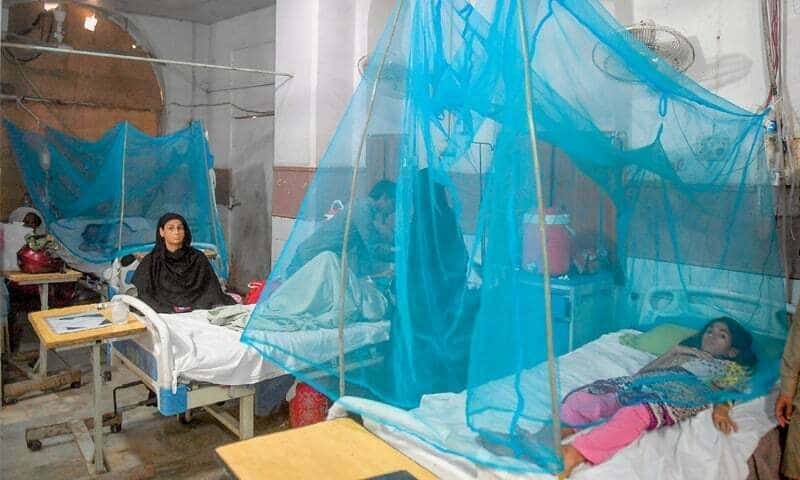
    The incidence of malaria has significantly increased in Pakistan and Malawi, due to extreme weather conditions, leading to a surge in both infections and fatality according to the World Health Organization (WHO).

    The organisation has reported that in Pakistan, the number of cases rose to 1.6 million, which is four times higher than the previous year, after devastating floods submerged a third of the country. These alarming figures were released ahead of World Malaria Day, which falls on April 25.

    “What we’ve seen in places like Pakistan and Malawi is real evidence of the impact that climate change is having on malaria,”  said, Peter Sands, head of the Global Fund to fight AIDS, Tuberculosis and Malaria.

    “So you have these extreme weather events, whether flooding in Pakistan, or the cyclone in Malawi, leaving lots of stagnant water around the place.
    He further stated that the surge in cases resulting from weather calamities triggered by climate change highlights the urgency to take proactive measures immediately.

  • In a first, Minneapolis City Council passes ordinance allowing public broadcast of Azaan

    In a first, Minneapolis City Council passes ordinance allowing public broadcast of Azaan

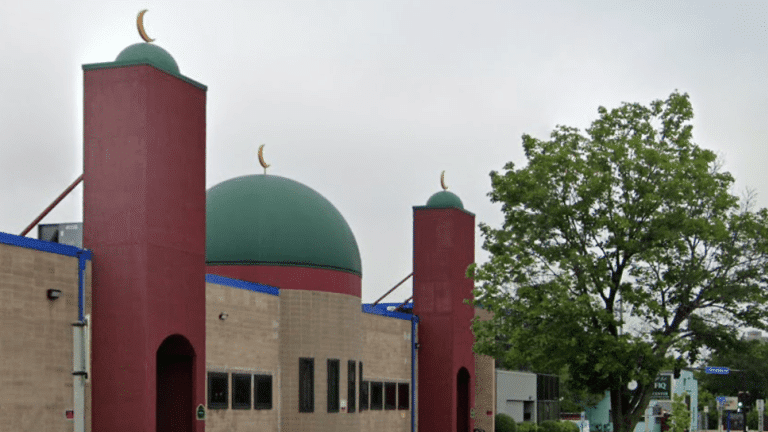
    The Minneapolis City Council has passed an ordinance permitting the public broadcast of the Islamic call to prayer five times a day throughout the year. Previously, mosques were only allowed to broadcast the call to prayer three to four times a day to comply with city noise ordinances.

    The new ordinance allows for the call to prayer to be broadcasted during the early mornings and evenings, which were previously prohibited. The decision was unanimous among the city council members.

    “It is really important for us at the city to approach all issues from a lens of ensuring equal access for all people, and that’s what we’ve really done here,” Council Member Aisha Chughtai said Thursday. “This is an item that benefits people of all faiths.”

    Under the old rules, azaan could only be broadcasted at a volume no higher than 70 decibels and within specific time limits. However, the new ordinance allows mosques to broadcast the call as early as 3:30am. and as late as 11 pm., which expands the time frame during which the call can be played. Additionally, the call was previously limited to three or four times a day, but with the new rules, it can be played five times a day.

  • Hurried ‘Fairy Tale’ finale misses opportunity for feminist ending

    HUM’s drama ‘Fairy Tale’ cemented itself as a household name with a hilarious storyline, stellar performances by actors and a compelling love story. The series had audiences, especially young women, applauding the growing change in how drama’s are abandoning sexist tropes to make empowering stories where for once, the women are smart and men aren’t chauvinists.

    For a lot of women, ‘Fairy Tale’ provided relief that somewhere, some one was listening to them about what they wanted: a feminist rom-com where the male lead respected, cherished and catered to the woman he loves. Farjaad (played by the talented Hamza Sohail) was described by many as a benchmark in how women wanted men in dramas to be: supportive, caring and completely the anti-thesis of what typical male leads in Pakistani dramas are like. In some of the viral clips from the drama that were garnering applaud on social media, Farjaad was considerate of Umeed’s independence, empowering her and stepping up to help her rather than shoving her inside the four walls.

    Which is why discussing the finale is important because rather than following through with the expectations and ending with a bang, with Umeed finally accomplishing her dream by opening a chai cafe and being married to Farjaad, it took a U-turn.

    The drama followed Umeed’s desire to break her father’s restrictions, a feat she manages to accomplish by participating in a game show through which she wins Rs2 crore and becomes the breadwinner of the family. Through Umeed, a lot of Pakistani women found catharsis because finally, a female lead who is financially independent? One, who empowers the women in her life, and doesn’t think twice before schooling a man who tries to lecture her? Is passionate about making her own path and establishing her own business, when currently one of the leading dramas in Pakistan involves slaps and suicide attempts *cough cough Tere Bin*? Umeed was an anomaly, reminiscent of the kind of characters who led the dramas of the 90’s when Haseena Moin was alive, and she was quick to win the audiences over.

    However, these accomplishments were for naught when by the finale, Umeed decides immediately that she isn’t interested in making more money, and gives a speech about how she would rather become an obedient daughter and get married to Farjaad. Like, why bother taking us all for a ride? Why would you explore 30 episodes about a young woman discussing business initiatives, ending with her choosing to give up all of it, and settle to marry?

    Through Farjaad especially, it was rare to see a man in a Pakistani drama own up to his actions, and empower the women in his life (READ: extremely rare), but that finale was a double-take for many audience members because in the first part he threatens to break up with Umeed if she chooses to go on and participate in the game show, something that was unexpected from a guy who told his love interest that he would keep supporting her. Then, when Umeed arrives at his office to apologise to him (why?) he taunts her for being in love with AK (played by Ali Safina). Even though he does apologise for this as well and admits that he isn’t perfect, shouldn’t the finale have ended with Farjaad owning up to his promises by helping Umeed setting up her business?

    These lose threads dangling from the plot will keep fans of the drama anxious about whether asking for a feminist rom-com was too good to be true, or maybe since Season 2 has been announced, some hope is left.

    But had the show kept true to its promise and given women what they wanted, a drama about a woman rejecting patriarchal norms and her father’s strictness to make her own dreams come true, it would have been much nicer.


  • Air pollution kills 1,200 children a year: EU Agency

    Air pollution kills 1,200 children a year: EU Agency

    According to a report issued by the EU environmental agency, air pollution is responsible for over 1,200 premature deaths among children under the age of 18 in Europe every year, and it also increases the risk of diseases in later stages of life. Even though some progress has been made, the study conducted across 30 countries, including the 27 EU members, shows that many European nations continue to have high levels of air pollutants, which exceed the guidelines set by the World Health Organization.

    “Air pollution causes over 1,200 premature deaths per year in people under the age of 18 in Europe and significantly increases the risk of disease later in life,” the agency said.

    The study was the agency’s first to focus specifically on children.

    “Although the number of premature deaths in this age group is low relative to the total for the European population estimated by EEA each year, deaths early in life represent a loss of future potential and come with a significant burden of chronic illness, both in childhood and later in life,” the agency said.
    The report recommended that officials concentrate their efforts on enhancing air quality in areas surrounding educational institutions such as schools and nurseries, as well as sports facilities and public transportation hubs.

  • ‘Don’t give Pakistan any animals’: Nadia Jamil slams Sri Lanka’s offer to send elephants

    ‘Don’t give Pakistan any animals’: Nadia Jamil slams Sri Lanka’s offer to send elephants

    After the tragic death of Karachi Zoo’s ailing elephant Noor Jehan after years of neglect and abuse, Sri Lankan authorities announced that they were donating two elephants to Pakistan. According to Geo News, Sri Lankan Honorary Counsel Yasin Joya announced that one will be given to Karachi Zoo and the other one to Lahore Zoo.

    Celebrities like veteran actress Nadia Jamil spoke out against this decision, slamming the Pakistani government for providing poor facilities for the animals that had led to Noor Jehan’s death.

    “I beg Sri Lanka, DO NOT GIVE PAKISTAN ANY ELEPHANTS. NOT until Pakistan develops a policy to protect animals in its zoos and learns to take care of animals as they should be taken care of. Please. No more tragic deaths. Please spare more animals from suffering like Noorjehan.”

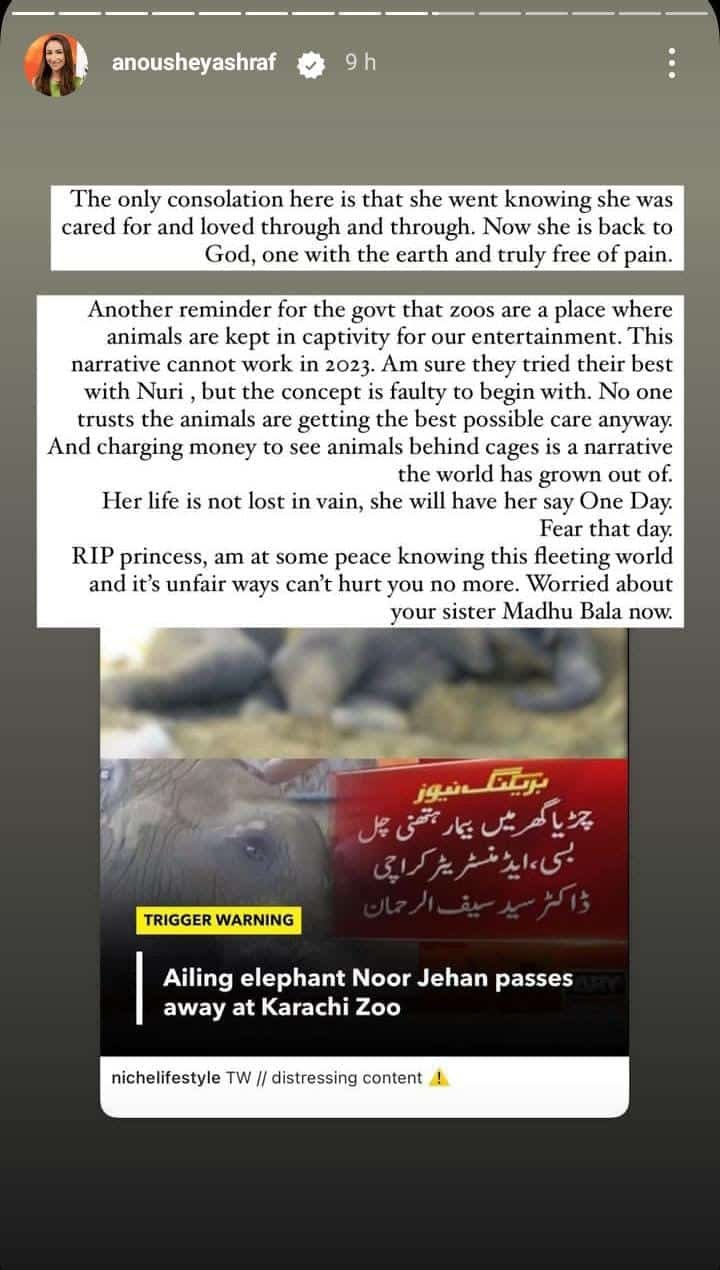
    Other celebrities like Anushay Ashraf and Ahmed Ali Butt mourned the loss of Noor Jehan, and slammed the Karachi authorities for their limited resources which had led to the neglected conditions of animals at Karachi Zoo. In a now-expired post on her Instagram stories, Ashraf pointed out how zoos are not safe places for animals, and should not be entertainment facilities for humans:

    “Another reminder for the govt that zoos are a place where animals are kept in captivity for our entertainment. This narrative cannot work in 2023. Am sure they tried their best with Nuri, but the concept is faulty to begin with. No one trusts the animals are getting the best possible care anyway. And chargingn money to see animals behind cages is a narrative the world has grown out of.”

    Singer and actor Ahmed Ali Butt slammed the decision to import elephants from Sri Lanka, because as he wrote:

    “We don’t deserve a zoo, just like everything else in this country, animals and their care is the least of our worries. This is just a feather in our incompetetnt cap.”

  • ‘Mere aziz hum watno’: Shahid Khaqan says today’s situation is complete script for martial law

    Pakistan Muslim League-Nawaz (PML-N) senior leader and seasoned politician Shahid Khaqan Abbasi has warned of the possibility of martial law in Pakistan, citing political polarisation and economic crisis.

    Speaking on Dawn News‘ English show ‘Spotlight’, Khaqan said that the country “has never witnessed a more severe economic and political situation before. In much less severe circumstances the military has taken over.”

    The former Prime Minister (PM) hoped that the military isn’t considering taking over Pakistan, however, he said that “when they are left with no choice then the old famous speech, ‘mere aiziz hum watno’, if you read the situation today it’s a complete script for a speech like that.”

    He clarified that if the army were to take over, it would make things worse instead of doing any good.

    “When the system fails, when there is no interaction between the institutions, and when there is a conflict between them, then martial law always remains a possibility”, he said.

    He stressed the importance of dialogue and strong leadership but stated that the environment has become so toxic that even the parliament doesn’t discuss national issues.

    According to him, elections are not the kind of solution they used to be in the past.

    Pointing out that dialogues were supposed to have a purpose, Abbasi stated if they benefited only one political party, they would defeat their purpose. “If the intent is just to decide a date for the elections or the political benefits of one, it’s not a proper dialogue.”

    “Dialogue in media is all about abusing each other”, said the politician.

    According to him, it is unfortunate that his own party isn’t ready for dialogue. He said that he fears today that even the “youth has become delusional with this whole system” adding that Pakistanis themselves don’t recognise the potential of their country.

    At the last, he again stressed the responsibility of leadership, and that they should try to step in.

  • Major camera upgrade: Apple iPhone 15 Pro Max expected to debut with larger IMX903 sensor

    Major camera upgrade: Apple iPhone 15 Pro Max expected to debut with larger IMX903 sensor

    Apple has finally upgraded the main camera on its iPhone 14 Pro and iPhone 14 Pro Max models from a 12 MP to a 48 MP sensor. Reports suggest that Apple will continue this trend with the iPhone 15 Pro models, with the iPhone 15 Pro Max receiving an even bigger sensor.

    According to leaker Ice Universe, the iPhone 15 Pro Max is expected to debut later this year with a new 48 MP sensor, the IMX903, which is an improvement on the IMX803 used in the iPhone 14 Pro models. The IMX903 is predicted to be a 1/1.14-inch sensor, which is larger than the 1/1.28-inch IMX803.

    Additionally, leakers are promoting hardware-level 14-bit DNG RAW capture. However, it appears that Apple may revert to the days when the Pro Max model had a superior camera to the Pro one.

    All available information suggests that the IMX903 will be exclusive to the iPhone 15 Pro Max, while the iPhone 15 Pro will retain the IMX803 from its predecessors.