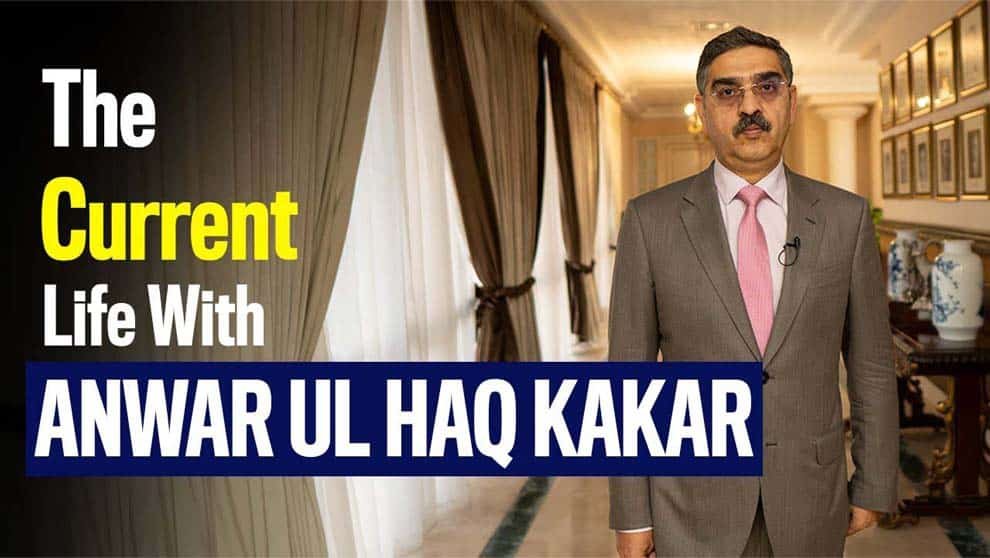
Caretaker Prime Minister Anwar ul Haq is making it clear: he’s not just here to fill in temporarily, no jee. He’s taking the short time he has to make a difference by being the one PM who is willing to engage with the youth of Pakistan. We met up with him in the so-cool PM house in Islamabad, and asked him about what happened at LUMs, his future plans and his favourite room in the PM house. Find out now. The Current life.
Author: optimum_tech
-
Women still need men’s permission to exist in Pakistan
Zainab*, 25, has been working as a domestic servant for as long as she can remember. Her father died when she was young and her mother remarried, leaving Zainab and her sister at the mercy of extended family. Every month, she would send her salary back home for safekeeping but when she would ask for it back, it would always be less than what she had handed over. Once she even bought a buffalo with her savings, thinking it would be a safe way to invest her income, but she ended up losing money when she sold the animal. When her current employer suggested she open a bank account to keep her earnings safe, Zainab was intrigued. After jumping through many bureaucratic hoops, she finally managed to open her account. Using her savings, she has built a small house for herself and her sister.
Unfortunately, Zainab’s story is a unique one in Pakistan. As per the latest Karandaaz Financial Inclusion Survey, only 13 per cent of women in Pakistan have an account with a traditional bank or a mobile money company. In comparison, 47 per cent of men are financially included.
To open an account with a traditional bank, you have to provide documentation that proves you have a source of income. If you are financially dependent on someone else, then you must provide their documentation instead. This requirement exists regardless of gender but in a country where 75 per cent of women are out of the workforce, we can infer that it puts women at a disadvantage and makes banking less accessible for them.
Contrastingly, mobile money banking is much more accessible. If you have a mobile phone and an ID card, you can easily open your account. But women’s mobile ownership is also low. In its survey, Karandaaz found that only 38 per cent of women own a mobile phone, compared to 83 per cent of men. In the same survey, they found that 43 per cent of women without access to a phone said that they do not have permission from their spouse or family to own or use one.
Sabahat Bokhari is the head of diversity and inclusion at Jazz, one of Pakistan’s largest mobile network providers. Jazz also owns JazzCash, which is a leading mobile money banking service in Pakistan and counts women as 29 per cent of its users.
Bokhari cites the matter of permissions as a major roadblock to meeting their internal inclusion targets. “‘We don’t allow women to have their own sims, we don’t allow women to have phones’ is what we hear on our visits to rural areas,” she said.
This suggests that the reason for the gender gap in financial and digital inclusion is not just accessibility, but also the deeply unequal power dynamics inside Pakistani homes.
“One thing that we miss from these conversations — be it digital inclusion, be it financial inclusion, or just generally any kind of gendered inclusion in public spaces — is the fact that Pakistan is a supremely patriarchal country, where most of the women in the country depend on men in the household to ‘allow’ them to have access,” Hija Kamran, a digital rights advocate, said.
Kamran argues that most women in Pakistan are actually eager to be a part of the digital and financial ecosystems. However, they are not allowed to do so by the men in their households. So when someone from, for example Jazz, visits and offers them a SIM card, they have to refuse for the sake of their own safety.
This issue of male permissions is pervasive. Non-profits that are working to close the gender gap in financial and digital inclusion confirm that they also face these challenges.
Circle is a non-profit organisation that has trained more than 7000 low-income Pakistani women in digital and financial literacy this year. During these trainings, women learn how to monetise their existing skills, how to start businesses through social media and how to use digital banking.
Currently, 1500 of their trainees’ businesses are active but many other trainees lack the motivation to start or continue businesses. Laiba Saleem, a community building coordinator at Circle, says this is often a result of family restrictions, including men of the house “not allowing” women to work or be online.
“One woman who was enrolled in our training didn’t come the next day because her father beat her and interrogated her about why she was trying to learn how to use a phone,” Saleem said. “Another one had set up her business as a henna artist on Instagram but as soon as her brother found out, he forced her to take down her account.”
The World Economic Forum’s Global Gender Gap Report 2023 ranked Pakistan as 142nd out of 146 countries in terms of gender parity, with economic participation getting a particularly low score. Despite governments, corporations and non-profits making efforts to include women financially and digitally, gendered power dynamics in Pakistan appear stubborn and slow to change.
Fiza Farhan is a global development advisor and serves on the United Nations’ high level panel on women’s economic empowerment. In 2018, she worked with the Australian High Commission in Pakistan to launch “Male Champions of Change,” a coalition of male CEOs working on gender parity in their companies.
“Since decades, its always been women working on women empowerment issues in rooms full of women — whereas 98 per cent of your leadership is men,” she said. “Without involving the male leaders, who have made the system, how are you even trying to change the system?”
Farhan argues that by bringing influential men on board, including community leaders and mosque imams, significant progress can be made. These influential people will be able to make the business case for women’s inclusion to ordinary men.
Hija Kamran agrees that involving community leaders has been an effective strategy for reshaping societal beliefs.
“That has been sort of efficient, in the sense that men have listened to it,” she said. “Because somebody who they trust is talking to them rather than someone who is outside the community and is coming in and telling them how to deal with their own issues.”
However, she is vocal about the limitations of such interventions. Men may understand the economic benefits to the household of “allowing” women to work, but that doesn’t mean they will permit women to have other freedoms, like opening a bank account or buying a phone.
“Who is being helped at the end of the day? When women go into the labour force, they are doing the labour, they are putting in the work but who’s getting the fruit,” Kamran asked. “What will happen is that at the end of the month, when the salary comes in, somebody else will be enjoying the independence that comes with women’s labour.”
Zainab’s story is a practical example of these concerns. She worked hard for her salary but it wasn’t only hers at the end of the month — until she opened a bank account. When she used her savings to build a small house for herself, she was mocked for wasting money. Her relatives questioned why she wasn’t saving it for her dowry instead. What was the point of building your own house when you will inevitably get married off and have to move in to your husband’s house, they asked.
But perhaps the house she built, and the fragile protection it provides to her from patriarchy, is the only reason Zainab has some semblance of independence, unlike most women in Pakistan.
*Name has been changed to protect identity.
-
Saba Faisal has a strange tip for girls who want to marry rich
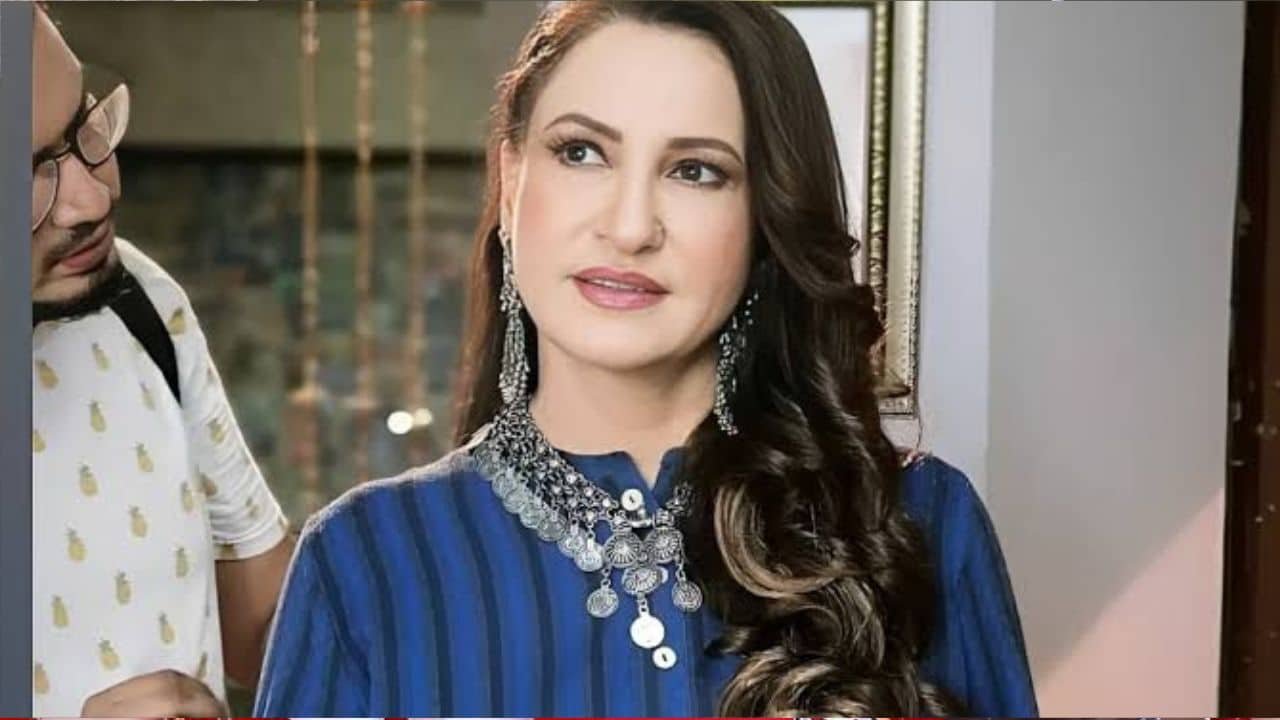
Veteran actress Saba Faisal was a guest on the Samaa show ‘Subh Ka Samaa Madehaa Kay Sath’ where she spoke about girls having unrealistic expectations from marriage, including immediately becoming the owner of a home after marrying a man. Her advise to these girls who wished to become financially secure was, not to look for better jobs, but to marry older man.
“Today’s girls think they will immediately become owner’s of homes after getting married and have a lot of wealth. They don’t realise that young men are struggling with their jobs in these periods. If you’re looking for financial stability, then a better choice is that you marry a man who is between the ages of 40 or 50. Since he would be able to fulfil all of your needs.”
Turns out this wasn’t the only housekeeping tip Miss Saba had to offer on the show. She also urged parents to pray for their son’s fortunes, rather than entirely focusing on their daughters because after all it is the son who is responsible for running the entire household. Women can’t become bread winners, Miss Saba? They are solely just burden on their parents because they have to eventually get married and become the responsibility of someone else?
“Parent’s shouldn’t just pray that their daughters fortunes are good, but they should also pray that their sons are blessed in life. They are the ones who are responsible for handling an entire household, and when they get married they have to get a wife who would take care of the entire family. Men have an enormous responsibility.”
Can celebrities please stick to solely acting projects and not churn out advice we never asked for?
-
Twitter outraged after TIME magazine sidelines Gaza journalists, names Taylor Swift ‘person of the year’
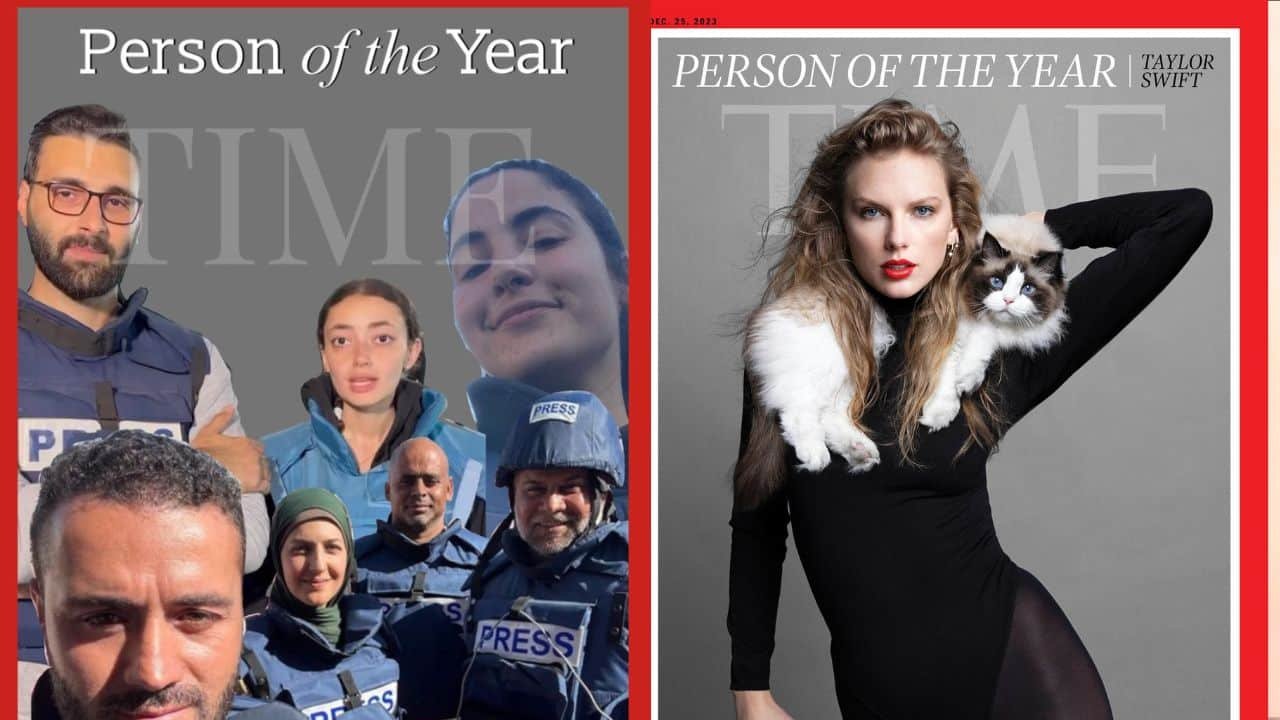
Time magazine announced yesterday that the coveted title of ‘Person Of The Year’ 2023, went to singer Taylor Swift. The decision was met with severe backlash from the internet, who called it out as another example of how the Western media has silenced journalists in Gaza, who were risking their lives to reveal the realities of the genocide.
A Twitter user is going viral for drawing a comparison between Ukraine-Russia war and Israel’s aggression.
times person of the year when russia invaded ukraine vs when israel is committing literal genocide against palestinians pic.twitter.com/rvhzkUUXxu
— sippin on that (@vivafalastin) December 6, 2023
Twitter users were outraged at Gazan journalists like Motaz Azaiza, Plestia, Bisan and Saleh being ignored, stressing that censorship lays bare that Gazan lives are considered disposable by the western media.
the real people of the year https://t.co/SxyVlMA9J8 pic.twitter.com/QiFqXmQ1YS
— una (@alicehenryli) December 6, 2023
72 Journalists and their families have been killed by israel since october 7th, they are among the 20,000+ palestinians slaughtered. We can honor ukraine in 2022 but god forbid you honor the brown people risking their lives to show whats happening in Gaza. Screw this. https://t.co/uwg7mPzzSP
— ZAYNA FREE PALESTINE (@sitcomabed) December 6, 2023
Today I choose to honor the real people of the year: the Journalists in Palestine. Their constant strength and courage in the midst of a genocide is something so admirable. They lose family and friends but never stop showing us what’s actually happening in Gaza. #freepalestine pic.twitter.com/jBCCdnNnWI
— ZAYNA FREE PALESTINE (@sitcomabed) December 6, 2023
Many Twitter users are also criticising Taylor Swift to be a white feminist, after a quote from her article with Time went viral where she spoke about the intersection of capitalism and patriarchy.
“What has existed since the dawn of time? A patriarchal society. What fuels a patriarchal society? Money, flow of revenue, the economy. So actually, if we’re going to look at this in the most cynical way possible, feminine ideas becoming lucrative means that more female art will get made. It’s extremely heartening.”
She’s basically saying that her being rich is because of feminism and her “female art” (whatever that means) is justified in making money because it’s feminist. Guys look she’s such a feminist for using feminism to profit more money even if she’s a billionaire. White feminist https://t.co/SzaDsgZ7oG
— সব নিপীড়িত মানুষের মুক্তি Ujala/নিশিথিনী (@shimmeringolds) December 6, 2023
i’m so glad she did this interview. She’s the final (girl)boss liberal white woman, and I am saying this neutrally. stuck in a vacuum, staid politics, pussy ear hats, daughter of a witch they couldn’t burn https://t.co/kogXstlqjN
— Bolu Babalola is technically on leave & (@BeeBabs) December 6, 2023
she basically said.. her being a billionaire is feminism.. because.. she’s a woman ??? girl what are you even yapping about https://t.co/pf6F76ZkPJ pic.twitter.com/QQygGxnLPH
— jopping (@GIRL0FTHEMONTH) December 7, 2023
-

Lady health workers standing up for their rights
“Lady Health Workers (LHWs) should not be asked to do security duty during elections,” said Bushra Arain, Founder and Chairperson of the All Lady Health Workers’ Programme Union (ALPU).
Acknowledging that other government workers are called in for duty, Bushra Arain pointed out that they are given easier tasks and are trained before the elections. “We are asked to do difficult duties and there is no security or training for LHWs,” she observed.
As elections are near, Bushra Arain is worried that LHWs will be again asked to work during elections without protection or training.
“LHWs are already soft targets, and elections in Pakistan are not safe, we worry for our safety,” emphasised Bushra.
Rubina Ghaffar is an LHW in Karachi, and she was called on election duty in 2018.
“Elections are near, and many of us are afraid that we will be put on security duty again,” said Rubina, “Last time we were tasked to do two things: count votes and provide security to the polling staff. We were not trained how to do this nor given any protective gear.”
Rubina continued, “On the morning of election day, a group of us were driven to the polling station early in the morning. Our duty began at 6 am and ended only when we protested and demanded that we be allowed to go home. It was very late in the night”, Rubina said. “We were brought to the polling station in police vehicles but had to go home on our own late at night.”
Rubina further said, “There was no security at the polling stations and although we were paid Rs4500 as compensation for the duty, it was not enough considering LHWs are already soft targets as we have seen. We were giving the voter list to tally with voters’ ID cards and tally the numbers.”
She added, “Afterwards we counted the votes, this was checked by the relevant people. We not allowed to leave and were asked to keep sitting despite asking to leave. We were hungry and thirsty; we had not been provided anything throughout the day although the political workers were provided with lunch and tea. We couldn’t even order food as we were not allowed to step out of the polling stations. It was only after we protested, we were allowed to go home. It was quite late, and we had to travel back in small groups.”
People living in urban areas are probably not interested in the lives and work of LHWs. They may not be disrespectful or disregard LHWs but since most of them don’t have any real interaction with them and may only meet them during a polio campaign, these women remain invisible and faceless to most of the urban population.
LHWs don’t play an important role for urban dwellers their role is quite significant for slum dwellers in many cities, as well as rural areas where a large section of the population especially women rely on the basic health services LHWs provide. Many of these people have never received proper medical service and LHWs are their link to medicines and vaccinations.
Former prime minister Benazir Bhutto launched the Lady Health Workers Programme in 1994 and at the end of the programme, LHWs were merged into the health sector. This was the logical step so that these trained community health workers could enhance health services to marginalised communities. However, instead of being beneficial for the LHWs, it only added to their problems.
“When the LHW programme ended, LHWs were absorbed by the health department. This didn’t help to improve our status. Like other employees of this department, we were government servants but unlike them, we have no benefits like promotions, pensions, or increments. The main reason for this is that we don’t have a proper service structure under which we would be given these rights and benefits,” said Bushra.
She added, “We are sent to all kinds of “special duties” including election and census duties, but we are not given any training or protection when we are doing security during elections. We worked throughout the pandemic without any protective gear or hand sanitisers. LHWs are vulnerable and we have lost many members to targeted terrorism., it is not fair to send us for election duty without proper training or protective gear.”
Bushra further said she understands LHWs will be sent on special duties like other government employees, “Why aren’t we given benefits like other members of our department? Why isn’t our service structure made despite the Supreme Court’s orders in 2012? Why are we being deprived of our rights like increments, promotions, and pensions despite the court’s order? Many LHWs have retired without receiving benefits. And when we protest, we are beaten.”
Elaborating on this, Maqsood Ahmed, trade unionist and trainer, said, “LHWs work in the most deplorable conditions. They do the work of doctors, nurses, counsellors, and community & social workers for marginalised communities. The LHWs do more than they should – this exploitation is only because their service structure has not been enforced.”
He added, “In March 2013, the Supreme Court ordered that the service structure be made for LHWs, and they be regularised. And after the 18th Amendment, the devolution of 1,56,000 LHWs including supervisors, drivers, and accountants should have been done by the provinces but this has not been done till date.”
“The Civil Servants Act governs government and public services. Different rules help to determine the number of leaves, pensions, promotions, and other benefits to the employee. Depriving LHWs of their service structure is in contravention of the Apex Court’s orders. Over time more than two to three thousand LHWs have retired increasing the workload. More LHWs should be hired as the population is increasing but this cannot be done until the service structure is made.”
“If Bushra Arain and ALPU members don’t speak up for their rights no one else will help them,” said Maqsood Ahmed.
Bushra added to this, “We will continue to speak up for our rights because no one is willing to give them to us despite the court’s order. Our union will keep fighting.”
-
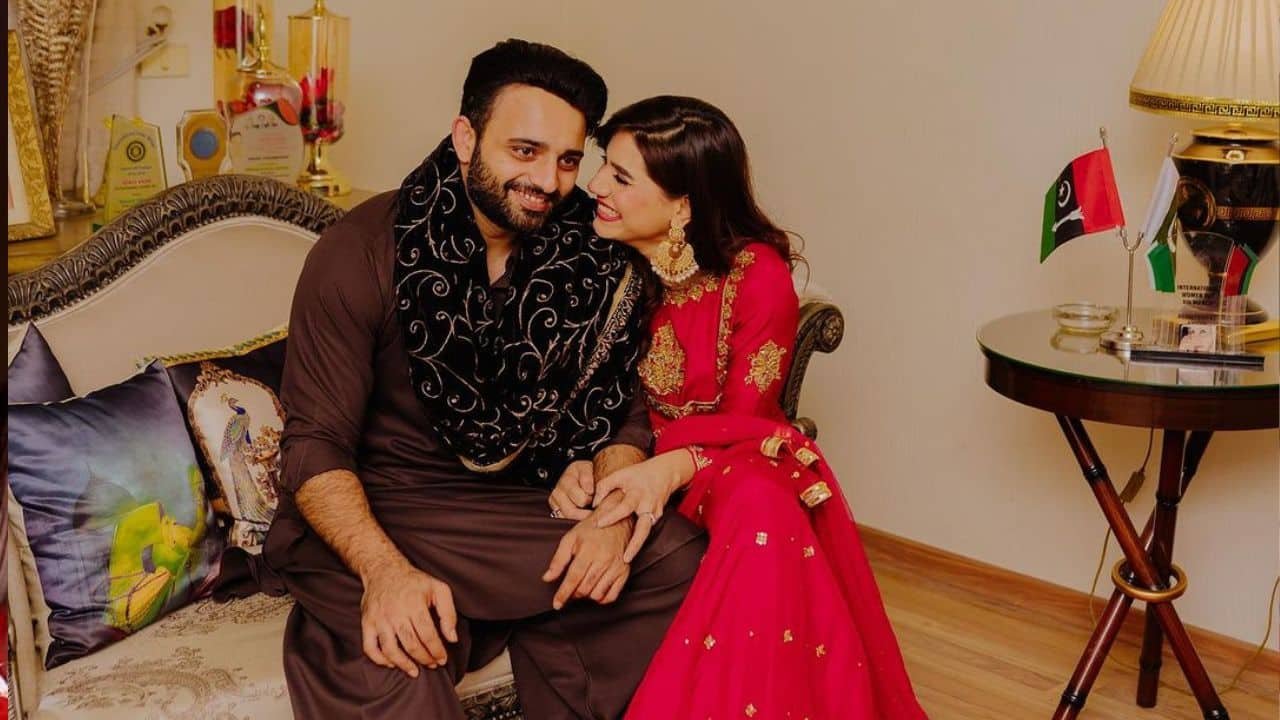
‘Not me, Imran Ashraf decided to end the marriage’: Kiran Ashfaque
Kiran Ashfaque announced her marriage to PPP official Hamza Asim Chaudhary on Sunday, attracting a lot of attention, some of it from trolls. This was the actress’s second marriage, after her first one was to actor and host Imran Ashraf ended after four years.
Kiran has boldly stepped up to shut down trolls who bullied the actress for quickly marrying after her divorce, reminding them she didn’t need permission from anyone for moving on. A commentator underneath her wedding pictures bullied the social media influencer for moving on to a man who wasn’t as attractive as Imran, to which Kiran responded:
“He was the one who decided to end the marriage, no me. But Allah led me to a much better man than him.”

On Tuesday, the actress shut down another troll who mocked the actress for getting married within a year after her divorce, responding that she wouldn’t sit around crying about her circumstances.
“You mean I should have kept residing at my parents and remained depressed about my life while my parents were worried about me?”
-
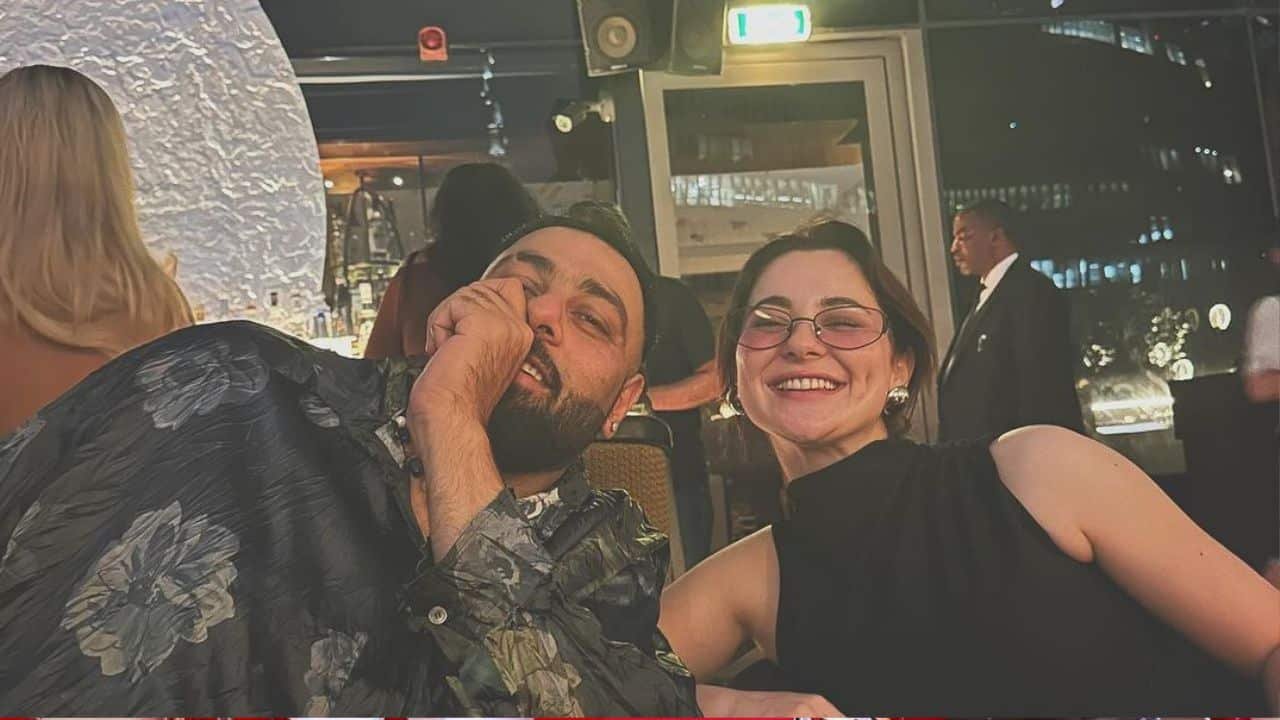
Newsflash Pakistanis, Hania Amir and Badshah can be friends without dating
Hania Amir is going viral on the internet for a very, very weird reason. The actress shared pictures of her trip to Dubai where she went around with Indian rapper Badshah, including dining together in a restaurant. Indian media outlets quickly assumed the two were dating. Because lo and behold, if you’re seen sitting next to a man, you have to be romantically linked with him.
We have to question our media: why in this day and age are y’all still resorting to such sexist thinking? Can Hania actually spend time with a male friend without dating him? Men and women can remain friends, and its clear from their past interaction that the two respect each other.
Rather than trying to fuel rumors to get more traffic on your websites, can we instead celebrate that despite political and cricket rivalries, here are two public figures from Pakistan and India who keep uplifting each other publicly?
Also, Hania Amir doesn’t need to be linked to another man in order to be recognised publicly. Her projects have gotten immense praise, and she continues to remain booked and busy, so stop trying to assume she has to be dating someone just to get some attention. Insinuating such a thing is deeply demoralising, and proves how women can never be recognised for their achievements alone.
We’re not going to be paying any heed to careless rumours, but instead we’ll be celebrating the wholesome friendship between Hania and Badshah. In January, Badshah gushed about the ‘Mere Humsafar’ actress by calling her an instant mood lifter during an Instagram live.
“Yes I follow her she’s a very funny person. My mood uplifts every time I see her posts, and I think its also just her personality. I think she’s a very bright human being,” responded the rapper.
-
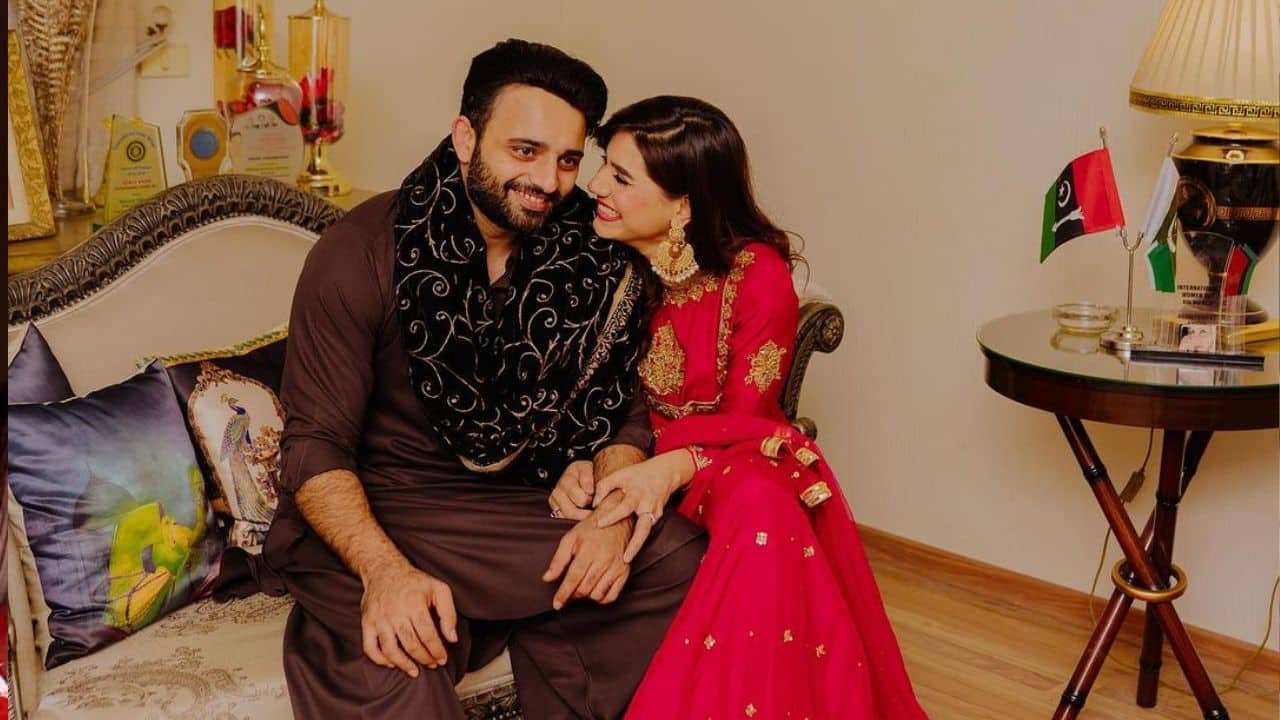
Kiran Ashfaque shuts down troll who tried to shame her for second marriage
Actress and social media influencer Kiran Ashfaque made headlines yesterday when pictures of her marriage to PPP official Hamza Asim Chaudhary went viral on social media. Previously, Kiran was married to actor Imran Ashraf and divorced him after four years of marriage.
The actress was not here for the cynics shaming her for finding love for the second time. Kiran responded to a troll who accused her of marrying soon after getting divorced:
“You mean I should have kept residing at my parents and remained depressed about my life while my parents were worried about me?”
Kiran’s marriage to Hamza was held in his residence in Lahore which was attended by family and friends. The actress had shared pictures from the event on her social media.
The actress had previously done a Q and A on her Instagram where she revealed her previous marriage broke up because of how much her ex urged her to change herself.
READ MORE: Kiran Ashfaque talks about her divorce with Imran Ashraf in a Q&A session on Instagram
Responds to a fan asking why they divorced because the couple had looked happy, Kiran had responded: “Not all that glitters is gold.”
Another answer got praises where Kiran urged her followers to never change themselves for another man, and to remain proud of how bold they are.
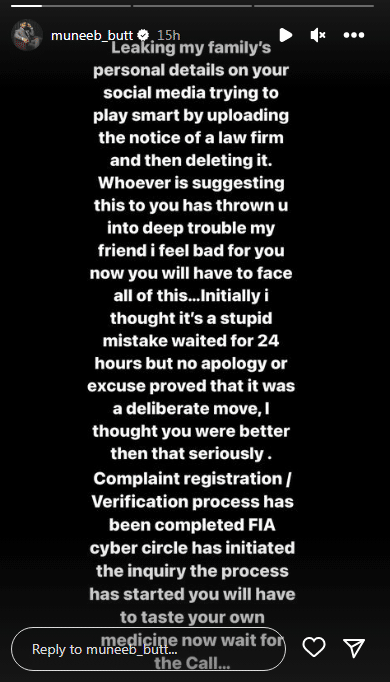
We’re still shocked that to this day, women are facing more scrutiny for choosing to break off unhappy marriages. Why should Kiran have to keep justifying her choices, and have to fight off the label of ‘Imran Ashraf’s ex-wife’? It’s gross and absolutely not acceptable, and we send our sincerest regards to Kiran for living rent free in the minds of haters while doing whatever she loves.
-
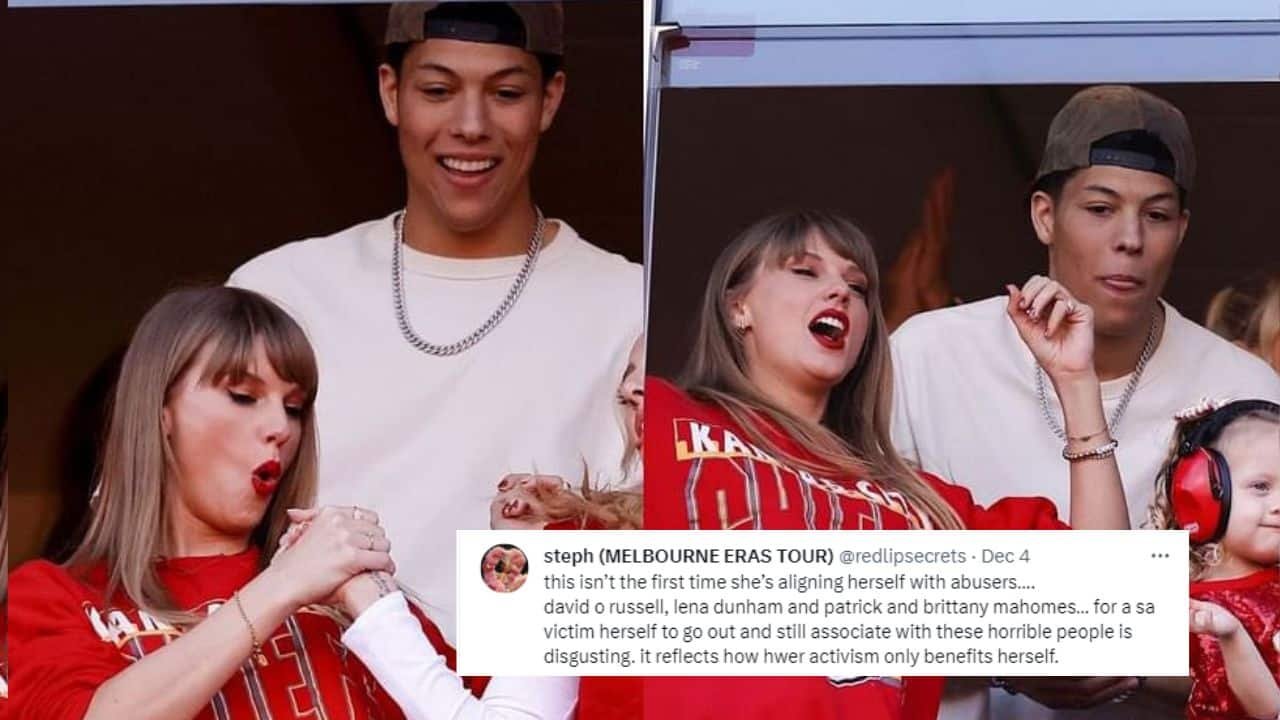
‘Anti hero’ Taylor Swift sparks outrage for befriending allegedassaulter Jackson Mahomes
‘It must be exhausting always rooting for the Anti Hero’? Not for Taylor Swift it seems so.
Taylor Swift has garnered backlash from fans because of the singer’s silence on the ongoing genocide of Gaza, and several videos showed Israeli fans dancing to the screening of ‘Eras tour’ movie. Now, fans are outraged after the singer who wrote ‘Mad Woman’ was spotted laughing along side the younger brother of NFL player Patrick Mahomes, Jackson Mahomes, who is accused of sexual assault.
A twitter thread by a Swiftie, detailing the charges filed against Jackson, who was seen in a video grabbing a woman and forcibly kissing her, is going viral. Jackson was arrested and charged with three counts of sexual battery and misdemeanour. But he was released on $100,000 bail.
on may 3, after nearly 2 months of police investigating the incident, jackson mahomes was arrested and charged with 3 counts of sexual battery, and an additional count of misdemeanor battery. hours later, he was released on $100,000 bail. it’s nice to have NFL money on your side. pic.twitter.com/oX9SybWXIb
— brittany mahomes is a s*xual abuse apologist (@treacherouscafe) December 4, 2023
The thread further revealed reports that alleged Jackson had tried to bribe the victim to force her to withdraw the case, which had attracted further outrage.
he reportedly tried to bribe his victim with hush money so she wouldn’t tell anyone. she refused it, she was brave enough to speak out and now she’s been severely punished for it. pic.twitter.com/xO2zUHXPNw
— brittany mahomes is a s*xual abuse apologist (@treacherouscafe) December 4, 2023
Taylor Swift attended a football game where her boyfriend Travis Kelce was playing, and several videos showed her high fiving Jackson, attracting intense backlash. Many criticised the singer as a hypocrite, for speaking up against sexual assault and rape but refusing to defend others who do the same thing.
and speaking of taylor swift, here’s where the real potential trouble begins for jackson’s victim. taylor went public with chiefs tight end travis kelce in september, and she’s been besties with brittany ever since. you see them hanging out even outside of football games. pic.twitter.com/smQULZOUbm
— brittany mahomes is a s*xual abuse apologist (@treacherouscafe) December 4, 2023
Swifties were also taken aback when Taylor’s best friend and wife to Patrick, Brittany Mahomes, defended her brother-in-law in an Instagram story by writing “He’s just a human trying to live his own life”, when a fan asked her about the sexual assault allegations.
This is my deal with the Brittany Mahomes thing. We don’t know what her Instagram story was referring to. Jackson has gotten a lot of shit from NFL fans since Patrick joined the league. They call him homophobic slurs because they think he’s gay because he doesn’t act in a way pic.twitter.com/0ydF2bcndR
— Megan | Free (@Shades_OfWrong_) December 4, 2023
Many slammed Taylor Swift for failing to live up to her political beliefs and the feminist stance she had reaffirmed with songs like ‘Dear John’, ‘All Too Well’ or ‘Would’ve Could’ve Should’ve’ where Taylor has publicly discussed surviving abusive relationships and sexual harassment.
Others were shocked that Taylor continued to remain silent about her friendship with Brittany Mahomes, when she was named as Time Magazine’s Silence Breakers in the 2017 issue, when the singer had gone to court after her abuser sued her.
imagine being the victim in this case and watching your abuser and his SA apologist wife have fun with a pop star https://t.co/XSZCz9OX9w
— kris | fearne defense team (@fearniebear) December 4, 2023
The Boycott, Divest Sanctions Movement (BDS) also called out Taylor Swift and Beyonce for allowing their films to play in an apartheid state where the genocide of Gaza is still going on. On their official Instagram account, the movement acknowledged that the two singers had refused multiple offers to play in Israel, but urged them to pull their films and music from playing in the country.
-
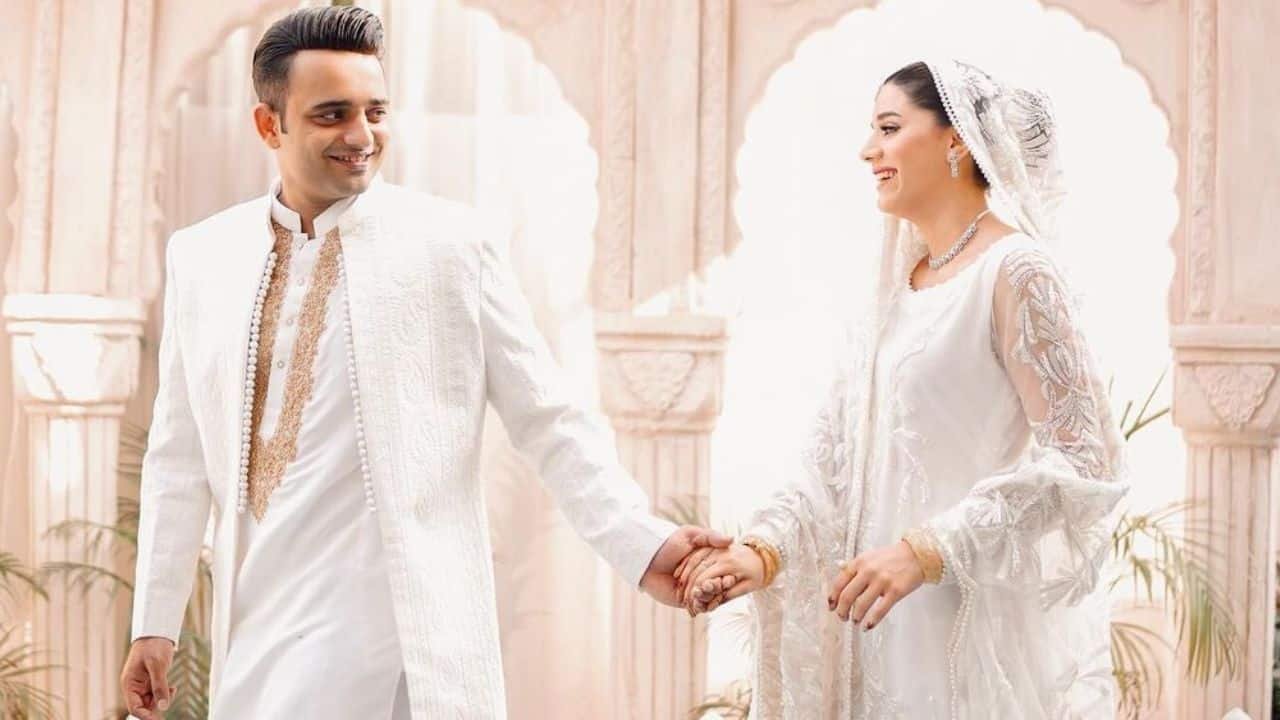
Actress Kiran Ashfaque ties knot with PPP official Hamza Ali Chaudhary
Content creator Kiran Ashfaque has married Pakistan People’s Party (PPP) political advisor Hamza Ali Chaudhary. The actress was previously married to actor and host of ‘Mazaaq Raat’ Imran Ashraf. The couple divorced in 2022 after being married for four years.
The wedding ceremony was held in Lahore at Hamza’s private residence, where Kiran donned a pastel kurta and a sheer white veil. She wore silver jewellery for the ceremony.
The Instagram influencer shared several pictures of her event on her Instagram account.
Kiran also shared an adorable picture from her mayon where she and her betrothed Hamza were seen laughing at each other with ubtan on their faces.
The friend who had shared the picture gushed about her best friend getting married to the love of her life.
“Can not put my feelings into words today. But all I know is she deserves the best of this world. My strong strong girl ❤️”
Kiran’s husband Hamza is a young politician who is currently associated with the Pakistan People’s Party (PPP), and is also a lawyer by profession. On his Instagram, he was seen posing next to prominent PPP chairman Bilawal Bhutto and former President Asif Ali Zardari.
The social media influencer had shed some light on her previous marriage to Imran, when during a Q and A session with fans, she revealed that she would never change herself for another man.
READ MORE: Imran Ashraf’s ex reveals her biggest regret is changing herself for a man

From Kiran’s glow, it looks like she has finally found a man who respects her for who she is, and we’re a huge fan of women finding their soul mates with a second chance. Sending our sincerest congratulations to Kiran and Hamza, and wishing them a blessed life ahead.