Author: optimum_tech

  • It’s time to close the zoos in Pakistan

    It’s time to close the zoos in Pakistan

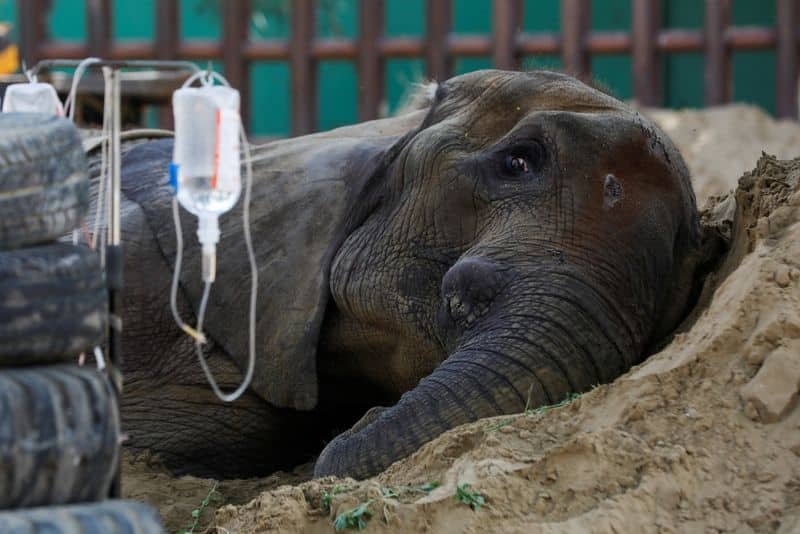
    Noor Jehan, an elephant in Karachi Zoo, is critically ill after the 17-year-old fell in a pond in a small enclosure. She has since been lying visibly weak with limited motion on a mound of sand, propped up against the only tree inside the enclosure. Noor Jehan’s condition is a reminder that we have imprisoned animals in cages for the entertainment of the people. We humans are the reason that the animals suffer and bear so much torture and pain.

    Wild animals are unlikely to survive or live happily in an artificial environment like the ones we provide them at the zoos. Moving them from their natural habitat and from their community puts them under great stress. It is no secret that animals in Pakistani zoos are kept in poor conditions.

    The wildlife parks and zoos of Pakistan are characterised by a weak governance system. The animals lying in the zoos and wildlife parks of Pakistan are ignored with regard to their physical and mental well-being. They are not properly provided with adequate nutritional food and are seldom treated effectively for their physical ailments. There are about 10 public zoos, 25 private zoos and 28 wildlife parks in Pakistan. Neither of these are authorised by any recognised association of zoos and aquariums. The animals kept in these zoos are often neglected. Not only is their food and nutrition ignored but several other environmental issues thwart their well-being. Several zoos lack veterinary professionals, owing to which the animals do not get ample medical help whenever required. Some animals die due to lack of adequate required treatment adding to the plight of the zoos of Pakistan.

    This brutality towards animals has been there because of continuous negligence being directed towards them. This isn’t the first time we are witnessing the suffering of animals at zoos and this definitely doesn’t seem to be the last time either. In 2020, American singer Cher arrived in Pakistan to send off Kaavan, an elephant in Islamabad Zoo she had spent years trying to free, before his move to a Cambodian sanctuary. Animal rights advocates had campaigned for the 36-year-old Asian elephant to be rescued from grim conditions.

    Minister for Climate Change, Sherry Rehman, has said that there is a no-zoo Islamabad model of rescue and rehab centre and transition sanctuary, in the federal capital. The Islamabad zoo where the bears and the elephant were kept have now been closed. Pakistan should stand firmly against any kind of animal cruelty and take timely action to stop it.

    We all need to stand up for the animals and treat them right. It took one Noor Jehan to make us realise that zoo animals suffer from continued neglect and will continue to die and go through pain if our policies don’t change. So if, we cannot take care of our animals, we should close the zoos and free the animals. We Pakistanis don’t deserve them.

  • Almost two years to Noor’s murder, Zahir Jaffer challenges death sentence

    Almost two years to Noor’s murder, Zahir Jaffer challenges death sentence

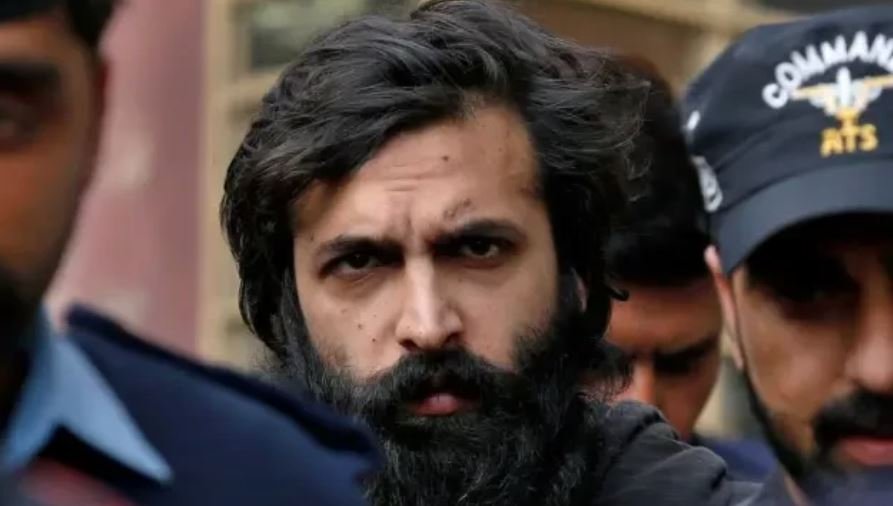
    Zahir Jaffer has lodged an appeal in the Supreme Court challenging the death sentence he was given for murdering Noor Mukadam in 2021 in Islamabad.

    Jaffer has argued that the trial and the Islamabad High Court (IHC) failed to recognize the fundamental deficiencies in the First Information Report (FIR) and that their judgments were based on an incorrect understanding of the evidence, Hassnat Malik has reportsd for Express Trbuine.

    On Feburary 2, 2022, a sessions court sentenced Zahir Jaffer to death for a murder that prompted national outrage. The victim,
    27-year-old Noor, was found beheaded at Jaffer’s residence in Islamabad’s upscale F-7/4 Sector on July 20, 2021. She was the daughter of a diplomat and had known Jaffer.

    The gruesome murder sent shockwaves across the country and sparked nationwide calls for justice for Noor, cumulating in a sensational trial and eventual convictions.

  • Babar Azam ka match say pehlay 100; Skipper becomes third Pak player to feature in 100th T20I

    Babar Azam ka match say pehlay 100; Skipper becomes third Pak player to feature in 100th T20I

    Gaddafi Stadium in Lahore is all set to host the first T20 International (T20I) match between Pakistan and New Zealand on Friday night. Team Green and the Black Caps are all geared up to put up a brilliant game for their fans.

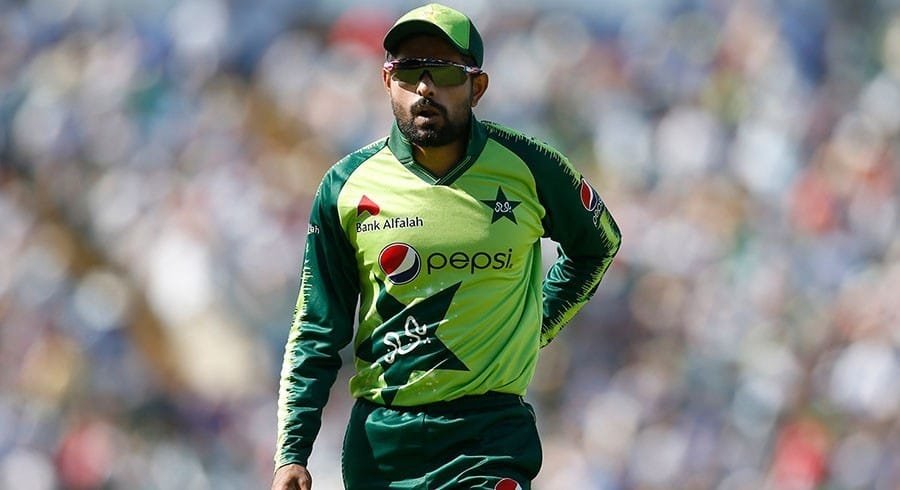
    When Pakistan captain Babar Azam takes the field on Friday night, he will become the third Pakistan player to feature in 100 Men’s T20Is.

    Shoaib Malik (123) and Mohammad Hafeez (119) are the two other Pakistanis who have reached this milestone in men’s T20Is.

    Fans will be expecting Babar Azam to hit his trademark cover drives and classy shots along with Muhammad Rizwan, his partner in many run chases.

    New Zealand will play five T20Is and five One-Day Internationals (ODI) in Pakistan starting from today.

    New Zealand captain Tom Latham has emphasized that Pakistan have a bunch of match winning players who can lead the team to victory in every sort of conditions.

    The Kiwi captain acknowledged his opponent team’s fast bowlers, quality spinners and a formidable batting lineup that could pose a threat to his team.

    “You can look at everyone across the Pakistan squad, they’ve got guys who bowl fast, quality spinners and obviously with the bat they have many match winners. So we have to play really well to beat them but it is an opportunity that the guys are really looking forward to play against this quality Pakistan side,” he said.

    The 31-year-old is optimistic about his team’s chances in the upcoming T20I series against Pakistan despite the absence of key players due to Indian Premier League (IPL) commitments.

    “Pakistan is a quality side, they have come off the back of their Pakistan Super League (PSL) tournament just recently and they’ve picked guys who are in form, so even though we are missing a few players due to IPL commitments, that presents an opportunity to the other players,” he observed.

    Admitting that some players in the New Zealand team haven’t played “huge amounts of cricket”, Latham stressed that they still have players who have played a lot of T20 cricket.

    “So it is an exciting opportunity for this group to come here and to explore conditions where we haven’t played a lot in before and hopefully we can put up a good performance on the board,” he concluded.

  • Sherry Rehman listed among ‘100 most influential people of 2023’

    Sherry Rehman listed among ‘100 most influential people of 2023’

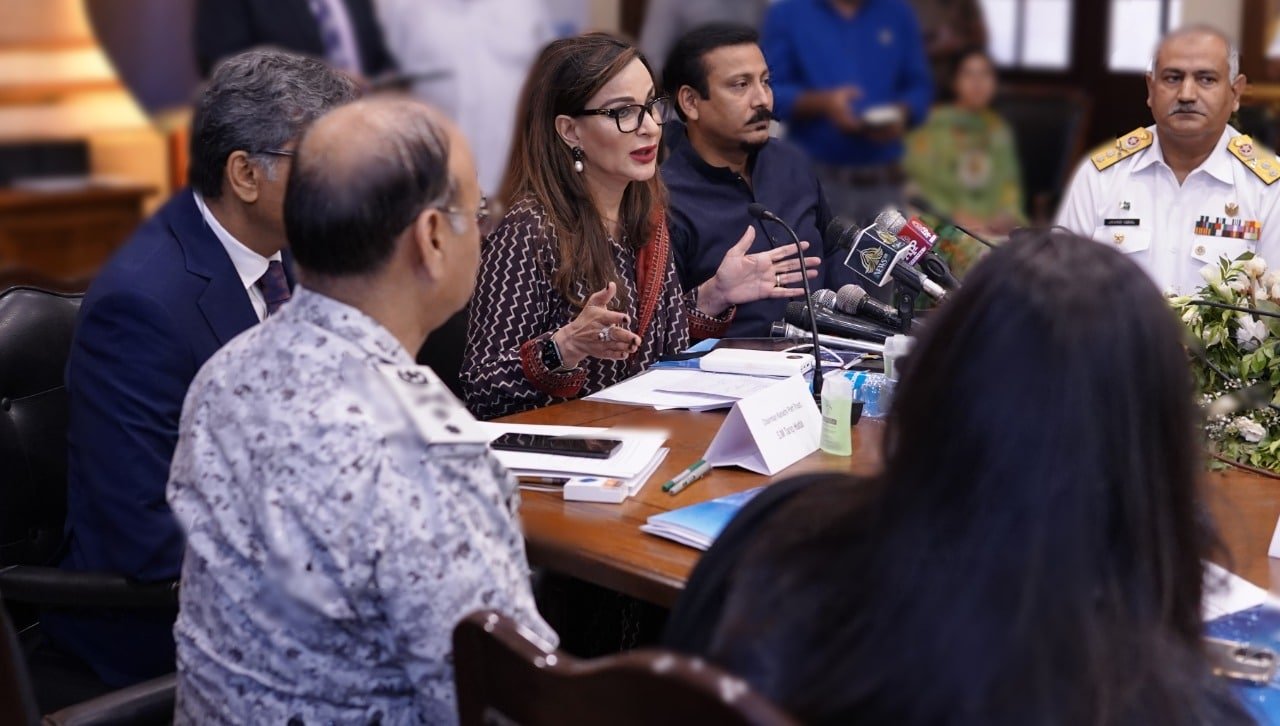
    Time magazine on Thursday revealed its list of the 100 most influential people of 2023 with Minister for Climate Change Senator Sherry Rehman included in it.

    Time’s list of the most influential people is curated by its editors while individuals on the list are nominated by previous honorees, as well as the magazine’s writing staff.

    “As Pakistan’s Minister for Climate Change, she gave a voice to those who had lost everything to the floods. Through impassioned speeches and tireless engagement in negotiations, she convinced many of the delegates that the blatant injustice must come to an end. COP27 ended with a historic decision—the world community agreed for the first time to establish new loss and damage funding arrangements to support the most vulnerable countries. This is a big step towards climate justice, but we still have a long way to go. We will need more people like Sherry Rehman along the way,” writes Times about Sherry.

    “Omg thank you @peterfrankopan! Just saw this. Honoured to be on this list”, said Sherry on Twitter while reacting to receiving the honour.

  • Wahaj Ali, Hareem Farooq’s upcoming drama ’22 Qadam’ is an ode to women in sports

    If fans haven’t had enough of Wahaj Ali in ‘Tere Bin’ and ‘Mujhe Pyaar Hua Tha’ then they’re in for a treat. His next drama is unique because it explores the issue of women in sports.

    Ali shared a first look of the venture where he will be playing a cricketer, writing on Instagram about the drama’s premise which is about supporting women cricket players.

    “As a society we need to promote women coming into all professional fields – from sports to sciences. The roots of 22 Qadam are embedded in inspiring and taking pride in the dreams and achievements of our women.”

    The female lead of this drama is going to be played by ‘Sar-e-Rah’ actor Hareem Farooq, who will essay the role of a small town girl named Fari, who dreams of becoming a cricketer.

    The Current reached out to Farooq on why she had chosen to become a part of this project, and she responded:

    “When we came up with this concept, the thought behind it was that we need to empower women in the best way possible and there is no way better than projecting women in sports. Cricket, especially being the most loved sport in South-Asia.”

    Farooq also reflected on how women like Sana Mir, who is a commentator and former cricket captain, served as inspiration for the drama by breaking stereotypes:

    “The first person that comes to our mind when you talk about women and cricket is Sana Mir, she’s been an inspiration for so many women out there. It is just about breaking stereotypes and the taboos out there that women can also excel in sports, and if nothing else it makes you more independent and gives you that confidence that allows you to face the world in the best way possible.”

    Hareem Farooq said that she feels that society needs the kind of entertainment where people are not just enjoying themselves but are also educated that stereotypes and taboos can be broken. “Even women, infact everybody, can achieve their dreams if they’re passionate about it.”

    Speaking about her character, the actress said that her character Fari dreams of playing for the national cricket team and making her country proud:

    “I play the character of Fari, who is this bubbly and happy girl who wants to spread joy and happiness where ever she goes. But she has a dream and a passion she wants to follow and she is determined to do that. In this way breaking stereotypes and taboos by playing for the national team and make her country proud, and make her parents proud. It is a journey of achieving that dream and the up’s and down’s she goes through, and how or will she ever be able to achieve that dream.”

    In many ways, Farooq says that ’22 Qadam’ is a groundbreaking show because it is “the voice of the unheard.”

    The drama is written by Zeeshan Ilyas and directed by Anjum Shahzad.

  • Pakistan is the cradle of rape culture and sexism: are you surprised?

    Pakistan is the cradle of rape culture and sexism: are you surprised?

    The shocking rape of a 14-year-old girl, who was allegedly raped by her father and brother, has once again proven that there is no safe space for women in Pakistan. The girl, a resident of Azad Kashmir, was taken to a hospital by her mother after she complained of stomachache. Doctors discovered that the girl was pregnant and about to give birth. Investigation revealed that the victim’s brother and father raped her several times during the last few months. The DNA of the baby she birthed matches that of her brother’s.  Imagine the horror and fear of the girl who was not safe in her own house and where her own father and brother were her rapists and tormentors.

    Pakistan has staggering statistics that expose the rape epidemic in the country. In October last year, almost 21,900 women were reported to have been raped in Pakistan from 2017 to 2021. This meant that approximately 12 women were raped every day, or one every two hours, throughout the country. According to media reports, approximately 350 rape instances were recorded in Punjab, between May 2022 and August 2022. The Current records the tally of rape cases that are reported in news outlets on a daily basis to highlight the alarming situation. And not a single day goes by when rape isn’t reported in any city but that too doesn’t represent the actual figures because not all rape cases are reported. It’s hard to imagine what the real figures must be. Women around the country are raped, abused, and harassed every day, enduring it incessantly because the state and society has failed to ensure their safety. Occasionally, a rape case emerges in the media that elicits particular fury and ignites massive protests, while exposing the culpability of our society; the cradle for rape culture, the breeding ground that lets rapists get away by promoting victim-blaming.

    Everything about this incident tells the the horrifying story of impunity with which Pakistani men commit crimes, without an ounce of remorse. And then there are men like Pakistan People’s Party’s (PPP) Nabil Gabol, who have the audacity to pass disgusting comments about rape. In a recent interview, Gabol casually remarked: “When rape is inevitable, just enjoy it.” How can one be so heartless to say such sickening words? Gabol’s words garnered massive backlash, and rightly so. Pakistanis were angry, and outraged at the politician’s lack of sensitivity. The PPP politician apologised for his remarks later, saying that he regretted if his words had hurt women. But then he went on to blame Pakistan Tehreek-e-Insaf (PTI) supporters for launching a social media campaign against him. After issuing an apology for his misogynistic remarks, Nabil Gabol decided to defend his statement with a screenshot of PTI Chairman Imran Khan’s interview with Time Magazine. Gabol wrote that Aurat March organisers or journalists had not called Khan out for his past problematic statements. Gabol further said if he lost weight and looked handsome like Khan, then the backlash wouldn’t have happened. This non-apology and attack on women who raise their voice for victims of abuse shows that Gabol only apologised because of the backlash on social media but didn’t mean it. As if his non-apology was not enough, Gabol’s son Nadir came out to defend his father’s thoughtlessness and said that his father had intended to say: “Pain is inevitable, suffering is optional.” It is shocking that even today men have the audacity to utter such nauseating words.

    And yet, we question and pass comments on the severity of the situation. To the hopelessness and rage that fills our hearts, may women find security, protectiveness and justice in this country. Will this ever stop, is a question we ask ourselves often. Our society and justice system have failed the women of Pakistan. It is because of these attitudes that Pakistan ranks as the second-worst country on the gender gap index. Are you surprised?

  • Loving ‘Kuch Ankahi’? Then you should check out PTV drama ‘Tum Se Kehna Tha’

    Loving ‘Kuch Ankahi’? Then you should check out PTV drama ‘Tum Se Kehna Tha’

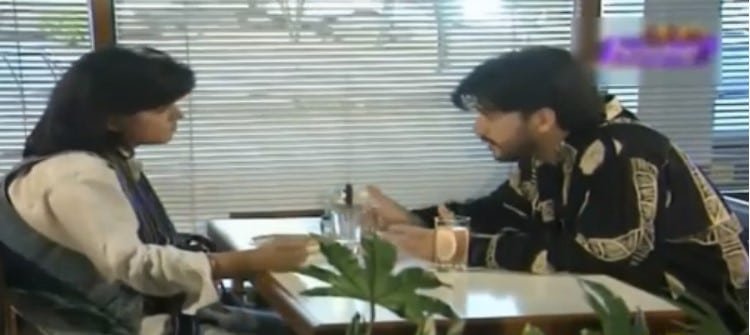
    ‘Kuch Ankahi’ has made an indelible mark on the Pakistani entertainment industry, for tackling sensitive issues like marriage pressure, body shaming, as well as infidelity. However, many audience members won’t know that the writer as well as the actor who plays the dad in the drama, Syed Mohammad Ahmed, has written countless scripts for film and television, including the iconic PTV drama ‘Tum Se Kehna Tha’ which was his debut effort.

    Directed by the brilliant Sahira Kazmi, the drama is an adaptation of the Hollywood rom-com ‘While You Were Sleeping’ which is about a young woman, who is accidently mistaken to be the fiancée of a man in a coma. The drama is incredibly funny, with powerful performances by actors Marina Khan and Ali Haider, and if our audiences are hung up on the fact that there are no good dramas out there that outshine the way ‘Kuch Ankahi’ did, here are some reasons why they should definitely check out this cult classic.

    1 The powerful chemistry between Hira (played by Khan) and Bilal (played by Haider)

    Hira and Bilal are feuding opposites in the beginning of the drama, because the family completely takes her in once they find out she was Saad’s (played by Farhan Ali Agha) fiancee, but Bilal opposes this because he suspects that she is telling a lie. As the episodes progress, their rivalry turns into friendship and then in to love, giving us a healthy and meaningful relationship.

    2 Powerful women lead the drama

    Powerful, witty Hira immediately captures the hearts of the audience, especially due to the exceptional acting shown by Marina Khan. Hira works in a travel agency under her boss who was her late father’s best friend, and is like father figure to her. She has everything that any woman would want: friends, an apartment and lots of wealth, but deep down, Hira longs for a family so she won’t remain alone. If fans of ‘Kuch Ankahi’ love the sisters and their fierce devotion and dedication to each other, then they will love the way Hira loves and defends her family members, helps her sister in law tackle with the grief from divorce, and especially how drama refuses to pit women against each other.

    3 Debunks the stereotype that divorced women can never find happiness

    ‘Kuch Ankahi’ has definately engaged Pakistani audiences with its refreshing script that provided us with complex female characters who refuse to be dictated around by patriarchal expectations, then they would also find ‘Tum Se Kehna Tha’ addictive because in the same manner, it engages with the societal disgrace that divorcees often face. Through the journey of Meher (played by Seemi Pasha), a divorced woman who is still recovering from the betrayal of her first marriage, she learns to empower herself through becoming friends with Hira, and forming a friendship with Sajjad, another divorcee who encourages her to keep living her best life.

    4 Humorous and engaging side characters

    A lot of times one of the biggest criticisms of Pakistani dramas has been that the side characters are incredibly dense, and limited to only showing up to push the main lead’s story forward. However the brilliance of Syed Mohammad Ahmed is that in his scripts, each character is interesting and keeps us engaged with the show. In ‘Kuch Ankahi’, fans are in love with the Tiktok star Neeha who is the househelp’s daughter, or Shakeel, the clumsy nephew. In a similar way, in ‘Tumse Ye Kehna Tha’ side characters like the neighbour Gringo or Buwa who add to the humor of the drama.

  • Family welcomes first baby girl born after 138 years

    Family welcomes first baby girl born after 138 years

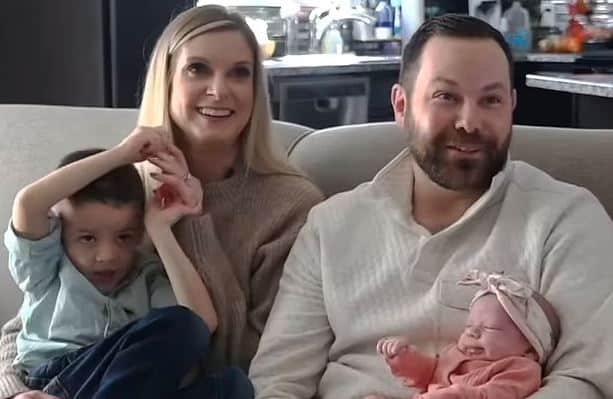
    A couple in the United States (US) became parents to the first girl born in the father’s family after a gap of 138 years.

    Carolyn, the mother of the baby girl, knew what she was getting into when she married her husband, Andrew, 10 years ago.

    He told her upfront that his family had not produced a female child since 1885.

    The couple has named their daughter Audrey. The father said it was really hard to come up with a name because they never thought of a girl name before.
    The mother of the baby girl said that the arrival was “even more special” because their daughter was “worth the wait and all the struggles.”

    The couple said they experienced a miscarriage in 2021, so when they found out a year later that they were pregnant with another child they were thankful but cautious.

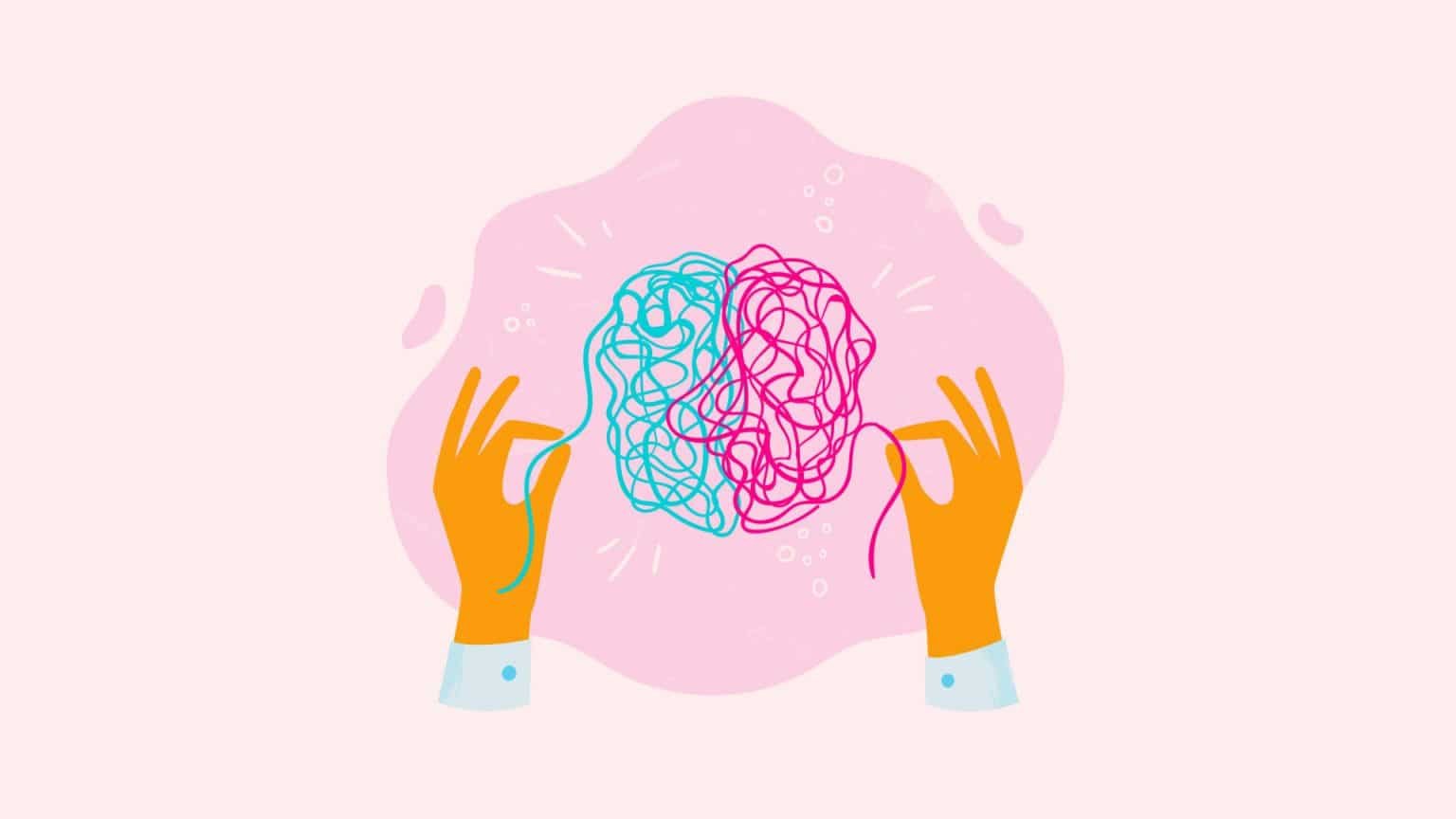
  • Here are the key features of Pakistan’s first mental health app ‘Humraaz’

    Here are the key features of Pakistan’s first mental health app ‘Humraaz’

    Prime Minister’s strategic reforms initiative for the mental wellbeing of citizens, has launched a mobile/web based application named ‘Humraaz’ along with an integrated helpline -1166- in collaboration with Ministry of Health Services, Regulations and Coordination, World Health Organisation (WHO), National Information Technology Board (NITB) and Federal Directorate of Immunization.

    The application is available in both Google and Apple stores and the toll free helpline is also active.

    More than 140 psychologists/psychiatrists have registered in the initiative, out of which almost 60 plus are Psychiatric Resident Doctors and Counsellors. Appointments are booked based on availability/preferred time slots of the psychologists/psychiatrists.

    More than 30 government psychologists/psychiatrists are onboard for providing free consultation services to citizens having mental health concerns and thoughts of self-harming.

    Registration of Doctors (Psychologists/ Psychiatrists) will remain open – the profiles are reviewed and approved by the Panel of Experts of Ministry of National Health Services Regulations and Coordination.

    Here are the key features of the application:
    • Guided and principle based counselling and psychotherapy sessions
    • Daily activities monitoring
    • 24/7 connection with professionals
    • International standard knowledge base
    • ChatBot (including self-assessment)
    • WhatsApp support appointment booking
    • Support groups of people for sharing of experiences.

    Salman Sufi, the Head of Prime Minister’s Strategic Reforms Unit, while talking exclusively to The Current said, “The government of Pakistan has recognized that trust in mental health professionals is a major barrier to seeking help, and has taken steps to address this issue. One such initiative is the government’s new mental health application for citizen’s wellbeing called “Humraaz.”

    Explaining that the application provides users with access to mental health professionals and resources, Sufi stressed that it aims to increase awareness about mental health issues and reduce stigma.

    He continued by saying that the government is working to ensure that mental health professionals are adequately trained and qualified to provide high-quality care, through setting rigorous standards for education, licensure, and accreditation, and providing ongoing training and professional development opportunities.

    “These efforts will help to increase trust in mental health professionals and encourage more people to seek the help they need.”

    While answering a question about the protection of user data Sufi said, “Ensuring the privacy and security of users’ data is a top priority for the government of Pakistan’s Humraaz mental health application. To achieve this, the government has implemented strict data protection policies and procedures, including using secure servers, encrypting data, and limiting access to user information to authorized personnel only.”

    In addition, the government has also appointed a dedicated team to monitor the application’s security and respond to any potential threats or breaches, Sufi elaborated. “These measures will help to safeguard the sensitive data of users and protect their privacy and wellbeing,” he said.

  • The high cost of not automating healthcare records can be death

    The high cost of not automating healthcare records can be death

    Shafiq* is a middle-aged Pakistani man, working as a driver for a household in Lahore. His son has just been diagnosed with early-stage lung cancer. He finally manages to take time off to take his son to an oncologist in a government hospital. The oncologist asks for all the lab reports of the patient. Shafiq hands over a heavy file. It turns out, one of the reports has been misplaced. The doctor tells Shafiq to come back after getting his son’s lab work done again. Shafiq now has to find the money to pay for more testing and also has to plead with his boss to give him another day off. Meanwhile, his son’s condition is only getting worse.

    When a healthcare system has no proper infrastructure for medical record keeping, the result is waste and medical errors. For example, the cost of repeat lab work will either be borne by Shafiq if he goes to a private lab or by the taxpayer if he opts for a government one. Repetition of tests will also use up limited laboratory resources and delay the test results of other patients. Shafiq’s story also points out another avenue of concern: medical misdiagnoses. Generally, a primary care physician, or family doctor, ensures an individual’s health through keeping family histories, doing annual health screenings and ensuring immunisations. These doctors maintain all this information is the form of electronic medical records. Shafiq’s son had no such family doctor to track his smoking habits or note the prevalence of cancer in his family history. In fact, the first doctor he saw gave him antibiotics for what he diagnosed as a bacterial infection of the lungs.

    In a country with less than 125,000 government hospital beds for more than 200 million people, there is little room for such errors. According to the World Health Organisation (WHO), Pakistan has one of the lowest per capita current health expenditures among Eastern Mediterranean countries, second only to Afghanistan. Because of our chronic debt issues, our healthcare spending will likely remain dismal. In such an environment, technology is a relatively inexpensive tool that can be used to improve efficiencies and better population health.

    Pakistan’s larger cities are home to a select few secondary and tertiary care hospitals, which are meant to provide inpatient care, ambulatory services and specialist care. The major swathe of the country, however, does not have access to these hospitals. In rural areas, the major public health facilities are small establishments called Basic Health Units (BHUs). In the more than 5,500 BHUs across Pakistan, outpatient facilities are provided to ordinary citizens. Contrastingly, the private sector is dominated by specialist care with doctors running their own independent clinics. Here, primary care is seen as neither lucrative nor prestigious. Patients do their own guesswork at diagnosing their problems and then decide which specialist they should see.

    But be it private or public, most doctors in Pakistan are reliant on pen and paper for record keeping. Patients like Shafiq* are meant to keep these physical records safe in a folder and bring them to each appointment. According to one doctor practicing in a government-run tertiary hospital in Lahore, the only records their hospital keeps is the patient’s admission date, discharge date and what kind of operation was performed. Any blood tests, imaging or other notes go into a black hole of patient data. 

    This is all set to change in the province of Punjab. The government is in the process of completing its transition from physical registers to electronic medical records in BHUs across the province.

    Khalid Sharif is Manager MIS in the government’s Health Information and Service Delivery Unit (HISDU). His unit aids the primary and secondary health department in developing and running health dashboards, inventory management systems and mobile applications.

    “Electronic Medical Records (EMR) came about because we wanted to be able to assess our performance as a department,” he said. “Before this, we had no credible way of knowing any metrics like doctor-patient ratios or the number of daily births.”

    The process began in around 2017, when they began testing out earlier versions of EMR in select BHUs. Now, they are running the multi-module application across more than 2,500 BHUs.

    “We expect to be fully paperless in about one and a half month’s time,” he said.

    Each employee at a BHU logs in using their computerised national identity card (CNIC) number and has access to a different module of the system. When a patient comes in, they are registered using their CNIC number. The receptionist takes the patient’s vitals and adds them to their profile. Then, when the patient goes to the doctor’s office, the doctor select a diagnosis and prescribes medicine. Finally, the medicine dispenser checks off the prescription he/she is filling, which automatically updates inventory records.

    “If someone doesn’t have a CNIC we have created another option,” Sharif said. “They can use a relative’s CNIC and we can select their relationship to the CNIC holder.”

    Dr. Faiza Ahmed* has been practicing as a health officer at a BHU near Faisalabad for the last couple of years. When I visited her, they were partially using the EMR system. Out of the 150 patients that had been to the BHU that day, they had electronically registered around 90 of them.

    Most of her patients, especially women, don’t bring along CNICs. But she has made it a point to especially encourage expectant mothers to bring along their own or a relative’s CNIC so that she can track the health of mothers and babies. “This way, I can see a patient’s data even if she had her baby six months ago,” she said. “I can see if she was hypertensive or diabetic back then and how her child was doing back then.”

    Dr. Ahmed has not received instructions to go paperless and she is skeptical of the idea.

    “It’s practically impossible to register all 200 patients because of resource limitations,” she told me. “Internet speed in this area is also very slow.”

    When I asked Khalid Sharif about this, he said that they had already address this issue by creating an offline version of the software which automatically uploads the data when the internet reconnects. However, Dr Ahmed said that the offline version is not functional yet.

    Another reason why the system might feel tedious to Dr Ahmed is because they are currently running two parallel systems. The EMR system has been designed with the idea of print receipts. When the midwife sends the patient off to the doctor, they are supposed to bring their registration slip along. Similarly, the doctor is supposed to print out a prescription slip and hand it to the patient. However, Dr. Ahmed contended that the BHU cannot afford to thermally print slips for every patient. So currently they are both logging data online and writing all the information manually on pieces of paper to give to the patients.

    “I think there’s always resistance to change — everyone gets used to a certain system and doesn’t want to get out of it,” Zara Ansari, a consultant for the government, said. “As with any new data system, it takes time, but this is definitely the future.”

    Zara Ansari is a senior consultant at ACASUS, a management consultancy firm that is assisting the health department with the rollout of electronic medical records. Ansari and her team have been giving trainings to doctors to make them comfortable with the new system. They have also been analysing data for the government to monitor the level of compliance that each BHU is showing.  

    “We started off by assigning lax targets so people can be onboard with actually doing this and then progressively over time making it more strict,” she said. “As of recently, we will be monitoring to see which facilities are doing completely paperless entry.”

    There are of course caveats to this new age technology. There is not a lot of clarity around the privacy of the date being collected and how it will be kept safe. There seem to be no conversations happening around data privacy or patient confidentiality in government halls. 

    Caveats and all, Punjab is making a step forward into modern healthcare. How successful they will be is something only time can tell.

    (*Names have been changed to protect privacy)