Author: optimum_tech

  • US gives out $200m for gender equality, democracy in Pakistan

    US gives out $200m for gender equality, democracy in Pakistan

    Senators in the United States of America (USA) approved a sweeping annual spending package of $1.7 trillion, allocating $200 million for gender equality and strengthening democracy in Pakistan.

    Ukraine has got the lion’s share, with $45 billion approved in a aid and reforms to election law.

    It is to be noted that Pakistan’s allocation is under the US fund for gender equality, which is a 20-fold increase from the funds reserved in 2020.

    In 2020, the US congress cleared $10m for addressing gender disparity and $15m for strengthening democracy in Pakistan. In 2000, Pakistan received $25 million for the same purpose.

    The sweeping annual spending package was rubber-stamped by the House of Representatives.

    House Majority Leader Steny Hoye said: “This bill is a critically important piece of legislation not only to keep our government funded, keep our people being served but also to show that the United States of America’s government works.”

  • This clothing brand’s new campaign is creating awareness about reading your Nikkahnama before signing it

    This clothing brand’s new campaign is creating awareness about reading your Nikkahnama before signing it

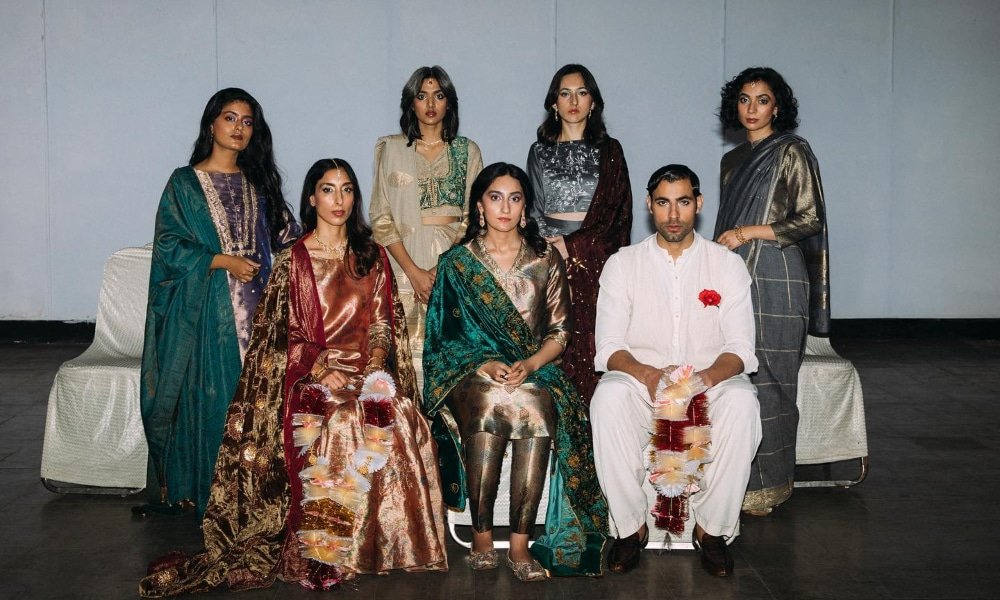
    Clothing brand Generation, in collaboration with Centre For Human Rights, has launched a campaign to create awareness about the legal aspects of a Nikkahnama and the importance of reading it before signing.

    One of the posts talk about the legal aspect of officiating a Nikkah. “Your Nikkah can be officiated by any adult, a cleric, your favourite aunt, your best friend or whoever you choose and trust to have your best interests at heart can officiate your Nikkah and it will be legal and binding according to Pakistani law.”

    Another post reads about the little known fact about the bride’s right to encapsulate special conditions in the Nikkahnama.

    “Did you know? As the bride entering a marriage, you can add any sort of special conditions to the Nikkahnama, they could be as cute as going on a vacation every few months or as serious as reserving the right to education and continue working after marriage. Pakistani law also empowers you to ask for delegated right to divorce, a much simpler process in comparison to Khula.”

    “However it is imperative to not have the section crossed out in your Nikkahnama.”

    The campaign also talks about the groom’s right to enter special conditions.

    The campaign is being lauded by most people. However, it is also getting criticism from some sections of society for unconventional thinking. One social media user criticised the campaign, saying, “Women can not officiate a Nikkah.

  • Why do you want to leave Pakistan?

    Why do you want to leave Pakistan?

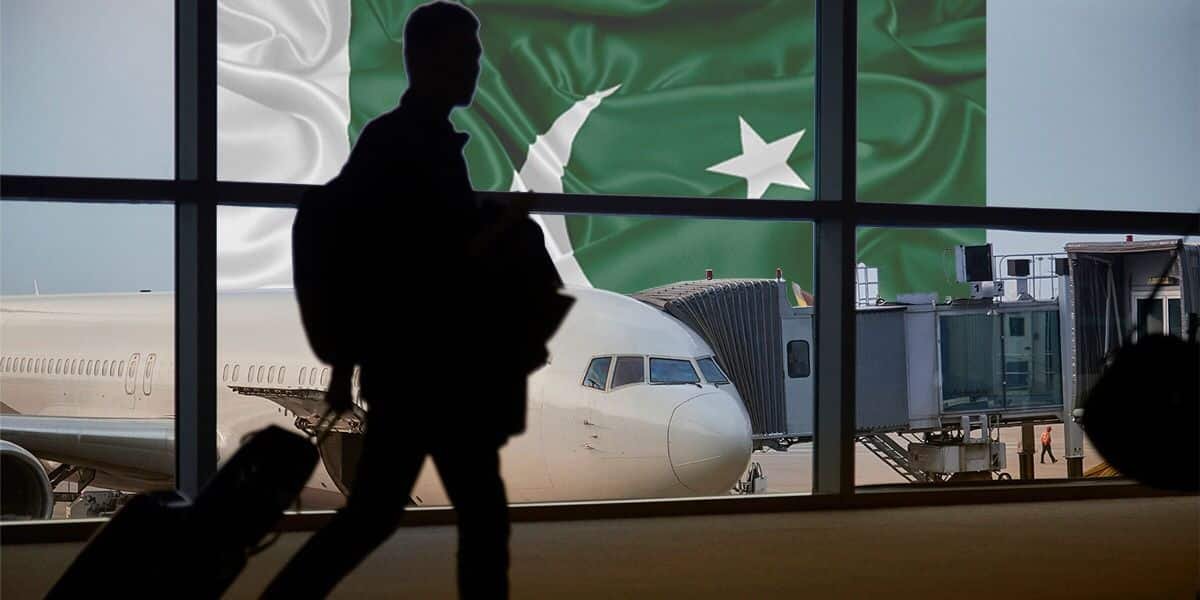
    The Pakistan Institute of Development Economics (PIDE) found that 62 per cent of the male population of Pakistan aged between 15 to 24 years wants to leave the country. The survey reveals that slightly more people in urban Pakistan (40 per cent) than in rural Pakistan (36 per cent) desire to leave the country.

    The question we need to ask is: why do these young men have a desperate urge to leave Pakistan?

    The thing which is most striking in this scenario is that they are young boys and have a full life ahead of them. Yet the need to leave? The only thing that might make sense is that these young individuals want a better lifestyle and for that they need better opportunities. They want a better chance at life itself. Unfortunately in Pakistan, there are hardly any opportunities available for our younger generation. With a struggling economy, these educated youngsters with college and university degrees are unable to either find jobs in the first place and if they do, those jobs hardly pay well. With rising inflation, it is already difficult to make ends meet for most people but with no jobs in the market, the younger generation’s disillusionment and disappointment with the country is understandable.

    Life in Pakistan is a struggle for everyone now. People want to leave the country to carve out a better financial future for their families. They choose to be away from family, leave their comfort and not live in their own homeland just to ensure that their next generation’s future is secure.

    Pakistan takes pride in its men and women. Yet there is so little the governments have done to improve the quality and standard of the people’s lives. How hard will it be to provide a place filled with opportunity, a strong education system and a strong economy. Is the youth asking too much for survival? Or is it just the bare minimum? From what we see, it’s the bare minimum. Our governments and leaders have an obligation towards the youth. To provide and nurture them. To give them the belief that their motherland holds them near and dear, so that they can grow and become successful in life.

    Despite trying, we are failing the youth. Maybe the problem lies somewhere else. The younger generation deserves leaders who are genuinely willing to invest in their people. We hope the future is better for the young men and women. May they always choose their country above anything else in life. May Pakistan not let the dreams of the young shatter.

  • Award ceremonies, listen up – glorifying abuse is not acceptable

    Award ceremonies, listen up – glorifying abuse is not acceptable

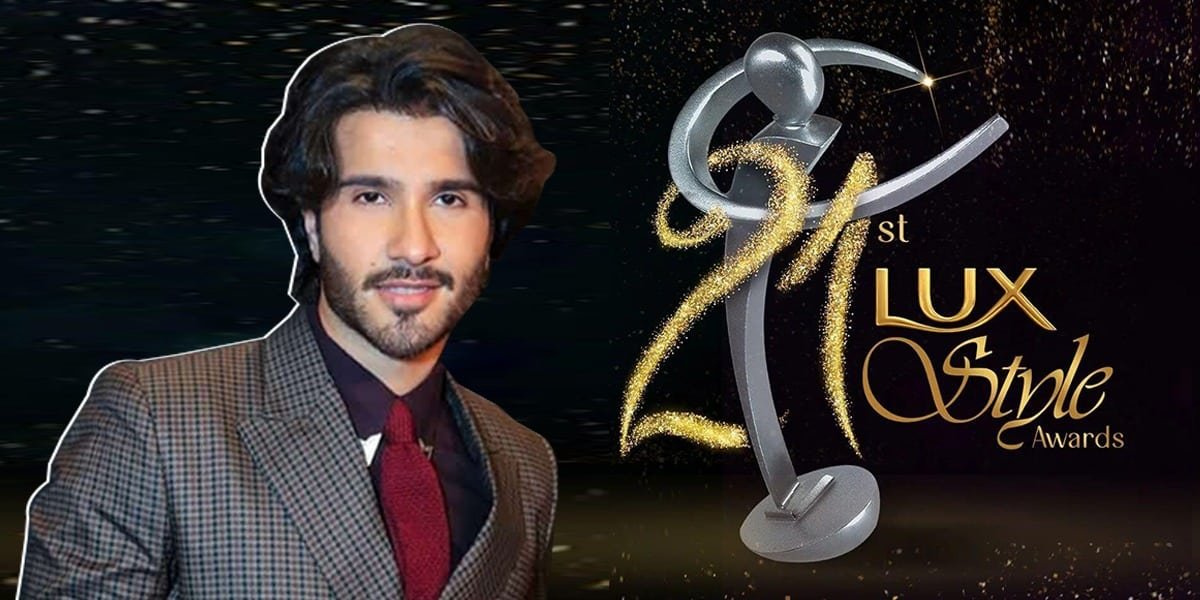
    From glorifying abusers and then giving them awards, the Lux Style Awards (LSAs) became a sorry affair this year. The coveted LSAs rolled out nominations for its 21st edition. As soon as the names were dropped, viewers condemned what they felt was an injustice to other artists and women.

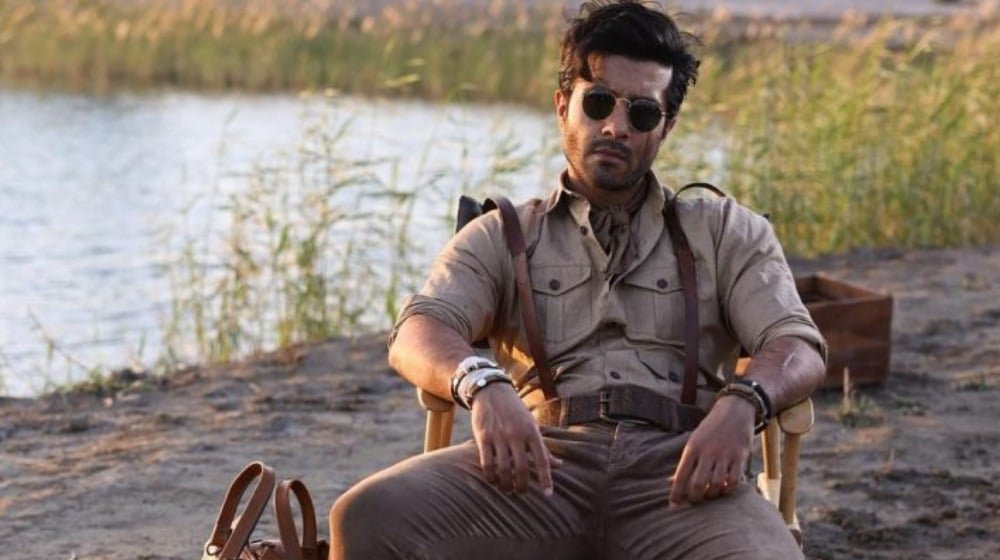
    Actor Feroze Khan, who recently came under fire for alleged abuse against his ex-wife Aliza Sultan, had been nominated in the Best TV Actor – Viewers’ Choice category for his drama Khuda Aur Mohabbat. Aliza had shared proof of domestic violence in court and on social media. Actor Feroze Khan released a statement denying all abuse allegations levied against him a day after fellow celebrities and social media rallied behind his ex-wife. Many are saying the case is still in court, and the court has not given a final verdict on Khan but the court will not be deciding whether Khan abused his wife or not. They are deciding a case of child custody. The proof that his wife submitted, which later went viral on social media, is enough to believe Aliza.

    So here are a few questions LSA should answer: Why was a man accused of domestic abuse, one of the nominees? How can a brand that capitalises on selling soap to women, become so insensitive towards their target market? LSA should have set the bar by upholding ethics. It takes courage to stand with victims and survivors of violence and abuse. In a country, where we are still dealing with the horror of the murder of Noor Mukadam, we haven’t yet healed as a nation. Having witnessing the bone-chilling gruesome murder of Sara Shah Nawaz at the hands of a man who was raised as a result of patriarchal norms, here the LSA decides to nominate Khan, further legitimising that men can get away with anything.

    We at The Current, on November 25, the International Day for the Elimination of Violence against Women, decided to delete all videos and coverage of the LSA. As a platform that supports women’s rights and the rights of all marginalised communities, we strongly believe change starts from within. We hope all award ceremonies in the future, keep in mind that when women come forward with their stories of horror, we, as a community and society, need to support the women, not nominate the men for stardom and applause.

  • Punjab: a joy-less land

    Punjab: a joy-less land

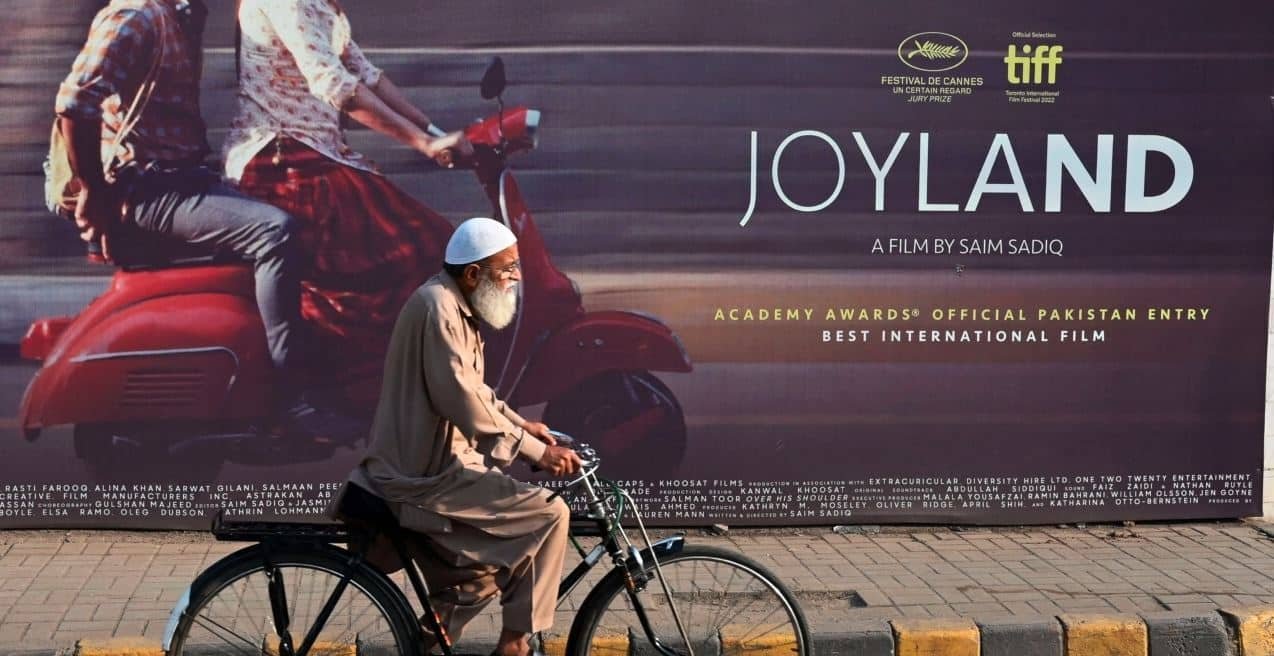
    Under pressure from conservatives, the federal government banned Saim Sadiq’s Joyland a few days before its countrywide release. After severe backlash on social media and mainstream media, the federal government finally reconsidered its decision and lifted the ban on Joyland. Less than 24 hours after the federal government decided to lift the ban, the Punjab government of issued a notice to the film’s producer, Sarmad Khoosat, saying that they cannot exhibit the film in the jurisdiction of Punjab province. Joyland is the country’s official entry for the Oscars, paving the way for Pakistan to make a name at the Academy Awards, with a bright chance to bring the Oscar home.

    So how did a film promising to spread joy, receiving a 10-minute standing ovation from the august audience at the prestigious Cannes Film Festival, ended up getting banned in its own country and the very province it was filmed in, Punjab. Set in the eastern city of Lahore, Joyland tackles issues of gender and sexuality – taboo topics in Pakistan – through the story of a married man who falls in love with a transgender dancer, played by transgender actress Alina Khan. From what we understand, the story is about love, acceptance and tackling issues in relevance to gender. So the problem is basically because of the love between a transgender and a man in the movie.

    Any marginalised community in a country goes through struggles and challenges of its own. From their right to live to their right to freedom, their existence revolves around many obstacles. Pakistan is no different. The transgender community in Pakistan is a marginalised community that on a daily basis is ridiculed, harassed, abused, and given life threats. And this has been a pattern for many years. So the treatment with “Joyland” has been no different.

    The question is: what are we scared of? Does the representation of a marginlised community make us weak as a nation or does it make us stronger? How is upholding the ban in the wake of no real logic correct? How is Joyland a threat to the country’s cultural and social fabric? Pakistani cinema was in need of a moment like Joyland, until the bans which took away the joy from the land where transgenders are only laughed at, mocked, abused and not to forget, killed. It is acceptable to show transgenders being made fun of, but once they are shown as normal persons, living normal lives, it somehow becomes problematic and against social values. Isn’t it hypocritical of us? Joyland was one way people could understand and learn the pain and troubles the trans community goes through. But systems in Pakistan work and behave differently for the ones who are ‘different’. So here we are banning a film on a transgender and barring them an existence in fiction. Now imagine their existence in the real world. What is peculiarly interesting about the public outcry for the ban on “Joyland” is from people who are up in arms against a movie they haven’t seen.

    We as a nation want to see the cinema and film industry thrive — but look at what we do to people who are the reason that art, film and Pakistan can flourish. We are habitual haters of a thriving society. We just hope that Punjab, which has significantly become a “joyless land” learns from the provinces next to it, remembers to laugh, be okay to experiment and above all, becomes a joyland.

  • Faisalabad: FIA arrests over 300 online scammers who stole millions

    Faisalabad: FIA arrests over 300 online scammers who stole millions

    More than 300 scammers have been arrested in Faisalabad by the Federal Investigation Agency (FIA) after more than 150 cases of internet fraud were reported to the agency, Samaa has reported.

    The scammers made phone calls to consumers through a software, pretending to be bank employees and obtaining account details or offering to change ATM cards.

    According to FIA officials, internet conmen are targeting the industrial city of Faisalabad with the number of fraud cases increasing daily.
    More than 1,100 Faisalabad citizens fell prey to online fraud in 2022, losing millions of rupees from their bank accounts.
    In 2021, cyber criminals defrauded more than 900 victims out of their money.

  • Pakistan’s ‘true warriors’

    Pakistan’s ‘true warriors’

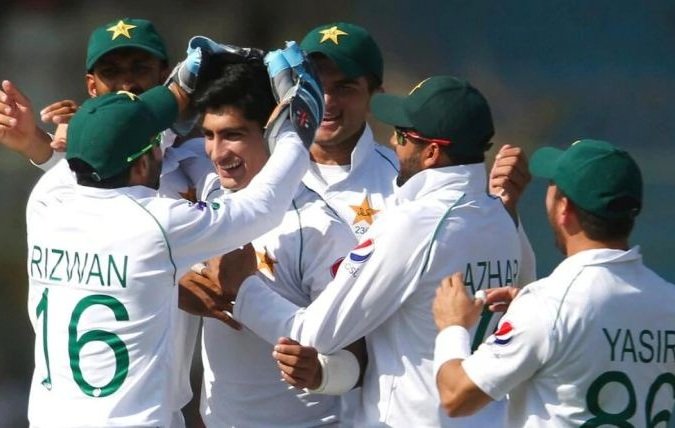
    Khan called his winning ‘92 World Cup team, the ‘cornered tigers’. For Babar, the team that came so very close are the ‘true warriors’. And we couldn’t agree more. Pakistan lost the ICC Men’s T20 World Cup today to England after only scoring 137 runs, a low total but one that was not easily defended by the English batters. Pakistani batters may have struggled but our bowlers made even a low total like 137 difficult to score for the English team despite England’s strong batting lineup. It was bad luck for Pakistan in many ways. Not only were we 20 runs short but the way Stokes had nine lives (or more) and Shaheen Afridi’s injury just before his two crucial overs at the end made the loss even more heartbreaking for our Boys in Green who went all-out to win the final at the MCG today.

    It was indeed a heartbreaking moment for Pakistanis across the world as we came quite close to lifting the trophy but at the same time, we should celebrate the fact that we reached the final despite all odds and performed brilliantly. Our batting strategy leaves much to be desired, especially when it comes to difficult pitches. On the bowling front, from Haris Rauf to Naseem to Shadab to Shaheen Afridi, our bowlers put in their hearts to win the game. Alas, we couldn’t but our players did all they could.

    The way that Pakistan managed to reach the semi-finals when they had been written off clearly shows that our boys have what it takes to be a world-class team. In today’s game, we lost a toss that went in England’s favour. A World Cup final also comes with its pressure but our team did not show any jitters and were ready to defend a small total. Our batters did not perform as well as they could have and hit unnecessary shots to lose wickets when we shouldn’t have. To rely solely on the bowlers without giving them a defendable total may have been a bit much to ask but our bowlers did not disappoint and played splendidly well. They tried their best and got early wickets but luck favoured the English today. Known for playing a clinical game, the English seemed worried when our bowlers hit the right line and length.

    England was always going to be a tough team to play against given their performance throughout the tournament. And England did not disappoint. They bowled well and restricted Pakistan to a small total. But we can say that the best team — Pakistan — outperformed in the end. Even then, Babar Azam’s Playing XI has made the entire nation proud for playing almost till the last over. Pakistan cricket united the country in cheering for our cricket team at a time when we need unity the most.

  • Visuals of an elderly man in anguish left us all shaken, wondering: are any of us safe?

    Visuals of an elderly man in anguish left us all shaken, wondering: are any of us safe?

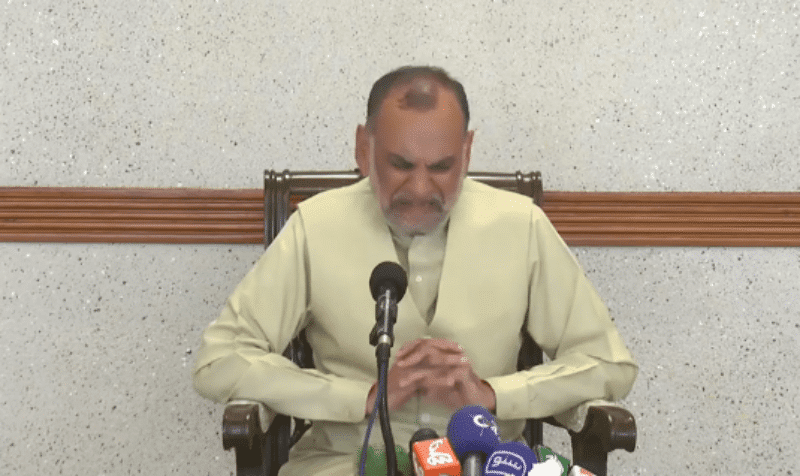
    PTI Senator Azam Swati made some shocking revelations on Saturday when he broke down in front of the media while narrating how his wife was sent a private video of the couple by an unknown number. Swati said that his wife was not even able to tell him what had happened, and his daughter had to finally let him know what his wife could not. He said that after this incident, his wife, his daughter-in-law and his three granddaughters left the country.

    Swati alleged that the video was recorded when he and his wife had visited Quetta where he stayed at the Supreme Court Judicial Lodges. According to Swati, Chairman Senate Sadiq Sanjrani had arranged his stay. However, the Supreme Court (SC) issued a clarification on Sunday stating that Senator Azam Swati “never used/stayed in Supreme Court Judges Rest House at Quetta”, adding that according to the Balochistan Special Branch, Swati stayed at the Balochistan Judicial Academy (Judicial Complex Quetta), which is not under the SC’s control. Chairman Sanjrani had also issued a statement where he condemned the video and also said that he provided Swati and his wife with the best and safest accommodation as guests in Quetta.

    The visuals of an elderly Swati in tears left everyone shaken. After Swati’s press conference, there was widespread condemnation. PTI Chairman Imran Khan tweeted that he wants to apologise on behalf of Pakistan to Mrs Swati “for the pain, anguish and sense of humiliation she is having to suffer”. He requested Chief Justice Umar Ata Bandial to take suo motu notice of this harrowing incident. It was also encouraging to see that despite being in other political parties, PPP’s Senator Mustafa Nawaz Khokhar condemned this violation of privacy in the strongest possible words, as did PPP’s Nadeem Afzal Chan, PML-N’s Miftah Ismail and Musadik Malik.

    However, the Federal Investigation Agency (FIA) has termed the video circulating on the internet as “fake” and added that the agency has analysed the video forensically as per international forensic analysis standards and found it to be fake. In a press release, FIA stated: “Initial forensic analysis revealed that the video has been edited and different video clips have been joined with defaced faces. Further analysis revealed that faces have been swapped in the images using photoshop.” Some journalists have also alleged that Swati’s wife received a fake and edited video. Whether the video is fake or not needs to be investigated properly.

    Chairman Sanjrani formed a 14-member special to probe the alleged video. If the video is not fake, it is deeply disturbing that private videos of parliamentarians are being recorded to blackmail them.

    To violate someone’s privacy like this is disgusting and shameful to say the least. It is not as if there’s no history of recording private audios and videos in Pakistan. We are aware of how politicians, members of the judiciary, journalists, activists and many others have been blackmailed over the years due to ‘files’, ‘videos’, ‘audios’, etc. But recording a man and his wife is the lowest of the low that one can possibly imagine. But if the video turns out to be fake, it is equally worrying that at a time when emotions are high after the assassination attempt on Khan, someone sends a fake video to Swati’s wife, knowing fully well how distressing it will be for their family and lead to further political chaos. A high-level investigation must take place in order to ascertain the facts. It is important that the perpetrators must face the penalty for their horrendous act.

  • Pakistan has spoken: no space for men like Feroze Khan

    Pakistan has spoken: no space for men like Feroze Khan

    Domestic violence can be described as power misused by one adult in a relationship to control another. It is the establishment of control and fear in a relationship through violence and other forms of abuse. Domestic violence is not simply about an ‘argument’. It is a pattern of coercive control that one person exercises over another. Abusers use physical and sexual violence, threats, emotional insults, and economic deprivation as a way to dominate their victims.

    Pakistan is no stranger to this violence. In fact, our dramas promote violent men who become heroes in the end. According to the Pakistan Demographic and Health Survey 2017-2018, about 28 per cent of women aged 15 to 49 experience violence at the hands of their partners in their lifetimes. That’s a very high number. According to the survey, 80 per cent percent of married women who have experienced physical violence since age 15 report their current husband as the perpetrator, while 8 per cent name a former husband as the perpetrator. Previously, the Pakistan Demographic and Health Survey 2012-2013 estimated that 32 per cent of women have experienced physical violence in Pakistan and 40 per cent of married women have suffered from spousal abuse at some point in their life. However, experts say that the actual number may be a lot higher as most women in Pakistan never tell others or even seek help.

    Syeda Aliza officially filed for divorce from actor Feroze Khan on September 3. Aliza’s pictures from the court hearing went viral on social media. The mother-of-two presented evidence of domestic violence against her, done by her husband Feroze Khan, in court. Aliza took to social media and shared she had to “endure infidelity, blackmail and degradation” by Feroze. After the pictures of Aliza’s bruised arms and eye, along with a medical report detailing her injuries, went viral, she received massive support from people who might have not spoken if evidence wasn’t revealed. These documents resulted in an outpouring of support from members of the entertainment industry. Multiple actors from the entertainment industry came forward to condemn Feroze’s alleged violent attacks on his ex-wife. Colleagues of Feroze categorically berated the actor’s ill-treatment towards his wife and lambasted him for subjecting Aliza to domestic violence. Actor Iqra Aziz in an Instagram post has said that she is retracting from a project with Feroze Khan after he was accused of domestic violence. Khan’s drama Habs director, Musadiq Malik, spoke up against Feroze despite having worked with him in Habs, an ongoing serial.

    In a classic act of cowardice, actor Feroze Khan released a statement denying all abuse allegations levied against him a day after fellow celebrities and social media rallied behind his ex-wife. Calling them false, he said as a believer in human rights, he has “never knowingly hurt another human being”. Despite Khan’s denial, the entertainment industry rallied behind Aliza en masse, offering their full support.

    This incident makes us question the morality of some men, their upbringing, and sheer arrogance. Why does a woman always have to show evidence of violence? Her word should be enough. But it has also given us hope. The way that celebrities have come out in support of Feroze’s wife, regardless of the fact that people usually remain silent when one of their own is tainted, is inspiring. Can it be? Will the public outcry against Feroze lead to a public and outright ban? Or like others, will Feroze also get away with it? ‘Kya Yaar, what’s the big deal, men will be men’ keh kar khatam kareinge baat? We don’t think so. This time women, men, and Pakistan has had enough.

  • Shahzeb won’t get justice: the fault in our laws

    Shahzeb won’t get justice: the fault in our laws

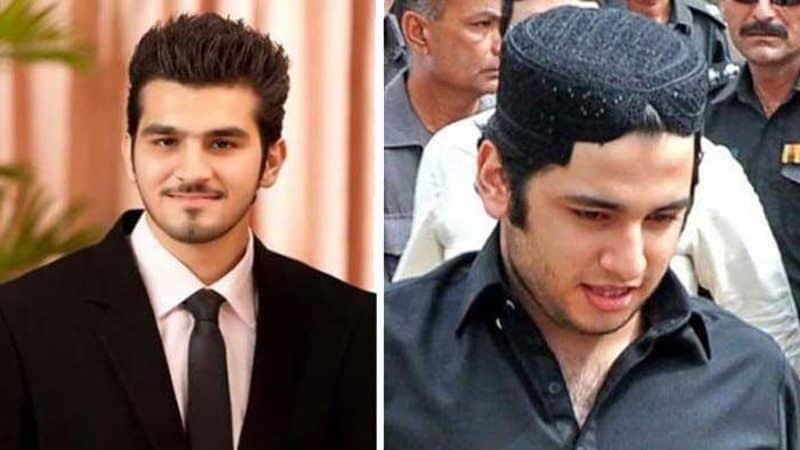
    The Supreme Court acquitted Shahrukh Jatoi as well as his accomplices in the Shahzeb Khan murder case. Jatoi, a scion of a rich and influential family, has gotten away with murder, which is a prime example of a miscarriage of justice. Ten years ago, Jatoi and his friends killed 20-year-old Shahzeb Khan. Jatoi also flew out of the country to escape the law. He was eventually brought back. Later, Shahzeb’s family pardoned him as they faced threats. Not many can forget how the 20-year-old was shot dead for trying to stop Jatoi and company from harassing his sister, and also the way the system protected them. Although the victim’s father was a senior police officer, the police would not register an FIR against the accused.

    In this particular case, we should not forget the role of the Sindh government that consistently facilitated Shahrukh Jatoi because of his influential father. And now our superior judiciary has set him free. Imagine what must be going through the minds of Shahzeb’s family members who not only lost a young loved one but will not have to deal with the trauma of seeing Shahzeb’s murderer being set free. The justice system has indeed failed them the most.

    History will remember that a murderer has been acquitted by our courts. He will be walking freely, out in the open. A complete threat to everyone around. They say justice delayed is justice denied. However, in Pakistan, a murderer has been set free because of our laws, especially the Qisas and Diyat laws. A pardon was signed but in such cases, power and intimidation lead to such pardons. Jatoi getting away with murder makes us question our laws and judicial system. It seems that these laws not only favour those who are powerful but are used quite frequently in murder cases.

    Should the powerful and wealthy be allowed to get away with such crimes? It’s the fault in our laws that mercy to men like Jatoi. Who is next on the list to walk freely: Zahir Jaffer or Shah Nawaz Amir?

    As a country, we are still dealing with the horrors of the murder of Noor Mukadam. We haven’t healed as a nation and have witnessed the bone-chilling gruesome murder of Sara Shah Nawaz at the hands of a man who too was raised as a result of the patriarchal norms in the country. In Pakistan, powerful men can get away with anything, even murder, without any repercussions. Our society and justice system have failed the men and women of Pakistan.