A matric student from Swat has invented “smart shoes” for visually impaired people that warn them with a sound or vibration about any obstacle on their path within a radius of 120 centimeters.
The 17-year-old told Arab Newshe had an interest in repairing and fixing damaged battery-operated toys and this is how he entered the world of innovation.
“Visually impaired people will no longer need walking sticks or guides after smart shoes acquire popularity,” Wasiullah said.
“The shoes are fixed with ultrasonic sensor and Arduino board to keep blind people safe while they are walking. Such individuals can get prior notification of any looming hindrance.”
Physics teacher Muhammad Farooq said Wasiullah was his most bright student and that he had planned to design a new type of wheelchair to help visually impaired people navigate their surroundings, but he could not afford its financial constraints.
Financial problems did not hold him back and he came up with “vibrating shoes” instead.
“I still believe he has the potential to emerge as a leading scientist if he gets proper coaching and opportunity,” Farooq said.
“Smart shoes for visually impaired people are available in foreign countries,” Farooq said. “But their prices are beyond the reach for many in Pakistan. The government should own the project because the shoes Wasiullah has made are comparatively cheaper and more affordable.”
Mian Sayed, a social activist from Swat, has seen Wasiullah’s smart shoes and is positive that they could even become an export product.
Wasiullah said the price of a pair of his smart shoes can be fixed at Rs4,500 ($26), but he would not be able to manage production himself as he also needs to finance his studies himself.
An opportunity may come from the local government.
Sajid Shah, head of the provincial directorate general of science, told Arab News the shoes will soon be evaluated by experts.
“After evaluation by our scientists,” he said, “our department will promote the project of smart shoes invented by Wasiullah for commercial purposes.”
In a statement attached with the court order, which she agreed to publish, Reham withdrew all allegations and rendered a full and unconditional apology.
Khan posted her apology on Twitter, in which she wrote, “On 6 and 7 December 2019, I published a video on my YouTube Channel, my Facebook page, and on my Twitter account in which I asserted that Sayed Zulfikar Abbas Bukhari, more commonly known as Zulfi Bukhari, was involved in a corrupt plan with the Prime Minister of Pakistan to sell or acquire the Roosevelt Hotel in New York at an undervalue for his benefit.”
“These allegations were false and untrue. Zulfi Bukhari, as I now understand, was not involved in any corrupt plan PM Khan to sell or acquire the Roosevelt,” she added.
Reham also posted her apology video on her youtube channel.
https://youtu.be/_1ecyzzXcmc
Zulfi, in a tweet, while reacting to Reham’s video said, “TRUTH ALWAYS WINS!”
TRUTH ALWAYS WINS! Upon court orders,Reham Khan publicly apologises&pays damages for her lies. IA 1 day we’ll have the same law&justice so certain media persons spreading lies&fake news can be taken to task.This is the result when rule of law is supreme Next stop:Commissioner Rwp pic.twitter.com/xEKa1YZaQc
In the settlement agreed between the two parties, Reham agreed that she will tweet the apology and clarification and pin it to her Twitter account for at least three consecutive days.
Reacting to the development, Information Minister Fawad Chaudhry said, “Reham being a liar was proved once again. She is actually a habitual liar.”
برطانوی عدالتوں نے ریحام خان پر زلفی بخاری پر جھوٹےالزامات پر ہرجانے اور معافی مانگنے کا حکم دیا، اس طرح کا قانونی نظام پاکستان میں لانے کی کوشش کو آزادی اظہار کے خلاف کہ کر میڈیا مالکان مہم شروع کر دیتے ہیں، بہرحال ریحام کا جھوٹا ہونا ایک بار پھر ثابت ہوا دراصل وہ عادی جھوٹی ہے pic.twitter.com/D3voVXaC6e
Pakistan has been plagued by episodes of rape and abuse over the years that it has now become common to the extent that people have started normalising such acts.
Back in 2002, Mukhtaran Mai’s gang-rape was one of the most horrifying gang-rape incidents that were reported.
Another major incident that took place in 2014 was the Layyah gang-rape case, where a 20-year-old girl after being gang-raped, was found hanging from a tree. Such inhumane incidents haven’t stopped even now.
Two men stole her money and the jewellery she had on her. They then raped her in front of her two children in a nearby field and escaped.
The incident sparked national outrage but what happened next? Before the arrest of the two culprits, questions like “Why was she out on the motorway so late without a brother or husband? Why didn’t she check her gas tank before leaving the house? And if she had to travel, why didn’t she take the more public GT Road route?” were asked because, sadly, in our country ‘getting raped’ is the woman’s fault. Apparently, a woman gets raped because ‘she was driving alone, on the wrong road, at the wrong time, in the wrong place’.
Later, the motorway rapists were sentenced to death but rape cases continued to rise in Pakistan.
On October 12, 2020, our team started counting rape cases on a daily basis from 13 different sources, which included these newspapers: Dawn, The News, The Express Tribune, The Nation, Pakistan Today, Daily Times, Nawa-e-Waqt, Daily Jang. And from these websites: ARY News, Geo News Samaa News Dunya News Aaj News.
It is to be noted that the given stats only include the reported incidents, not the ones that go unreported.
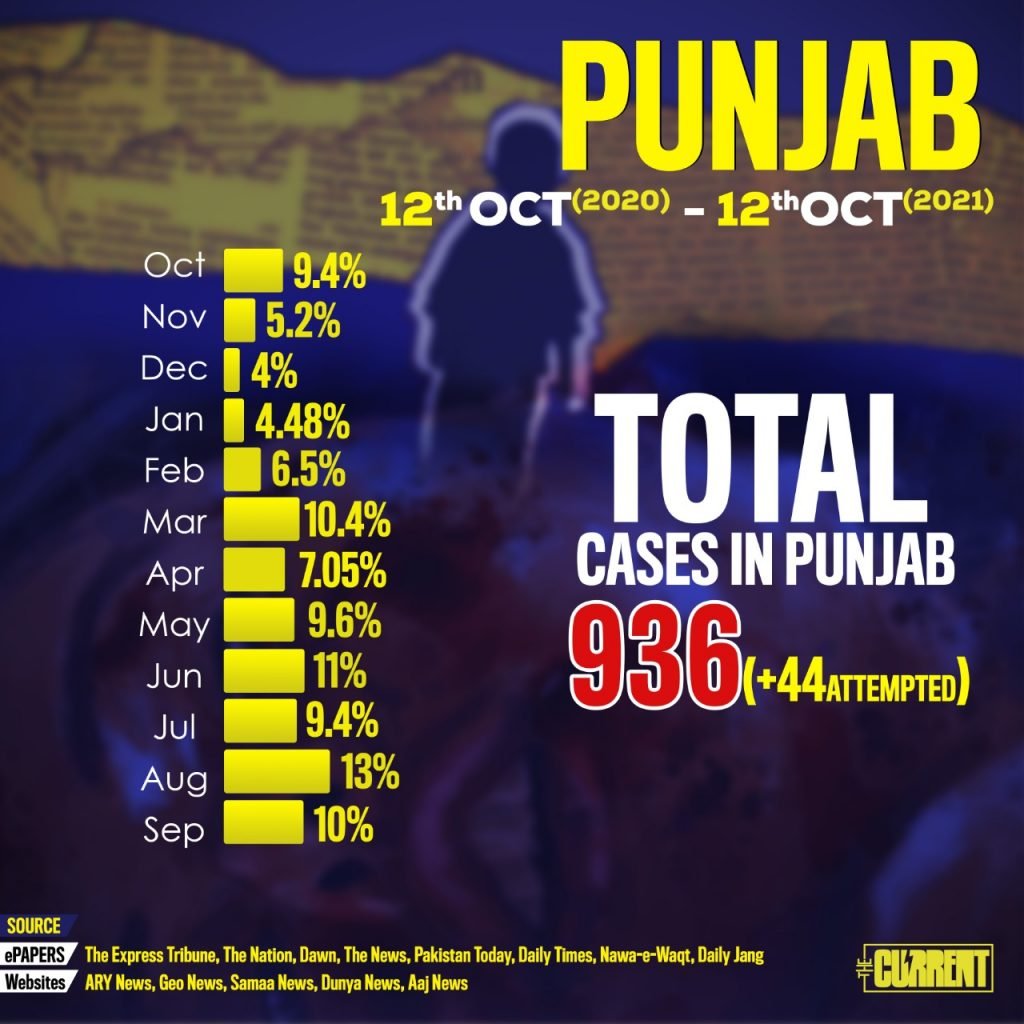
During the process, we have included reported rape cases of girls, boys, women, men and transgenders. Moreover, we have divided the rape cases province-wise, according to which Punjab till date has the highest number of rape cases, i.e. 936 rape cases and 44 attempted incidents.
It has been a year since we have started posting our rape template daily to analyse the record of reported rape cases. We have collected the data of the entire year (October 12, 2020 to October 12, 2021) and prepared slides of reported cases of each month provinces-wise.
Provinces Categorisation:
Sindh
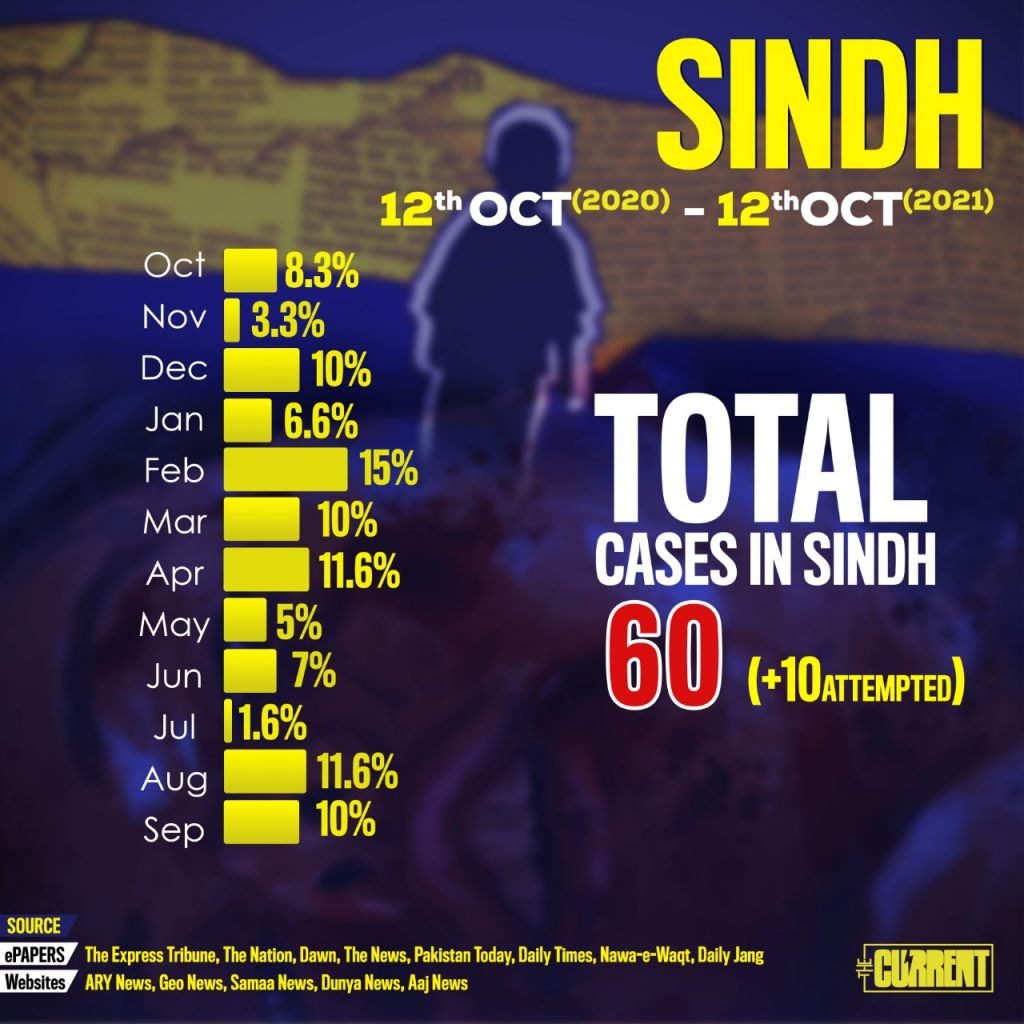
Till date, Sindh has recorded a total of 60 reported rape cases in which 10 are attempted incidents. 11.6 per cent of cases were reported in the month of April and August as per the graph.
Punjab
Punjab has recorded a total of 936 reported rape cases in which 44 are attempted incidents until now. 13 per cent of cases were reported in August.
Islamabad
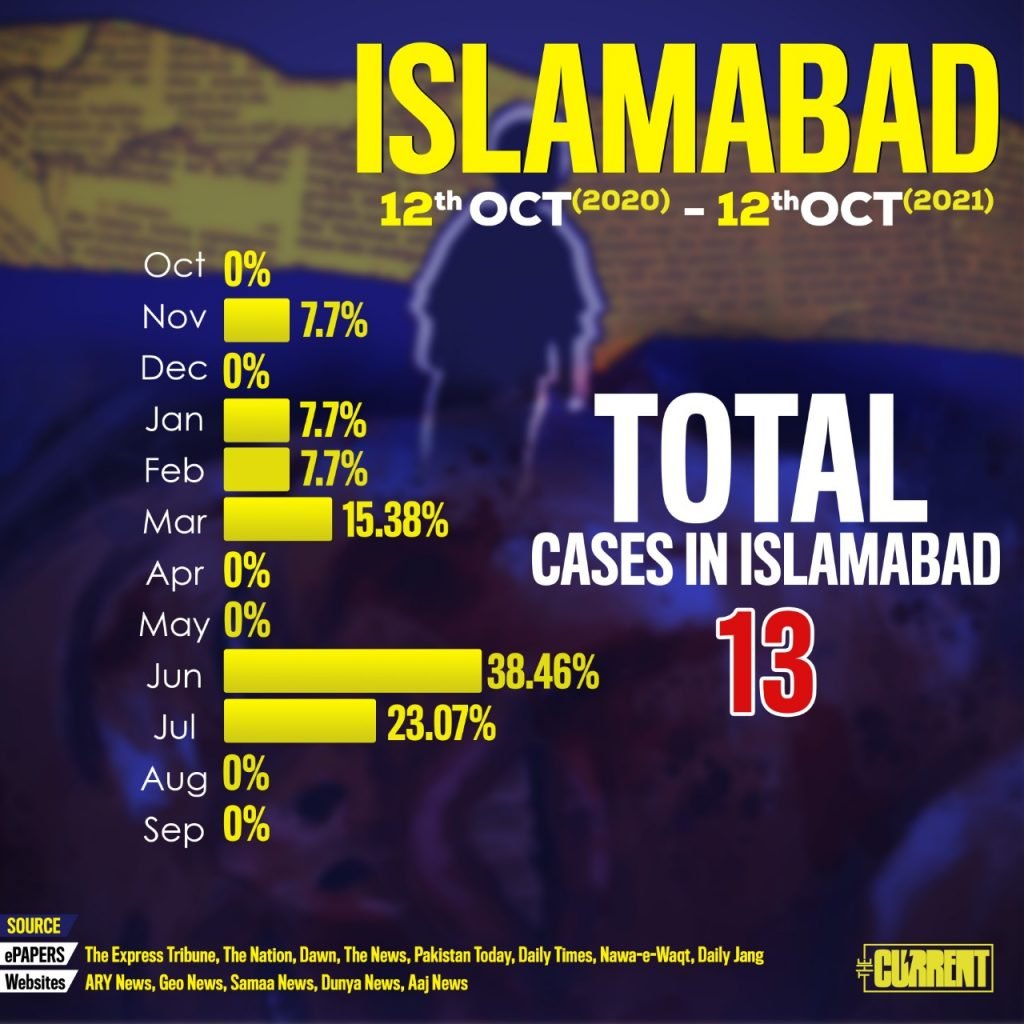
The capital has recorded a total of 13 reported rape cases which no attempted cases until now. The reported cases are relatively low as compared to other provinces’ data. However, 38.46 per cent of rape cases were reported in June this year.
Balochistan
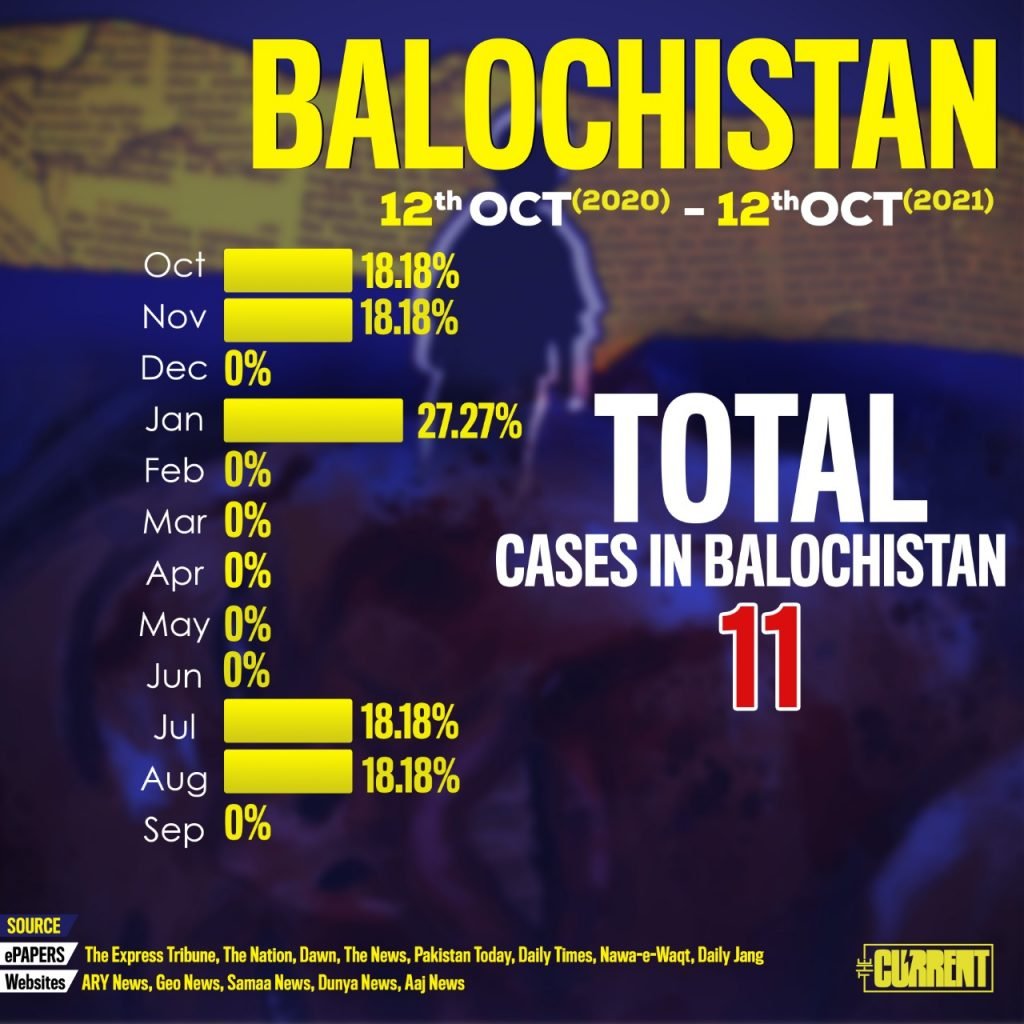
Balochistan has reported a total of 11 reported rape cases. Most of the months show zero reported rape cases, according to the graph.
KPK
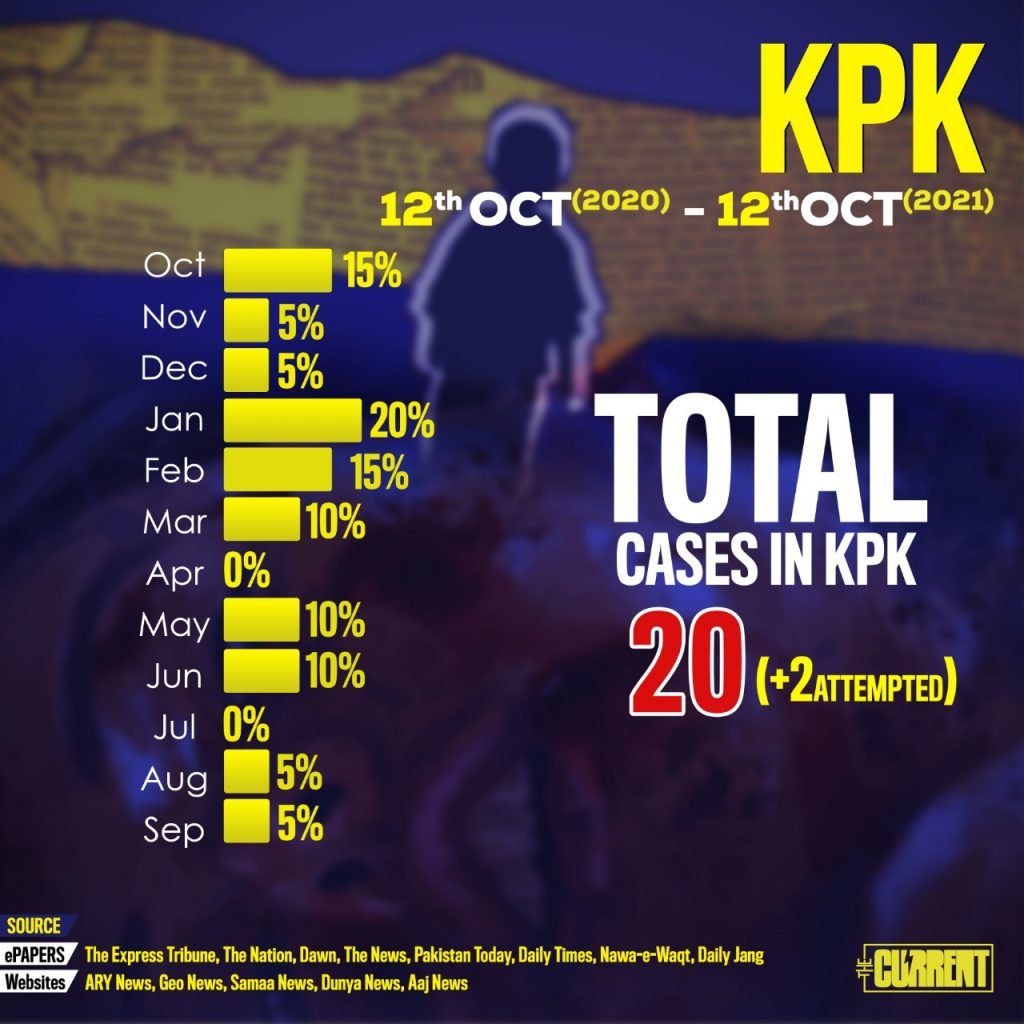
Khyber Pakhtunkhwa (KPK) has reported a total of 20 reported rape cases of which 2 were attempted incidents. The numbers throughout the months are quite the same.
Deaths (province-wise)
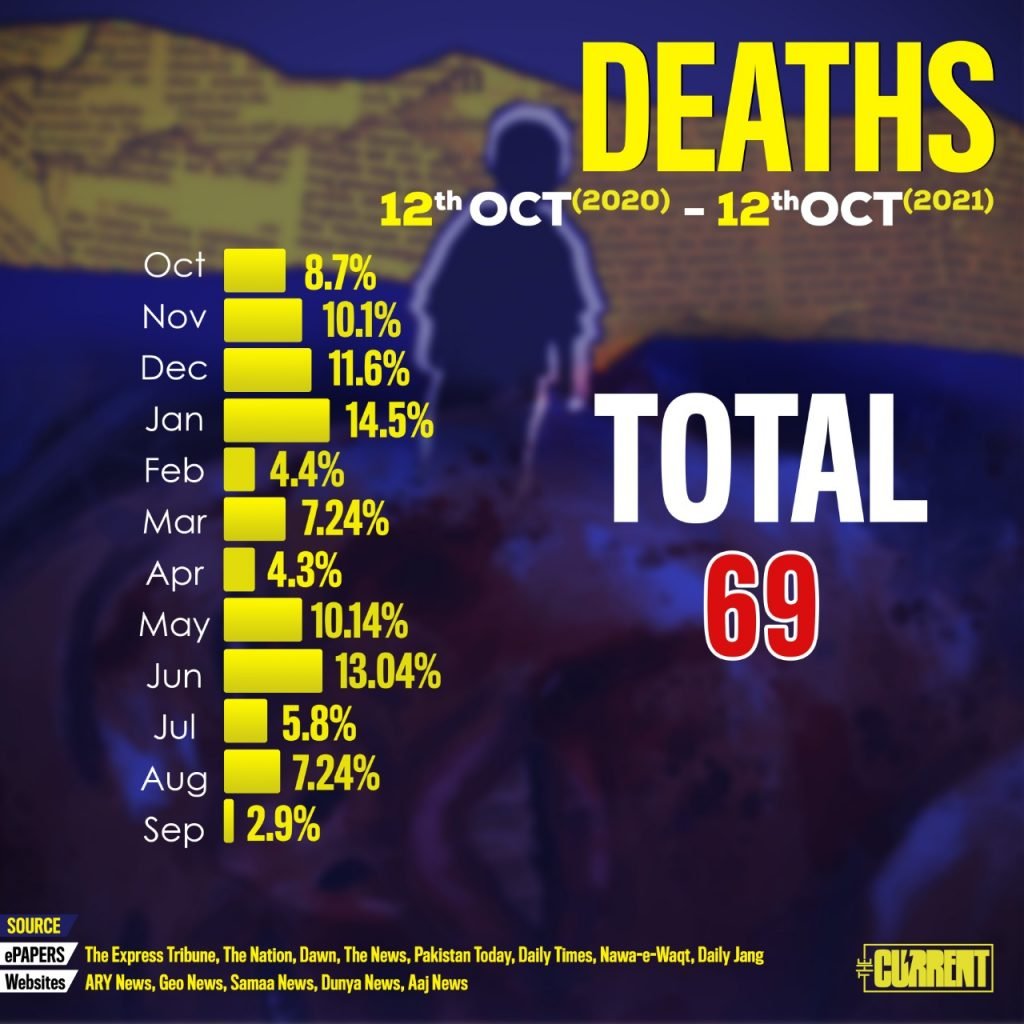
As per the graph, the death rate was high in the month of January i.e.14.5 per cent.
Numbers of the recorded cases after the highlighted incidents of 2021
After the following incidents, we noticed an increase in the reporting of rape cases.
Mufti Aziz-ur-Rehman: sexual assault case
On June 17, police registered a criminal complaint against Mufti Aziz after a male student accused him of sexual abuse. In the aftermath of a viral graphic video that showed Mufti engaging in sexual intercourse with the male student, who was the victim, the action was taken against Mufti Aziz. After the incident, we noticed an increase of 10.7 per cent in the reporting of rape cases in the month of June.
Usman Mirza’s sexual assault on a couple
Usman Mirza was arrested on July 7. He was seen torturing and assaulting a couple. He was also seen stripping naked a woman in the video. The video sparked outrage across Pakistan. After the petrifying incident, an increase of 9 per cent was observed in the reporting of rape cases in the month of July.
Noor Mukadam’s murder case
On July 20, Noor Mukadam, daughter of former Pakistani diplomat Shaukat Mukadam, was raped, beheaded and murdered, in a posh neighbourhood of Islamabad in July. Noor’s murder led to nationwide protests. After her murder, as per the reported cases we have monitored, there was an increase of 12.6 per cent in the month of August.
There are many more cases that are still unreported due to various reasons.
According to The News, official statistics obtained from the Police, Law, and Justice Commission of Pakistan, Human Rights Commission of Pakistan, Women’s Foundation, and provincial welfare agencies in 2020 revealed that there are at least 11 rape cases reported in Pakistan every day with over 22,000 rape cases reported to the police across the country in the last six years.
As of late, Sunday nights seem to be incomplete without a dose of drama and emotion courtesy Hum Kahan Ke Sachay Thay (HKKST). The drama has captivated audiences becoming perhaps one of the most discussed dramas of the year – scroll through any social media platform and you are bound to see at least a few posts on it. Besides bringing together a string of phenomenal actors including Mahira Khan, Kubra Khan, Usman Mukhtar, Huma Nawab, Ali Tahir, Laila Wasti and Zainab Qayyum among others, the drama’s script has been penned by the legendary Umera Ahmed with Farooq Rind behind the camera and Nina Kashif and Momina Duraid on the producers’ seat – in short, a dream team.
Ten episodes of the drama have aired so far, and we are fully immersed into the story. The creators fortunately did not spend too many episodes setting the stage and killed one of the leads and sent another to jail in just the ninth episode leaving shocked audiences with the question: was Mashal’s death a suicide or accidental?
For the unacquainted, HKKST revolves around three cousins Mehreen (Mahira Khan), Mashal (Kubra Khan) and Aswad (Usman Mukhtar). Mehreen, despite her troubled childhood, is a star child always on top of everything, getting good grades and engaging in extracurriculars. Mashal, on the other hand, is an average student and is pushed by her mother Shagufta (Zainab Qayyum) to become more like Mehreen. As a result, the two cousins grow up hating each other and their rivalry intensifies when Mashal decides that she wants to marry Aswad, whose mother Saleha wants him to marry Mehreen. Eventually after a whole lot of drama, Aswad and Mehreen get engaged and are set to marry when Mashal mysteriously dies and Mehreen is accused of killing her. The creators have not yet revealed whether Mashal died by suicide or if she was killed.
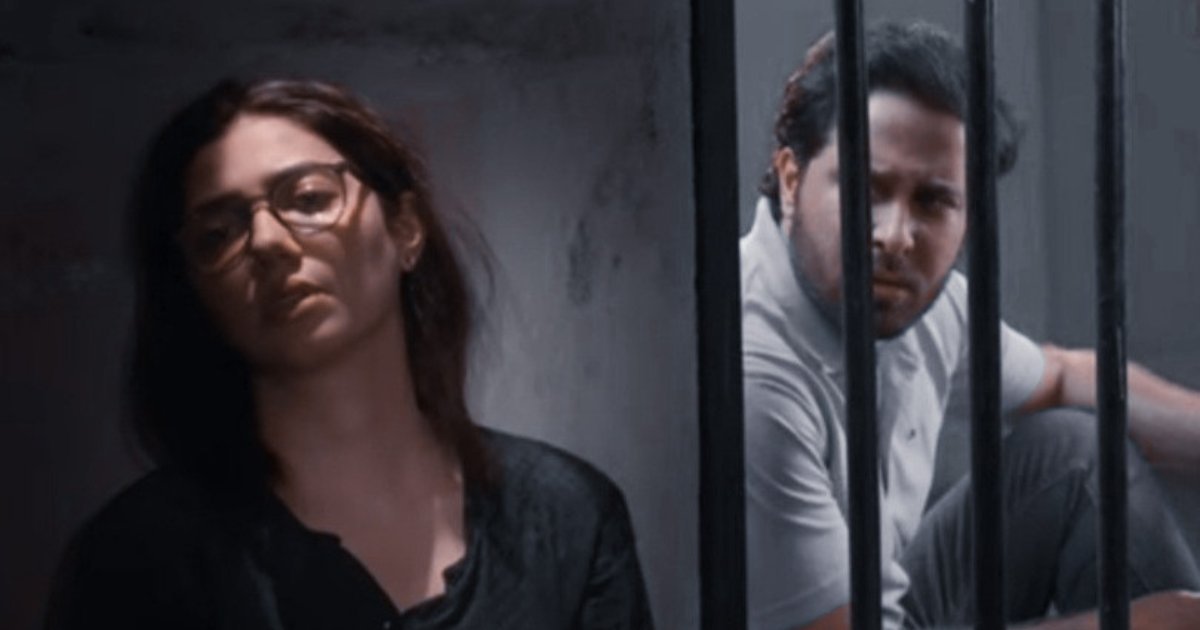
The latest episode sees Mehreen still behind bars in her kaala jora though interestingly her hair is fresh as ever. Initially, no one from her family comes to visit her yet, including her mother (Laila Wasti), Khala and fiancé. The first person to come to Mehreen’s rescue is Safwan (Haroon Shahid) who not only arranged a lawyer but also helped Mehreen secure bail. Meanwhile, Aswad later turns up only to berate Mehreen and tell her that their engagement is off. It is understandable to an extent, that Aswad is also battling a turmoil of emotions, there is still no reason for him to be so insufferable towards Mehreen.
Episode ten did not move so much in terms of the story but there were a series of emotionally charged scenes which did make you shed a tear or two including the one of Safwan and Mehreen, Saleha Khala and Mehreen and Shagufta remembering her late daughter. Safwan and Mehreen’s scene was perhaps the most endearing of the three and all I want to say at this point is that in a world full of Aswads, be a Safwan. “Main tum say poochnay aaya hoon keh main kya kar sakta hoon?” was without a doubt the highlight of the entire episode. Sigh! The background music has been beautifully weaved into the scenes adding more depth to them.
Moreso, they have been beautifully enacted by the lead and supporting cast who have given phenomenal performances from day one – whether it was Kubra as the slightly psychotic Mashal or Mahira as Mehreen, each actor has brought forward their A-game making the drama such a treat to watch. A huge shoutout to Usman, who has wonderfully portrayed Aswad making everyone, and their mother hate him.
Meanwhile, what is missing from the drama is basic logic. I understand that at the end of the day HKKST is a drama, and everything is fictious, but is it too much to ask for from the creators to sprinkle in a bit of realism? Considering that Mehreen has been jailed for murder, there seems to be no court involved or even a charge sheet. Investigation into the incident seems to be limited to the police officer (Khalid Malik) either listening to Mehreen repeatedly say “Mainay Mashal ko nahi maara (I did not kill Mashal)” or eavesdropping on her conversations with those who visit her in prison. Mehreen’s uncle (Mamu) is pushing him to hang his niece for killing his daughter without any a shroud of evidence. The legal system is completely absent, and all characters appear to be doing everything at their own discretion. The one person who exactly knows what went down is Shabo and we all now have to wait for her to spill the truth. Till then, it’s going to be a whole lotta drama and rona dhona.
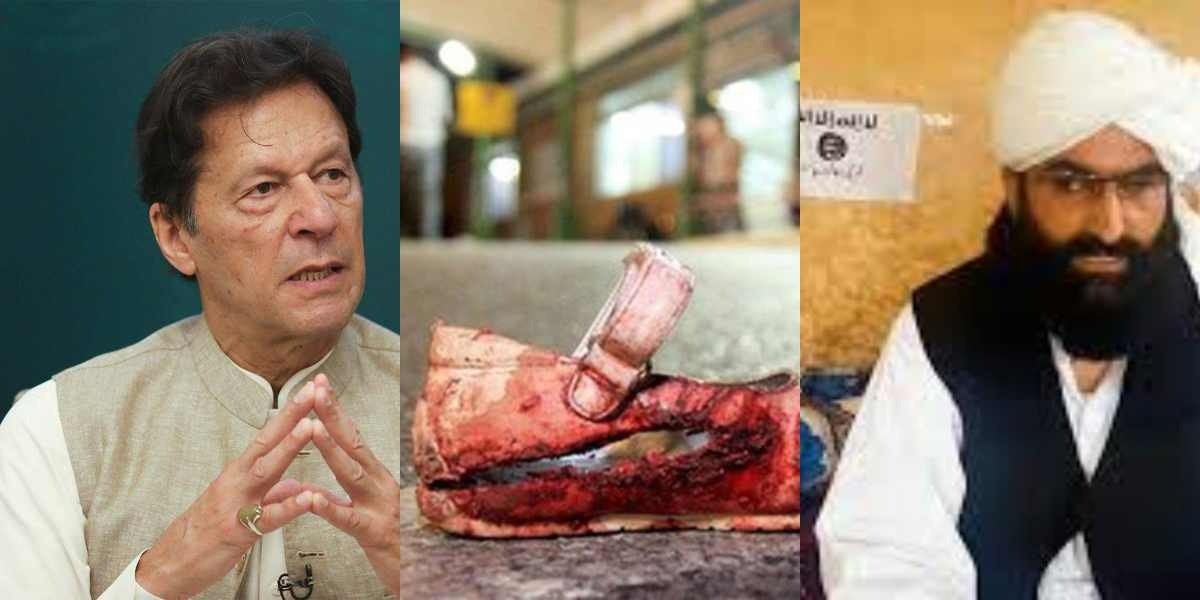
Prime Minister Imran Khan has said that the government is in talks with some groups of the banned militant outfit, Tehreek-e-Taliban Pakistan (TTP). In an interview with TRT World, PM Khan said there are different groups that form the TTP and some of them want to talk to our government for peace. “So, we are in talks with them. It’s a reconciliation process.” Before PM’s interview, both President Arif Alvi and Foreign Minister Shah Mahmood Qureshi had talked about giving amnesty to TTP members if they lay down their arms and follow the Constitution of Pakistan.
These statements warrant a lot of questions: why did the president, prime minister, and foreign minister disclose such important information in interviews to media outlets and not in parliament? TTP is no ordinary terrorist outfit. The entire country came together after the horrific APS attack in December 2014, in which more than 150 people were martyred – most of them children. All the political forces of Pakistan reached a consensus, after which the National Action Plan (NAP) came about. There was a massive crackdown on TTP and other terrorist outfits. We finally managed to eliminate the TTP in Pakistan. Those from the TTP who survived the crackdown ran away to Afghanistan. At that time, the government in Kabul was not friendly towards Pakistan.
The state told us that the TTP was supported and funded by India and Afghanistan – when Ehsanullah Ehsan first surrendered to Pakistan, he confirmed in a video that Afghan and Indian intelligence agencies [RAW and NDS] gave funds and other assistance to Pakistani Taliban to fight Pakistan. Last year, after sharing a dossier containing ‘irrefutable proofs’ of Indian funding of terrorism in Pakistan, Shah Mahmood Qureshi said: “The [specific] evidence presented by Pakistan provides a concrete proof of Indian financial and material sponsorship of multiple terrorist organisations, including UN-designated terrorist organisations Jamaat-ul-Ahrar, Balochistan Liberation Army and Tehreek-e-Taliban Pakistan.”
What is the reason for Pakistan to hold talks with a RAW and NDS-funded/supported terrorist outfit when we have broken its back in our country? And now that we have a friendly government in Kabul, what is the need to hold talks with an enemy outfit? Should the Afghan Taliban not help reign in the TTP and take action against those who are carrying out attacks against Pakistan from Afghan soil? Or, is it true that the Afghan Taliban and the Pakistani Taliban both have the same ideology, even if the targets of their attacks are different? The people of Pakistan – who have been killed and maimed by the TTP over the years – deserve an answer.
The government needs to be transparent. This decision cannot be taken just by the government alone. All political parties must have a debate on this issue and the people of Pakistan have to be taken on board as well. We cannot forget what the TTP did to our nation. We lost more than 70,000 lives at their hands. There must be a consensus about the talks and also the government should be transparent about the negotiations. Don’t keep us in the dark, dear government, for we were told that we will never forget their heinous crimes.
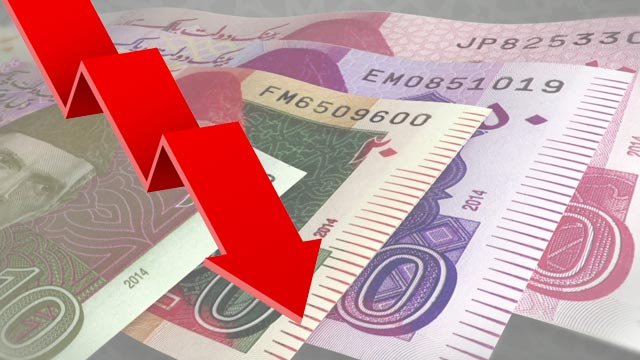
The rupee has been sliding down for the past many weeks and dollar is touching Rs170. This wave of devaluation has sparked speculation of further depreciation in the coming days. Should we be panicking and start hoarding dollars?
Probably not.
If anything, this is perfectly in line with market fundamentals. The reasons behind the current spell of depreciation are primarily the rising trade deficit and to some extent, the Afghanistan situation. Our imports have risen sharply in the last few months — predominantly due to rising international commodity prices such as for oil, gas, coal, steel, etc.
Some increase in imports can also be attributed to recovering economy fuelled by fiscal and monetary stimulus. In simpler terms, as the government injected more money into the market through the Covid stimulus package and other means and maintained interest rates at a low level, the demand increased leading to rebounding growth.
But with growth recovery, the demand for imports also increased, widening the trade deficit. Moreover, some of the recent increase in imports can also be attributed to the vaccine imports, the phenomenal increase in demand for automotive, capital imports under Temporary Economic Refinance Facility (TERF), etc.
What impact should the trade deficit and current account deficit have on the exchange rate?
As soon as the current IMF programme started, the government switched to a market-determined exchange rate. Notwithstanding the reports of some intervention by the State Bank in the market, the market-determined regime does not give the flexibility to the central bank to maintain the exchange rate at an artificial level. This in fact is the right strategy for a country like Pakistan, so that its hard-earned forex reserves are not burnt to preserve the exchange rate, indirectly subsidising imports at the cost of scoring political brownie points. The exchange rate, therefore, took the hit, and the rupee devalued.
But for now, the threat of any further significant devaluation is not in sight. The devaluation itself has made the imports expensive. In addition, the government is also considering increasing regulatory duty on luxury imports to further dampen the demand for these items. These measures are complemented by a change in monetary stance — an increase of 25 basis points, which is likely to be followed by further increases in the future — and passing on the energy price increases. All these measures are expected to immediately reign in the rising current account deficit. Hopefully, the current spell of rising international commodity prices should also be over in the next 6 to 9 months, further supporting an optimistic medium-term outlook.
But under this cyclical trend, lies the political economy of devaluation in Pakistan.
What we must understand is that historically the rupee has only gone down against the dollar and that’s the direction it will maintain in the medium-term, notwithstanding any short-term reverse movements. The reason for this perpetual devaluation is the underlying balance of exports and imports. Pakistan is a country with high imports and low exports. The difference is bridged through precious foreign exchange, earned from remittances, foreign direct investment, and external loans. Historically, the rupee has depreciated against the dollar by approximately 7 per cent per annum to account for the perpetual supply and demand gap. This gradual devaluation is in fact absolutely essential for Pakistan until the export composition and volume change significantly.
During PML-N’s tenure, we followed the managed float exchange rate regime. The then finance minister artificially maintained an overvalued exchange rate and pumped in foreign exchange in the market, whenever the demand for dollars increased. An overvalued exchange rate made exports expensive and imports cheaper, thus further widening the trade deficit. The industry suffered but the traders were happy. The citizens enjoyed quality imported goods at cheaper prices, not realising that they would have to pay the price later on. Therefore, as a result of artificially maintaining the exchange rate at an abnormally low level, our reserves took a serious hit, while imports continued to increase. This prompted a balance of payment crisis and necessitated the present IMF programme. Such an approach was economically disastrous.
If we don’t want to repeat the same mistake, we should be open to gradual devaluation depending on the current account balance. To manage the CAD, the fiscal and monetary policies have to work in tandem. It’s prudent to go slow and steady than to overheat the engine and lead to yet another balance of payments crisis.
I am from a country where public transport has been in shambles since the time of dinosaurs. The sitting prime minister of my country won the elections by practically convincing the people that building roads and public transport was not important. So you can well imagine moving around the cities would be some sort of hell for most of us. Being a vehicle owner myself and driving for the past 15 years, I cannot explain the amount of hate I have for driving. But I was always fascinated by the traffic post-midnight that consisted mostly of trucks. It was a different time. A different world altogether. A big giant never-ending trucks, on to a long journey, a journey not particularly entertained by what you call “human companionship”. Probably it is the very lack of human interaction that made truck driving a very fascinating world for me. I couldn’t explore it the way I wanted to because I am a woman stuck in a country where being a woman is your first crime. The rest of the crimes follow automatically but are all committed by others. Despite never truly knowing what it’s like to be a truck driver or their problems, I continued to be fascinated by the expansive and isolated journeys, the tuck shops, tarkay wali chai, and desi breakfast on a chorpoi at some deserted dhaba. Romantic, no?
This romantic trance was however broken by the movie “Milestone”. A ‘daish-drohi’ (traitor) like myself indulged in Indian cinema at the recommendation of a very dear friend. I didn’t know what I was getting into. “Milestone” reintroduced me to the word ‘melancholy’ in a way that no other tragedy of my life had. I didn’t realise I had that many feelings that I simply refused to acknowledge or feel. I often felt that even the abyss I looked into didn’t reciprocate and I kind of felt unwanted even by the abyss. Till I watched “Milestone”. This movie saw through me like no other thing or person.
Ghalib, the protagonist of “Milestone”, plays the role of a truck driver. In the quietest opening scenes of the movie, the resignation in the face of Ghalib, the expansive emptiness of his eyes, and his lingering backache, everything got me hooked to the movie in the first few minutes. Ghalib’s story slowly unrolls and makes the audience acquainted with his loneliness, not only in his personal life but professionally too. His loneliness has been depicted brilliantly through the vast emptiness of the roads, his empty apartment, and his lonely driving duties at night accompanied by nothing but melancholy. The film drops hints here and there about the circumstances of his wife’s death but mostly remains focused on Ghalib’s long journey to nowhere. But even those hints suggest that he blames his aloofness, which made his relationship bitter and then nonexistent. The feeling of homelessness that instills in the opening scenes remains with you throughout the movie.
Ghalib, a man of few words, can be witnessed getting further worn down in the movie as a young recruit threatens Ghalib’s job. The young intern was zealous about perfecting the art of truck driving but Ghalib was desperate to save the only enduring relationship he had, which was his relationship with the truck. A lot of people would comment on the commodification of labour class or discuss how capitalism traps you, especially when it comes to the labour class but for me, Ghalib saying: “I do this job because it is who I am. My misery lies in the fact that this is all I am,” was a punch in the gut. This was his entirety of life, a long road, a never-ending journey, the misery of being who he was, and the lingering feeling of being disposable.
Director Ivan Ayer has encapsulated the predicament faced by the labour class with so much melancholy. The attention to detail and the long uninterrupted scenes with fewer words keep you going as you explore layers and layers of emotions such as despair, paranoia, and loneliness. Ivan has done a tremendous job in portraying the diminishing value of human life by walking the audience through the protagonist’s life.
You might wonder if my fascination ended with the life of truck drivers? I don’t think so. I might never be able to romanticise it again but I have to say that the loneliness it offered was at the same frequency as mine. And I couldn’t thank Ivan enough for making this absolute masterpiece and giving such deep projection to the intricate emotions.
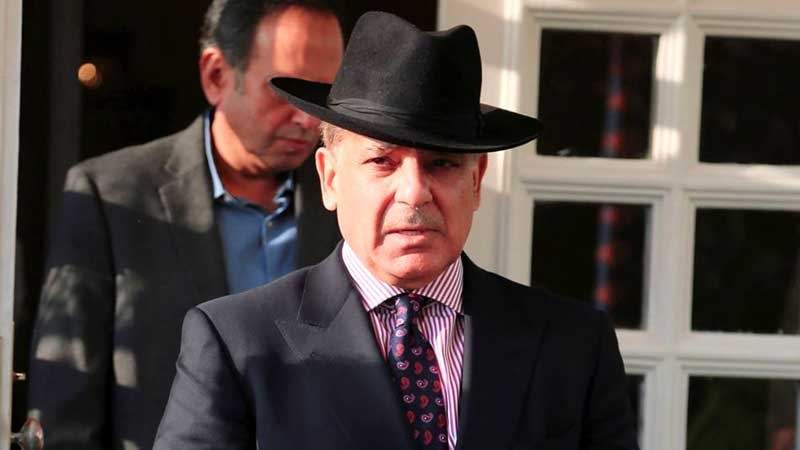
The Associated Newspapers Limited (ANL), publishers of TheDaily Mail and Mail on Sunday, are yet to submit evidence in Shehbaz Sharif’s defamation case after seven months of delay, reports Murtaza Ali Shah for Geo News.
Earlier this year in February, Justice Sir Matthew Nicklin of the London High Court ruled that the article by reporter David Rose carried the highest level of defamation (Chase level 1 – the highest form of defamation in English law) against both Shehbaz Sharif and his son-in-law Ali Imran Yousaf.
The DailyMail has asked for three extensions, citing [previous] continuing travel restrictions and Pakistan’s Red listing as its team was unable to visit Pakistan to collect evidence, as per sources. However, now that the ban has been lifted, the Mail’s lawyer’s third extension is going to end in a few days.
In July 2019, renowned media law firm Carter-Ruck sued British newspaper The Mail on Sunday, online news site Mail Online and its journalist David Rose on behalf of Shehbaz Sharif for publishing a “politically motivated” article. The story, published on July 14, 2019, had suggested that Shehbaz and his son-in-law Ali Imran Yousaf “stole British taxpayers’ money” given to Earthquake Relief and Reconstruction Authority (ERRA) set up to help the victims of the 2005 Pakistan earthquake.
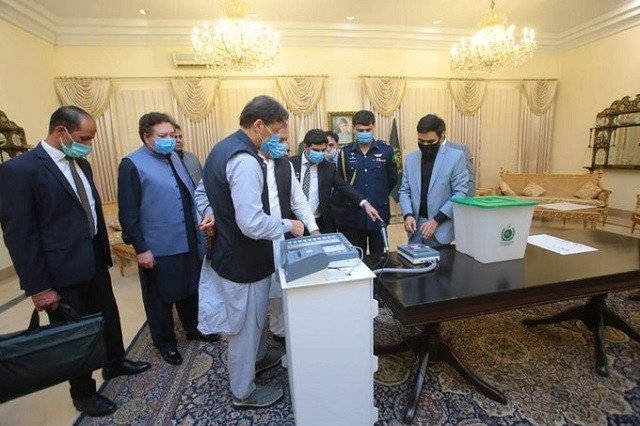
الیکٹرانک ووٹنگ مشینوں کا ذکر آج کل بہت ہو رہا ہے تو میں نے سوچا چلو میں بھی قسمت آزما لوں۔ ویسے بھی الیکشن سائنس کا موسم ہے تو ہر کوئی ہی اس کا ماہر بنا ہوا ہے۔ حکومت مصر ہے کہ الیکشن ہوں گے تو الیکٹرانک ووٹنگ مشینوں پر ہی ہوں گے اور اس سلسلے میں حکومت نے پیر کو الیکشن ایکٹ ترمیمی بل پارلیمنٹ کے مشترکہ اجلاس میں پیش کرنے کا فیصلہ کیا ہے جس کے زریعے الیکٹرانک ووٹنگ مشینوں کے استعمال کے ساتھ دیگر قوانین مجود ہیں۔ اپوزیشن کو چھوڑ بھی دیں تو ملک میں کئی با شعور آوازیں اس مشین کے حوالے سے تحفظات کا اظہار کر رہیں ہیں لیکن اس معاملے کو بھی ایک تماشہ بنا کر رکھ دیا گیا ہے ایک وزیر موصوف تو اتنے جذباتی ہو گئے تھے کہ الیکشن کمیشن کو آگ لگانے کا مشورہ دے بیٹھے پتا نہیں حکمران جماعت اور اس جلا دو ، پکڑ لو گھیر لو ذہنیت میں اتنی قربت کیوں ہے؟ شاید 2014 دھرنے کی پارلیمنٹ اور پی ٹی وی پر حملہ کرنے کی یاد رہ رہ کر ستانے لگتی ہے۔ خیر یہ بات تو ہر کوئی ہی اب جان گیا ہے کہ 167 جمہوری ممالک میں سے صرف 8 میں الیکٹرانک ووٹنگ مشینوں کا استعمال ہوتا ہے کئی ایک ممالک ان مشینوں کو ایک لمبے عرصے تک استعمال کرنے کے بعد ترک کر چکے ہیں۔ جن ممالک نے اس پتھر کو چوم کر واپس رکھ دیا اس میں سے ایک دلچسپ کیس ہالینڈ کا ہے۔ 1960 کی دہائی میں ہالینڈ کی الیکٹورل کونسل کے سیکرٹری امریکہ میں ووٹنگ مشینوں کے استعمال دیکھ کر اس کے دلدادہ ہو گئے اور ڈچ وزارت داخلہ (ہالینڈ میں انتخابی معاملات اس وزارت کے تحت ہوتے ہیں) کو اس بات پر منا لیا کہ ملک میں ہونے والے انتخابات ووٹنگ مشینوں پر کروائے جائیں 1965 میں ہالینڈ میں الیکشن کے ضمن میں ایک نیا قانون نافذ ہوا جس کے تحت انتخابات میں ووٹنگ مشینوں کا استعمال ممکن ہو سکا۔ مارچ 1966 میں 13 مقامی میونسپیلٹیز نے امریکی طرز کی مشینوں کا صوبائی سطح کے انتخابات میں استعمال کیا۔ یہ تجربہ ناکام ہو گیا کیونکہ جلد بازی میں کئے گئے اس فیصلے کی بنا پر ووٹرز کو دقت کا سامنا ہوا جس کے سبب کئی ووٹ خالی آئے۔ اس ناکامی کے بعد ڈچ انتظامیہ نے اپنی مشینیں خود ڈیزائن کرنے کا فیصلہ کیا 1968 میں اس حوالے سے قوائد و ضوابط مرتب کئے گئے اور ڈچ آرگنائزیشن فار اپلائیڈ سائنٹیفک ریسرچ کو ایک کمپنی کے ساتھ مل کر مشین کا ڈیزائن بنانے کا کام سونپا گیا جس کے بعد اس مشین کی تیاری کا کام ڈچ اپریٹس فیکٹری کے ذمہ لگایا گیا۔ 1980 کی دہائی میں ہالینڈ کے انتخابات میں مقامی ڈیزائن پر مبنی مشینوں کا استعمال شروع کیا گیا اور 90 کی دہائی کے وسط تک ہالینڈ کے انتخابات میں وسیع پیمانے پر ان کا استعمال کیا جانے لگا۔ ان مشینوں پر کوئی سیاسی یا عوامی سطح پر بحث نہیں تھی ووٹر بھی خوش تھا اور انتظامیہ بھی کیونکہ ایک تو غلطی کے امکانات کم ہوتے تھے، نتائج جلد آ جاتے تھے اور عملے کی تعداد میں بھی کمی آ گئی تھی۔ اگرچہ 90 کی دہائی کے آخر میں ان مشینوں پر تھوڑے بہت سوالات اٹھنے لگے تھے لیکن ان کو خاص توجہ نہیں ملی 2004 میں آئرلینڈ نے ہالینڈ سے کچھ مشینیں تجرباتی بنیادوں پر حاصل کیں تاکہ انہیں یورپی پارلیمانی انتخابات میں استعمال کیا جا سکے لیکن انہیں ناقابل بھروسا اور خاطر خواہ سیکورٹی نہ ہونے کی بنا پر آئرش حکومت نے ان مشینوں کا استعمال نہ کرنے کا فیصلہ کیا ڈچ پارلیمنٹ میں اس حوالے سے آواز بھی اٹھائی گئی مگر کسی نے کان نہ دھرے۔جولائی 2006 میں ہالینڈ کی پہلی انٹرنیٹ سروس پروائیڈر کمپنی کے بانی اور چند کمپیوٹر ماہرین نے
‘We do not trust voting computers’
کے نام سے ایک تحریک کا آغاز کیا جی ہاں ووٹنگ مشینوں کے خلاف تحریک کسی سیاسی جماعت نے نہیں بلکہ ٹیکنالوجی ماہرین نے شروع کی خیر اس تحریک کے نتیجے میں سوالات اٹھنا شروع ہوئے اور میڈیا نے بھی توجہ دینا شروع کر دی حتی کہ ہالینڈ کے قومی ٹی وی کے ایک تفتیشی پروگرام میں دکھایا گیا کہ کیسے ایک ماہر پانچ منٹ سے بھی کم وقت میں ان مشینوں کی میموری چپ کو تبدیل کر سکتا ہے جس سے نتائج میں دھاندلی ممکن ہے۔ ڈچ وزارت داخلہ نے ڈچ انٹیلیجنس سروس اور سیکورٹی سروسز کی ڈیوٹی لگائی کہ وہ ان مشینوں کی جانچ کرے۔ ان اداروں نے مشینوں کی جانچ کے بعد بتایا کہ ہالینڈ کے الیکشن میں استعمال ہونے والی دو میں سے ایک کمپنی کی مشین میں سنگین نوعیت کے سیکورٹی مسائل ہیں اس لئے ان کا استعمال ترک کر دیا گیا۔ جبکہ دوسری کمپنی میں یہ مسائل معمولی نوعیت کے تھے جن کو نومبر میں ہونے والے عام انتخابات سے قبل میموری چپ تبدیل کرنے سمیت دیگر سیکورٹی خصوصیات بہتر کر کے استعمال میں لایا گیا۔ اسی اثناء میں پارلیمنٹ نے حکومت سے دو آزاد تحقیقاتی کمیشن قائم کرنے کا کہا جو اس معاملے کی چھان بین کر کے حکومت کو اپنی رپورٹ جمع کروائے۔ انتخابات کے بعد یہ کمیشن قائم ہوئے اور اور ان دونوں کمیشنز کی رپورٹس نے الیکٹرانک ووٹنگ مشینوں کو ناقابل بھروسا اورعدم سیکورٹی سمیت متعدد خدشات کی بنا پر مسترد کرتے ہوئے دوبارہ سے بیلٹ پیپر ووٹنگ کی سفارش کی اور یوں اکتوبر 2007 میں ہالینڈ میں انتخابات کے لئے الیکٹرانک ووٹنگ مشینوں کا استعمال ترک کر دیا گیا۔
ہماری حکومت بھی ان الیکٹرانک ووٹنگ مشینوں کو کوئی الوہی چیز بنا کر پیش کر رہی ہے ویسے بھی ہمارا ٹیکنالوجی کا استعمال کا ٹریک ریکارڈ کچھ خاص اچھا نہیں ابھی تو 2018 میں آر ٹی ایس بیٹھنے کا معاملہ پوری طرح سے عوام کے سامنے نہیں لایا گیا تو ایک اور انتخابات کو متنازعہ بنانے کی تیاریاں ہو رہی ہیں۔ موجودہ حکومت کی خاصیت ہی یہی ہے کہ نہایت عمیق, گھمبیر اور کثیرالجہت نوعیت کے مسائل کا حل نہایت سادہ الفاظ میں بتا دیتے ہیں مثلاً غربت کے خاتمے کا آسان سا نسخہ ہے کہ لوگوں کو مرغیاں اور کٹے پلوا دو بس سمجھئے کچھ ایسا ہی معاملہ یہاں بھی ہے۔ انتخابی دھاندلی میں بیلٹ پیپر اس بہت بڑے مسئلہ کا ایک جز ہے اسے خرابی کا ذمہ دار قرار دینا کوتاہ نظری بے وقوفی اور عیاری ہے۔ جبکہ الیکشن جیسے حساس معاملے پر باہمی مشاورت ، اتفاق رائے کے بغیر پارلیمنٹ کے مشترکہ اجلاس سے اس قانون کی منظوری سے موجودہ مخاصمانہ سیاسی ماحول کا پارہ مزید چڑھنے کا خدشہ ہے۔
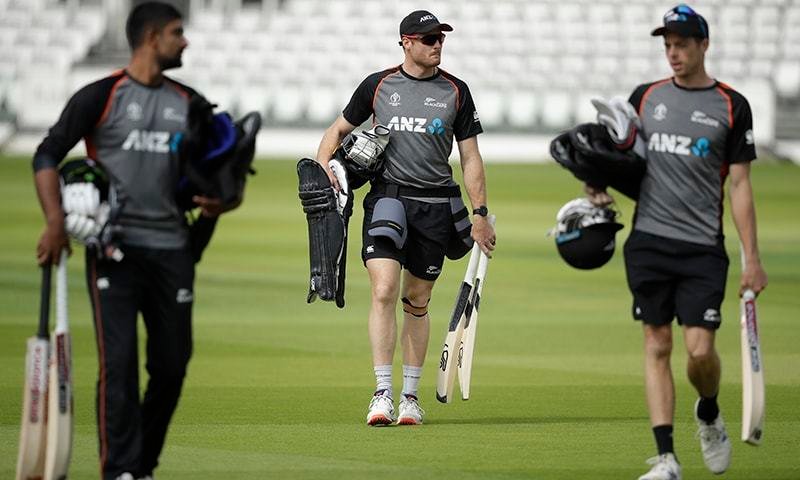
Yesterday was a dark day for Pakistan cricket when New Zealand unilaterally decided to abandon the Pakistan series over “security threats” just minutes before the first One-Day International (ODI) match was about to begin in Rawalpindi. This decision was taken without sharing any details of the security threat with the host country. New Zealand was visiting Pakistan after 18 years.
Chairman Pakistan Cricket Board (PCB) Ramiz Raja tweeted how frustrating it was and said that New Zealand will “hear us at ICC”. Prime Minister Imran Khan also spoke with his New Zealand counterpart Jacinda Ardern but could not convince her to reconsider this unilateral decision. “When I spoke with the Prime Minister of Pakistan, I conveyed our thanks for taking care of the New Zealand Cricket team. I know how disappointing it will be for everyone that the game hasn’t gone ahead, but we totally support the decision that’s been made. Player safety has to be paramount,” PM Ardern told Reuters.
New Zealand’s decision is a huge blow and setback to Pakistan cricket. The terrorist attack on the Sri Lankan cricket team in Lahore in March 2009 left Pakistan cricket in chaos for years. There were no international cricket matches in Pakistan and it took us many years to convince smaller cricketing nations to gradually but surely bring back cricket to Pakistan. Former PCB Chairman Najam Sethi managed to convince teams and international players to visit Pakistan. Our security forces, police, cricket management, and many others made sure that all visiting teams and players were given fool-proof security, even if it meant shutting down cities.
Cricket fans did not complain about the inconvenience either because they understood how vital it was to make the visiting teams feel safe so as to make sure that international cricket properly returns to Pakistan. This year was going to be extremely important with New Zealand and English cricket teams’ tours. Next year, Australia is also supposed to tour Pakistan. Now – with New Zealand abandoning its tour – the England tour is also up in the air for another 24 hours as the England and Wales Cricket Board (ECB) said yesterday that due to the security threat to New Zealand, the ECB will “decide in the next 24-48 hours whether our planned tour should proceed”.
PCB officials told Dawn that Pakistan will suffer financial losses in millions. And it is not just about the financial loss but the loss of so many years of efforts made by the security officials, PCB, Pakistani players, and many other unsung heroes who made sure that cricket comes back to Pakistan. Pakistani cricket fans are disappointed, angry and depressed, and rightly so. We know that Pakistan cricket will overcome this. But it hurts. Pakistan Zindabad!