Author: optimum_tech

  • Bittersweet career of Pakistan cricket’s tragic hero

    Bittersweet career of Pakistan cricket’s tragic hero

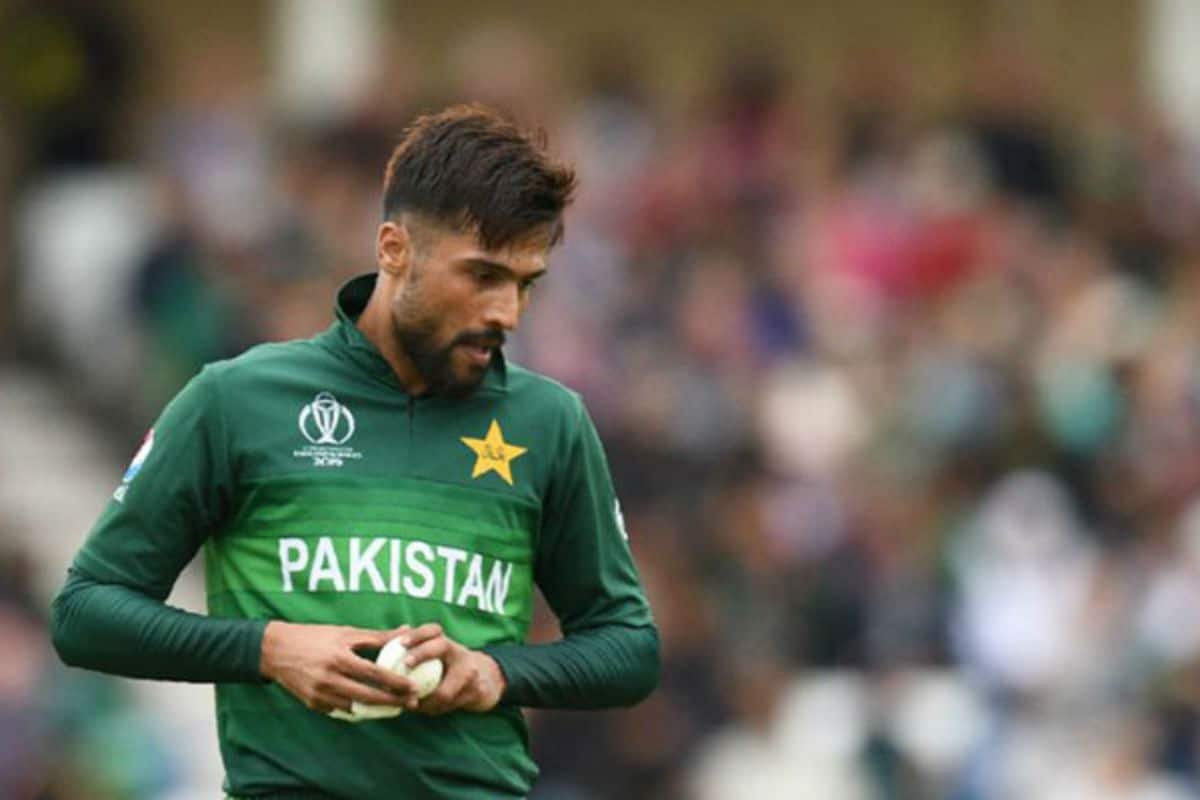
    When Mohammad Amir burst onto the international scene at the tender age of 17, pundits speculated that Pakistan has found its next Wasim Akram. Even Wasim Akram himself, who is inarguably the greatest left-arm pacer ever, has claimed multiple times that Amir reminds himself of his playing days. In my vantage point, such comparisons are often unfair and necessary but it wasn’t a hyperbole by any means to say that anything could stop a bowler possessing such an enormous amount of potential from reaching celestial heights and becoming the next big thing in world cricket.

    However, things didn’t swing Amir’s way and Amir’s career turned out to be an altogether different affair.

    Having quit Test cricket in July last year, Amir announced his retirement from limited-over internationals after representing Pakistan in 147 international matches in a video message whereby he lambasted the Pakistan Cricket Board (PCB) for mentally torturing and overburdening him.

    “Every two months, someone says something against me,” said Amir. “Sometimes the bowling coach [Waqar Younis] says Amir ditched us, sometimes I’m told my workload is unsatisfactory. Enough is enough.”

    The 28-year-old left-arm pacer will now only ply his trade in T20 leagues across the globe.

    The literary term “tragic hero” aptly describes Amir’s career which spans over more than a decade and had its fair share of doom and gloom. He was universally revered in the beginning, then disgraced and booed at after his involvement in a spot-fixing scandal, and then loved again for some heroic performances before finally slipping off the selectors’ radar due to a lean patch.

    After making his debut against England in a T20 match at The Oval in June 2009, Amir could only represent the green shirts until August 2010 when he was banned for five years alongside Pakistan’s then-captain Salman Butt and his bowling partner Mohammad Asif after the now-defunct tabloid News of the World found the duo guilty of bowling deliberate no-balls in exchange of money. This ephemeral period of about 14 months, however, were more than enough to leave his mark with some memorable performances.

    In the final of 2009 T20 World Cup, he accounted for the tournament’s leading run-getter with a well-directed short delivery sending Tillakaratne Dilshan back to the pavilion for a duck. Playing his first test in Australia, where even the top visiting bowlers are treated with disdain, he tore through Australia’s batting order with a five-wicket haul at Melbourne.

    In July 2010, Australia took on Pakistan in England and Australian batsmen were again found all at sea against the teenage pace sensation who pocketed 11 scalps at 21 apiece. Even in that ill-fated tour of England, he fared extraordinarily well becoming the youngest bowler to take 50 Test wickets, breaking into the Top 10 of ICC’s ranking of Test bowlers and getting his name on the Lord’s honours board at an age of 18 years and 136 days.

    The sight of a frail teenager regularly bowling at speeds around 150 kilometres per hour and ripping through the batting order of top teams is always worth savoring. Interestingly, Amir’s best was yet to come. Disappointingly, he fell into the trap set by his skipper as a consequence of which the doors upon his career were closed for five years. And in so doing, he let down countless fans not only here in Pakistan but also across the globe who glimpsed a future star in the prodigious teenager.

    Thereafter, Pakistan relied on their spin triumvirate of Shahid Afridi, Saeed Ajmal and Mohammad Hafeez for a long time to do the damage with the ball. Although plenty of promising pacers like Junaid Khan and Aizaz Cheema came through the ranks to fill the void, Pakistan’s quest to find a pacer for a long term wasn’t smooth sailing as some were scarred by injuries while others were not up to the international standard.

    Fast-forward to 2015, when Amir’s ban expired, he was just 23. The PCB looked on to Amir to bail them out of their fast-bowling woes but they were caught in the crossfire whether they should give someone a second chance who tarnished their reputation. Some asserted that he has already served his punishment and should be given the green light to don the green shirts again whilst others vehemently opposed his comeback with some players showing reluctance to play alongside him. By virtue of strong outings in the Quaide Azam Trophy, he seized the opportunity and clawed his way back into the national team convincing the selectors that he hasn’t lost his touch despite a prolonged absence from playing cricket.

    For their T20 series against New Zealand in January 2016, selectors announced Amir’s name in the squad who got the chance to restart his career in the first match of the series. In the third game of the series, he got a taste of what he should have expected to face frequently throughout his remaining career. The stadium announcer played the sound of a cash register taking a dig at Amir while fans waved cash at him chanting “I’ve got a dollar for you”. The Home of Cricket, which Amir had left in disgrace, turned out to be the venue for his comeback Test and fittingly it was he who cleaned up England’s last batsman to seal off a victory for his side.

    In Pakistan cricket, a good performance against arch-rivals India is a shortcut that can guarantee the player to become a star and be endeared by the fans. Amir knew how to strike the right chord in the hearts of Pakistan cricket viewers and he did it with aplomb. In Asia Cup 2016, he scared the living daylights out of Indian batsmen and displayed a beautiful exhibition of fiery seam bowling against them in the T20 World Cup 2016. In the final of the 2017 Champions Trophy, he was at his devastating best when he dismantled India’s robust top-order putting his team in a commanding position to win the tournament.

    In Amir, Pakistan had a bowler who had the potential to assume the mantle of their pace spearhead for the foreseeable future. Alas, his magical splendor eluded him soon and his ascendency morphed into despondency. His pace dropped drastically in the final stages of his career, and sans World Cup 2019, his performance remained below-par. Even the greatest players go through a lean patch but it is how they emerge from it which sets them apart from ordinary sportsmen. He was full in his right to hang up his boots whenever he wants but his condescending tone in the farewell message gives birth to the barefaced question if he has reciprocated the love and investment PCB put in him. It also imparts a lesson that if PCB finds a prodigy in the future, it needs to ensure that he lives up to his potential and doesn’t meet the same fate as Amir.

  • We are celebrating Christmas

    We are celebrating Christmas

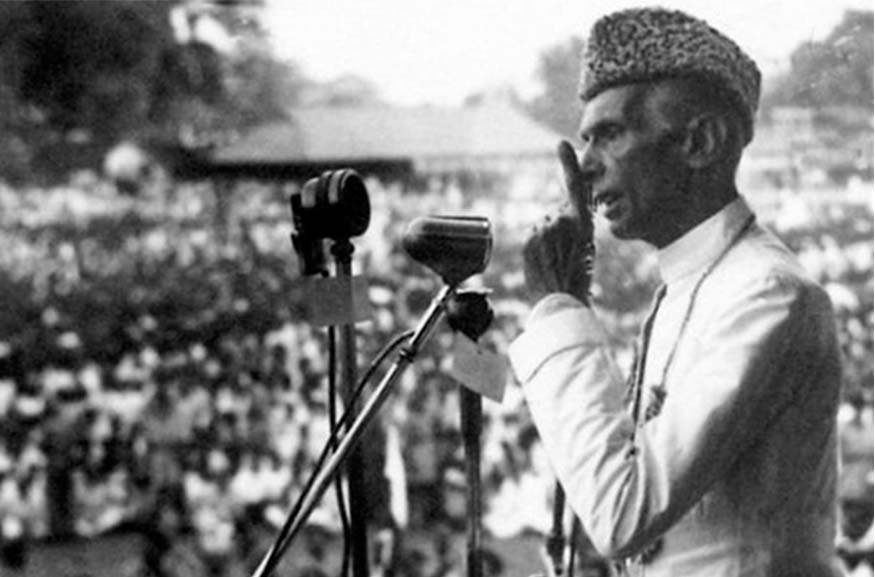
    In his first presidential address to the Constituent Assembly of Pakistan, Quaide Azam Muhammad Ali Jinnah said, “Now if we want to make this great State of Pakistan happy and prosperous, we should wholly and solely concentrate on the well-being of the people, and especially of the masses and the poor […] if you change your past and work together in a spirit that every one of you, no matter to what community he belongs, no matter what relations he had with you in the past, no matter what is his colour, caste or creed, is first, second and last a citizen of this state with equal rights, privileges and obligations, there will be no end to the progress you will make.”

    The Quaid made a case for equality of all citizens of Pakistan regardless of their colour, caste, or creed.

    In the same speech, he said, “I think we should keep that in front of us as our ideal and you will find that in course of time Hindus would cease to be Hindus and Muslims would cease to be Muslims, not in the religious sense, because that is the personal faith of each individual, but in the political sense as citizens of the State.”

    Christmas is just around the corner. We must remember Jinnah’s words. We must keep this in mind if we want Pakistan to progress. Recently we saw the case of a minor Christian girl Arzoo Raja’s forced conversion and underage marriage. Both the Sindh government and the federal government played their part in ensuring that justice was served. Every year, we see hundreds of cases of forced conversions in the country, most of them young Hindu and Christian girls. This is a worrying trend.

    Christians, Hindus and people belonging to other minority faiths have equal rights as citizens of Pakistan according to our Constitution. Unfortunately, we see discrimination against minorities around us all the time. From giving separate utensils to minority workers at our homes, workplaces to using derogatory terms for them, we show our bigotry and racism without even acknowledging it. We casually remark on people’s colour or caste or religion without realising how wrong it is.

    On this Christmas Day, and every other religious celebration of minorities, we should ensure that we don’t discriminate. Due to COVID-19, this year’s celebrations may not be as festive as in the past but through kindness and interfaith harmony, we can spread a message of love and cheer.

  • ‘A California Christmas’: A sweet rom-com that misses the mark

    ‘A California Christmas’: A sweet rom-com that misses the mark

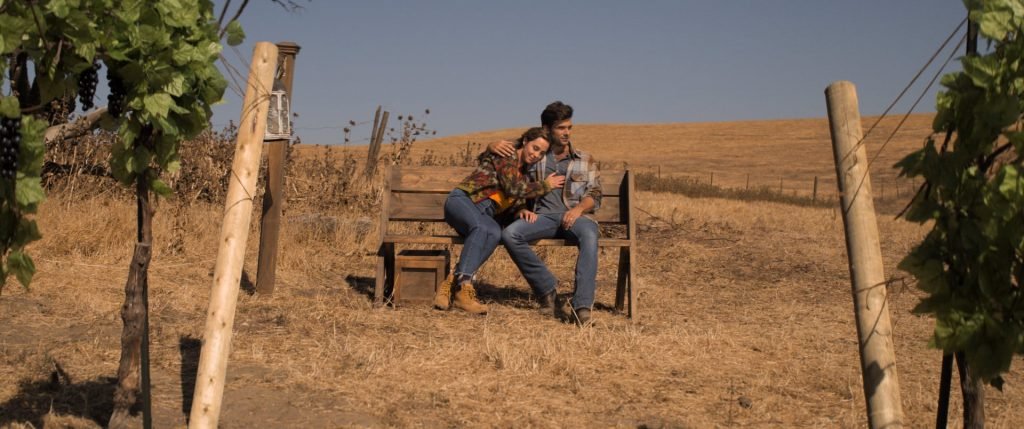
    ‘Tis the season of Christmas romances and feel-good movies. In the past couple of months, Netflix has released several romcoms to celebrate the holiday season including Holidate (which I thoroughly enjoyed) and The Princess Switch 2: Switched Again which was also a fun watch. The latest addition to their holiday lineup is A California Christmas set in a ranch in California. Featuring real-life couple Lauren Swickard and Josh Swickard, the holiday rom-com, unfortunately, misses the mark.

    The story revolves around Callie (Lauren), the owner of a ranch in Sonoma County, a small town south of San Francisco. She runs her family farm business, which is close to being bankrupt. Her father passed away in a car crash along with her fiancé three years ago, while her mother is currently battling cancer. She has one younger sister, which means she is responsible for the family. Given how many blows life has given her, Callie is bitter and aggrieved.

    On the other hand, Joseph Van Aston (Josh) is a rich, spoiled womanizer who is tasked by his business tycoon mother to take a trip to Petaluma and charm Callie into selling her farm to Van Aston Enterprises before the big company’s Christmas party.

    Joseph, who is touted to be someone who can “charm any female” walks into Callie’s farm where he is assumed to be new the ranch hand Manny. Joseph does not make any effort to convince them otherwise after he finds out that Callie is in no mood to sell the land and is ready to put up a fight with a representative of the Van Astons. Joseph’s loyal butler and chauffeur ends up running into the real Manny and bribes him into not going to farm.

    Joseph is so casual and slips into the role of a ranch hand with such ease that it is hard to imagine that just a few hours ago he was living the high life in San Fransisco. The first half an hour is a complete drag as we along with Joseph learn how to do farm chores. Once you make it past that, things get better.

    As Joseph settles into his role and Callie warms up to him, sparks fly between the two and a romance begins to brew, though I do feel that for a Christmas romance film it was not enough. Instead of showing up Joseph farming, it would have been nicer if they had shown some more romantic scenes between Joseph and Callie. I have to add here that Joseph labouring away on the farm shirtless was perhaps the only good thing about those scenes.

    Callie’s character was also very underdeveloped. Considering she was one of the main protagonists, her screen time was less as compared to Joseph. Lauren also gave a bland performance and came across as someone very dull, which is perhaps why her scenes weren’t very engaging. On the contrary, Josh managed to breathe life into his character, carrying the weight of the entire film on his shoulders. The two leads also shared great chemistry – their real-life relationship reflected on the screen.

    Meanwhile, the real Manny and Leo (Ali Afshar) provide much-needed comic relief and are a breath of fresh air in the film. Their scenes are some of the most entertaining and the only ones with comedy in them.

    Barring the final scene, there is little reference to Christmas and the lack of snow does not help – the movie might have sold better as a summer romance.

    A California Christmas would not rank very high on my list of rom-com recommendations. But if you a hardcore fan of the genre like me you might enjoy it somewhat.

  • Pakistan, IMF and our economic future

    Pakistan, IMF and our economic future

    Pakistan is looking to resume the IMF’s $6 billion programme to bring in some much-needed foreign exchange. The programme was earlier suspended due to the government’s unwillingness to increase power tariffs and bring in a mini-budget. The negotiations for programme resumption were further delayed due to COVID-19 but IMF came to the government’s rescue with $1.4 billion emergency financing, which helped the country sail through tough times.

    But now we are back to square one, and it’s time to take some hard decisions.

    Reportedly, IMF is expecting Pakistan to significantly increase electricity prices, bring in additional revenue measures and introduce a few legal amendments. Pakistan was expecting an IMF mission in December to negotiate the conditions, but it seems that IMF is expecting some solid prior actions by the government, before it plans a review mission.

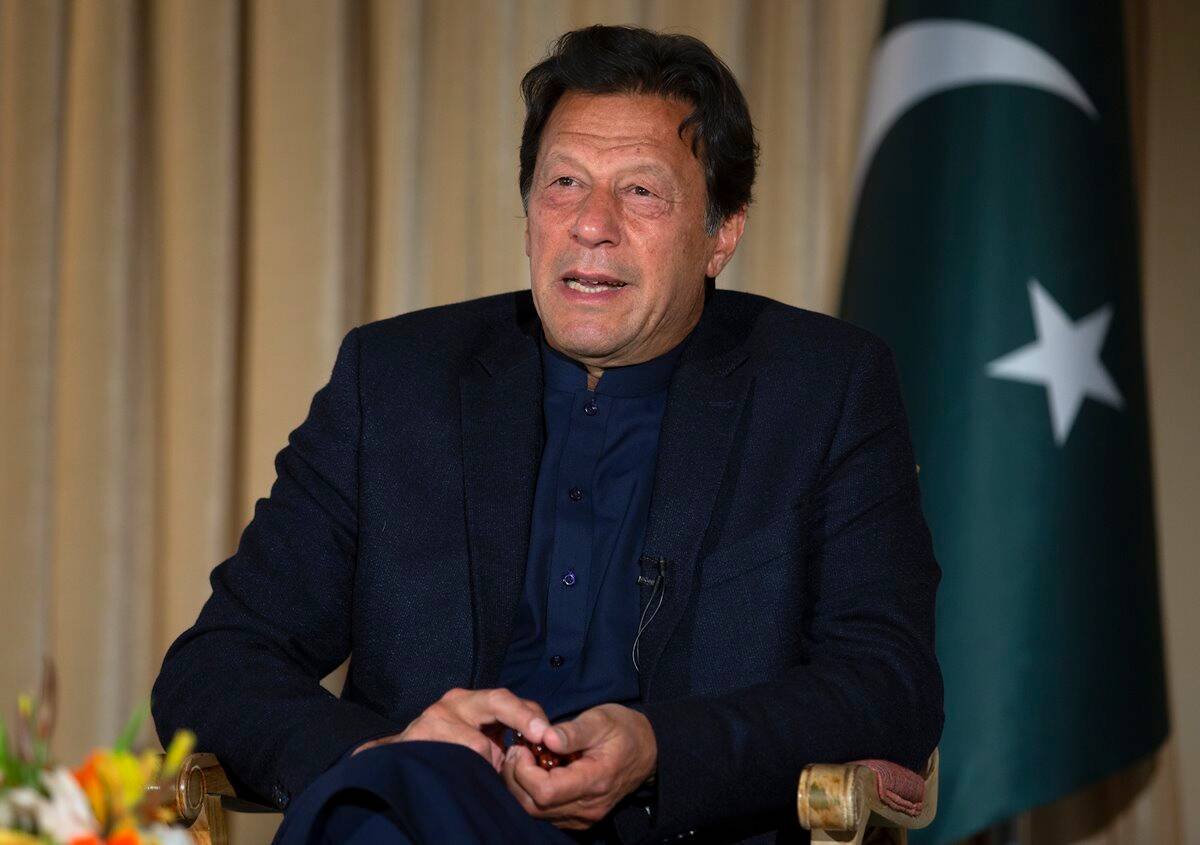
    There is no doubt that an electricity price increase is inevitable to reduce the mounting circular debt, and new tax measures are critical to help the government reach the ambitious Rs4.9 trillion revenue target. But the government is worried on two counts: not only will these measures be unpopular and further strengthen the opposition’s narrative around inflation but will also make a dent in government’s efforts to stimulate the economy. The prime minister has already given a nod to the electricity price increase; however, it is not clear if this increase is enough and how soon the government will be able to pass this on to consumers.

    However, irrespective of whether the government ends up taking these unpopular yet necessary measures or if the IMF ends up showing some flexibility, it remains to be seen if we can keep on relying on these ad hoc measures, pushing electricity tariffs up for the paying consumers and squeezing the existing taxpayers to meet the ever-increasing targets.

    Pakistan has availed 21 IMF programmes over the past 60 years; however, these programmes failed to bring in any sustainable improvement in Pakistan’s worsening conditions. Pakistan’s repeated boom-bust episodes are now a characterising feature of its economy, where sprouts of growth are inevitably followed by prolonged slumps.

    All political governments start in the midst of a balance-of-payment crisis, necessitating going for an IMF programme. IMF brings in foreign exchange to avoid a default but also fiscal and monetary tightening, which slows down growth. As soon as the IMF goes away, the country takes no time in coming back to its expansionary fiscal and monetary policies, owing to political reasons and mostly to win the next election. This in turn increases the demand for imports, increasing the trade deficit, and the country is pushed into yet another balance-of-payments crisis and the cycle starts all over again.

    But every time, Pakistan’s economic indicators sink a bit further than the previous episode. It is clear that we are on an unsustainable economic trajectory, but our political shortsightedness prevents us from seeing what’s written on the wall.

    What can break this vicious cycle? The answer is actually not that difficult. What we need is a serious dose of structural reforms, where we expand the tax net, do away with the exemptions enjoyed by powerful lobbies, control power thefts and line losses, stop the bleeding by state-owned enterprises, rationalise the ever-growing subsidies and strengthen and diversify our exports base. But these reforms require paying high political costs and compromising on short-term gains for the longer-term future.

    IMF is also no stranger to these solutions. Almost all recent IMF programmes have stressed these reform areas, but every time they end up being content on short-term corrective measures rather than the so-called structural benchmarks.

    A research paper by Harvard Kennedy School in 2015 highlighted that IMF ironically adopts a serial lending pattern. More than one-fourth of IMF member countries were part of an IMF programme for fifty percent of the duration since they became a member. Another 37 per cent have been on IMF programmes for 40 per cent of the time or more. This makes it quite evident that Pakistan, like many other developing economies, has ended up being addicted to this repeated dose of IMF money, without ever fixing the underlying problems.

    Recent months, however, have shown some positive signs, with the government mulling over restructuring plans for SOEs like Pakistan Steel Mills and PIA, announcing ambitious and futuristic power sector reforms, re-negotiating contracts with Independent Power Producers (IPPs), stimulating export industries, and even taking stock of the massive subsidy stock.

    The market-based exchange rate regime adopted by the government has already put in place an auto-corrective measure, whereby any significant current account imbalance will lead to currency devaluation, making imports expensive, reducing demand and narrowing the trade deficit.  However, the government needs to follow through on its plans and build further on this groundwork.

    These measures will undoubtedly be hard to put in place, but sooner or later someone has to go this road. If the present government pushes through on these reforms, it can help the country break out of this vicious cycle and can create a name for itself in Pakistan’s economic history. If not, we’ll be knocking on IMF’s doors yet again in another 4-5 years, but in a much worse condition.

  • The lesson of inclusivity

    The lesson of inclusivity

    While COVID-19 has been creating havoc, unfortunately, in all parts of the world, it has had a massive impact in most developing countries, choking up the already shaking health and welfare systems.

    In Pakistan, the outbreak has caused an economic stoppage that amounts to a great loss, where the graph for unemployment shot up high from the very beginning of this pandemic. Not to forget, the worst-hit out of the country’s total population are the daily wage earners and those who inhabit unfortunately in the urban slums. Moreover, while the major parts of the city and larger groups were attended to and received help, the disabled were marginalised a great deal.

    For years, Pakistan as a nation has marked itself in the top three charitable countries around the globe. Local charities have been playing a key role in curtailing the economic burden on the government by providing meals, medical assistance and other key services to low-income groups.

    In order to assist and form a chain reaction with the said cause during these unreasonably trying times, PepsiCo Foundation — the philanthropic wing of the organisation — declared and extended support for the unemployed people and partnered up with the best charitable organisations under the umbrella of the ‘Millions of Meals’ initiative. The campaign was envisioned on such a large scale and designed to complete the aim of distributing an astonishing number of 13 million meals with over 500 volunteers and countless supporters, to the communities most affected by the COVID-19 outbreak.

    In order to assist the poor survive the harshness of lockdowns, unemployment and hunger caused due to economic and financial challenges, Pepsi joined hands with nine distinct charities. Among several others, targeting the lesson of ‘inclusivity’ is where NOWPDP was collaborated with, that caters to the differently-abled people in the society. 

    The idea was to empower millions of dreams, despite the odds and reach out all corners of the country, with a vision of providing immediate emergency disaster relief for the many vulnerable, neglected parts of Pakistan. NOWPDP helped in taking forward the initiative and making sure no one gets left behind specially those who are limited in their physical ability.

    NOWPDP operates in the development sector with a focus on inclusion through empowerment of persons with disabilities. As mentioned above, with the pandemic spreading its shadow all over, the most affected were the differently-abled who were now absolutely clueless and helpless in terms of taking care of their needs.

    Their agenda is to help people with disabilities and for them to be an important stakeholder in the bigger picture, whether it is in regard to education or employment, as they emphasise on their big idea, “A Part. Not Apart”. In addition, what fuels the members of this organisation, include; empathy, action and social justice. Persons with disabilities (PWDs) have equal access to opportunities and are an integral part of society. Their aim is to promote an inclusive society through holistic and sustainable endeavors in the areas of education and economic empowerment.

    Supported by PepsiCo, NOWPDP took on the responsibility of reaching out to thousands of vulnerable households. They reached out to the differently-abled residing in Hyderabad, Sujawal, Tando Allah Yar, Tando Muhammad Khan, Kot Ghulam Muhammad, Nawabshah, Sukkur, Larkana and distributed 171,675 meals altogether. For this, a group of people was specially brought together to form a call centre at NOWPDP during pandemic times to address and facilitate those in need. This effort was catering specially to the differently-abled and the deserving, where employees were to get the database together of those residing in various cities of Pakistan. 

    Babar Iqbal, a call centre agent at NOWPDP said, “Upon calling the differently-abled person, we are asked if they will be getting ration. When they are told all that it entails, the response and most importantly the happiness in their voice along with prayers is something that can’t be explained in words.”

    In addition, while the big cities of Pakistan are catered to by multiple organisations, the ones that get left behind are the differently-abled residing in interior Sindh.

    NOWPDP Executive Director Omair Ahmad said, “To achieve economic empowerment for disenfranchised communities, particularly persons with disabilities, it is incumbent on us to take the first step and show a desire, willingness and empathy to ensure that they have access to basic necessities like food and water. Without welfare, empowerment becomes a distant reality, a facade, an unachievable goal, and a dream. Thus, we are grateful to Pepsi for this initiative and understanding the urgency of this need for thousands of persons with disabilities across the country, and promptly extending their support. We hope that this journey on the path of hope will allow millions to achieve their dream of empowerment.

    This nation is full of people with a big heart who are ever ready to help those in need. We take great pride in it and this collaboration of PEPSICO and NOWPDP, which has shown us how inclusivity holds sheer importance and how endearing it is to cater to the disabled, is providing them with employment opportunities and assisting them to grow and know there are lots to look after them leaving no man behind when the entire world is at a halt owing to the pandemic. Here’s to more successful collaborations and a wish for phase 2 to take place.

  • ‘Jalan’ comes to a predictable end after 31 painful episodes

    ‘Jalan’ comes to a predictable end after 31 painful episodes

    2020’s most controversial Pakistani drama, actually one of the most controversial dramas, Jalan came to a close Wednesday night after 31 painful episodes which had all the ingredients of an over-the-top soap opera. There was a love triangle, infidelity, abortion sprinkled with lots and lots of drama to draw all the haw hais and ensure that audiences are hooked.

    SPOILERS AHEAD

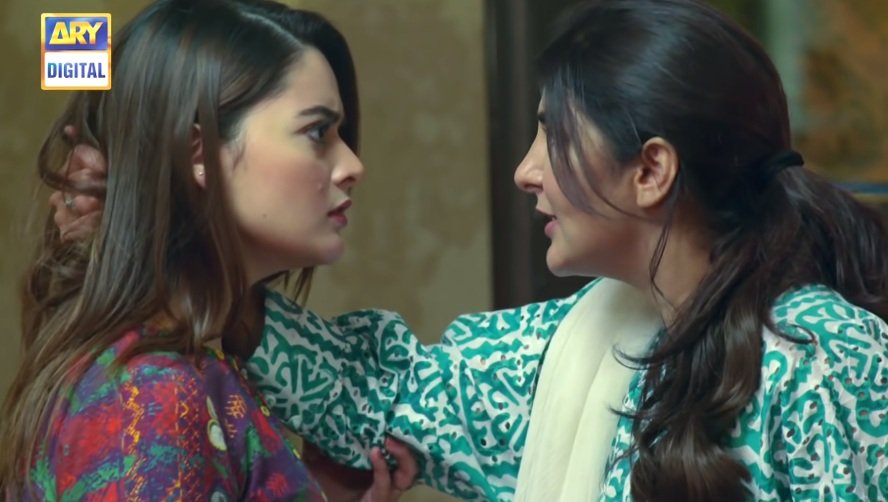
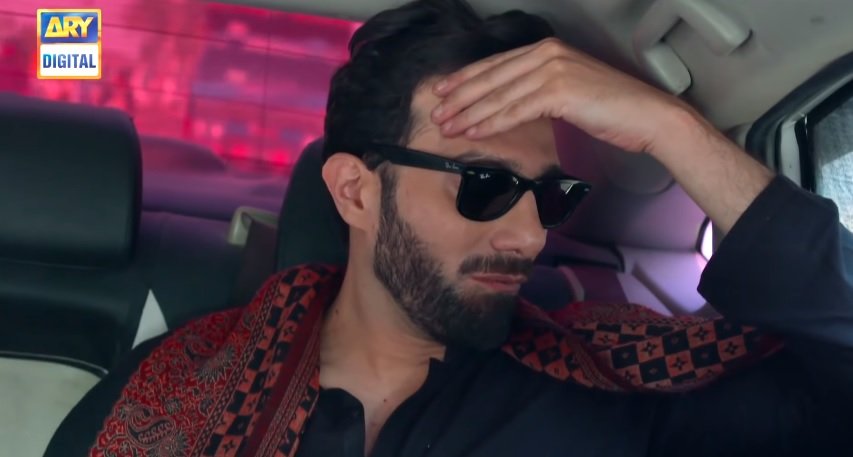
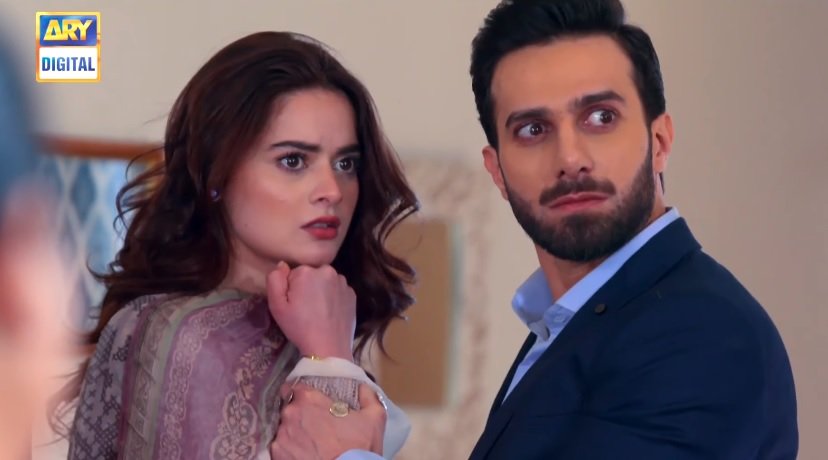
    As expected and predicted, Jalan ends with Nisha (Minal Khan) losing her wits and ending up in a sorry state with a disfigured face after getting involved in a car accident. On the other hand, Asfi (Emmad Irfani), who spent the final couple of episodes feeling desolate and depressed over everything that transpired died with what we assume was a heart attack – the makers never clarify how he died. Karma finally catches up with the ‘bad’ characters with the makers giving them the end they assumed would satisfy audiences.

    Unfortunately, it doesn’t. The last episode was a bit of a drag with Asfi getting constant flashbacks of his life and relationship with Meenu. He seeks redemption by going to her grave and praying and giving away charity in her name – as if that was enough to cover up all the pain he caused her with his actions and callous behaviour. But as always our writers give the heroes an easier end compared to the female protagonist, who has to suffer every day for her sins. Even Kinza Apa (Nadya Hussain) in the end prayed that Asfi and Meenu would reunite in heaven.

    Nisha, on the other hand, has a sudden bout of pagalpan in which she starts dragging and pushed Areej (Hajra Yamin) out of the house. In an attempt to protect herself, Areej locks herself up in her room till Ahmer (Fahad Sheikh) comes home and orders Nisha to her room. And Nisha obediently listens to him and goes upstairs to sleep. When she wakes up, she starts seeing Meenu (Areeba Habib) which causes her to lose her mind further and she eventually ends up crashing her car and burning her face. I’m no expert, but from whatever little knowledge I have, I am assuming that Nisha clearly had psychological issues and instead of getting her proper help, her family abandoned her and let her become a mess. They never really addressed the problem and in the end, packed up and left her alone.

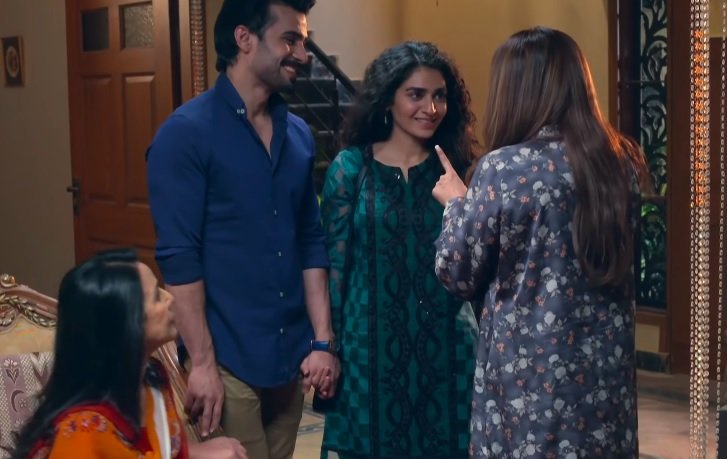
    Areej and Ahmer are the only ones who got a happy ending with a fulfilling marital life and a baby on the way. Though I have to add that I am still confused over how Ahmer suddenly had a change of heart for Areej. I’d also like to add here that in 31 episodes, never once did we get to see Areej’s family or brother who is married to Ahmer’s sister Humaira (Maira Khan). There were so many loopholes and missing pieces that you wonder if the writer dropped half the script on her way to the sets.

    Jalan’s finale was as absurd as the rest of it and the makers only used sensationalism to build up the drama and hype. While the initial couple of episodes could have qualified as a guilt-watch for some, after Meenu died in a tragic and melodramatic manner, things went downhill. The direction and production were weak and the script even poorer. There was a lot of violence in the drama with Nisha being slapped right, left and centre. There was also a scene in which Asfi almost strangled Nisha to death. Such scenes are unwarranted, unnecessary and serve no purpose except to create furor.

    The only highlight of the drama, for me was probably the performances. It was refreshing to see Minal play a strong and villainous character unlike the damsel in distress she usually plays and she and Emmad both gave good performances. The scenes in which they fought were actually pretty intense and credit for that goes to them and not to the writer or director.

    Jalan has also given Pakistani television and new hero – Fahad Sheikh and a new hit pair – Fahad and Hajra. The two have good onscreen chemistry and it seems like audiences also enjoyed this pairing because their short film Naam Kya Rakha on See Prime gathered a million views within a week of being released.

    I, for one, am glad that Jalan has ended and though it unfortunately did leave a mark, I hope that writers and producers will focus on intelligent scripts which along with entertaining audiences also give a positive message – like Sabaat for instance. However, given the success of the show, I have little hope.

  • India’s disinformation campaign

    India’s disinformation campaign

    The EU DisinfoLab, a Brussels-based NGO that focuses on researching and tackling sophisticated disinformation campaigns targeting the European Union (EU), its member states, core institutions, and core values, has uncovered a 15-year-old operation by India.

    Titled ‘Indian Chronicles: deep dive into a 15-year operation targeting the EU and UN to serve Indian interests’, the DisinfoLab termed this as the “largest network” of disinformation they have exposed so far. According to their research, India used hundreds of fake media outlets and the identity of a dead professor to target Pakistan.

    According to the BBC, the researchers uncovered 265 pro-Indian sites operating across 65 countries and traced them back to a Delhi-based Indian holding company, the Srivastava Group (SG). BBC says that the content produced on fake media outlets is amplified with the help of Asian News International (ANI) – India’s largest wire service and a key focus of the investigation.

    Pakistan’s Foreign Office on Saturday rejected the Indian Ministry of External Affairs’ “attempt to deny responsibility for the elaborate and reprehensible” disinformation campaign against Pakistan. Indian MEA had earlier said that “India does not practice disinformation campaigns”, a denial that falls flat on its face when you go through the DisinfoLab’s in-depth research.

    It was no secret that India was involved in such disinformation operations globally to discredit Pakistan but the extent of the way these networks has been used is quite eye-opening. In 2017, Geo News reported that “the Indian mission in Geneva is controlling anti-Pakistan activities and the local Swiss administration has been paid heavy amounts in commercial deals for these campaigns across its public transport, road networks, and private business venues” after an expensive multi-faceted campaign in Geneva targeting Pakistan was highlighted when the 36th session of the UNHRC was underway.

    India thinks of itself as a regional superpower in South Asia and leaves no stone unturned to malign Pakistan and has used extensive paid propaganda campaign to achieve its nefarious designs. Last month, Pakistan handed over a dossier on India’s terror campaign to UN Secretary-General Antonio Guterres, urging him to prevail on New Delhi to desist from its illegal and aggressive activities. In light of the new report by EU DisinfoLab, the international community must investigate how the EU and UN were duped by India’s disinformation campaign, including a controversial visit of European parliamentarians (MEPs) to Indian-Occupied Kashmir last year.

    It is pertinent to note that the world continues to ignore the atrocities being committed in Occupied Kashmir by the Indian forces. Global human rights organisations and the international media highlighted Indian atrocities but the international community has largely turned a blind eye to grave human rights violations because of the Indian economic market. It is unfortunate that the world community, due to vested interests tied to the Indian market, has taken no action against India.

    Pakistan must keep highlighting this new report, which was unearthed by a neutral NGO that has nothing to do with Pakistan. The world must wake up to India’s disinformation campaign.

  • Five must-have desserts in Lahore

    Five must-have desserts in Lahore

    Stressed spelt backwards is desserts and nothing better than something sweet and delicious to make your day. Being a hard-core foodie with a very intense sweet-tooth, I love my desserts and pretty much spend all my money trying out new things. All through the year (and the pandemic), I have tried a vast variety of meetha from different home-based businesses and here are the ones I keep going back to.

    Chocolate Chunk Cookies by Vanilla by Hafsa Zulfiqar

    Without a doubt the best chocolate chip cookies I have had in Lahore. They are crispy on the outside but gooey on the inside and melt the moment they hit your mouth. The light dusting of sea salt adds to the flavour and I guarantee you that you will not stop at one. Priced at Rs 180 (without tax), they are a steal given that they are pretty big in size too.

    Look at that chocolate!

    Chocolate Brownie Dessert Box by Deliciuex

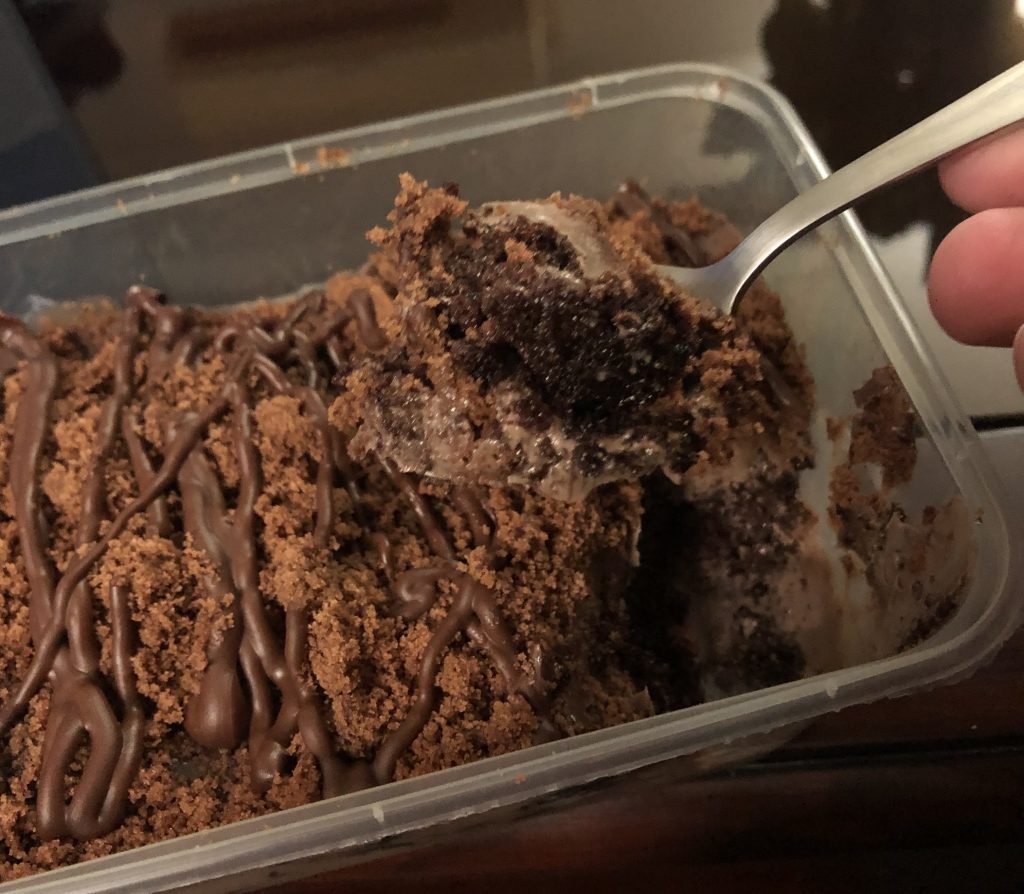
    There are often times when you feel like having something cool and sweet which is not ice-cream. Something that you can eat while watching your favourite season. Something that feeds the soul. In those situations, the Chocolate Brownie Box by Deliciuex is ideal for you. The dessert box, which includes layers of brownies, fudge and mousse topped with a layer of crunchy biscoff, is the stuff of dreams. You will not regret trying this.

    P.s. Deliciuex does amazing Lotus Milk Cake also.

    Frosti Ice-Cream

    There is something very enjoyable about having cold ice-cream in the chilly weather. Frosti has one of the best gelatos the city has to offer and that too in a variety of flavours. Creamy, smooth and oh-so-delectable, Frosti is a must-try for those who love to spend their winters curled up in front of the television watching their favourite show.

    Our picks – Salted Caramel, Oreo Crunch and Belgian Chocolate

    Cheesecake (Lotus, New York) by The Sweet Rack

    I was not a big fan of cheesecakes till I tried the New York Cheesecake by The Sweet Rack. While the cream is rich and absolutely delicious, it was the base that set it apart from other cheesecakes. It does not have your usual biscuit base – it has hints of walnuts and cinnamon which add so much flavour to the overall experience. Highly recommended. The Sweet Rack Lotus Cheesecake is also great and I am sure Lotus lovers will thoroughly enjoy it.

    P.s. Their brownies are also divine.

    Donuts by Big Fat Rolls

    Honestly speaking, I am a Dunkin Donuts loyalist. I have tried multiple donuts from multiple places at multiple food festivals but nothing came close to Dunkin for me…till I discovered Big Fat Rolls. Their donuts are ah-mazing: airy, soft and melt-in-your-mouth kind. My picks from their collection have to be Cherub Classic and Cupid Chocolate.

    Note – Before someone attacks me for not including Layers, please note that these picks are from home-based businesses only.

  • Dowry culture

    According to a recent survey conducted by Pulse Consultants, more than 50 per cent Pakistanis believe that a girl’s family should give dowry when she is getting married. Around 61 per cent respondents were of the view that dowry should be allowed in the Pakistani system while 36 per cent were against it. Almost 73 per cent women believed that dowry should be allowed whereas 24 per cent were against it.

    This survey’s results should not be surprising given that dowry has become an unfortunate reality in our region.

    Dowry is used as a measure of worth for the bride; it is used as a bargaining tool or as a price tag when marrying off girls. This is rooted in the patriarchal and misogynist belief that daughters are a burden when they are born and so to marry them off, a price must be attached to them to ‘lure’ a groom. Despite laws against dowry in the country, this ‘tradition’ continues. Underage girls are often married so that the family gives less dowry in comparison to an adult bride. Many women are left unmarried because their families cannot afford to give a sizeable dowry. This tradition is one that perpetuates violence against women. Pakistan has a high rate of dowry-related deaths. Many women are tortured and even killed for not meeting the dowry requirements of their in-laws. Laws can only do so much. Not many people would report that the other party is demanding dowry for their daughter’s hand in marriage. Dowry transcends all classes. A lot of people would say what they are giving to their daughter is a ‘gift’ when actually it is more like ‘ransom’. Sometimes it is also used to deny a woman her inheritance rights – once dowry is given, the family says they have no rights in their inheritance any more. In a patriarchal society, women are treated like a property or objects instead of human beings with any rights. Dowry is a custom that encourages such thinking.

    The need of the hour is a public awareness campaign against dowry and why this cultural tradition must end. Both the government and the media need to do their part to educate the masses that there are laws against dowry in the country and also why this custom is a social evil. The acceptability of dowry will not end overnight. It will take years of education and awareness for the masses to eradicate this menace.

  • ‘The Fab Lives of Bolly Wives’ falls flat despite the glam and starry special appearances

    ‘The Fab Lives of Bolly Wives’ falls flat despite the glam and starry special appearances

    What are the three things you look for in a reality tv series? Drama, drama and more drama. Unfortunately, Netflix’s latest reality television series The Fabulous Lives of Bollywood Wives has everything to offer besides that. You have glitz, glam, a fancy holiday, discussions on plastic surgery and the cherry on top – lots, and I mean lots, of starry special appearances. But all this fails to add to the oomph factor and you end up watching the show only because of your love for Bollywood.

    The Fab Lives of Bolly Wives (let’s just call it FLBW) centres around four Bollywood wives – Maheep Kapoor, wife of Sanjay Kapoor, Seema Khan, wife of Sohail Khan, Bhavana Pandey, wife of Chunkey Pandey, and Neelum Kothari, wife of Samir Soni. Maheep is the queen bee of the gang which has been together for 25 years. Mind you, this has been repeated a gazillion times in the entire show, lest we forget. Seema is the one with the wit and sarcasm, while Bhavana is the superstitious one. And Neelum, throughout the series is just worried about one thing: should she make a comeback to films.

    While each woman has her own distinct personality and they are interesting to see in the first episode, the problem with the show is that there is just no drama. The girls are chill with one another and no one gets pissed at the other, except in one episode. Even then, their ‘showdown’ was just very dry. What is this relationship? Where is the spark? The fire? Twice Karan Johar had to come in and be the phoppo he is so that he can instigate them. Unfortunately, the fire never really lights – they really should have taken classes from our favourite Sima Taparia from Indian Matchmaking on how to say the most outrageous things and still not be hated for it. Most of the stuff we saw in the series was all that the paparazzi have already shown to us or they have posted on their Instagram feeds. Even their conversations were terribly safe as if they were scared to give viewers a sneak peek into who they are behind the facades. Just goes on to show that reality tv is not everyone’s piece of cake.

    The two things I did find interesting was that one Maheep is a stalker. An actual stalker. She observes people through her binoculars and she apparently caught glimpses of Aishwarya Rai Bachchan and Abhishek Bachchan’s wedding through her binoculars. And secondly, Seema and Sohail, despite being married don’t live in the same house. They live across the street from one another and are very happy with this arrangement.

    Interestingly the show is called FLBW, but we barely get to see them as wives. We end up watching them as mothers mostly because my God they are obsessed with their kids. Even the series opens with Maheep fretting over her daughter Shanaya’s Le Bal debut.

    The biggest takeaways from the show had NOTHING to do with the wives. For me, there were two major ones. SPOILERS AHEAD. One that Janhvi Kapoor got a wish from Kylie Jenner on her birthday and second which fascinated me the most – on their trips abroad, Shah Rukh Khan would be the one to babysit all the children when the wives would go party. In fact, my favourite episode from the season was the one which had SRK. Damn that man can charm even a cactus. His witty one-liners and dry humour had me smiling throughout the episode. Gauri Khan in an Instagram post has said that she will be gatecrashing the second season and I do hope that if there is a second season, I’d like to see more of Shah Rukh in it than anyone else.

    The makers of the show tried to create a desi version of Keeping up with the Kardashians meets Sex and the City, but they somehow forgot to add the main ingredient – drama. In this review, I am not even going to recommend or not recommend the show. Because I know that if you’re a Bolly freak like myself, you will still sit and spend five hours watching the eight episodes. All I’m going to say is keep your expectations low.