Author: optimum_tech

  • ‘Eik Jhoothi Love Story’ hits all the right spots with its heartwarming and sweet story

    ‘Eik Jhoothi Love Story’ hits all the right spots with its heartwarming and sweet story

    As someone who has grown up on romcoms, I’ve often yearned for a story that I can relate to. Hollywood and Bollywood romcoms are dreamy but often unrelatable and something that you cannot envision happening in Pakistan, given the cultural differences. But with Eik Jhoothi Love Story (EJLS), I feel there is finally a romantic, feel-good and quirky show that I can connect with.
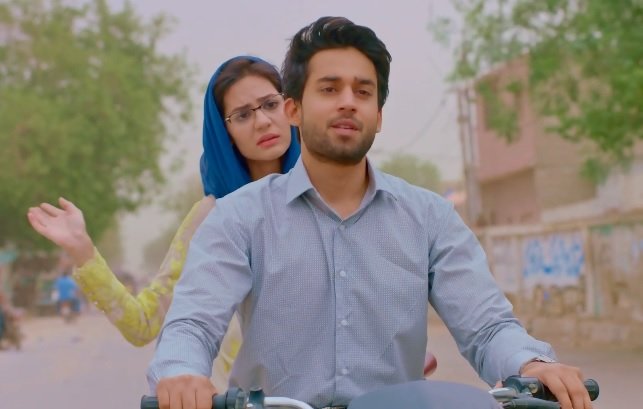
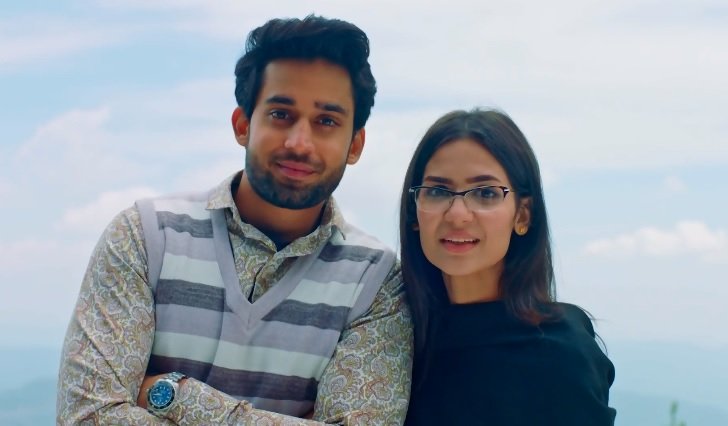
    Written by Umera Ahmed and directed by Mehreen Jabbar, EJLS tells the story of Salma (Madiha Imam) and Sohail (Bilal Abbas Khan), who live in the same mohalla in Karachi. Salma is the youngest in four siblings with a very overbearing mother Nusrat Jahan (Beo Zafar) who is only in the pursuit of finding behtar say behtar rishtas for her children. In this quest, she has spent years parading her daughters – Shabana (Kiran Haq) and Shazia (Mariam Saleem) – in front of rishta aunties and prospective in-laws but not finding the ‘ideal’ match.
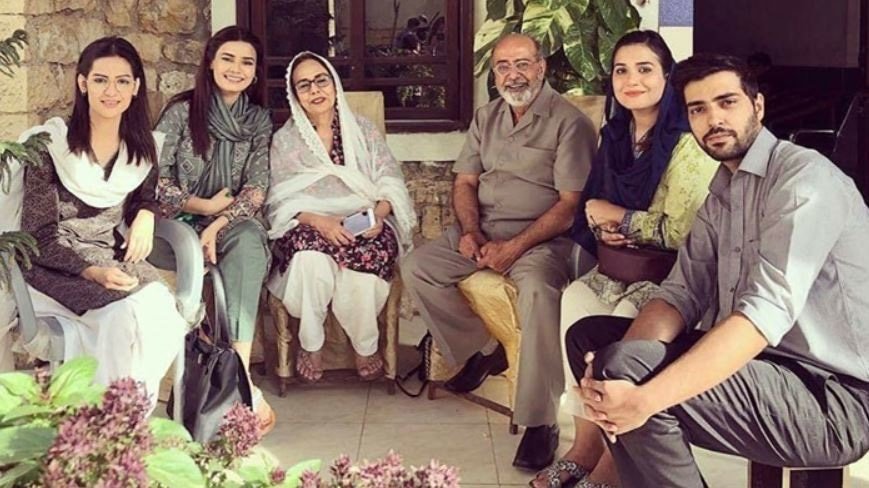
    On the other hand, Sohail (Bilal Abbas Khan) is the only son of his parents. His father passed away when he was very young, leaving him with the responsibility of an entire household. Sohail wanted to study further but because of family obligations, he was unable to so now he runs a computer repair shop. His mother (Hina Khawaja Bayat) dotes on him, while he shares a very loving relationship with his younger sister Sobia (Srha Asghar).
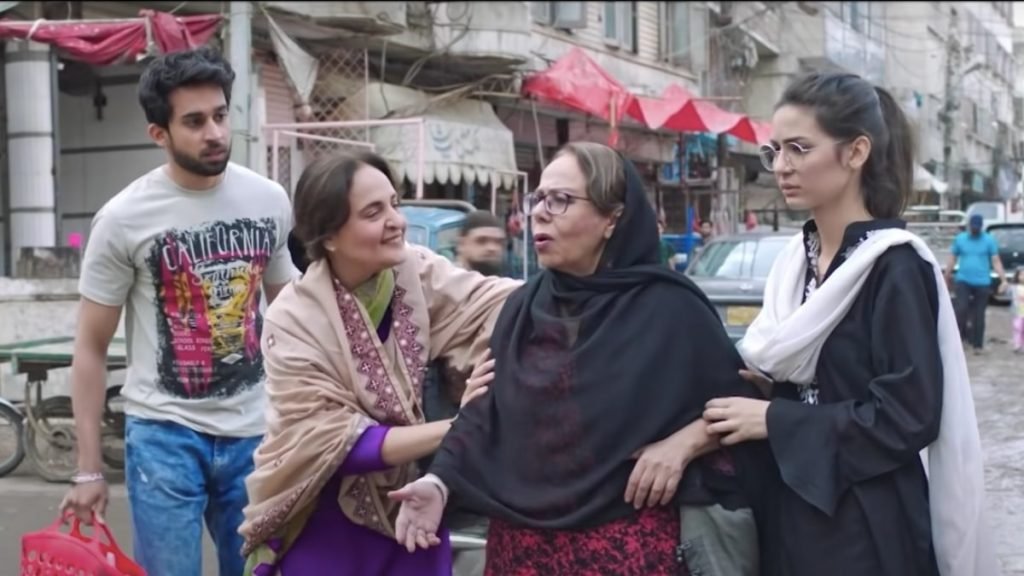
    To escape their middle-class existence, Salma and Sohail make fake profiles on Facebook. While Salma impersonates her best friend’s cousin Natalia (Kinza Razzak), Sohail makes a profile using his childhood friend Nofil’s (Ahmad Zeb) name. Nofil and Natalia belong to rich, upper-class households and Nofil is settled in America. Salma and Sohail using their fake profile become friends online and begin interacting with each other. Over the course of their messages, they fall in love. However as fate would have it, real-life Natalia and Nofil also get married. Salma and Sohail are heartbroken with this and agree to their parent’s suggestion of getting married to each other. To find out what happens next, you need to watch the series but be prepared to feel a myriad of emotions from fuzziness and warmth to sadness.
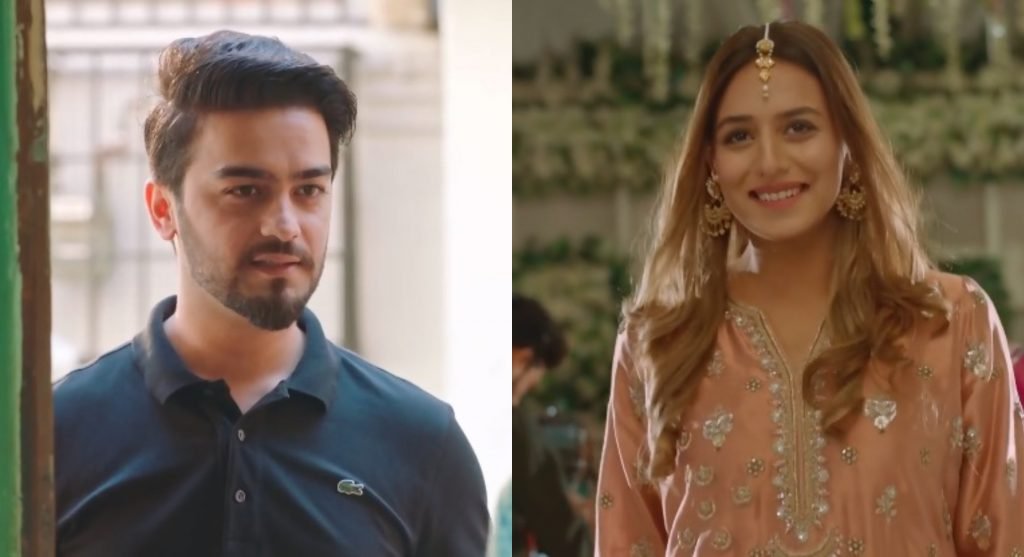
    Nofil and Natalia

    Umera has done a phenomenal job with the script and Mehreen brought it to life perfectly. While the series in its essence in a love story, it touches upon many themes, highlighting society’s obsession with finding the ‘ideal’ life partner, who by the way is not someone you connect with, but someone who checks all the right boxes. The series also playfully criticises the different customs we’ve made – like the younger sister cannot marry till the older siblings are married or the brother cannot marry till he has fulfilled his responsibility of marrying his sisters or the simple fact that shaadi is not the end goal. Life is more than that. EJLS is a beautiful reflection of society which is probably why I enjoyed it so much. I have to add here that there were certain angles about online romance which I did find unconvincing but I let it go considering how very binge-able the series is. You end up watching several episodes in one go because the pace is so good. The initial episodes are fairly short between 25 and 35 minutes, while the later ones are slightly longer – but even then you don’t want them to end. They are so gripping. Really hoping that Mehreen and Umera are considering a season two for the series.
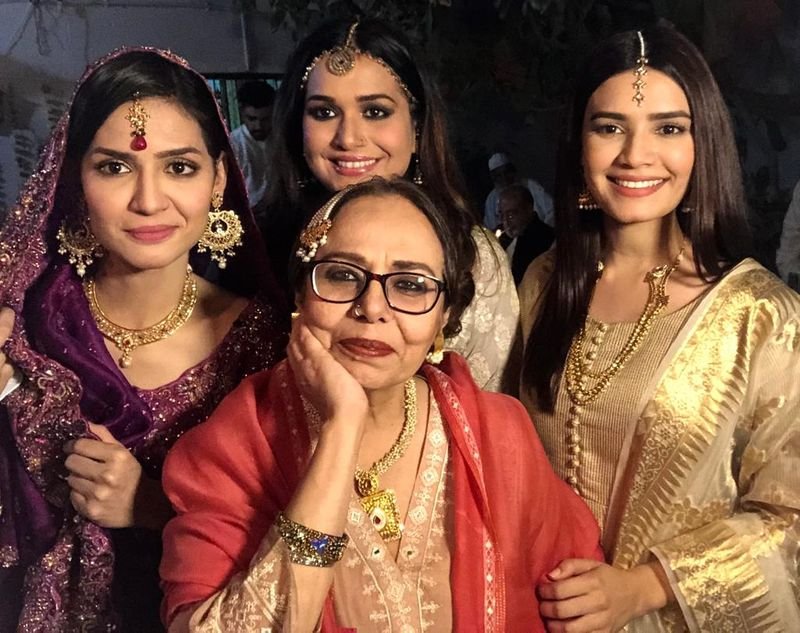
    Onto the performances – for me the star of the show was Madiha. She was brilliant as the simple Salma, the Choti of the house who everyone treats as a doormat. Her expressions, body language and dialogue delivery were on-point. Bilal, on the other hand, is a seasoned actor and has given a plethora of mind-blowing performances – with EJLS he just proved how versatile he is.
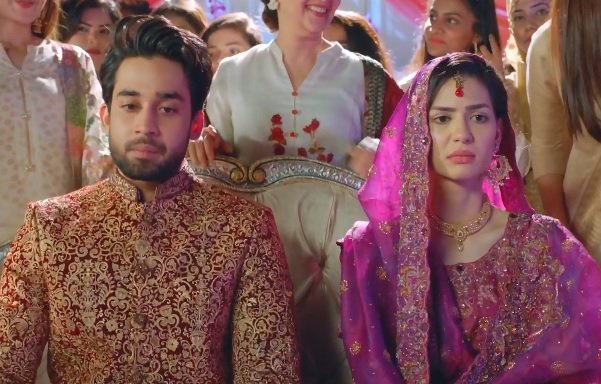
    The rest of the cast was also brilliant. Mehreen, while speaking to The Current, had shared that she had hand-picked the cast according to the characters and her choices couldn’t have been more on-point. My favourite character has to be Shazia – Salma’s fiesty and outgoing elder sister. Shazia had some of the best dialogues in the show and Mariam played her to perfection – absolutely loved her performance.
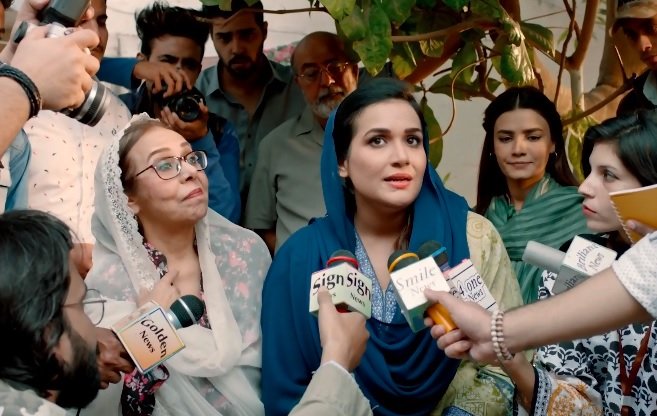
    Shazia

    One of the highlights of the show is definitely the OST Meherma. It complements the mood and feel of the show so well and adds to the overall experience. I haven’t come across many Pakistanis shows with such a fitting OST.

    The beauty of Eik Jhoothi Love Story lies in its simplicity – from the wardrobe to the sets, everything was so well-suited to the plot and theme of the show.

    Apart from being highly-relatable, EJLS is a fun, easy watch and something you can watch with the entire fam. Who knows they might stop pestering you to get married after watching this.
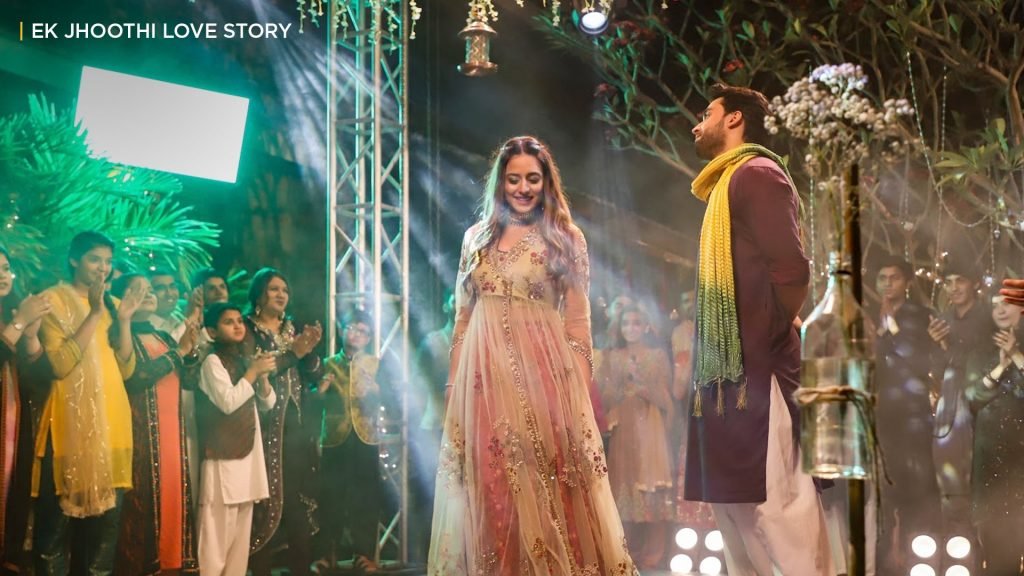
    EJLS has 18 episodes and is currently streaming on Zee5.

    Watch the video review on the series below:
  • Biden is in the house

    Democratic challenger Joe Biden has won an extremely close US election battle against outgoing president Donald Trump. The election results were finally called on Saturday. Biden will become the 46th US president and leaders around the world have started sending congratulatory messages to the president-elect. Kamala Harris, the vice president-elect, has made history. She will be the first woman, the first black person and the first person of South Asian descent to become VP. Yesterday, she said, “While I may be the first woman in this office, I will not be the last, because every little girl watching tonight sees that this is a country of possibilities.”

    This US election was different in many ways. From an election held during a pandemic to one of the most polarised election in recent history, it was indeed a nail-biter. The two rivals were neck and neck in a few key battleground states before the final results were announced. According to NBC News, at least 159.8 million Americans voted. The number of votes has been the highest in US presidential election in history while the voter turnout has been the highest in over a century.

    Trump’s term has made politics extremely divisive in the US where racism is on the rise. Due to Trump’s policy on climate change, the US became the first nation in the world to formally withdraw from the Paris climate agreement. Trump also gravely mishandled the COVID-19 situation in the US. More than 200,000 people died due to coronavirus before the presidential election.

    On the day of the election when millions of ballots were left to count, Trump decided to claim victory. In the same breath, he suggested “major fraud on the nation” without offering any evidence and said he would take the election results to the US Supreme Court. Trump has been crying rigging, an all too familiar word in our part of the world, even before the election. Trump’s campaign filed lawsuits in some states as Trump has also been crying foul on Twitter, where most of his tweets are being flagged by the social network. Biden, on the other hand, was conciliatory in a speech after the election where he called for healing and unity in the wake of the brutal election. “We are not enemies… to make progress, we have to stop treating our opponents as enemies… we are campaigning as Democrats, but I will govern as an American president.”

    We hope that with the end of the four tumultuous years of Trump’s presidency, while the Democrats heal their own country, they do not end up hurting the rest of the world. For all his faults, Trump was not seen as a war-president. We hope that the US will not restart its interventionist policies under Biden.

  • Forced conversions

    Forced conversions

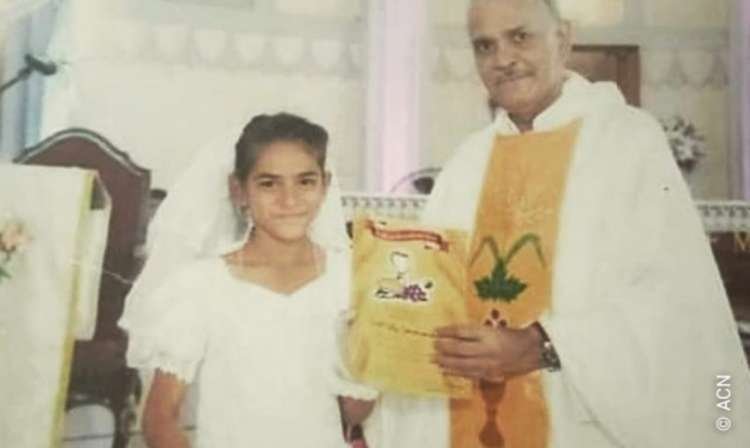
    According to her parents, a 13-year old Christian girl Arzoo Raja was abducted by a man in his 40s, forcefully converted to Islam and then married to him. Then a local court dismissed the plea moved by her family to send her to a shelter home so that she was released from the custody of her older Muslim spouse. The court said that Arzoo Raja accepted Islam willingly and she told them that she was not abducted and was not forced to marry the 44-year-old.

    Even if the girl says she was not forced to convert to Islam and did it wilfully, how is child marriage being allowed? The husband says she is 18 and so does she in an affidavit but NADRA records show she was born in 2007. Her marriage certificate does not mention her age or details of her CNIC. A medical certificate needed to prove a person is 18 was not provided either. Legal experts say that child marriage is a very integral part of forced conversions. They say that the law against child marriage is inadequate. Some believe that all child marriages should be prohibited and declared invalid but legal age of girls is something that many religious leaders do not agree with.

    The National Commission for Minorities has finalised a draft law to curb forced conversions but the law will be finalised only after consultations with the provinces and the leaders of all schools of thought. Senate Committee on Minorities’ Rights led by Senator Anwarul Haq Kakar is also working on the issue of forced conversions by getting all stakeholders, from minorities to religious leaders, on board.

    Forced conversion of Hindu girls in Sindh is an issue that has been highlighted a lot. Minorities’ representatives say that why is it that only their girls are converted and not men. But in some cases, the conversions are not forced. They are be due to economic reasons or to get away from families but the tool to justify these conversions is consent. “Why is it that mainstream religious parties are never involved in conversion of girls from minority communities and only fringe groups like Mian Mithu’s, etc?” a parliamentarian questioned while speaking to The Current. They said that administrative laxity, if turned to agility, can decrease the cases of forced conversions.

    Despite laws, their implementation is more important. We hope the courts will not give a stamp of approval to child marriages and forced conversions. Minorities are as much citizens of Pakistan as the Muslims.

  • ‘Sabaat’ manages to tie up loose ends in a rushed finale

    ‘Sabaat’ manages to tie up loose ends in a rushed finale

    Sabaat, with its refreshing storyline and empowered female characters, won acclaim over the weeks for being different from other dramas being shown on television. It drew to a close Sunday night with a finale that felt a bit rushed but successfully managed to tie up loose ends.

    Warning: Spoilers ahead

    Miraal & Dr Haris

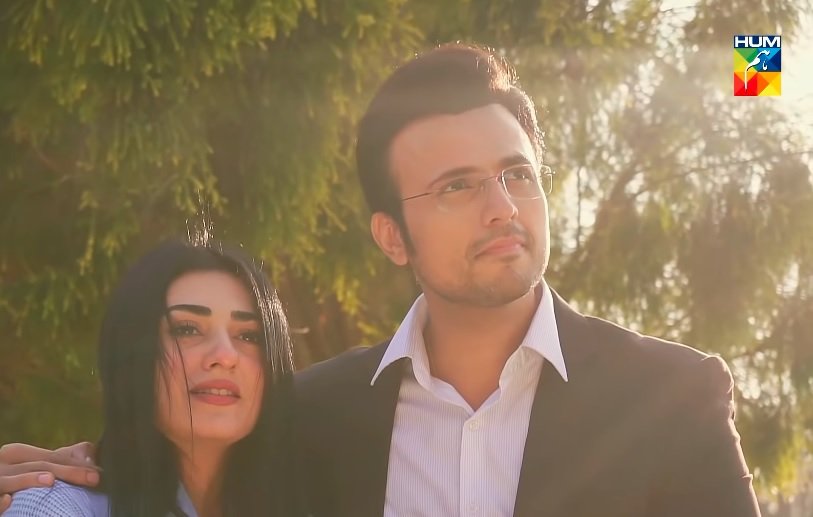
    The final episode of the drama saw Miraal (Sarah Khan) get involved in a car accident and damage her spinal cord which leaves her paralysed from the hip down. That one incident changes everything and gives all major characters in the series a happy ending. When Miraal regains consciousness after her accident, she discovers that her current love interest and ex-fiancé Ali, who was driving the car has run away, while her estranged husband Dr Haris (Usman Mukhtar) is by her side. She realises that she has done wrong to a lot of people and starts redeeming herself – first by telling Hasan (Ameer Gilani) that she was the one who ruined his relationship with Anaya (Mawra Hocane) and then apologising to Anaya personally (That one scene was very well executed). Later, she also seeks forgiveness from her husband, who she was seeking khula from. Everything comes full circle and all characters in the series get a happy ending, including Anaya’s mother (Simi Raheal).

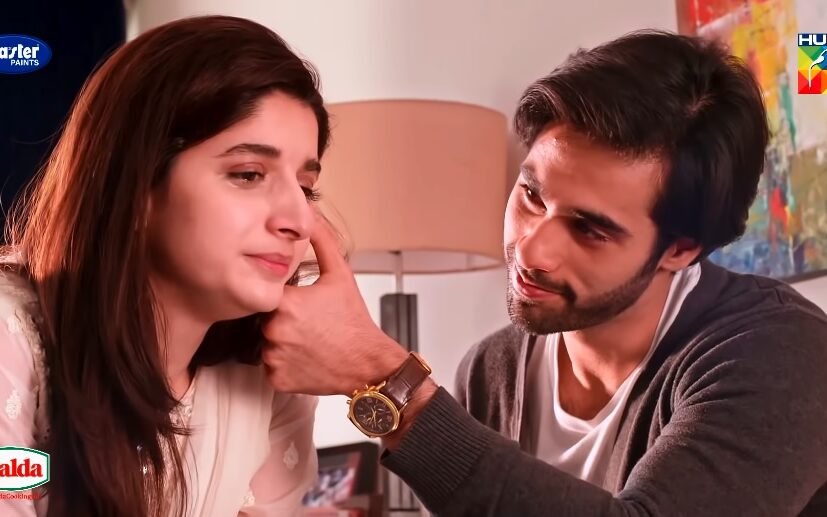
    Anaya and Hassan

    Though in its essence, Sabaat is a family drama with all the usual tropes like a mistrusting husband, nand-bhabhi tensions, etc, its treatment was what set it apart from other dramas. Besides, the drama resonated well with audiences because of its realistic presentation.

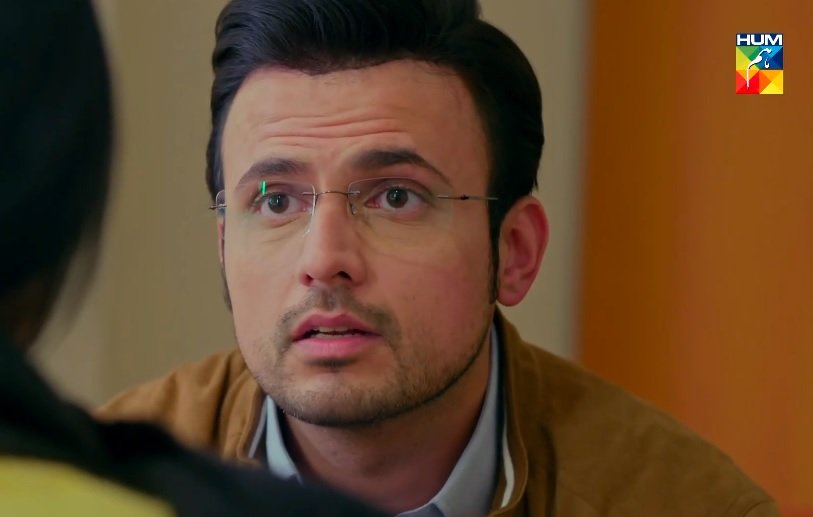
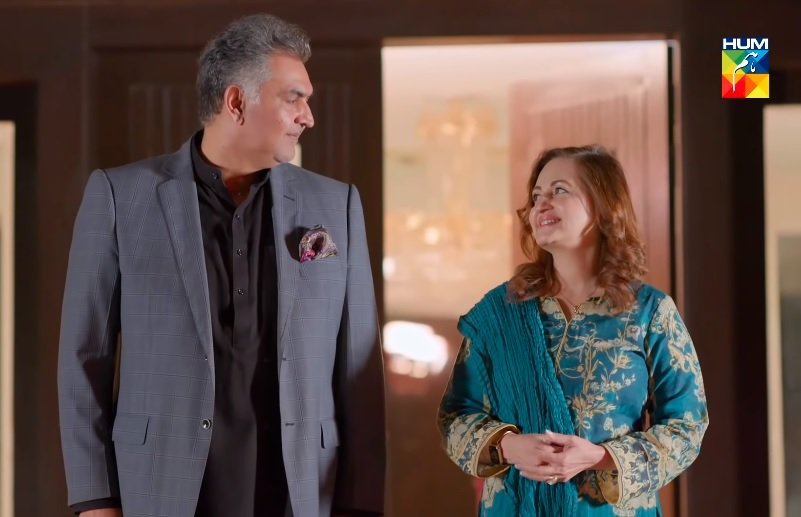
    Sabaat was beautifully written by Kashif Anwar (Fun fact – Kashif played Yasir Qureshi in the drama), with some impactful dialogues and brilliant story development (I will forgive the makers for stretching the drama in the last few episodes). The performances were solid – it will not be wrong to say that Mawra Hocane delivered her career-best performance as the quiet but headstrong Anaya, while Sarah Khan played the manipulative and spoilt Miraal to perfection. The boys (Ameer and Usman) also gave great performances and Usman, in particular, blew me away. Not only was Dr Haris an incredibly likable character but Usman also did complete justice to it. I will never forget that tear that dropped from his eye when he received the divorce papers. Laila Zuberi and Simi Raheel were wonderful as the supportive and encouraging mothers while Moazzam Ali Khan was brilliant as the arrogant Fareed Sahab.

    Another reason why the drama stood out was because of its strong and empowered female characters. Though Anaya was a mild-natured person, she did not resort to being a bechari when things went bad and made the best of her circumstances. Even Hassan and Dr Haris were a rare breed – they were shown as sensitive and caring individuals. It is unusual to come across such characters on Pakistani television these days.

    Personally, what I liked best about Sabaat was that nothing about it was over-the-top. Even in her angriest moments, Miraal was restrained and did not resort to screaming (read: screeching) like a mad person.

    Read more – ‘Sabaat’ will have you hooked

    The OST and background music was lovely and perfectly complemented the drama and storyline. Also a shoutout to the drama’s styling team – Miraal’s wardrobe was amazing. I loved each and every outfit and Sarah carried them all so well.

    Sabaat is definitely one for the keeps and is highly recommended. For me, it is going in the same category as Humsafar, Diyaar-e-Dil, Yakeen ka Safar, Ehd-e-Wafa and Zindagi Gulzar Hai.

  • Of freedoms and censorship

    Of freedoms and censorship

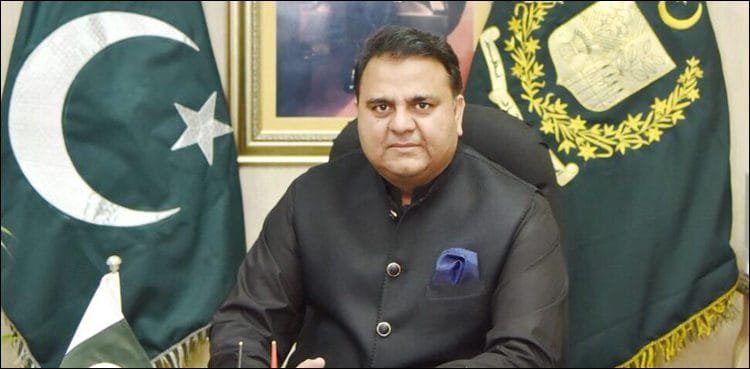
    Pakistan is all set to launch its own version of Netflix. It was announced by Federal Minister for Science and Technology Fawad Chaudhry that his ministry is all set to launch Pakistan’s first OTT (over-the-top) platform like Netflix.

    Chaudhry says that the aim is to put Pakistani content on the map and PEMRA has been asked to prepare guidelines keeping in mind the international market. He maintained that with internet freedom, censorship is unlikely. But in a country where PEMRA has started giving guidelines to products on how to make their television advertisements, where dramas are banned due to ‘indecency’, where video-sharing platforms are banned for spreading immortality, it would be interesting to see if international standards will be maintained without any trouble.

    Pakistan cannot get ahead in technology unless and until we get on with the times and stop censoring content.

    On the one hand, we are fighting censorship in the entertainment side and on the other, our mainstream news media is also facing a tough time. Geo News’ reporter Ali Imran Syed went missing for 22 hours on Friday. Mr Imran Syed was the one who had reported on the arrest of PML-N leader Captain (retd) Safdar from a Karachi hotel and whose CCTV footage was broadcast by Geo.

    Thankfully, the missing reporter returned safely the next day. Information Minister Shibli Faraz prayed for his safe return. According to journalist Mubashir Zaidi’s tweet, Ali Imran “was picked up by mistake regarding investigations of the murder of Maulana Adil. He was picked up for being a lookalike of one of the assassins. What’s surprising is that it took 22 hours to realize that he wasn’t the person they’re looking for.”

    Journalists going missing is not something unheard of in Pakistan. One considers it a miracle when missing journalists come back safely. In any civilised country, a journalist cannot be picked up like this. In Pakistan, we breathe a sigh of relief when journalists return alive. Media freedom is guaranteed under our Constitution but it is something that still alludes us.

    Censorship, be it in the media, entertainment industry, or any other sector, is detrimental to a nation’s growth. We hope that when the Pakistani version of Netflix is launched, the content that we see online will be creative and thought-provoking.

  • Another Faraz, Another Era

    Another Faraz, Another Era

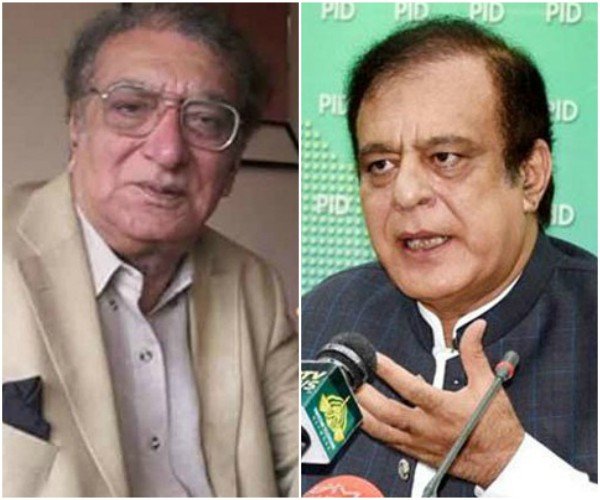
    Today Faraz’s son speak for a regime that is often described as ‘hybrid’

    Pakistan’s information minister is seen more and more on the TV screen nowadays. There he is on nearly every channel, —giving briefings, answering questions and being interviewed, cool and collected, smirking his way through the questions as he talks of PTI’s political opponents and assures journalists that his government is doing amazing things for the country.

    It is, of course, commendable that the minister is so accessible to journalists and so happy to dominate screen time, but every time I see him on the box I cannot help but wonder if his father would’ve supported such a regime.

    Ahmed Faraz was one of the greatest Urdu poets of the twentieth century. And along with poets like Faiz Ahmed Faiz and Habib Jalib his poetry has also documented the political and social struggles of the the time. One particular poem of Faraz did become very controversial and reportedly there was a period in which he denied that it was his work. The reason is because that particular work (“…Tum Sipahi Nahin”) is extremely critical of martial tyranny and bloodshed and harks back to the attitude of the army during the bloody civil war which resulted in the secession of East Pakistan and the creation of Bangladesh.

    That poem is chilling. Read it (or listen to a recital) today and your blood will run cold. Through verse the poet tells of a terrible disillusionment and declares that his pen will not write lies or propaganda as it is not a weapon to be used by tyrants but rather is the instrument of the people, the awam. “Mera Qalam tow amanat hai meray logon ki.” He talks of a military that uses force  against its own people, of tyrants who talk of justice but practise cruelty and encourage hatred. The poem harks back not just to the civil war but to numerous political upheavals and regime changes and conflicts — and the words are spine chilling.

    Listen to the verses and it is not difficult to see why Faraz was forced to deny the poem and why at one time it was circulated secretly by people. I’m not sure if he ever spoke, on the record, about what the repercussions were for him of writing that poem, but I imagine the consequences could not have been pleasant. And perhaps it was these consequences that convinced his family members that such lofty principles are simply not paying such a high price for.

    Today Faraz’s son speak for a regime that is often described as ‘hybrid’ and represents a government that works very closely with the institution whose very attitudes and actions are criticised in this poem. It seems the fact is indeed stranger than fiction. Or perhaps we should just call this ‘progress’.

    But listen to this particular poem in the context of present day Pakistan and one thing becomes clear: it doesn’t matter what compromises people like Faraz might make in later life if they are able to leave behind them such creations, creation that lives on long after they are gone and reverberate so strongly still. This is art but it is also social history and a lasting testament to political struggle and the fight for justice, it is the reminder of a dark night and of the people who fight for the dawn of justice and for an end to oppression and division. The poem is also an acknowledgement of the duty of the writer, a reiteration of the poet’s responsibiltity to document and resist tyranny “aaj shayir par yeh qarz matti ka hai” — he says the situation is serious and his words are written not with ink but in blood “aaj is qalam may lahu hai siyahi nahin”.

    Today Faraz’s son speak for a regime that is often described as ‘hybrid’ and represents a government that works very closely with the institution whose very attitudes and actions are criticised in this poem. It seems the fact is indeed stranger than fiction. Or perhaps we should just call this ‘progress’.

  • Pakistan to get its own version of Netflix

    Federal Minister for Science and Technology Fawad Chaudhry has announced that his ministry is all set to launch Pakistan’s first OTT (over-the-top) platform. An OTT media service is a streaming media service offered directly to viewers via the Internet. OTT bypasses cable, broadcast, and satellite television platforms, the companies that traditionally act as a controller or distributor of such content.

    In a tweet, the Minister said: “We at the Ministry of Science and Technology (MoST) are all set to launch Pakistan’s Version of Netflix,” adding that the technology part of the initiative is complete.

    Chaudhry further said that he has directed PEMRA to “prepare a guideline on content” following which the platform will be launched in PPP (public private partnership) mode.

    Speaking exclusively to The Current, Fawad said that his ministry will provide content creators with the technical support – such as compression technology – they need.

    As far as the content on the platform is concerned, the Minister said that PEMRA has been directed to classify content keeping in mind international standards.

    “Our aim is to put Pakistani content on the map and PEMRA has been asked to prepare guidelines keeping in mind the international market,” said Fawad, adding that with internet freedom, censorship is unlikely.

    He also said that content on the platform will be different from what we usually see on television.

    When asked what the payment process will be like given that the majority of Pakistani don’t have credit cards, Fawad said that the payment process will be simple and viewers will be able to pay through their mobile phones.

    A new streaming platform will open new doors for Pakistani filmmakers and content creators giving them creative space and liberty. According to a recent report, Netflix has over 180 million subscribers worldwide, but only 100,000 in Pakistan as most Pakistanis do not have credits cards to pay for the service. This is one of the primary reasons why Netflix has not attempted to commission original Pakistani content, besides “weak storytelling, flawed screenplays and scripts that don’t meet international standards”.

    India, on the other hand, has about 40 providers of OTT media services including Netflix, Amazon Prime and Disney Plus.

    Pakistan forayed into the digital world just recently with Churails, that was released on Indian streaming platform Zee5.

    Senior PTI leader Senator Faisal Javed Khan, who is also the Chairman of the Senate Standing Committee on Information Broadcasting and Heritage, lauded Fawad for his initiative.

    Read more – Hamza Ali Abbasi cancels Netflix subscription over movie sexualising young girls

    Meanwhile, noted actors including Shaan Shahid, Humayun Saeed and Asad Siddiqui thanked the Minister for taking the initiative and introducing such platforms in Pakistan.

    “It’s time we make our presence in the entertainment arena of the world,” said Shaan, while Humayun said this will “open doors of opportunities for many many talented people and eventually help Pakistan reach a truly global audience.”

    However, Osman Khalid Butt remarked that PEMRA should not be allowed to prepare a content guideline for the platform.

  • Dishonouring our heroes

    A few days ago, a group of youngsters smeared a portrait of the first Nobel laureate from Pakistan, Dr Abdus Salam. The video was widely circulated on the internet that showed the group, consisting of State Youth Parliament Pakistan members, painting Dr Salam’s portrait black while raising slogans against the minority Ahmadiyya community, of which Dr Salam was a member, outside Gujranwala’s National Science College.

    It was tragic to see that science students, rather than honouring Dr Salam, a world renowned physicist from Pakistan and champion of science in the developing world, would take pride in vandalising his portrait due to bigotry. Dr Salam’s contributions to science are undeniable and they have been recognised and hailed by the state of Pakistan as well. Thus it is unfortunate to see that our society is still reluctant to acknowledge him as a hero because he belonged to a religious minority. The white part in the Pakistani flag represents our minorities but if we can continue to persecute them, then we are in fact dishonouring our flag, our founding father’s vision for Pakistan and our Constitution that guarantees that all citizens are to be treated equally regardless of their faith, caste and creed.

    Why do we treat our heroes so badly? Pakistan’s second Nobel laureate and the youngest laureate Malala Yousafzai has also faced a barrage of criticism from Pakistani society. Many a conspiracy theory is associated with the assassination attempt on her life despite the fact that she barely survived the attack. Thankfully, the state of Pakistan has been consistently supportive of Malala and Dr Salam. This gives us hope that one day our society, too, will learn to honour those who have made Pakistan proud in the international arena. We always complain how Pakistan’s image is portrayed negatively in the international press but people like Dr Salam and Malala and many others continue to make us proud due to their contributions in areas like science, education, arts, among others. Asma Jahangir’s work for human rights and women’s rights was hailed around the world but she was not recognised by several segments of society because of her bold views on fundamental freedoms. It is high time that we put an end to such thinking and be more tolerant and appreciative of the work that our countrymen and country-women continue to do for the betterment of Pakistan.

    In an environment where we see rising political polarisation, religious intolerance, the state needs to continue to promote tolerance and honouring those who have made a mark. Dr Salam does not need validation from those who smeared his portrait; his work speaks for itself but at the same time, it is a tragedy that he does not have the same acceptance from fellow Pakistanis that the international community has given him. Let’s hope that one day, those who smeared his portrait too would feel ashamed of doing what they did.

  • Children’s book ‘Little Master’ aims to bust COVID-19 misconceptions

    Children’s book ‘Little Master’ aims to bust COVID-19 misconceptions

    While the pandemic – better known as COVID-19 – made us realise the helplessness of the human species in the face of nature, its wave that smit Pakistan did a lot more than just exposing a disease’s deadliness. From repulsive misogynistic ideologies to conservative religious views, Pakistanis not only tried their best to reach the root cause of the virus, but also endeavoured to invent its cures not proven medically authentic or even healthy for that matter.

    Observing these rambling and disoriented thought-processes in which Pakistanis remained engaged all the while during coronavirus’s heydays, Muhammad Faheem from Mehrdar Art and Production approached screenplay writer, Inam Hasan to pen a comic story-book, which, published by ILM O ADAB, would address the misconceptions that are not only blindly accepted by adults but are also blatantly inculcated among the children without any fact-checking. This comic storybook written by Hasan and illustrated by Umair Najeeb Khan is titled Little Master.

    Talking to The Current, the writer, who has also penned several drama serials for HUM TV, said, “The story has been set in a simulation of Lyari, for with the city expanding rapidly, there are many such areas that are growing more and more aloof from the main city and are therefore becoming a target of the government’s negligence. This team which has initiated this idea of conveying messages through story-telling has been doing community work in Lyari for many years, and it is genuinely concerned for those underprivileged people whose children are also a part of the future generation but are not attended to. Therefore, we made a child our main character, whose name is Ahmad and whose mother is a nurse. He also has a Head Master as his ideal. The purpose of showing a child being surrounded by educated people and thus learning and imparting sensible things was to tell people to listen to teachers and to medical or paramedical staff who gain the first-hand experience of situations and are therefore reliable sources.”

    In order to draw a comparison between the literate and the illiterate, the writer has also developed characters like Naseehat Khala, a type commonly found across Pakistan whose sole objective in life is to give unasked for advices to everyone, regardless of whether they are practical or not.

    “Then there is Baba Chul, an irritating old man and a Chacha Chewing Gum who beats about the bush and doesn’t come to the point,” the writer said. “The purpose of introducing all of these characters was to teach people that they should say what is pleasing, precise and practical.”

    https://www.facebook.com/Humsubsaathpk/posts/148923586891798

    Coming towards the structure of the book, it is divided into 5 to 6 chapters, each dealing with an aspect of COVID-19 with respect to how it has been perceived and treated by Pakistanis. From misinformation and conspiracy theories to the hoarding of necessities that took place in this country while people were already starving due to the lockdown, the chapters try to address every single problem that arose. The writer also shared that in order to make it enjoyable, rhyme schemes have been employed in the story which will also serve the purpose of making children remember useful information.

    When asked about the distribution of the book, The Current was told that the book was launched on October 7, but the purpose of launching it has not been to sell it and gain monetary benefit out of it. It is meant to be distributed among the neglected schools in Karachi which are operating at small scale levels and the students of which do not have access to reliable information. For others, the story is also available on the community page on Facebook known as Hum Sab Sath Corona Ke Khilaf.

  • Every Pakistani girl wants to be ‘Emily in Paris’

    Every Pakistani girl wants to be ‘Emily in Paris’

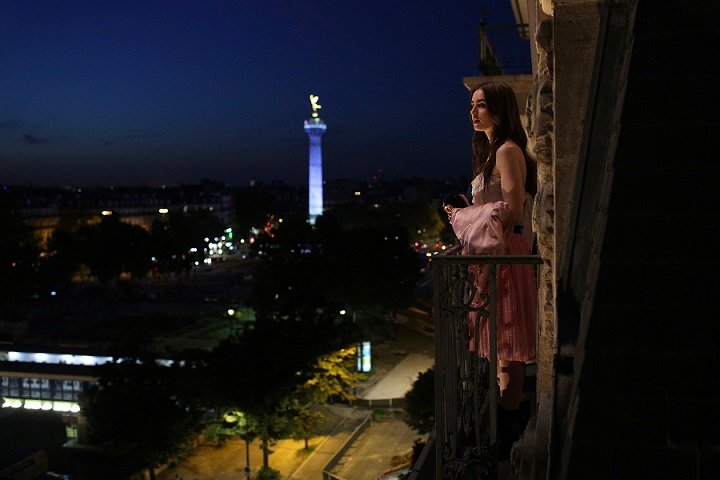
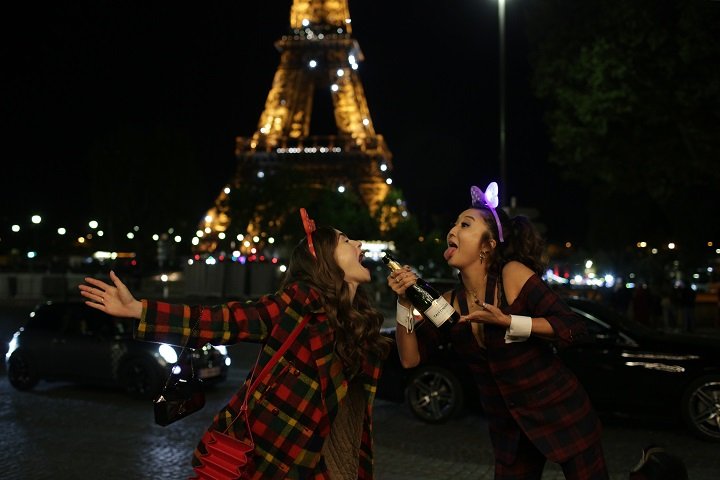
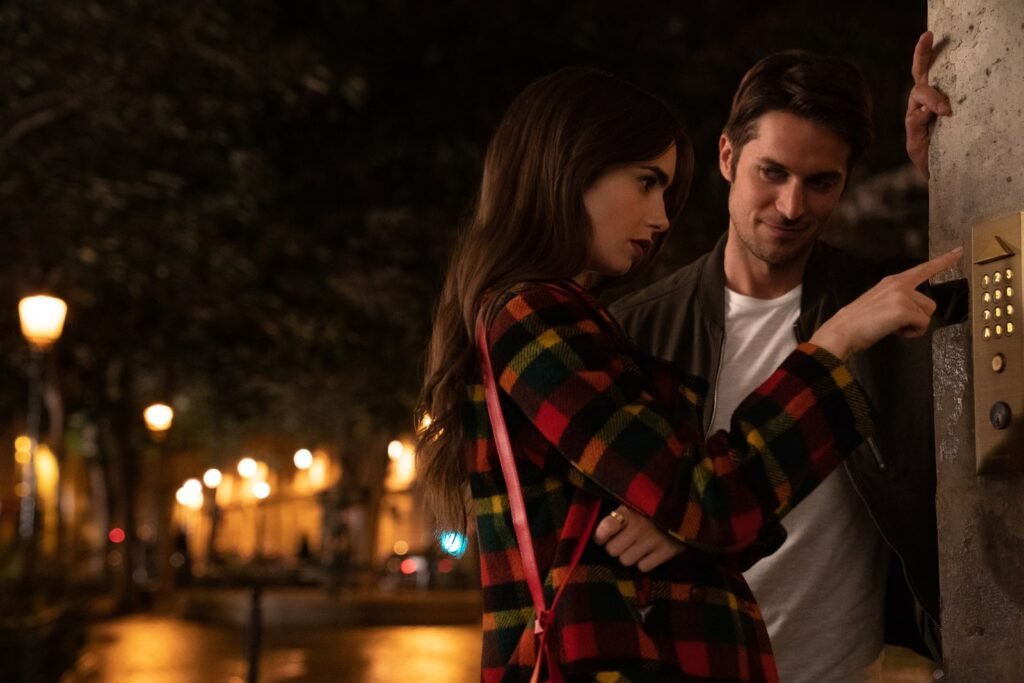
    Meet Emily – a bright, vivacious and a tad bit annoying American who suddenly finds herself in Paris for a new job. She lands in Paris, makes an Instagram account to document her year in the city, posts a picture of a croissant on Instagram and boom she’s hit 20,000 followers. And you’re just like, where, what, when, HOW? But that’s what Emily in Paris is about. It requires you to leave all sense and sensibility aside and just immerse yourself into Emily’s world.

    Created by Darren Star of the Sex and the City fame, Emily in Paris has been produced by the show’s star Lily Collins and follows Emily as she navigates her life in Paris and tries to add an “American touch” to the firm she works at. She breezes through life with the mantra ‘fake it till you make it’ and still manages to get everything right and save the day while running around the city in her cutesy clothes and heels (Again, HOW?). She makes friends on the street, has a hot neighbour, gets invited to all cool parties and events in town and eats all the butter and chocolate croissants she wants without gaining a pound. With all this, who wouldn’t want to be Emily? Or live in her world – where everything can be solved via Instagram engagement?

    As a 20-something girl living in Pakistan, I can say with full conviction that every girl in the country wants to be Emily in Paris. She wants to be able to live her own life in a charming city like Paris, away from the prying and judgmental eyes of the society and relatives, do a job she loves, post pictures on social media without a care in the world, and eat and drink as many croissants and Starbucks as she likes without putting on a pound. She wants to be able to walk free on the streets without worrying what awaits around the corner or if she’ll make it home safe. She wants to be able to date and hang out with whoever she wants without being labelled a s***. She just wants to be free to live her life the way she wants. And the way Emily does.

    It is rare for a show like Emily in Paris to trend at number one on Netflix Pakistan, given the show and movies that nab the top spot are either all-time favourites (Diriliş: Ertuğrul, Friends), Bollywood films, action/crime (Money Heist/Sherlock) or soft porn (365 Days). For Emily to make such an impact proves my earlier stated point and shows that Pakistanis love an absurd rom-com just like any other. They are done with love triangles and saas-bahu stuff that are shown regularly on television, most of it which is also not relatable.

    Emily in Paris is far from reality but the beauty of it is that it doesn’t even pretend to be real. Even the French have accused the show of stereotyping French people and culture and presenting an image of Paris that even they don’t recognise. But the creators of the show knew exactly what they were doing. They wanted to transport their viewers to the charming, cobbled streets of Paris and give them a stress-free vacation right in their living rooms. The episodes are short and crisp – less than half an hour each – and easy. They don’t demand you to use any of your brain cells. That with lots of eye candy including good-looking people (Sigh Gabriel), dreamy locales, beautiful clothes (though I have to add Emily’s wardrobe did not impress me) and some witty one-liners (courtesy Julien), Emily in Paris is trash television at its finest.

    “Don’t you want to go to the movies to escape life”, Emily asks her colleague in one of the episodes. That one dialogue is the gist of the whole series and the reason why you should also be watching it.

    Meanwhile, latest reports have suggested that Emily in Paris will be renewed for another season. In an interview, the show’s creator Darren revealed that he has plenty of ideas for season 2 in which “Emily is going to be more of a part of the fabric of the world she’s living in. She’ll be more of a resident of the city.”