Author: optimum_tech

  • Banning culture

    Banning culture

    Earlier this week, the Pakistan Telecommunication Authority (PTA) said in a statement that due to a number of complaints from “different segments of society against immoral/indecent content on the video sharing application TikTok”, it has issued instructions to block the popular video-sharing app.

    This comes after a final warning to TikTok was issued in July over explicit content posted on the platform. PTA says TikTok was given “considerable time to respond and comply with” instructions for development of an effective mechanism for proactive moderation of “unlawful online content” but TikTok “failed to fully comply” with the regulator’s instructions.

    Special Assistant to Prime Minister of Pakistan on Political Communication Dr Shahbaz Gill tweeted that several parents complained against the app on the Prime Minister Portal and said that their young children are being misled by the app’s content, which is against our religion and culture. One is bewildered why these parents felt the need to complain to the state regarding an app being used by their children instead of stopping them from using this app and limiting and monitoring their technology usage.

    It is the duty of parents to keep an eye on their children’s activities. We have seen that most parents give tablets or cell phones to children at a very young age and do not control what they see or do. Instead of encouraging their children to read books or play outdoor games or indulge in other healthy activities, a lot of parents worldwide give their children access to the internet and gadgets when even tech giants like Bill Gates and Mark Zuckerberg have a very strict policy for their children when it comes to technology. According to Business Insider, Gates, the former CEO of Microsoft, implemented a cap on screen time in 2007 when his daughter started developing an unhealthy attachment to a video game. He also did not let his children get cell phones until they turned 14. Zuckerberg wants his daughters August and Maxima to spend time reading books of all kinds instead of getting lost in technology at a young age.

    This is what these parents should have also done instead of asking the state to ban an app that is not just popular but has made money for many of its users. TikTok is an app that is used a lot by lower middle class or poorer sections of our society. A lot of Pakistani TikTok stars have now made it big due to their huge following on this platform. They are earning their livelihoods due to their popularity on TikTok. It is a platform where they display their talent. It is unfortunate that we have now banned an app that is being used for earning livelihoods in a country plagued by unemployment.

    Moral policing is something we should all be way off. Who would have thought that a biscuit advertisement with a few dance sequences would cause such controversy that the regulatory authority would issue an advisory to advertisers on how to make ads for their products? On October 5, the Pakistan Electronic Media Regulatory Authority (Pemra) issued an advisory for broadcasters and advertisers, which says: “It has been observed with concerns that themes of advertisements of ordinary consumer products like biscuits, surf, etc. being aired on satellite TV channels are not corresponding with the disposition of these products.” This led to some channels pulling the add off air.

    It is time that we stop regulating people’s lives, what they see, and their creativity. People need to express themselves in different ways and they should be allowed to do so as long as they are not breaking any rules or endangering someone’s life, including their own. Regulations lead to more censorship. We certainly do not need more of it.

  • The Silencing Act

    “The biggest threat to gender justice right now are defamation laws and the FIA.”

    “Women are harassed and so we must introduce a law to protect them,” went the PML-N narrative in favour of enacting the Prevention of Electronic Crimes Act (PECA), 2016. This line peddled was mainly by the then minister for state for information technology and telecom, Anusha Rahman, to shut down critique levelled at the draconian provisions of the law, criminalising various forms of speech in an overbroad manner.

    Criticism of the law was deflected by making wild accusations and false imputations against critics, what actually qualifies as defamatory statements: foreign-funded agents working against the interests of the country and religion. As recorded in the House Debates on August 11, 2016, the day PECA 2016 was passed into law, dismissing all concerns raised regarding the violation of rights, Rahman remarked women were committing suicide as a result of online harassment, ‘what about them?’

    In 2017, news broke of Sindh University student, Naila Rind’s death. According to reports, she “committed suicide due to exploitation and blackmailing by a man who had befriended her on WhatsApp.” She was found hanging by the neck in her hostel room. Just last month in September 2020, a woman who had filed a complaint with the Federal Investigation Agency (FIA) committed suicide. Reportedly, she had contacted the investigation officer just hours before deciding to end her life. A law purportedly enacted to shield women from harassment and provide them with legal recourse has done no such thing.

    PECA In Practice

    While much haste was made to pass PECA, once enacted it took over a month to designate FIA as the investigation agency. It was not until March 2017 that courts to try PECA cases were notified. Meanwhile, complainants and litigants were left hanging. Many women who attempt to file a complaint through the online web form say it does not work or they do not hear back. Several women who visit FIA offices to file in-person complaints talk about the misconduct of investigation officers. Among the complaints that do make it to court, some complainants are advised – and at other times coerced – to withdraw and settle. Compromises are facilitated even in non-compoundable cases, which the law does not allow. Women who wish to see their cases through to the end are punished.

    In a case registered in 2016, FIA “lost” the evidence file. It was only after the complainant petitioned the Sindh High Court against the FIA that the file was “recovered.” Four years after the registration of the case, the trial has not concluded because the FIA’s investigation officers, who are required to appear as prosecution witnesses in order to complete evidence, do not show up. This is routine. Case diaries are replete with show-cause notices, bailable and non-bailable warrants to compel FIA officers to attend court hearings. But this has little effect on them.

    Women who participated in the Aurat Marches and were targeted online, women journalists who filed complaints with the FIA and are consistently attacked online, share the experience of so many others: the FIA does nothing about their complaints. Instead, the priority for the FIA is to register cases when men complain their reputation has been damaged by women alleging harassment. On September 29, 2020, an FIR was registered against singer Meesha Shafi and eight others under Section 20 of the PECA read with Section 109 of the Pakistan Penal Code. This FIR comes after a spate of summons issued last year by the FIA in response to a complaint made by singer Ali Zafar. Section 20, referred to as the criminal defamation section of PECA, has been weaponised by the state to silence journalists but also private complainants against women alleging sexual harassment or violence.

    In July 2019, several people received a summon by the FIA requiring their attendance in Lahore. Many received summons once the date for appearance written on it had already passed. The summons themselves were vague. They contained no details about what the investigation pertained to or the section of the law it was under. Requests for a copy of the complaint were met with yet another summon. In violation of the law and investigation Rules under PECA, “sources” within the FIA leaked names to the press during the 2019 investigation, even though the law requires confidentiality to be maintained and the Rules bar disclosure of identities of both the complainant and accused.

    Despite responding in writing and, in the case of some, appearing in person at the FIA office, an FIR was registered. Those summoned earlier and now named in the FIR include those who have spoken up in support of Shafi, spoken of their own experiences and covered the cases in a journalistic capacity. Many found out about the FIR through news reports. While a civil defamation trial was already underway, now a criminal case has also been lodged, not only against Shafi but also witnesses in her case. The purpose and intent of this exercise is nothing but to further harass and intimidate. It is also a tactic to scare away witnesses and diminish their credibility in the court of law.

    The Chilling Effect

    An FIR in another city entails contacting a lawyer, applying for protective/transitory bail. The amount is decided by the court and typically can be anywhere between Rs. 30,000-100,000. This is usually granted for a period of a week in which time arrangements have to be made to travel to the city the FIR is registered in — in this case, Lahore. A second lawyer, in the city where the FIR was lodged, must apply for pre-arrest bail. Then the investigation has to be joined which essentially means going to the FIA office and giving a statement that is included in the investigation report. This is all at the pre-trial stage. The trial itself has no specified time frame and can go on for years. As an accused in a criminal case, it is mandatory to attend hearings unless a special exemption is granted by the court. All this adds up to monetary expenses, time and psychological strain, affecting work, life and mental health. The cost of ostensibly one or a few social media posts.

    It is a myth that the FIA does not act in a coercive manner against women. This is not the first time an FIR has been registered by the FIA against a woman after she levelled an allegation of sexual violence and harassment. There are other cases in which the FIA obtained search and seizure permissions and moved arrest applications at the investigation stage, while a petition against harassment by the investigation officer and validity of the search and seizure order was pending before the High Court.

    The immediate fall out of summons by the FIA and now an FIR, is a chilling effect. Not only do people stop speaking about issues and self-censor to protect themselves, but those implicated in cases, depending on the level of support they enjoy and resources at their disposal, end up settling by retracting and apologising. This then serves as a narrative win for the other party. In the public domain, the outcome – retraction or apology – becomes the subject of debate, useful also to vindicate in ongoing legal proceedings. Hanging a criminal case over someone’s head to force certain terms and extract such an outcome never becomes public knowledge or the subject of discussion – for obvious reasons.

    What Next?

    A statement released by the Women’s Action Forum – Karachi chapter in August 2019, pointed to an emerging pattern of criminal defamation laws being used as a silencing tool against those speaking about sexual harassment and violence, both in relation to online calls outs but also against women who filed cases of harassment before legal forums. In September 2019, this issue was taken up with the Senate’s Functional Committee on Human Rights. The committee was apprised of the illegal and unconstitutional manner in which the FIA acts against citizens — in this case women. Proposals to repeal criminal defamation laws – 499 and 500 of the PPC and Section 20 of PECA – were laid before the committee and recommendations on fixing the civil defamation procedure in relation to cases of harassment, were also made. Since then, summons and investigations have turned into challans and FIRs. The onus lies on parliamentary committees to take this up again. The MeToo movement, women’s marches and more recently, the motorway rape has sparked conversations around everyday misogyny, harassment and a culture that enables harassment and rape. Laws and the criminal ‘justice’ system are being weaponised against women and their supporters, to suppress disclosures of harassment and sexual violence. Especially, PECA.

    The biggest threat to gender justice right now are defamation laws and the FIA. Repealing Section 20 of PECA, 499 and 500 of the PPC, fixing civil defamation law and procedures to prevent their misuse, and holding the FIA to account for its excesses is imperative.

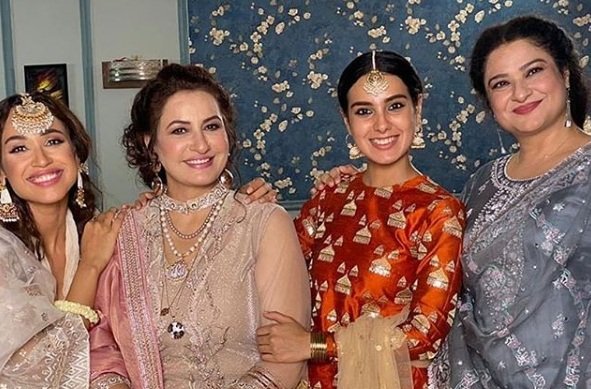
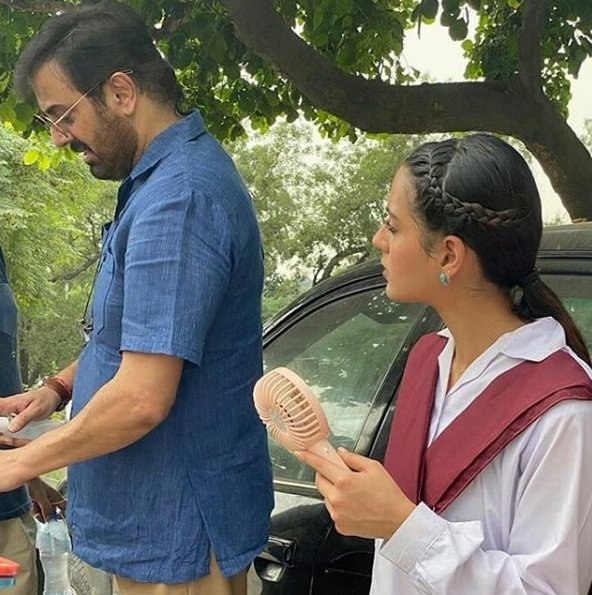
  • Iqra Aziz, Naumaan Ijaz’s upcoming drama ‘Raqeeb Se’ to be an unconventional love story

    Iqra Aziz, Naumaan Ijaz’s upcoming drama ‘Raqeeb Se’ to be an unconventional love story

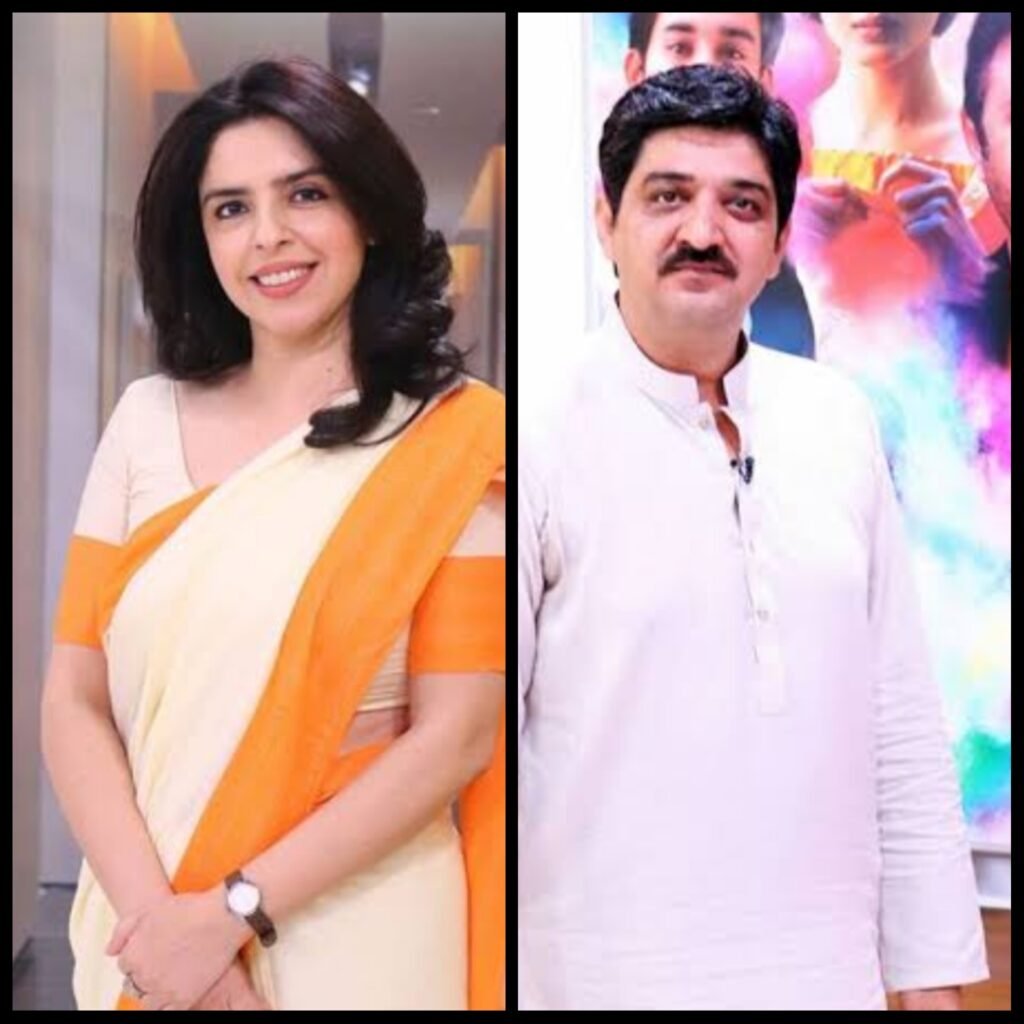
    The writer-director duo – Bee Gul and Kashif Nisar – of the award-winning Darr Si Jati Hai Sila, centered on the theme of sexual harassment, are all set to bring another serial in collaboration with Hum TV. Titled Raqeeb Se, the drama has been inspired by Faiz’s poem of the same name and promises to be different from Bee Gul’s previously written dramatic works.

    “It was a deliberate thought-out decision,” says the writer. “I convinced myself that I do not have to write another issue-based serial, for we seem to have amplified and unwillingly exploited social issues by presenting them inconsistently for ratings. The subjects have lost their sensitivity as a result and do not come as hard-hitting narratives anymore. Therefore, I decided to go for something that is equally important, equally meaningful and maybe equally ignored as well, and the sentiment of love came to my mind. This is how Raqeeb Se happened.”

    L- Bee Gul R- Kashif Nisar

    Speaking to The Current, director Kashif Nisar says that the serial is entirely the writer’s story, her own “brainchild” as he puts it.

    “It came to me in complete form, unlike most of the times in which the writer and director are working together on a project,” he said. “Bee Gul wrote it on her own and it was when it got finished that it reached me, and it is admirable like all of her works.”

    https://www.instagram.com/p/CFgl79BHmWq/

    When asked if he [Nisar] had any difficulty choosing actors considering Gul’s scripts require performers who can read and enunciate the Urdu language well, the director said that as much as Gul’s sentence structure is literary and complex, her dialogues have a very natural flow to them.

    “It looks as if Bee Gul speaks to herself while she writes, imagining the characters delivering their respective dialogues,” he said, adding, “Apart from that, I am one of those directors who give space to the performers instead of imposing things on them, which makes execution a bit easier for everyone.”

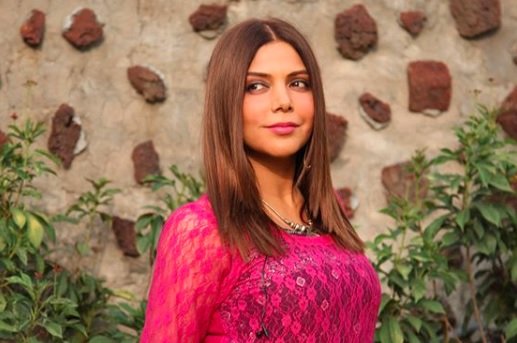
    The writer herself, when asked about her apprehensions regarding the cast for a poetic project like Raqeeb Se, said, “Well..not all of the dialogues, but yes, a few narrations in the serial might sound poetic. However, with greats like Noman Ejaz, Sania Saeed, Iqra Aziz, Saqib Sameer and Hadiqa Kiani, whose debut serial this is going to be, I do not have any apprehensions.”

    “Besides, cast selection is the director’s domain. Kashif was kind enough to keep me posted regarding every choice that he made. He is undoubtedly one of those directors I trust and who I believe know who to choose for which character,” she added.

    According to the director, Raqeeb Se is going to be an unconventional love story, revolving around people who get stranded in unavoidable situations when they meet their loved ones after a long, long time and therefore face difficulty trying to connect their past with their present.

    The serial is expected to air by either the end of December or the start of January.

    “We are done with fifty percent of it, and fifty percent is left,” tells Nisar.

  • Shirakat animations — a way towards progressive thinking and self-analysis

    Shirakat animations — a way towards progressive thinking and self-analysis

    Non-governmental organisation (NGO) Shirakat works on human rights, especially women’s rights in Pakistan.

    The NGO has recently released some animated videos addressing different social issues, including harassment, discriminatory behaviours, sexual abuse and domestic violence against women, to change mindsets and dismantle patriarchy and stereotypes that equally affect both men and women.

    The videos’ topic, script, voiceovers and colourful animations are put together rather well, which keep viewers engaged throughout the videos. The videos have subtitles and are also being explained via sign language.

    Talking to The Current, Shirakat Executive Director Bilquis Tahira said that the project’s main focus is to convey messages like how the brought up of daughters and sons develop a certain mindset and then the behavior and reaction of both men and women accordingly construct our society.

    “This project is on GBV (Gender-Based Violence) prevention. We have made this to engage women’s voices because most perpetrators of domestic violence are men and the victims are women. And we believe that we will have to change the behaviors of both men and women or boys and girls equally because they live in the same society”, she said.

    “We have used this medium of animation because the videos are short and interestingly represented to give the message of positive masculinity also so that people can use these short video messages for self-analysis.”

    “We do not say that this project will completely change the mindset of the people but these short videos are based on real stories and we have obviously crafted those but these are the incidents that normally happen. The goal is to make people think about their behaviours, men and women both to analyse that should they be reacting like this in a certain situation.”

    She added: “We have chosen the topics from our previous 20 years’ work on violence against women. We have understood the pattern of abuse, how an abuser is not stopped, how an abuser’s behaviour is constructed and how the community enhances his behaviour.”

    Read: “““““Tips to raise kids in line with Islamic values

    Speaking about the need to develop progressive thinking in our coming generations, she said, “If we start teaching our children from an early age that we all are humans, everybody has equal rights regardless of their gender. If we start changing the behaiovurs from their childhood so we can be more peaceful as a society. If kids are seeing negative messages from society and they also watch these positive messages, then they get to see the positive side also. They can relate to these stories and bring change in their behaviours.”

    Shirakat believes that the main focus of developing progressive thinking should be on the younger generation and particularly on kids.

    They run an ‘Early childhood care programme’ and have concluded from their experience that “the earlier you catch them the better”. Working on children’s thinking is more convenient, long-lasting and can be more powerful.

    The Current also talked to Wakhra Studios who are behind the animations in this project. The team told The Current that they keep in mind the demographics and psychological aspects of society and its members.

    “We try to keep them short with fewer dialogues and more animations so that it is more attractive and understandable. We have also added key messages at the end of the videos so that every person can understand it.”

    They said that while making these, they keep in mind that no stereotypes are reinforced or communicated via these videos and sentiments of any part of the community are not hurt.

    Answering how much time did it take, they revealed that normally it takes 1.5 to 2 weeks to make an animated video with a duration of three minutes, from the script to the final video

    The project comprises of 24 videos and Shirakat has posted 11 videos on their page yet. You can watch the videos on their Facebook page.

  • The hideous face of India under Modi

    India is known as the ‘world’s largest democracy’ but it is quite apparent that it has become an autocracy under the rule of Prime Minister Narendra Modi. The Modi government has marginalised the minorities, apart from a few honourable exceptions, the Indian media largely behaves like a PR machine for the right-wing government, and the judiciary, too, has become pliant. International human rights organisations are facing the wrath of the Indian government for exposing its real face. Just recently, Amnesty International India announced that it is halting its work in the country after the Indian government froze its bank accounts due to their work. The recent crackdown by the Indian government against human rights organisations and defenders was condemned by 15 international human rights organisations.

    The Babri Mosque verdict was a tight slap in the face of justice. To give a clean chit to all accused in the Babri Mosque demolition case – 32 out of 49 were acquitted as17 had died while the case was still under way – seems to say that nobody demolished the historic mosque. An Indian court said the demolition was not pre-planned despite 850 witnesses, 7,000 documents apart from TV footage and photos of what happened that fateful day. The demolition was televised and led to communal riots, which killed around 2,000 people. From the Ayodhya verdict last year to the Babri Mosque verdict just days ago, the Indian judiciary seems like a proper lackey of the Modi government. The way this verdict was celebrated by the accused, which included former Deputy Prime Minister LK Advani, shows that the verdict was expected.

    India under Modi has changed radically in just six years. The pretense of a secular India is truly over. Communalism in India was always a reality – from the Bombay riots in 92-93 to Gujarat pogrom in 2002, the Muslim minority in India largely lived in fear but at least there were constitutional protections safeguarding their rights. Now, just like the White Supremacists have been empowered in Trump’s America, the Hindutva brigade has been weaponised in Modi’s India. It is fast turning into a Hindu Rashtra. From treating religious minorities like third-class citizens to not giving a hoot about the ethnic minorities, the Indian authorities have shown time and again how shameless they can be.

    A 19-year-old Dalit woman died on Tuesday after she was allegedly gang-raped by four upper-caste men in the state of Uttar Pradesh (UP), where the controversial Yogi Adityanath rules as the chief minister. The details of the gang-rape are horrific: the young victim was beaten to a pulp and left to die. She was hospitalised for two weeks but did not make it in the end. As if the trauma of her death and what led to it was not enough for the victim’s family, the UP police cremated her body in the dead of the night without the permission and presence of her family. The victim’s brother told the BBC that “they took the body away without our permission, without the permission of my parents and cremated her”. He said the family did not even get to see her one last time. Just after this, news broke of a 22-year-old Dalit woman’s death after a gang-rape, this time too in the state of UP.

    India’s descent into fascism was expected under Modi but to witness the authorities being so blatant about it in the 21st century is still shocking. Rolling back Modi’s legacy will take generations. The process should begin before it is too late. 

  • Fresh ambience and delectable food: Yasir Nawaz’s ‘TheForest’ is a must-visit

    Fresh ambience and delectable food: Yasir Nawaz’s ‘TheForest’ is a must-visit

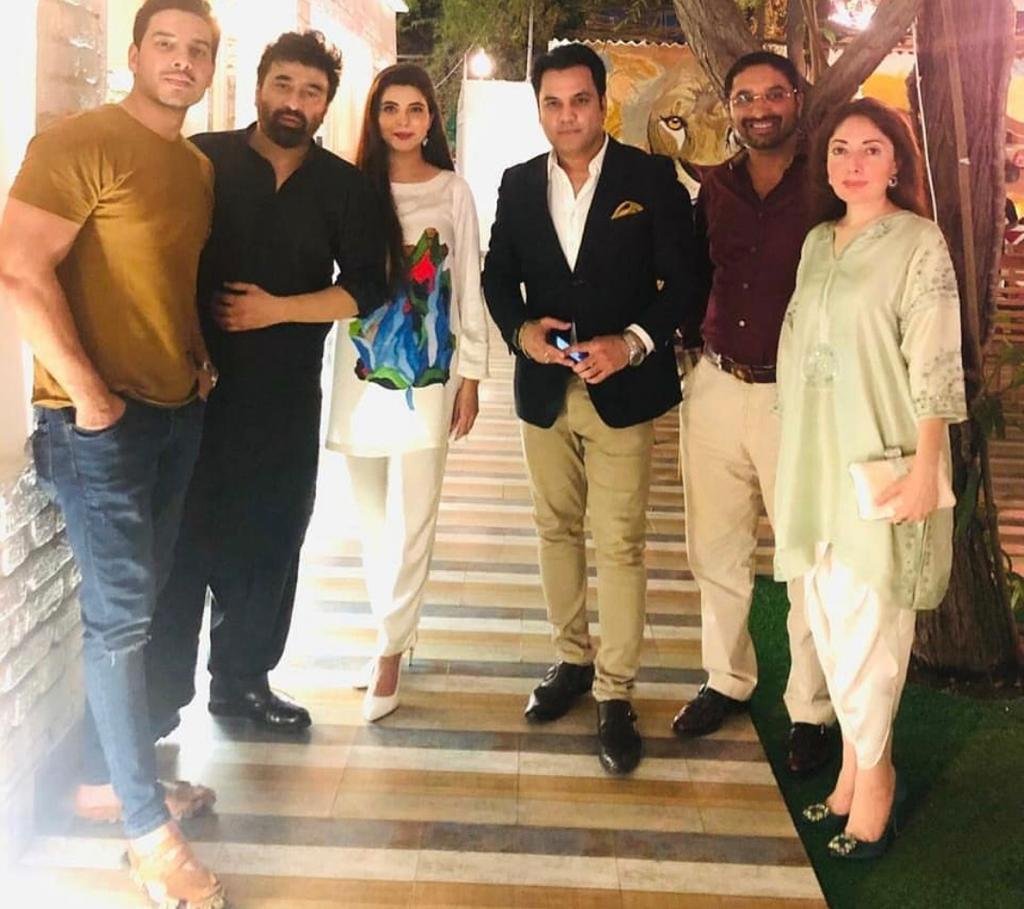
    Just a few weeks before COVID-19 forced a lockdown across the country, noted actor and producer Yasir Nawaz opened a new restaurant TheForest in the heart of Clifton, Karachi. Though I was unable to visit the place when it first opened its doors, post-lockdown I decided to check it out after hearing some rave reviews about it from friends and colleagues.

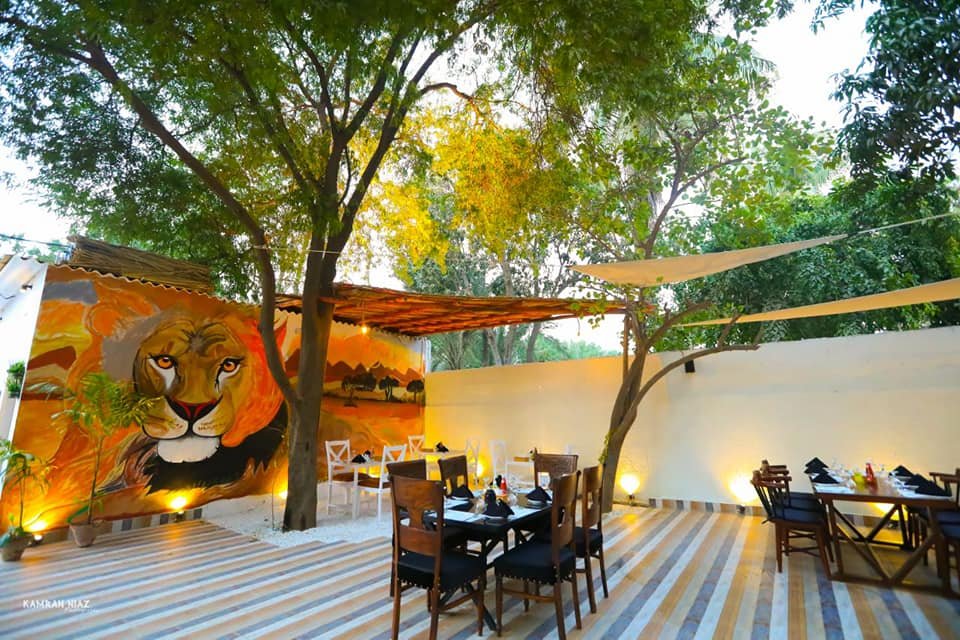
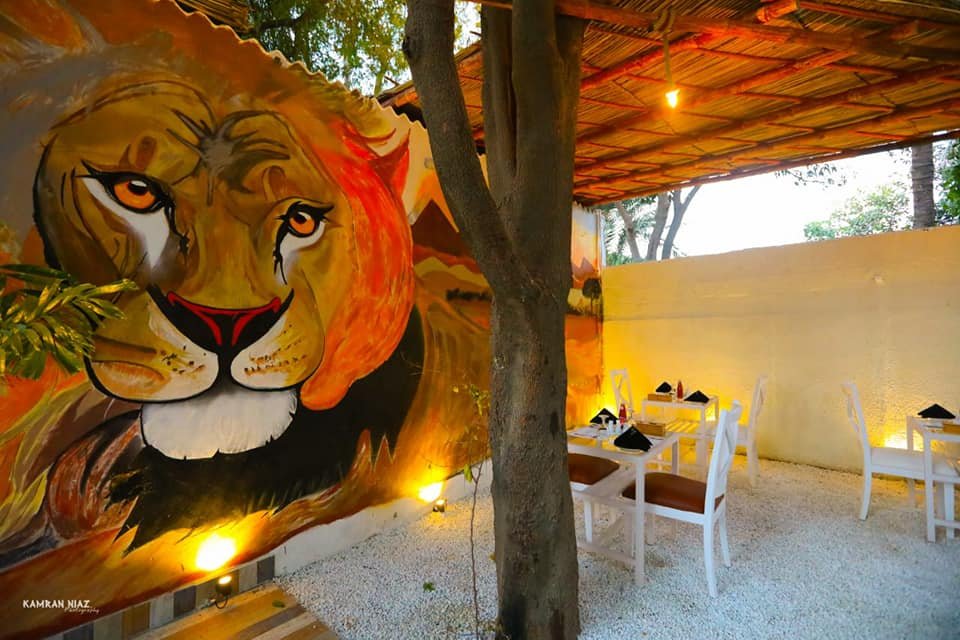
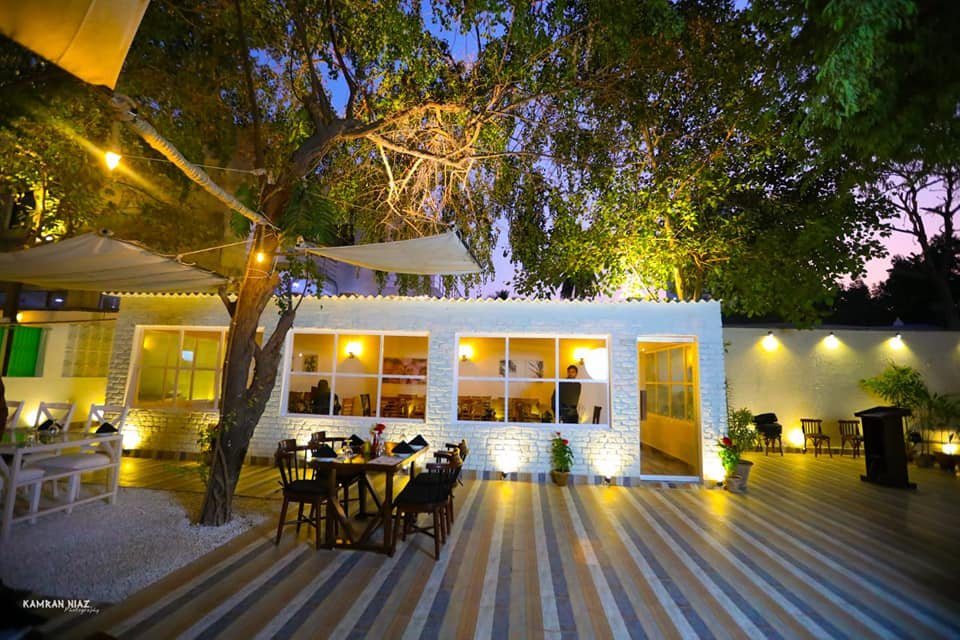
    The first thing that strikes you when you enter the restaurant is the huge mural of a lion on one wall. The painting instantly brightens up the mood. There are huge trees all around, which give the place a very rustic look and give the impression of a campsite in the middle of a forest. The outdoor and open-air setting of the restaurant is great in these COVID times and I can see myself spending winter nights with my family here. Once the weather is better, it’ll be a fantastic place for a night out or just to simply hang out.

    Though Yasir, in one of his interviews said that the menu will mostly focus on desi cuisine, there is something for everybody. From karahis and BBQ to Chinese and burgers, TheForest’s menu has it all. In fact, I have to add here that it is a bit of a task to choose the dishes given the variety.

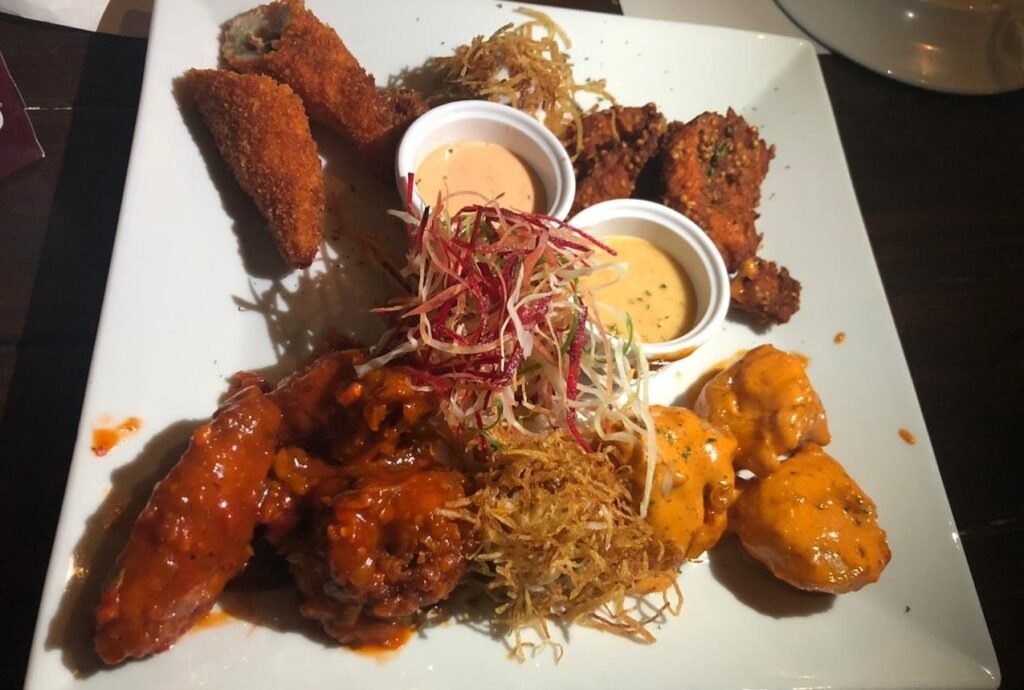
    From the starters, we ordered The Forest Platter and it was simply yum. The platter included stuffed chicken, wings, pakora bites and two dips. Everything in the platter was brilliant and cooked to perfection.

    The Forest Platter

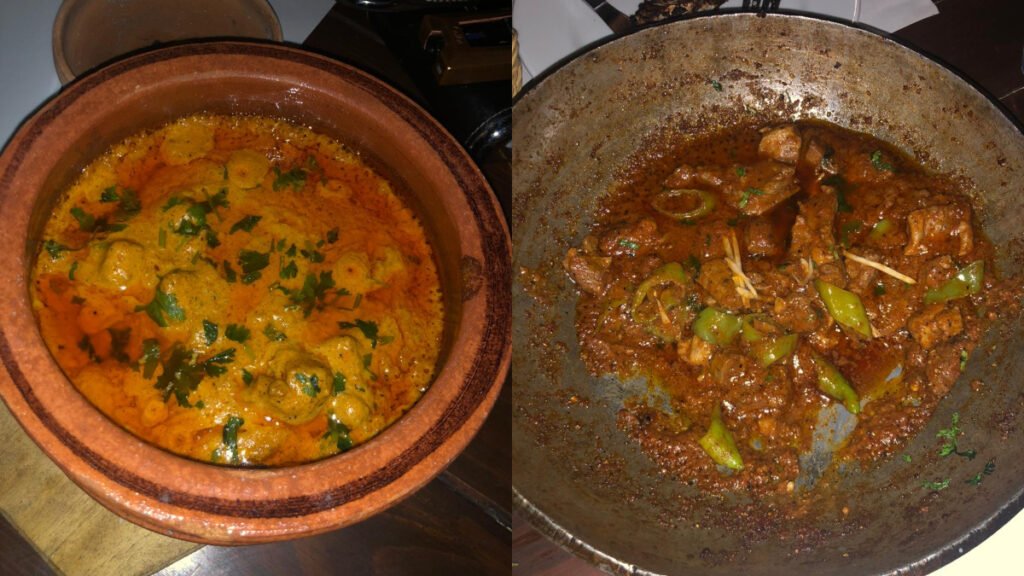
    For our main course, we decided to go desi and ordered a BBQ Platter, Mutton Handi and Chicken Handi. Out of them, the chicken handi was definitely my favourite. The chicken was very tender and the dish had the perfect blend of spices. The Mutton Handi was also good and spicy but the Chicken Handi won my tastebuds.

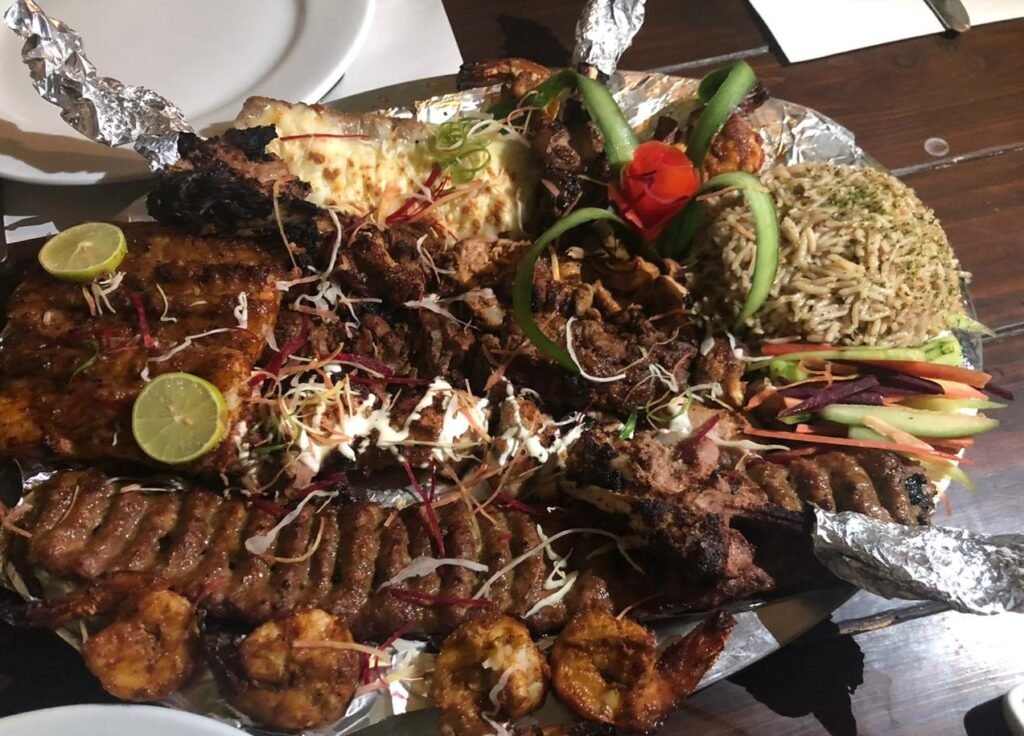
    On the other hand, the BBQ Platter took my breath away with its size. The platter was huge and was good enough for six to seven people. It included grilled fish, chicken malai boti, seekh kabab, BBQ Prawns as well as rice and naan among other things. Each item on this platter was succulent and well-cooked, with just the right amount of spices and I thoroughly enjoyed it.

    BBQ Platter

    We ended our meal with a creamy and very satisfying kulfi which hit all the right spots for the perfect sweet ending.

    Yasir told me that he took six months to set up the restaurant and I have to say that his hard work shone through. From the ambience to the food, everything was well-thought-out and polished till it was perfect. The hosts were very graceful towards their guests and ensured that no one left dissatisfied, which was probably another reason why I thoroughly enjoyed my visit. If you’re looking to spend a nice, relaxed evening with your family or friends, I’d highly recommend TheForest.

  • We are with you, Mr PM, but take a look back at home too

    We are with you, Mr PM, but take a look back at home too

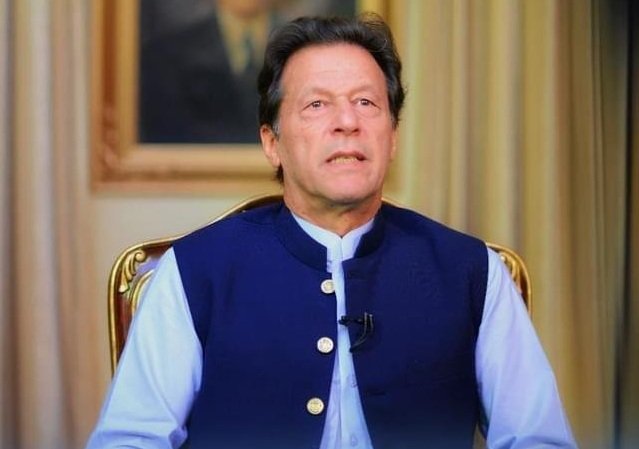
    Prime Minister (PM) Imran Khan has addressed the United Nations General Assembly (UNGA), warning India against any misadventures.

    “I want to make it clear that any attempt by the fascist totalitarian RSS-led Indian government to aggress against Pakistan will be met by a nation that will fight for its freedom to the end,” he said, exposing India’s fascism.

    “While the Nazis’ hate was directed at the Jews, the RSS directs it at the Muslims, and to a lesser extent, the Christians.”

    Talking about Islamophobia around the world, PM Imran said India is the one country in the world where “the state sponsors Islamophobia”.

    On the Kashmir issue, he emphasised that Pakistan had always called for a peaceful solution to the Kashmir dispute. He said that India must repeal the measures it had instituted since August 5, 2019, end its military siege and other gross human rights violations, and agree to “resolve the Jammu and Kashmir dispute in accordance with the relevant UN Security Council resolutions and, of course, the wishes of the people of Kashmir”.

    He also pointed out that what India did on August 5 last year was in violation of the UN Charter, council resolutions and international law, particularly the 4th Geneva Convention. “Changing demographic structure of occupied territory is a war crime.”

    PM Imran is right about the atrocities in India being committed against religious minorities, especially the Muslims in India. From beef lynchings to Delhi riots to Modi himself laying the foundation stone of the Ram Mandir on the one-year anniversary of revoking the special status of Indian-occupied Kashmir (IoK), the message that the Indian government is giving to its Muslim citizens is quite clear: the Hindutva supremacy brigade is in charge and you can only live here on our terms.

    This is a grave indictment of the so-called world’s largest democracy where the rights of minorities now are almost non-existent. The media in India has largely become pliant, a few honourable exceptions aside. We hardly see them questioning the state on issues that matter the most.

    PM Imran’s comments on India are spot on. We do hope that he would also take notice of the new sectarian fire that is roaring in Pakistan these days.

    The huge anti-Shia rallies that were taken out in Karachi and Islamabad should be a wake-up call for our state. It took a long time for the state to put out the sectarian conflict in the country. It would be extremely dangerous if sectarianism starts again. We cannot forget the target killings of Shia Hazaras in dozens just a few years ago.

    The state must end this before it becomes uncontrollable again. Interfaith harmony as well as sectarian harmony is important for any society and for people to co-exist peacefully. Pakistan’s media has been quite responsible in the recent sectarian rift. We hope that the state, too, will play its part.

  • Bollywood was allowed to flourish in Pakistan, says PM Imran

    Bollywood was allowed to flourish in Pakistan, says PM Imran

    With the government set to introduce a new film policy to assist producers and filmmakers, Prime Minister Imran Khan, who chaired a meeting on the matter, remarked that foreign content – Bollywood particularly – was allowed to flourish in Pakistan.

    Speaking exclusively to The Current, Senator Faisal Javed, who has worked with the government on making the film policy, said that PM Imran during the meeting commented that the previous governments did not work towards building up the Pakistani film industry, which led to its decay. As a result, there was an onslaught of foreign content that impacted the youth’s upbringing and compromised their moral values.

    It was also reported that during the meeting, PM Khan asserted that cinema played a vital role in highlighting social values and national heritage, besides providing quality and inexpensive entertainment to the people. The prime minister, in the meeting, made it clear that the promotion of Pakistan’s unique identity locally and globally, and acquainting the youth with cultural heritage was the government’s priority.

    This is not the first time PM Imran has called out Bollywood for spreading obscenity and vulgarity. Earlier in April, PM Khan had said: “I say this with a heavy heart but thirty to forty years ago, you would have never seen such vulgarity in Bollywood. There is so much trash. Bollywood has adopted the worst of Hollywood.”

    “This is affecting our society and youth negatively. Drug culture is emerging, sex crimes are increasing because of such promotion of vulgarity. It is important to note that when vulgarity increases in a society, the family system goes down”, the prime minister had said.

    Then in September, while speaking to journalist Moeed Pirzada about the horrendous motorway gang-rape incident, PM Khan had said that mass media influences the public and commented that indecent content and “obscenity” shown in Bollywood films has increased sex crimes in Delhi.

    “New Delhi has become the ‘rape capital’ of the world due to obscenity in Bollywood,” said PM Imran. “Compare the movies made in India 40 years ago to the movies being made now. Look at the impact of those movies.”

    Film Policy to be introduced soon

    Sharing further details about the film policy and the government’s plans, Senator Javed said that the film industry will be given the status of an industry and that Special Assistant to the Prime Minister on Information and Broadcasting Lt Gen (r) Asim Saleem Bajwa has prepared a very detailed and comprehensive film policy keeping all the stakeholders in mind. He said that the policy will be introduced in the coming months. It is pertinent to mention here that this is the first time such a policy is being introduced. While the PML-N government introduced some incentives – such as lowering imports on film equipment, slashing of income tax by 50 percent for those investing in films – the industry was mostly dependent on individuals and corporates for finances.

    Under the policy, filmmakers and cinema owners will be offered several incentives including access to locations. The government hopes to build a soft image of Pakistan through film and promote ‘Pakistaniat‘, which is why it also hopes to make cinemas affordable for the masses.

    “We hope that are we are able to promote our country, tourism and rich culture and history through our films,” said Senator Javed.

    Senator Faisal also said that plans are being made to centralise the censor boards so that only one censor board deems a film suitable for public viewing. He said that multiple censor boards create confusion for both the filmmakers and the audiences.

    Others who were part of the meeting include Information Minister Senator Shibli Faraz, Industries Minister Hammad Azhar, Dr Shahbaz Gill, Zulfiqar Bukhari, secretaries of relevant ministries, SBP governor, FBR chairman and other senior officers.

    PM Imran, in the meeting, directed relevant ministries and departments to furnish a roadmap for implementation of the proposals. The premier later also directed Lt Gen (retd) Asim Bajwa to work on a comprehensive strategy to “cleanse” Pakistani dramas and films of indecency and vulgarity. Latest reports have stated that Gen (retd) Bajwa is already in touch with TV drama writers and producers to change the trend of Pakistani film-making from its current Bollywood-style to what countries like Turkey and Iran are doing.

    Meanwhile, Pakistani actors and directors including Shaan, Humayun Saeed, Farhan Saeed, Urwa Hocane and Nabeel Qureshi welcomed the government’s initiative and thanked PM Khan and Gen (retd) Asim Bajwa for their support.

  • Nawaz Sharif’s moment

    Nawaz Sharif’s moment

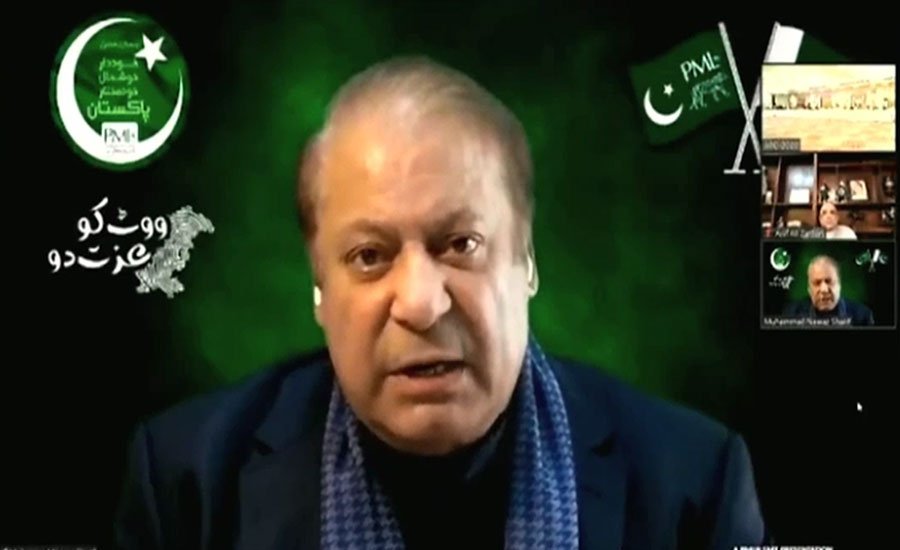
    An All-Parties Conference (APC) took place on Sunday. Hosted by Pakistan People’s Party (PPP) chief Bilawal Bhutto-Zardari, the moot was attended by all major opposition parties.

    Former president Asif Ali Zardari and Pakistan Muslim League-Nawaz (PML-N) supremo Mian Nawaz Sharif addressed the conference via video link. PML-N President Shehbaz Sharif, Vice President Maryam Nawaz, Jamiat Ulema-e-Islam-Fazl (JUI-F) chief Maulana Fazlur Rehman, Mahmood Khan Achakzai of the Pakhtunkhwa Milli Awami Party (PkMAP), Mohsin Dawar and several other opposition leaders also participated.

    It was, however, Nawaz’s speech that set the tone, reflecting in the APC’s joint resolution.

    Just days ago, the APC was being dismissed as just another show without much substance but the former prime minister’s speech changed that perception. The foremost reason why the APC was being dubbed a mere show was due to the opposition’s failure in the Senate (no-confidence move) and the passage of the recent FATF bills in the joint session despite protests. The opposition may not have been successful in these two endeavours but they seem to be on a mission now and they want to do it before the Senate elections in March 2021.

    Nawaz said their struggle is not against Imran Khan but against those who brought Imran Khan to power by manipulating the elections. He said there is now a parallel government because there is “a state above the state now”.

    The 26-point charter of demands by the APC announced the formation of the Pakistan Democratic Movement (PDM), which will be an anti-government movement. APC resolution states that the establishment’s role in politics must end. All state institutions should stay within their constitutional limitations. It also mentions how media is facing the worst censorship, the opposition demands that accountability of Lt Gen (r) Asim Bajwa be ensured, among other things.

    The way the government has reacted to the APC and especially Nawaz’s speech shows there is panic among their ranks. From calling the APC “a flimsy attempt to put pressure on the government to back off on accountability” to asking institutions to take notice of Nawaz’s speech, it is quite evident that the opposition has unnerved the government.

    The opposition has also given a roadmap and an action plan for the future. From countrywide protests starting soon to resignations from assemblies to vote of no-confidence to a long march in January, the opposition says all democratic options to get rid of the government are on the cards.

    It seems that the opposition has decided to finally get serious. It remains to be seen how it all pans out and whether they will give real tough time to the government in the coming weeks and months. But the opposition cannot be written off.

  • ‘Nand’: No shades of grey

    ‘Nand’: No shades of grey

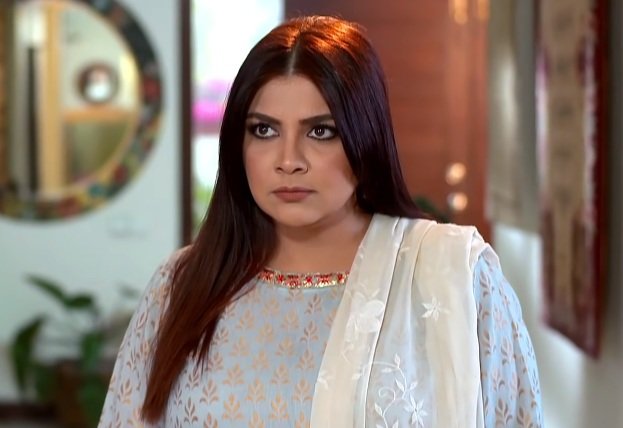
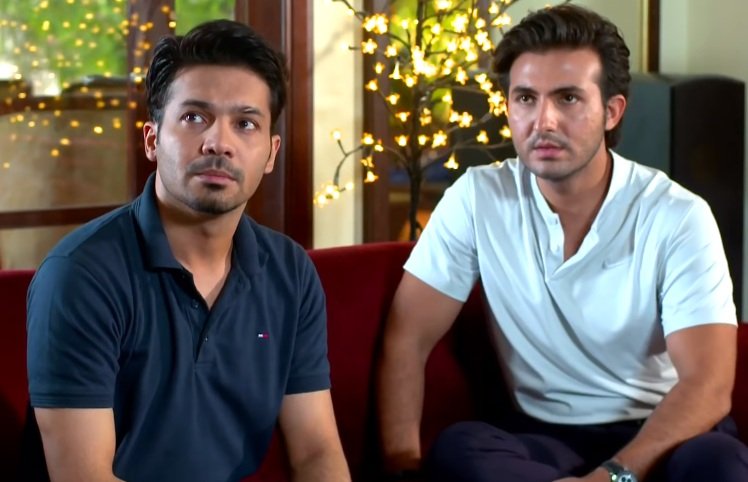
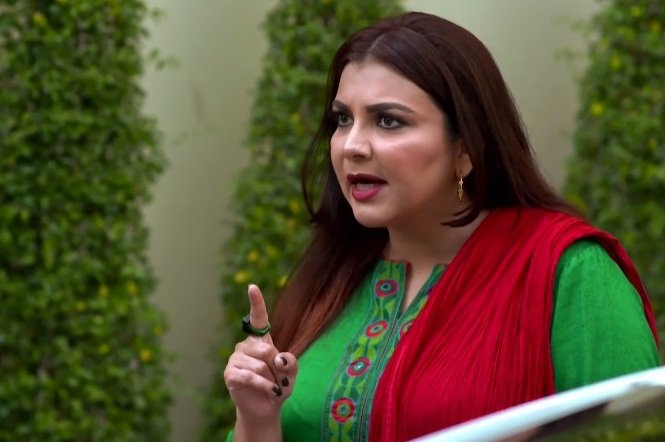
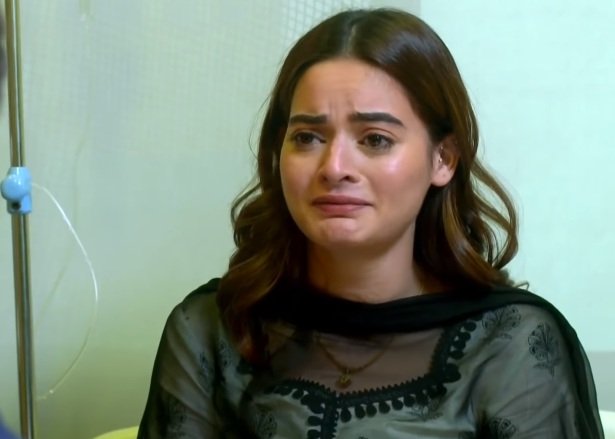
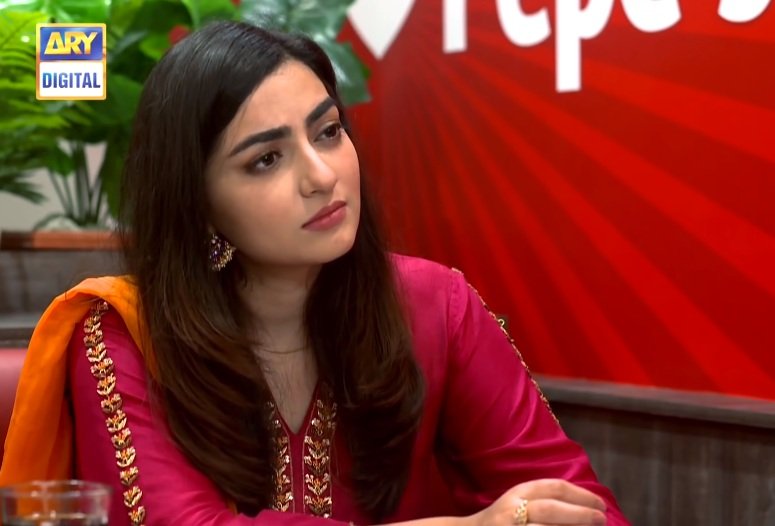
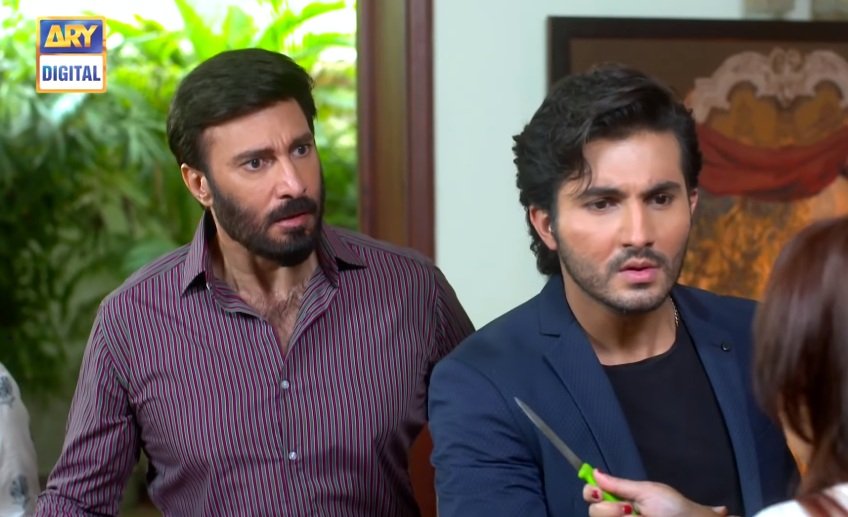
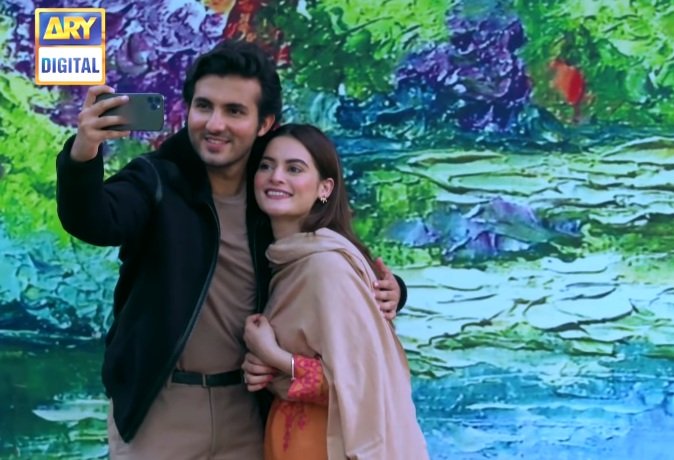
    ARY Digital‘s dramas are usually high on masala and Nand is no exception. Featuring Faiza Hasan, Shahroz Sabzwari, Minal Khan, Aijaz Aslam, Maha Hasan, and Ayaz Samoo in the lead, Nand tells the tale of three couples, Gohar (Hasan) and Jehangir (Aslam), Saqib (Sabzwari) and Rabi (Khan), and Hasan (Samoo) and Farwa (Maha). The main focus is the problems in Rabi and Farwa’s marital lives caused by their vile nand (sister-in-law), Gohar, who is estranged from her husband, Jehangir, and lives with her brothers.

    Hasan and Saqib

    As the main antagonist, Gohar is domineering, jealous, and unsympathetic. She is driven by an uncontrollable urge to disintegrate her brother Saqib’s marriage with Rabi, ironically a girl of her own choosing. Gohar frequently mistreats the mild and unassuming Rabi as Saqib, who prefers to appease his temperamental sister instead of supporting his wife, fails to stand by her. In a crass and rather senseless ode to Star Plus, Gohar successfully causes Rabi to miscarry by premeditating her accident.

    Gohar

    A few episodes later, Saqib defers to Gohar in divorcing Rabi. Gohar is now eyeing the demise of her younger brother Hasan’s marriage, who married a girl he liked. Although Hasan is shown to be assertive and exercising independent judgment frequently – much to the dislike of his sister – Gohar doesn’t leave a chance to poison his relationship with his wife. However, Farwa’s no-nonsense attitude kindles hope for a better ending to her story compared to Rabi, who lets things happen to her and grieves her poor fate later.

    Rabi

    With basic plot details out of the way, let us just say that Nand is no different than conventional Pakistani dramas in its disregard for intelligence, nuance, thoughtful writing, and the changes taking place around us that should ideally figure in our storytelling.

    Read more – PEMRA ban: ‘Jalan’ to air as per schedule

    The characters in Nand are unidimensional. Morality is either possessed or unpossessed, whereas the aurat aurat ki dushman trope is alive and kicking. The concept of character arcs does not exist. Hence, both good and bad characters are unhinged in their virtue and vice. We also do not know why these characters are the way they are or what experiences inform their respective outlooks on life. On the one hand, the drama’s villain, Gohar, played brilliantly by Faiza Hasan, arouses hate and disgust through her conniving ways, while on the other, her incredulous brothers (especially Saqib), are shown to be deserving of sympathy, of being let off the hook because evil Gohar incites them to do bad things. Naturally, this means that the flaws in these men’s personalities causing trouble—i.e., lack of judgment, chauvinism, and sense of entitlement—remain unaddressed. After all, what good is a vamp if the moral agency of other characters were to remain intact?

    Farwa

    The notoriety in Nand does not end here. The drama sensationalizes domestic violence and promotes zero accountability for this wretched behavior in which siblings Gohar, Saqib, and Hasan engage against Rabi and Farwa.

    Most importantly, Nand is outrageous in its portrayal of divorce and iddat. One fine day, Gohar accuses Rabi of having an affair with her husband, Jehangir. A yelling match ensues and culminates in Saqib throwing the ‘T word’ thrice towards Rabi, in a fit of rage. ‘Triple talaq’ or instant divorce is a deeply contentious issue among Muslims and does not enjoy universality – it is not as straightforward as this drama depicts it to be. In fact, the practice of ‘triple talaq’ defies common sense in that the pronouncement of divorce takes precedence over the intent to divorce. An Islamic marriage solemnizes between two sane, mentally and emotionally mature adults, who accept each other as spouses in the presence of witnesses. Apart from that, it is recommended that the rights and obligations of spouses with respect to maintenance, spending, and child-rearing be settled before a marriage takes place. How can marriage, (ideally) conducted with such elaborate procedures and planning, end at once in triple pronouncements of talaq, that too in fits of rage or humor? Why aren’t our dramas questioning this?

    Jehangir and Saqib

    There is also a constant emphasis on completing the traditional three-month waiting period (iddat) by Rabi’s family before she can step out of the house, meet someone, or work. The way Rabi is kept indoors is a painful reminder of how iddat is instrumentalized to deny mobility to women, even if temporarily. In many Pakistani households, older women who are decades past their reproductive years—read ineligible for iddat—are still made to observe complete waiting periods when they are widowed or divorced. Clearly, form is privileged over substance in matters of divorce and our creative industry is just as complacent as the rest of our society.

    Despite its weaknesses, some viewers may still find Nand relatable. After all, entitled, abusive in-laws and husbands, are real and cause irreparable suffering to those at the lower rung of the domestic power ladder i.e., women and children. Having said that, transgressions within the family is a deeply sensitive and serious matter. Dramas touching upon it must offer intelligent, meticulous insight into the drivers of unsavory human behaviors instead of providing black-and-white explanations. This requires understanding that good and bad are never mutually exclusive or embedded in certain human relations by default. Additionally, to blame every misfortune on the villain’s machinations creates predictability and hampers the development of other characters. Not only should our drama writers understand such nuances, but they must also cultivate more insight into the ethical implications of their work.

    Nand has been written by Samina Aijaz and directed by Zeeshan Ali Zaidi.