Author: optimum_tech

  • Blog: Knee Jerk – Plan of Action

    Blog: Knee Jerk – Plan of Action

    Typical Ration Bag: Rs1,600
    Includes: Flour, oil, sugar, rice, lentil and a soap

    “We’re building a stockpile. The word stockpile by definition means not for immediate use. It means you’re preparing for a battle to come and you have to have the equipment and you have to have it now. I can tell you this, if you wait to prepare for the storm to hit, it is too late, my friends. You have to prepare before the storm hits. And in this case, the storm is when you hit that high point, when you hit that apex. How do you know when you’re going to get there? You don’t. There is no crystal ball but there is science and there is data and there are health professionals who have studied this virus and its progress since China. Listen to them and follow the data to develop one coordinated plan,” said Governor Andrew Cuomo of New York in a press briefing on coronavirus on March 30.

    I witnessed the nation coming together when the deadly 2005 earthquake hit northern Pakistan. It devastated entire communities in Khyber Pakhtunkhwa (KP) and Azad Jammu & Kashmir (AJK). The 7.6 Richter scale quake wreaked havoc and misery to 400,000 families when at least 80,000 lost their lives. 90% of the affectees were from difficult-to-access rural areas in the mountains.

    Pakistan had in recent times not seen such extensive devastation and was hardly prepared to handle such a disaster. But the nation witnessed an unprecedented surge of sympathy for the affected communities when people from all over the country and the world rushed for assistance.

    Today, amid the coronavirus pandemic, an unprecedented lockdown is in place. And as all of us reflect on our daily lives, I hear nonprofits, independent guerrillas and civil society members coming forward and donating and collecting ration bags for daily wage affectees or families living under the poverty line. Several good-hearted folks have come together and started the drive by spreading the word on social media platforms to support the cause.

    Each cause has a different price and structure of distribution. We can select packages for a week, a month and so on. But what’s next? 

    My question is: where is the map of action for the households or the system where it’s equally, ethically and socially distributed? How are we deciding what neighbourhoods need the most? 

    Arif Hasan and I were are in an anti-encroachment WhatsApp group, where he said, “It’s frightening to see how everyone will end up washing for 20 seconds in a country where water is a contested property.”

    Celebrities and social media influencer’s are following a global practice of how to deal with COVID-19. Whereas we need to rethink of global south issues and practice a regional solution. Standards come from international forums, but they need to be localised and regionalised. 

    If today non-profit organisations and independent ration collectors are designing packages and sending mass messages to collect funds to feed the affectees, then maybe we also need to study and collect per household data and map the areas where any organisation is not distributing.

    What we need is a holistic plan for preparedness for disaster or unprecedented situational circumstances. This is the time when we need platforms to come together and work closely with local authorities and develop a strategy or a masterplan, through breaking down clusters, focusing on vulnerable communities and involving organisations.

    In our provincial context, where the Sindh government has shown a strong sense of perspective in times like these, maybe this is when we need to reflect and look for local strategic plans and grassroots level data analysis for future disaster distribution methodology, where civil society’s intervention is not just out of goodwill but equality and social systems. Where collaboration can be meaningful, and data sharing becomes a common practice.
  • The Common Good

    “Pure capitalism is basically selfish in nature and it leads to a particular attitude in the rich — that they deserve to be wealthy and the poor are poor because they are either lazy or stupid or both — or else because they are just an ‘inferior species’.”

    A friend in Karachi describes the unease that fills shoppers at an affluent Karachi supermarket when they step out of the store laden with as much as they can buy amid the coronavirus lockdown. They are faced with the sight of desperate day labourers standing outside staring quietly as they load bags of food supplies into their cars. The labourers hold the tools of their trade — shovels and pickaxes — and to the affluent shoppers, these now appear to be dangerous weapons.

    “They are starving,” says my friend, “their families don’t have food, they could be driven to despair and could easily attack shoppers to get food”.

    The public response to the crisis has been impressive in Pakistan, but can such efforts provide the scale of relief that is needed in a country where, according to a 2016 national assessment, almost 40 per cent of the population lives in poverty? People have donated generously to schemes that deliver basic rations to those in need and many organisations and individuals have mobilised their time and resources to feed the hungry but reports seem to indicate that this is proving woefully inadequate. The livelihood of so many households has been affected that the knock-on effect is totally devastating. Apart from those dependent on a daily wage, those running small business initiatives or taking on work outsourced from running businesses now have no work, no money and no food.

    And they are being told to stay in their homes and maintain social distancing in public places…

    In such circumstances, riots are a very real possibility. Not just in Pakistan but in other countries as well, particularly those with great social and economic inequality. And interestingly, it is this fear of unrest that is now leading many people to the realisation that depriving people of basic rights is not just an issue for the poor and oppressed but rather it is something that, eventually,  affects everybody — even the very rich and powerful. Pure capitalism is basically selfish in nature and it leads to a particular attitude in the rich — that they deserve to be wealthy and the poor are poor because they are either lazy or stupid or both — or else because they are just an ‘inferior species’.

    “For years the world has been veering towards a nasty form of capitalism in which the erosion of workers’ rights and social welfare is seen as an ‘efficient’ way to manage the economy. But the only thing it did efficiently was enriching and protecting a small minority that lived in a fortress bulwarked by wealth and privilege.”

    This basic lack of social empathy is rooted in the belief that wealth can buy you an island of privilege and anything outside the walls of this wealth is a) not your problem and b) does not affect you. Hence the attitude of the Pakistani glitterati, who spend millions on making their homes into palaces but then just tip their garbage onto the street corner instead of a bin; who spend thousands on fast food and designer outfits but are outraged when a staffer asks them for a salary of a few thousand rupees in advance. It is the same attitude that drives coalitions like the Conservative-LibDem one in the UK to close down public libraries or threaten the funding of the public service broadcaster. Instead of understanding that libraries and public service broadcasting can inform and educate, the attitude is that these are not essential as they have no tangible benefit i.e. profit. Public libraries, in particular, are essential to any civilised society as they provide access to learning, opportunity and advice and also provide resources like computers, printers and internet access.

    In Pakistan, schools and colleges with adequate resources have switched to online learning but what about all of those students from poorer institutions? And what about students who are expected to follow online curriculums but may not have a wifi connection or a laptop? The same question is relevant in the UK even though efforts are being made to cater to students with these sorts of disadvantages, many may fall through the cracks. Just a few months ago when the Labour Party announced a policy of free wifi for all in their election manifesto, the idea was widely derided, scoffed at and dismissed as ‘unworkable’, but now Jeremy Corbyn’s insistence that broadband access should be regarded as a basic right does not seem so ridiculous after all.

    For years the world has been veering towards a nasty form of capitalism in which the erosion of workers’ rights and social welfare is seen as an ‘efficient’ way to manage the economy. But the only thing it did efficiently was enriching and protecting a small minority that lived in a fortress bulwarked by wealth and privilege. But now a virus has illustrated that we are all connected. Ensuring access to basic rights and a proper welfare structure provides for a less insecure society and ‘feel good’ philanthropy and private charity or a mai baap approach to individual staff is simply not enough.

    Perhaps it’s time for all of us to embrace the idea of a socialist society, to recognise the importance of the dignity of labour and the protection of employee rights, to stop privatising and outsourcing and spending compulsively. It’s time for us to completely rethink the way we live.

  • Intense, thrilling and mysterious: Why ‘Ye Dil Mera’ is a must-watch

    Intense, thrilling and mysterious: Why ‘Ye Dil Mera’ is a must-watch

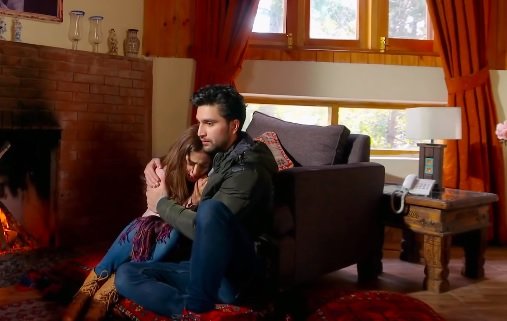
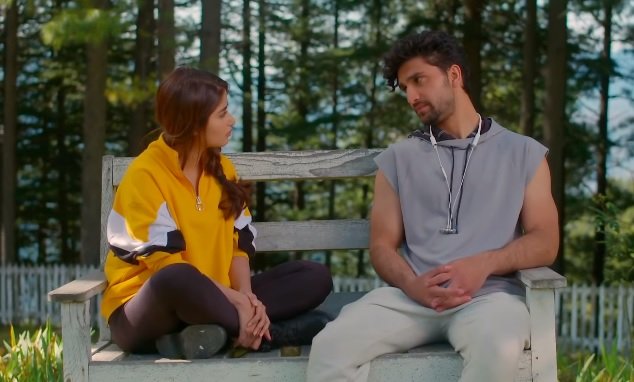
    Pakistani drama makers including the actors, directors, writers or producers rarely venture into the thriller/mystery genre because they are usually a gamble. The usual love triangles or saas-bahu storylines are tried, tested and safe which is why they deem it better to pour their energies and resources into that. Amidst all such stories, Ahad Raza Mir and Sajal Aly’s Ye Dil Mera is like a breath of fresh air. The drama doesn’t have the usual ingredients of a masala entertainer but the way the story unfolds and the scenes transition make it a compelling and exciting watch.

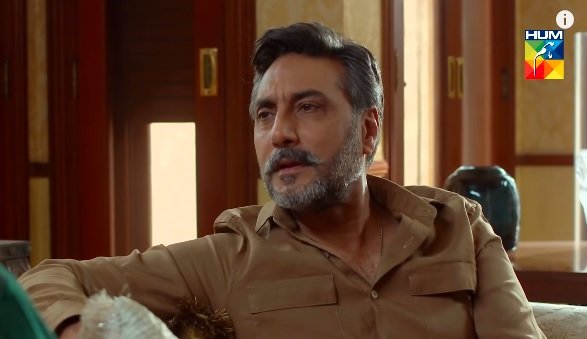
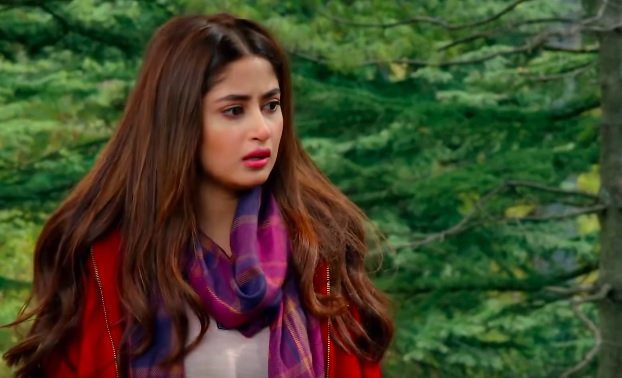
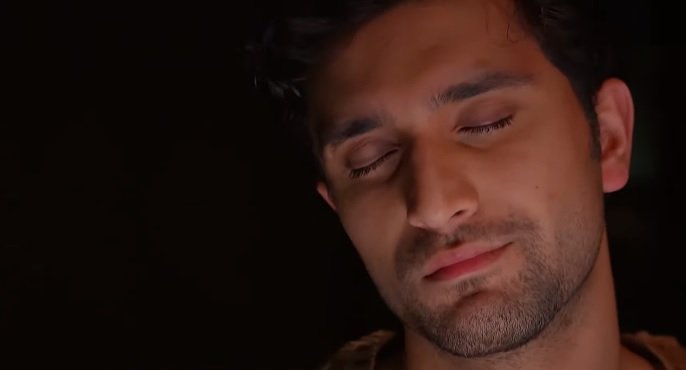
    Ye Dil Mera is centred around Noor ul Ain, Aina (Sajal Aly) who is the only daughter of Mir Farooq Zaman (Adnan Siddiqui). The father dotes on his daughter and ensures that she is always wrapped in a protective bubble. Aina is married to Amaanullah (Ahad Raza Mir), who has a dark past. Amaan’s character is the desi version of Christian Grey, minus the fetishes. While on the surface of it, all three lead characters lead perfectly, rich lives, it is the multiple layers below the surface that move the plot. Aina suffers from nightmares, reminiscent of a dark past in which her mother was killed when she was very young. Amaan’s parents and sister are also dead and despite being a successful businessman, he is a bitter person. On the other hand, Farooq who appears to be the perfect father leads a double life. All three characters have an intertwined past and the plot is built upon that.

    The script, penned by Farhat Ishtiaq is perhaps the strongest part of the entire drama – it boasts marvellous storytelling which keeps the viewers captivated. Couple that with phenomenal performances and excellent direction (by Aehsun Talish) and you have a top-class product. Though the drama starts typically with boy meeting girl and the two falling in love and drags at a few points, it soon quickly moves to the main plot. Each scene flows into the next and there are no loose ends left untied in any episode. The drama does get predictable at points but the good thing is that the makers haven’t waited till the last episode to reveal all the secrets – those keep unravelling as we go on.

    While the three leads – Sajal, Ahad and Adnan – all have given powerful performances, Ahad stole the show. The way he jumps from one mood into another with utmost ease is a treat to watch. His character has multiple layers and shades and Ahad executes each one of them perfectly. And of course, how can we forget to mention Sajal and Ahad’s chemistry – it’s lit as always.

    One thing I’d like to add before finishing the review is that I liked how there was no shame attached to having mental problems. At several points through the drama, the lead characters encourage each other to seek proper treatment for the problems they are facing. The therapist, Dr has also been shown as a pleasant character.

    If you enjoyed Yakeen Ka Safar, chances are that you will love Ye Dil Mera as well. And given that 23 episodes of the drama have aired so far and we’re all self-isolating at home, it’s a good idea to start binge-watching the drama.

  • Are you kidding us, Khan Sahib?

    Are you kidding us, Khan Sahib?

    Coronavirus pandemic has changed the dynamics of the entire world. Self-isolation, a concept most of us are not familiar with, will slowly but surely become necessary in the coming days. As Canadian Prime Minister (PM) Justin Trudeau said, “For a little while, this will be our new normal.”

    But while Trudeau and very few other world leaders, including New Zealand’s Jacinda Ardern, declare war on the pandemic, others, among whom is PM Imran Khan, still don’t appear to be understanding the gravity of the situation at hand.

    Four coronavirus patients have died in Pakistan — three in Khyber Pakhtunkhwa (KP) and one in Sindh. The number of cases is rapidly increasing (645 in less than a month), and if a nationwide lockdown isn’t put in place, it will continue to rise exponentially.

    After sticking to his mantra of ‘ghabrana nahi hai [don’t panic]’ for the past few days, the premier does no longer seem very sure if the masses should panic or not.

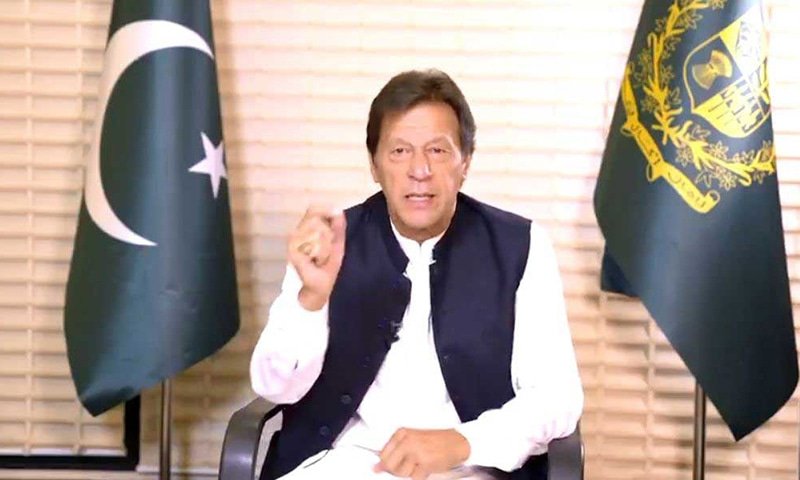
    “Pakistan cannot afford to impose a total lockdown. 25% of the people in the country live below the poverty line,” PM Imran said in his second address to the nation in three days on Sunday. “What will happen to them if I go ahead with the lockdown?”

    The premier added that if the economic situation of the country had been like that of Italy and China, he would have thought about imposing a lockdown. “Let me tell you what a lockdown is. A lockdown means putting a curfew and restricting people to their homes with the military on the streets,” he said.

    The situation escalated in Italy and China, Khan Sahib, evidently because the authorities didn’t impose a lockdown until it was too late.

    Your address to the nation and recent interaction with journalists were not exactly what we had hoped for. We understand you are worried about the poor, the daily wagers, the economy and many other things.

    But…

    After shutting down as much as the provincial governments already have, after the closure of educational institutions and the bearish trend in PSX amid global sell-out on COVID-19 fears, what further closures would a total lockdown entail?

    All international air operations are already closed. Most borders are closed. Wedding halls, shopping malls, restaurants are already shut. Massive unemployment has already been created. Moving towards total lockdown at this stage will presumably have a very little marginal impact.

    Is it paralysis of analysis which appears to be the hallmark of decision-making behind closed doors in Islamabad for quite some time now?

    In case of a total lockdown, what matters the most is taking care of the neglected segments of society – that they keep on receiving life support cash allowances or food aid. For starters, 50% of the budget of both civil and defence annual development programmes should be placed in a welfare account for such activities.

    Welfare… isn’t that what you promised, Khan Sahib?

    We know that a lockdown or delaying a lockdown is akin to be caught between a rock and a hard place. We understand that this is an immensely difficult and unforeseen situation but the government must act fast.

    Let’s learn from the mistakes made by countries that are the worst-hit by the new coronavirus, and try not to repeat them. 

    Lockdown does not mean that coronavirus cases will end, but it will definitely flatten the curve. This is what Pakistan needs to do. Our healthcare facilities are not equipped to deal with the impending crisis.

  • A health emergency

    A health emergency

    Coronavirus has taken the world by storm. The World Health Organization (WHO) says that Europe is now a new epicentre of the global pandemic. According to WHO, more than 132,500 people have been diagnosed with COVID-19 in 123 countries around the world, among which is Pakistan with 29 cases in Sindh, Gilgit-Baltistan and Islamabad.

    At least one infected patient is in a critical condition, reports have claimed.

    “Europe has now become the epicentre of the pandemic, with more reported cases and deaths than the rest of the world combined, apart from China,” said WHO Director General Dr Tedros Adhanom Ghebreyesus. “More cases are now being reported every day than were reported in China at the height of its epidemic.”

    The United States (US) has declared a national emergency due to the spread of coronavirus. Pakistan, too, is taking some measures now that the pandemic is spreading across the globe. Sindh government has been the most vigilant and its health department has proven to be the most efficient during the crisis.

    The way the Sindh government is monitoring people travelling from abroad to setting up isolation wards to test those with coronavirus symptoms is something all other provinces should emulate.

    During his visit to Karachi, WHO country representative in Pakistan, Dr Palitha Gunarathna Mahipala, said that Pakistan had in time come up with one of the world’s best national response programmes against the new coronavirus and it is being implemented very effectively. While there is a fear that other provinces are not equally proactive, which might lead to serious consequences, the good thing is that the federal government is taking the issue seriously and has ordered that educational institutions, cinemas and even marriage halls will remain closed for three weeks.

    Religious congregations and sports and cultural festivals have also been suspended for three weeks. PSL matches will take place without spectators while some foreign players have also left. We need more diagnostic labs as we only have seven at the moment in Pakistan, which can conduct up to 15,000 tests. If the suspected number of cases goes up, we need to be ready. While public gatherings are banned, we hope that the people take the coronavirus outbreak seriously as all of us are at risk.

    We need to take preventive measures in order to keep ourselves and our loved ones safe.

  • Why we march

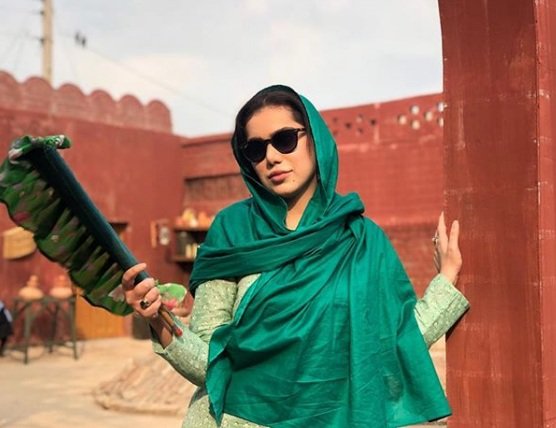
    International Women’s Day is celebrated across the globe on March 8. Pakistan, too, marks the day as women from all walks of life take out rallies and marches across the country to ask for equal rights.

    Aurat March, a rally organised by women, is being held across several cities of Pakistan today. 

    Despite threats from the Jamiat Ulema-e-Islam-Fazl (JUI-F), Lal Masjid affiliates and other right-wing elements, women have not backed down and will continue marching, bearing the flag of equality.

    As for why we march; we march for those 1,000 women killed in the name of “honour” every year. We march because domestic violence has been normalised in our society. We march because more than a thousand Christian and Hindu girls are forcefully converted and then married off to Muslim men against their will. We march because only 5-10 per cent of women have land in their own name. We march because 70,000 young girls die during childbirth as a result of underage marriages. We march because acid attack victims are shunned by society. We march because rape survivors are shamed into silence. We march so that victims of sexual harassment do not fear speaking out. We march because freedom should win over fear. We march because misogynists like Khalilur Rehman Qamar are glorified by our media while strong women like Marvi Sirmed are asked to tone down their behaviour. 

    Women were told to change or tone down the slogans of Aurat March. They are being threatened that if this is how they ask for their rights, they will not be given anything. Well, enough! We will ourselves decide how to speak, how to walk, how to sit, what to wear, where to go, what to do. When a woman says no, it means NO! 

    When we say ‘Mera Jism, Meri Marzi’, we speak for those nameless rape survivors, for those who are victims of domestic violence, for those who are victims of sexual violence, for those whose reproductive health rights have been snatched away, for those women who continue to suffer silently because society does not give them a chance or a way out. 

    We will march and continue to fight patriarchy every step of the way. Without equality, there is no going forward. It is not an easy task but our women have never let us down. From Fatima Jinnah to Benazir Bhutto, from Asma Jahangir to Malala Yousafzai, our women have continued to make us proud. We are proud of each and every one of our women. More power to you. Happy Women’s Day!

  • Emmad Irfani is a rebel with a cause in his debut film ‘Gawah Rehna’

    Emmad Irfani is a rebel with a cause in his debut film ‘Gawah Rehna’

    The first look of Emmad Irfani and Ghana Ali’s Gawah Rehna based on the Khilafat Movement is out.

    Emmad, who stole the audiences with his performance in Cheekh, shared the poster on Instagram.

    https://www.instagram.com/p/B9ZrVJZn664/

    According to the film’s official social media account, Gawah Rehna “is a story celebrating our history and our unsung heroes.” It is set in the 1900s when the Muslims of the subcontinent stood up against the British Raj and started the Khilafat Movement.

    “It is a story of courage, hope and resilience against incredible odds and that’s why it will make its viewers proud of their history and their heroes who stood up against tyranny and injustice.”

    The film is written and directed by Tahir Mahmood who has served as an official of the Foreign Service in Turkey. It will be released in Pakistan and Turkey both. Earlier, it was being reported that the film is a joint production with Turkey but Emmad later clarified that the film is entirely a local production and that it will be released in Turkey. Veteran actor Qavi Khan is also an integral part of the film. An official release date has not been announced.

    Meanwhile, speaking exclusively to The Current, Emmad shared that the vision for the film came about when the director was living in Turkey. Mahmood was intrigued by the respect the Turks have for the Pakistanis and that is what motivated him to study the history of the two countries. He found that the brotherly ties of both the countries date back to the early twentieth century and the findings fascinated so much that he decided to make a film on it to further the ties between the two countries as well as highlight them.

    Talking about his own character, Emmad said that his character belongs to interior Punjab and through the course of the film realises his life goal and purpose.

    When asked what motivated him to do this project, given that it is his debut film, Emmad said that he wanted to highlight Pakistan’s history and that films are a very powerful medium to do that.

    “Much of the subcontinent’s history has been presented to the world through Bollywood. Pakistan’s point of view is not known as such,” the actor remarked, adding that our history it is imperative for the world to see our history.

    Irfani also said that the strong script and the director’s blind faith and passion is what motivated him even further.

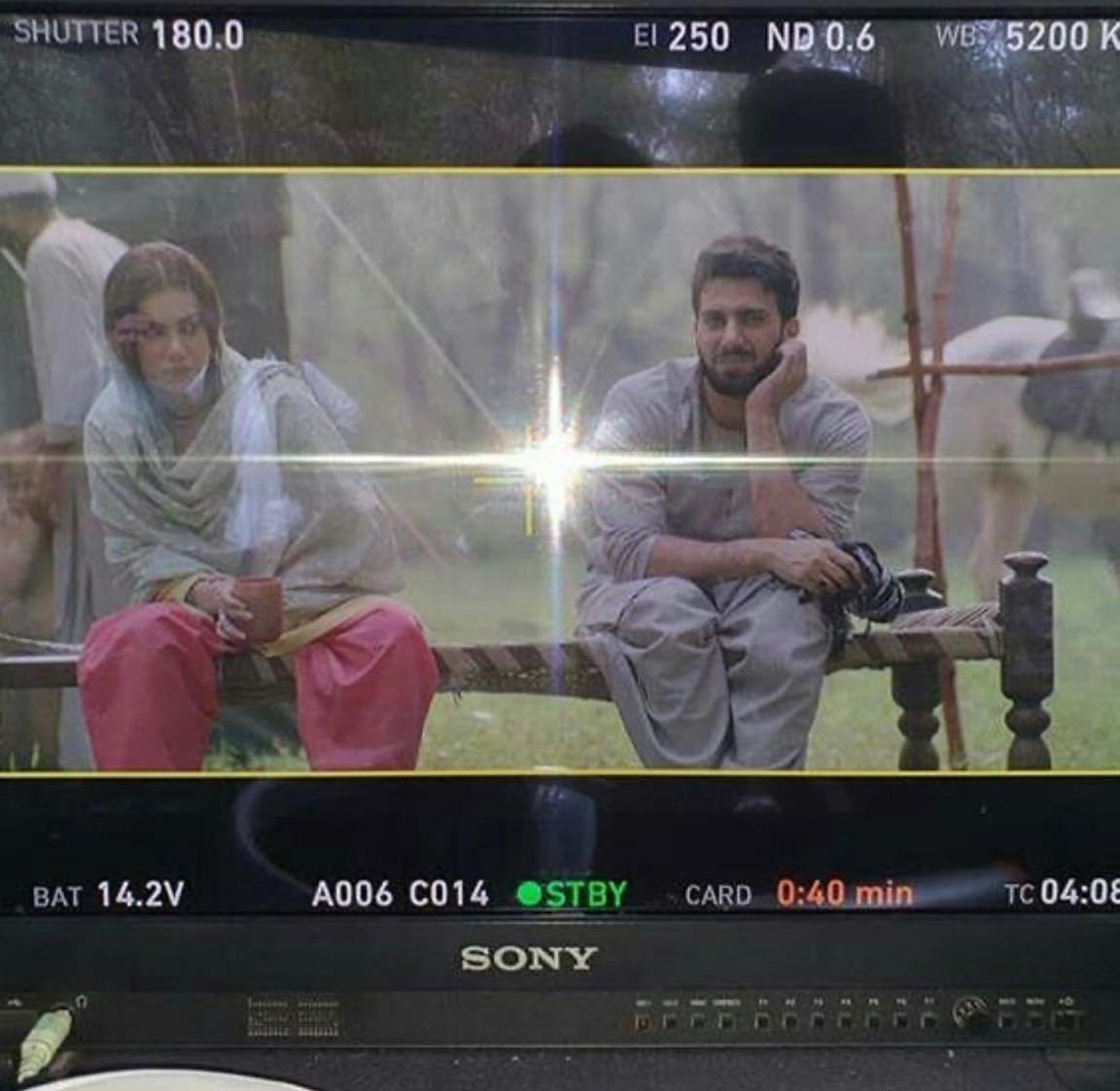
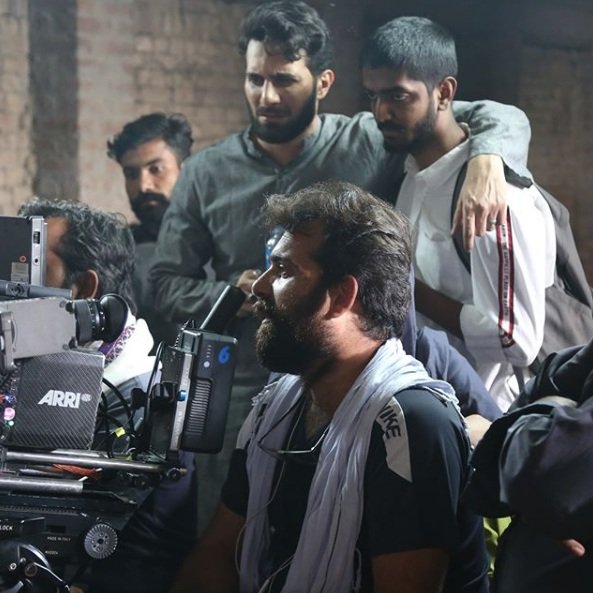
    Here are some BTS shots from the sets of the film.

  • Vanity projects and double standards

    Women in public life are judged on what they wear rather than what they do.”

    The runup to International Women’s Day in Pakistan has been marked by a heated national debate: not about the sorry state of women’s status in the country, but about the witty and audacious slogans raised in connection with Sunday’s Aurat March.

    The absurdity of the debate about Aurat March is characterised by the terrible misogyny it reveals in terms of women’s choices, particularly in relation to their bodies and their appearance. And here it is pertinent to take a step back and recognise just how deeply ingrained preconceptions about women’s appearance and sartorial choices are in Pakistan — and how, to some extent, all of us are guilty of this.

    For me, the most telling thing is the different way in which male and female politicians are regarded and judged and the very different standards to which they are held.

    Most young people will not remember this, but not so long ago, the Sharif brothers sported gleaming pates. Then over a decade ago, they had whatever work is required done and then they sprouted hair on the top of their heads. Nobody really commented on this even though it was essentially a vanity undertaking.

    I wrote about this on my blog on BBC Urdu, pointing out the complete double standards at play: Benazir Bhutto’s appearance had been routinely criticised and her clothes, shoes, gait, hairdo and makeup were something that nearly everybody in Pakistan — men or women — would hold forth upon. My blog which was titled Naye Baal, Nayee Zindagi pointed this out but much of the feedback it generated had an outraged tone telling me how dare I “criticise” these wonderful men — even though all I was doing was pointing out the double standards.

    “Nearly every woman politician in Pakistan is careful to cover her head in public and to look modest, yet the Vawdas and Khans in the political arena will wear tight jeans and designer garb or any other less-than-occasion-appropriate attire yet arouse no comment and suffer no public backlash at all.”

    Bhutto was the first woman elected Muslim prime minister in the world and she achieved this at the very young age of 35. Yet, most of the public discourse around her was less about her policies or her politics and more about her clothes or her looks. People discussed, ad infinitum, the possibility that she might have had plastic surgery as if it was a matter of grave national importance. There was endless holding forth upon this by armchair experts who insisted, authoritatively, that her face looked different than in her early photos. Implicit in all of this commentary was the idea that Bhutto was somehow a terrible, vain and wealthy person if she had had any “work” done.

    Yet, when the Sharifs got new hair, nobody even batted an eyelid.

    Now fast forward to the present day where botox and hair regrowth procedures are becoming more and more common in Pakistan. Notice how little comment there is when a male politician or TV personality appears with a suddenly creaseless forehead or with jet black hair. No surprise, no comment, no embarrassment.

    The prime minister, Imran Khan, had a small bald patch about 14 years ago, but now he periodically appears with slightly thicker hair and nobody seems to comment on it or on any small changes to his face. I’m not saying that we need to comment on people’s appearance or their choices about that appearance, I’m just pointing out that the prevalent view is that men can do what they want but women’s appearance or clothes are considered something that everybody simply MUST criticise.

    These attitudes are, of course, linked up with a primitive social view that “honour” reposes in the body of the woman and she is a possession that might be “stolen” or “lost”. As a possession, she must be controlled by a man because there is a perception that if she is “free”, society will collapse and “immorality” or “fahashi” will prevail.

    Nearly every woman politician in Pakistan is careful to cover her head in public and to look modest, yet the Vawdas and Khans in the political arena will wear tight jeans and designer garb or any other less-than-occasion-appropriate attire yet arouse no comment and suffer no public backlash at all. Educational institutions will have a very strict dress code and rules for females, but be lenient with the males. It is always the women who have to be conscious of what they wear, how they walk or who they speak to.

    Times are changing, but there still is a long way to go because the people who are guilty of this sort of double standards are not just the chauvinists or the religious right — it is nearly everyone. These attitudes are now normalised and are so ingrained in our society that even educated, reasonable people — both men and women – are guilty of such behaviour. But the more aware of these double standards we can become, the more we will be able to overcome them.

  • Amavi: All hype or good food?

    Hidden in the heart of Defence, Lahore is a quaint little cafe, Amavi. The restaurant’s owner Maira has been in the food business for a while now, working for other cafes and restaurants, before taking the leap and opening up her own little space. Maira’s expertise lies in desserts and she has trained herself professionally in the department.

    The patisserie’s interior is beautifully done with a lot of attention paid to detail. The chairs are done with deep green velvet upholstery while there are small artsy details on the tables. There is marble flooring and touches of gold, pink and black here and there. It’s almost like entering a painting. Amavi is the sort of place you’d want to dress up and go.

    When I went there, the place was buzzing with people. Initially, Amavi was a small space with about two to three tables but given the phenomenal success, the owners had to expand it to entertain more visitors.

    Now onto the food. The food was a bit different from the usual palettes, for example, their Za’Atar and Burrata Pizza – Za’Atar is a spice while Burrata is fresh Italian cow milk cheese made from mozzarella and cream. I’ve had Burrata Salad in Karachi but I haven’t come across anything like this before and I was fairly impressed with this dish. It was actually pretty yummy.

    Za’Atar and Burrata Pizza

    Their Salt Beef Toastie with Gouda Cheese and Caramelised Onions was another one of my favourites. Apart from that their Fish and Chips were good too and I also tried their bestselling Buttermilk Chicken Burger which was an absolute treat. The chicken was soft, tender and full of flavour.

    Fish and Chips

    The only thing I did not like was the French Onion Soup.

    I didn’t really try the desserts so I can’t comment on that but a lot of people there were mostly having desserts and coffee, which by the way was also good.

    I will definitely be going to Amavi again to try the dishes I didn’t, especially the desserts. For me, the patisserie is a cute and different addition to the Lahore food scene.

  • Attending a PSL match? Five things you need to know

    The fifth edition of the Pakistan Super League is officially underway and with all matches scheduled to be played in Pakistan, excitements levels are high. Lahore, Rawalpindi, Karachi, and Multan are hosting matches over the next one month and while there are some of us who are excited to witness the action live, there are others who are not looking forward to the roadblocks and traffic diversions. Nonetheless, it is likely that everyone will end up attending at least one match in the stadium.

    To make life easier, The Current has compiled a match guide to help make your life easier.

    Start ahead

    If you want to catch all the action from the start to the end, start ahead. Getting to the stadium and your enclosure will take some time because of the long walk to the stadium and several security checks along the way. If you’re someone who just wants to experience the thrill, especially at the end of the match, then time is not an issue.

    Wear comfortable clothes and shoes

    Considering that there will be a lot of walking involved, wear comfortable shoes and clothes. Comfortable shoes especially are a must.

    Carry a light-weight jacket with you

    The ground is big and open and it can get chilly towards the end of the match. Best to carry a jacket or a light sweater so that you don’t feel cold.

    Don’t carry unnecessary items

    Keep your bags and pockets light and don’t carry unnecessary items because you never know what is not allowed to be taken inside the stadium – I lost my power bank at the security checkpoint. Perfumes and liquid items, especially, are not allowed inside the stadium.

    Don’t litter or leave your garbage inside the stadiums

    Dustbins are available everywhere so properly dispose your garbage and do not leave any wrappers or tissues behind.

    Make sure you carry:
    Your ticket, your original CNIC, and a photocopy of the CNIC of the person whose name is mentioned on the ticket (if somebody else among your family/friends bought the ticket). Mobile phones are allowed but other