Author: optimum_tech

  • Cricket trumps all

    Pakistan Super League (PSL) 2020 is the fifth season of the Twenty20 cricket league established by the Pakistan Cricket Board (PCB). And for the first time, all of its matches are being held in Pakistan.

    After the Mumbai attack in November 2008, Indian franchise owners refused to include Pakistani cricketers in the Indian Premier League (IPL) due to pressure from the Board of Control for Cricket in India (BCCI). Pakistan had been working on its own premier league for a while, but the idea of PSL was only materialised under the leadership of former PCB chairman Najam Sethi.

    The first season of PSL was a huge hit and led to an interest in all cricketing countries. PSL opening and closing ceremonies, as well as all the matches, have had record-breaking numbers on the league’s digital platforms. This year, the numbers are said to be even more than the four previous seasons.

    All six teams have their unique qualities as well as strengths and weaknesses. Every cricketing fan in Pakistan has an opinion about these teams and has his or her favourites. While we’ve only had PSL semi-finals and finals in the country in the past, this year’s tournament is even more special with all matches being played here in a development that we had not seen in a long time.

    Although one would think it would lead to full houses in all stadia, only Multan has seen housefuls at matches. Karachi’s turnout has not been that bad and same goes for Rawalpindi, but the most disappointing turnout has been in Lahore.

    Whether it was due to the security arrangements and road closures, one cannot say for sure, but we think Pakistanis should come out in full force to support the PSL. There are 36 international players who are in the country and this gives Pakistan cricket a huge boost as it takes away some of the baggage that we have carried since the terror attack on the Sri Lankan cricket team in 2009.

    To some people, shutting down roads on match days seems like a hassle, but to be fair, this is the only way forward to bring international cricket back to Pakistan. Hopefully, in the years to come, we would not be needing this much security, but for now, we have to live with the discomfort that for the good of cricket and Pakistan, doesn’t seem much.

    Tayyar Ho? Tayyar Hain!

  • Back to the 40s?

    Back to the 40s?

    While violence against the Muslim community of India is no longer an internal secret of our neighbour, it would be nothing less than hypocrisy to turn a blind eye towards the quality of life of minorities in Pakistan where a majority of them is equally vulnerable due to intolerance rooted in religion or ethnicity.

    When Saadat Hasan Manto finally decided to leave India amid growing communal violence back in the 40s, Indian actor Sunder Shyam Chadda wasn’t very happy with his friend’s decision.

    “Are you going to Pakistan because you think you are a Muslim?” Shyam asked Manto as the former removed the bottle of alcohol from their table.

    “I am a Muslim enough to get killed here,” Manto replied.

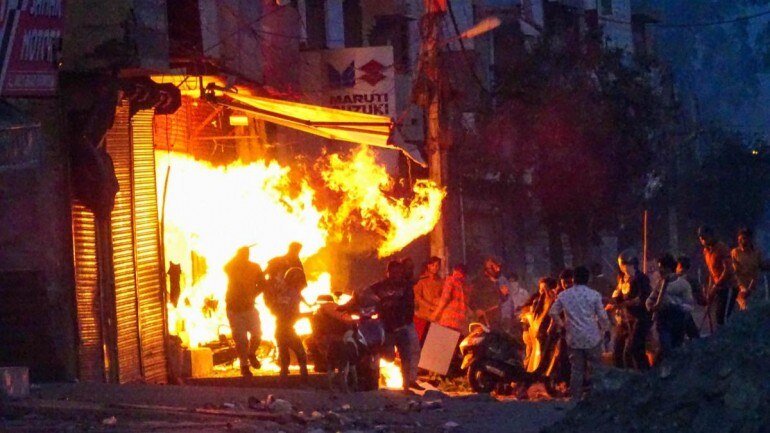
    Seven decades later — in the year 2020 — the world’s most populous democracy, under fascist Narendra Modi’s Bharatiya Janata Party (BJP), witnesses similar circumstances as those belonging to India’s minority communities, flee their homes in order to save their lives.

    The recent round of violence against Muslims in India by extremist Hindutva mobs has been the worst with over 40 innocent people losing their lives, mosques being set ablaze and properties of New Delhi’s Muslims being vandalised.

    The situation persisting across Pakistan’s eastern boundaries can be best explained through a mention of suzerainty, under which a single ideology asserts and maintains paramountcy or supremacy over the rest. But the problem in India is further accentuated by the fact that the state’s monopoly over violence has silently been delivered to the goons of the ruling BJP with the promise of targeting Muslims regardless of if they are at home or at a mosque.

    While violence against the Muslim community of India is no longer an internal secret of our neighbour, it would be nothing less than hypocrisy to turn a blind eye towards the quality of life of minorities in Pakistan where a majority of them is equally vulnerable due to intolerance rooted in religion or ethnicity.

    Although analyses suggest the factors that have led to the current upheaval in India are manifold, our focus, for now, will remain on religion since outside India, its importance has been rightly overshadowed by unfolding the neo-liberal agenda New Delhi is trying to implement; for which Hindutva serves as the best medium, and that too in disguise.

    It is nothing but Modi’s model from Gujarat, which is now expanding to Delhi and Ashoknagar.

    Nonetheless, the role of religion in itself cannot be undermined especially in the Indian subcontinent as both in Pakistan and India, religion has remained closely intertwined with politics since even before the partition. And from world-acclaimed statesman Gandhi to today’s fascist Modi, the combination has proved to be lethal while resulting in violence almost every time.

    The use of religion on state-level despite having a secular constitution is to achieve a purposive social order, which in other words is ‘national interest’ based on the exclusion of Muslims and inclusion of corporate and liberal values in society, surprisingly through the conservative ideology of RSS.

    Regardless of the intention behind employing religion in politics, its implications have not been desirable for the general masses, which brings into question the basic understanding of religion. Apart from politics, when religion is examined alone, the underlying principle of religion generally is expounded as that of peace and prosperity.

    Having said that, one inadvertently subscribes to the root word of religion as ‘lig’ and not ‘leg’ where the former means ‘to bind’ while the latter means ‘to gather.’

    Contrary to the broader agreement of religion to be in the greater interest of mankind by making people dependent on each other, the current predominant form of Hinduism in India is that of a certain mindset of people – the Rashtriya Swayamsevak Sangh (RSS) — coming together to serve a ‘holy purpose’ which in this case has become a national interest of BJP’s India.

    In this pretext, the use of religion on state-level despite having a secular constitution is to achieve a purposive social order, which in other words is ‘national interest’ based on the exclusion of Muslims and inclusion of corporate and liberal values in society, surprisingly through the conservative ideology of RSS, which ultimately benefits a handful of people in India by increasing their wealth and stay in power.

    Therefore, while mentioning the Citizenship Amendment Act (CAA), one should always mention its far-reaching effects in the lives of minorities other than Muslims, including Hindus with a working-class background.

  • Day 3: A weekend of ideas, stories and books

    Day 3: A weekend of ideas, stories and books

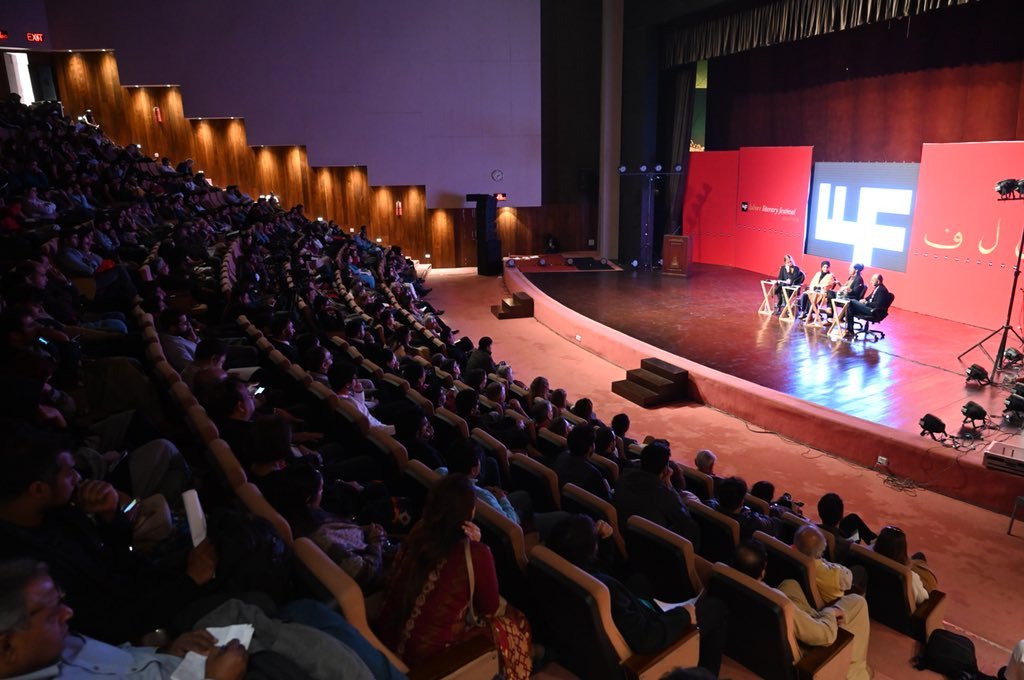
    There’s much to see on the third and last day of the Lahore Literary Festival (LLF) that I think I’ll be session hopping because the panels I’m interested in will unfortunately overlap – unless of course I’m so glued to one that I’m not tempted to listen to another at the same time.

    In hall one, historian and founder of the Jaipur Literary Festival, William Dalrymple will be presenting his latest book, The Anarchy: Post-Mughal Politics which given his past writings promises to be a stimulating session on the rise and fall of the East India Company and the dangers of corporate greed. So that’s between 10 and 11 am though another panel focused on new writing from Pakistan discussing the Zeenat Haroon Rashid Prize would also be interesting because as an editor I’d be curious to read and explore contemporary fiction and nonfiction coming out of Pakistan. Another panel — yet agin at the same time slot though timely given the Lahore Biennale is still on in the city until February 29 so go see that if you can — is on art in public places with French museum consultant, Alexandre Colliex in conversation with Zahra Rashid Khan, the curator of Foundation Divvy Art. With the biennale showcasing artists from Pakistan and abroad with works displayed in public spaces including museums, historical sites (Lahore Fort) and old marketplaces, this session is important as a way to discuss whether a city such as Lahore interested to conserve its art and history is able to do so with its resources or does it need attention from the experts. Also, this one should be interesting because Colliex is a roving museum advisor to governments in the Global South; he’s been involved in the Shenzhen government’s new Museum of Contemporary Art and Planning Exhibition, for example.

    The next hour (11:15-12:15pm) has two slotted sessions that will definitely pique everyones’ interest as both panels are relevant to important debates that interest us. So you’ll be spoilt for choice in this time slot. A discussion of how traditional media outlets are coping with the rise of social media will definitely bring some important insights to the fore given the panelists who know the digital medium well. Unfortunately newspapers literally shrinking in size the world over given the rise of digital platforms is clearly evident. Even 24/7 TV now left behind as news breaks on social media and political debates have twitter as their next battle zone, so we see it is the beginning of the end for print (as the demise of Herald and Newsline magazines have demonstrated)— unless it reinvents its model and its content dissemination methods. The Current’s founder, Marium Chaudhry will be on this panel so go see what she says about an increasing younger readership and their interests and shares her insight into how digital news mediums will capture the market share.

    Dare I say the session in hall 2 with American-Iranian analyst and a former US State Department advisor, Vali Nasr and Ambassador Riaz Mohammad Khan in conversation with journalist Ahmed Rashid will be a big draw in this time slot because firstly, it’s very pertinent to current political challenges in Afghanistan and second, both men have first-hand experience in Afghanistan — Nasr was part of the team with Richard Holbrooke that recommended negotiations with the Taliban instead of opting for a military solution during the Obama administration; and Khan, the author of Pakistan-Afghanistan: The Way Forward for Bilateral Relations and a former foreign secretary has vast experience in this region.

    After lunch, (1:30-2:30pm) and on a lighter note I’ll go listen to author and police officer, Omar Shahid Hamid on cricket, citizenship and the post-colonial narrative. I’ve read Omar’s latest novel, The Fix, so I highly recommend this session with Sri Lankan author, Romesh Gunesekera. Happening at the same time, if you’re interested in how Urdu reads in translation, then go listen to Spanish writer, Rocio Moriones Alonso, translator of the worlds of Manto and Fahmida Riaz — appears to be an ambitious project worthy of the spotlight.

    Mahira Khan and journalist Fifi Haroon will be up next at 2:45pm talking about Pakistan’s new cinematic wave — I’d recommend getting your seat in time because even though Hall 1 will squeeze everyone in, Mahira is the superstar for this weekend. I’m going to see what she has to say considering she is also an UN advocate for refugees. At the same time, there’s a a session on Punjabi drama and more art talk — this year the curators have widened the parameters of the festival to bring in the best.

    As they say, leave the best for last. However, in this instance, the first because the inaugural session on Friday will have presented an interview with Nobel Laureate Orhan Pamuk. [Book suggestion: If you have an interest in his works and in Turkey, The Last Word bookshop has copies of an illustrated version of his novel, Istanbul, with old black and white photographs of the city when Pamuk was an adolescent which is worth buying and getting signed cause it’s like a collector’s copy.] The last session (4-5pm) will see Pamuk and Mohsin Hamid (The Reluctant Fundamentalist; Moth Smoke) talking about how literature can shape a more democratic world which I know will be an engrossing one when both writers are adept at telling stories highlighting pressing sociopolitical issues through their fiction. It will be interesting to see if they have similar or divergent views — is fiction essentially a voice for the voiceless? For writers, it all starts with ideas and stories and telling it as you experience and imagine.

    Eight years on and LLF is still thinking, embracing a wider global vision and themes abound: freedom of expression; Afghanistan and Taliban negotiations; India, Kashmir; cricket; new Pakistani cinema; children’s story books; Urdu literature in Spanish and more. For me, it’s all about books, writers and thinking. Writers can take our reality and turn that into fiction something our politicians — and even journalists forcibly muzzled and strapped in current times — often don’t dare to do.

  • Celebrating culture

    The eighth edition of the Lahore Literary Festival (LLF) is taking place this weekend. It is refreshing to see cultural events like the LLF take place in the country because we are fast becoming a society that doesn’t celebrate culture and critical thinking anymore.

    From Orhan Pamuk to William Dalrymple, from Audrey Truschke to Fatima Bhutto, from Omar Shahid Hamid to Vali Nasr, the line-up at the LLF is brilliant. It was good to see on the first day sessions discussing journalist integrity and the poetry of Pashtun poet Rehman Baba.

    Pakistanis boast generosity, kindness and hospitality. Yet there is something we are slowly but surely losing – tolerance. When movies like Zindagi Tamasha cannot be screened and Urdu translations of fictional books are not allowed, we should know that there’s something wrong. Neither do we entertain critical thinking nor do we tolerate difference of opinion. Also, we are quite a judgemental lot. 

    Last month, Fahad Mirza posted a picture of his European holiday with his wife Sarwat Gilani. They were kissing in the picture. Comments on social media under that picture were mostly so negative and vile that Gilani had to ask haters to unfollow her if they hated her so much. Imagine that a picture displaying affection between a husband and wife on social media could lead to such negativity, little wonder then that victims of sexual harassment get the sort of abuse that they do online and offline.

    Recently, we saw our parliamentary debates turn rowdy. The level of debates was not just low but downright personal. From Abdul Qadir Patel’s innuendo-laden speech targeting Murad Saeed to Saeed’s own abusive speech about “dogs” ruling Sindh, the level of discourse in parliament was quite disgraceful. If the people’s representatives can stoop so low, what kind of message are we giving to our citizens? No wonder then that peaceful protestors are booked under sedition charges and the prime minister thinks Maulana Fazlur Rehman should be tried for high treason under Article 6 of the constitution.

    FIA issued a statement saying that columnist Gul Bukhari will be charged with terrorism and her property confiscated if she doesn’t appear before the agency in Pakistan within 30 days. And this is because the government doesn’t like Bukhari’s tweets. One doesn’t have to agree with Bukhari’s tweets, but since when has criticism become terrorism? This is a country where terrorist Ehsanullah Ehsan escapes and flees to Turkey while the government remains silent except for interior minister’s confirmation – after over a week – but the same wants to regulate social media by asking tech companies to open their offices in Pakistan and share data of users the government thinks are making anti-state state?

    Intolerance on social media is at another level. If you support ‘ABC’ party, ‘XYZ’ party’s supporters will call you names we can only hope they never take in front of their families. Difference of opinion is not tolerated anymore – both online and offline. Thus to have literary festivals like the LLF, which celebrate critical thinking and have discussions on culture, arts, poetry and literature, is a blow of fresh air.

  • What you should be doing on Day Two of the LLF

    What you should be doing on Day Two of the LLF

    The Lahore Literary Festival at Alhamra was launched on a beautiful day with thoughtfully presented sessions. For what you should be doing on Day Two of the three day event, the founder of The Writing Room, one of Pakistan’s only writing studios that offer creative writing workshops, Mariam Tareen tells us about what sessions you should be attending.

    10AM -11AM: HALL 2: Mining Conflict: Writing on Life in a Turbulent World

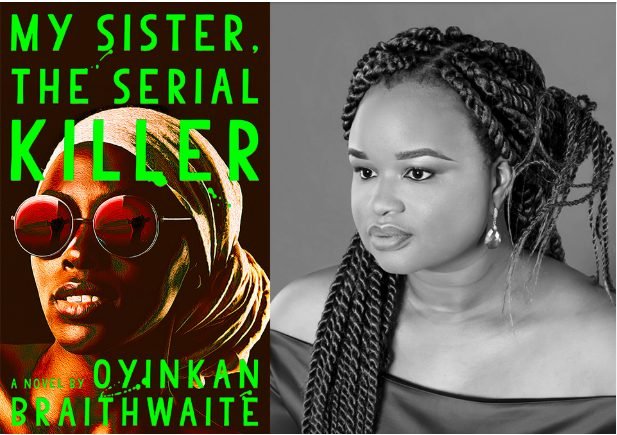
    This session is the best of what LLF has to offer. When else can you expect to see Nigerian writer Oyinkan Braithwaite (author of My Sister the Serial Killer) and Sri Lankan writer Romesh Gunesekera (author of Suncatcher) with our very own Bilal Tanweer (author of The Scatter Here is Too Great) and debut writer Ayesha Baqir (author of Beyond The Fields, a novel set in Southern Punjab) speaking about writing novels today? This stellar foursome is sure to bring some fascinating discussions to the stage about the writing life and the similarities between our turbulent worlds specifically from a shared non-Western viewpoint.

    11:15AM-12:15PM: HALL 3: The Modern: Bombay to Karachi: Exploring art and collectorship post-independence 

    I always try and catch a panel about art at the LLF, and I especially love a panel about the subcontinent’s shared history. Moderated by Salima Hashmi (painter, curator, professor), the panel includes South Asian art specialist and curator Nour Aslam (who was a former head of sales for Bonhams auction house in South Asian art department), artist and art historian Samina Iqbal, and Zehra Jumaboy of the Courtauld Institute, who specializes in contemporary South Asian art. Even if you don’t much about art (like me), you’re bound to learn a lot from these experts. 

    Lunch Break

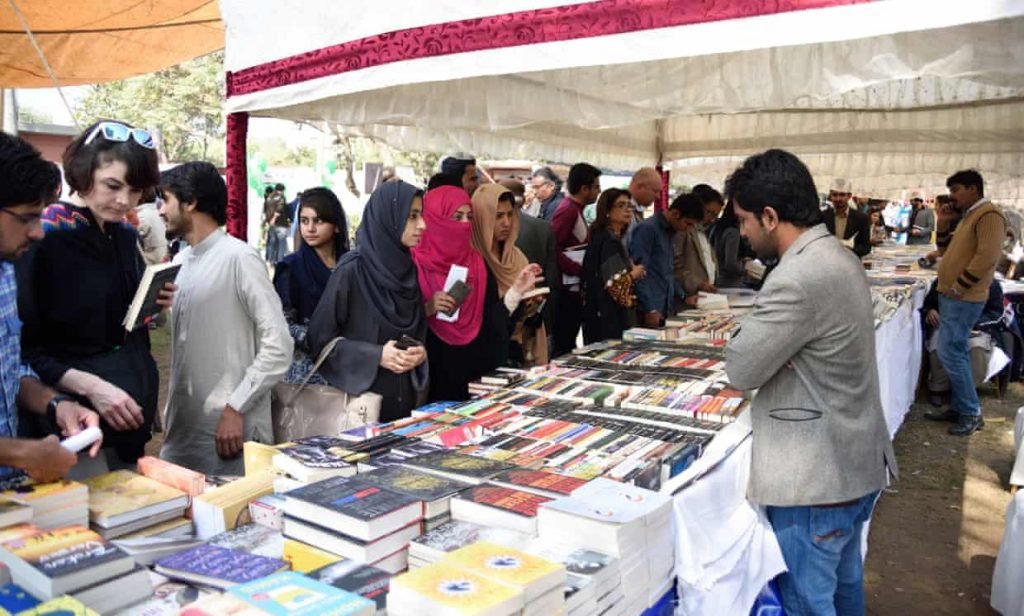
    For lunch, head to Solli’s Pizza and try any one of their quirkily-named, handmade pizzas – Eat Pray Love, War and Pieces of Pepperoni, and Crazy Rich Asians – for a delicious and comforting meal. Depending on how brightly the sun is shining, get yourself a Cappuccino or a chocolate ice cream from nearby Costra Nostra as a pick-me-up before the next session. But before you head there, make it a point to stop by at the bookstores in Hall 1. The organizers have made sure ALL the books being discussed at the festival are available. If you’re lucky, you can get them signed by your favourites.

    1:30PM–2:30PM Book Launch: My Sister, the Serial Killer

    After Orhan Pamuk, I think the biggest surprise of the LLF this year was Nigerian author Oyinkan Braithwaite, the Man Booker Prize longlisted author of My Sister, the Serial Killer. “Sibling loyalty comes under pressure in a Lagos-set debut that mixes crime, love story and family saga,” says the Guardian. I feel that Nigerian writing, similar to Pakistani writing, is having a moment. Most importantly, it’s stepping out beyond what is expected of it by a Western audience, and this book is a big part of that. In her own words, “What I see happening is I see people experimenting more, which, you know, I’m really grateful for because I think Nigeria has been known for literary fiction quite a bit. But now we’re seeing a lot more sci-fi. We’re seeing a lot more crime. We’re seeing fantasy. We’re seeing all sorts of things that – not that they weren’t there before, but they weren’t there in these numbers. So it’s definitely an exciting time.”

    2:45-3:45PM Hall 1: Book Launch: New Kings of the World

    Fatima Bhutto is back again this year with her latest book – New Kings of the World: Dispatches from Bollywood, Dizi, and K-Pop, for which she travelled the globe, exploring cultural movements arising from outside the Western world. Reporting from Istanbul, Dubai, Beirut, Lima and Seoul, Bhutto argues that the global dominance of American pop culture has come to an end, overtaken by Bollywood films, Turkish television shows (dizi), and Korean pop music (K-pop). The book is intelligent, thoughtful and entertaining as I am certain this session, moderated by Fatima Arif, will be too.

    4-5PM: Bigotry Brigade: Where is India Headed?

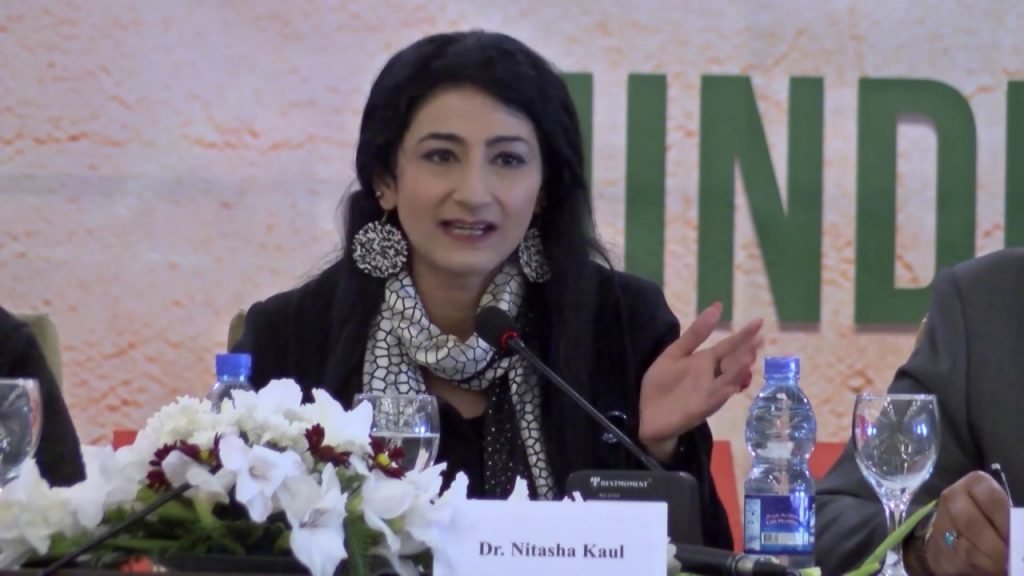
    Kashmiri writer, Dr. Nitasha Kaul

    I usually choose sessions about books to sessions about politics, but I must make an exception here. This panel includes: historian and author Audrey Truschke (she wrote a biography of Aurganzeb) who is very vocal about human rights abuses in contemporary South Asia; Kashmiri novelist Nitasha Kaul (author of Residue and Future Tense); and Iranian-American professor of Middle Eastern Studies and International Affairs and author Vali Nasr, whose most recent book, The Dispensable Nation, deals with the implications of the Obama administration’s foreign policy on American strategic interests. (From 2009 to 2011, he was also the foreign policy adviser to President Obama’s administration.)

    The sessions end at 5PM and since there is a PSL match in town, it’s best to leave as soon as possible to beat all the traffic. The weather promises to be sunny with patchy clouds and a truly wonderful day for sun and literature.

  • Here’s what you should be doing on Day One at the LLF

    Here’s what you should be doing on Day One at the LLF

    Lahore’s annual literary festival returns this weekend (Feb 21-23) at the Alhamra Arts Centre with writers flocking to the historic city of literature and culture to discuss all things literary, political, historical, environmental and cultural. In a ‘post-truth’ age where social media storms have taken over all kinds of debate, this weekend is one where ‘big’ ideas will be discussed (in person; not on twitter — we can’t wait for that real engagement) promising to be provocative, exciting and engaging.

    Orhan Pamuk

    If you’ve read the Turkish writer, Orhan Pamuk, or our very own treasure I.A Rehman’s writings, they often tend to navigate socio-political complexities by giving a voice to the silent and silenced and telling their stories. You’ll be able to listen to both Pamuk and I A Rehman, including an amalgam of the brave and the fearless speak of their experiences and their art. LLF is like that about conversation, ideas and thoughts: it’s the Woodstock of the mind as Bill Clinton had once described the Hay Festival. 

    So here’s what you need to do on the first day of the LLF:

    11AM-1PM: HALL ONE: Opening ceremony followed by, My Name is Red: Ahmed Rashid in conversation with the recipient of the 2006 Nobel Prize in Literature Orhan Pamuk

    It’s going to be a full house at the opening ceremony so come early to get good seats

    Our recommendation is definitely do not miss the opening hour of the festival: one of the brightest stars in the literary galaxy, Nobel literature prize winner, Turkish novelist Orhan Pamuk will be in conversation with journalist Ahmed Rashid (also a long-time patron of LLF and author) discussing his novel, My Name is Red. Be warned as an avid Pamuk reader he doesn’t write for everyone drawn to the elaborate book covers that his novels might demand. But when he laboriously and sumptuously explores the soul of Turkey in his many novels with aesthetic finesse and ingenuity, you’ll find yourself between moments of being enthralled and educated. Just for those who are yet to read Pamuk’s My Name is Red, a four hundred pager, it is a riveting story about the threatened Westernisation of Ottoman pictorial art and a murder.

    TAKE A BREAK:

    Liberty books and Readings will have stalls at the event

    After Pamuk’s session, you’ll have time to take a break, get a coffee or even a quick lunch at various restaurants that’ll have their stalls at the Alhamra. If you’re an out-of-towner, we recommend trying the food at Delish, Cost Nostra and Nairang cafe. (An insider tip for book buyers: bookstore stalls at the venue could run out of popular fiction so we’d suggest a quick visit to Readings, The Last Word or Liberty Books before LLF begins if you’d like to stock up for book signings)

    2:30PM-3:30PM: If you’re interested in global political changes, Vali Nasr, an American-Iranian writer and a former senior advisor with the US State Department (2009-2011) under ambassador Richard Holbrooke will be on a panel with Pakistan’s former representative to the UN, Maleeha Lodhi and Turkish journalist and writer, Kaya Genc. Nasr was at LLF in 2014 and visits Pakistan regularly for lectures and literature festivals. However, we recommend that you attend the session on Pashto mushaira, celebrating the legacy of poet Rehman Baba, which might prove to be fascinating insight into a not-so-often discussed part of Pakistani culture.

    Author Vali Nasr speaking at The Asia Society

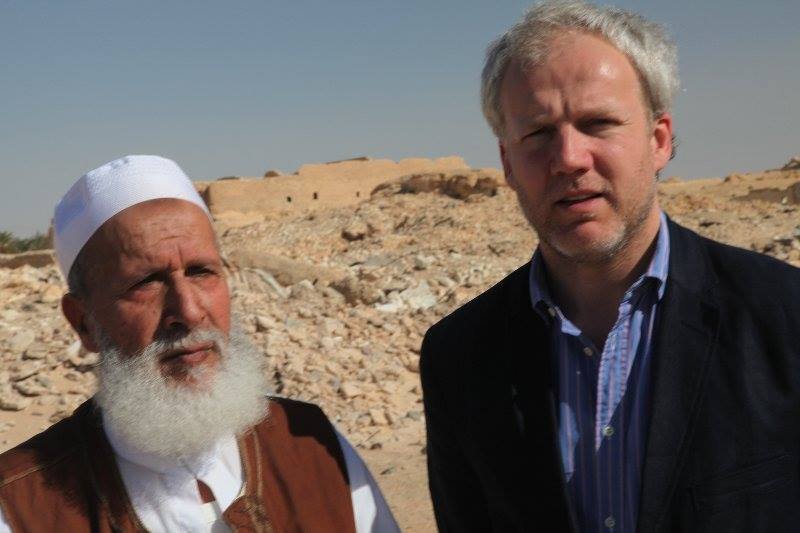
    3:45PM-4:45PM: Five sessions to choose from. If you’re interested in the state of the media in Pakistan and the changing landscape for journalists who continue to report without fear and favour, a session with former Herald and Newsline editors and the indomitable human rights activist, IA Rehman will definitely interest you (also I will be moderating that session so come and say hello). If I wasn’t moderating, I would have enjoyed checking out an illustrated discussion with British travel writer, Justin Marozzi. He will talk about his book Baghdad: City of Peace, City of Blood. There doesn’t seem to be a moderator for that session so it will be interesting to see the author discuss his own book in what is described as an ‘illustrated talk’.

    Justin Marozzi in Libya

    All sessions end at 5 PM to beat the PSL traffic so end the day by looking around, meeting with like-minded people and having a cup of tea on what is expected to be a warm and cloudy day.

  • Islamabad’s Mithas hits a fluffy spot

    Islamabad’s mushrooming restaurant scene comes in small areas. The market at E-7 is home to a few different restaurants: a burger joint, steaks, the food of Hunza and Mithas, a restaurant that serves pretty much everything.

    As The Current’s food reviewer, when they came to Islamabad to interview me, it made sense to do it over food. We walked around, checking out a few restaurants, and settled on trying out the breakfast menu of Islamabad’s Mithas.

    Mithas is an Italian restaurant but like most restaurants in Pakistan, it has a mixed menu of different cuisines.

    We sat outside the rather large space, on a sunny Islamabad afternoon. Even though the table was shaky, which can be rather annoying, as if you’re eating at sea, the server was friendly and helpful. We ordered the eggs and a Chicken Tarragon.

    Spinach Feta omelette

    It is incredibly difficult to get a souffle omelette right. Mithas came incredibly close with their Spinach and Feta souffle omelette. It was baked to perfection but the cheese was decidedly feta but most likely a mozzarella. Even though it looked perfect, it tasted a little dry. But getting this is one is so tricky that it was a good attempt.

    The hash browns and sausage could’ve easily been taken off the plate. The hash browns were tasteless and the sausage was overcooked and chewy and five pieces of white bread were too much.

    Scrambled eggs on toast

    The scrambled eggs were a strong creamy blend of ease and the toast they were served on was a perfect compliment. I wondered if they were making their own bread but this one in excellent option.

    I was a little confused with the Chicken Tarragon. Fresh tarragon is incredibly difficult to find in Pakistan and this was made using a dried form of the herb, which is why the taste didn’t really come through. The sauce was thick – a little too much – but it covered the chicken nicely. A good option at the restaurant but not the best.

    Chicken Tarragon

    Mithas is a good addition to Islamabad’s food scene and we sat there for a few hours nursing our coffee and having a good chat in true Islamabad feel.

  • The inconvenient truth about Pakistan’s economy

    Battle of narratives confuses ordinary citizens who are less interested in politics and are more keen to know where the economy is actually heading, what they should expect in terms of growth and whether Pakistan can offer them a prosperous future.

    Economy is the hottest subject these days. Political zealots from opposing sides pick and choose data snippets of their choice, build an argument and relentlessly attack the other party.  On one hand, the Pakistan Tehreek-e-Insaf (PTI) social media machine keeps focusing on massive current account deficit and export decline during Pakistan Muslim League-Nawaz’s (PML-N) tenure, while the PML-N social media warriors rely on abundant ammunition provided by high inflation and slowing down economy.

    This battle of narratives, however, confuses ordinary citizens who are less interested in politics and are more keen to know where the economy is actually heading, what they should expect in terms of growth and whether Pakistan can offer them a prosperous future.

    Let’s first understand the origin of the present economic crisis.

    For years, Pakistan’s foreign exchange inflows — earned through exports, foreign direct investment, remittances and official development assistance — have been lagging behind its forex outflows required to pay for its imports. But this gap increased considerably in recent years, thereby forcing the country to excessively rely on external borrowing. The problem was further compounded by the overvalued exchange rate that was held artificially high during the last government’s term. This overpricing made imports cheaper and exports expensive, further enhancing the trade deficit. As a result, the current account deficit went as high as about $1.5 to 2 billion a month, which became unsustainable. The PTI government sought help from friendly countries like Saudi Arabia and China and managed to get more than $6 billion in loans or deferred payments. But without working on reducing the current account deficit, even this didn’t last long.

    The situation was no better on the fiscal front. Pakistan has been generating far less revenue than what it was spending, leading to huge fiscal deficits, which were again financed through borrowing. The state-owned enterprises kept on draining the exchequer and the circular debt kept on piling up, crippling the government. This unsustainable financial situation compelled Pakistan to knock at the doors of the International Monetary Fund (IMF).

    IMF is considered the lender of last resort and provides a bailout to a country to avoid an economic crisis when no other lender is willing to step in. But in return, it puts down certain conditions for the borrower, to put its house in order. The same happened with Pakistan.

    Pakistan has a resilient economy on the back of its 200+ million-strong population, abundant natural resources and a vibrant private sector. About two-thirds of the Pakistani population is youth, making it the youngest country in South Asia and skilling this workforce can do wonders for the country.

    To immediately curtail the current account deficit, Pakistan had to significantly devalue its exchange rate to bring it in line with its market value. But this sudden devaluation overnight made imports expensive, including petrol, leading to a round of imported inflation. Along with consumer goods, industrial goods and raw materials also became expensive. Many industries such as automotive had to pass this increase on to consumers, putting their products out of reach of many, slowing down the consumer demand for them.

    The government also had to raise prices of gas and electricity to reduce the fiscal deficit, fueling inflation. Mismanagement leading to food supply disruptions, such as wheat and flour crisis, also played its part in further pushing the inflation higher. In anticipation of the inflationary pressure, the government had already increased the interest rates. But these high interest rates, while curbing inflation, made borrowing expensive for the businesses, thus taking a further toll on their growth.

    Factories had to cut down production. Unemployment rose. And the economy started to slow down. It was as if an over-heated engine was suddenly sprayed with a splash of cold water.

    The tight fiscal and monetary policies, which were unavoidable to reign in out of control current account and budget deficits, also brought in inadvertent consequences making life hard for the people. And this is how the government ended up where it is right now. The inflation is still rising, growth is nowhere in sight and the government keeps on mulling over ways to cut corners to meet stringent IMF conditions.

    The dark night of economic hardship will be over soon. But what matters is if we can take some hard decisions during this time, correct the imbalance between our public sector spending and income, develop our export base and pull Pakistan out of its perpetual reliance on foreign and domestic borrowing.

    But all is not doom and gloom. Pakistan has a resilient economy on the back of its 200+ million-strong population, abundant natural resources and a vibrant private sector. About two-thirds of the Pakistani population is youth, making it the youngest country in South Asia and skilling this workforce can do wonders for the country. Not only does the country have 10+ million expats, forming the sixth-largest diaspora in the world, but their remittances have also been growing. Since the year 2000, remittance inflows to Pakistan have grown by 19-20 times in real terms. Moreover, in recent years, China has pumped in billions of dollars, as part of the China-Pakistan Economic Corridor (CPEC), improving Pakistan’s infrastructure and putting it on the Belt Road Initiative (BRI) map. The improved connectivity can yield sizeable trade and investment dividends for Pakistan.

    Given this tremendous economic potential, it is quite likely that as soon as the government will ease out the fiscal and monetary policies, the economy will rebound. But that growth can only be sustained if our trade deficit does not go out of control, our manufacturing sector has the capacity to expand and we can generate enough investments to sustain the growth momentum. And for this to happen, our public sector needs to be more efficient and give more space to the private sector to grow. It also requires that the government should reduce its non-productive expenditure and increase public investments, broaden the tax base and use the tax money effectively to stimulate the economy and stop using state-owned enterprises like Pakistan International Airlines (PIA) and Pakistan Railways (PR) for patronage and instead make them self-sustainable and profitable entities.

    The dark night of economic hardship will be over soon. But what matters is if we can take some hard decisions during this time, correct the imbalance between our public sector spending and income, develop our export base and pull Pakistan out of its perpetual reliance on foreign and domestic borrowing.

  • Pakistani Love: Love in Expected Places

    Pakistani Love: Love in Expected Places

    I was 23 years old when I met my husband for the first time. After a whirlwind courtship of gorgeous flowers and overseas calling cards, we were married a short eight months later. By the time I was 28, I had three beautiful babies.

    Becoming a mother was the most momentous and profound turning point of my life. I realized with every sleepless night, with every poop call, every gurgle of laughter, the resilience I was capable of. It seems trite to say, but for the first time, I knew what it felt like to love unconditionally; blindly and completely. To know that forevermore, I will think of others before even beginning to consider myself.

    As the children’s demands grew, date nights were few and far in between, travelling seemed overwhelming, showering appeared to be a luxury and doing anything for myself, an unnecessary and guilty indulgence. In these years, I YouTubed fervently, teaching myself how to do my own hair. I researched to figure out the shortest and most effective forms of exercise at home and to keep my separation anxiety at bay, googled how to make my own candles while the kids were at pre-school.

    Juggling being a mother, a wife, a daughter and daughter-in-law occupied all of my time and my life was full to the brim. Occasionally, my husband and I would go out with friends. Out at dinner or to a party, in the midst of the fun and revelry I would realize that as much as I was glad to be out, I would much rather be doing something else.

    In 2014, we moved to Dubai. Being a pakka Karachite, it was emotional suicide. Outside my comfort zone, it was also when I realized I had stopped having an opinion. I began to wake up to the sudden thought that while living for others is a natural by-product of being a mother and wife, forgetting to think of yourself is not.

    But old habits die hard, and I continued delaying everything I wanted for the benefit of the greater good. It was always about what other people expected of me, what I needed to be doing, what I had to be responsible for. I seemed to be guided completely by the wants and needs of everyone around me.

    It took losing my father this year to absorb something multitudes of books and thousands of songs push on repeat: learn to love yourself.

    No one really explains how losing a parent changes you. For me, it made me reevaluate everything I have ever believed in. It’s almost as if something tangible breaks inside of you, and you have to put yourself back together again, piece by piece.

    Except now, you can decide what to put back and what not to.

    What tiny bit of yourself to leave out and what to glue back. There is also the huge piece of you that will remain forever missing, and you have to learn to factor that in too. With grief, you are irrevocably changed, in a way no motivational talk can achieve.

    Losing my father taught me that life is fleeting. You will never find the right time to be or do what you want- except now. So in the midst of my turmoil, I am learning to fall in love with myself again. To give myself time to heal, to be myself, to say no, to say yes. To teach the people around me to give me space; to learn it myself.

    I still have a long way to go, but I no longer accept invitations that I feel I have to. When I’m mired down in a conversation about clothes and jewelry, I feel no guilt in zoning out. When I really should go to that dinner, I stay in to watch Netflix. I stand up for what I believe in and no longer apologise for what I don’t. When I’m exhausted but bored, I force myself to get dressed up and go out. I make time for yoga, I order in that burger and when I get a strong feeling, I trust my instincts.

    But when my journey began to feel a tad too self-indulgent and a bit rebellious, one recent Sunday night the whole family was sitting and watching Jurassic Park. I got up to check why my seven-year-old wasn’t back from the bathroom. When I saw her peacefully coloring in her room, I asked her why she wasn’t watching the movie with the rest of us. What she said was a validation of sorts:

    “I don’t feel like watching Jurassic Park again, mama. I just want some me-time and do what I feel like”.

    I felt like clapping, loving the fact that I was teaching my daughter to love herself.

    I have learnt, until I am as giving and kind to myself as I am to others, I can never really love completely. No one will look after you, except you.

    This Valentine’s Day, let that be a priority. Today, I hold my loved ones close and pray that of all the lessons I teach my children, I really, really hope they always remember this one.

    Read the other ‘Pakistani Love’ stories here:

    Pakistani Love: The Story of Survivors

    Pakistani Love: They wanted to dream

    Pakistani love: The Pleasure Quartet and Black Ships
  • Pakistani love: The Pleasure Quartet and Black Ships
    Pakistani love: The Pleasure Quartet and Black Ships
    There are only four things in life worth chasing:

    Serotonin, Dopamine, Endorphins and Oxytocin.

    Belonging. Reward. Achievement. Trust. Release. Butterflies in the stomach. Warm blankets. Enveloping hugs.

    Every feeling worth having is borne upon the backs of those little molecules of the Pleasure Quartet.

    We’re all addicts, because to be otherwise would be to be inhuman, or no kind of human worth being.

    Read more – Pakistani Love: They wanted to dream

    We throw ourselves off cliffs with oversized rubber bands attached to our waists, we bankrupt ourselves in games of chance and dice hoping for that jackpot cascade, we consume drugs of every size, shape and nature, hoping for the magical brain-fairies to work their happy wonders. (Or so I hear).

    Of these intoxicants, the most widespread, arguably most dangerous, certainly most sung-about (followed closely by heroin) is love.

    And like all intoxicants, it comes in a great many shapes and forms and ingenious varieties.

    That special burst of laughter that signals the moment you become inseparable friends. The nearly imperceptible but utterly unmissable flush on a cheek before a kiss. The soft shrinking of the world to a warm room with the sounds of rain outside. The sudden relief in the eyes of someone who’s been waiting to see you – a partner, a parent, a pet.

    Most of us try to fill our lives with people that pour us some combination of the Pleasure Quartet, whether we know it or not.

    And if you stumble into someone who inspires all four? It hits your brain like a cocktail stirred by lightning.

    There are a great many experiences that can be called “love”, just as there are a great many experiences that can be called, say, “sadness”.

    But there are times where you feel something with such an outsize intensity that it can hardly be called the same emotion. A Black Swan that, by its appearance, upends your idea of the world because heretofore you had never believed such a thing possible.

    Read more – Pakistani Love: The Story of Survivors

    For me, love was a pleasant, powerful but ultimately controllable phenomenon. I cherished it in all its forms, and it was worth chasing and worth mourning, but never more.

    My wife’s appearance in my life and impact on my idea of love was not just a Black Swan, it was a Black Ship like those that had steamed up to the bay of Edo in Japan, changing in an instant – and forever – how they saw the world.

    She would laugh and the sun would rise in her eyes and the world would lose its weight.  

    She dared me to chase her, with a look and a raised eyebrow, as she drove off into a night full of stars.

    She dismantled a wayward motorcyclist with linguistic savagery that would have made Shelly proud and sailors blush. Not coincidentally, that was the day I decided to marry her.

    None of this, most likely, means anything to you. It’s not supposed to.

    The Pleasure Quartet is True with a capital T whereas love, like art, is subjective. No two people experience it quite the same way.

    For some people, that intensity of feeling, that lightning cocktail, comes packaged within one person.

    For others, it comes from success, children, friends, meditating in the mountains – whatever. I promise you, where the Four Ingredients come from isn’t nearly as important as finding them. 

    Life is short. Don’t spend it agonizing over what SHOULD make you feel a certain way, find out what DOES.

    And if you find all the passions of your life to be pleasant, powerful yet ultimately controllable, pray for a Black Ship.