Author: optimum_tech

  • Pakistani Love: They wanted to dream

    Pakistani Love: They wanted to dream

    The first time I saw her, she was wearing a beautiful blue shirt, seemingly lost in a deep conversation with herself on the balcony. It was one of the most intriguing moments in my life. She stood there, lean, tall and a head full of short brown curls. I couldn’t hear what she was saying to herself and I felt this urge to lean in and listen to her. Her warm, brown eyes met mine and she gathered herself. I had entered her personal space but she didn’t seem to mind. She smiled at me, awkwardly, and went back inside. 

     I wanted to meet her again.

    It wasn’t even a question because I wasn’t allowed to ask any. I belong to a desi, typical, religious family in Pakistan. Parents who were slaves to their patriarchal mindset and bound by the stereotypical standards set by society. There was constant shame. Shame for wanting to understand myself, asking about and saying words like sex, vagina, menstruation, puberty.

     Little brown bags hiding the shame of being a natural woman. 

    If it wasn’t for my sister, I would have never had the guidance that every girl needs. 

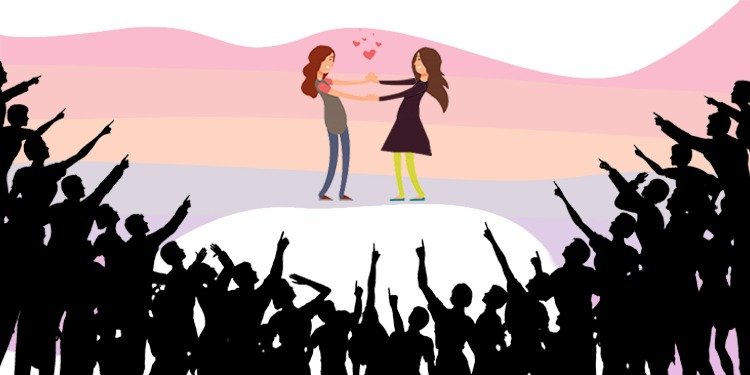
    After I hit puberty, I realized I didn’t fit. I wasn’t like the others. And there was no one I could tell. It’s the loneliest feeling in the world. Not having the courage to tell your family who you are. Tell them there is nothing wrong with me. I just love differently. Please let me. Accept me. I’m gay. And that’s okay. 

    It was fate. There is nothing that can convince me otherwise. A few days after I saw her on the balcony, I saw Sara* in a park. I walked past her and looked back. It was her. Fidgeting with her headphones. I walked on but I felt her gaze on me. I turned around. She was staring at my legs and when she saw me look at her, face flushed pink with embarrassment. 

    I smiled. 

    “Hi.”

    “Hey.”

    “Do you…want to jog together?”

    “Sure.”

    My curly brown girl.

    I felt suffocated and I wanted to scream. 

    “I am a lesbian!” I screamed, but not out loud. In one instant, every moment, I was two different people. I sat in a room with people defining the ‘normal woman’, and I felt this heavy burden. My heart, my mind desperately wanted everyone to know. My face revealed nothing. Being part of the LGBTQ community in Pakistan is a huge struggle. I do not have the courage to come out to my family because the chances of acceptance by my religiously inclined family are very thin. 

    Can anyone hear me?

    I dreamed sometimes. I would tell my parents, my sister, sitting down in our living room, me, sitting opposite them all. 

    I’m gay, I’m different.

    The burden would magically be lifted. I would be one person.

     They would sit silently as I would die a little inside. Tears streaming down their faces. Father, stoic. Mother, silent. And a crack would emerge.

     They would smile and say, it’s okay. We love you, just the way you are.

    I would cry tears of joy. And then I would drift out of my head and the dream would walk away. It would come back but would never stay. 

    I tried to kill myself many times. 

    Maybe in death, the dream would stay on.

    “I’m from Lahore,” Sara said. 

    “Why did you move to Karachi?” I asked

    “I’m a journalist, so for work really,” she replied, “but I don’t have any friends…” 

     “You have me.”

    Sara was luckier than I was. Smarter.  She had never tried to end her life, had gone for therapy but she faced the same internal struggle. We formed a bond that I always craved. 

    She was the image that stayed on.

    It’s been more than a year since I told her I loved her. We are happy. But there’s a cloud that forever hangs over my head. I know nothing good ever lasts. This society cannot digest the relationship Sara* and I dream about. But for now we are lucky to have each other.

     There are so many others like us. 

    They dream.

     They want to be able to find a partner who they can bring home. Smile with, hold hands with, be with. But they can never say it. They go missing from their homes, live their lives in despair. 

    God’s mistake. 

    There is no mistake in the love I feel for Sara. But there is a sadness attached to it. My parents will never know who I love. They will never feel the love their daughter feels. They will never hold my face in their hands and know, “She is happy”. They will never accept.

    As our fingers touch in secret, there are times I let myself drift. The dream changes. I am no longer sitting in that room alone, facing my parents. I sit with Sara.

    “Abba, this is Sara. Ami, Sara,” I would nudge her. 

    She would smile, her awkward smile.

    “Salaam Sara beta, it’s so very nice to meet you.”

    *Names of the author and characters have been changed to protect their identities.
  • Pakistani Love: The Story of Survivors

    Pakistani Love: The Story of Survivors

    “But he’s never been married,” was something I heard often when I told people about Moayyed. It was blurted out, said pointedly, sometimes unintentional and sometimes very intentional.

    I had become immune to it because being with him meant that it didn’t matter.

    Remember your far-fetched wishes?

    Yaar, bus Pakistan saare matches jeet jaye, India saare matches har jaye tou hum jeet jayein gay, Please Allah, all planets align with the north star on February 31st, Usman Buzdar grows a tongue and Aamir Liaqat loses his…

    Imagine all this and you’d still have very little idea of what needed to happen for Moayyed Jafri and Amnah Shah to get hitched.

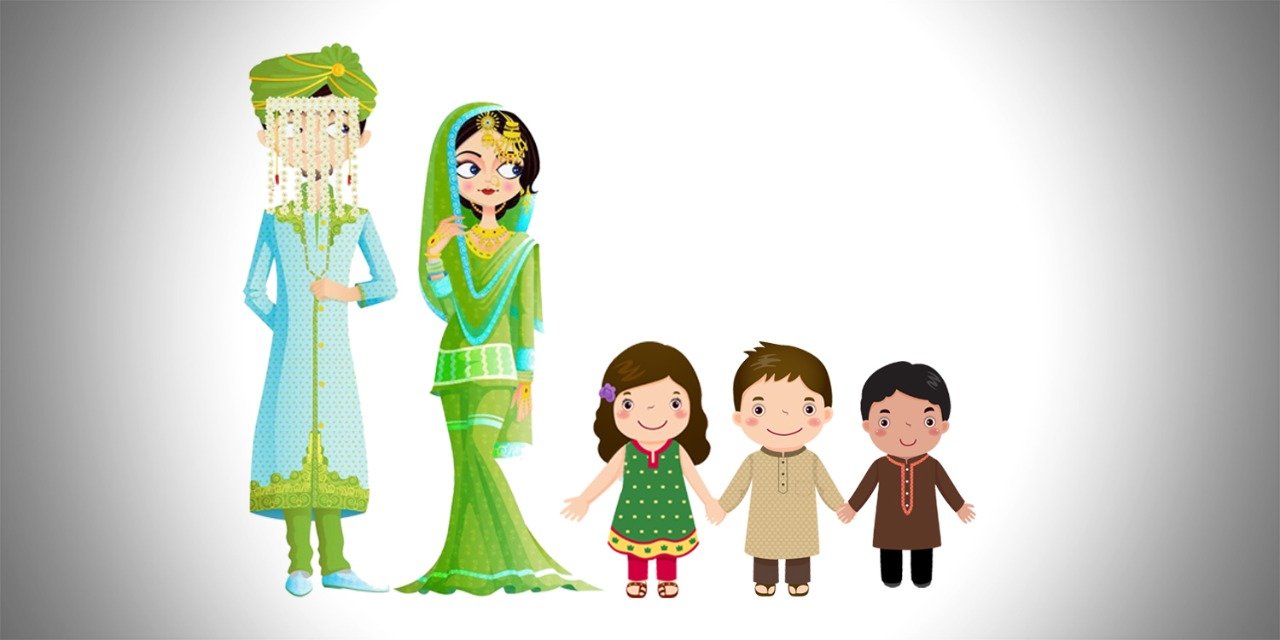
    There is no greater love, nothing at all, than the love for your children. I should know. I have three of them.

    One girl and two boys.

    14, 13, 10.

    My heart beats three times, my day complete, after I see three smiles and as I slip into tired slumber, I give thanks three times.

    Four times now, because I had three children before I met Moayyed.

    Baba, how come people in natural disaster movies dodge every deadly accident while everyone around them is dying, ” I remember asking my father as a child.

    “Stories are biographies of survivors. All of nature’s forces combined with relentless will, create survivors and that’s what a miracle actually is”, he used to say.

     Moayyed hit pause. He stepped back and took leave from his own life’s desires to help his family after his father passed away. I didn’t have to take leave from my life like he did but I did give mine up for my children. I never, ever regretted it. No mother ever can. I didn’t wish or want for anything except for my three and life didn’t pass me by. But when I met him, life hit pause, as if allowing him a moment to hit play and catch up with me.

    “I love life,” I would claim, hopefully optimistic in what people assumed was a difficult life.

    “It’s alright,” would be his somewhat cynically said response.

    We were ying and yang, opposites, in every way. Ours was a love of heart and mind, a fusion of the cultures of the edgy northern mountains and the grounded central plains. We came together like gratefulness does. A loss leading into happiness.

    But reaching that level of certainty, that there was no running away from this, was only half the battle. We were well aware that although it is the year 2020, we live in Pakistan and come from relatively conservative families.

    It took two years for him to tell his family after which I broke the news to mine.

    The hardest part of finding love elsewhere is telling your children that someone else is about to be just as important as them.

    You know the song you listen to when you’re in love? My children have always been that song for me. On repeat, they have lifted me up, cradled me, comforted me. My children are my strength, not just partners in my dreams, but advocates for my right at a shot at happiness.

    I was so scared to tell them.

    There is nothing bigger in life than acceptance. Being accepted for who you are and what you want. Surviving life’s big tests and being apprehensive to start new ones. There is nothing bigger than knowing no matter what you choose, the people that love you will stand by you – as long as you are happy.

    My young, small children approved. Overwhelmed and teary-eyed I hugged them. It  wasn’t just their approval, it was something bigger. It was all doubts shattered by that moment, all uncertainties that typical societal mouthpieces had thrown at me.

    Akeli Maa aur teen bache, is shehr mai kaise reh sakte hai?

    Shattered.

    It was a feeling which words fall pathetically short of expression to describe. 

     Surviving what life throws at you is nothing short of a miracle. When Moayyed and I first met, it wasn’t love at first sight. We were both too good at surviving for it to be so simple. It was intrigue, a simple mysterious desire to know each other. It was quiet at first, as we looked, talked, smiled, letting each other in, layer by layer, like to love.

    We were survivors, ready for a miracle.

    Marrying Moayyed is probably one of the easiest things I have done in my life. Not because it’s love, but because we are easy. We were transparent in what we wanted, truthful and pragmatic. Our marriage is a triumph, not only of love but of hope over dejection. A defiance of stereotypes and a challenge to the toxic standards of normalcy.

    Hai dekho, teen bachey hain aur kunware larke se shaadi.

    Is larke kay parents kaise maan gaye?

    Apne bachon ka nahi socha?

    Society is ruthless but we don’t need to be. These words bounce off from us – my children, myself and Moayyed. People can say what they like and they will. But having the courage to ignore them and do what you know is right – surviving – that is the real miracle.

  • ‘Ehd-e-Wafa’s latest episode comes with a bucketful of tears

    ‘Ehd-e-Wafa’s latest episode comes with a bucketful of tears

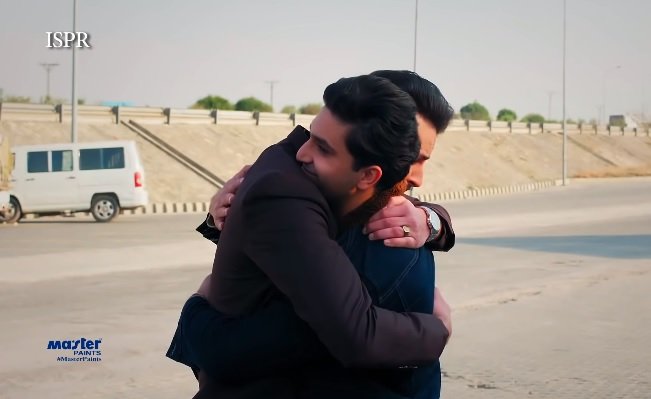
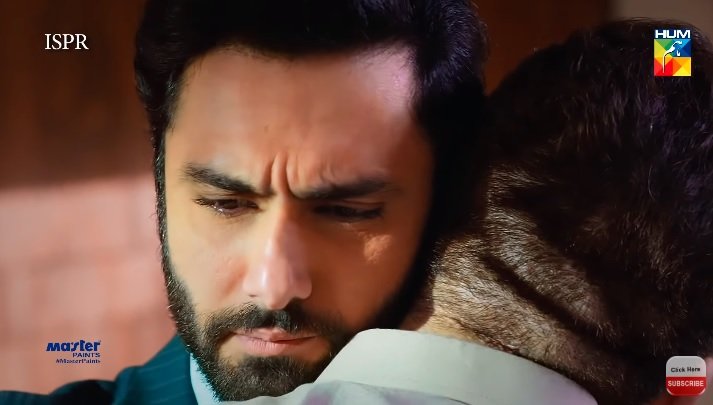
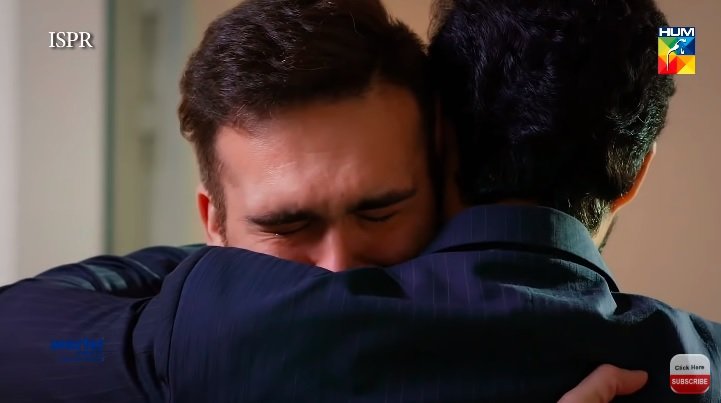
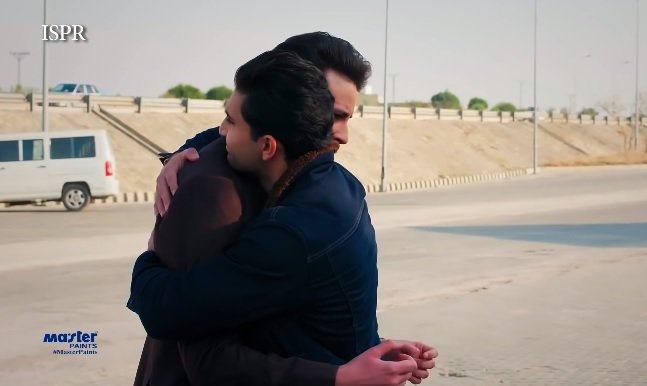
    Ehd-e-Wafa promised to be an emotional rollercoaster but truth be told, I was not prepared to shed a few tears while watching it. The 21st episode of the drama serial aired last Sunday and though it was a bit of a drag and completely disconnected from the last scene of the previous episode (the last episode ended in Waziristan and this one began in Pindi on a happy note), two emotional scenes – Saad (Ahad Raza Mir) and Shahzain’s (Osman Khalid Butt) reunion and Shehryar’s (Ahmed Ali Akbar) effort to help Khursheed (Muhammad Hunbal) – made the entire episode worth a watch.

    All four members of the SSG (Special ‘S’ Gang) have settled into their respective lives. Saad (Ahad Raza Mir) is now Captain Saad, while Malik Shahzain (Osman Khalid Butt) is a well-known politician. Shehryar (Ahmed Ali Akbar) cleared his CSS exams and is currently serving as an Assistant Commissioner, while Shariq (Wahaj Ali) is an established journalist.

    Shehryar, who is serving as the Assistant Commissioner, comes across his old teacher Firdous Baig, whose son, Khursheed was his class fellow at Lawrence College. In a tear-jerking scene, it is revealed that Khursheed was put behind bars by some powerful land mafia over a dispute. Sheheryar uses his power to release Khursheed from jail and when the two meet and Khursheed throws himself in his friend’s arms. This scene was brilliantly executed and pulls at your heartstrings, leaving you misty-eyed.

    On the other hand, Saad is about to get married to the love of his life, Dua when he happens to run into Shahzain. After exchanging the usual pleasantries, Saad pulls down the barriers between the two and they have an endearing conversation in which they bury their hatchet and promise to start their relationship afresh. If you’ve ever reconnected with an old friend after a long time, you’d feel the scene.

    But everything aside, this episode was without a doubt Ahmed Ali Akbar’s, who owned every scene of his. Ahmed played Shehryar with utmost ease and slipped into the many layers of his character without a hiccup. It was an absolute treat to watch him.

    Read more – ‘Ehd-e-Wafa’ takes a dramatic turn, begins to gather momentum

    And we’re not the only ones who thought this episode was an emotional roller coaster. Osman Khalid Butt also felt sentimental after watching this episode.

    https://www.instagram.com/p/B8ZMYIAJwO2/

    Directed by Saifee Hassan, Ehd-e-Wafa is a joint collaboration between ISPR and Hum TV. In the stream of dramas which are either tackling serious topics such as rape (Ruswai) or are the usual masala fest (Jhooti/Kaheen Deep Jalay), Ehd-e-Wafa is a great entertainer and something you can enjoy watching with your family. It airs every Sunday at 8pm.

  • Multicultural casting now bordering on the absurd

    The opposite of blackface is not illogical casting

    A new film adaptation of David Copperfield has the central character played by Dev Patel. So here David is brown but his mother is white while his late father’s sister is a very, very pale white. The character of Agnes is played by a black actor while her father is played by a Chinese actor, Steerforth is played by a white actor while his haughty and snobbish mother is played by a black one. Should all of this matter in this age of political correctness? The answer is that to a film viewer it does matter. It really does.

    Armando Iannucci’s screen version of the Dickens classic challenges all the preconceptions that criticism of the closed nature of the industry have highlighted: its tendency to tell white people’s stories, written by white people, directed by white people and featuring white actors. But the reason it doesn’t work is, essentially, that there is no attempt to be visually convincing.

    Let’s be clear here: when you are casting a classic story you attempt to be true to both the story and to the character. Hence Laurence Olivier playing Othello blacked up his face attempting to look like a Moor as did Al Jolson attempting to look like a black American musician — yet in the Iannucci film nobody bothers to look like anything but themselves. This might work in an independent theatre production but in an ambitious feature film it just doesn’t do the trick: film is a visual medium which is fairly reliant on the intimacy afforded by the camera close-up so it’s not enough to insist on the idea that ‘any actor can play any role.’

    In any case, it’s a false premise that any actor can play any role – every casting director will tell you that. When you are casting you look for acting ability plus a degree of physical resemblance and if the latter is absent, then you try to create resemblance through various means such as make-up etc. For example, you wouldn’t have a fat, heavily built actor playing the part of a slight and undernourished character any more than you’d have an eighty-year-old actor playing a teenager… Does this make the casting either ‘fatist’ or ageist and hence reprehensible? No, it’s all just a bit of common sense.

    For the past few years every time the Oscars and BAFTA award season comes around, we are reminded anew of the issue that mainstream films tend to ignore and sideline non-white talent and that the Hollywood film industry has a bias that favours white professionals. This is a completely valid concern but the superficial way in which some people are choosing to redress the balance is fairly ridiculous. The David Copperfield film is a perfect example of this – just because men used to play female roles in 17th-century productions of Shakespeare or white actors used to play Chinese or non-white roles in early cinema, does not mean that the inverse is okay – indeed such casting defies the very basis that such criticism is based upon i.e. that casting could be more authentic and more convincing if the opportunity was opened up to more people fitting the physical description better.

    At this point, you may disagree and ask “Well, what about Hamilton?”. Hamilton is, of course, the runaway hit musical by Lin-Manuel Miranda that casts non-white actors as America’s founding fathers and other historical figures. But Hamilton works because it is theatre rather than film and the story-telling methods are non-traditional.  What works on stage doesn’t necessarily work on the large screen – and certainly not where kinship is suggested, after all, we tend to look for some sort of resemblance even between non-white actors if they are cast as blood relatives, it’s just something that’s part of our cinematic expectation.

    It’s right and timely that we recognise and deal with the issue of prejudice and marginalisation in mainstream cinema and we attempt to correct conscious and unconscious biases within the industry, but the way to do this is not through random and unconvincing casting. The multicultural nature of the casting of the new Charles Dickens adaptation proves this convincingly. I’m not sure why filmmakers keep remaking perfectly good films but in the case of Copperfield, it marks no improvement on its predecessors. (Unfortunately, it’s difficult to discuss this widely enough because so few people nowadays seem to have read David Copperfield!)

    At any rate, when you see #OscarsSoWhite trending again this year, do think about the whole issue again. Hopefully, you’ll agree that merely ticking boxes and casting without logic does not redress any sort of historical imbalance it just makes for weak cinema.

  • Jhooti: The drama that replaced ‘Meray Paas Tum Ho’

    Jhooti: The drama that replaced ‘Meray Paas Tum Ho’

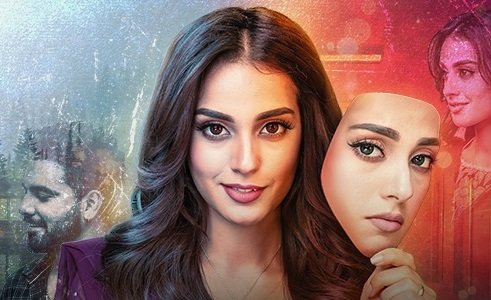
    Meray Paas Tum Ho left some big shoes to fill. The Humayun Saeed-Ayeza Khan starrer received unprecedented success and was reported to be television’s highest-rated drama of all time. The serial wrapped up on January 25 and the next week on February 1, Iqra Aziz, Ahmed Ali Butt and Yasir Hussain’s Jhooti took over.

    Much before its release, when the teasers of the drama were released, Jhooti had stirred up controversy for allegedly showing women in a bad light and portraying them as money-hungry, two-faced creatures and the first episode did nothing to change the perception.

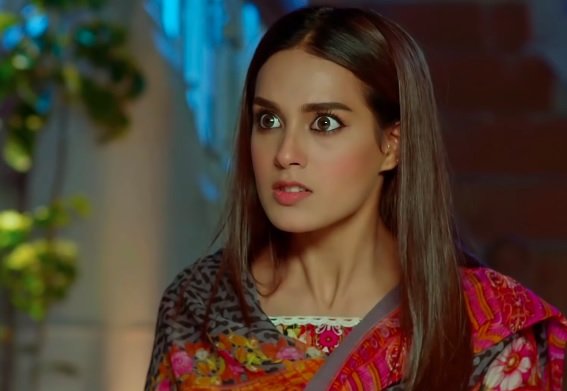
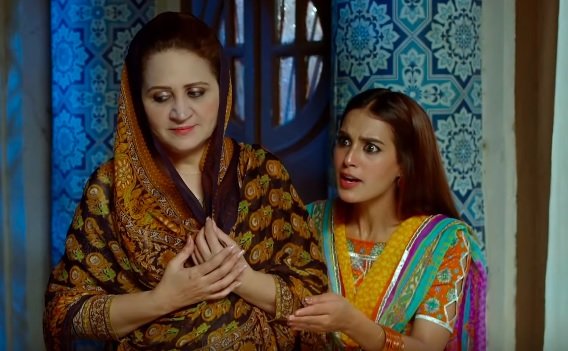
    The drama opened with the same-old storyline. Nirma’s (Iqra) parents want their daughter to get married and settle down. But the rebel daughter wants a better life for herself and doesn’t want to settle for the “useless” boys in her “poor” neighbourhood. She spends her days shouting or passing snide remarks to her family members. There are a lot of screaming sessions as Nirma clashes with her family over the rishtas that come for her. The only person who supports her is her father.

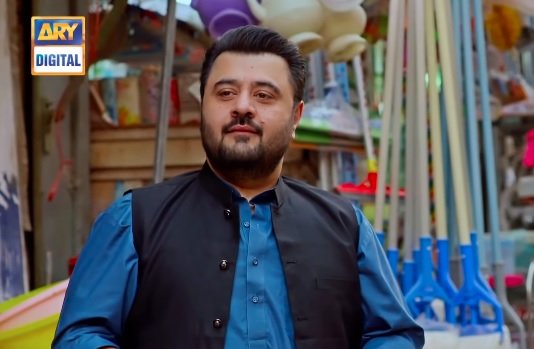
    In comes Ahmed Ali Butt as Nasir, a simple man *yawn* madly in love with Nirma. He runs a small store in the neighbourhood and lives a fuss-free life. He comes over with his family with a rishta for Nirma. While Nirma herself rejects him by constantly calling him fat, her family thinks that he is a good choice for her. Eventually, Nirma’s partner in crime and equally vile friend advises her to marry Nasir only if he agrees to put his shop and house in her name. Interestingly Nasir’s parents agree to her condition and they come over to fix the date for the wedding when Nirma flips and tells them that she’s already rejected the proposal.

    While the drama doesn’t appear to have anything new to offer as yet and is as regressive as it can get – I mean Nirma’s mother tells her that she cannot go to university because she needs to get married – the only department in which it excels is acting. Iqra has given a solid performance and you absolutely hate her at the end of the episode. The rest of the actors including Butt and Asma Abbas as Nirma’s mother put up commendable performances.

    The drama has a bit of a negative vibe to it and reminds you of the over the top Star Plus sagas. But I’m going to watch a couple of more episodes before deciding whether the drama is worth watching or not.

    Jhooti has been directed by Syed Ramish Rizvi and penned by Ali Moeen. It airs every Saturday at 8pm.

  • ‘Zindagi Tamasha’s fate hangs in limbo

    ‘Zindagi Tamasha’s fate hangs in limbo

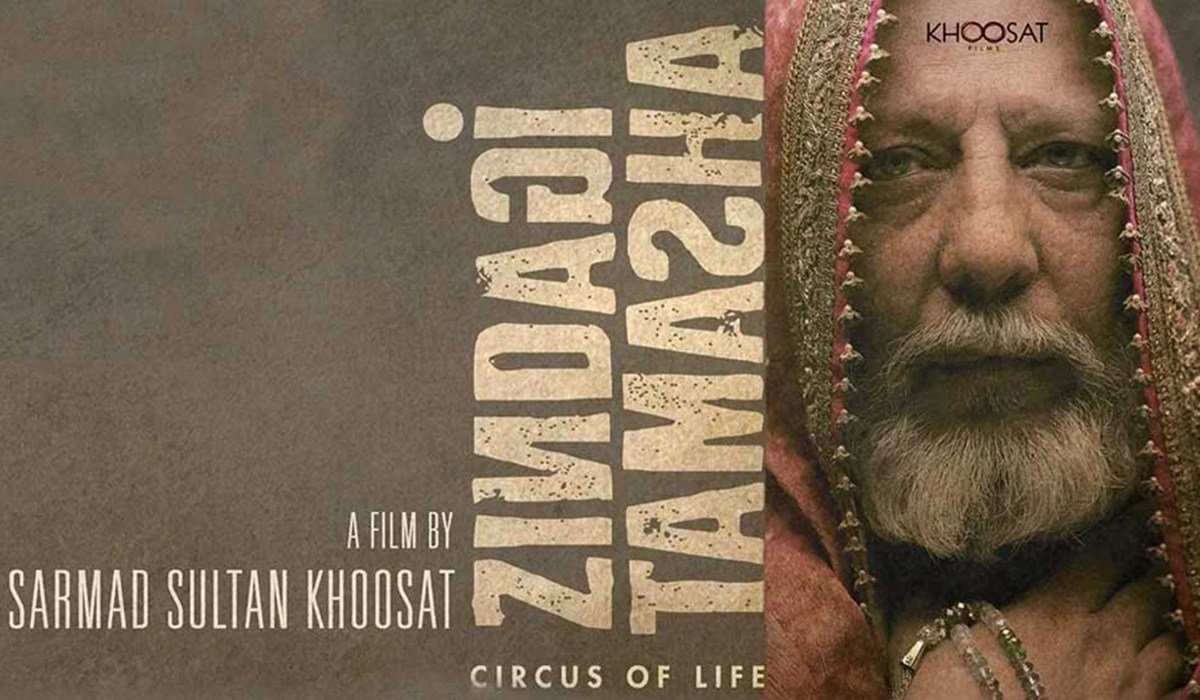
    In an emotionally-charged country like Pakistan, where religion is a sensitive topic, it was no surprise that Sarmad Khoosat’s Zindagi Tamasha ruffled many feathers and sparked controversy. Despite the director’s assurance that the film does not hurt any religious sentiments, people jumped to conclusions based on a two-minute teaser trailer. Nonetheless, fearing public unrest, the federal and provincial governments decided to stop the film from being released, just days before it was scheduled to.

    While the Federal Government has said that the film will be reviewed by the Council of Islamic Ideology (CII), the Punjab Government directed the filmmaker to hold a screening on February 3 so that the film can be reviewed again. It is pertinent to mention here that the provincial and central censor boards had earlier cleared the film for release with a few cuts.

    The ban on the film sparked public outrage and members of the civil society and the film fraternity stepped forward to support the film and filmmaker. They also requested the government to extend more support to filmmakers and called for a more open creative space.

    After all the hue and cry, the hype and criticism around the film has died as its fate hangs in limbo.

    When The Current reached out to the Central Board Of Film Censors Islamabad for an update regarding the film, a source shared that it is “in limbo”. When probed further they asserted that work on the film’s clearance is still underway.

    Read more – Council of Islamic Ideology to ‘critically review’ ‘Zindagi Tamasha’

    Meanwhile, local media had reported that the CII is awaiting the green signal from the censor board so they can go ahead with reviewing the film for any objectionable content.

    As per reports, a three-member committee has been set up to review the film. The censor board has also been informed of this but no response was received from their end. The CII’s media coordinator Rana Zahid shared that the film can only be reviewed after they receive an invitation from the censor board.

    While the three-member committee does not include members of the council, it includes officers from the council’s research wing.

    According to the CII official, “All the members are competent and hold qualifications in Islam and social sciences. They were selected for this task after going through an interview process. We have shown them the CBFC letter and advised them on how to review the film, keeping religious sentiments in mind.”

    The committee will review the film and then submit a report to council Chairman Dr Qibla Ayaz. The report will further be analysed 20 members of the CII after which a decision will be taken. The council members including the chairman will also watch the film after the report has been submitted.

    The CII has informed the censor board of all the preparations they have made but are yet to hear back from the body.

    Read more – Damning bans

    Meanwhile, no progress has been made on the review directed by the Punjab Government. They had directed Khoosat to arrange a review of the film on February 3.

    Khoosat has also made no public comment after the film was barred from release.

    Read more – Sarmad Khoosat appeals to PM, President to facilitate his film’s release

    Petition against Zindagi Tamasha screening withdrawn

    A petition filed against the screening of Zindagi Tamasha was withdrawn on Thursday (Jan 30).

    As per reports, the petition was filed on Monday (Jan 27) by a man named Chaudhry Qadeer Ahmed who alleged that that the film was against the spirit of the Constitution, hurt religious sentiments and violated PEMRA’s rules.

    The petition was heard in the Islamabad High Court (IHC) by Justice Aamer Farooq who questioned the petitioner if he had seen the film anywhere or if it had been released yet.

    In response to the judge’s question, the petitioner’s lawyer said that he has not seen the film.

    “How can you comment on something that no one has seen,” questioned the judge.

    Ahmed’s lawyer explained that the film’s trailer had been released online and it “disrespected” naat khawans.

    The court asked the petitioner’s lawyer when the film was scheduled to screen. The lawyer informed the court that the film had not been released yet as the Punjab government had made a decision against it.

    Ahmed’s lawyer then requested the court to take back the petition which the court accepted.

    Khoosat’s father had also filed a petition against the Tehreek-e-Labbaik Pakistan (TLP) for trying to interfere with the release of the film. However, after the film’s release was delayed, he withdrew the petition for reasons unknown.

  • Woke students in ‘secular’ India

    The BJP coming to power has only removed the lid from the internal realities of the unsuccessful story of Indian democracy.

    Unlike Pakistan, where student unions were banned during the military rule of Ziaul Haq, in India, student unions on campuses have successfully sustained till date. In the past few years, Jawaharlal Nehru University (JNU) has been mentioned as a refrain in discussions on student politics — particularly in terms of burgeoning progressive politics — the spillover effect of which has reached not only Pakistan, but major parts of the globe as a good omen for the oppressed.

    The student union of JNU, better known as JNUSU, was recognised as a symbol of resistance, the voice of voiceless and a representative of the marginalised and vulnerable communities within India. JNUSU gained popularity across the world after its former president Kanhaiya Kumar was arrested from campus in 2016 due to his association with a protest gathering held at JNU.

    The protest was organised by some students of the varsity on February 9, 2016, in order to commemorate the judicial killing of Afzal Guru (hanged Feb 9, 2013) and also to question the violation of human rights by the Indian state in Indian occupied Kashmir (IoK).

    Consequently, the fascist Bharatiya Janata Party (BJP) government pressed charges against the students who had organised the protest, as well as Kanhaiya, who had addressed the protest gathering. Kanhaiya, Umar Khalid and Anirban Bhattacharya were the three students who were jailed following the registration of an FIR [First Information Report] against them.

    With already popular Azadi slogans taking a different tone following Kanhaiya’s arrest, students – especially Kashmiri — took a tone that went on to prove their courage at the forefront of the struggle against Indian Prime Minister (PM) Narendra Modi’s fascist regime.

    The recent wave of mass-mobilisation in India started in the aftermath of the controversial Citizenship Amendment Act (CAA) that grants the government the right to declare people, unable to produce citizenship documents, as “illegal immigrants” and allows any declared illegal immigrant, except Muslims, to become a citizen of India on the grounds of persecution in neighbouring Muslim states.

    CAA’s implementation, however, comes after forming a National Register of Citizens (NRC). NRC has been implemented in the Indian state of Assam where people, who have not made it to the register, have either already been detained in camps or are facing the threat of landing in the same since there is no way to prove which countries do these allegedly illegal immigrants belong to.

    The massive mass-scale protests in India against the discriminatory CAA law drew much attention after the December 15 protest led by students of Jamia Millia Islamia University in a Muslim locality of New Delhi. With police cracking down on these protesting students by not only baton-charging but also shooting them, and that too on campus, tables started to turn on the Indian state.

    With students of Aligarh Muslim University protesting on campus against the brutality met out to their peers from Jamia Millia Islamia University, a new wave of resistance took over India. Fierce confrontation meted out to the cops, especially by female students, in what turned out to be the defining moment for the anti-CAA movement, as more people, although largely Muslims, joined the protests, and the same still goes on.

    Outside their campuses, students of Jamia Millia and Aligarh University are much more involved in mobilising and organising the ongoing protests. However, they are subsumed by the grandiosity of JNU and its student leadership that has expressed solidarity to Jamia students by joining one of the protests outside JNU.

    Despite a huge communication gap and both Pakistan and India’s coercive forces employed to keep people away from each other, the engagement of student-political activists gives us hope that a broader united front to fight injustice and oppression will someday be built.

    While mass participation of students, youth and religious minorities in the protests against BJP’s plan of constructing a Hindu Rashtra, which according to their publicised map, is extended to Afghanistan, seems insufficient to deal with, it is important, as well as necessary, to demand that the newly-passed legislation by the parliament be rolled back.

    But would it ensure peace and security for Muslims and other marginalised communities like Dalits, who too are at risk after the promulgation of CAA and NRC? Or in other words, does the struggle for safeguarding Indian constitution in itself, guarantee protection to religious minorities?

    Apart from the popular discourse propagated around the Indian constitution that claims it is ‘secular’, the deployment of state apparatus against lower caste people within Hindus and other marginalised and religious minorities, tell a different story, which has become clearer under the BJP. The destitution of religious minorities in terms of poverty, employment, education and above all, political representation, stands in testimony to the fact that they were reduced to ‘second-class citizens’ in the largest democracy of the world even when BJP was not in power.

    The BJP coming to power has only removed the lid from the internal realities of the unsuccessful story of Indian democracy. Therefore, it becomes much more significant for the protesters from Asam to Uttar Pradesh and from Jamia Millia to Shaheen Bagh to consolidate these anti-BJP forces in one political project which possibly would push the current discourse beyond constitutionalism, instead of leaving the burden of saving constitution and secularism on the shoulders of already underprivileged Muslim community of India.

    Amid all the recent political developments in Pakistan and India, there has been a convergence of progressive ideas across the border which is largely manifested in the unconditional solidarity extended by the Progressive Students’ Collective (PSC) among other progressive student organisations in Pakistan to their counterparts in India.

    Despite a huge communication gap and both the states’ coercive forces employed to keep people away from each other, the engagement of student-political activists gives us hope that a broader united front to fight injustice and oppression will someday be built.

  • Regulating Freedom

    Regulating Freedom

    Earlier this month, Pakistan Electronic Media Regulatory Authority (PEMRA) uploaded a draft proposal on its website on regulating web and over the top television (OTT) content services.

    After going through the 25-page draft proposalThe Current is of the view that this is yet another effort by the government to silence independent voices. First of all, PEMRA has no authority and/or mandate to regulate social media. Secondly, Pakistan’s mainstream media is going through its worst period of censorship –- that too under a “democratic” dispensation. Pakistan is ranked 142 out of 180 countries in RSF’s 2019 World Press Freedom Index, i.e. three places lower than it was in 2018.

    Many Pakistani journalists have taken to social media to share their uncensored views online due to media censorship. Now, the government wants to regulate the internet by charging a hefty amount in fees for web TVs (both news and non-news) and OTTs and also issue licenses. They are also proposing a code of conduct without giving out any details. Reporters Without Borders rightly said that this draft proposal by PEMRA “betrays an intent to censor online video content relentlessly”. If this draft is not to discourage online content creators then what is? We, at The Current, firmly believe in freedom of expression and thus any moves to curtail our freedoms, our fundamental rights and our right to dissent, are unacceptable. Period.

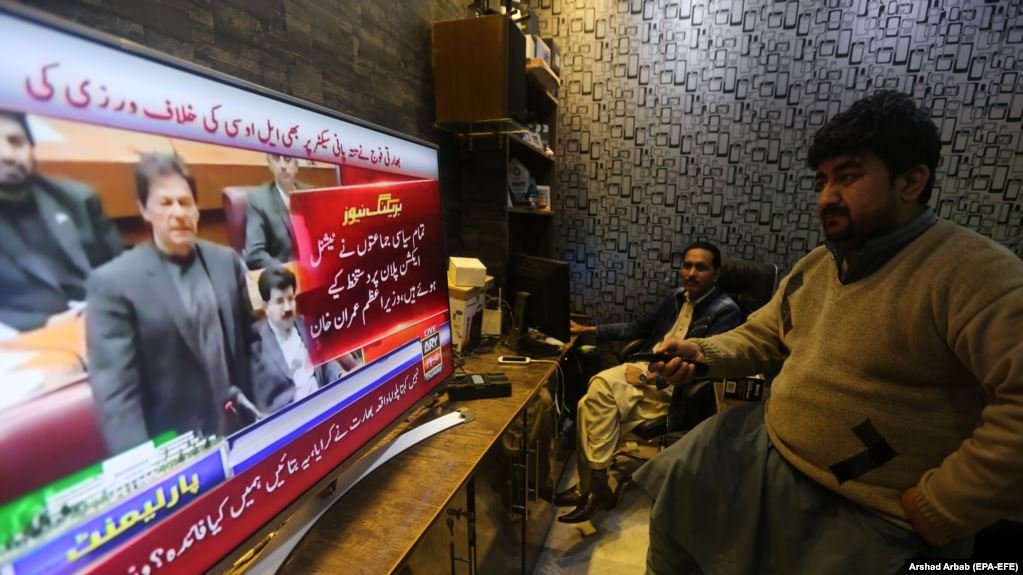
    It is quite disappointing to see that a government that fully utilised social media and mainstream media before coming to power is now trying to shut down critics’ voices. Prime Minister (PM) Imran Khan recently said that he has stopped reading newspapers and watching evening news/current affairs shows because the media hammers him all the time is surprising, given that PM Imran has been media’s darling from the first day. His government is being criticised for its lack of performance and delivery. We believe the premier should not demonise media that helped him during his struggling days in politics and made him relevant.

    It is also quite alarming to see that peaceful protesters in Islamabad were arrested and charges of sedition were levelled against them. Their only crime was to be a part of a protest seeking the release of Pashtun Tahafuz Movement (PTM) Manzoor Pashteen. Some were released, but 23 political activists and human rights defenders, including Ammar Rashid and Nawfal Saleemi, are still under arrest — not to mention citizens like Khurram Qureshi who was there for solidarity. Their families are not being allowed to meet them despite the fact that it is their legal right. We would like to ask the government how it is sedition to protest peacefully when it is our fundamental right to do so. Releasing these protestors would be the right thing to do.

    From censorship in media to curbing online dissent to booking peaceful protesters under sedition charges, the state of Pakistan is acting more like a police state and less as a democracy. Let’s not go down this path.

  • Mere Paas Tum Ho: A male lens into infidelity

    Mere Paas Tum Ho: A male lens into infidelity

    In a story as old as time itself, a male author has, through Mere Paas Tum Ho, tapped into archaic notions of what constitutes a moral vs an immoral woman, in a topic as complex as infidelity.

    Today marks an almost historic day in Pakistani television history as “Mere Pass Tum Ho” (MPTH), which has become one of the most successful dramas in our history, is all set to end with its mega finale.

    This has become such an anticipated ending that in an unprecedented move, cinema houses have decided to showcase the entire episode, and it is expected that we will witness packed houses. However beneficial this may be for our television industry’s commercial growth, MPTH has uncovered the deeply sexist faultiness within our onscreen depiction of women, as well its widespread acceptance within society.

    More so than the actors, the drama’s writer, Khalilur Rehman Qamar, who has written hits like “Pyare Afzal’ and “Sadqay Tumhare”, has been in the limelight for the past few months due to his shockingly misogynistic views. And he has rejected, shunned and castigated his haters in a way that only someone possessing extreme male privilege would be able to do.

    There have been a few key issues in the debate surrounding MPTH — the first, and perhaps most significant, has been whether and to what degree do the on-screen portrayal of women and men, as well as the dynamics between the genders, impact the mindsets of viewers. Is the media merely a depiction of what actually happens in society, or can it be an engine that drives social change?

    This debate has been around for decades. An argument can clearly be made that media is not monolithic, and can have both a representative, as well as a progressive role. The problem, however, seems to be that the Pakistani television industry has almost one-sidedly been playing a regressive role in its portrayal of problematic cultural and social norms, where formulaic and one-dimensional characterisations of social issues are carefully depicted as a means of appeasing the audience and driving commercial success.

    Very few channels have been bold enough to tackle topics that may receive criticism or force the viewers to think outside their preconceived notions. In a country that ranks third lowest in the world on gender parity, a more responsible role by the media industry should be expected.

    In a similar vein, and in a story as old as time itself, a male author has, through MPTH, tapped into archaic notions of what constitutes a moral vs an immoral woman, in a topic as complex as infidelity. Qamar’s personal views come through very clearly via his writing, where a one-dimensionally “evil” Mahwish, is pitted against an equally one dimensional “pure” Danish. The fundamental problem lies not as much in the motivations behind infidelity, but in the consequences, which seem to be drastically different for men and for women.

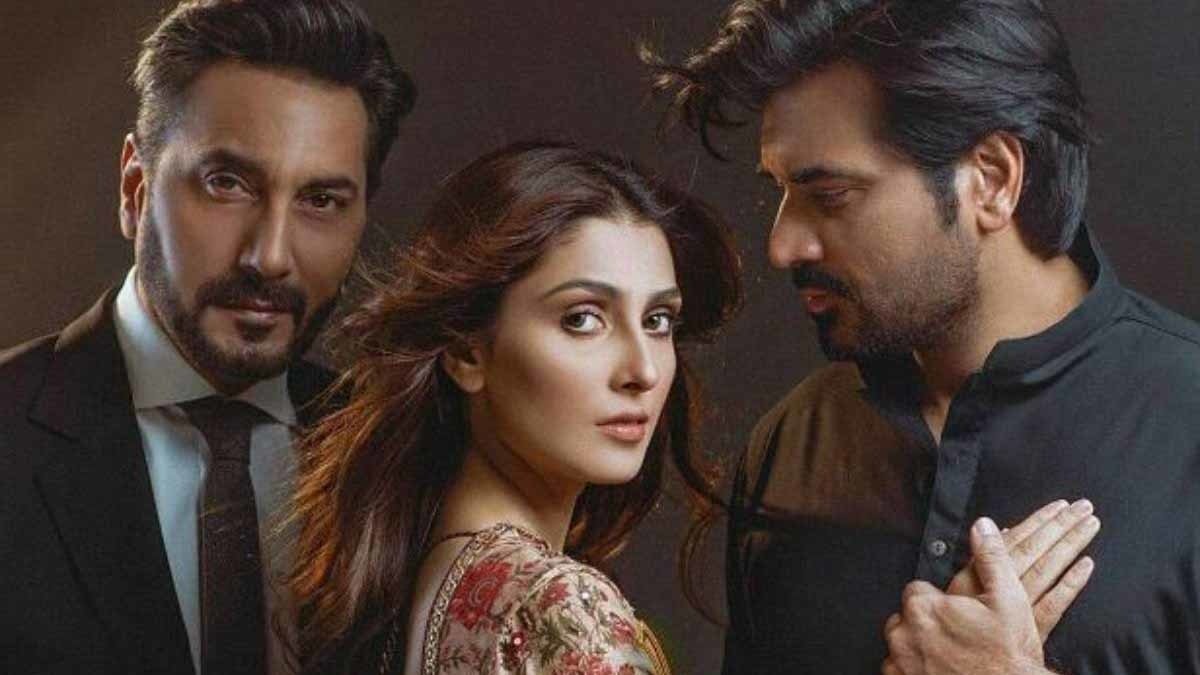
    There have been countless dramas in which the male protagonist has been unfaithful to his wife, but he has received forgiveness from her, and this has satiated our audience’s desire for maintaining a warped gender dynamic especially on the issue of infidelity. In the case of MPTH, which is also perhaps one of the first-ever portrayals of a female protagonist cheating on her husband, this issue has been handled through an exclusively male lens. Mahwish’s character has been reduced to being a “2 takay ki aurat“, whereas Adnan Siddiqui has been accepted, albeit reluctantly, by his first wife.

    This issue has been made worse by the drama writer’s own personal views on gender and infidelity, where he has unabashedly stated that a woman who cheats loses her very essence and he considers her to be a “non-woman”. Unfortunately, Qamar’s opinions are not rare, and we live in a society where gender disparity is so entrenched that men have even earned the right to cheat without glaring consequences.

    The pain of infidelity has been experienced by countless individuals, but it’s the woman who is constantly expected to think of her home, her children’s future, and society’s expectations. Surely, one of the biggest indicators of gender equality should be equal punishment for the same crime. What has made this experience even more unbearable has been Qamar’s constant presence on television, where he has been outdoing himself with his own misogyny. His lack of knowledge and facts on society’s deep-rooted prejudices becomes more apparent with each interview.

    The case of MPTH depicts how badly our television writers and their characters need a touch of complexity and diversity. The tired, black and white portrayals of morality need a dash of empathy and realism. The constant parade of similar narratives written by privileged men with regressive views needs a major refreshment and a modern touch. But more so than anything, our television industry needs daring writers — those whose vision goes beyond commercial success, or what the audience will blindly accept, to actually exploring unique topics, deeper human emotions and contemporary realities. In 2020, we need a braver lot.

  • Damning bans

    Damning bans

    “Creativity takes courage” – Henri Matisse

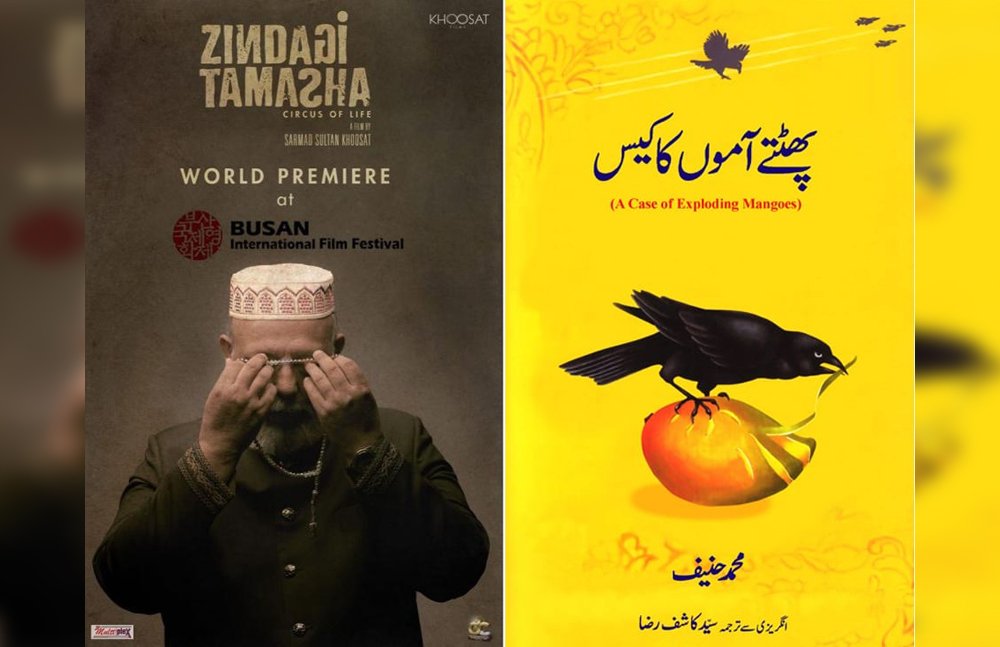
    Matisse wasn’t wrong. When filmmaker Sarmad Khoosat released the first trailer of his upcoming movie, ‘Zindagi Tamasha’, it created quite a buzz. The movie was supposed to release today (January 24) across Pakistan. It has already won the Kim Ji Seok Award at Busan International Film Festival. Film critics and the public at large were waiting for its release as Sarmad is known to be quite creative and the movie looked promising enough. Just like other governments, this government too promised the revival of Pakistani cinema. Sarmad Khoosat’s ‘Zindagi Tamasha’ seemed like a step in the right direction.

    But what happened when religious hardliner Tehreeke Labbaik Pakistan (TLP) threatened to hold protests against the movie just because the protagonist was a bearded man who is shunned by society after a video of him dancing at a wedding goes viral? The Pakistani state caved in to pressure, again.

    A film that was passed by three censor boards cannot be released now because the state fears the religious pressure group. The federal government has decided to block its release and has asked the Council of Islamic Ideology (CII) to critically review it. The Punjab government will review it on February 3 and a TLP representative will be in the review committee. The Sindh Censor Board halted its release citing the reason that it “may create unrest within religious quarters and may deteriorate and be detrimental to the peaceful circumstances in the country”.

    There is nothing outrageous or anti-Islam in the movie. Busting the myths about the movie, Mohammed Hanif writes for Samaa, “The only taboo the film breaks is showing a man with a beard doing house chores. It humanises a religious man.”

    Sarmad wrote two beautiful and heartfelt open letters – one was addressed to the president, prime minister, chief justice, army chief and information minister, while the other was for Pakistan and Pakistanis. He ended his first letter with these poignant words, “The space for rational and artistic thinking and expression must not be annexed by a few troublemakers for their political ends, but I fear this is what will happen if we buckle under this time.”

    We are barring the release of a movie that promises to be creative and critical while being sensitive and responsible at the same time. Why do we then complain about misogyny on our television screens if we will not allow films like ‘Zindagi Tamasha’ to be screened in our cinemas? Films that make us think, films that break stereotypes, films that make us question the dark side of our society; films that celebrate the beauty of our nation.

    There already are curbs on freedom of expression in Pakistan these days. Copies of the Urdu translation of Hanif’s ‘A Case of Exploding Mangoes’ were confiscated after threats to the publisher. The Punjab Assembly has recommended banning three books on Islam as they critically evaluate historical events. When a country starts banning books and movies, it means its descent into the dark ages is almost complete. Once we complete this downward journey, there’s no coming back.

    It’s better to stop right now and celebrate critical thinking instead of banning art and creativity.