Author: optimum_tech

  • Why We March

    Why We March

    We march because the climate crisis is existential. It involves us all, but not individually.

    The United Nations General Assembly (UNGA) is to convene on September 27.  One week ahead of the run-up to the assembly, children, students, environmental activists, NGOs and the civil society are conducting a ‘Climate March’ to draw attention to the crisis.

    Not just in New York, but in hundreds of cities across the globe.

    Why? The facts are staggering. Since agreeing to reduce greenhouse
    gas (GHG) emissions through the United Nations Framework Convention on Climate
    Change (UNFCCC) in 1992, the world has only produced more GHGs.

    Global temperatures are increasing, with each month breaking
    historical records; carbon concentrations in the atmosphere have shot over 400
    parts per million – not seen in the past 850,000 years. Back then, there was a
    species extinction event.  With animal,
    bird, insect and plant varieties in rapid decline, we are now facing the sixth extinction
    event.

    Just this year, there were wildfires in the arctic – something that has never happened before – and the scale of the ice melt in Greenland – 12.5 billion tonnes in one day in July, which wasn’t supposed to happen until 2070.

    We are seeing the global climate tilt and lose balance
    before our eyes; hence, the march.

    We are marching because the everyday discourse in Pakistan
    doesn’t register the climate crisis. People don’t know how bad it is or will
    be.

    Consider this: the half-degree difference between the limit of 1.5°C temperature increase envisioned by the Paris Agreement of 2015 and the 2°C limit envisaged by the Kyoto Protocol, means approximately 150 million deaths by 2060. That’s more than the lives lost in all the wars and battles fought in the 20th Century. And most of these deaths will be due to air pollution resulting from GHG emissions produced in the metropolitan areas of Asia and Africa.

    So unless we deal with the smog and air quality in North
    India, many of those 150 million lives will be lost in Pakistan and India.

    We are marching because of climate justice. By far, the
    responsibility of historical GHG emissions rests in the Global North, and
    within the hands of only a dozen or so businesses that have made, to paraphrase
    Greta Thunberg, obscene amounts of money by destroying the earth.

    Pakistan must stand strong with other countries and demand historical GHG inequity be addressed, but that does not relieve the country or us from our duty in the battle against the climate crisis.

    Both Pakistan and Pakistanis must realise that climate justice is just as much about equity between countries as the equity within countries. The climate crisis, worldwide, will play out not just between rich and poor countries, but between the rich and poor within every country.  The poor in Pakistan are especially vulnerable.  Nearly a quarter of the population lives below or close to the poverty line. For so many of our brothers and sisters, a climate event is all that stands between them and one meal a day.

    We march because it’s time to declare a climate emergency. We march because the climate crisis is not an “elite” issue in Pakistan or the responsibility of the developed world.  We march because students, environmental activists, academics and civil society in 22 of Pakistan’s cities are marching.  They prove that the climate crisis is well-known, that our population isn’t stupid and that the folks responsible for running the show should take the climate crisis seriously rather than focusing on the circus presently employed.

    We march, finally, because the climate crisis is existential. It involves us all, but not individually. The capitalist, consumerist and fossil fuel-driven economy that has brought us to the brink is too much for individual actions alone. The climate crisis needs collective political action. And it needs it now.

    Join the climate march at 3 pm on Friday (September 20).

    The writer is an environmental lawyer and member of the Pakistan Climate Change Council. To learn more about the march, follow @ClimateMarchPk on all social media platforms.
  • Cheating husband or rich-poor love story: which new drama should you watch?

    Cheating husband or rich-poor love story: which new drama should you watch?

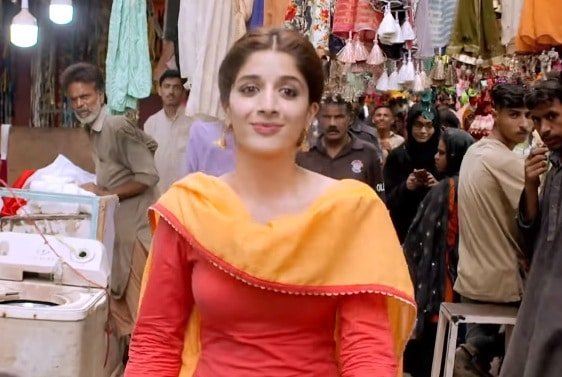
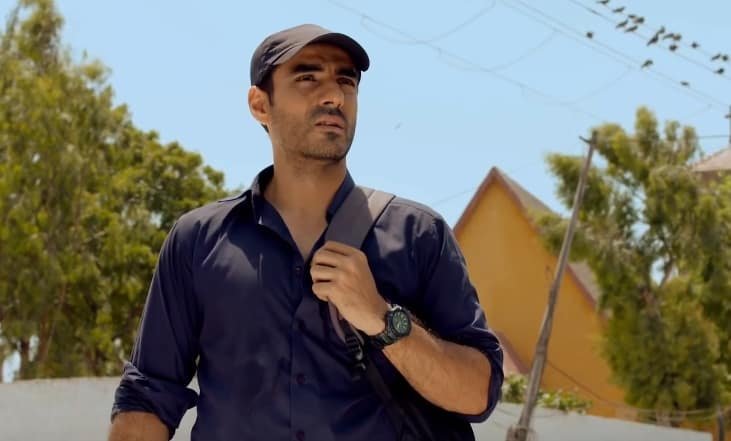
    Two rival networks, two new shows – Daasi and Bewafa. Starring Mawra Hocane and Adeel Hussain in the lead, Daasi aired on Hum TV while Bewafa starring Ali Rehman Khan, Navin Waqar and Ushna Shah in the lead aired on ARY Digital.

    Which one was more promising? Read on.

    Daasi’s first episode served to introduce the characters. Mawra had a typical, chulbuli and colourful entry which lasted for a good five minutes. She burst onto the screen in an orange shalwar kameez and instantly reminded me of Hira Mani for Do Bol. She referred to herself in the third person whenever she talked and was your regular TV drama, middle-class girl.

    Adeel’s character, Aael, on the other hand, was sombre and sad and there were glimpses of him being troubled. He had just lost his father and decided to leave his home right after because of tensions with his mother. Fate brought Adeel to Sunheri face to face and the two immediately clashed – not very original. The same night, Adeel ends up at Sunheri’s house as a tenant and the episode ends Sunheri saying, “Tum?”

    The first episode pretty much laid out what the drama is going to be about – two conflicting opposites who fall in love. What the conflict will be that hasn’t been revealed as yet, but judging from the promos and teasers, its probably going to be about their different worlds. Unless the writers introduce a refreshing twist, the drama is going to become another love story in Hum TV’s list of productions.

    Meanwhile, Bewafa, as the title suggests is about being unfaithful and judging from the promos one can guess that it will be about cheating followed by a second marriage. What I liked about this drama was that it was fast-paced – there was no lead-up or anything, you just dived right in. Ahaan (Ali Rehman) and Kinza (Navin Waqar) are a couple married for six years. Ahaan is an IT professional with a stable job, while Kinza is a housewife and the two appear to lead a seemingly normal life. But a few minutes into the first episode, we are shown glimpses of Kinza’s overbearing and suspicious nature. She is forever questioning Ahaan about his whereabouts and tries to control him. This not only puts off Ahaan but also me, as a viewer. Itnay sawaal jawab toh bhae meri Ammi nay kartein mujhe say.

    The third person in this relationship is Shireen (Ushna Shah), who works in Ahaan’s office and is love with him. Actually his money and status more, than him. She belongs to a lower background and is willing to go to any length to uplift her social status. Shireen declares her love for Ahaan through a voice note which by chance Kinza gets her hands on first. Of course, she throws a tantrum on this despite Ahaan’s assurances that there is nothing going on between the two and that Shireen’s feelings are one-sided and he has no feelings for her. This, in turn, causes Ahaan to lash out on Shireen, who goes home crying. Kinza later apologises for her behaviour and all is well between the couple. However, Ahaan begins to feel bad about his outburst and the promo for the next episode shows him going to Shireen to apologise.

    After Khaas and Meray Paas Tum Ho, Bewafa is another drama centred on the subject of cheating. While all three dramas appear to be different, their premise is the same. Whether on not Bewafa is different from the other two, time will only tell.

    Meanwhile, have to say the performances of all the three leads were brilliant.

    It’s hard to make a call given that only one episode has aired, but if I had to pick one, I’d probably choose Bewafa because its more masalaydaar and faster-paced. Daasi has a dark touch to it, and I, for one, have had enough of such love stories.

  • D’Amla: A pleasantly, expensive experience

    D’Amla: A pleasantly, expensive experience

    When D’Amla eatery launched in Karachi, it was received critically. More than the food, the outrageous prices of the items and the owner’s behaviour seemed to irk the customers who took to social media to bash the restaurant. To be honest, the prices of the platters were touching the sky but overall it was not that expensive. Other than that, the owner had advertised the restaurant as less of an eatery and more of an experience.

    A few days back I decided to visit the restaurant on a whim and it left me quite surprised. I, for one, am not the person who goes on reviews as I like to make my own judgments.

    Our meal started with Ceviche with White Pearls, Three Cheese Large Bowl Salad with Nuts and Fruits, Chicken with Wasabi, Parsley Sauce Prawns with Potato Puree and Undercut Meat (Smoked) with Greek Curd Cream. The Ceviche was a refreshing change from the usual as were the prawns.

    For the main course, we had Lamb Chops with Portuguese Potatoes, Argentinian Rissoto with Sujuk and Grilled Chicken Thigh, Prawn Pesto Spaghetti and Swiss Charcoal Chicken. Oh man, these dishes were to die for. The meat was succulent and juicy, the seafood fresh and the Sujuk which is a Turkish sausage was absolutely delightful.

    Rissoto with Sujuk and Grilled Chicken Thigh

    No meal is ever complete without dessert so for that, we had Walnut Tart with Vanilla. This was so fresh and yummy that I had to stop myself from ordering another one.

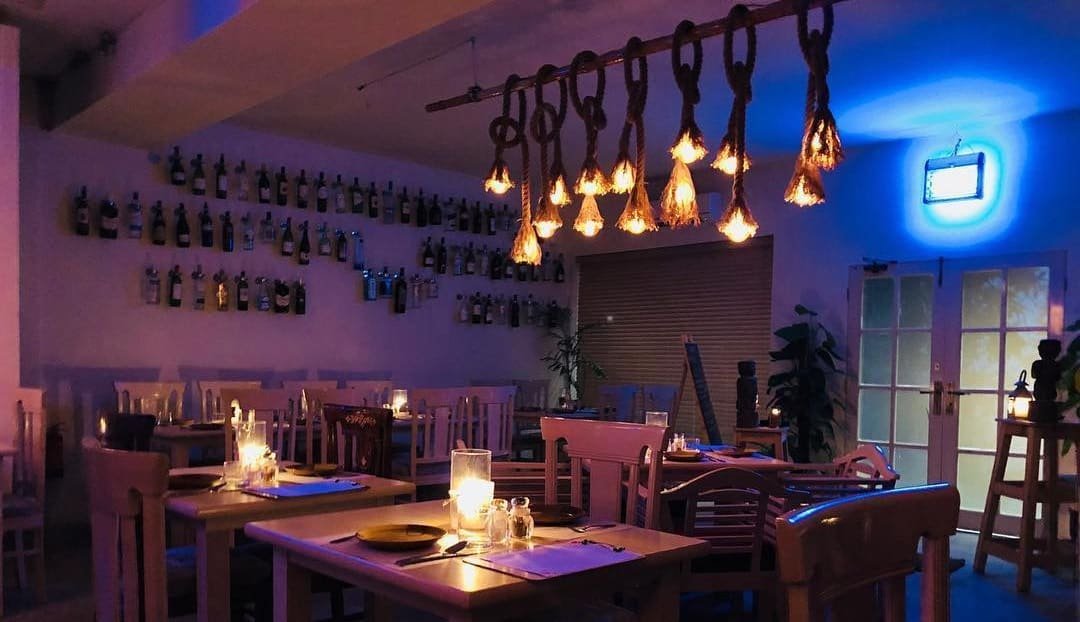
    Given the negative reviews, I was a bit skeptical about visiting D’Amla but the small, dimly lit restaurant won me over and I cannot wait to go back. The food was not only well-presented but it was delicious to the core. Everyone has their own experiences – someone’s cup of tea might not be yours, so it’s always better to decide for yourself.

  • Pakistani dramas on our radar

    Pakistani dramas on our radar

    The Pakistani drama scene is currently very lit with new and interesting dramas hitting our TV screens. Here are the dramas that have caught our attention.

    Meray Paas Tum Ho

    Humayun Saeed, Ayeza Khan and Adnan Siddiqui’s latest blockbuster has an interesting storyline and the first three episodes have us hooked.

    Read The Current’s full review here.

    Khaas

    Sanam Baloch and Ali Rehman Khan’s Khaas focuses on the troubles of a married couple and highlights mental abuse in a relationship. It is safe to say that the drama’s storyline is fresh and realistic which makes you want to tune into it every week.

    Gul o Gulzar

    The drama’s plot focuses on the life of two opposite friends Gul and Gulzar. Saboor Aly who plays the cunning, manipulative Gul has given a brilliant performance and we can’t praise her enough.

    Bewafa

    Bewafa hasn’t hit the TV screens yet, but it is set to air from this Monday. From the teasers, we can tell that the drama will be a love triangle in which Ali Rehman Khan will have two wives.

    Kismat

    One episode down, Minal Khan’s latest drama on Hum TV seems typical but we think it’s going to be pretty masalaydaar. The first episode has crossed 1 million views already.

  • NOI-Stir Fry Kitchen – The takeout Lahoris have been waiting for

    NOI-Stir Fry Kitchen – The takeout Lahoris have been waiting for

    We’ve all grown up watching Hollywood movies in which Chinese takeouts are the thing. And let’s be honest, we’ve all secretly wanted that. Though most Chinese and Pan Asian restaurants in Lahore offer takeaways and deliveries, they rarely offer single servings which is why you usually have to think twice before placing an order.

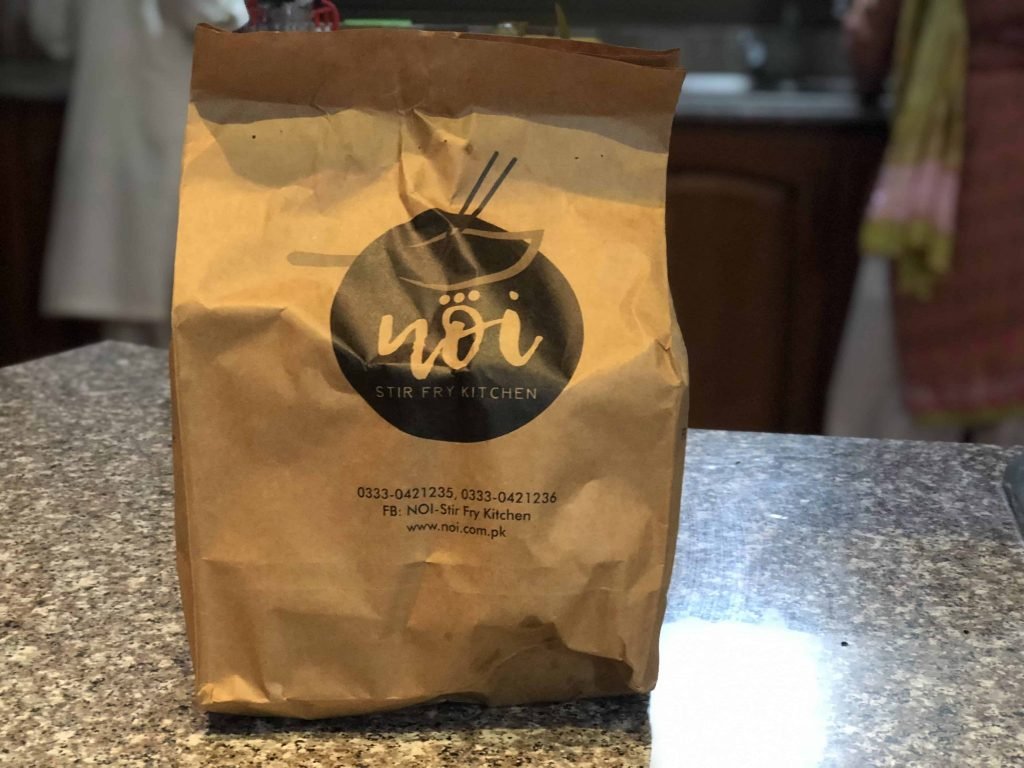
    Enter NOI-Stir Fry Kitchen – an Asian Stir Fry Kitchen which has been creating waves on social media and all the food groups. After reading some fabulous reviews on their dishes, I gave in to my temptation and placed an order. Considering their prices were also comparatively reasonable, I didn’t need any more convincing.

    From the 16 gravy options they have, I tried their Crispy Honey Sirachi, Sweet and Sour Manchurian, Mixed Mushrooms Teriyaki and Hot BBQ Shashlik and am happy to report that not one of them let me down.

    All dishes are single servings and come with a side of plain steamed Asian rice packaged in a paper carton. The food was delivered piping hot in small black plastic containers and it was good to see that their serving size was pretty good – it was more than enough for a person. The quantity of vegetables in each dish was also impressive and they were well-cooked.

    My favourite from the options has to be the Mixed Mushrooms Teriyaki and Sweet and Sour Manchurian. Most of us Pakistanis are used to eating saucy Manchurian which tastes like ketchup mixed with chicken. But Noi’s Manchurian was neither saucy nor ketchupy – it was just like the name suggested – perfectly balanced between sweet and sour. The Mixed Mushroom Teriyaki also had a similar flavour but with a stronger Ginger flavour. The mushrooms in this dish were delicious – they were better than anything else and I would order this dish for the mushroom alone next time.

    Meanwhile, the Crispy Honey Siracha was extremely spicy and literally puts your mouth on fire. What I didn’t like about it was how it was barely crispy and the taste of honey was hardly detectable.

    Mixed Mushroom Teriyaki, Sweet and Sour Manchurian

    Nonetheless, given the quantity, taste and price, Noi is highly recommended. Their kitchen is open 5:30 pm onwards till late night but they are usually sold out long before closing time. Best is to place your order ahead of time so that you don’t end up disappointed.

  • Managing Pakistan’s water

    Managing Pakistan’s water

    Water wastage is high and agricultural yields are low. We are also among the 10 countries with the lowest access to clean water.

    Water is a resource that has been taken granted for
    centuries. People think it’s an abundant and limitless, but this faulty
    perception is changing and it’s about time. We’re running out of fresh water…
    and fast.  

    According to a World Bank report published in January 2019,
    the country is “well-endowed” with water but “water wastage is high and
    agricultural yields are low”. This, according to the report, is because of bad
    management of available water resources.

    We are also among the 10 countries with the lowest access to
    clean water, according to a study “The Water Gap — The State of the World’s
    Water 2018”, by WaterAid. About 21 million out of the total population of 207
    million do not have access to clean water.

    “Pakistan is facing severe challenges; industrialisation and
    the demands of agriculture, depleted and increasingly saline groundwater, rapid
    urbanisation and drought have all taken their toll,” says the report.

    What adds to the problem is the outdated water
    infrastructure. The lack of reservoirs and the dilapidated existing facilities
    mean that our ability to store water is way lower than what is needed.

    Pakistan has clearly a lot to make up for in almost each of
    the areas identified above. Compared to the United States (US) and China where
    40% and 65% of freshwater withdrawals are used for agriculture, respectively;
    in Pakistan, the figure exceeds 90%.

    The government clearly needs to have a well-thought-out
    policy in place with proper implementation to ensure that the scales do not
    tilt in one stakeholder’s favor. There are sectors where urgent interventions
    are merited because they use up the most water the most notable being the
    agriculture sector.

    Intensive irrigation not just wastes water but also
    increases the risk of over-irrigation leading to low crop yield. Since most of
    the farmers are practicing agriculture the way their forefathers did, the
    government and private sector need to work together to help the farmers adapt
    to more responsible irrigation techniques.

    Another area is intensive water use industries like textile,
    leather and sugarcane to name a few. The world over, industries are looking to
    reduce their water footprint. For example, Levi Strauss & Co. recently
    announced that it would reduce its water use for manufacturing by 50%, especially
    in water-stressed areas by 2025. Abercrombie & Fitch has also pledged a 30%
    water reduction by 2022.

    There are food and beverage companies who are trying to work
    on reducing water waste, not just in their own processes but also outside their
    fence. A leading name in these efforts is that of Nestlé Pakistan, which
    under its “Caring for Water” initiative is helping farmers move
    on from water-intensive irrigation practices and take up high-efficiency
    irrigation systems like drip and sprinkler irrigation.

    The company claims that it has helped save more than 300
    million litres of water in two years by promoting drip irrigation on about 107
    acres of land. Their aim is to help save 400 million litres by the end of 2019.
    In addition, the company has also developed smart soil sensors. The sensor
    detects the level of soil moisture sensors and send real-time data to the
    farmers helping them to save water (about 12%), avoid crop stress and
    ultimately increase yield.

    The company has developed cheap versions of the sensor with the help of the Lahore University of Management Sciences’ (LUMS) Centre for Water Informatics and plans to scale the project up this year.

    We need positive initiatives like these, which involve
    different partners working together on various aspects of the water challenges
    to help address them. The multiple and cross-sectoral challenges beg
    collective solutions.

    It’s only with a collective approach that we can ensure
    effective water management, which requires planning, developing and
    distributing water in such a way that all the competing demands (agriculture,
    access to safe drinking water, daily use, biodiversity etc) for water are met
    and it is allocated on
    an equitable 
    basis to satisfy everyone’s demands.

  • VIDEO: Kubra Khan reveals what she would gift Hamza & Naimal, Sajal & Ahad, Yasir & Iqra on their weddings

    VIDEO: Kubra Khan reveals what she would gift Hamza & Naimal, Sajal & Ahad, Yasir & Iqra on their weddings

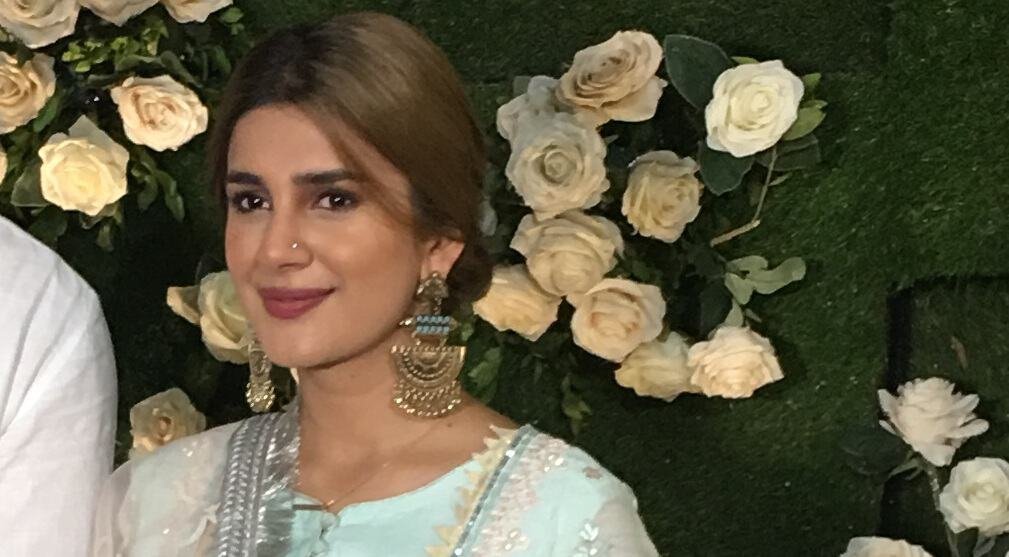
    When we ran into Kubra Khan at the 7Up Pakistan Wedding Show (oh the irony), we couldn’t help but ask her what gift she would give to her three couple friends who are (or have already) gotten married.

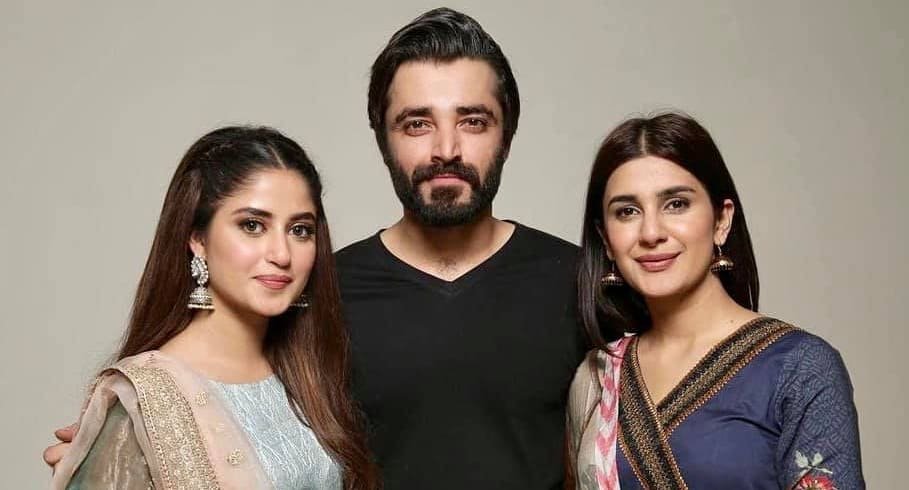
    Kubra shares a close friendship with Yasir Hussain and Iqra Aziz and has a great working relationship with Hamza Ali Abbasi and Sajal Aly.

    Yasir & Iqra

    “I would give them a painting because they’re both very creative – so something to do with art.”

    Ahad & Sajal

    “Something to do with music because Sajal sings really well and Ahad is a really good musician as well.”

    Hamza & Naimal

    “Hmm I would give them my best wishes.”

    Watch the full video here:

    While Hamza Ali Abbasi has tied the knot with Naimal Khawar, we are still waiting for the other two celebrity couples – Ahad Raza Mir and Sajal Aly; Iqra Aziz and Yasir Hussain – to announce when they will be saying their ‘qubool hais’.

  • What to expect from Hamza Ali Abbasi’s wedding

    What to expect from Hamza Ali Abbasi’s wedding

    Pakistan’s IT bachelor Hamza Ali Abbasi is all ready to tie the knot this weekend and everyone has got their popcorns ready because it’s going to be one hell of an event. Even though Hamza in his wedding announcement has said that both the nikkah and the valima will be simple affairs, we all know where a celebrity is getting married and lots of famous people are invited, the event can hardly count as simple. It’s more of a glittering affair than anything else.

    Outfits

    Hamza’s outfit is a no-brainer. Whether it’s an award function or a casual day out, Hamza is always seen in a plain black shalwar kameez. Hence it is likely that he will stick to his usual attire, on the nikkah at least. Though we think that he might wear a white shalwar kameez on his nikkah instead. For his reception, he might opt for a sherwani – he is occasionally spotted sporting one. Also let’s not forget, Hamza will be bald at his wedding, given that he recently returned fro Hajj, but we’re sure he’ll sport it with confidence. We do hope he wears better shoes though.

    Hum Awards 2018

    As for Naimal, we’re can’t exactly say which designer she will wear. On her Instagram, she has donned a variety of Islamabad-based designers from Maheen Shah to Zamrud. In her last Instagram post, Naimal was wearing an outfit by Zainab Salman so it’s possible that she might don an outfit by the designer on one of her functions. As for the colour, given her love for beige attires, we think that she might wear an outfit of the same colour on her nikkah.

    In Warda Qutub Khan

    Guest List

    Everyone has been speculating whether PM Khan will be attending or not, but according to the Special Assistant to Prime Minister on Media, the PM will not be attending as he has stopped making social appearances. However, senior members of the PTI leadership might attend the shaadi.

    It is expected that the entire cast and makers of The Legend of Maula Jatt – Fawad Khan, Mahira Khan, Ammara Hikmat, Gohar Rasheed and Bilal Lashari – will be in attendance.

    Naimal’s co-stars from Anaa – Hania Aamir, Shehzad Saleem, Usman Mukhtar – are also likely to be attending the event. Hania has also worked with Hamza in Parwaaz Hai Junoon.

    Humayun Saeed has said that he will not be able to attend as he is not in the country. Whether Hamza’s fellow actors from Jawani Phir Nai Aani will be attending or not is unclear. They’ve all sent their congratulations though.

  • Sanam Jung, Affan Waheed’s ‘Mein Na Janoo’ is…basic

    Sanam Jung, Affan Waheed’s ‘Mein Na Janoo’ is…basic

    Sanam Jung’s, much-hyped comeback to dramas had everyone buzzing. The actor has been an extremely popular morning show host and her fans were eagerly awaiting her return to the screens. Sadly, her latest offering Mein Na Janoo, which also stars the new heartthrob Affan Waheed and Zahid Ahmed, has fallen flat, leaving the audiences confused.

    Till now, six episodes have been aired and with every passing episode, the plot spirals into some unknown universe.

    The drama, produced by Adnan Siddiqui, revolves around Saira (Sanam) and her half-sister Kiran, played by Komal Aziz Khan. Both the girls have the same father but different mothers. While Kiran’s mother has been accepted by the family as their own, Saira’s mother (Huma Nawab) is an outcast and treated like a maid in the house, for reasons still unknown. All through the first six episodes, Saira’s mother is referred to as a “chalaak, gunegaar, behaya aurat” because she apparently stole her husband. Saira is also mistreated and vilified by the family even though her father supports her and defends her when the rest of fam accuses her of chalaoing her “jadu” on the men.

    Meanwhile, Nain (Zahid Ahmed), a former Airforce officer and Nehat (Affan Waheed) are Saira and Kiran’s cousins. Both of them are in love with Saira and want to marry her. However, Nehat’s mother refuses to make Saira her bahu (because you know she belongs to a behaya mother) and wants Nehat to marry Kiran, while Saira’s father is unsure about giving his daughter to a person who is blind, even though Nain’s family loves Saira.

    In short, the plot is basic and has nothing new to offer – crying heroines and abusive families have been done to death. Though I have to admit, the level of abuse in this drama is over the top and makes you cringe. Dialogues like “Iss larki nay izzat mitti main mila di,” “Iss ko main aisa sabaq sikhaoon gee keh dunya dekhay gee,” etc have been generously used. And of course, girls and boys have no right to fall in love with each other and if they do, it’s the girl’s fault because she trapped the guy.

    Both Saira and her mother as victims are seen crying in almost every scene. Saira’s mother barely says anything, just walks through every episode with her head down as the rest of the family members vilify her and call her names. Sanam’s expressions come across as wooden in most scenes, but then again her character has been written like that. Affan does a decent job as the arrogant spoiled brat as does Zahid as a blind former Airforce officer. But none of the actors give their best. Their acting is slightly above average at best.

    The drama is currently moving at a snail’s pace and leaving many questions unanswered which is why it is getting boring and dry. I hope the writers shake things up because if they continue like this, no one’s going to watch it. Affan is expected to turn into the antagonist and become a complete psychopath so that is one thing to look forward to.

  • The Current EXCLUSIVE: Is PM Khan attending Hamza Ali Abbasi’s wedding?

    The Current EXCLUSIVE: Is PM Khan attending Hamza Ali Abbasi’s wedding?

    Hamza Ali Abbasi’s wedding to is all anyone and everyone can talk about this week. Once everyone got over the initial shock, questions were raised as to who will be on the coveted guest list and what the couple will be wearing.

    Like everyone else, we also wondered if Prime Minister Imran Khan will be attending the wedding given that he shares a close relationship with the actor.

    “I don’t think so,” says Special Assistant to PM on Media Iftikhar Durrani. “Ever since he has become PM, he has not attended any social events except for two weddings one of which was his Military Secretary daughter’s wedding.”

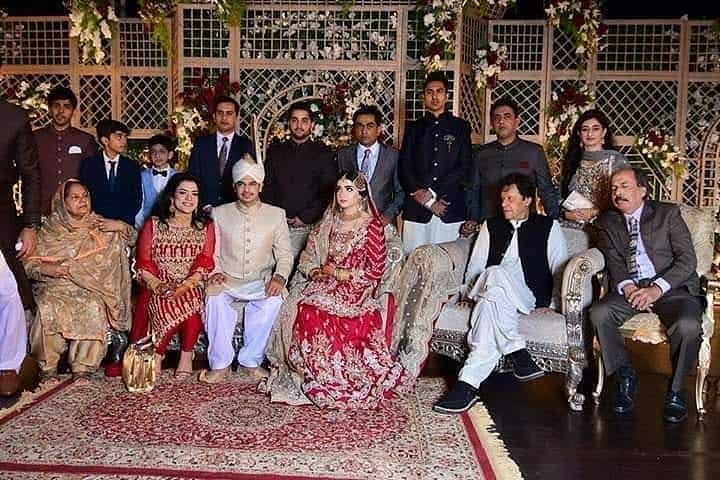
    PM Imran at his MS’ daughter’s wedding

    Cricketer Imad Wasim has also invited the PM to his wedding which is being held on the same day as Hamza’s valima. But it appears that the PM will be skipping both.

    It is pertinent to mention here that PM Khan also did not attend his nephew and niece’s wedding in April even though his sons were in attendance.

    Hamza is getting married to actor Naimal Khawar this weekend in a “small nikkah” which will be held on Sunday, August 25 followed by a “small valima” the next day.