Author: saadan

  • Taxes in your electricity bill: What Pakistanis are paying and what for?

    Taxes in your electricity bill: What Pakistanis are paying and what for?

    Protests against exorbitant electricity prices continued to grip Pakistan as consumers from all corners of the country voiced their frustration by burning electricity bills and chanting slogans denouncing overcharging. With Pakistan facing a severe economic crisis and inflation rates surging to a staggering 29 per cent, citizens are grappling with the overwhelming impact of inflated electricity costs.

    The outcry has intensified as incumbent authorities adhering to an IMF deal have slashed power sector subsidies, resulting in unprecedented price hikes that have burdened already inflation-weary citizens. The new pricing structure has set electricity rates at a record high, significantly affecting the cost of living for the nation’s over 240 million inhabitants.

    Central to the grievances is the manner in which electricity bills are calculated. The basic charge is linked to kilowatt-hours (kWh) or units consumed, a component that carries an array of additional taxes. These taxes, directly borne by the masses, have contributed to the mounting frustration felt by the population.

    An individual from Gujranwala recently shared an eye-opening example of the impact of these charges. Despite consuming around 212 units in the previous month, he received an electricity bill of Rs10,500, while the cost of the electricity consumed was merely around Rs6,400. The disparity between consumption and billing has drawn attention to the various components contributing to the final cost.

    For those consuming slightly over 200 units, the Fuel Price Adjustment (FPA) accounts for approximately Rs250. This adjustment is contingent on the price of the fuel used in electricity generation. If the cost of fuel rises during power generation, WAPDA (Water and Power Development Authority) levies an additional charge in subsequent billing cycles.

    Breaking down the bill further, it reveals a complex web of charges. An electricity duty of around Rs100 is imposed, accompanied by a General Sales Tax (GST) of Rs1,316.

    Additional charges include Income Tax amounting to Rs900 and Extra Taxes totaling Rs366. The bill also features a peculiar charge of Rs227 labeled as ‘Further Taxes,’ which has prompted criticism from citizens questioning its purpose and transparency.

    Additional charges on the bill encompass Rs365 for Sales Tax, Rs680 for Financing Cost Surcharge (FC Surcharge), and Rs115 designated as ‘Taxes on FPA.’ Notably, non-filers of income tax are subjected to supplementary charges on their utility bills.

    As confusion mounts among consumers regarding the breakdown of charges, it is imperative for electricity consumers to comprehend the various taxes levied on their monthly bills. Diverse categories of consumers are subject to a range of taxes, duties, and surcharges, contributing to the complex structure of electricity pricing in Pakistan.

    Below is a list of the taxes and levies imposed on electricity consumers in Pakistan:

    Electricity Duty: Ranging from 1.0 per cent to 1.5 per cent of Variable Charges, this provincial duty is levied on all consumers.

    General Sales Tax (GST): At a rate of 17 per cent of the electricity bill, GST is levied on all consumers under the Sales Tax Act 1990.

    PTV License Fee: Domestic consumers pay Rs35, while commercial consumers pay Rs60 as PTV license fee in their electricity bills.

    Financing Cost Surcharge: This surcharge of Rs0.43 per kWh applies to all consumer categories except lifeline domestic consumers.

    Fuel Price Adjustment (FPA): FPA represents the difference between actual fuel charges and reference fuel charges. Positive variation leads to a charge, while negative variation benefits the consumer.

    Extra Tax: Imposed on industrial and commercial consumers not registered in the active taxpayer list, rates range from 5 per cent to 17 per cent based on different bill amount slabs.

    Further Tax: Levied at a 3 per cent rate on all consumers without a Sales Tax Return Number (STRN), except for domestic, agriculture, bulk consumers, and street light connections.

    Income Tax: Charged at varying rates depending on the applicable tariff and the electricity bill amount.

    Sales Tax: Commercial consumers face a 5 per cent sales tax on bills up to Rs20,000 and a 7.5 per cent tax on bills exceeding Rs20,000.

    With public discontent on the rise, authorities are urged to address the concerns of citizens and seek a balanced approach that mitigates the impact of these charges on the already struggling populace.

    As the nation grapples with economic uncertainties, finding a solution that eases the burden on citizens while ensuring the sustainability of the power sector remains a pressing challenge.
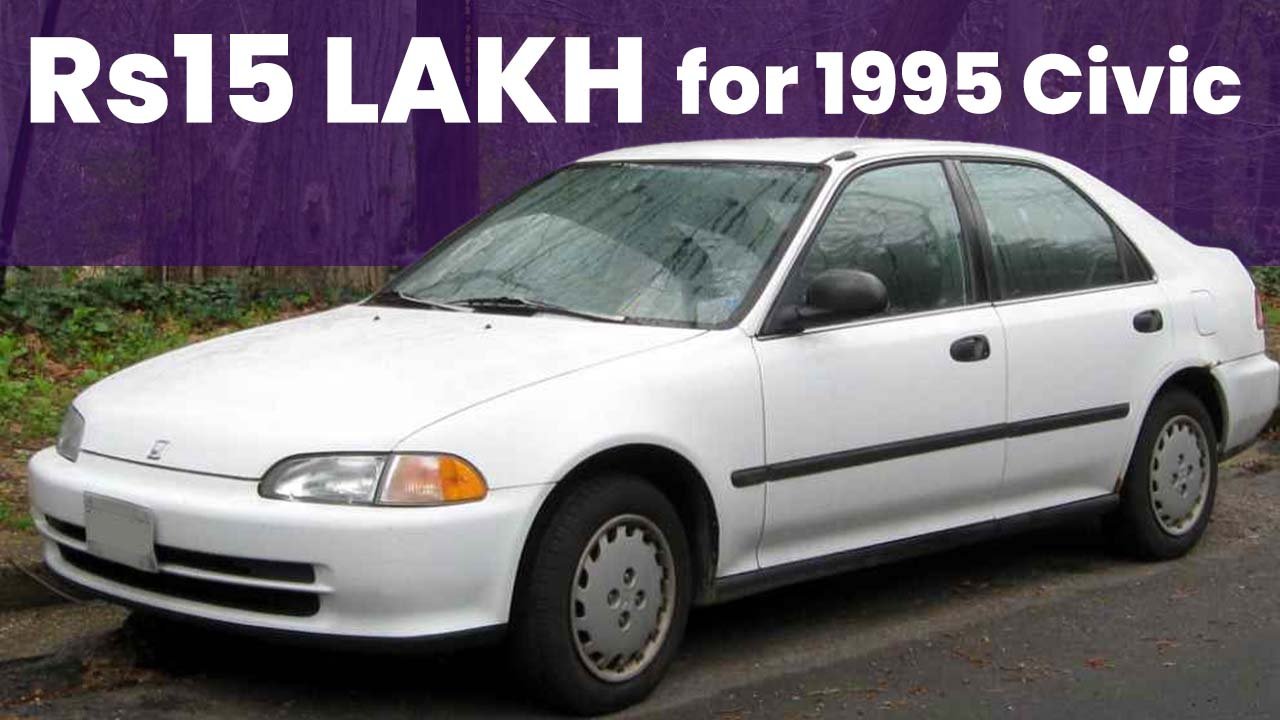
  • Rawalpindi man lists nearly 30-year-old Honda Civic for sale at Rs1.5 million, says ‘it’s worth it’

    Rawalpindi man lists nearly 30-year-old Honda Civic for sale at Rs1.5 million, says ‘it’s worth it’

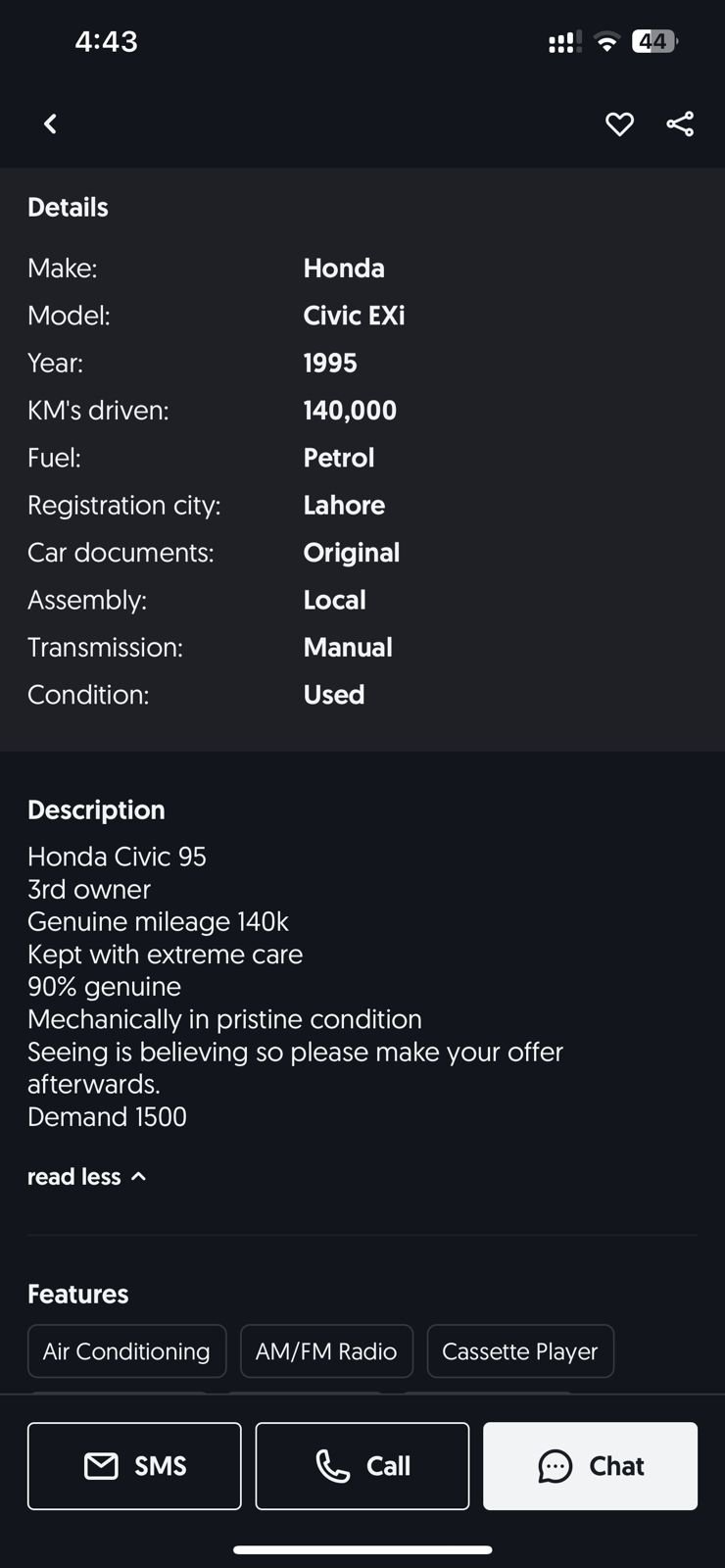
    With the rising prices of new cars rendering them unaffordable for many, even owners of older vehicles have begun to demand surprisingly high prices for their decades-old vehicles. In Rawalpindi, a seller recently posted an advertisement on the online buying and selling platform OLX Pakistan, listing a basic 1995 manual Honda Civic EXI at a staggering price of Rs1.5 million.

    The Current contacted him to ask if the price was a mistake. He confidently said it wasn’t and truly thinks his well-kept car is worth the Rs1.5 million price. He’s received many offers and a lot of interest in his nearly 30-year-old car. He also mentioned that he’s the third owner of this 1995 Honda Civic.

    It is noteworthy that a mere two years ago, cars of the same model year were being listed on online marketplaces for a significantly lower price, less than Rs600,000. However, the present scenario witnesses a surge in the asking price for these vehicles.

    This trend is not exclusive to a particular model but rather extends to nearly all used cars, given that even the cheapest car from Pak Suzuki Motors, the Suzuki Alto, now commands a price of nearly Rs3 million. Consequently, a considerable number of individuals, constrained by budgetary limitations, opt for pre-owned cars.

    While the price might raise eyebrows for a car of this kind, die-hard Honda Civic enthusiasts might willingly pay this hefty amount. That’s especially true if the car’s condition lives up to the seller’s claims.

    Given its popularity among Pakistan’s racing community and its appeal to those wanting to build a car from scratch, the price could find its justified niche.

  • Rising inflation forces over 80% of Pakistanis to reduce monthly expenses

    Rising inflation forces over 80% of Pakistanis to reduce monthly expenses

    A recent survey conducted by PulseConsultant in the month of May has shed light on the significant increase in downtrading among urban Pakistanis, attributed to the high inflation rate. The study surveyed more than 1,360 respondents across the top 12 cities of Pakistan.

    The findings of the study reveal a notable shift in consumer behavior and attitude towards purchasing and consumption patterns in light of the current inflation wave. As prices continue to soar, many respondents have altered their buying preferences to cope with the economic challenges.

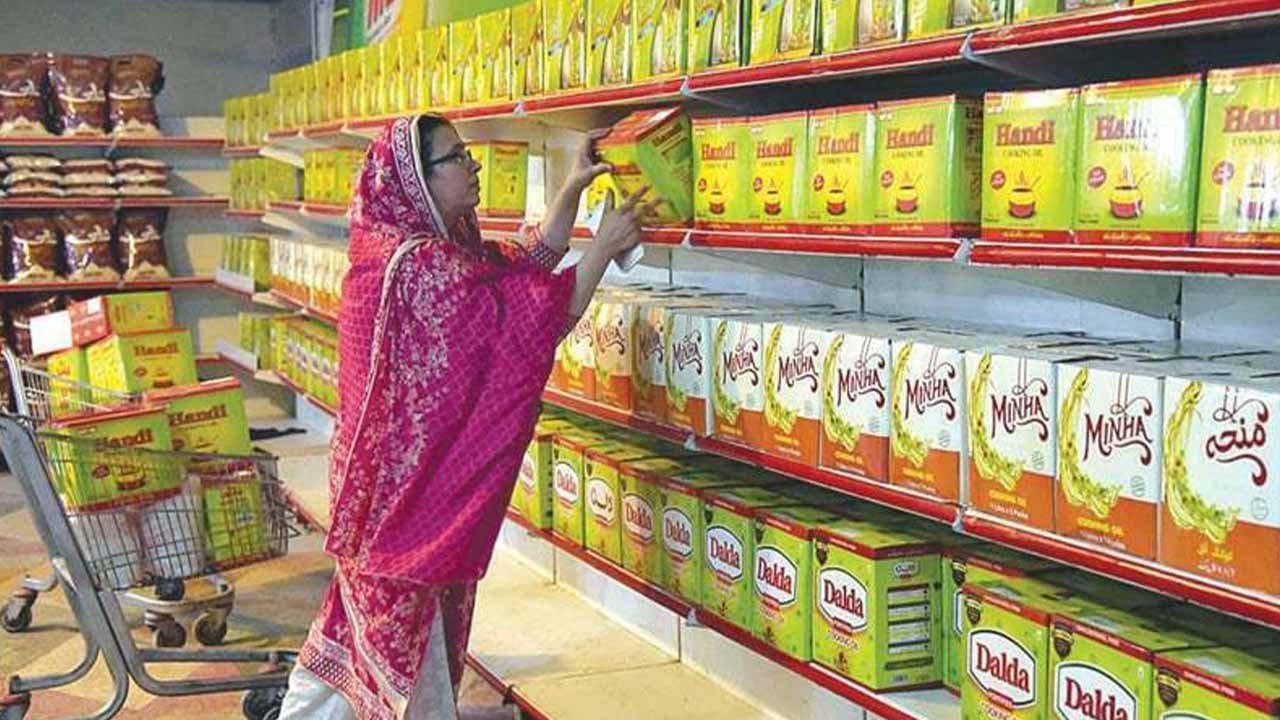
    According to the study, 55 per cent of respondents reported that they have switched from expensive brands to more affordable ones. This percentage represents a considerable increase from the previous month of April, where the trend stood at 45 per cent. This shift highlights the growing financial strain faced by consumers, prompting them to seek cost-effective alternatives.

    Moreover, the data indicates a decline in the phenomenon of purchasing the same brands but reducing the quantity. In April, 46 per cent of respondents claimed to be adopting this strategy, whereas in May, the number dropped significantly to 38 per cent, showing an 8 per cent decrease. This suggests that consumers are finding it increasingly difficult to maintain their previous consumption habits.

    In terms of monthly home purchases, the study reveals that 81 per cent of respondents reported a reduction in May, marking a 3 per cent increase compared to April when the figure was 78 per cent. This indicates that consumers are actively curtailing their household expenses in response to the inflationary pressures.

    To gain a deeper understanding of consumer behavior and attitudes towards the current inflation wave, PulseConsultant invites individuals to join their syndicated research initiative. The study aims to gauge the impact of inflation on purchasing and consumption behaviors across 40+ categories, focusing on five parameters: consumption increase/decrease, brand switching, quantity reduction while retaining the brand, changing the stock keeping unit (SKU) while retaining the brand, and category consumption drop.

    The research methodology involves face-to-face interviews with a sample size of 1,704 individuals across the top 17 cities in Pakistan. The gender distribution comprises 30 per cent males and 70 per cent females, while the age group considered is 22-55 years. The socioeconomic classes targeted range from SEC A-D. The research is scheduled to take place over a period of four weeks.

    As inflation continues to affect the purchasing power of consumers in urban Pakistan, the study by PulseConsultant aims to shed light on the evolving trends and behaviors within the market. The findings will help businesses and policymakers make informed decisions to navigate the challenging economic landscape and cater to the changing needs of consumers.

  • Inflation hits Pakistanis hard as they prepare for Eid-ul-Fitr festivities

    Inflation hits Pakistanis hard as they prepare for Eid-ul-Fitr festivities

    Eid-ul-Fitr is an important religious holiday celebrated by Muslims around the world, marking the end of the holy month of Ramadan.

    During Ramadan, Muslims fast from dawn until sunset and abstain from food, drink, and vices like gossip and lying. It is a period of self-reflection and a reminder to be charitable to the less fortunate.

    Observed first day of Shawwal, the tenth month of the Islamic calendar, Eid-ul-Fitr is a time for Muslims to come together with family and friends to offer prayers, exchange gifts, and share meals. It is also a way for Muslims to show their gratitude to Allah for giving them the strength to fast and to seek forgiveness for any sins committed during the year.

    However, in Pakistan, small shops and businesses are struggling to make ends meet during this year’s Eid-ul-Fitr celebrations. The high levels of inflation, which have hit their highest levels in decades, have left many businesses unable to make enough money to cover their monthly expenses, including rent and utility bills.

    For many small shops and businesses in Pakistan, the last days of Ramadan or before Eid-ul-Fitr used to be a guaranteed earner—a big-spending week that could match the take from the rest of the year. However, this year, many worry they will not even make enough to pay for their monthly expenses.

    A tailor in Canal Bank, Lahore, stated that each year, he was fully booked and had so many orders that he couldn’t take orders after the middle of the month of Ramzan. However, this year, he said, “For the first time, we are accepting orders in the last week of Ramzan as there is not much work.”

    Tailors in Lahore who used to charge Rs1,500 are now charging Rs2,500 or Rs2,200. Even well-known brands or shops are charging more, which is leaving consumers with no option but to go for cheap ready-made clothes or clothes that are available on sale.

    The South Asian country of more than 220 million people saw year-on-year inflation hit 35.4 per cent in March. Food prices surged more than 47 per cent in 12 months, with transport costs rising by 55 per cent.

    Pakistan is deeply in debt and needs to introduce tough reforms to unlock a tranche of a $6.5 billion bailout from the International Monetary Fund in order to avoid default. The economy has been wrecked by years of financial mismanagement and political instability—a situation exacerbated by a global energy crisis and devastating floods that left a third of the country under water last year.

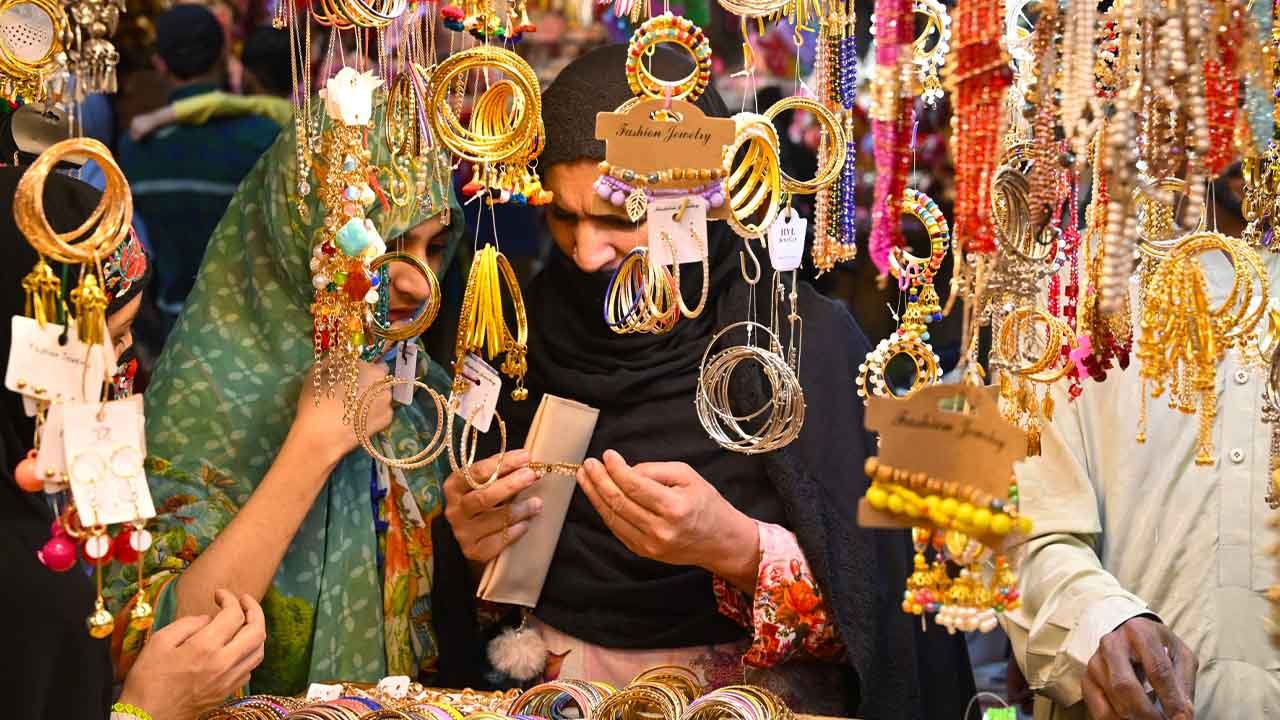
    An artificial jewelry shop owner in Anarkali, Lahore, Zaryab, said, “There is a significant difference between last year’s sales and this year’s. People come to our stall, see 3-4 necklaces or bangles, ask the price, and then leave.”

    The high inflation has significantly reduced the purchasing power of Pakistanis, and people are mostly focusing on fulfilling their essential needs. Noman Khan, an electrical engineer at ACE Pakistan, stated that this Eid, he has not been able to buy clothes for himself as he had to buy clothes for his two kids and wife. He added that “From artificial jewelry to kids’ clothes, everything is so expensive this year that I have no option but to wear old clothes. Although, I made sure that my kids and wife at least get what they want to wear this Eid.”

    In conclusion, the struggle for small businesses in Pakistan during Eid-ul-Fitr celebrations is a stark reminder of the country’s economic challenges. While many Pakistanis are still managing to celebrate the holiday, the high levels of inflation have made it difficult for many to enjoy the festivities.

  • Here’s how to use a SIM in a non-PTA approved phone

    Here’s how to use a SIM in a non-PTA approved phone

    Owing to import limitations and costly PTA approval fees, consumers are forced to choose non-PTA mobile phones as smartphone prices have increased dramatically in Pakistan.

    PTA approval for phones was not an idea back then, and Pakistanis could purchase any phone they wanted without any hassles. But now, it’s all different.

    A phone may use any SIM card for two months after it is imported into Pakistan, after which the PTA will disable the device. Due to store owners’ lack of concern for investing additional funds for PTA clearance and their decision to leave it up to customers whether they wish to pay the high cost of PTA approval for using a SIM, Pakistani mobile marketplaces are currently overrun with non-PTA phones.

    People use a different phone to keep their sim active because the sim on these phones stops working after the two-month period. Few individuals are aware that non-PTA phones still support SIM cards.

    Users can purchase a SIM card of a mobile network called SCOM and activate their number.

    For those who don’t know, SCO introduced the first GSM mobile services under the name SCOM in Azad Jammu Kashmir and Gilgit Baltistan in 2004.

    Read more: Latest government jobs in Pakistan

    In over 450 major cities, towns, and villages in Azad Jammu & Kashmir and Gilgit Baltistan, SCOM offers the area’s largest network coverage with an equal footprint in rural and urban terrain, but it may also be utilised across the entire nation.

    However, there is one disadvantage for residents of other parts of Punjab because SCOM SIM is not offered everywhere. There are many people selling SCOM connections online, so you can search OLX or visit SCOM’s official website to order a sim online.

    People purchase non-PTA phones, such as iPhones and other flagship models from Samsung, One Plus, Sony, Xiaomi, and other manufacturers, since PTA-approved phones are now quite expensive. People are forced to carry an additional phone to keep their sim active because the sim on these unapproved phones stops working after the two-month period.

    It is important to keep in mind that although these phones may appear to be less expensive at the time of purchase, adding the PTA approval charge makes them way more expensive.