Chief Minister Punjab Maryam Nawaz has recently shed light on her medical condition, which caused her to go to Geneva. In her own words, she said, “I have an issue of parathyroid; I even had surgery in Geneva last year, in January.”
She addressed the criticism being levelled against her by the public and the opponents, “I’ve been hearing a lot of people ask whether there’s not a single hospital in Pakistan where this surgery could have been performed. All my treatment was done in Pakistan. However, this parathyroid condition is one that can only be treated in two countries. It is not even available in England – only in Switzerland or America,” she said categorically.
She also made it a point to dismiss rumours of thyroid cancer: “I have been seeing that certain vlogs have been made about me, and it is being said that I have thyroid cancer. I don’t have cancer.” On this, the crowd started cheering for her, chanting “shame, shame.”
“I did not want to talk about my condition because playing a victim and crying about it is not what I have learnt from my parents.” She went on to add that she doesn’t like talking about her personal life in front of the media but had to say this because “it has been talked about a lot back home.”
The Current reached out to an endocrinologist, who preferred not to be named, to ask which thyroid conditions may require surgery and whether those treatments are available in Pakistan.
The doctor, a senior endocrinologist at a leading hospital in the provincial capital, said that parathyroid issues are very common and easily treatable in Pakistan.
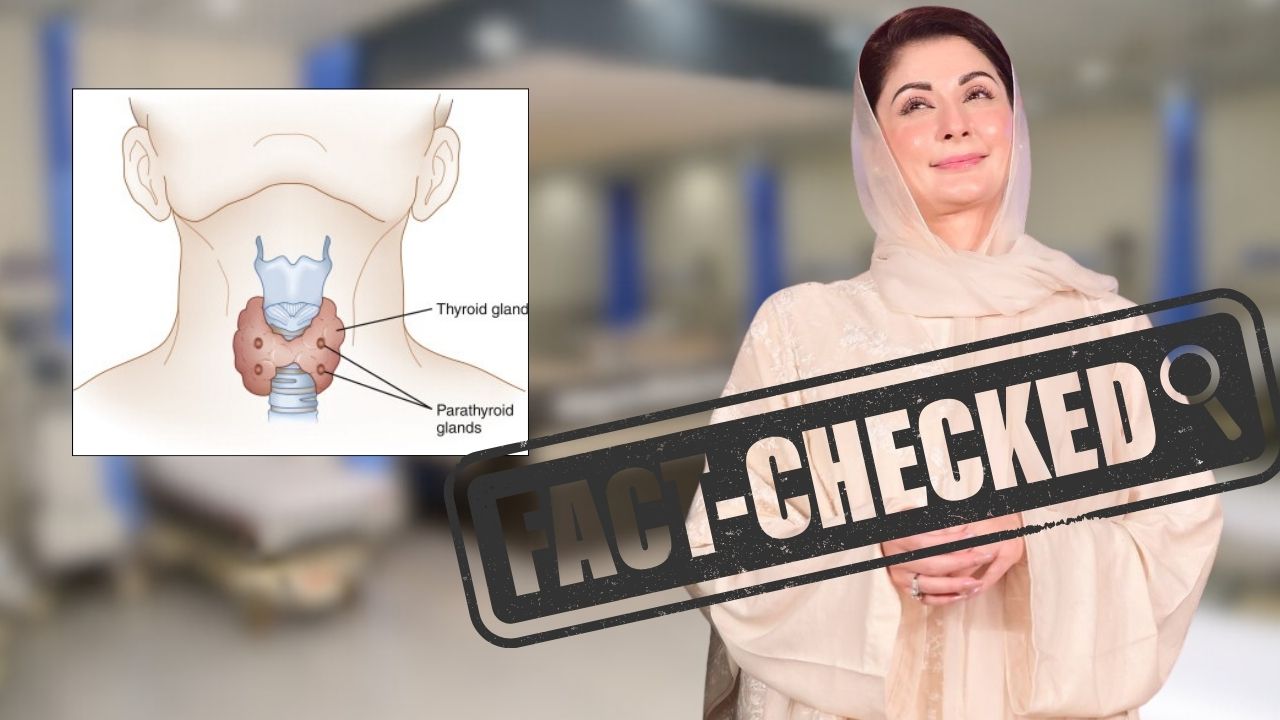
Thyroid and parathyroid are related glands under the skin in the throat and are responsible for producing hormones.
The pea-sized four small parathyroid glands are actually embedded within the thyroid gland. Its function is to control the metabolism of calcium in the body.
While tumours can develop in the parathyroid, they are largely benign and are removed if they increase in size or become hyperactive. This condition is called adenoma, and the first line of treatment for that is surgery because it disturbs the calcium levels in the body, which could lead to kidney stones, osteoporosis and other health problems.
The surgery requires the extraction of both the thyroid and parathyroid glands, which could produce deficiencies in the body but can be fixed by taking tablets for the rest of life.
The doctor told The Current that such surgeries are complicated but not entirely impossible in Pakistan as there are many specialists present in Karachi’s Agha Khan Hospital, Dow University Hospital and a couple of other institutes. Likewise, there are many in Lahore with some public hospital Endocrinologist Departments having the expertise to do so.
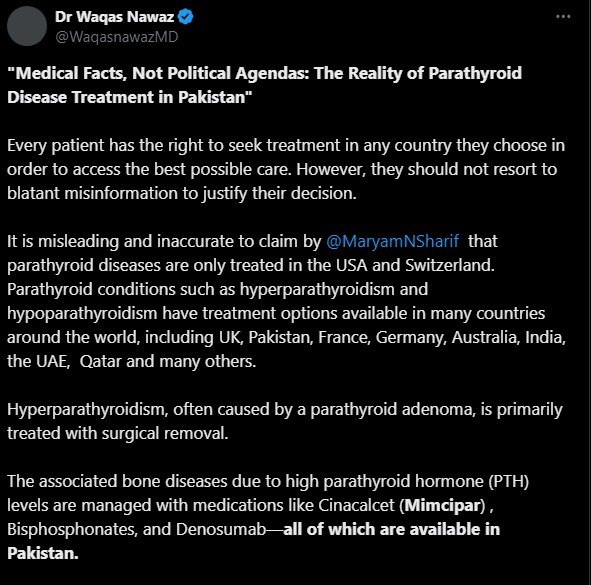
Doctor Waqas Nawaz on Twitter posted a detailed explainer on the options available in Pakistan related to Maryam Nawaz’s condition with the title, “Medical Facts, Not Political Agendas: The Reality of Parathyroid Disease Treatment in Pakistan”.
Tagging Maryam Nawaz, he stated: ‘It is misleading and inaccurate to claim by Maryam Nawaz that parathyroid diseases are only treated in the USA and Switzerland.”
“Parathyroid conditions such as hyperparathyroidism and hypoparathyroidism have treatment options available in many countries around the world, including UK, Pakistan, France, Germany, Australia, India, the UAE, Qatar and many others.”
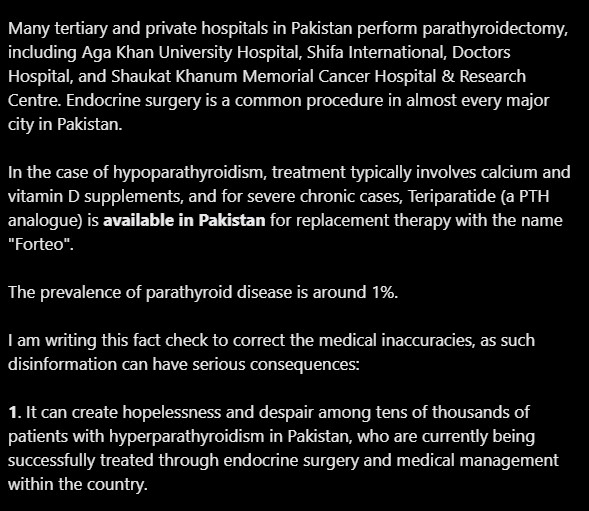
In his tweet, he listed out all related diseases like parathyroid adenoma, which requires surgery, and other medications like Cinacalcet, Biphosphonates and Denosumab, which are given in high parathyroid production, are all available in different medical institutes of Pakistan.
Dr Waqas further elaborated that “In the case of hypoparathyroidism, treatment typically involves calcium and vitamin D supplements, and for severe chronic cases, Teriparatide (a PTH analogue) is available in Pakistan for replacement therapy with the name “Forteo”.”
However, he also mentioned that he felt the need to write this fact-check to correct the medical inaccuracies, as such disinformation can have serious consequences.
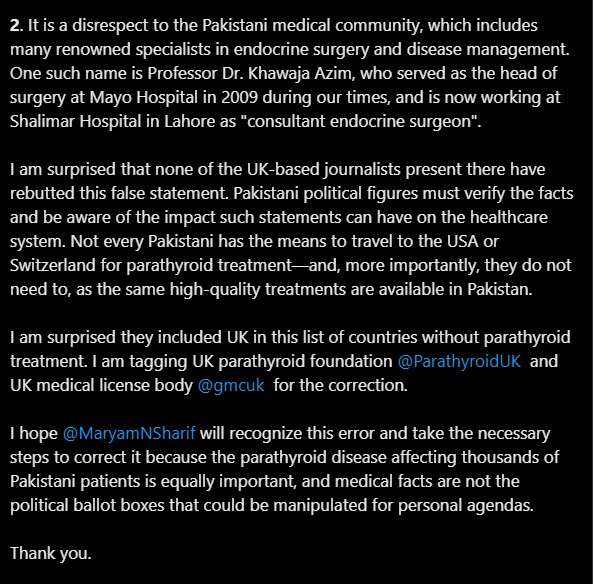
While the prevalence of parathyroid disease is around one per cent, Dr Nawaz delineated the specialists that have been serving in different hospitals in Pakistan and that such statements create despair in the Pakistani community.
While it is the patient’s right to seek treatment in any country they choose, being a public figure and a leader comes with an added responsibility. In his concluding remarks, Dr Waqas hoped against hope that Maryam Nawaz “will correct this error and take the necessary steps to correct it because the parathyroid disease affecting thousands of Pakistani patients is equally important, and medical facts are not the political ballot boxes that could be manipulated for personal agendas.”
The Democrat candidate Kamala Harris has lost the US presidential elections 2024.
While many political pundits had already predicted her loss, they are shocked by how badly she was defeated, with Donald Trump surpassing the requisite 270 electoral college numbers in no time. Not only that, he also won the progressive vote.
BBC reports that Harris campaign manager Jen O’Malley Dillon said in an email to campaign staff on Wednesday, “This will take a long time to process.”
Political pundits are attributing the defeat to a number of factors:
Stance on Gaza genocide
First thing first, it’s the baggage of Joe Biden’s murky legacy that Harris carried and then owned. In an op-ed for The Guardian back in August, Mehdi Hassan wrote, “Biden’s Gaza policy is a liability for Kamala Harris. She must break with Biden now.”
Israel’s carnage in Gaza alienated more Dem voters than the party believed.
Media reports suggest that a large number of Arab-American voters, young voters and Muslims generally did not vote for Kamala Harris because of her commitment to sustaining the flow of US weapons to Israel and her rhetoric of “Israel has the right to defend herself.”
While she tried to redeem herself by saying that she will end the “war in Gaza” during her last speech in the swing state of Michigan with a large population of Arab-American citizens, the erstwhile state still voted for Trump’s Republican party, and more importantly, for the anti-Israel Jill Stein.
Biden’s approval ratings has consistently plummeted in the last four years and this impacted Kamala badly as two thirds of voters believed that the country is on the wrong track and that Kamala will continue Joe Biden’s policies.
America’s support of Ukraine, both militarily and financially, was enabled by Biden’s administration of which Harris was a part and also a key factor as well. As per the recent numbers, the Democratic administration provided more than $64.1 billion in military assistance alone.
Meanwhile, Trump repeatedly reminded his supporters that he never started a war in his tenure.
Policies on Climate
Kamala’s change of stance on climate also paved the way for her loss. While she opposed “fracking”-the artificial matter of extracting gas- during her campaign, she confirmed that she will not seek to ban fracking if elected.
Climate activists also alleged that her tone towards climate changed over time.
Flaws in campaigning style
Kamala got endorsements from all the big shots of Hollywood like Taylor Swift and Beyonce while Trump was seen attending rallies, meeting voters and serving fries at a McDonalds drive-thru.
Quoting the Democrat campaign misjudgments, analyst Leigh Sales said, “The Democrats also had a tin ear when it came to the gap between rich and poor and how politically potent it is. Why was Harris constantly campaigning with squillionaire celebrities?”
Illegal immigration
Trump’s “America First” slogan gained traction from many quarters all around the country as he targeted the issue of Illegal immigration. Kamala, on the other hand, has shown leniency as she advocated for strict border security and reforms.
Economic policies
Last but not least, ever-growing inflation in Biden’s four-year-tenure contributed in steering voters away from Kamala’s side. Reportedly, the inflation rate was the highest after the 1970’s.
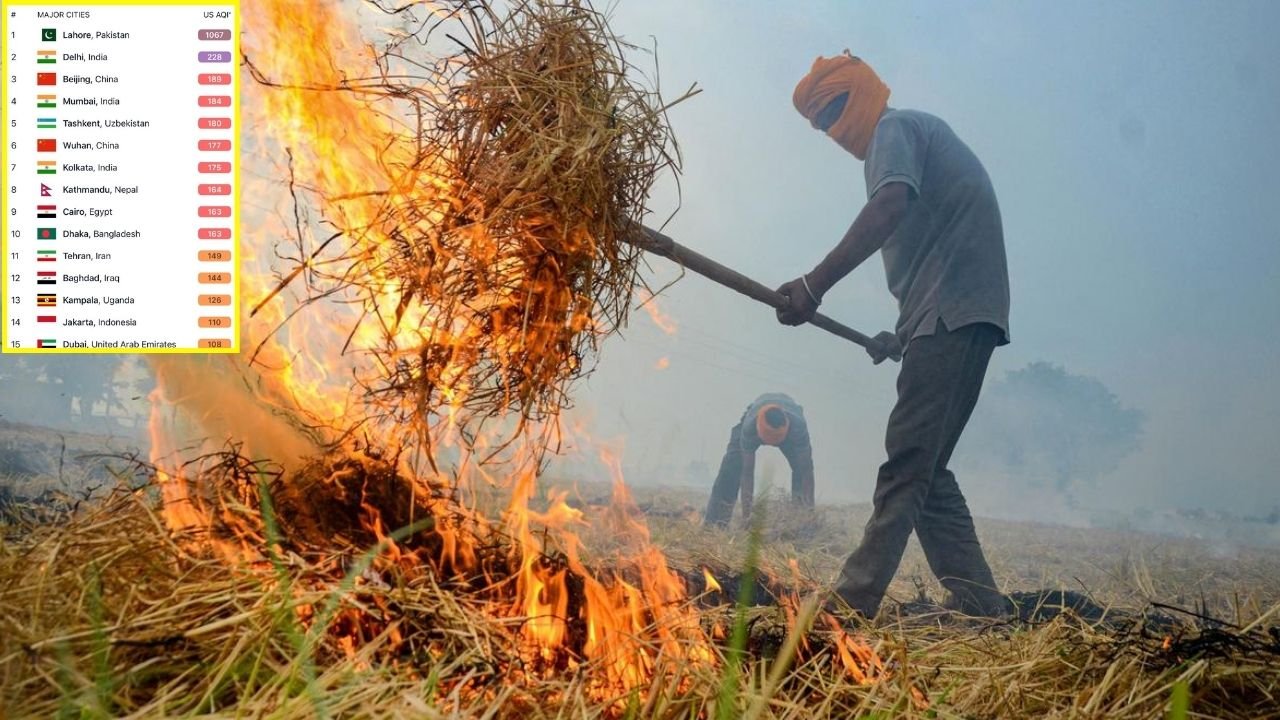
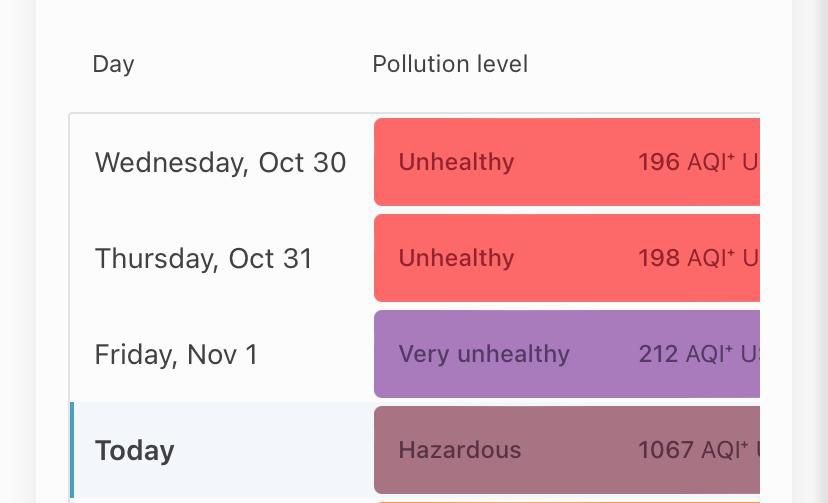
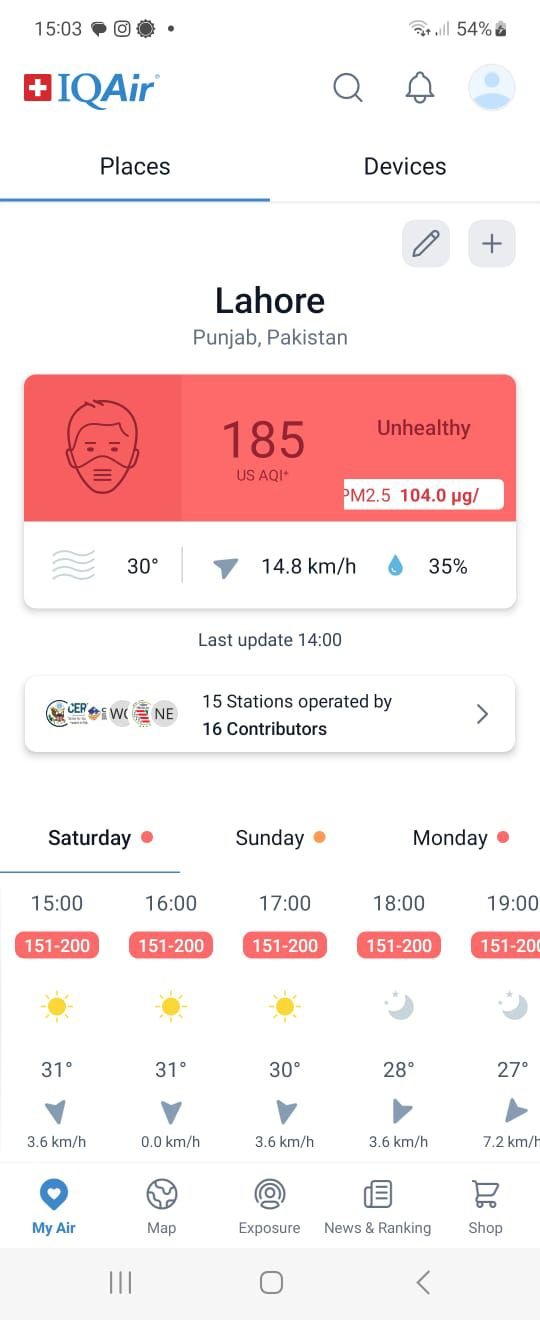
Smog levels in Lahore have surged to dangerous levels, with the Air Quality Index (AQI) reaching a staggering 1,067 early in the day. In comparison, Delhi, which is second on the list, has an AQI of 228, significantly lower than Lahore.
The visibility limit in Lahore has also reached zero.
The Current reached out to Senior Minister Marriyum Aurangzeb, who is leading the mission to combat smog. She claimed that the sudden surge in smog levels is the consequence of the change in wind direction, which has caused smog levels to decrease in Delhi while surging in Lahore.
The meteorological department had “warned the citizens that the intensity of smog will continue in Lahore for the next 48 hours,” she quoted in an official statement.
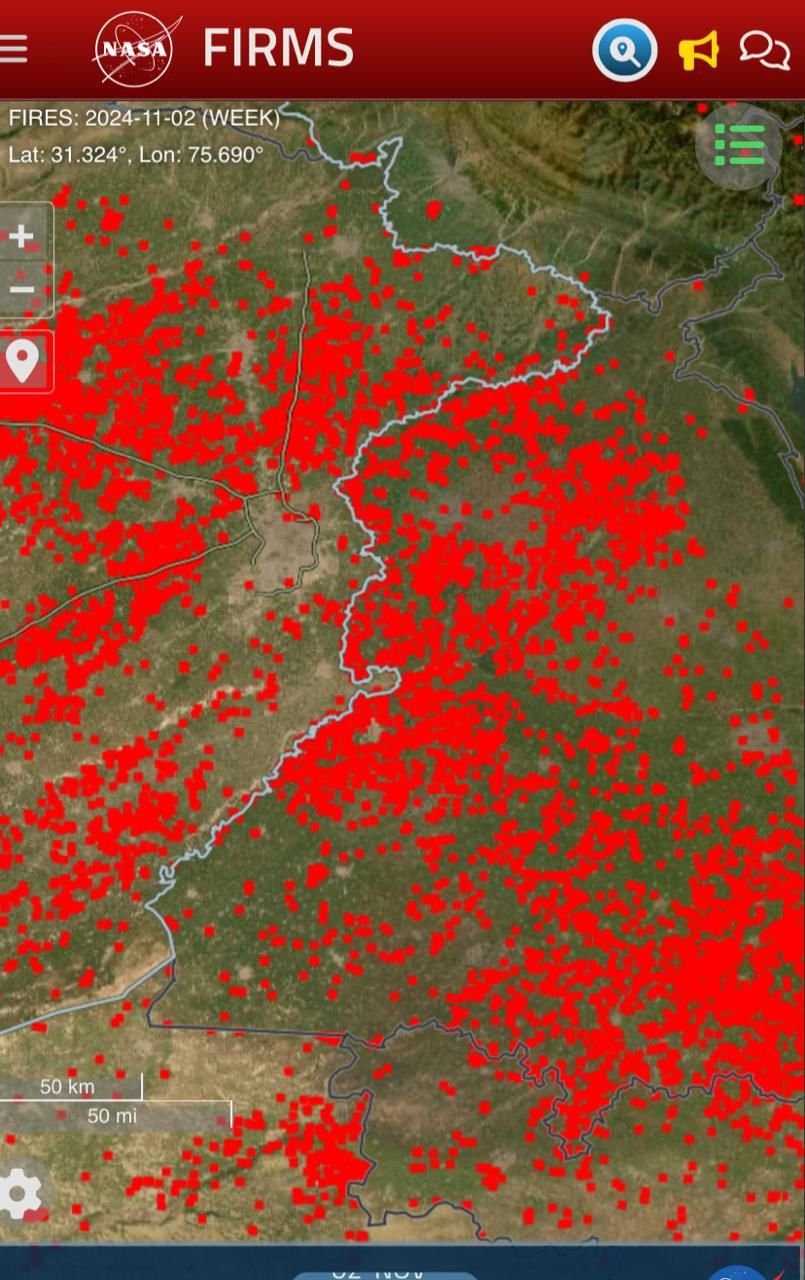
The minister further backed her claims by acknowledging that “NASA has released an aerial image of smog from large-scale burning of crop residues in Indian regions.”
The air pollution level in Lahore was previously at 157 as a result of the change in wind direction, but over the last five days, it has risen to an unprecedented level, as mentioned in her press release.
The high-speed winds from India also brought smoke into Pakistani areas, regarding which Marriyam Aurangzeb appealed to citizens not to leave their homes unnecessarily.
She also mentioned that the wind is slowly shifting to the south, which will improve air quality in the provincial capital.
The Current reached out to the Secretary of the Environment Department of Punjab, Raja Jahangir, who described at length the steps taken by the government so far and the situation on the ground.
The sudden surge of smog in Lahore can be attributed to the “Eastern Wind Corridor” and some local practices.
“The cropping mechanism, agricultural practices, mindset and behaviour of the farmers from both India and Pakistan are same. They burn the stubble after the harvesting of rice,” Jahangir elaborated.
“The thermal scanning of NASA’s satellite is the proof which shows both sides of the border red,” he said.
According to Jahangir, this change in pattern had been previously predicted. However, it was intensified by the Diwali celebrations, which involved the widespread use of fireworks. The wind has now shifted to the south, affecting air quality in Muridke and nearby areas.
“This will give Lahore a breathing space,” he added.
And while the wind pattern is worsening the smog, some of the local factors can not be ignored.
“Lahore is a city of 15 million, with 4.5 million bikes and 1.3 million cars on roads. There are 6,800 industrial units because it is the fastest growing city in the country and has the most construction sites, as well as more than 1,200 brick kilns,” Jahangir highlighted.
For a city spread over 1,757 square kilometres, the green cover is not enough.
“Ideally, it needs to be more than 30 per cent, but unfortunately, it is not more than four per cent,” he said, further that the smoke emitted from harvesting of 6.6 million of rice given a boost by air pressure is disturbing the air of Lahore while it doesn’t have enough to combat.
“Ideally, it needs to be more than 30 per cent, but unfortunately, it is not above four per cent,” he said, adding that the smoke emitted from the harvesting of 6.6 million tons of rice, combined with air pressure, is contributing to the air pollution in Lahore, which lacks sufficient resources to combat it.
What has the government done so far?
Raja Jahangir emphasised that while smog has been a regular phenomenon in winter for the past 7-8 years, it has always been managed by the environment department. This time, however, the government has engaged multiple sectors, including transport, health, agriculture, and safe city projects, adopting a “whole government approach.”
The smog mitigation plan is a product of this new strategy, supervised by Senior Minister Marriyum Aurangzeb.
Jahangir also asserted that phenomena like smog do not have a “quick fix.”
He noted that the government had demolished 600 brick kilns that were not using zig-zag technology and closed down industries emitting high carbon. Furthermore, smoking-emitting vehicles have been impounded while media awareness campaigns have been conducted.
The agriculture department, on the other hand, has given incentives to farmers to use super seeders in efforts to encourage environment-friendly practices, while contracts have been signed with international companies that will convert the crop residue into biofuel and activate the Vehicle Inspection and Certification System. This will test the fitness of vehicles and ensure a zero-tolerance system.
The goal is also to transition public transport, such as buses and trains, to electric, provide electric bikes to students, and convert gasoline vehicles to electric on a large scale.
Additional steps also include a plantation drive across the province to restore green cover.
Jahangir further mentioned the “Green Lockdown,” the latest initiative by the Punjab government, under which restrictions will be imposed on identified smog hotspots to create green zones in these areas.
In these zones, construction is banned, and inspections are being conducted to stop the use of diesel in generators and offices, whereas to reduce traffic, work-from-home is encouraged. Meanwhile, water sprinkling is being carried out to reduce smoke in the air, along with changes to parking areas around the city.
“It is a long battle, and this can’t be sorted in one day. For this, we have to change our practices, and everyone has to contribute to it,” the Environment Secretary asserted.
When asked about the Pakistan Air Quality Experts Group (PAQx)’s collective statement criticising the Punjab government’s Smog Mitigation Plan as “lacking to deal with the scale of the challenge,” Jahangir concluded that, for the first time, “Rs. 10 billion has been allocated to combat smog, with projects worth over Rs. 100 billion budgeted in the current development budget of the province.”
“This is not the end of the story; rather, we have just begun,” he said.
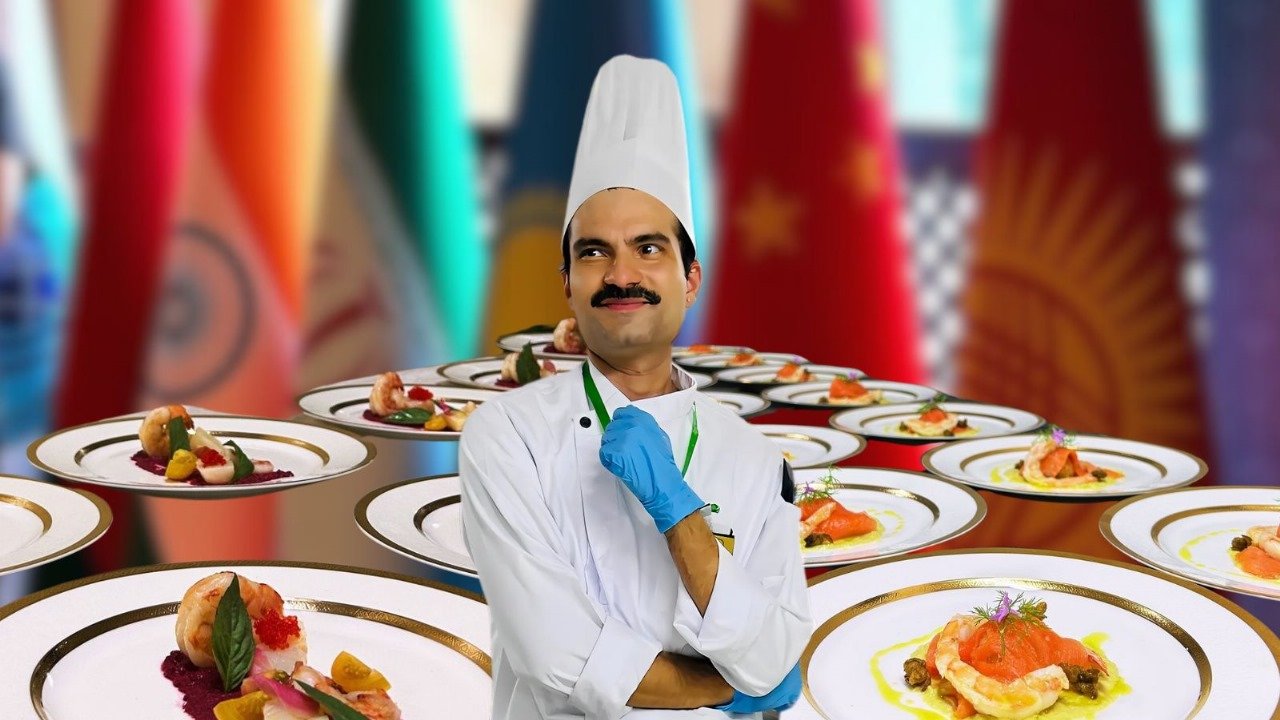
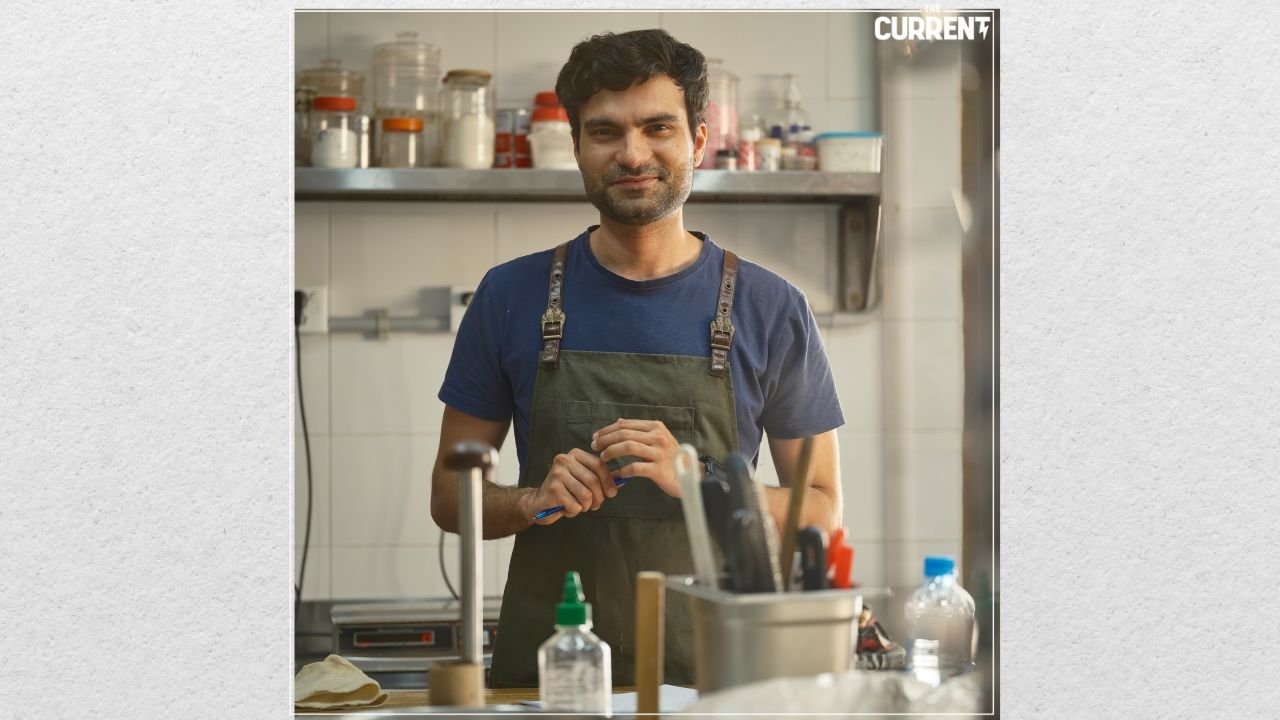
Random scrolling on Instagram sometimes lands you in the right spot. It happened with me when I saw Asad Monga’s post about having participated in the SCO Summit as a chef.
It was fascinating how he introduced himself as a boy from Karachi whose love for cooking weathered all the seasons of his life and took him to the corridors of power.
In his Instagram post, Asad shared his insights about Culinary Diplomacy and his experience at SCO in these words: “The SCO summit was a warm display of Pakistan’s efforts to welcome global leaders with our hospitality and show our willingness towards stronger regional ties and a better Pakistan. Maybe if we are to consistently soften our image on the global stage, the first foot forward is Culinary Diplomacy and Hospitality.”
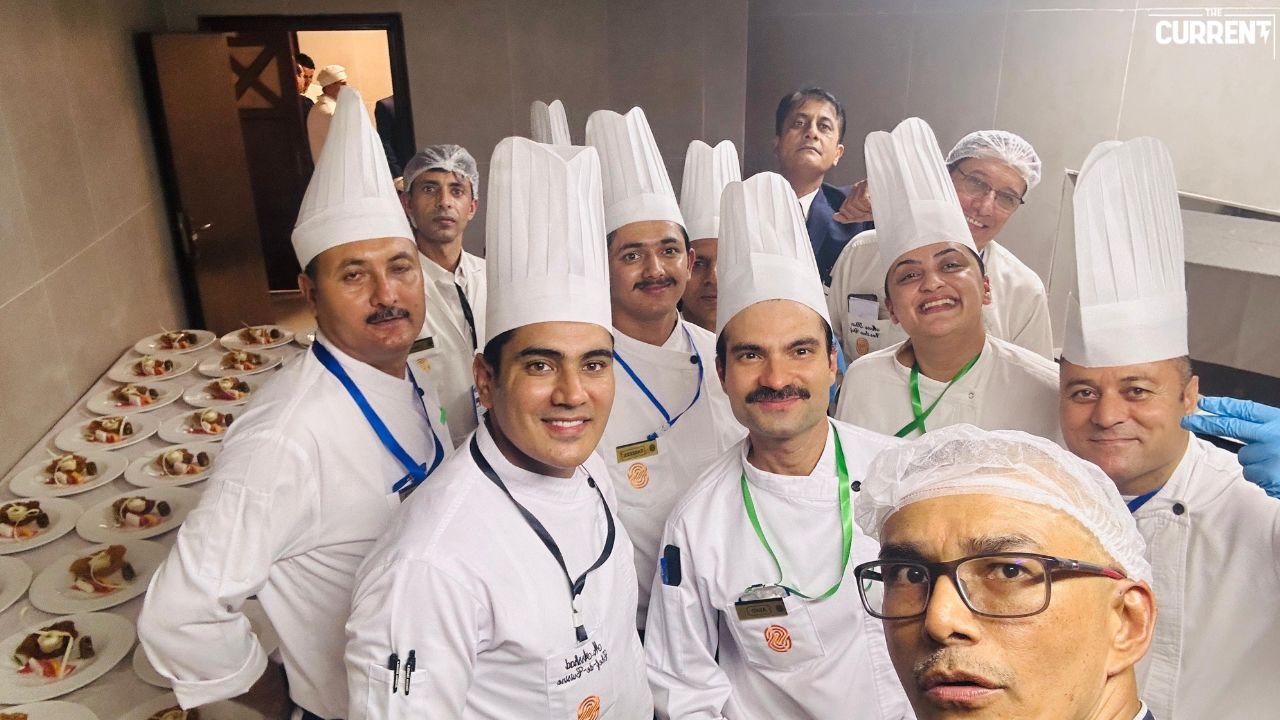
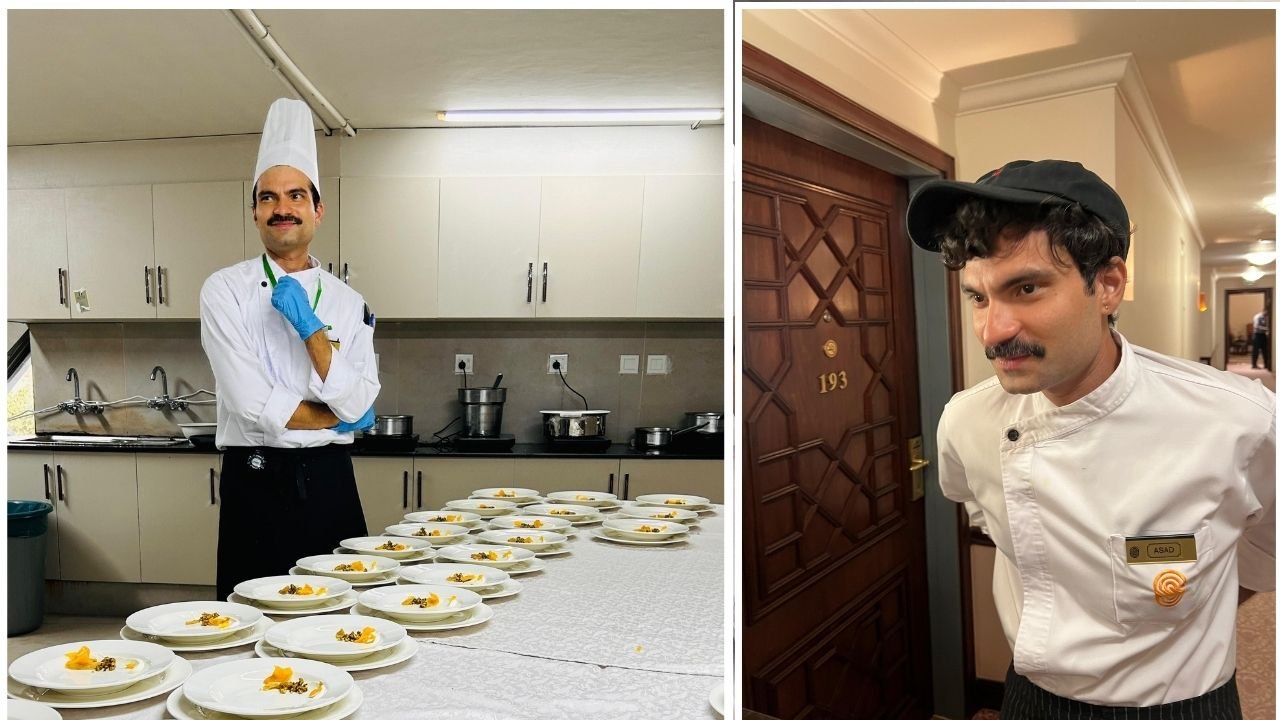
Asad was summoned by the government of Pakistan to assist with the Dinner & Lunch service carried out for world leaders at the SCO summit in Islamabad. It was such a moment that he had to document it all on his account with a behind-the-scenes photo dump, giving credit to all those who helped him in the process.
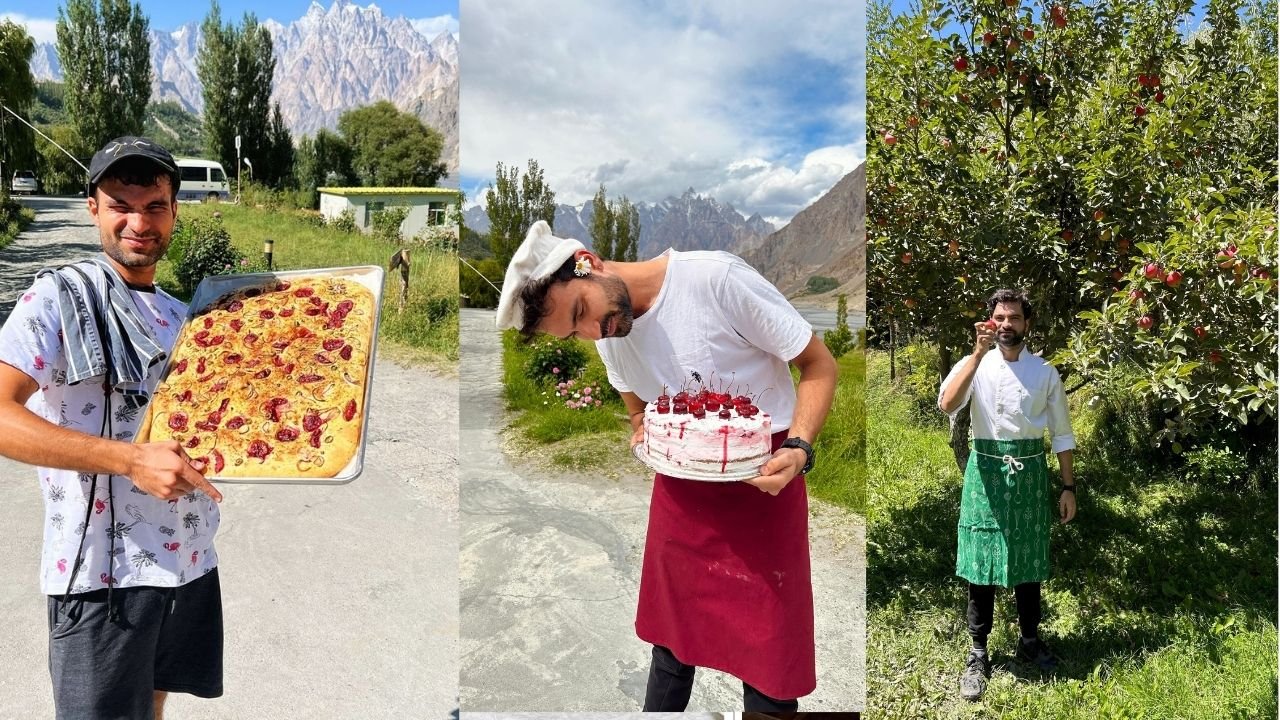
Asad is otherwise known for culinary retreats to understand seasonality in Pakistan and explore the use of fresh produce to curate meals.
Asad Monga on his culinary retreats
I sent him a message, and after a delay of some days, he replied. He was kind enough to actually explain to me the work environment of a kitchen, which he described as “an activity of trouble-shooting”. The reason behind this is that they are working with hands, and things are constantly changing as it involves too many variables, which one needs to keep in check, yet it is not something you cannot control. “We were doing a 15-16 hours shift in a day,” Asad told me.
His reasoning for making this a career left me in awe as he delineated that he decided to go for culinary arts as a subject to study for his undergrad because he wanted to do something with his hands. I did my A-levels from Karachi, and when everybody was deciding where to go for college, “I didn’t want to do a traditional degree, so I thought I wanted to do or learn something from my hands, and I wanted to have a skill-based profession. So I applied for culinary school, and I did a degree program in Kuala Lumpur and France,” Asad said, adding that he had completed his initial training and internships there as well. After his arrival back in Pakistan, he has been associated with different kitchens ever since 2011.
This got me to ask him how his experience of over a decade landed him this opportunity. To this, he replied that he was recommended by Okra- his previous place of work, the Ministry of Foreign Affairs. The ministry reached out to him, and he put together a team to accompany him to Islamabad. In the capital, they collaborated with the team at Serena Hotel, where they prepared a nice mix of dishes, keeping in mind the sensitivities of global leaders.
With utmost modesty, Asad gave credit to his team, describing that it was “a full team effort,” as he was just a part of this big machinery, and he considers himself lucky to have been selected for this job.
Asad with the team at Islamabad’s Serena Hotel
Speaking about his team, Monga introduced me to two other chefs, one from Karachi and the other from Lahore. Ramsha is from Karachi, and she runs a restaurant called d.brew’d on I. I Chundrigarh road. Another team member was Rabia from Lahore, who runs a restaurant called For the Table. “My team helped me execute all the things to the level I wanted and our stakeholders were expecting of us”. Asad said emphatically.
Speaking on behalf of the team, he said, “We had a great time and had lots of learning, considering it was such a high-profile event. So many little things needed to be taken care of, which was a great information knowledge for us.”
Shedding light on his experience at the Serena Hotel, Asad recalled it as something that stood out for him in this journey. “What stood out for me was the team at Serena and how committed, professional and welcoming they were,” he mentioned exuberantly. He elaborated this by saying that this is usually not the case when you enter somebody else’s kitchen.
Asad Monga at Serena Hotel for SCO Summit 2024
Famous chef Julia Child once said no matter what happens in the kitchen never apologize but most of all I was interested in knowing all the details from inside the kitchen so I asked Asad about the menu and all thay transpired in the kitchen.
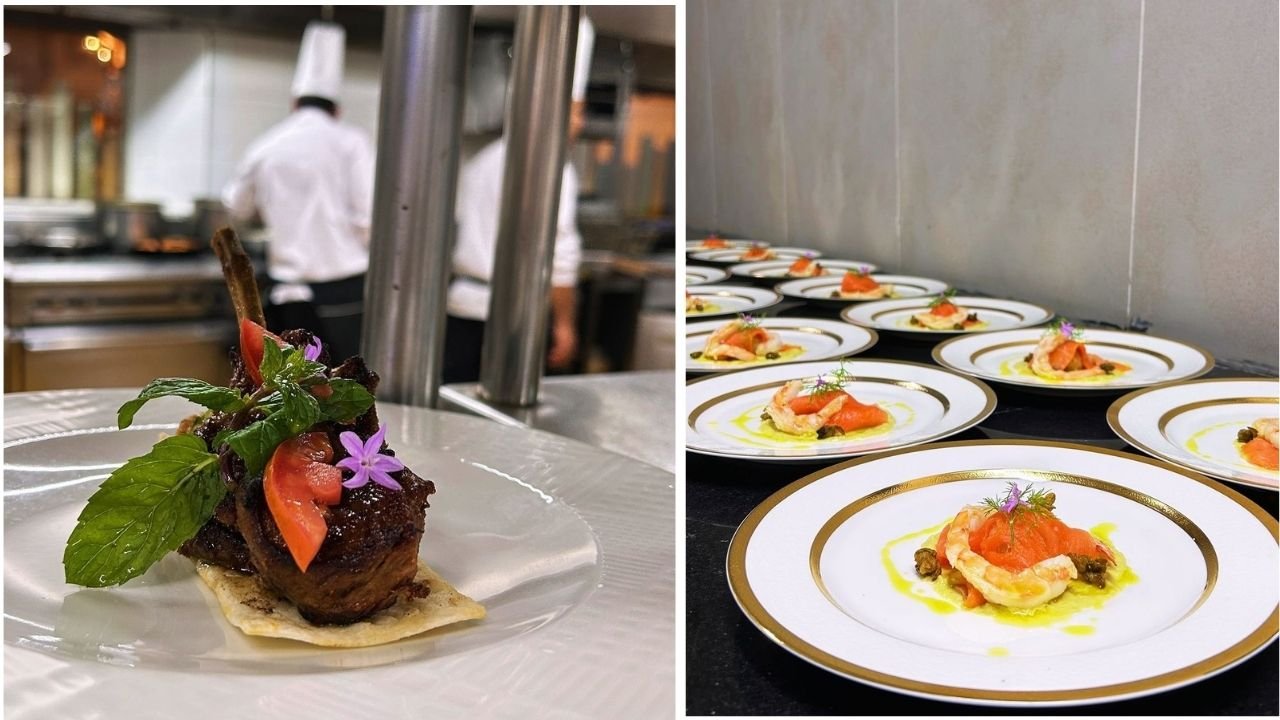
The menu has a mix of some Pakistani food and some international food. About the spice content and the making of the dishes, he commented, “Of course, we had to keep in check all the sensibilities of the global leaders that were coming in.” He further added that he and his team kept a nice mix of dishes in the overall menu which required the spices to be kept at a “base level” which means neither high nor low but flavourful.
The food they made was a mix of some Pakistani, Asian and Western food. There were Mutton Chops and Keemay-walay Naan for Pakistanis and salmon to add a touch of Continental. Asad very interestingly pointed out how some indigenous dishes were recreated for the occasion. For example, they made a Dao Dao Soup, which is a Hunza special.
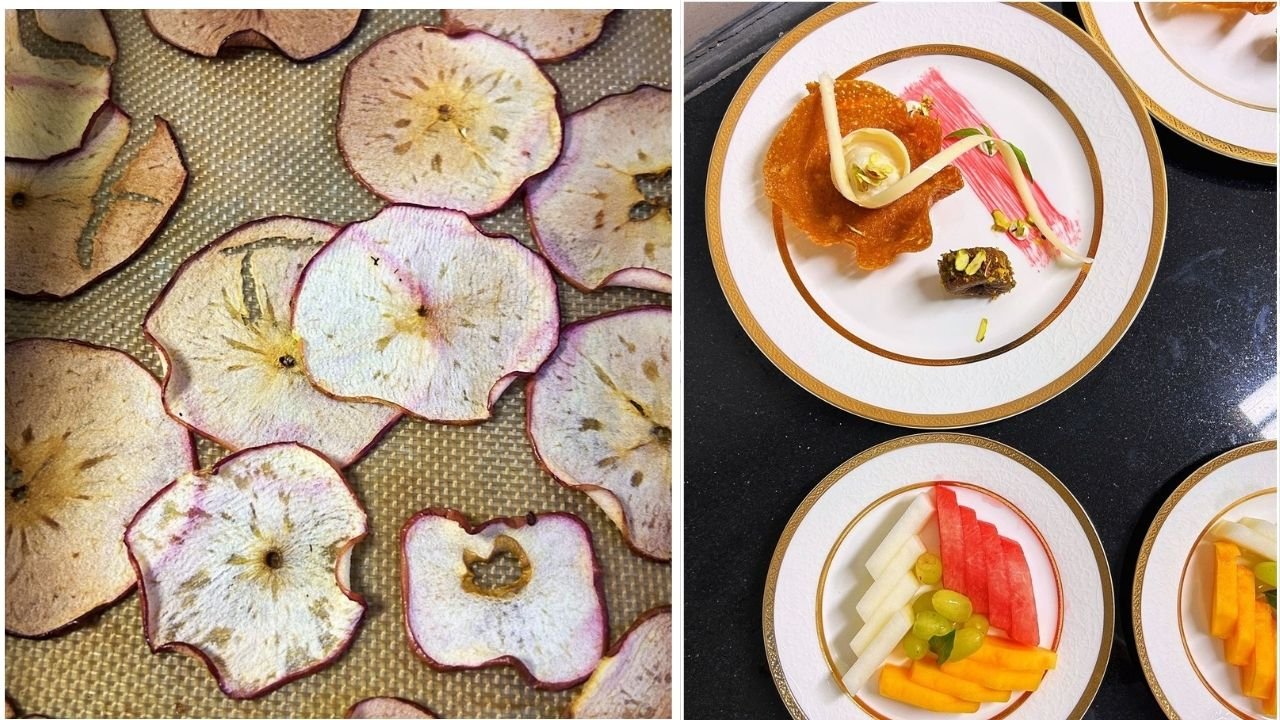
He recounted how the dessert was specially made, keeping in mind the time of the year, which is the fall season. It had stewed apples with peanut butter cream and some dehydrated apple flowers on top of the apple crumble. “This was a play on apple crumble,” he ingeniously pointed out. “It’s funny, this was the first dessert I ever made, and I got an opportunity to serve it on such a big platform,” he added further.
Last but not least, Asad Monga stressed how this experience changed his perspective on the people in the government. “You know, you always have a stereotypical image in your head about the people working in the government, and that was completely changed for me as I saw some really capable, hardworking, accountable, responsible people working for the foreign office and beyond. They had a very invested outlook and they were very keen because the image of Pakistan is on the line,” he emphasized while adding that this was his first experience of seeing things up close.
Praising his collaborators further, he said that they were really hospitable towards his team. “I was feeling happy and proud that these people were given the charge to execute this kind of function.”
Talking to him transported me to the world of Ratatouille, and I was no less than Linguini. Meanwhile, him having the calmness of Gusteau, the sharpness of Colette and the passion of Remy. It is such an enviable combination for a chef to have and all that a culinary artist aspires for.
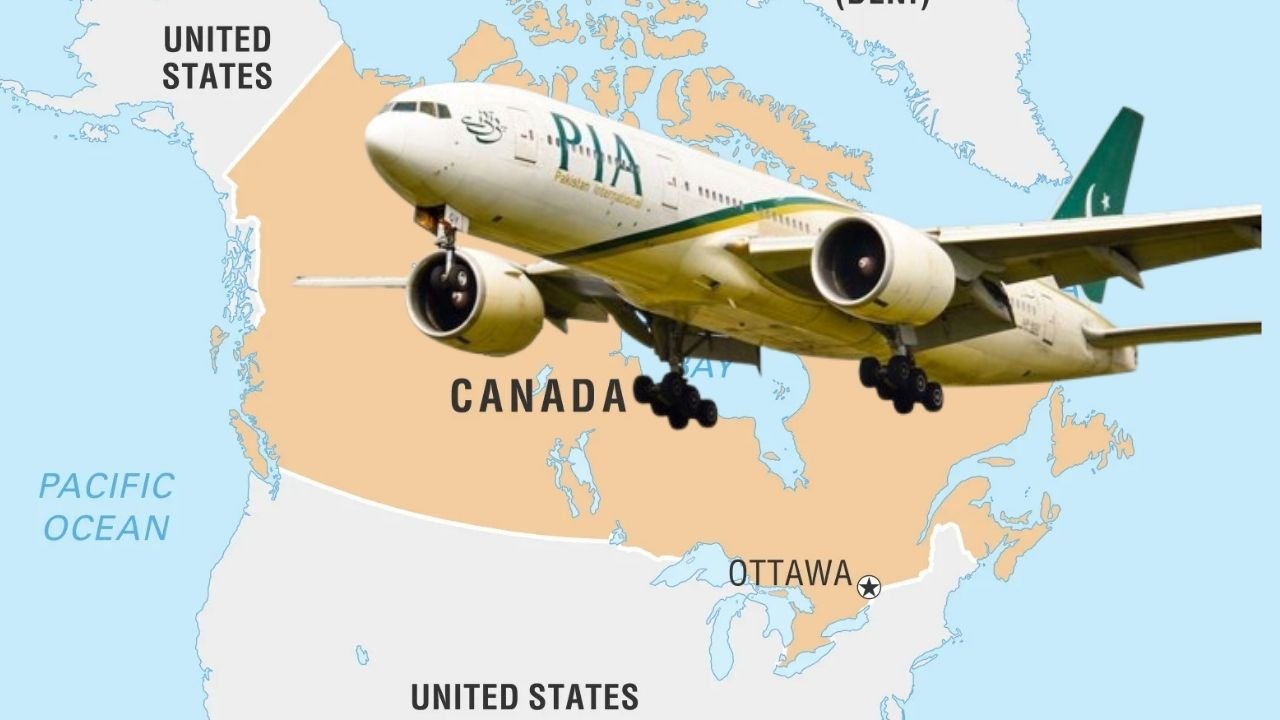
Another Pakistan International Airlines (PIA) flight crew member has reportedly gone missing while on duty after landing in Canada.
The missing crew member, Mohsin Raza, is originally from Islamabad.
Raza was scheduled to board a flight from Toronto to Karachi on October 13, 2024. However, he went missing during a layover in Toronto.
Dawn’s reports suggest he was found missing from his hotel room.
A PIA spokesman has announced that an investigation has been initiated against the missing crew member.
Despite attempts to tackle the issue, the number of flight attendants missing in Canada is increasing more frequently.
12 crew members have gone missing in a year, putting PIA under immense pressure.
Earlier this year, in February, an air hostess left, leaving a “thank you PIA” note behind her.
Experts cite low pay and a lack of job security within the national airline as the primary reasons behind these alleged instances of slippage, but above all, it tarnishes the image of the country on an international level.
The Current spoke to Alan James, an immigration lawyer from Canada, working with the Ace Luxury Group – a multi-national consulting agency – about the reason behind the escapes of Pakistani flight attendants from Toronto.
People like Pakistani flight attendants are “effectively” able to seek asylum in Canada as they claim prejudice in their own country.
“Each case is different, yet if they can prove persecution or danger from a political or religious family, Canada is open to helping such individuals,” he explained.
He also mentioned that asylum cases, on average, take six months to one year.
The Senate Standing Committee on Privatisation was told in August that PIA’s privatisation project would be completed by October 1. The national flag carrier stopped reaping fruits in 2011.
The caretaker setup had decided to privatise the loss-making state-owned institute back in June 2023 upon the insistence of the International Monetary Fund (IMF).
The Election Commission intervened and asked the government to “refrain” from finalising it.
Then, in April, Finance Minister Muhammad Aurangzeb announced that the process of privatising PIA would be finalised by the end of June or early July, but it was delayed until October 1.
However, it has been stalled again because the bidding company is demanding 100 per cent share ownership instead of the previously discussed 60 per cent.
Notably, the airline’s deficit has reached 500 billion rupees, which is close to not functioning at all.
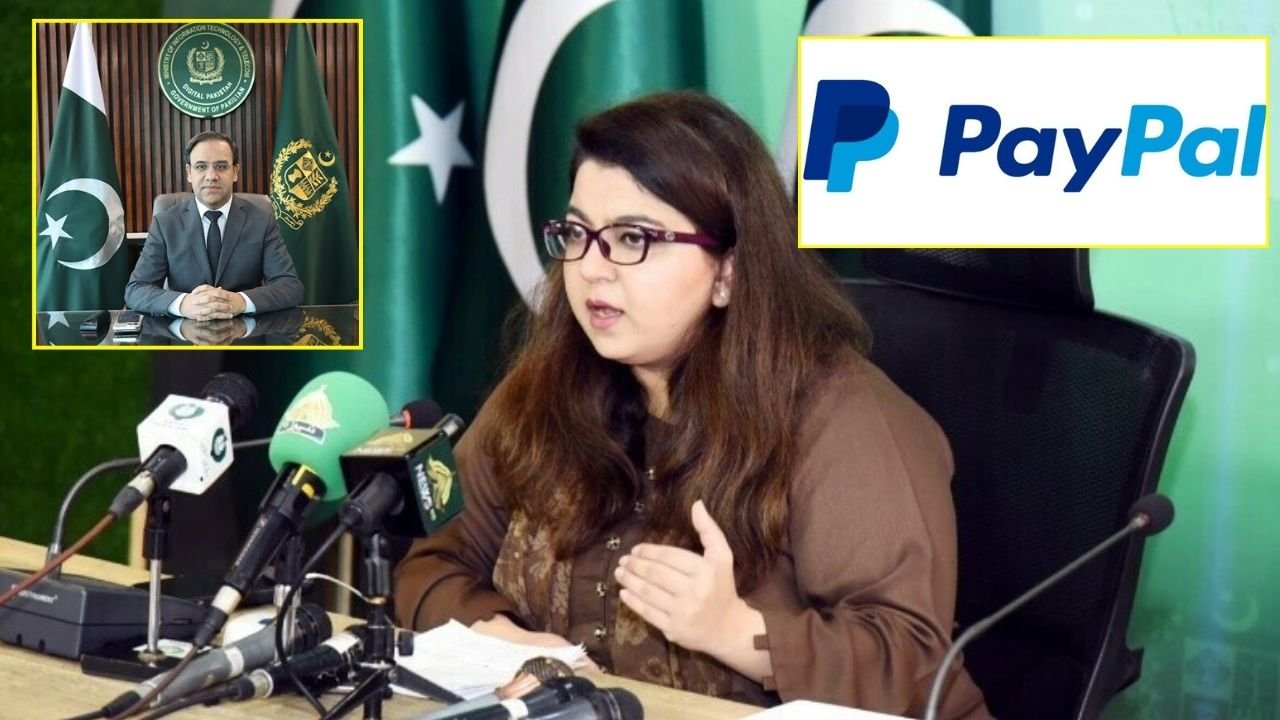
Shaza Fatima Khawaja, the minister of State for IT and Telecommunication, was quoted by Business Recorder as saying that former caretaker federal minister Dr Umar Saif sabotaged a deal to bring PayPAYal to Pakistan by leaking the news before time.
As per Business Recorder, the IT Minister told a presser, “Bringing PayPal to Pakistan was a private deal, which Dr Saif leaked before time. This action annoyed PayPal and he (Dr Umar) sabotaged it”.
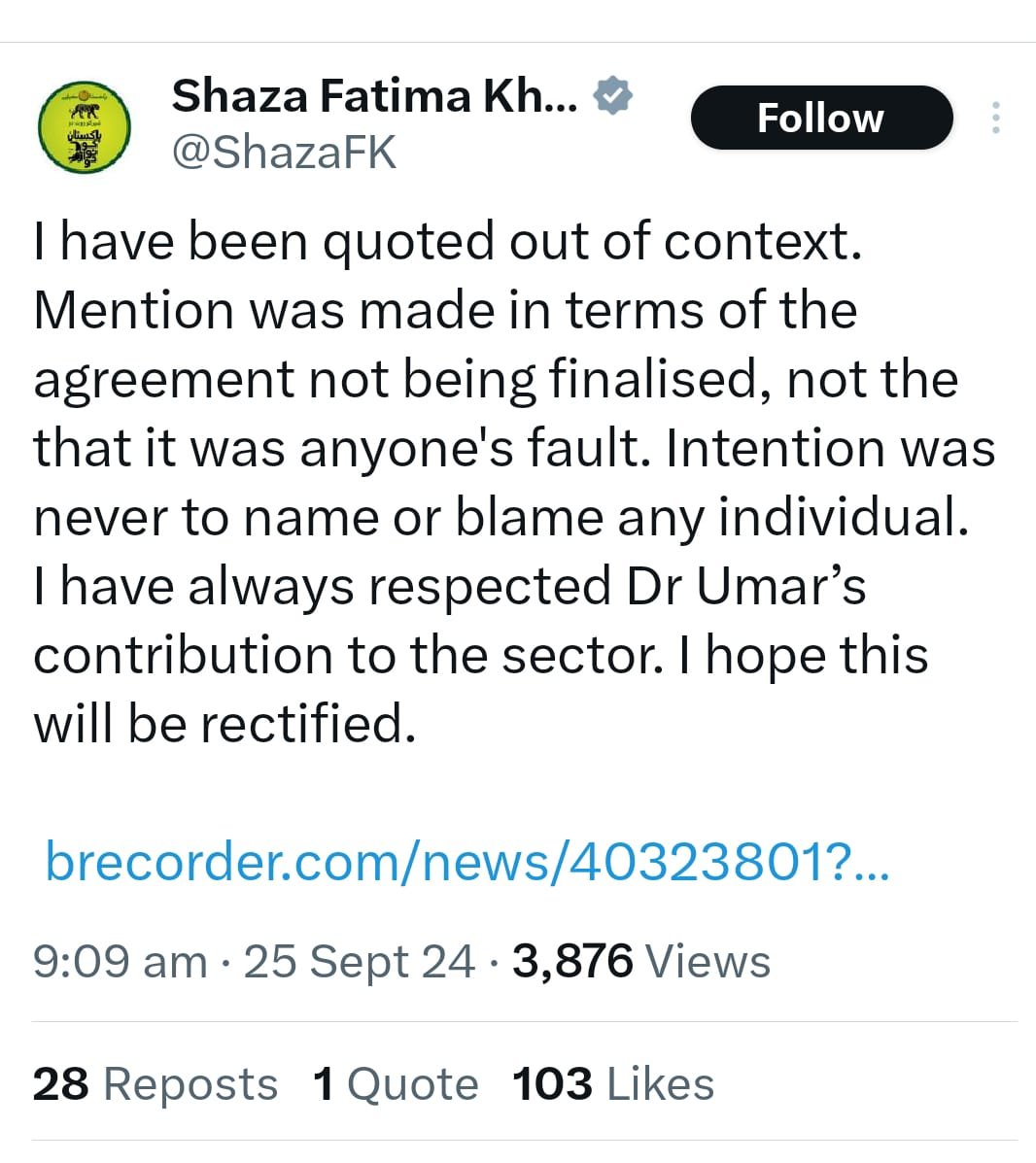
IT Minister released her response in a tweet to the viral statement: “I have been quoted out of context.” She further elaborated that her intention was never to name or blame anyone.
The Current talked to Shaza Khawaja about her statement. “The comment was mainly that he deal was private and it didnt go through with no intention of accusing anyone,” she stressed. While mentioning her tweet, in which she said, “I have always respected Dr. Umar’s contribution to the sector,” she added that she had tweeted about it and made an official statement about it as well.
The Current inquired her if she meant that the deal was made privately by Dr Umar, but she declined. “I just said that PayPal was a deal between two private entities that didnt go through,” she emphasised.
Notably, a year ago, on October 25, it was reported that Umar Saif, the then Minister for IT and Telecommunication, had shared that Pakistan would hear “good news” regarding Paypal in the near future.
However, the Current reached out to Dr Umar Saif, who refused to comment on it.
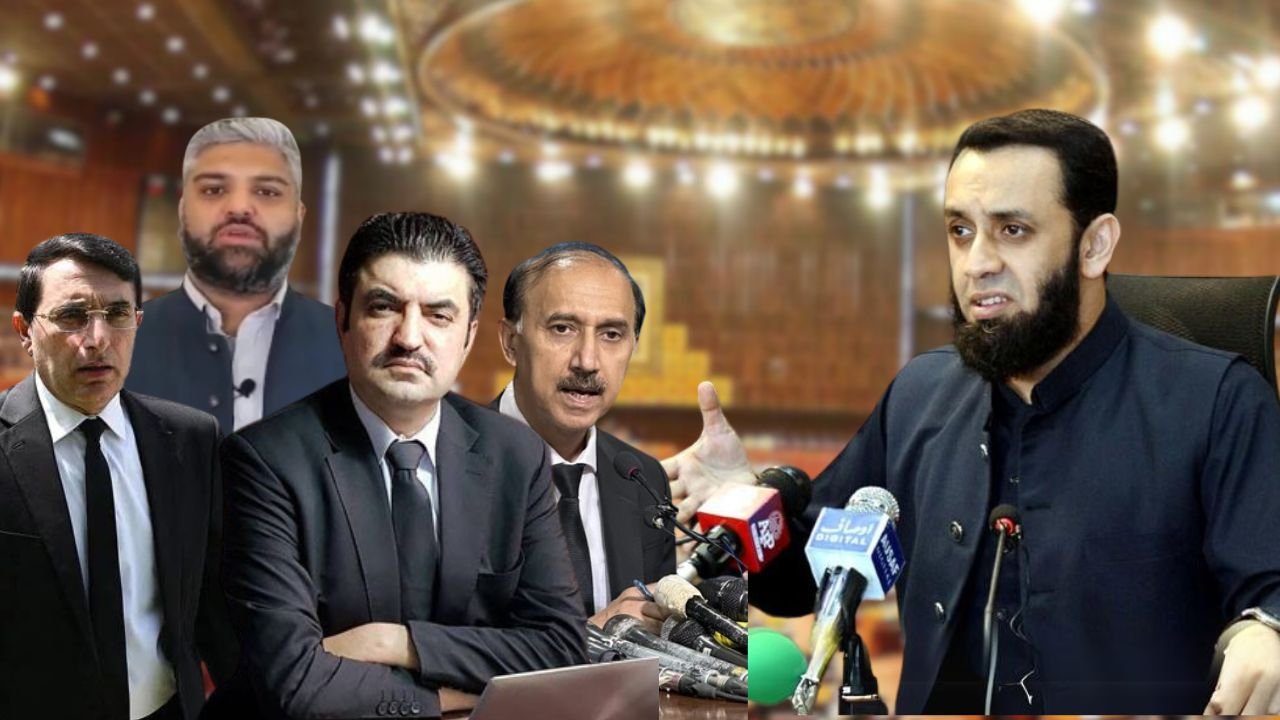
Information Minister Attaullah Tarrrar yesterday (September 11) spoke on the floor of the house in the National Assembly and claimed that the law was not violated when PTI MNAs were arrested on Monday night.
The minister claimed that video evidence available with the office of the speaker of the National Assembly shows no violation of law, as PTI members of the parliament were arrested outside the parliament’s premises.
“Some videos have come to our notice, and there was evidence proving that no one was arrested from inside the House,” he said, adding that evidence inside the speaker’s office shows that people were arrested from outside the parliament, near a checkpost.
Tarrar kept on stressing that these videos should be examined; either they (the opposition) deny the evidence, or if it turns out to be true, then the government can talk to them about it.
On the contrary, PTI leader Barrister Gohar spoke to the house and asserted that he and other party members were inside the parliament and were dragged out by “masked men” who had the keys to their rooms. The videos, he argued, were made outside the parliament.
“The two of us who were arrested from outside the parliament were actually not arrested outside the parliament. The time I sat in that car, there were others present with the walkie talkies and they were talking about who was taken where. They took me to the gate,” he said, implying that he was taken into custody from inside.
PTI has declared the arrests illegal and barbaric.
We asked renowned journalist Azaz Syed if claims MNAs being arrested from inside the parliament are correct or not. He said, “Some of the leaders were arrested from outside the parliament but two of them, according to my sources, were arrested from inside, one being Nasim Ali Shah.”
Commenting on legality, Azaz replied, “It is not illegal, but a sheer contradiction to traditions as the police entering the premises of the parliament is unheard of and not appreciated at all.”
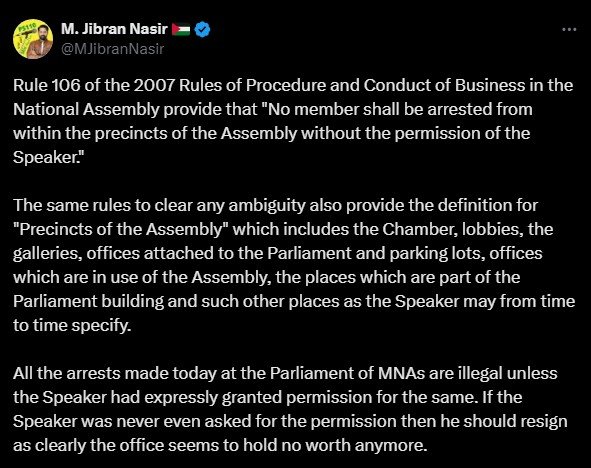
Lawyer and activist Jibran Nasir posted a detailed note elaborating upon the law rule 106 of the 2007 Rules of Procedure and Conduct of Business in the assembly stating that “No member shall be arrested from within the precincts of the Assembly without the permission of the Speaker.”
He went on to shed light on the precincts of the National Assembly, “which includes the Chamber, lobbies, the galleries, offices attached to the Parliament and parking lots, offices which are in use of the Assembly, the places which are part of the Parliament building and such other places as the Speaker may from time to time specify.”
Nasir opined that all the arrests made today at the parliament are illegal unless the speaker had expressly granted permission for the same.
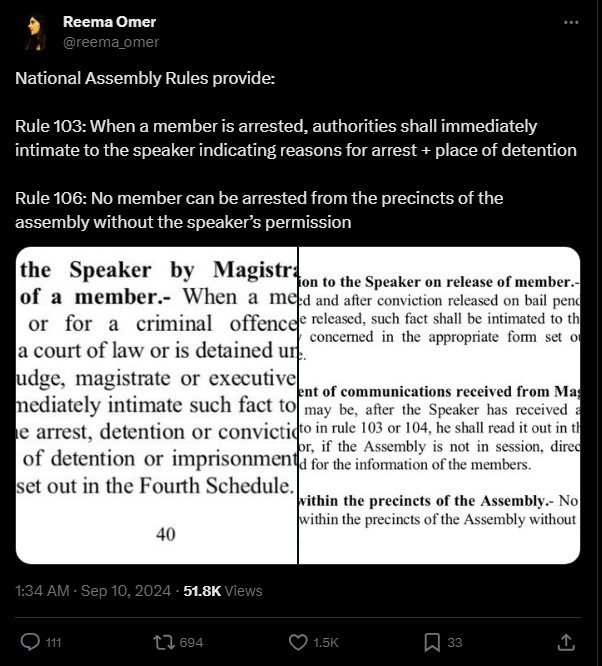
Lawyer and analyst Reema Omer also posted about Rule 106 and highlighted Rule 103, which delineates that “when a member is arrested, authorities shall immediately inform the speaker indicating reasons for arrest plus place of detention.”
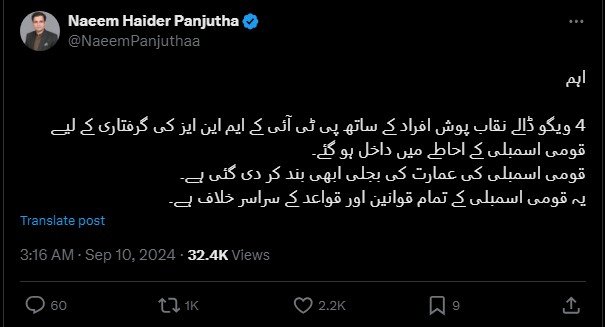
Notably, footage of PTI leader Zubair Khan being dragged by the police from inside the parliament made waves all across the internet, debunking Tarar’s claim that no one was arrested from inside the parliament.
Dawn claims that police had been deployed outside Parliament House for hours before unmarked vehicles arrived on the scene.
Verifying the claims made by netizens, Dawn also confirmed that the electricity of the parliament building was disconnected during the raid.
“Subsequently, MNAs Zain Qureshi, Amir Dogar, Sheikh Waqqas Akram, and Naseem Ali Shah along with others were brought out from Parliament House and handed over to police for legal action,” Dawn reports.
Three of the four vehicles were reported to have left the premises, and the MNAs were bundled into different cars.
After this episode, the power supply was restored, and the ‘under custody’ MNAs were brought out of the building through the Cabinet Division gate, where they were ‘rearrested’ by the police, according to Dawn’s report.
Videos of Zain Qureshi talking to the media inside the court he was presented in also emerged in which he, contrary to Tarrar’s claim, said that he, being a “sitting member” of the parliament, was arrested by the police.
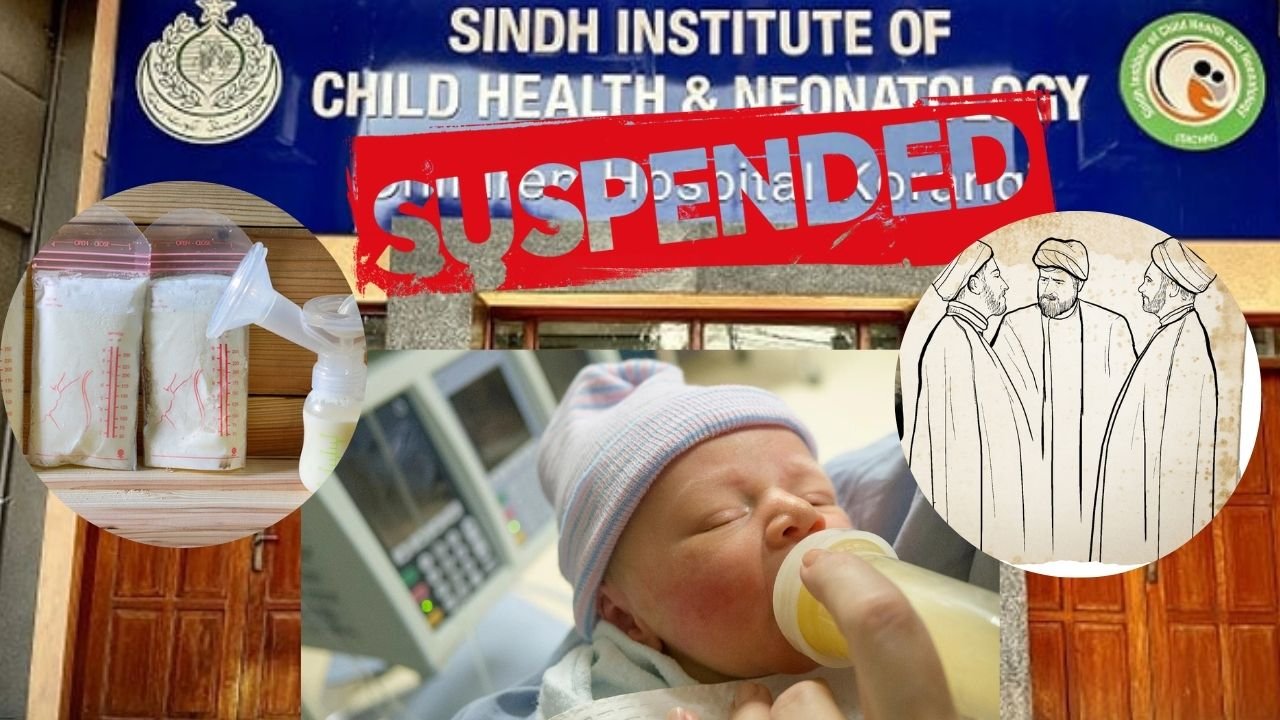
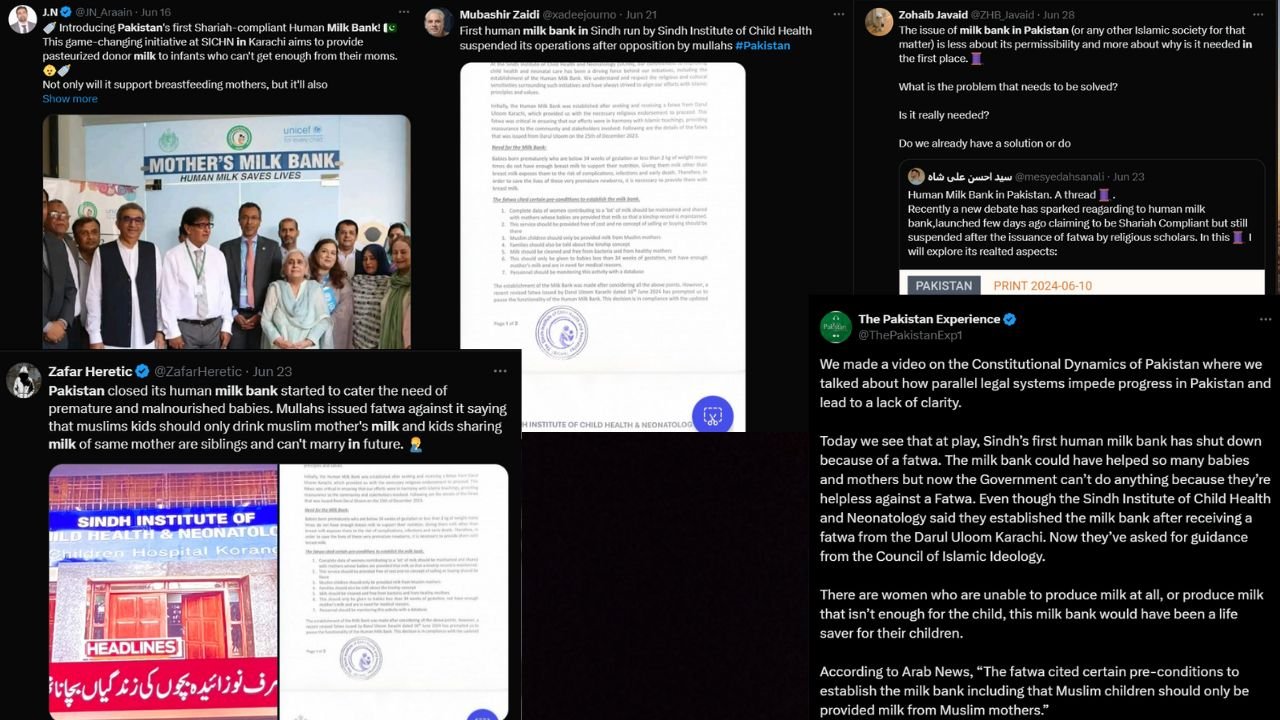
The establishment and suspension of the first ever human milk bank in Pakistan is an issue that has been making headlines all over the world.
While local media pinpoint the very nature of the issue to be controversial, international media frames it as an example of the perpetuated backwardness of our society. What perturbed me the most was the fact that the project started after getting approval from a prestigious religious body, Darul Uloom Karachi, patronized by Mufti Taqi Usmani. The approval got suspended because of a revised fatwa from the same institute.
What led to the suspension just two weeks after the inauguration, and how will this impact the mortality rate of premature children?
The human milk bank has been in the works since last year. I talked to the Executive Director of SICHN, Professor Jamal Raza, who explained that the institute had formally applied for the fatwa and, after six months of waiting, had an interview at Darul Ifta of Darl Uloom Karachi where they answered all the questions asked by distinguished muftis. “Subsequently, the fatwa was given last December, after which the equipment was procured from the UK and other places as it is not available in Pakistan,” Jamal said.
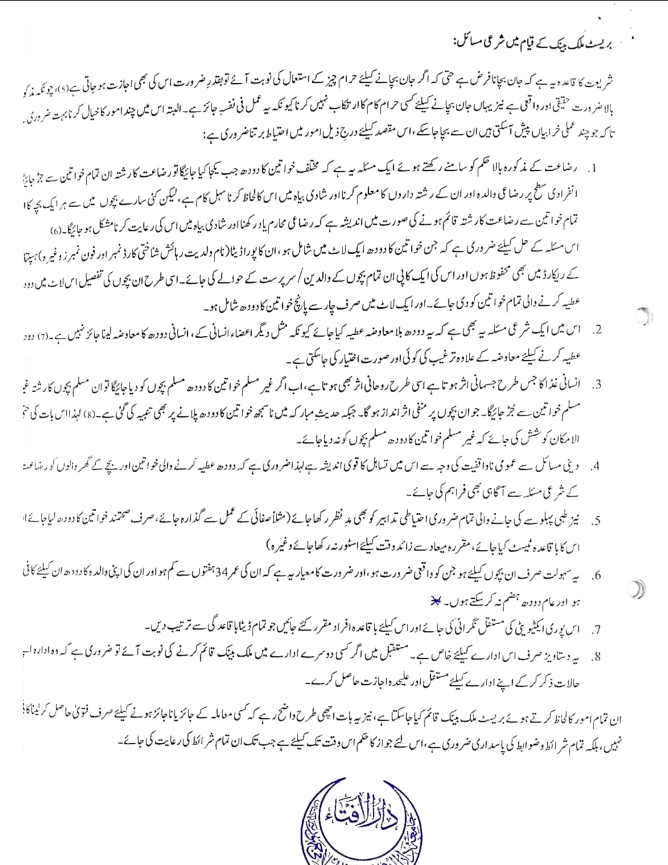
The first fatwa, issued on December 25, 2023, laid out basic tenets of Islam for breast feeding in a detailed manner. That document has been reviewed by The Current.
It outlined eight conditions that need to be followed.
The first and foremost condition was regarding the age of the child. The exclusive facility of breast milk is to be given to premature children with a gestation period of less than 34 weeks and less than 2 kilogrammes of weight.
The tenet strictly suggests a bond of milk kinship (Raḍāʿah), stating that a parent-child bond is formed when a woman gives milk to a baby who isn’t biologically related to her. To avoid future incestuous marriages between milk siblings and relations, the tenet says, the foster relationship must be clearly shared. The fatwa delineates that the bio-data of all the women in one lot (with a maximum of four to five women) must be kept in the hospital’s record and shared with the parents of the child and vice versa.
The second condition extrapolates that the act of donating milk for the child should be done voluntarily and free of cost, just like the donation of organs.
The third condition explains the spiritual impact of the milk bond, because of which it is imperative that only the breast milk of Muslim women is given to the children.
The fourth condition makes it mandatory for the women and families of the children to be educated about Shariah laws regarding the practice of Raḍāʿah.
Further conditions stress that the milk be cleaned and pasteurized, not stored for long, and only given to children who need it most desperately and cannot digest powdered milk.
The last two conditions demand that the whole activity be supervised by a group of people and assert that this provisional permission is specific to SICHN. If some other institute wants to open the same facility, then it would have to ask for it.
On June 10, 2024, Pakistan’s first Shariah-compliant ‘Human Milk Bank’ was inaugurated by Sindh Health Minister Dr Azra Pechuho. It was set up in collaboration with UNICEF.
Journalist Waqar Bhatti wrote in The News that Prof Jamal Raza, who spoke at the inauguration ceremony, described mother’s milk as the ‘original fast food’, emphasizing that it delivered all the necessary nutrients, healthy components, and disease-fighting properties that a newborn needs.
Bhatti’s report elaborated that Pakistan has a neonatal mortality rate (NMR) of 41 deaths per 1000 live births, which is one of the highest in the world, and this facility in Sindh understands that a mother’s breast milk is the best source of food and has all the antibodies that may protect the immunity of children.
Bhatti, while talking to journalists Mehtab Haider and Waqar Gillani, identified the artificial powdered milk industry as the real reason behind mothers shying away from feeding their children, not realizing that this is extremely harmful to a child’s health. As for the suspension, he claimed that the wayward discourse on social media actually misguided Mufti Taqi Usmani; otherwise, the facility was really proving to be helpful.
Since the inauguration, public sentiment has been against the establishment of the milk bank.
In a YouTube video made by Urdu Point, host Shabana asks the public about the opening of the milk bank in Sindh. All the people she talked to voiced their opinions against establishing the bank, stating religious reasons.
The reaction on social media was mixed; it either pronounced the suspension a “conspiracy of mullahs” or called it a decision in accordance with Islamic rules.
“The second fatwa directly did not mentioned this fatwa but was in response to some other question which we are not aware of, as we were not approached for any clarification nor our centre was visited for procedural verification,” Jamal Raza stressed while talking to TheCurrent.
Emphasising that they don’t intend to do anything remotely unislamic and open to all sort of suggestions, Raza added, “We feel that most of the criticism was based around lack of information to the general public and the general tendency to criticise without fact finding, thus if any religious body is willing to sit down with us to understand the process, they should not have any objection to the establishment of this bank.”
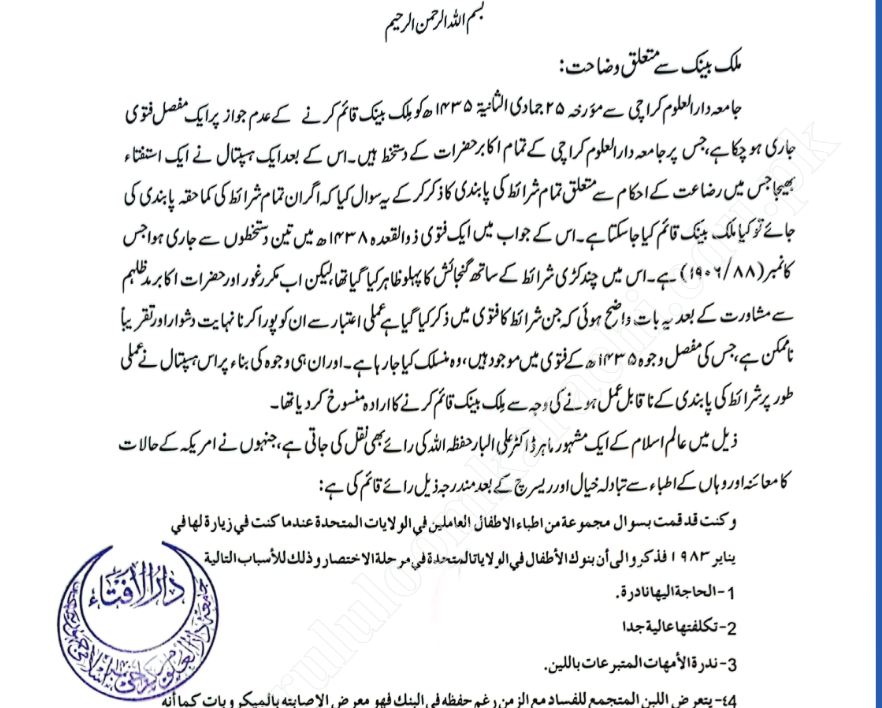
A revised fatwa issued by Darul Uloom Karachi dated June 16, 2024, prompted SICHN to discontinue the functionality of the Human Milk Bank and seek further guidance from Dar ul Uloom and Islamic Ideology Council.
I tried to talk to Dar ul Uloom about why they felt the need to have a revised fatwa and know the reason for taking back the permission they accorded earlier. The singular answer from all the multiple scholars I talked to stated that the revised fatwa is the only response they want to put out there and that they are not going to entertain any other query about this issue.
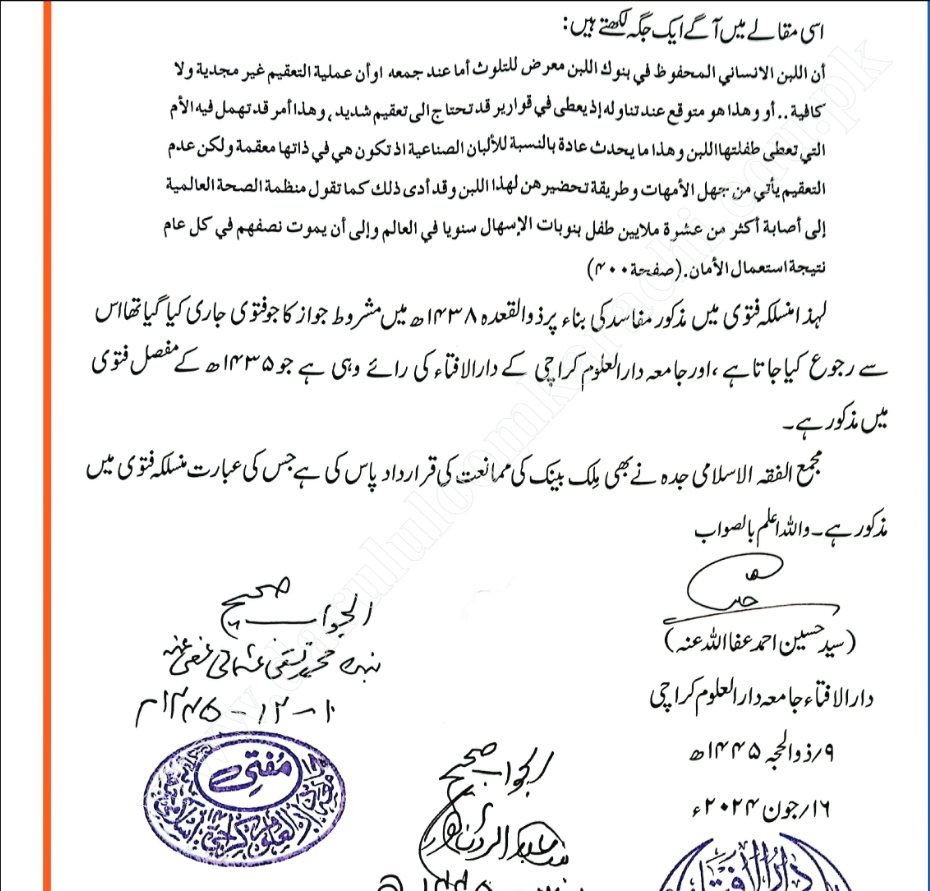
The revised Fatwa available on Dar ul Uloom Karachi’s official website includes a detailed analysis of the establishment of a milk bank that did not comply with Shariah laws because of the demanding maintenance of the concept of kinship at the facility as observed by the scholars sitting in Dar ul Ifta. It quotes an American scholar and a Jeddah’s Islamic think tank declining the establishment of a milk bank along with a detailed note from Mufti Taqi Usmani extrapolating other religious concerns entailing the issue of breast milk bank but no word on the specific issue of the establishment of milk bank in the city.
In a panel discussion about the Human Milk Bank on Samaa TV’s Mufti Online, Dr. Shawana Mufti, a prominent gynaecologist practising in America, shared her take on the issue of establishing a milk bank in the country. She highlighted that the idea is not feasible in the present socio-economic conditions of Pakistan, especially considering the high protocols there are for the milk donors to meet in the countries where they are operational. She started off by saying that she respects the opinion of all the scholars and the tenets of Islam and she totally agrees with all the scholars here, saying that this wouldn’t be successful in Pakistan because the idea of a milk bank to be formed was coined in the West as it was found out that for children who are premature at birth and can only survive if given the breastfeed. “Here they start with screening as it is checked what is the social and medical history of donor mother,” she stressed. Further, Shawana laid out how strict the screening criteria for a donor mother are, to the extent that it is considered that the mother takes painkillers or any sort of narcotics, “In Pakistan, a regular woman doesn’t even go to a doctor until she is dying or expecting a child. The financial stress in the country would never be up to the screening criteria (of international standard). Who will donate milk here? The elite women won’t donate milk here.”
Her argument was seconded by Professor Naaureed Fatima in the panel as she said that this is sadly a reality that elite class won’t donate and the commoners are so unaware about the complexity of the milk kinship that it requires a campaign to educate them about that. In this case, a milk bank in Pakistan is not a feasible idea.
I talked to Mufti Sohail Sialwi from Nottingham, UK, who opined that the basic rules delineated in both the fatwas are the same. It is clearly stated in the first fatwa that conditional permission is given because the strict criteria are hard to fulfil. That is why the fatwa asserted not just keeping a strict record but also educating both the parents and donor women about the complexities of the concept of Raḍāʿah. However, in the second fatwa, the verdict is shared after analysing the conditions in which record-keeping is an uphill task, and even if things are recorded, tempering them isn’t very difficult as the incidents of these records getting destroyed, burnt and modified. Thus, in a country like ours, the officers (liable to be corrupt or oblivious to sensitivity) cannot be trusted with a sensitive issue like this.
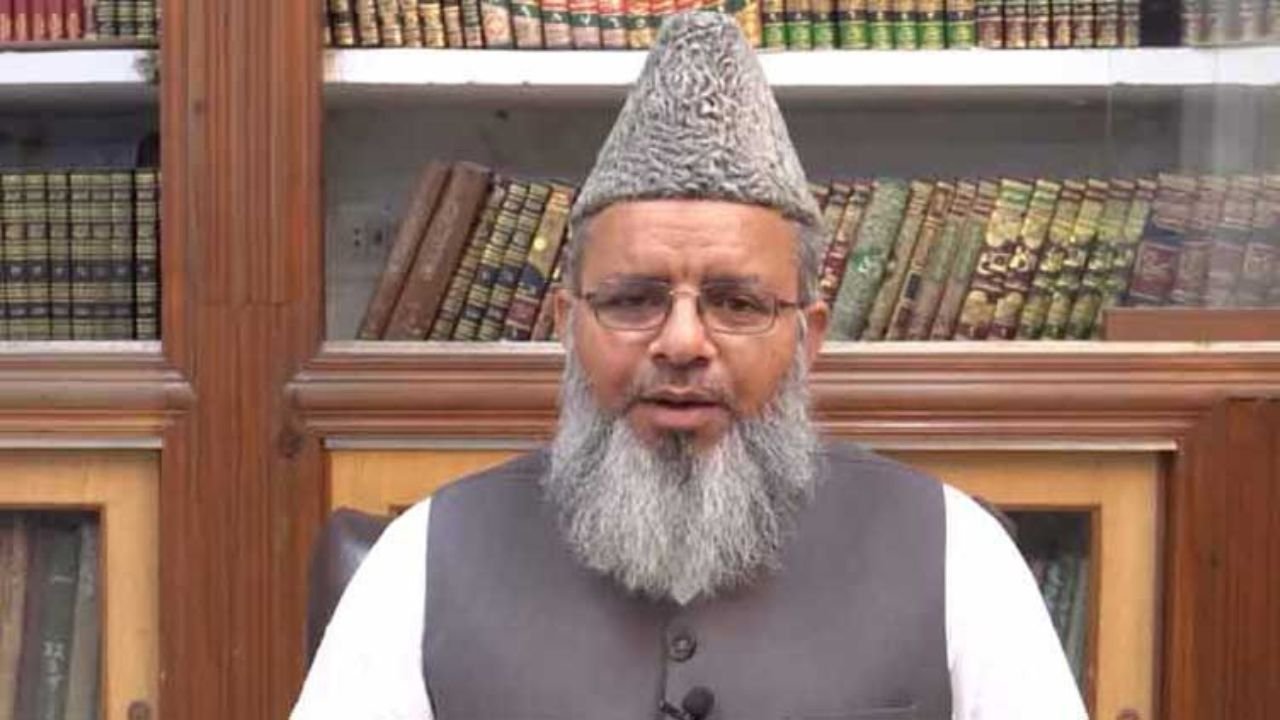
The matter now rests with the Islamic Ideology Council, the most high-profile religious authority in the country. I talked to the Chairman of the Islamic Ideology Council, Dr. Raghib Naeemi, who informed me that a delegation from SICHN came to the Council to defend their case, and the discussion around the topic is ongoing. However, a simple Google search revealed that a similar issue rose in 2014, and the IIC ruled against the legitimacy of a human milk bank.
Dr. Raghib Naeemi, Chairman of the Islamic Ideology Council
Islam as a religion defines the social fabric of the Pakistani nation. The concept of milk donation is considered esteemed and sacred for Muslims as derived from the religious tradition inspired by the life of the Prophet (PBUH). The need of the hour is a large-scale awareness campaign patronized by the government addressing all the misconceptions and educating mothers to not just breastfeed their children but also donate milk to premature children. The government could curb neonatal mortality by advertising for lactating mothers to feed their children inside the hospitals or even for children who, for some reason, cannot have their mother’s milk fed. Although involving money in this activity is proscribed, a form of recognition for such mothers could be to facilitate them with a healthy diet and transportation for the time they feed the child. In this way, the government can easily record these mothers and ensure the exclusivity and intimacy of the donor mother-child bond at the core of the concept of Raḍāʿah.
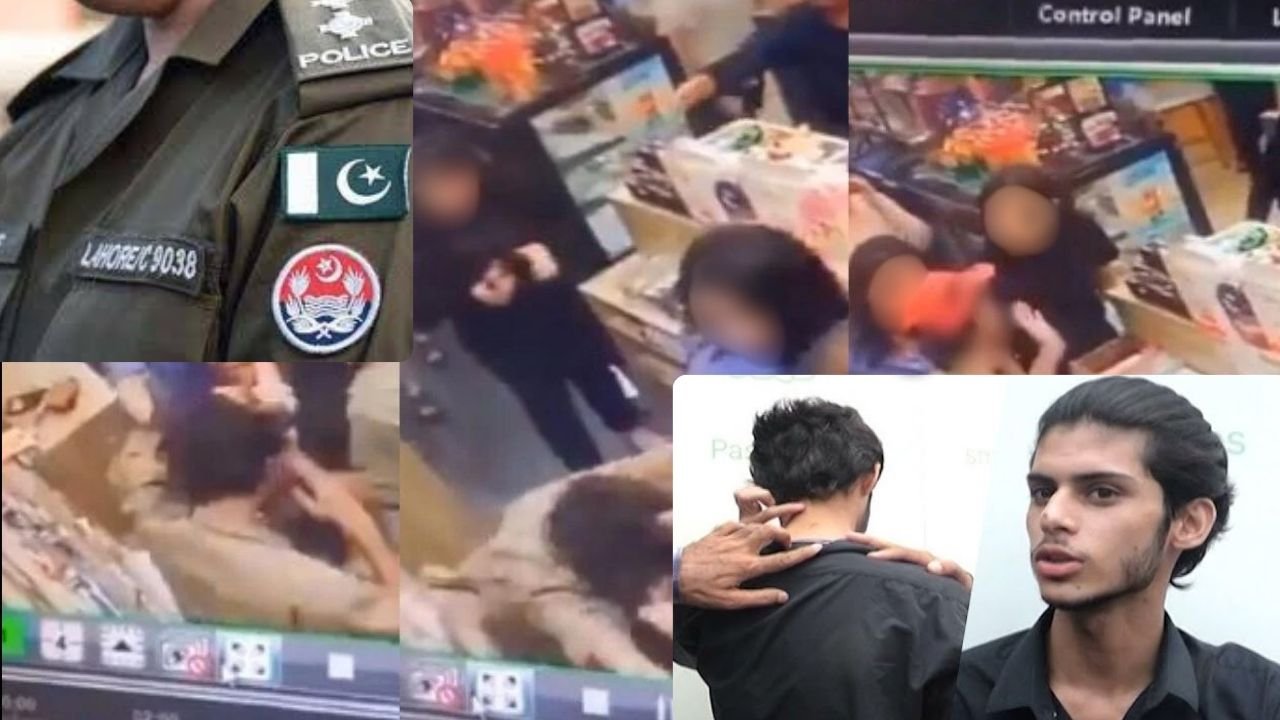
Following the CCTV footage of three girls beating up a salesman in a shop in Lahore and the widespread criticism over the police’s handling of the alleged harassment case, local police are now actively finding out what happened.
In the viral video, the girls appear to have initiated the assault, with the boy at the receiving end of their blows. However, it was reported that the salesman was arrested on allegations of harassment posed by the girls. This instigated a debate on social media where netizens demanded the arrest of the girls for allegedly using the “woman card.”
DIG Lahore Operations Faisal Kamran, while talking to Dawn, said the CCTV footage was presented in court by the boys in their defence, led to the case being dismissed.
The DIG also stated that the police approached the young man to file a complaint against the girls, if they wish to proceed with legal action.
The Current talked to the Superintendent of Police (SP), Dr. Ayaz, who stated that women’s harassment laws require an immediate response from the police. He said the police responded to the complaint filed by the girls, took the boys to the police station, and booked them instantly. “It was the honourable court’s decision to decide the case,” he stressed. “The police is committed to performing their duties, and as per law, we have a time of 14 days according to which we are conducting our investigation,” he added.
SP Ayaz confirmed that the medical checkup of both the girl and boy has been done, and all aspects of the case are being investigated, including the harassment and assault allegations. This particular case is registered under Article 509-1 and will proceed under charges of ‘insulting modesty or causing sexual harassment’, Ayaz informed.
Addressing social media speculation about the girl being the daughter of a lawyer, DIG Kamran clarified that the girl’s mother informed the police that her husband had passed away.
THE GIRLS
One of the three girls, on condition of anonymity, talked to The Current and explained how she, along with her friends, went to the shop to have coffee and do some shopping. According to her, she was chitchatting with her friends when the salesman started passing lewd comments about them, asking the girls if they were on “night duty,” implying that they were prostitutes. The comments enraged her friend who told him to behave and as the situation escalated, they first got into a verbal brawl with two boys which eventually took the form of a physical fight. She claimed that they hurled curses at them and pulled the hair of the boy. He also struck a girl, causing her nose to bleed and tore her shirt.
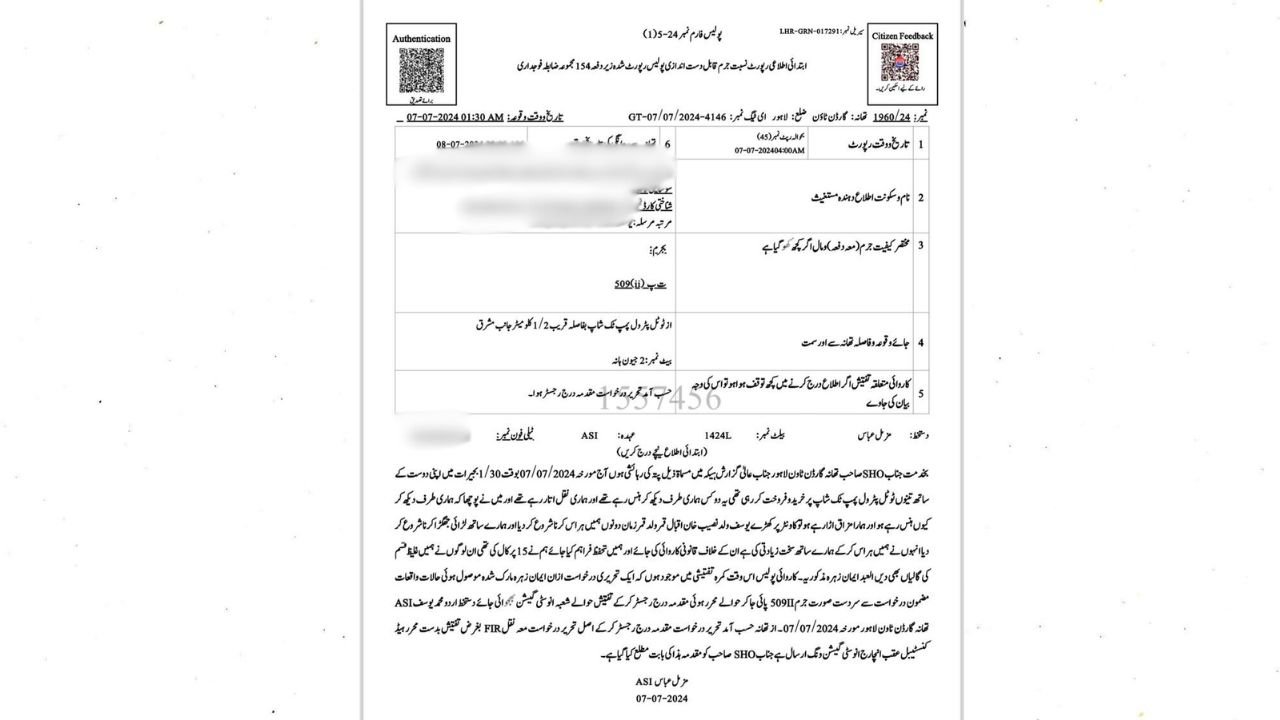
She said that they stayed there until they called the police and got the FIR registered, an official copy of which is present with The Current. The man who made their video was asked not to do so because of their vulnerable condition, but he did not comply.
A digital copy of FIR shared by the girl.
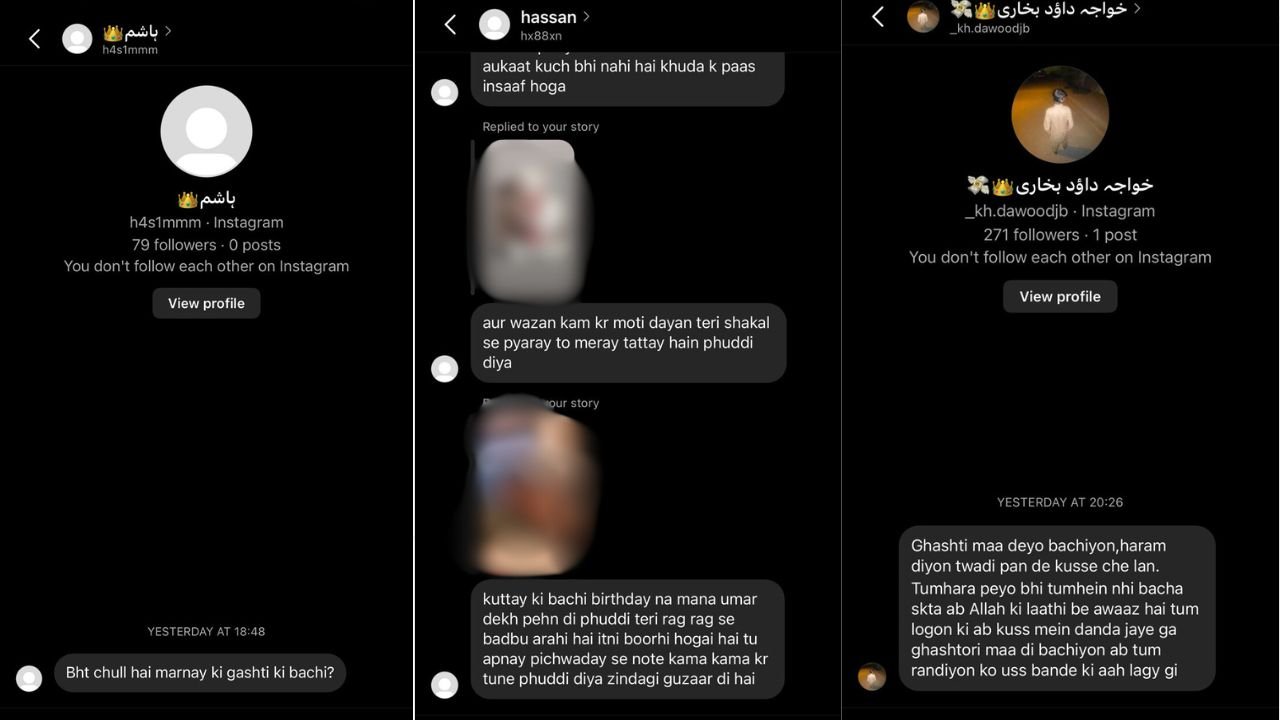
The girl said that at the police station, the boy apologised, and a “raazi nama” was signed. She stressed that in police custody, the shopkeeper said that the CCTV footage was not available as it was deleted. However, it surfaced on social media, two days after the incident, in what she described as an effort to defame them. In a traumatised tone, she said that they are under extreme pressure and because of her public profile on Instagram, she has gotten rape and death threats after the video went viral.
The screenshots shared by the girl depict the threatening and abusive language used by men sliding into her DMs.
More than once, she said that the viral video does not present the whole version and lacks the actual audio. She stressed that if the audio was released, it would support her version of the story. “I don’t understand, how can people think that it could have happened without a reason. We are not mad that we just got up and started beating someone. There was a reason, and in all honesty, we are not ashamed of it,” she shared.
She made it a point to mention that she does not belong to an elite background but from an upper-middle-class household, and the criticism that the girls weren’t ‘dressed properly’ is sexist and violates their right to freedom of choice.
THE GUY’S VERSION
The viral footage showed only one boy being assaulted by the girls in the presence of the shop owner and other visitors who eventually intervened. Yasir Shami from Urdu Point was seen talking to the boy, Yousuf, who was beaten up by the girl. Yousuf vehemently denied any allegations of harassment. “I was laughing at something my colleague said, and the ladies misheard and started coming inside the counter area. I told them they couldn’t do that but she still made her way inside and started beating me,” he said. “I did defend myself as much as I could, but not much as she was a woman,” he claimed. He also denied any claim of cursing the girls.
Journalist Ahmed Faraz, while talking on the show Geo Pakistan, explained that only one FIR is registered in any case, and all elements are explored and investigated under that.
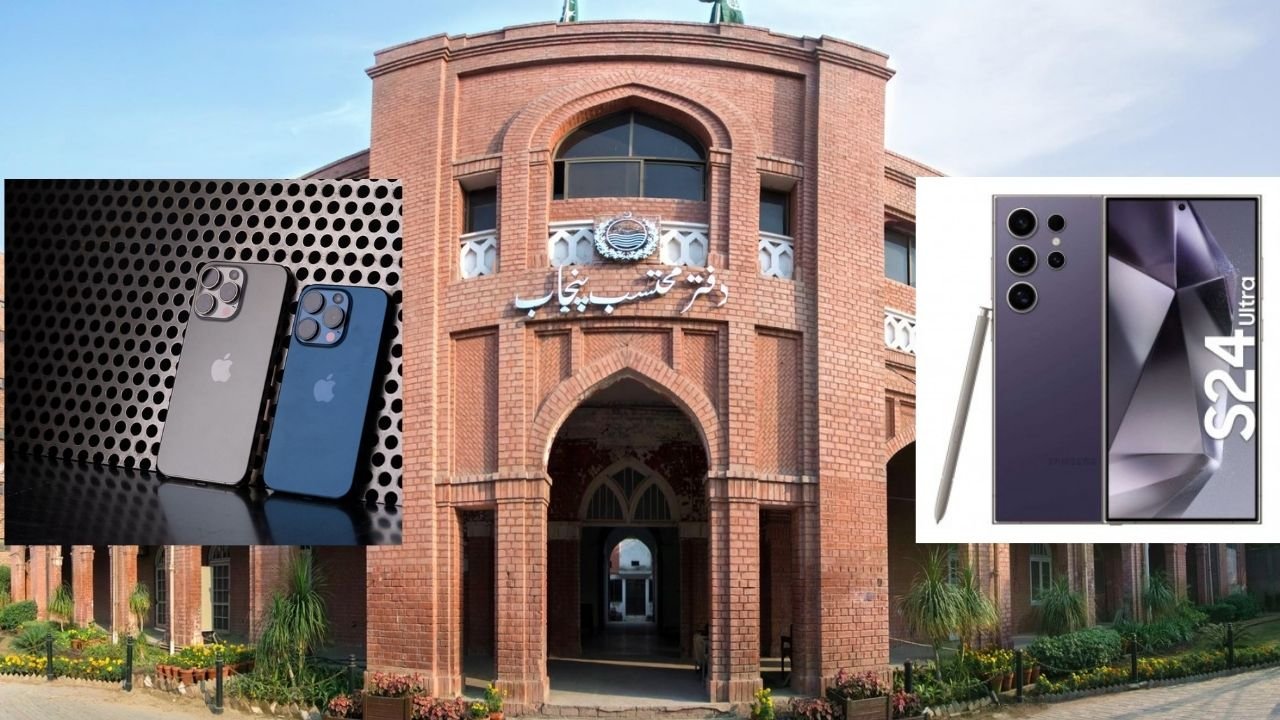
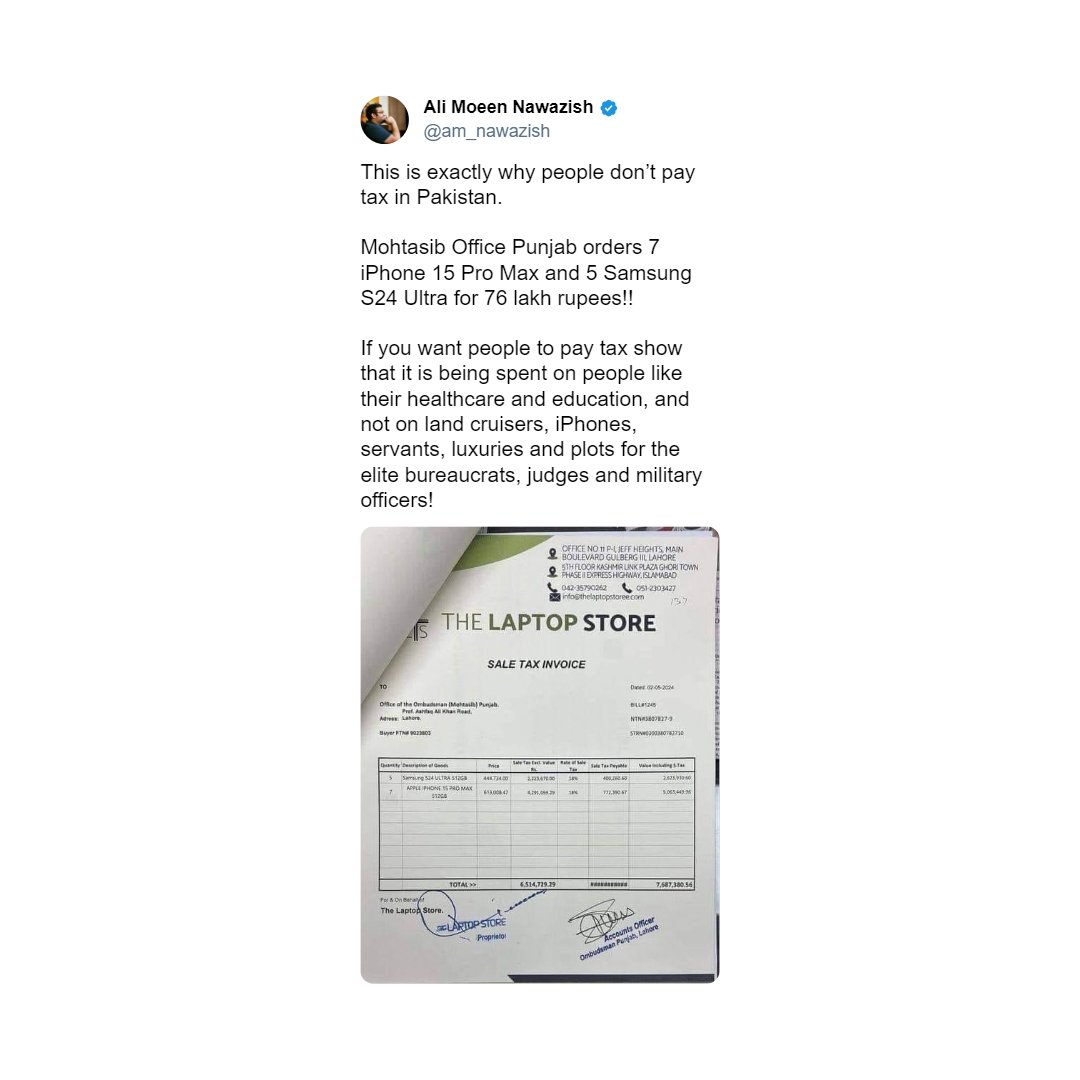
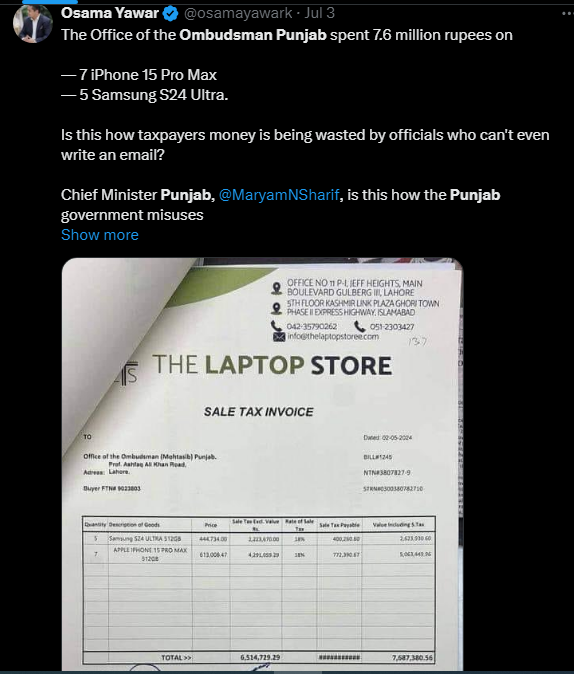
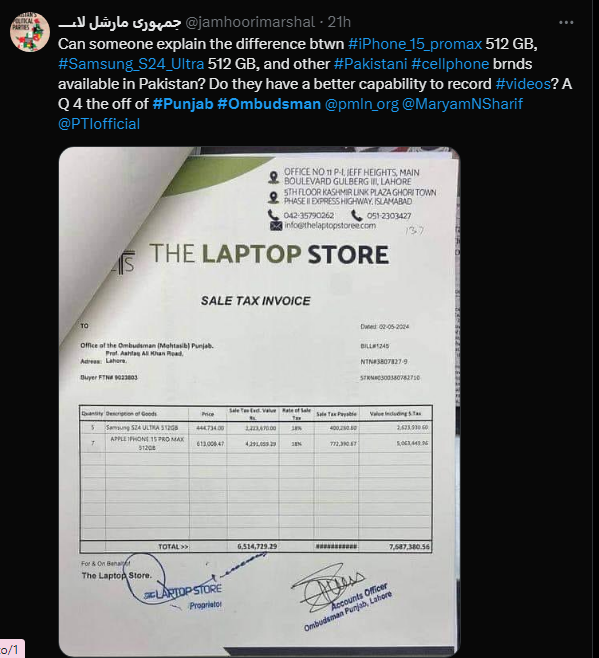
An official notification of a “sale tax invoice” from the Punjab Ombudsman placing an order of five Samsung Galaxy S24 and seven iPhone Pro Max worth Rs. 76 lacs created a stir on social media. Netizens criticised the government for wasting money, but the government claimed otherwise.
A number of X (formerly Twitter) users criticised the government for spending extravagantly on such accessories. Journalist and academic Ali Moeen Nwazish posted on X: “This is exactly why people don’t pay tax in Pakistan. If you want people to pay tax, show that it is being spent on people like their healthcare and education, and not on land cruisers, iPhones, servants, luxuries and plots for the elite bureaucrats, judges and military officers.”
Another user named Osama Yawar shared the notification with the caption, “Is this how taxpayers money is being wasted by officials who can’t even write an email?”
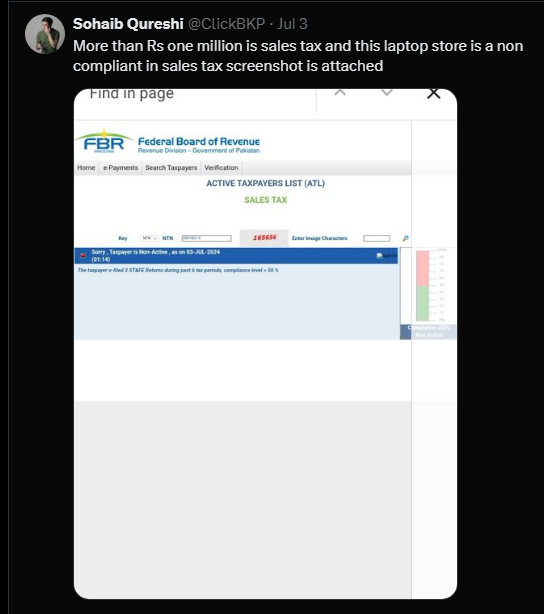
To put more fuel to the fire, a citizen named Sohaib Qureshi, claiming to be an expert on E-Commerce, shared that the company The Laptop Store, with which the Ombudsman has placed an order, is allegedly non-filer. To prove his claim, Sohaib attached a screenshot from the FBR website where the company has no record of tax to its name. “More than one million is a sales tax but this laptop store is non compliant in sales tax,” Sohaib wrote.
Punjab’s Information Minister Azma Bukhari told The Current that Punjab’s Ombudsman is an autonomous body and does not come under Punjab government, “It’s from an autonomous body, not by Punjab government,” she said.
However, the Punjab Ombudsman was reluctant to respond to our request for confirmation of the viral notification. Even after multiple calls, there was no explicit answer, but an inside source revealed that this is a normal process and it seems authentic as it has the signature of the accounts officer of Punjab’s Ombudsman. The same source elaborated that the Punjab Ombudsman has its own budget and works independently. The phones are not for personal use but for official use only.
An account titled Jmhoori Martial Law asked people to explain the difference between Iphone 15 pro max with 512 GB and Samsaung Galaxy with the same storage. “Other Pakistani brands available in Pakistan, do they have better capability to record videos?” the handle asked.
The Ombudsman office is empowered to entertain complaints against any department commission or office of the Provincial Government or a statutory corporation or other institution established or controlled by the Provincial Government but does not include the High Court and the Courts working under the supervision of High Court and Provincial Assembly and its Secretariat, explains the official website as its primary function.
 Dr. Raghib Naeemi, Chairman of the Islamic Ideology Council