Category: Business

The most important business news, explained in a young, easy to understand way. News that affects young career professionals.

  • Pakistan’s big industries’ output increases 2.38% but misses recovery target

    Pakistan’s big industries’ output increases 2.38% but misses recovery target

    In July 2024, Pakistan’s Large-Scale Manufacturing (LSM) sector grew by 2.38 per cent compared to the same month last year, according to a report by the Pakistan Bureau of Statistics (PBS).

    However, on a month-to-month basis, the sector saw a drop of 2.08 per cent from June’s index of 108.46 points.

    Throughout FY24, the LSM sector showed a recovery of 0.92 per cent, boosted by growing confidence and improvements in various industries. Despite this, the growth rate still falls short of what’s needed for a stronger economic recovery.

    The 2.38 per cent growth in July 2024 came largely from industries like Food (0.63 per cent), Tobacco (0.81 per cent), Textiles (1.48 per cent), Garments (1.37 per cent), and Automobiles (1.01 per cent).

    On the other hand, some sectors, including Pharmaceuticals (-0.23 per cent), Cement (-0.38 per cent), Iron and Steel Products (-0.70 per cent), Electrical Equipment (-0.69 per cent), and Furniture (-1.36 per cent) saw declines.

    Compared to July 2023, there was an increase in production for several industries, including Food, Beverages, Tobacco, Textiles, Leather Products, Petroleum Products, and Automobiles.

    However, sectors such as Pharmaceuticals, Rubber Products, Iron and Steel, Electrical Equipment, and Furniture experienced declines in production.

    The industrial sector contributes about 18 per cent to Pakistan’s total GDP, but data on industrial production is not frequently available.

    To track industrial performance, policymakers look at Large Scale Manufacturing (LSM), which makes up a major part of the industrial sector. LSM accounts for around 69 per cent of manufacturing, which is a sub-sector of Industry, and about 8 per cent of Pakistan’s overall GDP.

    While economic activity began to pick up in the latter half of FY24, challenges such as falling global demand, currency devaluation, and a growing current account deficit have restricted the government’s ability to maintain financial stability in tough economic conditions.

  • Pakistan’s money supply contracts by Rs46.6 billion, State Bank data reveals

    Pakistan’s money supply contracts by Rs46.6 billion, State Bank data reveals

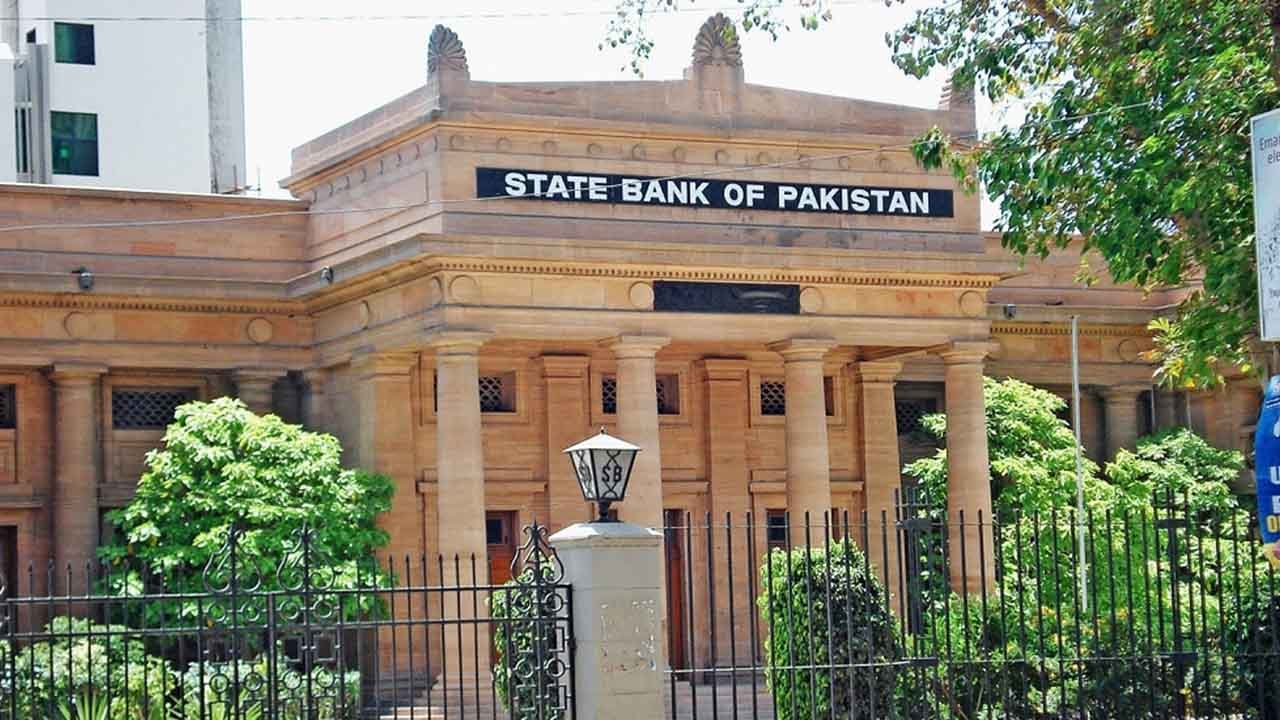
    The most widely used measure of the money supply in Pakistan, broad money (M2), dropped by Rs46.6 billion week over week (WoW) to Rs35.64 trillion as of September 6, according to the State Bank of Pakistan (SBP).

    When compared to June 2024, M2 has declined by more than Rs940 billion, from Rs36.58 trillion recorded at the end of FY24.

    The currency in circulation within the country increased by Rs212.71 billion WoW to Rs9.09 trillion.

    However, in FY25, the currency in circulation has decreased by Rs61.11 billion, compared to Rs9.15 trillion recorded at the end of June.

    According to Mettis Global, total deposits held with banks were recorded at Rs26.43 trillion, showing a weekly reduction of Rs256.21 billion.

    Deposits held by banks exclude inter-bank deposits, government deposits, and foreign constituents.

    For those unaware, the currency in circulation represents the balance of banknotes and coins in circulation, held by the public and all financial institutions.

    Liabilities can be calculated by adding up the overall amount of money in circulation, the total amount of deposits made by non-governmental organisations (including foreign currency deposits made by citizens), and any additional deposits with the SBP.

    Furthermore, M2 is the total amount of the banking system’s net foreign and net domestic assets (i.e., the SBP and scheduled banks) when considering assets.

  • Retailers dodging the tax system could face Rs500,000 fine per ‘non-certified receipt’

    Retailers dodging the tax system could face Rs500,000 fine per ‘non-certified receipt’

    The Federal Board of Revenue (FBR) is considering slapping heavy fines on major retailers who are dodging the tax system by issuing “non-certified receipts” to customers.

    The tax authority is reportedly planning to fine Tier-1 retailers who are not reporting sales tax correctly to the FBR.

    According to details, the FBR will impose a heavy fine of Rs500,000 per incorrect receipt on the retailer. On the other hand, the FBR will reward consumers who report a non-certified electronic receipt, which does not meet FBR standards, to the tax authority.

    Earlier, the FBR had advised electronic integration of points of sales (POSs) of all Tier-1 retailers of textile and leather sectors to ensure correct reporting of sales by retailers and realisation of overall due tax.

    Retailers must install software provided by the FBR, which reports sales tax to the tax authorities instantly.

    The installation of this software is crucial, as this is how the FBR gets to know about the number of sales made by a retailer, the tax paid, and what they charge the consumer.

    Interestingly, a POS invoicing prize scheme was first introduced in 2022 to promote tax compliance and documentation of the economy. The scheme involved conducting monthly ballots and distributing cash prizes among winners.

    Read more: Petrol, diesel prices likely to be reduced by more than Rs10 per litre for next fortnight

  • Petrol, diesel prices likely to be reduced by more than Rs10 per litre for next fortnight

    Petrol, diesel prices likely to be reduced by more than Rs10 per litre for next fortnight

    The government is expected to cut petrol and diesel prices in less than two days, following a decrease in international oil rates.

    There is a high chance that the petrol price in Pakistan will be reduced by more than Rs10 per litre on September 16, while the diesel price is also expected to be slashed by up to Rs12 per litre for the upcoming fortnight.

    Recent reports also suggest that there is little to no chance the government will consider increasing the petroleum levy because if levy is raised, petrol and diesel prices may witness a very slight decrease of Rs6 per litre or even less.

    The adjustment in petroleum prices will be decided after analysing the economic factors and the latest international oil rates at the time of announcement.

    The price of petrol in Pakistan, according to reliable sources, may drop to Rs247.60 per litre, while diesel is likely to be priced at Rs251.75 after the anticipated cut.

    The final decision regarding the reduction in petrol and diesel prices will be announced tomorrow through an official notification and the revised rates will be effective from September 16.

    Read more: Another record high in three days: Gold price reaches Rs265,900 per tola

  • Another record high in three days: Gold price reaches Rs265,900 per tola

    Another record high in three days: Gold price reaches Rs265,900 per tola

    After a little break, gold prices in Pakistan rebounded on Friday and surged to highest level ever seen in the country’s history. The 24-karat gold price witnessed a notable single-day increase of Rs2,900 per tola and closed at Rs265,900.

    This follows a decline of Rs1,000 seen in the price of precious metal, which pushed its rate to Rs263,000 per tola on Thursday.

    It is worth noting that the last record high price was observed less than three days ago when the bullion market quoted the gold’s rate at Rs264,000 per tola.

    Interestingly, before the gold hit the Rs264,000 per tola mark, the then record high price of gold was observed in August when local gold markets quoted gold at Rs263,700 per tola.

    According to All-Pakistan Gems and Jewellers Sarafa Association (APGJSA), as of today, the ten-gramme gold rate stands at Rs227,966 after surging by Rs2,486.

    Read more: FBR considering imposing hefty fines, freezing bank accounts for false or incomplete tax filings

  • IMF Board to review $7 billion loan programme for Pakistan on September 25

    IMF Board to review $7 billion loan programme for Pakistan on September 25

    The International Monetary Fund’s Executive Board is expected to take Pakistan’s 37-month Extended Fund Facility Arrangement (EFF) of about $7 billion on agenda on September 25.

    Kozack in a press briefing on Thursday, said that the discussion regarding Pakistan’s loan approval is taking place following Pakistan’s receipt of the necessary financing assurances from “its development partners.”

    The spokesperson of the global lender further said that economic stability in Pakistan has been supported by consistent policymaking, which has resulted in the resumption of growth and an increase in the country’s forex reserves.

    “The new EFF arrangement follows the successful implementation of the nine-month standby arrangement in 2023,” added Kozack.

    Following the development, Finance Minister Muhammad Aurangzeb expressed his gratitude to all relevant institutions, Prime Minister Shehbaz Sharif’s team, and the IMF negotiators.

    The debt-hit country reached a staff-level agreement with the IMF in July, but board approval for the 37-month programme had been pending since then. The delay, which was resolved today with the IMF Executive Board adding Pakistan to its agenda, had fueled speculation about whether Pakistan had failed to meet the IMF’s bailout conditions.

  • Gold price falls Rs1,000 from historic high, now at Rs263,000 per tola

    Gold price falls Rs1,000 from historic high, now at Rs263,000 per tola

    On Thursday, the 24-karat gold rate in Pakistan dropped Rs1,000 per tola from the record high peak witnessed on the last trading day.

    According to the All-Pakistan Gems and Jewellers Sarafa Association (APGJSA), the price of yellow metal was recorded today at Rs263,000 per tola as compared to the historic high of Rs264,000 per tola on Wednesday.

    Bullion rates shared by the APGJSA showed that the price of ten grammes of gold was also down by Rs857 to Rs225,480.

    The price of silver in Pakistani market remained unchanged at Rs2,900 per tola

    A price drop was also witnessed internationally, with the per ounce gold rate decreasing by $8 to $2,515. This rate includes a premium of $20.

    The previous all-time high price of gold was seen in August, when the precious metal’s per tola rate surged to Rs263,700 in Pakistan.

    The latest price of gold in Pakistan is about Rs700 per tola lower than August’s high and Rs1,000 per tola below September’s peak.

  • State Bank cuts policy rate by 200 bps to 17.5%

    State Bank cuts policy rate by 200 bps to 17.5%

    The State Bank of Pakistan (SBP) has reduced the interest rate by 200 basis points, bringing it down to 17.5 per cent.

    The decision regarding reduction in policy rate was made after the inflation rate slowed in the country.

    The Monetary Policy Committee (MPC) observed that the continued ease in inflationary pressures and the policy rate cuts will support the growth in Pakistan’s key sectors.

    Interestingly, this marks the third consecutive reduction in key policy rate, followed by a 150 bps cut in June and another 100 bps reduction in July.

    “At its meeting today, the MPC decided to cut the policy rate by 200bps to 17.5 per cent, effective from September 13, 2024,” the central bank said in a statement.

    “Both headline and core inflation fell sharply over the past two months. The pace of this disinflation has somewhat exceeded the MPC’s earlier expectations, mainly due to the delay in the implementation of planned increases in administered energy prices and favourable movement in global oil and food prices.”

    The MPC was of the view that the global macroeconomic environment has turned favourable amid the substantial softening of crude oil prices.