Category: Business

The most important business news, explained in a young, easy to understand way. News that affects young career professionals.

  • Interbank closing: Pakistani rupee sees minor 7.72 paisa gain against US dollar

    Interbank closing: Pakistani rupee sees minor 7.72 paisa gain against US dollar

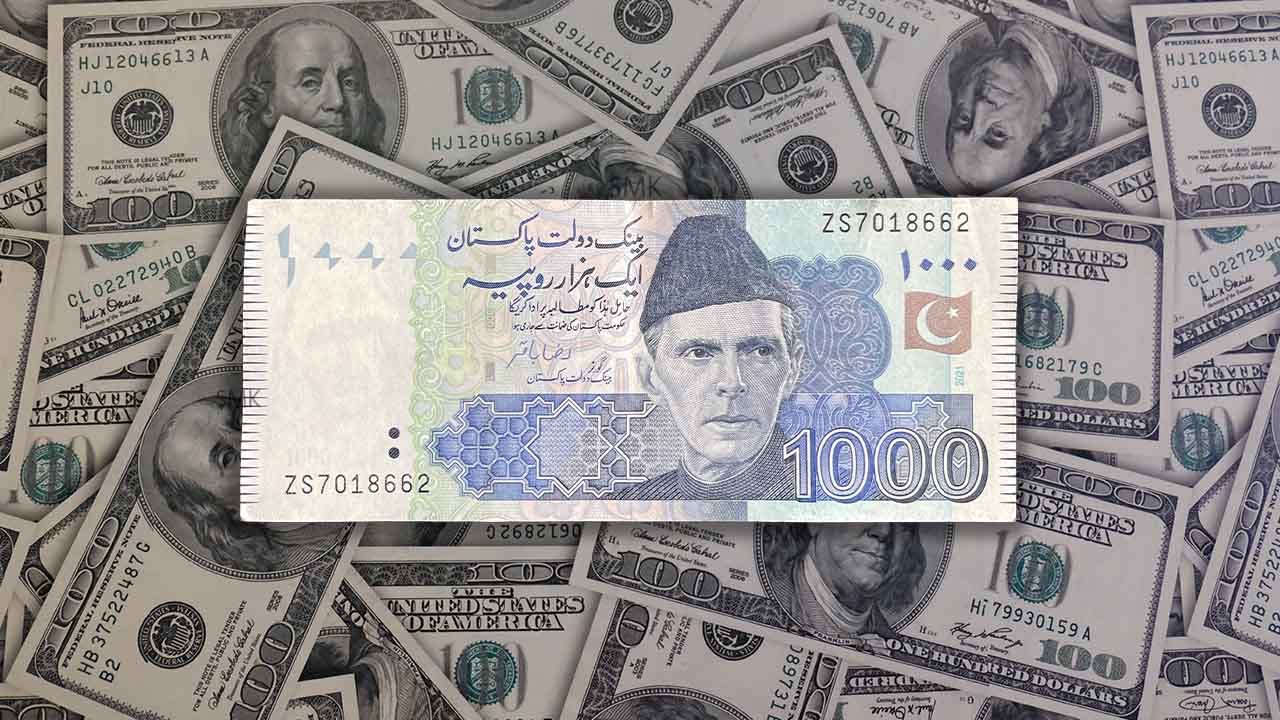
    The Pakistani rupee (PKR) on Wednesday maintained the trend of minor fluctuations in the interbank session and closed the day with minimal gains versus the greenback.

    According to the State Bank of Pakistan (SBP), the rupee witnessed an increase of 0.03 per cent (7.72 paisa) and ended the day at Rs278.54 against the US dollar (USD).

    Exchange companies were buying the US dollar at Rs279.47 and selling it for Rs280.95.

    During the day trade, Pakistani currency’s highest value was recorded at Rs278.70 with the lowest ask of Rs278.50.

    Performance against different foreign currencies:

    Currency Today’s rate Previous closing Change in value
    British Pound 364.35 364.75 40.75 paisa
    Swiss Franc 329.3 328.23 1.07 rupees
    Japanese Yen 1.9705 1.9395 3.1 paisa
    Chinese Yuan 39.16 39.13 2.96 paisa
    Saudi Riyal 74.23 74.27 3.44 paisa
    UAE Dirham 75.86 75.84 1.9 paisa
    Exchange rates for today

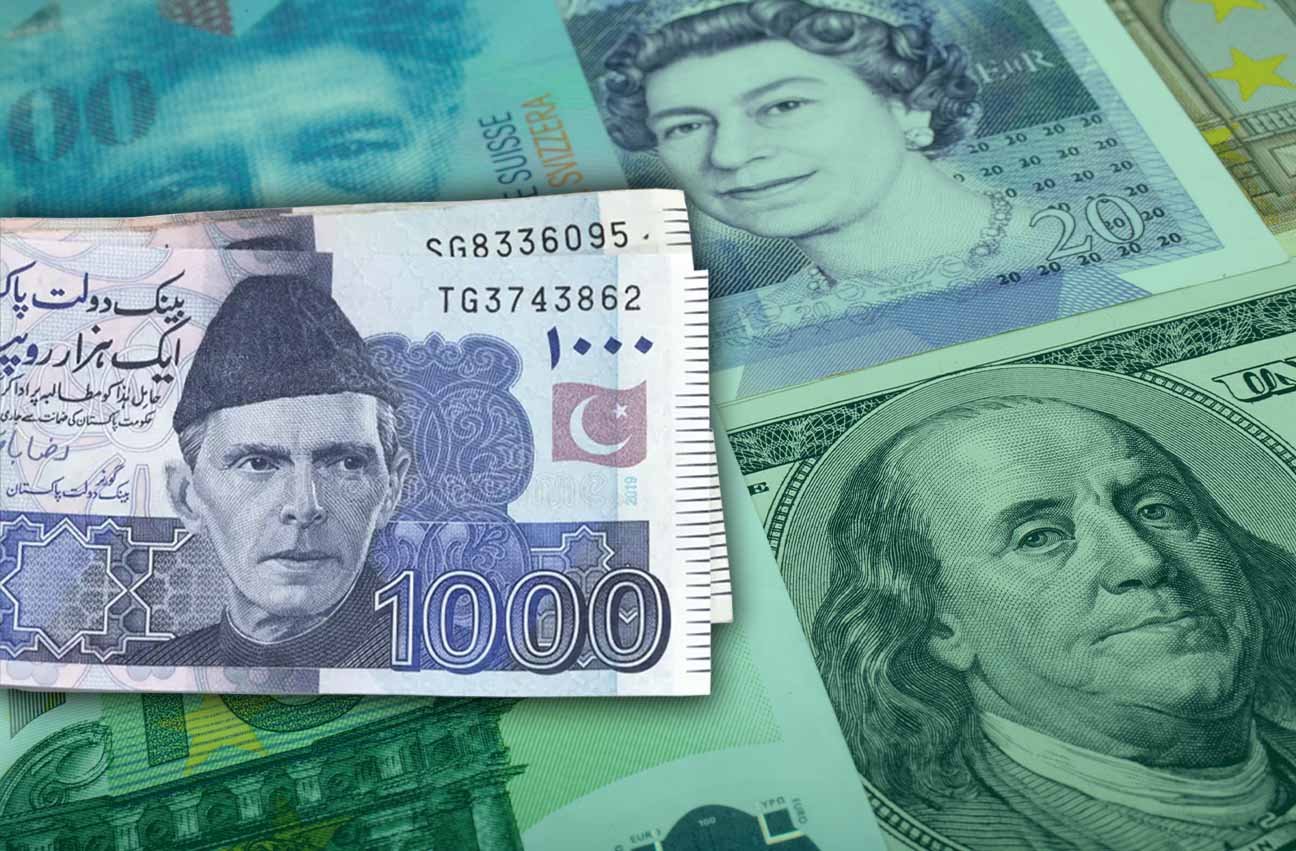
    Pakistani rupee’s performance against other foreign currencies, as  expected, did not witness major changes.

    The British Pound dropped 40.75 paisa against PKR and was quoted at Rs364.35 per GBP.

    The Swiss Franc went up by Rs1.07, finishing at Rs329.3 compared to Rs328.23 the previous day.

    Against the Japanese Yen, the PKR dropped by 3.1 paisa, closing at Rs1.9705, down from Rs1.9395 a day earlier.

    The Saudi Riyal fell by 3.44 paisa, closing at Rs74.23 compared to Rs74.27 the day before.

    The UAE Dirham lost 1.9 paisa, going from Rs75.86 to Rs75.84.

    The Chinese Yuan gained 2.96 paisa, closing at Rs39.16, up from Rs39.13.
  • Gold price increases by Rs2,300 to record high of Rs264,000 per tola

    Gold price increases by Rs2,300 to record high of Rs264,000 per tola

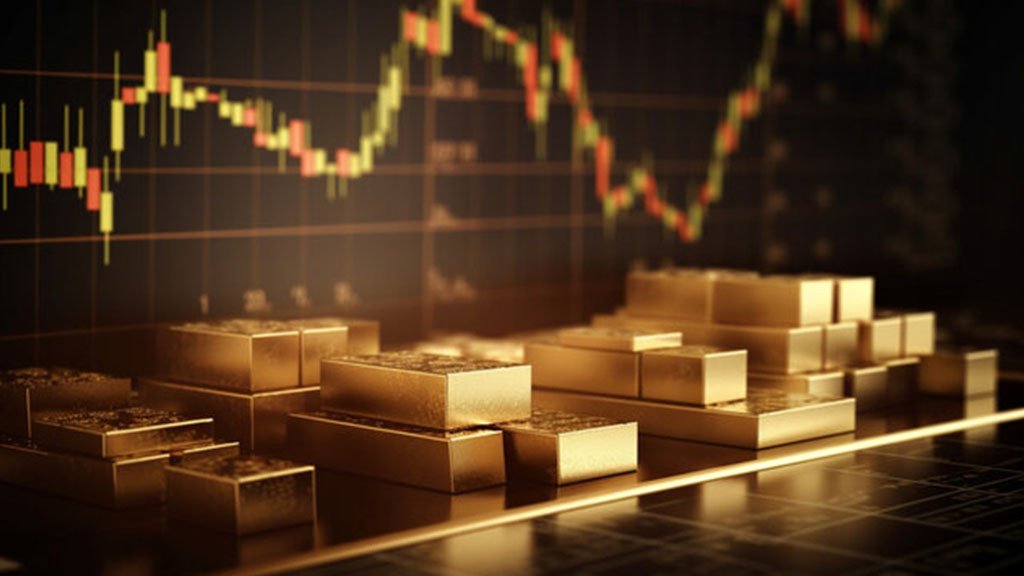
    The gold price witnessed a massive increase in Pakistan on Wednesday after a strong surge in global rates.

    According to the All-Pakistan Gems and Jewellers Sarafa Association (APGJSA), which releases gold rates on a regular basis, the price of precious metal rose by Rs2,300 per tola in the Pakistani bullion market.

    The price of gold in Pakistan now stands at record high of Rs264,000 per tola, as per the association.

    It is worth noting that the last record high price of gold was recorded in August when it broke Rs263,000 barrier and closed at Rs263,700 per tola.

    Today’s gold rate is Rs300 per tola higher than the last record high.

    Internationally, the yellow metal’s value was recorded at $2,524 per ounce, showing an increase of $23. This rate includes a premium of $20.

  • Govt’s debt grows by Rs247.89 billion in a week: SBP report

    Govt’s debt grows by Rs247.89 billion in a week: SBP report

    The government has taken on an extra Rs247.89 billion in debt for the week ending August 30. This new borrowing pushes the total government debt for the fiscal year 2025 up to Rs439.67 billion, according to the State Bank of Pakistan (SBP).

    For those unaware how this is categorised, the borrowing falls into three main categories: budget support, commodity operations, and other expenses.

    Out of the total Rs247.89 billion borrowed in the said week, Rs248.84 billion was used to support the budget, Rs951.06 million was spent by the government on commodity operations, and Rs0.97 million went to various other needs.

    Considering yearly borrowing, the government has borrowed a sum of Rs680.95 billion for budget support, Rs239.54 billion for commodity operations, and Rs1.74 billion for other expenses.

    The main sources of this funding are the central bank and scheduled banks.

    Shockingly, the government has already borrowed Rs44.13 billion from the State Bank this year.

    The Federal Government has repaid Rs176.62 billion, while the Provincial Government has borrowed Rs246.34 billion.

    The Azad Jammu and Kashmir (AJK) Government has repaid Rs14.79 billion, and the Gilgit-Baltistan (GB) Government has repaid Rs10.8 billion.

    Scheduled banks released Rs636.82 billion in loans, with Rs660.33 billion going to the Federal Government.

  • Exchange rates for today: PKR gains 8.05 paisa against US dollar, Rs1.14 versus Swiss Franc

    Exchange rates for today: PKR gains 8.05 paisa against US dollar, Rs1.14 versus Swiss Franc

    The Pakistani rupee (PKR) got stronger by 8.05 paisa, or 0.03 per cent, against the US dollar (USD) on Tuesday. The local unit finished the day at PKR 278.62 per USD, a little better than Monday’s closing rate of 278.7.

    During the day, the highest rate for the rupee was 278.80, and the lowest was 278.65. In the open market, exchange companies were selling the dollar at 281.03 and buying it for 279.46.

    Recently, the rupee has mostly stayed between 277 and 279 against the US dollar. Traders are paying attention to good news, including the International Monetary Fund (IMF) approving a new $7-billion Extended Fund Facility (EFF).

    Worldwide, the US dollar stayed steady on Tuesday. The Japanese yen moved slightly down from a one-month high as investors waited for US inflation data and reconsidered the chances of a big interest rate cut by the Federal Reserve next week.

    Comparing the rupee with other major currencies:

    Currency Monday’s rate Tuesday’s rate Value change
    Swiss Franc (CHF) 329.37 328.23 1.14 PKR
    British Pound (GBP) 365.22 364.75 46.77 Paisa
    Saudi Riyal (SAR) 74.26 74.27 1.22 Paisa
    UAE Dirham (AED) 75.86 75.88 2.19 Paisa
    Japanese Yen (JPY) 1.9475 1.9395 0.8 Paisa
    Euro (EUR) 308.21 307.51 70.2 Paisa
    Chinese Yuan (CNY) 39.19 39.13 5.95 Paisa
    Exchange rates for September 10, 2024

    The Swiss franc dropped by 1.14 rupees, closing at 328.23, down from 329.37 the day before.

    The British pound got cheaper by 46.77 paisa, ending at 364.75 compared to 365.22 the previous day.

    The Saudi riyal closed at 74.27, gaining 1.22 paisa from 74.26.

    The UAE dirham became slightly more expensive, increasing by 2.19 paisa to close at 75.88 from 75.86.

    Against the Japanese yen, the PKR gained 0.8 paisa, closing at 1.9395 versus 1.9475 the day before.

    The PKR improved by 70.2 paisa against the euro, finishing at 307.51, compared to 308.21 previously.

    The Chinese yuan lost 5.95 paisa, closing at 39.13 compared to 39.19.

    Since the start of this financial year, the rupee has weakened by 27.83 paisa, or 0.1 per cent, against the dollar. However, it has strengthened by 3.24 rupees, or 1.16 per cent, so far this calendar year.

  • Pakistan identifies major oil and gas deposits in waters, exploration plans underway

    Pakistan identifies major oil and gas deposits in waters, exploration plans underway

    Pakistan has made a major petroleum and gas discovery within its territorial waters. This finding is expected to improve the country’s economic future.

    A senior security official with direct knowledge of the discovery confirmed that a survey had verified the presence of oil and gas reserves.

    According to Dawn, the survey has determined the location of the deposits, and the relevant departments have been notified.

    The discovery is now being seen as a crucial part of Pakistan’s efforts to build its ‘blue water economy’. Proposals for further exploration and bidding are reportedly under review, with high hopes that exploration may begin soon.

    Still, the official has warned that extracting oil may require years of work due to the technical challenges involved. Beyond oil and gas, the potential for mining other valuable minerals from the ocean could also provide additional economic opportunities.

    Some experts project that these reserves might be the fourth-largest in the world. While the discovery is promising, former Oil and Gas Regulatory Authority (Ogra) member Muhammad Arif urged caution.

    He noted that the true potential of the reserves will be revealed after drilling work begins. If gas reserves are found in large quantities, they might replace costly LNG imports, while oil could reduce the country’s dependence on imported fuel, further easing the import burden.

    According to details, an initial investment of around $5 billion is required for exploration to begin. If the reserves are sufficient, more funds will be needed to build wells. Full-scale production may take up to five years to materialise.

  • NEPRA approves Rs1.75 per unit tariff hike to recover Rs40 billion

    NEPRA approves Rs1.75 per unit tariff hike to recover Rs40 billion

    The National Electric Power Regulatory Authority (NEPRA) has approved an increase of Rs1.75 per unit in the electricity tariffs for distribution companies (Discos) and K-Electric (KE).

    This increase, aimed at recovering an additional Rs40 billion, will apply to the fourth quarter of FY2023-24 (April-June) under the Quarterly Tariff Adjustment (QTA) mechanism.

    The additional charges will be reflected in consumers’ electricity bills for September, October, and November 2024.

    However, due to the termination of a previous Rs0.93 per unit adjustment for the third quarter (January-March 2023-24), the net increase in bills during this period will effectively be Rs0.82 per unit.

    For KE customers, the federal government will cover the QTA increase through subsidies allocated for FY2024-25, meaning KE consumers will not directly bear this cost.

    In addition, NEPRA has approved a negative adjustment of Rs0.37 per unit under the Fuel Cost Adjustment (FCA) for Discos for the month of July 2024. This reduction will appear in September 2024 bills, except for domestic consumers using up to 300 units per month.

    According to Business Recorder, since an existing FCA charge of Rs2.56 per unit, applied in August 2024 bills, is set to expire, a combined relief of Rs2.93 per unit will be passed on to consumers in their September 2024 bills.

    According to NEPRA, when both adjustments are taken into account, consumers will experience a total relief of Rs2.11 per unit in their September bills.

  • Interbank closing: Pakistani rupee gains 11 paisa against US dollar

    Interbank closing: Pakistani rupee gains 11 paisa against US dollar

    On Friday, the Pakistani rupee saw a slight improvement against the US dollar, appreciating by 0.04 per cent in the inter-bank market.

    The local currency closed at 278.57, a gain of Re0.11 from the previous day’s rate of 278.68, as reported by the State Bank of Pakistan (SBP).

    In recent months, the rupee has generally fluctuated between 277 and 279, with traders closely monitoring developments regarding the International Monetary Fund’s (IMF) Executive Board discussions on a new $7 billion Extended Fund Facility (EFF).

    Against major currencies, the performance of the Pakistani rupee on the last trading day of the week was as follows:

    Currency Previous rate Closing rate Change
    British Pound 366.39 367.19 80.4
    Euro 308.95 309.58 63.15
    Saudi Riyal 74.24 74.21 2.9
    UAE Dirham 75.84 75.87 3.17
    Japanese Yen 1.9402 1.9549 1.47
    Swiss Franc 329.15 330.82 1.67
    Chinese Yuan 39.25 39.32 6.91
    Exchange rates for today

    – The British Pound increased by 80.4 paisa, ending at 367.19 from 366.39 the previous day.

    – The rupee fell by 63.15 paisa against the Euro, closing at 309.58 compared to the previous rate of 308.95.

    – The Saudi Riyal declined by 2.9 paisa, ending at 74.21 from 74.24.

    – The UAE Dirham decreased by 3.17 paisa, closing at 75.87 compared to 75.84.

    – Against the Japanese Yen, the rupee depreciated by 1.47 paisa, closing at 1.9549 compared to 1.9402 the previous day.

    – The Swiss Franc gained 1.67 rupees, closing at 330.82 compared to 329.15 the day before.

    – The Chinese Yuan saw an increase of 6.91 paisa, closing at 39.32 from 39.25.

  • BYD says half of total vehicles sold in Pakistan will be electric by 2030

    BYD says half of total vehicles sold in Pakistan will be electric by 2030

    Up to half of all vehicles sold in Pakistan by 2030 could be electric, according to BYD Pakistan, a joint venture between China’s BYD and Pakistan’s Mega Motors. This target aligns with global goals for reducing emissions.

    BYD, a Chinese electric vehicle (EV) giant backed by Warren Buffett, recently announced its entry into Pakistan, which has a population of around 250 million.

    In a partnership with Mega Motors, the company plans to build an assembly plant by early 2026. However, they will begin selling cars later this year, following the launch of three models in August.

    According to Reuters, Kamran Kamal, BYD Pakistan’s spokesperson, mentioned in an interview that the company expects up to 50 per cent of all vehicles in the country to be powered by new energy sources, such as electric or hybrid technology, by 2030.

    Kamal, who also leads Hub Power, the parent company of Mega Motors, acknowledged this is a bold target given Pakistan’s auto market, which has traditionally been dominated by Japanese brands like Toyota, Honda, and Suzuki. In fact, vehicle sales recently hit a multi-year low as of June 2024.

    While some new players, such as South Korea’s KIA and China’s Changan and MG, have entered the market offering hybrid vehicles, BYD is the first major company focused entirely on new energy vehicles in Pakistan. Hybrid vehicle sales in the country have already doubled in the past year.

    However, experts like Muhammad Abrar Polani, an auto analyst at Arif Habib Limited, believe that while a 30 per cent adoption rate for electric vehicles is achievable by 2030, reaching 50 per cent may be more difficult due to challenges with charging infrastructure.

    Kamal confirmed that the Pakistani government plans to support the development of this infrastructure by offering incentives, and standards for EV charging stations have already been drafted. The government is also considering providing these stations with cheaper electricity.

    BYD Pakistan is working with two oil marketing companies to build a network of charging stations, aiming to set up 20 to 30 stations during the initial rollout of its vehicles. Initially, the company will sell fully assembled cars, which are subject to high import taxes, but Kamal stressed that their primary goal is to start assembling vehicles locally as soon as possible.

    The size of the new assembly plant is still being decided, with more details about the investment and collaboration with power company HUBCO expected later.

  • Analysts expect further 150 basis points cut in interest rate by SBP next week

    Analysts expect further 150 basis points cut in interest rate by SBP next week

    Analysts predict that the State Bank of Pakistan (SBP) is likely to maintain its dovish stance, potentially implementing a third consecutive reduction in its key policy rate, supported by slowing inflation and improved macroeconomic indicators.

    The SBP is set to announce its key policy rate on Thursday, September 12. In its previous two meetings, the central bank has cumulatively reduced the rate by 250 basis points.

    Brokerage firm Arif Habib Limited (AHL) anticipates a 150 basis point cut, which would lower the policy rate to 18 per cent, a level last observed in February 2023 when the rate fell to 17 per cent.

    According to Business Recorder, AHL’s report, based on a recent poll, reveals that 93 per cent of respondents expect a rate reduction, while 7 per cent foresee no change.

    In July, the central bank’s Monetary Policy Committee (MPC) had already cut the key policy rate by 100 basis points to 19.5 per cent. At that time, SBP Governor Jameel Ahmad noted a downward trend in inflation.

    August 2024 saw Pakistan’s headline inflation decrease to 9.6 per cent year-on-year, down from 11.1 per cent in July, according to data from the Pakistan Bureau of Statistics (PBS).

    This return to single-digit inflation for the first time in three years has resulted in a real interest rate of approximately 1,000 basis points, providing further room for a rate cut, AHL suggests.

    JS Global echoes this sentiment, predicting that the easing inflation supports the MPC’s case for another reduction in September, with a projected cut of 150 basis points, bringing the policy rate to 18 per cent.

    Topline Securities’ CEO, Mohammed Sohail, expects a rate cut between 100 and 200 basis points, while Abdullah Farhan, Head of Research at IGI Securities, foresees a reduction of 150 to 200 basis points, driven by the recent decline in inflation.

    Farhan also projects that inflation could rise to 13-14 per cent by year-end due to base effects, with the policy rate potentially declining to 16 per cent by December.

    Ismail Iqbal Securities also supports the view that real rates remain significantly positive, indicating potential for a further rate cut. The firm anticipates a 100 basis point reduction in the upcoming MPC meeting.

    Alongside the downward inflation trend, analysts note improvements in external indicators. The trade deficit narrowed slightly to $3.6 billion in the first two months of FY25. The current account deficit has significantly decreased to $162 million in July, largely due to a 48 per cent year-on-year increase in remittances, which has helped stabilise the Pakistani rupee against the US dollar.

  • Gold price climbs Rs2,000 to Rs262,100 per tola after two consecutive declines

    Gold price climbs Rs2,000 to Rs262,100 per tola after two consecutive declines

    Gold prices in Pakistan saw a significant rise on Thursday, with the rate of 24-karat gold increasing by Rs2,000, reaching Rs262,100 per tola, according to the Karachi Sarafa Association.

    The price for 10 grammes of 24-karat gold also climbed, standing at Rs224,708, an increase of Rs1,714.

    Meanwhile, 22-karat gold was priced higher at Rs205,983 per 10 grammes, reflecting the overall upward trend in the market.

    In contrast, silver prices remained stable, with 24-karat silver holding steady at Rs2,900 per tola and Rs2,486 per 10 grammes.

    On the international market, spot gold traded at $2,504 per ounce, marking an increase of $8.9, or 0.36 per cent, from the previous session.